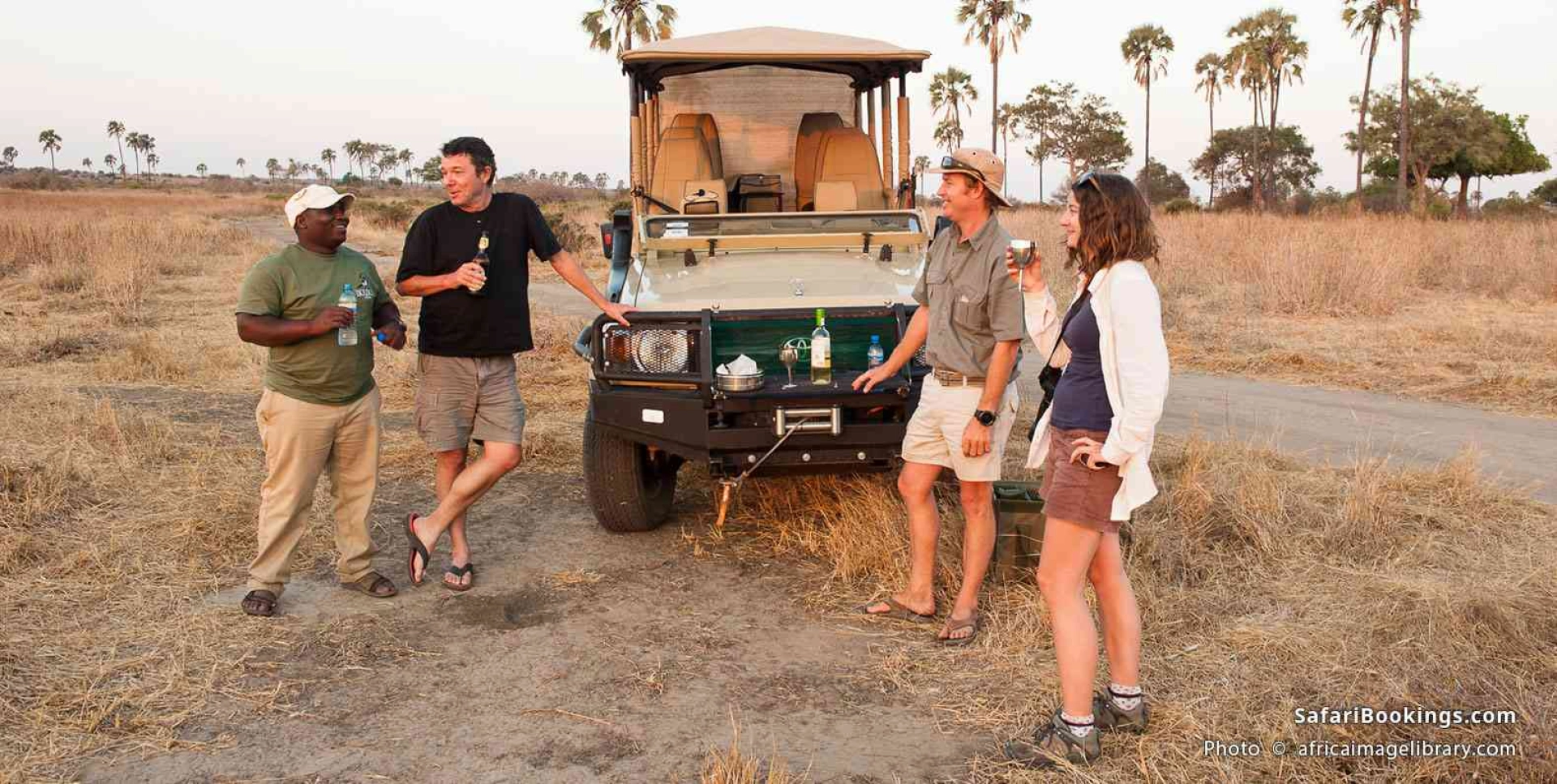
Tipping in Zambia: Complete Safari, Walking Safari & Travel Tipping Guide
Understanding tipping in Zambia is particularly useful for safari travellers because Zambia is famous for highly personalised wilderness…
Read article

Travel Guide
A traditional African safari built around morning and afternoon game drives can be extraordinary on its own. Watching lions wake beneath an acacia tree, following elephants toward water, finding a leopard resting above the ground or…
A traditional African safari built around morning and afternoon game drives can be extraordinary on its own. Watching lions wake beneath an acacia tree, following elephants toward water, finding a leopard resting above the ground or waiting for a herd to emerge from tall grass is enough to justify traveling thousands of kilometers.
But some of Africa’s most memorable safari moments happen when you leave the conventional game-drive routine behind. You may be floating silently above the Masai Mara at sunrise while wildebeest trails appear beneath the balloon. You may be walking through Zambia’s wilderness with an armed professional guide, learning to recognize tracks that would have been invisible from a vehicle. You might approach mountain gorillas through the misty forests of Uganda.
You could travel by boat beneath the cliffs of Murchison Falls National Park, watching hippos, crocodiles and elephants along the Nile. In Botswana, a mokoro can place your eyes almost level with the reeds of the Okavango. In South Africa, a night drive can reveal animals that remain hidden throughout the day. These experiences are commonly treated as safari add-ons, but that term can be misleading.
The best add-ons are not optional decorations placed around the real safari. They change how you understand the landscape. A game drive teaches you to look across distance. A walking safari teaches you to notice what lies beneath your feet. A balloon safari reveals the scale of an ecosystem. A boat safari changes your perspective from land to water. A night drive introduces an entirely different shift of animals. A primate trek removes the vehicle altogether and turns the journey into a physical search through forest.
The question, therefore, is not simply which African safari activities are available. The more useful question is: Which safari add-ons genuinely improve your itinerary enough to justify their cost and time?
A safari add-on is an experience incorporated into a larger wildlife itinerary in addition to standard game drives and accommodation. It may last one hour. It may consume an entire day. It may even require several extra nights. Some are relatively inexpensive. Others can cost hundreds or even thousands of dollars once permits, transfers or specialized accommodation are included. The best safari planning therefore involves selection rather than accumulation. Trying to do every available activity can leave travelers exhausted and destroy the relaxed rhythm that makes safari so enjoyable.
A vehicle is an extremely effective wildlife-viewing platform. It allows travelers to cover large distances, carry cameras and approach many animals safely under professional guidance. But a vehicle also creates a particular relationship with the environment. You observe through a window or open side. Your movement is fast. Your perspective is elevated. Add-on activities deliberately change that relationship. Walking slows you down. Boating changes the angle. Ballooning expands the scale. Night drives alter the time of day. Trekking makes wildlife encounters something you physically work to reach.
This diversity of perspective can turn a good safari into an exceptional one.
Few luxury safari experiences are as immediately recognizable as a hot air balloon drifting above an African landscape at sunrise. Balloon safaris are most strongly associated with East Africa, particularly the Masai Mara in Kenya and the Serengeti in Tanzania, although ballooning is available in other selected destinations. The experience usually begins very early. Travelers leave camp before sunrise and travel to the launch area.
As the balloon is prepared, the darkness begins to soften. The burner fires. The envelope rises. Then the basket lifts from the ground. The transition can feel surprisingly gentle.
A balloon provides a perspective no game-drive vehicle can reproduce. From the ground, an elephant herd may fill your field of vision. From the air, you see the herd in relation to rivers, tracks, woodland and grassland. Animal trails become visible. Drainage lines reveal themselves. The enormous scale of the ecosystem becomes easier to understand. During periods when substantial migration herds occupy the ecosystem, the aerial perspective can be particularly impressive. But ballooning should not be marketed only around the Great Migration.
The landscape itself is the attraction.
A Masai Mara hot air balloon safari is one of Kenya’s classic optional experiences. At sunrise, the Mara’s grasslands can appear almost endless. Wildlife sightings vary from flight to flight. A balloon is not a vehicle that can turn around and chase a lion. Its route depends heavily on wind. This unpredictability is part of the experience. Do not book a balloon because someone promised that you will fly directly above a river crossing. No ethical operator can guarantee that.
Book it because you want to experience the Mara from the air.
The Serengeti balloon safari provides similar drama over Tanzania’s enormous ecosystem. Different launch areas may operate in different parts of the Serengeti depending on season and logistics. Travelers specifically interested in migration-related ballooning should therefore ensure that the launch region makes sense for their itinerary. “Serengeti balloon” is not enough information. The Serengeti is enormous. Location matters.
For many honeymooners, photographers and first-time visitors, yes. It is expensive relative to a standard game drive, but it provides a genuinely different perspective. For budget travelers, however, the money might create more value elsewhere. If the cost of ballooning equals an additional night in the Masai Mara, ask yourself which you value more: several hours of unique aerial experience or another full day of wildlife viewing. There is no universal correct answer.
Travelers uncomfortable with heights or landing procedures may prefer another activity. Age, mobility, pregnancy and health restrictions may apply depending on the operator. Always check requirements directly for the specific balloon company.
If ballooning is about seeing more, a walking safari is about seeing less—but understanding it more deeply.
This apparent contradiction explains why walking is one of Africa’s most rewarding safari activities. On foot, the landscape becomes detailed. Tracks matter. Dung matters. Broken branches matter. Bird calls matter. Wind direction matters. The scent of vegetation matters. A safari vehicle can drive past these details in seconds. Walking forces you to notice them.
A good walking safari is not simply a game drive without a vehicle. The objective is different. You are not necessarily trying to approach lions or elephants as closely as possible. You are learning how the ecosystem functions. A guide may explain how to identify an animal from its footprint. You may examine a termite mound. You may discuss medicinal plants. You may watch oxpeckers and infer the presence of large mammals nearby.
The smallest observations can become the most memorable.
Zambia is internationally associated with the development of professional walking safaris, particularly in areas such as South Luangwa. Walking can range from shorter excursions based from a lodge to multi-day experiences moving between camps. For travelers who want a deeper wilderness experience, Zambia deserves serious consideration.
Zimbabwe also has a strong professional guiding tradition and offers excellent walking opportunities in appropriate protected areas and private concessions. A highly skilled walking guide transforms the experience. Knowledge matters. Judgment matters. Communication matters. A walking safari should never be selected solely because it is the cheapest optional activity.
Uganda provides several walking-based wildlife experiences. In Lake Mburo National Park, guided walks can allow travelers to experience savannah wildlife from a different perspective. Uganda also offers forest walks and primate treks, although these are distinct from traditional open-country walking safaris.
Walking is available in selected conservancies, private areas and designated locations depending on regulations. This distinction matters because activities allowed outside a national park may not be permitted inside it. When comparing accommodation, ask not only where the lodge is located but what activities that location legally allows.
Professional walking safaris operate according to local regulations and guiding procedures. Guests must follow instructions. Do not wander ahead. Do not leave the group to photograph something. Do not assume an animal is harmless because it is not a predator. Elephants, buffalo and other large mammals require enormous respect. Walking safari safety depends heavily on guide competence and guest discipline.
A national park after sunset is not simply the daytime ecosystem without sunlight. It can feel like another world. Some species become more active. Others disappear. Sounds intensify. The beam of a spotlight catches eyes in the darkness. For travelers who have experienced many daytime game drives, a night safari in Africa can be one of the most valuable additions.
Sightings vary enormously by ecosystem. Depending on destination, travelers may encounter nocturnal predators, genets, civets, bushbabies, porcupines, owls, nightjars and other animals less frequently seen during the day. Predators such as lions and leopards may also become more active as temperatures fall. But night drives are unpredictable. The darkness is the experience. Do not expect a checklist.
This is important. Night drives are not permitted everywhere. Rules vary between national parks, private conservancies and concessions. A private conservancy may allow activities prohibited inside an adjacent national park. This can be a major reason to include a conservancy in a Kenya or Tanzania itinerary.
Uganda offers night-game-drive opportunities in selected areas and under applicable park arrangements. A night experience can complement daytime game viewing by revealing nocturnal behavior and smaller species. Always confirm the current operating rules for the park and accommodation used.
A boat safari in Africa can completely transform wildlife viewing. Animals that appear distant from a road may become highly visible from water. Elephants drink at the shoreline. Hippos surface nearby. Crocodiles rest on banks. Kingfishers, fish eagles and herons become major photographic subjects. The movement of the boat also creates a slower rhythm than driving.
Uganda’s Murchison Falls National Park offers one of East Africa’s classic boat-based wildlife experiences on the Nile. A cruise toward the falls can reveal hippos, crocodiles, waterbirds and mammals along the riverbanks. As the boat approaches the dramatic gorge, the landscape itself becomes the attraction. The Nile is forced through a narrow rocky channel before plunging powerfully downstream.
This combines wildlife viewing with one of Uganda’s defining natural landmarks.
The Kazinga Channel in Queen Elizabeth National Park is another major Ugandan safari experience. The channel connects Lakes George and Edward and supports abundant aquatic and shoreline wildlife. A boat safari can produce excellent views of hippos, buffalo, elephants and numerous birds. For photographers, the low angle from the boat can be especially attractive.
Botswana’s Chobe River is one of Africa’s outstanding locations for boat-based wildlife viewing. Elephants are particularly important to the Chobe experience. Watching a herd approach the water from a boat provides a completely different perspective from watching the same animals from a vehicle. During suitable seasons, large numbers of elephants may gather around the river system.
Botswana’s Okavango Delta introduces even more water-based possibilities. Motorboats can be used in suitable channels, while traditional-style mokoro excursions offer a much slower experience.
A mokoro safari in the Okavango Delta is less about racing between major mammal sightings and more about entering the wetland quietly. Traditionally inspired dugout-style canoes move through shallow channels, often propelled by a poler.
Your perspective becomes low. Reeds rise around you. Frogs, dragonflies, water plants and birds suddenly matter. The activity demonstrates an important safari principle: An unforgettable wildlife experience does not require a lion.
Mokoro excursions should be undertaken only with professional operators following local procedures. Water levels, wildlife movements and route suitability vary. Listen to your guide. Never treat a mokoro as a recreational canoe trip. You are moving through a wild ecosystem.
Calling gorilla trekking a safari add-on almost understates its importance. For many travelers, it becomes the defining experience of the entire African journey. A gorilla trek can be added to a conventional Kenya or Tanzania safari by extending the itinerary into Uganda or Rwanda. This produces one of East Africa’s strongest combinations. Savannah first. Rainforest second.
Uganda is famous for mountain gorilla trekking in Bwindi Impenetrable National Park and also offers trekking in Mgahinga Gorilla National Park depending on permit allocation and operational arrangements. The experience begins with a briefing. Travelers are assigned to trekking groups and gorilla families according to local procedures. Then the forest search begins. The trek can vary enormously. Some groups may locate gorillas relatively quickly. Others may walk for several hours through steep, wet terrain. The unpredictability is fundamental to the experience.
These are wild animals moving through a forest.
Once the gorilla group is located, visitors follow the viewing rules provided by guides and rangers, including the permitted observation period applicable to the standard trekking experience. The physical trek suddenly becomes secondary. You begin noticing hands. Eyes. Facial expressions. A juvenile climbing vegetation. A silverback resting. The forest sounds around the group. For many travelers, this is one of the most emotionally powerful wildlife encounters in Africa.
Rwanda offers gorilla trekking in Volcanoes National Park. The experience can be incorporated into Rwanda-only itineraries or combined with Kenya and Tanzania. Rwanda is particularly convenient for travelers wanting a relatively compact primate extension. Uganda, meanwhile, can be ideal for longer itineraries combining gorillas with chimpanzees and savannah parks.
For travelers interested in primates, absolutely. But it should not be booked casually. Permits are a significant expense. The activity can be physically demanding. Travelers should understand the trekking conditions and health rules before committing.
Chimpanzees provide a completely different primate experience. Gorillas often spend substantial periods feeding or resting in relatively concentrated areas. Chimpanzees can be far more mobile. They may move quickly through the forest. Their vocalizations can travel long distances. The experience may feel energetic and unpredictable.
Uganda’s Kibale National Park is one of Africa’s best-known destinations for chimpanzee trekking. The forest supports a remarkable diversity of primates. For travelers already visiting Bwindi, adding Kibale creates a powerful primate-focused itinerary. You experience two great apes in completely different forest settings.
A Uganda gorilla and chimpanzee safari is one of the best add-on combinations in East Africa. Rather than treating the two experiences as substitutes, consider them complementary. Gorillas demonstrate one form of great-ape social life. Chimpanzees demonstrate another. Travelers interested in animal behavior often find the comparison fascinating.
Travelers visiting the Virunga region can add golden monkey tracking. Golden monkeys are energetic, visually distinctive primates associated with high-altitude bamboo and forest environments in the Albertine Rift region. The experience is often overshadowed by gorilla trekking, but it deserves more attention. For photographers, the monkeys’ movement through bamboo can be challenging and rewarding. For primate enthusiasts, golden monkeys add another layer to a Uganda or Rwanda itinerary.
A horseback safari in Africa changes the relationship between traveler and wildlife again. Without the shape and sound of a safari vehicle, the experience can feel unusually integrated into the landscape. Depending on location, riders may move among plains animals while covering more distance than would be possible on foot.
Uganda’s Lake Mburo region is particularly suitable for incorporating horseback experiences. The park’s landscape and wildlife create a strong complement to conventional game drives. Travelers can combine horseback riding with walking, cycling or vehicle-based wildlife viewing depending on current activities and arrangements.
Botswana is also famous for high-end horseback safari experiences, particularly for experienced riders. Some itineraries are genuinely riding-focused expeditions rather than short optional activities. Riding ability should always be reported accurately. Overstating experience creates safety problems.
Canoe safaris provide another water-level perspective. They are particularly associated with selected river systems and safari destinations in southern Africa. A canoe can offer extraordinary encounters with birds and shoreline wildlife. But canoeing in wildlife areas is fundamentally different from recreational paddling on a calm holiday lake. Hippos, crocodiles, elephants and changing river conditions require professional guidance.
The Great Migration is already part of a conventional safari, but several specialized activities can deepen the experience. Ballooning provides an aerial perspective. Private vehicles provide patience and flexibility. Longer stays near migration corridors increase observation time. Specialist photographic guiding can improve positioning and understanding. The most important add-on, however, may simply be extra nights.
Travelers sometimes spend hundreds of dollars on optional experiences while reducing the core safari to fit the budget.
This can be backwards. If your dream is to witness a Mara River crossing, an additional day in the ecosystem may provide more value than an unrelated luxury activity. Wildlife requires time. Before purchasing any add-on, ask whether the same money would be better spent extending the safari.
For serious photographers, one of the most valuable upgrades is a private photographic safari vehicle. The difference is practical rather than glamorous. You control positioning. You can remain with one subject for hours. You can choose the side of the vehicle. You can leave before sunrise where regulations permit. You are not negotiating every decision with travelers who have different priorities.
Imagine finding a leopard in beautiful evening light. You are seated on the wrong side. Six other guests begin moving. Someone wants to return for dinner. Another traveler has already photographed a leopard and wants to find elephants. A private vehicle removes those compromises. For photographers, this can be more valuable than upgrading the hotel room.
A safari becomes richer when travelers understand the people living around protected areas. But cultural safari experiences vary greatly in quality. The best are community-led, respectful and genuinely informative. The worst can feel staged and transactional. Ask how the community benefits. Ask whether the visit is organized locally. Avoid treating people as photographic props.
Uganda’s cultural diversity allows numerous additions around safari circuits. Travelers can explore community projects, food, crafts, music and local history depending on destination. Around Bwindi, community-based experiences can provide context beyond gorilla trekking.
Maasai communities are strongly associated with East African tourism. A responsible visit should move beyond a five-minute photo stop. Learn about contemporary pastoral life, land, conservation and the challenges communities face. Maasai culture is living and changing. It should not be presented as a museum display.
Coffee tours can be excellent additions to East African itineraries. Uganda, Rwanda, Ethiopia and parts of Tanzania and Kenya all have important coffee-growing regions. A good coffee experience can follow the journey from plant to cup. For travelers spending many days focused on wildlife, agricultural and culinary experiences provide valuable cultural contrast.
Some safari areas allow travelers to visit conservation projects or learn about community-based tourism models. These experiences are especially valuable when they explain how wildlife conservation works economically. Protected areas do not exist in isolation. Animals cross boundaries. Communities live around them. Tourism revenue can influence attitudes toward wildlife. Understanding this relationship makes safari more meaningful.
Where responsibly operated and legally available, specialist conservation experiences can introduce travelers to research, monitoring and wildlife management. However, be skeptical of activities marketed primarily around touching or handling wild animals. Ethical conservation is not designed to manufacture close-contact tourist photographs. The welfare of the animal must come first.
Birding is one of Africa’s most underrated safari additions. A conventional game drive may focus heavily on mammals. A specialist African birding safari reveals another layer of biodiversity. Uganda is particularly attractive because its varied habitats support an extraordinary range of species. Kenya, Tanzania, Ethiopia, Botswana, Zambia and South Africa also provide excellent birding.
General safari guides often know many birds. A specialist guide goes deeper. Calls. Habitat. Seasonal movement. Subspecies. Behavior. For serious birders, the difference can transform the trip.
For birders visiting Uganda, searching for the shoebill can be one of the most desirable add-ons. Wetland excursions in appropriate habitats can provide opportunities to observe this extraordinary bird. The shoebill’s enormous bill and almost prehistoric appearance make it a favorite even among travelers who do not consider themselves birdwatchers. A shoebill excursion can fit particularly well near the beginning or end of a Uganda safari depending on routing.
Rhino-focused experiences can be incorporated into selected African itineraries depending on destination and conservation arrangements. Uganda’s wider safari circuit has historically allowed travelers to incorporate rhino-related conservation experiences alongside trips to Murchison Falls. Elsewhere in Africa, rhino viewing may form part of conventional game drives or specialist conservation experiences. Always follow current local operating arrangements.
A scenic flight over African landscapes can be far more than transportation. Flying over the Okavango Delta reveals water channels invisible from the ground. Flying between remote safari regions can expose escarpments, rivers and vast wilderness. In East Africa, light-aircraft transfers can also save entire days that would otherwise be spent driving. This means a flight can simultaneously be an add-on and a logistical improvement.
Use flights strategically when road transfers are extremely long and the saved time creates more actual safari. Do not fly simply because it sounds luxurious. Some road journeys are beautiful and reveal the country. Others are repetitive and consume valuable holiday time. A good safari planner knows the difference.
At the very high end, helicopter excursions can provide access to remote landscapes and spectacular aerial views. These experiences are expensive and highly destination-specific. They make most sense when they provide access or perspective that cannot realistically be achieved another way. Luxury should solve a problem or create something genuinely exceptional. It should not exist merely to increase the itinerary price.
A sundowner is one of safari’s simplest pleasures. After an afternoon game drive, the vehicle stops at an appropriate scenic location.
Drinks are served. The temperature falls. The sky changes color. No major wildlife sighting is required. The value is atmosphere. Sundowners are often included by camps rather than sold as expensive add-ons. They demonstrate that memorable safari experiences do not always need large budgets.
A bush breakfast can transform an ordinary meal into part of the safari. Instead of returning directly to the lodge after the morning drive, breakfast may be arranged at a safe scenic location. The experience works because it extends the morning’s connection with the landscape. For honeymooners, private meals can be particularly memorable.
Dinner beneath the African night sky can be equally special. However, the quality depends on setting and execution. A genuine bush dinner should feel integrated with the wilderness rather than like a restaurant table randomly moved outdoors. Properties vary greatly in how these experiences are organized.
Safari destinations frequently have relatively low light pollution. This can make African stargazing extraordinary. Southern Hemisphere constellations and the Milky Way can become part of the evening experience. Some luxury camps provide specialist astronomy equipment or guides. But even without formal equipment, simply spending time outside after dinner can be memorable.
After long drives, flights or trekking, a spa treatment can be genuinely useful rather than merely luxurious. This is particularly true on honeymoon safaris or after gorilla trekking. But if budget is limited, spa treatments are among the easiest optional extras to skip. The wildlife experience should remain the priority.
One of the greatest safari add-ons is not a safari activity at all. It is the beach. A Kenya safari and Diani Beach holiday, Tanzania safari and Zanzibar package, or wider East African bush-and-beach itinerary gives travelers time to recover after intense wildlife days. The contrast is powerful. Game drives become swimming. Dust becomes ocean air. Early departures become slow breakfasts. For honeymooners and families, this can dramatically improve the overall trip.
A traveler planning the Masai Mara can add Uganda or Rwanda for gorilla trekking. This creates one of Africa’s strongest wildlife combinations. The Mara provides lions, cheetahs, elephants, giraffes and migration-related wildlife. Bwindi or Volcanoes National Park provides mountain gorillas in dense forest. The experiences are so different that neither diminishes the other.
A Serengeti and gorilla trekking safari is similarly powerful. Travelers can experience Tanzania’s open plains before continuing to Uganda or Rwanda. Regional flights can reduce travel time. For travelers coming to Africa once and wanting two world-class wildlife experiences, this combination deserves serious consideration.
Another excellent itinerary combines Uganda gorilla trekking with Zanzibar. Begin with adventure. Finish with rest. This can work particularly well for honeymooners. The journey moves from mountain rainforest to tropical Indian Ocean beaches. Few itineraries provide greater ecological contrast.
Value depends on the traveler. For a photographer, a private vehicle may provide more value than a balloon. For a birder, a specialist guide may outperform a spa treatment. For a honeymooner, ballooning and a private dinner may be unforgettable. For a family, a boat safari may be easier and more engaging than a long walking excursion. For an experienced safari traveler, walking and night drives may reveal the most new information. For a first-time visitor with a limited budget, an additional night in the national park may beat every optional activity.
Budget travelers should prioritize experiences that substantially change perspective without consuming the entire budget. Boat safaris can provide excellent value. Short guided walks can be rewarding. Birding with a good guide can transform a morning. Cultural visits can add depth. A beach extension using comfortable midrange accommodation can provide several days of experience for the cost of one ultra-luxury activity.
Midrange travelers have enough flexibility to choose one or two premium activities. For example: a balloon safari plus several conventional game drives; gorilla trekking plus chimpanzees; a private vehicle for one particularly important wildlife day; or a beach extension after safari. The key is concentration. Choose the activities you genuinely care about.
Luxury travelers can access extraordinary experiences, but even unlimited budget does not justify overscheduling. A helicopter flight, balloon safari, private vehicle, bush dinner, spa treatment, scenic flight and walking safari all squeezed into three days can become exhausting. Luxury should create space. Use private logistics to slow down, not to cram more into every hour.
Honeymooners often benefit from a combination of adventure and privacy. A balloon flight creates spectacle. A private vehicle creates flexibility. A bush dinner creates atmosphere. A beach extension creates rest. Gorilla trekking creates a once-in-a-lifetime shared experience. The best honeymoon itinerary usually contains a few carefully chosen highlights rather than an activity every morning and afternoon.
Families should consider children’s ages and attention spans. Boat safaris can be highly engaging. Short nature walks can work better than long treks. Beach extensions are extremely valuable. Private vehicles allow parents to shorten game drives when children become tired. Some activities have age restrictions, so these must be checked before booking.
Photography priorities are different. A private vehicle is usually one of the strongest investments. Additional safari nights are valuable. Boat safaris create lower shooting angles. Ballooning provides landscapes. Night drives offer unusual subjects but can be technically difficult. Walking safaris are fascinating but may not allow the same camera freedom as a vehicle. Choose according to the images you want to create.
There is no universal figure. Some activities may already be included by the lodge. Others require permits or specialist operators. The best strategy is to divide activities into three categories. Essential – experiences you would regret missing. Desirable – experiences you would like if the budget allows. Optional – experiences you are happy to skip. Build the safari around the essentials first.
Safari activity prices change. Government fees change. Permit prices change. Fuel costs change. Operators revise rates. Seasonal supplements may apply. Therefore an article giving a fixed price can become outdated quickly. Request a current quotation for the exact travel year and destination.
Social media naturally emphasizes visually dramatic activities. Ballooning looks spectacular. Helicopter flights look luxurious. Private dinners photograph beautifully. But the quiet experiences may be more meaningful. Watching elephant tracks on a walking safari. Listening to chimpanzees calling before you see them. Drifting through reeds in a mokoro. Watching hippos from a boat. Choose according to your interests, not according to what looks most expensive online.
Every optional activity consumes time. A balloon flight may replace a morning game drive. A cultural visit may replace an afternoon wildlife drive. A spa appointment may mean leaving a leopard sighting early. A scenic flight requires transfers. A beach excursion can consume an entire day. Therefore calculate activities not only in dollars but in hours. Safari time is finite.
Say no when the itinerary is already crowded. Say no when the activity duplicates something you are doing elsewhere. Say no when it forces an unnecessarily early departure after several exhausting days. Say no when you are buying it only because someone described it as “must-do.” And say no when adding another activity removes the unstructured time that makes safari enjoyable.
The best safari add-ons in Africa are not necessarily the most expensive. They are the ones that reveal something new. A hot air balloon safari reveals scale. A walking safari reveals detail. A night game drive reveals another side of the ecosystem. A boat safari reveals wildlife from the water. A gorilla trek reveals the intimacy of a rainforest primate encounter. A chimpanzee trek introduces the energy and complexity of another great ape.
A mokoro safari reveals the quiet structure of the Okavango Delta. A cultural experience reveals that safari landscapes are also human landscapes. A beach extension gives you enough time to absorb everything that came before. At Adventure in the Wild Safaris, these activities can be incorporated into customized Uganda safaris, Kenya safaris, Tanzania safaris, Rwanda gorilla tours and wider East Africa safari packages.
You might combine gorilla trekking in Bwindi with chimpanzees in Kibale and a Kazinga Channel boat safari. You might combine the Masai Mara with a sunrise balloon flight before continuing to Diani Beach. You might combine the Serengeti and Ngorongoro Crater with Zanzibar. You might add Uganda’s gorillas to a Kenya Great Migration safari. Or you might do something much simpler: book one extra night, keep the same guide and spend another uninterrupted day watching Africa’s wildlife. That final option is worth remembering. Sometimes the greatest safari add-on is simply more safari.
Get quick answers to the most common questions. If you still have questions, our safari experts are here to help.
The strongest options include balloon safaris, walking safaris, night drives, boat safaris, gorilla trekking, chimpanzee trekking, horseback safaris, mokoro excursions, cultural experiences and beach extensions.
For travelers who value aerial scenery and a once-in-a-lifetime experience, often yes. Budget travelers may prefer using the same money for additional safari nights.
Professionally guided walking safaris follow strict procedures. Guests must listen carefully to guides and respect wildlife.
Zambia and Zimbabwe are especially famous, while excellent walking opportunities also exist in selected parts of Uganda, Kenya, Tanzania, Botswana and South Africa.
It can be. Travelers often add Uganda or Rwanda gorilla trekking to Kenya or Tanzania wildlife safaris.
Yes. Uganda gorilla trekking and Masai Mara safaris form one of East Africa’s strongest wildlife combinations.
Yes. Uganda or Rwanda can be connected with Tanzania to create a primate-and-savannah itinerary.
Absolutely when the destination has strong river or wetland wildlife. Murchison Falls, the Kazinga Channel, Chobe and the Okavango are excellent examples.
The Masai Mara and Serengeti are among Africa’s most famous balloon destinations.
Some can, while others have age or physical restrictions. Confirm requirements for every activity before booking.
No. Regulations vary considerably. Private conservancies and concessions may offer activities unavailable in nearby national parks.
For photographers, families, honeymooners and travelers wanting maximum flexibility, it can be one of the best safari upgrades.
For capacity-limited experiences such as gorilla trekking and popular balloon flights, advance booking is strongly recommended.
A private photographic vehicle is often the most practical investment, followed by additional safari time, boat safaris and specialist photographic guiding.
Balloon flights, private dinners, gorilla trekking and beach extensions are particularly popular, but the ideal choice depends on the couple.
Walking safaris, night drives, primate trekking and specialist wildlife guiding provide especially deep experiences.
Yes, in itinerary planning. Safari and beach holidays are among Africa’s most popular combinations.
Yes. Zanzibar combines particularly well with Tanzania and can also be connected with Kenya or Uganda.
Yes. Masai Mara and Diani Beach is one of Kenya’s classic safari-and-beach combinations.
Usually fewer than you think. Choose a small number of high-value experiences and leave enough time for normal game drives and relaxation.
Our safari experts are here to help you plan your safari. Get personalized advice, the latest information and a free, no-obligation quote.
We typically reply within a few hours.

Share This Article
Understanding tipping in Zambia is particularly useful for safari travellers because Zambia is famous for highly personalised wilderness…
Read article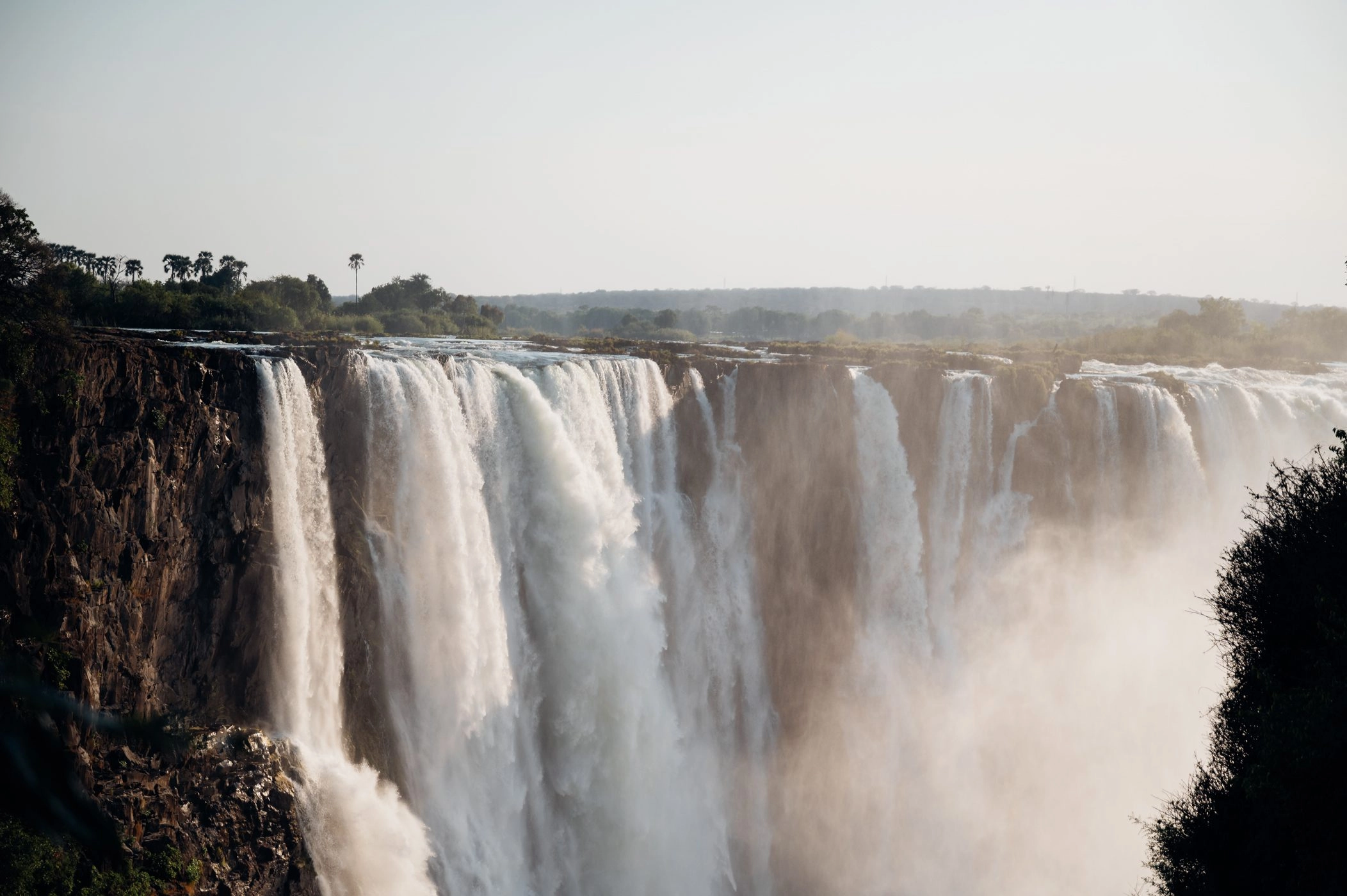
Understanding tipping in Zimbabwe is particularly important for safari travellers because the country has one of southern Africa's…
Read article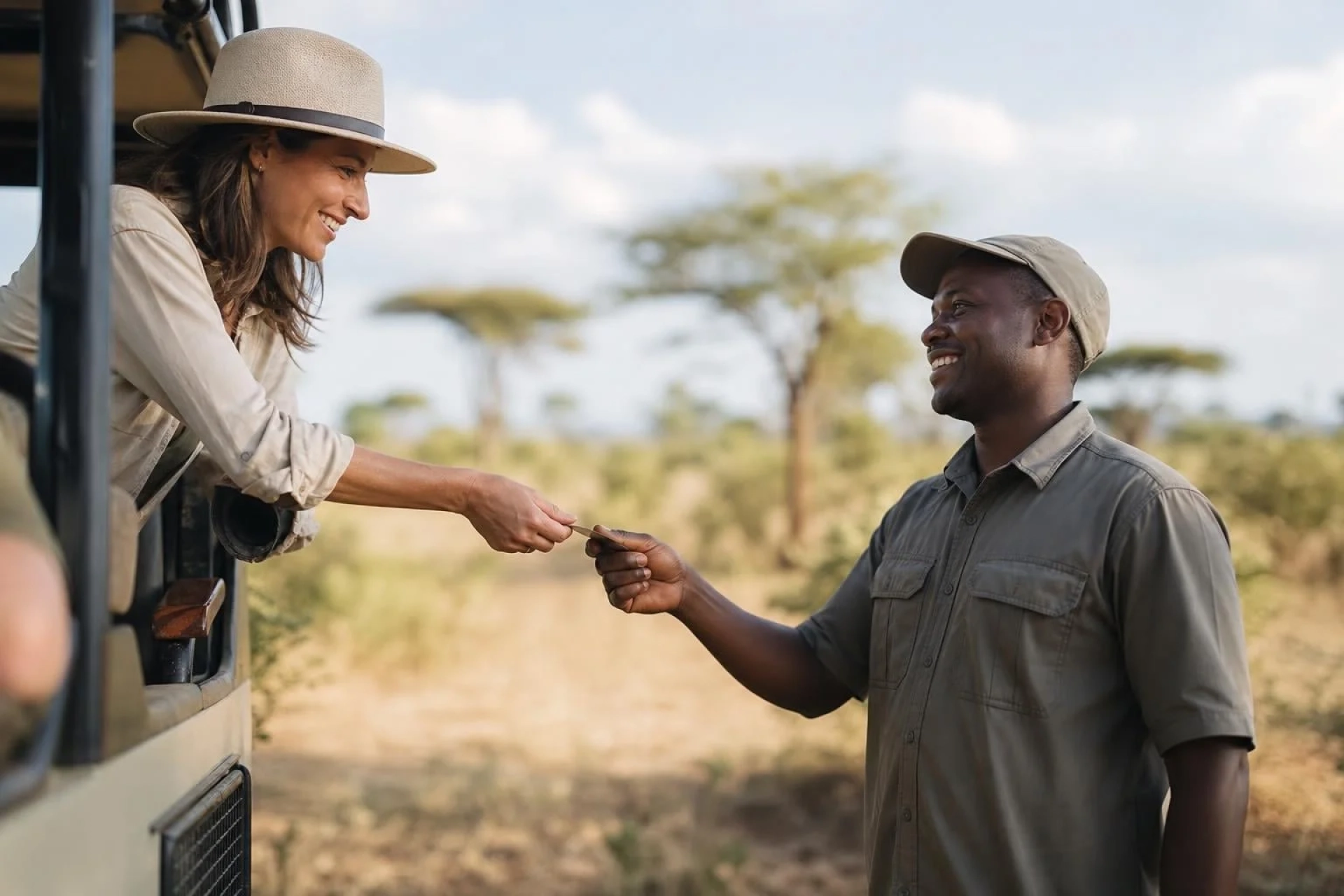
Tipping in Namibia differs subtly from tipping in many other major African safari destinations because a significant proportion…
Read article
Tipping in Botswana is relatively easy once travellers understand how the country's safari industry operates. Unlike many East…
Read articleLet us take you closer to the wildlife, people and places that make Africa extraordinary.
Plan Your Safari Today