
10 of the Safest Places To Visit in Africa in 2025-2026
The following are the ten most secure countries in Africa to visit between 2025 and 2025: 10 of…
Read article

Africa travel
African culture, characterized by its fascinating tribes and traditions, is an immensely complex topic encompassing a vast continent. Discover information regarding the most renowned African tribes and traditional cultures, as well as suggested cultural tours in…
African culture, characterized by its fascinating tribes and traditions, is an immensely complex topic encompassing a vast continent. Discover information regarding the most renowned African tribes and traditional cultures, as well as suggested cultural tours in Africa.
Africa is a continent rich in cultural diversity, with a history shaped by centuries of colonization, resilience, and rich traditions. Spanning an impressive area of approximately 11.7 million square miles (30.37 million square kilometers), Africa is the second-largest continent in the world. Remarkably, Africa is the only continent that straddles both the northern and southern hemispheres, giving it a wide range of climates and ecosystems. To put its size into perspective, the United States is roughly 32.4% larger than Africa, while the United Kingdom is about 0.8% smaller.
Home to more than 1.2 billion people, which accounts for over 16% of the global population, Africa is a melting pot of over 3,000 distinct tribes and ethnic groups, each with unique languages, customs, and traditions. These tribes are spread across 54 diverse nations, making generalizations about “African people” an oversimplification of the continent’s vast richness. The variety of cultures in Africa is seen in everything from food and music to religion and languages.
A notable example of this diversity is South Africa, where the constitution recognizes 11 official languages, reflecting the country’s multicultural fabric. South Africa’s “rainbow nation” concept embraces its wide range of ethnic groups, each contributing to the nation’s unique identity.
Given the continent’s cultural complexity, it is essential to explore and understand some of the well-known African tribes, each with their distinct customs and practices. These tribes have preserved their traditions through generations, and many still live in ways that reflect their ancestral lifestyles.
I have selected 10 renowned African tribes to illustrate Africa’s captivating tribal traditions and dynamic civilizations.
The Maasai are a semi-nomadic ethnic group primarily found in Kenya and Tanzania in East Africa. Known for their rich culture, unique traditions, and striking appearance, the Maasai are one of the most well-known indigenous groups in Africa. Their lifestyle, history, and practices are deeply connected to the land and their pastoralist way of life, which revolves around cattle.
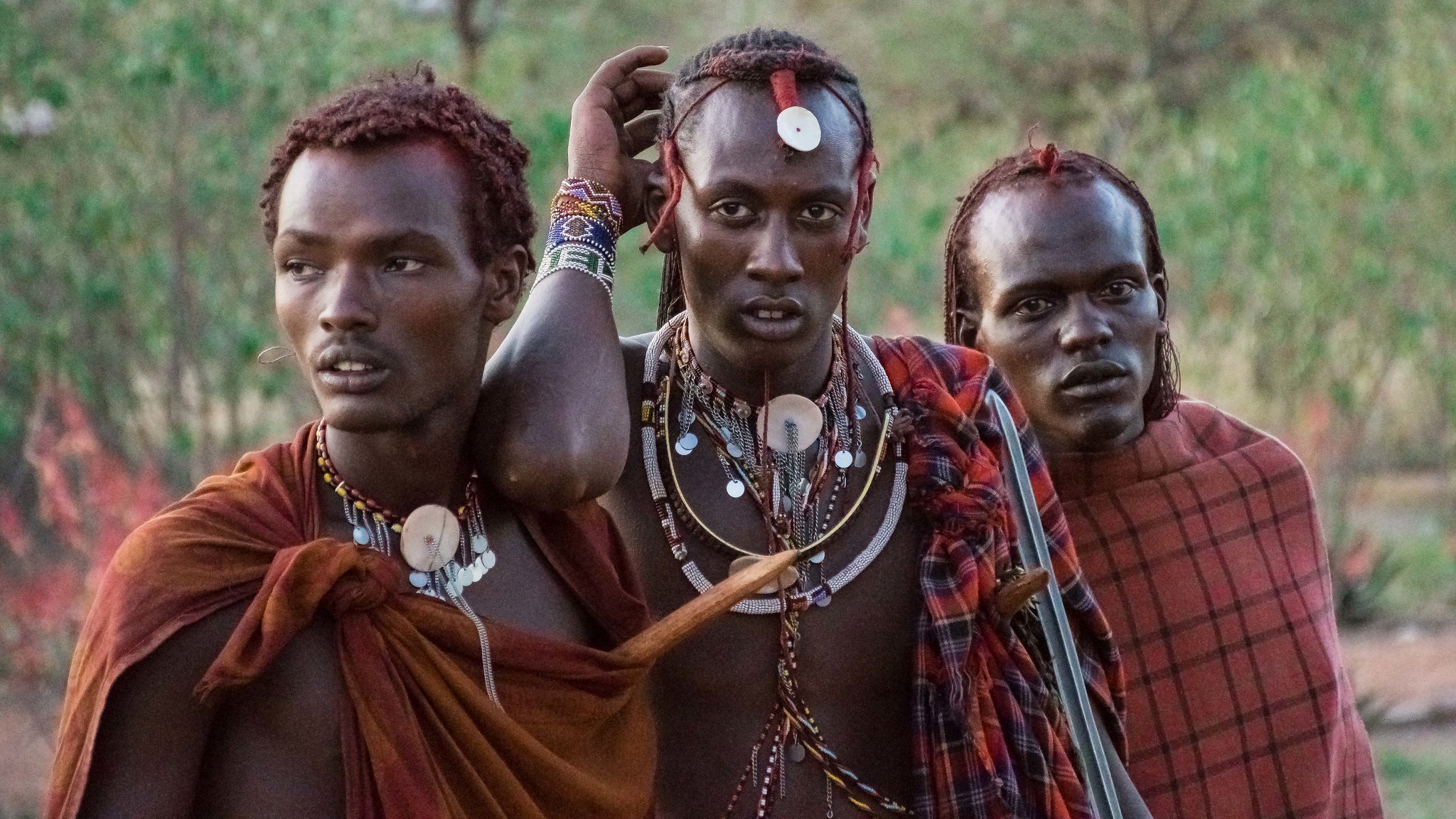
The history of the Maasai is rich and complex. The Maasai are believed to have migrated from the Nile Valley in the north to their present homeland in Kenya and Tanzania around the 15th century. They were originally part of a larger Nilotic-speaking group, but over time they developed a distinct culture centered around cattle herding.
The Maasai were originally a powerful and expansive group, and they established a vast territory that spanned much of southern Kenya and northern Tanzania. They were skilled warriors and often engaged in conflicts with neighboring groups to protect their land and livestock.
During the colonial era, the Maasai experienced significant changes. The arrival of European colonizers led to the loss of much of their land, and their traditional lifestyle was severely disrupted. British colonialists especially enforced land policies that restricted the Maasai to smaller areas, affecting their pastoral practices. The Maasai were also affected by the introduction of new diseases, such as smallpox and rinderpest, which devastated their cattle population.
Despite these challenges, the Maasai were able to retain much of their cultural identity. While many Maasai people have since adapted to more modern ways of living, including education and urbanization, the traditional ways of life still hold strong in many communities.
In the present day, the Maasai are spread across both Kenya and Tanzania, and their population is estimated to be around 1 million people. Although some Maasai have moved to urban areas and embraced more modern lifestyles, many still practice their traditional pastoralism. However, they face numerous challenges, including:
Tourism plays a significant role in the modern economy for some Maasai communities, particularly those who live near national parks and reserves like the Maasai Mara in Kenya and Serengeti in Tanzania. These areas attract tourists who come to witness the annual Great Migration of wildebeest and zebras, with Maasai guides often leading safaris. Additionally, Maasai culture itself—particularly their dances, beadwork, and crafts—draws tourists interested in learning about their way of life.
While traditional Maasai society has been patriarchal, there have been significant changes in the roles of women, particularly in the modern era. While many women continue to be responsible for household chores and childcare, some Maasai women are now pursuing education and career opportunities, and women’s rights groups are working to address issues like female genital mutilation (FGM) and early marriages.
In recent years, there has been a push within the Maasai community to empower women and give them more voice and rights within society.
The Maasai are a resilient and proud people with a deep connection to their culture, land, and livestock. Their history is one of migration, resilience in the face of colonialism, and continued adaptation in the modern world. While challenges remain, including land disputes, climate change, and the integration of traditional and modern lifestyles, the Maasai continue to preserve much of their cultural identity, making them one of the most recognizable and enduring cultures in Africa.

The Karimojong are an ethnic group primarily found in the northeastern region of Uganda, particularly in Karamoja, a semi-arid area. They are closely related to the Maasai and share many cultural traits, as both groups belong to the Nilotic language family. The Karimojong are known for their pastoral lifestyle, which revolves around cattle, and their rich cultural heritage.
The Karimojong are part of the larger Nilotic ethnic groups that migrated to the northeastern regions of Uganda from the Sudan and Ethiopia. Their ancestors are believed to have moved into the Karamoja region around the 14th century, though exact dates are uncertain.
Throughout their history, the Karimojong have been largely semi-nomadic pastoralists, relying on their herds of cattle for sustenance and wealth. Their lifestyle has made them resilient, as they have adapted to the harsh, semi-arid environment of Karamoja, which is prone to droughts and resource scarcity.
During the colonial period in the early 20th century, the British sought to impose control over the Karimojong, like many other ethnic groups in Uganda. However, the Karimojong were relatively resistant to external control, and their pastoral lifestyle, which was centered around livestock mobility, made it difficult for the colonial administration to fully assert authority over the region.
In post-colonial Uganda, the Karamoja region remained one of the least developed areas, with minimal infrastructure and limited access to education and healthcare. This underdevelopment, coupled with the region’s isolation, contributed to the Karimojong being marginalized by the broader Ugandan society.
Despite the challenges they face, the Karimojong remain a resilient and proud community, with strong cultural ties to their heritage. As the world modernizes, there is a growing recognition of the need to preserve their traditions while also embracing education, health care, and sustainable development.
Efforts to improve living conditions in the Karamoja region are ongoing. These include initiatives to improve water access, promote agriculture, and empower women and youth. Additionally, the government and various NGOs are working to preserve the Karimojong’s cultural identity while providing modern opportunities for their children and younger generations.
The Karimojong are an important and unique ethnic group in Uganda, with a rich cultural heritage rooted in pastoralism, rituals, and community. Although they face numerous challenges in the modern era, including climate change, conflict, and underdevelopment, the Karimojong continue to maintain strong cultural traditions. Their resilience and deep connection to their land and cattle make them an essential part of Uganda’s diverse cultural fabric. With continued support for education, infrastructure, and peacebuilding, the Karimojong people can navigate the future while retaining their rich heritage.

Share This Article
The following are the ten most secure countries in Africa to visit between 2025 and 2025: 10 of…
Read article
What districts are near Kibale National Park? Kibale National Park is located in Western Uganda and spans several…
Read article
Mountains in Africa: Africa is home to some of the most majestic and diverse mountain ranges in the…
Read article
Your Big African Safari Planner: What to Expect from the Top Safari Countries in 2026 As the new…
Read articleLet us take you closer to the wildlife, people and places that make Africa extraordinary.
Plan Your Safari Today