

Birding Safari in Fort Portal
A birding safari in Fort Portal introduces travelers to one of Uganda's most beautiful and biologically diverse western regions. Surrounded by crater lakes, tea plantations, wetlands, forest fragments, farmland and the foothills of the Rwenzori Mountains, Fort Portal is far more than a convenient overnight stop on the road to Kibale National Park.
- Location Fort Portal, Uganda
- Duration Half Day – Multi-Day
- Difficulty Easy to Moderate
- Best For Birdwatchers, Photographers & Nature Lovers
Birding in Fort Portal
A birding safari in Fort Portal introduces travelers to one of Uganda's most beautiful and biologically diverse western regions. Surrounded by crater lakes, tea plantations, wetlands, forest fragments, farmland and the foothills of the Rwenzori Mountains, Fort Portal is far more than a convenient overnight stop on the road to Kibale National Park.
For birders, the city is an excellent base for exploring several important habitats within a relatively short distance.
The surrounding landscape lies between the forests of Kibale, the wetlands of Bigodi, the crater-lake region and the Rwenzori foothills. This creates opportunities for forest birds, wetland species, raptors, sunbirds, weavers and numerous open-country birds.
Most importantly, Fort Portal combines naturally with Kibale National Park, one of Uganda's premier chimpanzee and forest-birding destinations.
A Fort Portal birding safari can therefore be planned as a relaxed one-day experience, a two- or three-night regional exploration, or part of a much longer Uganda birding journey connecting Entebbe, Murchison Falls, Kibale, Queen Elizabeth, Bwindi and Mgahinga.
The area's cool highland climate, scenic roads and variety of accommodation make it especially attractive for travelers who want to combine birding with landscapes, primates and local culture.
Plan Your Uganda Birding SafariWhy Go Birding in Fort Portal?
What to Expect on a Fort Portal Birding Safari
General travelers should consider at least two nights.
Dedicated birders may prefer three to four nights.
A stronger itinerary can include:
one full morning of forest birding;
chimpanzee trekking;
Bigodi Wetland Sanctuary;
crater-lake birding;
additional forest-edge birding.
Your Birding Experience Can Include
- Professional birding or nature guide
- Early-morning birdwatching
- Bird identification assistance
- Habitat interpretation
- Bird photography opportunities
- Personalised searches for target species
Birds You Can See in Fort Portal
Species depend on season, weather, habitat and the exact sites visited. Discuss target species with us when booking.
Fort Portal
Learn more
Green-breasted Pitta
One of Uganda's most famous specialist birding targets is the Green-breasted Pitta. Kibale is widely known among international birders as one of the important locations where this secretive forest bird may be searched for.
Habitat
Local habitats
Best area
Fort Portal
Status
Resident / Seasonal

Fort Portal
Learn more
Great Blue Turaco
The spectacular Great Blue Turaco occurs in forested habitats around western Uganda. Its large size and bright coloration make it one of the region's most memorable birds.
Habitat
Local habitats
Best area
Fort Portal
Status
Resident / Seasonal
Fort Portal
Learn more
Black-and-white-casqued Hornbill
The Black-and-white-casqued Hornbill is another striking western Ugandan forest bird. Its heavy wingbeats can be heard as birds move between large trees.
Habitat
Local habitats
Best area
Fort Portal
Status
Resident / Seasonal
Fort Portal
Learn more
Rwenzori Foothills
Fort Portal lies close to the Rwenzori Mountains, one of Africa's great mountain systems. The foothills introduce higher-elevation habitats and can add birds not commonly encountered in lowland environments.
Habitat
Local habitats
Best area
Fort Portal
Status
Resident / Seasonal
Fort Portal
Learn more
Sunbirds
The Fort Portal region's flowering vegetation supports a variety of sunbirds. Gardens, forest edges and agricultural landscapes can all be productive.
Habitat
Local habitats
Best area
Fort Portal
Status
Resident / Seasonal
Fort Portal
Learn more
Kingfishers
Wetlands, streams and crater lakes provide habitat for kingfishers. Pied Kingfishers can occur around open water.
Habitat
Local habitats
Best area
Fort Portal
Status
Resident / Seasonal
Best Birding Areas in Fort Portal
A good birding itinerary around Fort Portal should include several environments rather than concentrating on a single site.
Gateway to Kibale National Park
Fort Portal is closely associated with Kibale National Park. Kibale is internationally famous for chimpanzee trekking and contains one of East Africa's most important tropical forest ecosystems.
Best for: Birdwatchers exploring Fort Portal.
Bigodi Wetland Sanctuary
The Bigodi Wetland Sanctuary near Kibale is one of the region's most popular community-based nature experiences. The area combines swamp, woodland, farmland and forest-edge habitats.
Best for: Birdwatchers exploring Fort Portal.
Wetland Birding Around Fort Portal
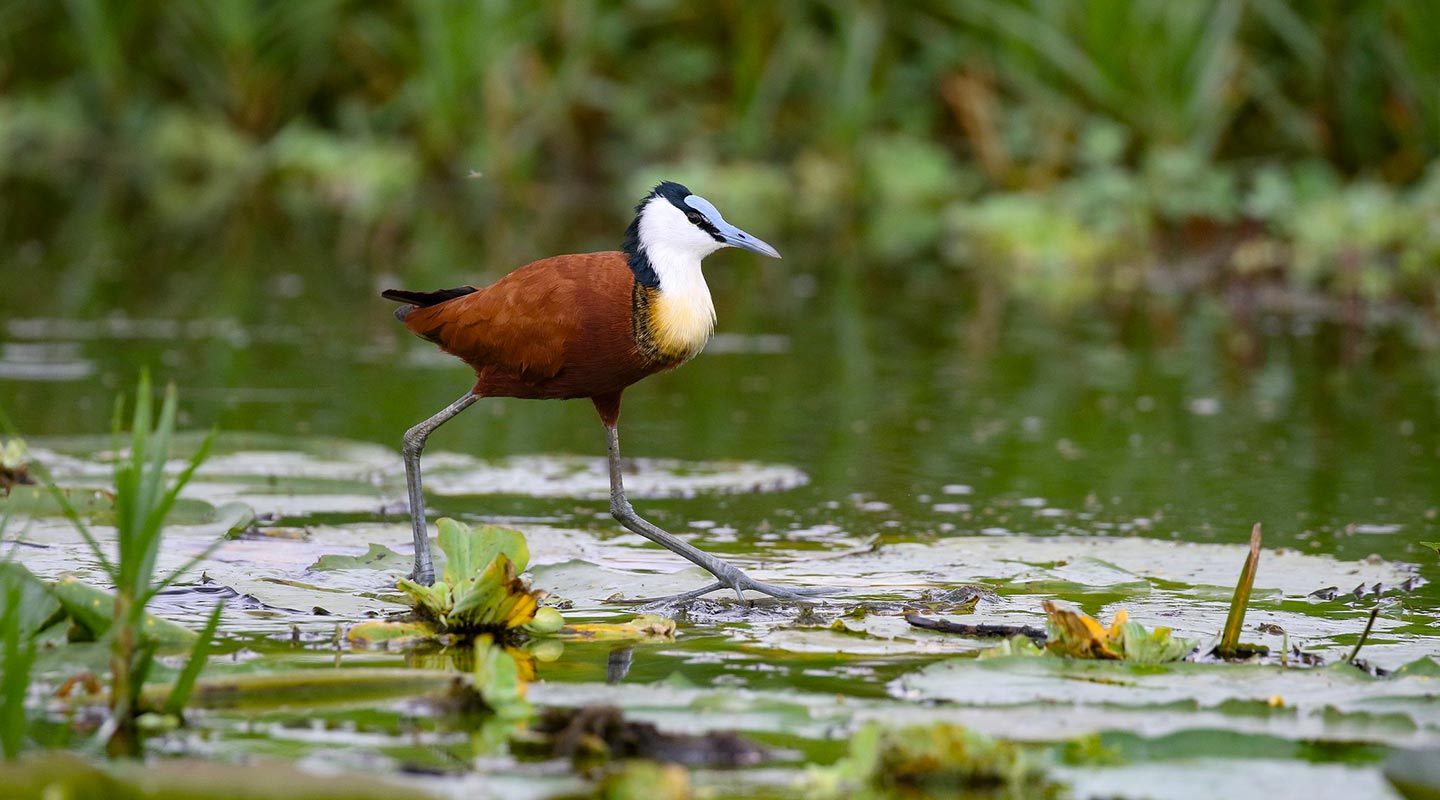
Wetlands around the Fort Portal region provide an important complement to forest birding. Kingfishers, herons, egrets, jacanas and other water-associated birds can occur.
Best for: Birdwatchers exploring Fort Portal.
Crater Lake
The Fort Portal and Kasenda region is famous for its crater lakes. These volcanic landscapes create some of western Uganda's most scenic birding routes.
Best for: Birdwatchers exploring Fort Portal.
Tea Plantation
Tea estates are a major feature of the Fort Portal region. Although plantations do not replace natural forest, their edges, shade trees and nearby vegetation can still support numerous birds.
Best for: Birdwatchers exploring Fort Portal.
Forest Greenbuls
Greenbuls are a major feature of western Uganda's forest birding. Several species may occur within the same forest.
Best for: Birdwatchers exploring Fort Portal.
Birding Habitats of Fort Portal
Understanding habitats makes birdwatching much more productive.
Woodland & Forest Edges
Listen for calls and watch canopy and understory movement along forest and woodland edges.
Open Country
Greater visibility supports raptor watching and terrestrial species.
Wetlands
Water attracts waterbirds and can be especially rewarding for photography.
Habitat Edges
Edges between habitats often concentrate bird activity.

Best Time for Birding in Fort Portal
Bird watching is possible throughout the year.
The region receives substantial rainfall, which keeps vegetation green.
- Year-round Birdwatching is possible throughout the year; seasonal conditions change which species are most active.
- Migration periods Migrants can increase diversity during certain months — ask us about your target species before booking.
- After the rains Rainfall can refresh habitats and boost breeding activity and wetland productivity.
- Drier months Drier conditions may improve road access and visibility for open-country scanning and photography.
Half-Day vs Full-Day Birding Tours
Fort Portal birding can be arranged to match your available time.
Half-Day Birding Safari — An early start concentrating on one or two productive habitats near your base. Ideal for stopovers and travellers with limited time.
Full-Day Birding Safari — More time to explore different elevations or habitat types and build a stronger day list.
Adventure in the Wild Safaris can arrange private birding guides and connect Fort Portal with a wider Uganda itinerary.
Adventure in the Wild Safaris can arrange private birding guides and connect Fort Portal with a wider Uganda itinerary.
Enquire About a Private Birding Tour
Landscape and Bird Photography
The region is particularly strong for environmental photography.
Rather than photographing every bird against a plain background, photographers can include tea fields, crater lakes and distant Rwenzori mountains.
- Carry a telephoto lens where possible
- Keep spare batteries ready
- Avoid disturbing birds for photographs
- Photograph during softer morning light
- Allow time for positioning and waiting
- Always place wildlife welfare ahead of the photograph
Remain on established trails.
What to Pack
Bring binoculars and an East African bird field guide.
- Quality binoculars
- Regional bird field guide or app
- Camera with telephoto lens
- Spare batteries
- Memory cards
- Neutral-coloured clothing
- Sun hat
- Sunscreen
- Refillable water bottle
- Small daypack
- Light jacket
- Comfortable walking shoes
- Personal medication
Wear lightweight long trousers and breathable shirts.
Good walking shoes are important.
How to Reach Fort Portal
Fort Portal is incorporated into privately guided Uganda journeys.
- Gateway Access Fort Portal is reached as part of a wider Uganda itinerary. We arrange private transfers timed for early birding starts.
- Private Guided Tour Adventure in the Wild Safaris can arrange specialist birding guides and logistics around Fort Portal.
- Combined Itineraries Birding days can be placed at the start or end of a longer Uganda safari.
Where to Stay for a Fort Portal Birding Safari
Choose accommodation that supports early starts for birding around Fort Portal.
- Budget Good-value options suitable for travellers focused on time in the field.
- Mid-Range Comfortable lodges or hotels with reliable service and convenient access for early pick-ups.
- Luxury Higher-end properties combining comfort with easy logistics for private birding guides.
- Birding-Friendly Base Prefer properties with gardens, natural surroundings or easy early-morning departures.
Fort Portal and Bigodi Combination
One of the easiest itineraries combines a chimpanzee trek in Kibale with an afternoon or separate morning at Bigodi Wetland Sanctuary.
Other Experiences
Pair Fort Portal birding with other experiences in the same area.

Frequently Asked Questions About Fort Portal Birding
Is Fort Portal good for bird watching?
Yes. Fort Portal offers productive habitats for both casual and dedicated birders.
Do I need a specialist birding guide?
A specialist guide greatly improves identification, especially for calls, habitat preferences and target species.
What is the best time of day for birding?
Early morning is generally best; late afternoon can also be productive.
Should I bring binoculars?
Yes. Binoculars are essential for any birding safari.
Can I combine birding with other safari activities?
Absolutely. Fort Portal birding can be combined with other Uganda destinations and experiences.
Include Birding in Your Uganda Safari
Plan Your Fort Portal Birding Experience
A birding safari in Fort Portal combines beautiful highland landscapes with access to some of western Uganda's richest habitats. From crater lakes and wetlands to tea estates and Kibale's tropical forest, the region offers exceptional variety within a relatively compact area. Add chimpanzee trekking, Bigodi Wetland Sanctuary and easy connections to Queen Elizabeth, Semuliki and Bwindi, and Fort Portal becomes an important stop on any serious Uganda nature itinerary. Adventure in the Wild Safaris can arrange private Fort Portal birding tours, chimpanzee-and-birding safaris and comprehensive Uganda bird watching journeys. Tell us your travel dates, target species, number of days and whether you want chimpanzee trekking included, and we can design the route around your interests.
- Trusted Local Experts
- Tailor-Made Itineraries
- Memorable & Responsible Travel