What should I look for when booking a luxury African safari?
When booking a luxury African safari, look beyond the room and compare the quality of guiding, wildlife location,…
Read article
Travel Guide
Africa's image in the popular imagination is dominated by savannah. Mention an African safari and many travellers immediately picture a lion resting beneath a flat-topped acacia, elephants walking across golden grassland or wildebeest spreading across the…
Africa’s image in the popular imagination is dominated by savannah. Mention an African safari and many travellers immediately picture a lion resting beneath a flat-topped acacia, elephants walking across golden grassland or wildebeest spreading across the Serengeti horizon. Yet some of the continent’s richest, oldest and most biologically important wildernesses lie beneath a completely different canopy. Africa’s forests range from dripping equatorial rainforests where mountain gorillas move silently through tangled vegetation to ancient coastal forests filled with endemic birds, vast miombo woodlands supporting elephants and wild dogs, mist-covered highland forests, riverine woodland and strange baobab landscapes that appear almost prehistoric.
Exploring the best African forests and woodlands therefore reveals another side of the continent.
In a forest, safari becomes more intimate. Visibility decreases, sounds become more important and wildlife is often discovered slowly rather than spotted from kilometres away. A broken branch may reveal an elephant’s recent passage. A distant chimpanzee call may echo through the canopy. A flash of colour can turn into a turaco, hornbill or butterfly. Even when large mammals remain hidden, the forest itself is constantly alive.
For travellers accustomed to traditional game drives, an African forest safari can completely redefine the meaning of wildlife travel.
There is no single ecosystem called an “African forest.”
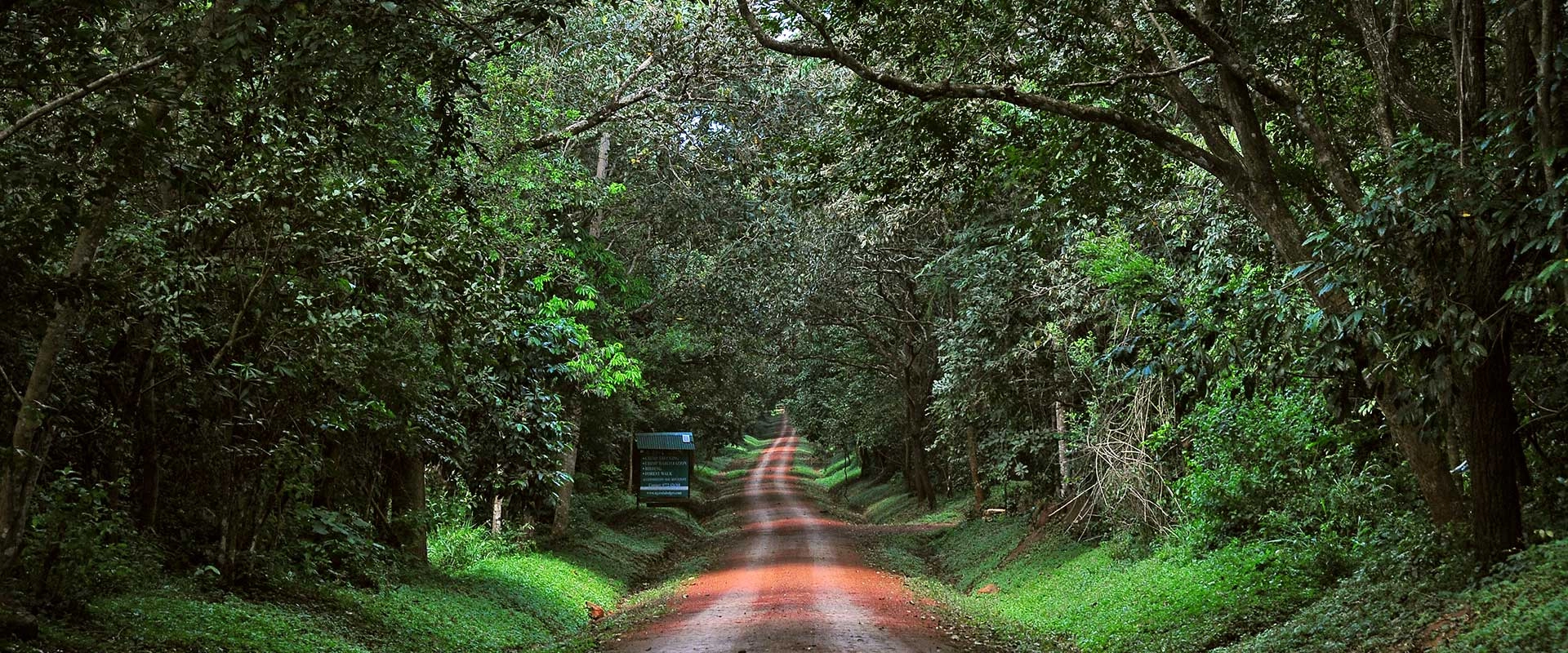
The continent contains enormous lowland tropical rainforests, montane forests, coastal forests, dry woodland, miombo, mopane, riverine forest and specialised island ecosystems. Rainfall, altitude, geology and temperature determine which plants dominate and which animals can survive. The humid forests of Uganda and Rwanda feel completely different from the open miombo woodland of southern Tanzania or Zambia. Madagascar’s forests contain evolutionary lineages found nowhere else. Kenya’s coastal forests support species separated from their relatives by huge distances.
Understanding this diversity makes forest travel much more interesting. Rather than viewing trees simply as the background to wildlife, visitors begin seeing the habitat itself as the foundation of the safari.
Few African forests are as internationally famous as Bwindi Impenetrable Forest.
Located in southwestern Uganda, Bwindi Impenetrable National Park protects an extraordinary montane and lowland forest landscape spread across steep ridges and deep valleys. The word “impenetrable” creates an accurate first impression. Vegetation can be dense. Vines cross trails. Ferns cover the forest floor. Mist can drift between ridges. Ancient trees rise above layers of smaller vegetation. Yet Bwindi’s global fame comes primarily from one extraordinary resident: the mountain gorilla.
A Bwindi gorilla trekking safari is unlike a conventional African game drive. Visitors enter the forest on foot with professional guides, trackers and, when desired, porters. The location of each habituated gorilla family varies daily because gorillas move naturally through their home range. Some treks are relatively short. Others require several hours of hiking across steep terrain. This uncertainty is part of the experience. The forest gradually becomes more than scenery. Guides interpret tracks, broken vegetation, droppings and feeding signs. Bird calls echo through the canopy while insects, butterflies and smaller primates appear unexpectedly.
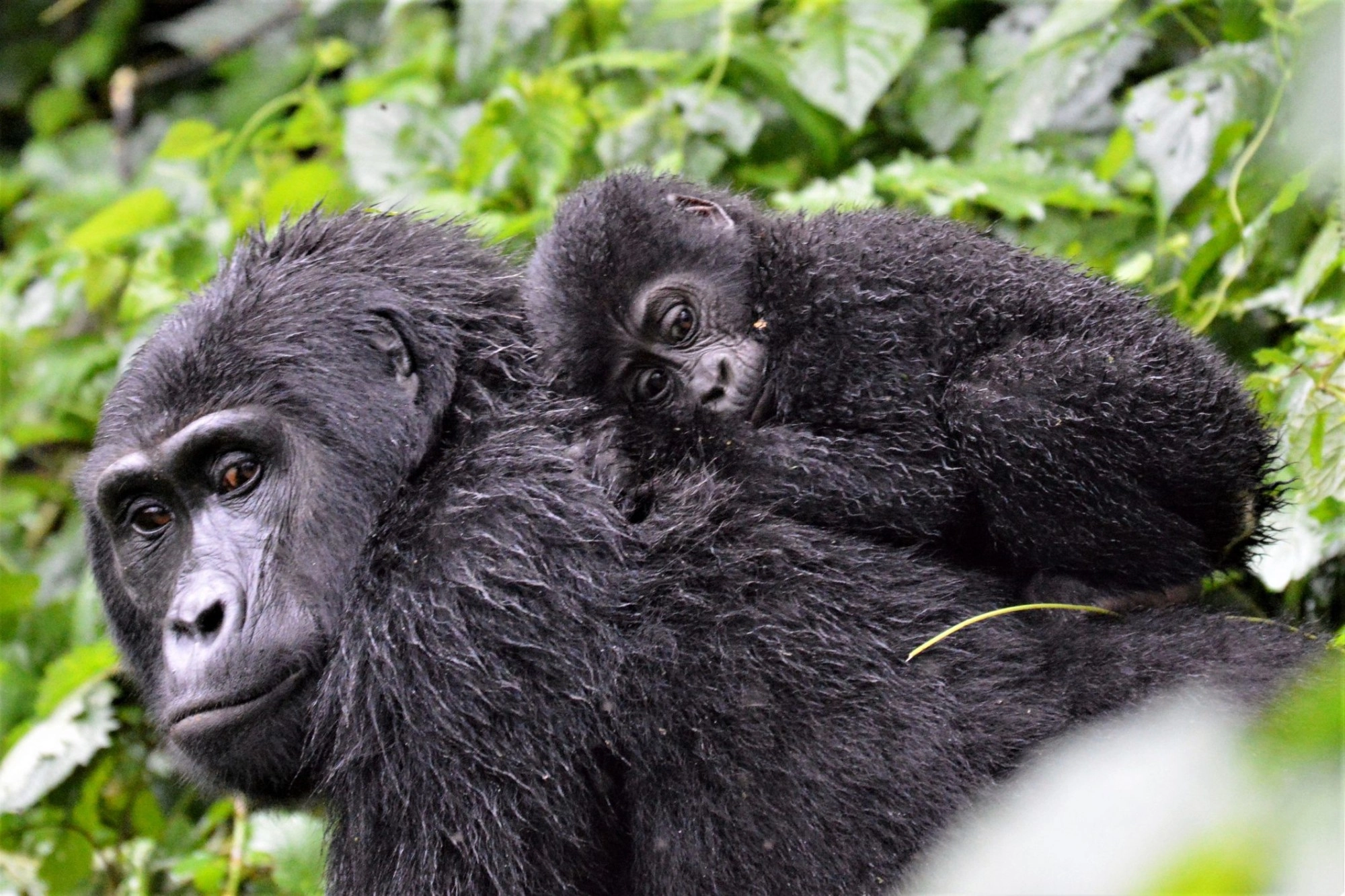
Then, often with surprisingly little warning, the gorillas are there. Watching a silverback feed only metres away is profoundly different from observing a lion from a vehicle. You are sharing the same forest floor. A mother may hold an infant. Juveniles may climb overhead. A huge silverback can appear completely relaxed despite his extraordinary strength. It is easy to understand why gorilla trekking in Uganda is considered one of the world’s greatest wildlife experiences.
Travellers should resist treating Bwindi purely as a place to see gorillas. The forest has exceptional biodiversity. Primates, forest mammals, butterflies and an extraordinary variety of birds occur within the ecosystem. For birders, Bwindi is especially important because it supports species associated with the Albertine Rift. Forest walks and birding experiences therefore complement gorilla trekking exceptionally well. A visitor spending several nights around Bwindi can experience the forest at a slower pace rather than arriving solely for a single trek and immediately leaving.
If Bwindi is Uganda’s great gorilla forest, Kibale National Park is its primate capital.
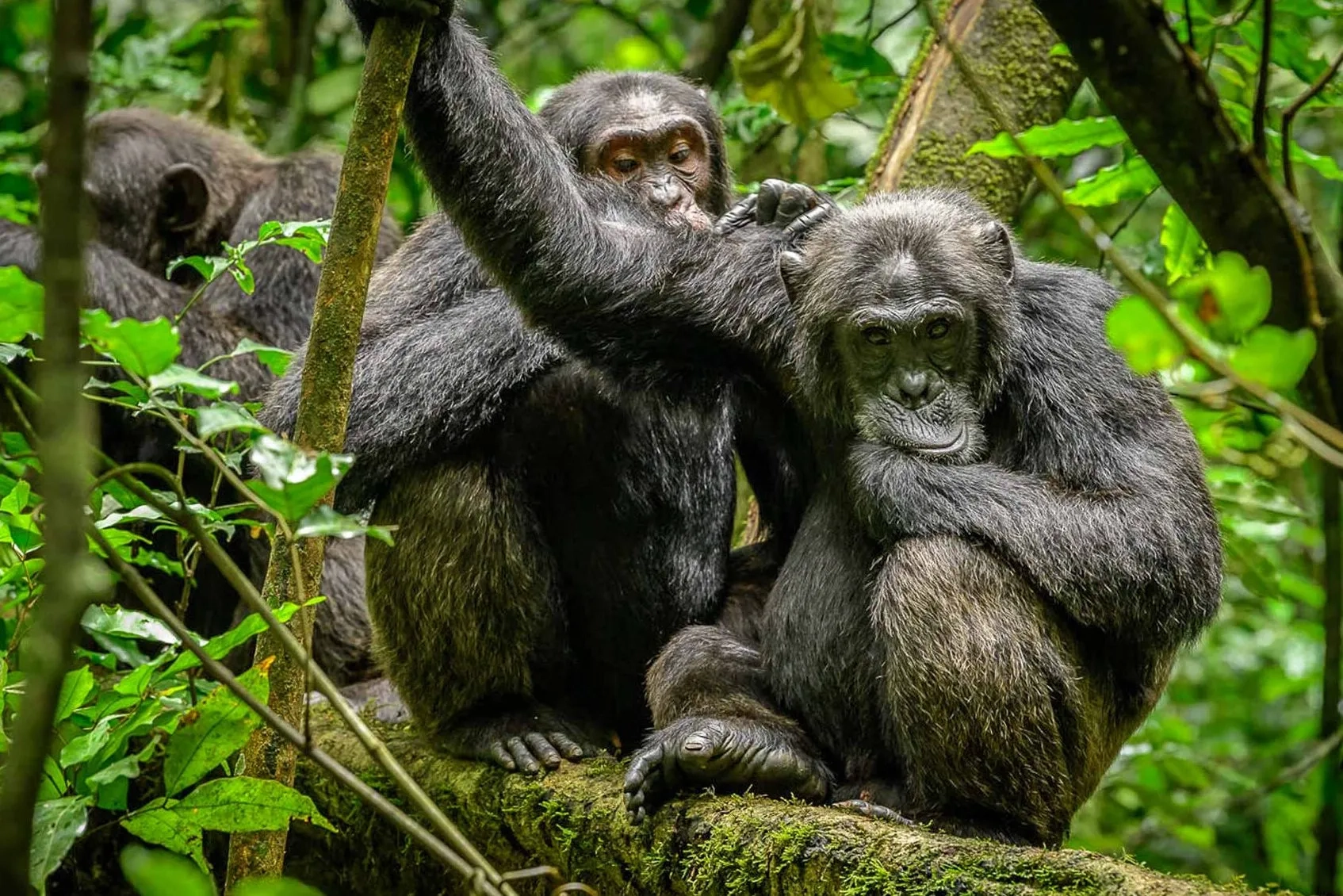
Located in western Uganda, Kibale protects a varied forest ecosystem that includes mature tropical forest alongside other vegetation types. The park is particularly famous for chimpanzees.
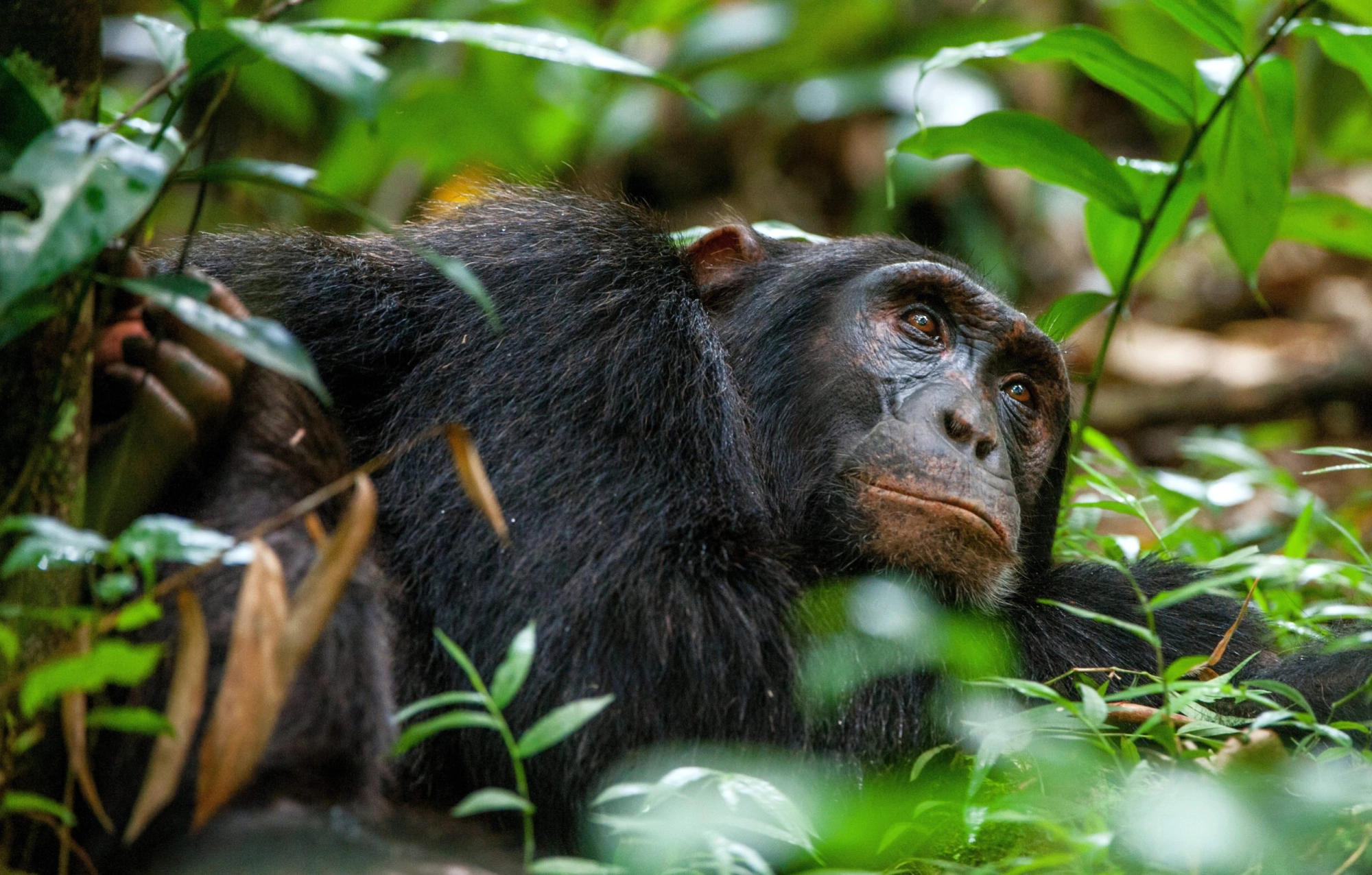
A Kibale chimpanzee trekking safari offers a fascinating contrast with gorilla trekking. Gorillas often spend long periods feeding or resting relatively close to the ground. Chimpanzees can be far more dynamic. They vocalise loudly. They climb rapidly. They move through trees. They may travel considerable distances. The experience can therefore feel energetic and unpredictable. A group of chimpanzees calling through the forest creates one of Africa’s most unforgettable natural soundscapes.
The noise carries through the canopy, making visitors aware of animals they may not yet be able to see.
One of Uganda’s greatest safari advantages is the ability to combine chimpanzee trekking in Kibale with gorilla trekking in Bwindi. These experiences can be incorporated into a wider Uganda safari including Queen Elizabeth National Park, Lake Mburo and Murchison Falls. The result is a journey combining tropical forest with classic savannah wildlife. Few African destinations offer such diversity within a single itinerary.
Travellers visiting Kibale can also explore community and wetland environments around the forest. The Bigodi Wetland Sanctuary is particularly popular for guided nature walks and birding. This creates an excellent complement to chimpanzee trekking because visitors can slow down and concentrate on smaller wildlife, vegetation and community conservation.
Rwanda’s Nyungwe Forest protects one of East Africa’s most important montane rainforest ecosystems.
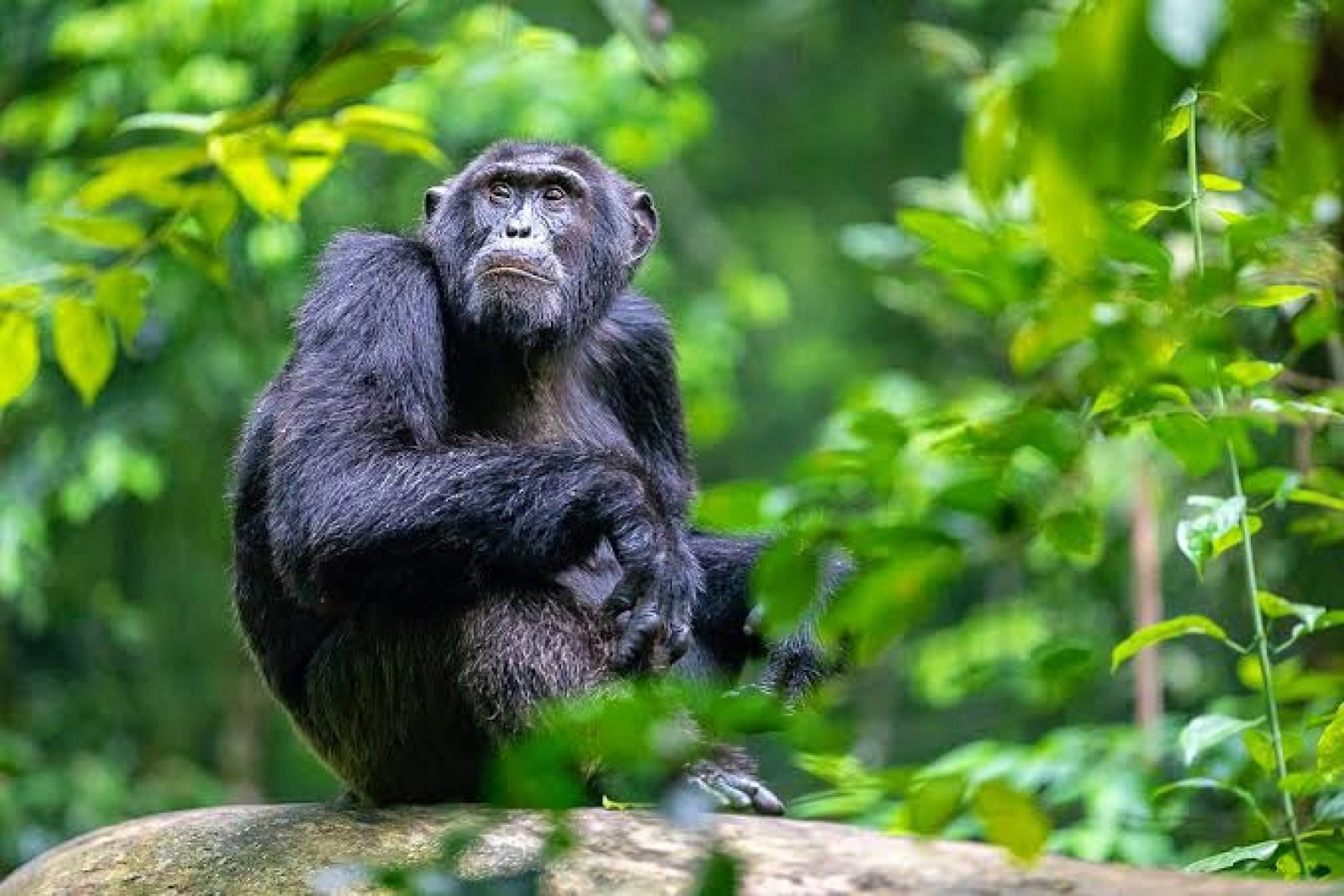
The landscape is striking. Forest-covered hills extend toward the horizon while mist settles into valleys. Unlike the open plains associated with many African safaris, Nyungwe feels enclosed, cool and intensely green. The park is particularly important for primates and birds. Chimpanzees occur here alongside several monkey species. For travellers designing a Rwanda safari, Nyungwe creates an important ecological contrast with Volcanoes National Park and Akagera National Park.
Chimpanzee trekking is one of Nyungwe’s signature activities. As elsewhere, encounters depend on natural animal movements. The forest terrain can be demanding, but the search itself is part of the experience. Visitors listen for calls and watch guides interpret signs in the vegetation. Even before chimpanzees appear, the forest provides constant interest.
Nyungwe has also become famous for experiences allowing travellers to appreciate the forest from above ground level. Looking across the canopy reveals something that is difficult to understand from a trail. The forest is not a flat surface. It consists of multiple vertical layers, each providing habitat for different plants, insects, birds and mammals. Seeing the canopy stretching across Rwanda’s hills demonstrates the scale of the ecosystem.
The Congo Basin rainforest is one of the world’s great wilderness systems.
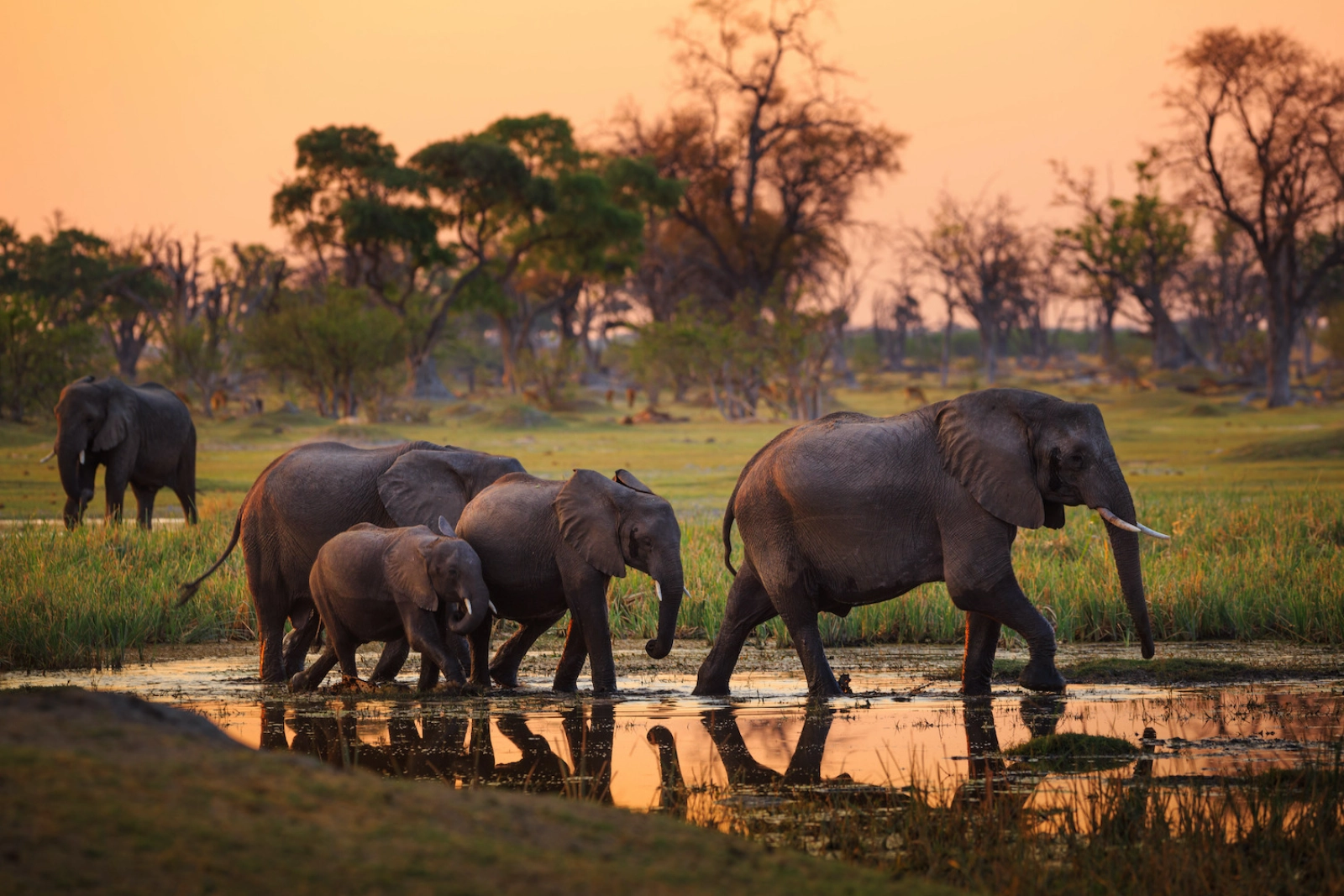
Spreading across several Central African countries, it represents the second-largest tropical rainforest region on Earth after the Amazon. Its scale is difficult to comprehend. Rivers penetrate enormous forests. Swamps cover vast areas. Some regions remain extremely remote. Wildlife includes forest elephants, great apes, antelope, birds, reptiles and countless smaller organisms. For conservation, the Congo Basin is globally significant. Its forests store enormous quantities of carbon and support communities whose lives have been connected to these ecosystems for generations.
The Congo Basin and associated Central African forests support several great ape populations. Western lowland gorillas inhabit forests in parts of the region. Other forest systems farther east support eastern gorillas. For travellers, visiting these landscapes requires considerably more planning than a conventional safari. Infrastructure can be limited. Political and security conditions vary enormously by country and region. Travel advice must therefore be checked carefully. Nevertheless, ecologically, the Congo Basin deserves recognition as one of Africa’s greatest natural treasures.
One of the most remarkable animals of Central Africa is the African forest elephant. Forest elephants differ from the more familiar savannah elephants of East and Southern Africa. Moving through dense rainforest, they can be surprisingly difficult to observe. Their role in the ecosystem is enormous. By feeding on vegetation, dispersing seeds and opening pathways, elephants influence the structure of the forest itself.
Near Kenya’s Indian Ocean coast lies a forest that many safari travellers overlook. Arabuko Sokoke Forest is one of East Africa’s most important surviving coastal forests. Although far smaller than the Congo Basin, its biological importance is exceptional. Coastal forests once covered larger areas along East Africa, but much of that habitat has disappeared. Remaining fragments therefore protect species with highly restricted distributions.
For birdwatchers, Arabuko Sokoke is a major destination. The forest supports rare and localised species that make it particularly valuable within a Kenya birding safari. Unlike the Masai Mara, where wildlife can often be observed across open plains, forest birding requires patience. Calls are important. Movement in the canopy must be followed carefully. A bird may appear for only a few seconds before disappearing again. This makes successful sightings especially rewarding.
Arabuko Sokoke is particularly convenient because it can be combined with Kenya’s coast. Travellers can explore forest habitats and then continue to beaches around Watamu or nearby coastal areas. This produces a completely different Kenya itinerary from the traditional Nairobi-Masai Mara route.
Western Kenya’s Kakamega Forest represents another important forest ecosystem. It is often described as a surviving fragment associated with the broader equatorial rainforest systems that once extended farther across the region. The forest is especially interesting for birders, butterfly enthusiasts and travellers interested in East African plant diversity. Walking beneath the canopy provides a completely different experience from Kenya’s savannah reserves. The environment is humid. Vegetation is dense. Bird calls dominate.
Monkeys move through trees. Butterflies gather in sunny openings.
Kakamega demonstrates how fragmented many African forests have become. When large forests are reduced to isolated patches, species lose habitat and populations become separated. Protecting remaining forest is therefore about more than conserving beautiful scenery. It maintains ecological processes and genetic connections essential for long-term survival. For travellers, visiting these forests can contribute economically to conservation when tourism is responsibly managed.
Not all great African forests are dense rainforest. The miombo woodlands form one of the continent’s largest vegetation systems, extending across parts of countries including Tanzania, Zambia, Zimbabwe, Mozambique, Malawi and Angola. Miombo can look relatively open compared with tropical rainforest. Trees are spaced across grass-covered ground. Seasonal changes can be dramatic. During dry periods, the landscape becomes dusty and muted. After rains, vegetation turns green and productive.
Miombo supports a wide range of wildlife. Elephants move through these woodlands. Antelope feed among trees and clearings. Predators follow prey. African wild dogs survive in some major wilderness areas. Bird diversity can be excellent. Because vegetation can restrict visibility, game viewing may require more patience than on open plains. This creates a safari experience based on interpretation and tracking rather than distant visibility.
Tanzania contains enormous areas of woodland within parks such as Nyerere National Park and Ruaha National Park. These destinations offer a different safari atmosphere from Serengeti. Wildlife can be excellent, yet visitor numbers are often lower than on the famous northern circuit. For repeat safari travellers, exploring Tanzania’s woodland ecosystems provides a deeper understanding of the country’s ecological diversity.
Mopane woodland is another defining African habitat. The mopane tree is instantly recognisable by its butterfly-shaped leaves. Large areas of southern Africa are dominated by this vegetation. Mopane tolerates hot, dry conditions and occurs in several famous wildlife regions. Elephants are strongly associated with mopane because they feed on its leaves and branches. In areas with high elephant density, their feeding behaviour can dramatically influence woodland structure.
Northern parts of Kruger National Park contain extensive mopane habitat. Travellers accustomed to the more open southern sections of Kruger may find the north visually different. The woodland can make wildlife harder to spot, but it also creates excellent habitat for numerous species. Exploring these quieter regions is particularly rewarding for experienced visitors who want to see more than the park’s famous Big Five hotspots.
Madagascar separated from other landmasses millions of years ago, allowing its plants and animals to evolve in extraordinary isolation. The result is one of Earth’s most distinctive natural environments. The island contains rainforests, dry deciduous forests, spiny forests and mangroves. Many species occur nowhere else. Lemurs are the most famous example.
Eastern Madagascar contains humid forests where lemurs move through dense vegetation. The haunting calls of indri are among the island’s most memorable wildlife sounds. Chameleons, frogs, insects and unusual plants create additional interest. A Madagascar wildlife safari therefore feels fundamentally different from mainland Africa. There are no classic Big Five game drives. Instead, visitors explore on foot, concentrating on endemic species and forest ecology.
Western Madagascar contains dry forests dominated by a different collection of species. Baobabs become prominent. Seasonality is stronger. Vegetation can lose leaves during dry periods. These ecosystems demonstrate just how much diversity can exist within a single island.
The final category is not one individual forest but one of Africa’s most visually distinctive woodland landscapes: areas dominated or punctuated by baobab trees. Baobabs are among the continent’s most recognisable plants. Their enormous trunks store water, while branches create strange silhouettes that have inspired countless legends. Some individuals can live for extraordinary lengths of time.
Madagascar is famous for the Avenue of the Baobabs. Botswana’s Makgadikgadi region contains celebrated ancient specimens. Zimbabwe, Zambia, Tanzania and other African countries also support baobabs. Tarangire National Park in Tanzania is particularly famous for combining baobab scenery with elephants and other safari wildlife. This creates one of East Africa’s most photogenic woodland landscapes.
A forest safari requires a different mindset. On the Serengeti, an elephant may be visible from kilometres away. In rainforest, an animal weighing hundreds of kilograms can disappear several metres from the trail. This changes how travellers experience wildlife. Sound becomes critical. Tracks become important. Guides interpret vegetation. Movement must be followed carefully. The reward is intimacy. When an animal finally appears, the encounter can feel almost private.
Africa’s forests are particularly important for primates. Mountain gorillas, chimpanzees, colobus monkeys, mangabeys and numerous other species depend on forest habitat. For travellers, primate safaris have become one of the strongest alternatives to conventional Big Five tourism. Uganda is especially well positioned because visitors can combine gorilla trekking in Bwindi, chimpanzee trekking in Kibale and traditional game viewing in a single journey. Rwanda offers gorillas, chimpanzees and savannah wildlife within a relatively compact country.
Birdwatchers often understand African forests better than general safari travellers because so many specialised birds depend on forest ecosystems. Forest birding can be challenging. Visibility is limited. Species may remain high in the canopy. Calls become essential identification tools. Yet this difficulty makes the experience addictive. Uganda’s Albertine Rift forests are especially important for birders, while Kenya’s coastal forests, Madagascar and Central Africa each support highly distinctive avifauna.
African forests face enormous pressure. Agricultural expansion, logging, charcoal production, infrastructure development and human population growth can fragment habitat. Climate change adds additional uncertainty. When forests disappear, wildlife is not the only loss. Forests protect watersheds. They influence rainfall patterns. They store carbon. They stabilise soils. They provide resources for communities. They support pollinators and countless organisms that remain poorly studied. Protecting forests is therefore fundamental to both biodiversity and human wellbeing.
Well-managed tourism can help create economic reasons to protect forests. Gorilla tourism provides one of Africa’s most visible examples. Travellers pay significant amounts for the opportunity to visit mountain gorillas. That tourism generates employment for guides, trackers, porters, lodge workers, drivers and surrounding communities. Conservation benefits are strongest when tourism revenue reaches local people. A forest that creates livelihoods through tourism becomes economically valuable while remaining intact. This does not solve every conservation problem, but it can become an important part of a broader strategy.
One of the best ways to appreciate Africa’s ecological diversity is to combine forest and savannah. In Uganda, travellers can trek gorillas in Bwindi before continuing to Queen Elizabeth National Park. Chimpanzees in Kibale can be followed by game drives and boat safaris. In Rwanda, Nyungwe and Volcanoes can be combined with Akagera. In Tanzania, miombo woodland can be compared with Serengeti grasslands. In Kenya, coastal forest can complement the Masai Mara.
These combinations produce a much richer understanding of African wildlife than focusing on a single habitat.
The best African forests and woodlands reveal a continent far more ecologically diverse than the classic savannah safari image suggests. In Bwindi, mountain gorillas move through ancient vegetation. In Kibale, chimpanzee calls echo between enormous trees. Nyungwe covers Rwanda’s hills in deep green forest. The Congo Basin extends across an almost unimaginable area of Central Africa. Kenya’s remaining coastal forests preserve rare species. Miombo and mopane support elephants, predators and birds across vast portions of Southern and Eastern Africa.
Madagascar’s isolation has produced forests unlike anywhere else on Earth. And ancient baobabs turn dry woodland into landscapes that seem almost mythological. To explore an African forest is to learn to safari differently. Slow down. Listen. Look beneath the canopy. Study the tracks. Notice the insects. Watch the branches. The wildlife may be harder to find than on the open plains. But when the forest finally reveals its secrets, the experience can be among the most rewarding in Africa.
Get quick answers to the most common questions. If you still have questions, our safari experts are here to help.
There is no single best choice. Bwindi Impenetrable Forest is exceptional for mountain gorillas, Kibale for chimpanzees, Nyungwe for primates and montane forest, Madagascar for endemic wildlife, and the Congo Basin for sheer ecological scale.
Uganda’s Bwindi Impenetrable National Park is one of the world’s premier mountain gorilla trekking destinations. Rwanda’s Volcanoes National Park also offers exceptional gorilla encounters.
Kibale National Park in Uganda is among Africa’s most celebrated chimpanzee trekking destinations.
Yes. Africa contains vast tropical rainforest systems, particularly within the Congo Basin, as well as important montane and coastal rainforests across East, Central and West Africa.
Yes. Uganda and Rwanda both make it possible to combine primate experiences with traditional wildlife viewing, while regional flights also allow combinations with Kenya or Tanzania.
Lightweight long trousers, long sleeves, sturdy hiking shoes, rain protection and gardening-style gloves can be useful for trekking in dense tropical forest. Exact equipment depends on the destination and season.
Our safari experts are here to help you plan your safari. Get personalized advice, the latest information and a free, no-obligation quote.
We typically reply within a few hours.

Share This Article
When booking a luxury African safari, look beyond the room and compare the quality of guiding, wildlife location,…
Read article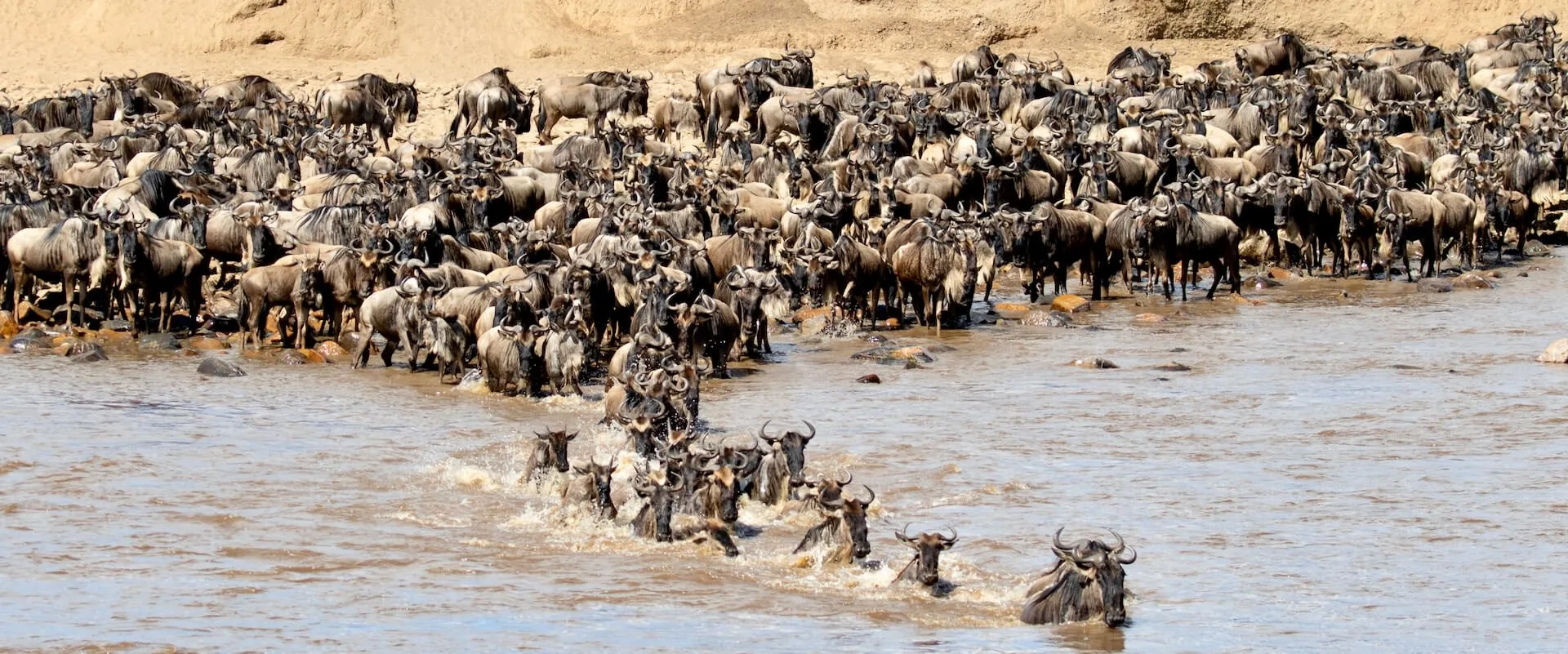
The Great Migration in Africa happens all year because the herds continuously circulate through the Serengeti–Mara ecosystem in…
Read article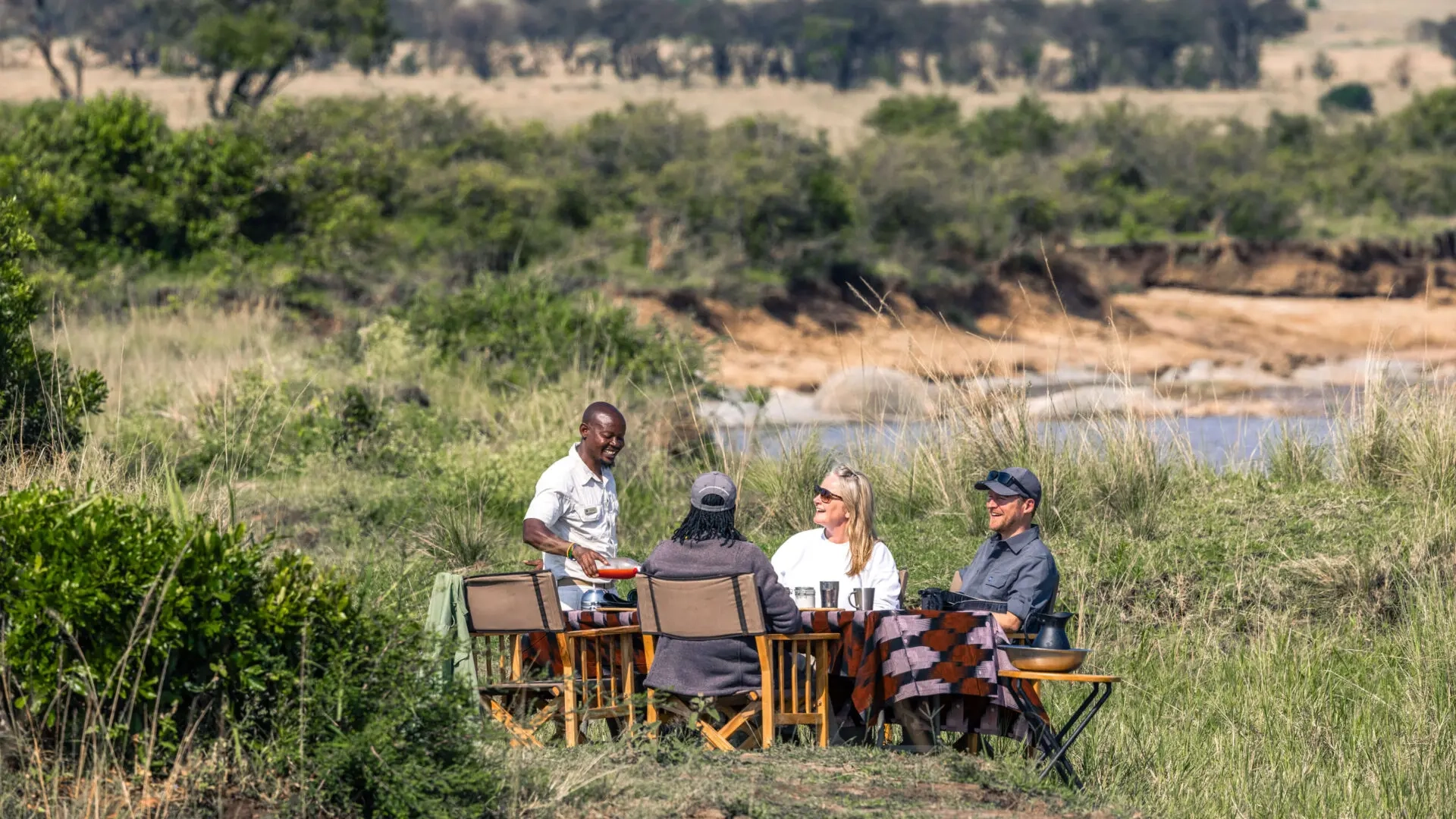
Definitive answer: A picnic lunch on safari is a packed or catered midday meal eaten at an approved…
Read article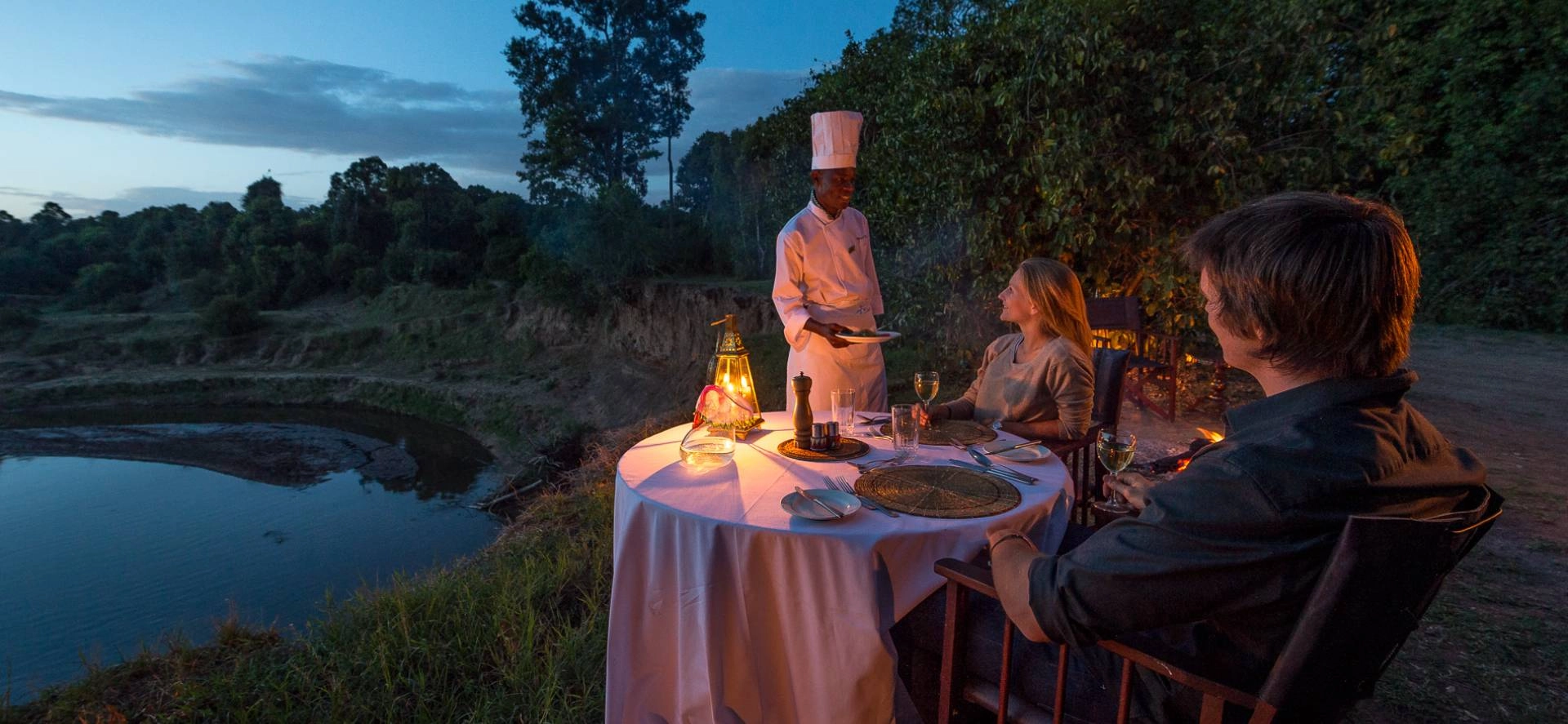
Definitive answer: A bush dinner is an outdoor evening meal arranged in a safe safari setting away from…
Read articleLet us take you closer to the wildlife, people and places that make Africa extraordinary.
Plan Your Safari Today