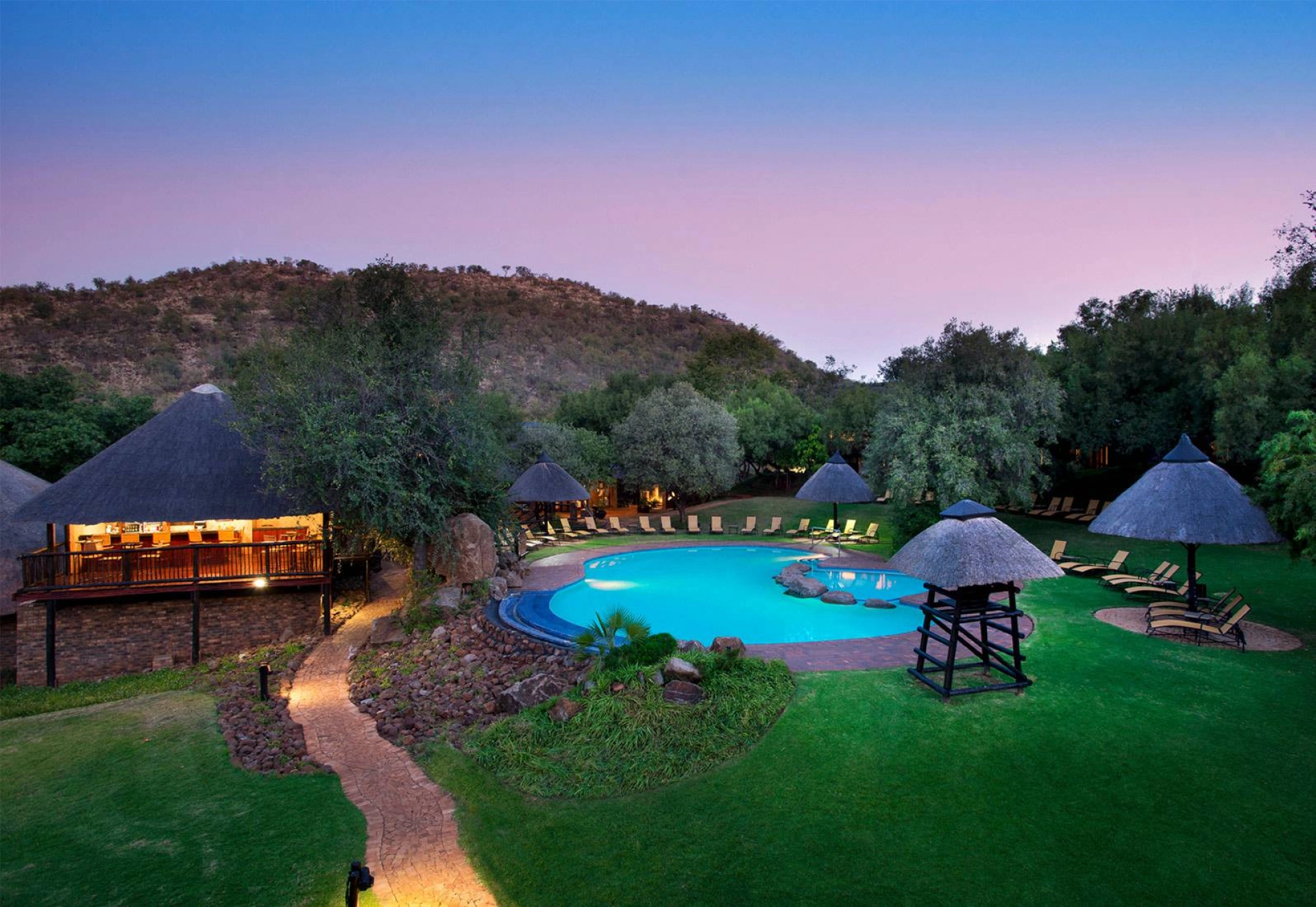
An Overnight Adventure at Bakubung Bush Lodge in Pilanesberg National Park
A safari does not always need to involve an internal flight, several…
Read article

Travel Guide
Africa is usually imagined horizontally: immense savannas stretching toward the horizon, desert dunes disappearing into the distance, tropical forests covering entire landscapes and great rivers flowing through wilderness. Yet some of the continent's most extraordinary adventures…
Africa is usually imagined horizontally: immense savannas stretching toward the horizon, desert dunes disappearing into the distance, tropical forests covering entire landscapes and great rivers flowing through wilderness. Yet some of the continent’s most extraordinary adventures require looking upward. Africa contains spectacular mountains. Some are enormous volcanic massifs rising above East African plains. Others are ancient ranges carved into dramatic cliffs, valleys and plateaus. The continent includes snow-covered equatorial peaks, rainforest-covered volcanoes, desert mountains, giant escarpments and high-altitude trekking routes that rival famous mountain journeys anywhere in the world.
For many travelers, mountain climbing in Africa begins with one name: Kilimanjaro. At 5,895 metres above sea level, Tanzania’s Mount Kilimanjaro is Africa’s highest mountain and one of the world’s great trekking objectives. Yet focusing exclusively on Kilimanjaro overlooks an extraordinary variety of alternatives.
Across the border in Kenya, Mount Kenya offers technical climbing and superb high-altitude trekking. Uganda’s Rwenzori Mountains contain glaciers, giant lobelias and landscapes unlike almost anywhere else on Earth. Morocco’s Mount Toubkal provides a relatively accessible introduction to North African mountaineering. The Drakensberg delivers huge escarpments and day hikes, while Ethiopia’s Simien Mountains combine trekking with rare wildlife.
Other mountains are fascinating precisely because fewer international travelers know about them. Uganda’s Mount Elgon, for example, offers a quieter multi-day trek around one of the world’s largest volcanic calderas. Mount Mulanje rises dramatically from Malawi’s surrounding plains. The Virunga volcanoes create opportunities to combine mountain climbing with gorilla trekking in Uganda and Rwanda. Whether you want to summit Africa’s highest peak, hike through tropical mountain forests or simply spend several days away from conventional safari roads, the continent has a mountain for almost every level of ambition.
These are ten of the best African mountains to climb.
No discussion of African mountain climbing can begin anywhere other than Kilimanjaro. Rising to 5,895 metres, Kilimanjaro is Africa’s highest mountain and the highest free-standing mountain mass in the world. Its summit, Uhuru Peak, stands on Kibo, one of the mountain’s three principal volcanic cones alongside Mawenzi and Shira. Unlike many mountains approaching 6,000 metres, Kilimanjaro’s standard trekking routes do not require advanced technical climbing. That accessibility has helped make it one of the world’s most famous high-altitude trekking mountains.
But “non-technical” should never be confused with easy. Altitude is the defining challenge.
Few mountains take hikers through such dramatically changing ecological zones in such a short period. A trek can begin among cultivated foothills and montane forest before entering heath and moorland. Higher still, vegetation becomes increasingly sparse. The upper mountain resembles an alpine desert. Finally, trekkers reach the glacial environment surrounding the summit. The transition creates the sensation of walking through several climatic regions during one expedition. For first-time visitors to East Africa, Kilimanjaro can also be combined easily with a Tanzania wildlife safari.
After descending from the mountain, travelers can continue to Tarangire National Park, Ngorongoro Crater and Serengeti National Park. This creates one of Africa’s great adventure combinations: summit the continent’s highest mountain and then search for lions, elephants, leopards and the Great Migration.
Several established routes reach the summit, and choosing between them affects scenery, acclimatization, crowd levels and expedition length. The Machame Route is among the most popular because it offers varied scenery and generally allows a useful acclimatization profile. The Lemosho Route approaches from the western side and is highly regarded for scenery and longer acclimatization opportunities. The Marangu Route is unusual because trekkers stay in huts rather than tents. The Rongai Route approaches from the north and can provide a quieter alternative.
Longer itineraries are generally preferable because they allow the body more time to adapt to altitude.
The greatest mistake is underestimating altitude. Someone who can run a marathon at sea level may still experience significant altitude symptoms. Fitness helps with long walking days, but acclimatization is physiological rather than simply athletic. The best strategy is to climb slowly. Guides frequently emphasize the Swahili phrase pole pole, meaning slowly, slowly. It is excellent advice.
Africa’s second-highest mountain provides a very different experience. Mount Kenya rises to 5,199 metres at Batian, its highest summit. Unlike Kilimanjaro’s walkable summit route, reaching Batian requires technical mountaineering.
However, trekkers who do not possess rock-climbing skills can still undertake a spectacular journey to Point Lenana, approximately 4,985 metres above sea level. This makes Mount Kenya suitable for both serious mountaineers and strong trekkers.
Mount Kenya is visually dramatic. Jagged peaks rise above alpine valleys, tarns and unusual high-altitude vegetation. The mountain’s eroded volcanic architecture gives it a rugged appearance quite different from Kilimanjaro’s enormous dome. Trekkers may encounter giant lobelias and groundsels adapted to equatorial alpine conditions. Wildlife can occur on lower slopes and surrounding forest.
Travelers frequently compare the two. Choose Kilimanjaro if standing on Africa’s highest point is your primary goal. Choose Mount Kenya trekking if you prefer a less crowded high-altitude journey with dramatic alpine scenery. Technical climbers may find Mount Kenya more challenging and varied. Experienced travelers can even combine both mountains in one East African adventure, although sufficient recovery and acclimatization planning are essential.
For trekkers who value strange landscapes, botanical diversity and genuine expedition atmosphere, the Rwenzori Mountains of Uganda may be Africa’s most fascinating range. The Rwenzoris rise along the Uganda–Democratic Republic of Congo border. Their highest point, Margherita Peak on Mount Stanley, reaches 5,109 metres. This makes the Rwenzoris home to Africa’s third-highest mountain summit. Yet altitude alone does not explain their appeal. The landscapes are extraordinary.
The Rwenzoris receive abundant moisture. Instead of the dry alpine landscapes travelers may expect at altitude, trekkers pass through lush montane vegetation, bamboo zones, bogs and surreal high-altitude plant communities. Giant lobelias, giant groundsels, moss-covered vegetation and enormous heathers create an almost prehistoric atmosphere. The mountains are frequently wrapped in cloud. Streams cross the trail. Boardwalks may traverse boggy sections. Higher up, rock, ice and glaciers replace the vegetation. This combination makes Rwenzori trekking in Uganda unlike climbing Kilimanjaro.
Reaching Margherita Peak requires greater technical preparation than standard Kilimanjaro routes. The upper summit journey can involve glacier travel, ropes, crampons and other mountaineering equipment depending on current route conditions. Trekkers should use qualified mountain guides and choose an itinerary suited to their experience. Travelers who do not want to attempt the summit can still explore lower sections of Rwenzori Mountains National Park on shorter treks.
One of the Rwenzoris’ greatest advantages is location. After a mountain expedition, travelers can continue south toward Queen Elizabeth National Park and Bwindi Impenetrable National Park. This allows an extraordinary Uganda itinerary combining: Rwenzori trekking, savanna wildlife, Kazinga Channel boat safari, chimpanzee trekking and mountain gorilla trekking. For active travelers seeking more than a conventional safari, this is one of East Africa’s strongest combinations.
Jebel Toubkal rises to approximately 4,167 metres in Morocco’s High Atlas Mountains. It is the highest mountain in North Africa and one of the continent’s most accessible major trekking peaks. The standard summer ascent is generally non-technical for appropriately prepared trekkers, although winter conditions can transform the mountain into a more serious mountaineering objective requiring snow and ice equipment.
Most Toubkal expeditions begin around Imlil, a mountain village accessible from Marrakech. The contrast is one of the mountain’s greatest attractions. Travelers can explore Marrakech’s historic medina before moving into Amazigh mountain communities and then trekking into a stark high-altitude environment.
This makes Toubkal particularly suitable for travelers wanting to combine Morocco cultural travel and mountain trekking.
Summer offers relatively straightforward trekking conditions, although daytime heat can be significant at lower elevations. Spring and autumn can provide pleasant temperatures. Winter attracts climbers seeking snow and a more technical experience. Conditions can change rapidly at altitude, so appropriate local guidance remains important regardless of season.
On the Uganda–Kenya border lies Mount Elgon, an enormous extinct volcanic massif. Although its highest point is lower than Kilimanjaro or the Rwenzoris, Elgon offers something many experienced trekkers increasingly value: space. Trails are generally much quieter. The mountain is famous for its huge caldera, montane vegetation, caves, waterfalls and distinctive high-altitude landscapes.
Elgon works well for travelers who enjoy multi-day hiking but do not necessarily want an extreme altitude challenge. The mountain’s lower elevation means altitude remains relevant but is generally less severe than on Kilimanjaro. The trekking experience focuses more on landscape, ecology and solitude. Uganda’s side of the mountain includes Mount Elgon National Park, while neighboring Kenya protects another section of the ecosystem.
Many Uganda itineraries combine Mount Elgon with Sipi Falls. Sipi’s waterfalls and surrounding coffee-growing landscapes create an attractive pre- or post-trek destination. Travelers can undertake waterfall hikes, cultural experiences and coffee tours.
Mount Elgon can be added to a broader Uganda journey involving Jinja and the River Nile, Murchison Falls, Kibale, Queen Elizabeth and Bwindi. This makes it an excellent mountain choice for repeat visitors or travelers who want a less conventional Uganda adventure safari.
Not every great African mountain adventure requires reaching one specific summit. The Drakensberg is best understood as an enormous mountain landscape. The range stretches across eastern South Africa and forms part of the boundary with Lesotho. Towering basalt cliffs, grasslands, valleys, waterfalls and dramatic escarpments create some of southern Africa’s finest hiking.
One of the most famous sections is the Drakensberg Amphitheatre, an immense cliff wall rising above Royal Natal National Park. The region is associated with Tugela Falls, one of Africa’s highest waterfall systems. Hikers can approach from below or undertake routes toward the escarpment.
The Drakensberg is ideal for travelers who enjoy trekking but are less interested in reaching one famous summit. Options range from short day hikes to demanding multi-day traverses. Weather can change quickly. Mountain mist, thunderstorms and cold conditions can develop unexpectedly, particularly at altitude. Navigation skills and local guiding can therefore be important on remote routes.
The Drakensberg is also culturally significant. Numerous rock shelters preserve San rock art, providing a fascinating connection between mountain landscapes and southern Africa’s indigenous history. This makes the Drakensberg a destination where trekking, archaeology and cultural history overlap.
Northern Ethiopia’s Simien Mountains provide some of Africa’s most dramatic escarpment scenery. Deep valleys, cliffs and high plateaus create enormous panoramas. The landscape is often compared with a natural fortress because of its abrupt drops and isolated peaks.
The Simiens are particularly interesting because trekking can be combined with encounters with specialized highland wildlife. Gelada monkeys are among the most famous. Large groups forage across high-altitude grasslands, allowing travelers to observe complex social behavior. The mountains also support other rare Ethiopian species. Birdlife adds another layer to the experience, particularly raptors using the escarpments.
Treks can range from relatively short journeys to longer expeditions. The experience focuses on huge landscapes rather than technical climbing. Cultural encounters with highland communities also form an important part of the journey. For travelers interested in African trekking, endemic wildlife and cultural travel, Ethiopia offers a combination found nowhere else.
Rising dramatically above southern Malawi, the Mulanje Massif appears almost suddenly from the surrounding landscape. Its cliffs, plateaus, valleys and peaks create one of southeastern Africa’s most striking mountain environments. The highest point, Sapitwa Peak, reaches just over 3,000 metres.
Mulanje feels wild without reaching extreme altitude. Trekkers move through forests, grasslands, rocky slopes and high plateaus. Mountain huts allow multi-day journeys. Streams and pools provide scenic rest points, although water safety and seasonal conditions should always be checked locally. The massif is also known for the Mulanje cedar, a tree closely associated with the mountain and conservation concerns.
A Mount Mulanje trek can be combined with Lake Malawi. This creates an appealing contrast between strenuous mountain days and relaxed lakeside travel. Wildlife destinations can also be incorporated into a longer Malawi itinerary.
The Virunga volcanic chain creates some of East Africa’s most dramatic mountain landscapes. Several volcanoes can be climbed from Uganda and Rwanda. What makes the region particularly attractive is the possibility of combining volcanic trekking with mountain gorilla safaris.
Mount Gahinga lies within the Virunga range and can be climbed from Uganda’s Mgahinga Gorilla National Park. The hike passes through changing vegetation before reaching the summit region. Because the park also protects mountain gorillas and golden monkeys, active travelers can combine several very different experiences within one small protected area.
Mount Muhabura, also known as Muhavura, is a more demanding climb. Its distinctive cone dominates the surrounding landscape. The summit hike is steep and requires good fitness. On clear days, elevated viewpoints provide expansive views across the Virunga region.
From Rwanda, Mount Bisoke is a popular volcanic trek. The summit crater lake provides a rewarding objective. The hike passes through the same broader ecosystem famous for Rwanda’s mountain gorillas.
This is one of Africa’s best adventure combinations. A traveler can spend one day climbing a volcano and another tracking mountain gorillas through forest. Uganda’s Mgahinga Gorilla National Park is especially appealing to travelers who want hiking, golden monkey tracking and gorilla trekking in one destination.
Although Mount Toubkal is the High Atlas’ most famous summit, the wider Atlas Mountains deserve recognition as a trekking destination in their own right. The Atlas system stretches across Morocco and neighboring North African countries, creating an enormous variety of landscapes. Travelers can undertake village-to-village treks, valley walks, winter mountaineering and longer high-altitude routes.
One of the greatest rewards is the cultural landscape. Amazigh communities have inhabited these mountains for generations. Traditional villages, terraced agriculture and local architecture form an integral part of the trekking experience. This makes the Atlas particularly attractive for travelers who want cultural trekking in Africa rather than a purely summit-focused expedition.
Mount Kilimanjaro is Africa’s highest mountain at 5,895 metres above sea level. Its highest point is Uhuru Peak on the Kibo volcanic cone.
Mount Kenya follows at 5,199 metres, while Mount Stanley in the Rwenzori range reaches 5,109 metres at Margherita Peak. These three form Africa’s great equatorial high-altitude mountain objectives.
These mountains offer dramatically different experiences. Kilimanjaro is the better choice if your primary objective is standing on the highest point in Africa. The Rwenzoris are better for trekkers fascinated by unusual vegetation, wetter landscapes, technical summit sections and expedition atmosphere. Kilimanjaro generally has more established high-volume trekking infrastructure. The Rwenzoris feel significantly wilder. Both are extraordinary.
Mount Kenya attracts fewer trekkers and offers sharper alpine scenery. Point Lenana provides a trekking objective, while Batian and Nelion attract technical climbers. Kilimanjaro provides the prestige of reaching Africa’s highest summit. Travelers primarily interested in a quieter mountain experience may prefer Mount Kenya.
There is no completely “easy” high mountain. For beginners wanting a major summit, Toubkal during suitable summer conditions can be relatively approachable with proper preparation and guidance. Mount Elgon is another excellent option for trekkers seeking multi-day mountain hiking without extreme altitude. Kilimanjaro can be attempted by fit beginners, but altitude makes it a serious undertaking.
Technical mountaineers should consider Mount Kenya’s Batian or Nelion and the higher summit routes of the Rwenzoris. Winter routes in the Atlas can also become technically demanding. Conditions and required skills vary, so climbers should select qualified guides and appropriate equipment.
The Rwenzoris connect naturally with Uganda’s famous wildlife circuit. The Virunga volcanoes allow combinations with gorillas and golden monkeys. The Simien Mountains provide specialized Ethiopian wildlife such as geladas. Mount Kenya’s lower forests support wildlife, while the Drakensberg is rewarding for birders.
East Africa dominates this category. A Kilimanjaro and Serengeti safari is one of the continent’s classic adventure combinations. A Rwenzori and Uganda gorilla safari offers even greater ecosystem diversity. Mount Kenya can be followed by Masai Mara, Samburu or other Kenyan reserves. Virunga volcano trekking can be combined directly with gorilla trekking.
Training should begin well before departure. Walking fitness matters more than gym strength for most trekking routes. Long hikes with elevation gain are ideal preparation. Train while carrying a light daypack. Practice walking on uneven terrain. For high-altitude mountains, no amount of training eliminates altitude risk. A slower itinerary remains essential.
Altitude sickness deserves serious attention on Kilimanjaro, Mount Kenya and the Rwenzoris. Symptoms can begin with headache, nausea, fatigue, poor appetite or sleep disturbance. More serious forms of altitude illness can become life-threatening. Never hide symptoms from your guide. Descending when medically necessary is not failure. It is good mountain judgment.
Packing requirements vary enormously. Kilimanjaro and the Rwenzoris require serious cold-weather clothing despite their equatorial location. The Rwenzoris additionally demand excellent waterproof equipment. Toubkal requirements depend strongly on season. Standard essentials include quality hiking footwear, layered clothing, waterproof outerwear, sun protection, trekking poles, gloves, headwear and a reliable daypack. Follow the mountain operator’s route-specific packing list.
Mountain environments are fragile. Stay on established trails where required. Carry waste out. Avoid disturbing wildlife. Use refillable water systems where practical. Respect local communities and cultural sites. Porter welfare deserves particular attention. Choose trekking companies that provide fair working conditions, appropriate equipment, food and reasonable load limits for mountain staff. A summit should never be achieved through exploitation of the people helping you reach it.
The best mountains in Africa cannot be ranked simply by altitude. Kilimanjaro offers the continent’s highest summit. Mount Kenya provides jagged alpine beauty and technical climbing. The Rwenzoris offer surreal vegetation, glaciers and genuine expedition atmosphere. Toubkal combines high-altitude trekking with Moroccan culture. Mount Elgon provides solitude. The Drakensberg offers vast hiking landscapes. The Simien Mountains combine cliffs with rare wildlife. Mulanje rises spectacularly above Malawi. The Virunga volcanoes allow travelers to combine climbing with gorilla trekking.
Each mountain reveals a different Africa. And that may be the greatest reason to climb. From a summit or high mountain trail, the continent looks very different from the safari vehicle below. The savanna becomes an immense pattern of plains and valleys. Lakes appear on the horizon. Clouds form beneath you. Forests cover slopes that seemed impenetrable from the road. Climbing an African mountain therefore is not merely about reaching the top.
It is another way of understanding the continent—one step, one landscape and one increasingly extraordinary view at a time.
Get quick answers to the most common questions. If you still have questions, our safari experts are here to help.
Kilimanjaro is the most famous and offers the achievement of reaching Africa’s highest point. However, the best mountain depends on whether you prioritize altitude, scenery, technical climbing, wildlife or solitude.
The highest major mountain summits are Kilimanjaro in Tanzania, Mount Kenya in Kenya and Mount Stanley in the Rwenzori Mountains along the Uganda–DRC border.
Yes, many successful Kilimanjaro climbers have no technical mountaineering background. However, participants need appropriate fitness, sufficient acclimatization time and professional guiding.
The Rwenzori Mountains are ideal for serious high-altitude trekking, while Mount Elgon offers quieter and generally less extreme multi-day trekking. The Virunga volcanoes are excellent for strenuous day hikes.
Yes. Uganda is particularly suitable. Travelers can combine Rwenzori trekking, Mount Gahinga or Mount Muhabura with gorilla trekking in Bwindi or Mgahinga.
Kilimanjaro, Mount Kenya and the Rwenzori Mountains have historically supported equatorial ice and glaciers, although these ice bodies have declined significantly.
This is subjective, but the Rwenzoris, Mount Kenya, Drakensberg, Simien Mountains and Atlas Mountains all offer extraordinary landscapes.
It depends on the route, but longer itineraries are generally preferable because they provide more time for acclimatization.
Not on the standard trekking routes. Reaching Uhuru Peak is primarily a high-altitude trekking challenge.
A summit expedition to Margherita Peak can involve more technical terrain and wetter, more demanding trail conditions than standard Kilimanjaro routes.
Our safari experts are here to help you plan your safari. Get personalized advice, the latest information and a free, no-obligation quote.
We typically reply within a few hours.

Share This Article
A safari does not always need to involve an internal flight, several…
Read article
Mention a Tanzania safari and most travelers immediately imagine the Serengeti. The…
Read article
An African safari is often described as a once-in-a-lifetime holiday, but that…
Read article
Mozambique stretches for thousands of kilometers along southeastern Africa’s Indian Ocean coastline,…
Read articleLet us take you closer to the wildlife, people and places that make Africa extraordinary.
Plan Your Safari Today