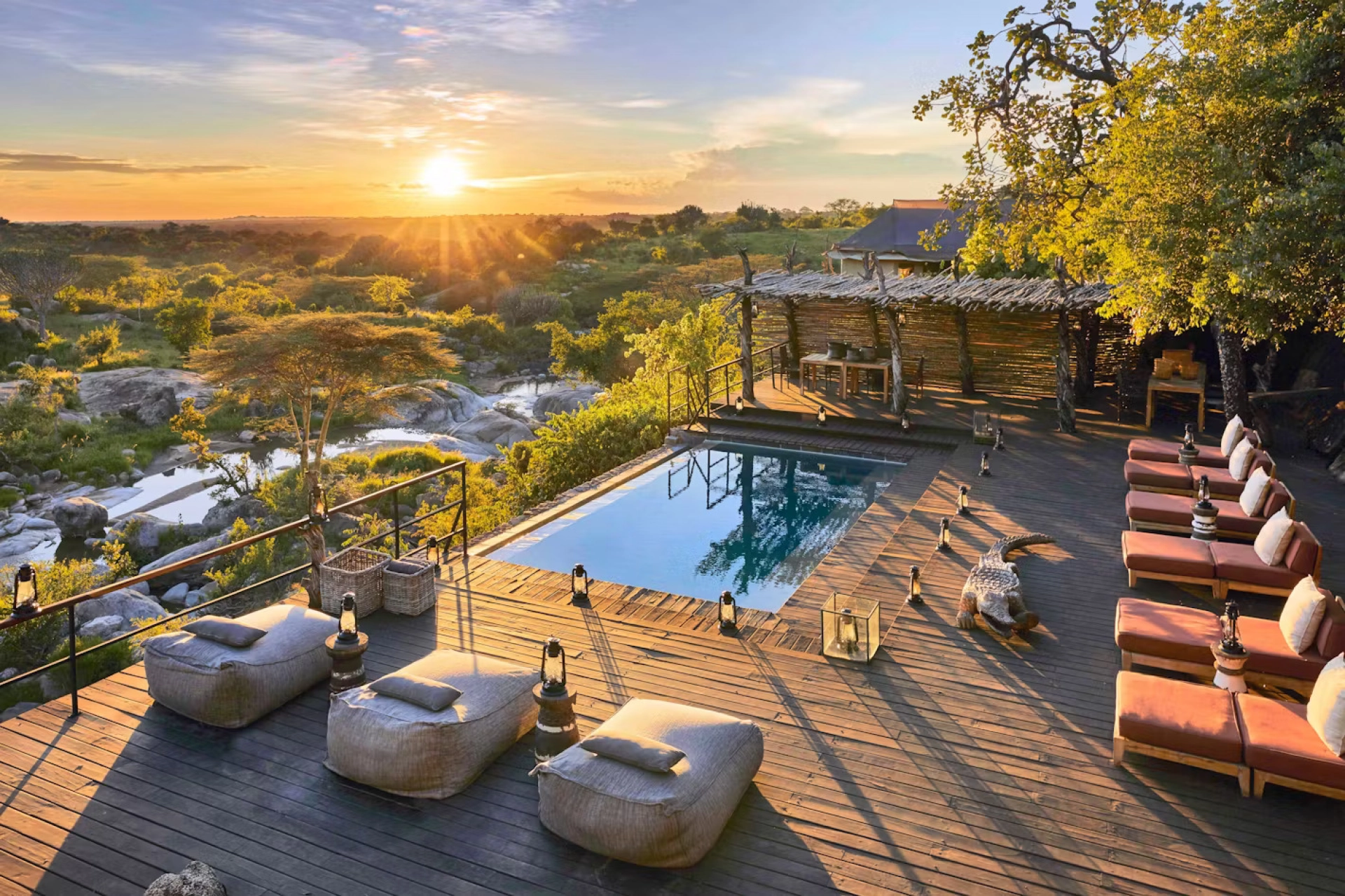
What should I look for when booking a luxury African safari?
When booking a luxury African safari, look beyond the room and compare the quality of guiding, wildlife location,…
Read article

Travel Guide
One of the first questions many travelers ask before planning an African holiday is simple: which countries in Africa are safest to visit? It is also a question that deserves a more careful answer than a…
One of the first questions many travelers ask before planning an African holiday is simple: which countries in Africa are safest to visit? It is also a question that deserves a more careful answer than a basic top-ten ranking.
Africa is a continent of more than fifty countries, enormous geographical differences and constantly changing local conditions. A peaceful island country in the Indian Ocean cannot be compared perfectly with a large safari destination containing remote wilderness areas, major cities and long international borders. A country can perform strongly on measures of national peace while still having neighborhoods where travelers should exercise greater caution. Conversely, a country with a lower overall peace ranking may contain highly established tourism regions that receive international visitors safely every day.
For that reason, the phrase safest country in Africa should never be interpreted as meaning “risk free.” No destination is completely risk free. What travelers can do is examine several indicators together: political stability, violent conflict, crime exposure, road safety, tourism infrastructure, health risks, quality of guiding, local conditions and the specific route they intend to follow. For 2027 travel planning, the 2026 Global Peace Index provides one useful benchmark. The index evaluates countries according to societal safety and security, ongoing domestic and international conflict, and militarisation.
In the 2026 rankings, Mauritius remained the most peaceful country in sub-Saharan Africa, ranking 18th globally. Botswana ranked third within sub-Saharan Africa and 50th globally, while Namibia ranked sixth regionally and 63rd globally. Countries including Ghana, Zambia, Malawi, Zimbabwe and Tanzania also appeared within the stronger-performing half of the sub-Saharan African table. These figures are useful, but they are not a substitute for destination-specific travel advice.
A tourist asking whether it is safe to go on a Botswana safari is asking a different question from somebody considering nightlife in a large city. A traveler going to Uganda for gorilla trekking follows a highly structured itinerary involving licensed guides and established tourism routes. Someone driving independently through remote desert areas in Namibia faces a different category of risk related to distance, fuel, breakdowns and road conditions.
This guide therefore combines broader peace indicators with the realities of actual tourism.
Safety is multidimensional. A destination can have very low political violence yet present road-safety concerns. Another may have excellent tourism infrastructure while experiencing petty theft in busy urban locations. A safari destination can feel exceptionally secure inside a well-managed wildlife area while requiring more awareness during city transfers. For travelers, the most useful safety framework asks several questions. How stable is the country politically? Is armed conflict affecting the tourist route? How common is violent crime against visitors?
How reliable is tourism infrastructure? What are the road conditions? What health precautions are necessary? Are national parks well managed? Can the destination be explored with experienced local guides? How current is the information being used? That final question is particularly important. A safety article written several years ago may rank countries according to conditions that no longer exist. Travel advice should always be checked again shortly before departure.
According to the 2026 Global Peace Index, Mauritius remained the most peaceful country in sub-Saharan Africa and ranked 18th globally. For conventional leisure travelers, Mauritius also benefits from a mature tourism industry, well-developed resort infrastructure and relatively straightforward transport compared with many continental safari destinations. The island is best known for beaches, lagoons, luxury resorts, watersports and honeymoon travel rather than traditional Big Five safari. This makes Mauritius especially attractive to travelers who want an African beach holiday but may feel hesitant about a complex overland journey.
Mauritius can also work as a relaxing extension to a mainland safari. A traveler could spend a demanding week or ten days in Southern or East Africa and then finish the holiday beside the Indian Ocean.
No. Visitors should still use normal urban and holiday-destination precautions. Do not leave valuables unattended on beaches. Use hotel safes appropriately. Be cautious with unfamiliar late-night transport. Avoid displaying large quantities of cash. These are standard travel habits rather than evidence that the destination is unusually dangerous. The important distinction is between relative safety and absolute safety. Mauritius scores strongly by African regional peace measures, but every traveler remains responsible for sensible personal precautions.
For travelers who want a true wildlife safari while also prioritizing political stability, Botswana is one of the most compelling destinations in Africa. The 2026 Global Peace Index ranked Botswana third in sub-Saharan Africa. Tourism is heavily associated with wilderness regions such as the Okavango Delta, Chobe National Park, Moremi Game Reserve, Khwai, Savuti and the Kalahari. The country’s safari model frequently uses professional guides, organized transfers, licensed camps and controlled wildlife areas.
This creates a highly structured travel environment. For many visitors, the greatest practical risks are not political instability but the realities of wilderness travel. Wild animals are genuinely wild. Road conditions can be difficult. Remote camps may be far from hospitals. Light aircraft are common on fly-in itineraries. Malaria risk can be relevant in northern areas. A safe Botswana safari therefore depends on following professional instructions.
Never walk unescorted around an unfenced safari camp unless staff have explicitly confirmed that it is safe.
Elephants, lions, hippos, hyenas and other wildlife may move through camp surroundings. Do not keep food in tents. Do not approach animals for photographs. Do not stand in a mokoro or small safari boat unless instructed. Respect guides. In wilderness tourism, good safety often feels uneventful because risks are managed before they become incidents.
Botswana can work well for solo travelers when using scheduled safari departures or established lodges. The greater challenge is often cost rather than security. Private safari vehicles become expensive when one person carries the entire vehicle expense. Small-group mobile camping departures can reduce cost while also providing social structure.
Namibia ranked sixth in sub-Saharan Africa on the 2026 Global Peace Index. For travelers interested in self-drive safaris, Namibia is one of the continent’s most appealing destinations. Its great attractions include Etosha National Park, Sossusvlei, Swakopmund, Damaraland, the Skeleton Coast and the Namib Desert. The country’s attraction is space. Roads stretch through enormous landscapes. Visitor density can be low. That creates both beauty and responsibility.
In many parts of Namibia, the greatest travel risk is not street crime. It is remoteness. A mechanical problem that would be a minor inconvenience near a major city can become serious on an isolated road. Carry sufficient water. Understand fuel distances. Do not drive unnecessarily at night. Check tires. Know whether your rental agreement permits particular road types. Tell accommodation providers your expected arrival time. Download offline navigation where useful. A Namibia self-drive safari is generally rewarding precisely because it gives travelers freedom, but that freedom works best with careful preparation.
Etosha is designed for vehicle-based wildlife viewing. Remain inside your vehicle where required. Use designated rest camps and approved areas for leaving the vehicle. Waterholes can attract elephants, lions, rhinos and other potentially dangerous wildlife. Rules exist for good reason.
The Gambia ranked fourth in sub-Saharan Africa in the 2026 Global Peace Index. The country is geographically small and has a long-established tourism industry, particularly around coastal areas. Its attractions include beaches, birding, river experiences and cultural travel. The Gambia is not a classic Big Five safari destination, so travelers researching African safari safety may be less familiar with it than Botswana or Tanzania.
Nevertheless, for general leisure tourism, it deserves attention. Birdwatchers in particular have long been drawn to The Gambia because a relatively compact trip can provide diverse West African birding opportunities. Travelers should continue to use ordinary precautions regarding valuables, transport and unfamiliar nightlife areas.
Madagascar ranked fifth within sub-Saharan Africa in the 2026 Global Peace Index. This does not automatically mean Madagascar is one of Africa’s easiest countries to travel through. That distinction is important. Madagascar offers extraordinary endemic wildlife, including lemurs found nowhere else in the wild. Rainforests, dry forests, dramatic rock formations and Indian Ocean coastlines create enormous ecological variety. However, road infrastructure can make travel slow. Domestic flight changes may affect itineraries. Some regions require long transfers.
The safest and most enjoyable approach for first-time visitors is usually a well-planned itinerary with reputable local ground arrangements.
Travelers expecting open-vehicle Big Five game drives may misunderstand the destination. Madagascar is stronger for lemur trekking, rainforest wildlife, reptiles, birds, endemic plants and unusual landscapes. It can therefore complement, rather than replace, a Kenya, Tanzania or South Africa safari.
Because Namibia and Botswana both score relatively well in regional peace rankings and offer excellent tourism infrastructure in their main visitor corridors, they are frequently combined. The contrast is remarkable. Namibia provides desert. Botswana provides wetlands.
Namibia encourages long road journeys. Botswana often encourages slower immersion around river systems and wildlife concessions. A combined Namibia and Botswana safari can be one of Southern Africa’s greatest overland journeys. Travelers need enough time. Trying to combine Etosha, Sossusvlei, Chobe and Okavango in one rushed week defeats the purpose. Two to three weeks is far more realistic for a substantial route.
Ghana ranked ninth in sub-Saharan Africa in the 2026 Global Peace Index. For travelers interested in history, culture, food and West African heritage, Ghana is one of the continent’s most established tourism destinations. Accra provides the principal urban gateway. Cape Coast and Elmina are important for historical travel. National parks and wildlife areas add nature-based experiences. Ghana does not compete directly with Kenya or Tanzania for large-scale savannah wildlife, but it offers a very different African journey. For diaspora and heritage travelers, it can be particularly significant.
Busy urban environments require the same awareness expected in many international cities. Protect phones and wallets. Use reputable transportation. Be cautious when withdrawing cash. Follow accommodation advice regarding unfamiliar neighborhoods after dark. “Safe country” should never be interpreted as “stop paying attention.”
Zambia ranked eleventh in sub-Saharan Africa on the 2026 Global Peace Index. Its safari reputation is much larger than its international visitor numbers suggest. South Luangwa National Park is especially famous for walking safaris and predator viewing. Lower Zambezi provides river-and-land safari experiences. Kafue is enormous and rewards travelers seeking less mainstream safari routes. Victoria Falls can be visited from Livingstone. Zambia is therefore an excellent choice for travelers asking for a relatively peaceful destination that still provides an authentic, wild African safari.
Walking safari may sound more dangerous than a vehicle safari, but professionally managed walking safaris are conducted under strict procedures. Qualified guides evaluate terrain, animal behavior, wind direction and visibility. Participants receive safety briefings. The purpose is not to approach dangerous animals unnecessarily. The purpose is to experience ecology at ground level. Travelers should follow instructions immediately and precisely.
Malawi ranked twelfth in sub-Saharan Africa on the 2026 Global Peace Index. It is often called the “Warm Heart of Africa” in tourism marketing and is particularly associated with Lake Malawi. For safari travelers, wildlife restoration in protected areas such as Liwonde and Majete has strengthened the country’s appeal. A Malawi journey can combine wildlife, landscapes and lakeside relaxation.
This creates a very different safari-and-beach style from Tanzania and Zanzibar. The lake provides the relaxation component without leaving the mainland country.
First-time safari travelers often prioritize the Serengeti, Masai Mara or Kruger. Repeat travelers increasingly look for quieter countries. Malawi can reward those visitors because tourism remains less intensive than in several major safari hubs. The experience feels slower.
Zimbabwe ranked sixteenth in sub-Saharan Africa in the 2026 Global Peace Index. Many potential travelers still carry outdated perceptions shaped by political and economic headlines from previous decades. Current travel decisions should be based on current information rather than reputation alone. Zimbabwe contains some of Africa’s greatest wildlife destinations. Hwange National Park is famous for elephants and predators. Mana Pools provides remarkable Zambezi wilderness. Victoria Falls is one of the continent’s most famous natural attractions. For travelers using established safari routes and reputable operators, Zimbabwe can be an extraordinary destination.
Victoria Falls is one of Southern Africa’s principal tourist hubs. As with other visitor centers, opportunistic theft and scams remain possible. Use official transport. Avoid carrying unnecessary valuables. Follow lodge advice after dark. Around the waterfall itself, obey barriers and path instructions, especially when spray makes surfaces slippery.
Tanzania ranked eighteenth within sub-Saharan Africa in the 2026 Global Peace Index. Its safari industry is among the most established in the world. Serengeti National Park, Ngorongoro Conservation Area, Tarangire National Park, Nyerere National Park and Ruaha National Park provide enormous wildlife diversity. For many first-time visitors, the northern safari circuit is highly structured. Travelers are commonly met at airports, transferred to Arusha and then travel with professional guides through protected areas. This can create a very secure-feeling tourism environment even for visitors who have never previously traveled in Africa.
The main safari risks involve roads, wildlife, health precautions and ordinary urban awareness rather than the animals being “dangerous everywhere.” Inside safari camps, follow wildlife instructions. In Arusha, Dar es Salaam and Zanzibar, use sensible city precautions. Choose reputable transfers. Do not flash expensive electronics unnecessarily. Use hotel safes. Do not wander onto unfamiliar beaches or city streets alone late at night simply because the vacation atmosphere feels relaxed.
Rwanda appears lower than several countries above in the 2026 Global Peace Index, ranking 23rd in sub-Saharan Africa. However, national peace rankings and tourism experience are not identical. Rwanda has a highly developed tourism sector around Kigali, Volcanoes National Park, Akagera National Park and Nyungwe. Many travelers experience tightly organized itineraries, excellent roads on principal tourism routes and relatively short transfer distances.
Rwanda remains a major destination for gorilla trekking in Africa. Travelers should nevertheless check current official advisories because regional conditions around international borders can change. This is an example of why a simplistic “top ten safest countries” list can be misleading without route-level context.
Uganda ranked 32nd within sub-Saharan Africa in the 2026 GPI. That does not mean the country’s principal safari circuit should automatically be treated as unsafe. Uganda receives substantial international tourism to Bwindi Impenetrable National Park, Kibale National Park, Queen Elizabeth National Park, Murchison Falls National Park, Lake Mburo National Park and the Rwenzori region. Structured safari itineraries use experienced driver-guides and established tourism routes. The key is current information. Border regions, local advisories and regional political conditions should be checked when planning. For Uganda gorilla trekking, licensed tourism systems, regulated permits and ranger-led tracking provide a highly organized visitor experience.
Kenya ranked 33rd within sub-Saharan Africa on the 2026 GPI. Again, this does not make Kenya unsuitable for tourism. Kenya has one of Africa’s most mature safari industries. The Masai Mara, Amboseli, Samburu, Tsavo and Lake Nakuru receive international visitors year after year. Nairobi requires normal major-city caution. Travelers should understand where they are going, use reliable transfers and avoid walking casually in unfamiliar areas at night. Inside safari destinations, experienced operators manage most logistical risks.
This distinction should be understood clearly. The Global Peace Index measures broad national conditions. It is not a tourist-crime ranking. It does not tell you whether your specific hotel neighborhood is safe at midnight. It does not indicate whether a remote gravel road is suitable for a compact rental car. It does not tell you whether malaria prophylaxis may be appropriate. It does not replace official travel advice. The GPI is useful because it provides a consistent comparative framework.
Travel planning requires additional layers.
For travelers who are nervous about their first trip to Africa, several destinations provide especially accessible tourism experiences. South Africa offers excellent infrastructure, although its overall GPI ranking is lower and urban crime requires greater awareness. Botswana combines political stability with professional safari operations. Namibia provides outstanding self-drive infrastructure for experienced road travelers. Tanzania has a mature guided-safari industry. Rwanda offers compact logistics. Mauritius provides one of the easiest conventional leisure holidays. Your comfort level matters.
Someone comfortable driving independently may love Namibia. Someone who wants every transfer managed may prefer a private Tanzania, Uganda or Rwanda itinerary.
Solo travel should be evaluated differently from group travel. Mauritius is relatively straightforward for resort and independent leisure travel. Namibia attracts independent road travelers, although remote driving requires preparation.
South Africa has extensive solo-travel infrastructure but requires stronger city awareness. Scheduled group safaris in Botswana, Kenya, Tanzania and Uganda are valuable because they combine financial efficiency with social structure. Female solo travelers should research accommodation, transport and late-night movement particularly carefully, as they would in other global destinations.
Families generally benefit from private transport. A dedicated safari vehicle allows parents to control stops, meal timing and game-drive duration. South Africa offers strong family infrastructure. Kenya and Tanzania have numerous family-friendly lodges. Botswana provides excellent wildlife but some camps and activities have age restrictions. Uganda works well for older children, although minimum ages apply to gorilla and chimpanzee trekking. Family safety begins with itinerary design. Do not build twelve-hour driving days for young children simply because a route is technically possible.
This question is too broad to answer with one word. It is equivalent to asking whether Europe, Asia or the Americas are safe. Africa contains highly stable island nations, enormous safari countries, active conflict zones, global cities, remote deserts and tiny rural communities. Millions of travelers visit African destinations successfully. The appropriate approach is informed travel rather than fear or complacency. Choose the exact country. Then choose the exact region. Then check current conditions.
Then use reputable local logistics.
Most safari incidents can be reduced by obeying basic rules. Animals should never be treated like zoo exhibits. Elephants can be dangerous when pressured. Hippos are powerful wild animals. Lions should never be approached on foot without appropriate professional circumstances. Baboons and monkeys should not be fed. Do not lean dangerously from vehicles. Do not leave vehicles where prohibited. Do not walk between lodge buildings after dark if staff require an escort. Safari guides understand local animal behavior. Follow their instructions.
For many travelers, road safety is more relevant than wildlife danger. Long distances, livestock, motorcycles, pedestrians, darkness, potholes and variable road surfaces can make driving challenging. Private safari vehicles reduce some of these risks because experienced local driver-guides understand routes and conditions. Self-drive travelers should avoid overly ambitious itineraries. Do not assume 300 kilometers in Africa always requires the same driving time as 300 kilometers on a European motorway.
Health preparation depends on country and route. Travelers should seek current professional medical advice regarding vaccines, malaria, personal prescriptions and other health considerations. Drink safe water. Use sun protection. Carry essential medication in hand luggage. Purchase comprehensive travel insurance. Remote safari areas may be far from advanced medical facilities. Insurance that includes evacuation where appropriate can therefore be important.
Established safari lodges generally operate with international travelers in mind. Use sensible precautions when eating elsewhere. Choose freshly cooked food. Wash or sanitize hands. Use appropriate drinking water. Do not assume that unfamiliar food is unsafe simply because it is local; many visitors enjoy excellent African cuisine throughout their trips. The more important issue is hygiene and preparation.
Avoid carrying large amounts of cash. Use hotel safes. Keep copies of important documents. Do not leave cameras unattended in vehicles outside controlled safari environments. Be discreet with phones in crowded urban areas.
Most of these habits apply equally in major cities worldwide.
National peace rankings do not capture every traveler’s experience. Local laws and social attitudes can affect LGBTQ+ travelers. Women traveling alone may face different harassment risks from male travelers. Travelers with disabilities may encounter accessibility challenges rather than conventional security threats. Families may prioritize medical access. Older travelers may care more about evacuation options from remote camps. This is another reason not to interpret “safest African country” as a universal ranking for every person.
Conditions can change between the day you book and the day you travel. Before departure, check current government travel advisories relevant to your nationality. Confirm information with your safari operator. Review airline and border updates. Check health recommendations. Verify whether planned road crossings remain practical. Reconfirm permits and lodge bookings. A responsible operator should communicate material changes.
A good safari operator can significantly simplify risk management. Your guide knows roads. They understand park regulations. They communicate with lodges. They can adapt routes. They know which fuel stops are reliable. They understand border procedures. They can seek local assistance when plans change. This does not eliminate every risk. It reduces uncertainty. For first-time travelers, this is one of the strongest arguments for using an established African safari company.
Travelers can create excellent multi-country combinations without designing excessively complex itineraries. Botswana and Victoria Falls is one of the easiest Southern African combinations. Namibia and Botswana creates a superb desert-and-Delta journey. Tanzania and Zanzibar combines safari with beach. Uganda and Rwanda combines primate destinations efficiently. Kenya and Tanzania creates a classic East African wildlife journey. Each should be planned according to current border, visa and flight requirements.
Searching for the 10 safest countries in Africa to visit is a sensible starting point. It should not be the end of the research. The 2026 Global Peace Index provides valuable context. Mauritius currently leads sub-Saharan Africa for overall peacefulness, with Botswana and Namibia also performing strongly among major tourism destinations. But safari safety is more detailed than a national ranking.
A well-organized Botswana safari can place you in remote wilderness surrounded by elephants and lions while feeling extremely controlled because professional systems manage the risk. A Namibia road journey can take place in a peaceful country yet become problematic if a traveler drives into a remote area without sufficient fuel or water. A Tanzania safari can follow established tourism routes with a dedicated guide even though the country ranks below several small African nations on a continental peace table.
Uganda and Rwanda can provide carefully managed gorilla trekking even though regional political conditions require current monitoring. This is why the best approach to Africa travel safety is practical rather than fearful. Select established tourism regions. Use professional operators where appropriate. Respect wildlife. Take road conditions seriously. Use sensible city precautions. Purchase proper insurance. Check health requirements. Monitor official travel advice before departure. And remember that Africa is a continent, not one destination.
For travelers planning with Adventure in the Wild Safaris, we can design routes around established safari areas in Uganda, Rwanda, Kenya, Tanzania, Botswana and wider Africa, while considering logistics, current regional conditions, wildlife seasons and traveler comfort. A safe safari is not created by choosing a country from a ranking alone. It is created through good destination selection, intelligent routing, professional guiding, up-to-date information and sensible traveler behavior. That is the standard that should guide an African safari in 2027.

Share This Article
When booking a luxury African safari, look beyond the room and compare the quality of guiding, wildlife location,…
Read article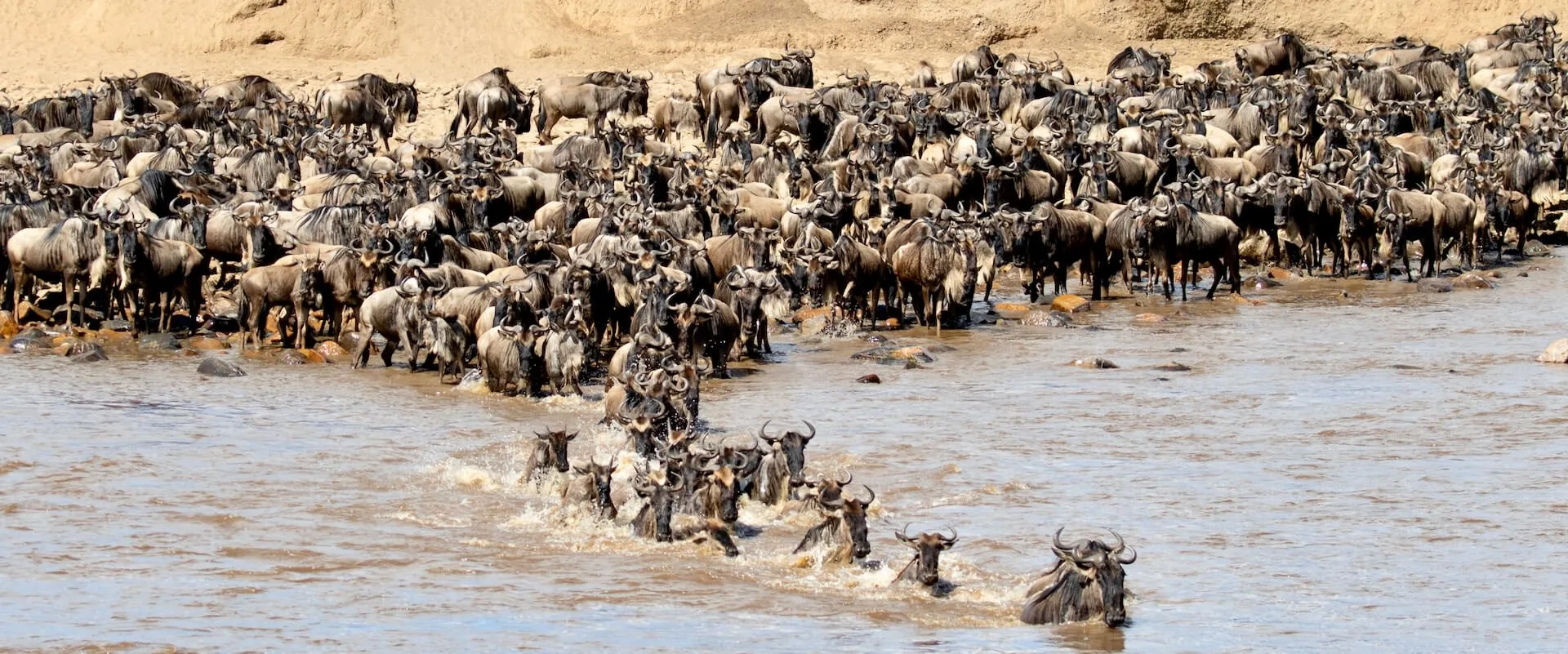
The Great Migration in Africa happens all year because the herds continuously circulate through the Serengeti–Mara ecosystem in…
Read article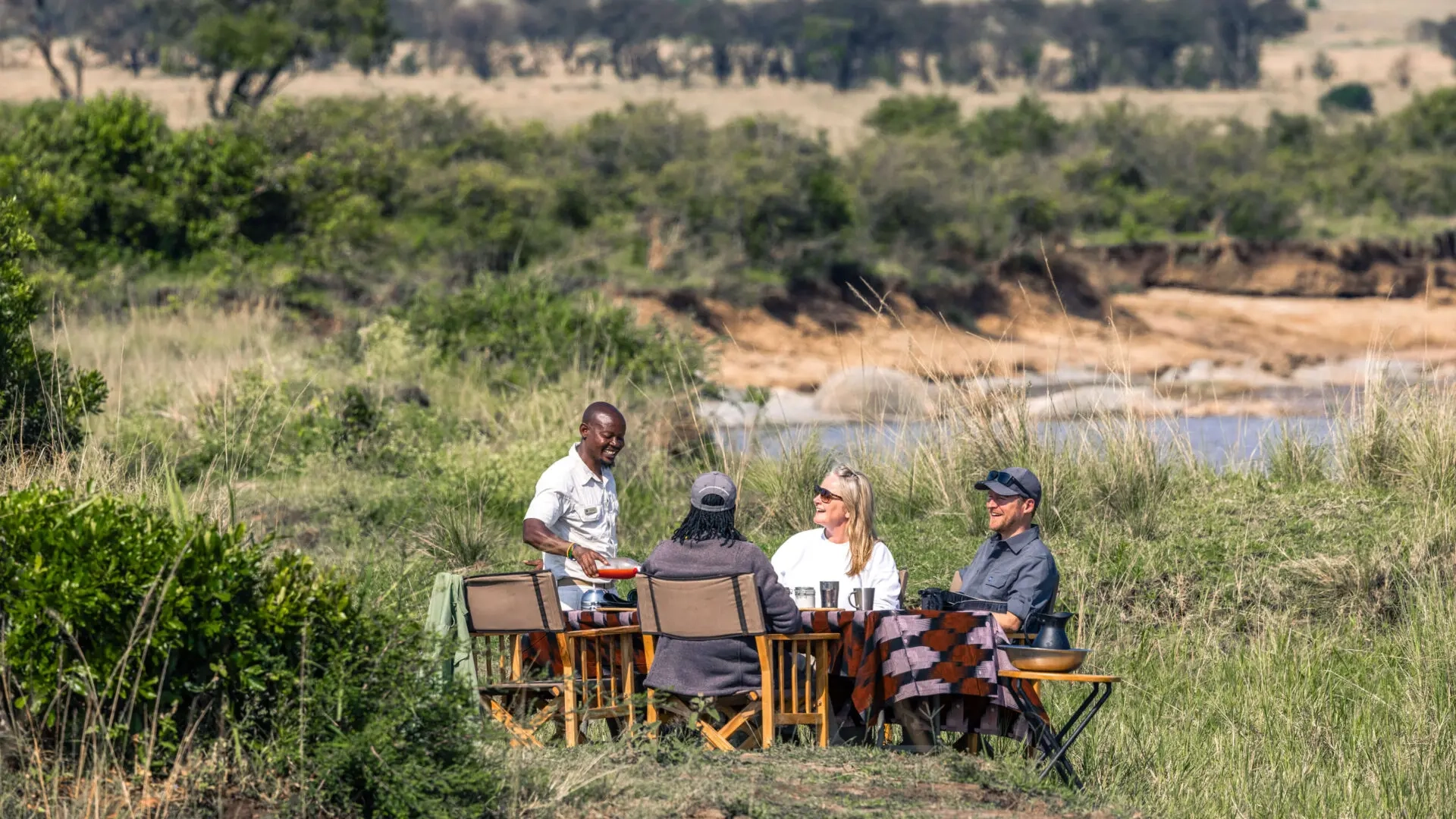
Definitive answer: A picnic lunch on safari is a packed or catered midday meal eaten at an approved…
Read article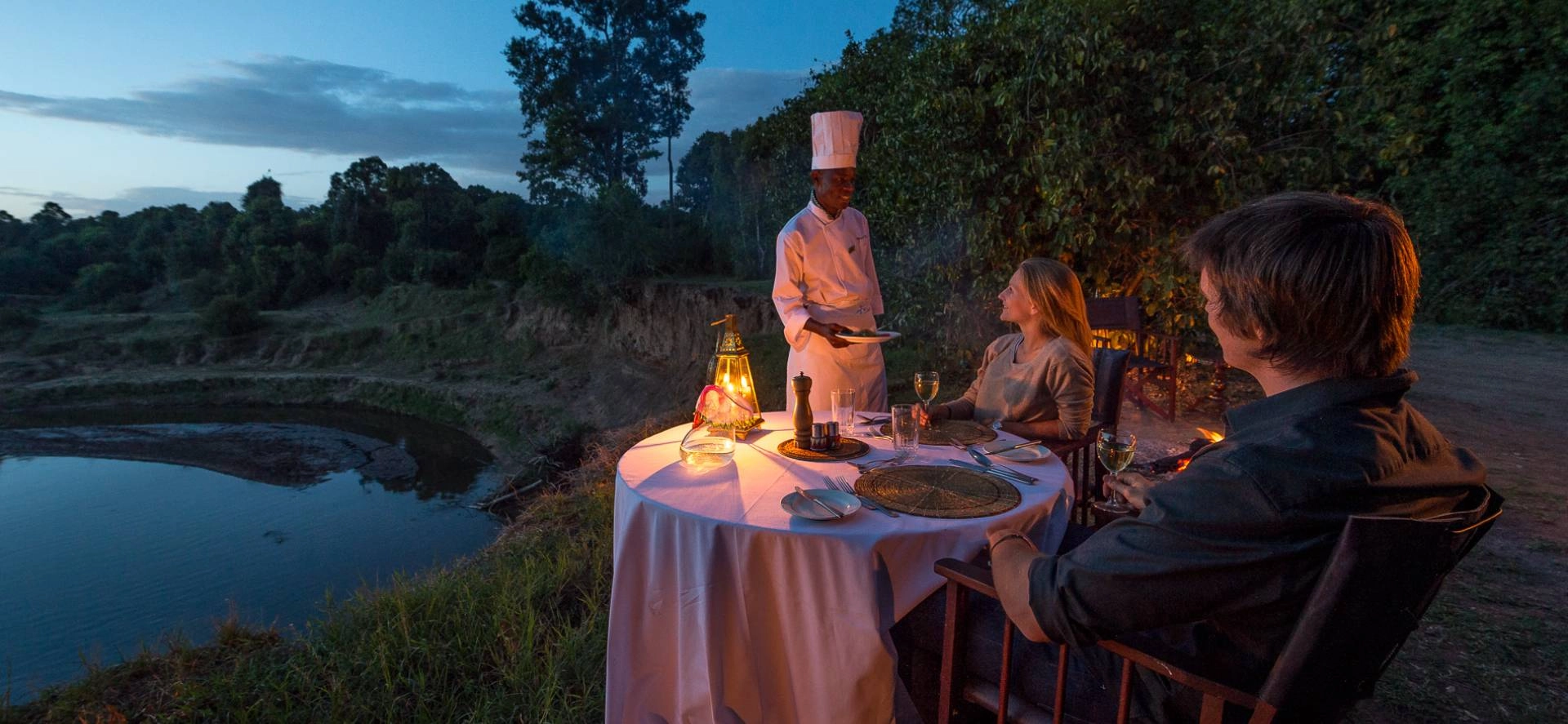
Definitive answer: A bush dinner is an outdoor evening meal arranged in a safe safari setting away from…
Read articleLet us take you closer to the wildlife, people and places that make Africa extraordinary.
Plan Your Safari Today