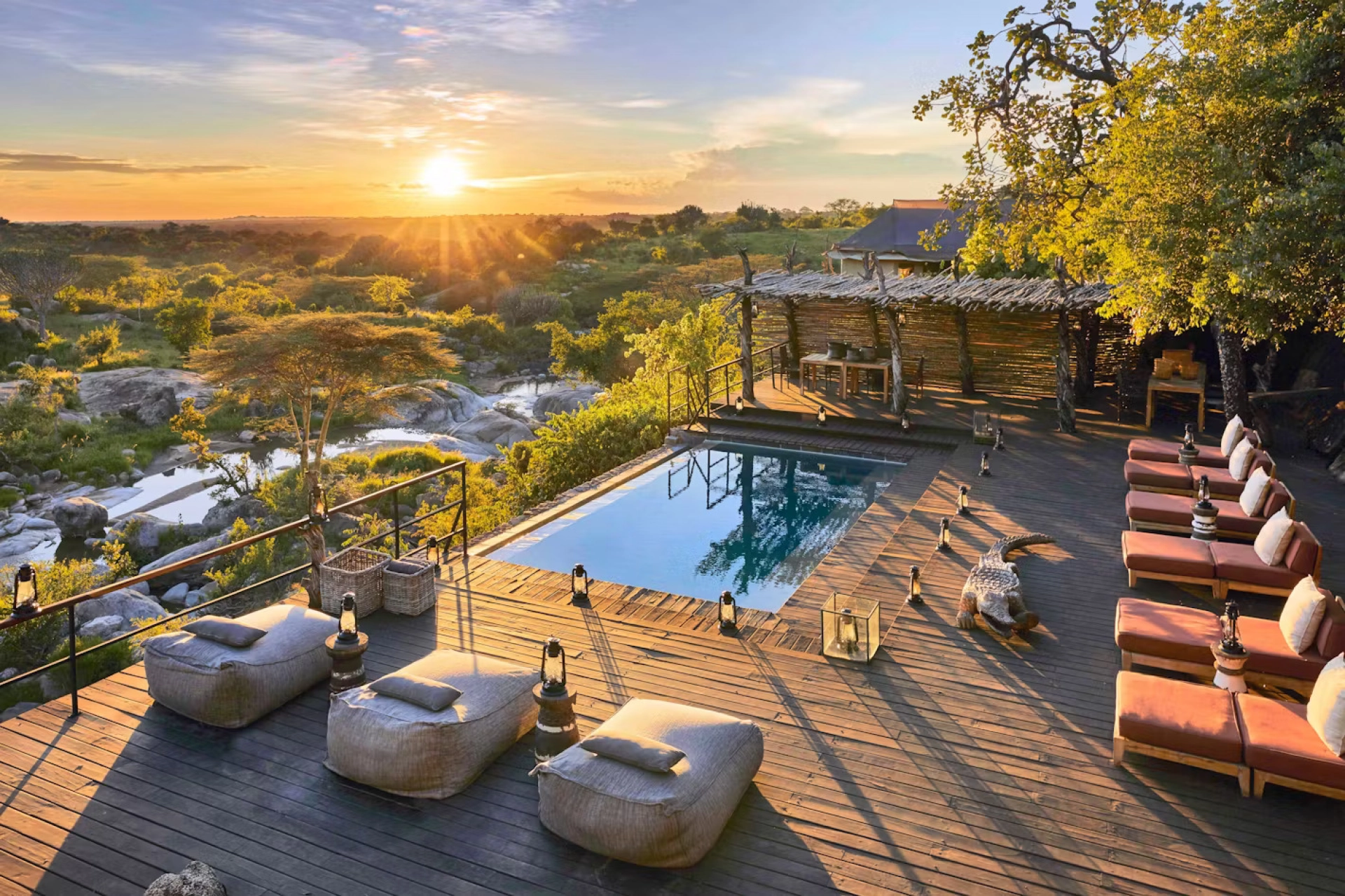
What should I look for when booking a luxury African safari?
When booking a luxury African safari, look beyond the room and compare the quality of guiding, wildlife location,…
Read article

Travel Guide
The word Kalahari immediately creates images of desert. Red sand stretches toward distant horizons. A gemsbok stands beneath a thorn tree. A black-maned lion walks across an open dune. Meerkats rise onto their hind legs and…
The word Kalahari immediately creates images of desert. Red sand stretches toward distant horizons. A gemsbok stands beneath a thorn tree. A black-maned lion walks across an open dune. Meerkats rise onto their hind legs and scan the landscape. San trackers follow signs almost invisible to an untrained visitor. The sky seems impossibly large. Yet one of the most interesting Kalahari Desert facts is that this landscape is far more complicated than the word “desert” suggests.
The Kalahari is not uniformly a barren sea of sand like the popular image of the Sahara. Large areas support grasses, shrubs, thorn woodland and surprisingly diverse wildlife. Rainfall varies substantially across the region. Some areas are semi-arid rather than true desert in the strict climatological sense. The Kalahari is therefore better understood as an enormous sandy basin containing a mosaic of dryland ecosystems. It extends across Botswana and into neighbouring Namibia and South Africa, while the broader Kalahari Basin reaches even farther.
Within this vast landscape lie some of Southern Africa’s most extraordinary safari destinations, including the Central Kalahari Game Reserve, Kgalagadi Transfrontier Park, Makgadikgadi region and numerous private reserves and community areas. The Kalahari is also a human landscape. San communities have lived within Southern Africa’s dry environments for generations, developing detailed knowledge of animals, plants, water and tracking. Understanding the Kalahari therefore means combining geology, ecology, wildlife and culture. Here are some of the most fascinating facts about this extraordinary region.
Calling the Kalahari a desert is convenient, but scientifically the reality is more nuanced.
True deserts are usually defined partly by very low annual rainfall. Parts of the Kalahari receive more rain than classic hyper-arid deserts. The amount increases toward wetter regions. This rainfall supports grasses, shrubs and trees. As a result, large sections of the Kalahari look more like dry savannah or semi-desert than endless barren sand. For safari travellers, this is excellent news. Vegetation supports herbivores. Herbivores support predators. Seasonal rains create dramatic ecological changes. The Kalahari ecosystem is therefore remarkably productive under the right conditions.
The answer lies partly in sand.
Huge quantities of sand cover the region. Red dunes and sandy plains create the visual character associated with desert. Surface water is also scarce across many areas. Rain can disappear rapidly into sandy soils. Rivers may be seasonal or fossil systems that rarely carry surface flow. This creates the impression of extreme dryness even where annual rainfall is greater than visitors expect.
The broader Kalahari Basin covers a vast portion of Southern Africa.
Botswana sits near its heart. The sandy system extends into Namibia and South Africa and influences landscapes beyond those countries. This scale is difficult to appreciate from ground level. Driving across Botswana reveals only a tiny fraction. Satellite imagery better demonstrates the enormous geological system beneath the safari destinations travellers know today.
One of the defining visual characteristics of the Kalahari Desert is its red sand.
The colour comes largely from iron compounds coating sand grains. Oxidation creates the rusty red and orange tones. The process is conceptually similar to rust forming on iron. Over enormous periods, weathering and geological processes created the distinctive colour palette now associated with Kalahari landscapes.
Colour varies according to mineral composition, weathering and environmental conditions.
Some dunes appear deep orange-red. Other sandy areas are paler. Light also changes perception dramatically. Early morning and late afternoon intensify red tones. Midday sun can wash colours out. This makes the Kalahari exceptionally attractive for landscape photography.
Travellers sometimes imagine all Southern African dunes as similar. They are not. The towering dunes around Sossusvlei in Namibia can reach spectacular heights and form enormous sculptural landscapes. Kalahari dunes are generally lower and often stabilised by vegetation. Grass and shrubs grow across them. Animals cross them freely. This vegetation is one reason the Kalahari safari experience feels very different from travelling through the central Namib.
The Kalahari’s sandy environments developed over immense geological time. Wind moved and reshaped sediments. Climate changed repeatedly. Rivers altered courses. What travellers see today is one moment within a much longer environmental history. This perspective makes apparently simple dunes much more interesting.
A landscape that appears dry and difficult supports an impressive variety of animals. The key is adaptation. Kalahari wildlife does not simply tolerate the environment. Species have evolved behaviours and physiological strategies that allow them to exploit it. Among the most famous animals are gemsbok, springbok, wildebeest, lions, cheetahs, brown hyenas, spotted hyenas, jackals and meerkats. Birdlife is also excellent. Raptors are particularly conspicuous because open landscapes provide visibility and hunting opportunities.
Few animals represent the Kalahari Desert better than the gemsbok, or southern oryx. Its long straight horns, bold facial markings and pale body make it immediately recognisable. More importantly, gemsbok are exceptionally adapted to hot, dry environments. They can tolerate conditions that would challenge many large mammals. Their ability to obtain moisture from food and regulate heat makes them superb desert survivors. Photographing a gemsbok against red dunes is one of the classic Kalahari safari images.
The Kalahari is famous for lions, particularly the dramatic black-maned males associated with parts of the region. The appearance of individual lions varies, and not every male has an equally dark mane. Nevertheless, mature males photographed against red dunes have become icons of Kalahari wildlife photography. Lions here operate across large territories. Prey density can be lower than in some wetter ecosystems. This means predators may travel substantial distances. Finding them requires patience.
Open terrain can favour cheetahs. These specialised high-speed predators benefit from landscapes where they can identify and pursue suitable prey. Kalahari cheetah sightings can be exceptional because vegetation is often relatively open. Watching a cheetah scan the horizon from a raised dune demonstrates how predators use topography strategically.
The brown hyena is one of the Kalahari’s most fascinating carnivores. Less famous than the spotted hyena, it is adapted to dry environments and often operates as a scavenger. It can travel large distances while searching for food. Sightings are less predictable, making an encounter particularly rewarding. For experienced safari travellers, brown hyenas may be among the most desirable Kalahari Desert animals to observe.
Meerkats have become global wildlife celebrities. Their habit of standing upright creates an almost human appearance. This posture has a practical purpose. Individuals scan for predators while other members of the group forage. Meerkat society is highly cooperative. Watching a group emerge from a burrow in early morning light is one of the most enjoyable experiences available in parts of the Kalahari.
The enormous ears of the bat-eared fox are not decorative. They assist with detecting prey and contribute to heat management. These small carnivores feed heavily on insects, including termites. They demonstrate how Kalahari food webs depend not only on famous mammals but also on tiny organisms.
The human history of the Kalahari is as fascinating as its wildlife. Diverse San communities have deep historical roots across Southern Africa. They are sometimes referred to collectively as San Bushmen, although terminology should be used respectfully and communities may have their own preferred identities. Traditional San livelihoods included hunting and gathering supported by exceptionally detailed environmental knowledge. Survival in dry landscapes required understanding information invisible to outsiders. Which plants contain moisture?
Where can water persist after rain? What does a particular animal track reveal? Which roots are edible? How old is a spoor trail? Where is an animal likely to move next? This knowledge transforms the apparent emptiness of the Kalahari into a landscape filled with information.
Traditional tracking is one of the most impressive skills associated with Kalahari San knowledge. A footprint is only the beginning. A skilled tracker studies shape. Depth. Direction. Stride. Broken vegetation. Dung. Feeding signs. Wind. Sun. Time. All these clues can combine into a narrative. The tracker may determine which species passed, how many animals were present and how recently they moved through. For safari visitors, a San-guided tracking experience can be transformative. Suddenly the ground is no longer empty sand. It becomes a record of everything that happened overnight.
Plants are equally important. Some provide food. Others contain moisture. Certain species have medicinal or practical uses. Roots and tubers can become critical in dry environments. This knowledge developed through generations of close observation. It should not be romanticised as mysterious “primitive wisdom.” It is a sophisticated body of ecological knowledge adapted to a particular environment.
Travellers should avoid imagining San communities as people living unchanged outside modern society. Contemporary San populations experience modern education, employment, land-rights issues, government policies and economic pressures. Some participate in tourism. Others live in settlements or towns. Cultural traditions remain important, but modern San identity is diverse. Responsible Kalahari cultural tourism should allow communities to represent themselves rather than performing stereotypes created by outsiders.
Perhaps the greatest surprise for first-time visitors is how dramatically the Kalahari responds to rain. During dry periods, landscapes can appear dusty and harsh. Then thunderstorms arrive. Grass emerges. Temporary pools form. Insects become active. Birds respond. Herbivores take advantage of improved grazing. Predators follow prey. The transformation demonstrates that the Kalahari is not biologically empty. Life is waiting for opportunity.
The Kalahari green season generally corresponds with the warmer summer rainfall period. This season can be exceptional for photographers. Dark storm clouds contrast with red sand and green grass. Young animals appear. Birdlife increases. Predator activity can be excellent. Tourism numbers may also be lower than during conventional dry-season peaks. For travellers who have already experienced dry-season Africa, the green Kalahari offers something very different.
Seasonal rainfall can influence large herbivore movements across Botswana’s dryland systems. Zebras move in response to water and grazing. These movements demonstrate how apparently separate safari destinations are connected ecologically. Animals respond to rainfall patterns rather than park boundaries. Understanding these seasonal movements makes a Botswana safari much more interesting.
The Central Kalahari Game Reserve, commonly abbreviated CKGR, is one of Africa’s great wilderness areas. Its scale is difficult to comprehend. Roads cross enormous distances. Wildlife densities can appear low. Other vehicles may be scarce. The horizon dominates. This is not the place for travellers who need constant sightings every few minutes. The reward is wilderness.
A Central Kalahari safari differs significantly from the Okavango Delta. The Delta is defined by water. The Kalahari is defined by space and scarcity. Game drives may involve long periods of searching. Then suddenly a predator appears. A lion walks across the track. A cheetah scans a plain. A herd of oryx moves through grass. Because sightings require effort, they often feel more rewarding.
Deception Valley is among the best-known regions within the Central Kalahari. Its name refers to the way ancient dry river systems and pans can create visual impressions of water. The area becomes particularly productive after rainfall. Grass attracts herbivores. Predators respond. This seasonal pulse can produce outstanding safari experiences.
One of the Central Kalahari’s greatest attractions cannot be photographed. Silence. Modern humans live surrounded by engines, phones, music and conversation. In the Kalahari, sound can disappear. Wind moves through grass. A bird calls far away. A jackal vocalises after dark. This acoustic wilderness is increasingly rare.
The Kalahari is not confined to Botswana. Its landscapes extend into South Africa and Namibia, while the broader basin reaches across a much larger part of Southern Africa. This makes the Kalahari an ecological region rather than simply a tourist destination inside one country. Wildlife and environmental processes do not recognise political borders. The Kgalagadi Transfrontier Park demonstrates this particularly well.
The Kgalagadi Transfrontier Park spans the border between Botswana and South Africa. It represents one of Southern Africa’s important transboundary conservation landscapes. The park is famous for red dunes, dry riverbeds and predators. Lions, cheetahs and raptors are major attractions. Gemsbok and springbok provide classic Kalahari scenery. For photographers, Kgalagadi is exceptional.
Wildlife requires space. Predators maintain large territories. Herbivores move according to water and grazing. Political borders can divide ecosystems artificially. Transfrontier conservation aims to manage larger connected landscapes across national boundaries. For the Kalahari, this approach makes ecological sense.
Eastern Namibia contains Kalahari environments characterised by red dunes, grasslands and dry woodland. Many travellers rush between Namibia’s more famous attractions and overlook this region. Yet the Namibian Kalahari offers beautiful scenery and wildlife. It can provide an excellent introduction or conclusion to a broader Namibia safari.
Travellers often confuse the Kalahari Desert with the Namib Desert. They are very different. The Namib runs along Namibia’s Atlantic coast and contains some exceptionally arid landscapes. Its giant dunes around Sossusvlei are internationally famous. The Kalahari lies farther inland and receives more rainfall in many regions. Vegetation is generally more extensive. Large areas support grassland and thorn scrub. Both deserts are spectacular, but they provide completely different safari experiences.
For conventional large-mammal wildlife viewing, the Kalahari generally offers more opportunities. The Namib has extraordinary specialised wildlife, but densities of large mammals are often lower in its most arid environments. The Kalahari supports lions, cheetahs, gemsbok, springbok, hyenas and numerous other mammals. Travellers primarily interested in desert wildlife safaris may therefore favour the Kalahari.
The Namib’s giant dunes are among the world’s most dramatic desert landscapes. The Kalahari offers red sand, grasslands, open skies and wildlife. Choosing between them depends on priorities. Ideally, a longer Southern Africa journey includes both.
The Kalahari climate is characterised by strong seasonal variation. Summer can be extremely hot. Thunderstorms bring much of the annual rainfall. Winter days can be pleasant while nights become surprisingly cold. Temperature changes can be dramatic. Safari travellers should therefore pack layers. An open vehicle before sunrise in winter can feel bitterly cold even if afternoon temperatures become warm.
Dry air retains heat less effectively than humid air. Clear skies allow heat to radiate away rapidly after sunset. This creates large differences between daytime and nighttime temperatures. The experience surprises visitors who assume deserts are permanently hot.
Vegetation varies across the enormous region. Grasses become particularly important after rain. Acacias and other drought-tolerant trees and shrubs provide shade, browse and habitat. Plants must cope with irregular rainfall, high temperatures and sandy soils. Deep roots, small leaves and water-storage strategies are among the adaptations found in dryland environments.
The camel thorn tree is one of the Kalahari’s iconic plants. Its spreading form creates classic safari silhouettes. The tree provides food and shelter for numerous animals. Large sociable weaver nests may be built in its branches. For photographers, a camel thorn against sunset is almost as symbolic of the Kalahari as a gemsbok.
Among the Kalahari’s most remarkable birds are sociable weavers. These small birds construct enormous communal nests. A single nest structure may contain many chambers used by numerous birds. The resulting mass can become so large that it dominates the tree or utility pole supporting it. These nests provide insulation against extreme temperatures. They represent one of the most impressive examples of cooperative architecture in the bird world.
Open landscapes make the Kalahari superb for raptor viewing. Eagles, falcons, vultures and other birds of prey use thermals and exposed perches. A dedicated Kalahari birding safari can therefore be extremely rewarding. Summer rains can increase overall bird diversity, while raptors remain conspicuous throughout much of the year.
Large mammals dominate safari attention, but termites play important ecological roles. They break down plant material. They recycle nutrients. Their colonies influence soils. They provide food for numerous animals. Bat-eared foxes, aardwolves and many birds feed heavily on insects. Without small organisms, the famous predators of the Kalahari could not exist within functioning ecosystems.
The aardwolf looks superficially like a small striped hyena but has an unusual diet dominated by termites. Rather than hunting large prey, it specialises in feeding on insects. This extraordinary adaptation allows it to occupy a very different ecological niche from larger carnivores. Aardwolf sightings are highly rewarding for safari travellers interested in unusual mammals.
Pangolins occur in parts of Southern Africa but are difficult to see. These extraordinary mammals feed primarily on ants and termites. They are generally secretive and often nocturnal. A pangolin encounter should therefore be considered an exceptional privilege rather than an expected safari sighting. Responsible tourism should never support unethical handling or disturbance of pangolins.
Where permitted, night game drives reveal an entirely different ecosystem. Nocturnal animals become active. Owls hunt. Small carnivores emerge. Insects fill the darkness. Predators may move more confidently. Night activities are particularly valuable because many desert animals avoid daytime heat. Private concessions may offer night drives where national park regulations do not.
The Kalahari is one of Southern Africa’s great stargazing environments. Low population density creates minimal artificial light across remote areas. The Milky Way can appear spectacular. Constellations invisible from cities become obvious. Meteor showers are easier to appreciate. For photographers, Kalahari astrophotography can be exceptional. A camel thorn, dune or safari camp creates an ideal foreground.
The best time for a Kalahari safari depends on priorities. Dry winter months provide comfortable daytime temperatures and generally predictable travel conditions. Nights can be extremely cold. Summer brings heat and thunderstorms but also green landscapes, young animals and excellent birding. Predator viewing can be strong during the green season when prey becomes more abundant in productive areas. There is therefore no universally superior season.
Dry-season landscapes emphasise red sand and golden grass. Water becomes increasingly important. Road conditions are generally reliable. Clear skies dominate. Photography has a classic desert appearance.
The green season completely changes the visual character. Fresh grass contrasts with red dunes. Storm clouds build. Animals respond to new grazing. Birds breed. Young antelope appear. Photographers who enjoy colour and dramatic weather may prefer this period.
Few contrasts in Botswana are greater than the Kalahari Desert versus Okavango Delta. The Kalahari is dry, open and expansive. The Okavango is defined by channels, floodplains and seasonal water. Kalahari wildlife must respond to scarcity. Delta wildlife responds to changing water levels. Combining both creates one of Africa’s strongest ecological safari itineraries.
Travelling directly from red Kalahari dunes to the waterways of the Okavango Delta demonstrates Botswana’s extraordinary environmental diversity. In one destination, you search for lions across dry plains. In another, you glide through reeds by mokoro. The contrast makes both ecosystems more memorable.
The Makgadikgadi Pans offer another complementary dryland experience. Rather than red dunes, travellers encounter enormous salt pans created by an ancient lake system. Seasonal rainfall can transform the region and influence wildlife movements. Combining Central Kalahari and Makgadikgadi creates a superb itinerary for travellers interested in geology, landscapes and unusual wildlife.
A longer Botswana safari can continue north to Chobe National Park. The contrast is again dramatic. Kalahari landscapes emphasise scarcity. The Chobe River supports huge concentrations of wildlife. Elephants become particularly prominent. A Kalahari, Okavango and Chobe safari provides an extraordinary overview of Botswana’s major ecosystems.
The Kalahari is a dream destination for photographers. Red sand provides natural colour. Open terrain creates uncluttered backgrounds. Predators can be visible across large distances. Sunrise and sunset produce warm light. Dust adds atmosphere. Storms transform the sky. Rather than concentrating only on close wildlife portraits, photographers should include habitat. A lion against red dunes tells a stronger Kalahari story than a tight photograph that could have been taken anywhere in Africa.
Dryland environments can appear robust but are often fragile. Vehicles should remain on authorised routes. Wildlife should not be pressured for photographs. Cultural encounters should respect communities. Water should be used carefully. Waste management matters enormously in remote wilderness. Responsible Kalahari tourism protects the very qualities travellers come to experience.
The Kalahari extends across much of Botswana and into Namibia and South Africa, while the wider Kalahari Basin covers an even larger region.
Parts are extremely dry, but much of the Kalahari receives enough rainfall to support grasses, shrubs and trees, making the term “desert” more complex than it first appears.
Wildlife includes lions, cheetahs, gemsbok, springbok, wildebeest, brown hyenas, spotted hyenas, jackals, meerkats, bat-eared foxes and numerous bird species.
San communities have deep historical roots in Southern Africa and are renowned for detailed traditional knowledge of tracking, plants and dryland environments.
Iron compounds coating sand grains oxidise and contribute to the characteristic red-orange colour.
The Central Kalahari Game Reserve in Botswana and Kgalagadi Transfrontier Park on the Botswana-South Africa border are two of the most famous.
Yes. The region supports lions and is particularly famous for impressive dark-maned males in some areas.
Yes. Combining the Kalahari and Okavango Delta is one of the best ways to experience Botswana’s ecological diversity.
Both dry and green seasons have advantages. Dry months offer classic desert conditions, while the summer green season provides dramatic skies, birdlife and seasonal wildlife activity.
The most important Kalahari Desert fact may be that almost every first impression of this landscape is incomplete. It looks empty. It is full of life. It appears barren. Rain can turn it green. It seems silent. The sand records the movements of animals throughout the night. It looks timeless. Its geology tells a story of enormous environmental change. It appears purely wild. Yet San communities have understood and travelled through these landscapes for generations.
That complexity is what makes a Kalahari safari so rewarding. The Kalahari is not simply somewhere to photograph a black-maned lion. It is a place to understand adaptation. Watch a gemsbok survive extreme heat. Follow tracks with a San guide. Observe meerkat behaviour. Study the architecture of sociable weaver nests. Search for brown hyenas and cheetahs. Watch thunderstorms transform dry grasslands. Stand beneath a sky filled with stars. Then continue into the Okavango Delta, Makgadikgadi Pans or Chobe National Park and discover just how diverse one Botswana safari can become.
For travellers interested in African wildlife, desert ecology, Botswana culture, San traditions, geology, photography and genuine wilderness, the Kalahari remains one of Southern Africa’s most fascinating destinations.

Share This Article
When booking a luxury African safari, look beyond the room and compare the quality of guiding, wildlife location,…
Read article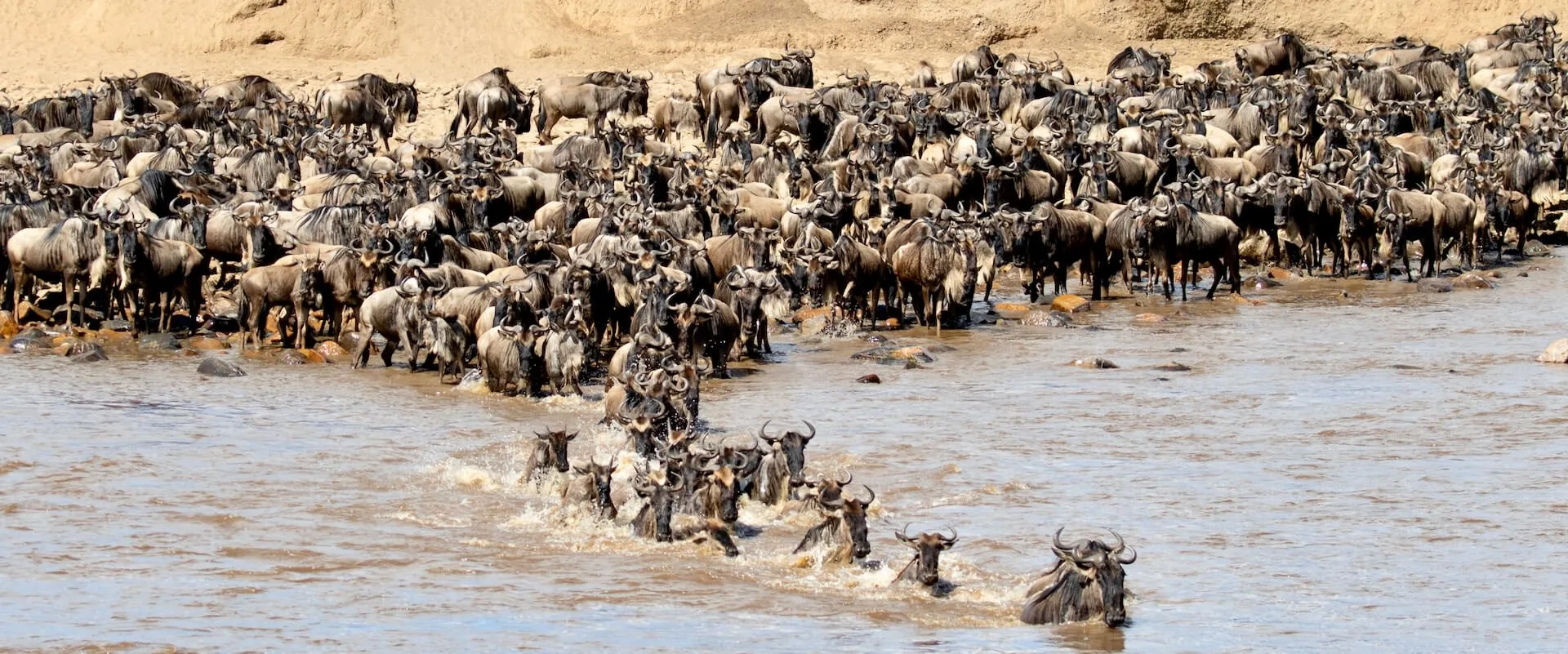
The Great Migration in Africa happens all year because the herds continuously circulate through the Serengeti–Mara ecosystem in…
Read article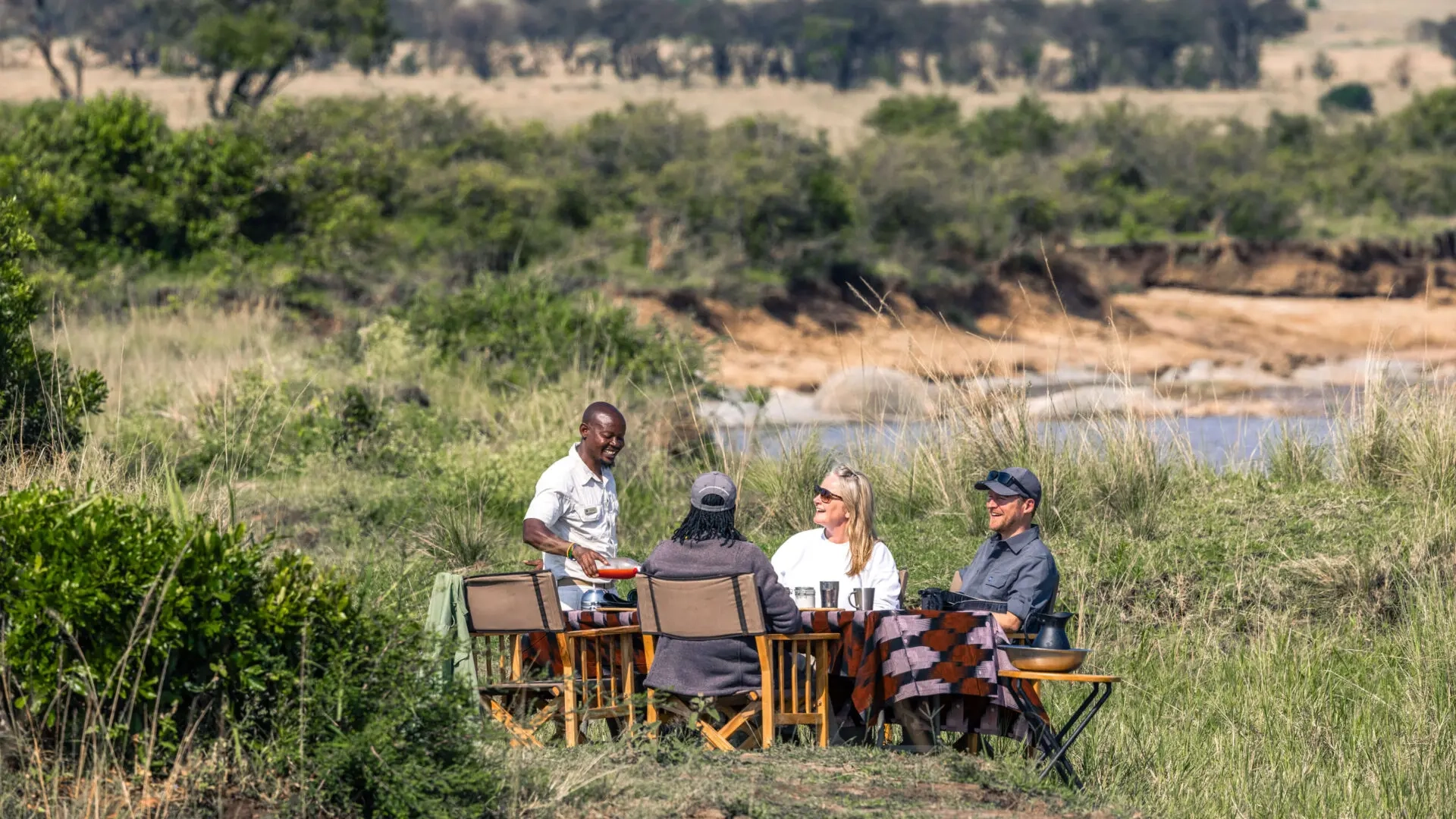
Definitive answer: A picnic lunch on safari is a packed or catered midday meal eaten at an approved…
Read article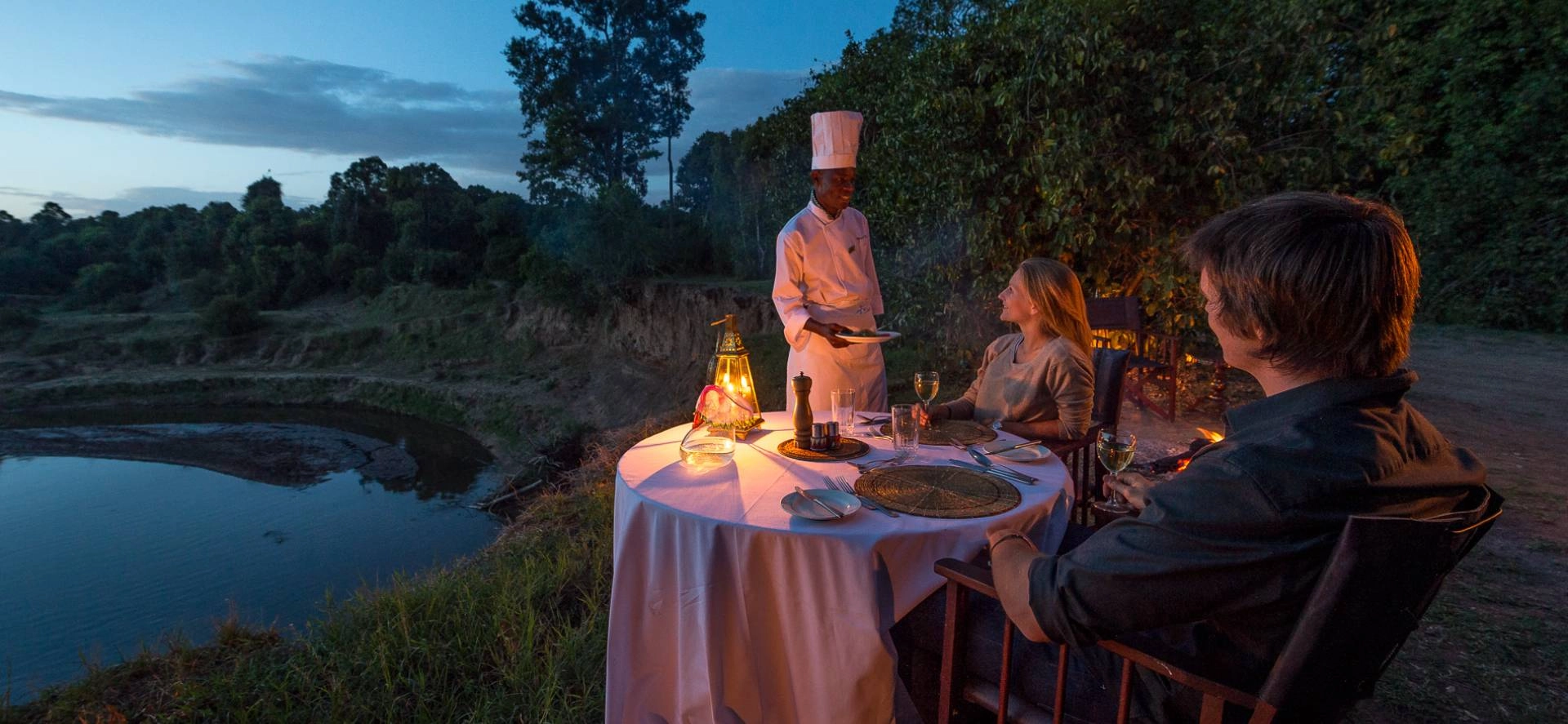
Definitive answer: A bush dinner is an outdoor evening meal arranged in a safe safari setting away from…
Read articleLet us take you closer to the wildlife, people and places that make Africa extraordinary.
Plan Your Safari Today