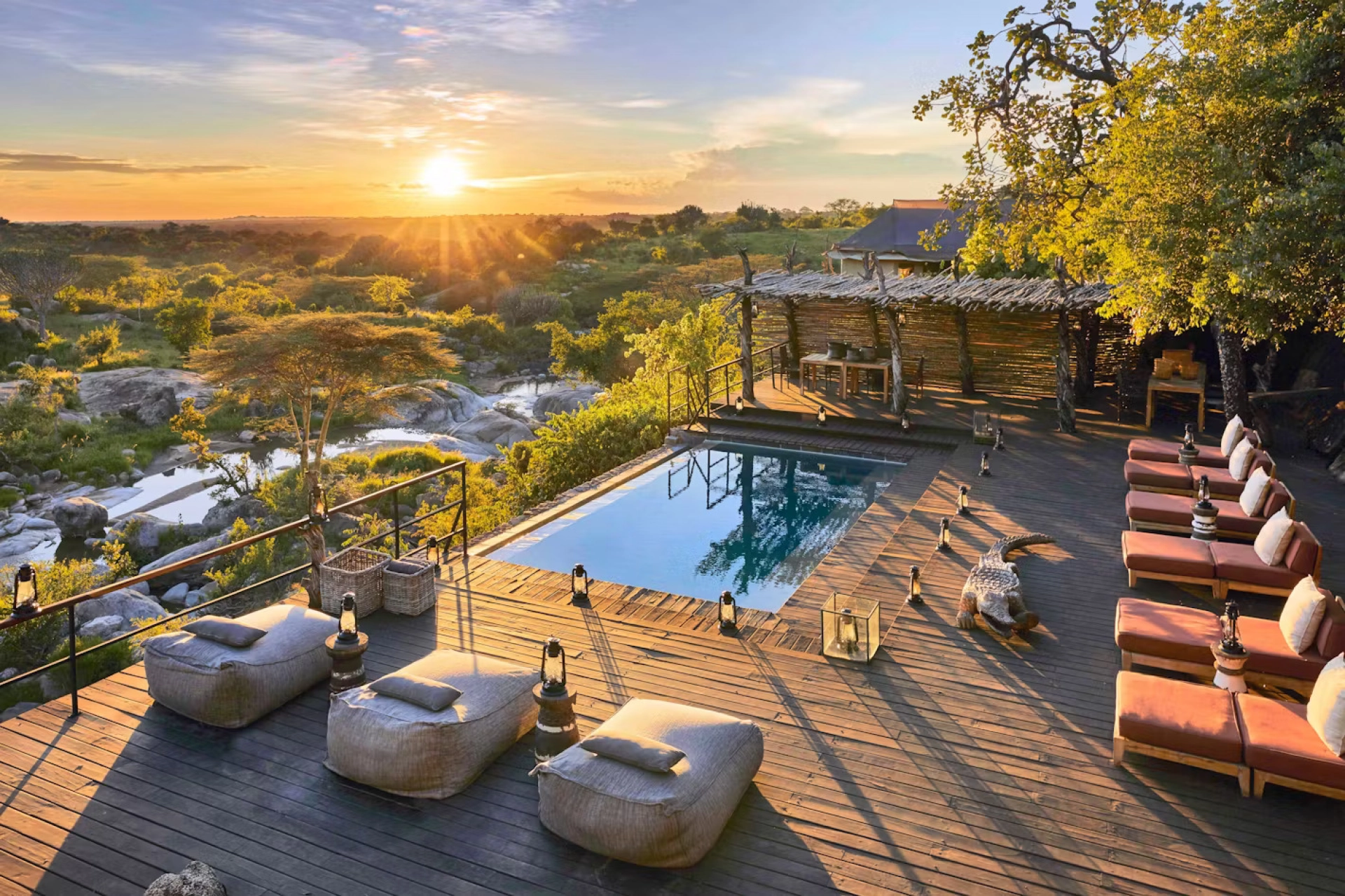
What should I look for when booking a luxury African safari?
When booking a luxury African safari, look beyond the room and compare the quality of guiding, wildlife location,…
Read article

Travel Guide
Botswana has one of the strongest luxury-safari reputations in Africa. Mention the Okavango Delta and many travelers immediately imagine remote fly-in camps, tiny aircraft, private plunge pools, exceptional cuisine and nightly rates that can exceed the…
Botswana has one of the strongest luxury-safari reputations in Africa. Mention the Okavango Delta and many travelers immediately imagine remote fly-in camps, tiny aircraft, private plunge pools, exceptional cuisine and nightly rates that can exceed the entire budget of a conventional holiday. This image is real. Botswana contains some of the most exclusive safari accommodation on the continent, and its tourism model has long placed a strong emphasis on low-density wilderness experiences.
What is less widely understood is that Botswana is not exclusively a luxury destination. Travelers who are willing to use mobile camping safaris, stay in more affordable lodges around Kasane and Maun, travel by road rather than flying between every camp, join small-group departures and concentrate on publicly accessible wildlife areas can experience many of Botswana’s greatest landscapes at dramatically lower cost. This is particularly important when planning a route that combines Chobe National Park, the Okavango Delta and Victoria Falls.
These three destinations create one of Southern Africa’s strongest short safari combinations. Chobe provides exceptional elephant viewing and the famous Chobe River. The Okavango introduces floodplains, lagoons, islands, seasonal wetlands and a completely different safari atmosphere. Victoria Falls adds one of Africa’s great natural landmarks and an ideal beginning or ending point for a multi-country journey.
Botswana Tourism Organisation describes Botswana as having extensive protected and wildlife-management areas, much of them unfenced, allowing animals to move across large landscapes. It also identifies the Okavango Delta and Chobe as two of the country’s most important wilderness attractions. The challenge is cost. A poorly planned Botswana itinerary can become very expensive very quickly. A carefully designed affordable Botswana safari can preserve the important parts of the experience while reducing the cost of accommodation and transportation.
Botswana’s safari pricing reflects several structural realities. Many camps are extremely remote. Some can be reached most efficiently by light aircraft. Supplies must be transported into isolated wilderness areas. Guest capacity is limited. Private concessions may deliberately maintain low bed densities. Professional guiding, conservation fees, aircraft logistics and camp operations all contribute to the price.
This is why comparing a Botswana lodge directly with an ordinary hotel can be misleading. A remote Okavango camp is not simply selling a room. It may be selling accommodation, meals, game drives, boating or mokoro activities, guiding, laundry, transfers and access to a very remote wilderness area. Nevertheless, travelers should not assume that the most expensive version is the only authentic version.
Botswana Tourism Organisation itself notes that the country offers accommodation ranging from top-class lodges and safari camps to budget guesthouses and camping grounds. That variety is the foundation of an affordable safari.
For many value-conscious travelers, Chobe National Park is the easiest place to begin. The park lies close to Kasane in northern Botswana and is considerably easier to access than many deep-Delta camps. Botswana Tourism Organisation states that Chobe covers approximately 11,700 square kilometers and includes several distinct ecological areas, including the Chobe Riverfront, Ngwezumba pans, Savuti and Linyanti. The Chobe Riverfront is particularly famous for concentrations of elephants and buffalo during the dry season.
Kasane provides a major logistical advantage. Travelers can stay in town or in surrounding accommodation rather than needing to fly directly into an expensive remote camp. From Kasane, it is possible to arrange game drives and river activities while maintaining much greater control over accommodation costs.
The Chobe Riverfront is one of Southern Africa’s great wildlife-viewing environments. During suitable dry-season periods, elephants move toward the river to drink, bathe and interact. Buffalo can also gather in substantial numbers. Giraffes, antelope, warthogs and numerous other species occupy the surrounding landscape. Predators, including lions and leopards, occur in the region. The great advantage is that wildlife can be viewed from both land and water. A morning game drive might focus on tracks, predators and terrestrial wildlife. An afternoon Chobe River cruise can then provide a completely different perspective.
Botswana Tourism Organisation highlights river cruises as an important way to see hippos, crocodiles, waterbirds and animals using the river’s edge. For photographers, the low perspective from the river can be particularly rewarding.
Chobe is internationally associated with elephants. Botswana Tourism Organisation describes the broader Chobe region as supporting exceptionally large elephant and buffalo populations, while the riverfront becomes especially important during dry periods. This does not mean every drive will produce hundreds of elephants. Wildlife movement varies. But for travelers whose priority is elephant safari photography, Chobe deserves a very high place on the list. The sight of family groups approaching the water, calves moving between adults and elephants entering the river can become one of the defining memories of a Southern African safari.
One of the smartest strategies for an affordable Chobe safari is to use Kasane as a base. Instead of paying for a fully inclusive remote lodge, travelers can choose from a broader accommodation market. This can include guesthouses, modest lodges and mid-range hotels. Safari activities can then be booked separately or as part of a package.
The trade-off is that you may not wake inside deep wilderness. But you retain excellent access to the Chobe Riverfront. For budget-conscious couples, solo travelers and families, this trade-off can make Botswana dramatically more affordable.
Kasane is also one of the strongest bases for combining Botswana with Victoria Falls. Botswana Tourism Organisation specifically identifies Kasane as a gateway not only to Chobe National Park but also to nearby Victoria Falls destinations in Zimbabwe and Zambia. This geographical proximity is extremely important. Africa is enormous, and many apparently simple multi-country itineraries involve expensive flights.
Chobe and Victoria Falls are different. They are close enough to combine by road through appropriate border arrangements.
This creates one of Southern Africa’s best-value multi-country safari combinations.
Victoria Falls is not a conventional wildlife destination in the same sense as Chobe or Moremi. It provides a major landscape experience. The waterfall lies on the Zambezi River between Zambia and Zimbabwe and is recognized by UNESCO as a World Heritage property. For many travelers, Victoria Falls becomes the ideal transition between wildlife safari and broader sightseeing.
You can arrive after several days of dusty game drives, walk through rainforest-like spray near the Falls and spend time exploring the Zambezi region. Depending on season and water levels, the visual character of the waterfall changes dramatically. High-flow periods create enormous spray and power. Lower-flow periods can reveal more of the geological structure. No one version is universally “better.”
Travelers commonly ask whether Zimbabwe or Zambia provides the best Victoria Falls experience. The answer depends partly on water level, accommodation preference and broader itinerary. Zimbabwe’s Victoria Falls town has historically offered convenient access to multiple viewpoints. Livingstone in Zambia provides its own accommodation and activity infrastructure. Some travelers cross the border to experience both sides where visa and entry arrangements make this practical. Before travel, verify current entry requirements rather than relying on old travel blogs.
Travelers with limited time can create a compact itinerary around Chobe and Victoria Falls. Two or three nights near Chobe allow a combination of game drives and river safari. Two nights around Victoria Falls provide time to explore the Falls and enjoy the broader area. This is one of the strongest short Southern Africa safari packages for travelers who cannot commit to a longer expedition.
It also avoids internal bush flights.
The Okavango Delta is the point where Botswana becomes more challenging for budget travelers. It is also the destination many people most want to experience. Botswana Tourism Organisation describes the Delta as a vast inland wetland system of channels, lagoons, flooded grasslands, woodland, islands and dryland areas. It identifies three broad geographical zones: the Panhandle, the Delta and drylands. The key to affordability is understanding that “Okavango Delta safari” does not have to mean the most remote luxury concession. Several safari styles can access the wider ecosystem.
Maun functions as one of Botswana’s principal safari gateways. It is a practical base for road safaris, Delta excursions and bush flights. Budget travelers can stay in Maun before and after safari rather than spending every night inside a premium wilderness camp. Maun also provides a useful location for assembling mobile safari equipment, meeting guides and connecting with Moremi or Khwai.
Moremi Game Reserve protects part of the eastern Okavango landscape and is one of Botswana’s most celebrated wildlife areas. It combines dryland and wetland habitats. The result is a rich wildlife environment that can support elephants, buffalo, antelope, predators and extensive birdlife. For travelers unable to afford private Delta concessions, Moremi can provide a compelling alternative.
Road-accessible mobile safaris can enter the reserve with experienced guides. Camping brings travelers exceptionally close to the environment. At night, you may hear hyenas, elephants or lions in the distance. The experience can feel more adventurous than a lodge-based safari and considerably more affordable.
The Khwai area is another important part of many value-oriented Botswana itineraries. Its location near Moremi allows travelers to combine ecosystems without returning to Maun between every section. Depending on the specific concession and current regulations, activities may include day game drives, night drives, mokoro excursions or other guided experiences. Rules differ according to land-management area.
Do not assume that every Botswana camp offers the same activity menu. This is an important distinction between national parks, reserves and concession areas.
A Botswana mobile camping safari is one of the most effective ways to reduce costs while preserving wilderness immersion. Instead of flying from luxury lodge to luxury lodge, travelers move through wildlife areas by 4×4 and camp at designated sites. The quality of mobile camping varies enormously. Budget camping may involve simple tents and shared facilities.
More comfortable mobile operations can provide spacious tents, proper bedding, bucket showers, camp staff and prepared meals. The advantage is location. You may sleep deep inside wildlife country without paying the nightly rate of a permanent lodge. For travelers who value wildlife more than architecture, this can represent exceptional value.
A typical mobile safari begins early. Camp staff prepare breakfast or coffee before the morning game drive.
You leave while temperatures are still cool and predators may remain active. After several hours of wildlife viewing, the group may return to camp or stop for brunch. Afternoons are quieter before another game drive begins as temperatures fall. Evenings are spent around camp. Without the physical barrier of a conventional resort, the wilderness feels close. This requires discipline. You cannot walk around freely after dark. Guides provide safety instructions.
Wild animals may move near camp. The sense of immersion is part of the appeal.
The mokoro safari has become one of the iconic Okavango experiences. A mokoro is a narrow canoe-like craft traditionally used within the Delta environment. Modern tourism operations frequently use fiberglass alternatives to reduce pressure on trees historically used for dugout construction. From a mokoro, the safari perspective changes completely.
Instead of looking across the landscape from a high 4×4, you travel close to water level through channels and reeds. The emphasis may shift from big-game searching toward wetland ecology, birds, frogs, aquatic vegetation and the peaceful character of the Delta. Botswana Tourism Organisation identifies mokoro excursions, boating, game viewing and birdwatching among major Delta experiences.
One of the most important planning facts is that Okavango water levels are not determined solely by rainfall falling directly over Botswana. Floodwaters originate far upstream in the Angolan highlands and move gradually southward. As a result, the Delta can receive substantial floodwater during Botswana’s dry season. Flood extent varies from year to year. Do not assume that a particular lodge will offer identical water activities in the same month every year. A good operator should explain whether your selected camp is primarily water-based, land-based or mixed.
No. This is one of the most common misconceptions. The Okavango consists of permanent channels, seasonal floodplains and substantial dryland areas. Botswana Tourism Organisation explicitly describes the Delta as incorporating both wetlands and expansive drylands. This diversity is part of what makes the ecosystem so productive. It also means that two travelers can visit “the Okavango” and have very different experiences. One may spend considerable time in boats and mokoros. Another may focus primarily on game drives.
The Okavango supports exceptional wildlife diversity. Botswana Tourism Organisation lists elephant, buffalo, giraffe, zebra, hippo, crocodile, various antelope, lion, leopard, cheetah and other species among the animals found in the broader Delta landscape. It also notes that game viewing can vary seasonally according to water and food availability. This seasonal variability should influence itinerary design. Wildlife does not distribute itself evenly across the Delta. Professional guides use water, vegetation and seasonal movement patterns to decide where to search.
Travelers with limited budgets often ask whether they should choose Chobe or the Okavango Delta. They provide different experiences. Chobe is easier to access and therefore generally easier to experience affordably. The riverfront offers excellent elephants and boat safaris. The Okavango provides one of Africa’s most distinctive wetland wilderness experiences. If your budget allows only one, Chobe usually provides stronger cost efficiency. If your journey to Botswana is a once-in-a-lifetime trip, adding even two or three nights in Moremi, Khwai or another accessible Delta area can dramatically increase variety.
Chobe and the Okavango complement each other exceptionally well. The Chobe Riverfront can be busy but wildlife-rich. The Delta can feel more complex and remote. Chobe offers strong river-based elephant viewing. The Okavango introduces channels, seasonal floodplains and mixed land-water safari. A ten-day Botswana itinerary can therefore feel far more varied than spending the same period in one ecosystem.
Botswana supports the Big Five, but travelers should not treat every part of the country as an equal Big Five checklist destination. Lions, leopards, elephants and buffalo occur across several major wildlife areas. Rhinos are more restricted and conservation-sensitive. Sightings are never guaranteed. Botswana’s greatest appeal is broader than checking five species off a list.
Wild dogs, sable, roan, red lechwe, hippos, crocodiles, cheetahs and extraordinary birdlife often become safari highlights.
Botswana Tourism Organisation reports more than 460 bird species recorded in Chobe and identifies the park as an important birding destination. The combination of river, woodland and floodplain habitat creates excellent diversity. African fish eagles, kingfishers, storks, bee-eaters, waterfowl and raptors are among the groups birders may seek. For specialist birding travelers, slower boat trips can be particularly productive.
Botswana is exceptional for wildlife photography because different environments provide very different perspectives. Chobe offers low-angle river photography. Moremi and Khwai can provide predators and varied habitats. The Okavango creates reflections, waterways and environmental compositions. Mobile safaris allow photographers to stay deep in wildlife areas. However, group vehicle occupancy matters. If photography is a priority, ask how many guests share each row. Paying slightly more for better vehicle space may be more valuable than upgrading accommodation.
Botswana can work well for families, but age restrictions and camp policies vary. Some wilderness camps have minimum ages. Walking safaris, mokoro excursions and specialist activities may also have age limits. Families should therefore design the itinerary before paying for international flights. Kasane is often easier for families because accommodation options are broader and activities can be selected more flexibly.
Botswana can be expensive for solo travelers because private safari services and single supplements create high per-person costs. Scheduled small-group Botswana safaris and mobile camping departures offer a solution. Sharing a safari vehicle distributes fuel, guide and equipment costs. For adventurous solo travelers, this can make Botswana far more accessible.
Couples should compare scheduled small-group departures with private safaris. A private Botswana road safari can be expensive for two people because vehicle costs are divided only between the couple. However, selectively combining group activities in Chobe with a private transfer or short fly-in Delta stay can create a strong balance.
Botswana’s peak safari demand broadly overlaps with the cooler dry-season months, when wildlife concentrations can become especially rewarding in areas such as Chobe. Peak demand generally means higher accommodation prices. Budget travelers may therefore benefit from shoulder periods. The best value month is not identical every year. Weather, water levels and individual lodge pricing vary. Compare actual quotations.
Dry conditions can concentrate wildlife around permanent water sources. Chobe becomes particularly famous for elephant activity along the river. Road conditions are generally easier in many safari areas. Temperatures can be cold early in the morning, especially in open vehicles. Layered clothing is essential.
Rain transforms the landscape. Vegetation becomes greener. Birding can be outstanding. Young animals may appear. Some accommodations offer lower seasonal rates. The challenge is that certain roads become more difficult and wildlife can disperse because water becomes widely available. For repeat safari travelers and photographers, green season can offer remarkable value.
Travelers with more time can consider Savuti, part of the broader Chobe ecosystem. Savuti is famous for predator-prey interactions and changing environmental conditions associated with the Savuti Channel. Its remote location makes logistics more demanding than Kasane’s riverfront. A mobile safari can make Savuti more accessible to budget-conscious travelers.
Botswana offers much more than Chobe and the Okavango. The Central Kalahari Game Reserve, Makgadikgadi Pans and Nxai Pan introduce enormous dryland landscapes. Botswana Tourism Organisation emphasizes the country’s extraordinary environmental diversity, from the Okavango to the Kalahari and salt pans. These regions are particularly attractive to repeat visitors. However, adding them to a short first Botswana itinerary can create excessive road time.
A seven-day trip can focus on Chobe, Victoria Falls and a limited Delta component. The exact order depends on flights.
For example, travelers might arrive near Victoria Falls, continue by road toward Kasane for Chobe, then travel toward Maun for a short Moremi or Khwai safari. The route should not be overloaded. Seven days is short for three major destinations. Using efficient transfers is more important than collecting extra stops.
Ten days provides a much stronger balance. Three nights around Chobe allow multiple river and land activities. Two nights around Victoria Falls provide sightseeing and recovery time. Four or five nights around Moremi, Khwai or another Delta area create meaningful wilderness immersion. This is one of the best durations for a first Botswana and Victoria Falls safari.
Two weeks allows a more complete journey. Travelers can add Savuti, deeper Delta areas or the Makgadikgadi region. The itinerary can also slow down. Instead of changing camp every second night, spend three nights in key areas. This usually produces better wildlife experiences.
The first strategy is to travel with others. Sharing a safari vehicle reduces per-person cost. The second is to use mobile camping. The third is to avoid unnecessary charter flights. The fourth is to stay in Kasane and Maun where practical. The fifth is to travel outside the most expensive weeks. The sixth is to choose one premium wilderness stay rather than making every night premium. That final strategy deserves emphasis.
A mixed-budget safari can be extremely effective. Spend three nights in an affordable Kasane lodge. Join shared Chobe activities. Travel overland. Then invest in two or three nights at a special Okavango camp. You experience luxury where it matters most without paying luxury rates for the entire trip.
The cheapest safari can become disappointing if game-drive time is reduced, guides are inexperienced or the itinerary spends entire days on unnecessary transfers. Value comes from experience per dollar. A well-run mobile safari may cost more than a bare-bones camping trip but provide far better guiding, equipment, meals and logistics. Compare what is included.
Road conditions can be challenging. Deep sand is common in some regions. A reliable 4×4 is essential for remote overland safari routes. Do not choose an operator solely because the quotation is lower. Ask about vehicle type, maintenance, guest capacity, recovery equipment and communication procedures. In Botswana’s wilderness, vehicle reliability is a safety issue as much as a comfort issue.
Mobile safari meals can be surprisingly good. Professional camp teams prepare food in remote environments using carefully planned supplies. Breakfasts may be simple before early game drives. Brunches and dinners can be more substantial. Dietary requirements should be disclosed before travel. Remote camps cannot always source specialist foods at short notice.
Botswana’s wilderness camps can be unfenced. Wild animals may pass nearby. This is not a reason for fear, but it requires discipline. Follow guide instructions. Do not walk away from camp after dark without appropriate arrangements. Do not keep food in tents. Use a flashlight. Never approach animals. Your guide understands the environment.
Parts of northern Botswana can have malaria risk.
Travelers should seek current medical advice based on exact destinations and season. Use insect precautions. Do not rely on generic online recommendations for medication because individual medical circumstances differ. Travel insurance is strongly recommended.
Soft-sided luggage is particularly useful if light aircraft are included. Neutral, lightweight clothing works well. Bring warm layers for cold morning drives. A sun hat, sunscreen, binoculars and camera equipment are useful. Dust protection can be important during dry months. For mobile camping, a headlamp is one of the most useful items you can pack.
Travelers with longer holidays can combine Botswana with Namibia. The landscapes contrast dramatically. Botswana emphasizes wetlands and wildlife-rich river systems. Namibia introduces desert, dunes, vast roads and Etosha. A two- or three-week Botswana and Namibia safari can become one of Southern Africa’s great overland journeys.
Chobe combines extremely naturally with Zimbabwe because Victoria Falls lies nearby. A longer journey can continue into Hwange National Park. Hwange adds another major elephant and predator ecosystem. For travelers already flying into Victoria Falls, this can be more efficient than adding distant parks.
Livingstone provides the Zambian gateway to Victoria Falls. Longer trips can continue into Zambia’s safari regions, including South Luangwa. However, distances become substantial. Use flights strategically if the itinerary extends deeply into Zambia.
For travelers who value wilderness, the answer can be absolutely yes. Botswana’s strength is not simply wildlife quantity. It is the relationship between wildlife, water and space. A lion appearing on a Moremi track feels different from a lion surrounded by many vehicles in a busier reserve. A mokoro journey through narrow Delta channels offers an experience unavailable in most of Africa. A Chobe boat safari provides elephant photography from water level. The objective of an affordable safari should therefore be to protect these distinctive experiences while economizing elsewhere.
Yes. Mobile camping, shared safaris, road transfers and affordable accommodation in Kasane and Maun can reduce costs substantially compared with luxury fly-in itineraries.
Chobe can be considerably more affordable than remote Delta camps because Kasane provides a larger accommodation market and easier road access.
The most exclusive fly-in camps are expensive, but road-based Moremi and Khwai safaris, mobile camping and Maun-based excursions provide lower-cost alternatives.
Two nights is a useful minimum, while three nights provides a better balance of game drives and river activities.
Yes. Kasane is a major gateway for combining Chobe with the Victoria Falls region.
Day excursions are possible under appropriate border and transport arrangements, but staying at least one or two nights near Chobe creates a much stronger safari experience.
Yes. Chobe is especially famous for elephants, particularly around the river during suitable dry-season conditions.
Botswana supports the Big Five, although rhinos have a more restricted distribution and no wildlife sighting can ever be guaranteed.
A mokoro safari is a guided journey through suitable Okavango waterways in a narrow canoe-style craft, offering a quiet, low-level view of the wetland environment.
Professionally operated mobile camping can be very safe when travelers follow guide instructions. Camps may be unfenced, so wildlife-awareness rules are essential.
Botswana does not have to be removed from your itinerary simply because luxury safari advertisements exceed your budget. The country offers several ways to experience its wilderness. Stay in Kasane and explore the Chobe Riverfront by vehicle and boat. Cross to the Victoria Falls region without an expensive internal flight. Travel toward Maun. Join a mobile Botswana camping safari through Moremi and Khwai. Add a mokoro safari in the Okavango Delta. Invest in one special wilderness camp if the budget allows.
This approach protects what makes Botswana exceptional while controlling the parts of the journey that inflate cost. Chobe’s riverfront supports extraordinary wildlife concentrations and is particularly famous for elephants and buffalo. The Okavango offers a mosaic of permanent waterways, seasonal wetlands and drylands rather than one uniformly flooded landscape. Botswana’s tourism network also explicitly includes campsites, guesthouses and other alternatives to ultra-luxury accommodation. For travelers planning with Adventure in the Wild Safaris, an affordable Botswana safari can be connected with Victoria Falls, Namibia, Zimbabwe, Zambia, South Africa or even a longer East and Southern Africa journey.
The goal should not be to make Botswana cheap at all costs. It should be to make Botswana good value. That means spending money where it creates meaningful wilderness access, excellent guiding and sufficient wildlife time — and saving it where luxury adds little to the safari itself.

Share This Article
When booking a luxury African safari, look beyond the room and compare the quality of guiding, wildlife location,…
Read article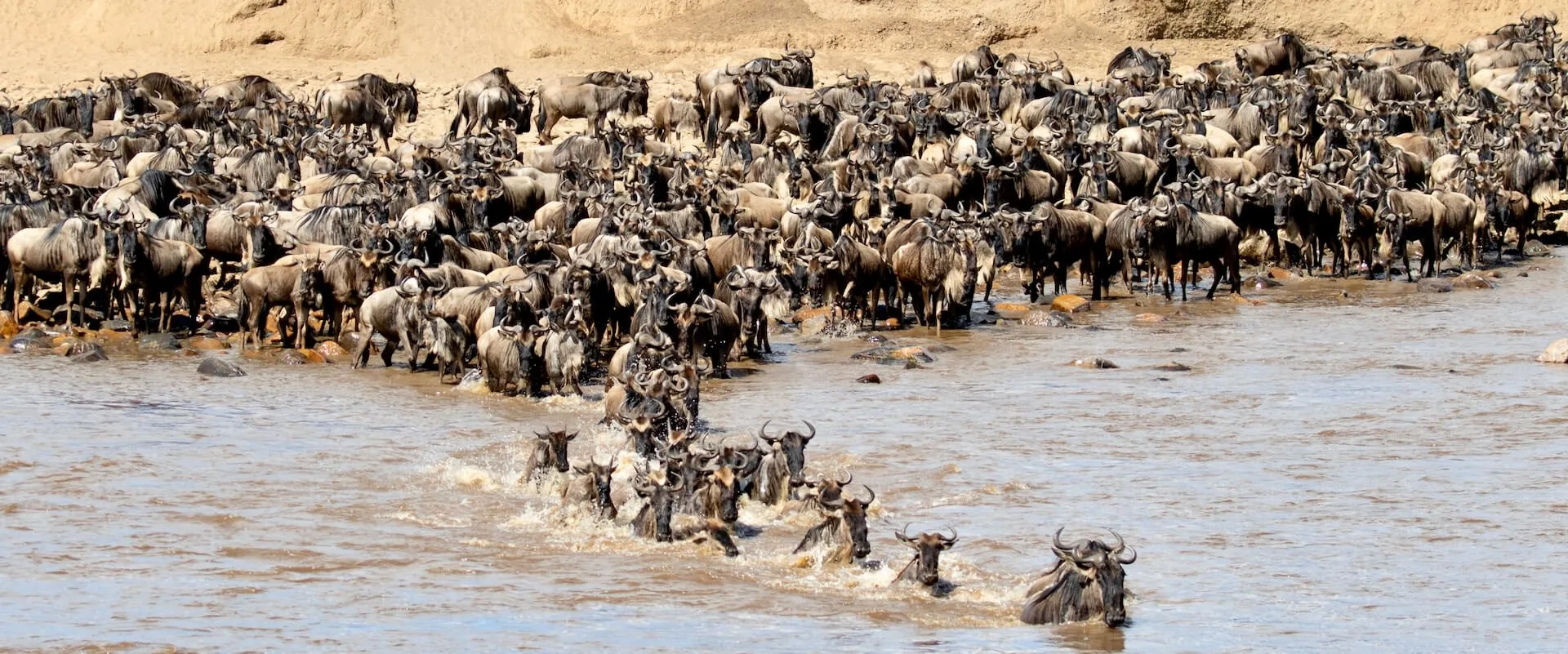
The Great Migration in Africa happens all year because the herds continuously circulate through the Serengeti–Mara ecosystem in…
Read article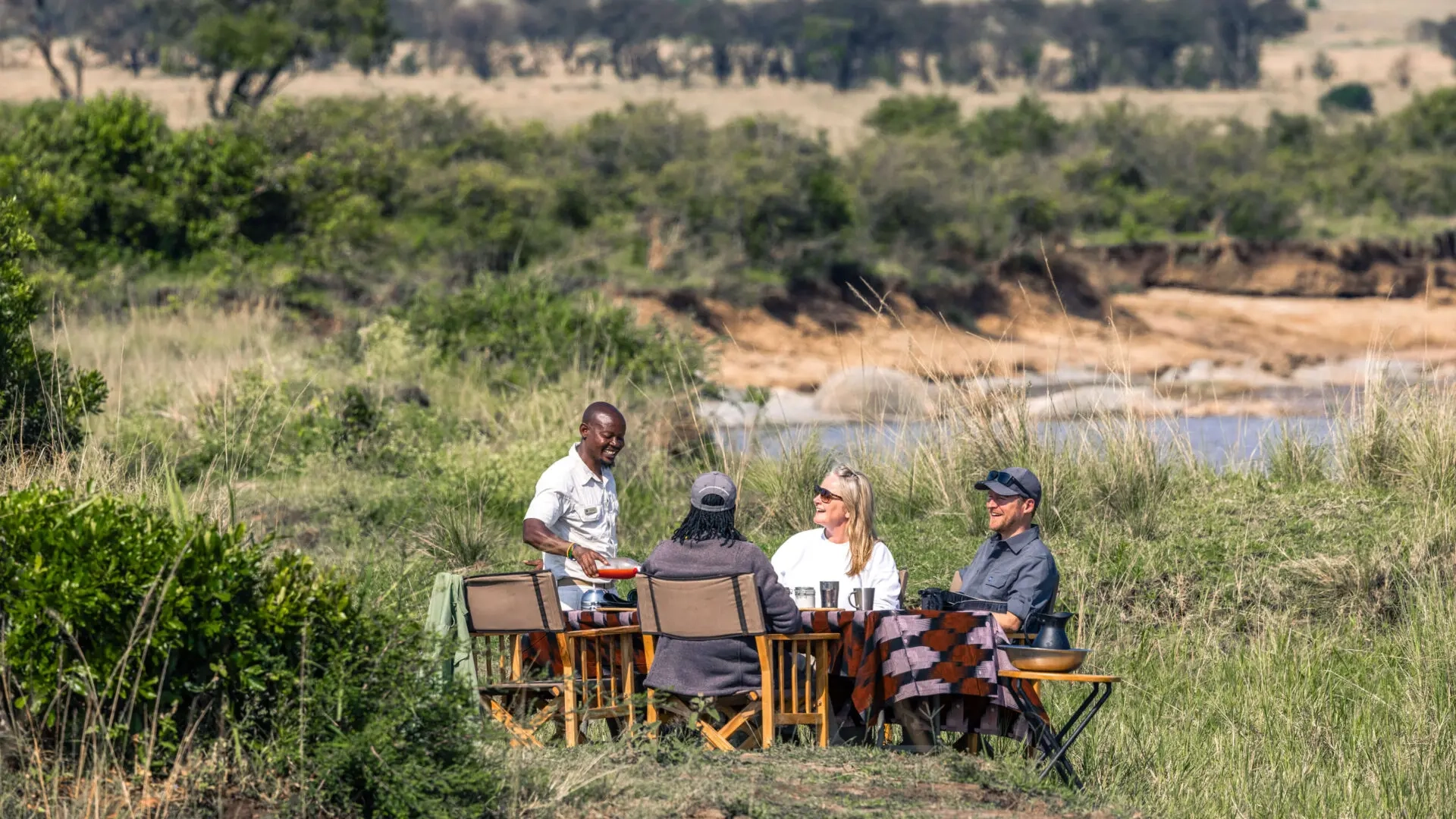
Definitive answer: A picnic lunch on safari is a packed or catered midday meal eaten at an approved…
Read article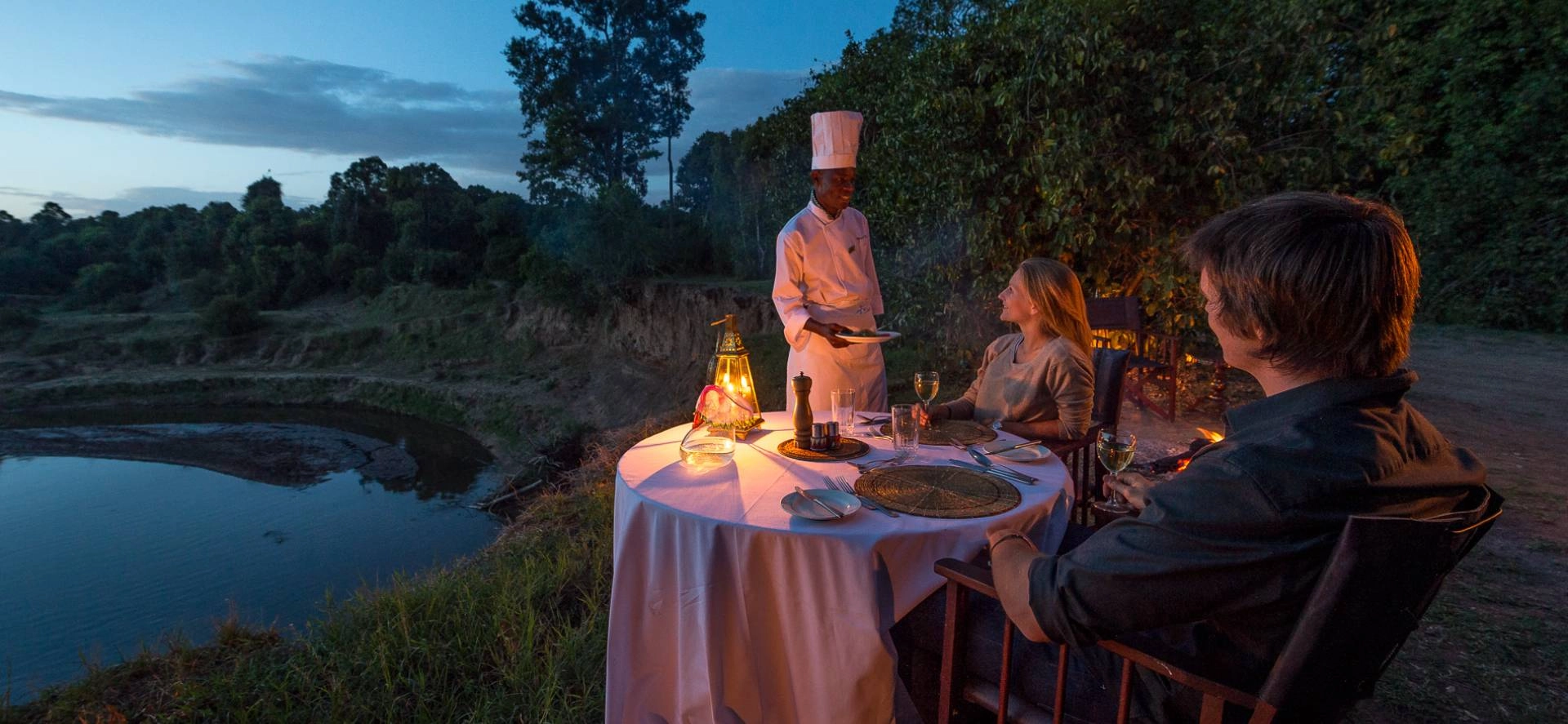
Definitive answer: A bush dinner is an outdoor evening meal arranged in a safe safari setting away from…
Read articleLet us take you closer to the wildlife, people and places that make Africa extraordinary.
Plan Your Safari Today