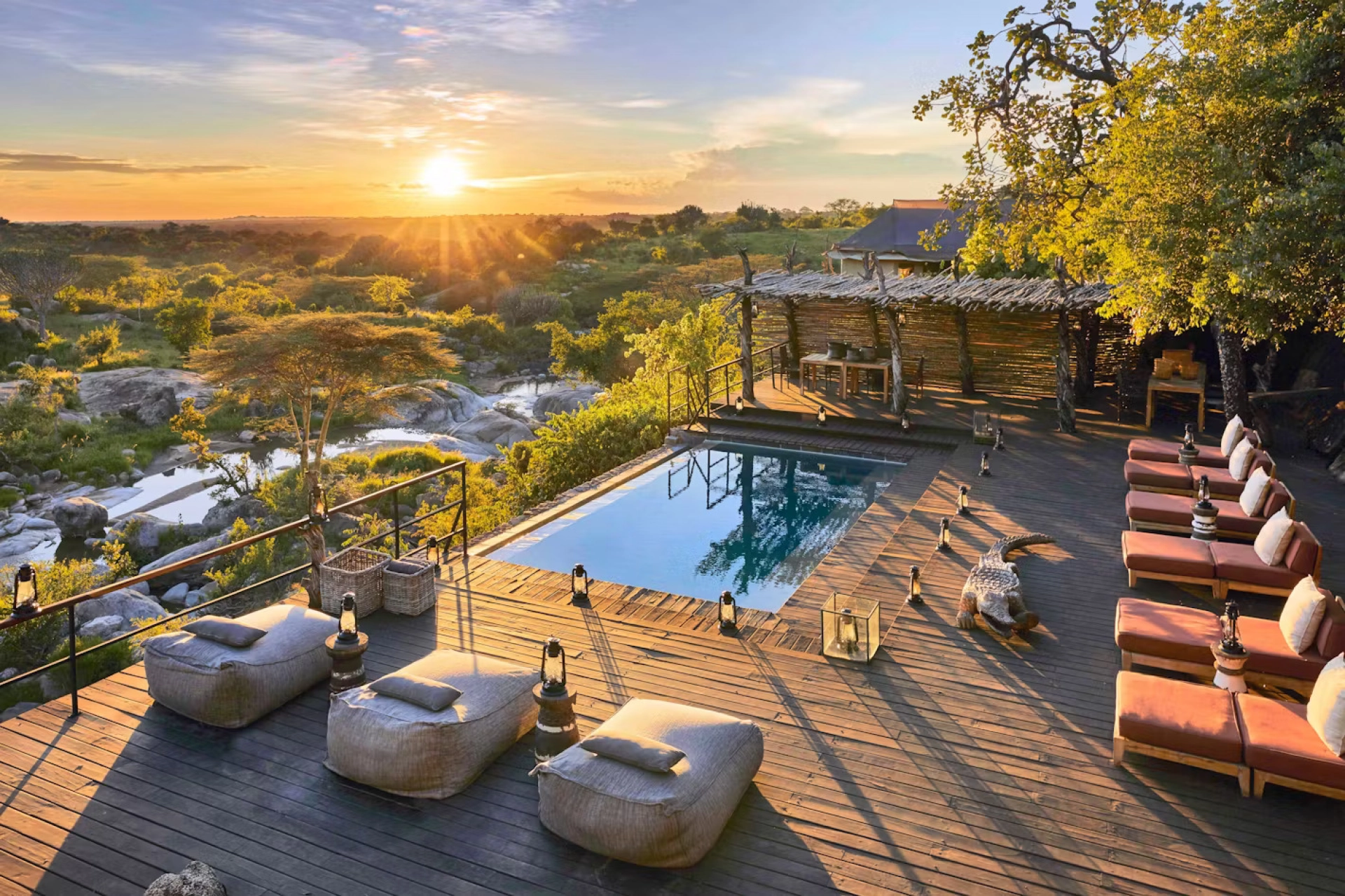
What should I look for when booking a luxury African safari?
When booking a luxury African safari, look beyond the room and compare the quality of guiding, wildlife location,…
Read article

Travel Guide
An African safari does not have to mean paying the highest seasonal prices while sharing every major wildlife sighting with a long line of vehicles. Some of the most rewarding safari experiences come from doing almost…
An African safari does not have to mean paying the highest seasonal prices while sharing every major wildlife sighting with a long line of vehicles. Some of the most rewarding safari experiences come from doing almost the opposite: travelling slightly outside the most heavily marketed weeks, staying longer in fewer places, choosing wildlife-rich areas that receive less publicity and allowing an experienced guide enough time to find animals without chasing every report on the radio.
These affordable safari tips are not about turning an African safari into the cheapest possible holiday. That distinction matters. Wildlife tourism involves unavoidable costs. National parks must be protected. Rangers, guides and lodge staff need to be paid. Safari vehicles consume fuel and require expensive maintenance. Gorilla and chimpanzee permits support tightly controlled wildlife experiences. Remote camps face significant logistical costs.
Trying to remove every one of those costs can eventually undermine the quality and ethics of the safari. The better objective is safari value. Value means spending money on things that genuinely improve the wildlife experience while eliminating costs that add little to it. It also means recognising an important truth: the most famous place at the most famous moment is rarely the cheapest or quietest way to experience African wildlife.
Before looking for savings, it helps to understand where the money goes. A safari price can include accommodation, meals, park entry, conservation charges, vehicle hire, fuel, a professional driver-guide, airport transfers, permits, domestic flights, boat trips, activities and sometimes specialised guiding.
Remote locations create additional costs because virtually everything must be transported considerable distances. A lodge deep inside a wilderness area may need to transport food, fuel, maintenance materials and staff supplies hundreds of kilometres. Safari vehicles are also specialised working vehicles rather than ordinary rental cars. They spend years operating on corrugated roads, mud, dust, rocks and rough tracks.
Maintaining them safely is expensive. A suspiciously cheap safari may therefore be cheap because something important has been removed. Perhaps park fees are excluded. Perhaps accommodation quality is far below expectations. Perhaps the vehicle is poorly maintained. Perhaps the itinerary requires constant rushed driving. Perhaps the guide is inadequately paid. Perhaps quoted prices exclude activities the traveller assumes are included. The first rule for planning an affordable African safari is therefore to compare like with like.
One of the easiest ways to increase the cost of a safari is to choose the most famous destination during its most famous weeks. The northern Serengeti during peak river-crossing season is a perfect example. The wildlife can be extraordinary. But demand can also be enormous.
Camps in strategic locations know that thousands of travellers want precisely those dates. The same principle applies to highly demanded periods in the Masai Mara, Botswana’s Okavango Delta and other famous safari regions. Travelling outside the absolute peak can reduce pressure on both availability and budget. More importantly, the animals do not disappear when peak season ends.
The Serengeti contains resident wildlife throughout the year. The Masai Mara contains lions when the largest wildebeest herds are elsewhere. Uganda’s mountain gorillas do not migrate away during wetter months. Elephants remain in many African ecosystems outside high season. A shoulder-season safari can therefore provide excellent wildlife without requiring the traveller to pay for the most fashionable calendar dates.
These terms are often used interchangeably, but they should be understood in context. A low-season safari generally refers to periods of lower tourism demand and potentially reduced accommodation rates. A shoulder-season safari sits between high and low seasons and can provide an excellent compromise between weather, wildlife and price. A green-season safari usually refers to wetter periods when landscapes become lush, migratory birds may arrive, many herbivores give birth and dramatic skies can create excellent photographic conditions.
Green season is not automatically “bad season.” In fact, experienced safari travellers often love it. The landscape becomes alive. Dust disappears. Storm clouds create spectacular backgrounds. Birding can be superb. Young animals can attract predator activity. Visitor numbers may decrease substantially.
The trade-off is that wildlife can be more dispersed because water is widely available. Vegetation may be thicker, roads can become muddy and some remote camps in certain destinations may close temporarily. The correct choice therefore depends on what the traveller values. Someone obsessed with dry-season waterhole concentrations may prefer peak dry season. Someone who wants photography, birds, lower prices and fewer vehicles may prefer the greener months.
One of the most effective affordable safari tips is to target the edges of peak season. A few weeks can make a meaningful difference to accommodation demand. This does not mean selecting dates blindly. The strategy should be ecological.
For example, travellers interested in Tanzania do not necessarily need to visit during the most heavily marketed northern Serengeti river-crossing period. The Great Migration is a continuous annual movement through a vast ecosystem. Calving, rutting, long-distance herd movement and predator-prey interactions can be equally fascinating. Likewise, Kenya’s Masai Mara has important resident wildlife outside the main migration period.
A traveller who understands this can stop paying exclusively for the words “peak migration.”
A common mistake among first-time safari travellers is trying to visit too many national parks. They see ten famous names online and want all ten. The result is often an expensive itinerary dominated by transfers. Every relocation consumes fuel. Long-distance transfers consume guide time. Domestic flights add cost. A new park may require another set of entry fees. A one-night stay gives the traveller little opportunity to understand the area before leaving again.
An itinerary that spends two or three nights in strategically selected wildlife areas can be both more rewarding and more efficient than one that changes lodge every night. This is especially important on an East Africa road safari. The objective should not be collecting national park names. It should be experiencing wildlife.
Fly-in safaris are wonderful. They save time and can provide spectacular aerial perspectives. But they are not always necessary. In Uganda, Kenya and Tanzania, many excellent safari circuits can be operated primarily by road.
A private safari vehicle also provides continuity. The same guide can remain with the travellers for much of the journey, luggage remains in one vehicle and the drive itself becomes part of the experience. Road travel can be particularly economical for couples, families and small groups because the vehicle cost is distributed across several travellers. However, road transfers should not be used simply to save money when distances become unreasonable.
Spending an entire day exhausted in a vehicle to avoid a strategically useful flight can be false economy. The correct budget safari itinerary balances money with time.
Safari economics change dramatically with group size. A private vehicle carrying two travellers still requires one guide and roughly the same vehicle. If four travellers use that vehicle, the transport cost can be divided more widely. For groups of friends or families, this can make a substantial difference. A small-group African safari can therefore provide excellent value while retaining much of the flexibility of private travel. Travellers who do not know each other can also consider scheduled departures. A group safari may be cheaper than a fully private itinerary because transport and guiding costs are shared. The trade-off is flexibility.
Departure dates, accommodation, daily timing and activities are generally predetermined. Private travel costs more but allows the itinerary to respond much more closely to the traveller. Neither is universally better.
Safari accommodation exists on an enormous spectrum. At one extreme are basic campsites. At the other are ultra-luxury properties with private plunge pools, extensive wine cellars, private guides, spas and charter-flight access. The wildlife outside does not know which room you booked.
This creates one of the biggest opportunities to control costs. A good mid-range safari lodge can provide a comfortable bed, private bathroom, good meals, excellent location and welcoming service without the enormous premium attached to luxury design. The money saved can be redirected toward something that affects the safari more directly: an additional night, a gorilla permit, chimpanzee trekking, a private vehicle or another park. This does not mean luxury accommodation has no value.
For honeymoons, anniversaries and travellers who genuinely value exceptional accommodation, the lodge is part of the holiday. The key is
Accommodation immediately inside famous national parks can command premium rates. In some destinations, properties outside park boundaries offer better prices. This can work extremely well when the lodge is close to the correct entrance gate. But location must be examined carefully. A cheap lodge that requires a two-hour transfer to the park gate every morning may reduce wildlife-viewing time and increase fuel costs. The saving may be illusory. This is particularly relevant around large parks. “Near the Serengeti” or “near Bwindi” is not precise enough.
A traveller needs to know which gate, sector or activity location is being used. The best affordable safari lodge is therefore not necessarily the cheapest room. It is the accommodation offering the best relationship between price, comfort and access.
Uganda can be particularly rewarding for travellers who want a high diversity of experiences within one journey. A Uganda safari can combine mountain gorillas, chimpanzees, lions, elephants, buffalo, hippos, giraffes, boat safaris, birding and dramatic landscapes. Instead of paying for repeated flights between remote camps, much of the classic circuit can be travelled by road. This creates opportunities for affordable Uganda safari packages, especially for small groups.
Travellers can begin around Entebbe, continue toward Murchison Falls or Kibale, explore Queen Elizabeth National Park and finish with gorilla trekking in Bwindi Impenetrable National Park. The experiences change constantly.
Gorilla trekking is an area where travellers should distinguish between flexible costs and controlled costs. The permit is not simply an entrance ticket that can be negotiated at a roadside office. Gorilla tourism is carefully regulated. If the primary purpose of the journey is Uganda gorilla trekking, the permit should be treated as a core safari cost.
Save money elsewhere. Choose a comfortable mid-range lodge instead of an ultra-luxury property. Travel by road where sensible. Share transport with companions. Reduce unnecessary hotel upgrades. But do not construct an unreliable gorilla itinerary around the hope of finding a bargain permit at the last minute.
Another way to improve value is to make the international flight work harder. Flying all the way to East Africa for a single activity can produce a very high effective cost per experience. If time and budget permit, combine gorillas with other wildlife. Queen Elizabeth National Park can add game drives and a Kazinga Channel boat safari.
Kibale National Park adds chimpanzee trekking. Murchison Falls National Park introduces the Nile, giraffes, elephants and broader savannah wildlife. Lake Mburo National Park can provide a useful safari stop on routes between western Uganda and Entebbe. The result is not necessarily “cheap” in absolute terms. It is better value.
The safari industry tends to concentrate marketing attention around a small number of internationally famous parks. That creates an interesting opportunity. Wildlife does not exist only in the parks with the strongest brand recognition. Kenya extends far beyond the Masai Mara. Tanzania extends far beyond the Serengeti. Uganda extends far beyond Bwindi. A traveller interested in avoiding safari crowds should discuss secondary wildlife areas and quieter sectors with an experienced operator. In Kenya, Samburu, Meru and the vast Tsavo ecosystem can provide alternatives or complements to the Mara.
In Tanzania, Tarangire, Ruaha and Nyerere offer dramatically different safari environments.
In Uganda, Kidepo Valley, Murchison Falls and other protected areas can add genuine wilderness character. Zimbabwe’s Hwange, Zambia’s South Luangwa and Kafue, and Namibia’s wider conservation landscapes provide further options. The point is not that lesser-known automatically means better. It means travellers should stop equating fame with wildlife quality.
Crowds frequently form because multiple vehicles are pursuing the same objective. A leopard is reported. Vehicles converge. A cheetah approaches prey. More vehicles arrive. Wildebeest gather near a crossing. Dozens of guides wait. There is nothing inherently wrong with wanting to see extraordinary wildlife. But a safari built entirely around chasing reports can become surprisingly stressful. An excellent guide knows when to wait, when to leave and when to search independently. Some of the most memorable sightings happen precisely because the guide moved away from the obvious crowd. This is one reason private safari guiding can be valuable.
The day can respond to your priorities.
Early mornings are one of the simplest crowd-management strategies. Predators may still be active. Temperatures are comfortable. Light is beautiful. Roads may be quiet. Being among the first vehicles into a productive area can create a completely different experience from arriving after breakfast. This does not mean every day must begin before dawn. A safari is a holiday. But strategically chosen early starts can dramatically improve both photography and wildlife encounters.
Travellers focused exclusively on lions, leopards, elephants, rhinos and buffalo often overlook one of Africa’s greatest wildlife assets. Birds. A serious African birding safari can transform quiet periods between mammal sightings. Kingfishers, bee-eaters, hornbills, eagles, vultures, turacos, sunbirds, cranes and countless other species turn every habitat into an active wildlife environment. Uganda is particularly rewarding because of its extraordinary ecological diversity. Birding also encourages travellers to slow down. And slowing down is often the secret to a better safari.
A rushed itinerary encourages rushed wildlife viewing. The vehicle arrives, photographs are taken and everyone immediately asks, “What next?” That approach turns safari into a checklist. If an elephant family is interacting naturally, stay. If lions are beginning to hunt, wait. If a leopard is resting in a tree, observe its behaviour. If hippos are becoming active toward evening, give the scene time. Longer observation often reveals behaviour that a five-minute stop cannot.
A slow safari may therefore produce fewer species on a checklist but more meaningful experiences.
Private reserves and conservancies are sometimes described as the solution to safari crowds. They can indeed provide lower vehicle density, flexible activities and excellent guiding. But they are not automatically cheaper. In many destinations they cost more. The decision should therefore be based on value rather than a simplistic assumption. A traveller may choose to spend several nights in a public national park and then add one or two nights in a private concession. This creates a balance between affordability and exclusivity.
One of the biggest traps in safari shopping is comparing headline figures.
Safari A costs $2,000. Safari B costs $2,600. Safari A appears cheaper. But perhaps Safari A excludes park fees, airport transfers and several meals. Perhaps the accommodation is outside the park and requires additional daily transfers. Perhaps gorilla permits are excluded. Perhaps the quoted vehicle is shared while Safari B is private. The correct question is not, “Which number is smaller?” It is, “What exactly is included?” When comparing African safari packages, ask about accommodation, meals, transport, guide services, park entry, permits, domestic flights, transfers, activities and taxes. This prevents unpleasant surprises.
Price competition is healthy. But there is a point where a safari becomes unrealistically cheap. An operator cannot legally remove national park fees. Fuel still costs money. Vehicles still require maintenance. Guides still deserve professional compensation. Accommodation still charges for rooms and meals. If one quotation is dramatically below every comparable itinerary, investigate why. The missing cost may appear later. Or the operator may be compromising something that affects safety, legality or quality. A budget safari in Africa should be economical, not reckless.
If there is one place where excessive cost-cutting can damage the safari, it is guiding. A good safari guide does far more than drive. They interpret animal behaviour, identify birds, read tracks, understand landscapes, anticipate wildlife movement, communicate with other guides and make countless decisions about timing. They also manage the practical flow of the journey.
An excellent guide can turn an apparently quiet morning into a fascinating ecological experience. A weak guide can drive past remarkable things without noticing them. When planning an affordable safari, downgrade unnecessary luxury before downgrading guiding quality.
Domestic flights are sometimes essential and often convenient. But a route filled with unnecessary flights becomes expensive quickly. Each flight may also require transfers between lodges and airstrips. Where road travel is reasonable, a road safari in Africa can be more economical and provide a deeper understanding of the country. Travellers see farms, towns, mountains and everyday landscapes rather than moving only between airports and lodges. This is especially valuable in Uganda. The countryside between parks is part of the experience.
Four friends travelling together can often achieve excellent value. Vehicle and guide costs are distributed across the group while everyone retains the advantages of a private itinerary. Families can benefit similarly. A private family safari does not necessarily need to be ultra-luxury. With intelligent accommodation choices, a family can enjoy a private guide and vehicle while staying in comfortable mid-range lodges. The same strategy works for couples travelling with friends.
Solo safari travel can be expensive because accommodation and transport costs are no longer shared. Single-room supplements may add further expense. Solo travellers should therefore consider scheduled group departures, camps with favourable single-supplement policies or itineraries that reduce private vehicle days. However, a solo private safari can still be worthwhile for travellers who value complete flexibility.
The key is understanding where the premium comes from.
One-night safari stays often look efficient on paper. In practice, they can be exhausting. Arrive.
Unpack. Sleep. Pack. Leave. The traveller spends an enormous percentage of the holiday moving luggage and checking into accommodation. Two- and three-night stays allow the safari to breathe. They also create opportunities for different wildlife conditions. Perhaps the first afternoon is quiet. The next morning may be extraordinary. Staying longer gives nature time to work.
Booking through a knowledgeable local African safari operator can provide several advantages. Local operators understand road conditions, seasonal wildlife movements, permit systems, realistic transfer times and accommodation geography. They can also combine different accommodation levels within one itinerary. However, “local” should not be confused with “automatically reliable.” Travellers should still evaluate professionalism, communication, company credentials, reviews, payment procedures and the clarity of the itinerary. The goal is not simply removing intermediaries. It is working with someone who understands the destination well enough to spend your money intelligently.
The most successful budget planning begins by identifying priorities. If gorillas are the dream, protect the gorilla trekking budget. If migration is the dream, protect enough time in the correct ecosystem. If photography matters, protect the quality of guiding and vehicle positioning. If comfort matters, protect accommodation quality. Then reduce spending elsewhere. A traveller who knows their priorities can save money without damaging the journey. A traveller trying to have everything at the lowest possible price usually ends up compromising the experiences that mattered most.
This is the counterintuitive lesson. More expensive does not always mean better wildlife. A traveller staying in a glamorous lodge but changing destination every night may experience less meaningful wildlife than someone staying three nights in a simple camp beside a productive ecosystem.
A traveller paying peak migration rates may spend a famous river-crossing morning surrounded by vehicles, while someone travelling weeks earlier may watch lions hunting almost alone. A traveller choosing an expensive flight-heavy itinerary may see less of the country than someone travelling slowly by road. Safari quality depends heavily on time, location, guiding and expectations. Luxury is valuable when the traveller genuinely wants luxury.
But wildlife does not perform according to room rate.
At Adventure in the Wild Safaris, we approach affordable African safari planning by first understanding the experiences the traveller considers essential. From there, the itinerary can be adjusted intelligently. We can examine whether a road transfer makes more sense than a flight, whether a mid-range lodge offers better value than a luxury property, whether an additional night in one park is more useful than adding another destination, and whether travelling slightly outside peak season could produce a quieter experience.
For Uganda itineraries, we can combine gorilla trekking, chimpanzee trekking, game drives and boat safaris without requiring the traveller to purchase the most expensive accommodation at every stop. For East African combinations, we can help balance Uganda and Rwanda primates with Kenya safaris, Tanzania safaris or other regional experiences according to available time and budget. The objective is not to build the cheapest itinerary on the internet. It is to create the best safari possible for the amount the traveller is comfortable spending.
The best affordable safari tips come down to a change in mindset. Do not assume peak season is automatically the best season. Do not assume the most famous park is automatically the best park. Do not assume the most luxurious lodge creates the best wildlife experience. Do not assume visiting more destinations means seeing more.
Travel at the edges of peak season when appropriate. Consider shoulder-season safaris and green-season safaris. Stay longer in fewer wildlife areas. Use road transfers where they make sense. Share vehicle costs with family or friends. Choose comfortable mid-range accommodation. Protect the quality of guiding. Compare complete prices rather than headline figures. Give wildlife enough time to reveal itself.
Most importantly, design the journey around experiences rather than prestige. Africa still contains enormous wilderness areas where travellers can experience extraordinary wildlife without following the busiest possible itinerary. Finding those opportunities is where good safari planning becomes valuable. A thoughtfully designed budget safari in Africa should never feel like a lesser version of a luxury safari.
It should feel like a journey where every dollar was spent deliberately — on wildlife, time, guiding and experiences that you will actually remember.

Share This Article
When booking a luxury African safari, look beyond the room and compare the quality of guiding, wildlife location,…
Read article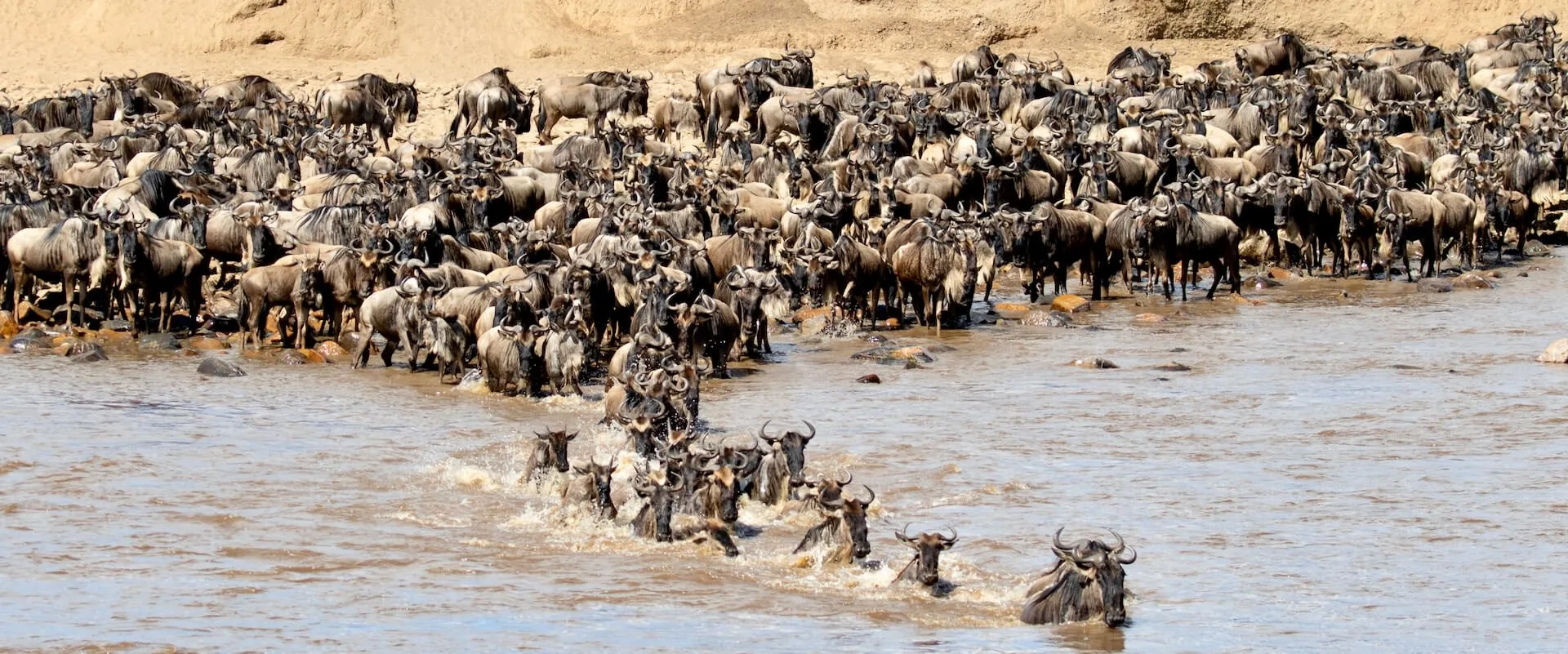
The Great Migration in Africa happens all year because the herds continuously circulate through the Serengeti–Mara ecosystem in…
Read article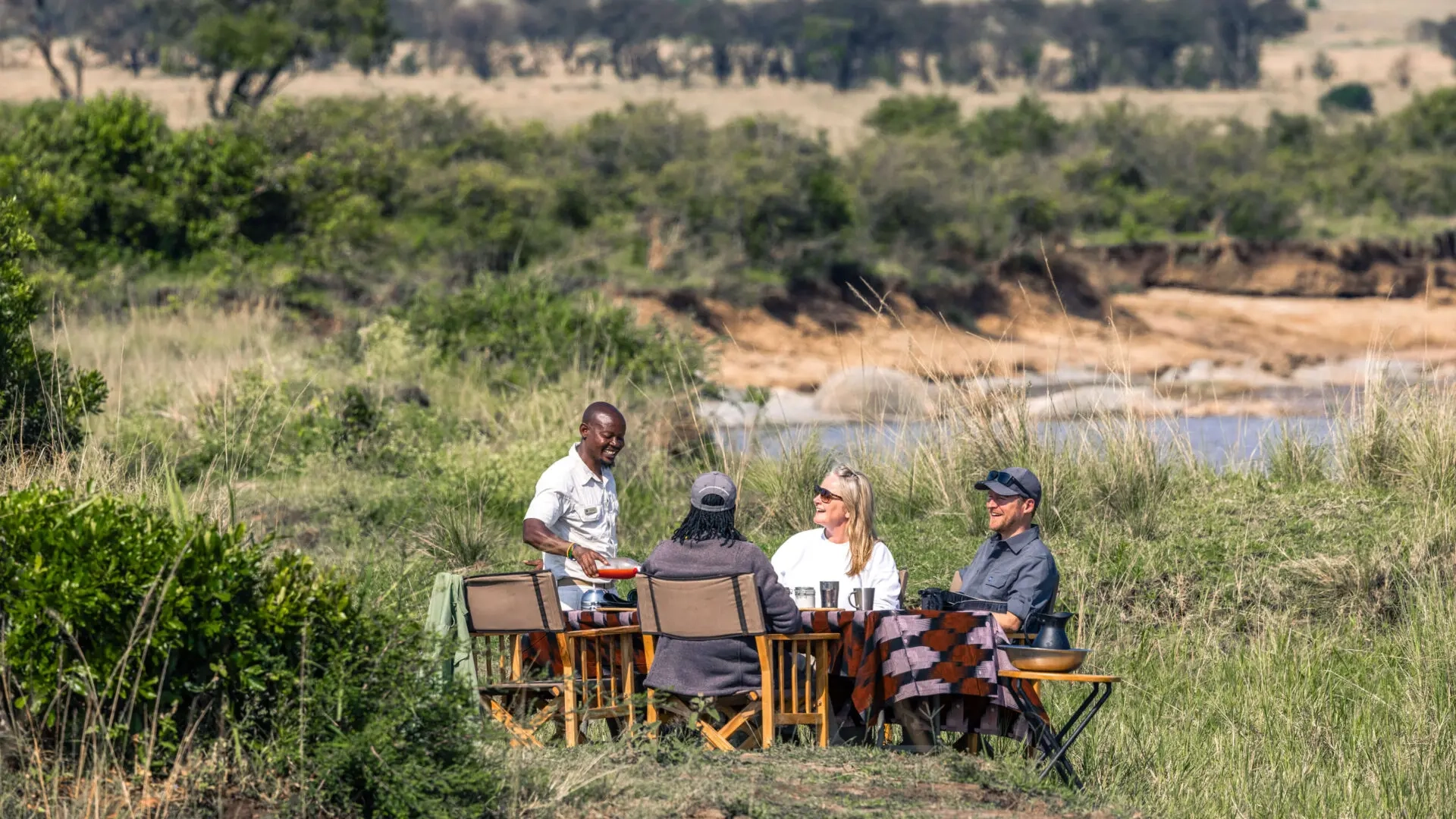
Definitive answer: A picnic lunch on safari is a packed or catered midday meal eaten at an approved…
Read article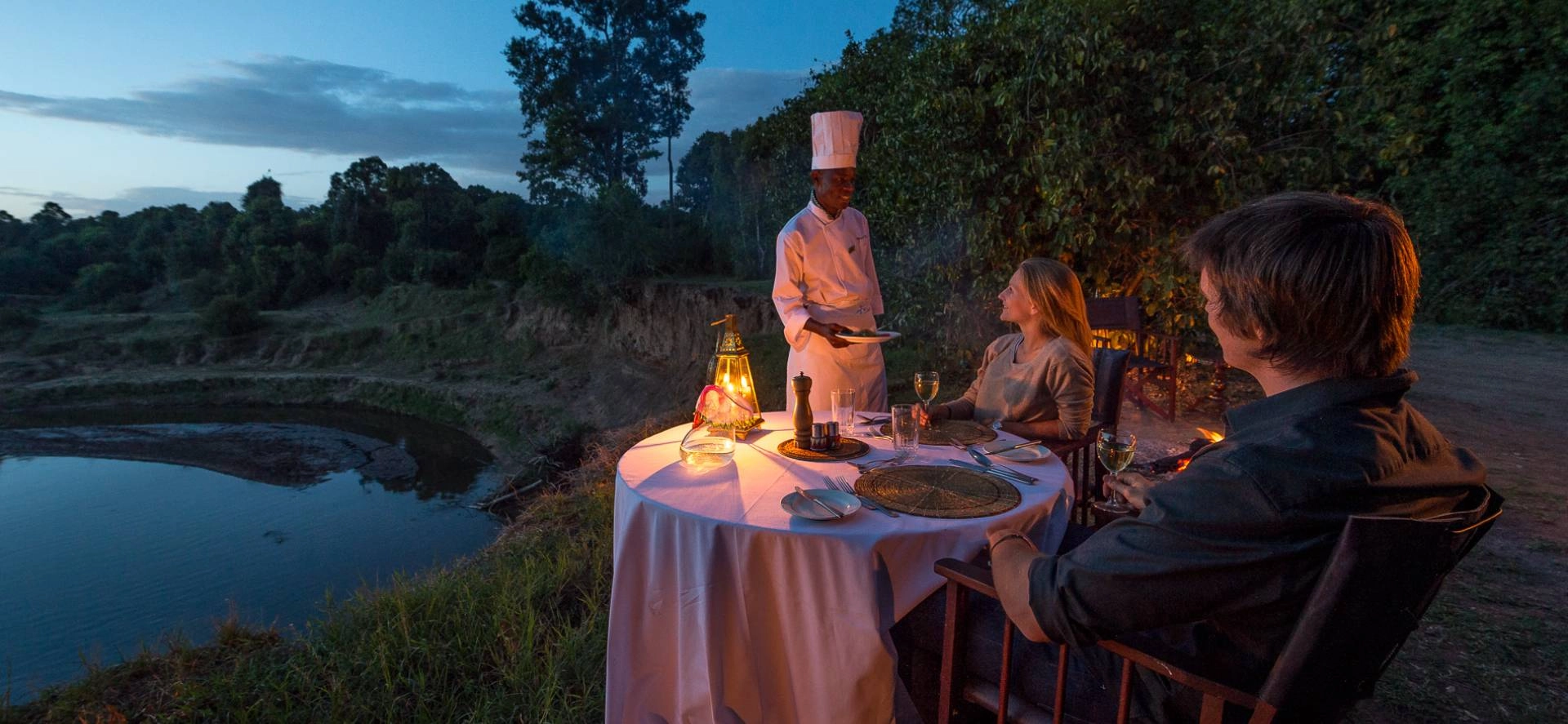
Definitive answer: A bush dinner is an outdoor evening meal arranged in a safe safari setting away from…
Read articleLet us take you closer to the wildlife, people and places that make Africa extraordinary.
Plan Your Safari Today