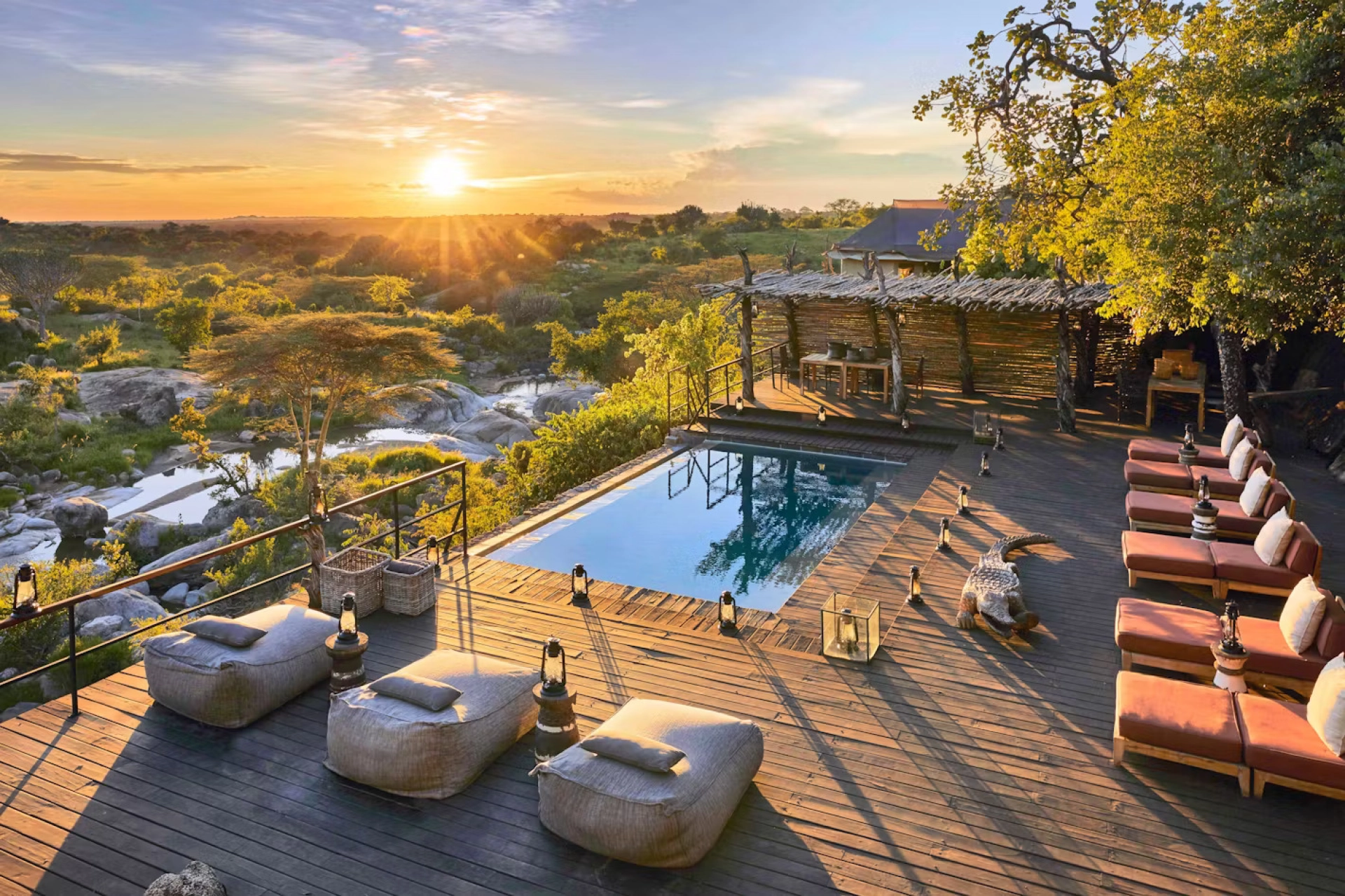
What should I look for when booking a luxury African safari?
When booking a luxury African safari, look beyond the room and compare the quality of guiding, wildlife location,…
Read article

Travel Guide
To many international travellers, the name Makonde is associated first with sculpture. Intricately carved human figures twist around one another inside a single piece of wood. Abstract forms emerge from dark hardwood. Family groups, ancestral imagery…
To many international travellers, the name Makonde is associated first with sculpture. Intricately carved human figures twist around one another inside a single piece of wood. Abstract forms emerge from dark hardwood. Family groups, ancestral imagery and imaginative creatures appear in sculptures that have travelled far beyond East Africa into galleries, museums and private collections. But Makonde art cannot be properly understood without understanding the people behind it.
The Makonde people of Tanzania are part of a much larger cultural story extending across southern Tanzania and northern Mozambique. Their history includes migration, farming, family structures, ritual traditions, colonial encounters, political change, artistic innovation and modern life. Like every living culture, Makonde society is not frozen in the past. Makonde people today are farmers, artists, businesspeople, teachers, professionals and urban residents. Some live close to ancestral landscapes; others live in Tanzania’s growing cities or abroad.
Wood carving remains internationally famous, but it represents only one dimension of Makonde identity. This distinction matters for travellers interested in African culture and Tanzania cultural tourism. Too often, tourism reduces a community to one visually attractive tradition. The Maasai become red clothing. The Makonde become wood carvings. The Hadzabe become hunting. The danger is that living people are transformed into museum exhibits. A more meaningful approach asks how traditions developed, how they changed and what they mean within contemporary life.
This guide explores Makonde culture, history and art, with particular attention to the internationally celebrated tradition of Makonde wood carving and its place within the wider cultural landscape of Tanzania.
The Makonde are a Bantu-speaking people associated primarily with southern Tanzania and northern Mozambique.
Their historical homeland includes areas around the Makonde Plateau, a region divided today by the international boundary between Tanzania and Mozambique. Modern political borders do not necessarily correspond neatly with older cultural landscapes. Communities, languages and family networks existed long before contemporary states took their present form. This is important when discussing the Makonde. They should not be understood exclusively as either Tanzanian or Mozambican in a historical sense. Makonde communities exist on both sides of the modern border, and historical experiences have differed according to geography.
In Tanzania, Makonde communities are particularly associated with the country’s southeastern regions, especially around Mtwara and neighbouring areas.
This part of Tanzania is far removed from the northern safari circuit that most international visitors know. Travellers visiting Serengeti, Ngorongoro and Tarangire experience northern Tanzania. The Makonde homeland lies much farther south. This geographical difference is one reason many safari travellers encounter Makonde culture primarily through art rather than by visiting Makonde communities directly. Makonde sculptures are sold and displayed in numerous Tanzanian cities and tourism centres. Visitors may therefore encounter the artistic tradition hundreds of kilometres from its cultural heartland.
Geography played an important role in Makonde history.
The plateau environment influenced settlement, agriculture and interaction with neighbouring populations. Historically, geographic isolation could provide a degree of protection from outside political control. However, Makonde communities were never completely isolated. Trade, migration, conflict and cultural exchange connected them with wider East African and Indian Ocean networks. Understanding this landscape helps explain why the Makonde developed a strong and distinctive cultural identity.
The Makonde language belongs to the wider Bantu language family.
In Tanzania, many Makonde people also speak Swahili, the country’s major national and interethnic language. Multilingualism is common throughout East Africa. People may use one language within families or communities and another in education, business, government or communication with people from other regions. Language is an important part of cultural identity because oral traditions, humour, names and concepts do not always translate perfectly. For travellers interested in Makonde culture, recognising the importance of language is more meaningful than simply memorising a few isolated words.
Terms such as “tribe” appear frequently in tourism writing.
They can sometimes be useful for general communication, but they can also oversimplify. The Makonde people are not a single unchanging group in which everyone follows identical traditions. Age, location, religion, education, urbanisation, family history and national context all influence individual identity. A young Makonde professional living in Dar es Salaam may experience cultural identity differently from an older farmer in rural southern Tanzania. Both remain equally contemporary. This principle should guide all responsible writing about African cultures.
Makonde history extends far beyond European colonialism. Communities developed political and social systems suited to local environments. Agriculture was central. Family and kinship relationships structured society. Trade connected communities with neighbouring peoples and eventually with broader Indian Ocean networks. Oral traditions preserved historical memory. Like many African societies, Makonde history was transmitted substantially through generations before widespread written documentation. This means historians combine oral accounts, linguistic evidence, archaeology and written records when reconstructing the past.
During the colonial period, Makonde communities experienced outside rule differently according to which side of the present Tanzania-Mozambique border they occupied. The region that became mainland Tanzania was incorporated into German East Africa and later came under British administration after the First World War. Mozambique remained under Portuguese colonial rule for much longer. These different colonial experiences affected Makonde communities in different ways. Taxation, labour systems, missionary activity, infrastructure and political resistance all influenced social change. Understanding Makonde history therefore requires resisting the temptation to tell one simple narrative for every Makonde community.
Family and kinship have historically played central roles within Makonde social organisation. Relationships define responsibilities, inheritance, identity and social support. As in many societies, these systems have changed through urbanisation, formal education, religion, economic change and national legal structures. Yet extended family networks remain important for many people. This social emphasis helps explain why themes of family, ancestry and interconnected human figures appear so frequently in Makonde artistic traditions.
Historically, agriculture formed the economic foundation of many Makonde communities. Farmers cultivated crops suited to regional conditions. Cashew production later became particularly economically important across parts of southeastern Tanzania and northern Mozambique. Agriculture remains significant today. This is worth emphasising because tourism writing often gives the impression that traditional African communities spent most of their time producing art or performing ceremonies. Daily life was primarily about livelihood. People cultivated land, raised families, traded, constructed homes and responded to changing environmental conditions. Art existed within that larger economic and social reality.
The Makonde became internationally renowned for wood carving and sculpture. Their artistic tradition includes both older forms connected with social and ritual contexts and newer sculptural styles developed partly in response to urbanisation, artistic experimentation and international markets. This evolution is important. What tourists today call “Makonde carving” is not necessarily one ancient style reproduced unchanged for centuries. Artists innovate. Markets influence production. Individual sculptors develop personal styles. Cultural traditions evolve. That is precisely what makes Makonde art so fascinating.
Wood carving historically included objects with social, symbolic or ceremonial significance. Masks and human figures are among the forms associated with Makonde artistic traditions. Different objects could serve different purposes. Some were connected with ritual or performance. Others expressed social identities. The meaning of any specific object should be interpreted carefully. A sculpture sold in a modern art market cannot automatically be assumed to carry the same function as an older ritual object. Context matters.
Masks are among the visually striking forms associated with Makonde culture. Certain masks historically appeared within performance and initiation contexts. Their designs could represent human faces or stylised characteristics. For outsiders, it can be tempting to interpret every visual detail symbolically. This should be avoided unless reliable cultural information supports the interpretation. Masks are not simply decorative art detached from people. Where they belong to specific ceremonies, their meaning emerges from performance, music, movement, social context and community knowledge.
Historically, initiation played an important role in transitions between stages of life in many Makonde communities. Initiation traditions could involve teaching younger people about social expectations, responsibilities and adult identity. Specific practices differed between communities and changed over time. Modern education, religion, health concerns and changing social values have influenced many initiation traditions. This illustrates a wider point. Cultural practices are dynamic. A responsible description of Makonde culture should not assume that every historical practice continues unchanged today.
Among the most internationally recognised modern Makonde sculptural traditions is often described as Shetani sculpture. The Swahili term “shetani” broadly relates to spirit or supernatural imagery. Shetani sculptures can feature elongated, distorted or fantastical figures. Human and supernatural forms may merge. The resulting works can appear surreal, unsettling or highly imaginative. This style helped transform perceptions of Makonde carving from souvenir craft toward internationally recognised modern African art.
Modern Makonde art developed through interaction between inherited carving skills and changing twentieth-century economic and artistic environments. Artists moved toward urban centres. New buyers appeared. Tourists, collectors and galleries created markets. Sculptors experimented. The result was not simply the commercialisation of an old tradition. It also created space for artistic innovation. Individual artists developed recognisable approaches. This is why Makonde sculpture deserves to be understood as African fine art rather than merely as tourist handicraft.
Another important sculptural style is commonly associated with Ujamaa or interconnected human figures. These sculptures may feature numerous people carved from one piece of wood. Bodies appear to support or connect with one another. The overall effect can suggest family, community, ancestry or collective interdependence. The Swahili concept of ujamaa became particularly important in Tanzania’s post-independence political history through ideas associated with familyhood and collective society. However, interpretation of individual sculptures should still be approached carefully. Not every multi-figure carving necessarily carries one identical political or philosophical message.
Many Makonde sculptures are popularly associated with dark hardwood, particularly ebony and related materials. The colour and density of the wood can produce striking finished pieces. Polishing may create deep, smooth surfaces that emphasise carved forms. However, responsible contemporary art purchasing should also consider sustainability. Some tropical hardwood species face conservation pressure. Travellers purchasing carvings should favour reputable sellers who can explain materials and legal sourcing. Beautiful art should not contribute to unsustainable forest exploitation.
Traditional wood sculpture begins with the material itself. An experienced artist considers the shape, grain and imperfections of a piece of wood. The form may partly influence the final sculpture. Hand tools remove material gradually. Unlike additive art, carving is unforgiving. Once wood is removed, it cannot simply be restored. This requires visual planning. In complex Makonde family-tree carvings, numerous human figures may emerge from one continuous piece. The technical difficulty can be extraordinary.
Not every Makonde-style carving has the same artistic or cultural value. Tourism creates demand for inexpensive objects. Workshops may produce repeated designs specifically for visitors. At the same time, serious artists create original works that deserve recognition as fine art. Both forms can provide livelihoods. The problem arises when buyers assume every object represents an ancient sacred tradition. A modern decorative carving made for tourists is still legitimate craft. It simply belongs to a different context. Understanding that difference allows travellers to appreciate artists more honestly.
Although the Makonde homeland lies farther south, Dar es Salaam became important in the development and sale of Makonde sculpture. Artists migrated toward the city and its expanding markets. Urban workshops provided contact with buyers, collectors and other artists. This helped Makonde art reach national and international audiences. Travellers visiting Tanzania may therefore encounter Makonde artists or carvings in Dar es Salaam even without travelling to Mtwara.
Today, Makonde sculpture is one of the most recognisable forms of Tanzanian art. Carvings appear in markets, galleries, hotels and collections. For safari travellers, purchasing a well-made sculpture can create a tangible connection with Tanzanian creative culture. However, purchasing responsibly matters. Ask who created the piece. Ask where it came from. Ask what wood was used. If the seller claims a particular cultural meaning, ask for context rather than accepting an elaborate tourist story automatically.
Authenticity is not always simple. A carving made recently by a Makonde artist for the tourist market is still authentically made by that artist. An older-looking object sold with an invented ceremonial history may be much less authentic despite appearing “traditional.” Travellers should therefore focus on provenance rather than artificial age. Buying directly from artists or reputable cooperatives can provide greater transparency. It also increases the chance that money reaches the people producing the work.
Visual art receives most international attention, but Makonde cultural expression extends beyond sculpture. Music, dance and performance play important social roles. Rhythm, movement and communal participation can accompany celebrations and ceremonies. As with other cultural traditions, performance changes over time. Contemporary music influences younger generations. Traditional instruments and forms may coexist with popular Tanzanian genres. This is normal cultural evolution rather than evidence that tradition has disappeared.
Makonde communities today include people influenced by different religious traditions. Christianity, Islam and older belief systems have all played roles in different areas and families. Religious change has influenced ceremonies, social practices and artistic interpretation. Again, there is no single Makonde religious experience. Southern Tanzania has long participated in wider East African and Indian Ocean networks where religious traditions intersect.
The most important thing to understand about Makonde culture today is that it is contemporary. Makonde people participate fully in modern Tanzanian society. They attend schools and universities. They use smartphones. They work in government, business, agriculture and creative industries. They migrate to cities. They follow national politics and international events. Traditional identity and modern life are not opposites. A person can value Makonde heritage while participating completely in twenty-first-century Tanzania. Tourism should never demand that people remain visually “traditional” to be considered culturally authentic.
Tourism marketing frequently describes African ethnic communities as “tribes.” The term can be useful in some contexts, but it often carries misleading implications. It may suggest that communities are isolated, politically simple or culturally unchanged. In reality, African ethnic identities exist within modern nation-states and global economies. The Makonde are part of contemporary Tanzania and Mozambique. Describing their art and traditions should therefore avoid presenting them as people existing outside modern history.
Most visitors travel to Tanzania primarily for wildlife. Serengeti lions and the Great Migration dominate marketing. But Tanzania cultural tourism can greatly deepen the journey. The country contains extraordinary cultural diversity. Communities speak different languages and maintain different historical traditions. Urban Tanzania adds another dimension. Dar es Salaam’s music, food, art and contemporary life are as genuinely Tanzanian as rural traditions. A complete cultural experience should therefore include both heritage and modern society.
African artists have often been unfairly divided into two categories by outsiders. “Traditional” works are treated as authentic. Modern works are sometimes treated as less African. Makonde sculpture challenges this distinction. Artists used inherited carving skills while developing new styles in response to changing social and artistic environments. Shetani sculpture in particular demonstrates innovation. It is African because African artists created it within their own historical context—not because it reproduces something ancient. This is an important principle for understanding contemporary African art.
Tourism often discusses “Makonde carving” as though the community collectively produced one anonymous art style. But artists are individuals. They make creative decisions. Some become highly skilled specialists. Some develop unique forms. Some influence other sculptors. Serious appreciation therefore involves learning artists’ names whenever possible. Buying directly from identifiable creators also helps challenge the idea that African art is anonymous cultural production rather than individual artistic expression.
International attention to carving can produce an excessively male-centred picture because many famous wood sculptors have historically been men. But women are central to Makonde family, agricultural, economic and cultural life. Women participate in farming, household economies, trade, social networks and artistic traditions. A balanced discussion of Makonde culture should therefore not equate the entire society with male wood carvers. Culture is produced through the daily lives of everyone in a community.
Food provides another window into culture. Southern Tanzania’s cuisine reflects local agriculture, trade and wider Swahili influences. Staple foods, vegetables, legumes and regional crops form everyday meals. Cashews are economically important in southeastern Tanzania. Visitors interested in culture should pay attention to food rather than focusing only on visual traditions. What people grow, cook and share often reveals more about everyday life than objects created specifically for tourists.
Southern Tanzania is one of the country’s important cashew-producing regions. Cashew farming supports many households. The crop connects rural communities with national and international markets. This economic reality is an important part of contemporary Makonde life. A cultural article that discusses only masks and sculpture risks ignoring how people actually earn livelihoods. Agriculture, market prices, roads, education and economic opportunity influence communities as much as heritage traditions.
A significant Makonde population also lives in northern Mozambique. Their political history differs from that of Tanzanian Makonde communities because Mozambique remained under Portuguese colonial rule until independence in 1975. Makonde communities became associated with important aspects of Mozambique’s anti-colonial history. This means the international border created divergent political experiences within a wider cultural population. Travellers researching Makonde history should therefore consult both Tanzanian and Mozambican contexts.
Makonde identity became intertwined with major political changes in southeastern Africa during the twentieth century. Colonialism, independence movements and nation-building reshaped communities. In Tanzania, independence and the development of national Swahili identity influenced ethnic relations across the country. Tanzania is notable for the strength of Swahili as a shared national language. This has helped create national identity across a culturally diverse population. Makonde people participate within that larger Tanzanian identity while maintaining distinctive heritage.
Photography is one of the simplest areas where travellers can show respect. Do not assume that visiting a community creates automatic permission to photograph everyone. Ask. Your guide can help. Some people enjoy photographs. Others do not. Children deserve the same respect. Avoid turning a community visit into a rapid sequence of portraits without meaningful interaction. The best travel photographs usually emerge after conversation and trust anyway.
Cultural tourism becomes problematic when communities are expected to perform stereotypes. Visitors may arrive wanting to see “untouched tribes.” That expectation is itself unrealistic. Every society changes. Good cultural tourism allows people to explain their own lives. It supports local guides and businesses. It pays fairly. It avoids creating pressure to exaggerate rituals or invent stories. And it recognises that the people being visited are hosts, not attractions.
Most classic Tanzania safari itineraries focus on the north. Travellers visit Arusha, Tarangire, Ngorongoro and Serengeti. This route does not naturally pass through the Makonde homeland. However, cultural context can still be incorporated. Museums, galleries and art centres may display Makonde sculpture. Travellers passing through Dar es Salaam can explore Tanzanian art. Those with a deeper cultural interest can design specialised southern journeys. The important point is not to force every cultural experience into a conventional wildlife itinerary. Sometimes culture deserves its own travel time.
A well-designed Tanzania holiday can include several layers. Begin with the wildlife of Serengeti. Explore Ngorongoro. Learn about communities and cultural landscapes. Spend time in Dar es Salaam or another urban centre. Finish in Zanzibar, where Swahili and Indian Ocean history create yet another cultural environment. This reveals Tanzania as far more than a wildlife destination.
Zanzibar adds a completely different cultural story. Centuries of Indian Ocean trade connected the islands with mainland Africa, Arabia, Persia, India and beyond. Stone Town reflects these historical connections in architecture, religion, food and language. Combining mainland Tanzania culture with Zanzibar demonstrates how varied Tanzanian identity can be. Makonde culture in the southeast and Swahili culture on the coast developed within different historical environments, yet both form part of modern Tanzania.
Travellers interested in East African culture can also combine Tanzania with Uganda. Uganda contains enormous linguistic and cultural diversity. A longer itinerary can connect Tanzanian wildlife and cultural experiences with Uganda gorilla trekking, community tourism around Bwindi and cultural heritage elsewhere in Uganda. This creates a journey focused not simply on animals but on East Africa as a living cultural region.
A genuine sculpture can be an excellent travel purchase. It supports artistic livelihoods and provides a lasting connection with Tanzania. But buy thoughtfully. Ask about the artist. Understand the material. Consider sustainability. Avoid purchasing wildlife products that may create legal or conservation concerns. Check import regulations in your home country when buying wood products or culturally significant objects. The goal should be supporting creativity rather than simply accumulating exotic-looking objects.
The Makonde are a Bantu-speaking people associated primarily with southeastern Tanzania and northern Mozambique.
Makonde communities are particularly associated with southern and southeastern Tanzania, including the Mtwara region and areas around the Makonde Plateau.
Internationally, the Makonde are especially famous for wood carving and sculpture.
Makonde carving refers broadly to sculptural traditions developed by Makonde artists. These include traditional forms and modern styles such as interconnected figure sculptures and imaginative spirit-related forms.
Shetani is a modern sculptural style associated with fantastical or spirit-like figures. It became one of the internationally recognisable forms of modern Makonde art.
Ujamaa-style carvings often feature numerous interconnected human figures carved from one piece of wood, frequently interpreted around ideas of family, community and interdependence.
No. Makonde artists have continually innovated. Some internationally famous sculptural styles developed substantially during the twentieth century.
Makonde communities speak the Makonde language, while many Tanzanian Makonde also speak Swahili and potentially other languages.
No. Significant Makonde communities also live in northern Mozambique.
Specialised cultural travel can be arranged in relevant regions, but conventional northern Tanzania safari itineraries generally do not pass through the main Makonde homeland.
Makonde sculpture can be found in art markets, galleries and cultural centres in Tanzania. Buying directly from artists or reputable sellers can improve transparency.
Dark hardwoods including ebony have historically been associated with some Makonde carving, but materials vary. Sustainable and legal sourcing should be considered when purchasing.
Always ask permission. A cultural visit does not automatically provide consent to photograph individuals.
The Makonde people of Tanzania deserve to be understood as much more than the creators of famous African sculptures. Their history stretches across the modern Tanzania-Mozambique border. Their communities have experienced agriculture, trade, colonialism, independence, urbanisation and economic change. Their artists transformed wood carving into one of East Africa’s most internationally recognised visual traditions. But Makonde culture remains alive precisely because it changes. Young people do not need to reject smartphones to remain Makonde.
Artists do not need to reproduce ancient forms to create authentic Makonde art. Families do not need to live exactly as previous generations did for their cultural identity to remain meaningful. This is one of the most important lessons of responsible African cultural tourism. Culture is not a museum exhibit. It is something people continually create. For travellers visiting Tanzania, learning about Makonde history and art can add an important dimension to the familiar safari narrative.
Serengeti shows Tanzania’s extraordinary wildlife. Ngorongoro reveals geological and ecological history. Zanzibar reveals Indian Ocean connections. Makonde art reveals another story: one of creativity, identity and cultural innovation in southeastern Africa. Adventure in the Wild Safaris can incorporate carefully selected Tanzania cultural experiences into longer East African journeys combining Tanzania wildlife safaris, Serengeti National Park, Ngorongoro Crater, Zanzibar, Kenya and Uganda gorilla trekking. The best African journeys do more than show travellers where animals live. They also help visitors understand the extraordinary diversity of the people who call those landscapes home.

Share This Article
When booking a luxury African safari, look beyond the room and compare the quality of guiding, wildlife location,…
Read article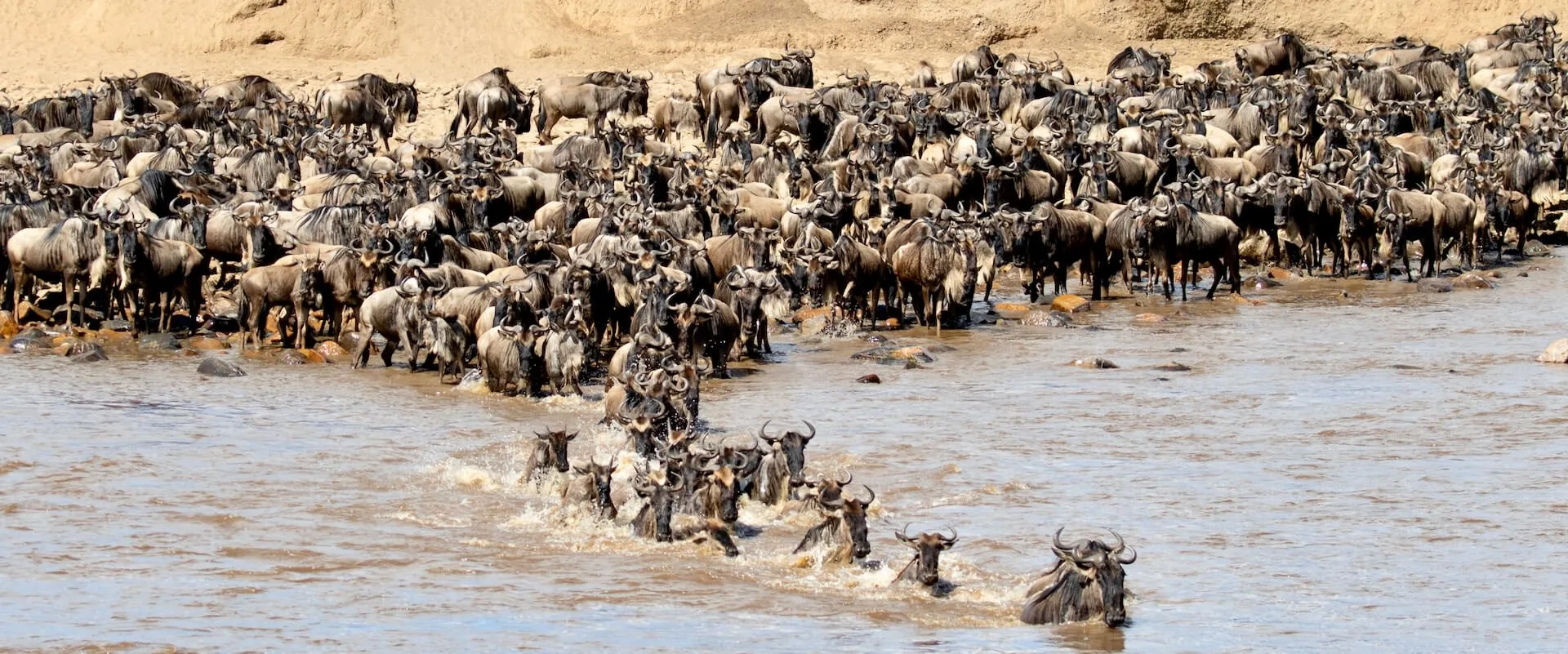
The Great Migration in Africa happens all year because the herds continuously circulate through the Serengeti–Mara ecosystem in…
Read article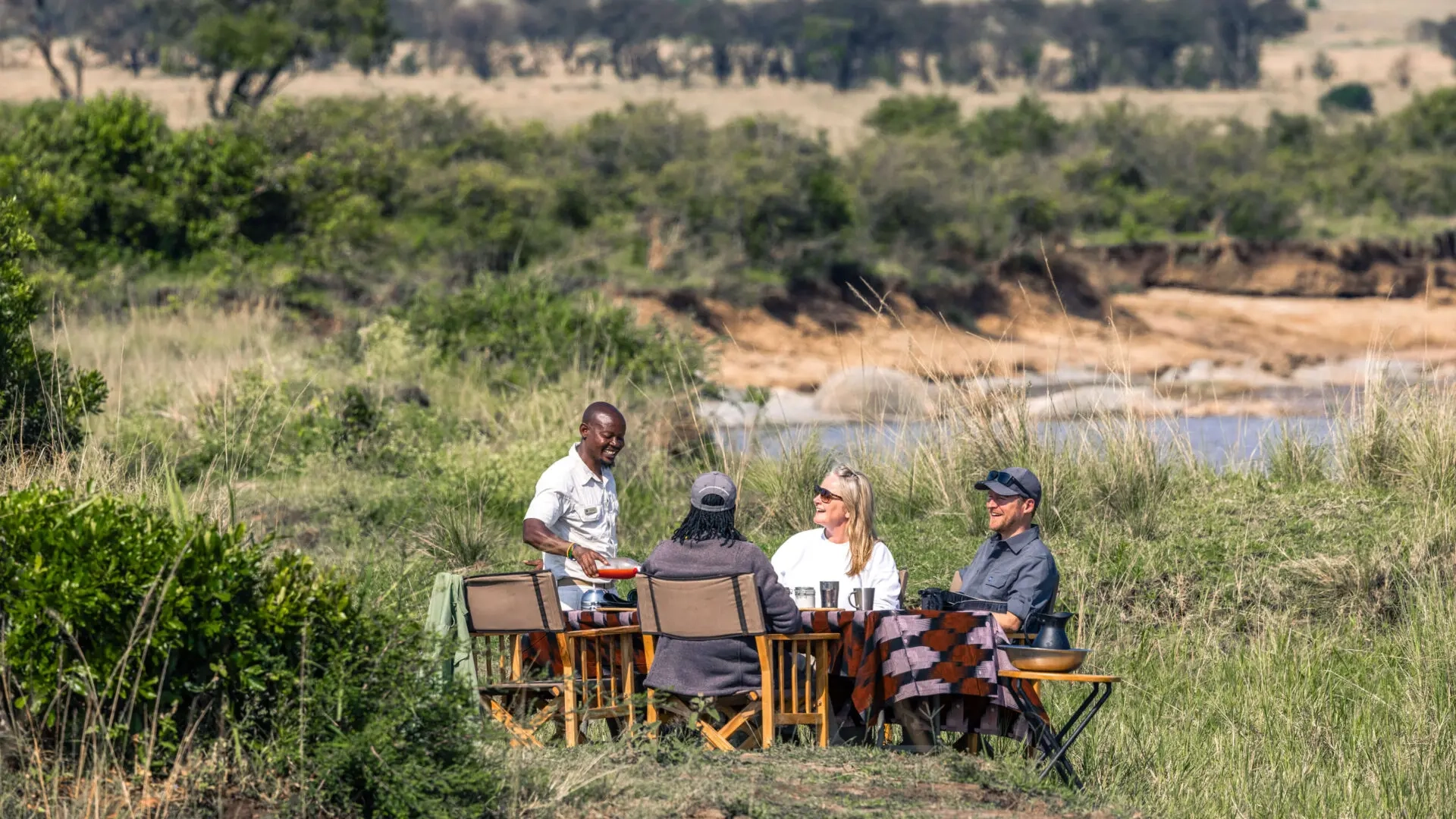
Definitive answer: A picnic lunch on safari is a packed or catered midday meal eaten at an approved…
Read article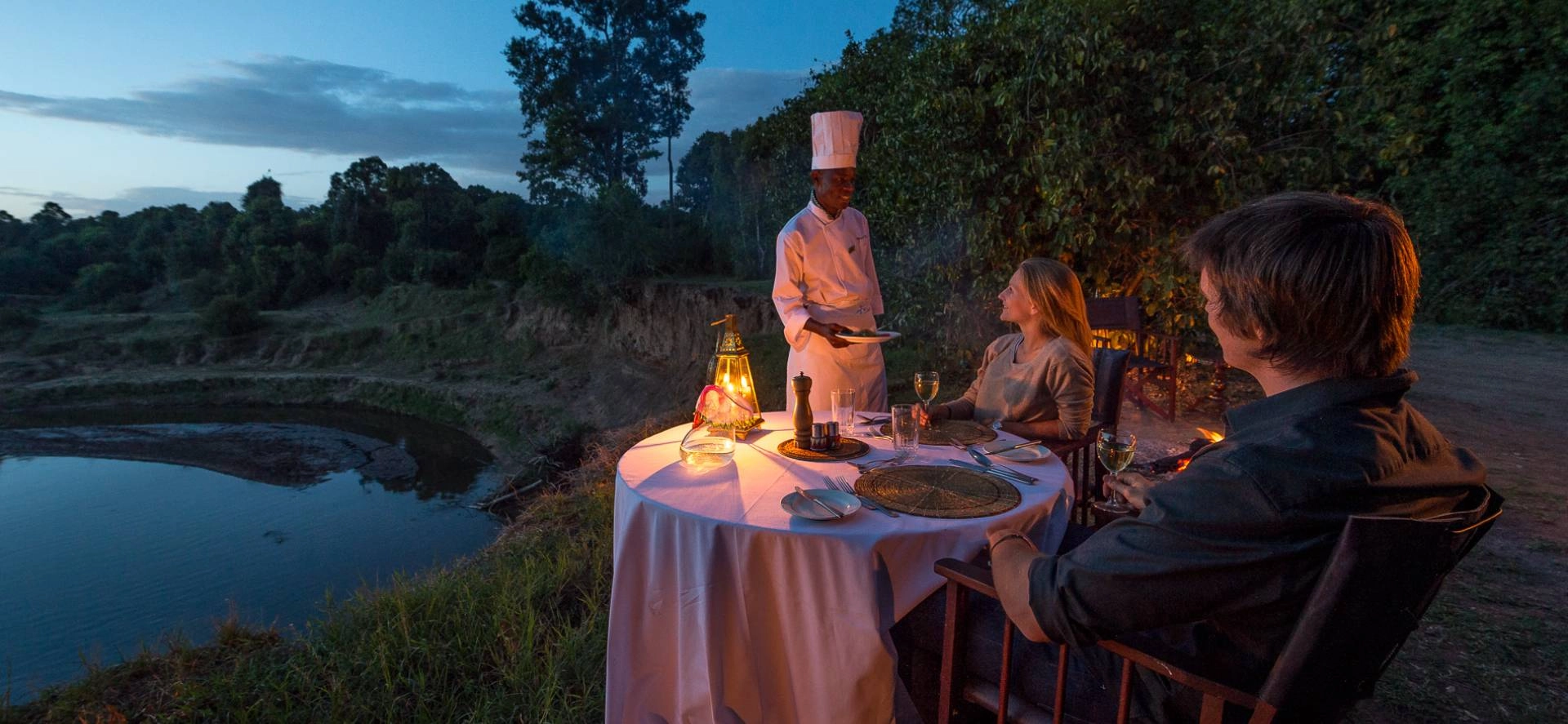
Definitive answer: A bush dinner is an outdoor evening meal arranged in a safe safari setting away from…
Read articleLet us take you closer to the wildlife, people and places that make Africa extraordinary.
Plan Your Safari Today