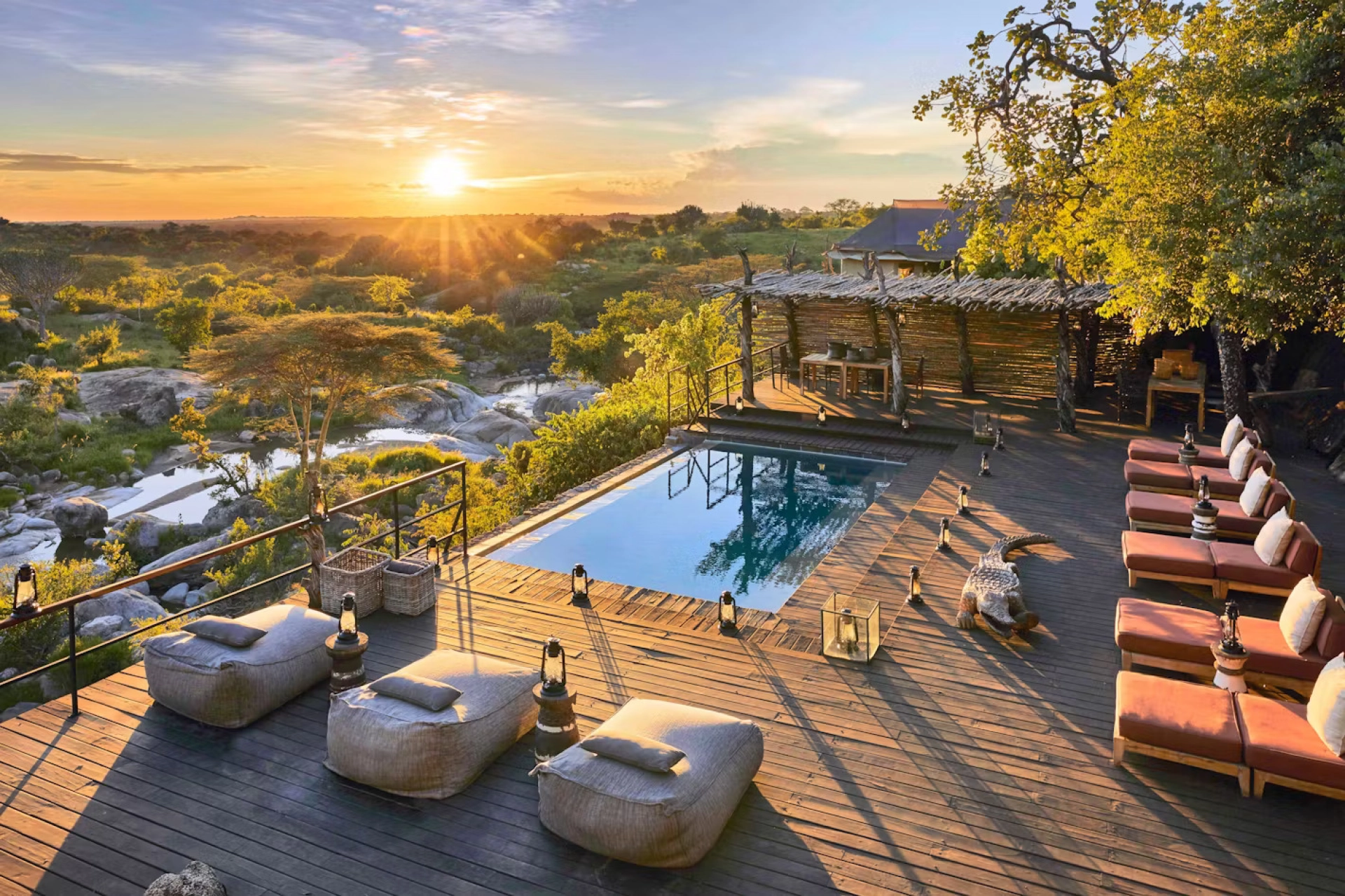
What should I look for when booking a luxury African safari?
When booking a luxury African safari, look beyond the room and compare the quality of guiding, wildlife location,…
Read article

Travel Guide
Africa's national parks are often presented as timeless wildernesses—places where elephants, lions, rhinos and antelope have always existed beyond the influence of people. The reality is far more complex. Protected areas require management. Wildlife populations require…
Africa’s national parks are often presented as timeless wildernesses—places where elephants, lions, rhinos and antelope have always existed beyond the influence of people. The reality is far more complex. Protected areas require management. Wildlife populations require protection from illegal exploitation. Roads, ranger posts and tourism infrastructure need maintenance. Communities living around park boundaries must have meaningful reasons to support conservation. Human-wildlife conflict has to be addressed.
Degraded habitats sometimes require restoration. Animals may need to be reintroduced after local extinction. Without effective management, a national park may exist on a map while losing the wildlife and ecological systems it was established to protect. This is the conservation challenge at the heart of African Parks. African Parks is a non-profit conservation organization that works in long-term partnership with African governments and local communities to manage protected areas. As of 2026, the organization states that it manages 24 protected areas across 13 African countries covering more than 20 million hectares.
Its portfolio spans ecosystems ranging from savannah and rainforest to wetlands, deserts, mountains and coastal marine environments. For safari travelers, the story matters because several parks now associated with extraordinary wildlife experiences have undergone major restoration. Akagera National Park in Rwanda is one of the clearest examples. Once depleted, it has been restored as an important savannah wildlife destination that can now be combined with Rwanda’s famous gorilla trekking safaris.
Elsewhere, places such as Zakouma in Chad, Kafue National Park in Zambia, Nyungwe National Park in Rwanda, Garamba National Park in the Democratic Republic of Congo, Bazaruto Archipelago in Mozambique and Matusadona National Park in Zimbabwe illustrate the different landscapes and conservation challenges represented within the African Parks portfolio. This detailed guide looks at African Parks, why its management model matters and some of the remarkable African safari parks connected with its conservation work.
African Parks was established in 2000 around a straightforward but ambitious idea: conservation areas require long-term operational management, not only short-term conservation projects.
The organization partners with national governments that retain ownership of protected areas while delegating defined management responsibilities through long-term agreements. African Parks describes its objective as restoring each protected area so that it becomes ecologically, socially and financially sustainable over the long term. That can include: wildlife protection, ranger training, law enforcement, ecological monitoring, wildlife reintroductions, tourism development, community engagement, education, employment, infrastructure, and financial management. The exact model differs according to park, country and conservation challenge.
Safari tourism depends on functioning ecosystems.
A beautiful lodge cannot compensate for a landscape in which wildlife has disappeared. A national park boundary means little if poaching, encroachment or habitat degradation continue unchecked. Successful conservation can therefore create a virtuous cycle. Wildlife populations recover. Tourism becomes viable. Tourism creates employment and revenue. Local communities gain economic opportunities. Greater political and economic value becomes attached to keeping the ecosystem intact. This does not happen automatically. Responsible safari tourism is only one component within a much broader conservation system. But when properly managed, visitors can become part of the economic case for preserving wildlife.
African Parks’ approach is often described as long-term delegated management.
Rather than supplying only grants or technical advice, the organization can assume substantial day-to-day responsibility for park operations under agreements with governments. That distinction is important. Managing a park requires operational decisions every day. Rangers need salaries, training and equipment. Roads need repairs. Wildlife populations must be monitored. Human-wildlife conflict requires response. Tourism concessions need oversight. Community programs require continuity. Conservation funding must be planned across years rather than surviving project to project. African Parks’ current long-term goal is to manage 30 protected areas by 2030.
For travelers interested in seeing conservation results directly, Akagera National Park is one of the most relevant African Parks destinations.
Situated in eastern Rwanda close to the Tanzanian border, Akagera protects savannah, woodland, wetland and lake ecosystems. The landscape is completely different from the misty volcanic mountains and rainforest environments associated with Rwanda’s gorillas. That contrast is one of Akagera’s biggest tourism strengths. Visitors can spend several days on a Rwanda wildlife safari before continuing to Volcanoes National Park for mountain gorilla trekking.
Akagera’s wildlife populations were heavily affected during Rwanda’s periods of conflict and instability.
Conservation restoration has included strengthened park protection and major wildlife reintroductions. Lions were restored to the ecosystem. Black rhinos were reintroduced. Later introductions strengthened the park’s rhino population. These efforts helped restore the ecological role of large mammals and re-established Akagera as a significant safari destination. Today, travelers visit for game drives, boat safaris and the opportunity to explore one of East Africa’s most varied protected landscapes.
Akagera creates a particularly strong safari combination because Rwanda is geographically compact. A traveler can explore savannah wildlife in Akagera, continue through Kigali and then head toward the Virunga region for gorilla trekking in Volcanoes National Park. This gives visitors two radically different African wildlife experiences within one country. The combination also illustrates how conservation can diversify a national tourism economy rather than relying on one flagship species.
Another major African Parks partnership in Rwanda involves Nyungwe National Park, one of East Africa’s most important montane rainforest environments. Nyungwe protects extensive forest containing primates, birds, butterflies and remarkable plant diversity. For safari travelers, the park is especially associated with chimpanzee trekking, forest hiking and canopy experiences.
A comprehensive Rwanda primate safari can combine: chimpanzees in Nyungwe, mountain gorillas in Volcanoes National Park, and savannah wildlife in Akagera. Few countries can offer such ecological variation within relatively short travel distances. Nyungwe also connects conceptually with conservation work across the Albertine Rift, one of Africa’s most biologically important regions.
Zakouma National Park has become one of African Parks’ most internationally recognized conservation stories. Located in southeastern Chad, Zakouma protects an important Sudano-Sahelian ecosystem. The park is famous for its wildlife and for the dramatic story of elephant conservation. Years of poaching had severely reduced elephant populations. Strengthened park management and security helped improve protection. Zakouma has subsequently gained a reputation among adventurous safari travelers seeking remote wilderness far beyond Africa’s busiest tourism circuits.
Zakouma is not a conventional first African safari. Reaching Chad requires considerably more planning than visiting Kenya, Tanzania or South Africa. Infrastructure is more limited. Travel seasons are specific. But for experienced Africa travelers, this remoteness is precisely the attraction. Massive concentrations of birds, savannah wildlife and a genuine feeling of isolation create an experience difficult to replicate.
Kafue National Park is one of Africa’s great wilderness areas. Its enormous scale means it contains several different habitats and safari regions. Open plains, woodland, rivers and wetlands support predators and large herbivores. Yet its potential has historically been constrained by management and conservation challenges. African Parks entered a long-term management partnership for Kafue, bringing the park into one of the largest conservation portfolios on the continent.
The Busanga Plains are among Kafue’s most celebrated landscapes. Seasonal flooding creates open grasslands supporting wildlife and outstanding birdlife. Lions are a major attraction. Lechwe and other antelope use wetter habitats. The plains can deliver some of Zambia’s most atmospheric safari photography.
Zambia’s safari reputation is dominated internationally by South Luangwa National Park, famous for walking safaris, and Lower Zambezi National Park, known for river activities. Kafue broadens the country’s tourism offering. Its enormous landscapes and lower visitor density appeal to travelers seeking a deeper wilderness experience.
Another extraordinary Zambian landscape is Liuwa Plain National Park. The park protects vast grasslands with dramatic seasonal changes. It is known for wildebeest movements, birdlife and predators. Liuwa does not resemble a heavily visited safari reserve. Its open horizons create a sense of scale. Rain transforms the plains. Bird concentrations can be spectacular. For photographers and repeat Africa travelers, the relative isolation is a major attraction.
When travelers hear wildebeest migration, they generally think about the Serengeti and Masai Mara. Yet large herbivore movements occur elsewhere in Africa. Liuwa demonstrates that the continent’s wildlife spectacles are much more geographically diverse than mainstream safari marketing suggests.
The Bangweulu Wetlands represent a completely different ecosystem. Huge floodplains support important birdlife and specialized mammals. The region is particularly famous among birders for the shoebill. This enormous, prehistoric-looking bird is one of Africa’s most sought-after species. Bangweulu is also strongly associated with black lechwe, an antelope adapted to floodplain environments.
Travelers who know Uganda’s Mabamba wetland as a shoebill destination may be interested in Bangweulu for a more remote southern-central African experience. Birding rather than classic Big Five viewing is often the central attraction. This highlights the enormous ecological variety represented within African Parks’ portfolio.
Not every African protected area is a savannah filled with lions and elephants. Bazaruto Archipelago National Park protects a spectacular marine environment off Mozambique’s Indian Ocean coast. Turquoise water, coral habitat, beaches, seagrass ecosystems and marine wildlife create a completely different conservation challenge. Bazaruto is especially important for dugongs, among the most unusual marine mammals associated with the western Indian Ocean.
Travelers often define safari only as a land-based search for mammals. Marine protected areas challenge that definition. A wider African wildlife journey can combine terrestrial safari with snorkeling, diving, marine wildlife and beach experiences. Mozambique works particularly well as a post-safari extension from South Africa.
Although conservation structures and partnerships across Mozambique have varied over time and by protected area, the country’s broader restoration story demonstrates the enormous possibility of rebuilding ecosystems after conflict. Mozambique’s landscapes range from marine ecosystems to extensive terrestrial wilderness. For travelers, that diversity makes the country far more than a beach extension. Combining a Southern African wildlife itinerary with Mozambique can add cultural and marine dimensions to the safari.
Matusadona National Park lies beside Lake Kariba in Zimbabwe. Its position creates a striking combination of terrestrial wildlife and enormous freshwater scenery. Elephants, buffalo, predators and other species occupy the wider ecosystem. Lake Kariba introduces boating and dramatic sunset landscapes. African Parks’ partnership in Matusadona forms part of broader efforts to strengthen conservation and tourism potential.
The best safari experiences often emerge where ecosystems meet. At Matusadona, lake, shoreline and inland habitats interact. Visitors can combine game viewing with water-based activities. This produces a safari style quite different from Zimbabwe’s better-known Hwange National Park.
Garamba National Park is one of Africa’s historically significant protected landscapes. Situated in northeastern Democratic Republic of Congo, the park has faced extraordinary conservation and security challenges. Its importance extends beyond tourism. Garamba represents the difficulty of protecting wildlife where conservation intersects with regional instability. For many travelers, it is not currently comparable to conventional safari destinations such as Akagera or Chobe. Conditions, access and official travel guidance must always be assessed carefully. Yet from a conservation perspective, Garamba demonstrates why long-term management can be necessary even in places that may not immediately generate substantial tourism revenue.
The rainforests of the Congo Basin represent one of the planet’s great ecological systems. Odzala-Kokoua National Park protects extensive rainforest environments in the Republic of Congo. The wildlife experience differs radically from East African savannah safari. Forest elephants and other rainforest species replace the familiar open-plains cast. Western lowland gorillas are another extraordinary component of the wider ecosystem.
A Congo rainforest safari appeals to experienced travelers seeking something far beyond conventional Big Five tourism. Dense forest changes how wildlife is encountered. Animals may be heard rather than immediately seen. Forest clearings can become crucial observation points. Humidity, vegetation and remoteness shape the entire experience.
Ennedi demonstrates that conservation is not limited to wildlife-rich savannah. This huge Saharan landscape contains dramatic sandstone formations, desert ecosystems and exceptionally important cultural heritage. African Parks notes that the reserve contains globally significant rock art and has been under its management partnership since 2017. For adventurous travelers, Ennedi offers one of Africa’s great desert journeys. The landscape itself becomes the attraction. Rock arches, cliffs, desert water sources and archaeological heritage reveal thousands of years of interaction between humans and the Sahara.
West Africa receives far fewer safari visitors than East or Southern Africa. Yet countries such as Benin contain important protected ecosystems. Pendjari National Park forms part of the wider W-Arly-Pendjari landscape. The region supports West African wildlife, including important populations of large mammals. For conservation-minded travelers, Pendjari demonstrates that the African safari map extends far beyond Kenya, Tanzania, Botswana and South Africa. Tourism feasibility and access conditions should always be checked through current official guidance.
Majete Wildlife Reserve became one of African Parks’ earliest major restoration stories. Historically depleted wildlife populations were rebuilt through stronger management and species reintroductions. The reserve developed into an important tourism destination within Malawi. This matters because Malawi has traditionally been associated internationally with Lake Malawi rather than classic Big Five safari. Restored wildlife reserves diversify the country’s tourism. Travelers can now combine game viewing with the lake, creating a Malawi safari and beach-style holiday without leaving the country.
Liwonde National Park is another significant Malawi conservation area. The Shire River is central to the landscape. Elephants, hippos, crocodiles and birdlife make water-based wildlife experiences important. Predator and rhino restoration efforts have added to the park’s ecological significance. For travelers, Liwonde can combine naturally with Majete and Lake Malawi. This creates a surprisingly diverse itinerary through a country still overlooked by many international safari visitors.
Angola remains outside the mainstream African safari circuit, but its landscapes have enormous conservation potential. Iona National Park protects desert and semi-desert environments in southwestern Angola. The scenery links ecologically with the broader Namib region. Rather than the dense large-mammal concentrations associated with Chobe, Iona’s appeal lies in vast space, desert adaptation and restoration potential. For adventurous travelers, Angola represents part of the emerging frontier of off-the-beaten-track African safaris.
Reintroducing wildlife into a protected area can sound simple: move animals from one place to another. In reality, successful translocation is complex. The receiving habitat must be suitable. Poaching threats need to be controlled. Genetic considerations matter. Veterinary teams must manage capture and transport. Communities need to understand why species are being restored. Long-term monitoring is essential. Reintroducing a predator such as a lion also changes relationships throughout the ecosystem.
Herbivore behavior may change. Competitors respond. Tourism interest can increase. That is why wildlife restoration in Africa should be understood as ecosystem rebuilding rather than simply moving animals.
Rhinos symbolize both the successes and continuing challenges of African conservation. Protecting them requires extensive resources. Ranger operations, intelligence, monitoring and cooperation with government authorities are essential. Rhino reintroductions in places such as Akagera have helped restore species that had disappeared locally. For safari visitors, seeing a rhino should therefore be understood within a wider conservation story. Never share real-time precise rhino locations publicly. Small acts of visitor responsibility matter.
Elephants require large areas. They move according to water, food, seasons and social needs. Small isolated reserves cannot always accommodate natural movement. Large landscapes and transboundary conservation therefore matter. This is one reason modern conservation increasingly focuses on ecological connectivity rather than treating each protected area as an island. Safari travelers experience the benefit directly. Large functioning landscapes allow wildlife to behave naturally.
Conservation discussions often focus on animals and forget the people working daily to protect them. Rangers patrol enormous landscapes under difficult conditions. Their responsibilities can include detecting illegal activity, monitoring wildlife, responding to emergencies and maintaining presence in remote parts of protected areas. African Parks reports thousands of rangers working across its portfolio. Effective conservation therefore depends not only on technology but also on trained, supported people.
Protected areas cannot thrive indefinitely while surrounding communities receive no benefit. People may live close to dangerous wildlife. Elephants can destroy crops. Predators may kill livestock. Access to land and resources can become politically sensitive. Tourism and conservation strategies therefore need to consider livelihoods, education, employment and community priorities. African Parks places community development alongside biodiversity protection as part of its long-term management approach. The strongest community conservation programs in Africa are those that treat local residents as stakeholders rather than obstacles.
Tourism creates economic value around intact ecosystems. Visitors pay conservation fees. Lodges employ staff. Guides earn incomes. Local businesses supply goods and services. Governments receive tourism revenue. Communities may gain employment and enterprise opportunities. But tourism must be managed responsibly. Too many vehicles can disturb wildlife. Poorly planned lodges can damage habitats. Water use and waste can become serious problems. The goal should therefore be low-impact safari tourism that generates enough value to support conservation without degrading the resource visitors came to experience.
African Parks does not manage every major safari destination, nor should the term be confused with African national parks in general. Many of Africa’s greatest protected areas are managed through national authorities, private conservation systems, community conservancies or other partnerships. Examples include: Bwindi Impenetrable National Park, Serengeti National Park, Masai Mara National Reserve, Kruger National Park, Chobe National Park, Okavango Delta protected landscapes, Etosha National Park, South Luangwa National Park, and many others. The African Parks portfolio should therefore be seen as one important conservation model within the much larger African protected-area landscape.
If your priority is easy logistics and famous wildlife, more established tourism destinations remain excellent. Masai Mara offers classic predator viewing. Serengeti provides the Great Migration. Bwindi delivers mountain gorilla trekking. Kruger combines accessibility with Big Five wildlife. Chobe specializes in elephants and river safaris. Within the African Parks portfolio, Akagera is particularly suitable for mainstream travelers because it fits easily into a Rwanda itinerary.
Repeat safari travelers often begin seeking more remote destinations. Zakouma, Liuwa Plain and Kafue can offer the sense of wilderness such visitors are looking for. The focus shifts away from simply accumulating famous species. Landscape, isolation, conservation story and ecological uniqueness become more important. This represents a natural evolution for many safari enthusiasts.
Wetlands and diverse habitats within the African Parks portfolio provide outstanding birding. Bangweulu is particularly interesting for shoebills. Liuwa Plain provides seasonal wetland and grassland birdlife. Nyungwe offers forest species. Zakouma can produce extraordinary bird concentrations. Liwonde combines river and terrestrial environments. Birding travelers should select parks according to habitat rather than assuming a destination famous for mammals is automatically the best choice.
Rwanda stands out. Nyungwe National Park offers chimpanzees and numerous other primates. Although Volcanoes National Park itself follows a different management structure, combining Nyungwe with gorilla trekking in Volcanoes National Park produces one of Africa’s premier primate itineraries. Travelers can then add Akagera for savannah wildlife.
Africa’s human population is growing. Infrastructure is expanding. Climate change is altering ecosystems. Illegal wildlife trade remains a threat. Wildlife conservation will therefore require increasingly sophisticated approaches. Simply drawing boundaries around land is not enough. Protected areas need professional management, political support, financing, scientific monitoring and meaningful community relationships. Tourism can contribute, but it cannot carry the entire burden alone. African Parks’ long-term management model is one attempt to address that reality. Its successes deserve attention, but each landscape remains different. Conservation is never finished.
Travelers have more influence than they sometimes realize. Choose reputable operators. Pay legitimate conservation fees. Respect park regulations. Do not purchase wildlife products. Avoid attractions that exploit animals for entertainment. Give wildlife space. Do not pressure guides to break rules for photographs. Support locally owned businesses where appropriate. Learn about the conservation story behind the places you visit. And remember that your safari fee is not simply the price of seeing animals. In well-managed destinations, tourism helps give protected landscapes economic value.
African Parks is a non-profit conservation organization that enters long-term partnerships with governments and communities to manage protected areas.
As of 2026, African Parks states that it manages 24 protected areas in 13 countries covering more than 20 million hectares.
Its current portfolio spans multiple countries including Angola, Benin, Central African Republic, Chad, Democratic Republic of Congo, Ethiopia, Malawi, Mozambique, Republic of Congo, Rwanda, South Sudan, Zambia and Zimbabwe.
No. African Parks works through partnerships with sovereign governments and communities; the protected areas remain part of the respective countries.
Several are established tourism destinations, while others are remote or affected by changing access and security conditions. Current travel advice should always be checked.
Akagera National Park in Rwanda is an excellent choice because it can be combined with Volcanoes National Park and Rwanda’s gorilla trekking circuit.
Nyungwe National Park in Rwanda is particularly well known for chimpanzee trekking.
Bangweulu Wetlands in Zambia is one of Africa’s important shoebill habitats.
Remote landscapes such as Zakouma, Liuwa Plain and Kafue can appeal strongly to repeat Africa travelers.
The greatest value of the African Parks story may be the reminder that successful safari destinations are not inevitable. Behind every elephant herd, lion pride and healthy wetland are decisions about land, security, communities, economics and conservation. Some landscapes have remained relatively intact. Others have been restored after severe decline. That makes a safari more meaningful. When you watch lions in Akagera, explore Nyungwe’s rainforest or photograph wildlife in Kafue, you are not simply visiting scenery.
You are witnessing ecosystems whose future depends on active choices. At Adventure in the Wild Safaris, we design journeys through many of Africa’s great protected landscapes, from Uganda gorilla trekking safaris, Rwanda gorilla and Akagera safaris, Kenya wildlife tours and Tanzania safaris to Botswana, Zambia, Zimbabwe and Southern Africa safari combinations. Africa’s finest national parks deserve to be visited. More importantly, they deserve to remain wild. Understanding the conservation work behind them is one of the best ways to become a more informed—and more responsible—African safari traveler.

Share This Article
When booking a luxury African safari, look beyond the room and compare the quality of guiding, wildlife location,…
Read article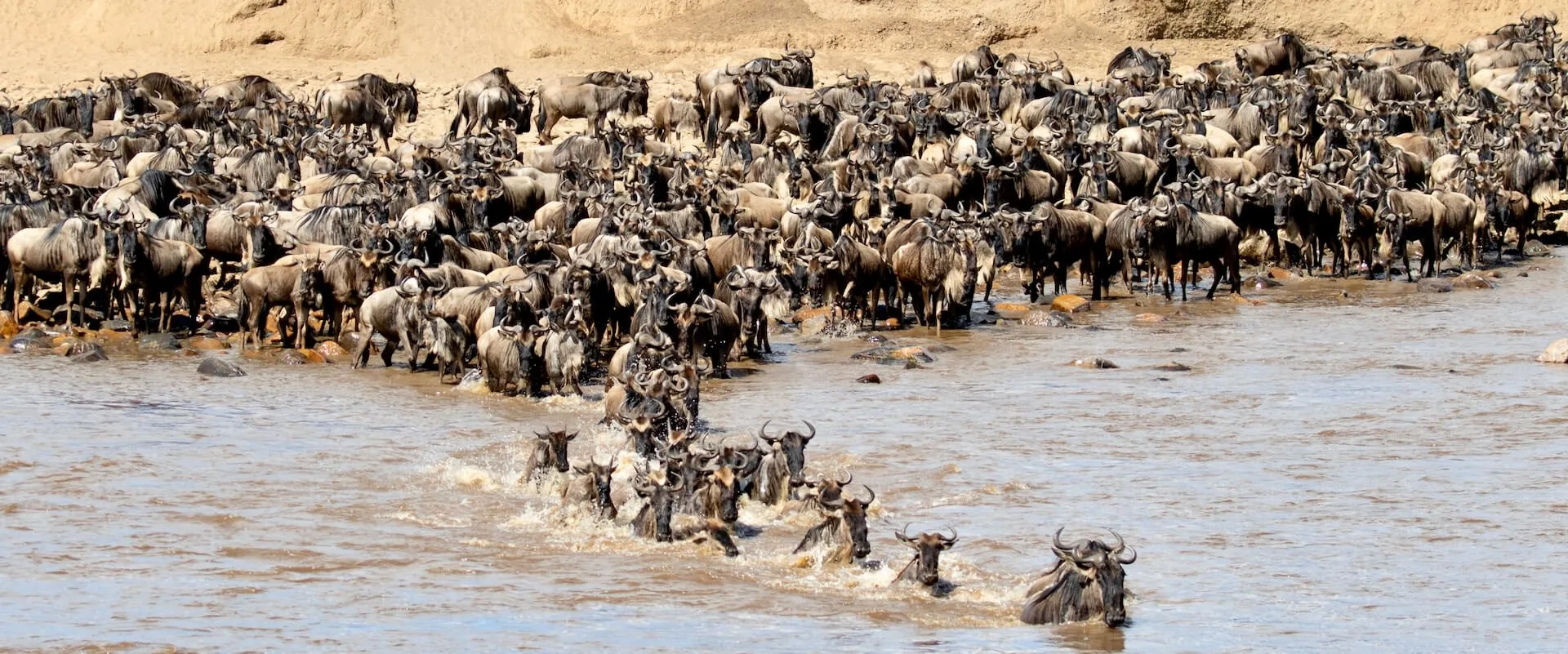
The Great Migration in Africa happens all year because the herds continuously circulate through the Serengeti–Mara ecosystem in…
Read article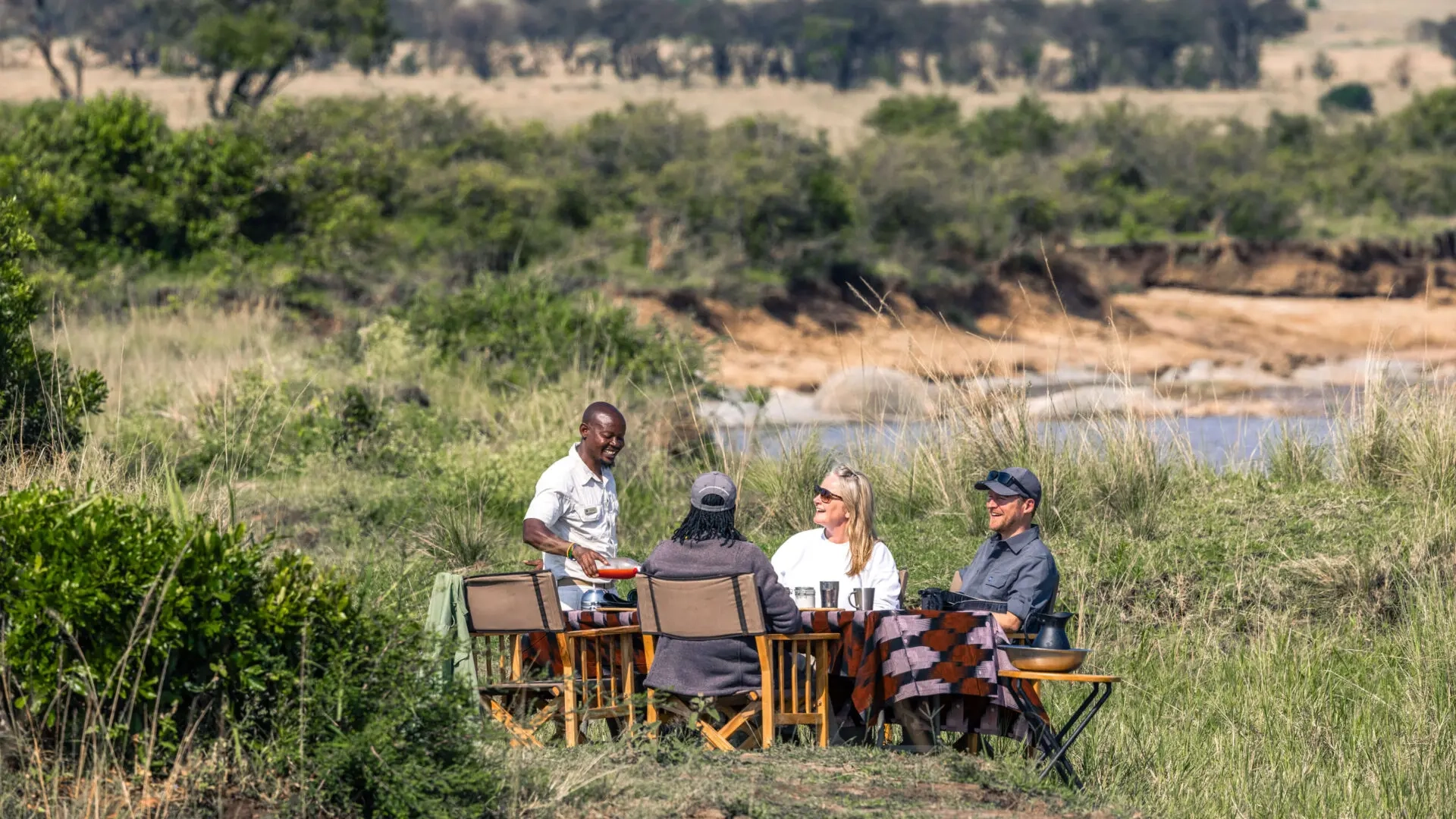
Definitive answer: A picnic lunch on safari is a packed or catered midday meal eaten at an approved…
Read article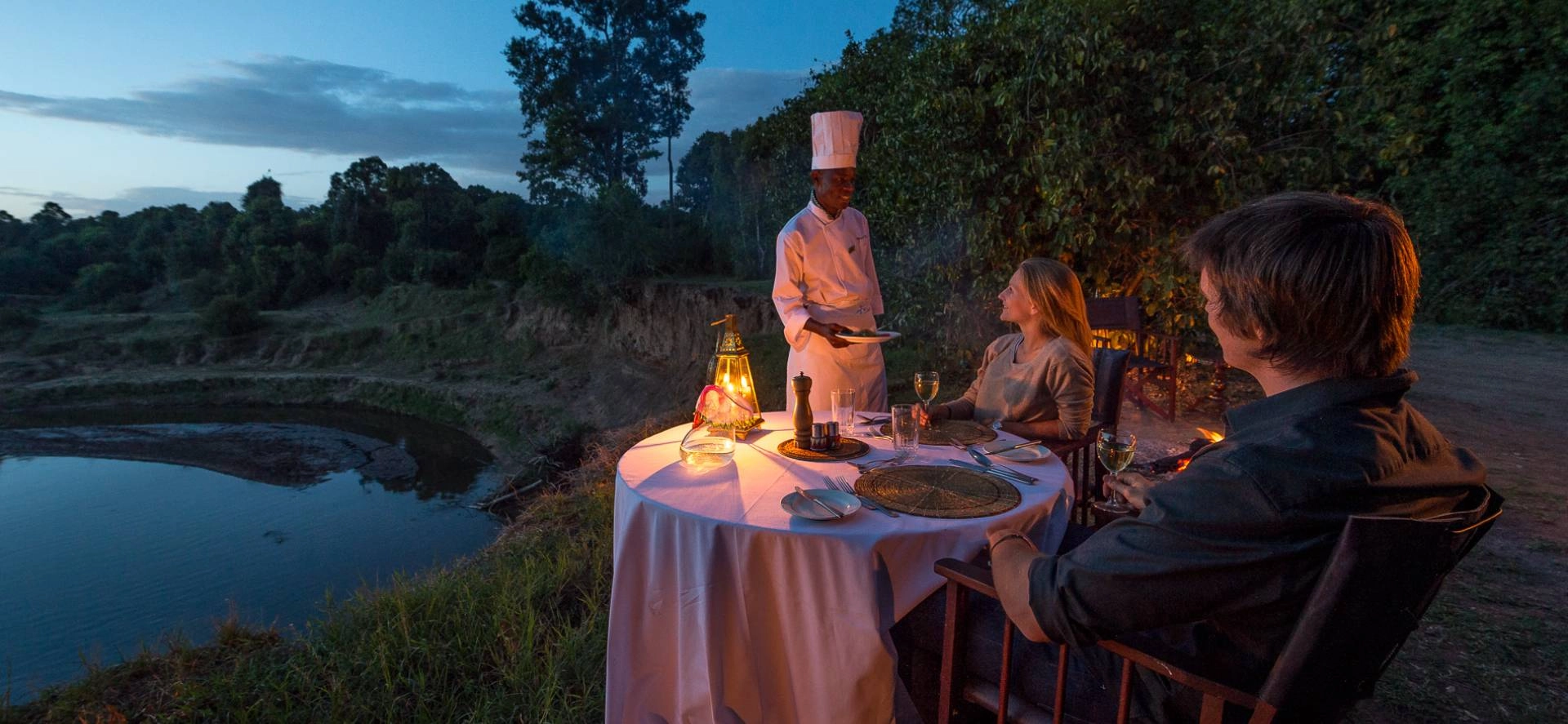
Definitive answer: A bush dinner is an outdoor evening meal arranged in a safe safari setting away from…
Read articleLet us take you closer to the wildlife, people and places that make Africa extraordinary.
Plan Your Safari Today