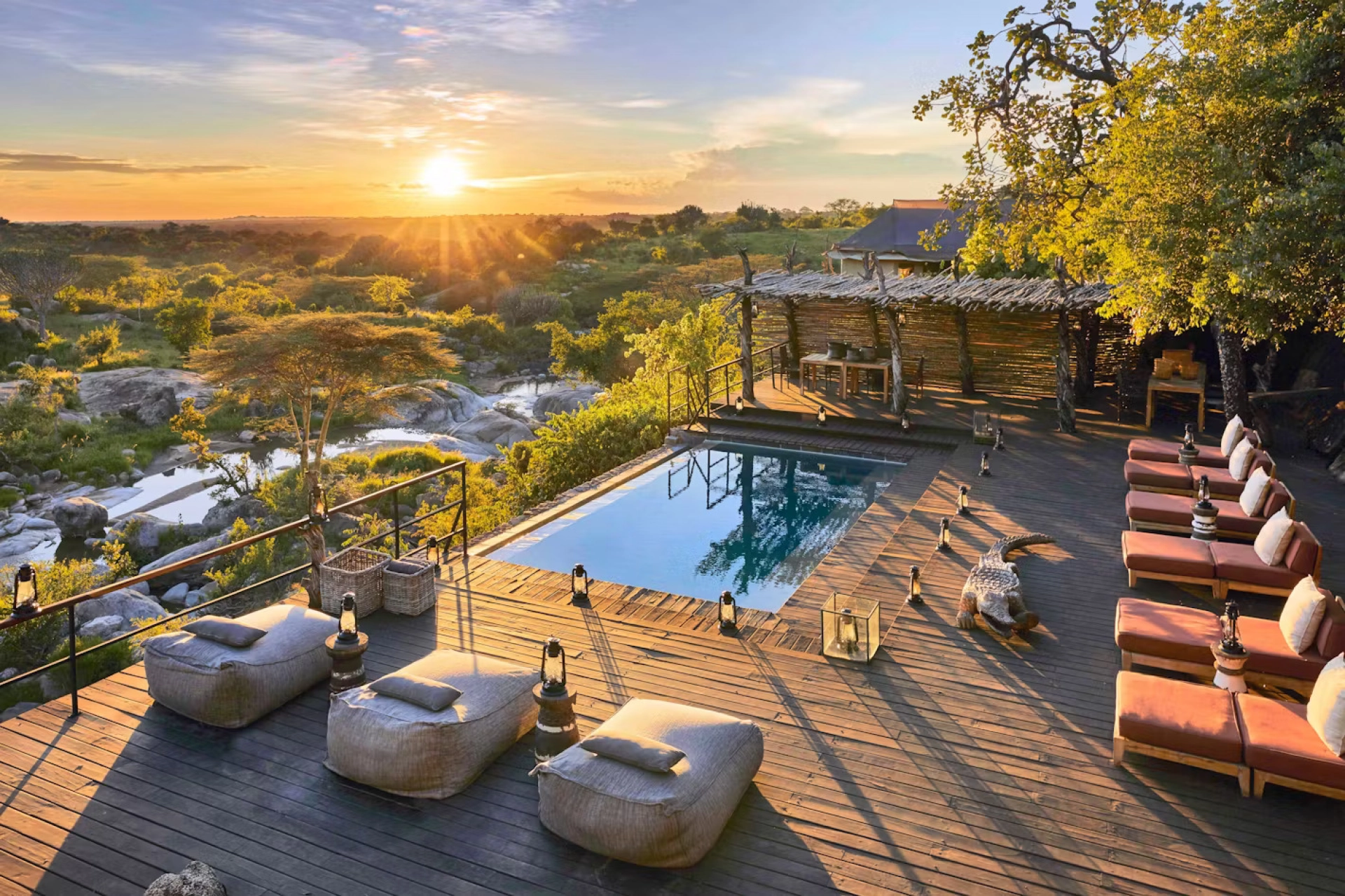
What should I look for when booking a luxury African safari?
When booking a luxury African safari, look beyond the room and compare the quality of guiding, wildlife location,…
Read article
Travel Guide
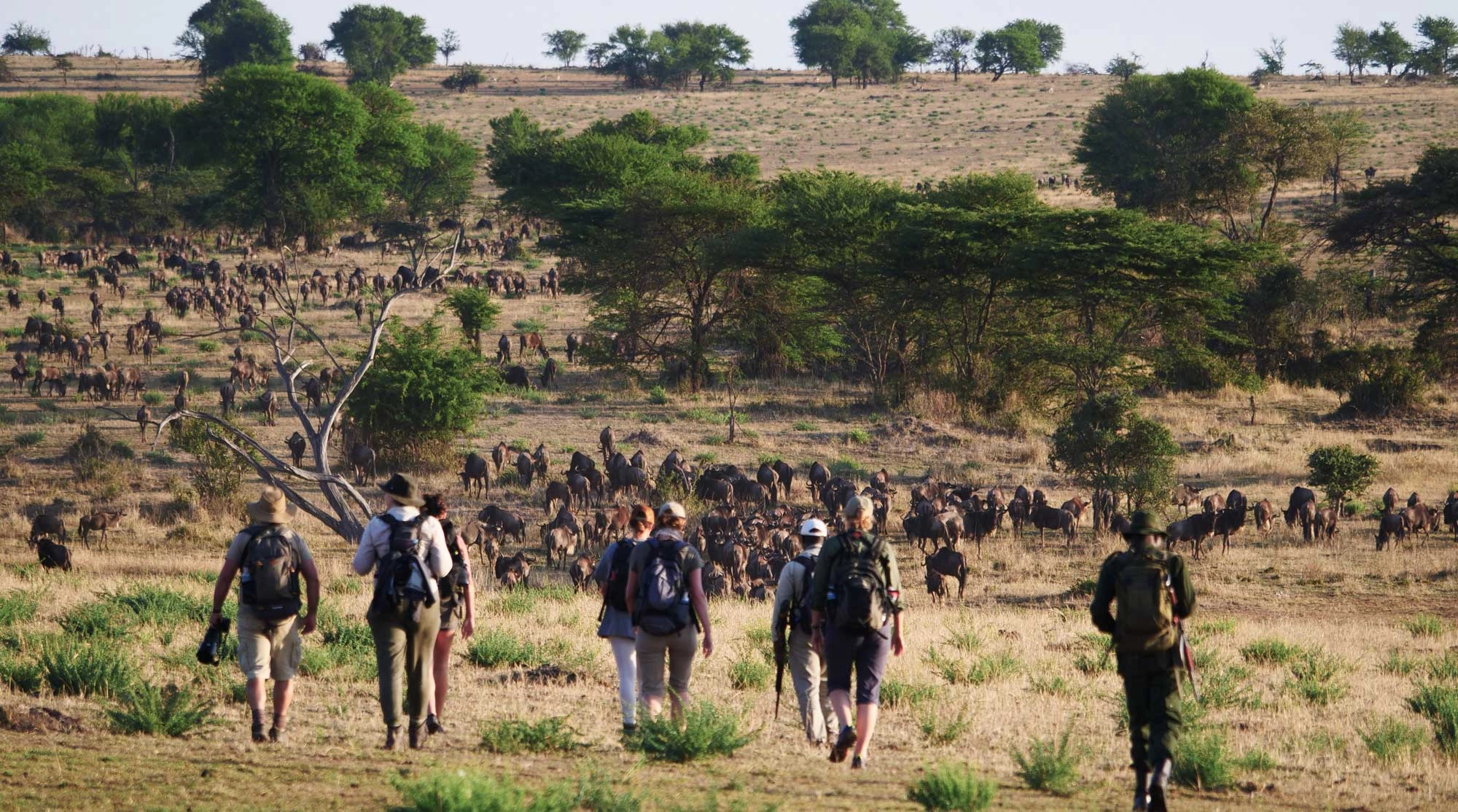
There is a moment on an African walking safari when the wilderness suddenly feels different. You may have spent several days viewing wildlife from safari vehicles and already seen elephants, lions, giraffes and buffalo. Then you…
There is a moment on an African walking safari when the wilderness suddenly feels different. You may have spent several days viewing wildlife from safari vehicles and already seen elephants, lions, giraffes and buffalo. Then you leave the vehicle. The engine stops. The doors close. Your guide checks the wind and begins walking. Within minutes, your senses change. You notice bird calls that disappeared beneath the sound of the engine.
You see individual animal footprints. You smell crushed grass. A distant cracking branch suddenly seems important. Fresh elephant dung on the trail creates immediate curiosity. The bush stops being scenery viewed from a vehicle and becomes an environment you are physically moving through. That transformation explains why walking safaris in Africa are so memorable. They slow travel down. Instead of covering dozens of kilometres in search of major sightings, walking concentrates attention on the details connecting everything together.
Tracks tell stories. Plants reveal habitat. Bird alarm calls indicate danger. Dung explains diet. Wind direction influences your route. Large wildlife can still be encountered, sometimes spectacularly, but walking is about much more than approaching the Big Five. Across Africa, walking experiences vary enormously. Some destinations specialize in serious multi-day walking safaris through remote wilderness. Others provide short guided bush walks as an addition to game drives. Some walks focus on elephants and buffalo.
Others explore rainforest, mountains, deserts or wetlands. Choosing the right destination therefore matters. This guide compares some of the best African walking safari destinations, explains when to go and helps travelers select the experience that matches their fitness, interests and appetite for adventure.
A walking safari is a professionally guided journey through a natural area on foot. In classic savanna safari destinations, this usually means moving through wildlife habitat accompanied by an experienced guide and, where required, an armed ranger or scout. But the term can also include specialized forest walks, rhino tracking, wilderness trails and other wildlife-focused experiences. The defining feature is that you engage with the environment at ground level.
Vehicles are excellent safari tools. They allow travelers to cover huge areas efficiently and provide stable platforms for photography. Wildlife in established safari destinations may also be habituated to vehicles, allowing close viewing. Walking offers something different. You become aware of distance. A giraffe 150 metres away suddenly feels enormous. An elephant becomes even more imposing. You understand why professional guides pay so much attention to wind, vegetation and terrain. The result is deeper ecological awareness.
One of the biggest misconceptions is that the purpose of a walking safari is to approach lions, elephants or rhinos as closely as possible. It is not. Responsible guides maintain appropriate distances. Animals should always have space and an escape route. The strongest walking experiences are not necessarily those with the closest encounter. They are the ones where travelers understand what they are seeing.
If one destination could be called the classic home of the modern African walking safari, South Luangwa would be the strongest candidate. Zambia has a long walking-safari tradition, and South Luangwa remains especially associated with professionally guided bush walks and multi-day journeys between remote camps.
The Luangwa River shapes the ecosystem. Floodplains, lagoons, woodland and seasonal channels create highly productive wildlife habitat. As the dry season develops, wildlife increasingly concentrates around permanent water. Elephants, buffalo, giraffes, hippos, antelopes and predators occur throughout the ecosystem. South Luangwa is particularly famous for leopards. Lions, hyenas and wild dogs may also be encountered.
Travelers can choose short lodge-based walks or serious multi-day expeditions. Specialist walking camps may be located away from busy road networks. For experienced travelers, camp-to-camp walking is one of Africa’s great wilderness experiences.
Broadly June to October provides the classic dry-season walking period. June and July are cooler. August becomes increasingly dry. September offers excellent wildlife concentration. October can be intensely hot but spectacular for game viewing.
South Luangwa is best for travelers who want walking to be the main safari activity, rather than a short optional excursion.
Zimbabwe’s Mana Pools National Park provides perhaps the most atmospheric walking environment in southern Africa. The park lies beside the Zambezi River. Its floodplains, woodland and seasonal pools attract elephants, buffalo, antelope, wild dogs and predators.
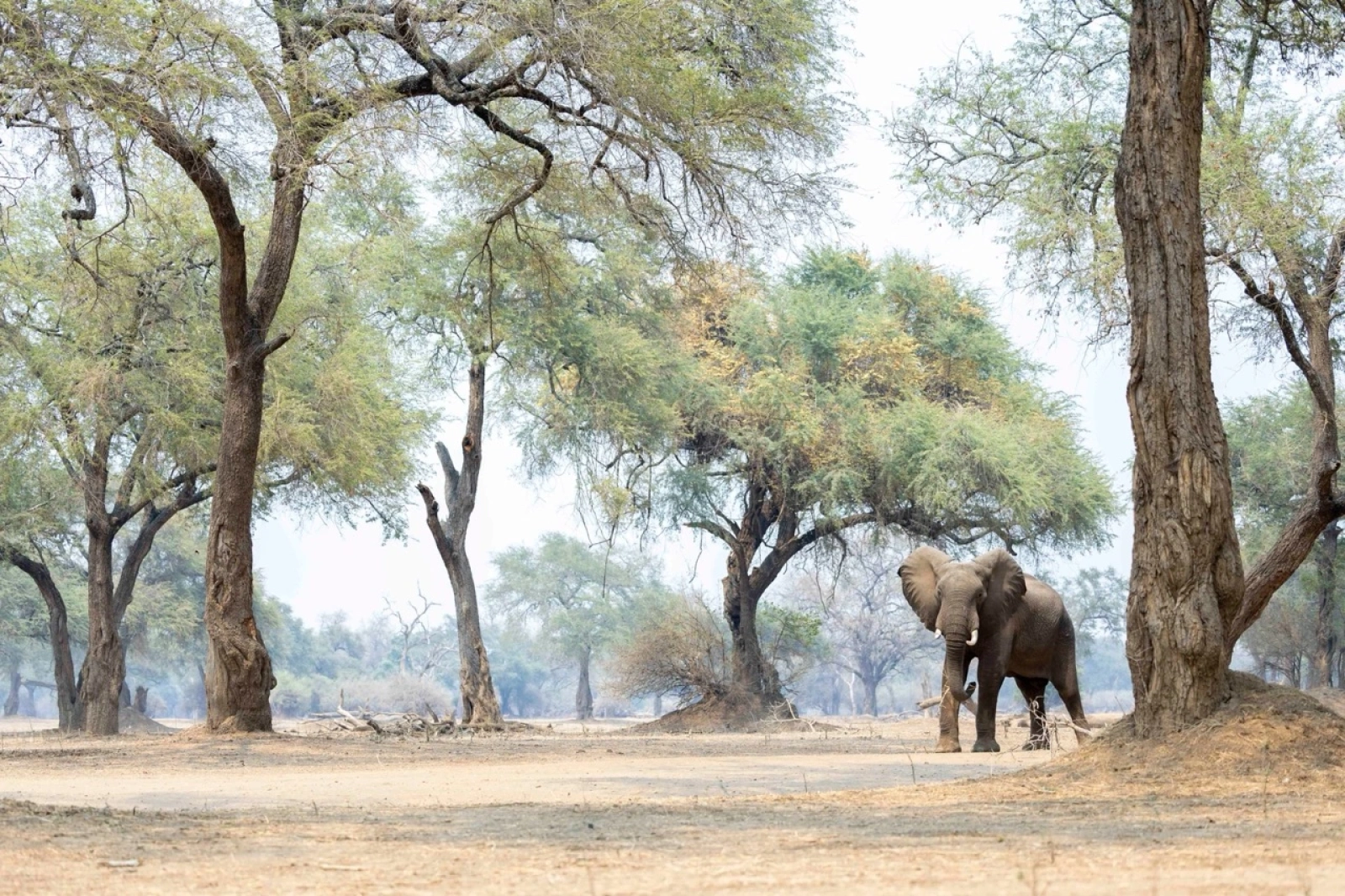
Existing material on the user’s site likewise highlights Mana Pools as one of Africa’s standout destinations for on-foot wildlife exploration.
Visibility can be exceptional across parts of the floodplain. Large trees create beautiful natural framing. Elephants move between the river and inland feeding areas. Some elephants are famous for standing upright on their hind legs to reach nutritious branches and pods. Photographers particularly love Mana Pools because walking can provide highly atmospheric images of animals within the landscape.
Mana Pools is also known for African wild dogs. Watching a pack on foot can be extraordinary, provided guides maintain responsible distances and do not interfere with hunting or denning behavior.
The Zambezi River makes Mana Pools particularly versatile. Travelers can combine walking with canoeing. One day is experienced from ground level beneath large trees. The next may be spent paddling past hippos and elephants along the river.
The main dry season—particularly July through October—is generally excellent. As water becomes scarce inland, wildlife concentrates increasingly near the Zambezi and pools. October can be very hot.
Mana Pools suits adventurous travelers, experienced safari enthusiasts and wildlife photographers seeking a strong wilderness atmosphere.
Botswana’s Okavango Delta provides one of Africa’s most unusual combinations of walking and water-based safari. Channels spread through floodplains and islands, creating a constantly changing mosaic of wet and dry habitat.
Many camps conduct walks on islands or dry areas. Guests may arrive by mokoro or boat before continuing on foot. This transition from silent waterways to terrestrial tracking creates an extraordinary sense of immersion. Elephants, giraffes, antelope and buffalo may occur. Predators including lions and leopards inhabit parts of the Delta.
The classic Okavango mokoro safari is already extremely quiet. Combining it with walking removes vehicles from much of the experience. You begin appreciating frogs, water lilies, insects, bird calls and animal tracks as much as large mammals.
Water conditions vary across the Delta and from year to year. For travelers specifically prioritizing walking plus mokoro excursions, lodge location matters enormously. The broad period from the middle of the year is popular because the Delta’s floodwaters can coincide with Botswana’s dry season.
The Okavango is ideal for travelers who want luxury safari, walking, wetland ecology and water-based activities within the same itinerary.
Tanzania is famous for the Serengeti, but travelers seeking quieter wilderness should investigate Ruaha National Park. Ruaha is characterized by baobabs, rocky hills, woodland and the Great Ruaha River. It feels distinctly different from northern Tanzania’s open plains. The user’s existing destination coverage also identifies Ruaha as a strong walking-safari choice because of its remoteness and ability to combine foot exploration with traditional wildlife drives.
Ruaha supports elephants, giraffes, kudu, buffalo, lions, leopards, wild dogs and numerous antelopes. The park is particularly celebrated for predators. Walking allows visitors to focus on tracking and plant ecology rather than simply driving between major sightings.
Visitor numbers are relatively low compared with Tanzania’s northern circuit. That creates an enhanced sense of space. A walking safari may proceed for long periods without encountering another tourism vehicle.
The dry season from roughly June to October generally provides strong walking and wildlife conditions. Vegetation thins and animals become concentrated around water.
Ruaha is excellent for repeat Tanzania visitors and travelers who prioritize remote wilderness.
South Africa provides one of the easiest introductions to African bush walking. The Greater Kruger ecosystem combines excellent wildlife, professional guiding and a huge range of accommodation. Many private reserves offer guided bush walks alongside conventional game drives.
Travelers do not need to commit an entire safari to walking. You can enjoy a standard Big Five game drive in the afternoon, sleep at a comfortable lodge and participate in a guided walk the next morning. This allows people to discover whether they enjoy walking before booking more intensive expeditions.
Guides often focus on spoor. Rhino tracks, elephant feeding signs, leopard prints and buffalo movement can all become part of a morning. Seeing the actual animal is only part of the experience.
The dry southern African winter and early spring, broadly May through October, usually provides favorable conditions. Vegetation is thinner. Temperatures are comfortable in the morning.
South Africa is particularly suitable for first-time walking safari travelers, luxury safari guests and travelers wanting a combination of walking and traditional Big Five viewing.
Uganda offers one of Africa’s most diverse combinations of on-foot wildlife experiences. It is not normally marketed as a dedicated walking-safari destination in the same way as Zambia. Yet travelers can spend a remarkable portion of a Uganda safari on foot.
The most famous experience is gorilla trekking in Bwindi Impenetrable National Park. Travelers hike through rainforest accompanied by guides and trackers to locate a habituated mountain gorilla family. The experience differs from a savanna walking safari because the focus is one primate species rather than broad ecosystem tracking. But the emotional intensity of encountering mountain gorillas on foot is extraordinary.
Mgahinga provides additional active experiences. Travelers may undertake gorilla trekking, golden monkey tracking and volcanic hikes. This makes the park particularly attractive for travelers who enjoy physically active safari programs.
Lake Mburo National Park provides a more conventional savanna walking experience. Guided walks may reveal zebras, giraffes, impala and other species.
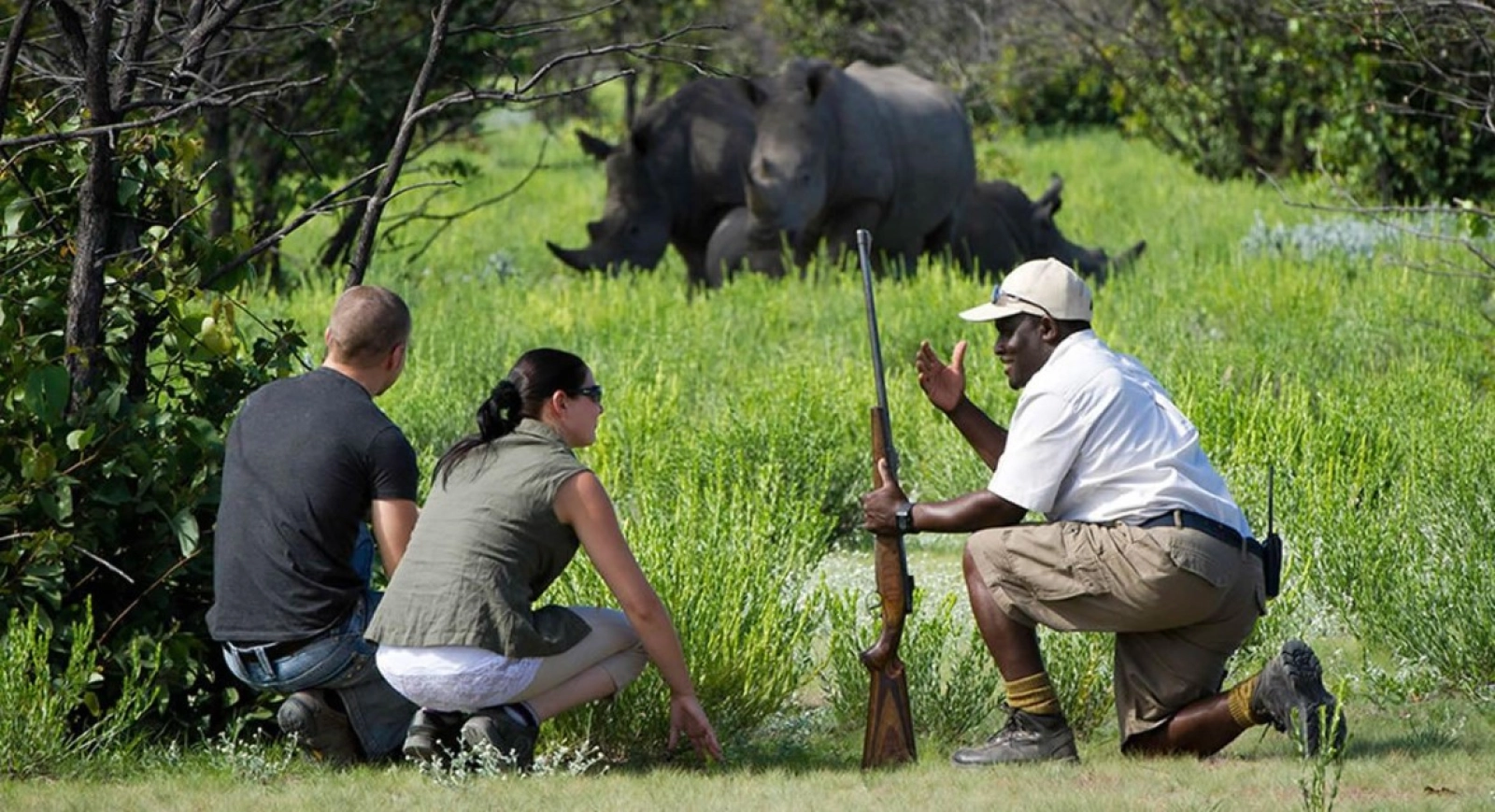
Because the park differs from Uganda’s larger predator-rich ecosystems, it provides an excellent environment for appropriately managed walks.
Uganda itineraries may also include rhino tracking on foot where authorized and operational. This adds another completely different walking experience.
Uganda can be visited throughout the year. The relatively drier periods often make forest trekking and hiking easier, particularly around June to August and December to February, although weather patterns can vary. The site’s related walking guide similarly highlights these periods for Bwindi-focused walking.
Uganda is exceptional for travelers who want gorilla trekking, chimpanzee trekking, savanna walking, birding and classic game drives in one country.
Namibia demonstrates that walking safari experiences do not need lush savannas. The country’s arid landscapes create some of Africa’s most fascinating tracking opportunities.
In appropriate conservation areas, travelers can join professional trackers searching for desert-adapted black rhinos. The process is often as memorable as the sighting. Trackers study prints, dung and browsing signs. Vehicles may be used for part of the search before continuing on foot. When rhinos are located, guides manage approach direction and viewing distance carefully.
Namibia also provides guided desert walks that focus on smaller wildlife. Reptiles, insects and plants have developed extraordinary adaptations to survive heat and scarce water. The experience demonstrates how much a skilled guide can reveal in a landscape that initially appears almost empty.
Timing depends on region and activity. Cooler dry-season months can provide more comfortable conditions for walking.
Namibia suits travelers interested in tracking, conservation, desert ecology and landscape photography.
There is no single answer, but different countries dominate different categories. For dedicated multi-day walking, Zambia is extremely difficult to beat. For dramatic Zambezi floodplains and photography, Zimbabwe’s Mana Pools is exceptional. For wetland walking combined with mokoro trips, choose Botswana. For accessible Big Five walking, South Africa is excellent. For remote East African walking, consider Tanzania. For primates and varied on-foot activities, Uganda is outstanding. For specialized rhino tracking and desert ecology, Namibia deserves consideration.
One of the biggest mistakes is assuming that all African destinations share one safari season. They do not. Africa spans enormous climatic regions. Southern Africa’s dry season can be excellent for Zambia, Zimbabwe and Botswana while parts of East Africa follow different rainfall cycles. Forest conditions in Uganda are different again. Destination-specific planning is essential.
January is green-season travel across much of southern Africa. Heavy rainfall may affect specialist walking camps in Zambia and Zimbabwe. Some seasonal camps are closed. However, birding can be exceptional and landscapes are lush. Uganda remains possible, with some areas experiencing relatively drier conditions. South Africa may still offer walks depending on reserve and weather.
February remains within the wet period across many southern destinations. Serious camp-to-camp walking is less widely available. Uganda can still be attractive for forest trekking. Travelers should select destinations individually rather than assuming “Africa is wet.”
March continues to bring rainfall to many southern ecosystems. Some destinations remain green and beautiful but walking availability may be restricted. This can be an excellent month for travelers more interested in photography and birding than dedicated dangerous-game walking.
April marks transition in several southern destinations. Rain begins declining. Landscapes remain green. Certain camps begin preparing for the dry-season tourism period. Travelers should confirm individual camp opening dates.
May is increasingly attractive. Temperatures may be comfortable. Vegetation still retains color. South Africa and Botswana become progressively more favorable. Some Zambia walking operations begin opening. This can be an excellent shoulder-season month.
June is one of the strongest all-round walking months in southern Africa. South Luangwa enters its core season. Mana Pools conditions improve. Botswana is dry locally even as Okavango floodwaters can increase. Mornings are cool. Walking is comfortable.
July is prime season. Zambia, Zimbabwe, Botswana and South Africa all offer excellent options. Wildlife concentrates progressively around water. Demand is high. Book specialist camps well in advance.
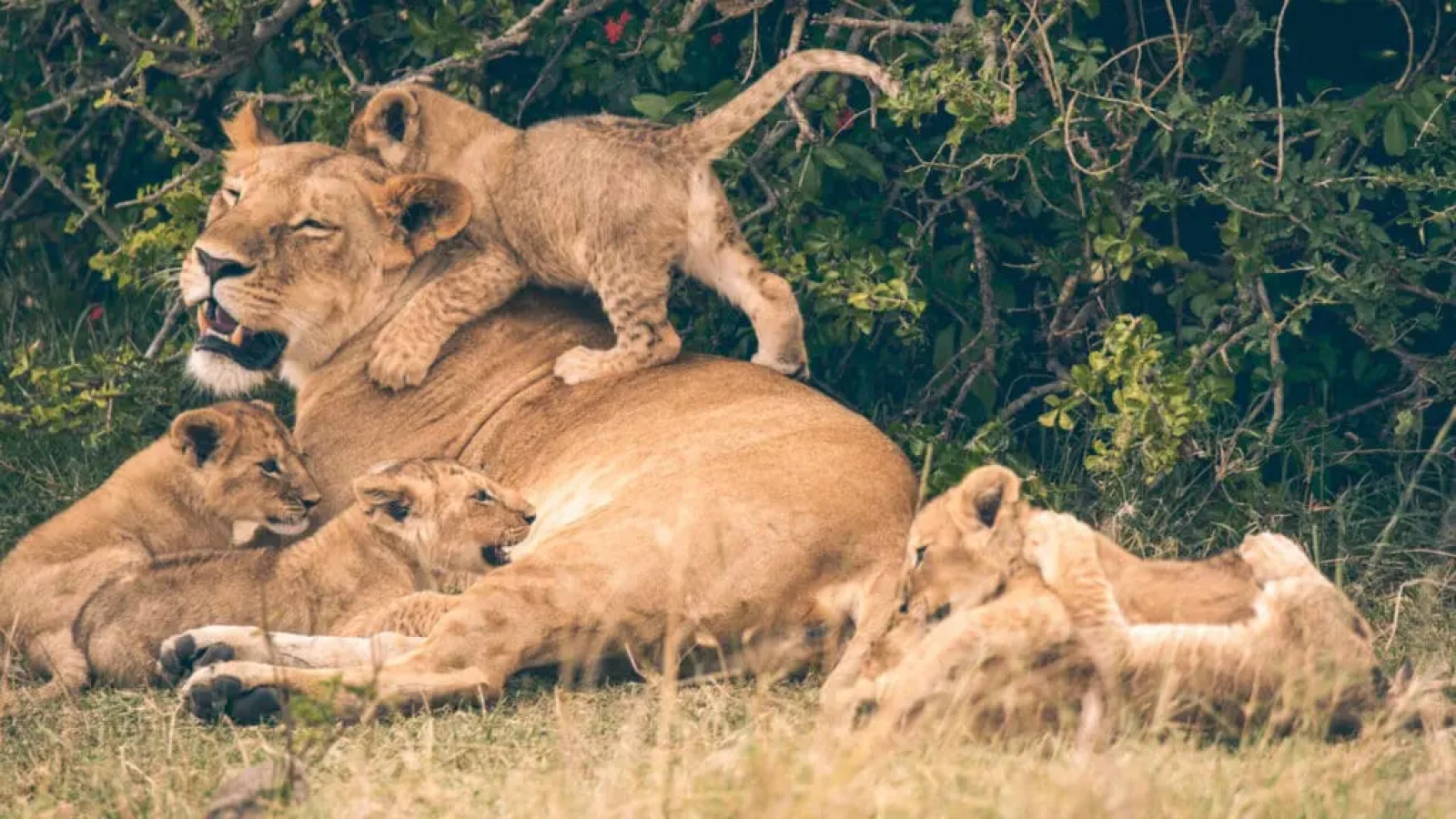
August is superb for traditional walking-safari destinations. The bush becomes increasingly dry. Visibility improves. Wildlife concentrations grow. Uganda’s forest trekking conditions are also often favorable. This is one of the strongest months for travelers building multi-country itineraries.
September is outstanding for wildlife concentration. Zambia and Zimbabwe can be exceptional. Temperatures rise. Walking starts early. Botswana remains excellent. For serious safari enthusiasts, September can provide remarkable animal activity around water.
October can produce some of the year’s most dramatic wildlife viewing but also intense heat. Zambia’s valleys become extremely dry. Mana Pools can be hot. Walking should be timed carefully. Travelers sensitive to high temperatures may prefer June through August.
The first substantial rains can begin transforming southern Africa. Seasonal walking camps may close. Wildlife disperses as water becomes available more widely. Birdlife increases. Uganda’s rainfall patterns differ and travel remains possible.
Much of southern Africa enters green season. The bush becomes lush. Migratory birds may be present. Dedicated dry-season walking programs are reduced in some destinations. Uganda can offer good trekking windows depending on local conditions.
For a first safari on foot, choose comfortable weather rather than extreme wildlife concentration. June through August is particularly strong in Zambia, Zimbabwe and many southern destinations. Cool mornings make walking pleasant. Visibility is good. A short guided walk in South Africa or Zambia is an excellent introduction.
September and early October can provide extremely concentrated wildlife around remaining water in some southern destinations. The trade-off is heat. Experienced safari travelers often accept the temperature because the wildlife activity can be exceptional.
Green seasons frequently produce outstanding birding. Migratory species arrive. Breeding plumage becomes prominent. Insects and flowering plants increase activity. If birds are your priority, do not automatically reject rainy-season travel. Choose destinations where walking operations remain available.
A vehicle covers enormous distances. It is better for searching large landscapes. It is easier for photography. It suits travelers with mobility limitations. Walking excels at interpretation. The strongest safari itineraries combine the two. A morning walk might focus on lion tracks without ever seeing the lions. That afternoon, a game drive may locate the pride several kilometres away. Suddenly both experiences connect.
Water-based safaris provide another perspective. In places such as the Okavango, Lower Zambezi or Uganda’s Kazinga Channel, travelers can combine walking and boating. The contrast is powerful. Walking reveals terrestrial signs and plants. Boating reveals hippos, crocodiles and waterbirds.
Gorilla trekking is a specialized primate encounter. Travelers hike specifically to locate a habituated gorilla group. A classic bush walking safari is more exploratory. There may be no target animal. Both experiences, however, share the intimacy of experiencing wildlife without a vehicle. This makes Uganda particularly appealing to active travelers.
Walking in wilderness containing dangerous wildlife can never be described as risk-free. Professional operations manage risk through training, procedures, distance and careful reading of animal behavior. Guides control the route. Wind direction is monitored. Dense vegetation is approached carefully. Guests are briefed.

Where required, armed scouts accompany groups. Your role is simple: follow instructions.
The guide assesses the situation before deciding what to do. Distance matters. Wind matters. Whether it is a bull or breeding herd matters. Calves matter. Vegetation matters. Guests should remain silent and never independently approach. If instructed to retreat, do so calmly.
Lions may be observed from a safe position if conditions allow. The guide controls distance and body position. Do not crouch, run or separate from the group. The encounter may last seconds or several minutes. If the guide chooses to leave immediately, follow without debate.
Buffalo can be particularly dangerous when surprised at close range. Solitary bulls may rest in dense vegetation. Experienced guides study tracks, smell and visibility before moving into likely habitat. This is why travelers should never walk through wildlife areas independently unless explicitly permitted and appropriately experienced.
Rhino-tracking experiences are carefully managed. Approach direction often depends heavily on wind. Guides aim to avoid disturbing the animal. Travelers should not pressure guides to move closer. The best encounter is one where the rhino remains relaxed.
Short walks may require only ordinary fitness. Longer experiences demand endurance. Multi-day camp-to-camp walking requires the ability to walk for several hours on consecutive days. Heat can increase the challenge dramatically. Ask for daily distance and terrain information before booking.
Regular walking is the best preparation. Build gradually. Walk on uneven surfaces. Train in your safari shoes. Carry a light daypack. Practice on consecutive days if planning a multi-day route. Strength and cardiovascular training are helpful, but walking-specific conditioning matters most.
Wear neutral earth tones. Lightweight long trousers are ideal. Choose breathable shirts. Closed hiking shoes should provide good grip. A hat protects against sun. Carry a warm layer in southern African winter because dawn can be surprisingly cold. Avoid strong fragrances.
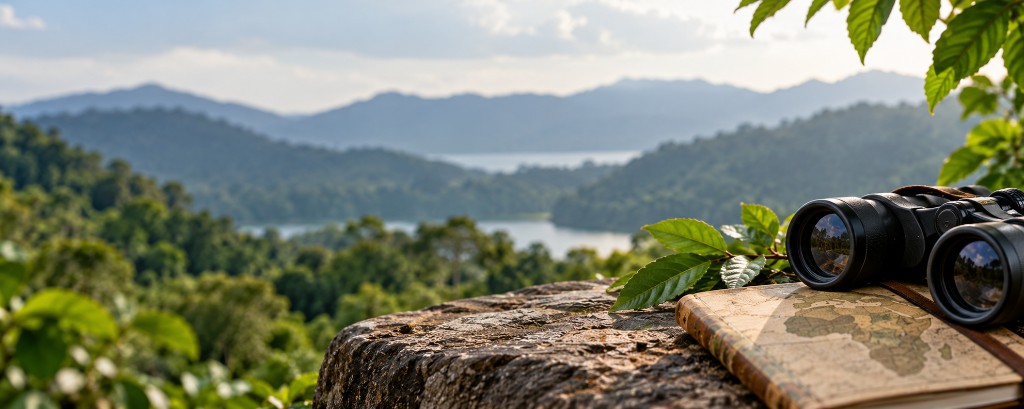
Carry only essentials. Water. Binoculars. Sun protection. Essential medication. A small camera setup. Light rain protection where appropriate. The less unnecessary weight you carry, the more enjoyable the walk becomes.
Travel light. A huge 600 mm lens may make sense in a vehicle but become exhausting after several kilometres. A versatile zoom lens is often more practical. Think about environmental storytelling rather than only close-up wildlife portraits. Walking provides exceptional images of guides, footprints, landscapes and animals within their habitat.
Accommodation varies from high-end lodges to seasonal bush camps. A serious walking safari does not necessarily require rough camping. Some remote camps provide remarkable comfort. Others deliberately maintain a simpler wilderness style. Ask what is included. En-suite bathrooms, bucket showers, solar power and charging facilities vary between camps.
Choose lodge-based walking if you want flexibility and comfort. You can walk in the morning and choose a vehicle safari later. Choose multi-day walking if immersion is your priority. Camp-to-camp travel creates a sense of progression impossible to reproduce with short loops from a permanent lodge.
Botswana’s Okavango and South Africa’s private reserves provide excellent combinations of high-end accommodation and guided walks. Zambia also offers luxurious camps with exceptional walking.
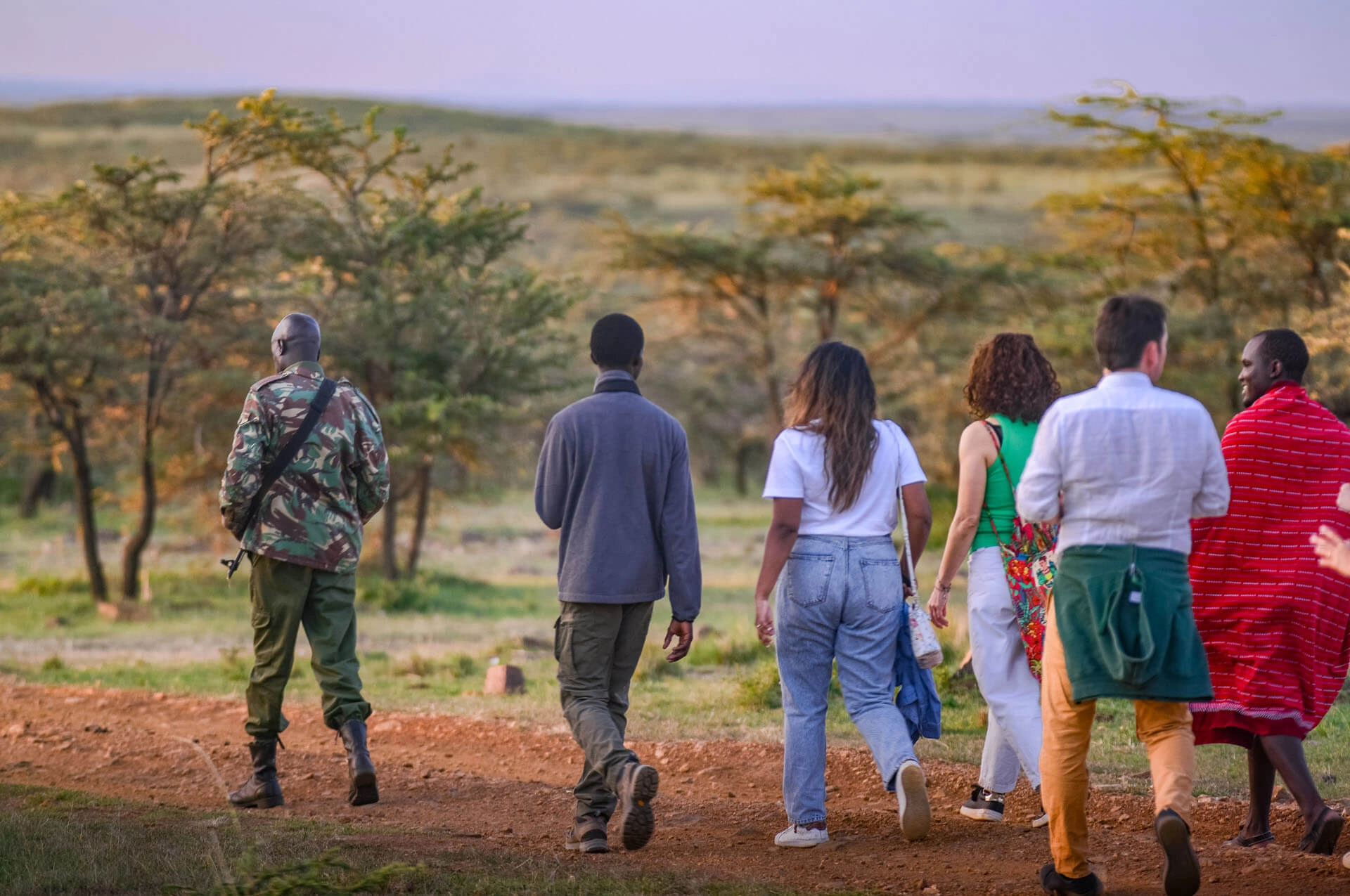
Luxury should not be confused with reduced authenticity. The quality of the guide and access to wilderness matter more than thread count.
Zambia and Zimbabwe dominate this category. A multi-day South Luangwa walking safari or immersive Mana Pools expedition provides a strong sense of wilderness. Canoeing on the Zambezi can add another adventurous dimension.
Mana Pools is particularly famous among wildlife photographers. South Luangwa provides strong predator opportunities. Botswana offers beautiful wetland landscapes. Uganda provides intimate forest photography, especially around primate trekking. Photographers should select the destination according to desired subject rather than simply choosing the country with the longest walking tradition.
South Africa often works well because many lodges provide family-oriented programs and conventional game drives alongside walks. Age restrictions still apply. Uganda can work well for older families interested in active travel, although gorilla trekking and other activities have specific age requirements. Always confirm policies before booking.
A walking safari can be surprisingly romantic. Private camps, quiet wilderness and personalized guiding create intimacy. Botswana, Zambia and South Africa provide particularly strong combinations of luxury accommodation and adventure. A few walking days can be combined with Victoria Falls, beach travel or private game reserves.
Travelers can combine southern Tanzania walking with Zanzibar. A Zambia safari can connect with Lake Malawi or onward Indian Ocean travel. South African wildlife can be combined with Cape Town and coastal destinations. Uganda can connect through East Africa toward Kenya or Tanzania’s coast. This allows physically active travelers to finish with several slower days beside the water.
Uganda is the obvious choice. A journey can include Bwindi gorilla trekking, Kibale chimpanzee trekking, Lake Mburo walking, Queen Elizabeth wildlife viewing and Murchison Falls. For travelers wanting maximum diversity within one country, this is difficult to match.
Walking safaris depend on healthy ecosystems. Do not leave waste. Do not remove natural objects. Stay with your guide. Respect animal distances. Avoid loud behavior. Do not pressure guides to approach dangerous wildlife. Use community-owned and conservation-focused tourism products where possible. Responsible walking should leave almost no trace.
The best destination depends on what you want to feel when you leave the vehicle. If you want the classic multi-day walking safari, go to Zambia. If you dream of elephants beneath enormous trees beside the Zambezi, choose Mana Pools. If you want to drift silently through wetland channels before stepping onto an island on foot, choose Botswana’s Okavango Delta. If you want a remote East African wilderness, consider Ruaha.
If you want a gentle introduction combined with a luxury Big Five safari, South Africa works beautifully. If you want mountain gorillas, rainforest, savanna and primates all experienced largely on foot, choose Uganda. If tracking rhinos through stark desert landscapes captures your imagination, Namibia offers something completely different. There is no single “best” African walking safari because walking reveals different things in every landscape. What remains constant is the change in perspective.
From a vehicle, an elephant may be another spectacular wildlife sighting. On foot, its track alone can stop the entire group. From a vehicle, a stand of trees may simply be scenery. On foot, each species reveals something about soil, water, animal feeding and season. From a vehicle, silence is pleasant. On foot, silence becomes information. And that is ultimately why walking safaris are so powerful. They do not merely bring you closer to African wildlife.
They teach you how much was there all along that you had been moving too quickly to notice.
Get quick answers to the most common questions. If you still have questions, our safari experts are here to help.
South Luangwa in Zambia is one of the strongest overall choices, especially for travelers wanting multi-day walking. Mana Pools, Okavango, Ruaha and Greater Kruger are also excellent.
In many southern African destinations, the dry season from approximately June to October is ideal. Exact timing varies by country and ecosystem.
They involve real wilderness risks, but professional guides use extensive training, safety procedures, distance and animal-behavior knowledge to manage them.
Potentially, depending on destination, but close Big Five encounters are not the objective. Walking focuses on ecological interpretation and responsible wildlife viewing.
Yes. A short two- or three-hour guided walk is an excellent introduction.
Zambia, particularly South Luangwa, is strongly associated with the development and popularization of the modern guided walking safari tradition.
Neutral lightweight clothing, long trousers, a hat and comfortable closed walking shoes.
Some are easy, while multi-day expeditions require good walking fitness. Check daily distances before booking.
Minimum ages vary by destination and operator. Dangerous-game walks often have stricter age limits.
Yes. The Okavango Delta is especially rewarding because walking can be combined with mokoro and boat safaris.
Yes, especially for travelers wanting to combine gorilla trekking, chimpanzee trekking, forest walks, savanna walks and other active wildlife experiences.
Both are exceptional. Zambia is particularly strong for structured multi-day walking programs, while Zimbabwe’s Mana Pools offers a distinctive Zambezi floodplain experience.
Absolutely. Some of Africa’s finest luxury camps specialize in guided walking.
Usually guests carry only day essentials while camp teams manage heavier luggage, but arrangements vary by operator.
Our safari experts are here to help you plan your safari. Get personalized advice, the latest information and a free, no-obligation quote.
We typically reply within a few hours.

Share This Article
When booking a luxury African safari, look beyond the room and compare the quality of guiding, wildlife location,…
Read article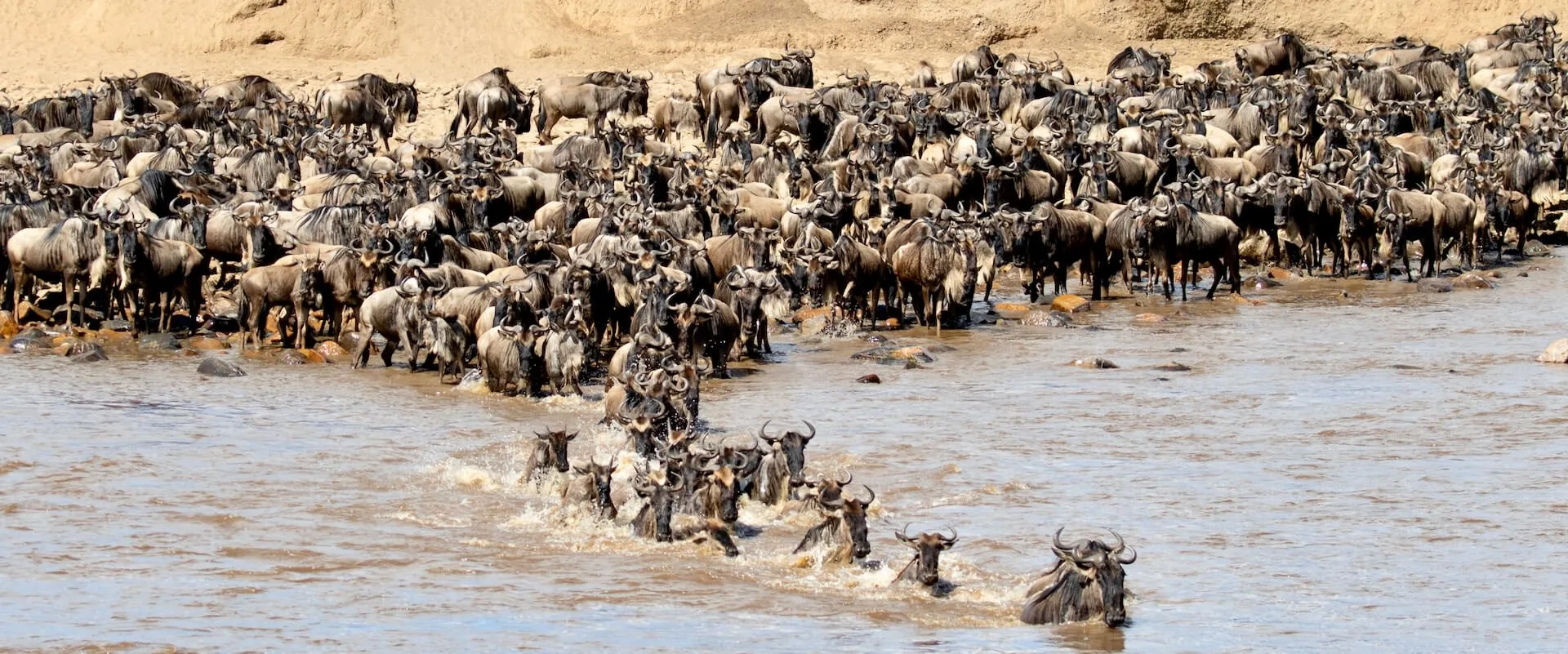
The Great Migration in Africa happens all year because the herds continuously circulate through the Serengeti–Mara ecosystem in…
Read article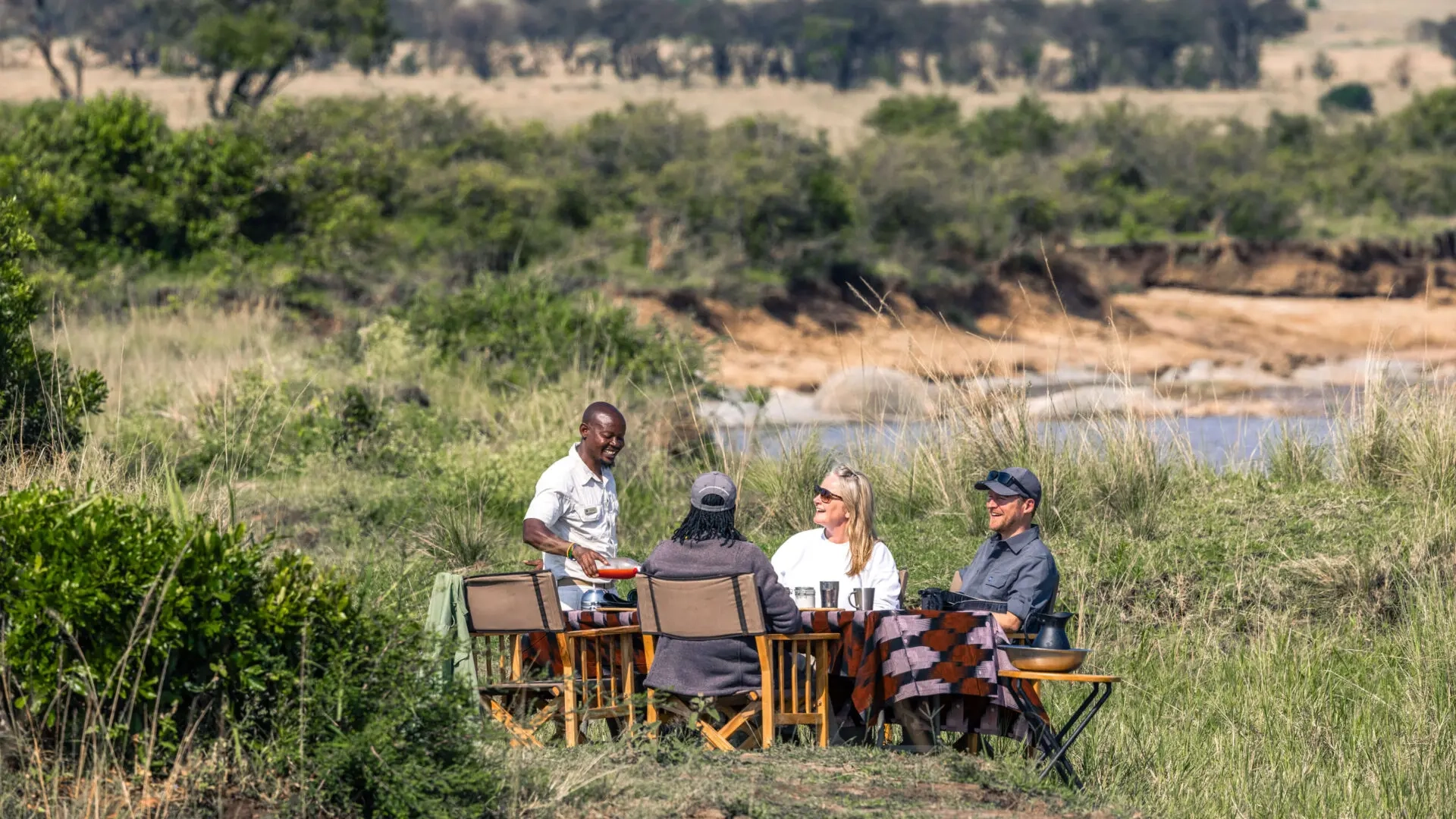
Definitive answer: A picnic lunch on safari is a packed or catered midday meal eaten at an approved…
Read article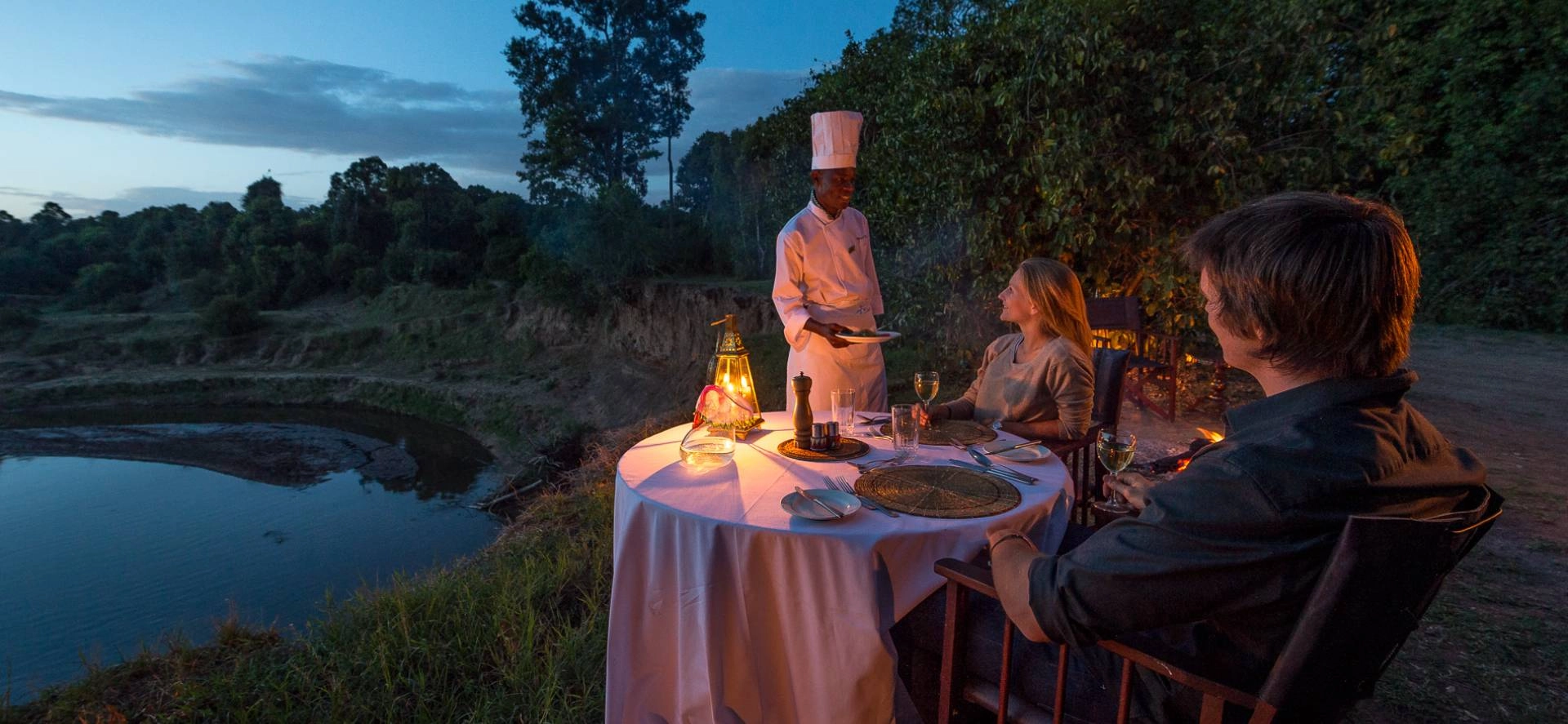
Definitive answer: A bush dinner is an outdoor evening meal arranged in a safe safari setting away from…
Read articleLet us take you closer to the wildlife, people and places that make Africa extraordinary.
Plan Your Safari Today