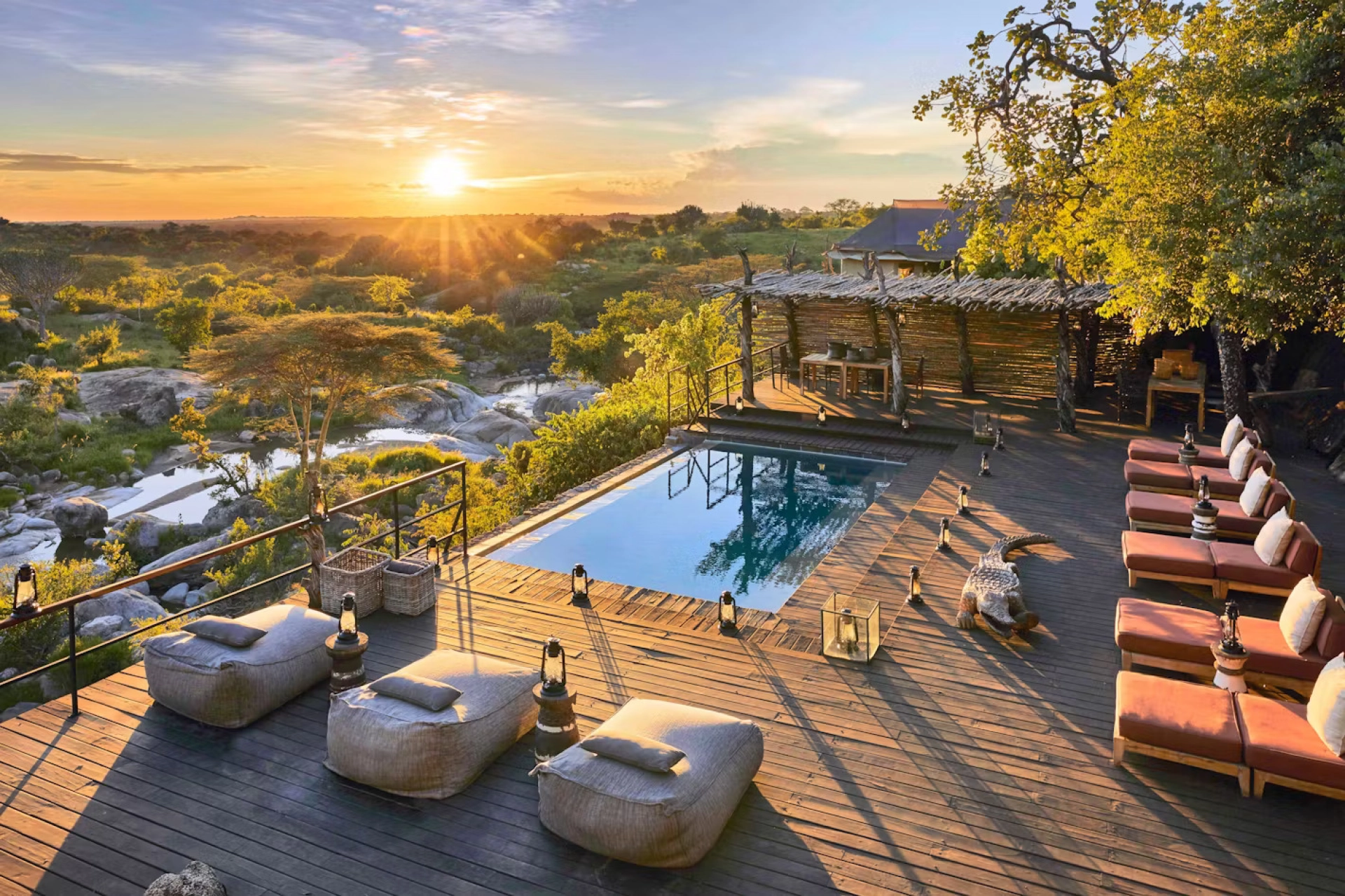
What should I look for when booking a luxury African safari?
When booking a luxury African safari, look beyond the room and compare the quality of guiding, wildlife location,…
Read article

Travel Guide
Africa's wildlife reputation is dominated by animals of the land. Lions, leopards, elephants, buffalo, rhinos and gorillas appear on safari brochures across the world, while the continent's rivers, lakes, wetlands and oceans often receive less attention.…
Africa’s wildlife reputation is dominated by animals of the land. Lions, leopards, elephants, buffalo, rhinos and gorillas appear on safari brochures across the world, while the continent’s rivers, lakes, wetlands and oceans often receive less attention. Yet Africa’s waters contain some of its most formidable wildlife. A quiet river can conceal a Nile crocodile beneath the surface. A peaceful lake can contain pods of hippos capable of moving through water with extraordinary power. Tropical reefs support venomous fish whose camouflage makes them almost invisible, while the waters around southern Africa are inhabited by some of the world’s most impressive sharks.
The phrase Africa’s most dangerous aquatic animals naturally attracts dramatic stories. However, there is an important distinction between an animal being potentially dangerous and an animal actively seeking humans as prey. Most wild animals prefer to avoid unnecessary confrontation. Serious incidents often occur when people unknowingly enter an animal’s territory, approach too closely, ignore local advice, swim in unsuitable water, handle marine wildlife or place themselves between an animal and its escape route.
Understanding behavior is therefore far more useful than simply labeling an animal “deadly.” For safari travelers, Africa’s aquatic wildlife should inspire respect rather than fear. Professional boat guides operate safely around hippos and crocodiles every day. Marine guides understand local currents, shark behavior and reef conditions. Park authorities establish rules based on decades of experience. Follow those instructions and Africa’s rivers, lakes and oceans can provide some of the most extraordinary wildlife encounters on the continent.
This guide explores 10 powerful and potentially dangerous aquatic animals in Africa, where they occur, why they deserve respect and how travelers can observe them responsibly.
Few animals demonstrate the danger of judging wildlife by appearance better than the hippopotamus. Hippos are often portrayed as comical, rotund animals floating lazily in rivers. Their small ears, broad faces and habit of resting together in water can make them appear almost harmless. They are anything but helpless. Adult hippos are enormous, extremely powerful and capable of defending territories aggressively. Their canine teeth can grow to impressive lengths, and their jaws open extraordinarily wide.
More importantly, hippos move much faster than their body shape suggests.
Hippos are semi-aquatic mammals. They spend much of the daylight period in rivers, lakes and wetlands, where water helps protect their skin from heat. At night they generally leave the water and travel onto land to graze. This daily movement between water and feeding areas is one reason humans need to exercise caution around hippo habitats. A campsite, footpath or village located between water and grazing areas may intersect with a hippo’s nighttime route.
Hippos occur in suitable waterways across parts of sub-Saharan Africa. Safari travelers can see them in numerous famous destinations. Uganda provides excellent hippo viewing along the Kazinga Channel in Queen Elizabeth National Park, the Nile in Murchison Falls National Park and other suitable waterways. Kenya’s Lake Naivasha is well known for hippos. Tanzania’s major safari ecosystems contain them around rivers and pools. Botswana’s Okavango Delta and Chobe River provide additional opportunities.
Zambia’s Luangwa and Zambezi systems are also important hippo habitats.
Hippos can become dangerous when they feel threatened, when people approach too closely or when their route between land and water is blocked. Mothers with calves deserve particular space. People should never walk casually along hippo-inhabited shorelines after dark. Swimming in water known to contain hippos is obviously inappropriate. Boat operators should maintain responsible distances.
The safest and most rewarding way to observe hippos is with professional guides. A Kazinga Channel boat safari in Uganda can reveal large groups of hippos from a safe viewing platform. The animals may yawn, interact, vocalize and occasionally fight. These encounters demonstrate why the hippopotamus is one of Africa’s most impressive aquatic mammals.
The Nile crocodile is one of Africa’s most formidable predators. Large adults possess tremendous strength and powerful jaws. They inhabit rivers, lakes and wetlands across much of sub-Saharan Africa. Unlike many animals that depend on speed over long distances, crocodiles specialize in ambush. Their eyes and nostrils sit high on the skull, allowing much of the body to remain submerged while the animal watches its surroundings.
Crocodiles often wait near the edge of water where animals come to drink. They can accelerate explosively over short distances. Their diet includes fish, birds and mammals, with prey size varying according to the crocodile’s age and size. During major wildlife movements, crocodiles may become especially visible around river crossings. The Mara River in the Serengeti-Mara ecosystem provides one of the most famous examples. Wildebeest and zebras crossing the river may encounter large crocodiles.
These dramatic scenes are among the reasons migration safaris attract wildlife photographers.
Nile crocodiles occur in many African safari destinations. The Kazinga Channel provides excellent viewing. Murchison Falls National Park’s Nile system contains crocodiles. Botswana’s Chobe River and Okavango Delta support them. The Zambezi River is another major habitat. South African national parks also provide opportunities.
Never swim in African rivers or lakes unless knowledgeable local authorities specifically confirm that the area is appropriate. The absence of a visible crocodile means nothing. Crocodiles can remain almost completely hidden.
Do not stand unnecessarily close to the water’s edge in known crocodile habitat. Follow guides’ instructions during canoeing, boating and walking activities.
Few marine animals have a more intimidating reputation than the great white shark. Southern Africa has long been associated with great white shark research and viewing, particularly around parts of the South African coastline. Great whites are large predatory sharks equipped with powerful bodies, acute sensory systems and rows of serrated teeth. However, popular culture has frequently exaggerated the idea that great whites deliberately hunt humans. Humans are not their normal prey.
Historically, locations around the Western Cape became internationally known for great white shark activity and cage-diving tourism. Shark distribution can change substantially over time. Prey availability, environmental conditions and interactions with other predators can all influence where sharks are encountered. Travelers should therefore seek current information rather than assuming that a destination famous for sharks ten years ago will necessarily produce the same sightings today.
Cage diving allows visitors to observe sharks underwater while remaining inside a protective structure. Responsible operators should follow current conservation and safety regulations. Travelers should select licensed operators and avoid businesses that make irresponsible promises about guaranteed wildlife behavior. Sharks are wild animals. Their presence can never be guaranteed ethically.
Great white sharks play important ecological roles as major marine predators. Public perception matters because animals viewed only as threats receive less conservation sympathy. Observing sharks responsibly can help travelers understand them as components of marine ecosystems rather than movie villains.
The bull shark is another powerful shark species occurring in African waters. It is particularly interesting because it can tolerate both saltwater and freshwater environments. Bull sharks have been recorded entering river systems and estuaries. This ability distinguishes them from many other large sharks.
Bull sharks are robust, powerful predators. Their use of shallow coastal and estuarine habitats can bring them into environments also used by people. As with all large sharks, travelers should follow local swimming advice. Beach authorities understand seasonal conditions and regional risk far better than visitors relying on general internet information.
Suitable coastal environments around southern and eastern Africa can support bull sharks. In parts of southern Africa, the species may be referred to locally by other names. Divers may encounter them under controlled circumstances. Experienced dive operators understand the protocols required for large-shark encounters.
The tiger shark is another impressive marine predator inhabiting warm and tropical waters around Africa. It is named for the dark vertical markings particularly visible on younger individuals. Tiger sharks have a broad diet and are powerful swimmers. They can grow to substantial size.
Certain African coastal destinations provide opportunities for experienced divers to observe large sharks. These activities should always be undertaken through reputable professional operators. Shark diving is not a place for improvisation. Conditions such as visibility, current, sea state and animal behavior all matter. Travelers should honestly assess their diving experience and follow professional advice.
As with great whites, the tiger shark’s reputation can overshadow its ecological importance. Large sharks help structure marine food webs. Their decline can influence other species throughout an ecosystem. Responsible shark tourism can therefore contribute to the economic argument for protecting living sharks.
Not every dangerous African aquatic animal is enormous. The stonefish demonstrates that some of the greatest marine hazards are small, quiet and difficult to see. Stonefish are famous for extraordinary camouflage. They can resemble rocks or pieces of reef. Venomous spines provide defense. A person who accidentally steps on one may experience severe envenomation.
Stonefish occur in tropical Indo-Pacific environments, with relevant species and related venomous reef fish occurring in parts of the western Indian Ocean region. Travelers exploring tropical African coastlines should follow local guidance regarding reef footwear and swimming conditions.
Stonefish do not chase swimmers. The risk comes from accidental contact. This is a recurring theme with many potentially dangerous aquatic animals. The animal’s goal is defense, not hunting humans. Avoid touching marine wildlife, walking carelessly across reefs or placing hands into crevices.
The lionfish is one of the most visually striking reef fish. Long decorative fins and bold patterns make it highly attractive to underwater photographers.
Those beautiful fins also contain venomous spines. Lionfish generally do not represent a serious threat to divers who maintain respectful distances. Problems arise when people attempt to touch or handle them.
Lionfish species occur within the Red Sea and Indian Ocean region. Divers visiting Egypt’s Red Sea, East African coastal reefs or western Indian Ocean islands may encounter them. They are often relatively easy to photograph because they may hover near reef structures.
The rule is straightforward: look, do not touch. The same principle applies to almost all reef wildlife. A diver who maintains good buoyancy and avoids contacting the reef greatly reduces the risk of injury.
Stingrays inhabit various marine and estuarine environments around Africa. Their flattened bodies and wing-like swimming style make them beautiful underwater subjects. Many species possess a defensive spine on the tail. Stingrays generally prefer escape to confrontation. Injury typically occurs when an animal is accidentally stepped on, trapped or handled.
Follow local advice when walking in shallow coastal water. Do not chase rays for photographs. Never attempt to grab one. Divers should maintain enough distance to allow the animal an obvious escape route. Watching a stingray glide over sand is far more rewarding than disturbing it.
Africa’s freshwater systems contain some unusual fish, including electric catfish. These fish possess specialized organs capable of generating electrical discharges. The electricity is used in prey capture and defense. They are fascinating examples of evolutionary adaptation.
The sensible approach is not to handle wild electric fish. For ordinary safari travelers observing African waterways from boats or shore, they are not a significant everyday threat. Their inclusion among Africa’s powerful aquatic animals is more about biological capability than frequent human conflict. Electric fish remind us that Africa’s freshwater biodiversity extends far beyond the conspicuous hippos and crocodiles visible from safari boats.
The African tigerfish is one of the continent’s most famous freshwater predatory fish. Its streamlined body, speed and conspicuous teeth create an unmistakably predatory appearance. Several species occur in African river systems. The giant tigerfish of the Congo basin is particularly famous for its size and formidable jaws.
Tigerfish are highly valued by anglers because of their fighting ability. Fishing tourism occurs in several African river systems. Responsible catch-and-release practices may be encouraged depending on location and conservation management.
Their appearance generates dramatic stories, but the realistic risk to ordinary safari travelers is very different from that presented by hippos or large crocodiles. Tigerfish deserve respect as powerful predatory fish, but visitors should avoid sensationalizing them. The more interesting story is their adaptation to African river ecosystems.
A list of ten cannot capture the continent’s full aquatic biodiversity. Several additional animals deserve attention.
Certain tropical marine environments support venomous sea snakes. These animals generally avoid confrontation. Divers should never handle them.
Moray eels inhabit reefs and rocky crevices. Their open mouths can appear threatening, but this posture is often connected with respiration. They can bite defensively when harassed or when hands are placed into their hiding places.
Scorpionfish rely heavily on camouflage and may possess venomous spines. Like stonefish, accidental contact represents the main concern.
Various jellyfish occur around African coastlines. Sting severity differs dramatically between species. Local warnings should always be taken seriously.
Some cone snails possess potent venom used to capture prey. Beautiful shells should never encourage travelers to handle live marine animals.
An interesting safari lesson is that water-related danger does not necessarily come from an aquatic species. Elephants, buffalo and other terrestrial wildlife regularly approach rivers and lakes. Walking carelessly around a waterhole can therefore create encounters with animals that were not visible moments earlier. This is why professional safari guides take water points seriously. Dense vegetation near rivers can reduce visibility. Animals may use established paths.
Never leave a vehicle in a national park unless the location and guide permit it.
For ordinary safari travelers, hippos and Nile crocodiles deserve far more practical attention than exotic stories about venomous fish. Both occur in waterways frequently visited during safari. Both can be extremely difficult to detect from land. And both require straightforward behavioral precautions. Do not swim in unknown freshwater. Do not approach shorelines casually. Do not camp immediately beside water without understanding local wildlife movement. Do not walk alone after dark in areas where hippos travel between water and grazing grounds.
Follow your guide. These simple rules dramatically reduce risk.
Uganda is particularly rewarding for travelers interested in rivers, lakes and wetland wildlife.
The Kazinga Channel is among East Africa’s finest boat-safari environments. Hippos occur in large numbers. Nile crocodiles can be observed along the banks. Elephants and buffalo frequently approach the water. Bird diversity is exceptional. The boat cruise complements game drives in Queen Elizabeth National Park and should be considered a central part of the safari rather than an optional extra.
The Nile provides another exceptional water-based safari. Boat trips toward Murchison Falls reveal hippos, crocodiles and waterbirds alongside terrestrial mammals coming to drink. The dramatic falls provide a spectacular destination for the cruise.
Boat trips on Lake Mburo can produce hippos, crocodiles and numerous birds. The surrounding park supports zebras, impalas, buffalo and other wildlife.
Mabamba near Lake Victoria is famous for the shoebill rather than dangerous wildlife. Nevertheless, it demonstrates the extraordinary biodiversity of Uganda’s papyrus wetlands.
Kenya offers a wide range of freshwater and marine environments. Lake Naivasha contains hippos. Rift Valley lakes support extraordinary birdlife. The Mara River contains crocodiles and hippos and becomes especially famous during migration crossings. Along the Indian Ocean coast, Kenya offers coral reefs, dolphins, reef fish and larger marine wildlife. A Kenya safari and beach holiday therefore allows travelers to experience both terrestrial and aquatic ecosystems.
Tanzania has an equally impressive range. The Mara River in northern Serengeti is associated with crocodiles and hippos. Lake Tanganyika supports extraordinary freshwater biodiversity. Lake Victoria borders northern Tanzania. Lake Natron is famous for flamingos. The Indian Ocean and Zanzibar introduce coral reefs and marine life. Travelers can therefore move from lions and elephants to reef fish within a single Tanzania holiday.
The Okavango Delta completely changes the conventional safari perspective. Hippos and crocodiles inhabit waterways. Elephants cross channels. Antelope move through floodplains. Birds occupy every layer of the wetland. Mokoro and boat activities place travelers close to the aquatic environment. Guides receive specialized training because wildlife encounters from small craft require excellent judgment.
The Chobe River provides another outstanding aquatic safari. Elephants are the stars. During productive periods, herds gather along the river and may swim between islands. Hippos and crocodiles share the water. Boat safaris are among Botswana’s most rewarding wildlife activities.
The Zambezi supports hippos, crocodiles, fish and enormous numbers of birds. In regions such as Lower Zambezi, travelers can experience the river by boat or canoe under professional supervision. Canoeing among large African wildlife sounds intimidating, but well-run operations rely on experienced guides who understand animal behavior, channels and safe distances. Travelers should follow every instruction precisely.
South Africa is unique because it combines exceptional terrestrial safari with one of the continent’s richest marine environments. The meeting of major ocean systems contributes to remarkable biodiversity. Sharks, whales, dolphins, seals, penguins and numerous fish species can all feature in coastal itineraries. A traveler can therefore spend several days searching for the Big Five in Kruger before flying to the Cape for marine wildlife.
One of Africa’s most dramatic aquatic wildlife spectacles is South Africa’s Sardine Run.
Enormous shoals of sardines move along the coast under suitable conditions. Predators gather around this concentrated food source. Dolphins, sharks, seabirds and other marine animals may participate in feeding events. For underwater photographers and experienced divers, the spectacle can be extraordinary. However, nature determines the timing and intensity. No operator can control ocean conditions or guarantee a particular encounter.
Sharks often suffer from a public-relations problem. Their teeth and predatory behavior make them easy to portray as villains. Ecologically, large sharks are extremely important. Predators influence prey behavior and population structure. Removing them can create cascading effects through marine food webs. Responsible shark tourism can help demonstrate that a living shark may have significant conservation and economic value. Travelers should therefore choose operators that prioritize wildlife welfare rather than creating artificial aggression for dramatic photographs.
Crocodiles are similarly misunderstood. They are ancient predators with important ecological roles. By consuming prey and scavenging carcasses, they participate in nutrient cycles and food-web dynamics. Their presence often indicates functioning aquatic habitat. Watching a large Nile crocodile from a safari boat can be intimidating, but it is also an opportunity to observe an animal lineage that has survived extraordinary environmental change.
Hippos connect terrestrial and aquatic ecosystems. They graze on land and return to water, transferring nutrients between environments. Their movements can influence channels and shorelines. Researchers continue studying the complex ecological effects of large hippo populations. This is another reason wildlife should not be viewed only through the lens of danger. The same animal capable of causing serious injury can simultaneously play an important ecological role.
The most important rule is simple: never assume water is safe because it looks peaceful. Ask local guides before swimming. Stay away from the edge of known crocodile habitat. Respect hippo areas. Avoid walking alone at night beside rivers and lakes. Do not feed wildlife. Do not clean fish or food beside water in areas where crocodiles may be present. Listen to campsite and lodge briefings. If staff insist on escorting guests after dark, accept the escort.
Those rules exist because animals may move through camp.
Boat safaris are generally very safe when professionally operated. Remain seated when instructed. Do not lean dangerously over the side. Keep hands inside the craft when passing close to vegetation or wildlife. Avoid sudden movements around animals. Never demand that the guide approach a hippo or crocodile more closely for a photograph. Professional guides evaluate animal behavior constantly. Trust their judgment.
Canoeing and mokoro excursions provide some of Africa’s most intimate water experiences. Because the craft sit low in the water, travelers become more aware of the surrounding environment. This can feel intimidating around hippos or elephants. Qualified guides select routes carefully and interpret animal behavior. Guests should remain calm and follow instructions. Wildlife should always have the right of way.
Divers should use reputable operators, maintain appropriate certification and honestly represent their experience. Strong currents and open-ocean conditions may require advanced skills. Do not touch reef animals. Maintain good buoyancy. Listen carefully to briefings about sharks, rays, venomous fish and local conditions. Many marine injuries result from touching or stepping on animals rather than deliberate attacks.
This distinction is essential. A Nile crocodile is potentially dangerous. A hippo is potentially dangerous. A stonefish is venomous.
A large shark is a powerful predator. But these descriptions do not mean that every encounter leads to conflict. Risk depends on behavior, environment and proximity. Tourism becomes safer when travelers understand what triggers defensive or predatory responses.
Water produces exceptional photographic opportunities. Animals often gather in predictable areas. Reflections can improve compositions. Birds may approach closely. Elephants bathing or hippos interacting provide dramatic behavior. But photographers sometimes become overly focused on obtaining the image. Never move closer than the guide recommends. Do not stand at a dangerous water’s edge to obtain a lower angle. A photograph is never worth creating a wildlife conflict.
Families should supervise children carefully around rivers, lakes, swimming pools and unfenced lodge areas. A beautiful lakeside lodge may exist within genuine wildlife habitat. Children should understand that wild African waterways are not recreational swimming pools unless staff specifically identify a safe swimming area. Lodge rules regarding boat trips and canoe activities may include minimum ages. Confirm these before booking.
Yes, when professionally operated. Guides understand hippo territories and behavior. They maintain appropriate distances and avoid placing the boat between animals and escape routes. Hippos frequently tolerate boats that behave predictably. Problems are more likely when people approach irresponsibly or surprise animals. This is why travelers should never attempt independent boating in unfamiliar hippo habitat.
Some lakes and designated areas are used for swimming, while others are inappropriate because of crocodiles, hippos, waterborne health risks or local conditions. There is no continent-wide rule. Always ask knowledgeable local authorities or lodge staff. A lake that appears crystal clear may still present risks invisible from shore.
The most important conclusion is that Africa’s waters should not be reduced to a list of dangerous animals. The continent supports extraordinary aquatic biodiversity. African fish eagles call over rivers. Shoebills hunt among papyrus. Flamingos gather on alkaline lakes. Elephants swim across channels. Cichlid fish display extraordinary evolutionary diversity. Whales migrate along coastlines. Dolphins hunt around enormous fish shoals. Sea turtles nest on beaches. The potentially dangerous animals are only one part of this much larger ecological story.
For a traditional safari combined with exceptional water experiences, several destinations stand out. Uganda provides the Kazinga Channel and Nile, which can be combined with gorilla and chimpanzee trekking. Botswana offers the Okavango Delta and Chobe River, among Africa’s finest water-based wilderness experiences. Zambia provides canoeing and boating along the Zambezi. South Africa combines rivers and wetlands with outstanding marine wildlife. Kenya and Tanzania add Indian Ocean reefs to classic savannah safaris.
The best destination depends on whether the traveler wants hippos and crocodiles, sharks and marine life, birds, elephants around water or a combination.
Africa’s rivers, lakes, wetlands and oceans contain some of the most powerful wildlife on the planet. The hippopotamus and Nile crocodile dominate many freshwater environments. The continent’s coastlines support impressive sharks, rays and other marine predators. Smaller animals such as stonefish demonstrate that size is not the only measure of defensive capability. Yet the purpose of learning about Africa’s most dangerous aquatic animals should not be to make travelers afraid of African water.
It should encourage informed respect. Millions of visitors safely enjoy boat safaris, canoe excursions, diving trips and wetland tours every year by following professional guidance. At Adventure in the Wild Safaris, water-based wildlife experiences can be incorporated into Uganda safaris, Kenya wildlife holidays, Tanzania tours, Botswana safaris and broader African adventures. A Uganda itinerary can combine mountain gorillas with hippos and crocodiles along the Kazinga Channel. A Botswana journey can put you into the waterways of the Okavango Delta and Chobe.
A Kenya or Tanzania safari can finish beside the Indian Ocean. Africa’s water is not separate from its safari story. It is one of the forces that creates it.

Share This Article
When booking a luxury African safari, look beyond the room and compare the quality of guiding, wildlife location,…
Read article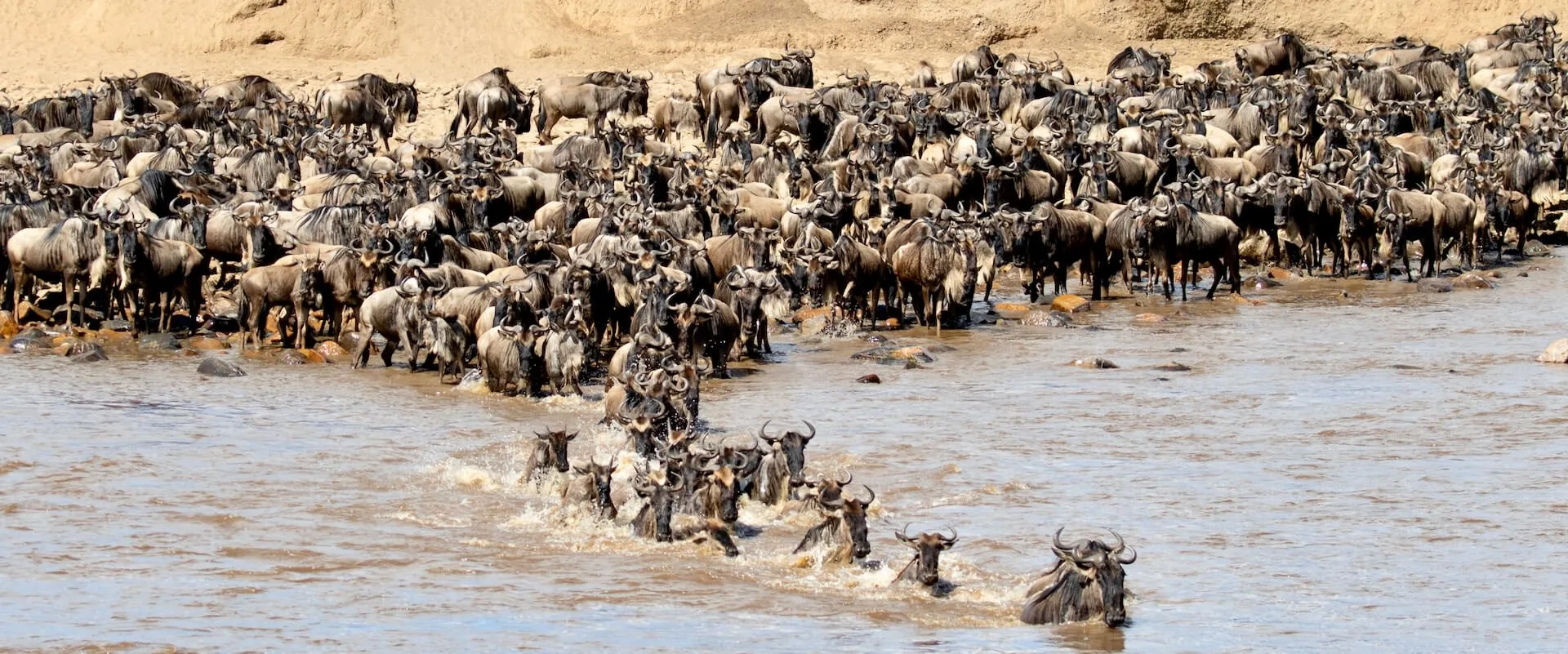
The Great Migration in Africa happens all year because the herds continuously circulate through the Serengeti–Mara ecosystem in…
Read article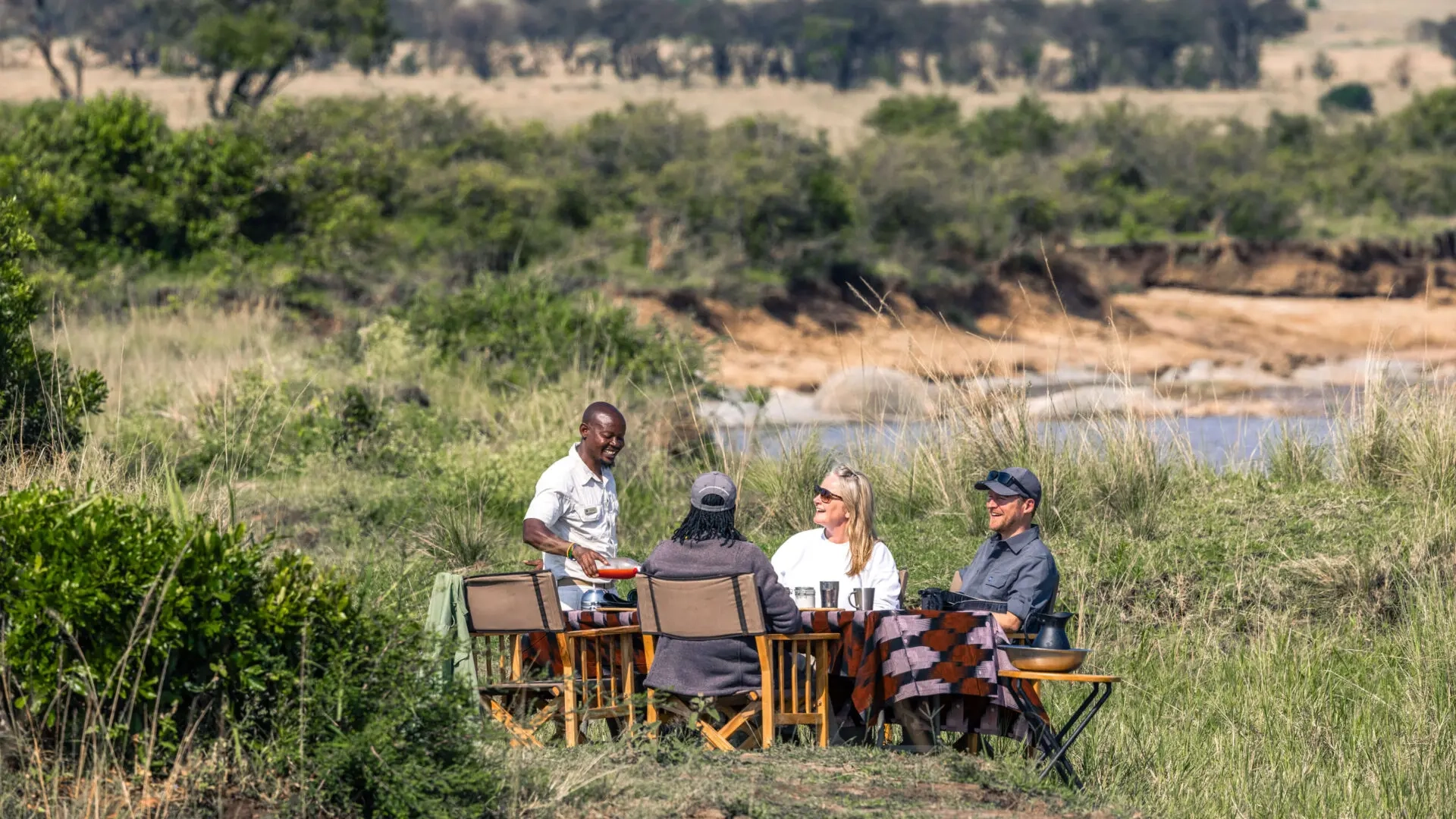
Definitive answer: A picnic lunch on safari is a packed or catered midday meal eaten at an approved…
Read article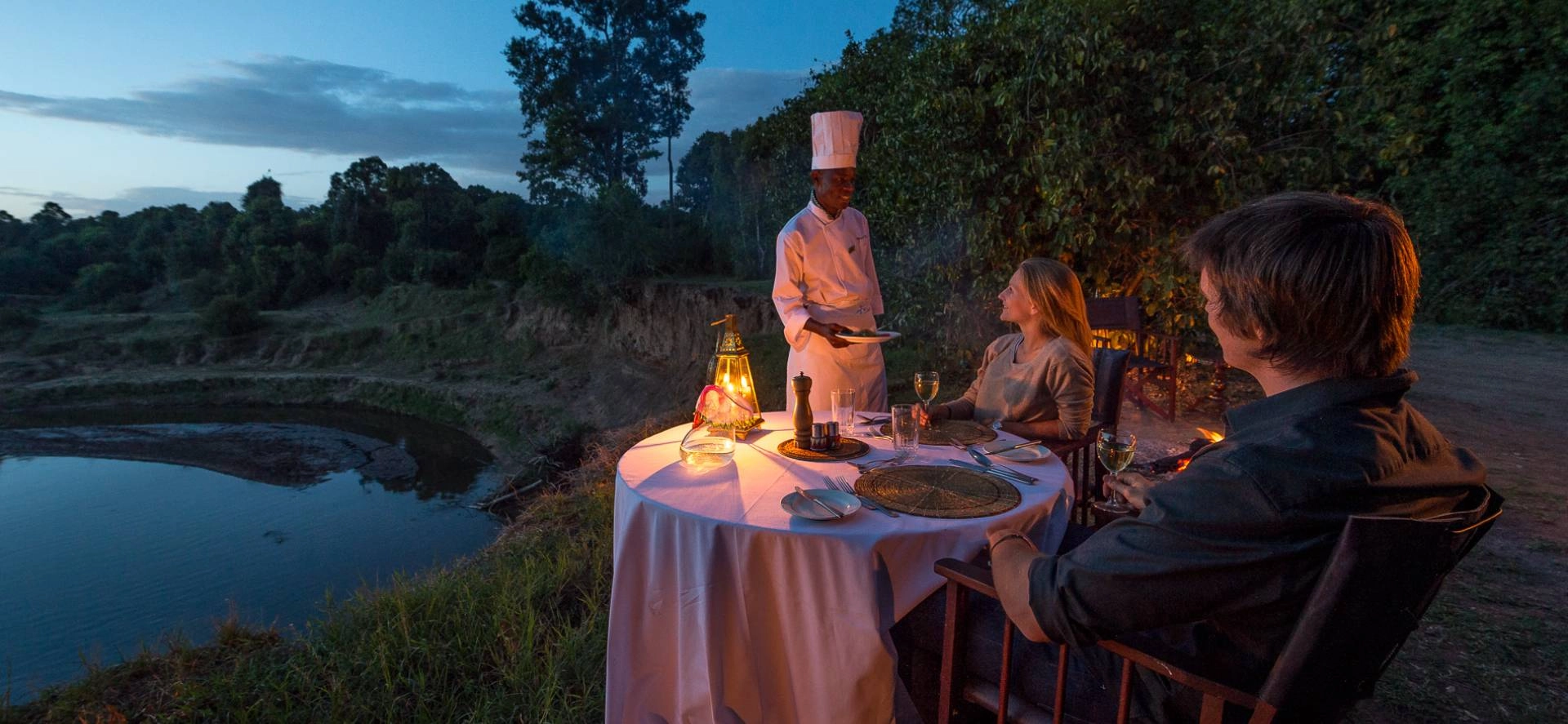
Definitive answer: A bush dinner is an outdoor evening meal arranged in a safe safari setting away from…
Read articleLet us take you closer to the wildlife, people and places that make Africa extraordinary.
Plan Your Safari Today