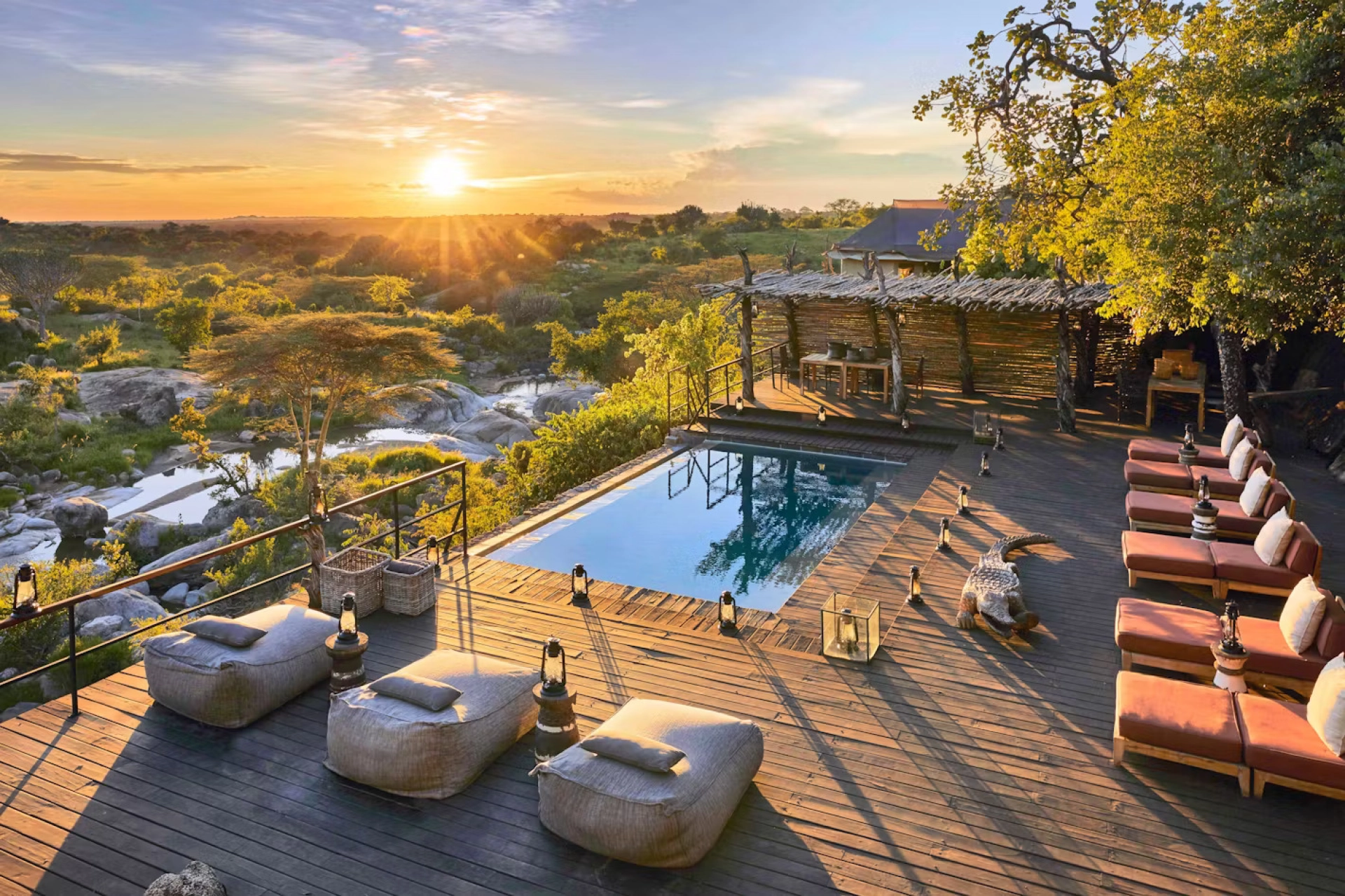
What should I look for when booking a luxury African safari?
When booking a luxury African safari, look beyond the room and compare the quality of guiding, wildlife location,…
Read article

Travel Guide
A Chobe safari in Botswana offers something that even experienced African safari travelers sometimes struggle to find elsewhere: the opportunity to spend the morning tracking lions, leopards, elephants and buffalo by 4x4 and the afternoon watching…
A Chobe safari in Botswana offers something that even experienced African safari travelers sometimes struggle to find elsewhere: the opportunity to spend the morning tracking lions, leopards, elephants and buffalo by 4×4 and the afternoon watching enormous elephant herds enter the water from the deck of a safari boat. That combination of land-based game drives and Chobe River safaris is what gives Chobe National Park its distinctive character. Situated in northern Botswana, close to the borders of Zimbabwe, Zambia and Namibia, Chobe occupies approximately 11,700 square kilometres and incorporates riverfront, floodplain, woodland, seasonal pans and remote wilderness. Botswana Tourism identifies four broad geographical areas within the park: the Chobe Riverfront, Ngwezumba Pans, Savuti and Linyanti. The riverfront is particularly famous for the immense concentrations of elephants and Cape buffalo that gather beside permanent water during the dry season. For travelers planning their first Botswana wildlife safari, Chobe is also unusually convenient. The gateway town of Kasane has road and air connections, and the park can be combined easily with Victoria Falls, the Okavango Delta, Moremi Game Reserve and other destinations across Southern Africa. Yet an excellent Chobe trip depends on more than simply choosing a lodge and booking two game drives. You need to understand when wildlife gathers along the river, whether to stay inside or outside the park, how many nights are enough, whether a Chobe boat safari is essential, how the riverfront compares with Savuti, and whether you should combine Chobe with Victoria Falls or travel deeper into Botswana. This comprehensive Chobe National Park safari guide covers those questions and much more.
Botswana contains some of Africa’s most celebrated safari landscapes.
The Okavango Delta is famous for seasonal floodwaters, mokoro excursions and remote luxury camps. Moremi Game Reserve protects extraordinarily productive sections of the wider Delta ecosystem. The Makgadikgadi region introduces immense salt pans and completely different landscapes. Chobe’s advantage is accessibility combined with exceptional wildlife. You do not necessarily need a sequence of expensive light-aircraft transfers to experience it. Kasane provides a practical gateway to the riverfront, allowing visitors with limited time to build a meaningful 2-night or 3-night Chobe safari.
At the same time, Chobe is not a diluted version of more remote Botswana. Its wildlife concentrations can be extraordinary. Botswana Tourism describes the Chobe Riverfront as the country’s most accessible major big-game area and specifically highlights the large elephant and buffalo herds that converge around the river during the dry winter months. For many visitors, the real surprise is that Chobe works on two levels. It is an outstanding destination for first-time safari travelers, yet it remains compelling for experienced travelers who have already visited the Serengeti, Masai Mara or Kruger.
Chobe National Park lies in northern Botswana.
The town of Kasane sits immediately beside the wider Chobe tourism region and functions as the principal gateway to the riverfront. This location is one of Chobe’s greatest strategic advantages. To the east lie Zimbabwe and Zambia, home to Victoria Falls. To the north is Namibia’s Zambezi Region. To the southwest and deeper into Botswana lie Moremi and the Okavango. That means a traveler can create a remarkable Botswana and Victoria Falls safari without spending the entire holiday traveling between distant destinations.
The Chobe River itself forms the park’s northern boundary and supports an enormous diversity and concentration of wildlife. Botswana Tourism describes the river as one of the country’s most important wildlife lifelines.
Many first-time visitors think Chobe is simply one wildlife area surrounding Kasane.
In reality, the park encompasses several distinct environments. Understanding these differences is especially important for travelers staying longer than two or three nights.
The Chobe Riverfront is the most accessible and frequently visited area.
This is where classic photographs of hundreds of elephants approaching the river are most commonly made. Permanent water attracts huge numbers of mammals during dry conditions. The riverfront is also the centre of Chobe’s famous boat safari experience. Travelers based around Kasane typically divide their safari time between game drives beside the river and boat cruises. The result is one of Africa’s most varied short safari experiences.
Savuti lies deeper within the broader Chobe ecosystem and offers a more remote safari atmosphere.
Its landscapes differ substantially from the riverfront. Open areas, woodland and the famous Savuti Channel region create excellent predator habitat. Savuti has developed a reputation for dramatic interactions involving lions, hyenas and large herbivores. For travelers who want to move beyond the accessible Kasane safari circuit, a Savuti safari can add a very different dimension. A longer Botswana itinerary can combine the Chobe Riverfront and Savuti before continuing toward Moremi and the Okavango Delta.
The Linyanti region represents another remote part of northern Botswana. Permanent and seasonal water support elephants, buffalo and other large mammals. The wilderness atmosphere is a major attraction. Travelers who have already experienced the Chobe Riverfront may find the quieter Linyanti landscape particularly rewarding.
Seasonal pans create important wildlife habitat away from the permanent river. Their productivity changes with rainfall. These less visited environments illustrate why the Chobe ecosystem should not be understood only through its riverfront.
If one animal defines the popular image of Chobe, it is the African elephant. Northern Botswana supports one of the continent’s most important elephant landscapes. During the dry season, the Chobe River becomes a major water source. Elephants may emerge from woodland in family groups throughout the afternoon. Some drink quickly and retreat. Others remain at the river, splashing mud across their bodies. Calves imitate older family members. Large bulls may cross deep channels.
Several herds can appear simultaneously. Botswana Tourism notes that during productive dry-season periods, visitors may encounter hundreds of elephants around the riverfront. That does not mean every drive will contain hundreds. Wildlife remains mobile and conditions change. But Chobe provides one of Africa’s strongest opportunities for observing elephant behavior rather than simply recording an elephant sighting.
Watching elephants beside water reveals behaviors that may be absent from dry-land sightings. Elephants swim surprisingly well. They may use their trunks above the water’s surface while crossing deeper channels. Calves can become almost hidden beside adults. Animals drink, spray water over themselves, cover their skin with mud and engage in social interaction. From a safari boat, photographers can observe this activity at a low angle. The resulting experience is fundamentally different from watching elephants from an elevated vehicle.
If you visit the Chobe Riverfront and do only game drives, you are seeing only half the destination. A Chobe River boat safari is essential. Botswana Tourism specifically identifies river cruises as one of the defining ways to experience Chobe’s hippos, crocodiles, waterbirds and river-dependent mammals. The change in viewpoint is immediate. From a vehicle, wildlife is often viewed through grass or vegetation. From the river, animals may be completely exposed along the shoreline.
Elephants move directly toward water. Buffalo gather across floodplains. Hippos occupy deeper channels. Crocodiles bask along the banks. Kingfishers and fish eagles use riverside trees.
Morning cruises can be peaceful. Temperatures are cooler. Bird activity may be particularly rewarding. Soft light makes the river attractive for photography. A morning safari is useful for travelers primarily interested in birds and quiet wildlife observation.
The Chobe sunset cruise is particularly famous. As afternoon temperatures decline, large mammals often become more active around the water. Elephants arriving at the river can coincide with beautiful evening light. The surface of the water turns gold. Animals become silhouettes against the setting sun. It is easy to understand why the experience has become one of the classic activities on a Botswana safari holiday.
The hippopotamus is one of the most conspicuous aquatic mammals along the Chobe River. Groups occupy suitable sections of water during daylight. Visitors may hear them before seeing them. Grunts and splashing carry across the river. Although hippos often appear relaxed, they are extremely powerful animals. Professional boat operators understand territorial behavior and maintain safe distances. Travelers should never encourage guides to approach a hippo simply for a closer photograph. Responsible wildlife viewing means allowing animals space.
Nile crocodiles are another important Chobe River predator. Large individuals may bask on exposed banks. Others remain almost invisible except for the eyes and nostrils. The ability of such a large predator to disappear into shallow water is remarkable. Crocodiles contribute to the ecological complexity of the river and are particularly interesting to photograph from boats.
The riverfront also supports impressive numbers of Cape buffalo. Large herds may gather around permanent water during dry conditions. Buffalo are among the famous African Big Five, but their behavior is interesting in its own right. Older bulls may separate from breeding herds. Calves remain surrounded by adults. Lions sometimes follow large buffalo concentrations, creating a dynamic predator-prey relationship.
African lions occur throughout the Chobe ecosystem. Their movements often reflect prey availability. Along the riverfront, buffalo, antelope and other mammals provide hunting opportunities. Savuti has its own long history of dramatic lion encounters. Morning game drives provide opportunities to find lions while temperatures remain relatively cool. During the hotter middle part of the day, prides may rest in shade. As evening approaches, activity can increase again. The best lion sightings are often behavioral. A sleeping lion is impressive. A pride interacting, hunting, calling or moving through the landscape gives the safari far greater depth.
Leopards are present but considerably more secretive. Riverine woodland and trees provide suitable habitat. Guides may search for tracks and listen for alarm calls from baboons or antelope. A leopard sighting is never guaranteed. That uncertainty makes the encounter more rewarding. Travelers whose highest priority is leopard viewing may also want to compare Chobe with destinations such as the Greater Kruger private reserves, although Chobe provides a broader river-and-elephant experience.
The African wild dog is one of Africa’s most charismatic endangered predators. Packs move over large areas, meaning sightings are inherently unpredictable. Their social structure and cooperative hunting are fascinating. Even experienced safari guides become excited when wild dogs appear. Visitors fortunate enough to encounter a pack should give the sighting time. Watch how individuals greet one another, rest together and coordinate movement.
Elephants and predators dominate photography, but Chobe supports a notable variety of antelope. Species can include impala, kudu, waterbuck, sable, roan, lechwe and puku. Botswana Tourism specifically highlights the diversity of mammals that can be encountered during a single riverfront drive. The presence of puku is particularly interesting because the species has a more restricted distribution than impala. Experienced safari travelers often find these less familiar species just as rewarding as the Big Five.
Birdwatchers should allocate significant time to Chobe. More than 460 bird species have been recorded in the park according to Botswana Tourism, making Chobe one of Africa’s important birding safari destinations. The river creates especially productive conditions. Fish attract kingfishers and fish eagles. Mudflats support waders. Reedbeds hide smaller species. Woodland adds hornbills, rollers and raptors.
The African fish eagle is one of the most iconic birds of African waterways. Its distinctive call often carries across the Chobe River. The species may perch prominently above the water before diving toward prey.
Southern carmine bee-eaters bring extraordinary color to the landscape. Their vivid red plumage makes them popular photographic subjects. Depending on season and location, colonies can become especially active.
Serious birders may be particularly interested in specialized species such as Pel’s fishing owl, associated with appropriate riverine habitats. Finding such species may require expert guiding and patience.
There is no single perfect month. The best time depends on your priorities.
The dry season is famous for concentrated wildlife around permanent water. As temporary inland sources disappear, animals move toward the Chobe River. Vegetation becomes thinner. Large elephant and buffalo concentrations become especially important. This is the classic period for Chobe wildlife safaris. Cool winter mornings can be surprisingly cold on open vehicles and boats, so layers are essential. Later in the season, daytime temperatures rise. Peak-season demand can also increase accommodation costs.
Seasonal rainfall transforms northern Botswana. The landscape becomes greener. Many animals give birth. Birding can be excellent as migrants arrive and resident species enter breeding activity. Storm clouds create dramatic backgrounds for photography. Wildlife can become more dispersed because water is available away from the river. For travelers focused solely on large dry-season elephant concentrations, this may be less predictable. For birdwatchers, photographers and repeat Botswana travelers, however, the green season can be outstanding.
Months between the traditional peaks can provide an attractive balance. Visitor numbers may be lower. Rates can be more competitive. The landscape can retain some greenery while wildlife remains productive. Travelers with flexible dates should compare the total experience rather than automatically choosing the most expensive peak-season month.
A single day is technically possible. That does not make it ideal.
Day trips from Victoria Falls are popular. They usually combine a game drive with a boat cruise. For travelers with no other available time, this provides a valuable introduction. But it is fast. Border procedures and road transfers consume part of the day.
Two nights are significantly better. Travelers can undertake several activities and experience both morning and evening conditions.
Three nights provide an excellent balance for the riverfront. There is time for repeated boat and vehicle activities without rushing. Wildlife can be unpredictable, so additional outings increase the range of possible encounters.
Travelers with more time can explore beyond the riverfront or incorporate a slower safari pace. A longer itinerary can continue toward Savuti, Moremi or the Okavango.
Combining Victoria Falls and Chobe National Park is one of Southern Africa’s most logical itinerary pairings. Victoria Falls provides dramatic scenery and adventure activities. Chobe provides concentrated wildlife. The destinations are geographically close enough that expensive internal flights may not be required. Travelers can base themselves at Victoria Falls before transferring to Kasane or reverse the itinerary. If time permits, staying overnight in Chobe is much better than treating the park only as a day excursion.
A classic Botswana safari itinerary combines Chobe with the Okavango Delta. The two landscapes complement rather than duplicate one another. Chobe emphasizes large mammal concentrations along a permanent river. The Okavango offers a network of floodplains, channels, lagoons and islands. Mokoro excursions can add an intimate water-level perspective. Private concessions may offer walking, night drives and specialized activities depending on the area. Combining Chobe and the Delta gives travelers a much broader understanding of Botswana.
Moremi Game Reserve protects some of the most productive wildlife environments in the Okavango ecosystem. It can form a bridge between Chobe and deeper Delta camps. A longer journey might move from Kasane through Savuti toward Moremi before finishing with a fly-in wetland camp. This creates a sophisticated Botswana wildlife safari covering multiple habitats.
Northern Botswana can also combine with Namibia’s Zambezi Region. River systems cross political boundaries, and the wider landscape is ecologically connected. For travelers interested in a multi-country road safari, the Chobe area provides an important anchor.
Accommodation ranges from relatively accessible hotels around Kasane to luxury safari lodges. The best choice depends on budget and safari style.
Staying around Kasane provides convenience. Airport transfers are short. Boat departures are easy to organize. Travelers can access Chobe Riverfront game drives without committing to a remote fly-in camp. This is often the most practical option for midrange Chobe safaris.
Luxury properties can provide smaller groups, premium guiding and refined accommodation. Some focus heavily on riverfront experiences. Others operate in more remote settings. The question should not be simply, “Which lodge is most expensive?” Ask which location best supports your intended activities.
Chobe is one of Botswana’s more approachable regions for travelers with limited budgets. Scheduled activities allow guests to share vehicle and boat costs. Kasane provides multiple accommodation categories. Camping and overland options may also reduce overall costs.
There is no meaningful single price. A Chobe safari price depends on: season, accommodation category, private versus shared vehicle, boat arrangement, number of travelers, transfers, meals, park fees, and whether the trip is combined with other Botswana destinations. Because Kasane is relatively accessible, Chobe can provide better value than highly remote parts of the Okavango Delta. However, premium private arrangements can still become expensive. Always compare inclusions rather than headline prices.
Shared activities reduce cost and work well for many visitors. A private Chobe safari vehicle becomes particularly valuable for photographers, birders and families. Photographers can remain longer at sightings. Birders can stop for small species. Families can adjust the pace around children. Private boat charters also give photographers greater flexibility with angle and light.
Few safari destinations are better suited to water-level photography. The Chobe River provides clean backgrounds, reflections and close wildlife behavior. Photographers should bring a telephoto lens but also keep a shorter lens available. Elephants can fill the frame unexpectedly. Late afternoon produces warm light. Morning can provide mist and softer conditions. A private photographic boat can be worthwhile for serious photographers.
Chobe can be an excellent family safari destination. Boat cruises break up long hours in a vehicle. Elephants are highly engaging for children. Kasane simplifies logistics. Private vehicles can make the itinerary even easier. Parents should confirm lodge-specific minimum ages for game drives and other activities.
A Chobe honeymoon works particularly well as part of a wider Southern Africa journey. Couples can combine: Victoria Falls, Chobe River, and Okavango Delta. This sequence creates enormous variety within one trip. Waterfalls provide spectacle. Chobe provides elephant-rich safari. The Delta adds remote wilderness.
Chobe is generally more accessible. The Okavango can feel more remote. Chobe is famous for its river and elephants. The Delta is famous for channels, floodplains, mokoro excursions and intimate wetland camps. The best itinerary combines them when possible.
Kruger National Park offers enormous scale, self-drive possibilities and excellent Big Five viewing. Chobe offers the river. For visitors who have already experienced Kruger, Chobe’s water-based perspective makes it feel very different.
The Masai Mara is best known for predators and the Great Migration. Chobe is more closely associated with elephants, buffalo and river safaris. Travelers deciding between the two should first decide whether they want classic East African plains or a Botswana river ecosystem.
The Serengeti offers vast open landscapes and spectacular migration ecology. Chobe offers an intimate relationship with permanent water. Both are world-class, but they should not be expected to provide the same kind of safari.
Light neutral clothing works well. Layering is important during colder mornings. Bring sun protection and a hat. Binoculars are extremely useful. Photographers should carry spare batteries and memory cards. Dust protection helps during dry conditions. On the boat, a light windproof layer can be useful. Avoid overpacking. Most safari lodges operate informally.
Travelers should obtain current professional medical advice for Botswana before departure. Recommendations vary according to itinerary, season and personal medical circumstances. Travel insurance should cover the activities and value of the safari. On game drives and boats, follow guide instructions at all times. Do not attempt to approach wildlife independently. Chobe contains genuinely wild elephants, buffalo, hippos, crocodiles and predators. Respect is what makes close wildlife experiences possible.
Never ask your guide to crowd animals. Elephants need space to reach the river. Boats should not surround hippos. Bird nesting areas should not be disturbed. Plastic and other waste should never enter waterways. Keep noise low around sightings. Do not feed wildlife. Responsible Botswana safari tourism protects the very behaviors travelers come to see.
Yes. Chobe combines exceptional elephant viewing, river cruises, predators and birding with convenient access from Kasane and Victoria Falls.
The park is particularly famous for large elephant and buffalo concentrations along the Chobe River.
Two nights provide an introduction, while three nights offer a more complete riverfront experience.
Yes. It is one of Southern Africa’s most popular cross-border safari combinations.
Absolutely. The river safari is one of the destination’s defining experiences.
Dry-season months are especially good for concentrated riverfront wildlife, while green-season months offer beautiful scenery, birding and young animals.
Yes, especially when private transfers and game drives are arranged.
Yes. Chobe and the Okavango Delta form one of Botswana’s classic safari itineraries.
An epic Chobe safari experience is not created by rushing through the park in one vehicle and taking a few photographs of elephants. The destination deserves a combination of land and water. Spend a morning tracking predators. Watch buffalo move toward the floodplain. Take time with the birds. Then board a boat in the afternoon and watch the ecosystem change completely. Elephants appear beside the water. Hippos surface. Crocodiles lie motionless along the banks.
Fish eagles call overhead. The sun drops behind the river. That is the Chobe experience. At Adventure in the Wild Safaris, we can build customized Chobe National Park safaris, Botswana wildlife safaris, Victoria Falls and Chobe tours, Okavango Delta safaris, Moremi safari itineraries, Botswana honeymoon safaris and multi-country Southern Africa tours. For travelers already familiar with our Uganda gorilla safaris, Rwanda gorilla trekking trips, Kenya safaris and Tanzania wildlife safaris, Botswana provides an entirely different African ecosystem to explore.
Come for the elephants. Stay for the river. Then continue deeper into Botswana and discover why northern Botswana remains one of the greatest wildlife regions on Earth.

Share This Article
When booking a luxury African safari, look beyond the room and compare the quality of guiding, wildlife location,…
Read article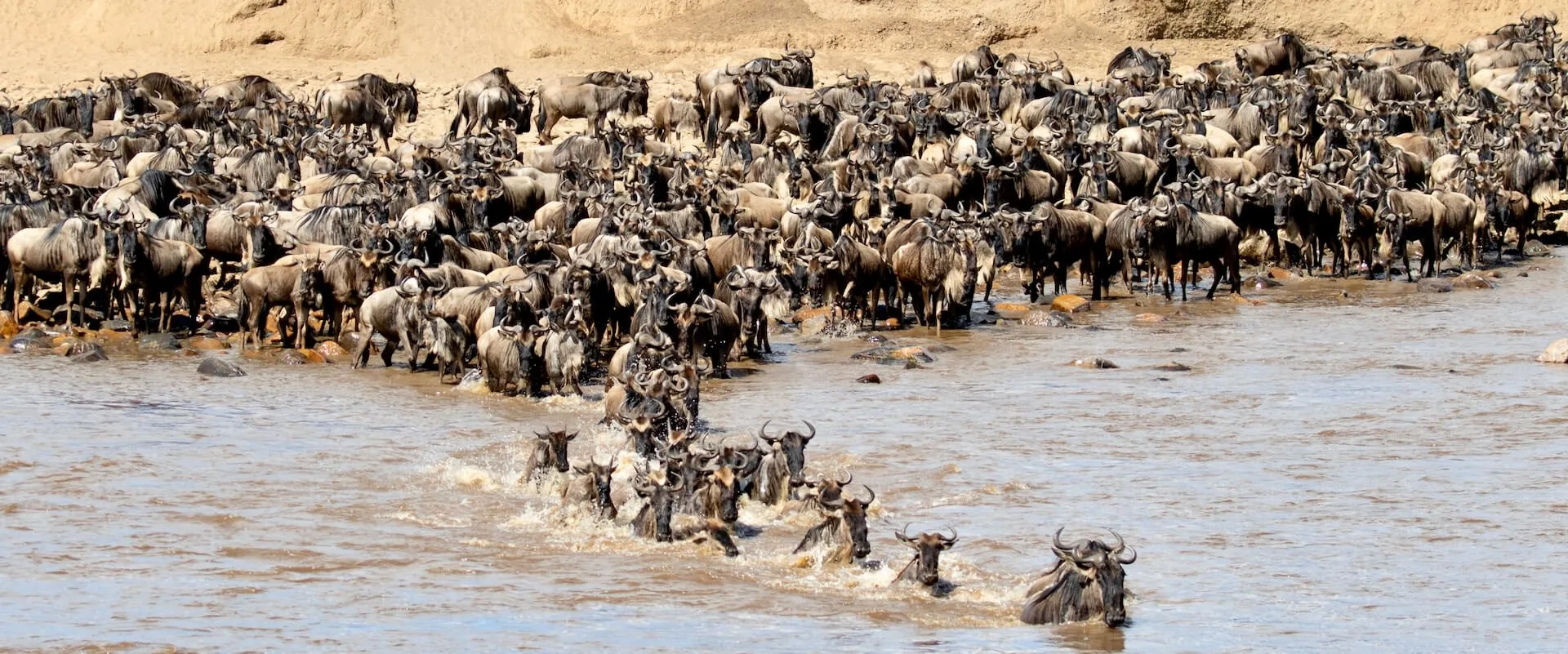
The Great Migration in Africa happens all year because the herds continuously circulate through the Serengeti–Mara ecosystem in…
Read article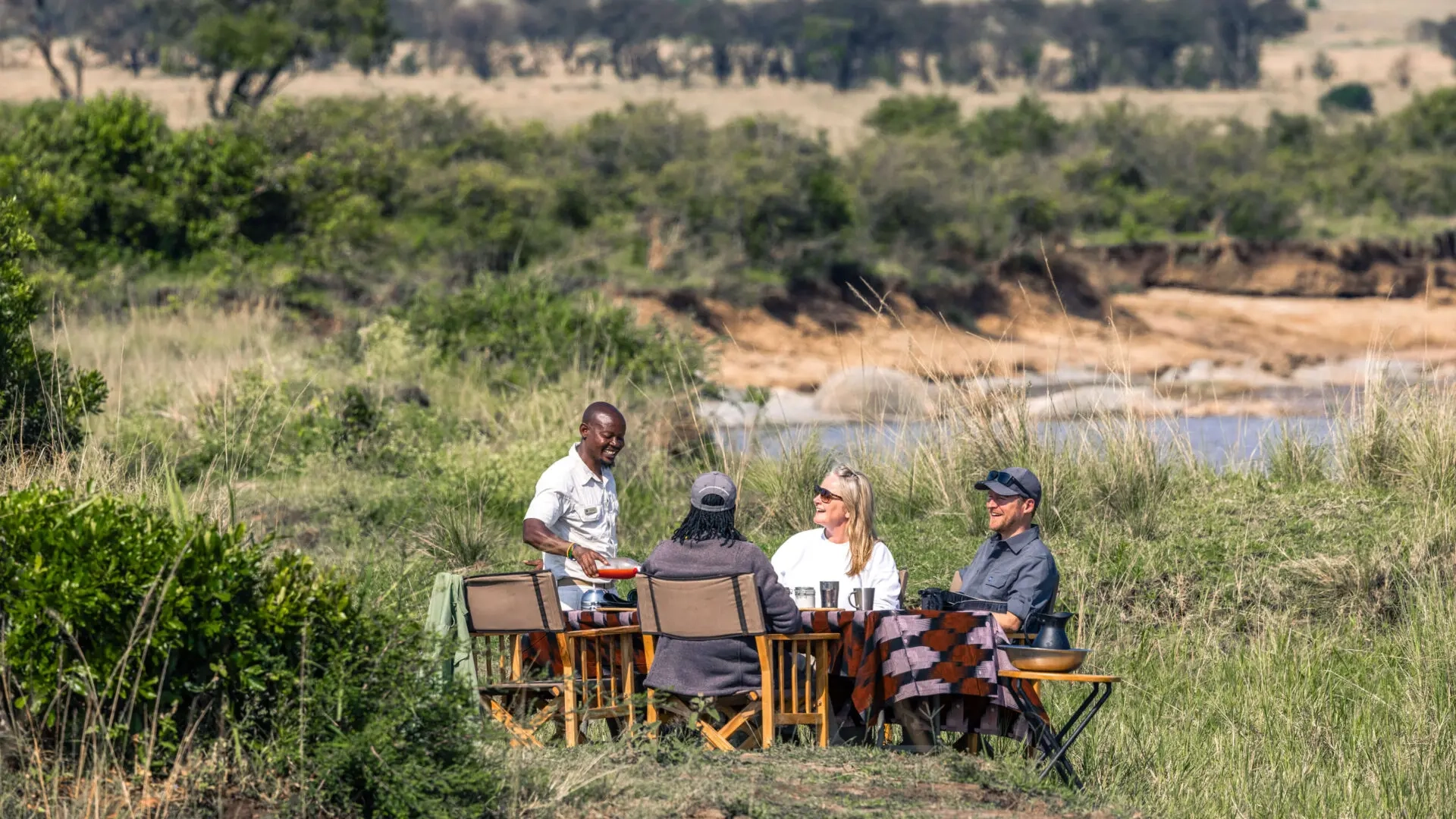
Definitive answer: A picnic lunch on safari is a packed or catered midday meal eaten at an approved…
Read article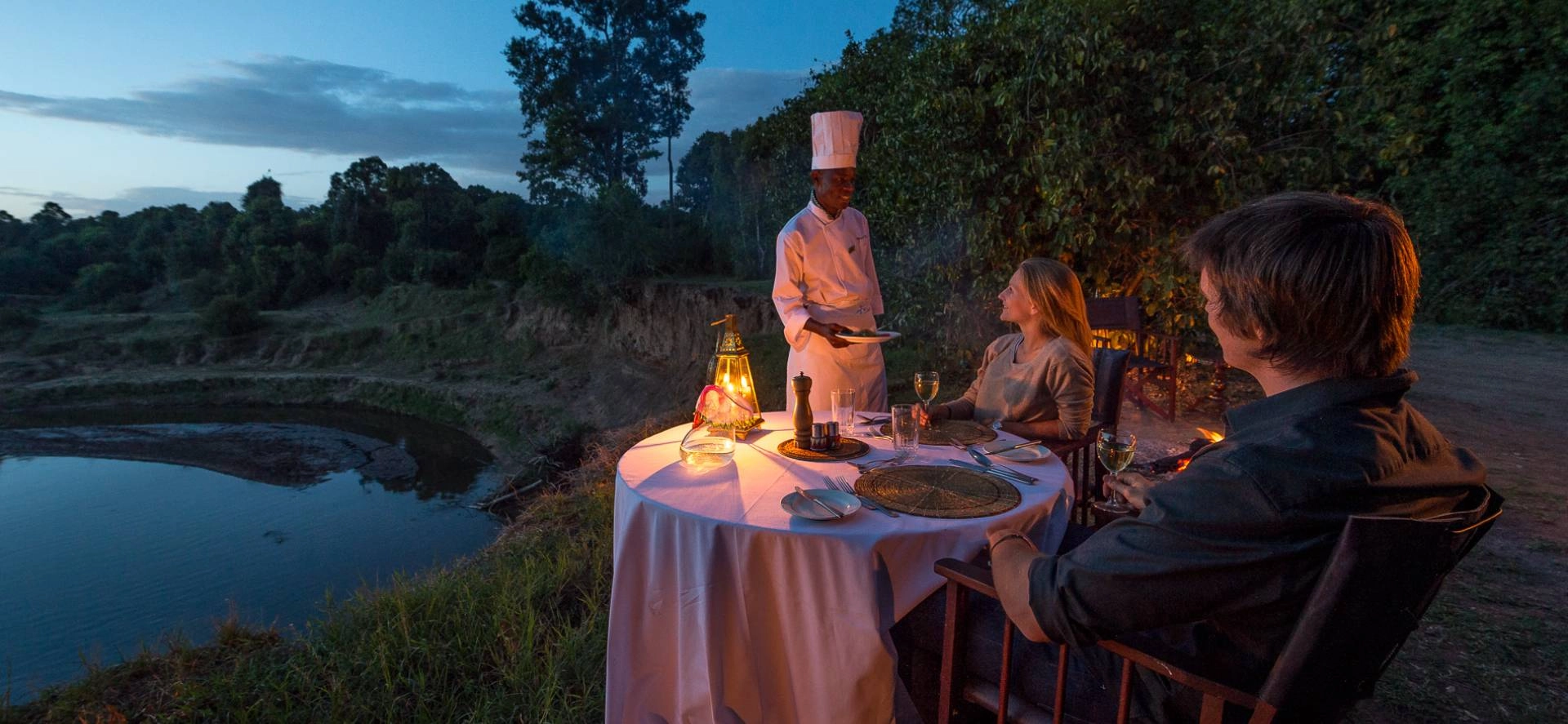
Definitive answer: A bush dinner is an outdoor evening meal arranged in a safe safari setting away from…
Read articleLet us take you closer to the wildlife, people and places that make Africa extraordinary.
Plan Your Safari Today