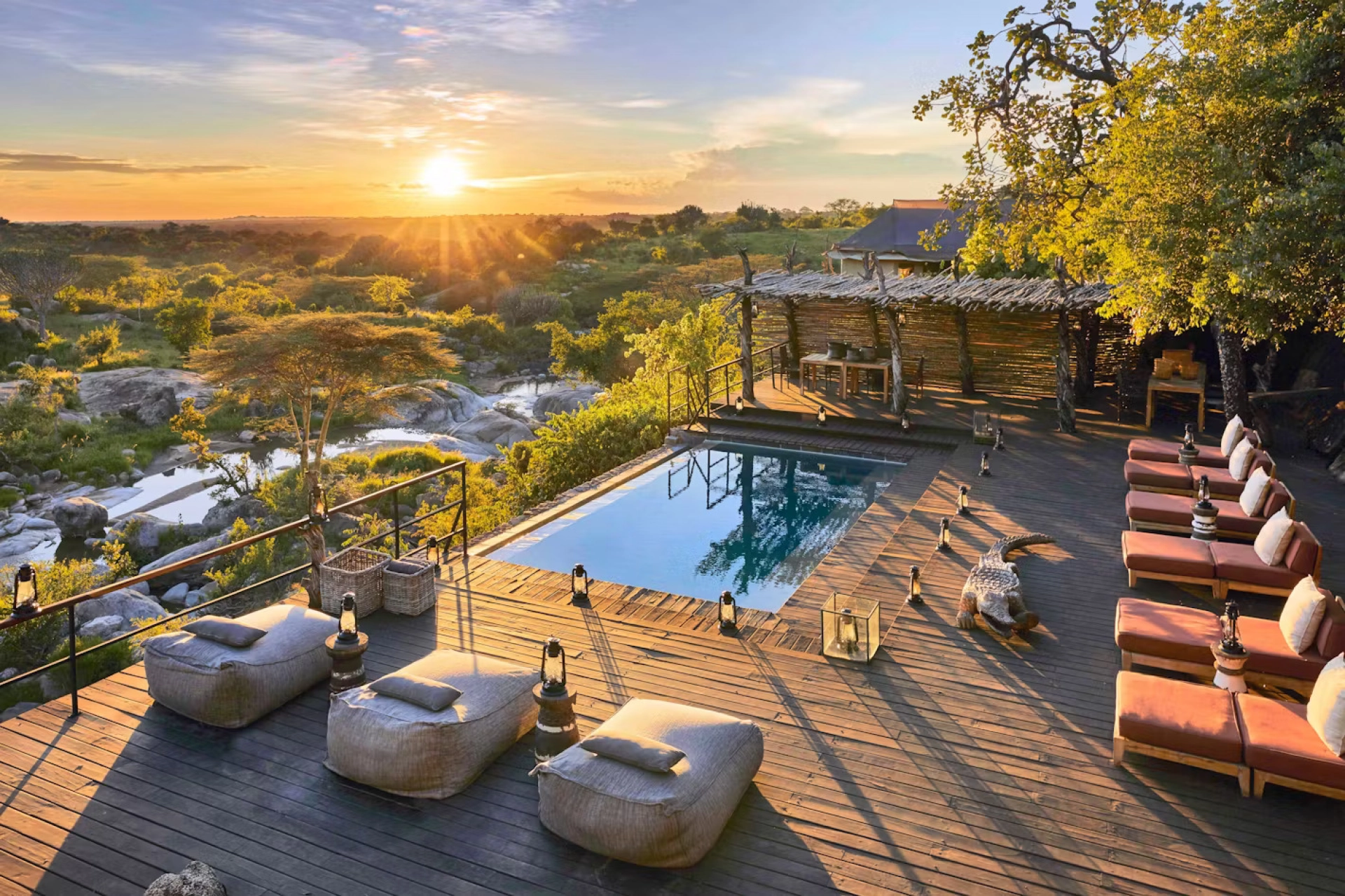
What should I look for when booking a luxury African safari?
When booking a luxury African safari, look beyond the room and compare the quality of guiding, wildlife location,…
Read article

Travel Guide
When travelers imagine great African migrations, the first image is usually Tanzania and Kenya's famous Great Migration, where enormous herds of wildebeest and zebra move through the Serengeti-Mara ecosystem. Yet farther south, another extraordinary wildlife journey…
When travelers imagine great African migrations, the first image is usually Tanzania and Kenya’s famous Great Migration, where enormous herds of wildebeest and zebra move through the Serengeti-Mara ecosystem. Yet farther south, another extraordinary wildlife journey unfolds across Botswana’s Kalahari landscapes. The Botswana zebra migration is one of Africa’s great wildlife spectacles. Thousands of plains zebras move seasonally between dry-season and wet-season grazing areas, responding to rainfall, fresh grass and water availability across vast landscapes that include parts of the Chobe, Makgadikgadi and Nxai Pan ecosystems.
One of these migration routes is particularly remarkable for its distance. Research into zebra movement in Botswana helped reveal extraordinarily long seasonal journeys, while Botswana’s tourism industry describes the movement toward Nxai Pan as the longest mammal migration in southern Africa. What makes the migration especially fascinating is the environment through which it occurs. During the dry season, Botswana’s salt-pan country can appear almost empty. Dusty grasslands stretch toward the horizon.
The pans are stark and seemingly lifeless. Then summer rain transforms the landscape. Fresh grass appears. Temporary water collects. Zebras and wildebeest arrive. Predators follow. Birdlife explodes. The transformation can be so dramatic that a traveler visiting in August and returning in February might believe they were looking at entirely different ecosystems. This detailed guide explains the ancient Botswana zebra migration, where it takes place, why zebras migrate, the best months to see the herds and how to plan a safari around Makgadikgadi, Nxai Pan, the Boteti River and Botswana’s other great wildlife destinations.
Botswana’s zebra migration is not one single herd moving along one permanent circular path.
Instead, Botswana contains several important seasonal zebra movements. Different populations respond to rainfall and grazing conditions across different landscapes. Some animals move between the Chobe River region and Nxai Pan. Others move through the broader Makgadikgadi-Boteti system. The exact timing varies because rainfall varies. This is one of the most important facts for safari planning. The migration does not obey a human calendar. Rain triggers ecological changes. Grass responds. Zebras respond to grass and water. Predators respond to zebras and other herbivores. Understanding this chain explains why the Botswana migration can never be scheduled with the precision of a train timetable.
Zebras move because resources change seasonally.
Water is fundamental. So is the nutritional quality of grass. During Botswana’s dry season, many temporary water sources disappear. Animals become increasingly concentrated around permanent water. When the summer rains arrive, huge areas of previously dry grassland become productive again. Fresh grass can provide nutrients that are unavailable in old dry vegetation. Zebras move toward these renewed grazing areas. In the Makgadikgadi region, rainfall can transform dry plains and salt-pan margins into productive wet-season habitat. Botswana Tourism notes that good rainfall brings zebra and wildebeest onto the grassy plains surrounding the pans.
Several features distinguish it from Africa’s more famous migrations.
Some zebra populations make exceptionally long seasonal journeys. This demonstrated something scientists and safari guides had long suspected: animals may depend on landscapes far larger than individual national parks. A zebra seen in one protected area during the dry season may rely on distant habitat many months later.
The migration crosses landscapes that shift between semi-desert dryness and lush seasonal grazing. The contrast is extraordinary.
The Makgadikgadi and Nxai Pan regions generally receive fewer international safari vehicles than the most famous sections of the Serengeti and Masai Mara. This can make migration encounters feel more intimate.
Lions, cheetahs, hyenas and other predators take advantage of concentrations of herbivores. This creates exciting game viewing.
To understand the zebra migration, you first need to understand the Makgadikgadi Pans.
The Makgadikgadi complex forms part of the Kalahari Basin and includes some of the world’s largest salt-pan landscapes. Botswana Tourism describes an approximately 12,000-square-kilometer Makgadikgadi landscape of enormous pans, grasslands, dunes, islands and desert terrain. For much of the year, the central salt surfaces are extremely dry. Little vegetation can grow directly on the saline pan floor. Around the margins, however, grasslands and woodland create productive wildlife habitat. When significant summer rain falls, parts of the wider system can transform dramatically.
The great salt pans are remnants of a much larger prehistoric lake system.
Today the flat expanses create some of Botswana’s most surreal landscapes. Standing on the edge of a salt pan, the horizon can seem almost endless. This geological history gives the zebra migration a dramatic stage unlike typical East African grassland. Baobabs rise from some sections of the surrounding landscape. During the dry period, dust dominates. During wet years, water can spread across portions of the pans and attract extraordinary birdlife.
The Makgadikgadi Pans Game Reserve protects roughly 3,900 square kilometers, including grasslands and the western side of the Ntwetwe system. Botswana Tourism notes that wet-season wildlife viewing can be particularly good when large zebra and wildebeest herds begin moving westward toward the Boteti region. The reserve supports much more than zebra. Potential wildlife includes: Wildebeest, gemsbok, eland, red hartebeest, kudu, giraffe, springbok and other herbivores. Predators follow. Lions, hyenas and other carnivores exploit the abundance of prey. This makes the migration a complete ecosystem experience rather than simply a zebra spectacle.
North of the main Makgadikgadi pan system lies Nxai Pan National Park. The park protects grassed fossil pans, open plains and acacia islands. During the rainy season, temporary water and fresh grass attract wildlife. Botswana Tourism identifies December through April as the best period for Nxai Pan wildlife viewing when rainfall is favorable and specifically notes that migration and rainfall strongly influence the experience. This makes Nxai Pan one of the best places to plan a Botswana zebra migration safari.
One of Botswana’s remarkable zebra journeys connects the wider Chobe region with Nxai Pan. Animals leave northern dry-season areas and move toward nutrient-rich wet-season grazing after rains begin farther south. The journey demonstrates the importance of wildlife corridors. Neither Chobe nor Nxai Pan alone can sustain the full annual requirements of migratory zebra populations if the connecting route disappears. The animals need the entire landscape. This is why fences, roads, settlement expansion and land-use changes can have such significant consequences for migration.
Rather than thinking of migration distance as one universal figure applying to every zebra in Botswana, it is better to understand that different herds use different routes. Some individual journeys documented through tracking have been extraordinarily long. The conservation lesson matters as much as the headline number. Wildlife populations can depend on seasonal habitat hundreds of kilometers apart. Protecting only the location where tourists see animals during one month of the year is therefore insufficient.
The Boteti River forms another important part of the Makgadikgadi wildlife system. It channels water along the western side of the region and becomes critically important during dry periods. As seasonal grazing conditions change, zebra movement between the pans and Boteti area creates major wildlife concentrations. Botswana Tourism notes westward movement toward the Boteti region as part of the wet-season dynamics of Makgadikgadi wildlife. A lodge positioned near the Boteti can therefore provide a completely different migration experience from a camp near Nxai Pan.
Botswana’s rains generally arrive during the warmer summer period, but timing and intensity vary significantly from year to year. This variability is fundamental. A strong early rain season may encourage migration movements sooner. Late or scattered rainfall can delay or alter concentrations. Travel articles that state zebras will be at an exact location on an exact date should therefore be treated cautiously. Nature does not follow published itinerary schedules. A good Botswana safari operator evaluates current conditions.
December can be an exciting time. Summer storms begin transforming dry landscapes. Fresh grass starts appearing. Zebras move toward wet-season grazing areas. The exact distribution depends on where rain has fallen. Nxai Pan begins becoming increasingly productive. Birdlife also increases. For travelers willing to accept some weather unpredictability, December provides the excitement of ecological transition.
January often brings greener landscapes. Zebra numbers in wet-season areas can become impressive. Young animals may be seen. Predators take advantage of concentrated prey. Photographers gain lush backgrounds that contrast dramatically with Botswana’s dry-season appearance. Thunderstorms can create extraordinary skies. The disadvantage is road conditions. Heavy rain can make tracks muddy and difficult. A 4×4 vehicle is essential in remote regions.
February can be one of the most rewarding periods for a Nxai Pan zebra safari, depending on rainfall. Botswana Tourism notes that summer rain becomes particularly significant during February and March in the Makgadikgadi system. Fresh grazing attracts herbivores. The broad plains can support impressive wildlife concentrations. Predator sightings may also be productive. For travelers accustomed to seeing Botswana marketed only as a dry-season destination, the green landscapes can be surprising.
March can remain excellent. The ecosystem may still be green and productive. Zebras and wildebeest continue responding to grazing and water distribution. Birding remains rewarding. Photography can be spectacular. However, roads may still be challenging. Travel flexibility matters.
April begins the transition. Rainfall generally decreases. Temporary water sources gradually begin disappearing. The migration pattern changes as animals prepare to move away from wet-season grazing. Temperatures become more comfortable. This can be a fascinating period for travelers interested in ecological transition rather than simply maximum herd concentrations.
By May, Botswana increasingly enters its dry season. The Makgadikgadi landscape begins losing its summer green appearance. Animals become more dependent on lasting water. Some zebra populations move toward dry-season ranges. The Boteti can become increasingly important. Safari conditions become more predictable for driving.
The famous dry season dominates much of Botswana safari marketing. This is an excellent period for the Okavango Delta and Chobe. In Makgadikgadi, however, travelers should understand that the great wet-season zebra concentrations may no longer be in the same places. The pans become stark and dry. This creates a different experience. Meerkats, desert landscapes, baobabs and salt-pan scenery can still make the region fascinating. It simply is not the same green-season zebra migration safari.
November can be extremely hot. The ecosystem waits for rain. Storms may begin building. If meaningful rainfall arrives, movement can start changing quickly. This makes November unpredictable. It can be fascinating for repeat safari visitors but harder for travelers whose only goal is seeing huge zebra concentrations.
For wet-season herds around Nxai Pan and the Makgadikgadi system, roughly December through March or April is the key planning period, with exact timing determined by rain. Botswana Tourism specifically recommends December-April for Nxai Pan when rains are favorable. Travelers should ideally allow several nights rather than arriving for one rushed game drive. The migration is spread across a huge landscape. Animals do not gather beside a single viewing platform.
No, if “bigger” means the total number of animals involved. The Serengeti-Mara Great Migration involves enormous numbers of wildebeest together with zebras and other herbivores. Botswana’s zebra migrations involve fewer animals. Their distinction lies elsewhere. Botswana includes exceptionally long zebra movements across remote semi-arid landscapes. The ecological story is different. Rather than asking which is better, safari travelers should see them as two completely different migration experiences.
The Great Migration offers immense herd numbers and famous river crossings. The Botswana zebra migration offers remoteness, dramatic wet-season transformations and lower visitor densities. East Africa’s migration is more widely known. Botswana’s migration can feel more exploratory. For wildlife enthusiasts who have already visited Serengeti or Masai Mara, Botswana provides a fascinating contrast.
Zebras are grazing specialists capable of traveling substantial distances in search of suitable forage and water. Their digestive system allows them to process relatively coarse grass. This means they can exploit vegetation differently from some other herbivores. However, fresh wet-season grazing remains highly attractive because of its nutritional quality. Rainfall essentially redraws the food map of the Kalahari. The zebras follow.
The zebra involved in Botswana’s major migrations is the plains zebra. Plains zebras are highly social. They often form stable family units consisting of a stallion, mares and young animals. Multiple family groups can gather into enormous herds when resources concentrate. This creates the spectacular assemblies seen during migration.
A mass herd may look chaotic to human observers. In reality, social units remain important. Family groups maintain relationships within the larger aggregation. Stallions monitor mares and foals. Individuals communicate through vocalizations, posture and scent. During migration, these small social structures combine into landscape-scale movement.
Wet-season conditions are particularly valuable for young animals because fresh grazing provides better nutrition for mothers. Seeing foals among large zebra herds adds another layer to the safari. Young zebras need to remain close to adults. Predators are alert to vulnerable animals. The movement of herds therefore creates constant tension between feeding opportunities and predator risk.
Where large herbivore concentrations occur, predators benefit. Botswana Tourism notes that predators may trail zebra and wildebeest movements around Makgadikgadi, waiting for opportunities. Lions are particularly exciting. Rather than simply sleeping beside a road, lions in migration country may spend substantial effort tracking herd movements. Seeing a lion pride watching thousands of zebras from the edge of open grassland can be one of Botswana’s great safari scenes.
Open areas of Nxai Pan and Makgadikgadi can also favor cheetah visibility. Cheetahs depend heavily on speed. Open habitat allows them to pursue suitable prey more effectively. Zebra adults are generally too large to represent typical cheetah prey, but the broader herbivore concentrations include smaller animals and young individuals. The migration therefore supports a wider predator-prey system.
Botswana’s dryland regions also provide opportunities for brown hyena sightings. These animals are far less familiar to many safari travelers than spotted hyenas. They are generally more elusive. Makgadikgadi’s broad arid ecosystem is one of the regions where patient visitors may encounter them; Botswana Tourism specifically lists brown hyenas among wildlife that may be seen in the Makgadikgadi reserve.
Zebras are not alone. Wildebeest also respond to wet-season grazing conditions in the pans. Mixed herds create excellent wildlife viewing. Their ecological needs differ somewhat, but both species benefit from fresh grass. Predators exploit both. This makes the migration visually richer than a zebra-only event.
Nxai Pan can also provide impressive elephant encounters. During drier conditions, permanent water points become particularly important. Large bull elephants may dominate waterhole scenes. In the wet season, elephants can spread more widely. This seasonal difference illustrates the broader logic governing Botswana wildlife. Water determines movement.
No visit to Nxai Pan is complete without understanding the significance of Baines’ Baobabs. These enormous trees rise from the edge of Kudiakam Pan and create one of Botswana’s most recognizable landscapes. They were painted by explorer and artist Thomas Baines in the nineteenth century. The same remarkable trees remain a safari landmark today. Combining zebra migration wildlife with ancient-looking baobabs creates excellent photographic variety.
The wider pan system contains other enormous baobabs. Their thick trunks and unusual silhouettes appear perfectly suited to the stark Kalahari landscape. During sunset, the trees become dramatic photographic subjects. Travelers should therefore avoid focusing so intensely on migration that they miss the geology and botany surrounding it.
During years of good flooding, the pans can support extraordinary concentrations of flamingos. Botswana Tourism notes that numbers can reach tens or even hundreds of thousands under favorable conditions. This spectacle depends heavily on rainfall. It cannot be guaranteed. For birders, however, the possibility adds another major reason to visit during the wet season.
Green-season Botswana is outstanding for birds. Migratory species arrive. Wetlands and temporary pools attract water-associated birds. Insects become abundant after rain. Raptors take advantage of increased prey activity. Travelers who combine mammal migration with serious birding may find January through March particularly rewarding.
Many safari travelers have been taught that Botswana should only be visited during the dry season. This ignores half the ecological story. The dry season is excellent for concentrated wildlife around water. The wet season is excellent for: Migration, newborn animals, birding, lush landscapes and dramatic photography. Lodge rates can sometimes also be lower than peak dry-season pricing. For experienced safari travelers, the green season can be one of Botswana’s most interesting periods.
The biggest disadvantage is accessibility. Heavy rain can create mud. Tracks can flood. Some remote routes become difficult. Travelers should use appropriate vehicles and experienced guides. Do not plan extremely tight transfer schedules. A slow drive caused by wet roads is part of remote safari travel.
Large herds require a different photography strategy from individual animal portraits.
Show the scale. A photograph with hundreds of zebras spread across open grassland communicates migration better than a tight portrait of one animal.
Zebra stripes create extraordinary visual repetition. Groups moving through green grass can produce powerful compositions.
Foals beside mothers, stallions confronting each other and zebras dust-bathing can create more interesting photographs than static herd shots.
When lions or cheetahs are nearby, the relationship between predator and prey becomes the story.
A proper 4×4 safari vehicle is essential. During rainy periods, even experienced drivers can encounter difficult mud. Travelers should not attempt remote wet-season routes in unsuitable vehicles. Guided safaris reduce logistical stress and allow guests to focus entirely on wildlife.
Experienced southern African self-drivers may explore parts of the Makgadikgadi and Nxai Pan system independently. However, wet-season self-driving requires serious preparation. Recovery equipment, water, fuel planning and knowledge of local road conditions are important. First-time visitors are generally better served by professional safari guides.
A guide adds enormous value during migration. They understand recent rainfall. They know which pans currently hold water. They communicate with other guides about herd locations. They identify tracks and predator activity. The migration may cover enormous areas, so current field information matters.
For Nxai Pan or Makgadikgadi, plan at least three nights if migration is a major priority. Four nights provide even more flexibility. A single overnight stay gives little margin if animals are temporarily far from the lodge. Longer stays also allow time for landscapes, birds and predators rather than driving constantly in search of one giant herd.
Accommodation ranges from adventurous mobile camping to permanent safari lodges. Your choice should depend on location rather than luxury alone. A beautiful lodge located far from current herd concentrations may produce a weaker migration experience than a simpler camp positioned strategically. Ask exactly which migration route the property accesses. “Near Makgadikgadi” can describe a huge geographical area.
Mobile camping can be one of the most immersive ways to experience Botswana. Camps move according to itinerary and season. Guests sleep in tents but still benefit from guides, meals and safari support. For adventurous travelers, mobile safaris can provide excellent access to remote wildlife areas.
Botswana is famous for high-end safari camps. Luxury can mean spacious tents, private decks, excellent food and small guest numbers. However, even expensive camps cannot control migration. Nature determines herd location. Choose operators for guiding quality and location rather than assuming the highest room rate guarantees the most zebras.
Families can enjoy the migration enormously. Children are often fascinated by the sheer number of zebras. However, road journeys can be long. Choose camps with family-friendly accommodation and age-appropriate game-drive policies. Private safari vehicles provide flexibility.
Botswana is one of Africa’s premier honeymoon safari destinations. Small camps, vast landscapes and low vehicle densities create natural exclusivity. A honeymoon can combine zebra migration with the Okavango Delta. After Botswana, couples might continue to Victoria Falls, Cape Town, Mauritius, Seychelles or Mozambique. This creates an exceptional safari and beach honeymoon.
This is one of the strongest Botswana itineraries. Nxai Pan delivers open grasslands, zebra migration and Kalahari ecology. The Okavango Delta provides channels, floodplains, islands and completely different wildlife environments. Light-aircraft flights connect many safari regions. A combination helps travelers understand Botswana’s ecological diversity.
Chobe is another logical addition. The Chobe River is famous for elephants and river-based wildlife viewing. The broader northern region also forms part of the ecological story of some migratory zebra populations. A journey linking Chobe and Nxai Pan therefore connects dry-season and wet-season landscapes used by wildlife.
Botswana combines easily with Victoria Falls. Travelers can begin around Chobe, cross toward the falls and then continue into other Botswana regions—or reverse the route. The combination adds one of Africa’s greatest natural landmarks to a migration safari.
International flights often make South Africa a useful gateway. Cape Town can be added before or after Botswana. A traveler could therefore combine: Cape Town, the Cape Winelands, Botswana’s zebra migration and the Okavango Delta. This is an exceptional southern African itinerary.
For travelers seeking a truly comprehensive African wildlife trip, combine Botswana with Uganda or Rwanda. Botswana provides vast herds, predators and Kalahari landscapes. Uganda provides mountain gorillas, chimpanzees and East African savannah wildlife. A multi-country journey might include: Nxai Pan zebra migration, the Okavango Delta, Queen Elizabeth National Park, Kibale Forest and Bwindi Impenetrable National Park. This is particularly attractive to experienced safari travelers who want dramatically different ecosystems.
The two experiences are almost impossible to compare directly. Botswana focuses heavily on vast wilderness, seasonal animal movement and low-density safari camps. Uganda combines savannah safari with rainforest primates. Botswana’s zebras may stretch across an open horizon. Uganda’s mountain gorillas may be encountered only meters away inside dense forest. Combining both creates far greater diversity than choosing between them.
Perhaps the most important lesson from Botswana’s zebra migration is that protected areas cannot function in isolation. Migratory wildlife needs connections. A zebra may spend one season in one protected landscape and another season hundreds of kilometers away. Blocking movement routes can therefore affect an entire population. Conservation requires coordination across national parks, community land, private concessions and other land uses.
Botswana’s history includes extensive fencing associated with livestock management and disease control. Fences can have major implications for migratory wildlife. Where traditional routes are blocked, animals may lose access to water or seasonal grazing. The rediscovery and restoration of some migration movements demonstrates the resilience of wildlife when connectivity remains or becomes available again. This is part of what makes the ancient Botswana zebra migration back in full swing such a powerful conservation story.
Rainfall in semi-arid ecosystems is inherently variable. Climate change may introduce additional uncertainty. If rainfall timing shifts, migration timing can also shift. Prolonged drought can place pressure on herbivores and predators. This makes large connected landscapes even more important. Animals need options. A migration corridor is effectively ecological flexibility.
Safari vehicles should never surround moving herds. Animals need room to travel. Drivers should avoid blocking movement routes. Predator hunts should also be observed responsibly. A lion chasing zebra should not be crowded by a wall of vehicles. Choose operators whose guides prioritize animal behavior over guest pressure for photographs.
Lightweight, breathable clothing is essential. Pack rain protection. Use sunscreen. Carry a hat. Bring binoculars. Mosquito repellent is important. A camera rain cover can protect expensive equipment. Footwear should tolerate mud. Even during summer, a light layer can be useful during early morning drives.
Some Botswana safari regions are malaria-risk areas, with risk varying seasonally and geographically. Travelers should obtain current professional medical advice. Use mosquito repellent and suitable clothing. Do not rely on old travel articles as medical guidance.
Absolutely—particularly for travelers who understand what makes it unique. Do not arrive expecting the Serengeti. Botswana is different. The spectacle lies in long-distance movement across one of Africa’s great semi-arid wildernesses. It lies in watching a seemingly empty salt-pan landscape become green. It lies in seeing zebras spread across newly productive grasslands. It lies in predators adjusting to the returning herds. And it lies in understanding that the journey you are witnessing may connect habitats separated by enormous distances.
Travelers who have already experienced the Masai Mara, Serengeti or Kruger may find Botswana’s migration particularly rewarding. The landscape is unfamiliar. Visitor density can be lower. Green-season photography is different. The ecological story is subtle. Instead of focusing on a famous river crossing, travelers follow rainfall and grass. This can make the safari feel more exploratory.
Start with timing. For Nxai Pan zebra migration experiences, focus primarily on the summer wet-season window, broadly December through April, understanding that rainfall determines actual conditions. Next choose the correct region. Nxai Pan and Makgadikgadi offer different perspectives. The Boteti adds another dimension. Then allow enough nights. Finally, combine the migration with a second Botswana ecosystem. The Okavango Delta is ideal. Chobe is another excellent choice.
The ancient Botswana zebra migration back in full swing is far more than a beautiful wildlife spectacle. It is evidence of ecological memory. Generation after generation, zebras respond to seasonal rainfall and move through landscapes their populations have used over long periods. The journey connects rivers, dry grasslands, salt pans and temporary wet-season grazing. It also connects conservation areas that may appear separate on a human map but function as one wildlife system.
During the dry season, Makgadikgadi can seem almost empty. Then rain arrives. Grass appears. Zebras return. Wildebeest gather. Predators respond. Birdlife multiplies. The desert-like landscape becomes one of southern Africa’s most dynamic wildlife environments. At Adventure in the Wild Safaris, the Botswana migration can be incorporated into a broader journey combining Nxai Pan, Makgadikgadi, Chobe and the Okavango Delta, with optional extensions to Victoria Falls, South Africa or East Africa.
For travelers seeking even greater contrast, Botswana can also be combined with Uganda gorilla trekking, Rwanda, Kenya or Tanzania. The Great Migration may remain Africa’s most famous herd movement. But for safari travelers willing to follow the rains into Botswana’s Kalahari landscapes, the zebra migration reveals another side of Africa—remote, seasonal, ancient and extraordinarily beautiful.

Share This Article
When booking a luxury African safari, look beyond the room and compare the quality of guiding, wildlife location,…
Read article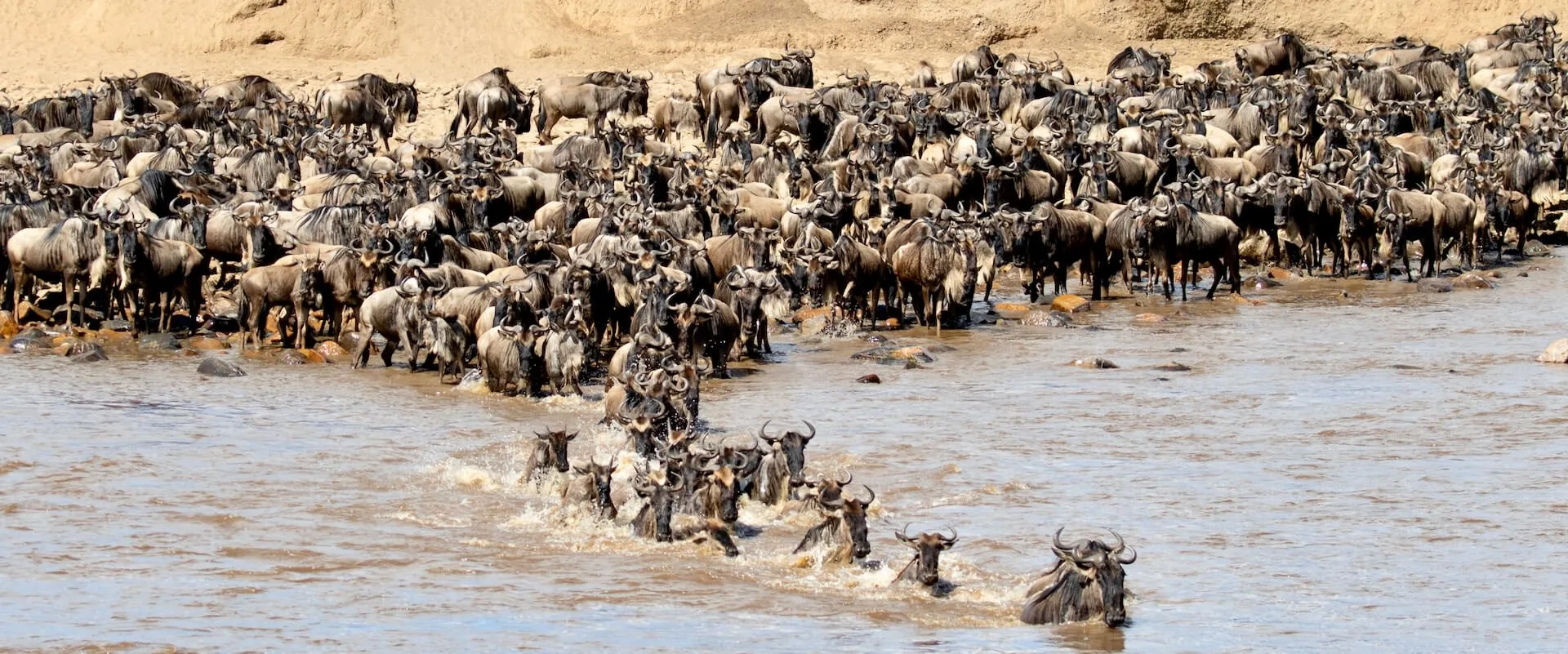
The Great Migration in Africa happens all year because the herds continuously circulate through the Serengeti–Mara ecosystem in…
Read article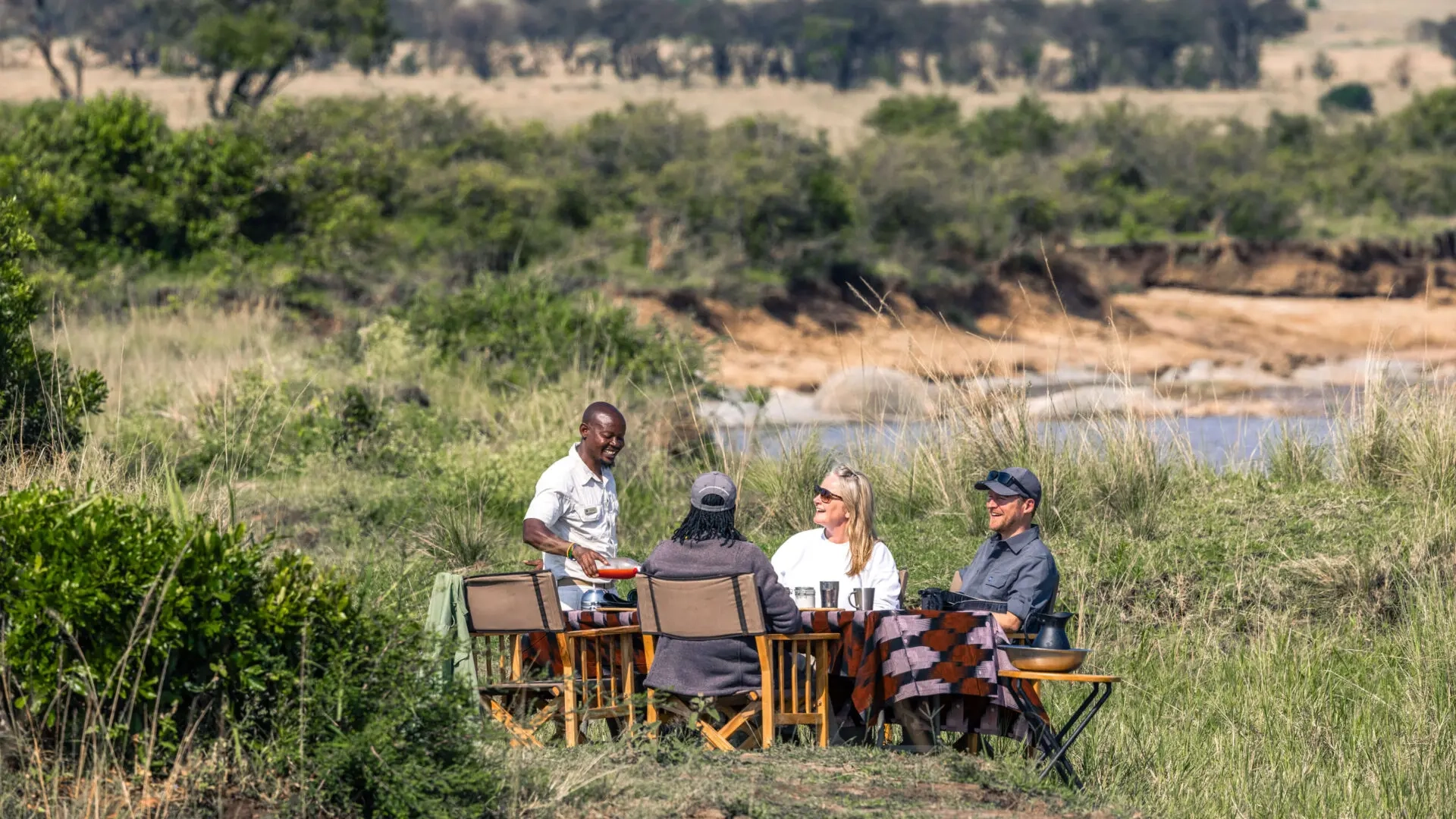
Definitive answer: A picnic lunch on safari is a packed or catered midday meal eaten at an approved…
Read article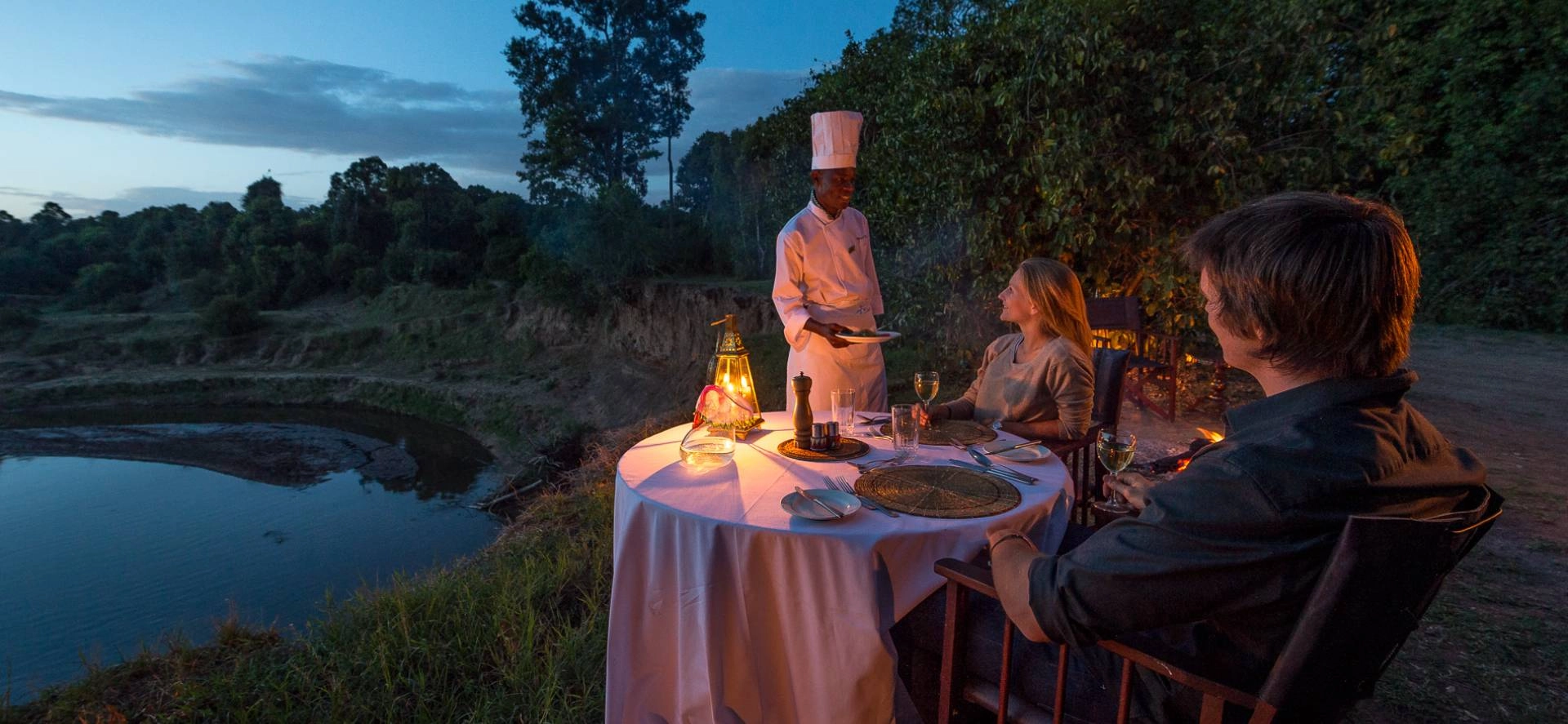
Definitive answer: A bush dinner is an outdoor evening meal arranged in a safe safari setting away from…
Read articleLet us take you closer to the wildlife, people and places that make Africa extraordinary.
Plan Your Safari Today