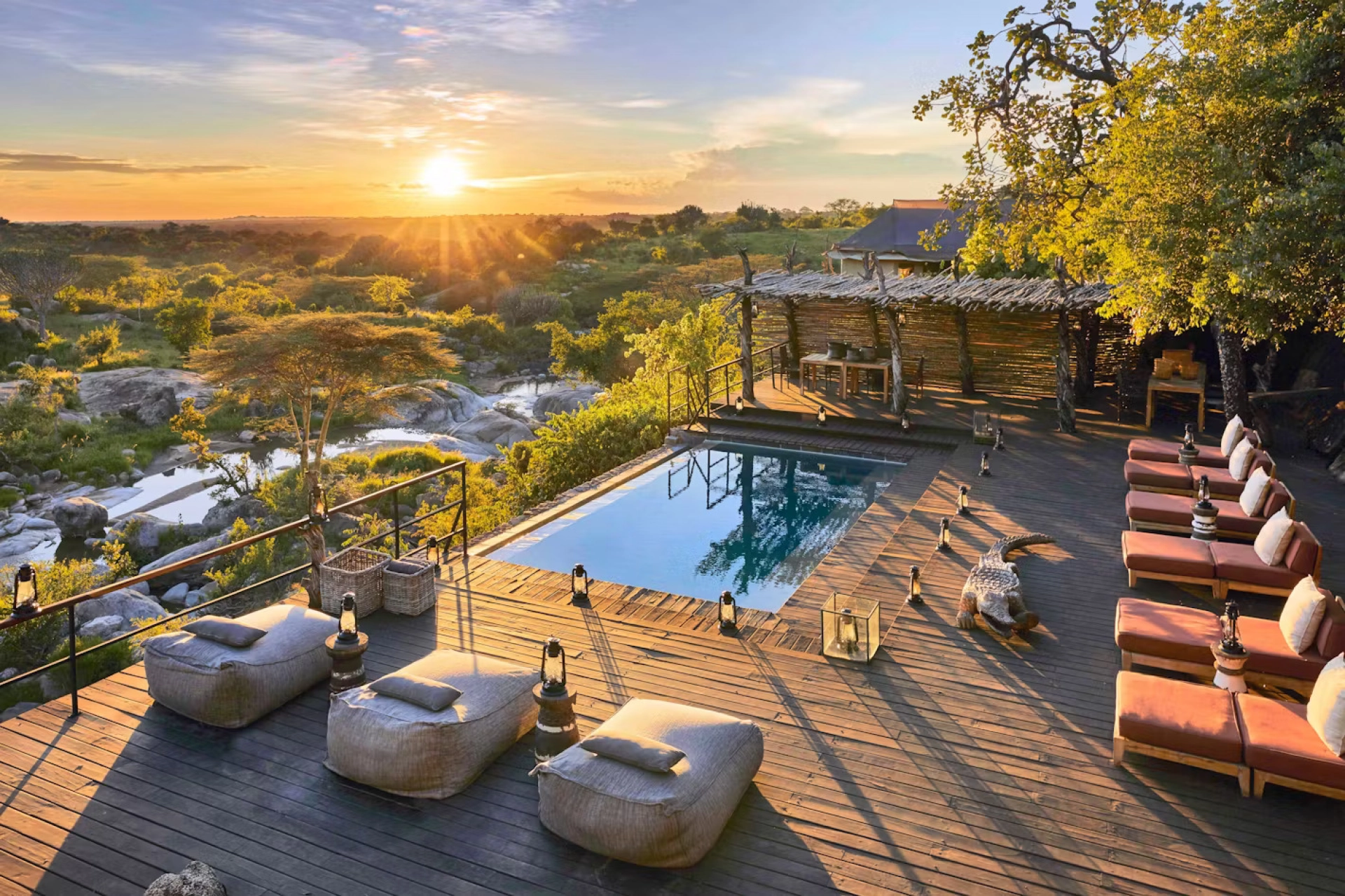
What should I look for when booking a luxury African safari?
When booking a luxury African safari, look beyond the room and compare the quality of guiding, wildlife location,…
Read article

Travel Guide
Every year, enormous herds of wildebeest move across the plains of northern Tanzania in one of the most famous wildlife journeys on Earth. Zebras travel among them. Gazelles spread across the grasslands. Lions watch from the…
Every year, enormous herds of wildebeest move across the plains of northern Tanzania in one of the most famous wildlife journeys on Earth. Zebras travel among them. Gazelles spread across the grasslands. Lions watch from the shade. Cheetahs scan open plains. Hyenas follow opportunities. Crocodiles wait in rivers. Vultures circle above the landscape. This is the Serengeti Migration in Tanzania, more widely known as the Great Wildebeest Migration or simply the Great Migration.
Yet despite its fame, the migration is frequently misunderstood. Many travelers imagine that the Great Migration in Tanzania occurs only when wildebeest cross a river. Others believe the animals migrate from Tanzania to Kenya once each year and then disappear. Some assume that visiting the Serengeti National Park outside July or August means missing the migration completely. None of these descriptions captures the full story. The Great Migration is a continuous annual movement through the wider Serengeti-Mara ecosystem.
For much of that cycle, the major herds are in Tanzania. They calve in the southern plains. Move through central and western regions. Continue north as grazing conditions change. Some enter Kenya’s Masai Mara. Later, they return south. Rainfall, fresh grass and water drive this extraordinary movement. Understanding that cycle is essential when planning a Tanzania safari because the best area to stay changes according to the time of year.
If you visit the wrong region, you may spend hours searching for herds that are hundreds of kilometers away. Choose the correct region and you may wake to thousands of wildebeest spread across the horizon. This detailed guide explains the Serengeti Great Migration, month by month, along with the many animals that make the Serengeti one of Africa’s greatest wildlife destinations throughout the year.
The Serengeti Migration is the continuous seasonal movement of vast numbers of grazing animals through northern Tanzania and southern Kenya.
Wildebeest form the dominant numbers. Zebras and gazelles also participate. The herds follow suitable grazing and water. Rain stimulates fresh grass. As grazing is depleted or conditions change, animals move. This creates a broad circular pattern across the ecosystem.
The migration occurs across the wider Serengeti-Mara ecosystem.
Important Tanzanian areas include: Southern Serengeti, Ndutu, Central Serengeti, Western Corridor, Grumeti region, Northern Serengeti, and areas approaching the Kenya border. Across the border, migrating herds may enter the Masai Mara National Reserve and surrounding conservancies. The animals do not recognize the international border. From an ecological perspective, it is one connected system.
Wildebeest are primarily grazers.
They depend on grass and water. The Serengeti ecosystem has strong seasonal variations in rainfall. When rain falls, new grass grows. Wildebeest follow these resources. This is what drives the migration. It is essentially one of the world’s largest wildlife responses to changing food availability.
Broad seasonal patterns are predictable.
Exact movement is not. Rain may fall earlier than expected. A dry period may delay movement. A storm can cause herds to shift unexpectedly. The migration therefore cannot be scheduled like a train. Safari planners work with historical patterns, current reports and local knowledge. Travelers should approach the migration with flexibility.
The phrase Masai Mara Migration receives enormous international attention because Mara River crossings are dramatic.
However, much of the annual migration cycle actually unfolds in Tanzania. Calving occurs in Tanzania. Major northward movement occurs across Tanzania. Grumeti crossings occur in Tanzania. The northern Serengeti hosts major migration concentrations. Travelers whose goal is understanding the complete migration should therefore look beyond one famous river.
January is generally associated with the southern Serengeti and Ndutu region. Seasonal rains transform the short-grass plains. The landscape becomes green. Large wildebeest concentrations may gather across these nutritious grasslands. Pregnant females prepare to give birth. Zebras and gazelles also occupy the region. For photographers, the contrast between dark wildebeest herds and brilliant green plains can be extraordinary.
A January Tanzania safari can combine Ndutu, southern Serengeti and Ngorongoro Crater. This creates an excellent wildlife itinerary. The migration provides huge herbivore concentrations while Ngorongoro adds different scenery and strong resident wildlife. The season also offers dramatic skies.
February is among the most remarkable times to experience the migration. The Serengeti calving season generally occurs across the southern plains during this broader period. Large numbers of wildebeest calves are born within a relatively concentrated timeframe. A newborn must become mobile quickly. Within a short period after birth, it needs to follow its mother. The landscape becomes filled with mothers and young animals.
Giving birth within a concentrated period can provide survival advantages. Predators cannot capture every calf. Although lions, cheetahs, hyenas and other predators take advantage of vulnerable newborns, the enormous number of calves effectively overwhelms predation pressure. This is sometimes referred to as predator swamping.
The presence of so many vulnerable young animals attracts intense predator activity. Serengeti lions patrol the plains. Cheetahs hunt gazelles and young animals. Spotted hyenas are active hunters as well as scavengers. Jackals search for smaller opportunities. Vultures monitor the landscape from the sky. This makes calving season one of the best periods for travelers interested in predator-prey interactions.
During March, herds generally remain in or around the southern and central parts of the ecosystem depending on rainfall. Calves become stronger. Groups begin spreading more widely. The landscape remains green. Predators continue following prey. March can provide excellent photography and somewhat different visitor patterns from the busiest dry-season months.
April frequently falls within Tanzania’s wetter period. The migration begins shifting northward and westward according to conditions. Rain may be substantial. Roads can become muddy. Some travelers avoid this season. Yet it offers advantages. Visitor numbers are generally lower. Landscapes are lush. Photography can be spectacular. Safari rates may also become more attractive at selected properties.
No. It is simply different. Travelers must accept rainfall and potentially challenging roads. The reward can be fewer vehicles and beautiful landscapes. For experienced safari travelers who have already seen dry-season Tanzania, the wetter months can reveal a completely different Serengeti.
During May, herds often continue moving northward through parts of the central and western ecosystem. Wildebeest may form long columns. This can be one of the most visually impressive phases. Instead of one concentrated herd, animals may stretch across enormous distances.
The breeding period adds another fascinating layer to the migration. Male wildebeest compete for access to females. Territorial and courtship behavior becomes more visible. Dust rises as animals chase and challenge one another. The migration therefore involves more than movement. It includes breeding, birth, predation and survival.
June often sees significant movement toward the Western Corridor and northern sectors, depending on rainfall. The ecosystem begins drying. Herds increasingly need access to reliable water. This period can bring the migration toward important river systems.
The Grumeti River is associated with one of the migration’s important phases. These crossings are generally different from the giant Mara River spectacles popularized through television. Herd distribution and river conditions vary. Large crocodiles inhabit portions of the system. Travelers interested in witnessing the migration away from the most famous northern crossing areas may find the western Serengeti fascinating.
By July, significant herds may be moving through northern areas. The Northern Serengeti becomes increasingly important. Some groups begin approaching the Mara River system. July is also firmly within a popular safari period. Dry conditions generally support excellent wildlife viewing. Accommodation in strategic migration locations can fill far in advance.
August is strongly associated with Northern Serengeti Migration safaris. Large herds may gather around the Mara River. Some animals cross between Tanzania and Kenya. This is the period when many travelers dream of seeing dramatic Mara River crossings. But crossings remain unpredictable.
The Mara River flows through both Tanzania and Kenya. This is an important detail. Many travelers mistakenly believe that Mara River crossings happen only inside Kenya’s Masai Mara. They also occur in northern Tanzania. Therefore, travelers can potentially witness spectacular migration crossings while remaining on a Tanzania safari.
The spectacle often begins with waiting. Wildebeest gather near the riverbank. More animals arrive. The herd may become restless. Individuals approach the edge. Then retreat. Sometimes nothing happens for hours. Sometimes one animal suddenly commits. Others follow. Within moments, hundreds or thousands may move.
No guide controls the wildebeest. No lodge knows the exact crossing time. Herds may wait for days. They may cross at an unexpected location. They may cross before your vehicle arrives. They may cross overnight. This uncertainty is fundamental to the experience. Any operator promising a guaranteed river crossing should be treated cautiously.
Nile crocodiles inhabit the Mara River. They can prey on wildebeest and zebra. Yet crocodiles are only one challenge. Animals can be injured on steep banks. Strong currents can create difficulty. Crowding adds risk. Despite this, vast numbers cross successfully.
September is another important northern migration month. Some herds may remain in northern Tanzania. Others may spend time in Kenya. Movement across the border can occur in different directions depending on rainfall. This is a superb month for combining migration viewing with broader Serengeti wildlife safaris.
During October, changing rainfall patterns encourage herds to begin moving south again. Some animals may remain farther north while others spread into central areas. The pattern is not synchronized perfectly. Travelers should work with up-to-date location information.
The arrival of short rains can stimulate new grass farther south. Wildebeest begin returning toward central and southern areas. The landscape gradually turns greener. Bird activity increases. This transitional period can provide excellent safari conditions.
By December, many herds may be moving toward or occupying southern grazing areas again. Pregnant females approach another calving season. The annual cycle prepares to repeat. This is why the Great Migration is a year-round wildlife event rather than one single crossing season.
Wildebeest receive most of the attention. But the migration ecosystem supports extraordinary biodiversity. Understanding these animals makes a Serengeti safari far more rewarding.
The blue wildebeest is the migration’s central species. At first glance, wildebeest can appear awkward. They have heavy shoulders, narrow hindquarters, curved horns and long faces. Yet they are remarkably adapted to migration. Calves can run very soon after birth. Adults cover enormous distances. They respond quickly to rainfall and grazing conditions.
Plains zebras migrate alongside wildebeest. The relationship is mutually useful. Zebras and wildebeest graze grasses somewhat differently. Zebras can consume taller, rougher grass, exposing shorter growth favored by wildebeest. The species also benefit from increased collective vigilance against predators.
Thomson’s gazelles are smaller grazers associated with the Serengeti plains. Their compact size and distinctive dark side stripe make them recognizable. They are important prey for cheetahs.
Grant’s gazelles are larger than Thomson’s gazelles and can survive in relatively dry environments. They contribute to the extraordinary antelope diversity of the Serengeti ecosystem.
The eland is Africa’s largest antelope. Despite its heavy appearance, it is surprisingly agile. Seeing eland among smaller antelope species emphasizes the ecological diversity of the plains.
Topi have reddish-brown bodies with dark markings. They often stand on termite mounds or other elevated points. This gives them a better view of potential predators.
Hartebeest are another distinctive Serengeti antelope. Their elongated faces and sloping backs make them easy to recognize once travelers learn the species.
The Serengeti is one of Africa’s iconic lion safari destinations. Lions benefit from abundant prey. Prides occupy territories throughout suitable areas. Migration periods can create additional feeding opportunities, but resident herbivores support lions year-round.
Lions do not necessarily need to chase animals over enormous distances. They often use cover, darkness and teamwork. Females may cooperate during hunts. One lion can push prey toward others. Understanding this behavior transforms a sighting from a photograph into an ecological story.
Unlike most cat species, lions are social. Prides can include related females, cubs and one or more adult males. Female cooperation helps with cub rearing and territorial defense. Male alliances may control prides for periods before being replaced by competitors.
The Serengeti cheetah is perfectly adapted to open plains. Cheetahs rely on speed and vision. They often use termite mounds or slight elevations to scan grasslands. Their main prey includes gazelles and young antelopes.
Open short-grass plains provide excellent visibility. Cheetahs can detect prey from far away and use their extraordinary acceleration during hunts. Calving and green-season periods can therefore provide fascinating predator opportunities.
Leopards prefer more structured habitat than cheetahs. Riverine woodland and large trees provide cover. Leopards are solitary and secretive. They may rest on branches during the day. A leopard can remain almost invisible despite being only meters from the road.
The Seronera region of Central Serengeti is famous for year-round resident wildlife and suitable leopard habitat. River valleys create woodland corridors. Travelers visiting outside peak migration periods can therefore still experience extraordinary predator viewing.
The spotted hyena is one of the Serengeti’s most important carnivores. Contrary to popular stereotypes, hyenas are effective hunters. They live in complex clans. Females generally dominate social hierarchies. Hyenas hunt wildebeest calves, gazelles and other prey. They also scavenge carcasses when opportunities arise.
Competition between lions and hyenas is one of the Serengeti’s classic ecological interactions. Both species may steal food from the other. Groups of hyenas can challenge lions under certain circumstances. Large male lions can dominate carcasses. These interactions reveal the competitive nature of predator communities.
African wild dogs are among Africa’s rarest large carnivores. Their distribution within the broader northern Tanzanian ecosystem is less predictable than lions or hyenas. Seeing them is therefore extremely special. Travelers specifically focused on wild dogs may need to explore other destinations where packs are more consistently encountered.
Jackals are smaller carnivores frequently seen on open plains. They hunt rodents, birds and newborn animals. They also scavenge. Pairs may maintain territories. Their ecological role becomes particularly visible during calving season.
The serval is a slender, long-legged cat with enormous ears. It hunts rodents and other small animals, often in grassland. A serval sighting can be one of the most exciting surprises on a Serengeti safari.
The Serengeti ecosystem also supports elephants. They are often associated with woodland and riverine areas rather than the most open short-grass plains. Family groups move between feeding and watering areas. Elephants can be especially common in some central and northern habitats.
The Masai giraffe is one of Tanzania’s most recognizable animals. Giraffes browse trees that grazing animals cannot reach. This reduces direct competition for food. Their presence adds vertical structure to photographs of the savannah.
Buffalo herds occupy suitable areas across the Serengeti ecosystem. They are powerful grazers and one of the traditional African Big Five. Adult buffalo can be formidable opponents even for lions.
The wider Serengeti-Ngorongoro region also plays a role in black rhino conservation. Rhino sightings are much less common than wildebeest or lions. Precise location information may be protected for security reasons. Travelers should respect conservation restrictions.
Rivers and pools support hippos. Large groups may rest in water during the day before leaving to graze at night. Their vocalizations can be heard over long distances. Despite their appearance, hippos are highly dangerous and should always be observed from safe areas.
The migration’s river crossings have made Nile crocodiles famous. Large individuals can wait for crossing animals. But crocodiles are interesting beyond their predatory role. They are ancient, highly adapted reptiles capable of surviving long periods between major feeding opportunities.
The Serengeti supports ostriches, the world’s largest living birds. Males have striking black-and-white plumage. Females are more subdued in coloration. Their courtship displays can be fascinating.
The secretary bird is one of Africa’s most distinctive raptors. Instead of hunting primarily from the air, it walks across grasslands searching for reptiles, insects and small animals. Its long legs and crest make it instantly recognizable.
Vultures are essential to the migration ecosystem. Thousands of large herbivores inevitably produce carcasses. Vultures rapidly consume remains. This reduces the persistence of decaying material and contributes to nutrient cycling. Several African vulture species face serious conservation threats.
Although big mammals dominate tourism marketing, Serengeti birding can be exceptional. Raptors, bustards, hornbills, rollers, storks and numerous smaller species inhabit different environments. Migratory birds increase diversity during parts of the year. A good pair of binoculars is one of the most useful safari items you can bring.
The Central Serengeti, particularly the wider Seronera region, is important because it contains reliable resident wildlife. Even when the main migration herds are elsewhere, predators and resident herbivores remain. This makes central Serengeti one of the strongest options for travelers whose dates do not align perfectly with migration movement.
The southern Serengeti and Ndutu area is strongly associated with green-season migration and calving. Open short-grass plains create exceptional visibility. Predator activity can be intense. This region should be strongly considered for January, February and portions of March depending on yearly conditions.
The Western Corridor becomes important as herds move northward. The Grumeti River and surrounding woodland create a different landscape from southern plains. Travelers often overlook this region because of the fame of northern river crossings. That can make it particularly rewarding.
The Northern Serengeti is the focus of many July-to-October migration safaris. Mara River crossing possibilities make the region famous. But the north is also beautiful independently of crossings. Rolling hills, woodland and open plains create varied habitat.
Travelers frequently ask whether Serengeti or Masai Mara is better. Neither is universally better. The Serengeti is much larger and contains more phases of the annual migration cycle. The Mara is relatively compact and can offer concentrated predator viewing. The best choice depends on the month.
For migration travelers, Tanzania is generally the stronger choice because major herds are associated with southern Serengeti and calving areas. The Mara still has resident wildlife, but the main migration is farther south.
Both can be excellent. Large herds may move between northern Tanzania and Kenya. Northern Serengeti offers Mara River crossing opportunities on the Tanzanian side. The Masai Mara offers access to herds that have entered Kenya. A combined Kenya and Tanzania Migration safari can be exceptional if time and budget permit.
A classic Tanzania safari itinerary combines the Serengeti with Ngorongoro Crater. The landscapes are dramatically different. The Serengeti provides huge open ecosystems and migration dynamics. Ngorongoro provides concentrated wildlife within a volcanic caldera. Travelers may encounter lions, elephants, buffaloes, hyenas and numerous herbivores in both, but the experience feels completely different.
Tarangire National Park adds yet another landscape. Baobab trees, seasonal concentrations of elephants and the Tarangire River create a distinctive environment. A northern Tanzania safari combining Tarangire, Ngorongoro and Serengeti provides excellent ecological diversity.
Lake Manyara National Park can also be incorporated depending on trip length. The park is known for varied habitat, birdlife and escarpment scenery. However, travelers with limited days should prioritize quality over quantity. Do not add every park merely to make the itinerary look impressive.
A Serengeti and Zanzibar safari holiday is one of Tanzania’s classic combinations. Spend several days tracking wildlife. Then fly to Zanzibar for beaches, Stone Town and Indian Ocean relaxation. The contrast makes the combination particularly attractive for honeymooners.
Travelers wanting two of Africa’s greatest wildlife experiences can combine the Serengeti Migration with mountain gorilla trekking. Uganda provides excellent possibilities through Bwindi Impenetrable National Park. Rwanda provides gorilla trekking in Volcanoes National Park. Regional flight connections can make these combinations possible.
A particularly rewarding itinerary combines Tanzania wildlife safari with a Uganda gorilla safari. The Serengeti offers huge open plains and predators. Bwindi provides rainforest and intimate primate encounters. Travelers may also add Kibale chimpanzee trekking or Queen Elizabeth National Park.
Three nights should be considered a useful minimum. Four or five nights provides much better flexibility. Migration travelers should consider dividing nights between regions if herd distribution requires it. Avoid racing across the park every day. The Serengeti is enormous.
A short 3-day Serengeti safari can work when flying into the park or incorporating it efficiently into a broader northern circuit. Road travel from Arusha consumes considerable time. Make sure the itinerary provides meaningful game viewing.
Five days allows a deeper exploration. Travelers can spend multiple nights in productive areas. Migration-focused itineraries can respond more effectively to herd movement. Photographers also benefit from repeated morning and afternoon drives.
A 7-day Tanzania safari can combine Serengeti with Ngorongoro and Tarangire. This provides three very different ecosystems without excessive rushing.
The best time to visit Serengeti National Park depends on what you want to see. For calving, target the southern migration period. For northern river crossings, target the period when herds historically move into northern Serengeti. For fewer visitors and green scenery, consider wet or shoulder seasons. For general wildlife, the Serengeti can be rewarding throughout the year.
The broader January-to-March period, especially around February, is strongly associated with the southern Serengeti calving season. Exact conditions vary each year.
The northern dry-season migration months are generally associated with crossing opportunities. However, no particular day or week guarantees a crossing. Stay several nights to improve your chances.
Every season offers something. Green season provides color and dramatic skies. Calving season provides behavioral action. Dry periods create dust and golden tones. River-crossing season creates high-intensity action. Photographers should choose according to subject rather than simply asking for “best weather.”
A private vehicle can be extremely valuable. Photographers need time. A lion may sit for forty minutes before lifting its head into perfect light. A cheetah may scan prey before suddenly beginning a hunt. Shared vehicles often need to compromise between different guests’ interests. Private vehicles allow greater flexibility.
The Serengeti can be excellent for families with children old enough to enjoy game drives. Wildlife density keeps interest high. However, long road transfers can become tiring. Families may benefit from fly-in sections or carefully selected camps. Swimming pools and downtime can also make a major difference.
Few honeymoon experiences compare with sleeping in a tented camp while lions call somewhere beyond the canvas. Couples can combine migration viewing with luxury camps and finish with Zanzibar beach holidays. The strongest honeymoon itineraries avoid changing lodge every night.
Solo travelers can reduce costs through small-group safari departures. Private Tanzania safaris are excellent but vehicle costs can be high for one person. Group departures distribute those costs. Check vehicle size before booking.
The Serengeti is not necessarily a low-cost destination because park fees and transport are significant. However, budget Tanzania safaris are possible through: group travel, camping, simple tented camps, road-based circuits, and avoiding unnecessary flights. Do not save money by staying so far outside wildlife areas that every game drive becomes an exhausting transfer.
At the luxury end, Tanzania offers extraordinary mobile and permanent safari camps. Some move seasonally to remain near migration areas. Others occupy excellent year-round wildlife territories. Luxury improves comfort, service and exclusivity. It does not control the wildebeest. Nature still decides when the migration moves.
The popularity of the Great Migration creates significant pressure. Vehicles should not block crossing routes. Drivers should follow park regulations. Travelers should not pressure guides to move illegally close to wildlife. The best photograph is never worth disrupting a natural event.
The biggest mistake is arriving with one rigid expectation. “I must see a Mara River crossing.” That expectation can overshadow an extraordinary safari. You might instead see a cheetah hunt. Lion cubs. A leopard carrying prey. Thousands of wildebeest moving in columns. Hyenas competing at a carcass. A newborn calf taking its first steps. Safari is unpredictable. That unpredictability is its greatest strength.
A successful Serengeti Migration safari begins with matching the correct region to your travel dates. A February traveler should not automatically book northern Serengeti. An August traveler focused on river crossings should not remain entirely on the southern plains. A photographer may want more nights than a casual first-time visitor. Families may need shorter transfer days. Honeymooners may prioritize a camp with both excellent location and comfort. At Adventure in the Wild Safaris, Tanzania journeys can also connect with Kenya safaris, Uganda gorilla trekking, Rwanda gorilla safaris, Ngorongoro Crater, Tarangire National Park, Zanzibar beach holidays and other East African destinations.
The goal should be an itinerary that follows geography and wildlife patterns rather than simply collecting famous destination names.
The Serengeti Great Migration is not one river crossing. It is not one month. It is not one herd moving in a perfect circle according to a fixed schedule. It is a living ecological system. Rain falls. Grass grows. Wildebeest move. Zebras follow. Calves are born. Lions hunt. Cheetahs accelerate across open plains. Hyenas patrol the herds. Vultures clean the landscape. Crocodiles wait in rivers. Then the rains shift and the cycle moves again.
Understanding this bigger picture completely changes the Tanzania safari experience. A river crossing remains extraordinary. But so is watching a newborn wildebeest stand for the first time. So is following thousands of animals moving north in dusty columns. So is hearing lions roar near a camp before sunrise. So is seeing a cheetah standing on a termite mound while wildebeest fill the horizon behind it. The migration is not simply one of Africa’s greatest wildlife spectacles. It is the pulse of the Serengeti ecosystem itself. And once you understand that, almost any season can reveal an unforgettable chapter of the story.
Get quick answers to the most common questions. If you still have questions, our safari experts are here to help.
It is the year-round movement of huge numbers of wildebeest, zebras and other grazing animals through the Serengeti-Mara ecosystem in response to rainfall, grazing and water.
Yes. Serengeti Migration, Great Migration and Great Wildebeest Migration generally refer to the same broad ecological movement.
Yes. The animals are always somewhere within the broader migration cycle, although their location changes.
The southern plains are generally associated with calving during the early months of the year, especially around February.
Different river crossings occur at different stages. Northern Mara River crossings are typically associated with the broader July-to-October period, but exact timing varies.
Yes. The Mara River runs through northern Tanzania as well as Kenya.
Absolutely. Resident lions, leopards, cheetahs, elephants, buffaloes, giraffes and many other animals make it one of Africa’s great year-round wildlife destinations.
The answer depends on season and travel style. The Serengeti is much larger, while the Mara is more compact. Both belong to the same wider ecosystem.
Zebras and several gazelle species participate in the wider migration ecosystem.
Important predators include lions, cheetahs, spotted hyenas, leopards, jackals and crocodiles at river systems.
At least three nights is recommended, while four to five nights provides a much stronger experience.
Yes. Tanzania can be combined with Uganda gorilla trekking or Rwanda gorilla trekking for an exceptional multi-country East African safari.
Our safari experts are here to help you plan your safari. Get personalized advice, the latest information and a free, no-obligation quote.
We typically reply within a few hours.

Share This Article
When booking a luxury African safari, look beyond the room and compare the quality of guiding, wildlife location,…
Read article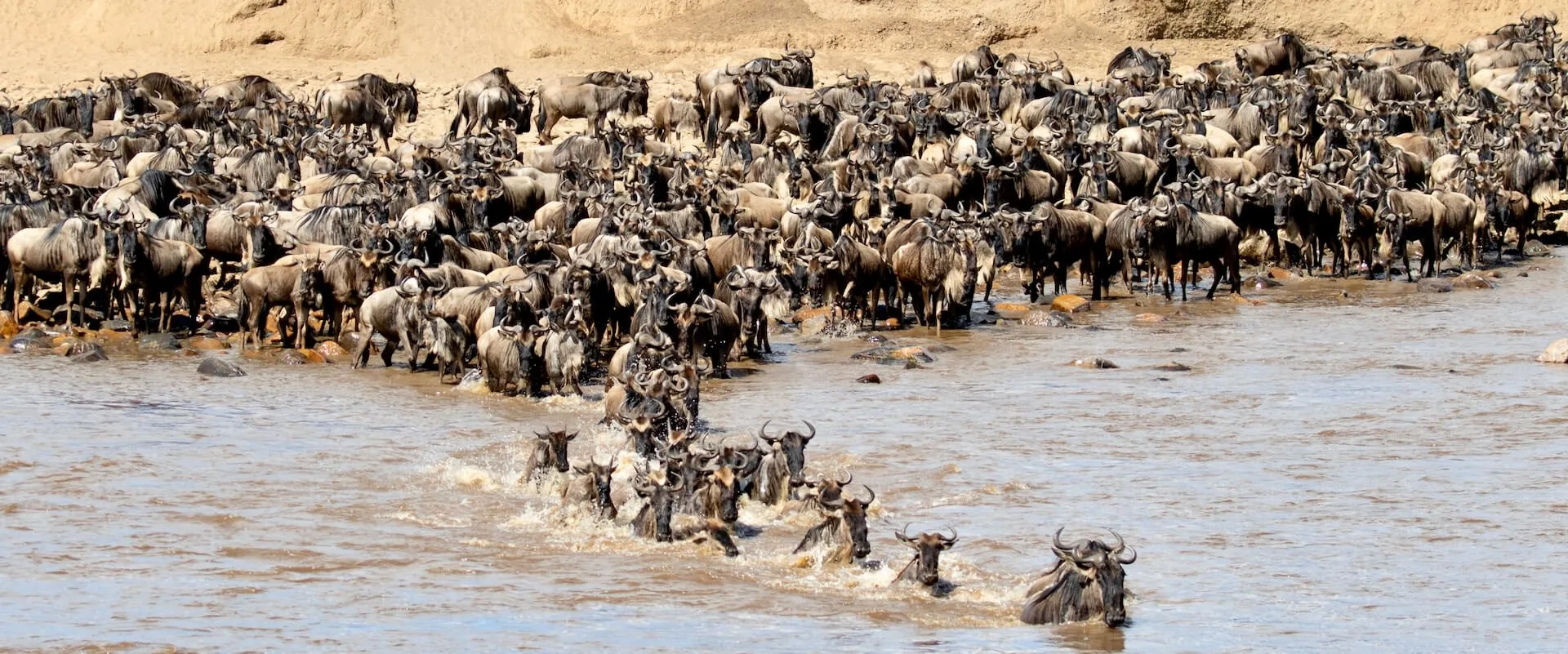
The Great Migration in Africa happens all year because the herds continuously circulate through the Serengeti–Mara ecosystem in…
Read article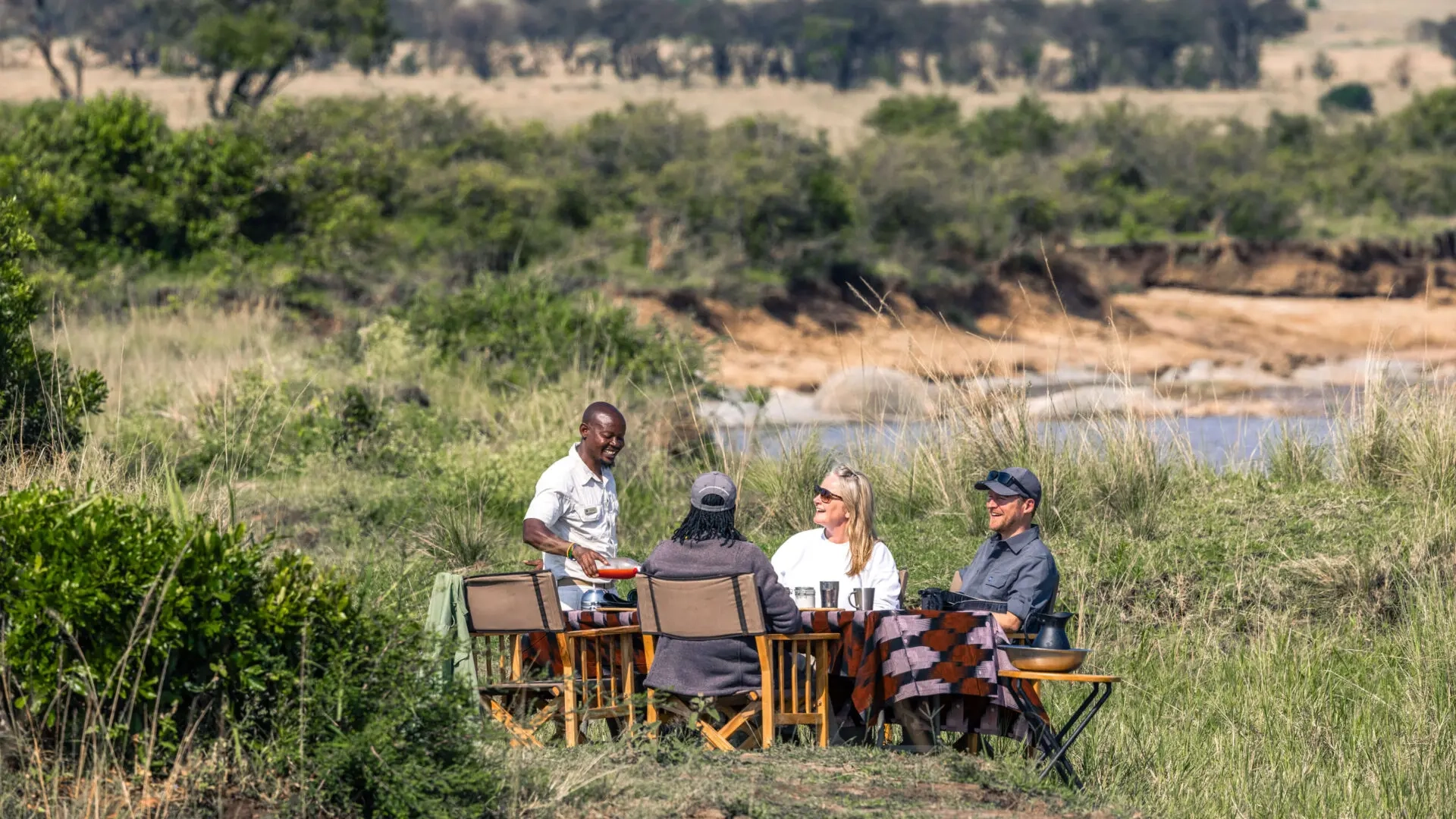
Definitive answer: A picnic lunch on safari is a packed or catered midday meal eaten at an approved…
Read article
Definitive answer: A bush dinner is an outdoor evening meal arranged in a safe safari setting away from…
Read articleLet us take you closer to the wildlife, people and places that make Africa extraordinary.
Plan Your Safari Today