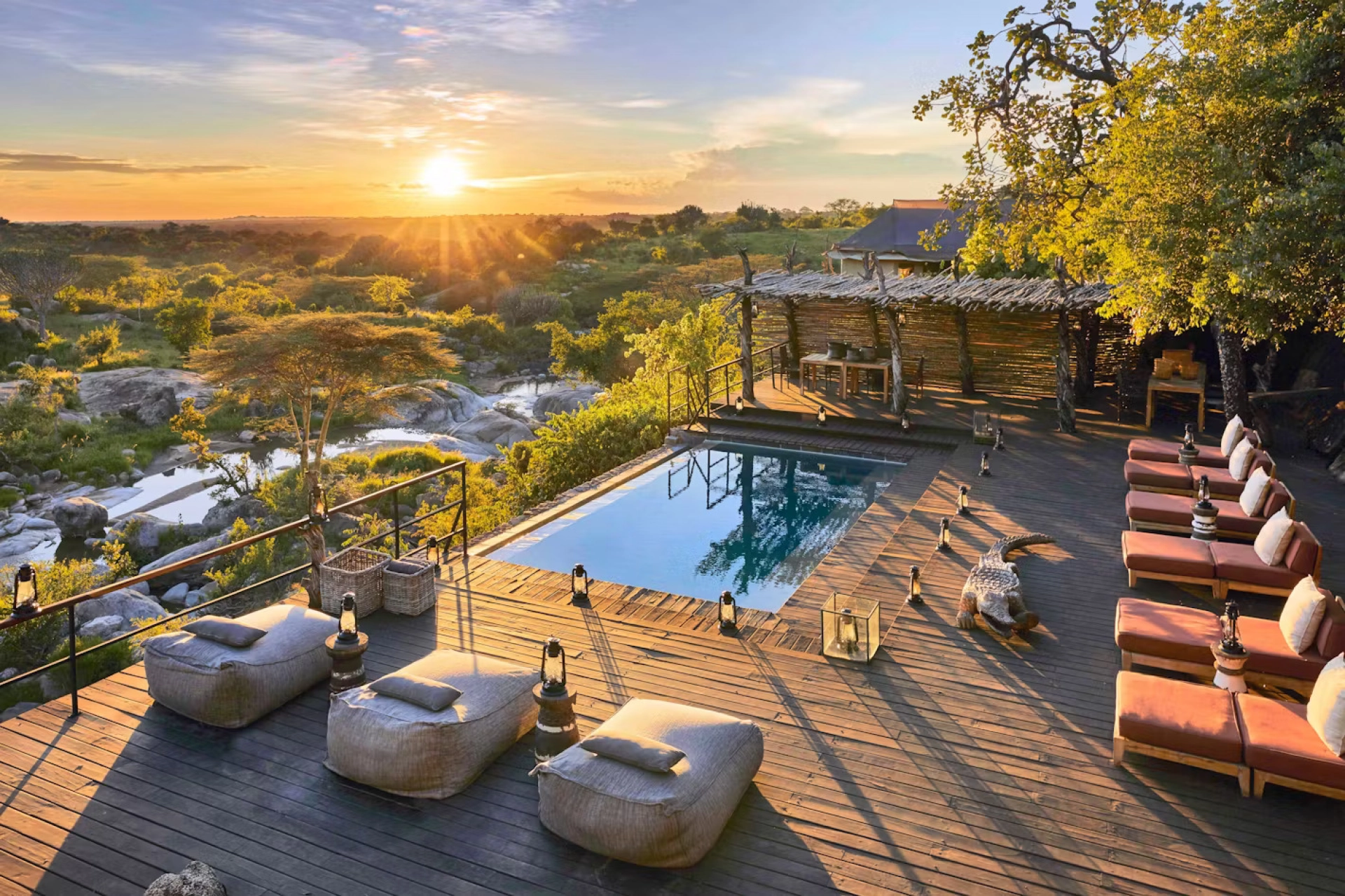
What should I look for when booking a luxury African safari?
When booking a luxury African safari, look beyond the room and compare the quality of guiding, wildlife location,…
Read article
Travel Guide
Driving slowly while a giraffe approaches your vehicle is exciting almost anywhere in the world. For many American families, experiences such as African Safari Wildlife Park in Ohio provide an entertaining introduction to animals they may…
Driving slowly while a giraffe approaches your vehicle is exciting almost anywhere in the world. For many American families, experiences such as African Safari Wildlife Park in Ohio provide an entertaining introduction to animals they may previously have seen only in documentaries, zoos or books. You remain in your own vehicle, travel through a drive-through wildlife area and encounter animals including giraffes, zebras, bison, antelope and other species at remarkably close range.
For children in particular, this can be memorable. But is visiting an African safari wildlife park in Ohio anything like going on a real safari in Africa? Not really. Both experiences can involve wildlife, vehicles and cameras, but that is where most of the similarity ends.
A genuine African wildlife safari takes place within vast natural ecosystems where animals move according to rainfall, food, territory, reproduction, predators and instinct rather than the needs of visitors. In destinations such as Kruger National Park in South Africa, Serengeti National Park in Tanzania and the Masai Mara National Reserve in Kenya, wildlife exists within functioning ecological landscapes covering hundreds of thousands or millions of hectares.
A lion may be kilometres away. A leopard may never appear. Elephants may block your road unexpectedly. Wildebeest may stretch across the horizon. You search rather than simply arrive. That uncertainty is one of the defining differences between a drive-through wildlife attraction and a true African safari holiday. This guide compares African Safari Wildlife Park in Port Clinton, Ohio with three of Africa’s most famous wildlife destinations: Kruger National Park, Serengeti National Park and Masai Mara National Reserve.
The purpose is not to criticise the Ohio park. It provides an accessible wildlife experience and educational opportunity close to home for American travellers. Its official site currently offers both a drive-through safari and a seasonal walk-through safari, with hundreds of animals from different parts of the world. Instead, the comparison helps travellers understand what changes when you go from an animal park to a true African wilderness safari.
African Safari Wildlife Park is located in Port Clinton, Ohio, near Lake Erie. Visitors drive their own vehicles through a wildlife area where selected animals move close to cars. The park also operates a walk-through section where guests can see additional species and participate in certain managed animal encounters. The drive-through experience includes animals such as giraffes, zebras, bison, alpacas, bongo, deer, gemsbok and other species. The walk-through section includes animals such as lemurs, gibbons, kangaroos, capybaras, porcupines and tortoises.
This makes it more diverse than the name “African Safari Wildlife Park” might initially suggest because not every species originates from Africa. The attraction’s central appeal is interaction and proximity. A giraffe may place its head close to your window. Bison may approach the vehicle. Visitors can feed certain animals using approved park food while following specific safety rules. For families who may never have experienced large wildlife at close range, that can be tremendously exciting.
It is better understood as a combination of a drive-through wildlife park and walk-through zoological attraction rather than a wilderness safari reserve. Traditional zoos usually display animals in individual or species-specific habitats while visitors walk between exhibits. Drive-through parks reverse part of that relationship. The visitor remains inside the vehicle while certain animals move through larger shared spaces. That can create a stronger feeling of immersion. However, these animals are still living within a managed wildlife facility. That is fundamentally different from entering the Serengeti ecosystem, driving through Kruger National Park, or watching wildebeest cross the Mara River between Tanzania and Kenya.
The Ohio drive-through safari allows guests to use their own vehicles. The park requires visitors to remain inside vehicles and follow specific safety procedures, including keeping doors closed, respecting the five-mile-per-hour speed limit and feeding only according to park rules. This produces a fun reversal of the conventional zoo experience. Instead of humans walking past cages, vehicles move slowly through animal spaces. For younger children, the excitement of a giraffe approaching the car can be enormous. The experience also makes wildlife more tangible. A giraffe seen in a picture is one thing. Seeing how enormous its head is beside a vehicle window is another.
The walk-through section adds further species and educational experiences. The attraction lists animals including ring-tailed lemurs, white-handed gibbons, red kangaroos, sloths, macaws and capybaras among its walk-through wildlife. This is useful because it exposes visitors to biodiversity beyond large ungulates. Children can begin asking: Where does this animal naturally live? What does it eat? Is it endangered? How is its habitat changing? Those questions can become the beginning of a lifelong interest in wildlife.
The biggest difference is not the species list. It is ecology. A real African safari takes place within a living ecosystem. Predators hunt. Prey responds. Animals migrate. Territories change. Rivers flood. Waterholes shrink. Rain transforms landscapes. Drought changes animal distribution. Wild dogs travel enormous distances. Elephants reshape vegetation. Vultures locate carcasses. Hyenas compete with lions. Nothing is arranged for a visitor. That unpredictability is what makes a real safari in Africa fundamentally different.
Animals at a managed wildlife park are accustomed to the structures surrounding their environment. Some may associate vehicles with feeding opportunities. Wild animals inside an African national park behave according to very different pressures. A wild elephant may ignore your vehicle completely. Another may stop and watch it carefully. A lion may sleep for hours. A cheetah may suddenly begin hunting. A leopard may remain invisible despite being only metres away. This is why an African safari rarely guarantees specific animals. The inability to guarantee a sighting is actually evidence that the animals are living independently.
This surprises first-time safari travellers.

They sometimes imagine driving through an African national park and immediately encountering lions, elephants and giraffes beside the road. Sometimes that happens. Sometimes you may drive for an hour seeing mainly impalas, birds and distant herbivores. Then everything changes. A leopard crosses the road. Wild dogs appear. Elephants emerge from woodland. The uncertainty creates anticipation. You begin learning to notice tracks, bird alarm calls and animal behaviour. That process of searching is one of the essential pleasures of an authentic African safari experience.
If an American visitor enjoys the drive-through wildlife experience in Ohio and wants to experience a genuine safari, Kruger National Park is one of the best places to start. Kruger is South Africa’s flagship national park. SANParks describes it as covering nearly two million hectares, making it dramatically larger than any conventional drive-through wildlife attraction. It protects an extraordinary variety of life and currently lists roughly 148 mammal species. The scale is difficult to comprehend until you are there. You can drive for hours and remain inside the park. Entire towns, rest camps, rivers and different ecological zones exist within its boundaries.
Kruger lies in northeastern South Africa, primarily across Mpumalanga and Limpopo provinces. International travellers often reach it through Johannesburg, followed by a road transfer or domestic flight. Regional airports include: Skukuza Airport Kruger Mpumalanga International Airport and Hoedspruit Airport for parts of the Greater Kruger region. This accessibility contributes to Kruger’s popularity.
Kruger is one of the world’s most famous destinations for a Big Five safari. The Big Five are: African lion African leopard African elephant rhino and Cape buffalo. But Kruger’s wildlife extends far beyond them. Potential sightings include: cheetahs African wild dogs spotted hyenas giraffes hippos zebras wildebeest warthogs kudu impalas waterbuck and dozens of smaller mammals. SANParks describes Kruger as home to the classic range of African large mammals and carnivores, including lions, leopards, cheetahs, wild dogs and hyenas.
This is where Kruger provides an interesting bridge for American travellers accustomed to the Ohio wildlife park. You can also drive yourself through Kruger. But the similarity ends quickly. Nobody feeds giraffes from windows. Wildlife is not encouraged toward vehicles. You are searching millions of acres of habitat. You may choose a road because somebody reported lions earlier. When you arrive, the lions may have left. You begin looking for tracks. You stop at waterholes. You scan trees for leopards. A Kruger self-drive safari is therefore both accessible and genuinely wild.
First-time visitors may prefer guided open safari vehicle game drives. Professional guides understand: animal behaviour, tracks, bird calls, habitats, predator territories, and current wildlife patterns. A ranger may notice things an inexperienced visitor would drive straight past. For this reason, combining independent drives with guided activities can provide an excellent introduction.
Perhaps the strongest distinction from an Ohio wildlife park is that there is no certainty an animal will approach. A giraffe may remain two hundred metres away. You cannot feed it. You cannot call it. You cannot leave the road to follow it. You watch. That distance is part of respecting wildlife.
Travellers wanting a more luxurious version of the Kruger experience can stay in Greater Kruger private game reserves. These include areas such as: Sabi Sand Nature Reserve Timbavati Private Nature Reserve Klaserie Nature Reserve and Balule Nature Reserve. The private-reserve model provides professionally guided safaris, luxury lodges and generally smaller numbers of vehicles at sightings. This creates one of Africa’s strongest luxury safari experiences.
If Kruger represents extraordinary wildlife diversity, Serengeti National Park represents scale, movement and open landscapes.
Located in northern Tanzania, Serengeti is one of the most famous national parks in the world. UNESCO describes the park as approximately 1.5 million hectares of savanna and highlights the annual movement of enormous herds of wildebeest, zebra and gazelles as one of the world’s great natural spectacles. This is the landscape many travellers imagine when they picture an African safari. Golden grass. Flat horizons. Acacia trees. Lions. Wildebeest. Zebras. Dust. Storm clouds.
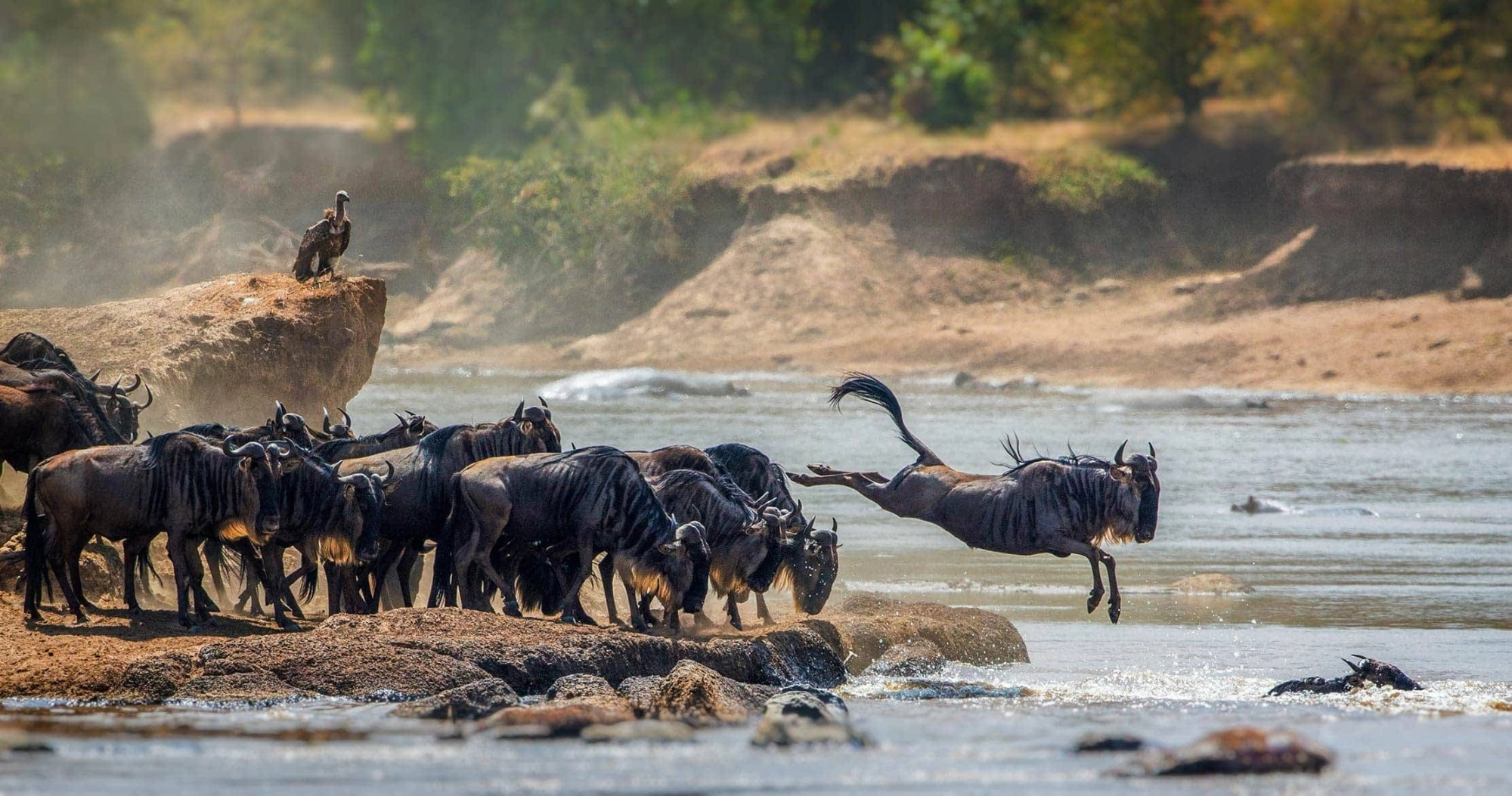
The Great Migration is one of the biggest differences between managed wildlife parks and natural ecosystems. Wild animals are not waiting at one location. They move. Millions of grazing animals circulate through the broader Serengeti-Mara ecosystem in response to rain, water and pasture. UNESCO describes this as the largest remaining major unaltered animal migration, with enormous herds travelling through Tanzania and Kenya. The migration demonstrates ecology at landscape scale. Grass grows. Animals arrive. Predators follow. The herds move onward.
One of the most exciting periods occurs in the southern Serengeti and Ndutu region during the wildebeest calving season. Huge numbers of calves are born over a relatively concentrated period. This attracts predators. Lions hunt. Cheetahs search for vulnerable calves. Hyenas patrol. Jackals wait for opportunities. Vultures circle. For wildlife photographers, it is one of Africa’s most dramatic natural events.
The Serengeti is famous for: African lions cheetahs leopards spotted hyenas and other predators. The open habitat can provide extraordinary opportunities to observe behaviour rather than simply see animals. You may watch lions stalking. Cheetahs scanning plains. Hyenas interacting around kills. This behavioural dimension is one of the greatest rewards of a genuine Tanzania wildlife safari.
Another iconic experience is a Serengeti hot-air balloon safari. Instead of driving, travellers float over the plains around sunrise. From the air, you appreciate the ecosystem’s scale. Herds become patterns. Tracks become visible. Rivers curve across the landscape. Although expensive, this is one of Africa’s most memorable safari experiences.
Across the international border from Tanzania lies Kenya’s Masai Mara National Reserve. The Mara forms part of the same broader ecosystem as the Serengeti. Wildlife crosses between the two countries according to ecological conditions rather than political boundaries. The reserve is particularly famous for: big cats Great Migration river crossings open grassland Maasai culture and exceptional wildlife photography.
Travellers often ask whether the Masai Mara or Serengeti is better. There is no universal answer. The Serengeti is much larger and provides extraordinary ecological variety. The Masai Mara is more compact, making wildlife concentrations easier to access in some seasons. The Mara is particularly famous during the period when migration herds enter Kenya. Serengeti provides different migration phases throughout much more of the annual cycle. Many serious safari travellers combine both.
The most famous migration images show thousands of wildebeest gathering beside a steep riverbank. They hesitate. Dust rises. Then animals begin plunging into the river. Others follow. The movement becomes chaotic. These Mara River crossings are dramatic because they are completely natural. No one schedules them. A herd may gather for hours and decide not to cross. Travellers can wait an entire day and see nothing. Another group may arrive moments before thousands of wildebeest enter the water. This unpredictability defines genuine wildlife travel.
The Mara has earned an extraordinary reputation for predators.
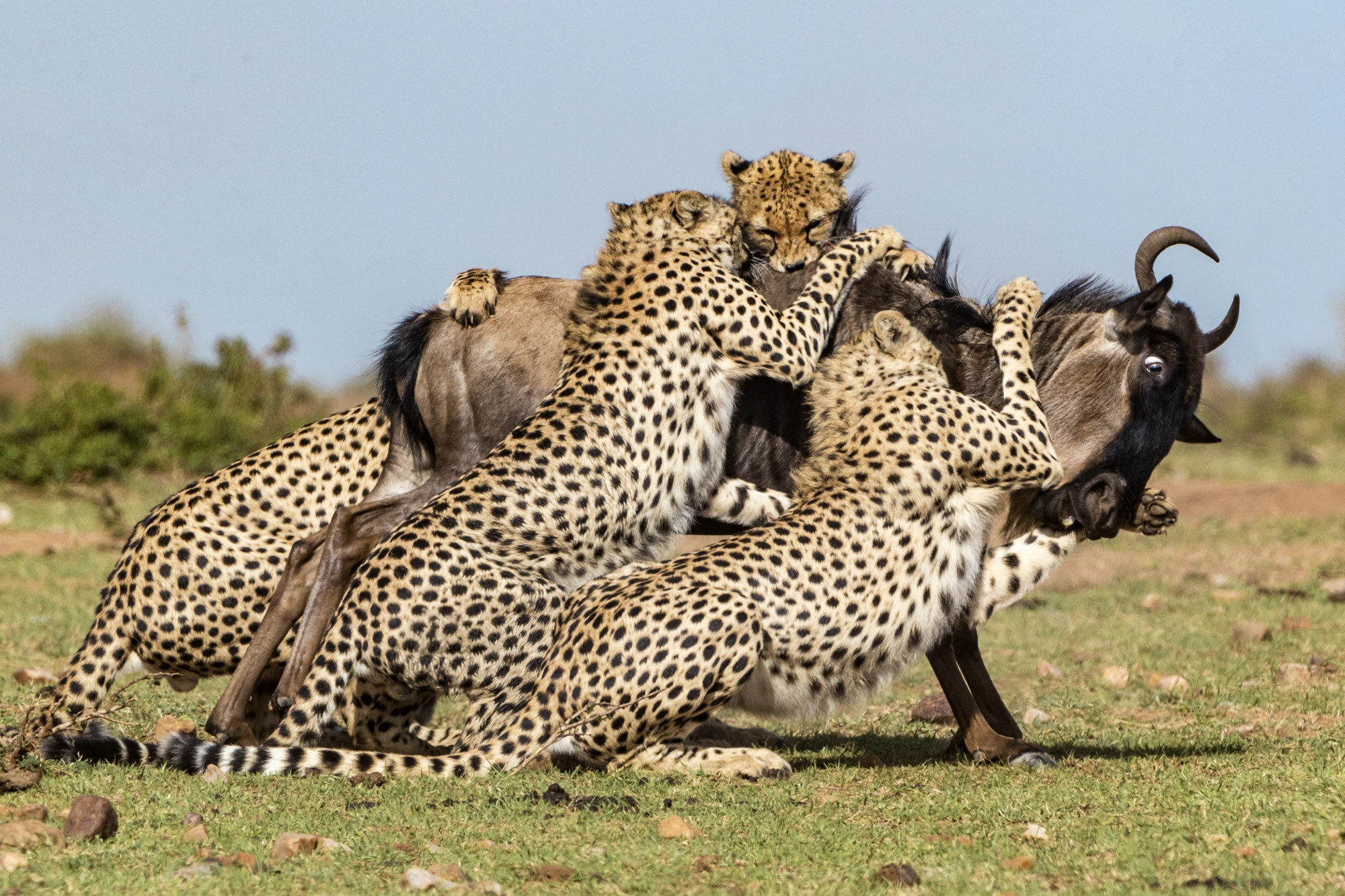
Lions in the Masai Mara are a major attraction. Cheetahs use open plains to hunt. Leopards occur along riverine woodland and other suitable habitat. For photographers, the relatively open environment can provide excellent viewing.
One thing the Ohio wildlife experience obviously cannot provide is the human cultural context of East Africa. The Maasai people have lived in the region for generations. Responsible cultural visits can help travellers understand: pastoral traditions, cattle culture, traditional architecture, community life, and changing relationships between people and conservation. The strongest cultural tourism programmes should benefit communities directly rather than turning culture into a superficial performance.
If you want convenience, Ohio wins. You can visit the park during a regional holiday and return home without crossing an ocean. If you want genuine wilderness, Kruger National Park is not comparable. Kruger is nearly two million hectares of functioning African ecosystem. At the Ohio park, proximity to animals is part of the attraction. In Kruger, the uncertainty of finding wildlife is part of the attraction. At Ohio, guests may feed designated animals. In Kruger, feeding wildlife is prohibited. At Ohio, a visit may last several hours. A meaningful Kruger safari usually deserves at least three to five days.
The differences become even more dramatic with Serengeti. The Ohio experience is controlled and accessible. Serengeti is landscape-scale wilderness. The Serengeti experience revolves around: seasonality, predator-prey relationships, migration, weather, ecology, and space. You may watch thousands of wildebeest in one view. You may drive through vast grasslands without seeing another tourist vehicle for periods. The horizon becomes part of the safari.
The Masai Mara offers an intense concentration of classic East African wildlife. During peak migration periods, the reserve can deliver astonishing numbers of herbivores and predators. You may spend a morning watching a lion pride, cheetah family, elephant herd and thousands of wildebeest. However, you must also accept that this is wild nature. Nothing approaches because you have food. No animal owes you a photograph. That difference matters.
For young children, the Ohio park can be an excellent introduction. Travel is easier. The experience is shorter. Wildlife encounters are predictable enough to maintain attention. There are no long international flights. A full family safari in Africa requires more preparation. Yet older children who love wildlife may find a real safari transformational. They learn patience. They begin identifying animals. They ask questions about conservation. They see predator-prey relationships. They understand that wildlife belongs to ecosystems rather than exhibits.
Both can be educational when interpretation is good. A wildlife park can teach species identification and encourage conservation interest. A wilderness safari goes further by showing relationships. Why are zebras beside wildebeest? Why are vultures circling? Why are impalas alarm calling? Why do elephants move toward water in the afternoon? Why is a leopard resting in a tree? These questions turn safari into ecological education.
Wildlife is potentially dangerous, but reputable safari systems minimise risk through strict rules and professional management. Visitors should: remain inside vehicles unless specifically instructed, listen to guides, never feed wild animals, never approach wildlife on foot without authorised professionals, and respect park rules. The safest safari traveller is one who understands that wild animals are genuinely wild.
A South Africa safari can be surprisingly accessible.

Kruger offers self-drive options, public rest camps and a wide range of accommodation. At the opposite extreme, private luxury lodges may cost thousands of dollars per night. East African safaris generally involve more extensive transport logistics because many travellers use safari vehicles with professional driver-guides. Costs depend on: season, national park fees, accommodation, private versus shared transport, trip length, and number of travellers. There is no single standard African safari cost.
For American travellers making their first safari journey, several options stand out. Choose Kruger National Park if you want excellent infrastructure, Big Five wildlife and the possibility of self-driving. Choose Serengeti National Park if the Great Migration and classic East African landscapes are your priority. Choose Masai Mara National Reserve if you want intense wildlife concentrations, big cats and a strong combination of safari and Maasai cultural experiences.
Another exceptional option is Uganda safari travel. Uganda offers something completely different from the plains-dominated safaris of Kenya and Tanzania. Travellers can combine: gorilla trekking in Bwindi Impenetrable National Park chimpanzee trekking in Kibale National Park Big Five wildlife Murchison Falls National Park Queen Elizabeth National Park and Lake Mburo National Park. This creates one of Africa’s most diverse wildlife journeys.
For wildlife lovers, one of the ultimate combinations is: Serengeti safari or Masai Mara safari followed by Uganda gorilla trekking. The first part provides lions, elephants, giraffes and migration wildlife. The second takes you into rainforest to meet a habituated family of mountain gorillas. Very few wildlife journeys provide greater contrast.
Responsible wildlife parks can contribute to education and conservation. But wild protected areas provide another function entirely. They preserve ecosystems. Kruger protects nearly two million hectares. Serengeti protects 1.5 million hectares within an even larger migration landscape. Protecting these enormous spaces preserves more than the species tourists photograph. It protects: soil, rivers, plants, insects, birds, predators, prey, migration routes, and ecological processes.
Safari tourism provides a financial argument for protecting wilderness. Lions alive in a protected ecosystem attract visitors year after year. Mountain gorillas generate conservation revenue through gorilla trekking permits. Safari lodges create employment. Guides develop careers. National park fees finance management. This is why responsible tourism can become an important conservation tool.
No. It is located in Port Clinton, Ohio, USA.
Yes. The park operates a drive-through safari where visitors use eligible private vehicles while following strict safety rules.
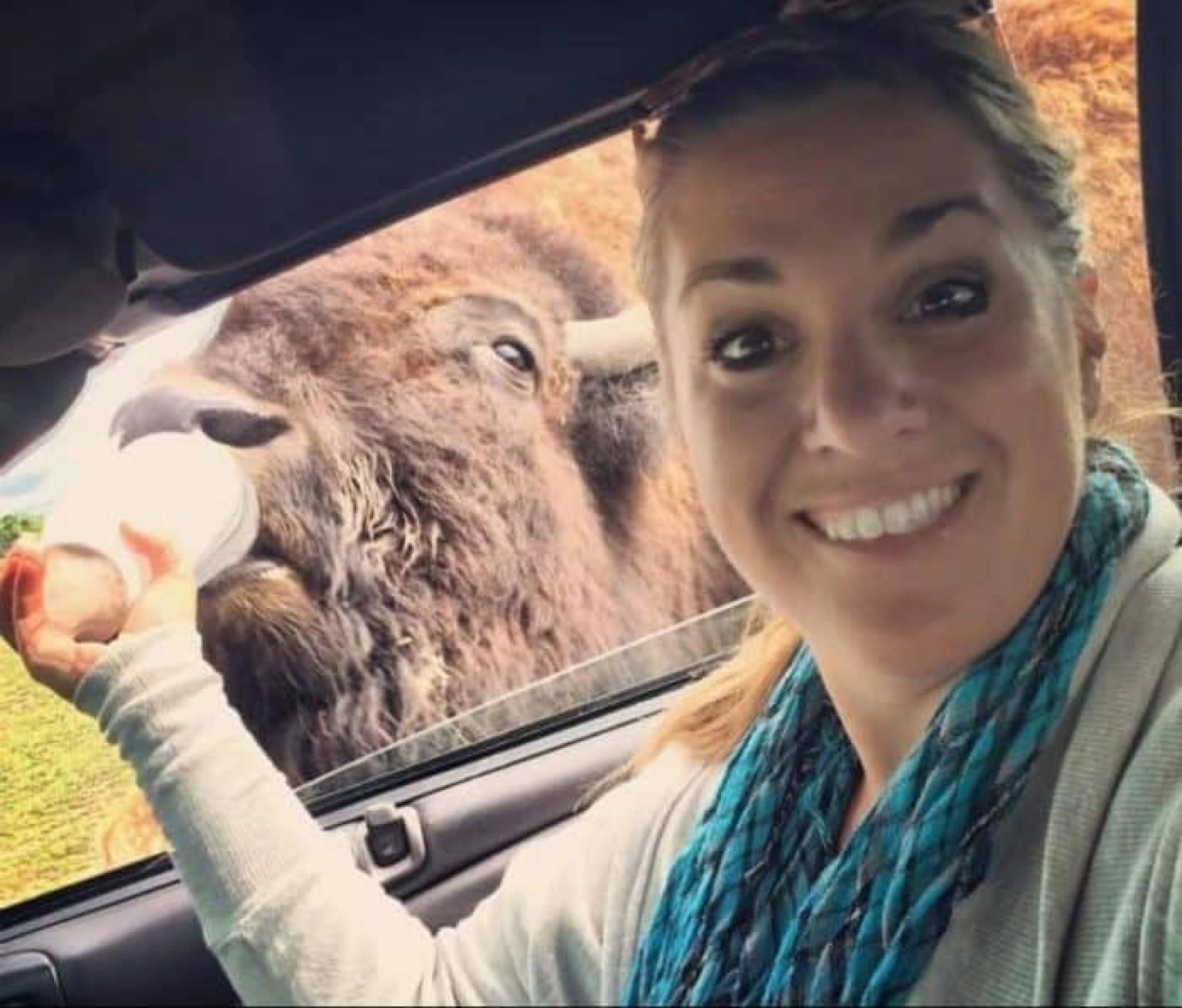
Yes. Giraffes are among its featured drive-through animals.
Yes. Kruger is one of the world’s largest and most important wildlife destinations, covering nearly two million hectares.
Yes. Self-drive safari is one of Kruger’s most popular travel styles.
Both are exceptional. Serengeti is much larger and hosts different phases of the Great Migration through the year, while the Masai Mara provides excellent wildlife concentrations and famous migration river-crossing areas.
The Great Wildebeest Migration moves through the wider Serengeti-Mara ecosystem across Tanzania and Kenya.
Kruger, Greater Kruger and many other South African reserves are excellent. The Masai Mara and Serengeti are outstanding for lions and other classic wildlife, though rhinos are generally less easily encountered there than in some southern African reserves.
Absolutely. Kenya or Tanzania can be combined with Uganda gorilla trekking or a Rwanda gorilla safari.
There is nothing wrong with beginning your wildlife journey close to home. A child’s fascination with a giraffe at African Safari Wildlife Park in Ohio may eventually inspire a lifelong interest in Africa. The drive-through park provides accessibility. It provides excitement. It gives families opportunities to see large animals closely. But a real African safari is a different experience. In Kruger National Park, you search nearly two million hectares for wildlife.
In the Serengeti, vast herds move according to rainfall rather than opening hours. In the Masai Mara, predators follow wildebeest across a living ecosystem. Animals do not approach because they expect feed. They may not approach at all. You become the observer. That difference—the transition from interacting with managed animals to quietly entering a functioning wilderness—is what makes a real safari extraordinary. If you enjoyed African Safari Wildlife Park Ohio, consider it the beginning rather than the substitute.
The next chapter could be watching elephants cross a Kruger road at sunrise. Listening to lions calling outside your safari lodge. Seeing thousands of wildebeest beneath storm clouds in Tanzania. Watching a cheetah scan the Masai Mara. Or walking through the misty rainforest of Bwindi Impenetrable National Park before sitting only metres from a wild mountain gorilla family. That is where safari changes from a wildlife attraction into a journey through one of the world’s great natural landscapes.
Adventure in the Wild Safaris can arrange tailor-made African wildlife safaris, including South Africa safaris, Kruger National Park safaris, Kenya Masai Mara safaris, Tanzania Serengeti safaris, Uganda gorilla trekking tours, Rwanda gorilla safaris, chimpanzee trekking safaris, Big Five safaris and multi-country African journeys.

Share This Article
When booking a luxury African safari, look beyond the room and compare the quality of guiding, wildlife location,…
Read article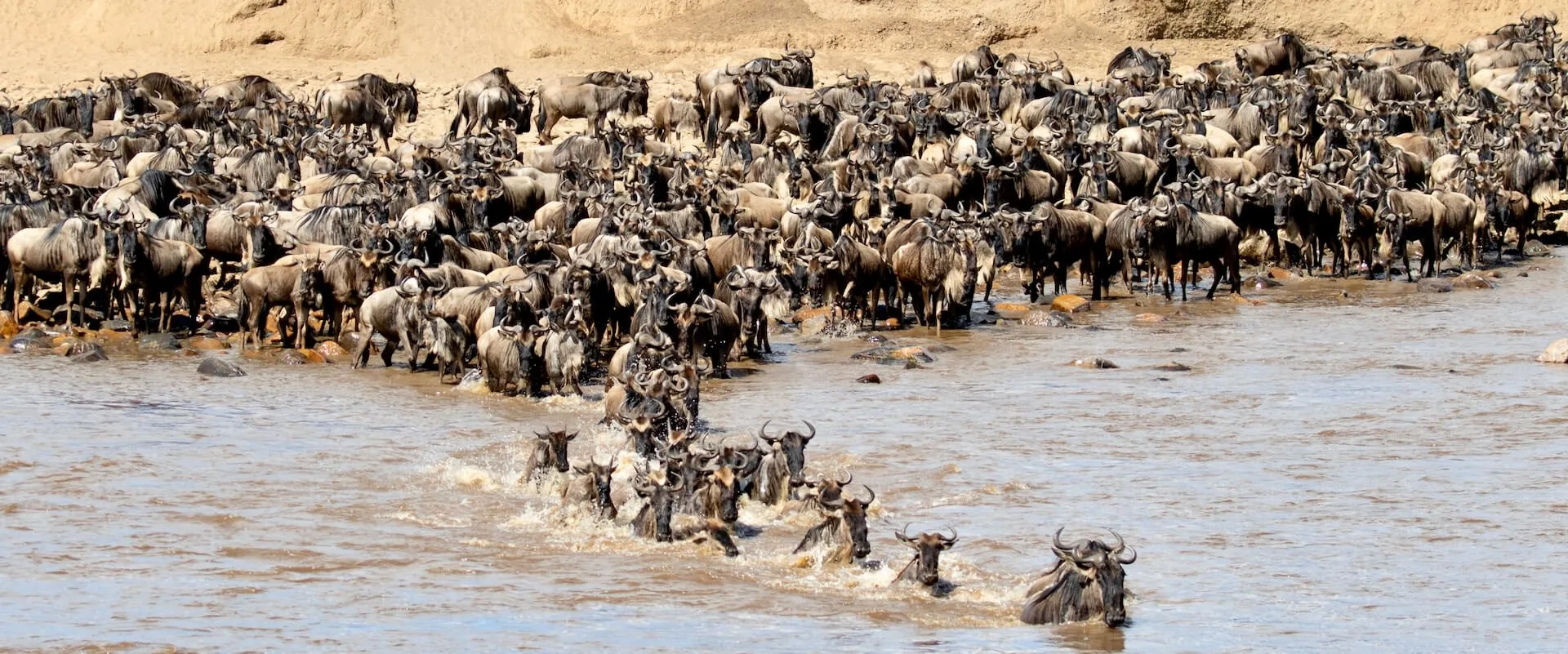
The Great Migration in Africa happens all year because the herds continuously circulate through the Serengeti–Mara ecosystem in…
Read article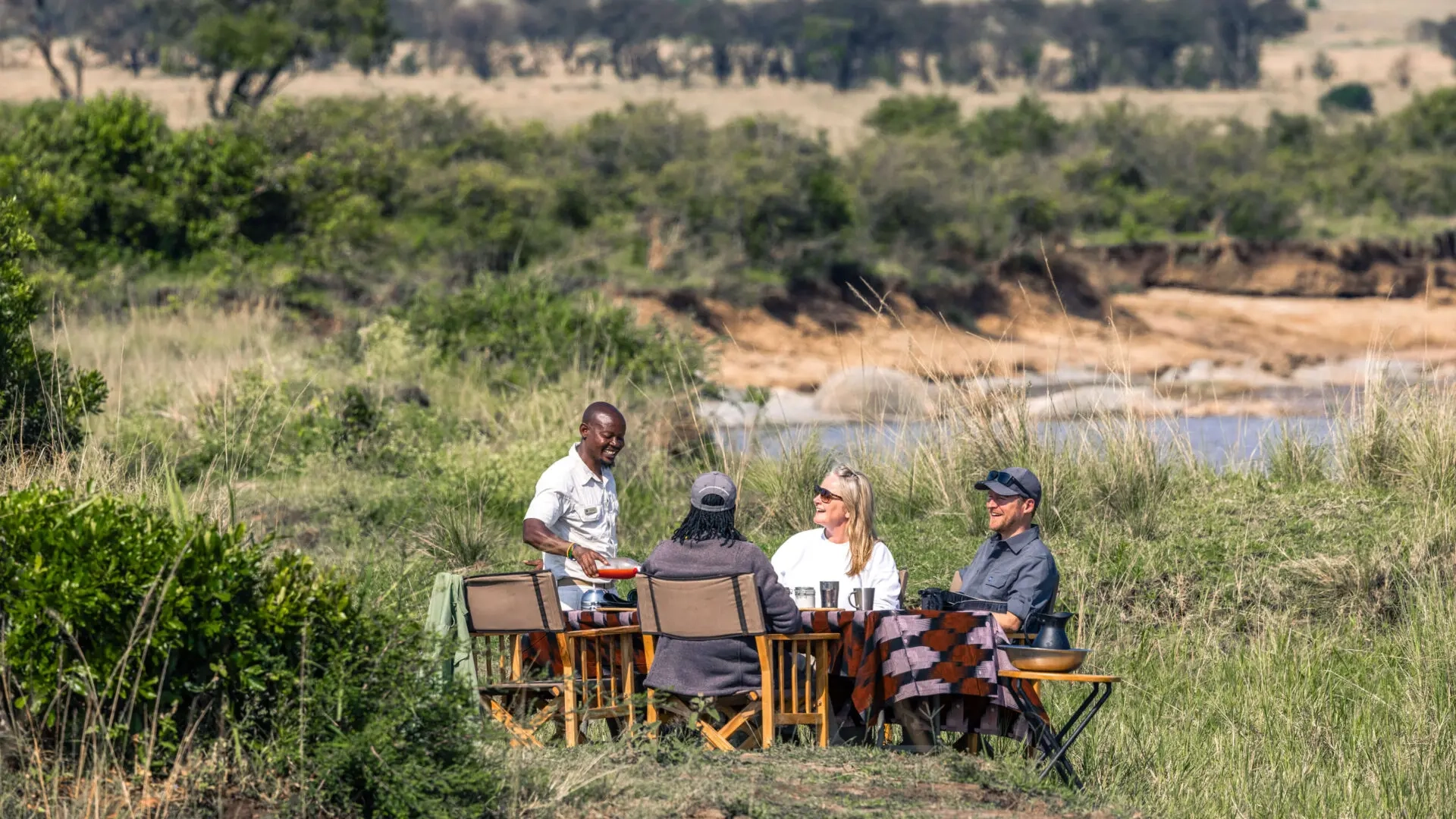
Definitive answer: A picnic lunch on safari is a packed or catered midday meal eaten at an approved…
Read article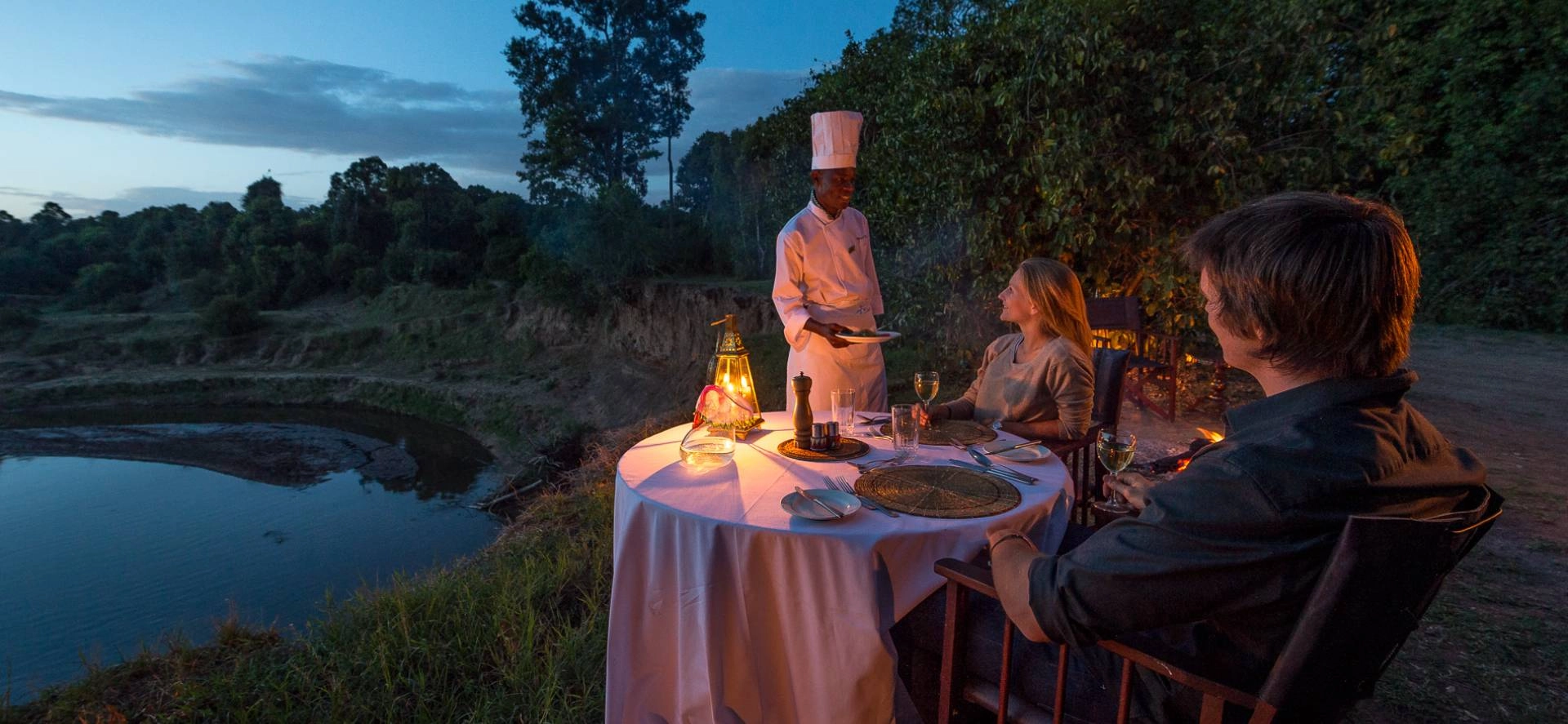
Definitive answer: A bush dinner is an outdoor evening meal arranged in a safe safari setting away from…
Read articleLet us take you closer to the wildlife, people and places that make Africa extraordinary.
Plan Your Safari Today