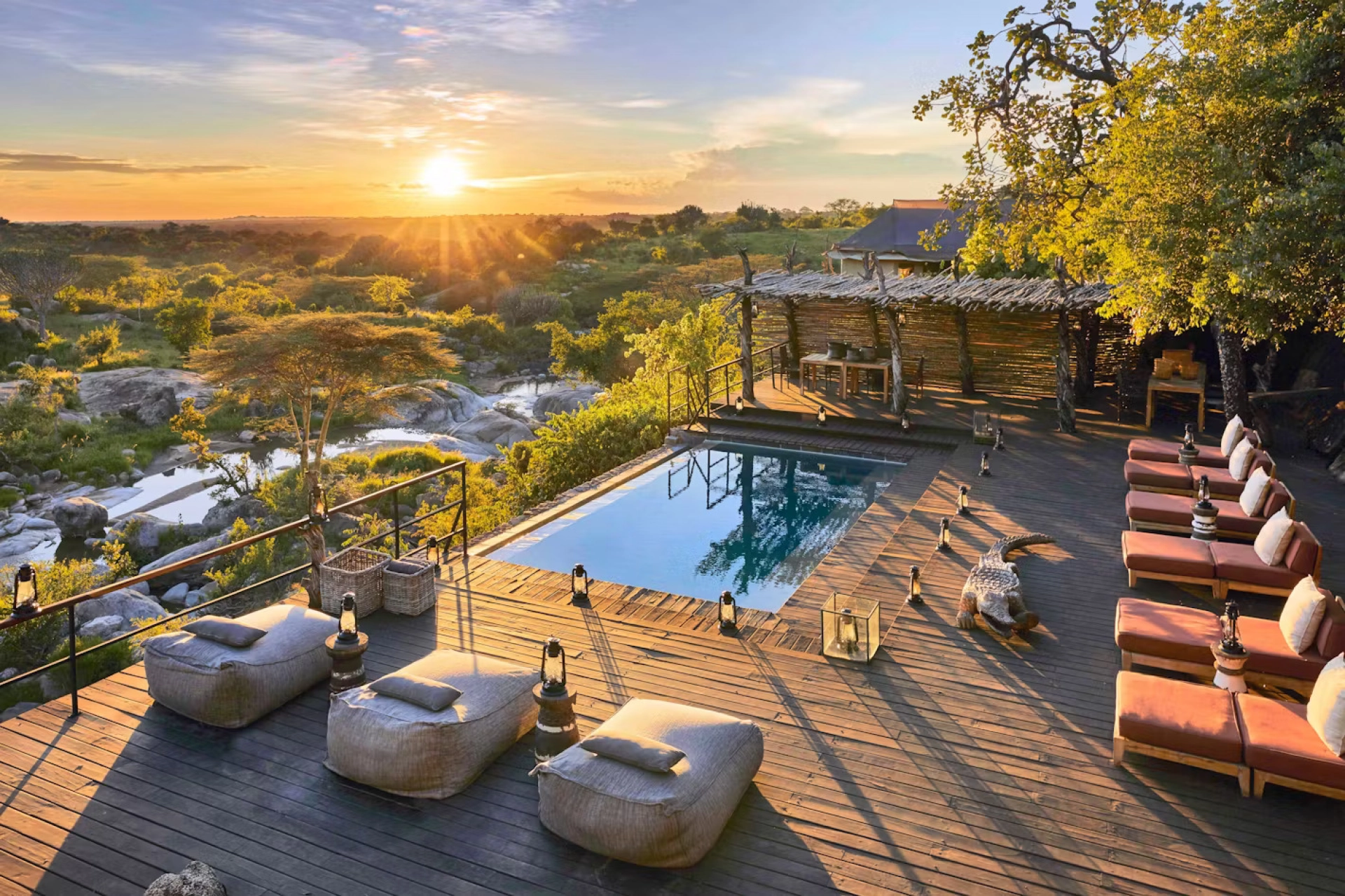
What should I look for when booking a luxury African safari?
When booking a luxury African safari, look beyond the room and compare the quality of guiding, wildlife location,…
Read article

Travel Guide
East Africa is one of the world's greatest adventure destinations because no single experience defines it. For one traveller, the ultimate East African adventure is standing quietly inside a rainforest as a mountain gorilla feeds only…
East Africa is one of the world’s greatest adventure destinations because no single experience defines it.
For one traveller, the ultimate East African adventure is standing quietly inside a rainforest as a mountain gorilla feeds only a few metres away. For another, it is watching thousands of wildebeest spread across the Serengeti or Maasai Mara. Someone else dreams of reaching the summit of Mount Kilimanjaro, rafting the Nile, tracking chimpanzees through tropical forest or ending a dusty safari beside the warm Indian Ocean.
All of these journeys can happen within the same region.
The best East African adventures combine some of the planet’s most celebrated wildlife areas with mountains, lakes, forests, rivers, coastlines and living cultures. Kenya’s official tourism promotion highlights experiences ranging from the Maasai Mara and Amboseli to walking safaris, balloon flights and coastal travel, while Tanzania combines wildlife safaris with Kilimanjaro, Mount Meru and the beaches and culture of Zanzibar.
Uganda and Rwanda add another dimension through primate trekking. Rwanda, for example, can combine Big Five wildlife in Akagera with mountain gorillas in Volcanoes National Park, while Uganda allows travellers to combine gorillas and chimpanzees with classic savannah safaris and Nile adventures. This extraordinary diversity means an East Africa adventure safari does not need to consist entirely of sitting inside a vehicle. You can walk. Climb. Paddle. Cycle. Trek. Fly in a hot-air balloon.
Cruise lakes and rivers. Meet communities. Track primates through forests. And eventually relax beside the ocean. The difficulty is not finding something to do. It is deciding what to leave out.
East Africa’s geography creates its diversity.
The Great Rift Valley cuts through the region, producing escarpments, lakes, volcanoes and fertile highlands. Enormous savannah ecosystems support some of the world’s greatest concentrations of large mammals. Equatorial forests protect primates. Snow and glaciers survive near the summit of Africa’s highest mountain. Great lakes create inland aquatic ecosystems, while the Indian Ocean coastline connects East Africa with centuries of Swahili maritime history.
Within a relatively compact part of the continent, travellers can move between radically different environments. Consider Uganda. A journey can begin beside the Nile in Murchison Falls National Park, continue into Kibale’s rainforest, cross the savannahs of Queen Elizabeth National Park and finish in the misty mountains of Bwindi. Or consider Tanzania. You can climb Kilimanjaro, descend into Ngorongoro Crater, cross the Serengeti and then fly to Zanzibar. Kenya offers similar variety through the Maasai Mara, Amboseli, Mount Kenya, Samburu, the Rift Valley and Indian Ocean coast.
Rwanda compresses extraordinary diversity into an even smaller geographical area. That makes East Africa particularly valuable for travellers who want several types of adventure without crossing an entire continent.
Few wildlife encounters anywhere can equal gorilla trekking in Uganda. Mountain gorillas survive naturally in only a small part of East-Central Africa, and Uganda protects populations in Bwindi Impenetrable National Park and Mgahinga Gorilla National Park. Bwindi is the country’s principal gorilla trekking destination. The experience begins early. Visitors report to the relevant park sector for briefing before being assigned to a habituated gorilla family and ranger-guided trekking group. Then the walking begins.
The forest is dense. Trails can be muddy. The terrain can be steep. Depending on the location of the gorillas, trekking may take considerably longer than expected. That uncertainty is part of the adventure. Mountain gorillas move naturally through their habitat rather than waiting beside established tourist paths. Trackers and guides interpret signs while communicating with colleagues who help locate the family. Then suddenly the forest changes. A branch moves.
A dark shape appears between leaves. The long hike becomes irrelevant. Watching a silverback sitting quietly in the vegetation or seeing young gorillas climbing through branches is one of those wildlife experiences that photographs struggle to communicate.
Travellers frequently arrive in Bwindi Impenetrable Forest with only one objective: gorillas. The forest deserves more attention. Bwindi is one of East Africa’s richest montane ecosystems and supports an extraordinary diversity of birds, butterflies, plants and mammals. Forest walks can introduce travellers to a side of Bwindi that gorilla trekking alone cannot reveal. Community and cultural experiences in the surrounding highlands can add another layer when arranged responsibly. This makes Bwindi particularly useful for travellers who want to spend several nights rather than arriving late, trekking the next morning and immediately leaving.
A slower stay also reduces the physical pressure created by long transfers.
Across the border, Volcanoes National Park offers another world-class mountain gorilla experience. The setting is dramatically different. The Virunga volcanoes rise above cultivated highlands, creating one of Africa’s most recognisable mountain landscapes. Rwanda’s official tourism platform describes Volcanoes as its principal gorilla trekking destination and currently lists the standard international gorilla permit at USD 1,500 per person, with different promotional or resident categories applying in some circumstances. Rwanda’s major advantage is accessibility.
The journey from Kigali to the Musanze area is relatively straightforward, allowing travellers with limited time to include gorilla trekking within a short itinerary. Yet rushing would miss much of the region. Golden monkey tracking, volcano hiking, cultural experiences and excursions around the wider Virunga landscape can justify additional nights. A Rwanda gorilla safari also combines extremely well with Akagera National Park for travellers wanting primates and conventional African wildlife in the same country.
Travellers regularly ask whether Uganda or Rwanda is better for gorilla trekking. There is no universal answer. Uganda often appeals to travellers wanting a longer and more varied safari combining Bwindi, Kibale, Queen Elizabeth, Murchison Falls and Lake Mburo. Rwanda appeals strongly to travellers prioritising shorter transfers and easy integration with Kigali. The landscapes also feel different. Bwindi is an enormous, ancient forest with steep valleys and multiple trekking sectors.
Volcanoes National Park has a dramatic Virunga setting dominated by volcanic mountains and bamboo-rich habitat. For travellers with enough time and budget, trekking in both countries can be extraordinary.
Mountain gorillas receive more international attention, but chimpanzee trekking in Uganda can be equally fascinating. Kibale National Park is Uganda’s best-known chimpanzee trekking destination. The experience differs completely from gorilla trekking. Chimpanzees are often more active. They move through the canopy. They vocalise loudly. Groups can separate and regroup. At times, the forest erupts with sound before you have seen a single chimpanzee. Then individuals begin appearing between the trees.
Watching chimpanzees interact can reveal behaviour that feels strikingly familiar. They groom. Play. Compete. Communicate. Use social alliances. Mothers care for young. Adult males navigate complicated hierarchies. For travellers interested in primate behaviour, combining gorilla trekking and chimpanzee trekking creates one of Africa’s richest wildlife journeys.
If mountain gorillas represent East Africa’s forests, the Maasai Mara represents its open savannah.
The Mara is one of the world’s legendary wildlife destinations. Lions rest on grassland. Cheetahs scan open plains. Elephants move between river systems. Giraffes appear above scattered trees. Hyenas patrol enormous territories. During the broader migration season, vast numbers of wildebeest and zebras move through the Mara-Serengeti ecosystem. Kenya’s tourism authority promotes the Maasai Mara as one of the country’s premier wildlife regions and highlights the annual wildebeest migration period as one of Kenya’s major seasonal safari attractions.
But the Mara is rewarding even when enormous migration herds are elsewhere. Resident wildlife remains exceptional. A Maasai Mara safari is worthwhile year-round, not only during a river crossing.
The Great Wildebeest Migration is not a single event. It is a continuous ecological cycle involving wildebeest, zebras and other herbivores moving through the Serengeti-Mara ecosystem in response to rainfall, grazing and water. This distinction matters enormously when planning. Travellers often ask, “When is the migration?” The answer is: throughout the year. The location changes. Calving traditionally draws travellers toward the southern Serengeti ecosystem early in the year. As conditions change, herds move northward.
River crossings can occur around the northern Serengeti and Maasai Mara during parts of the dry season, but exact timing is controlled by nature. Rain can alter movements. Herds can cross a river and cross back. Nothing is guaranteed. A responsible Great Migration safari therefore focuses on positioning travellers in the correct broader region while maintaining realistic expectations.
The Serengeti National Park is one of Africa’s great wilderness landscapes. The name has become almost synonymous with safari. Tanzania’s official tourism platform identifies the Great Migration and wildlife safaris as defining national experiences, alongside the country’s mountain and coastal attractions. The Serengeti’s appeal lies partly in scale. Grasslands stretch toward distant horizons. Kopjes interrupt open plains. Woodland appears in other sections. Predators take advantage of enormous herbivore populations. Lions are particularly prominent, while cheetahs thrive in suitable open terrain and leopards occupy woodland and riverine environments.
A Serengeti safari should be given time. Trying to experience the park in a single rushed day misses the rhythm of the ecosystem. Multiple nights allow travellers to observe different habitats and give wildlife encounters space to develop naturally.
The Ngorongoro Crater provides one of East Africa’s most dramatic safari settings. From the rim, the crater floor appears almost like a natural amphitheatre. Descending the road reveals grassland, wetlands, woodland and alkaline lake habitat supporting an impressive concentration of wildlife. Lions, buffalo, zebras, wildebeest, hyenas and numerous other animals can be encountered. Black rhinos are among the most sought-after sightings, although they should never be guaranteed. Ngorongoro combines easily with Tarangire and the Serengeti, making it a cornerstone of Tanzania’s Northern Safari Circuit.
The crater is popular, so travellers wanting solitude should understand that vehicle numbers can be significant during busy periods. Its value lies in the extraordinary landscape and concentrated ecosystem rather than exclusivity.
Tarangire is sometimes treated merely as a stop before the Serengeti. That underestimates it. Tarangire National Park has a strong visual identity created by huge baobab trees, seasonal wetlands and the Tarangire River. Elephants are among its greatest attractions. During dry periods, the river becomes increasingly important to wildlife. Giraffes, zebras, antelope and predators add to the experience. The baobabs make Tarangire especially rewarding for photography. Instead of photographing an elephant against generic bush, you can frame wildlife beneath one of Africa’s most distinctive trees.
Few wildlife photographs are more recognisably East African than elephants walking beneath Mount Kilimanjaro. Amboseli National Park in southern Kenya provides the classic setting. Kenya’s official tourism material highlights Amboseli as one of its major safari regions, particularly associated with elephants. The mountain itself lies across the border in Tanzania, but its enormous snow-touched summit dominates the skyline when weather permits. Cloud frequently hides Kilimanjaro. Photographers should therefore be patient.
Early morning often provides the best chance of clear views. Even without the mountain, Amboseli remains rewarding because wetlands and open plains support substantial wildlife.
Northern Kenya changes the visual language of safari. The landscape becomes drier. Mountains rise in the distance. The Ewaso Ng’iro River provides a lifeline through the semi-arid environment. Samburu National Reserve and neighbouring protected areas support wildlife associated particularly strongly with northern Kenya. Reticulated giraffes are among the most striking. Grevy’s zebras differ from the more familiar plains zebra. Gerenuk stand on their hind legs to browse. Beisa oryx add another desert-adapted species.
Kenya Tourism highlights Samburu, Shaba and Buffalo Springs for their distinctive northern wildlife. This makes Samburu an excellent complement to the Maasai Mara. Rather than seeing similar wildlife in another park, travellers experience a genuinely different ecosystem.
For hikers, East Africa’s most famous adventure rises to 5,895 metres above sea level. Mount Kilimanjaro is Africa’s highest mountain and one of the world’s great trekking objectives. No technical mountaineering skill is required on the standard trekking routes, but that should never be confused with an easy climb. Altitude is the central challenge. The body needs time to acclimatise. Travellers who choose an itinerary solely because it is shorter or cheaper may reduce their chances of reaching the summit comfortably.
Longer routes generally provide more time for acclimatisation. Physical fitness helps, but altitude can affect strong athletes as well as casual hikers. The mountain also crosses several ecological zones. Trekkers move from cultivated lower slopes through forest, heath and alpine desert before eventually reaching the cold high-altitude summit environment. Tanzania’s official tourism authority identifies Kilimanjaro and Mount Meru among the country’s signature hiking experiences.
Mount Kilimanjaro may be higher, but Mount Kenya offers a very different mountain adventure.
Its jagged volcanic peaks create a more rugged visual profile. Point Lenana is the most common trekking objective for hikers who are not technical climbers, while the highest summits require specialised mountaineering skills. Routes pass through forests, moorland and Afro-alpine landscapes. Giant lobelias and other unusual high-altitude vegetation create an almost prehistoric atmosphere. Mount Kenya can be combined with Laikipia, Samburu or central Kenyan conservancies. For active travellers, this produces an excellent hiking and wildlife safari in Kenya.
Uganda and Rwanda offer mountain adventures beyond gorilla trekking. The Virunga volcano chain creates dramatic hiking opportunities. Mount Muhabura, Mount Gahinga and Mount Sabyinyo dominate the Uganda-Rwanda border landscape, while other volcanic peaks extend into the wider Virunga region. A Mount Gahinga hike provides an excellent option for travellers staying around Mgahinga Gorilla National Park. These hikes are physically demanding and weather can change quickly. But the reward is a deeper understanding of the mountainous ecosystem that protects mountain gorillas and golden monkeys.
The Nile begins one of its most famous journeys from the Lake Victoria region around Jinja. For adventure travellers, white-water rafting in Jinja has long been one of Uganda’s signature adrenaline activities. Powerful rapids create an exciting day on the river. Professional rafting operators provide safety equipment, briefings and experienced guides. The river should be treated with respect. This is not an activity for ignoring instructions simply because the water appears calm in some sections.
Jinja also offers kayaking, boat trips, cycling and other outdoor activities. This makes it an excellent addition at the beginning or end of a longer Uganda safari.
Farther north, the Nile creates a completely different adventure. Inside Murchison Falls National Park, the river is forced through a narrow rocky gorge before exploding downstream. The resulting waterfall is one of Uganda’s most powerful natural landmarks. A boat safari toward the base of Murchison Falls combines scenery with wildlife. Hippos occupy the river. Crocodiles rest along the banks. Elephants, buffalo and antelope may approach the water. Birdlife is exceptional.
The boat journey is best combined with game drives north of the Nile, where travellers can search for lions, giraffes, elephants, buffalo and Uganda kob. This combination makes Murchison one of Uganda’s most complete safari destinations.
Uganda’s rhino conservation story adds another adventure to the route between Kampala and Murchison Falls. At Ziwa Rhino Sanctuary, guided experiences allow visitors to observe rhinos on foot under controlled conditions. Walking in an environment occupied by such enormous animals feels very different from viewing them from a safari vehicle. Guides control the experience carefully. Visitors must follow instructions and maintain appropriate distances. Ziwa is frequently incorporated into road safaris toward Murchison Falls, allowing travellers to add rhinos to a broader Ugandan wildlife journey.
Lake Mburo National Park is one of Uganda’s best destinations for travellers wanting to leave the vehicle. Guided walking safaris in Lake Mburo can reveal zebras, impalas, giraffes and other wildlife while providing a much more intimate understanding of tracks and vegetation. The park’s relatively compact size makes it ideal as the first or final wildlife stop on journeys between Entebbe and southwestern Uganda. Horseback riding is also available through authorised operations in the wider Lake Mburo area.
Seeing zebras while on horseback creates an entirely different safari perspective.
Rwanda’s Congo Nile Trail follows the Lake Kivu region through some of the country’s most beautiful highland scenery. Visit Rwanda describes the route as approximately 227 kilometres long, running roughly parallel to the eastern shore of Lake Kivu and suitable for hiking and cycling itineraries. The route provides a completely different experience from gorilla trekking. Travellers pass cultivated hills, villages, coffee-growing areas and lake views. Instead of searching for large wildlife, the adventure focuses on landscape and everyday rural life.
It is particularly appealing to travellers who want active experiences without climbing a major mountain.
Rwanda’s Nyungwe region protects one of East Africa’s important montane forests.
Chimpanzee trekking is a major attraction, but the Nyungwe canopy walk provides another perspective. Suspended above the forest, visitors look across layers of vegetation normally seen only from ground level. The experience can be challenging for travellers uncomfortable with heights. For everyone else, it creates a memorable sense of the forest’s vertical scale. Nyungwe combines well with Lake Kivu and Rwanda’s wider primate circuit.
A safari from the ground shows you individual animals. A hot-air balloon safari reveals the landscape. Before sunrise, travellers gather while the balloon is prepared. The burner fires. The balloon rises. Roads disappear. River systems become visible. Wildlife becomes part of a much larger ecosystem. Kenya Tourism includes hot-air ballooning over the Mara among its recognised signature safari experiences. The flight itself is weather dependent. It is also relatively expensive.
But for travellers seeking a once-in-a-lifetime perspective on East African savannah, it can be extraordinary.
After early mornings, dusty roads and long game drives, the Indian Ocean feels especially luxurious. Zanzibar combines beaches with Swahili culture, historical architecture and spice-growing traditions. Stone Town provides narrow streets, carved doors, markets and historical buildings reflecting centuries of Indian Ocean trade. Elsewhere, beach resorts provide opportunities for swimming, snorkelling, diving and relaxation. Tanzania’s official tourism promotion specifically presents Zanzibar’s coast and culture as part of the country’s broader combination of wildlife, mountains and Indian Ocean experiences.
A Tanzania safari and Zanzibar holiday remains one of Africa’s classic combinations for good reason.
Kenya offers its own safari-and-beach combination. Mombasa, Diani, Watamu, Malindi and Lamu each provide different experiences. Diani Beach is associated with long white-sand beaches and resorts. Watamu offers marine experiences. Lamu provides a stronger historical and Swahili architectural identity. Kenya Tourism promotes the coastline not simply for beaches but also for its Swahili cultural heritage. Combining the Maasai Mara with the coast creates an excellent wildlife-and-ocean itinerary without leaving Kenya.
Mountain gorillas are not the only primates worth trekking in the Virungas. Golden monkey tracking is available in the volcanic region and provides a faster-moving, energetic forest experience. Golden monkeys move through bamboo and other vegetation in groups. Their orange-gold colouring makes them particularly attractive photographic subjects when light reaches the forest. Rwanda commonly combines golden monkey tracking with gorilla itineraries in Volcanoes National Park. Uganda also offers golden monkey experiences in Mgahinga.
For primate enthusiasts, combining gorillas, chimpanzees and golden monkeys creates an exceptional East African itinerary.
Queen Elizabeth National Park contains one of Uganda’s most rewarding boat-based wildlife experiences. The Kazinga Channel connects Lake George and Lake Edward. Boat trips reveal hippos, crocodiles, buffalo and abundant waterbirds. Elephants may appear along the shoreline. The advantage of a boat safari is perspective. Animals often behave differently near water than they do beside roads. Photographers can work from lower angles. Birders gain access to species associated with wetlands.
Combined with game drives, the Kazinga Channel makes Queen Elizabeth National Park considerably more varied than a conventional vehicle-only safari.
Southern Queen Elizabeth National Park’s Ishasha sector is famous for lions that sometimes rest in fig trees. Tree-climbing behaviour should never be guaranteed. Lions are wild animals and may spend the day on the ground or remain difficult to locate. But when they do climb, the sight is unforgettable. Large cats appear draped across branches, sometimes high above the grassland. Ishasha is also strategically positioned on the route toward Bwindi, making it an excellent wildlife stop before gorilla trekking.
Rwanda is no longer a destination where safari travellers must choose between gorillas and classic big-game wildlife. Akagera National Park protects savannah, woodland, lakes and wetlands in eastern Rwanda. Lions were reintroduced in 2015 after a long absence, and black rhinos followed in 2017 as part of the park’s restoration. Today, Akagera offers a Big Five safari experience that can be combined with Volcanoes National Park. This is especially useful for travellers with limited time.
A single-country Rwanda journey can incorporate Big Five safari, gorilla trekking, Kigali and Lake Kivu without requiring multiple international border crossings.
Walking changes safari.
Inside a vehicle, travellers naturally focus on large animals. On foot, everything matters. Tracks. Dung. Plants. Insects. Bird calls. Wind direction. A qualified guide interprets details that would otherwise disappear beneath the wheels of a safari vehicle. Walking opportunities vary considerably by park and country. Some conservancies in Kenya specialise in walking safaris, while Uganda and Tanzania offer guided walking experiences in appropriate protected areas. Kenya Tourism, for example, highlights dedicated walking safari experiences among its recognised adventure products.
Walking should always be undertaken with authorised professional guides.
Adventure should not be defined only by wildlife and physical challenge. Cultural encounters can become some of the most meaningful parts of an East African journey when they are organised respectfully. The key word is respectfully. Communities are not attractions. Travellers should avoid experiences that reduce complex cultures to staged photographs. Look for locally led initiatives where residents have meaningful control over the experience and receive clear economic benefit. Ask permission before photographing people.
Pay fair prices for handmade products. Listen more than you speak. East Africa’s cultures are contemporary and evolving, not museum exhibits frozen in the past.
A strong itinerary is built around geography. For Uganda, consider Murchison Falls, Kibale, Queen Elizabeth, Bwindi and Lake Mburo. For Rwanda, combine Akagera, Kigali, Volcanoes National Park, Lake Kivu and Nyungwe. For Kenya, Nairobi can connect with Amboseli, the Maasai Mara, Samburu and the coast. For Tanzania, Tarangire, Ngorongoro and Serengeti combine naturally before continuing to Zanzibar. Multi-country journeys can go even further. Uganda + Rwanda is excellent for primates. Kenya + Tanzania creates the classic Great Migration safari circuit.
Uganda + Kenya combines gorillas with the Maasai Mara. Rwanda + Tanzania combines efficient gorilla trekking with Serengeti wildlife.
A single-country adventure deserves at least seven to ten days if you want more than one major ecosystem. Two weeks allows considerably more variety. Three weeks makes a multi-country journey realistic without turning the holiday into constant transfers. For a gorilla trekking and safari itinerary, around eight to twelve days can work extremely well in Uganda. For Kenya and Tanzania together, ten to fourteen days provides time for several major wildlife regions.
Adding Zanzibar generally justifies another three to five nights. The objective should never be to visit the maximum number of parks. It should be to experience each destination properly.
There is no universal best month. The Great Migration changes location through the year. Gorilla trekking operates year-round, although rainfall affects trail conditions. Mountain climbing seasons have their own weather patterns. Beach conditions vary between the Indian Ocean coast and islands. Safari wildlife can be excellent in both dry and greener periods. The correct travel month depends on the adventure you value most. A carefully planned itinerary should therefore begin with priorities rather than a generic “best time to visit East Africa.”
Packing depends heavily on your itinerary. Gorilla trekking requires sturdy walking shoes, long trousers, gloves and rain protection. Safari areas require lightweight neutral clothing, sun protection and binoculars. Mountain climbing demands specialist layers and equipment appropriate to altitude. Beach extensions require lighter clothing and swimwear. A single East African holiday can cross enormous climatic differences. Do not assume “Africa” means hot weather every day. Bwindi can be wet and cool.
High mountains can be freezing. Early safari drives can be cold. Layering is the safest strategy.
Top experiences include gorilla trekking in Uganda and Rwanda, Great Migration safaris in Tanzania and Kenya, chimpanzee trekking, Kilimanjaro climbing, Nile rafting, hot-air balloon safaris, walking safaris and Indian Ocean beach holidays.
Uganda is exceptionally varied for primates, wildlife, rafting and hiking. Tanzania combines safari, Kilimanjaro and Zanzibar. Kenya offers superb wildlife, mountains and coast. Rwanda provides gorillas, Big Five safari, hiking and cycling within relatively short distances.
Uganda and Rwanda are the principal established mountain gorilla destinations for most international travellers, each offering a different style of itinerary.
Yes. Uganda or Rwanda can be combined with Kenya’s Maasai Mara or Tanzania’s Serengeti by regional flight or carefully planned overland routing.
Extremely. Kenya and Tanzania contain some of the world’s most famous safari ecosystems, while Uganda and Rwanda add unique primate experiences.
Around 10–14 days is excellent for one substantial itinerary. Two to three weeks is preferable for multi-country travel.
Yes. Northern Tanzania safaris combine particularly easily with Zanzibar through flights from the mainland.
Gorilla trekking has minimum-age requirements. Rwanda currently specifies a minimum age of 15, and travellers should confirm current rules for their chosen destination before booking.
The best East African adventures are powerful because they are so different from one another. Watching a mountain gorilla in Bwindi feels nothing like seeing cheetahs on the Serengeti. Climbing Kilimanjaro bears little resemblance to rafting the Nile. Walking beside zebras in Lake Mburo is completely different from floating over the Maasai Mara in a balloon. And after all of it, Zanzibar or Kenya’s Indian Ocean coast can provide several days of complete relaxation.
That variety allows Adventure in the Wild Safaris to create journeys around the traveller rather than forcing every traveller into the same safari. We can combine Uganda gorilla trekking, Rwanda gorilla safaris, Kenya wildlife safaris, Tanzania Great Migration tours, chimpanzee trekking, Kilimanjaro extensions, cultural experiences and beach holidays into a single tailor-made East African journey. The greatest challenge is deciding where to begin. Once you arrive, East Africa has a habit of making you want to return.

Share This Article
When booking a luxury African safari, look beyond the room and compare the quality of guiding, wildlife location,…
Read article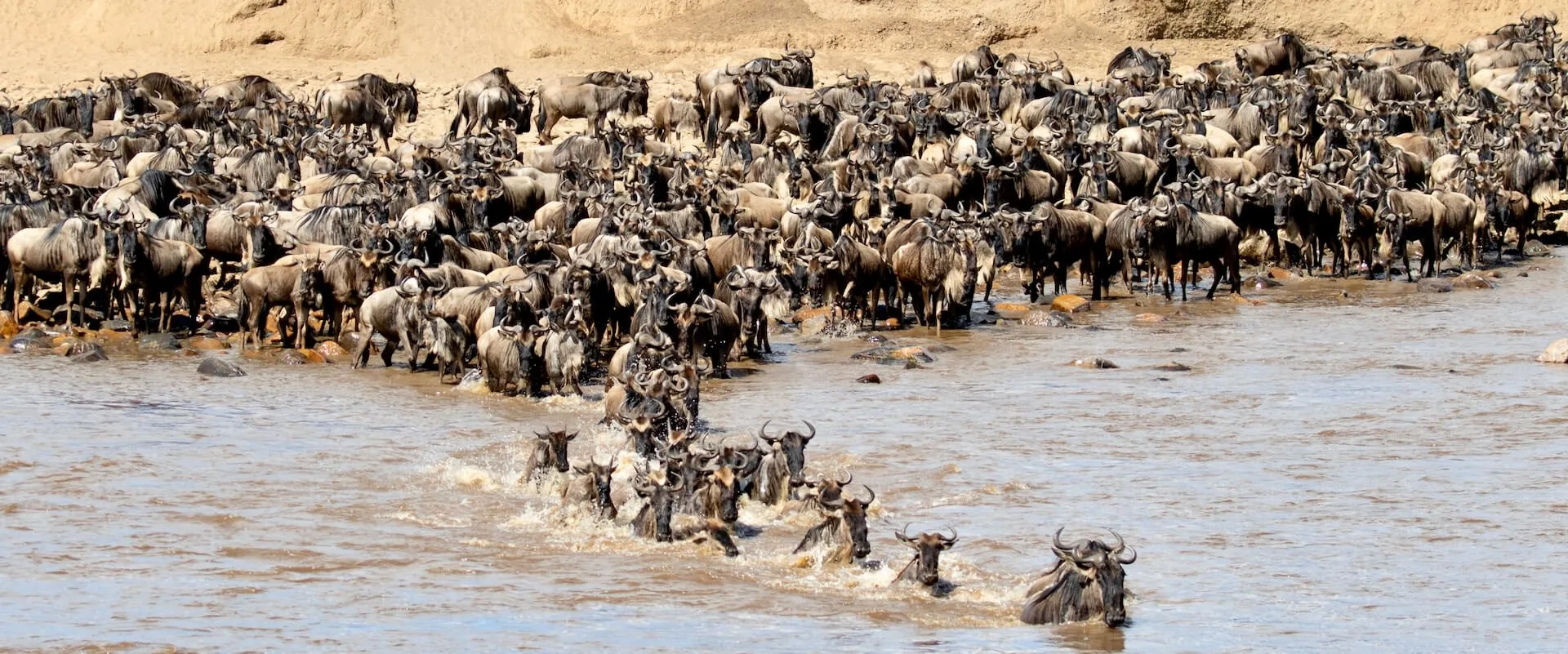
The Great Migration in Africa happens all year because the herds continuously circulate through the Serengeti–Mara ecosystem in…
Read article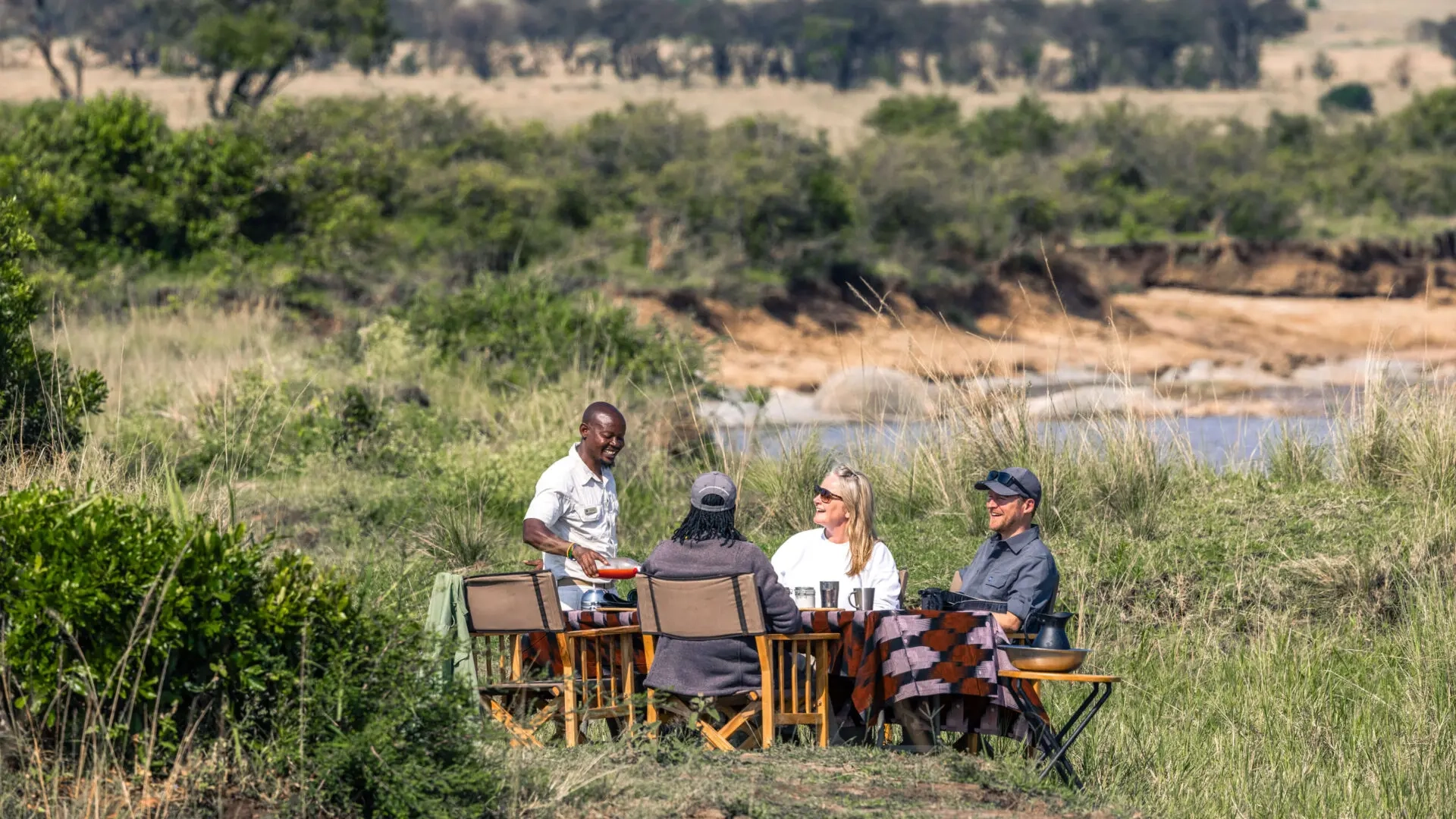
Definitive answer: A picnic lunch on safari is a packed or catered midday meal eaten at an approved…
Read article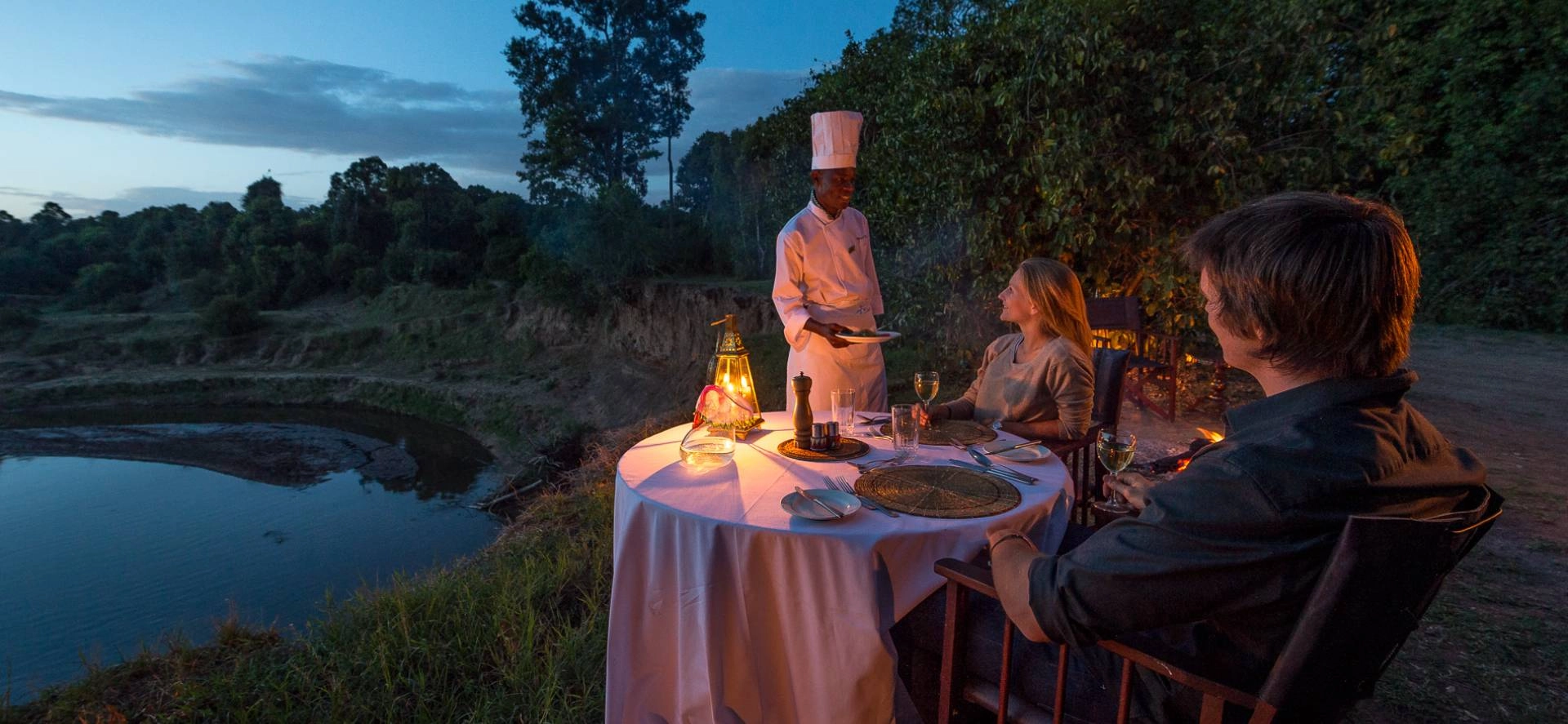
Definitive answer: A bush dinner is an outdoor evening meal arranged in a safe safari setting away from…
Read articleLet us take you closer to the wildlife, people and places that make Africa extraordinary.
Plan Your Safari Today