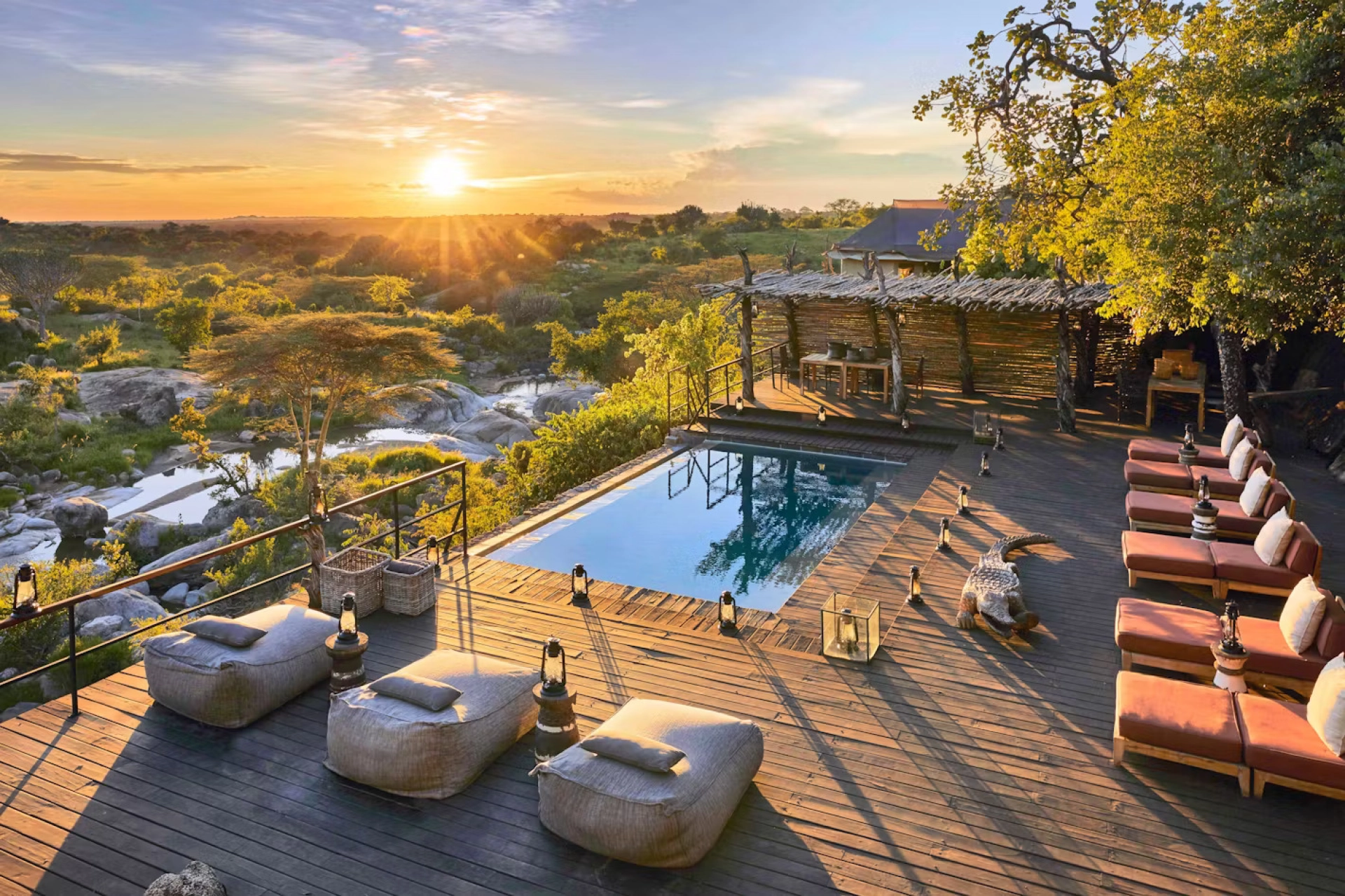
What should I look for when booking a luxury African safari?
When booking a luxury African safari, look beyond the room and compare the quality of guiding, wildlife location,…
Read article

Travel Guide
The Great Wildebeest Migration is frequently described as a single event, but that description creates one of the biggest misunderstandings in African safari planning. The migration is not a festival that begins on one date, reaches…
The Great Wildebeest Migration is frequently described as a single event, but that description creates one of the biggest misunderstandings in African safari planning. The migration is not a festival that begins on one date, reaches a climax and ends a few weeks later. It is a continuous ecological cycle involving huge numbers of wildebeest accompanied by zebras and other herbivores moving through the wider Serengeti–Mara ecosystem in response to rainfall, water and the availability of nutritious grazing.
That distinction matters enormously when planning the best Great Migration safari in 2027.
A traveler visiting southern Serengeti in February is experiencing the Great Migration. A traveler watching herds move through central Serengeti in April or May is also experiencing it. Someone waiting beside the Mara River in northern Serengeti in August is watching another stage of the same migration. And a traveler surrounded by wildebeest on the plains of the Masai Mara in September may be witnessing yet another chapter.
There is therefore no single universally “best” Great Migration safari. There is a best migration safari for the particular experience you want to see. If your dream is newborn wildebeest and predator action, the southern Serengeti and Ndutu region during the calving period should be high on your list. If your dream is enormous moving herds stretching across the landscape, transitional periods through the Serengeti can be extraordinary.
If your dream is the possibility of dramatic Mara River crossings, northern Serengeti and the Masai Mara become central. If your priority is photography without the highest peak-season visitor pressure, a shoulder-period migration itinerary may actually be better than choosing the most famous dates. The official Tanzania tourism authority describes the Serengeti as being known for the annual migration of wildebeest and zebra, with herds moving north from southern breeding grounds and some crossing the Grumeti River before continuing through the ecosystem. That movement, however, remains driven by nature rather than a human calendar.
Understanding that fact is the foundation of planning a successful Great Migration safari in Tanzania and Kenya.
The Great Wildebeest Migration is the continuous movement of huge herbivore populations through the Serengeti ecosystem of Tanzania and the Masai Mara ecosystem of Kenya. Wildebeest dominate the spectacle numerically and visually, but the migration should not be understood as a wildebeest-only event. Large numbers of plains zebras and other herbivores share portions of the ecosystem and exploit its seasonal grazing.
Predators follow the opportunity. Lions, spotted hyenas, cheetahs and leopards inhabit the ecosystem throughout the year, while crocodiles create an additional hazard when herds cross major rivers. The result is not merely a movement of animals. It is a gigantic ecological process involving grass, rain, soil nutrients, reproduction, predation, competition and survival. That is why the migration remains fascinating even when no river crossing is taking place.
No. This is one of the most persistent misconceptions in safari planning. Most of the migration cycle occurs within Tanzania’s Serengeti ecosystem. The herds generally spend only part of the annual cycle in the northern Serengeti and Kenya’s Masai Mara before seasonal conditions encourage movement south again. Travel marketing sometimes emphasizes the Masai Mara wildebeest migration because river crossings are visually dramatic and internationally famous. But travelers who focus exclusively on Kenya can miss extraordinary stages of the migration in Tanzania.
No. The northern portion of the ecosystem extends into Kenya. During favorable seasonal conditions, substantial numbers of wildebeest and zebra may move into the Masai Mara. Therefore, both Tanzania and Kenya are legitimate Great Migration destinations. The better question is not: “Which country has the migration?” It is: “Where are the herds most likely to be during my travel dates, and what stage of the migration do I want to experience?”
It is tempting to imagine the animals walking in one tidy line around a fixed circle. Nature is considerably messier. Different groups may separate. Some move earlier. Others remain behind. Rain can fall unexpectedly in one area and stimulate fresh grass. Herds may change direction. Animals may cross a river and later cross back. Local storms can affect movement. This is why migration maps should be treated as planning guides rather than exact timetables. A good Great Migration safari operator uses historical patterns to choose the correct region while maintaining enough flexibility to respond to actual conditions.
The migration is fundamentally about food and water. Rain stimulates grass growth. Fresh grass provides better nutrition. Wildebeest need reliable grazing, and breeding females in particular benefit from nutrient-rich vegetation. As conditions dry, animals gradually move toward areas where rainfall has produced better resources. This relationship between rain and grass explains why exact migration timing changes from year to year. The animals do not know that a travel brochure says they should cross the Mara River on August 15. They respond to ecological conditions.
No responsible safari specialist should claim to know the exact location of the migration on a particular date months in advance. Historical patterns allow good planning. Exact herd movement remains unpredictable. For 2027, you should therefore choose the correct migration region and seasonal window, not attempt to predict a specific crossing day. This is especially important for travelers booking flights and accommodation far in advance.
Understanding the broad annual pattern makes it much easier to decide where to stay.
January generally places substantial migration activity across the southern Serengeti ecosystem and surrounding short-grass plains, depending on rainfall. The landscape can be green. Pregnant wildebeest gather in preparation for calving. Zebras are also abundant. Predators take advantage of the concentration. For travelers who want large herds but do not care about river crossings, January can be excellent. The atmosphere differs completely from the dry northern Serengeti later in the year. Instead of dusty riverbanks and tense crossing scenes, you experience expansive green plains.
February is famous for wildebeest calving season. Huge numbers of pregnant females concentrate across productive southern plains and many calves are born during a relatively compressed period. This creates one of the most biologically fascinating phases of the migration. The attraction is not simply seeing babies. Calving produces intense ecological interaction. Predators understand that vulnerable young animals are available. Lions, hyenas and cheetahs may become highly active. Jackals and vultures also participate in the ecosystem.
A February Serengeti migration safari is therefore ideal for travelers interested in animal behavior rather than only spectacular river crossings.
March can remain excellent across southern areas. Calves are becoming stronger.
Herds continue feeding while rainfall patterns influence their next movement. The landscape can remain beautifully green. Photography is often superb because dark storm clouds, bright grass and enormous herds create dramatic visual contrast. Road conditions can become challenging after heavy rainfall, another reason experienced guides and suitable safari vehicles matter.
April often falls within Tanzania’s wetter period. The herds may begin shifting away from the southern plains as grazing conditions change. Visitor numbers can be lower than during peak migration months. Travelers willing to accept rain may enjoy a quieter safari. Accommodation pricing can also become more attractive at some properties. The trade-off is weather uncertainty and potentially difficult roads.
May is frequently a transitional migration month. Large columns of wildebeest may begin moving northward or northwestward through the ecosystem. This can be one of the best periods for travelers who appreciate movement itself. Instead of waiting for one famous river crossing, you may watch enormous lines of animals traveling across the plains. The visual scale can be extraordinary.
By June, the migration is generally moving farther through the western and central-to-northern parts of the Serengeti ecosystem depending on rainfall. The western corridor and Grumeti River become important in many seasonal patterns. The Grumeti should not be confused with the Mara River. Crossings can occur here, but the geography and spectacle differ. June can provide a fascinating transition between the green-season migration and the famous northern river-crossing period.
July generally marks the period when travelers increasingly focus on northern Serengeti. Some herds may reach the Mara River region. Others can remain farther south. This variability is why choosing a strategically located camp matters. July also marks increasing demand. Accommodation in northern Serengeti and the Masai Mara becomes more competitive. Travelers planning a 2027 Great Migration safari in July should reserve well ahead.
August is one of the most famous migration months. Large herds can occupy northern Serengeti and parts of the Masai Mara ecosystem. Mara River crossings may occur. The operative word is may. A crossing cannot be scheduled. Animals can stand near the river for hours and refuse to enter. They can suddenly turn away. They may cross early in the morning before your vehicle reaches the area. They may cross at another point. Or they may cross repeatedly during your stay. August offers excellent probability of migration activity in the north, but never a guarantee of one specific spectacle.
September can remain superb for the northern migration. Large numbers may be present in the Masai Mara and northern Serengeti. River crossings can continue. Predator activity remains excellent. Conditions are generally dry. This is another high-demand period, especially for well-positioned migration camps.
October can still produce excellent northern migration viewing. Some herds begin moving south according to rainfall patterns. Others may remain farther north. The transition can be interesting because visitor numbers may begin easing from the August–September peak while wildlife remains strong.
Short rains in parts of the ecosystem can trigger increasingly significant southward movement. The herds may spread across eastern and central areas as they follow fresh grazing. November is frequently overlooked by travelers who think the migration disappears after October. It does not. It changes location.
By December, migration activity is generally trending toward southern Serengeti as the annual cycle prepares to begin again. Rainfall determines exact distribution. The ecosystem becomes greener. Pregnant wildebeest increasingly move toward the nutrient-rich plains associated with the coming calving season. And the migration cycle continues.
For travelers whose absolute priority is Mara River crossings, the broad period from July through October receives the most attention. However, even within this period, there is no guaranteed crossing. This cannot be emphasized enough. The best strategy is to spend several nights in an appropriate northern location. Three nights is considerably better than one. Four nights provides even more opportunity. A one-night stay followed by a rushed departure creates unnecessary pressure.
A common misconception is that the Mara River crossing belongs exclusively to Kenya. The Mara River also runs through northern Serengeti. Crossings can therefore be witnessed from the Tanzanian side as well as within the Masai Mara ecosystem. Northern Serengeti locations such as the broader Kogatende region become important during the crossing season. The Masai Mara provides access to other crossing areas farther north. Neither country can guarantee better crossings on your exact dates.
A crossing often begins with uncertainty. Wildebeest gather near a riverbank. More animals arrive. Dust rises. The front animals approach the edge and retreat.
Zebras may move through the crowd. The herd becomes increasingly restless. Then one animal enters. Others follow. Within moments, the scene can transform into a mass movement. Some crossings are relatively calm. Others become chaotic. Animals may struggle against steep banks or strong current. Crocodiles may attack. Predators can wait beyond the crossing. The spectacle is powerful precisely because it is unscripted.
A safari designed entirely around one river crossing can become frustrating. You may spend hours watching animals stand near the water without crossing while ignoring lions, elephants, leopards, cheetahs and other wildlife nearby. The best Great Migration safari appreciates the entire ecosystem. A river crossing is a bonus within a much larger wildlife experience.
Travelers interested in newborn wildebeest should generally target the southern Serengeti ecosystem during the January–March period, with February particularly associated with peak calving activity. Again, exact timing responds to seasonal conditions. The calving period can be every bit as dramatic as a river crossing.
Newborn animals create opportunity. Spotted hyenas patrol the plains. Cheetahs search for vulnerable young antelopes and wildebeest. Lions exploit concentrations of prey. The result can be extraordinary predator-prey interaction. For wildlife enthusiasts interested in behavior, Serengeti calving season can be the best migration experience of all.
The Ndutu region lies within the wider southern Serengeti–Ngorongoro ecosystem and becomes highly important during the green and calving season. Seasonal mobile camps frequently position themselves strategically in this area. The landscape includes open plains, woodland and lake environments. A migration itinerary should distinguish between Serengeti National Park proper and neighboring conservation landscapes rather than using “Serengeti” loosely for every location.
This is one of the most common safari planning questions. Neither is universally better. Serengeti offers access to more stages of the annual migration cycle because the animals spend much of the year within Tanzania. Masai Mara provides superb migration viewing during the period when significant herds move north into Kenya. If you travel in February, choose Tanzania. If you travel in September, both northern Serengeti and Masai Mara become serious possibilities. If you travel in May, Tanzania is the logical focus. The correct destination follows the migration stage.
A traveler interested in understanding the migration as an ecological cycle should strongly consider Tanzania. Southern calving grounds, central transit zones, western areas and northern river systems all contribute different chapters. This makes Serengeti far more than a river-crossing destination.
The Masai Mara concentrates exceptional wildlife within a relatively compact and productive landscape. During migration season, wildebeest and zebras add to an already rich resident wildlife population. Big cats are a major attraction. The open grasslands provide superb visibility. For travelers with limited time, this concentration can be valuable.
Do not ignore the rest of the ecosystem. Potential wildlife includes lions, leopards, cheetahs, spotted hyenas, elephants, giraffes, buffaloes, hippos, crocodiles, zebras, gazelles and numerous birds. The migration increases prey availability, but resident wildlife makes Serengeti and the Mara outstanding even when the main herds are elsewhere.
Lions are territorial and do not simply migrate behind wildebeest across the entire ecosystem. Resident prides exploit seasonal prey abundance when herds enter their territories. Watching lions during migration therefore reveals how predators respond to temporary abundance.
Open plains provide ideal hunting environments for cheetahs. Calving periods can create opportunities because young prey are vulnerable. Cheetah sightings are never guaranteed, but migration areas can be excellent places to search.
Spotted hyenas are among the ecosystem’s most important predators. Their reputation as passive scavengers is inaccurate. Hyenas hunt effectively, defend territories and live within sophisticated social systems. Watching a clan interact around migrating herbivores can be as fascinating as watching lions.
Nile crocodiles contribute to the drama of river crossings. However, not every crossing results in a crocodile attack. Travel marketing sometimes exaggerates the violence. The ecological reality includes successful crossings, hesitation, drowning risks, current, steep banks and predator encounters.
A meaningful migration safari should rarely be rushed. For a single migration region, three nights should be viewed as a useful minimum. Four nights is stronger. Five or more provides better flexibility. For a broader northern Tanzania safari incorporating Tarangire and Ngorongoro, seven to ten days works extremely well. A combined Kenya and Tanzania Great Migration safari may require ten to fourteen days depending on routing.
Two nights often means only one complete day. If wildlife movement occurs elsewhere, you have limited time to respond. Weather or road conditions can further reduce flexibility. An additional night frequently adds more value than upgrading the lodge category.
A five-day itinerary should concentrate geographically. Do not try to include Nairobi, Masai Mara, Serengeti, Ngorongoro and Zanzibar in five days. For migration, choose the correct region and stay there. A July–September five-day safari might focus primarily on northern Serengeti. A February five-day itinerary might focus on Ndutu and southern Serengeti with nearby Ngorongoro depending on routing.
Seven days provides enough time to combine migration with another major ecosystem. For example: Tarangire; Ngorongoro; and the appropriate Serengeti migration region. Alternatively, a Kenya itinerary could combine the Masai Mara with another Kenyan destination. The exact route should reflect the season.
Ten days creates a far richer experience. You can include several northern Tanzania ecosystems while still giving the migration enough time. A well-designed itinerary may combine: Tarangire; Ngorongoro; central or northern Serengeti; and the migration-focused zone. The mistake is trying to visit every famous park simply because ten days are available. Safari quality depends on time in the field, not the number of names in the itinerary.
Combining both countries can be exceptional. But travelers should understand border logistics. Safari vehicles do not simply drive freely across every wildlife border between the Mara and Serengeti. International border formalities and vehicle arrangements affect routing. Some itineraries involve transfers between vehicles. Others use flights. This must be planned carefully.
Flying saves time but costs more. For travelers with limited vacation time, it can be worthwhile. Overland routes may involve international border crossings and significant travel. A good operator compares total cost with lost safari time rather than considering airfare in isolation.
A fly-in safari maximizes wildlife time. You can fly from a major gateway to an airstrip close to camp. This reduces long road transfers. Fly-in safaris are particularly useful for: short trips; honeymoons; luxury travelers; older travelers; and photographers carrying limited time. Luggage restrictions on small aircraft should be checked carefully.
Driving creates a different experience. You watch landscapes change gradually. You can connect multiple parks. Vehicle and guide continuity can improve the journey. For private groups, road safaris can also provide excellent value. The trade-off is time.
Migration does not belong exclusively to luxury travelers. Budget travelers can use: shared safari vehicles; simpler camps; road transport; shoulder-season dates; and carefully selected locations. The animals do not distinguish between a guest sleeping in a $200 tent and one staying in a $2,000 suite. Location and safari time matter more than room luxury.
Mid-range travel often provides the strongest balance of comfort and cost. A well-located tented camp can provide: private bathroom; comfortable beds; good meals; charging facilities; and quick access to game-viewing areas. For many travelers, this is enough.
Luxury migration camps may offer: exceptional locations; small guest numbers; premium guiding; fine dining; private vehicles; larger tents; plunge pools; spa services; and fly-in convenience. Luxury is most valuable when it improves location, guiding or flexibility rather than simply adding decorative features.
Seasonal or mobile camps are particularly useful because they position themselves according to expected migration stages. A camp may operate in the southern ecosystem during calving season and relocate toward northern Serengeti during the river-crossing period. This places guests closer to likely herd concentrations. “Mobile” does not necessarily mean basic. Some mobile camps are extremely luxurious.
A permanent lodge offers established infrastructure. A mobile camp prioritizes seasonal location. For migration-focused travelers, location often wins. If the herds are concentrated eighty kilometers away, the beauty of your lodge matters less.
Extremely. Poor camp selection can cost hours of driving each day. When comparing quotations, ask: Where exactly is the camp? How far is it from the expected migration zone? Which airstrip serves it? What game-drive areas are accessible? Location should be evaluated before luxury category.
There is no single Great Migration price. Costs depend on: season; country; accommodation; number of travelers; vehicle arrangement; internal flights; park and conservation fees; length of stay; and camp location. Tanzania National Parks maintains an official tariff system for park entry and associated charges, and travelers should verify current tariffs rather than relying on outdated safari articles.
Demand. There are only so many rooms in prime locations. When thousands of travelers target July, August and September, prices rise. Flights fill. Vehicles become busy. Well-located camps sell out. Early booking becomes essential.
Potentially. Shoulder dates can provide excellent migration experiences while reducing some peak-season pressure. However, you should choose dates based on the stage you want rather than price alone.
Photographers should prioritize: vehicle space; guide quality; location; time in the field; and luggage arrangements. A cheaper safari vehicle filled with seven photographers can be false economy. A private vehicle allows you to control positioning and remain at sightings.
A telephoto zoom provides flexibility. Wide-angle capability is also important. Migration photography should not consist entirely of tight wildebeest portraits. Show scale. Include the landscape. Photograph dust. Capture lines of animals stretching toward the horizon.
Avoid becoming obsessed with the first animal entering the river. Look for: the buildup; dust; patterns; animals descending the bank; crocodile behavior; animals climbing out; and the reaction of the herd afterward. Wide compositions can communicate scale better than extreme close-ups.
Families can enjoy migration safaris enormously. Private vehicles are especially useful. Children can take breaks. Parents can control game-drive length. Choose accommodation with appropriate family policies. Long road transfers should be minimized.
A migration safari can be extraordinary for honeymooners. The best strategy is often to combine a well-located safari camp with several nights of relaxation afterward. Possible combinations include: Serengeti and Zanzibar; Masai Mara and Kenya coast; or migration followed by Uganda gorilla trekking for couples prioritizing wildlife.
This is one of East Africa’s classic safari-and-beach combinations. After several dusty game-drive days, travelers fly toward Zanzibar for the Indian Ocean. The combination works particularly well with Tanzania migration itineraries because domestic and regional routing can be efficient.
For travelers seeking Africa’s most iconic wildlife experiences in one journey, combining the migration with gorilla trekking in Uganda or Rwanda is difficult to beat. Imagine watching thousands of wildebeest on open grasslands and, several days later, walking through rainforest to encounter a mountain gorilla family.
The ecological contrast is extraordinary.
A practical multi-country route can combine the Masai Mara with Entebbe and southwestern Uganda. Uganda can then add: Bwindi Impenetrable National Park; Queen Elizabeth National Park; Kibale; or Lake Mburo. This creates a broad East African safari rather than a single-event trip.
Tanzania can similarly combine with Uganda. The itinerary is particularly powerful for travelers interested in wildlife diversity. Serengeti delivers massive herbivore concentrations. Uganda adds primates and rainforest.
Adding chimpanzee trekking in Uganda makes the journey even more biologically diverse. Kibale National Park is a natural addition to a longer Uganda segment. A traveler can therefore experience three dramatically different wildlife systems: migration plains; chimpanzee forest; and mountain gorilla habitat.
For peak periods and specific high-demand camps, early planning is advisable. The objective is not merely securing any room. You want the right room in the right region. Last-minute travelers may find accommodation but have fewer choices.
The first mistake is believing a crossing can be guaranteed. The second is staying only one night in the migration area. The third is choosing a beautiful lodge far from the herds. The fourth is using a generic month-by-month migration map as if it were a train timetable. The fifth is trying to combine too many parks. The sixth is assuming Kenya is always better than Tanzania—or vice versa. The seventh is sacrificing guide quality to save a small amount of money.
Close to travel, current reports can be useful. But reports should be interpreted intelligently. A herd photographed somewhere yesterday may move. Different herds can occupy different regions simultaneously. Your guide’s field knowledge remains critical.
Rain can complicate roads. It can also create spectacular photography. Rain drives the ecosystem. Without it, there is no fresh grazing and therefore no migration cycle. A dramatic storm over wildebeest-filled plains can become one of the best moments of the safari.
It can be when tourism is responsibly managed. Travelers should choose operators and guides who respect wildlife, maintain appropriate distances and follow park regulations. No photograph justifies blocking animals approaching a crossing. Responsible guiding protects both wildlife and the quality of the experience.
The most important decision is not whether you choose a budget, mid-range or luxury safari. It is not whether your tent has a bathtub. It is not whether you fly or drive. The first decision is: What migration experience do you want? For calving and newborn wildebeest, plan around southern Serengeti. For mass herd movement, consider transitional periods. For possible Mara River crossings, target northern Serengeti or Masai Mara during the appropriate seasonal window.
For fewer crowds and greener scenery, explore shoulder periods. Once that decision is made, accommodation, routing and transport can be built around it. The best Great Migration safari is therefore not the most expensive safari. It is the itinerary that places you in the correct ecosystem, gives you enough time, uses knowledgeable guides and remains flexible enough to respond to wild animals doing what wild animals have always done: following rain, water and grass.
At Adventure in the Wild Safaris, we can combine a Great Migration safari in Tanzania or Kenya with Uganda gorilla trekking, chimpanzee trekking, Queen Elizabeth National Park, Bwindi, Rwanda, Zanzibar or a longer East African safari. The migration deserves more than being treated as a single river crossing. Follow the complete story, and it becomes one of the greatest wildlife journeys on Earth.
Get quick answers to the most common questions. If you still have questions, our safari experts are here to help.
There is no single best month. February is excellent for calving, while July through October is generally targeted for northern migration and possible Mara River crossings.
Typically across the southern Serengeti–Ndutu ecosystem depending on rainfall.
Northern Serengeti and the Masai Mara are major focus areas, although actual herd distribution varies.
No.
It depends on your dates and priorities.
Yes. The herds are usually within Tanzania and may be moving through transitional areas.
No. It represents another stage of the southward migration cycle.
At least three nights in the primary migration region is sensible; four or more provides better flexibility.
Yes. Shared road safaris and simpler camps can reduce costs.
No, but it improves flexibility and is particularly valuable for photographers.
Yes, subject to accommodation and safari arrangements.
Yes. Large numbers of plains zebras move through the ecosystem alongside wildebeest.
Yes. Animals face current, steep banks, crowding and crocodiles.
No.
Yes. The Mara River passes through northern Serengeti.
No. Zebras, predators, scavengers, birds and the wider ecosystem are all part of the experience.
Yes. Great Migration and Uganda gorilla trekking safaris are excellent multi-country itineraries.
Yes.
Choose according to location, comfort and season. Migration-focused mobile camps can provide excellent positioning.
Our safari experts are here to help you plan your safari. Get personalized advice, the latest information and a free, no-obligation quote.
We typically reply within a few hours.

Share This Article
When booking a luxury African safari, look beyond the room and compare the quality of guiding, wildlife location,…
Read article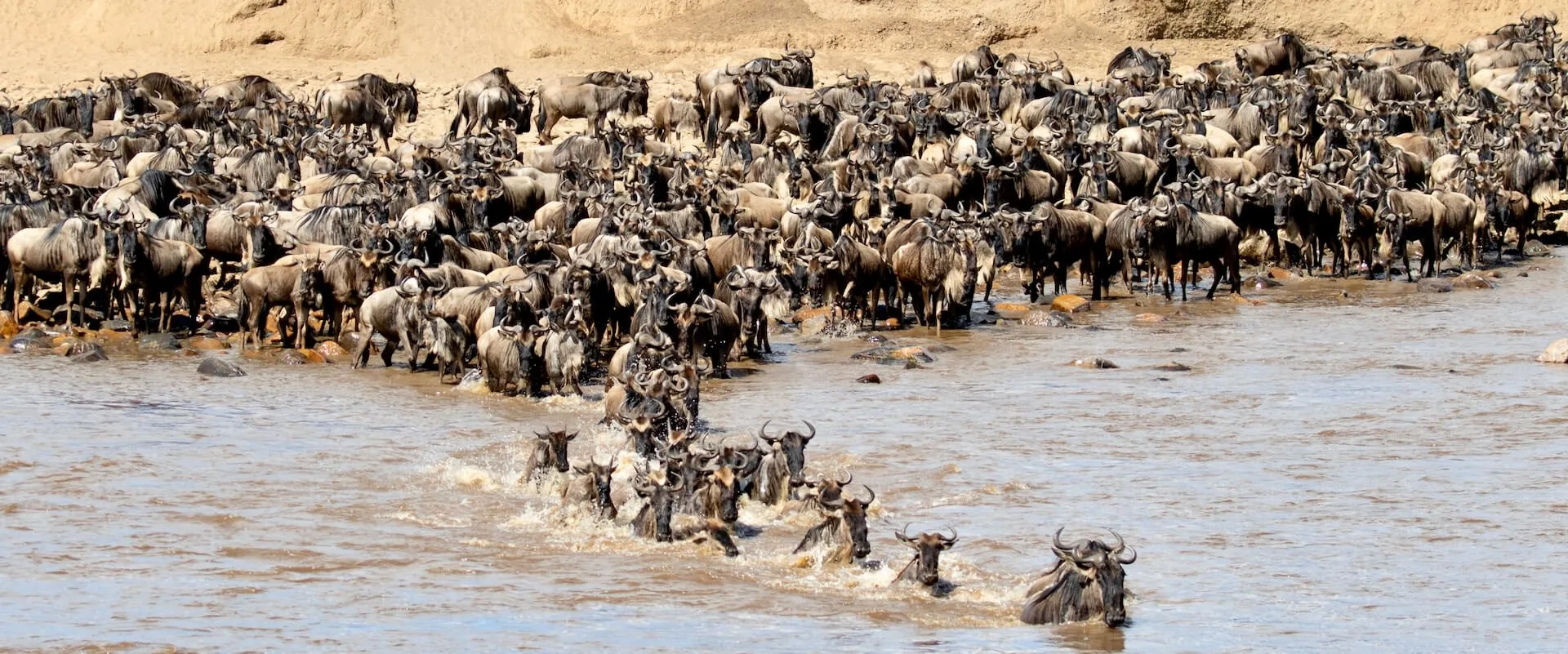
The Great Migration in Africa happens all year because the herds continuously circulate through the Serengeti–Mara ecosystem in…
Read article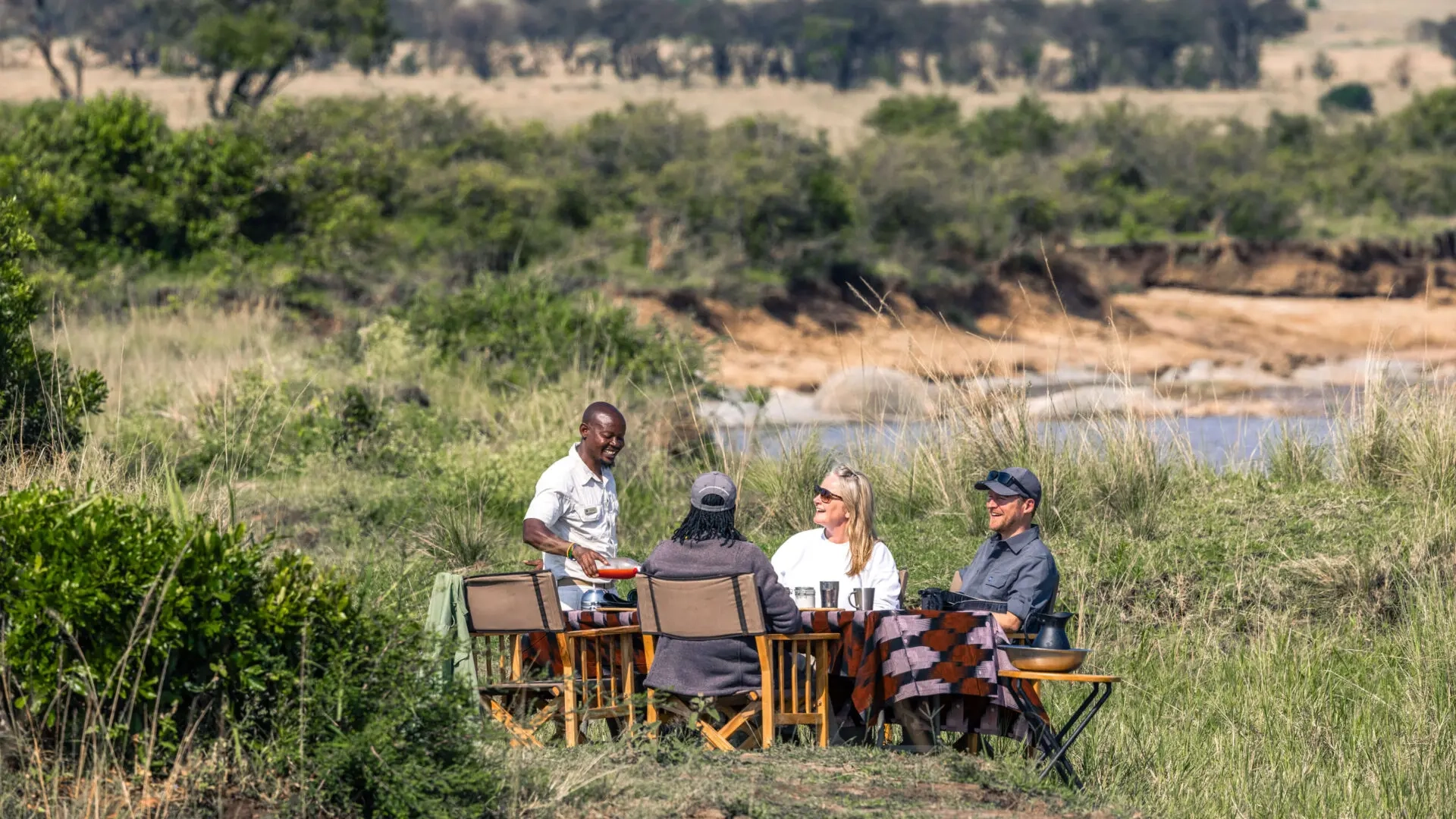
Definitive answer: A picnic lunch on safari is a packed or catered midday meal eaten at an approved…
Read article
Definitive answer: A bush dinner is an outdoor evening meal arranged in a safe safari setting away from…
Read articleLet us take you closer to the wildlife, people and places that make Africa extraordinary.
Plan Your Safari Today