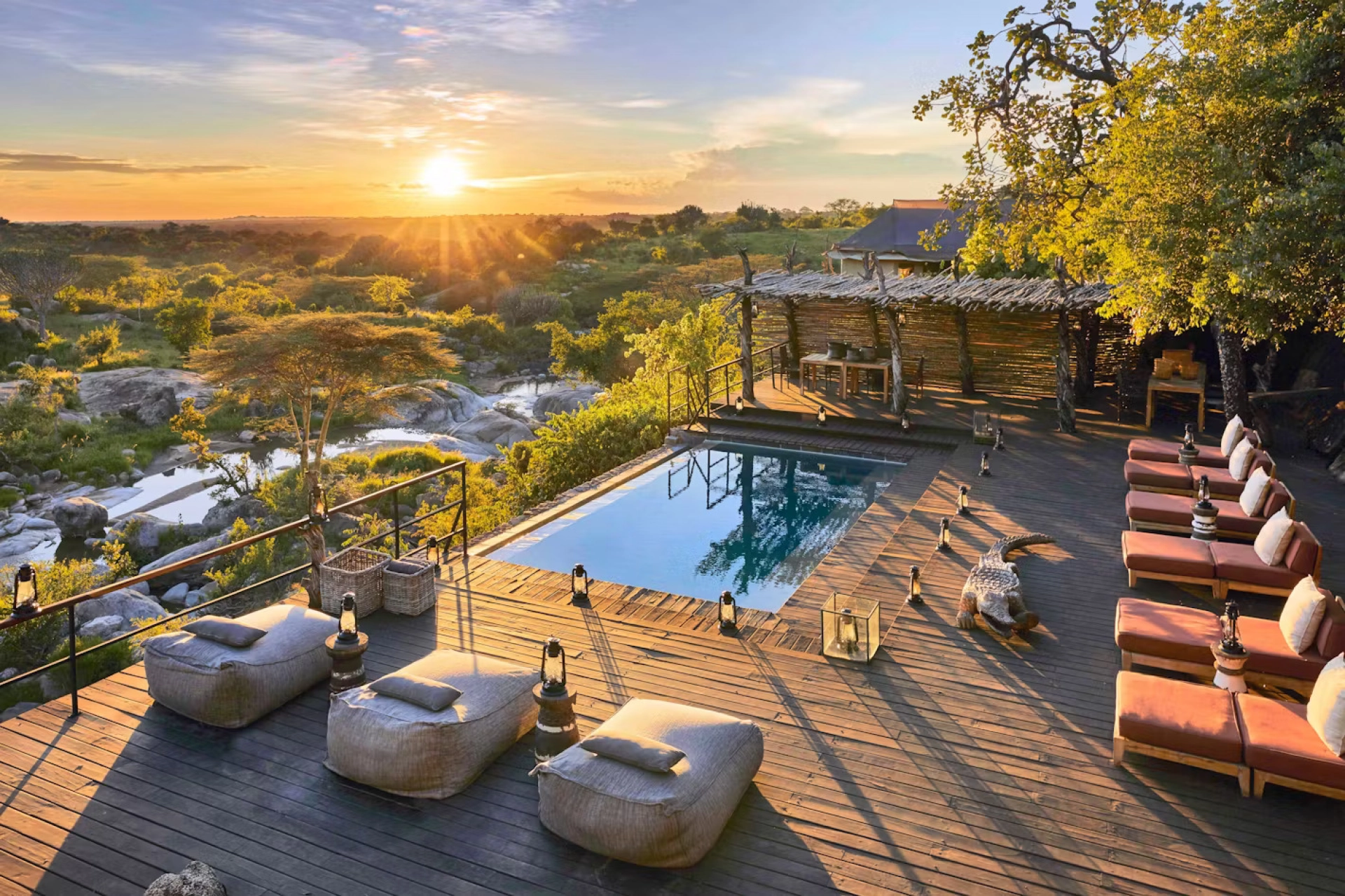
What should I look for when booking a luxury African safari?
When booking a luxury African safari, look beyond the room and compare the quality of guiding, wildlife location,…
Read article

Travel Guide
Few animals represent the African safari as instantly as the giraffe. A lion may be Africa's most famous predator and an elephant its most imposing giant, but the unmistakable silhouette of a giraffe walking across an…
Few animals represent the African safari as instantly as the giraffe. A lion may be Africa’s most famous predator and an elephant its most imposing giant, but the unmistakable silhouette of a giraffe walking across an open savannah has become one of the defining images of the continent. Giraffes are extraordinary even by African wildlife standards. They are the tallest living terrestrial animals, with adult males capable of reaching heights of more than five metres. Their elongated necks, individually patterned coats, long legs and surprisingly graceful movements make them instantly recognisable.
Yet giraffes are more complicated than many safari travellers realise. Different giraffe populations occur across Africa, occupying habitats ranging from East African acacia savannahs to the dry landscapes of Namibia. Their markings vary geographically, and modern genetic research has transformed scientific discussions about giraffe taxonomy. For travellers, this means that asking where to see giraffes in Africa opens the door to much more than simply finding one animal. You can watch Masai giraffes beneath Mount Kilimanjaro, search for Rothschild’s giraffes in Uganda, photograph giraffes crossing the plains of the Serengeti, encounter desert-adapted giraffes in Namibia or observe them against red Kalahari landscapes in Southern Africa.
Here are some of the best places to see giraffes in Africa and what makes each destination special.
It is easy to underestimate giraffes because they often appear calm. Unlike lions hunting prey or elephants asserting dominance, giraffes frequently seem to be doing little more than browsing quietly. Spend enough time watching them, however, and their complexity becomes obvious. A giraffe’s extreme height gives it access to vegetation beyond the reach of most herbivores. Its long, muscular tongue helps manipulate leaves and branches, while specialised lips assist with feeding among thorns.
Its cardiovascular system must cope with the challenge of pumping blood several metres upward toward the brain. Even drinking water becomes complicated. A giraffe must spread its front legs and lower its long neck, temporarily placing itself in a vulnerable position. Their social lives are also fascinating. Giraffes form flexible associations rather than the rigid herds seen in some African herbivores. Individuals join and leave groups, females may associate with calves and males travel between areas searching for reproductive opportunities.
Watching these interactions is one reason a dedicated giraffe safari in Africa can be surprisingly rewarding.
Kenya’s Maasai Mara National Reserve is unquestionably one of the best destinations for seeing giraffes in a classic East African landscape. The Mara’s rolling grasslands, scattered trees and open horizons create ideal conditions for both observing and photographing wildlife. Here, travellers primarily encounter the Masai giraffe, characterised by irregular, jagged-edged patches that can look almost like vine leaves spread across the body. Masai giraffes are especially photogenic. Seeing one walking across the plains in the soft light of early morning, perhaps with wildebeest and zebras in the background, creates the kind of scene many travellers imagine when dreaming about an African safari in Kenya.
The Mara also offers exceptional predator viewing. This creates opportunities to understand giraffes within a complete ecosystem rather than seeing them in isolation. Adult giraffes are formidable animals, but calves can be vulnerable to lions and other large predators. Watching giraffes react to nearby predators can reveal behaviour that casual observers miss. The wider Mara ecosystem, including neighbouring conservancies, provides additional opportunities for giraffe photography in Kenya, often with fewer vehicles than the busiest sections of the national reserve.
For travellers wanting giraffes alongside lions, cheetahs, elephants, wildebeest and other iconic East African animals, the Maasai Mara is difficult to beat.
If your dream photograph involves a giraffe with Mount Kilimanjaro rising in the background, Amboseli deserves a prominent place on your safari itinerary. Amboseli National Park is internationally famous for its elephants, but giraffes are another important part of the landscape. The combination of open plains, wetlands, acacia woodland and the immense snow-capped or cloud-wrapped form of Kilimanjaro creates some of Africa’s most recognisable wildlife scenery. Patience is essential for photography.
Kilimanjaro is frequently hidden by cloud, particularly as the day develops. Early mornings often provide better chances of a clear mountain view. When the mountain appears and a giraffe moves into the correct position, however, the resulting scene can be extraordinary. Amboseli is therefore one of the best places to photograph giraffes in Africa as well as a superb destination for elephant enthusiasts.
One of Africa’s most unusual wildlife experiences occurs almost beside a major capital city. Nairobi National Park protects open savannah and other habitats immediately outside central Nairobi, allowing travellers to see large African wildlife with parts of the city’s skyline visible in the distance. Giraffes are among the animals visitors may encounter. The contrast can be surreal. One moment you are travelling through a modern African capital; shortly afterward you may be photographing a giraffe walking across open grassland.
For travellers with limited time in Kenya, Nairobi National Park provides an excellent introduction to Kenyan wildlife safaris before continuing to the Maasai Mara, Amboseli, Samburu or other destinations.
Northern Kenya offers one of the continent’s most distinctive giraffe experiences.
Samburu National Reserve and the surrounding conservation areas are famous for the reticulated giraffe, whose coat pattern differs dramatically from the Masai giraffe seen farther south. Reticulated giraffes possess large, polygonal reddish-brown patches separated by striking pale lines. The pattern can look almost geometrically precise. Against Samburu’s dry landscapes, doum palms and rugged hills, these giraffes are spectacular photographic subjects. Samburu also gives travellers an opportunity to see several northern Kenyan wildlife specialities, making it an excellent addition to a more conventional Kenya safari.
For anyone interested in different giraffes in Africa, northern Kenya should be high on the list.
Few destinations embody the idea of an African safari more powerfully than Tanzania’s Serengeti National Park. Although the Serengeti is best known for the Great Wildebeest Migration, giraffes are an important component of the ecosystem. Tanzania even recognises the giraffe as a national symbol. In suitable areas of the Serengeti, giraffes can be seen browsing woodland and moving between patches of vegetation. The enormous landscape provides opportunities for environmental photography, where giraffes become part of a much wider composition.
This is particularly beautiful around sunrise and sunset. A Serengeti safari also allows travellers to combine giraffe sightings with extraordinary populations of lions, cheetahs, leopards, elephants, buffalo, wildebeest, zebras and numerous antelope species. For a first safari to Africa, the Serengeti remains one of the continent’s great all-round wildlife destinations.
Tarangire is sometimes overshadowed by the Serengeti and Ngorongoro Crater, but wildlife enthusiasts should not underestimate it. The park’s enormous baobab trees immediately create a different visual identity. Giraffes moving between these ancient trees make excellent photographic subjects. Tarangire is especially famous for elephants, and during favourable periods large concentrations of wildlife gather around reliable water sources. This creates a rich safari environment in which giraffes share the landscape with elephants, zebras, antelope and predators.
For travellers following Tanzania’s Northern Safari Circuit, Tarangire adds valuable habitat diversity and is one of the best places to appreciate giraffes among classic East African woodland.
Lake Manyara is another excellent destination for travellers interested in giraffes. The park occupies a relatively compact but ecologically varied landscape beneath the Great Rift Valley escarpment. Woodland, groundwater forest, open areas and the lake environment support an impressive variety of wildlife. Giraffes are frequently among the most visible large mammals. Because the landscape can be greener and more enclosed than the open Serengeti plains, photographs from Lake Manyara have a distinctive character.
The park also fits naturally into itineraries combining Tarangire, Ngorongoro and Serengeti.
Uganda deserves much greater recognition among travellers searching for the best places to see giraffes in Africa. Murchison Falls National Park is the country’s largest protected area and one of East Africa’s most varied safari destinations. The northern savannahs support an important population of giraffes traditionally associated with the Rothschild’s/Nubian giraffe grouping. For visitors accustomed to the darker, jagged patterns of Masai giraffes, Uganda’s giraffes can look noticeably different.
Their markings generally become less pronounced toward the lower legs, contributing to their distinctive appearance. Game drives north of the Nile provide excellent opportunities to photograph giraffes among Borassus palms, acacia-dominated savannah and open grasslands. Murchison is particularly rewarding because giraffe viewing can be combined with elephants, lions, buffalo, hartebeest, Uganda kob and numerous bird species. Then there is the Nile. A Murchison Falls safari can combine traditional game drives with a boat journey along the Victoria Nile toward the base of the falls.
This mixture of savannah wildlife, river ecosystems and one of the world’s most powerful waterfall landscapes makes Murchison one of Uganda’s most complete safari destinations.
For many years, travellers associated Uganda’s giraffes almost exclusively with Murchison Falls.
Conservation translocations have changed that. Giraffes were introduced to Lake Mburo National Park, adding another charismatic species to this compact protected area between Kampala/Entebbe and southwestern Uganda. Lake Mburo offers a very different safari from Murchison. There are no lions routinely dominating the conventional visitor experience, and the smaller scale allows travellers to focus on herbivores, landscapes and alternative activities. The park is particularly famous for zebras, impalas and elands.
Seeing giraffes alongside these animals adds another layer to the experience. Lake Mburo can also offer walking safaris, boat trips and, through authorised operators, horseback experiences in the wider area, making it an excellent stop on itineraries travelling between Entebbe and Uganda’s gorilla regions. For travellers combining a Uganda gorilla trekking safari with traditional savannah wildlife, Lake Mburo is extremely convenient.
Remote northeastern Uganda provides another dramatically different safari environment. Kidepo Valley National Park is characterised by huge valleys, distant mountains, dry savannah and a powerful sense of isolation. Although access requires more time than Uganda’s southwestern parks, the reward is one of the country’s wildest landscapes. Giraffes form part of this ecosystem and look magnificent against Kidepo’s expansive scenery. Travellers who prioritise wilderness and photography rather than simply accumulating famous destinations may find Kidepo particularly rewarding.
Combining Kidepo Valley and Murchison Falls can create an exceptional northern Uganda safari before travelling south toward Kibale Forest and Bwindi.
Rwanda is globally associated with mountain gorillas, but its wildlife experiences extend far beyond the forests of Volcanoes National Park. Eastern Rwanda’s Akagera National Park protects savannah, woodland, lakes and wetlands along the Tanzanian border. Giraffes are part of Akagera’s remarkable conservation story. Today, travellers can encounter them while exploring a landscape that also supports elephants, buffalo, lions, rhinos, antelope and abundant birdlife. This makes Akagera especially useful for travellers who want to combine a Rwanda gorilla safari and Big Five safari within one relatively compact country.
A typical itinerary can begin in Kigali, continue to Akagera for game drives and then travel toward Volcanoes National Park for mountain gorilla trekking.
Namibia produces some of the most distinctive giraffe photographs in Africa. Etosha National Park is dominated by an immense salt pan surrounded by dry woodland, open plains and waterholes. During dry periods, wildlife concentrates around water, creating fascinating opportunities for patient observation. Giraffes approaching a waterhole are particularly interesting. Drinking is awkward for such tall animals. They must spread their front legs widely and lower their heads, temporarily compromising their ability to react quickly to danger.
The entire process can involve considerable caution. Watching giraffes repeatedly lift their heads to scan for predators demonstrates how vulnerable such a simple activity can become. Etosha’s pale ground, dust and intense light also produce a photographic style very different from East Africa. For giraffe photography in Namibia, few places compare.
For an even more unusual giraffe experience, travel beyond Namibia’s conventional national parks. Damaraland’s rugged, dry landscapes support wildlife capable of surviving in extremely arid conditions. Seeing giraffes moving through rocky valleys and sparse vegetation challenges the popular assumption that giraffes belong exclusively to lush acacia savannah. The animals must travel widely to locate suitable browse and water resources. Photographically, the experience is extraordinary. A lone giraffe against a huge Namibian landscape emphasises both the animal’s height and the immense scale of its environment.
Botswana is famous for elephants, particularly around the Chobe River, but Chobe National Park is also an excellent destination for giraffe sightings.
Giraffes can be encountered during game drives through woodland and open areas. The Chobe region becomes especially rewarding because visitors can combine land-based wildlife viewing with boat safaris. Although giraffes are primarily observed from vehicles, the river ecosystem brings together an extraordinary variety of animals. Elephants, buffalo, hippos, crocodiles and numerous birds create a continuously changing safari. Chobe also combines easily with Victoria Falls, making it one of Southern Africa’s most convenient multi-destination safari options.
The Okavango Delta is one of Africa’s greatest natural wonders. Instead of flowing into an ocean, water from the Angolan highlands spreads across the Kalahari, creating an immense network of channels, floodplains, islands and woodland. Giraffes inhabit suitable areas within this complex ecosystem. Seeing them here can be especially beautiful because the landscape is so distinctive. Depending on camp location and seasonal conditions, visitors explore the Delta through game drives, walking safaris, motorboat excursions and traditional mokoro journeys.
A giraffe sighting during a drive therefore becomes one component of a much broader wilderness experience. For travellers seeking a premium Botswana safari, the Okavango Delta and Chobe make a superb combination.
Moremi protects a particularly wildlife-rich portion of the Okavango ecosystem. Its mixture of woodland, floodplains and drier areas provides habitat for a wide range of large mammals, including giraffes. Predator populations are also excellent. This means travellers can observe giraffes within an ecosystem containing lions, leopards and African wild dogs. The resulting interactions make Moremi far more than simply somewhere to photograph a giraffe standing beside a tree. It is a place to understand the species within a functioning predator-prey system.
For overall wildlife diversity and accessibility, Kruger National Park remains one of Africa’s greatest safari destinations. Giraffes are widely distributed through suitable parts of the park and are regularly encountered on both guided and self-drive safaris. Kruger’s extensive road network makes it particularly good for observing giraffe behaviour over time. Rather than rushing from one major sighting to another, stop and watch. You may see giraffes browsing, males sparring, females accompanying calves or individuals carefully approaching water.
Kruger also offers exceptional opportunities to combine giraffes with the Big Five and dozens of other mammal species. For first-time visitors planning a South Africa wildlife safari, it remains an outstanding choice.
The private reserves adjoining or associated with the Greater Kruger ecosystem provide a more exclusive alternative to conventional national-park safaris. Depending on the reserve, off-road driving and smaller vehicle numbers can create outstanding photographic opportunities. Giraffes are frequently encountered. Because guides can sometimes position vehicles more flexibly than on public roads, photographers may have better opportunities to work with backgrounds and lighting while still respecting wildlife. These reserves are ideal for travellers seeking a luxury giraffe safari in South Africa alongside excellent predator viewing.
KwaZulu-Natal’s Hluhluwe-iMfolozi Park is particularly famous for rhino conservation, but giraffes also contribute to its impressive wildlife diversity.
The park’s rolling hills and varied vegetation produce beautiful scenery. This is useful for travellers who want a South African safari beyond the more famous Kruger region. Combining Hluhluwe-iMfolozi with the Indian Ocean coastline can also create an attractive beach and safari holiday in South Africa.
South Africa’s Eastern Cape contains numerous private wildlife reserves that are popular with travellers finishing or beginning a Garden Route holiday. Giraffes occur in several of these reserves. The region’s major attraction is convenience. Travellers can explore Cape Town and the Garden Route before adding a malaria-free safari without flying to Kruger. Families particularly appreciate this combination. The exact quality of wildlife viewing varies significantly between reserves, so research the size, conservation model and safari style rather than choosing solely according to whether a property advertises the Big Five.
One of the most enjoyable ways to make a giraffe safari more interesting is learning to notice differences in coat patterns. Masai giraffes generally display irregular, jagged patches. Reticulated giraffes have more geometric reddish patches separated by bright pale lines. Southern populations display their own characteristic patterns. Giraffe taxonomy remains an active scientific field, and different organisations may use different species and subspecies classifications. For safari travellers, the important point is that giraffes are not visually identical across Africa.
Travelling between Kenya, Uganda, Namibia and Southern Africa allows you to appreciate this variation firsthand.
Travellers particularly interested in giraffe conservation should consider Uganda and northern Kenya. Uganda protects important giraffe populations, particularly in Murchison Falls National Park, while Kenya provides opportunities to see both Masai and reticulated giraffes depending on the region visited. Conservation-focused travellers can also learn about the pressures facing giraffes, including habitat loss, fragmentation and historical population declines. The fact that giraffes remain relatively easy to see in several famous parks can create a misleading impression that they face no conservation challenges.
There is no single winner. For classic savannah imagery, the Maasai Mara and Serengeti are exceptional. For a giraffe beneath Kilimanjaro, choose Amboseli National Park. For geometric reticulated-giraffe patterns against dry northern scenery, visit Samburu. For dramatic waterhole behaviour and minimalist landscapes, Etosha is outstanding. For giraffes in Uganda’s distinctive savannah, Murchison Falls National Park provides superb opportunities. The best destination therefore depends on the photograph you want to create.
Giraffes appear easy to photograph because they are enormous and often relatively stationary.
Their height actually creates compositional challenges. If you zoom too tightly, it is easy to cut off legs, ossicones or other parts of the animal. Environmental portraits often work better. Leave space around the giraffe and show some habitat. Vertical compositions suit the animal’s shape naturally, while horizontal images are ideal when including mountains, trees, other wildlife or dramatic skies. Early morning and late afternoon provide softer light. Backlighting can produce beautiful outlines around a giraffe’s mane.
Silhouettes at sunset are another classic option, although photographers should avoid pressuring guides to position vehicles irresponsibly simply to create a particular composition.
Giraffes can be seen throughout the year in many African safari destinations. The best time for a giraffe safari therefore depends more on the destination than on the animal itself. Dry seasons often concentrate wildlife around permanent water and reduce vegetation density, potentially making animals easier to locate. Green seasons provide lush scenery, dramatic skies and excellent photography. East African destinations also have their own rainfall patterns, while Southern African regions experience different seasonal cycles.
Rather than choosing dates solely for giraffes, plan according to the complete safari experience you want.
Giraffes look gentle, but they are powerful wild animals. Their kicks can be extremely dangerous, and adult males can engage in intense combat known as necking. Never approach a wild giraffe without an appropriately qualified guide and permission within an area where such activities are specifically managed. During vehicle safaris, follow your guide’s instructions and avoid sudden movements or loud noises. Respect is essential even with animals that appear calm.
One of the most exciting African itineraries combines giraffe viewing with mountain gorilla trekking. Uganda is particularly well suited to this. A longer Uganda safari can include giraffes, elephants, lions and other savannah wildlife in Murchison Falls National Park, chimpanzee trekking in Kibale Forest, wildlife in Queen Elizabeth National Park and mountain gorilla trekking in Bwindi Impenetrable National Park. Few countries provide such a dramatic transition between savannah and rainforest wildlife.
Rwanda offers another possibility by combining Akagera National Park with gorilla trekking in Volcanoes National Park. For travellers who want both primates and classic safari animals, these combinations are difficult to beat.
The best places to see giraffes in Africa are spread across an extraordinary range of ecosystems. You can watch a Masai giraffe cross Kenya’s golden plains, photograph a reticulated giraffe in Samburu, observe giraffes beside Uganda’s Nile savannah, wait beside an Etosha waterhole in Namibia or follow them through the woodland of Kruger. Each encounter tells a different story. That is why we recommend choosing a giraffe safari according to the complete experience rather than simply asking where giraffes are easiest to see.
If you want the quintessential East African landscape, consider Kenya and Tanzania. If you want to combine giraffes with gorilla trekking and chimpanzee trekking, Uganda is an outstanding choice. If you love dry landscapes and photography, Namibia deserves serious consideration. For water-rich wilderness, Botswana is exceptional. And for enormous wildlife diversity with excellent infrastructure, South Africa remains one of the continent’s most accessible safari destinations. Adventure in the Wild Safaris can design a tailor-made journey combining these wildlife experiences with gorilla trekking, Big Five safaris, Great Migration safaris, chimpanzee trekking, birding, cultural experiences and African beach holidays.
A giraffe may be one of the easiest African animals to recognise. But once you begin travelling across the continent, you discover that there is far more to these extraordinary animals — and the landscapes they inhabit — than their height alone.
Get quick answers to the most common questions. If you still have questions, our safari experts are here to help.
Kenya’s Maasai Mara, Amboseli and Samburu; Tanzania’s Serengeti and Tarangire; Uganda’s Murchison Falls; Namibia’s Etosha; Botswana’s Chobe and Okavango regions; and South Africa’s Kruger ecosystem are all excellent choices.
Kenya is particularly strong because travellers can encounter different giraffe populations across several excellent reserves. Tanzania, Uganda, Namibia, Botswana and South Africa also offer exceptional giraffe viewing.
Murchison Falls National Park is Uganda’s premier giraffe destination. Giraffes can also be seen in Lake Mburo National Park and Kidepo Valley National Park.
Northern Kenya, particularly the Samburu ecosystem, is one of the best places to see and photograph reticulated giraffes.
Yes. Giraffes occur in the Serengeti ecosystem and can be encountered in woodland and other suitable habitats during game drives.
Yes. Giraffes occur in Akagera National Park in eastern Rwanda, where they can be seen as part of a broader savannah safari.
Yes. Giraffes are widely encountered in suitable habitats within Kruger National Park and the wider Greater Kruger ecosystem.
Amboseli is exceptional for potential Kilimanjaro backgrounds, Etosha for minimalist waterhole scenes, Samburu for reticulated giraffes and the Maasai Mara or Serengeti for classic East African savannah imagery.
Absolutely. Uganda makes this particularly easy by combining Murchison Falls or Lake Mburo with Bwindi Impenetrable National Park. Rwanda can combine Akagera National Park with Volcanoes National Park.
No. Coat patterns differ between giraffe populations, and learning to recognise these variations makes a multi-country safari particularly interesting.
Our safari experts are here to help you plan your safari. Get personalized advice, the latest information and a free, no-obligation quote.
We typically reply within a few hours.

Share This Article
When booking a luxury African safari, look beyond the room and compare the quality of guiding, wildlife location,…
Read article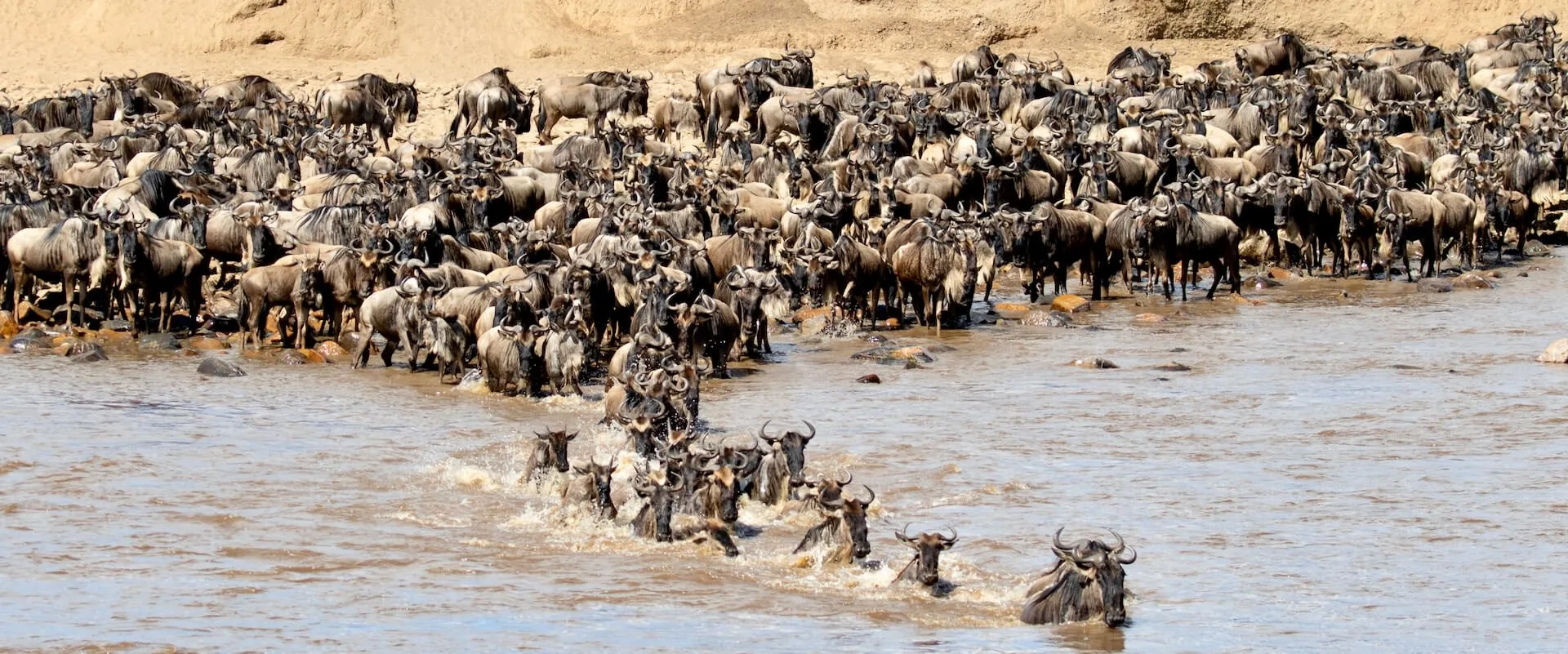
The Great Migration in Africa happens all year because the herds continuously circulate through the Serengeti–Mara ecosystem in…
Read article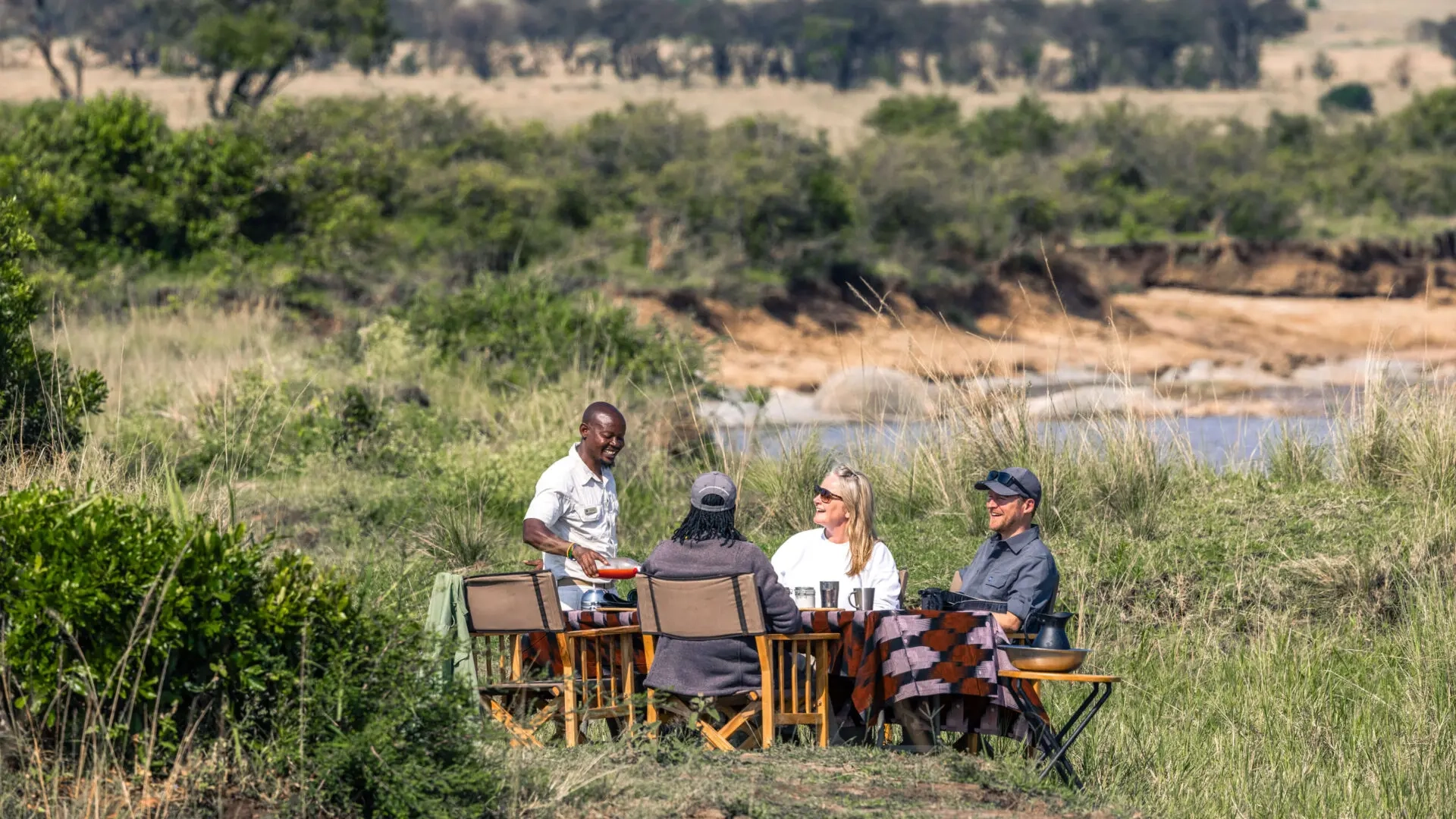
Definitive answer: A picnic lunch on safari is a packed or catered midday meal eaten at an approved…
Read article
Definitive answer: A bush dinner is an outdoor evening meal arranged in a safe safari setting away from…
Read articleLet us take you closer to the wildlife, people and places that make Africa extraordinary.
Plan Your Safari Today