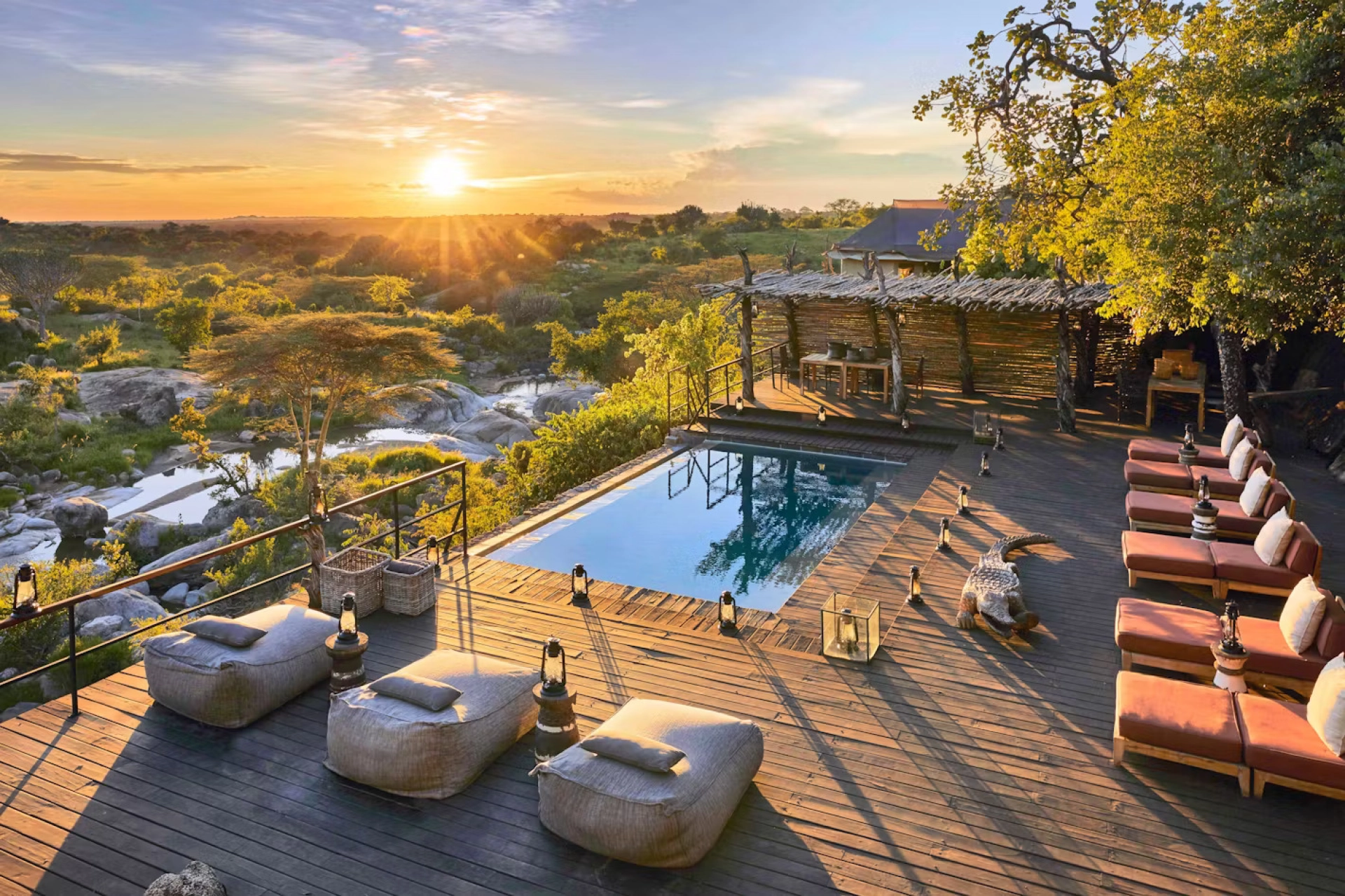
What should I look for when booking a luxury African safari?
When booking a luxury African safari, look beyond the room and compare the quality of guiding, wildlife location,…
Read article

Africa Travel Guide
Africa is usually imagined through its vast savannas. Lions resting beneath acacia trees, elephants crossing dusty plains and wildebeest moving across the Serengeti dominate the classic image of an African safari. Yet some of the continent's…
Africa is usually imagined through its vast savannas. Lions resting beneath acacia trees, elephants crossing dusty plains and wildebeest moving across the Serengeti dominate the classic image of an African safari. Yet some of the continent’s most extraordinary wildlife experiences happen far away from open grasslands, inside mist-covered mountains, tropical rainforests, bamboo forests, swamp forests and remote islands.
These are the landscapes of Africa’s primates. The best primate safaris in Africa introduce travellers to an astonishing range of species, from the enormous mountain gorillas of Uganda and Rwanda to chimpanzees swinging through the forests of Kibale, golden monkeys racing through bamboo in the Virunga Mountains, gelada monkeys grazing on Ethiopia’s high plateaus and lemurs calling through Madagascar’s forests. A primate safari is fundamentally different from a conventional game drive.
You usually leave the vehicle behind. You walk. Sometimes the trail is gentle. On other days it climbs steeply through tangled vegetation or muddy mountain forest. Guides and trackers listen for calls, examine nests, identify fresh feeding signs and follow trails invisible to inexperienced visitors. The reward may come suddenly. A branch moves above you. A chimpanzee calls somewhere deeper in the forest. A silverback gorilla appears behind vegetation. A family of colobus monkeys leaps between trees.
A ring-tailed lemur walks across Madagascar’s forest floor with its striped tail raised above its body. These encounters are intimate because primates often remind us of ourselves. Their hands, eyes, social relationships, parenting and communication can feel immediately recognisable. For travellers interested in wildlife behaviour, conservation, photography or evolutionary history, African primate safaris can become some of the most memorable wildlife experiences anywhere in the world. This detailed guide explores the best places in Africa to see gorillas, chimpanzees, golden monkeys, colobus monkeys, baboons, geladas, mandrills, mangabeys, lemurs and other remarkable primates.
Africa contains an extraordinary diversity of primates. Some are widely distributed across several countries. Others survive only within tiny geographical areas. Mountain gorillas, for example, occur only in the Bwindi Impenetrable Forest and the Virunga Massif. The Ethiopian wolf may dominate discussions of Ethiopia’s rare mammals, but the country’s highlands are also home to one of the world’s most unusual monkeys: the gelada. Madagascar follows an entirely different evolutionary story.
Its lemurs evolved in isolation and are found nowhere else naturally. Across Central Africa, western lowland gorillas, bonobos, mandrills and numerous forest monkeys inhabit ecosystems that remain unfamiliar to many safari travellers. The diversity means there is no single “best” primate safari. A traveller whose dream is to sit beside a mountain gorilla needs a different itinerary from someone hoping to photograph geladas or lemurs. For travellers who want the greatest overall diversity in a single destination, however, Uganda is difficult to beat.
Uganda combines mountain gorillas, chimpanzees, golden monkeys, black-and-white colobus monkeys, red colobus, red-tailed monkeys, blue monkeys, L’Hoest’s monkeys, vervet monkeys, olive baboons and several other primates across multiple protected areas. That diversity has helped earn the country its reputation as one of Africa’s outstanding primate destinations.
For many travellers, mountain gorilla trekking in Uganda represents the ultimate African primate safari. Uganda protects mountain gorillas in Bwindi Impenetrable National Park and Mgahinga Gorilla National Park. Bwindi is the better-known destination. This ancient forest covers approximately 321 square kilometres in southwestern Uganda and forms an exceptionally important part of the Albertine Rift biodiversity hotspot. Uganda Wildlife Authority describes Bwindi as a major mountain gorilla habitat and a World Heritage Site, while Uganda’s 2026 State of Wildlife report confirms that mountain gorillas occur in both Bwindi and Mgahinga.
The experience begins long before you actually see a gorilla. You arrive at the trekking centre early in the morning. After registration and a ranger briefing, trekkers are assigned to different habituated gorilla families. The trek then enters the forest. Depending on where your assigned gorilla family has moved, the search may take a relatively short time or several hours. This unpredictability is part of what makes gorilla trekking in Bwindi authentic.
These are wild mountain gorillas moving through a natural forest environment. They are habituated to the presence of researchers and carefully controlled tourist groups, but they are not trained or confined.
When trackers locate your assigned family, the pace changes immediately. Backpacks are usually left with porters or placed nearby. Rangers remind visitors of the viewing rules. Then you enter the final area quietly. The first sighting can be surprisingly emotional. A gorilla may appear enormous from only a few metres away. A silverback may sit feeding while younger animals climb through vegetation. Females may rest while infants remain close. Juveniles can be playful, occasionally approaching far closer than tourists expect.
Uganda Wildlife Authority regulations provide for a maximum one-hour viewing period during normal gorilla tracking, while the longer Gorilla Habituation Experience allows a maximum four-hour viewing period after contact. That hour passes remarkably quickly.
Mountain gorillas are highly susceptible to human illnesses. For this reason, visitors must follow strict regulations. Current UWA rules require normal gorilla trekkers to be at least 15 years old, prohibit visitors from trekking when ill, restrict each gorilla group to a maximum of eight visitors, prohibit flash photography and limit normal viewing to one hour. UWA guidelines also specify a recommended distance from the gorillas. These rules are not inconveniences.
They are part of the conservation system that allows tourism and gorilla protection to coexist.
Bwindi is not a single trekking starting point. It has several main tourism sectors.
Buhoma is Bwindi’s historic gorilla trekking sector and remains one of the most famous. It is situated in the northern part of the forest and offers a strong range of accommodation. Buhoma also works well for travellers approaching Bwindi from Queen Elizabeth National Park.
Ruhija lies on the eastern side of Bwindi. Its higher elevation and forest scenery appeal strongly to birdwatchers and travellers looking for a quieter forest atmosphere.
Rushaga in southern Bwindi has access to several habituated gorilla families. Its location makes it particularly practical for itineraries approaching Uganda from Kigali and southwestern Rwanda.
Nkuringo lies along the southern side of Bwindi and is famous for spectacular mountain scenery. The terrain can be demanding, but the region offers superb views toward the Virunga volcanoes. The correct sector should be selected according to permit availability, accommodation, road routing and the traveller’s broader itinerary, not simply by choosing whichever name appears first online.
Uganda offers something particularly interesting for serious primate enthusiasts: the Gorilla Habituation Experience. Unlike conventional trekking, which provides a maximum one-hour viewing period, the habituation experience allows a longer period with gorillas after they have been located. UWA guidelines provide for a maximum four-hour viewing period during the habituation experience. The experience is designed around gorilla families undergoing or associated with the habituation process, in which wild gorillas gradually become accustomed to the carefully managed presence of humans.
For photographers, researchers and travellers with a deep interest in gorilla behaviour, those additional hours can provide extraordinary opportunities to observe feeding, social interaction, movement and resting behaviour.
Rwanda offers another world-class mountain gorilla safari in Volcanoes National Park. The landscape is spectacular. Forest rises along the slopes of the Virunga volcanoes, creating one of Africa’s most dramatic primate destinations. Volcanoes National Park is also relatively easy to reach from Kigali compared with many remote African wildlife destinations. This accessibility makes Rwanda particularly suitable for travellers with limited time. It is possible to arrive in Kigali, transfer to the Musanze area and undertake gorilla trekking within a relatively compact itinerary.
Visit Rwanda continues to promote gorilla trekking in Volcanoes National Park as one of the country’s flagship wildlife experiences.
One of the most common questions is: Is gorilla trekking better in Uganda or Rwanda? Neither answer is universally correct.
You want to combine gorilla trekking with chimpanzee tracking and a longer wildlife safari. You want several Bwindi trekking sectors and a broad selection of lodges. You are interested in the Gorilla Habituation Experience. You want to combine gorillas with Queen Elizabeth National Park, Kibale National Park, Lake Bunyonyi, Murchison Falls or other Ugandan destinations.
You want a very compact gorilla itinerary. You value convenient access from Kigali. You want to combine gorillas with golden monkeys and Rwanda’s other national parks.
You have enough time. A combined Uganda and Rwanda primate safari can include chimpanzees in Kibale, mountain gorillas in Bwindi and golden monkeys or another gorilla experience in Volcanoes National Park.
If gorillas are Africa’s most famous primates, chimpanzees may be its most energetic. Chimpanzee trekking in Kibale National Park is one of Uganda’s signature wildlife experiences. Kibale protects a diverse tropical forest in western Uganda and is internationally recognised for its primates. Uganda Wildlife Authority confirms that chimpanzee tracking and chimpanzee habituation experiences operate in Kibale throughout the year. The experience feels very different from gorilla trekking. Mountain gorillas often move relatively slowly.
Chimpanzees can disappear through trees within seconds. One moment you may be watching an adult feeding on the forest floor. Then a chorus of screams, pant-hoots and crashing branches erupts above you. Chimpanzees are highly social, vocal and mobile. Tracking them therefore has a much more dynamic atmosphere.
Groups enter the forest with UWA guides and trackers.
Guides listen carefully for vocalisations and watch for feeding remains, nests and other signs. Chimpanzees may be encountered on the ground or in the canopy. The forest itself becomes part of the experience. Kibale contains enormous trees, thick undergrowth, butterflies, birds and numerous other primates. Current UWA guidelines specify morning and afternoon chimpanzee tracking sessions, with a maximum standard viewing period of one hour after encountering the chimpanzees.
Travellers wanting a longer experience should investigate chimpanzee habituation. As with the gorilla habituation experience, this allows additional time around chimpanzees. Current UWA regulations allow a maximum four-hour viewing period during the habituation experience. For wildlife photographers and travellers interested in behaviour, this extended time can be invaluable. You begin to notice individual personalities and social relationships that are difficult to appreciate during a shorter encounter.
Calling Kibale a chimpanzee destination alone dramatically undersells the forest. The ecosystem supports numerous primate species. Depending on the area and conditions, visitors may encounter: black-and-white colobus monkeys red colobus monkeys red-tailed monkeys blue monkeys L’Hoest’s monkeys grey-cheeked mangabeys olive baboons and other primates. This makes Kibale one of the best destinations for travellers whose interest extends beyond a single flagship species. A serious Uganda primate safari should therefore allocate enough time to appreciate the entire forest rather than rushing in for chimpanzee tracking and immediately leaving.
Close to Kibale lies Bigodi Wetland Sanctuary, an excellent complement to chimpanzee trekking. Community-based guiding through the wetland and surrounding forest edge can reveal several monkey species, birds, butterflies and local plant life. The atmosphere is slower than chimpanzee tracking. Instead of concentrating entirely on one species, you walk through a mosaic of wetland, forest and community landscapes. Bigodi is particularly valuable for photographers and birdwatchers. It also illustrates an important principle of sustainable tourism: protected wildlife landscapes are more likely to survive when surrounding communities receive meaningful economic benefits from tourism.
Another excellent Uganda chimpanzee safari is available in Budongo Forest near Murchison Falls National Park. This location is particularly convenient for travellers wanting to combine primates with traditional safari activities. A northern Uganda itinerary can include: chimpanzee trekking, game drives in Murchison Falls National Park, a Nile boat safari, the top of Murchison Falls, rhino conservation experiences, and other wildlife encounters. Budongo therefore works especially well for travellers who do not have time to travel to Kibale but still want a chimpanzee experience.
Kyambura Gorge lies within the Queen Elizabeth conservation landscape. The gorge cuts dramatically through the surrounding savanna. Descending into its forest creates a complete ecological transition. One moment you are surrounded by open grassland. Minutes later you are walking beneath forest canopy. Uganda Wildlife Authority recognises Kyambura as an official chimpanzee tracking location. This makes it possible to combine chimpanzee trekking with Queen Elizabeth National Park safari activities, including game drives and the Kazinga Channel boat cruise.
For travellers building an efficient Uganda itinerary, the combination is extremely attractive.
Mountain gorillas are not Uganda’s only rare primate attraction. Mgahinga Gorilla National Park protects golden monkeys in its bamboo forests. Golden monkeys are dramatically different from gorillas. They are smaller, faster and highly active. Their golden-orange colouring stands out beautifully against the green bamboo. Tracking often involves following groups as they feed and move through vegetation. Mgahinga is therefore an excellent destination for travellers staying in Kisoro or combining Uganda with Rwanda.
The park also contains the spectacular Virunga volcanoes and can be combined with mountain climbing, gorilla trekking and cultural experiences. UWA continues to list golden monkey tracking among Mgahinga’s tourism activities.
Golden monkeys also occur in Rwanda’s Volcanoes National Park. This creates one of Africa’s easiest opportunities to combine two very different primate encounters in consecutive days. One day can be devoted to mountain gorillas. The next can involve golden monkeys. The contrast is fascinating. Gorillas often encourage patience and quiet observation. Golden monkeys are constantly moving. Photographers need faster reactions and must learn to anticipate movement between bamboo stems. For travellers spending several nights around Musanze, adding golden monkey tracking is highly recommended.
Rwanda’s primate tourism extends beyond the Virunga Mountains. Nyungwe National Park protects a large montane rainforest in southwestern Rwanda and is another important primate destination. Chimpanzees occur in the forest alongside several other monkey species. Nyungwe is particularly rewarding because it can combine: chimpanzee trekking, forest walks, birdwatching, waterfalls and canopy experiences. For travellers wanting a comprehensive Rwanda primate safari, a route from Volcanoes National Park to Nyungwe provides a strong contrast between gorilla and chimpanzee habitats.
Nyungwe is particularly famous for black-and-white colobus monkeys. Large groups can sometimes be encountered moving through the canopy. Their long black-and-white coats make them among Africa’s most photogenic monkeys. Unlike chimpanzees, which often become the singular focus of an excursion, colobus experiences can encourage travellers to pay attention to mixed-species monkey groups and broader forest ecology.
Few primate destinations look as spectacular as Mahale Mountains National Park in western Tanzania. Forested mountains rise directly from the eastern shore of Lake Tanganyika. There are no classic safari roads defining the experience. Visitors travel by boat and on foot. The result feels remote and unusually immersive. Mahale is famous for habituated chimpanzees. The experience combines chimpanzee trekking, forest walking, beaches and Lake Tanganyika, creating something completely different from a standard East African safari.
For travellers with sufficient time and budget, Mahale can be one of Africa’s finest wilderness primate experiences.
Gombe Stream National Park is one of the world’s most historically significant chimpanzee destinations because of the long-term research associated with Jane Goodall.
The park lies along Lake Tanganyika in western Tanzania. Gombe is relatively small compared with many African national parks, but its importance to our understanding of chimpanzee behaviour is enormous. A visit connects wildlife tourism with one of the most famous chapters in primatology.
One of Africa’s most extraordinary primates does not live in tropical forest. The gelada, sometimes called the bleeding-heart monkey because of the distinctive bare patch of skin on its chest, lives in Ethiopia’s highlands. Geladas spend large amounts of time on the ground grazing. This behaviour creates an unusual safari experience. Instead of craning your neck into a forest canopy, you may sit quietly on a high plateau surrounded by dozens or even hundreds of animals.
The Simien Mountains are among the best-known destinations. Steep escarpments and high-altitude scenery make the landscape almost as memorable as the animals. For photographers, geladas provide extraordinary opportunities for portraits and social-behaviour images.
Baboons are so widespread that safari travellers sometimes overlook them. That is unfortunate. Baboons have complex social structures and highly expressive behaviour. Several species occur in Africa. Olive baboons are common in East Africa. Chacma baboons occur widely in southern Africa. Other species occur in different geographical regions. Instead of immediately driving past a baboon troop, spend time watching. You may see grooming, play, infant care, dominance interactions and complex communication.
In behavioural terms, baboons can provide some of the most interesting primate observations of an entire safari.
Few monkeys are visually as distinctive as black-and-white colobus monkeys. Their long coats create an almost elegant appearance as they move through forest canopy. Several forms occur in East and Central Africa. In Uganda they can be encountered in forest areas including Kibale and other protected landscapes. Kenya’s forests also support colobus populations, while KWS identifies black-and-white colobus among primates present in places such as Aberdare National Park. Their long limbs and dramatic leaps make them particularly rewarding for wildlife photography.
Red colobus monkeys occur in several geographically separated populations across Africa. Some populations are highly threatened. The Ugandan red colobus is particularly associated with Kibale and neighbouring forest landscapes. Seeing red colobus alongside chimpanzees and several other monkey species strengthens Kibale’s reputation as one of Africa’s most diverse primate destinations.
L’Hoest’s monkey is another beautiful Albertine Rift primate. Its dark coat and prominent white facial markings make identification relatively straightforward once you know what to look for. These monkeys are frequently associated with montane and tropical forests. Uganda is one of the best countries to include them within a broader primate itinerary.
Mangabeys are frequently overshadowed by gorillas and chimpanzees. Yet they are fascinating forest primates with expressive faces and complex social behaviour. Grey-cheeked mangabeys can be encountered in parts of Uganda’s forest systems, including Kibale. Uganda’s emerging Bugoma tourism programme also includes mangabey tracking among its forest activities, alongside chimpanzee experiences and guided nature walks. For repeat visitors to Uganda, these lesser-known primate experiences offer an opportunity to move beyond the country’s headline attractions.
The mandrill is among the world’s most visually extraordinary primates. Adult males develop vivid blue and red facial colouring that seems almost unreal. Gabon protects some of the best remaining Central African forest habitat. Lopé National Park is particularly associated with mandrills and can offer exceptional opportunities to observe large aggregations under the right conditions. This is far more specialised than a mainstream East African safari. Road and logistical infrastructure can be challenging.
But for serious primate travellers, Gabon belongs near the top of the long-term wish list.
Mountain gorillas receive most tourism attention, but Africa also contains other gorilla subspecies. Western lowland gorillas occupy forests in Central Africa. Specialist destinations in the Republic of Congo and neighbouring areas provide opportunities to track habituated groups. The experience differs substantially from mountain gorilla trekking. The forest tends to be lower, wetter and ecologically different. For travellers who have already trekked mountain gorillas, a western lowland gorilla expedition can provide an extraordinary second chapter.
Among great apes, bonobos are especially fascinating. They occur naturally only in the Democratic Republic of Congo. Their social behaviour has made them important in evolutionary and behavioural research. Tourism opportunities are much less developed than those for mountain gorillas or chimpanzees. Seeing bonobos in genuinely wild settings therefore remains a specialist undertaking. This is not usually a first-time African primate safari. It is better suited to experienced travellers prepared for complex logistics.
No primate safari guide would be complete without Madagascar. Madagascar’s lemurs represent an evolutionary world completely separate from mainland Africa’s monkeys and apes. There are many species, varying dramatically in size, behaviour and habitat. Some are active during the day. Others emerge after dark. Some live in rainforest. Others inhabit dry forest or the bizarre spiny forests of southern Madagascar. The country’s primate diversity means that a Madagascar lemur safari requires multiple destinations if you want a broad range of species.
The ring-tailed lemur is probably Madagascar’s most recognisable primate.
Its long black-and-white tail is unmistakable. Unlike many forest primates, ring-tailed lemurs spend substantial time on the ground. They are strongly associated with southern Madagascar. Watching a group move together with tails held upright is one of the continent’s most distinctive primate scenes.
The indri is Madagascar’s largest living lemur. Its call is extraordinary. The haunting vocalisations can travel across rainforest and create one of Africa’s most memorable forest soundscapes. The forests around Andasibe are among the most accessible places for travellers hoping to experience indri. Unlike a conventional animal sighting, hearing indri calls often becomes as memorable as actually seeing them.
Sifakas are famous for their unusual form of movement. Some species cross open ground using an extraordinary sideways hopping motion. In trees, however, they move with remarkable power and grace. Different sifaka species occur in different parts of Madagascar. This again demonstrates why travellers should not assume all lemur experiences are interchangeable. A multi-region itinerary reveals dramatically different animals and habitats.
At the opposite extreme from the indri are mouse lemurs, among the smallest primates in the world. They are nocturnal. Finding them usually requires guided night walks. Their tiny size makes them easy to miss, but once located they provide another reminder of Madagascar’s extraordinary evolutionary diversity.
For maximum diversity and accessibility, Uganda is arguably the strongest all-round choice. A single Uganda itinerary can combine: mountain gorillas in Bwindi golden monkeys in Mgahinga chimpanzees in Kibale chimpanzees in Budongo chimpanzees in Kyambura Gorge colobus monkeys mangabeys L’Hoest’s monkeys red-tailed monkeys blue monkeys and olive baboons. You can also combine these forest experiences with classic game viewing. That means a traveller does not have to choose between primates and safari.
You can trek chimpanzees one morning and watch elephants, buffalo or lions later in the journey.
Choose Uganda or Rwanda. Uganda works particularly well for travellers wanting a longer itinerary and multiple wildlife experiences. Rwanda suits travellers prioritising easy access and a shorter itinerary.
Strong candidates include: Kibale National Park in Uganda Mahale Mountains in Tanzania Gombe Stream in Tanzania Nyungwe in Rwanda and Budongo Forest in Uganda. Kibale is particularly practical because it fits naturally into a classic Uganda safari route.
Choose Madagascar. Nothing else can substitute for it. For first-time visitors, combinations around Andasibe and one or two additional ecosystems provide an excellent introduction. More experienced travellers should explore northern or southern Madagascar for additional endemic species.
Uganda and Rwanda provide exceptional diversity. Ethiopia is essential for geladas. Madagascar dominates for lemurs. Gabon and Central Africa become increasingly important for experienced primate specialists.
One of Africa’s best wildlife itineraries combines Bwindi Impenetrable National Park and Kibale National Park. A typical route can include: Entebbe, Kibale Forest, Queen Elizabeth National Park, Bwindi, Lake Bunyonyi, and perhaps Mgahinga or Rwanda. This creates a natural progression from chimpanzees to savanna wildlife and finally mountain gorillas. For serious primate travellers, it is one of the continent’s most complete itineraries.
These experiences are very different.
slower, quieter, more intimate, and concentrated around one family group.
faster, louder, more mobile, and unpredictable. You should not choose one instead of the other if time allows. Doing both reveals just how different Africa’s great apes can be.
This depends on the destination. In Uganda and Rwanda, primate tracking operates throughout the year. Dry-season conditions can make trails easier. Rainy seasons may create muddy tracks but can also influence food availability and forest movement. UWA notes that chimpanzee tracking in Kibale operates year-round. Rather than focusing only on weather, consider: permit availability, accommodation availability, overall safari routing, photography goals, and personal tolerance for rain or mud.
Difficulty varies enormously. Some travellers reach gorillas relatively quickly. Others may hike several hours over steep terrain. Bwindi is mountainous, and its name “Impenetrable” is well earned. Fitness helps, but travellers do not need to be elite athletes. Porters can be invaluable. Hiring a porter supports local livelihoods while also making the trek much easier, particularly on steep sections. Walking sticks are also useful.
Essential items include: strong walking shoes, long trousers, a lightweight waterproof jacket, gardening or trekking gloves, daypack, water, camera, spare batteries, sun protection, insect repellent, and clothing that can become muddy. Avoid extremely bright clothing. For photography, consider humidity and low-light conditions under forest canopy. A camera that performs well at higher ISO settings can be more useful than simply carrying the longest available lens.
Primate photography is demanding. Forest light changes constantly. Dark animals may sit against bright vegetation. Movement can be sudden. Flash photography is not permitted around Uganda’s tracked gorillas and chimpanzees. Use higher ISO values rather than relying on flash. Pay attention to eyes. A photograph showing eye contact or social behaviour can be far more powerful than an image simply proving that you saw the animal.
Primate tourism works only when wildlife survival remains the priority. Mountain gorillas are particularly vulnerable to human disease. Chimpanzees also share many diseases with humans. This is why health regulations are taken seriously. Do not conceal illness simply because you have travelled a long distance. Losing a trekking day is disappointing. Transmitting disease to a primate population would be far worse. The conservation contribution also extends beyond permit fees. Guides, rangers, porters, lodge staff, drivers and surrounding communities all benefit from carefully managed tourism.
When people living near forests receive meaningful benefits from conservation, the economic case for protecting those forests becomes stronger.
Responsible primate tourism means: observing animals without touching them, maintaining the required distance, following ranger instructions, avoiding trekking when sick, never feeding wild primates, avoiding flash, and choosing recognised protected-area experiences. Be wary of facilities offering unnatural primate interactions purely for tourist photographs. Wild primates should remain wild.
For gorillas alone, three days can work. For gorillas plus chimpanzees, five to seven days is more realistic. For a complete Uganda primate and wildlife safari, 8–12 days is excellent. A longer itinerary can add Murchison Falls, Queen Elizabeth, Lake Mburo or other destinations.
Day 1: Entebbe to Kibale. Day 2: Chimpanzee trekking and Bigodi. Day 3: Transfer to Queen Elizabeth National Park. Day 4: Queen Elizabeth safari and Kazinga Channel. Day 5: Transfer to Bwindi. Day 6: Mountain gorilla trekking. Day 7: Return to Entebbe or continue to Kigali. This is one of the most efficient ways to combine African primates and classic safari wildlife.
A longer itinerary could include: Mabamba shoebill excursion, Kibale chimpanzees, Bigodi, Queen Elizabeth National Park, Bwindi gorillas, Mgahinga golden monkeys, Lake Bunyonyi, and return through either Entebbe or Kigali. This provides outstanding primate diversity without making every day exclusively about trekking.
Combining Uganda and Rwanda creates another excellent option. A route might include: Kibale chimpanzees, Queen Elizabeth, Bwindi gorillas, Volcanoes National Park golden monkeys, and Kigali. Because southern Bwindi lies relatively close to Rwanda, cross-border routes can be surprisingly efficient.
Uganda’s Bwindi Impenetrable National Park and Rwanda’s Volcanoes National Park are the two principal mainstream mountain gorilla trekking destinations.
Kibale National Park in Uganda is one of Africa’s most accessible and established chimpanzee trekking destinations. Tanzania’s Mahale Mountains is particularly rewarding for travellers wanting a remote wilderness experience.
Yes. Uganda is particularly well suited to this combination because Bwindi and Kibale can be incorporated into one overland itinerary.
Under Uganda’s current tracking rules, normal gorilla tracking allows a maximum one-hour viewing period after the gorillas are encountered, while the Gorilla Habituation Experience provides a maximum four-hour viewing period.
Uganda Wildlife Authority currently sets the minimum normal gorilla tracking age at 15 years.
Habituated gorilla families are monitored closely by ranger teams, so trekking success is generally extremely high, but wildlife encounters should never be described as absolute guarantees.
Uganda is one of the strongest options because travellers can combine mountain gorillas, chimpanzees, golden monkeys, colobus monkeys, mangabeys and several additional primates with classic savanna wildlife.
Wild lemurs occur naturally only in Madagascar.
Travel to Ethiopia, particularly the Simien Mountains and other Ethiopian highland habitats.
Yes, but fitness and terrain should be considered carefully. Gorilla trekking difficulty varies substantially. Porters can provide important assistance, and travellers with mobility concerns should discuss their requirements when arranging permits and trekking sectors.
The best primate safaris in Africa reveal an entirely different continent from the familiar world of safari vehicles and savannas. In Uganda, you may follow mountain gorillas through Bwindi’s ancient forest. In Kibale, chimpanzee calls can echo through the canopy before an entire community suddenly appears. In Mgahinga and Rwanda, golden monkeys race through bamboo. In Ethiopia, geladas graze across high-altitude plateaus. In Gabon, mandrills add flashes of astonishing colour to Central African forest.
And in Madagascar, lemurs represent millions of years of evolution found nowhere else on Earth. For a first major primate journey, Uganda offers one of the most complete combinations anywhere in Africa. Mountain gorillas, chimpanzees, golden monkeys and numerous smaller primates can all be combined with elephants, lions, buffalo, hippos, giraffes and other traditional safari wildlife. That means you do not need to choose between a gorilla trekking safari and a classic African safari.
You can have both. Adventure in the Wild Safaris can arrange tailor-made Uganda gorilla trekking tours, Rwanda gorilla safaris, chimpanzee trekking itineraries, golden monkey experiences and multi-country African primate safaris, with routes built around your dates, trekking permits, preferred accommodation and overall wildlife interests.
“Gorilla trekking is more than a safari — it’s a powerful reminder of our shared humanity and the importance of protecting our natural world.”
— Adventure in the wild Safaris

Share This Article
When booking a luxury African safari, look beyond the room and compare the quality of guiding, wildlife location,…
Read article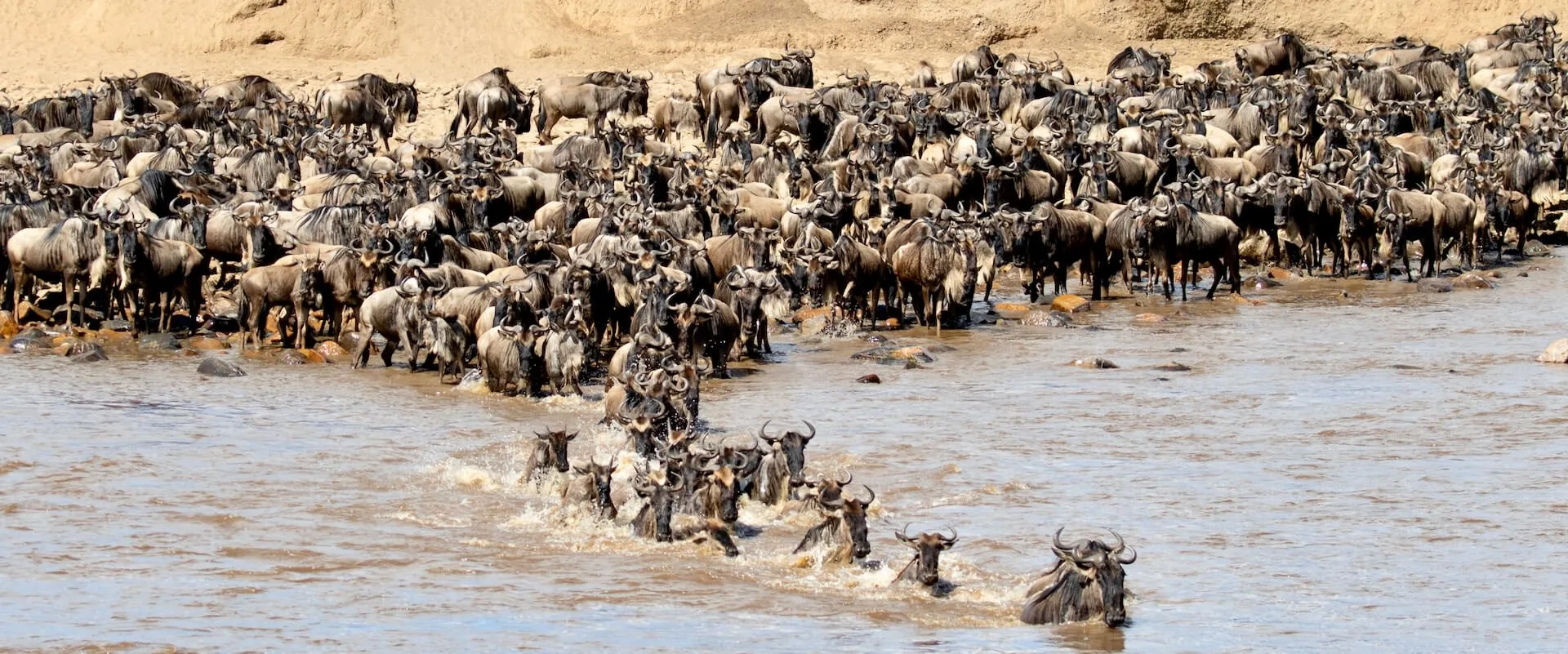
The Great Migration in Africa happens all year because the herds continuously circulate through the Serengeti–Mara ecosystem in…
Read article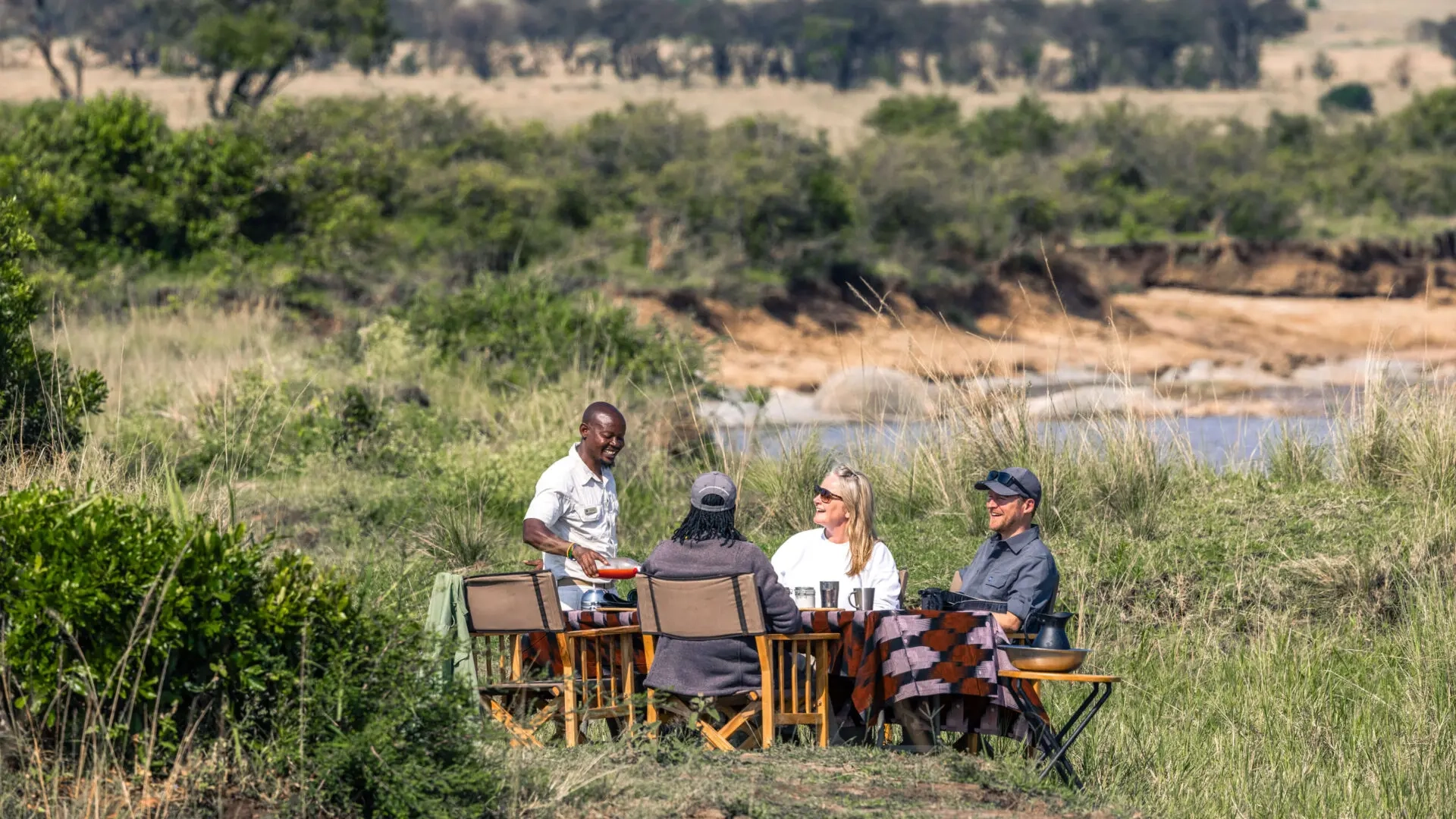
Definitive answer: A picnic lunch on safari is a packed or catered midday meal eaten at an approved…
Read article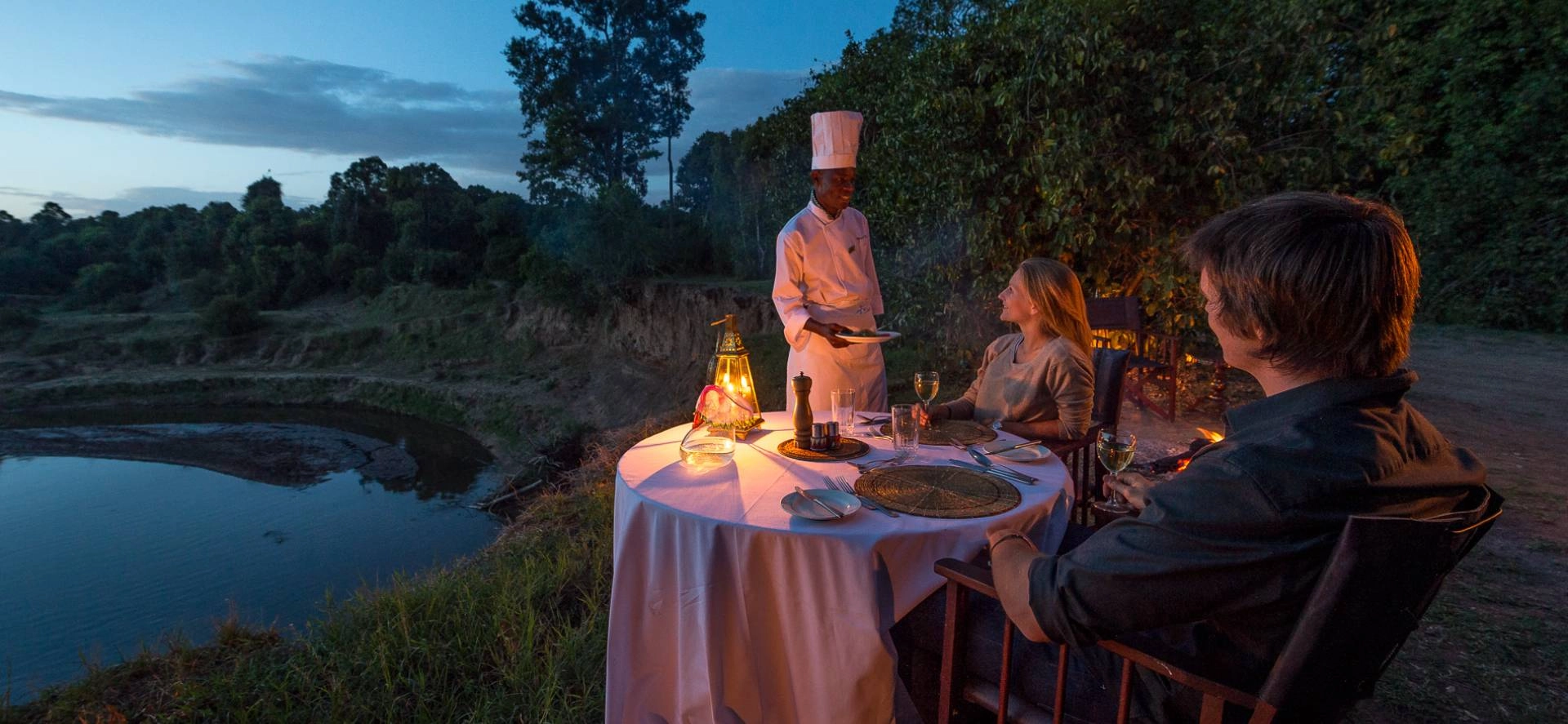
Definitive answer: A bush dinner is an outdoor evening meal arranged in a safe safari setting away from…
Read articleLet us take you closer to the wildlife, people and places that make Africa extraordinary.
Plan Your Safari Today