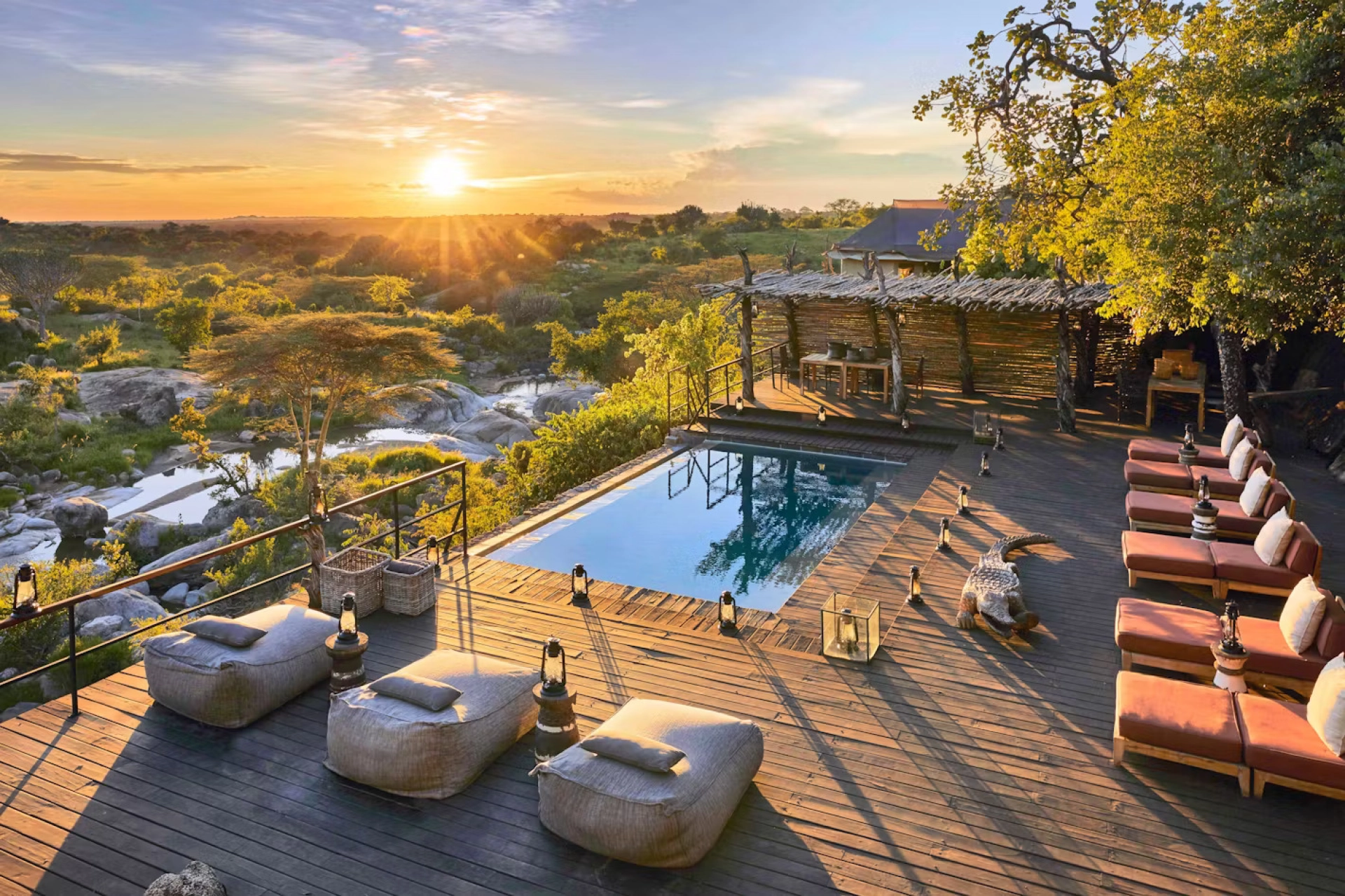
What should I look for when booking a luxury African safari?
When booking a luxury African safari, look beyond the room and compare the quality of guiding, wildlife location,…
Read article

Travel Guide
There is no single best safari in Africa. That may sound like an inconvenient answer to a question travelers ask constantly, but it is also the most useful starting point. The best safari in Africa depends…
There is no single best safari in Africa. That may sound like an inconvenient answer to a question travelers ask constantly, but it is also the most useful starting point. The best safari in Africa depends on what you want to see, how you want to travel, when you are visiting, how much time you have and what you consider good value. A traveler whose dream is sitting quietly with mountain gorillas in a misty forest should not choose the same destination as someone who wants to self-drive through a vast savannah searching for lions.
A photographer hoping to witness the Great Wildebeest Migration has different priorities from a family wanting malaria-conscious options and predictable infrastructure. A honeymoon couple may prioritize privacy and remote camps. A backpacker may care more about scheduled group departures and affordable public campsites. Africa provides all of these safari styles.
That diversity is precisely why choosing among the best safari destinations in Africa requires more than ranking countries from one to ten. The more useful approach is to ask what each destination does particularly well. Tanzania is exceptional for the Serengeti, Ngorongoro and Great Migration. Kenya combines the Masai Mara with Amboseli, Samburu and a sophisticated safari network.
Uganda is one of the continent’s strongest destinations for combining mountain gorillas, chimpanzees and conventional savannah wildlife. Rwanda offers remarkably efficient primate travel and an increasingly varied wildlife circuit through Akagera. South Africa is difficult to beat for Big Five accessibility, self-drive flexibility and safari-plus-city combinations. Botswana specializes in wilderness, water and low-density safari. Namibia provides one of Africa’s great road journeys. Zambia is famous for walking safaris. Zimbabwe combines strong wildlife with Victoria Falls. The correct question is therefore not simply, “What is the best safari in Africa?”
It is: Which African safari is best for me?
For travelers whose mental image of safari consists of immense plains, wildebeest herds and predators against an endless horizon, Tanzania is difficult to surpass. The country’s northern safari circuit includes Serengeti National Park, Ngorongoro Conservation Area, Tarangire National Park and Lake Manyara National Park. Serengeti is the centerpiece. UNESCO describes the park as approximately 1.5 million hectares of savannah and recognizes the annual migration of vast herbivore herds, followed by predators, as one of the world’s most impressive natural spectacles.
Yet Tanzania should not be reduced to the migration. Resident wildlife makes the Serengeti exceptional throughout the year. Lions, leopards, cheetahs, hyenas, elephants, giraffes, buffalo and numerous antelope species occupy different parts of the ecosystem. The migration merely adds another layer.
The correct season depends on what you want to experience. Early-year travel can focus on southern Serengeti and Ndutu for calving-season activity. Mid-year movement extends northward. July through October can attract travelers interested in northern Serengeti and the possibility of Mara River crossings. But river crossings are never guaranteed. Rainfall and grazing influence animal movement. The herd does not follow a tourism schedule. A strong Great Migration safari therefore prioritizes the correct broad ecosystem rather than promising a crossing on a particular day.
The Ngorongoro Crater complements Serengeti beautifully. Its enclosed volcanic landscape creates a very different safari experience. Wildlife is concentrated within a relatively compact area, making it especially rewarding for first-time visitors. Rhino sightings are possible, though never guaranteed. Combining Ngorongoro and Serengeti remains one of the strongest first-time safari itineraries in Africa.
Tarangire deserves more than a one-night transit stop. Its baobabs, elephants and dry-season wildlife concentrations create a distinctive environment. For travelers visiting during suitable periods, it can become one of the highlights of northern Tanzania.
Tanzania is especially strong for first-time safari travelers, migration enthusiasts, photographers, honeymooners and visitors who want to combine wildlife with Zanzibar.
Kenya is where much of modern safari tourism developed. The country combines globally famous wildlife areas with excellent tourism infrastructure. The Masai Mara is the obvious headline attraction, but Kenya’s strength is diversity. Amboseli offers elephants and views toward Mount Kilimanjaro. Samburu introduces semi-arid northern landscapes and distinctive wildlife. Tsavo provides enormous wilderness. Lake Nakuru adds Rift Valley scenery and rhino conservation. Nairobi National Park allows wildlife viewing beside a major capital.
This makes Kenya one of the easiest destinations for building varied African safari packages.
The Masai Mara is one of Africa’s most productive predator landscapes. Lions are a major attraction. Cheetahs benefit from open plains. Leopards can be encountered around suitable habitat, although they remain elusive. Elephants, buffalo, giraffes and abundant antelope contribute to the wider ecosystem. The Mara also receives seasonal migration herds from the Serengeti. But again, the migration should not define the entire destination. Resident wildlife makes the Mara exceptional outside peak migration months.
Kenya is one of Africa’s strongest first-time safari destinations because it is easy to understand logistically. Travelers can start in Nairobi and connect several protected areas by road or scheduled flight. The safari industry includes budget camping, mid-range tented camps, private conservancies and ultra-luxury lodges. The country can therefore serve almost every budget level.
Kenya is particularly good for families because private vehicles are widely available and itinerary lengths can be adjusted. A family can combine short game drives with lodge downtime. Beach extensions along the Kenyan coast add another major advantage.
Uganda offers one of Africa’s most unusual safari combinations. A single itinerary can include mountain gorilla trekking in Bwindi, chimpanzees in Kibale National Park, savannah wildlife in Queen Elizabeth and Murchison Falls, boat safaris, crater landscapes and a walking safari in Lake Mburo. Few countries combine primates and conventional safari this effectively.
This makes Uganda one of the best safaris in Africa for wildlife diversity rather than simply one famous species.
Bwindi Impenetrable National Park is Uganda’s principal mountain gorilla destination. The experience is fundamentally different from a game drive. Travelers hike through dense mountain forest with trackers and guides. Terrain can be steep. Vegetation can be thick. Rain is possible throughout the year. The trek may be relatively short or demanding depending on the gorilla family’s location. When the group is found, the wildlife encounter becomes intimate in a way that open-vehicle safari rarely matches.
Gorilla trekking is controlled through permits and regulated group visits. Because capacity is limited, permit availability should be treated as a core itinerary-building factor.
Kibale adds chimpanzees. A Uganda gorilla and chimpanzee safari therefore allows travelers to observe two of humanity’s closest living relatives in dramatically different forest settings. Chimpanzees are often more active than gorillas. They may move quickly, vocalize loudly and climb through the canopy. The experience feels dynamic.
Queen Elizabeth provides the savannah component. Game drives, the Kazinga Channel and the broader conservation landscape create strong wildlife variety. The boat experience can be particularly rewarding for hippos, elephants, buffalo and birds along the water.
Murchison combines classic wildlife with the Nile. Game drives can be paired with river excursions toward the Falls. The park forms part of one of Uganda’s strongest first-time safari circuits.
Uganda can provide exceptional African safari value because one country delivers gorillas, chimpanzees and conventional game viewing. A traveler does not necessarily need separate international trips for primates and savannah wildlife.
Rwanda is compact. This is one of its greatest safari strengths. Travelers can reach Volcanoes National Park from Kigali without the long road journeys associated with some other East African circuits. For visitors with limited time, this logistical efficiency can be extremely valuable.
The park is famous for mountain gorillas and golden monkeys. The Virunga volcano landscape creates one of Africa’s most dramatic primate environments. A traveler can arrive in Kigali, transfer toward the mountains and complete a relatively compact gorilla itinerary.
Rwanda is no longer simply a gorilla destination. Akagera National Park provides savannah, woodland, wetlands and multiple lakes. Visit Rwanda notes that lions and rhinos have been reintroduced, allowing visitors the possibility of seeing the Big Five. Elephants, buffalo, giraffes, antelope and extensive birdlife add to the ecosystem. This means Rwanda can now combine gorillas with conventional game viewing inside one relatively compact itinerary.
Rwanda generally provides greater logistical efficiency. Uganda generally provides broader multi-park safari variety and often stronger value for travelers building a longer wildlife itinerary. Neither is universally better.
South Africa is one of the most versatile safari destinations on the continent. It works for luxury travelers. It works for families. It works for self-drive visitors. It works for first-time safari travelers nervous about complicated logistics. The country’s greatest strength is infrastructure. Roads, airports, accommodation diversity and a large tourism industry make independent travel relatively straightforward compared with many remote safari regions.
Kruger National Park is one of Africa’s most famous protected areas and a cornerstone of South African safari tourism. Travelers can self-drive, use public rest camps, join guided drives or stay in private lodges. This makes Kruger particularly attractive to budget-conscious travelers. A rental car and public accommodation can produce a genuine Big Five safari without the daily cost of a private guide and vehicle.
Private reserves adjoining the broader Kruger ecosystem offer a different style. Professional trackers and guides conduct drives. Some reserves may permit controlled off-road approaches to selected sightings. Night drives may be available according to reserve rules. Lower vehicle density can improve viewing quality. The best value strategy for many travelers is to combine self-drive Kruger with several nights in a private reserve.
South Africa is especially good for families because some safari regions offer malaria-free reserve options. Not all of South Africa is malaria-free, including parts of the northeast where Kruger is located. Travelers should therefore choose according to exact geography rather than relying on the vague phrase “South Africa safari.”
Botswana offers one of Africa’s most distinctive safari philosophies. Large wildlife landscapes, remote camps, the Okavango Delta and Chobe create an experience often associated with low-density tourism. Botswana Tourism Organisation notes that a substantial portion of the country is devoted to national parks, reserves and wildlife-management areas, many of which are unfenced.
The Okavango Delta is unique. Botswana Tourism Organisation describes it as an inland delta containing channels, lagoons, flooded grasslands, islands and substantial dryland. Safari activities can include game drives, mokoro excursions and boating depending on the location and seasonal water conditions. This creates one of Africa’s most varied safari environments.
Chobe is particularly famous for elephants. The Chobe Riverfront can support dramatic dry-season concentrations of elephant and buffalo. Boat safaris provide one of Africa’s best opportunities to photograph wildlife from water level.
No. Luxury dominates the international image, but mobile camping safaris, Moremi, Khwai, Kasane-based Chobe trips and scheduled group departures can make Botswana more accessible.
Namibia is less about constant high-density wildlife and more about landscape, scale and independence. Roads cross enormous desert and semi-desert environments. Sossusvlei provides towering dunes. Damaraland offers dramatic geology. The Skeleton Coast creates one of Africa’s strangest coastal landscapes. Etosha delivers the major wildlife component.
Etosha National Park is famous for wildlife viewing around waterholes, particularly during dry periods. Travelers can self-drive between rest camps. This makes Namibia one of the strongest destinations for independent safari travel. The style differs completely from the Serengeti. You search more patiently. Waterholes become focal points. Landscapes feel expansive and austere.
Namibia and Botswana form one of Southern Africa’s great two-country road journeys. Namibia contributes desert. Botswana contributes wetlands. The contrast is extraordinary.
Zambia holds a special place in safari history because of its strong walking-safari tradition. South Luangwa National Park is particularly famous. Walking safari changes the way visitors experience the bush. Instead of focusing only on large mammals, attention expands to tracks, plants, insects, bird calls and ecological relationships. A professional guide and armed scout typically lead appropriate walks according to local regulations. The objective is not to get dangerously close to wildlife. It is to understand the landscape from ground level.
South Luangwa is also excellent for conventional game drives and predators. Leopards are a major attraction. Lions, elephants, buffalo, hippos and other wildlife add depth. Walking can therefore complement rather than replace vehicle safari.
Zimbabwe deserves more attention in African safari planning. Hwange National Park is one of the continent’s major elephant and predator ecosystems. Mana Pools offers a distinctive Zambezi wilderness environment. Victoria Falls adds one of Africa’s greatest natural landmarks.
Hwange can deliver excellent dry-season wildlife around water sources. Elephants are particularly famous. The park combines naturally with Victoria Falls, making it easy to build a wildlife-and-landscape itinerary.
Victoria Falls can be accessed from Zimbabwe or Zambia. It provides an excellent beginning or ending to a Southern Africa safari. Travelers can combine it with Chobe in Botswana, Hwange in Zimbabwe or longer routes toward Zambia.
Malawi is not normally the first country travelers mention when discussing the best safaris in Africa, but it has become increasingly interesting as wildlife restoration projects strengthen. Majete Wildlife Reserve and Liwonde National Park contribute important safari experiences. Lake Malawi adds a major leisure component. For repeat safari travelers looking beyond mainstream circuits, Malawi deserves consideration.
Mozambique is best known for its coastline, islands and marine environments. But the restoration of wildlife areas such as Gorongosa has increased its safari significance. The country works particularly well for travelers seeking a safari and beach holiday with less mainstream routing. Logistics can be more complex than South Africa or Kenya. This makes specialist planning particularly useful.
Travelers whose principal objective is the Big Five — lion, leopard, elephant, rhino and buffalo — have several excellent choices. South Africa’s Kruger and private reserves provide particularly strong opportunities. Kenya and Tanzania offer all five across suitable ecosystems. Botswana supports the Big Five, although rhinos are more restricted. Rwanda’s Akagera has restored Big Five status through lion and rhino reintroductions. Uganda can form a broader Big Five circuit when a rhino-tracking component is combined with national-park wildlife. No operator should guarantee every species.
The Serengeti and Masai Mara are among Africa’s greatest lion landscapes. Kruger and Greater Kruger are also extremely strong. South Luangwa, Hwange and Botswana’s major wildlife regions can provide excellent encounters. The best destination depends on season and safari style.
Leopards are naturally secretive. Certain private reserves in Greater Kruger have exceptional reputations for leopard viewing. South Luangwa is also famous. The Serengeti, Masai Mara and Botswana support leopards, but individual sightings remain unpredictable.
Chobe is one of Africa’s most famous elephant destinations. Amboseli is extraordinary for elephant viewing against the Kilimanjaro landscape. Tarangire can become highly productive during the dry season. Hwange and parts of Botswana also provide exceptional elephant experiences.
South Africa remains one of the strongest destinations for rhino-oriented safari planning. Kenya includes important rhino conservation areas. Ngorongoro provides the possibility of black rhino sightings. Rwanda’s Akagera includes reintroduced black rhinos. Rhino distribution is conservation-sensitive, and exact locations should not be casually publicized.
For most international travelers, Uganda and Rwanda are the principal mountain gorilla choices. Uganda’s Bwindi provides several trekking sectors and can combine with a broader wildlife circuit. Rwanda’s Volcanoes National Park offers exceptional accessibility from Kigali. The correct choice depends on budget, trip length and desired itinerary.
Uganda is especially strong. Kibale is the flagship chimpanzee-tracking destination. Other Uganda forests also offer primate experiences under relevant management systems. Rwanda’s Nyungwe provides another major chimpanzee option; Visit Rwanda identifies Nyungwe as an old rainforest supporting chimpanzees and numerous other primates.
Choose Tanzania or Kenya. Tanzania’s Serengeti generally offers more migration regions through different parts of the annual cycle. Kenya’s Masai Mara becomes particularly important during periods when herds move northward into the Mara ecosystem. Do not choose based on simplistic month-by-month promises.
Migration timing varies.
Kenya, Tanzania and South Africa are particularly strong first-time choices. Kenya provides classic East African safari variety. Tanzania provides Serengeti and Ngorongoro. South Africa provides infrastructure, self-drive options and safari-plus-city combinations. Uganda becomes arguably the best first safari for travelers whose highest priority is gorillas. There is no universal winner.
South Africa provides strong family infrastructure and malaria-free options in selected regions. Kenya is excellent for private family safaris. Tanzania works very well when road time is carefully managed. Uganda suits adventurous families with children old enough for relevant primate activities. Always confirm age requirements before booking.
Tanzania plus Zanzibar is exceptionally strong. Kenya plus the Indian Ocean coast is another classic combination. Botswana provides privacy and remote luxury. South Africa combines safari with Cape Town and wine country. Uganda or Rwanda can create an unusual gorilla-focused honeymoon followed by Zanzibar.
South Africa is difficult to beat because of self-driving and public rest camps. Namibia is another excellent self-drive option. Kenya and Tanzania provide budget group safaris. Uganda provides strong experiential value because one journey can combine gorillas, chimpanzees and game drives. Botswana is more expensive overall but mobile camping opens lower-cost possibilities.
Botswana’s private concessions are among Africa’s most famous luxury wilderness experiences. Tanzania has extraordinary Serengeti camps. Kenya’s private conservancies provide excellent exclusivity. Rwanda offers some of the continent’s most luxurious gorilla lodges. South Africa’s private reserves combine exceptional accommodation with high-quality game viewing. Luxury should be evaluated according to location, guiding and privacy rather than architecture alone.
Tanzania and Kenya provide vast open landscapes and predator photography. Botswana adds exceptional water-based perspectives. South Africa’s private reserves can provide strong close-range predator photography under controlled conditions. Uganda offers unique primate portrait opportunities. Namibia provides extraordinary landscape photography. Photographers should prioritize vehicle space above room luxury.
Uganda is one of Africa’s standout birding destinations because of its position between multiple ecological regions. Botswana’s wetlands provide extraordinary waterbird and raptor opportunities. Kenya and Tanzania combine savannah, forest and wetland species. South Africa and Namibia offer strong Southern African specialization. Dedicated birders should travel with specialist guides.
This is one of the most useful high-level comparisons. East Africa — especially Kenya, Tanzania, Uganda and Rwanda — excels in vast savannahs, migration wildlife and primates. Southern Africa — especially South Africa, Botswana, Namibia, Zambia and Zimbabwe — often provides stronger self-drive options, private concession models, walking safaris and varied water-based safari experiences. Neither region is universally better.
They feel different.
Choose Kenya if you want excellent safari variety, Masai Mara, Amboseli and the option to combine safari with Kenya’s coast. Choose Tanzania if Serengeti and Ngorongoro are central to your dream. Migration-focused travelers should select the country according to travel dates and herd location rather than nationality.
Choose Uganda for a broader and often longer primate-and-wildlife journey. Choose Rwanda for compact logistics and efficient access to Volcanoes National Park. Combining both can be even stronger.
Choose Botswana for wilderness, wetlands and low-density safari. Choose South Africa for affordability, self-drive flexibility and a broader tourism experience including cities and wine regions. A combined journey can deliver both.
Five days is enough for a concentrated safari. Seven to ten days creates a much more satisfying first experience. Two weeks allows multiple ecosystems or countries. Three weeks makes ambitious East or Southern African combinations realistic without rushing. The biggest planning mistake is trying to include too many destinations.
Choose one main ecosystem and perhaps one complementary destination. Do not attempt four countries. A five-day Masai Mara safari, northern Tanzania safari, Uganda gorilla circuit or Kruger safari can be excellent when focused.
Seven days allows two or three complementary regions. Tanzania’s northern circuit becomes realistic. Uganda can combine chimpanzees, wildlife and gorillas. Kenya can link multiple parks. South Africa can combine Kruger with a private reserve.
Ten days is one of the strongest first-safari durations. The pace becomes more relaxed. Three-night stays become possible. Photographers gain more time. Multi-country combinations can begin to make sense.
Two weeks opens the door to exceptional combinations. Kenya and Tanzania. Uganda and Rwanda. Botswana and Zimbabwe. South Africa and Botswana. Tanzania and Zanzibar.
Uganda, Kenya and gorillas plus the Mara. Prioritize contrast.
There is no universal African safari season. Africa is enormous. Different ecosystems have different rainfall and wildlife patterns. Dry-season conditions can improve wildlife concentration in many destinations. Green seasons can produce spectacular scenery, birding and lower rates. Migration-focused Tanzania changes according to region. Gorilla trekking operates year-round. Cape Town follows a different climate cycle from Kruger. Never choose “June” simply because a generic article says June is best for Africa. Choose the destination first. Then choose the season.
Southern Serengeti can become important for calving-season migration activity. Kenya offers excellent resident wildlife. Uganda and Rwanda remain strong for primates. Southern Africa experiences summer conditions, with rainfall in many safari regions. Photographers can enjoy lush landscapes.
June begins an important safari period across much of eastern and southern Africa. Dry conditions strengthen in several regions. The Serengeti migration continues moving through different areas. Kruger becomes increasingly dry. Uganda and Rwanda attract summer travelers.
These are extremely popular safari months. Migration interest increases in northern Serengeti and the Masai Mara ecosystem. Botswana demand is high. Kruger is in the dry season. Gorilla permit demand can be strong. Book early.
These months remain outstanding in many destinations. Southern African water sources can attract concentrated wildlife. Northern Serengeti and Mara migration interest may continue. Temperatures rise in some regions as October progresses.
Do not dismiss green season. Rain creates dramatic landscapes. Birding improves. Young animals can appear. Visitor numbers may fall. Accommodation prices can become more attractive. The trade-off is mud, more dispersed wildlife and increased weather uncertainty. Experienced safari travelers often love this period.
Accommodation is only one component. Vehicle and guide costs are major factors. Park and conservation fees matter. Domestic flights can be expensive. Gorilla permits are a significant fixed cost. Seasonality affects accommodation prices. Private vehicles cost more per person for couples than for groups. Remote Botswana camps require expensive logistics. The correct way to compare safari quotations is line by line.
Budget safari does not mean sacrificing wildlife. It means simplifying accommodation, joining shared departures, using road transport and prioritizing time in productive ecosystems. A budget traveler staying in a simple camp near the Masai Mara may see the same lions as someone paying ten times more.
Mid-range is often the sweet spot. Permanent tented camps provide comfortable beds, private bathrooms and good meals without ultra-luxury pricing. A private vehicle can sometimes be combined with mid-range accommodation. This creates excellent overall value.
Luxury becomes worthwhile when it improves access, privacy and guiding. A remote Botswana concession. A strategically positioned migration camp. A private reserve with limited vehicles. A gorilla lodge close to the correct trekking sector. These can materially improve the experience. Luxury becomes less valuable when it consists primarily of expensive decoration far from the wildlife.
Private safari provides flexibility. Group safari reduces costs. Families and photographers often benefit from private vehicles. Solo travelers and couples can save substantially through scheduled departures. Groups of four or more should compare private pricing because vehicle costs become more efficiently shared.
Road travel provides context. You see landscapes change. You pass farms, villages and towns. It can also be significantly cheaper. Flying saves time and is valuable for remote areas. Botswana and southern Tanzania may require flights for some camps. East African itineraries can often combine road travel with one or two strategic flights.
One of Africa’s strongest trip designs combines wildlife with beach time.
Tanzania plus Zanzibar. Kenya plus Diani or Zanzibar. South Africa plus Mozambique. A gorilla safari plus Zanzibar. The key is allowing enough beach time to recover. Three nights is short. Five nights is more rewarding after a demanding safari.
A gorilla and safari combination is one of Africa’s most complete wildlife journeys. Uganda can deliver both inside one country. Kenya or Tanzania can be combined with Uganda or Rwanda for even greater contrast. Imagine moving from the Masai Mara’s open grasslands to Bwindi’s dense forest within the same holiday. Few wildlife journeys offer such variety.
This deserves emphasis. A safari containing six parks is not automatically better than one containing three. Every transfer consumes time. Every lodge change interrupts the rhythm of the trip. Wildlife requires patience. Three nights in Serengeti is better than racing through it. Three nights in the Mara provides more opportunity for predator behavior. Several nights in Bwindi’s region reduce logistical stress. Slow safari often produces deeper experiences.
Follow park rules. Do not feed wildlife. Do not pressure guides to drive illegally off-road. Do not surround predators. Avoid excessive noise. Do not publish precise rhino locations. Choose ethical primate experiences. Support conservation and community enterprises that demonstrate real local involvement. Safari tourism depends on healthy ecosystems. The traveler has a role in protecting them.
There is no universal number one. Tanzania, Kenya, Uganda, South Africa and Botswana each lead in different safari styles.
Kenya, Tanzania and South Africa are particularly easy first choices. Uganda is exceptional for travelers whose main dream is gorilla trekking.
The Serengeti in Tanzania and Masai Mara in Kenya form the core migration ecosystem. The best location depends on the season.
Uganda’s Bwindi and Rwanda’s Volcanoes National Park are the principal choices for most international travelers.
South Africa can offer exceptional value through self-drive Kruger trips. Group departures make Kenya and Tanzania more affordable. Exact costs depend on travel style.
Botswana is strongly associated with exclusive remote safari camps, although Tanzania, Kenya, Rwanda and South Africa also offer exceptional luxury.
Yes. Uganda or Rwanda can be connected with Tanzania through regional flights.
They are too different for a simple ranking. Serengeti provides vast savannah and migration wildlife; Botswana offers wetlands, private concessions and lower-density wilderness.
Seven to ten days is ideal for many first-time travelers. Two weeks provides enough time for a multi-country or safari-and-beach combination.
Book limited-capacity experiences such as gorilla trekking, peak migration camps and specialist family accommodation as early as practical once your travel dates are sufficiently firm.
Start with your number-one dream. If it is the Great Migration, begin with Tanzania or Kenya. If it is mountain gorillas, begin with Uganda or Rwanda. If it is a self-drive Big Five safari, begin with South Africa. If it is remote wetland wilderness, begin with Botswana. If it is desert landscapes and road travel, begin with Namibia. If it is walking safari, look closely at Zambia. If it is elephants plus Victoria Falls, consider Botswana and Zimbabwe.
Then decide how much time you have. Next, choose the season. Only after those decisions should you choose lodges. This order matters. Too many travelers choose an attractive hotel first and then try to build a safari around it. The ecosystem should come first.
Africa’s greatest safari destinations are extraordinary precisely because they are different. The Serengeti provides immense savannah and one of the world’s great wildlife migrations. UNESCO recognizes that migration as one of the planet’s most impressive natural spectacles. The Okavango Delta offers one of Africa’s most distinctive wetland wilderness environments, with both waterways and dryland habitats. Chobe provides exceptional river-based wildlife viewing and major elephant concentrations during suitable seasons.
Akagera demonstrates the remarkable restoration of a savannah ecosystem in Rwanda, with lions and rhinos once again contributing to Big Five safari possibilities. Uganda provides something completely different: a journey where gorilla trekking, chimpanzee trekking, boat safaris and conventional game drives can all fit into one country. South Africa allows travelers to experience Big Five wildlife with a degree of independence rarely available elsewhere. Namibia turns the road journey itself into part of the safari.
Zambia brings travelers onto foot. Zimbabwe adds major wildlife areas to the drama of Victoria Falls. This is why ranking the best safaris in Africa without context is almost meaningless. The right safari should be built around your interests. At Adventure in the Wild Safaris, a first-time traveler might choose an Uganda gorilla safari, a Kenya and Tanzania migration safari, a Tanzania and Zanzibar holiday, a Botswana and Victoria Falls safari, or a longer multi-country journey linking primates with the great savannah ecosystems.
The strongest itinerary is rarely the one containing the most countries. It is the one in which every destination contributes something different. Rainforest after savannah. Gorillas after lions. Wetlands after desert. Safari after beach. Wilderness after city. When those contrasts are planned intelligently, an African safari becomes far more than a wildlife checklist. It becomes a journey through some of the most remarkable ecosystems on Earth.

Share This Article
When booking a luxury African safari, look beyond the room and compare the quality of guiding, wildlife location,…
Read article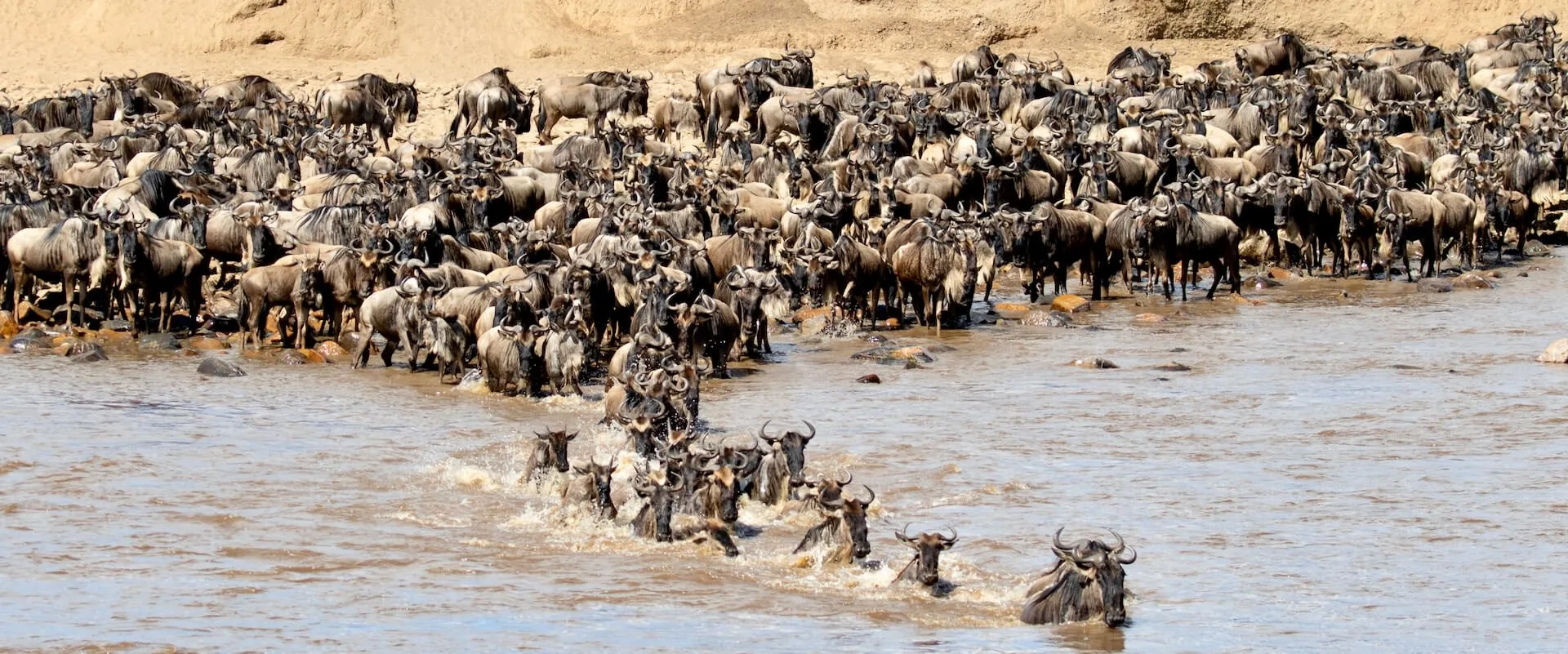
The Great Migration in Africa happens all year because the herds continuously circulate through the Serengeti–Mara ecosystem in…
Read article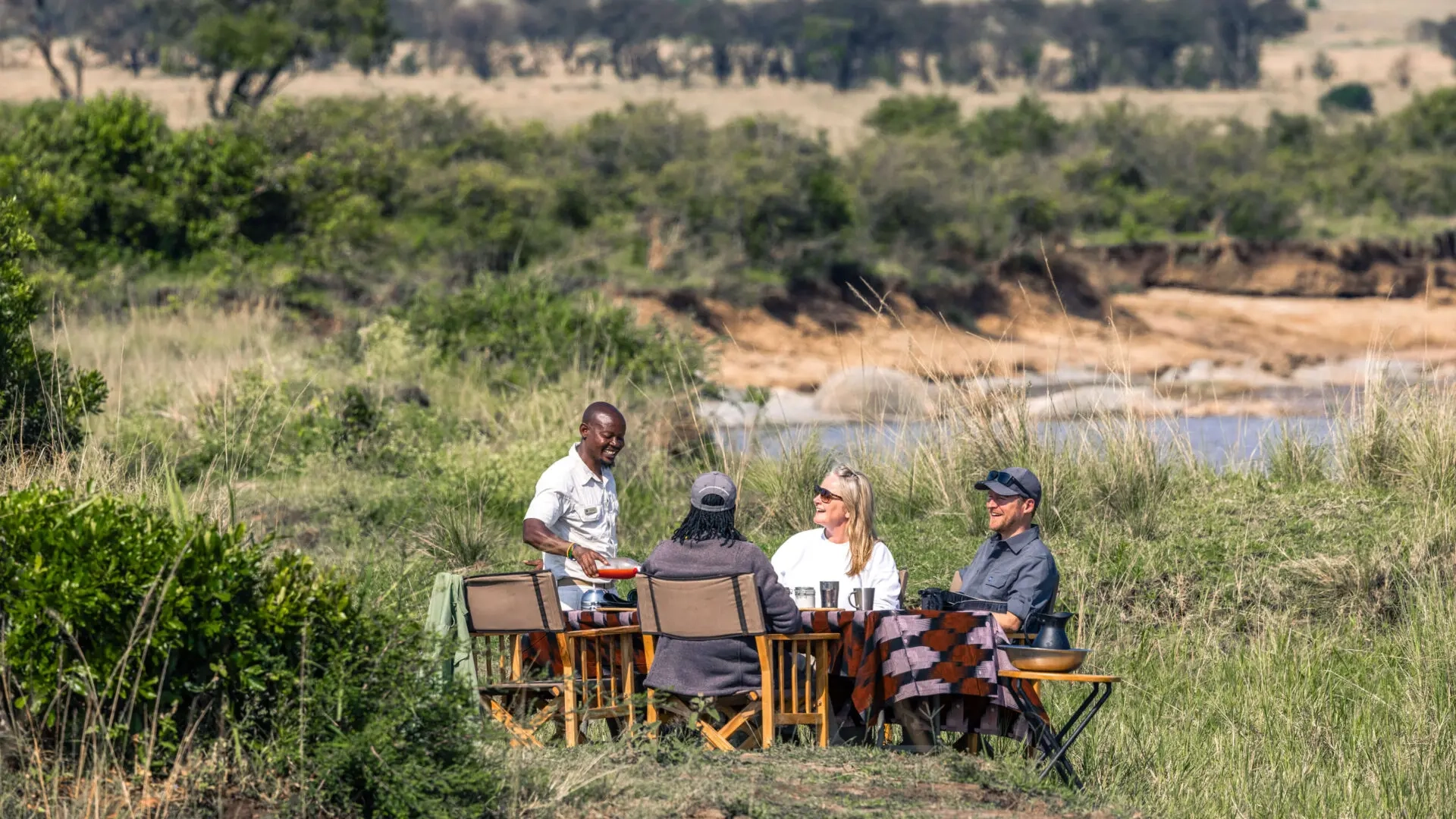
Definitive answer: A picnic lunch on safari is a packed or catered midday meal eaten at an approved…
Read article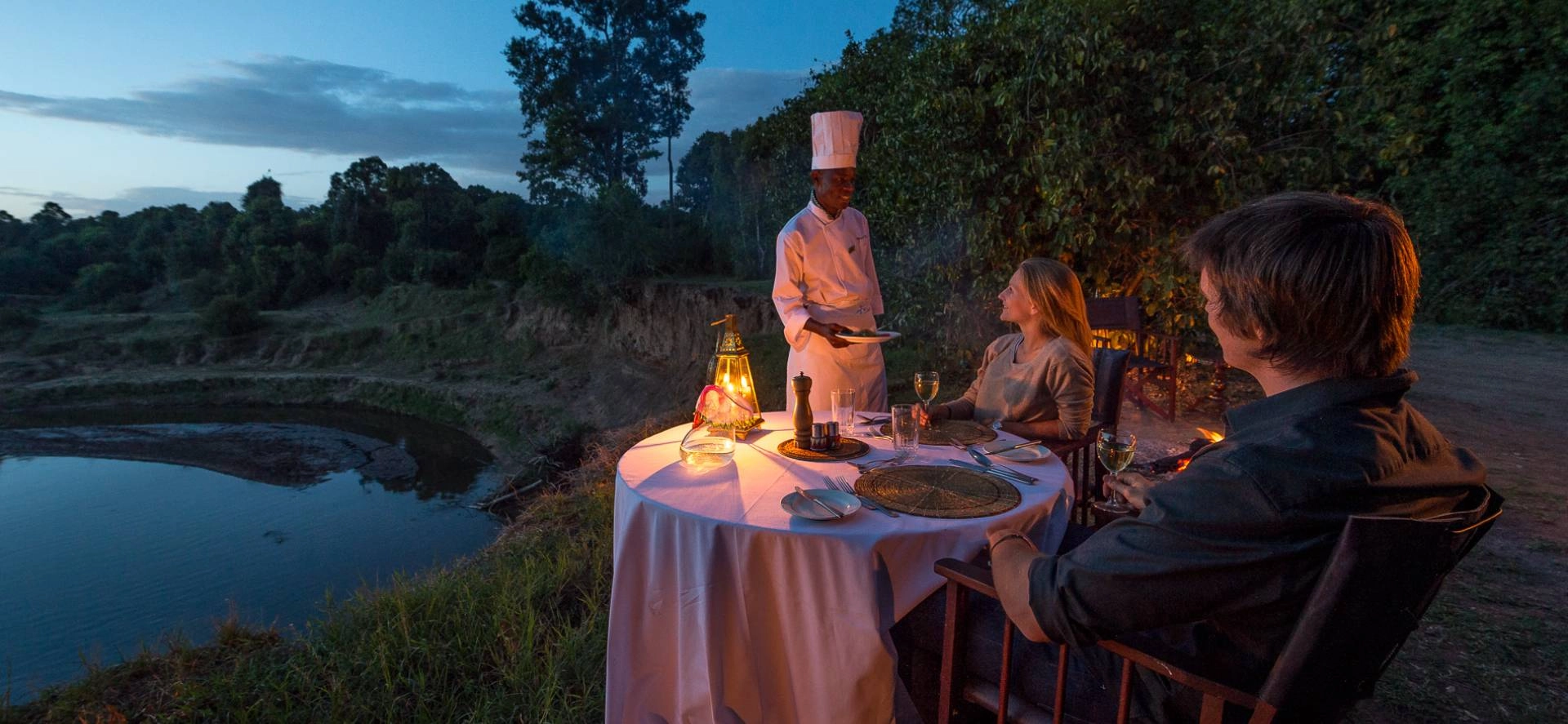
Definitive answer: A bush dinner is an outdoor evening meal arranged in a safe safari setting away from…
Read articleLet us take you closer to the wildlife, people and places that make Africa extraordinary.
Plan Your Safari Today