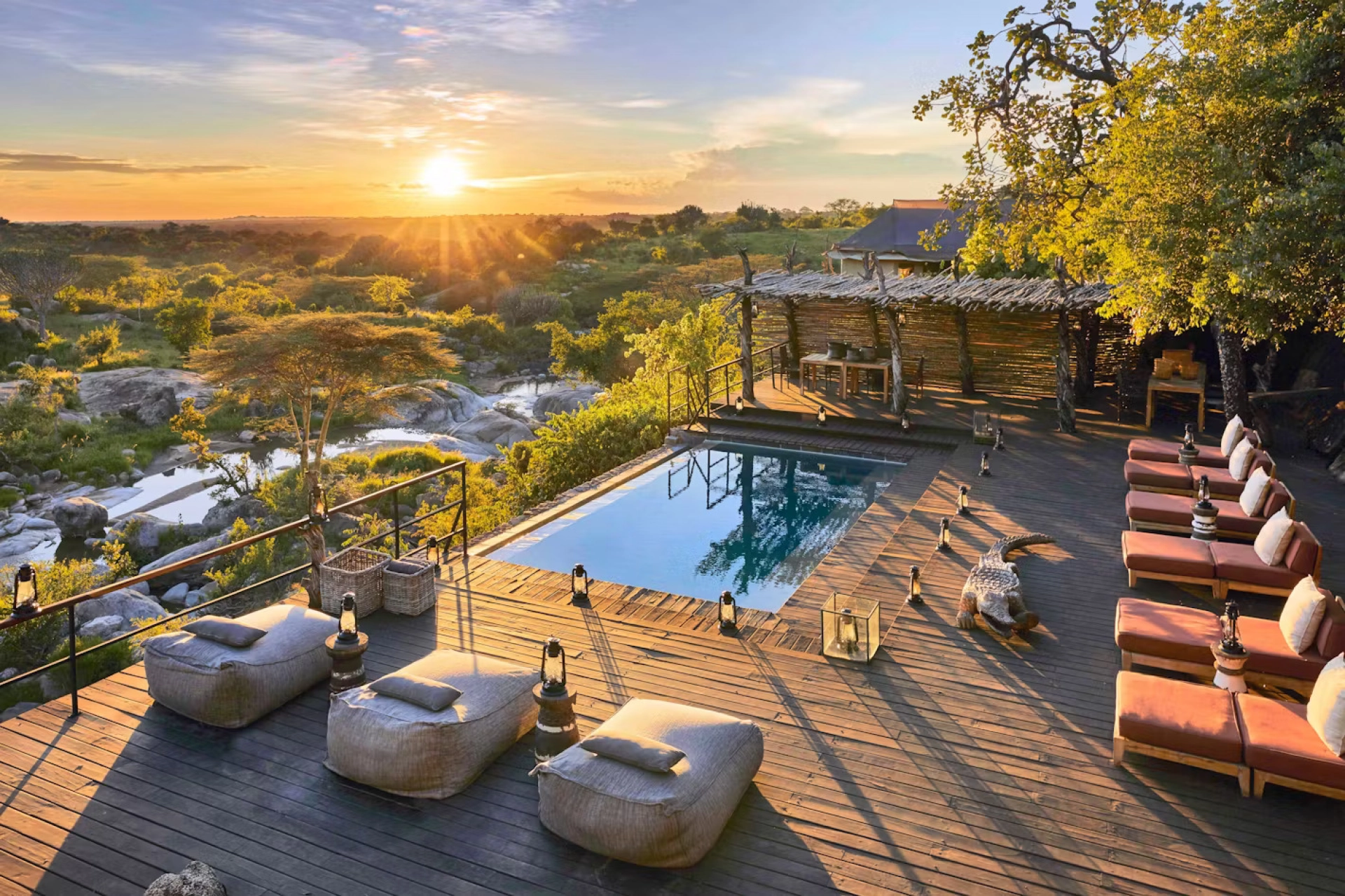
What should I look for when booking a luxury African safari?
When booking a luxury African safari, look beyond the room and compare the quality of guiding, wildlife location,…
Read article

Travel Guide
Africa's most famous natural attractions are often associated with wildlife: lions crossing golden savannas, mountain gorillas moving through misty forests, elephants gathering around rivers and millions of wildebeest moving across the Serengeti. Yet the continent's landscapes…
Africa’s most famous natural attractions are often associated with wildlife: lions crossing golden savannas, mountain gorillas moving through misty forests, elephants gathering around rivers and millions of wildebeest moving across the Serengeti. Yet the continent’s landscapes are equally dramatic, and some of the best waterfalls in Africa rank among its most spectacular natural wonders. Across the continent, rivers plunge from towering escarpments, tumble through subtropical forests, disappear into narrow gorges and spread across enormous rock faces. Some waterfalls are internationally famous and easy to combine with an African safari holiday. Others lie in remote regions where reaching the falls is part of the adventure.
The most famous of them all is undoubtedly Victoria Falls, straddling the border between Zambia and Zimbabwe. UNESCO describes Mosi-oa-Tunya/Victoria Falls as the world’s greatest sheet of falling water; the waterfall spans approximately 1,708 metres and averages around 100 metres in depth. But Victoria Falls is only the beginning.
South Africa has the astonishing Tugela Falls dropping from the Drakensberg escarpment. Zambia hides several dramatic waterfalls beyond Victoria Falls, including Kalambo Falls and Lumangwe Falls. Uganda’s Nile compresses through a narrow gorge at Murchison Falls, while Morocco’s High Atlas region contains the lush cascades of Ouzoud Falls. Namibia, Angola, Ethiopia and Lesotho add still more dramatic waterfalls to an African travel itinerary.
This guide explores ten of the most beautiful waterfalls in Africa, how they differ, what makes each worth visiting and how waterfall sightseeing can be combined with safaris, hiking, photography and cultural travel.
No list of the top waterfalls in Africa can begin anywhere other than Victoria Falls.
Known locally as Mosi-oa-Tunya, commonly translated as “The Smoke That Thunders,” Victoria Falls lies on the Zambezi River between Zambia and Zimbabwe. It is not the world’s tallest waterfall and it is not simply the waterfall with the largest annual volume. Its fame comes instead from the astonishing combination of width, height, geology and sheer visual scale.
UNESCO records the waterfall at around 1,708 metres wide, with the deepest section reaching approximately 108 metres. During periods of high flow, immense volumes of Zambezi water plunge into the First Gorge, generating a spray plume that can rise hundreds of metres and be visible from many kilometres away. Standing opposite the Main Falls during peak flow can feel less like viewing a waterfall and more like entering a storm. Spray blows across the pathways, vegetation becomes permanently lush because of the moisture and rainbows appear in the mist whenever light conditions cooperate.
One of the most common questions travelers ask is whether to visit Victoria Falls from Zambia or Zimbabwe. The answer depends partly on the season. Zimbabwe generally provides more viewpoints facing the main curtain of the waterfall and often retains visible water across more of the falls during lower-flow periods. The Zambian side places visitors extremely close to the Eastern Cataract and provides access to experiences such as Livingstone Island when conditions permit.
Many travelers visit both sides. Cross-border sightseeing allows you to appreciate the geometry of the gorge from different perspectives and makes particular sense for photographers.
Victoria Falls changes dramatically throughout the year because the Zambezi River follows a strong seasonal cycle. At high water, generally after the upstream rainy season has fed the river system, the falls become extraordinarily powerful. Spray can obscure sections of the waterfall, but the sensation of power is unmatched. During lower-water months the basalt gorge becomes much more visible, creating excellent opportunities for photography. The Zambezi River Authority’s 2026 measurements illustrate the seasonal recession clearly: flow at Victoria Falls fell from roughly 2,371 cubic metres per second on 9 June to about 438 cubic metres per second by 7 September.
This seasonal transformation means there is no single universally perfect month. Travelers should choose according to whether they prioritize maximum water, clearer views, white-water rafting, photography or seasonal activities.
Another advantage of Victoria Falls is its location close to excellent wildlife destinations. A Victoria Falls safari holiday can be combined with Chobe National Park in Botswana, Hwange National Park in Zimbabwe or longer journeys through Zambia. Chobe is particularly popular because the transfer from Victoria Falls is relatively straightforward, allowing travelers to combine one of Africa’s greatest waterfalls with huge elephant populations and river-based game viewing.
Deep in South Africa’s spectacular Drakensberg Mountains, Tugela Falls descends from the Amphitheatre escarpment in a series of dramatic stages.
Rather than forming one broad curtain like Victoria Falls, Tugela appears as a slender ribbon dropping over immense cliffs. The surrounding landscape is what makes the experience so memorable. The Drakensberg Amphitheatre forms an enormous wall of basalt cliffs above valleys, grasslands and mountain streams. During strong flow, Tugela can be visible plunging from the plateau high above.
For many travelers, Tugela is less about simply seeing a waterfall and more about the hiking adventure required to appreciate the landscape properly. Routes vary according to which side of the escarpment you explore. One of the most dramatic approaches reaches the top of the Amphitheatre, where hikers can look over the edge into an immense mountain landscape. The region is especially rewarding for visitors interested in South Africa hiking holidays, landscape photography and mountain scenery.
Weather conditions can change rapidly at altitude, so appropriate clothing, footwear and route preparation are important.
Water volume depends heavily on rainfall. During extended dry periods Tugela can become relatively thin, while summer rainfall produces a much more impressive cascade. This variability is worth considering when planning a trip specifically around waterfall photography. Nevertheless, even when the waterfall itself is modest, the Drakensberg Mountains remain one of southern Africa’s great scenic destinations.
Kalambo Falls is one of Africa’s most impressive single-drop waterfalls and remains far less visited than Victoria Falls.
The waterfall lies on the Kalambo River near Lake Tanganyika, along the international boundary between Zambia and Tanzania. According to Zambia Tourism, the water makes an uninterrupted plunge of about 221 metres into the gorge below before continuing toward Lake Tanganyika. The tourism authority describes Kalambo as Africa’s second-highest waterfall after Tugela. Its setting is dramatically different from Victoria Falls. Rather than an enormous curtain of water surrounded by busy tourism infrastructure, Kalambo drops through a deep, rugged gorge surrounded by vegetation and steep rock faces.
Kalambo is fascinating for another reason: archaeology. The wider area has revealed important evidence of ancient human occupation and technological development. That makes a trip to Kalambo much more than a waterfall excursion. It is also a journey into the extraordinarily deep human history of the Lake Tanganyika region.
Travelers should consider Kalambo if they value: remote African landscapes, dramatic hiking, archaeological interest, less-developed tourism and destinations that remain well outside the standard safari circuit. It combines especially well with travel around northern Zambia or Lake Tanganyika.
Uganda’s Murchison Falls demonstrates that a waterfall does not need an enormous vertical drop to be spectacular.
Here the Victoria Nile is compressed through an exceptionally narrow rocky gorge before exploding downstream with tremendous force. The experience is defined by pressure rather than height. Water that has traveled through Uganda’s vast lake and river system suddenly funnels between rock walls, producing foam, spray and a deep roar.
One of the great advantages of visiting Murchison Falls is that the waterfall forms part of one of Uganda’s best wildlife destinations. A typical Murchison Falls safari includes a boat trip along the Nile toward the base of the falls. The journey is as rewarding as the waterfall itself. Hippos occupy the river, Nile crocodiles rest along the banks and elephants frequently approach the water. African fish eagles, kingfishers, herons, bee-eaters and other bird species make the river particularly rewarding for birdwatching in Uganda.
As the boat approaches the falls, the river becomes increasingly turbulent and the gorge rises ahead.
Viewing the waterfall from above gives an entirely different perspective. From the top, visitors see the Nile being forced through the constriction before dropping into the gorge. This viewpoint reveals the geological reason for the falls’ extraordinary power.
Murchison can be incorporated into a longer Uganda safari itinerary that includes chimpanzee trekking in Kibale National Park, Queen Elizabeth National Park, gorilla trekking in Bwindi Impenetrable National Park and Lake Mburo National Park. For travelers who want wildlife, primates and waterfalls in one journey, Uganda offers one of Africa’s most varied circuits.
Ethiopia’s Blue Nile Falls are among northeastern Africa’s best-known waterfalls.
The Blue Nile emerges from Lake Tana and eventually joins the White Nile in Sudan before continuing north toward Egypt. Near Bahir Dar, the river encounters a dramatic change in elevation, creating the Blue Nile Falls. Historically the falls have been famous for their broad curtain of water during periods of strong flow. Water levels can vary substantially, making season an important consideration.
A visit to the Blue Nile Falls fits naturally into a broader northern Ethiopian journey. Travelers can combine the waterfall with Lake Tana, monasteries, historic towns and Ethiopia’s distinctive highland landscapes. This makes the destination particularly rewarding for travelers who prefer a combination of African cultural tourism and natural attractions rather than a conventional Big Five safari.
Morocco is rarely the first country travelers associate with African waterfalls, yet the Ouzoud Waterfalls are among North Africa’s most attractive natural attractions. Located in the Azilal region of the High Atlas, the falls descend approximately 100 metres through a lush landscape. Morocco’s national tourism office highlights Ouzoud as one of the major nature attractions of the region. The scenery is striking because of the contrast between the surrounding mountains and the greenery sustained by the water.
Footpaths descend toward different viewing areas and the lower pools. Along the way, visitors encounter olive groves, small restaurants and viewpoints overlooking the cascades. The falls are popular as a day trip or overnight excursion from Marrakech.
Ouzoud can be combined with Marrakech, the High Atlas Mountains, Berber/Amazigh villages and longer Morocco road trips. Travelers interested in photography often find early morning and late afternoon particularly attractive, when softer light reaches the cliffs.
Northern Namibia’s Epupa Falls form where the Kunene River flows along the border with Angola. Unlike a single vertical plunge, Epupa consists of multiple channels and cascades spread across a broad rocky landscape. Visit Namibia describes the river as roughly half a kilometre wide here, with waterfalls extending along approximately 1.5 kilometres and the greatest single drop reaching about 37 metres. The Herero name “Epupa” refers to foam, an appropriate description for the white water created as the Kunene breaks across the rocks.
The waterfall itself is beautiful, but its location makes it extraordinary. Baobabs cling to rocky islands. Makalani palms line riverbanks. Beyond the river lies one of Namibia’s most remote and arid landscapes. The lush ribbon of the Kunene creates a startling contrast with the dry Kaokoland surroundings.
Northern Namibia is also closely associated with Himba communities. Responsible community-led cultural experiences can add an important human dimension to a journey through the region. A visit should be approached respectfully and arranged through guides or tourism initiatives that provide meaningful benefits to local residents.
Kalandula Falls in Angola are among the continent’s great underappreciated natural attractions. Located in Malanje Province, the falls spread broadly across the Lucala River before dropping into a lush valley. Angola Tourism gives an approximate height of 105 metres and width of nearly 400 metres, placing Kalandula among Africa’s largest and most visually impressive waterfall systems.
For decades Angola received relatively little leisure tourism compared with South Africa, Namibia, Botswana or East Africa. That is gradually changing. Travelers willing to explore beyond familiar circuits can discover extraordinary landscapes with comparatively few other visitors. Kalandula is particularly impressive when water levels are high and numerous channels merge into a huge horseshoe-like cascade.
The wider Malanje region contains additional attractions, including the remarkable Pedras Negras de Pungo Andongo rock formations. This makes it possible to create a broader landscape-focused itinerary rather than visiting the waterfall in isolation.
Visitors who know Zambia only for Victoria Falls may be surprised by the country’s remarkable concentration of waterfalls. Lumangwe Falls is one of the best examples. Located on the Kalungwishi River in northern Zambia, the waterfall resembles a miniature Victoria Falls, particularly during periods of high flow. Zambia Tourism records Lumangwe at approximately 35 metres high and 100 metres wide, with spray helping sustain a small rainforest immediately around the falls.
Lumangwe’s biggest appeal is atmosphere. Unlike Victoria Falls, where hotels, restaurants and adventure operators create a developed tourism environment, Lumangwe retains a much more remote character. Travelers may find themselves listening to the waterfall without crowds, helicopters or busy walkways. For adventurous visitors exploring northern Zambia, that sense of isolation can be more valuable than sheer size.
Lesotho’s dramatic mountains provide one final addition to our selection of the best waterfalls in Africa. Near the highland town of Semonkong, Maletsunyane Falls plunges from a basalt ledge into a deep gorge. The surrounding terrain is quintessential Lesotho: rugged valleys, mountain settlements, pony trails and highland scenery.
Semonkong has developed into one of Lesotho’s principal adventure destinations. Travelers visit for hiking, pony trekking, photography and other outdoor activities. Unlike Victoria Falls, where the waterfall dominates almost every aspect of tourism, Maletsunyane feels integrated into a broader mountain journey. That makes it ideal for travelers interested in off-the-beaten-track southern Africa travel.
“Biggest” can mean different things. A waterfall may be ranked according to height, width, volume or uninterrupted vertical drop. This is why claims about the “largest waterfall” require qualification. Victoria Falls is celebrated for the scale of its continuous falling-water curtain and is described by UNESCO as the world’s greatest sheet of falling water. Tugela Falls is remarkable for its extreme total descent. Kalambo Falls is notable for its approximately 221-metre uninterrupted drop.
For travelers, however, numerical rankings tell only part of the story. A waterfall’s surroundings, accessibility, seasonality and the experiences available nearby often matter more.
Photographers have very different priorities from casual sightseers. Victoria Falls is superb for rainbows, mist and enormous landscape compositions. Tugela rewards mountain photographers. Kalambo is exceptional for dramatic cliff scenery. Epupa offers baobabs, palms and rocky channels. Ouzoud combines waterfalls with lush vegetation and Atlas Mountain scenery. Kalandula offers broad panoramic compositions. Murchison Falls provides the additional possibility of combining waterfall photography with Uganda wildlife photography. A neutral-density filter can be useful for creating long-exposure waterfall images, while a waterproof camera cover becomes invaluable at Victoria Falls during high-water months.
Several waterfalls fit naturally into wildlife itineraries. Victoria Falls combines particularly well with Chobe, Hwange and Zambia safaris. Murchison Falls sits inside a major national park and can be combined with gorilla trekking, chimpanzee trekking and Queen Elizabeth National Park. Epupa can form part of a Namibia itinerary including Etosha. Tugela can be combined with KwaZulu-Natal wildlife reserves. This makes waterfalls excellent additions to travelers who want more than repeated game drives.
There is no continent-wide answer. Most African waterfalls respond strongly to seasonal rainfall. High-water periods generally deliver greater power but may create heavy spray. Lower-water periods expose cliffs and geology and can improve photography. At Victoria Falls, for example, UNESCO notes that the rainy season ends around May and high water can generate enough spray to obscure panoramic views, while dry-season conditions reveal much more of the physical waterfall. Other waterfalls, particularly seasonal mountain falls, can change even more dramatically.
Always check local conditions before planning a journey around one specific waterfall.
Waterfalls often support fragile ecosystems. Spray zones may sustain specialized vegetation, and rivers can provide essential habitat for fish, birds and other wildlife. Visitors should remain on designated trails, avoid leaving waste and follow local advice concerning swimming. Cliff edges can be extremely dangerous, particularly when rocks are wet. Drone use may also be restricted within national parks and protected areas. Where local guides are available, hiring them can improve both safety and the economic value tourism brings to surrounding communities.
Victoria Falls on the Zambia–Zimbabwe border is the continent’s most internationally famous waterfall.
No. Its importance comes primarily from its extraordinary width, height combination and enormous curtain of falling water rather than being Africa’s highest waterfall.
Tugela Falls is located in the Drakensberg Mountains of South Africa, in the Amphitheatre region.
Kalambo Falls on the Zambia–Tanzania border makes an uninterrupted plunge of about 221 metres.
Yes. Murchison Falls is Uganda’s most famous waterfall and forms the centerpiece of Murchison Falls National Park.
Ouzoud Falls in Morocco’s Azilal region is a popular excursion from Marrakech.
Yes. Epupa Falls on the Kunene River is one of Namibia’s most scenic and remote natural attractions.
Yes. A Uganda itinerary can combine Murchison Falls with Bwindi gorilla trekking, Kibale chimpanzees and Queen Elizabeth National Park.
Africa’s waterfalls reveal another dimension of a continent more commonly marketed through wildlife. At Victoria Falls, water disappears into a basalt chasm beneath clouds of spray. At Tugela, a mountain river falls from one of southern Africa’s most dramatic escarpments. Kalambo plunges into a remote gorge beside Lake Tanganyika. Murchison compresses the Nile into a thunderous corridor of white water. Ouzoud brings greenery to the Atlas Mountains, while Epupa creates an oasis-like landscape along the Kunene.
These places demonstrate why the best waterfalls in Africa are worth building into a broader African journey. They turn a safari into something more complete: wildlife, geology, rivers, mountains, cultures and landscapes brought together in one trip. For travelers prepared to venture beyond Africa’s famous game reserves, some of the continent’s most unforgettable experiences are waiting beside the sound of falling water.

Share This Article
When booking a luxury African safari, look beyond the room and compare the quality of guiding, wildlife location,…
Read article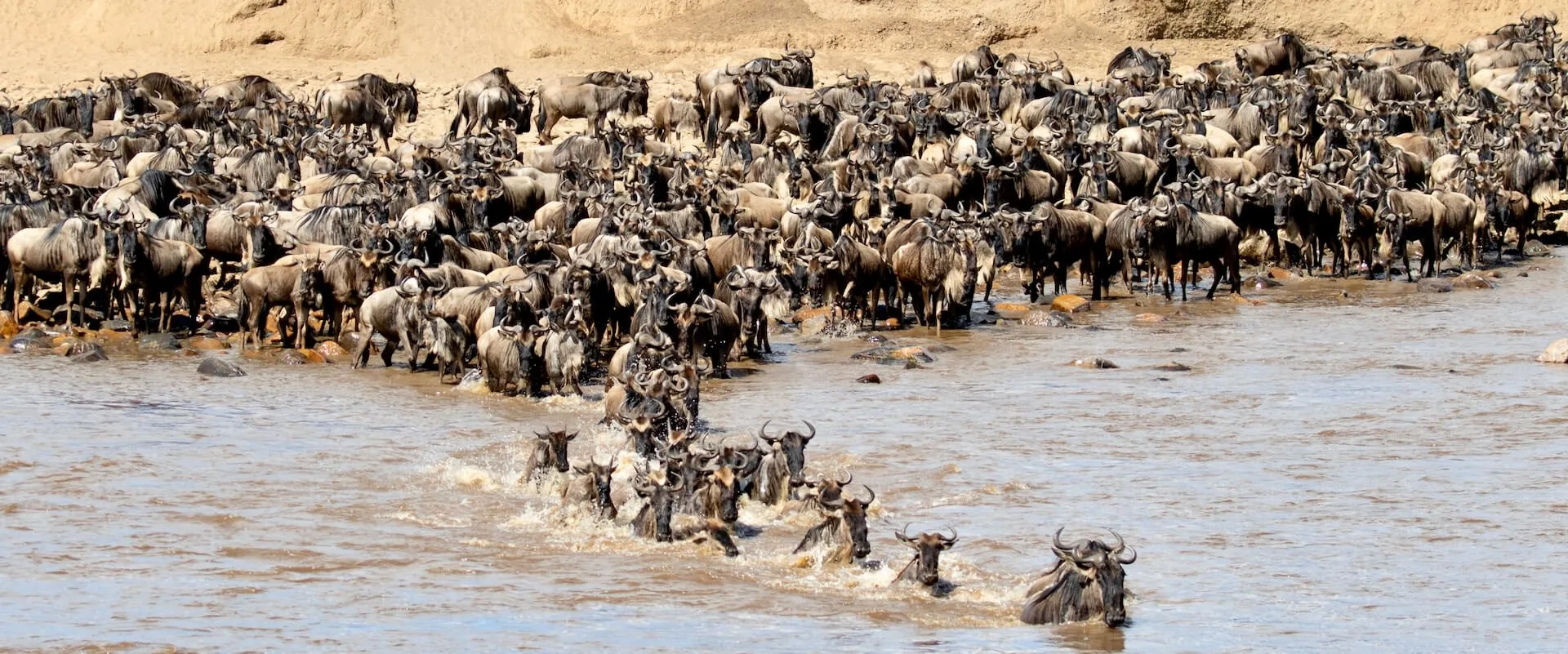
The Great Migration in Africa happens all year because the herds continuously circulate through the Serengeti–Mara ecosystem in…
Read article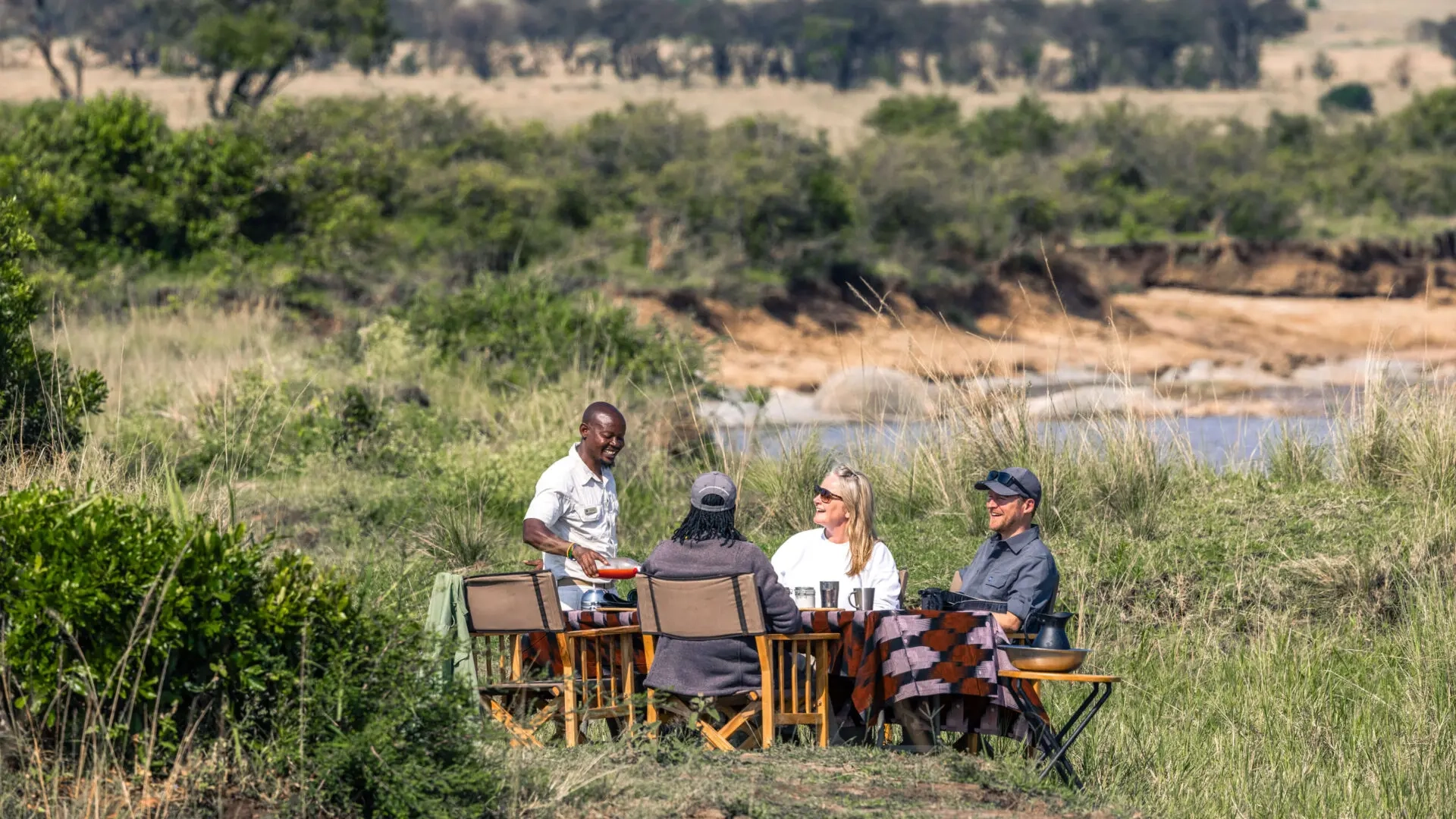
Definitive answer: A picnic lunch on safari is a packed or catered midday meal eaten at an approved…
Read article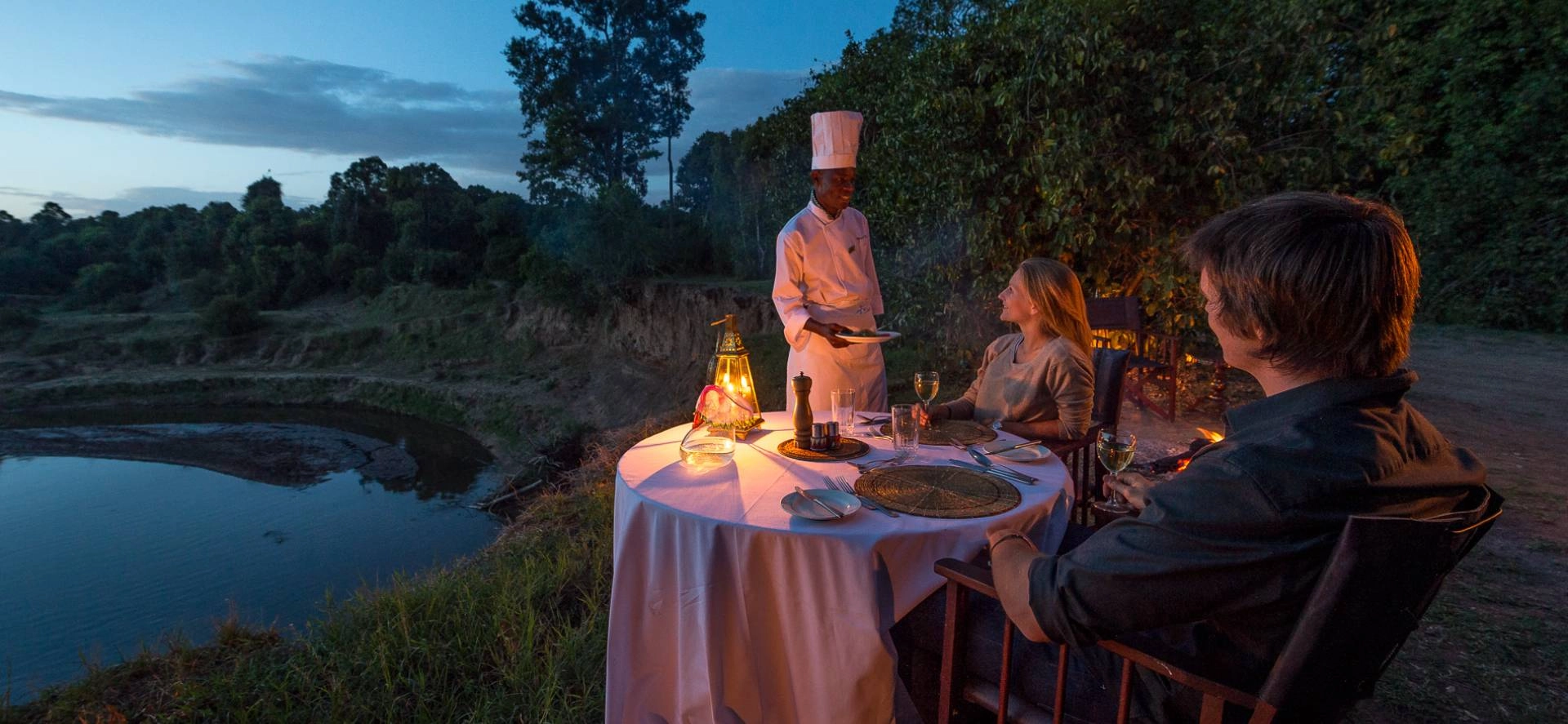
Definitive answer: A bush dinner is an outdoor evening meal arranged in a safe safari setting away from…
Read articleLet us take you closer to the wildlife, people and places that make Africa extraordinary.
Plan Your Safari Today