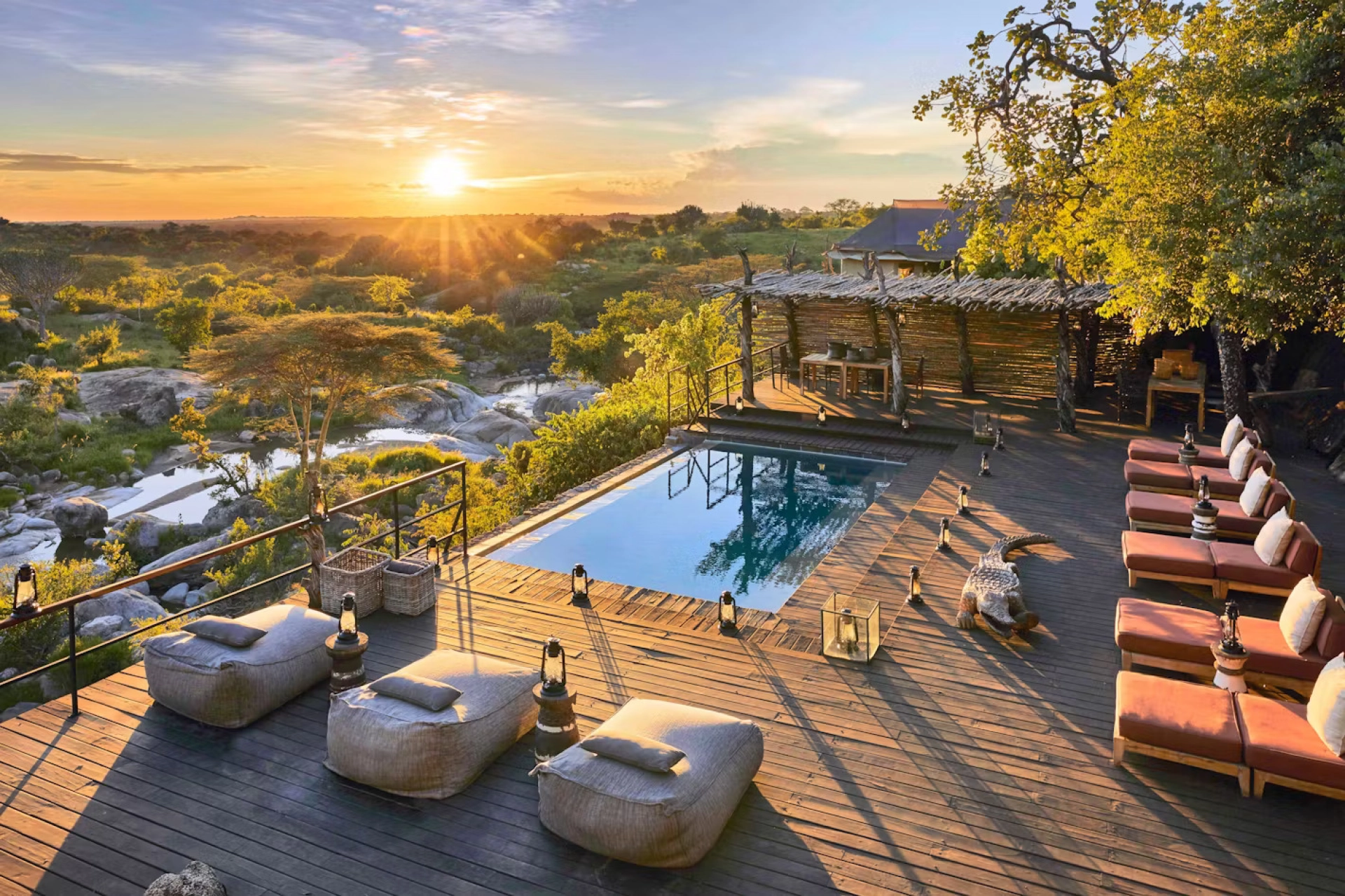
What should I look for when booking a luxury African safari?
When booking a luxury African safari, look beyond the room and compare the quality of guiding, wildlife location,…
Read article

Travel Guide
When travellers hear the words African animal migration, one spectacle dominates almost every conversation: the Great Migration in Africa, the enormous year-round movement of wildebeest, zebra and other grazing animals through the Serengeti-Mara ecosystem of Tanzania…
When travellers hear the words African animal migration, one spectacle dominates almost every conversation: the Great Migration in Africa, the enormous year-round movement of wildebeest, zebra and other grazing animals through the Serengeti-Mara ecosystem of Tanzania and Kenya. It is deservedly famous. Few natural events on Earth combine scale, predator activity, landscape, birth, death, rainfall and constant movement so dramatically.
Yet the Great Migration is only one chapter in Africa’s much broader story of wildlife movement.
Across the continent, animals migrate because water disappears, grasslands change, breeding conditions improve, floodplains fill, rainfall transforms deserts and seasonal food becomes available somewhere else. Zebra move across Botswana. Wildebeest shift between wet- and dry-season ranges. Flamingos respond to changing water and food in salt-pan environments. Elephants move between seasonal water sources and cross national borders. Migratory birds travel enormous continental and intercontinental distances.
These movements are not random. They are ecological responses. Rainfall is often the underlying driver. Fresh grass appears after storms. Rivers rise. Temporary pans fill. Vegetation becomes nutritious. Animals respond, and predators respond to the animals. Understanding this makes a migration safari in Africa far more interesting than treating migration as a single dramatic river crossing.
A river crossing may last minutes. Migration ecology unfolds all year. For safari travellers, the more useful question is therefore not simply, “When is the Great Migration?” It is: What stage of the migration do I want to experience? Do you want thousands of newborn wildebeest on short-grass plains? Do you want enormous herds stretched across the Serengeti? Do you want predator activity? Do you want river crossings? Do you want the greener landscapes of the wet season? Do you prefer fewer vehicles and lower prices over the most famous migration moments? Once those priorities are clear, the right safari season becomes much easier to identify.
The Great Wildebeest Migration is the continuous movement of enormous numbers of wildebeest, accompanied by large numbers of zebra and other herbivores, around the greater Serengeti-Mara ecosystem. Tanzania National Parks describes the Serengeti migration as involving more than 1.5 million wildebeest together with hundreds of thousands of zebra and large numbers of gazelles and other grazers moving in search of fresh grazing and water. Those figures help explain the scale, but numbers alone do not communicate the experience. Imagine standing in an open safari vehicle while the horizon appears dark with animals. Wildebeest move in long lines. Zebras mix among them.
Dust rises. Calves remain close to mothers. Hyenas watch. Lions position themselves near likely movement routes. Vultures circle. The landscape does not merely contain wildlife. The wildlife seems to become the landscape.
One of the most common safari-planning mistakes is imagining the migration as though millions of animals move together in one perfectly organised circle according to fixed dates. They do not. Rainfall varies. Grass conditions vary. Different groups spread across large areas. Some animals move earlier. Others remain behind. The broad annual pattern is predictable enough for safari planning, but exact movement cannot be guaranteed months in advance.
This distinction matters enormously when booking a Great Migration safari. A responsible operator can position travellers in a region that historically matches the expected seasonal movement. No responsible operator can promise that a particular herd will stand at a particular river at 10:30 on a specific date. Wildlife has no itinerary.
The migration exists because the ecosystem contains complementary seasonal habitats. The southern Serengeti and Ngorongoro plains provide nutrient-rich grasses during part of the year. As conditions change, herds shift toward central and western parts of the Serengeti. Later, many move northward. Some enter Kenya’s Masai Mara National Reserve and surrounding ecosystem before eventually moving south again. The cycle reflects rainfall and forage availability rather than political borders. For the animals, Tanzania and Kenya are irrelevant concepts. There is simply habitat.
This is one reason a Kenya and Tanzania safari can be so rewarding. Travellers begin to understand the migration as one ecological system rather than as separate national attractions.
Month-by-month migration guides are useful only when treated as broad ecological guidance. The weather in one year may differ from another. Rain can arrive early. Rain can arrive late. Local storms can alter grazing. Herds may fragment. Therefore, the strongest migration itinerary includes enough time and a guide capable of responding to actual conditions. A three- or four-night stay in the appropriate migration region is far more resilient than a rushed one-night visit based on the assumption that animals will appear exactly where predicted.
The early months of the year are strongly associated with the southern Serengeti and Ndutu ecosystem, where large concentrations of wildebeest gather around productive short-grass plains when conditions are favourable. This period is especially famous for calving. Huge numbers of wildebeest calves can be born during a relatively concentrated seasonal window. For travellers, this produces a very different migration experience from the dramatic river crossings later in the cycle. The landscape can be green.
Herds spread across open plains. Young animals remain close to their mothers.
Predators take advantage of vulnerable prey. Lions, cheetahs, hyenas and other carnivores may become especially active. For wildlife photographers interested in predator-prey behaviour, this can be one of the most rewarding migration periods.
River crossings receive more publicity, but calving season can provide greater continuity of wildlife viewing. A river crossing is unpredictable. The herd may arrive and refuse to cross. It may turn away. It may cross after you have left. During calving season, the broader wildlife story unfolds throughout the day. You may watch mothers nursing. Calves attempting to stand. Cheetahs scanning herds. Hyenas moving through the grass. Lions resting after successful hunts. Vultures gathering.
For travellers interested in ecology rather than spectacle alone, the southern migration season is exceptional.
As conditions begin changing, large herds gradually redistribute through the Serengeti. This transition period can produce beautiful landscapes and strong wildlife viewing. Vegetation may remain lush. Storm clouds create dramatic photographic backgrounds. Tourism levels can be lower than during famous peak periods. Some camps and routes may also offer more attractive pricing depending on location and year. For budget-conscious travellers who do not need to witness a river crossing, this can be a highly rewarding period.
By around June, many herds may be progressing through western or central parts of the broader Serengeti ecosystem, although exact timing varies. The landscape becomes progressively drier. Herd structure changes. Long columns of wildebeest can become visible. Predators continue following opportunities. The migration begins shifting from the dense calving concentrations of the south toward increasingly directional movement.
The western Serengeti is associated with another important migration phase. Watercourses create potential crossing points and gathering areas. Although the Mara River crossings receive greater international attention, western migration landscapes can be equally fascinating. The experience can also feel less dominated by the global obsession with one iconic river-crossing photograph. For repeat Tanzania visitors, this can be a compelling migration stage.
The northern phase is the period most travellers associate with the classic wildebeest migration safari. Large herds move through northern Serengeti and portions of the Masai Mara ecosystem. The Mara River becomes the centre of attention. Wildebeest may gather along its banks. Zebra wait. Animals move nervously. Predators and crocodiles create additional risk. Then, sometimes suddenly, movement begins. Thousands may enter the water. Dust rises. Calls fill the air. The scene is chaotic.
This is one of nature’s great spectacles. But it remains unpredictable.
The dramatic images seen in documentaries can create unrealistic safari expectations. Travellers may believe that arriving in the Mara or northern Serengeti automatically means watching thousands of animals cross a river. In reality, crossings require patience and luck. Herds may approach the bank and stop. They may spend hours gathering. They may retreat. They may cross somewhere else. They may cross before your vehicle arrives. This does not mean the safari is unsuccessful. The surrounding ecosystem remains full of wildlife. Lions, elephants, cheetahs, giraffes, hyenas and resident herbivores continue providing exceptional encounters. The migration should enhance the safari rather than become the only measure of success.
This is one of the most common East African safari questions. The answer depends primarily on travel dates. For much of the annual migration cycle, the majority of movement occurs within Tanzania’s Serengeti National Park and surrounding ecosystem. During the northern phase, some herds move into Kenya’s Masai Mara. Therefore, the Serengeti generally offers more migration-season possibilities across the year. The Mara becomes especially relevant during periods when substantial herds are in the northern ecosystem. Travellers should choose according to season rather than reputation alone.
Both can provide river-crossing opportunities during appropriate periods.
Northern Serengeti offers access to sections of the Mara River on the Tanzanian side. Kenya’s Masai Mara provides access farther north. Which side is “better” cannot be guaranteed. Wildlife movement changes. A herd may be concentrated in Tanzania while another group is in Kenya. The strongest strategy is therefore geographical positioning according to recent movement rather than assuming one country always wins.
Migration-focused safaris can be more expensive because demand increases around famous seasonal areas. Well-located camps fill quickly. Rates may rise. Domestic flights can be necessary to reach remote northern Serengeti locations efficiently. Private vehicles add cost. Park and conservation fees remain significant. Travellers seeking better value should ask whether they need the most famous peak migration period or whether another stage of the annual cycle would provide the wildlife experience they actually want.
A budget Great Migration safari is possible, but compromises may be necessary. Shared vehicles reduce cost. Simpler camps reduce accommodation expenses. Road travel can replace some flights. Travel outside the most expensive peak weeks may improve value. The most important thing not to cut is time. A one-night migration visit is vulnerable to wildlife unpredictability. Three nights in the correct region usually provide much stronger odds of experiencing meaningful migration activity.
Luxury camps can provide excellent locations, small guest numbers and highly professional guiding. Some seasonal camps reposition according to expected migration patterns. At the premium end, fly-in access can dramatically reduce road transfer time. Yet even the most expensive camp cannot command wildebeest to cross a river. Luxury buys access, comfort and expertise. It does not buy wildlife certainty.
Migration safaris can be extraordinary for photography. Wide-angle environmental scenes become as important as close wildlife portraits. Dust, herds, clouds and grassland create context. During calving periods, photographers can focus on interactions between mothers and calves. During river-crossing periods, fast shutter speeds and anticipation become critical. Predator encounters add another layer. However, photography-focused travellers should seriously consider a private vehicle. Sharing roof space with several passengers can limit positioning at fast-moving sightings.
Families with older children can find migration safaris deeply educational. Rather than presenting the experience as simply “seeing lots of wildebeest,” guides can explain rainfall, grazing, predator-prey relationships and survival. Children begin understanding ecosystems as dynamic systems. The main planning issue is patience. Waiting several hours for a river crossing may be difficult for younger children. Families should therefore avoid building the entire safari around crossing stakeouts.
A migration safari can create extraordinary honeymoon memories, particularly when combined with intimate tented camps and a beach extension. Serengeti and Zanzibar honeymoons are popular because the intense safari experience transitions naturally into Indian Ocean relaxation. Couples can spend several nights in migration country, then fly toward Zanzibar for Stone Town and beach time. The contrast works beautifully.
One of East Africa’s most extraordinary combinations is the Great Migration and Uganda gorilla trekking. The Serengeti or Masai Mara provides open savannah, predators and huge herbivore herds. Uganda’s Bwindi Impenetrable National Park provides dense rainforest and mountain gorillas. The ecological contrast is almost complete. A longer itinerary can add chimpanzee trekking in Kibale National Park, creating a journey that combines mass herbivore migration with intimate primate encounters.
The Serengeti migration may be Africa’s most famous wildlife movement, but Botswana contains equally fascinating seasonal migrations on a different scale. The Makgadikgadi and Nxai Pan region is particularly important. Botswana Tourism Organisation notes that during good rains, the Makgadikgadi landscape transforms and attracts zebra and wildebeest onto grassy plains. Its information on Makgadikgadi Pans Game Reserve specifically describes large herds of zebra and wildebeest moving westward toward the Boteti region during productive wet-season conditions.
This is one of Southern Africa’s most compelling seasonal wildlife stories.
The visual experience is completely different from the Serengeti. The Makgadikgadi is a vast salt-pan environment. For much of the year, parts of the landscape appear dry, open and almost empty. Then rains arrive. Grass emerges. Water collects. Wildlife responds. Zebra and wildebeest move across a landscape that can transform dramatically within weeks. The contrast between wet and dry conditions makes the migration especially powerful.
Nxai Pan National Park becomes particularly productive when rains are good. Botswana Tourism Organisation describes December through April as an important period for the park under favourable rainfall conditions and notes seasonal wildlife including zebra and wildebeest, with predators such as lion, cheetah and wild dog also present. This means a Botswana migration safari can deliver very different wildlife from the classic dry-season Okavango itinerary. Travellers who know Botswana only through images of permanent waterways may be surprised by the scale of the seasonal grassland transformation.
Large concentrations of grazing animals inevitably attract predators.
Lion, cheetah, wild dog and hyena may respond to prey movement. This creates opportunities to observe the same ecological principle seen in Serengeti, but in a completely different landscape. The lesson is universal: Where herbivores move, predators adapt. Migration is therefore never only about the animals doing the travelling. It reshapes the entire food web.
Flamingos provide another dramatic migration story. Unlike wildebeest, their movements are strongly associated with suitable shallow saline or alkaline water bodies and food conditions. In Botswana’s Makgadikgadi system, good flooding can attract enormous numbers of flamingos. Botswana Tourism Organisation notes that numbers can reach tens or even hundreds of thousands in favourable conditions. For birders, this can be as spectacular as a mammal migration. The challenge is unpredictability. Water conditions must align. Food availability must be suitable.
That makes flamingo gatherings highly seasonal and environmentally dependent.
Africa is also part of enormous global bird-migration systems. Millions of birds travel between Europe, Asia and Africa seasonally. Others migrate within the African continent according to rainfall and food. Safari travellers visiting wetlands, savannahs and forests during productive migration periods can encounter species absent at other times. This dramatically increases the value of African birding safaris. It also explains why birding should not be considered a secondary safari interest. Bird migration connects African ecosystems to landscapes thousands of kilometres away.
Elephants also undertake major seasonal movements, although these are usually less visually concentrated than wildebeest migration. They follow water, food and traditional movement corridors. In Southern Africa, elephants may move between Botswana, Namibia, Zimbabwe, Zambia and Angola through larger transboundary landscapes. These movements demonstrate why wildlife conservation cannot operate only within isolated national parks. Animals require corridors. Fences, roads and expanding settlement can interrupt ancient routes. A safari traveller seeing elephants in one reserve may therefore be observing only a small part of a much larger annual movement.
Migration depends on connectivity. Animals must be able to move between seasonal habitats. If one critical corridor is blocked, the entire ecological system can be affected. This makes community conservation, land-use planning and transboundary protected areas increasingly important. The Great Migration survives not because wildebeest live permanently inside one protected zone but because the larger ecosystem still provides interconnected habitats. Botswana’s zebra migrations rely on the same principle. Migration conservation is therefore fundamentally landscape conservation.
Many predators do not migrate in the same way as herbivores. Instead, resident territories overlap with moving prey. Others may shift ranges or follow temporary concentrations. This produces fascinating seasonal changes in predator behaviour. A lion pride located in productive migration country may suddenly have access to enormous prey numbers. Hyenas can adjust movements. Cheetahs exploit young or vulnerable animals. Crocodiles at river crossings benefit from brief periods of intense opportunity.
The migration influences everything.
The most important migration animal may not be the wildebeest. It may be rain. Rain creates grass. Grass creates food. Food drives herbivores. Herbivores support predators. Water fills pans. Waterbirds arrive. Floodplains become productive. Understanding rainfall makes migration patterns far easier to understand. This is why safari guides constantly discuss weather, recent storms and grass conditions. Migration is meteorology expressed through wildlife.
Climate variability can influence timing and distribution. Rainfall may become more irregular. Drought can alter movement. Flooding can change access. Travellers should therefore be sceptical of travel guides presenting migration dates with absolute certainty. Historical patterns remain useful. Current local observation remains essential. A good operator combines both.
There is no universally best time. For calving and predator action, travellers often target the southern Serengeti season. For dramatic northward movement and potential river crossings, later periods become more relevant. For greener scenery and potentially lower rates, transition periods may appeal.
The best time depends on what the traveller wants to see. That is a much more useful planning framework than one generic “best month.”
Botswana migration travel is more strongly linked to the rainy season. Makgadikgadi and Nxai Pan wildlife responds to good rainfall and temporary productivity. Bird migrations vary according to species. Elephant movements depend on regional water and forage. Therefore, an African migration safari should begin with the species or ecosystem of interest rather than with a fixed calendar.
This point deserves repetition because it is the single greatest misunderstanding surrounding migration travel. The Great Migration lasts all year. River crossings are one dramatic stage. Calving is another. Long columns moving through dry grasslands are another. Predator activity is another. Rain falling on the plains and changing the direction of movement is another. A traveller who sees thousands of wildebeest spread across green Serengeti plains has experienced the Great Migration even if no animal enters a river.
Three nights in the key migration area is a practical minimum for many travellers. Four or five nights provides more resilience. Photographers may want longer. The migration is unpredictable. Time creates opportunity. A traveller spending six hours in the correct ecosystem has fewer chances than someone spending three full days. This sounds obvious, yet many itineraries still rush through migration regions.
Famous migration events attract vehicles. River crossings can become especially busy. Travellers seeking a quieter experience should consider private concessions, less famous crossing points where appropriate, or alternative migration stages. A beautiful calving-season morning with relatively few vehicles may produce a more emotionally satisfying safari than joining dozens of cars around one crossing.
Wildlife should determine movement. Vehicles should not block animals. Drivers should respect established rules. Travellers should never pressure guides to approach more closely or position the vehicle in ways that interfere with crossings. A migration safari is successful only if wildlife behaviour remains natural. The photograph is secondary.
Use both long and short focal lengths. Telephoto lenses capture predator action. Wider lenses show scale. Do not photograph only individual wildebeest. Show thousands. Show dust. Show the sky. Show vehicles at a distance if they explain human presence honestly. Use video selectively because sound can communicate migration in ways still images cannot. Most importantly, keep looking away from the main herd occasionally. Predators and scavengers may be operating at the edges.
Dust protection is valuable during dry conditions. Bring binoculars. Use layered clothing for cool mornings. Protect camera equipment. Carry spare batteries. A beanbag can be useful for photography from safari vehicles. Sun protection remains important. Travellers flying into remote airstrips should also follow current baggage restrictions.
The Serengeti-Mara system is still the most obvious choice for a first migration safari because the scale is extraordinary and the tourism infrastructure is highly developed. But repeat safari travellers should explore Botswana. The Makgadikgadi and Nxai Pan migrations demonstrate how differently wildlife responds to season in Southern Africa. Together, the two regions explain the ecological diversity of migration better than either alone.
The Serengeti is larger in animal numbers and global fame. Botswana provides a more specialised seasonal wilderness experience. Serengeti landscapes are classic East African savannah. Makgadikgadi introduces salt pans, desert margins and explosive wet-season transformation. A traveller should not expect Botswana to reproduce Serengeti. That difference is the attraction.
A longer Africa safari can combine migration in East Africa with Botswana’s Okavango Delta. This creates dramatic ecological contrast. Serengeti is dominated by moving grazing herds across open land. Okavango is shaped by channels, floodplains and islands. One safari reveals movement driven by grass and rain. The other reveals wildlife distribution shaped by seasonal flooding. For serious wildlife travellers, this can become one of Africa’s most complete journeys.
Migration travel can also be integrated into broader African itineraries. After Tanzania or Kenya, travellers can continue into Southern Africa for Victoria Falls, Chobe or Botswana. This adds waterfalls, river systems and a different suite of mammals. The trip becomes a study in ecological diversity rather than simply a wildlife checklist.
A Serengeti migration safari and Zanzibar holiday remains one of the strongest Tanzania combinations. The first half is intense. Early starts. Long wildlife days. Predator activity. Dust. The second half slows down. Beach. Indian Ocean. Stone Town. Spice heritage. This balance works particularly well for couples and families.
For travellers seeking a once-in-a-lifetime East African wildlife journey, combining the migration with gorilla trekking in Uganda is exceptional. The Great Migration demonstrates wildlife at enormous scale. Gorilla trekking does the opposite. Instead of watching tens of thousands of animals across open plains, travellers enter a dense forest to spend regulated time with one habituated gorilla family.
The contrast is profound.
For travellers fascinated by animal behaviour and natural systems, absolutely. But not everyone needs to pay peak-season migration rates. If your primary dream is lions, elephants and the Serengeti landscape, Tanzania can be extraordinary outside the most expensive crossing periods. If your dream is specifically a river-crossing spectacle, accept that the trip will require more patience, positioning and potentially higher cost.
Value depends on the objective.
The largest mistake is believing exact dates can be guaranteed. Another is spending too little time in the correct migration area. Another is booking accommodation based on luxury rather than seasonal location. Another is treating river crossings as the only meaningful experience. Another is assuming Kenya is always the best migration destination regardless of month. Good planning starts with ecology.
First choose your preferred migration experience. Calving? Predators? Huge herds? River crossings? Photography? Fewer crowds? Then choose approximate travel months. Then choose the correct region. Only after that should accommodation be selected. This reverses the way many travellers shop online, where they choose a famous lodge first and attempt to force wildlife around it. Wildlife should drive the itinerary.
The Great Migration Africa deserves its reputation as one of the planet’s greatest wildlife spectacles. More than a million wildebeest, accompanied by vast numbers of zebra and other grazers, move through the Serengeti-Mara ecosystem in response to water and fresh pasture. But the migration becomes far more meaningful once travellers stop thinking of it as a single event. It is birth on the southern plains.
It is long-distance movement through Serengeti. It is predators waiting. It is rain. It is grass. It is river crossings. It is survival. And it is only one of Africa’s great animal movements. Botswana’s Makgadikgadi and Nxai Pan zebra and wildebeest migrations reveal another remarkable story, with rain transforming dry salt-pan landscapes into productive seasonal wildlife habitat. Bird migrations connect continents. Elephants follow ancient routes between water sources. Wildlife movement reminds us that ecosystems are dynamic. Animals survive because they can move.
Adventure in the Wild Safaris can design tailor-made Great Migration safaris, Serengeti safaris, Masai Mara safaris and wider East African wildlife journeys according to the migration experience travellers actually want rather than using one generic route for every month.
A Tanzania itinerary can combine Serengeti National Park, Ngorongoro Crater and Tarangire National Park, followed by Zanzibar. A Kenya route can combine the Masai Mara with other wildlife areas. Longer journeys can add Uganda gorilla trekking in Bwindi Impenetrable National Park, chimpanzee trekking in Kibale National Park, Rwanda or Southern Africa. For repeat safari travellers, Botswana can introduce another remarkable form of migration through Makgadikgadi, Nxai Pan, Chobe and the Okavango Delta.
The best migration safari begins by accepting one fundamental truth: Wildlife moves according to nature, not according to our holiday calendar. The role of good safari planning is to place you in the best possible landscape, at the best possible stage of the cycle, and then give nature enough time to tell the story.

Share This Article
When booking a luxury African safari, look beyond the room and compare the quality of guiding, wildlife location,…
Read article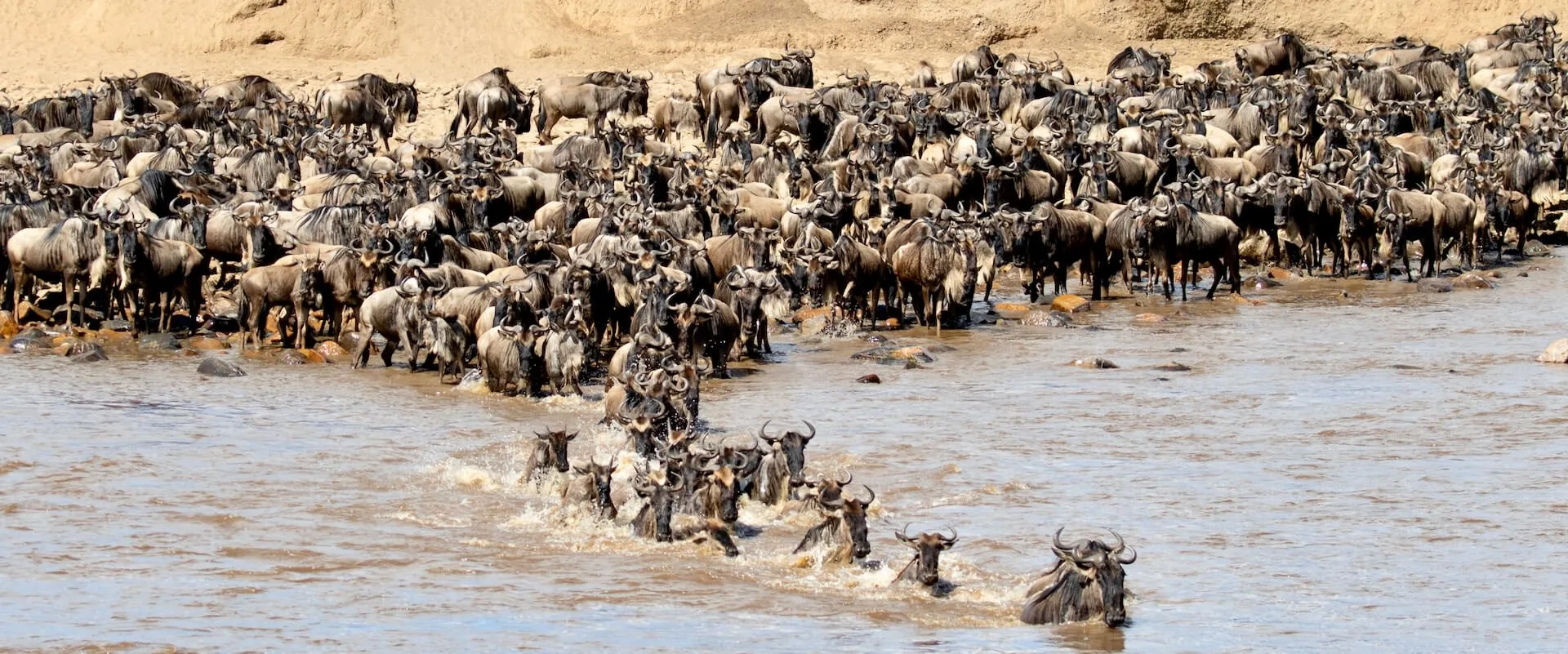
The Great Migration in Africa happens all year because the herds continuously circulate through the Serengeti–Mara ecosystem in…
Read article
Definitive answer: A picnic lunch on safari is a packed or catered midday meal eaten at an approved…
Read article
Definitive answer: A bush dinner is an outdoor evening meal arranged in a safe safari setting away from…
Read articleLet us take you closer to the wildlife, people and places that make Africa extraordinary.
Plan Your Safari Today