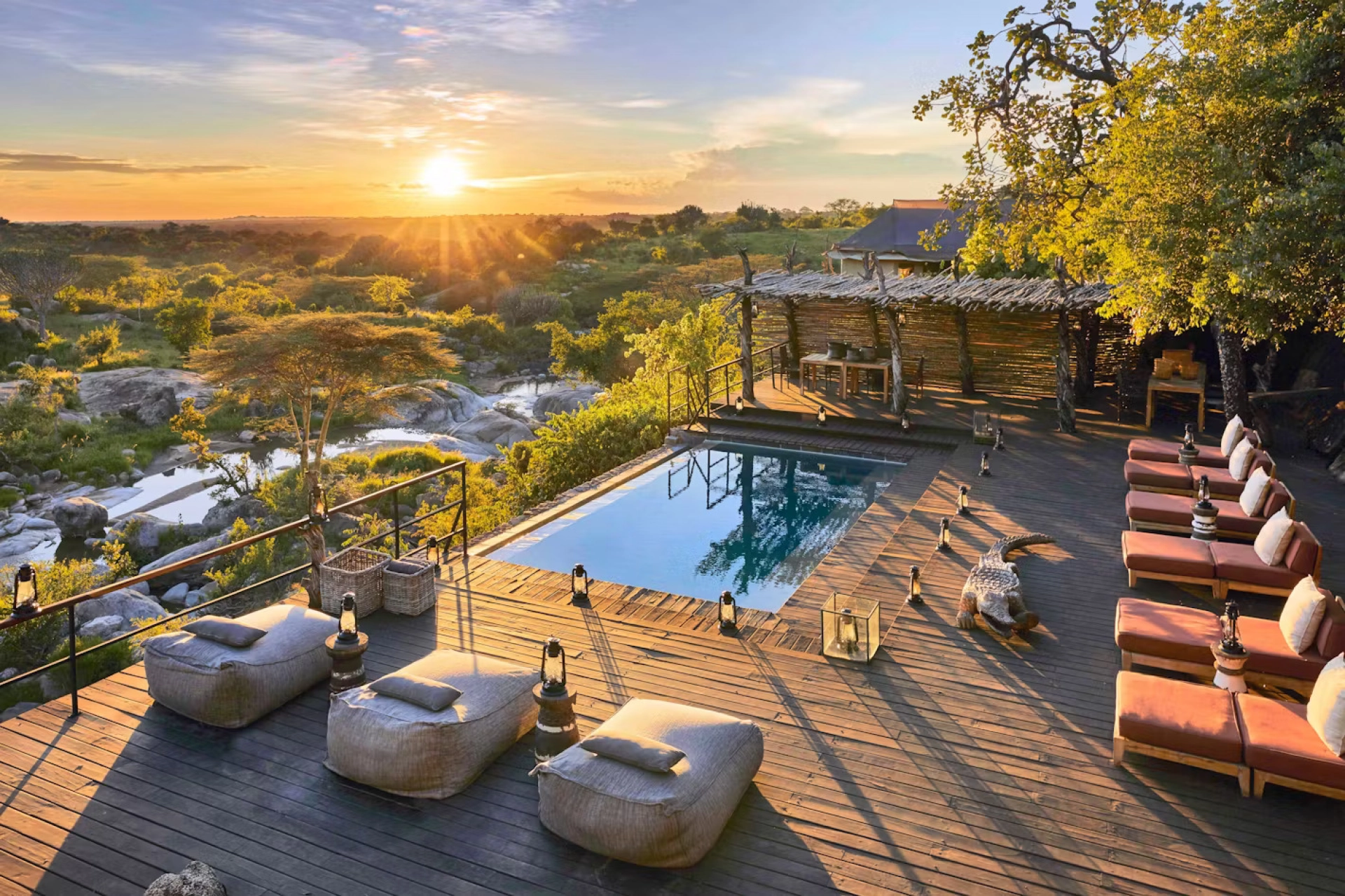
What should I look for when booking a luxury African safari?
When booking a luxury African safari, look beyond the room and compare the quality of guiding, wildlife location,…
Read article

Travel Guide
There are very few swimming pools in the world where the view beyond the edge consists of one of Africa's greatest rivers disappearing into a gorge. Devil's Pool at Victoria Falls is one of them. The…
There are very few swimming pools in the world where the view beyond the edge consists of one of Africa’s greatest rivers disappearing into a gorge. Devil’s Pool at Victoria Falls is one of them. The naturally formed rock pool sits close to the lip of Victoria Falls on the Zambian side of the Zambezi River, near Livingstone Island. When river conditions are suitable, guided visitors can enter the pool and experience an extraordinary perspective over the waterfall’s edge.
Photographs make the experience look almost unreal. A traveller lies against a rock ledge. Water flows around them. Immediately beyond appears to be a sheer drop into the gorge below. The scene is dramatic enough that people often ask the same questions before booking: Where exactly is Devil’s Pool? Is Devil’s Pool safe? Can you swim there all year? Can you visit Devil’s Pool from Zimbabwe? How do you reach Livingstone Island?
What month is best? How close are you really to the edge of Victoria Falls? The answers matter because swimming at Devil’s Pool is not a casual independent activity. Access is seasonal. Water levels determine whether it operates. Visitors must go with authorised guides. Conditions can change. And although the photographs are spectacular, the real attraction is not simply obtaining a dramatic social-media image. It is experiencing the geography and power of Mosi-oa-Tunya — Victoria Falls from one of the most extraordinary viewpoints available.
Zambia Tourism states that access is restricted to suitable low-water conditions and that visitors must use a guide. The operating window is generally associated with the lower-water months rather than the waterfall’s peak flood period.
Devil’s Pool is a natural rock pool formed in the basalt near the edge of Victoria Falls. Thousands of years of erosion have shaped depressions within the rock around the waterfall. During suitable low-water conditions, one of these pools becomes accessible under controlled guided conditions. A rock lip helps define the pool near the edge. From certain positions, visitors can look down toward the gorge while the Zambezi flows nearby.
The illusion is extraordinary. From photographs, it can appear as though swimmers are simply floating freely against the waterfall edge. In reality, visitors follow specific guide instructions and use only the designated area when river conditions permit. That distinction is crucial. Devil’s Pool is not an uncontrolled swimming hole. It is a seasonal guided adventure activity in a powerful river.
Devil’s Pool is located on the Zambian side of Victoria Falls, close to Livingstone Island. Victoria Falls itself lies on the international boundary between Zambia and Zimbabwe. The Zambezi River forms the border at the waterfall. The Zimbabwe side is accessed from Victoria Falls town. The Zambian side is accessed from Livingstone. Because Devil’s Pool is reached from Zambia, travellers staying in Zimbabwe need to cross the border into Zambia if they want to participate.
This can usually be incorporated into a day excursion, subject to entry requirements and border formalities. For anyone specifically booking a Devil’s Pool Victoria Falls tour, understanding this geography before selecting accommodation is useful.
It is in Zambia. This question causes confusion because Victoria Falls belongs geographically to both countries. The waterfall straddles the border. The Zimbabwe side of Victoria Falls contains many of the famous panoramic viewpoints. The Zambian side of Victoria Falls includes access toward Livingstone Island and the seasonal natural pools. Therefore: Victoria Falls = Zambia and Zimbabwe. Devil’s Pool = Zambia. This makes Zambia particularly attractive for adventurous travellers specifically interested in swimming near the waterfall.
Livingstone Island is a small island within the Zambezi River immediately beside the waterfall. It is named after the Scottish missionary and explorer David Livingstone, who recorded seeing the falls in 1855. The island provides an extraordinary vantage point because visitors stand within the river landscape rather than viewing the waterfall solely from the opposite gorge. Today, Livingstone Island tours combine guided access with seasonal swimming experiences and, depending on the specific excursion, meals or refreshments. The current operator notes that access is seasonal and limited, with daily conditions determining which natural pools can safely be used.
The simple answer is location. Many natural swimming pools are beautiful. Few sit immediately beside a waterfall of this scale. Victoria Falls is approximately 1.7 kilometres wide and drops more than 100 metres into a basalt gorge. Zambia Tourism lists the falls at about 1,688 metres wide and 108 metres high. That geological scale creates Devil’s Pool’s visual impact. Visitors are not swimming beside a small cascade. They are beside one of the world’s great waterfall systems. The contrast between apparently calm pool water and the enormous gorge beyond is what produces the famous photographs.
Yes, it is genuinely close to the waterfall edge. However, this should not encourage anyone to approach random parts of the waterfall independently. The area used by authorised guides has specific geological features and is visited only when river conditions are considered appropriate. The operating team assesses conditions regularly, and pool access changes when water levels become unsuitable. This is why viral images should never be treated as instructions. The safe experience depends on professional guidance and suitable seasonal conditions.
Devil’s Pool is seasonal. The official Livingstone Island operator currently describes the usual Devil’s Pool season as roughly mid-August to late December, subject to Zambezi water levels. Zambia Tourism gives a broader low-water approximation of about August to January. Exact dates can shift from year to year. This distinction matters. Do not book an August or December trip assuming access is automatically guaranteed. The river decides. Rainfall upstream influences water levels. Daily conditions matter. Safety decisions override published seasonal estimates.
During high water, enormous quantities of water move across Victoria Falls. The section around Devil’s Pool becomes unsafe. Currents strengthen. The natural rock formations that help define the usable pool may no longer provide safe access conditions. Therefore, Devil’s Pool closes when Zambezi water levels are too high. This is not a disadvantage of visiting Victoria Falls during high-water season. It simply creates a different experience. High water produces the enormous spray and thunder for which Mosi-oa-Tunya is famous. Low water reveals more geology and creates opportunities for seasonal edge experiences.
This is one of the most important planning trade-offs. If your priority is seeing Victoria Falls at maximum power, you may prefer the high-water period. If your priority is swimming in Devil’s Pool, you generally need lower water. The two peak experiences do not perfectly overlap.
During peak flood conditions, Victoria Falls can produce enormous spray.
Sections of the waterfall may become difficult to see from ground level because mist fills the gorge. The spectacle is physically powerful. You hear and feel the waterfall. But Devil’s Pool is not accessible.
As the river level falls, more basalt becomes visible. Water distribution becomes uneven across the broad waterfall. Some parts of the Zambian side can become substantially drier. This is when Livingstone Island and Devil’s Pool experiences become possible, subject to conditions.
There is no single guaranteed month, but the main operating window usually falls within the lower-water period from around mid-August through December. For travellers wanting both waterfall scenery and pool access, earlier parts of that window can sometimes provide a useful balance. Later low-water periods may offer more reliable pool access but less water across sections of the waterfall. Again, annual rainfall changes conditions. A Victoria Falls travel specialist should check current operational status close to your travel dates.
Sometimes the river may be dropping toward suitable levels, but Devil’s Pool is not generally assumed to be open throughout July. The official operator currently lists the normal Devil’s Pool window from mid-August, while Livingstone Island itself may operate earlier depending on conditions. Visitors travelling in July should therefore consider Devil’s Pool a possibility only if confirmed for their exact dates.
August is often associated with the beginning of the main Devil’s Pool operating period. However, early August conditions may vary. Later August tends to fall more clearly within the traditional low-water window. Always confirm current status.
September is one of the classic months for Devil’s Pool Victoria Falls. Water levels are generally lower than during the first half of the year. The broader destination is also popular for combining Victoria Falls with dry-season safari destinations such as Hwange National Park, Chobe National Park, South Luangwa National Park and the Okavango Delta. That makes September particularly attractive for a multi-destination southern African safari.
October often provides suitable low-water conditions. It can also be very hot around Victoria Falls and other parts of the region. Travellers should carry sun protection, drink plenty of water and prepare for high daytime temperatures. Safari wildlife viewing can be excellent at this time because many southern African ecosystems are deep into the dry season.
November often remains within the traditional Devil’s Pool window. Victoria Falls itself can be near one of its lower-flow periods. This means the experience of the waterfall differs dramatically from March or April. You may see exposed rock and concentrated channels rather than one enormous wall of water. For Devil’s Pool, that lower flow is exactly what makes the activity possible.
Often, yes, especially earlier in the month, but rising rainfall can begin changing river conditions. The official operator currently indicates a usual season extending into late December, always subject to water levels. Never assume access from calendar dates alone.
Zambia Tourism has historically described access as sometimes extending into January during suitable low-water conditions. However, the current Livingstone Island operator gives a more typical Devil’s Pool window ending in late December. January travellers should therefore check the actual operational status rather than relying on generic annual guides.
This deserves a careful answer.
Devil’s Pool involves swimming in the Zambezi River immediately beside a major waterfall. That means the environment is inherently serious. The activity is only conducted when guides judge river levels suitable. Visitors receive instructions and are accompanied by experienced professionals. The current operator states that conditions are assessed daily before swimming access is allowed. Safety therefore depends on several factors: Appropriate water level. Professional supervision. Using authorised access. Following instructions. Individual swimming ability. Weather. Daily river conditions. Visitors should never attempt independent access.
The location is not a normal public swimming area. Zambia Tourism explicitly notes that Livingstone Island must not be accessed independently and that guided access is required. Guides understand: Safe routes. Current. Rock surfaces. Water depth. Entry and exit points. Weather. Daily river behaviour. The difference between a dramatic adventure and reckless behaviour is professional control.
Most visitors access Livingstone Island from the Zambian side. Boat transfers are commonly used during appropriate operating periods. The current operator describes the boat journey to the island as roughly ten minutes from the Livingstone Island launch area. During very low water, seasonal walking approaches may also operate under guided conditions. The exact transport depends on water levels and the product booked.
Travellers staying in Livingstone, Zambia have the easiest logistical access. Transfers can often be arranged from hotels or lodges. The main Livingstone Island launch point is close to the riverfront tourism area. Visitors should arrive in time for check-in and safety briefing. Because group size is limited, advance reservations are sensible.
Yes, you can stay in Zimbabwe and still visit Devil’s Pool. You need to cross the Zambia-Zimbabwe border. This means bringing the correct travel documents and allowing enough time for border formalities. Depending on your nationality and wider itinerary, visa arrangements may affect the process. Travellers frequently combine a Zimbabwe hotel stay with a half-day Zambia excursion. This gives access to Zimbabwe’s panoramic waterfall viewpoints while still allowing a Devil’s Pool excursion in Zambia.
Age requirements apply. The current Livingstone Island operator states that children must be at least 12 years old for swimming experiences, while younger children from age eight may be permitted on certain island visits without swimming. These policies can change, so families should confirm rules at booking. Age restrictions exist for safety, not inconvenience.
Visitors should be comfortable in water. The current operator specifically identifies swimming ability and reasonable fitness as important for pool activities. If you are not confident in water, tell the operator before booking. Do not hide concerns in order to obtain the photograph. Alternative Livingstone Island experiences may still provide extraordinary views without swimming in Devil’s Pool.
Exact itineraries depend on the booked departure, but a typical Livingstone Island and Devil’s Pool tour may involve: Transfer to the launch area. Safety briefing. Boat journey toward Livingstone Island. Guided island exploration. Walk toward the natural pool. Swimming only if current conditions allow. Photography. Return to the island facilities. Meal or refreshments depending on the selected experience. Boat transfer back. The current Livingstone Island programme offers different morning, lunch and afternoon experiences.
Wear clothing appropriate for swimming and walking. Useful items include: Swimwear. Quick-drying clothes. Secure footwear. Sunscreen. Hat. Sunglasses. Waterproof camera protection. Avoid carrying unnecessary valuables. Rock surfaces can be wet and slippery. Footwear recommendations should be taken seriously.
Photography is a major part of the experience. The location produces some of the most dramatic Victoria Falls photographs possible. However, safety should come before posing. Follow guides regarding where to sit, stand and move. Do not change position simply because another angle looks better. Waterproof protection is sensible for cameras and phones. The waterfall environment is wet even when the sky is perfectly clear.
For adventurous travellers who are comfortable with the environment and who visit during the operating season, it can be one of the most memorable Victoria Falls activities.
The unique feature is not simply swimming. It is the perspective. You are experiencing the waterfall from the river itself. That feeling cannot be replicated from a standard viewpoint. However, travellers who dislike heights, are uncomfortable swimming or simply prefer observing waterfalls from secure trails should not feel pressured. Victoria Falls offers numerous extraordinary alternatives.
A closed Devil’s Pool does not ruin a Victoria Falls holiday. It usually means water levels are higher. Higher water creates a different waterfall spectacle. Alternatives can include: Victoria Falls rainforest walk. Knife-Edge Bridge on the Zambia side. Victoria Falls Zimbabwe viewpoints. Helicopter flight over Victoria Falls. Zambezi sunset cruise. White-water rafting, when operating. Victoria Falls Bridge. Mosi-oa-Tunya National Park. Chobe day safari. Hwange safari extension. In other words, there is always more to do.
Visitors may also hear about Angel’s Pool. This is another natural pool associated with Livingstone Island. Its availability depends on river conditions and does not necessarily coincide with Devil’s Pool. When Devil’s Pool becomes inaccessible because water levels rise, Angel’s Pool or Rock Pool may sometimes be used if guides consider conditions appropriate. The current Livingstone Island operation explicitly changes access between these pools according to daily water levels.
Neither should be treated as a guaranteed fallback. Both depend on nature. Devil’s Pool is the famous low-water option closest to the dramatic edge. Angel’s Pool may operate during other suitable water conditions. Rock Pool may provide another alternative. The operating team decides which experience is appropriate. Visitors should book Livingstone Island, then accept the pool available under safe conditions.
On the Zambian side, the Knife-Edge Bridge provides one of the most dramatic conventional viewpoints. During higher water, spray can soak visitors. The bridge provides views toward the Eastern Cataract and sections of the main waterfall. Zambia Tourism identifies Knife-Edge Bridge as one of the major local viewpoints. This is an excellent experience whether or not Devil’s Pool is open.
On the Zimbabwe side, walking trails pass through a remarkable spray-fed rainforest. The constant mist supports vegetation far greener than surrounding dry woodland. A series of viewpoints reveals different sections of the waterfall. During high water, raincoats become useful even on cloudless days. During low water, visibility improves and more gorge geology becomes visible. Combining these trails with Devil’s Pool gives travellers two radically different perspectives.
A helicopter flight over Victoria Falls is arguably the best complement to Devil’s Pool. Devil’s Pool gives extreme close-up perspective. A helicopter provides scale. From above, you see: The broad Zambezi. The waterfall line. The narrow basalt gorge. The zigzagging downstream gorges. Livingstone Island. Zimbabwe and Zambia. Together, the two experiences explain the waterfall better than either alone.
After Devil’s Pool, a Zambezi sunset cruise offers something much calmer. Upstream from Victoria Falls, the river broadens. Islands break the current. Hippos appear. Crocodiles rest near shore. Elephants may approach the water. Birdlife is excellent. As the sun sets over the Zambezi, it is difficult to imagine that only a short distance downstream the same river disappears violently into Victoria Falls.
Adventure travellers may add Zambezi white-water rafting. Below the waterfall, the Zambezi flows through Batoka Gorge. The river creates some of Africa’s most famous rafting sections. Like Devil’s Pool, rafting depends on water levels and seasonal operating conditions. It is physically demanding. Travellers should ensure their travel insurance covers the activity.
The Victoria Falls Bridge bungee jump provides another adrenaline option. The bridge crosses the gorge between Zambia and Zimbabwe. Participants leap above the Zambezi with the dramatic gorge surrounding them. For some travellers, this is the perfect complement to Devil’s Pool. For others, simply walking across the bridge is exciting enough.
Victoria Falls is one of southern Africa’s best safari gateways.
A Devil’s Pool experience can easily be combined with major wildlife destinations.
Chobe National Park in Botswana lies within relatively easy reach. The park is famous for enormous elephant populations and the wildlife-rich Chobe River. A Victoria Falls and Chobe safari can combine waterfall adventure with game drives and boat safaris.
Hwange National Park is Zimbabwe’s premier large wildlife park. It combines naturally with Victoria Falls. Elephants, lions, buffalo, wild dogs, giraffes and other wildlife make Hwange an excellent safari extension.
Travellers exploring Zambia can continue toward South Luangwa National Park for leopards and walking safaris. This creates an excellent Victoria Falls and Zambia safari.
The Lower Zambezi National Park provides canoeing, boating, elephants and game drives along the same great river system.
A luxury southern African itinerary can combine Victoria Falls, Chobe and the Okavango Delta. This gives travellers waterfalls, river wildlife and wetland safari within one journey.
For travellers planning a larger African adventure, Victoria Falls can be paired with gorilla trekking in Uganda or gorilla trekking in Rwanda. A journey could combine: Devil’s Pool Zambia. Victoria Falls. Chobe safari. Then flights toward Entebbe or Kigali. Finally, mountain gorilla trekking in Bwindi Impenetrable National Park or Volcanoes National Park. The contrast between the Zambezi and tropical mountain forest makes this an exceptional multi-country safari.
Two or three nights works well for most visitors. For a Devil’s Pool-focused itinerary: Day 1: Arrival and Zambezi sunset cruise. Day 2: Victoria Falls viewpoints and Devil’s Pool/Livingstone Island. Day 3: Helicopter flight, bridge activity or border crossing to the opposite side. Travellers continuing to Chobe or Hwange can then move onward without feeling rushed.
If Devil’s Pool is your highest priority, staying in Livingstone, Zambia simplifies access. If panoramic views of Victoria Falls and a Hwange safari are equally important, staying on the Zimbabwe side may make more sense. You can still cross the border for Devil’s Pool. There is no universally correct side. Choose according to the full itinerary.
Adventure tourism should respect the environment. Do not leave litter. Use authorised trails. Follow guides. Avoid independent access. Do not pressure guides to open a pool that has been declared unsafe. Respect local cultural significance associated with Mosi-oa-Tunya and Livingstone Island. Remember that the waterfall is not simply a backdrop for photographs. It is a powerful natural and cultural landscape.
Devil’s Pool is on the Zambian side of Victoria Falls near Livingstone Island.
Zambia.
It is generally available during the lower-water period, commonly around mid-August to late December, but exact dates depend on Zambezi water levels.
Yes. You can stay in Victoria Falls, Zimbabwe, cross the border into Zambia and take an authorised Livingstone Island excursion.
It is an inherently adventurous natural environment. Swimming is permitted only when guides judge conditions suitable, and visitors must follow professional instructions.
The current operator lists a minimum swimming age of 12 years.
Visitors should be confident in water and meet the operator’s fitness and swimming requirements.
No. Authorised guided access is required.
Depending on conditions, Angel’s Pool or Rock Pool may operate, or travellers can enjoy numerous alternative Victoria Falls activities.
For adventure travellers visiting during the correct season, it can be one of the most memorable experiences at Victoria Falls.
There is a reason photographs of Devil’s Pool Victoria Falls capture so much attention. The experience looks impossible. You are in the Zambezi. The gorge lies beyond. The waterfall thunders nearby. Africa’s landscape seems to fall away beneath you. But the real story is not about recklessness. It is about timing. Geology. River levels. Professional guiding. And respecting one of the continent’s most powerful natural environments. Visit when the Zambezi permits it.
Follow the guides. Do not take unnecessary risks for photographs. And use the experience as part of a wider exploration of Victoria Falls, Livingstone, Zambia and southern Africa. Adventure in the Wild Safaris can arrange Devil’s Pool tours, Victoria Falls holidays, Zambia safaris, Hwange National Park safaris, Chobe safaris, Lower Zambezi tours, South Luangwa walking safaris, Botswana combinations and Victoria Falls plus Uganda gorilla trekking itineraries. Taking the plunge may last only a few minutes. But the memory of looking across Mosi-oa-Tunya — The Smoke That Thunders from the edge of the Zambezi is likely to last much longer.

Share This Article
When booking a luxury African safari, look beyond the room and compare the quality of guiding, wildlife location,…
Read article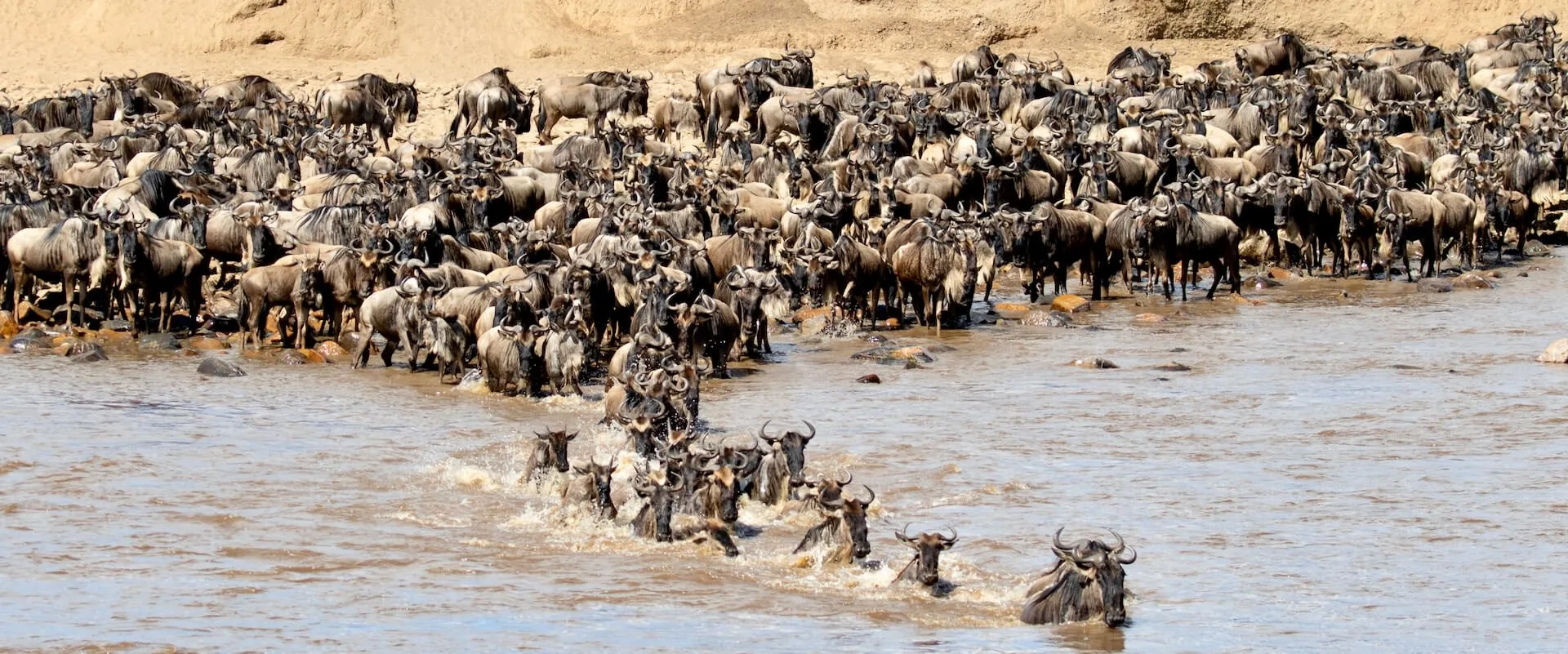
The Great Migration in Africa happens all year because the herds continuously circulate through the Serengeti–Mara ecosystem in…
Read article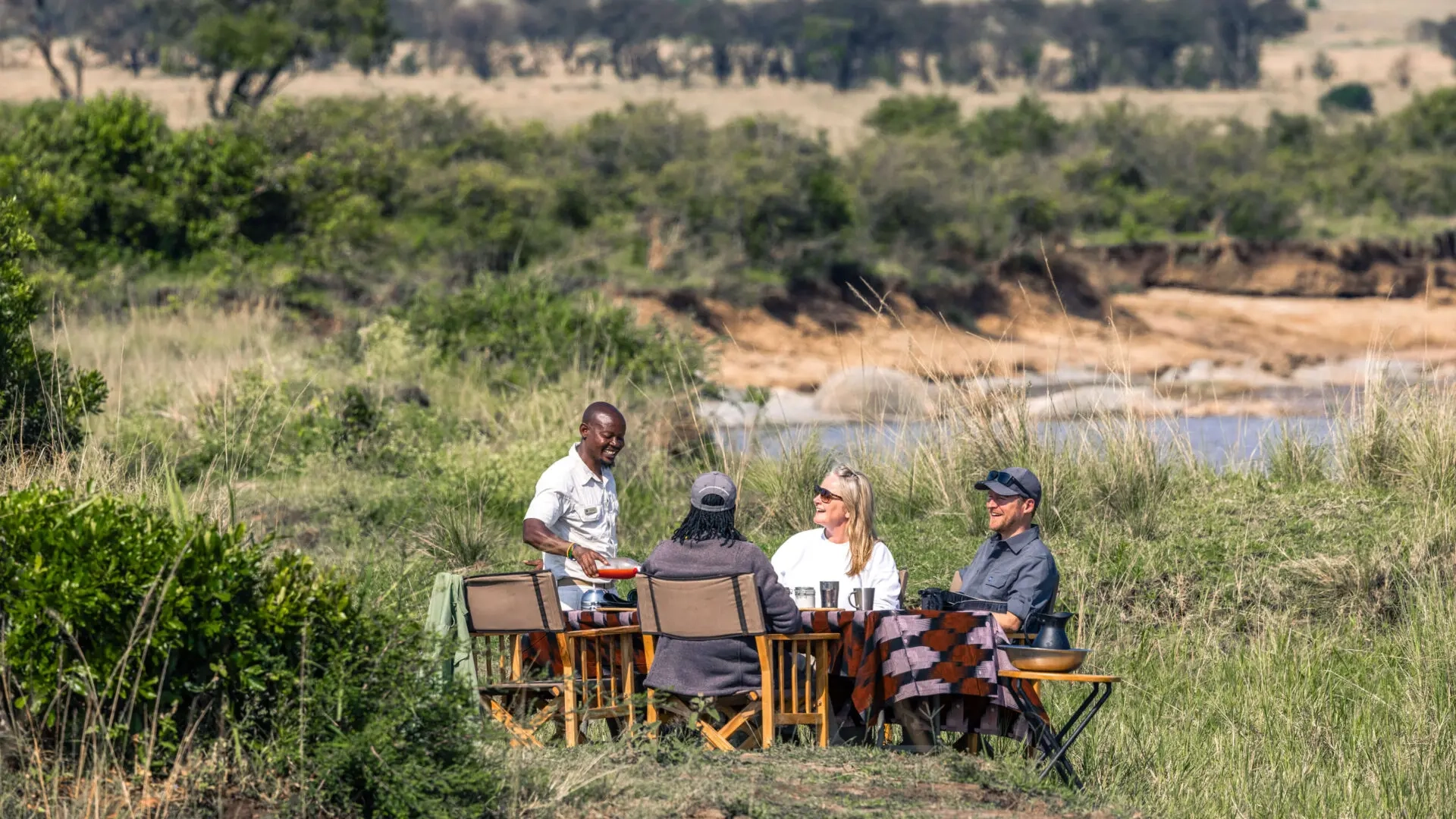
Definitive answer: A picnic lunch on safari is a packed or catered midday meal eaten at an approved…
Read article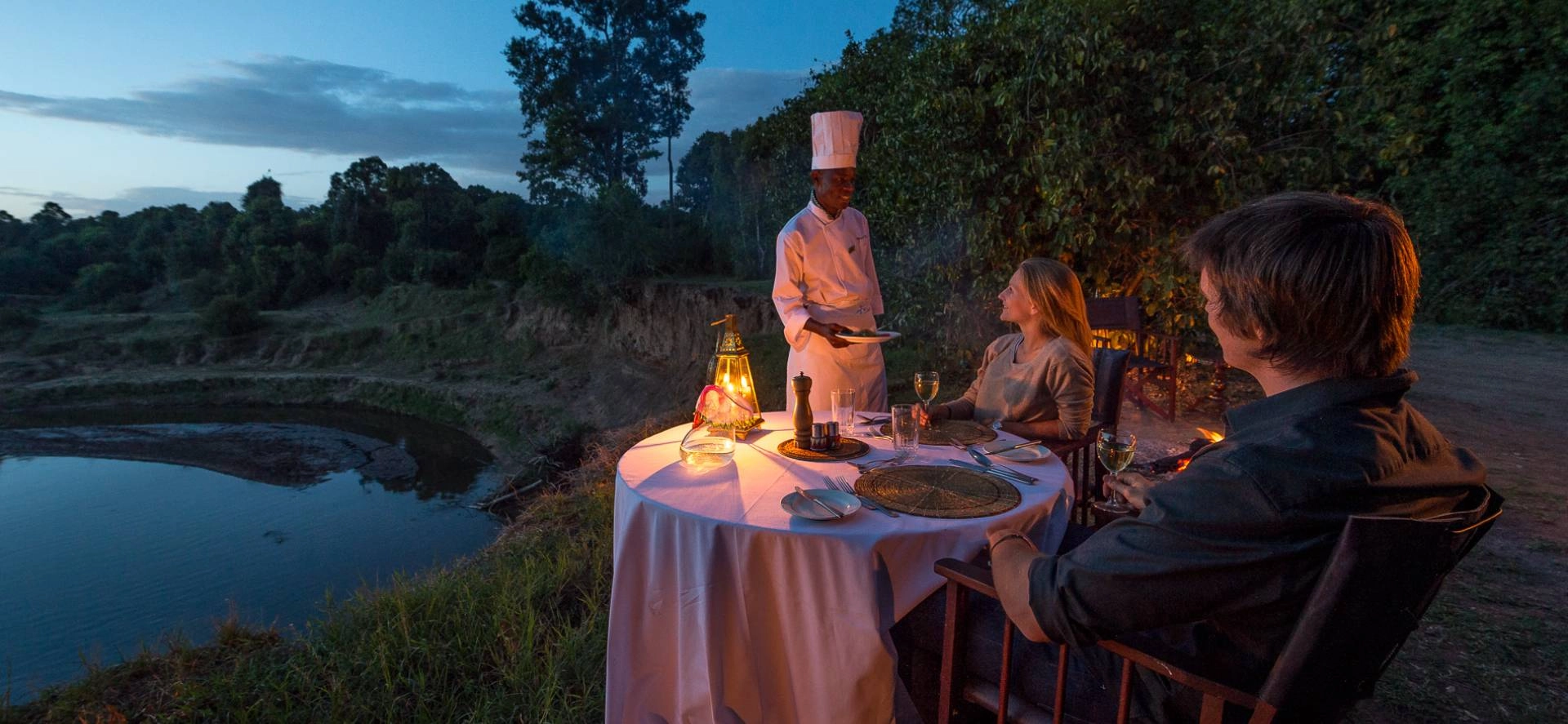
Definitive answer: A bush dinner is an outdoor evening meal arranged in a safe safari setting away from…
Read articleLet us take you closer to the wildlife, people and places that make Africa extraordinary.
Plan Your Safari Today