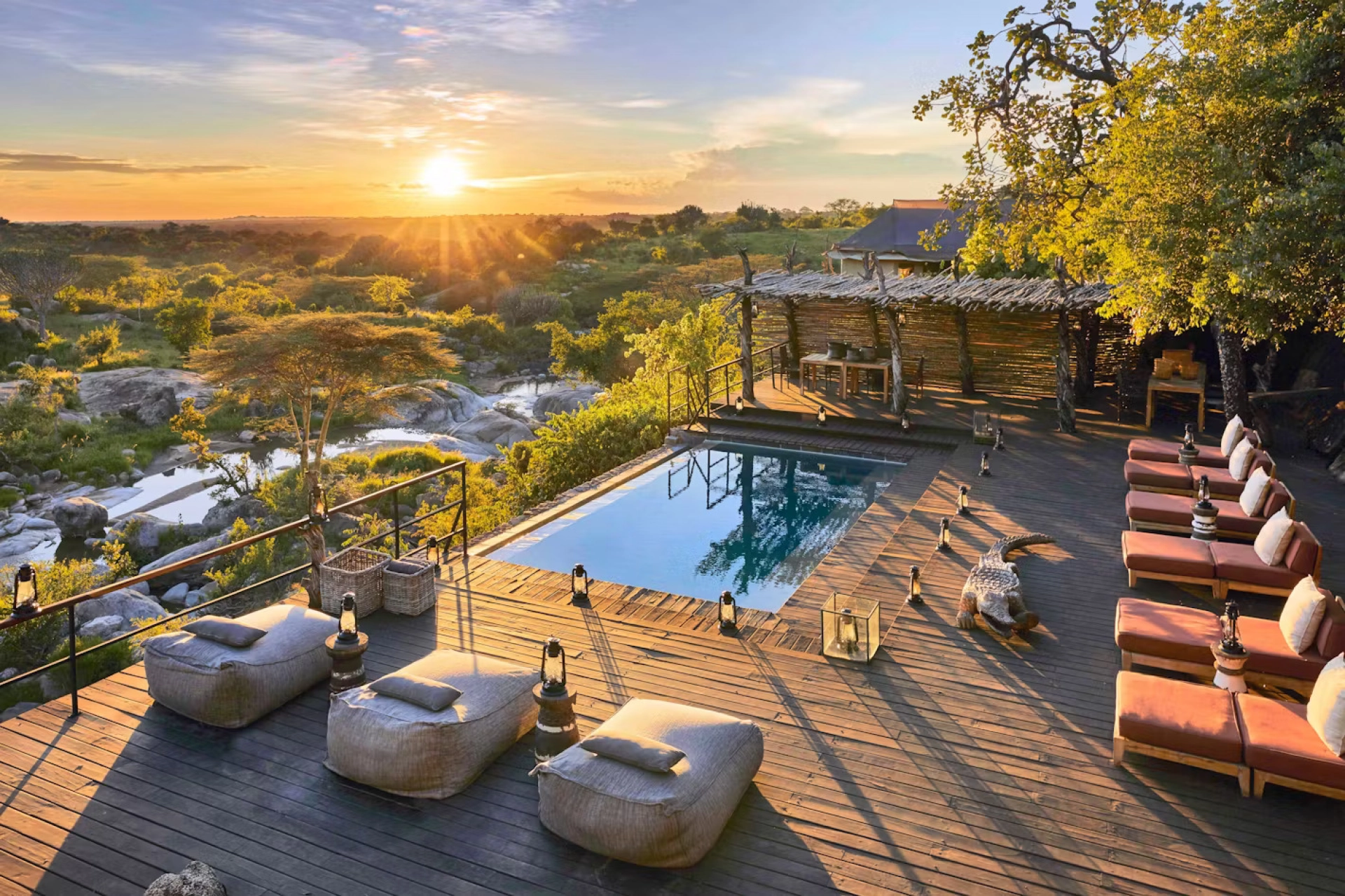
What should I look for when booking a luxury African safari?
When booking a luxury African safari, look beyond the room and compare the quality of guiding, wildlife location,…
Read article

Travel Guide
Choosing between the Serengeti and the Okavango Delta is not really a question of deciding which destination contains better wildlife. Both belong among Africa's premier safari environments, and both can produce the kind of wildlife encounters…
Choosing between the Serengeti and the Okavango Delta is not really a question of deciding which destination contains better wildlife. Both belong among Africa’s premier safari environments, and both can produce the kind of wildlife encounters that inspire travelers to return to Africa repeatedly. The more useful question is what kind of safari you want.
The Serengeti in Tanzania is defined by scale, movement and enormous horizons. It is a place of vast grasslands, wandering herds, predators following prey and the annual movement of the Great Wildebeest Migration through different sections of the wider Serengeti–Mara ecosystem. The visual language of the Serengeti is often distance: thousands of wildebeest spread across plains, giraffes becoming silhouettes against the horizon, lions resting on granite kopjes and storm clouds building above landscapes that seem to continue forever.
The Okavango Delta in Botswana offers a radically different interpretation of African wilderness. Here, water penetrates the Kalahari landscape and creates a shifting mosaic of floodplains, channels, lagoons, islands, grasslands and woodland. Safari may take place from a game-drive vehicle in the morning and from a traditional-style mokoro or motorboat later in the day, subject to local water conditions and the activities offered by the camp.
The Serengeti makes you aware of space. The Okavango makes you aware of water. The Serengeti’s defining wildlife phenomenon is the movement of enormous terrestrial herds. The Okavango’s defining character comes from the interaction between seasonal floodwaters, dry land and wildlife. Both can provide lions, elephants, buffaloes, leopards and extraordinary birdlife. Yet the way you encounter those animals can feel completely different. For first-time safari travelers, photographers, honeymooners and experienced African travelers trying to decide between Tanzania and Botswana, understanding these differences is much more useful than simply asking which park has the most animals.
The Serengeti is usually best suited to travelers who want classic East African savannah, the Great Migration, expansive landscapes, predator-rich plains, road-safari flexibility and the possibility of combining several famous northern Tanzania destinations such as Ngorongoro Conservation Area and Tarangire National Park. The Okavango Delta is especially appealing to travelers who want intimate wilderness, lower-density safari experiences, water-based activities, small camps, high-quality guiding and a more exclusive fly-in safari style. Neither description means the other destination cannot provide those qualities. There are quiet areas of the Serengeti. There are land-based wildlife concentrations in the Okavango.
But their overall characters differ enough that the choice should be driven by travel style rather than reputation.
Serengeti National Park forms the core of one of the world’s greatest wildlife ecosystems. Its fame is closely connected with the Great Migration, yet reducing Serengeti to wildebeest would overlook much of what makes the destination exceptional. The park contains open plains, riverine habitat, woodland, seasonal wetlands and rocky kopjes. Different regions perform differently at different times of year. The southern ecosystem becomes particularly important during the broader green-season and calving cycle.
Central Serengeti around Seronera is famous for strong resident wildlife and predator opportunities through much of the year. Western regions become increasingly relevant during particular phases of migration movement. Northern Serengeti is associated with the migration’s movement toward the Mara River and the Kenya border during the broader dry-season cycle. This means that a Serengeti safari should ideally be designed around both season and geography.
Simply booking a property described as being “in Serengeti” does not guarantee that you are staying near the wildlife phenomenon you most want to see.
The Okavango Delta is one of Africa’s most unusual ecological systems. Instead of flowing directly into the sea, water originating in the Angolan highlands travels through river systems and spreads into the interior of northern Botswana, creating the vast delta environment. The timing of the flood creates one of the most fascinating seasonal contradictions in African travel. Rain falls in the distant catchment months before portions of the flood reach farther into Botswana. As a result, significant delta inundation can occur during Botswana’s broader dry season.
For safari travelers, this creates a landscape in which water and dry-season wildlife viewing can exist simultaneously. Yet the delta is not equally flooded everywhere. Conditions vary dramatically by concession, island, channel and year. A camp marketed as an “Okavango camp” may emphasize water activities at one time and land-based activities at another. Travelers specifically dreaming of mokoro safaris in Botswana should therefore ask whether water activities are normally possible at the chosen camp during the intended travel period.
Both destinations support exceptional wildlife, but the wildlife experience differs. The Serengeti is characterized by enormous populations of grazing animals. Wildebeest, zebras and gazelles can occur in impressive concentrations, especially when migration herds are gathered in particular seasonal regions. Predators respond to this abundance. Lions, cheetahs, leopards and spotted hyenas form an important part of the ecological story. The Okavango supports an equally fascinating but more spatially varied wildlife community. Elephants can be particularly impressive. Buffaloes, antelopes, lions, leopards, hippos and numerous other mammals inhabit the broader ecosystem.
In appropriate northern Botswana regions, African wild dogs are another major attraction for wildlife enthusiasts, although sightings can never be guaranteed. If you want enormous herd spectacle, Serengeti generally has the stronger identity. If you want intimate wildlife encounters distributed across a mosaic of land and water habitats, Okavango may be more compelling.
This question sounds straightforward but is not especially useful. The Serengeti supports extraordinary biomass, particularly because of the huge migratory herbivore population. There can be moments when a traveler looks across the plain and sees animals almost everywhere. The Okavango often feels more intimate. Instead of thousands of wildebeest stretching across a horizon, you may spend a morning following one leopard through woodland, watch a herd of elephants cross a channel or observe red lechwe moving through shallow water.
A large animal count does not necessarily equal a better safari. Some travelers are overwhelmed by the scale of Serengeti. Others remember one quiet Okavango elephant encounter more strongly than a migration herd of thousands.
If seeing the Great Wildebeest Migration is one of your primary reasons for traveling to Africa, the Serengeti has the obvious advantage. The migration is an annual movement of huge numbers of wildebeest accompanied by zebra and other herbivores through the greater Serengeti–Mara ecosystem. Different sections become important at different times. The southern ecosystem is associated with the broader calving cycle.
As conditions change, herds move northward through different regions. Later in the annual cycle, northern Serengeti and the Masai Mara become particularly significant. The key point is that migration is not one event. It is an ongoing ecological process. A Great Migration safari in Tanzania therefore needs to be planned according to expected seasonal location rather than merely visiting Serengeti at random.
The Okavango’s wildlife dynamics differ. The landscape changes according to local rainfall, distant floodwaters and seasonal resource availability. Animals respond to these shifts. However, the delta does not offer an equivalent spectacle to the Serengeti’s enormous wildebeest movement.
Travelers choosing Okavango should do so because they want the delta ecosystem itself—not because they expect a Serengeti-style migration.
Both destinations can provide outstanding lion experiences. The Serengeti supports significant lion populations associated with abundant prey. Open landscapes can make prides easier to observe in certain areas. Kopjes create excellent resting places and photographic settings. In the Okavango, lions occupy a very different environment. They may move between islands, floodplains and woodland. Water can shape hunting behavior and territory. For repeat safari visitors who have already watched lions on East African grasslands, seeing them operate within the delta ecosystem can provide fascinating contrast.
Leopards occur in both ecosystems. They are naturally elusive. Central Serengeti’s riverine and woodland environments can provide opportunities. Botswana is also highly regarded for leopard sightings in several safari regions. Success depends heavily on individual territories, guide knowledge and luck. Travelers should never select a destination based on an operator promising a particular leopard sighting.
For travelers especially interested in cheetahs, the Serengeti has a compelling advantage because extensive open plains create excellent habitat. Cheetahs rely on speed and visibility, making open grasslands particularly important. The southern and central Serengeti ecosystem can provide excellent opportunities depending on conditions. Cheetahs occur in Botswana, but they are not the defining predator of the wetter Okavango environment.
A traveler building a safari primarily around cheetah photography would generally prioritize Tanzania.
For wildlife enthusiasts fascinated by African wild dogs, northern Botswana can be particularly attractive. Wild dogs are highly mobile and no sighting is assured. However, Botswana’s wilderness regions have long been important landscapes for the species. Watching a pack socialize, rest or prepare to hunt can become one of the most memorable experiences in Africa.
Because packs can cover substantial distances, an experienced guide becomes invaluable.
Both Tanzania and Botswana offer excellent elephant viewing. Tarangire may actually be a stronger elephant-specific destination within Tanzania than parts of Serengeti. Within Botswana, however, elephants are a defining part of the broader northern safari experience. The Okavango and nearby regions can provide beautiful elephant encounters in and around water. Watching elephants wade through channels or feed on islands creates photographs and behaviors that differ from classic savannah sightings. If elephants are a major priority, a Botswana itinerary combining Okavango and Chobe can be extraordinarily rewarding.
Okavango’s aquatic character gives it an advantage for travelers fascinated by water-associated wildlife. Hippos are part of the ecosystem. Crocodiles occur. Antelopes adapted to wetland environments may be seen. Waterbirds contribute enormously to the experience. Serengeti contains rivers and wetlands too, but water is not usually the organizing theme of the entire safari.
Both are outstanding. The Serengeti’s grasslands, woodland and seasonal wetlands support raptors, bustards, storks, vultures and numerous smaller species. The Okavango’s combination of open water, reeds, floodplains, woodland and grassland creates exceptional birding. For a dedicated birder, Okavango’s habitat mosaic can be particularly attractive. However, serious birders can build exceptional itineraries in either destination. Guide specialization may make a greater difference than the country.
The Serengeti is one of Africa’s ultimate destinations for wide landscape wildlife photography. Its horizons create scale. A line of wildebeest beneath an enormous sky can be more powerful than a tight portrait. Giraffes become silhouettes. Dust catches evening light. Kopjes create foreground structure. The Okavango has an entirely different visual language. Reflections appear in channels. Palm-dotted islands break up floodplains. Elephants wade through water. Aerial flights reveal abstract patterns of channels and islands that cannot be understood from ground level. For photographers, the question becomes whether you prefer endless terrestrial space or intricate water landscapes.
One of Okavango’s major advantages is activity variety. Depending on camp, concession and water conditions, safari can include game drives, mokoro excursions, boating and guided walking experiences. Not every camp offers every activity. Some areas are primarily land based. Others are strongly water oriented. This needs to be checked before booking. Serengeti safaris are primarily centered on vehicle-based game drives. Balloon safaris are available in selected regions as an optional premium activity.
Walking experiences may be possible in particular controlled settings but should not be assumed throughout the park. If activity diversity is one of your strongest priorities, Okavango often has the edge.
The mokoro is one of the iconic experiences associated with Botswana.
Traditionally, these narrow craft were made from hollowed tree trunks, although modern tourism operations commonly use more sustainable alternatives. A trained poler navigates shallow channels. The experience is completely different from a vehicle safari. There is no engine. Movement is quiet. The perspective is low. Reeds, frogs, birds and aquatic plants become much more noticeable. Do not think of a mokoro primarily as a way to get extremely close to dangerous large animals.
Its strength is immersion in the delta environment.
The Serengeti game-drive experience is more expansive. Vehicles cover substantial distances searching different habitats. Pop-up roofs allow travelers to stand and photograph. Open plains provide extraordinary visibility. A productive morning may involve following lions, finding cheetahs and then encountering hundreds of wildebeest moving across the landscape. The vehicle is not simply transport. It becomes the platform from which much of the safari unfolds.
A significant part of Botswana’s premium safari character comes from private concession models. Depending on the location, these may limit the number of camps and vehicles using an area. This can create particularly intimate sightings. Rules regarding off-road driving, night drives and walking vary according to the specific concession or protected-area framework. Travelers should therefore ask exactly what activities are offered rather than relying on broad statements about “Botswana safari.”
The Serengeti is enormous, but popular areas and famous wildlife events can become busy. A major predator sighting near central roads may attract multiple vehicles. River-crossing locations during peak migration periods can become particularly crowded. This does not mean the entire Serengeti is crowded. Careful lodge selection and time spent exploring less heavily used tracks can create a very different experience. Travelers particularly sensitive to vehicle numbers may prefer remote Serengeti camps or the Okavango’s concession-based safari style.
Okavango often wins on perceived isolation. Many camps are accessible primarily by light aircraft. Guests may arrive at a small airstrip and spend several days entirely immersed in wilderness. There are no long public highway transfers between camps. The outside world feels distant. Serengeti can also feel profoundly remote, particularly away from busier regions. But northern Tanzania’s road circuit is more interconnected. A traveler can drive from Arusha through Tarangire and Ngorongoro into Serengeti.
That connectivity makes Serengeti easier to incorporate into a conventional road safari.
This is one of the clearest practical differences. A Serengeti safari can be organized at budget, mid-range, luxury and ultra-luxury levels. Travelers can use road transport, group departures, camping, mid-range tented camps or premium fly-in lodges. This broad product range makes Tanzania accessible across more budgets.
The Okavango Delta tends to operate at a higher average price point. Remote camps, limited bed capacity, concession arrangements, inclusive safari activities and light-aircraft transfers contribute to the cost. There are more economical ways to experience Botswana, including mobile camping safaris and combinations involving Moremi, Khwai and other regions. But a classic fly-in Okavango safari usually sits in the premium end of the African safari market.
Generally, yes. The northern Tanzania circuit supports group safaris and road-based itineraries. Vehicle expenses can be shared. Accommodation exists at multiple levels. Travelers can combine Serengeti with Ngorongoro and Tarangire without needing flights between every property. This makes Tanzania easier for travelers seeking an affordable African safari.
For the right traveler, absolutely. The cost does not simply buy a more luxurious bedroom. It often buys remoteness, lower visitor density, highly inclusive lodge operations and access to a unique ecosystem. A traveler who has already completed several East African safaris may find the difference extraordinary. Someone making a first visit to Africa on a limited budget may gain more overall wildlife variety from Tanzania.
A budget Serengeti trip can use scheduled group departures, simpler lodges or camping arrangements. The crucial factor is vehicle occupancy. Ask how many people share the vehicle. Photography becomes frustrating when every seat is full. Saving money through accommodation is generally preferable to compromising wildlife-viewing space too aggressively.
At the luxury level, Serengeti changes character. Fly-in camps reduce travel time. Seasonal properties can position guests near migration areas. Private vehicles create photographic flexibility. Premium camps may offer spacious tents and excellent food. Luxury is most valuable when it improves location, guiding and wildlife access rather than merely interior design.
Okavango is one of the world’s iconic luxury-safari destinations. Small camps, remote concessions, personalized guiding and charter-style light-aircraft networks create a highly exclusive experience. Some properties have only a handful of rooms. This allows staff to personalize the stay and reduces the number of vehicles operating around sightings. Travelers should nevertheless distinguish between luxury and safari quality. The most expensive camp is not automatically the best fit. Choose according to wildlife area, seasonal water conditions and desired activities.
There is no single best month. For migration-focused travel, different regions become relevant during different seasons. The broader southern calving period is particularly compelling for wildlife behavior. The dry-season northern migration cycle attracts travelers hoping for river-crossing opportunities. Central Serengeti remains productive throughout much of the year because of resident wildlife. Green-season travel provides excellent landscapes, dramatic skies and potentially fewer vehicles.
The best time to visit Okavango Delta depends on whether your priority is floodwater, dry-season wildlife concentration, birding, green-season scenery or price. The annual flood generally reaches Botswana well after rain falls in the distant catchment, creating relatively high water during parts of the local dry season. This can make middle-year travel particularly attractive for classic delta scenery and water-based experiences in suitable areas. The green season provides different rewards.
Rain transforms the landscape. Birding becomes excellent. Young animals may be present. Rates may be more attractive at selected camps. Do not assume Okavango is worthwhile only at peak flood.
Both destinations are spectacular in green season. The Serengeti becomes lush and may host enormous migration concentrations in the south during the broader calving period. The Okavango and northern Botswana turn vibrant after summer rains. Photographers benefit from dramatic skies and cleaner, richer color. Travelers seeking lower prices should examine these periods carefully.
For many first-time visitors, Serengeti has the advantage. It delivers the visual idea people often associate with an African safari: expansive savannah, large herds, lions, cheetahs and famous migration landscapes. It also combines naturally with Ngorongoro Crater and Tarangire. A first-time visitor can therefore experience several iconic environments within one road-based itinerary. Okavango is equally spectacular but more specialized. Its expense and remote logistics can make it especially attractive as a second or third safari when the traveler understands what makes it different. This is not a rule. A first safari in Botswana can be extraordinary.
Experienced safari travelers may lean toward Okavango precisely because it is so different. After several savannah safaris, entering channels by mokoro changes your relationship with the environment. Bird calls become more prominent. Water movement matters. You begin noticing frogs, reeds and aquatic ecology rather than focusing exclusively on large mammals. For repeat travelers, this ecological contrast can feel refreshing.
It depends on photographic goals. Choose Serengeti photography safari for migration herds, cheetahs, wide grassland compositions, predator-prey behavior and classic East African vistas. Choose Okavango photography safari for elephants in water, wetland landscapes, reflections, intimate predator encounters and aerial photographs of channels. Serious photographers should consider private vehicles in either destination.
Both are exceptional. The Serengeti can be combined with Zanzibar, producing one of Africa’s classic safari-and-beach honeymoons. Couples can spend several days in migration country before flying to an Indian Ocean island. Okavango produces a different honeymoon. Small remote camps, flights over the delta and highly private wilderness environments can feel extraordinarily romantic. Botswana also combines naturally with Victoria Falls. Budget often becomes the deciding factor.
For travelers wanting wildlife and tropical beach relaxation, Tanzania has a strong structural advantage. Domestic flights can connect safari areas with Zanzibar. This avoids adding another safari country simply to reach the coast. A ten- to fourteen-day Tanzania honeymoon can therefore feel remarkably complete.
Botswana’s classic complementary extension is Victoria Falls. Travelers can experience delta wilderness and then continue toward one of Africa’s great natural landmarks. Chobe can be incorporated between or alongside these destinations depending on route. The resulting journey offers water, wildlife and dramatic scenery.
Serengeti often has the advantage for value-conscious families. Private road vehicles allow families to control the daily pace. Accommodation categories are broad. However, long drives can challenge younger children. Okavango works particularly well for older children and families with a larger budget. Camp age policies and specialist activity restrictions must be checked.
Walking and mokoro activities may carry age-related rules at individual properties.
Both can work. Serengeti road safaris can involve long drives, so fly-in arrangements may improve comfort. Okavango relies significantly on light-aircraft transfers and boarding open safari vehicles or boats. Travelers with limited mobility should discuss aircraft access, lodge paths and vehicle steps carefully. Age itself is not the issue. Accessibility is.
There is no winner. Serengeti offers everything from basic camping to extraordinary luxury. Okavango specializes heavily in small, high-quality wilderness camps. Travelers seeking a huge choice of price points should choose Tanzania. Travelers prioritizing intimate camp experiences may prefer Botswana.
Okavango has a strong advantage where camps operate guided walking activities under appropriate concession rules and conditions. Walking changes the safari scale. Tracks, plants, insects and ecology become important. Serengeti is much more strongly associated with vehicle game drives, although walking opportunities may exist in approved areas and arrangements. Travelers who regard walking as essential should confirm the specific camp and operating environment before booking.
Night-drive opportunities are another area where private concessions in Botswana can be particularly appealing. After dark, different wildlife becomes active. Nocturnal predators and smaller species emerge. Serengeti National Park game-drive rules differ from private concession environments, so travelers should not assume identical activity schedules. This can matter significantly to repeat safari visitors.
Both Tanzania and Botswana have excellent professional guides. Botswana’s high-end camp system often places particularly strong emphasis on detailed interpretive guiding. Tanzania has generations of guides experienced in the Serengeti ecosystem, migration movements and big-cat behavior. The quality of the individual guide matters more than nationality. When choosing a safari company, ask about guide experience rather than focusing only on hotel names.
Northern Tanzania commonly uses enclosed-body 4×4 Land Cruisers with pop-up roofs for road safaris. Travelers can remain protected during transfers and stand beneath the raised roof during game viewing. For photographers, side-window and roof positions create different angles.
Many Okavango camps use open-sided or open-top game-viewing vehicles suited to lodge-based safari operations. Visibility can be excellent. Vehicles often remain within the camp’s operating area rather than undertaking long intercity transfers. Combined with low guest numbers, this can create a relaxed game-viewing experience.
Many Tanzania safaris begin around Arusha. Travelers can drive through the northern circuit, frequently combining Tarangire and Ngorongoro before reaching Serengeti. Flights can also connect airstrips within the ecosystem. Driving creates landscape continuity and can reduce costs. Flying saves time.
The classic Okavango experience frequently relies on light aircraft. Travelers connect through Botswana gateways and fly between small airstrips near safari camps. From the air, the journey itself becomes scenic. Channels and islands form patterns below. The disadvantage is cost and luggage restrictions. Soft-sided luggage and careful packing become important.
Can you visit both? Yes. Should you combine them on a short trip? Usually not. The destinations are separated by substantial geography and international flight logistics. A traveler with three weeks and a strong budget could build an extraordinary Tanzania–Botswana safari. But if you have ten days, focus on one region. Depth is more valuable than collecting destination names.
For travelers already visiting East Africa, a more geographically logical extension is Uganda gorilla trekking. A Serengeti safari can be combined with Uganda or Rwanda by regional flight. This creates extraordinary ecological contrast between savannah and rainforest. Travelers can add chimpanzee trekking in Kibale National Park for an even more complete primate experience.
Botswana combines naturally with South Africa. Travelers can begin in Cape Town, continue to safari around Kruger and then fly onward toward Botswana. Alternatively, Botswana can be paired with Cape Town without adding another wildlife reserve. This creates a sophisticated southern Africa itinerary.
This may ultimately be the most important comparison. When you wake in Serengeti, you are conscious of the horizon. Animals move through an enormous terrestrial landscape. The safari is about distance, movement and scale. When you wake in Okavango, water can dominate your perception.
Frogs call. Birds gather near channels. Reeds move in the wind. Elephants cross between islands. The safari is about ecological intimacy and the shifting boundary between land and water. Both are wilderness. But they feel fundamentally different.
The Serengeti is particularly strong for travelers who want Great Migration safaris, large herds, cheetahs, expansive landscapes, Tanzania road safaris, varied accommodation budgets and combinations with Ngorongoro, Tarangire or Zanzibar. Its sheer scale makes repeat visits worthwhile.
Okavango is particularly strong for remote luxury safaris, mokoro experiences, boating, private-concession wildlife viewing, elephants, wetland birding, intimate camps and travelers seeking a distinctly different safari environment.
Popular areas can become busy. Driving distances can be significant. Migration expectations can become unrealistic. Travelers choosing the wrong Serengeti region for their dates may spend substantial time reaching desired wildlife areas. Good itinerary design solves many of these problems.
Cost is the most obvious. Light-aircraft logistics increase price. Small camps have limited availability. Water levels vary geographically and seasonally. Travelers specifically wanting certain activities need to select camps carefully. Those uncomfortable with small aircraft should consider logistics before booking.
Not universally. Serengeti is better if your dream is the Great Migration. It is usually better for cheetahs, very large herd spectacles, flexible budget levels and first-time Tanzania circuits. Okavango is better if your dream involves waterways, mokoro safaris, highly intimate camps and a remote Botswana fly-in experience.
Absolutely. In fact, this is one of the best sequences for repeat African travelers. Serengeti teaches you the ecology of open plains. Okavango then shows how radically African wildlife changes when water becomes the organizing force in the landscape. The contrast makes both experiences more meaningful.
Neither is universally better. Serengeti is strongest for migration, vast plains and classic East African wildlife, while Okavango excels in wetland wilderness, water activities, exclusivity and intimate safari camps.
Serengeti contains enormous concentrations of migratory herbivores, while Okavango supports exceptional wildlife distributed across wetland and terrestrial habitats.
Generally, classic Okavango fly-in safaris have a higher average price because of remote camps, limited capacity and light-aircraft transportation.
For many first-time visitors, Serengeti provides the more recognizable classic African safari experience and can be combined easily with Ngorongoro and Tarangire.
Both are outstanding. Botswana is especially famous for small exclusive camps, while Serengeti offers a wider range from mid-range to ultra-luxury.
Serengeti excels for migration, cheetahs and wide landscapes. Okavango excels for wetland photography, elephants in water, reflections and intimate wildlife encounters.
No. Mokoro safari is associated with Botswana’s delta environments rather than the Serengeti.
No. The famous wildebeest migration through the Serengeti–Mara ecosystem occurs in Tanzania and Kenya.
The broader Botswana safari region supports many iconic species, but individual species distribution varies by area and no itinerary should guarantee all Big Five sightings.
Serengeti combines naturally with Zanzibar, while Okavango offers extremely intimate wilderness camps and combines well with Victoria Falls.
Yes. Camp age restrictions and activity requirements should be checked, particularly in Botswana.
Three nights is a useful minimum for many travelers, while migration-focused visitors and photographers often benefit from four to seven nights or more.
Three nights provides an introduction, but four to six nights split between complementary areas can show more of the delta’s diversity.
Choosing between these destinations should begin with your priorities rather than a ranking. If you tell a safari planner that your dream is thousands of wildebeest stretching across a plain, the answer points toward Serengeti. If you describe gliding silently through reeds in a mokoro before watching elephants from a remote camp, the answer points toward Okavango. If you want a first African safari at a moderate budget, northern Tanzania may offer considerably more flexibility.
If you have already visited East Africa and want a completely different ecological experience, Botswana may be perfect. At Adventure in the Wild Safaris, East African journeys can be designed around Tanzania safaris, Serengeti wildlife tours, Uganda gorilla trekking, Rwanda gorilla safaris, Kenya and Tanzania combinations, chimpanzee trekking and broader African safari extensions.
Choose Serengeti for scale. Choose it for the Great Migration. Choose it for open plains, cheetahs, lions and enormous concentrations of herbivores. Choose it when you want to combine several Tanzania parks by road. Choose it when you need more accommodation and budget flexibility. Choose Okavango for intimacy. Choose it for water. Choose it for mokoro excursions, tiny camps and the feeling of arriving somewhere separated from conventional roads.
Choose it when you want elephants moving through floodplains, exceptional wetland birding and a highly personalized safari. And if you are fortunate enough to experience both, do not compare them by counting animal sightings. Instead, notice how radically different they feel. In Serengeti, a thousand wildebeest can become one moving organism beneath an enormous sky.
In Okavango, the entire safari may become quiet enough to hear a mokoro pole enter the water. One overwhelms you with scale. The other draws you closer to the details. That is why comparing Serengeti and Okavango safari destinations does not really produce a winner. It produces two very different reasons to return to Africa.

Share This Article
When booking a luxury African safari, look beyond the room and compare the quality of guiding, wildlife location,…
Read article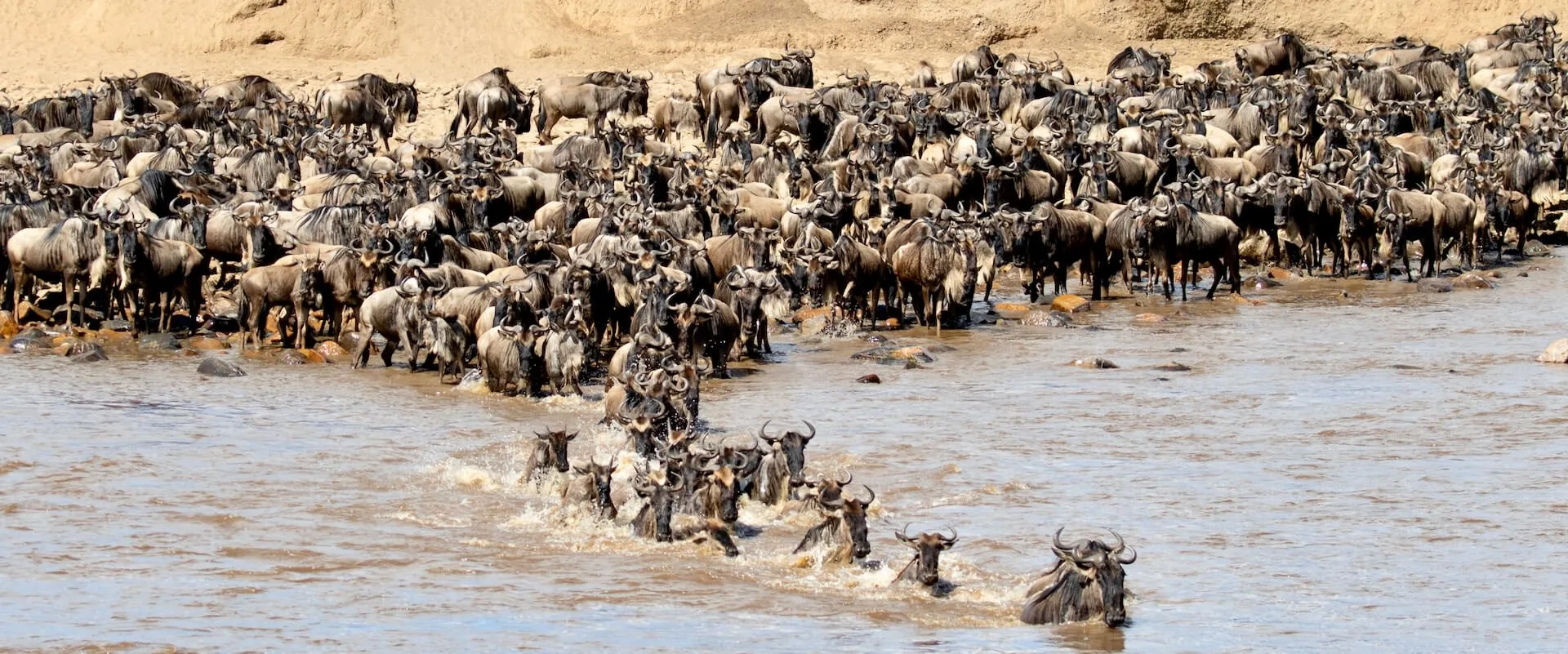
The Great Migration in Africa happens all year because the herds continuously circulate through the Serengeti–Mara ecosystem in…
Read article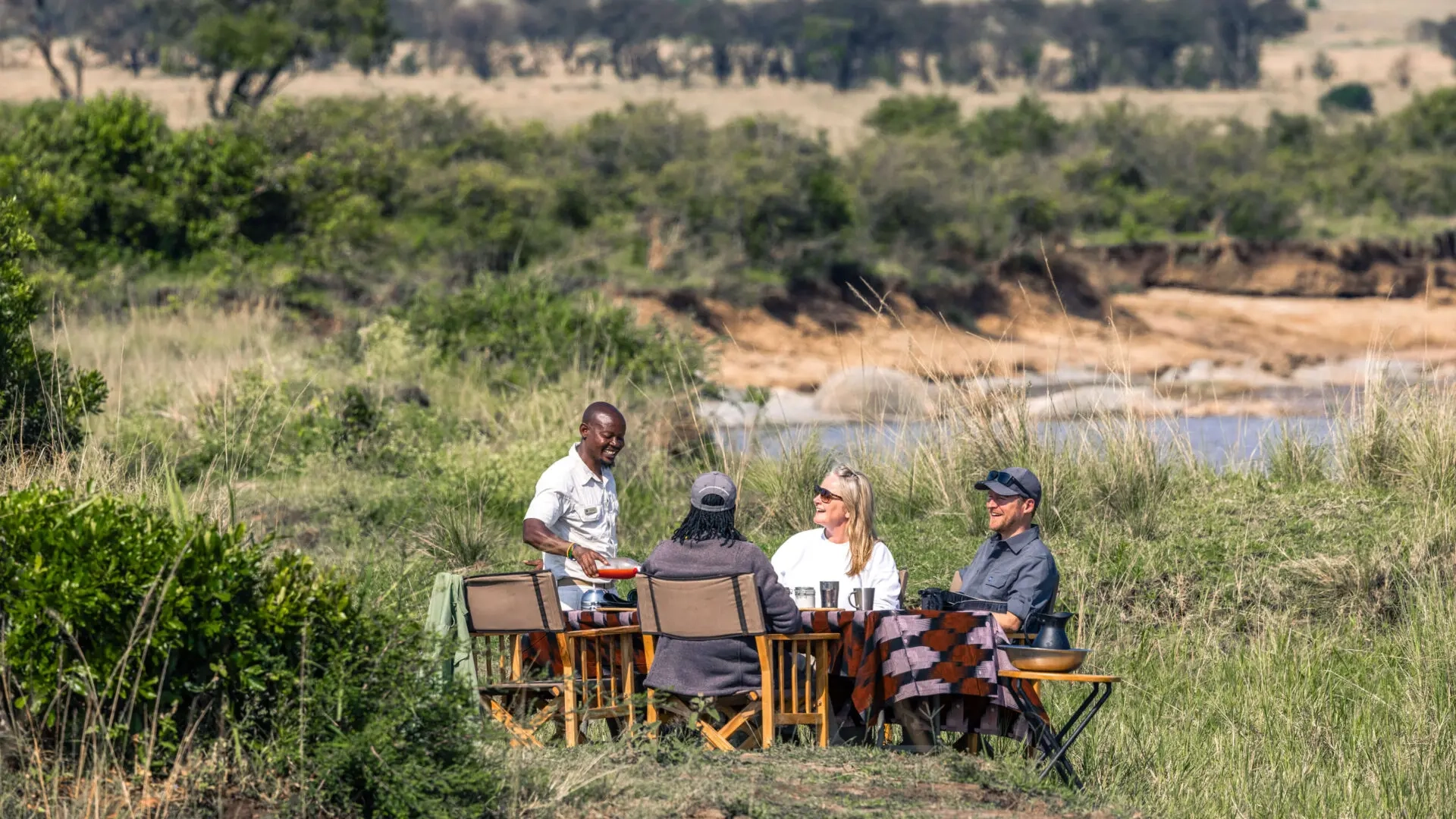
Definitive answer: A picnic lunch on safari is a packed or catered midday meal eaten at an approved…
Read article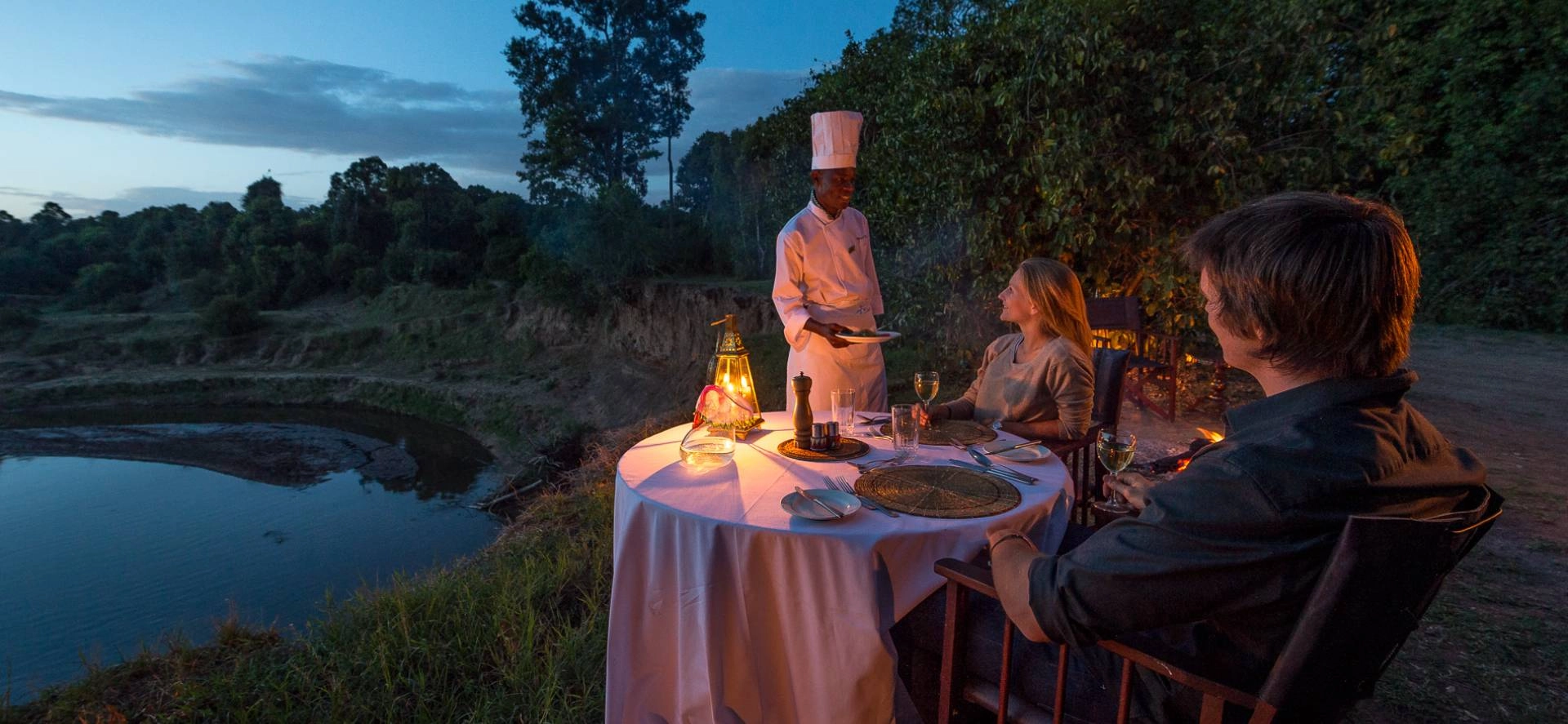
Definitive answer: A bush dinner is an outdoor evening meal arranged in a safe safari setting away from…
Read articleLet us take you closer to the wildlife, people and places that make Africa extraordinary.
Plan Your Safari Today