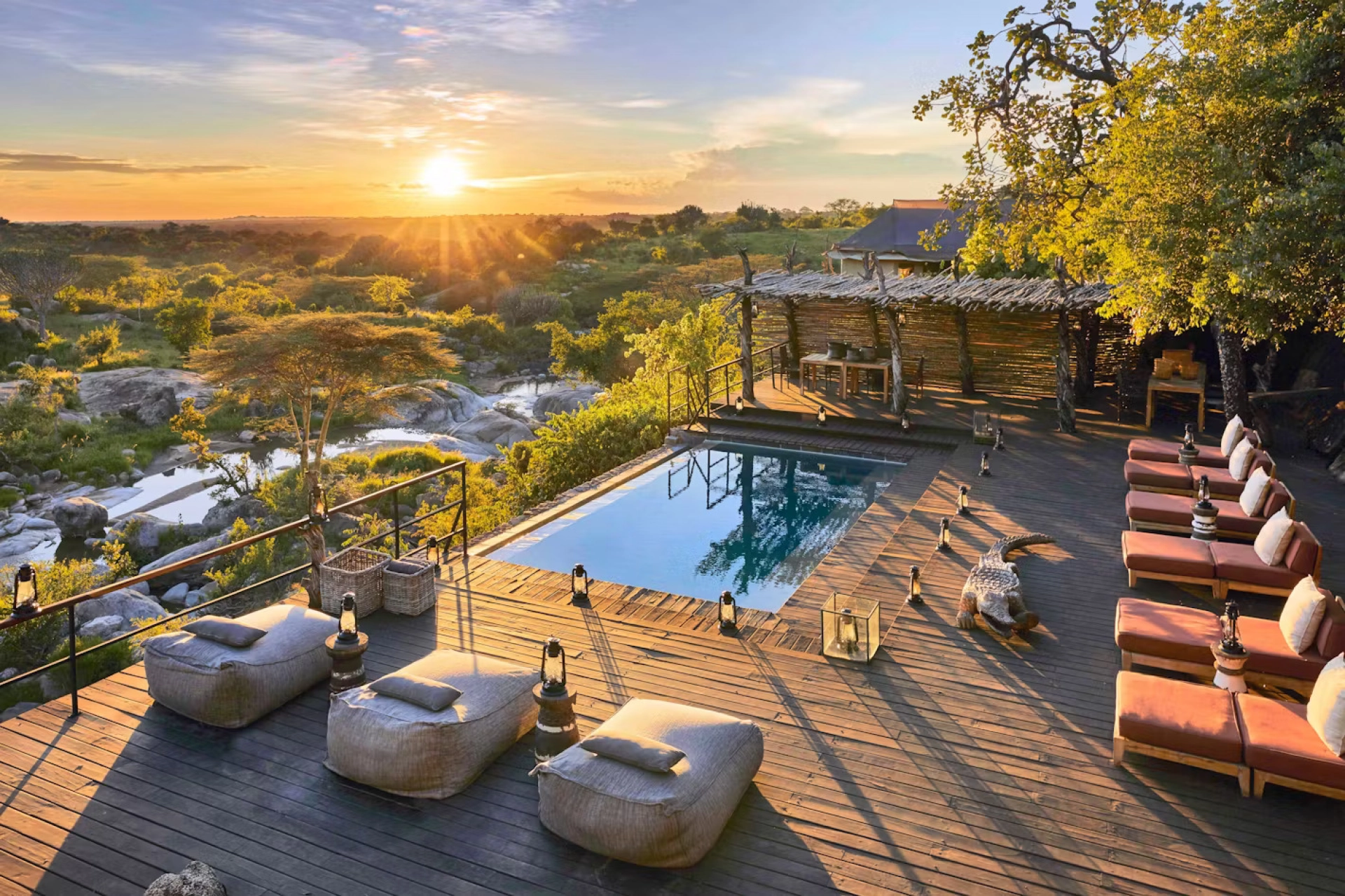
What should I look for when booking a luxury African safari?
When booking a luxury African safari, look beyond the room and compare the quality of guiding, wildlife location,…
Read article

Travel Guide
Africa is home to some of the most remarkable animals on Earth. Lions can communicate across enormous distances with powerful roars, elephants maintain complex family relationships over decades, giraffes possess extraordinarily specialised cardiovascular systems, and chimpanzees…
Africa is home to some of the most remarkable animals on Earth. Lions can communicate across enormous distances with powerful roars, elephants maintain complex family relationships over decades, giraffes possess extraordinarily specialised cardiovascular systems, and chimpanzees can use tools to solve problems. Even animals that appear familiar from photographs and documentaries reveal astonishing adaptations when you begin observing them closely in the wild.
That is one of the great pleasures of an African wildlife safari. Seeing an elephant beside a safari vehicle is impressive simply because of its size, but the encounter becomes far more meaningful when you understand how elephant families communicate, how their trunks work and how older females can guide a herd using knowledge accumulated over decades. Likewise, watching a lion resting beneath an acacia tree becomes more interesting once you understand the social structure of a pride, the importance of territorial behaviour and why lions may spend so much of the day apparently doing very little.
The same applies to Africa’s smaller and less famous creatures. Dung beetles navigate remarkable landscapes at ground level. Oxpeckers spend much of their lives around large mammals. Termites construct enormous colonies that influence soil, vegetation and entire ecosystems. The more you learn about African animals, the more a safari becomes an interconnected ecological story rather than simply a search for famous species. This guide explores fascinating facts about the Big Five animals of Africa and many other safari favourites, from gorillas and chimpanzees to cheetahs, giraffes, hippos, zebras and crocodiles.
The African Big Five are the lion, leopard, elephant, rhinoceros and African buffalo. Today, the phrase is strongly associated with safari tourism, wildlife photography and conservation. Travellers visiting famous wildlife destinations such as Kruger National Park, the Serengeti, Masai Mara, Queen Elizabeth National Park, Botswana and other reserves often hope to see as many of these animals as possible. However, the term did not originally refer to the five largest African animals.
Historically, “Big Five” was a hunting expression describing five animals considered particularly dangerous and difficult to hunt on foot. Modern photographic safaris have transformed the meaning. Instead of hunting the animals, visitors now travel with cameras and binoculars, and the Big Five have become symbols of African wildlife conservation. Yet some of Africa’s most spectacular animals are not members of the Big Five. Giraffes, cheetahs, hippos, zebras, wild dogs, gorillas and chimpanzees are obvious examples.
A great safari should therefore never become a checklist in which everything except the Big Five is ignored.
Few wildlife encounters communicate the scale of Africa’s wilderness as powerfully as seeing a wild elephant. The African savannah elephant is the world’s largest living terrestrial animal. Large adult males can reach enormous weights, while females and younger elephants generally live within highly social family groups. African elephants are immediately recognisable by their huge ears. Those ears are not merely decorative. They play an important role in temperature regulation. Blood flowing through vessels in the ears can lose heat as elephants move or flap them, helping the animal cope with hot environments.
The elephant’s trunk is a fusion of its nose and upper lip and is one of the most versatile structures in the animal kingdom. Elephants use trunks to breathe, smell, investigate objects, gather food, drink, spray water, throw dust, communicate and interact physically with other elephants. The trunk is powerful enough to move heavy objects yet sensitive enough to manipulate small items. Watching an elephant feed therefore becomes fascinating. The trunk continuously investigates the environment, selecting grass, branches, bark, fruit or other vegetation.
Elephant society is highly sophisticated. Related females and their offspring often form family groups led by an experienced older female commonly called the matriarch. Her accumulated knowledge can be critically important. She may remember routes between feeding and watering areas, recognise threats and influence how the family responds to changing environmental conditions. Young elephants grow up surrounded by relatives and learn through observation and social interaction. This is why watching a herd is much more interesting than simply photographing individual elephants.
Elephants communicate using vocalisations, body language, touch and low-frequency sounds. Some calls are below the normal range of human hearing and can travel considerable distances. Researchers have also studied how elephants detect vibrations transmitted through the ground. A seemingly quiet herd may therefore be exchanging far more information than human observers realise.
Excellent elephant viewing is possible across East and Southern Africa. Murchison Falls National Park and Queen Elizabeth National Park provide opportunities in Uganda. Kenya’s Amboseli National Park is famous for elephants, particularly against the backdrop of Mount Kilimanjaro. Botswana’s Chobe National Park is another celebrated elephant destination. Elephants are also widespread in Tanzania, Zimbabwe, Zambia, Namibia and South Africa.
The lion may be the animal most strongly associated with the African safari. Its reputation comes partly from appearance. An adult male with a full mane looks imposing even while lying completely still. Yet lions are fascinating not simply because they are powerful predators but because they are unusually social cats.
Most cat species are relatively solitary. Lions are different. They commonly live in groups called prides. Pride structure varies, but groups may include related females, cubs and one or more adult males. Females often form the long-term social core.
Cooperation can help lions defend territory, raise cubs and hunt certain prey.
Visitors are sometimes surprised to discover that lions may spend much of the day resting. This is not laziness in the human sense. Predation requires enormous bursts of energy. Lions therefore conserve energy whenever possible, particularly during the heat of the day. Early mornings, evenings and nights are often more active periods. This is one reason early morning game drives can be so rewarding.
The roar is one of the most memorable sounds of an African safari. Hearing a lion roar at night from a safari lodge feels completely different from hearing the same sound through a television. Roaring helps lions advertise presence and communicate over distance. The sound can carry for several kilometres under favourable conditions.
Lionesses frequently conduct much of the cooperative hunting within a pride. Different individuals may position themselves strategically when pursuing prey. However, hunting success varies considerably according to prey, habitat, group size and conditions. Male lions also hunt, especially when living independently or when opportunities arise.
The Serengeti, Masai Mara, Greater Kruger ecosystem, South Luangwa and many other African reserves provide excellent lion viewing. Uganda also supports lions in several savannah parks. Queen Elizabeth National Park is particularly famous for lions in its Ishasha sector, where individuals are sometimes observed resting in trees.
Leopards are among the most beautiful and elusive animals encountered on safari. Unlike lions, they are generally solitary. Their spotted coats provide exceptional camouflage, allowing them to disappear into grass, woodland and rocky landscapes.
A leopard’s coat is covered in dark markings commonly described as rosettes. The pattern helps break up the animal’s outline in dappled light. Each leopard has a unique spot pattern, and researchers can sometimes use photographs to identify individuals.
Leopards are famous for climbing trees. They may rest on branches, use elevated positions for observation or carry prey into trees. Hoisting a carcass can help protect food from scavengers such as hyenas. A leopard resting on a branch is one of Africa’s classic wildlife photographs, but finding one can require patience and an excellent guide.
One reason leopards remain distributed across a broad geographic range is their adaptability. They can survive in woodland, savannah, mountains and other environments where sufficient cover and prey exist. Their secretive behaviour also allows them to live in areas where larger predators might create competition.
Rhinos look almost prehistoric. Their massive bodies, thick skin and prominent horns make them among Africa’s most distinctive mammals. Africa has two living rhino species: the white rhinoceros and black rhinoceros. Despite the names, colour is not a reliable way to distinguish them. One important difference is feeding adaptation. White rhinos are primarily grazers and have broad mouths adapted to cropping grass. Black rhinos are generally browsers and possess more pointed, prehensile upper lips that help them feed on leaves and branches.
Rhino horn is made primarily of keratin, the same structural protein found in human hair and fingernails. Unfortunately, illegal demand for horn has driven severe poaching pressure. Rhino conservation therefore involves intensive protection, monitoring, law enforcement and international cooperation. Seeing a rhino in the wild should encourage travellers to appreciate how much conservation work may stand behind that single sighting.
African buffaloes may initially appear less glamorous than lions or elephants. Spend time observing them and that impression quickly changes. These are powerful animals with complex herd structures and formidable defensive capabilities.
In suitable environments, buffaloes may gather in very large groups.
Herding provides several advantages, including improved protection against predators. Lions do hunt buffaloes, but attacking a healthy adult can be dangerous. Other buffaloes may respond aggressively when a herd member is threatened.
Older male buffaloes are sometimes encountered in smaller bachelor groups or alone. Safari guides occasionally refer to old males as “dagga boys,” particularly when they spend time around muddy areas. Their heavy horns and unpredictable behaviour demand considerable respect.
Seeing all five Big Five species can be exciting, but safari becomes much richer when travellers learn to appreciate the entire ecosystem. A cheetah accelerating across open plains can be every bit as dramatic as a lion sighting. Watching a giraffe drink is a remarkable lesson in anatomy. Observing a gorilla family can be more emotionally powerful than seeing any of the traditional Big Five. Africa’s wildlife diversity extends far beyond a famous checklist.
Giraffes are the tallest living land animals. Their extraordinary height allows them to browse vegetation beyond the reach of many other herbivores. But being tall creates significant physiological challenges. The heart must pump blood upward toward the brain against gravity, while drinking requires lowering the head dramatically. Giraffes possess specialised cardiovascular adaptations that help manage these pressure changes.
One of the most surprising giraffe facts is that giraffes generally have seven cervical vertebrae—the same number found in humans. The difference is that each giraffe vertebra is enormously elongated.
Like human fingerprints, giraffe coat patterns are individually distinctive. Patterns also vary among giraffe populations and species. Researchers can use photographs to identify particular individuals.
Male giraffes sometimes compete through behaviour known as necking. They swing their long necks and use their heads as powerful striking structures. The peaceful-looking giraffe is therefore capable of surprisingly forceful competition.
The cheetah is the fastest land animal over short distances. Everything about its body reflects adaptation for rapid acceleration. Long limbs, a lightweight frame, flexible spine and specialised claws contribute to its running ability. But extreme speed comes with limitations. Cheetahs cannot maintain maximum speed for long periods, and high-speed pursuits generate substantial heat and energy demands.
Cheetahs rely heavily on speed and often hunt in open landscapes where they can approach prey and accelerate rapidly. Unlike lions and leopards, cheetahs have relatively lightweight bodies. They may therefore lose kills to stronger competitors such as lions and hyenas. This ecological pressure influences where and when cheetahs hunt.
The Serengeti and Masai Mara are famous cheetah habitats. Namibia also supports important cheetah populations. Open savannah and semi-arid environments often provide the visibility these cats need for high-speed hunting.
Hippos spend so much time in water that visitors sometimes imagine them as slow, peaceful animals. That is misleading. Hippos are enormous, territorial and capable of moving surprisingly quickly. They should always be treated with great caution.
Hippos typically remain in rivers, lakes and wetlands during much of the day. Water helps protect their bodies from heat and direct sunlight. At night, they generally leave the water to graze. They may travel considerable distances while feeding.
Rather than swimming continuously in the conventional sense, hippos often move along the bottom of rivers and lakes, pushing themselves through the water and using buoyancy. Their bodies are remarkably adapted to a semi-aquatic lifestyle.
Uganda’s Kazinga Channel is one of the best places to observe hippos. Boat safaris through Queen Elizabeth National Park can provide close but controlled views of hippo groups in the water. The Nile in Murchison Falls National Park is another excellent habitat.
Few African animals are as immediately recognisable as zebras. Yet scientists continue to investigate the precise evolutionary advantages of their striped coats. Research has explored possible roles in deterring biting flies, social recognition, temperature regulation and visual confusion.
No two zebras have exactly the same pattern. This may help individuals recognise one another. Foals learn the appearance and scent of their mothers soon after birth.
This popular question is more complicated than it sounds, but zebras generally have dark skin beneath their hair, while their coat develops contrasting pigmented and unpigmented regions. From a safari perspective, the more interesting question is why such an apparently conspicuous pattern evolved. The answer likely involves evolutionary pressures quite different from human ideas of camouflage.
Wildebeest may not possess the elegance of giraffes or the celebrity of lions, but collectively they create one of Earth’s greatest wildlife spectacles. The Great Wildebeest Migration involves vast numbers of wildebeest accompanied by zebras and other herbivores moving through the Serengeti-Mara ecosystem.
A common misconception is that the Great Migration happens only during famous river crossings. In reality, the migration is a continuous annual cycle. Herds move according to rainfall, grazing conditions and ecological pressures. Calving in southern parts of the ecosystem can be just as remarkable as river crossings because enormous numbers of young animals appear within a relatively short period.
Mountain gorillas are among Africa’s most extraordinary animals. They survive naturally only in the forests of Bwindi Impenetrable National Park and the Virunga mountain region shared by Uganda, Rwanda and the Democratic Republic of Congo. For travellers, gorilla trekking in Uganda and Rwanda provides the opportunity to observe habituated gorilla families under controlled conditions.
Gorillas are close evolutionary relatives of humans. Their facial expressions, hands, family interactions and behaviour can therefore feel remarkably familiar. This is one reason gorilla encounters often have such a strong emotional impact on visitors.
A silverback is a mature adult male gorilla whose back develops distinctive silver-grey hair. Silverbacks often play important leadership and protective roles within gorilla groups. A group may contain one or more adult males depending on its social structure.
Despite their enormous strength, mountain gorillas feed largely on plant material. Their diet can include leaves, shoots, stems and other vegetation. Much of their day is therefore devoted to feeding and moving through the forest.
Uganda’s Bwindi Impenetrable National Park is one of the world’s leading gorilla trekking destinations. Uganda also offers gorilla trekking in Mgahinga Gorilla National Park. Rwanda provides trekking in Volcanoes National Park. A major advantage of Uganda is the ability to combine gorilla trekking with chimpanzees, game drives and boat safaris within the same country.
Chimpanzees are among humans’ closest living relatives. Their intelligence becomes obvious when observing them in the wild. Chimpanzees use tools, maintain complex social relationships, cooperate, compete and communicate through vocalisations, gestures and facial expressions.
Different chimpanzee communities have developed behaviours that can be described as cultural traditions. Individuals may use sticks, leaves or other natural materials for particular purposes. Young chimpanzees learn many behaviours by observing older individuals.
Kibale National Park is internationally famous for chimpanzee trekking. Other Ugandan forests also support chimpanzees. Combining chimpanzee trekking in Kibale with gorilla trekking in Bwindi creates an exceptional primate safari.
African wild dogs are among the continent’s most fascinating and endangered large carnivores. They live in highly social packs and are exceptionally effective cooperative hunters.
Pack members communicate extensively and cooperate in raising young. Unlike the popular stereotype of dominant aggression, wild dog societies include remarkable levels of cooperation. Seeing a pack in the wild is considered a special safari sighting. Botswana, Zimbabwe, Zambia, Tanzania and parts of Southern Africa support important populations.
Popular culture often portrays hyenas as cowardly scavengers. This is inaccurate. Spotted hyenas are highly capable predators and sophisticated social animals. They live in complex groups called clans. Females play dominant roles within spotted hyena society. Hyenas hunt a significant proportion of their own food and can cooperate effectively when pursuing prey. Their powerful jaws also allow them to process parts of carcasses that many other predators cannot use. Ecologically, this makes hyenas extremely important.
The Nile crocodile is one of Africa’s most formidable aquatic predators. Its body plan has proved remarkably effective over evolutionary time. Crocodiles often wait almost motionless near the water’s edge before launching rapid attacks. During Great Migration river crossings, crocodiles may prey upon wildebeest and zebras entering the water. Uganda’s Nile system also supports crocodiles, and they can be observed during boat safaris in Murchison Falls National Park.
Warthogs are among the most entertaining animals to watch on safari. They often run with their tails held upright, creating an unmistakable silhouette. Their tusks are enlarged canine teeth used in defence and competition. Warthogs frequently use burrows created by other animals. When entering a burrow, they may reverse inside so that their tusks face outward toward potential threats.
Ostriches are the world’s largest living birds. They cannot fly, but their powerful legs make them extremely fast runners. Their large eyes provide excellent vision across open landscapes. Ostriches also lay enormous eggs, among the largest eggs of any living animal. They are particularly associated with open and semi-arid regions of Africa.
Impala are frequently encountered in many African safari destinations. Because they can be abundant, travellers sometimes stop paying attention to them after the first few sightings. That is a mistake. Impala are beautifully adapted antelopes with impressive agility. They can leap substantial distances when escaping predators. Their abundance also makes them ecologically important prey for lions, leopards, cheetahs, wild dogs and other carnivores. Understanding common prey species makes predator sightings much more meaningful.
Some of the most important African animals are among the smallest. Termites build elaborate colonies and influence soil structure, nutrient cycling and vegetation. Large termite mounds may remain visible for years. Other animals use abandoned or active mound systems in various ways. Safari guides who understand these ecological relationships can turn what initially looks like a pile of earth into one of the most interesting stops of a game drive.
Dung beetles perform essential ecological work. By moving and burying animal dung, they help recycle nutrients and influence soil processes. Some species roll balls of dung away from larger deposits. Research has shown remarkable navigation abilities in certain dung beetles, including the use of celestial cues. They demonstrate perfectly why an African safari should not focus exclusively on large mammals.
Africa contains an enormous variety of habitats.
Equatorial forests support gorillas, chimpanzees and forest birds. East African grasslands support huge herbivore populations and predators. Southern African wetlands provide habitat for elephants, buffaloes and aquatic wildlife. Deserts contain highly specialised species adapted to limited water. Mountains create isolated ecosystems with their own vegetation and animals. This habitat diversity explains why two African safaris can feel completely different. A Uganda safari combining Bwindi and Queen Elizabeth National Park bears little resemblance to a Botswana Delta safari or a Namib Desert journey.
That diversity is one of the continent’s greatest strengths.
A first-time safari traveller often searches for animals. An experienced safari traveller begins searching for behaviour. Instead of simply photographing an elephant, watch how members of the herd interact. Instead of counting lions, notice how cubs behave around adults. Watch impalas suddenly stare in one direction. They may have detected a predator. Listen when birds begin alarm calling. Observe whether giraffes are feeding normally or staring intently at something hidden in the grass.
The bush contains constant information. An excellent professional safari guide teaches visitors how to interpret it.
East Africa offers some of the world’s greatest wildlife experiences. Uganda is exceptional for mountain gorillas, chimpanzees and traditional savannah wildlife. Kenya’s Masai Mara and Tanzania’s Serengeti provide outstanding predator and migration viewing. Rwanda combines mountain gorillas with Akagera’s savannah wildlife. Southern Africa offers equally impressive possibilities. Botswana is famous for elephants and wilderness. South Africa’s Greater Kruger ecosystem provides diverse Big Five viewing. Zambia and Zimbabwe are renowned for adventurous safari experiences.
The best destination depends on which animals and environments interest you most.
Learning fascinating facts about African animals makes safari far more rewarding. A lion is no longer simply a lion once you understand pride dynamics and territorial communication. An elephant herd becomes a complex extended family. A chimpanzee becomes a highly intelligent primate capable of social learning and tool use. A termite mound becomes evidence of an ecosystem being engineered from below. And a mountain gorilla encounter becomes an opportunity to observe one of humanity’s closest evolutionary relatives living within an ancient African forest.
Adventure in the Wild Safaris creates wildlife journeys across East Africa, including Uganda gorilla trekking safaris, chimpanzee trekking tours, traditional game-viewing safaris and multi-country African adventures. For travellers who want to experience wildlife rather than simply tick species from a list, destinations such as Bwindi Impenetrable National Park, Kibale National Park, Queen Elizabeth National Park, Murchison Falls National Park, the Masai Mara and Serengeti can be combined into extraordinary journeys.
The animals are what initially bring many people to Africa. Understanding how those animals live, communicate, hunt, migrate, cooperate and survive is what turns a safari into something unforgettable.
Get quick answers to the most common questions. If you still have questions, our safari experts are here to help.
The Big Five are lion, leopard, elephant, rhinoceros and African buffalo.
The African savannah elephant is the world’s largest living land animal.
The cheetah is the fastest land animal over short distances.
Mountain gorillas can be visited on regulated trekking experiences in Uganda and Rwanda, as well as within the wider transboundary habitat extending into the Democratic Republic of Congo.
Uganda’s Kibale National Park is one of Africa’s leading chimpanzee trekking destinations.
No. Spotted hyenas are highly capable predators that hunt substantial amounts of their own food.
Leopards may climb for rest, observation and to protect food from competing scavengers and predators.
Hippos are powerful wild animals that can be highly territorial. They should always be observed according to professional guide instructions and from appropriate distances.
Elephants modify vegetation, disperse seeds, create pathways and influence access to water and habitat structure, making them important ecological engineers.
There is no single answer. The Serengeti-Mara ecosystem is famous for enormous herbivore populations, while destinations such as Uganda, Botswana, Kruger, South Luangwa and others offer different combinations of wildlife and habitats.
Our safari experts are here to help you plan your safari. Get personalized advice, the latest information and a free, no-obligation quote.
We typically reply within a few hours.

Share This Article
When booking a luxury African safari, look beyond the room and compare the quality of guiding, wildlife location,…
Read article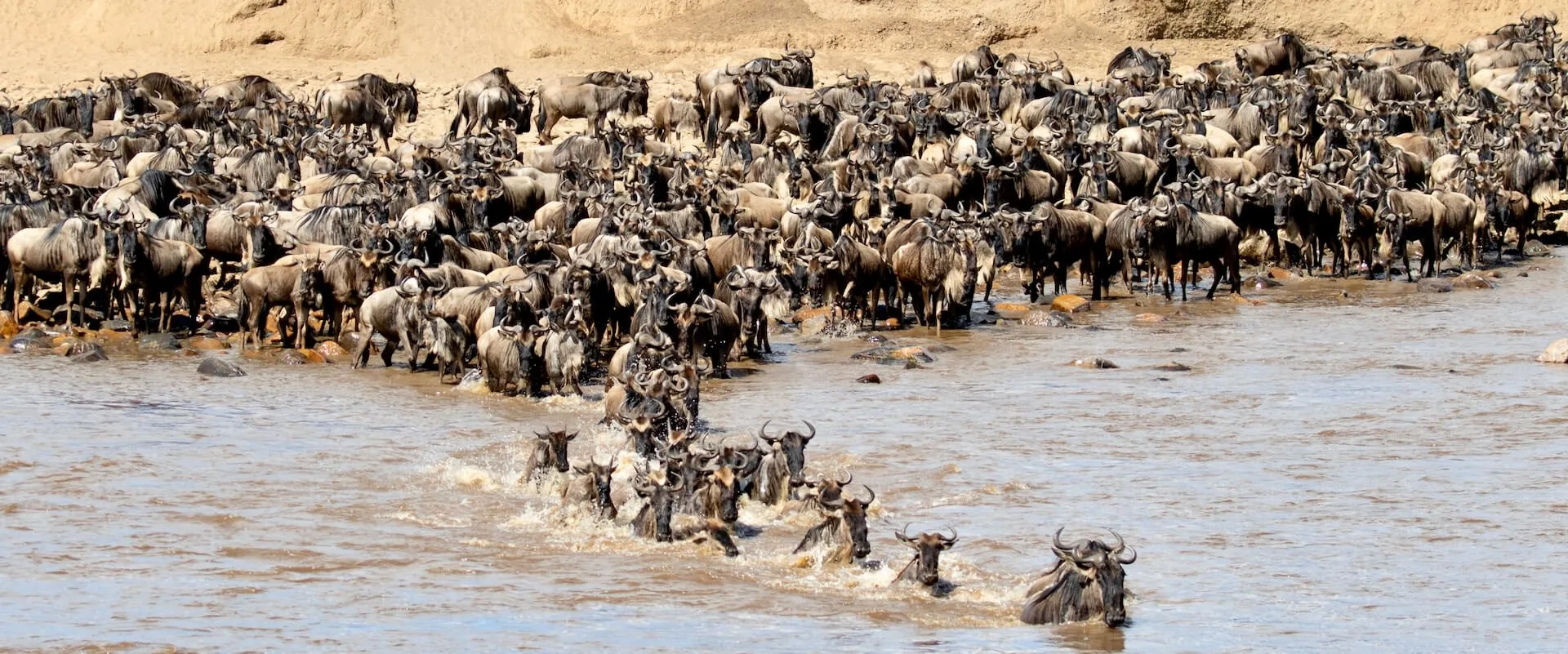
The Great Migration in Africa happens all year because the herds continuously circulate through the Serengeti–Mara ecosystem in…
Read article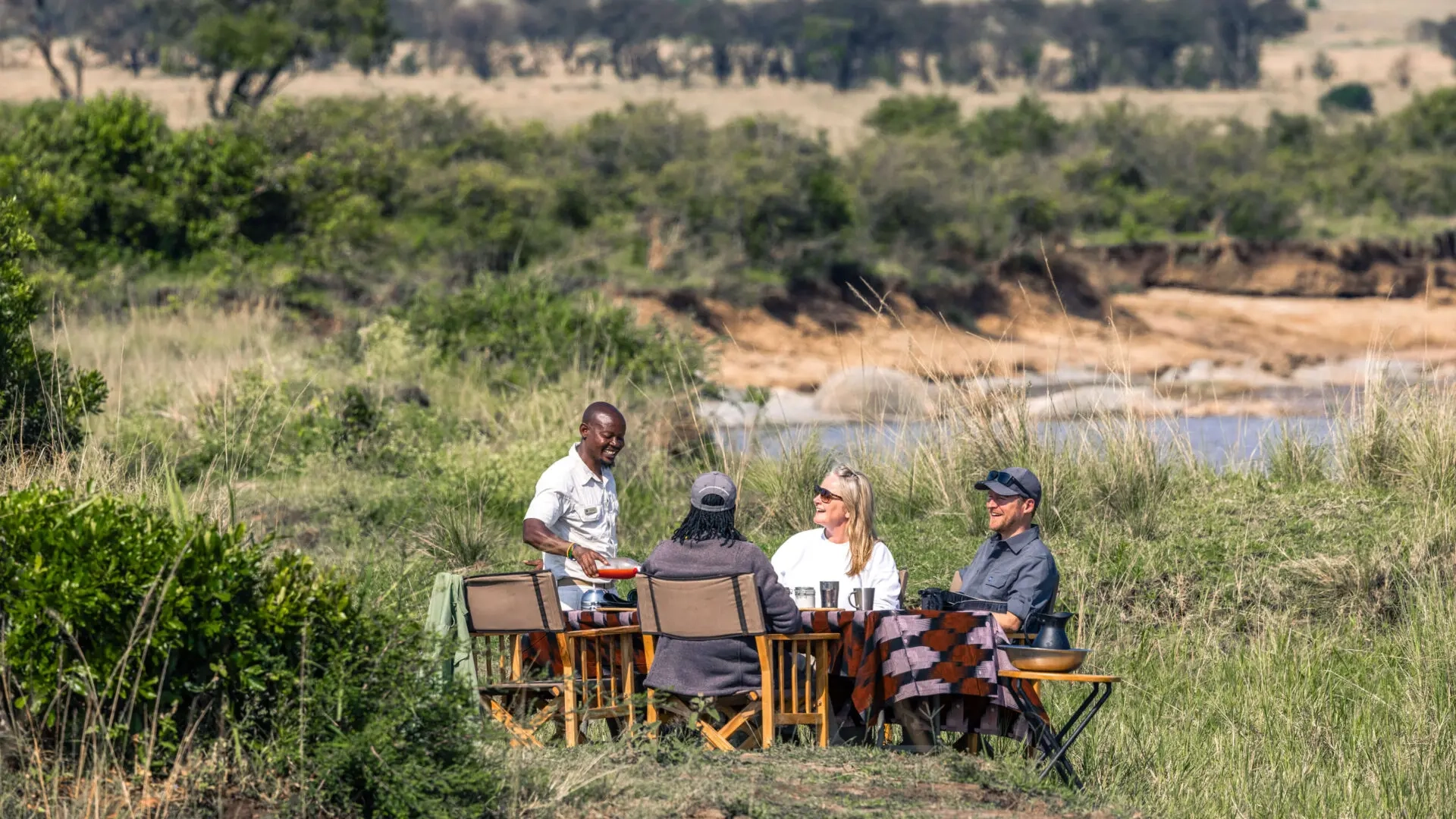
Definitive answer: A picnic lunch on safari is a packed or catered midday meal eaten at an approved…
Read article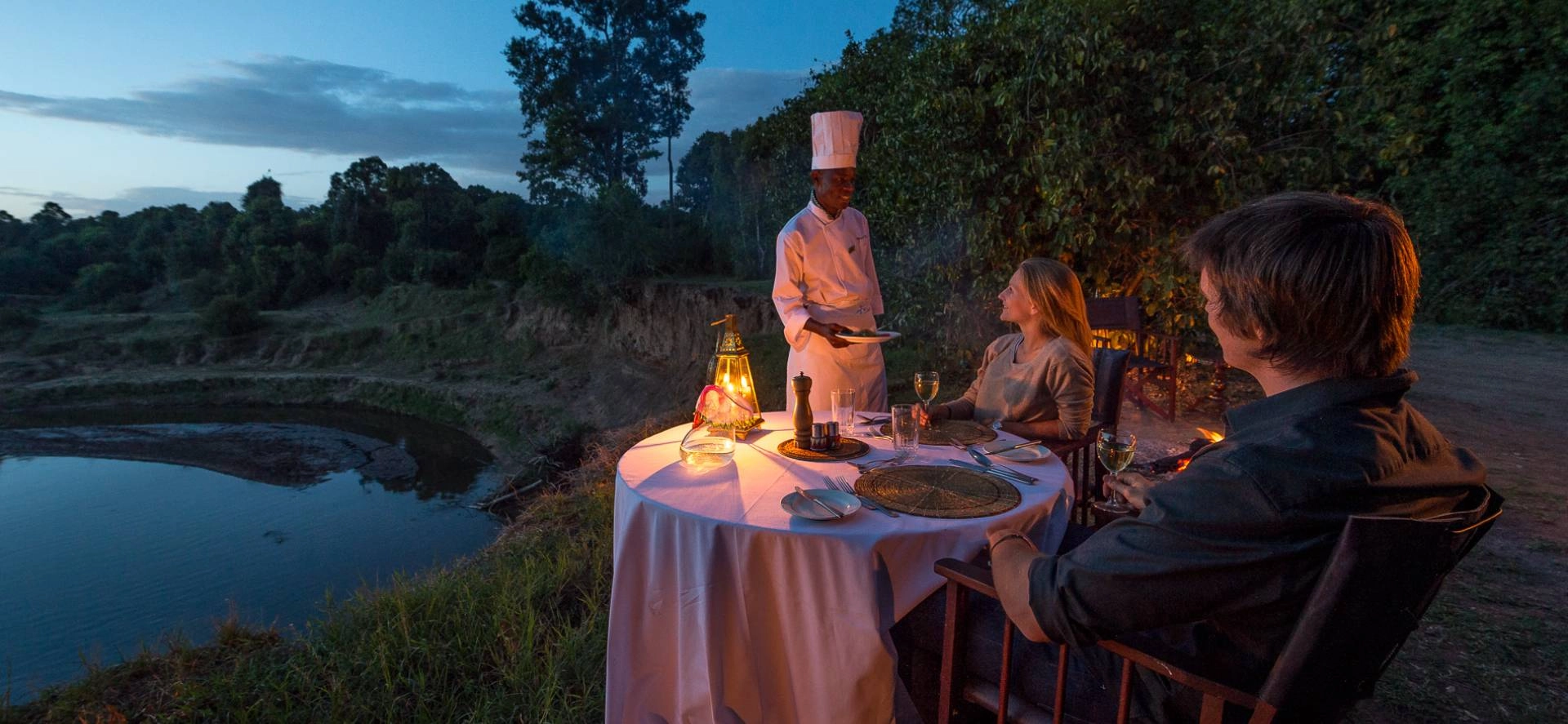
Definitive answer: A bush dinner is an outdoor evening meal arranged in a safe safari setting away from…
Read articleLet us take you closer to the wildlife, people and places that make Africa extraordinary.
Plan Your Safari Today