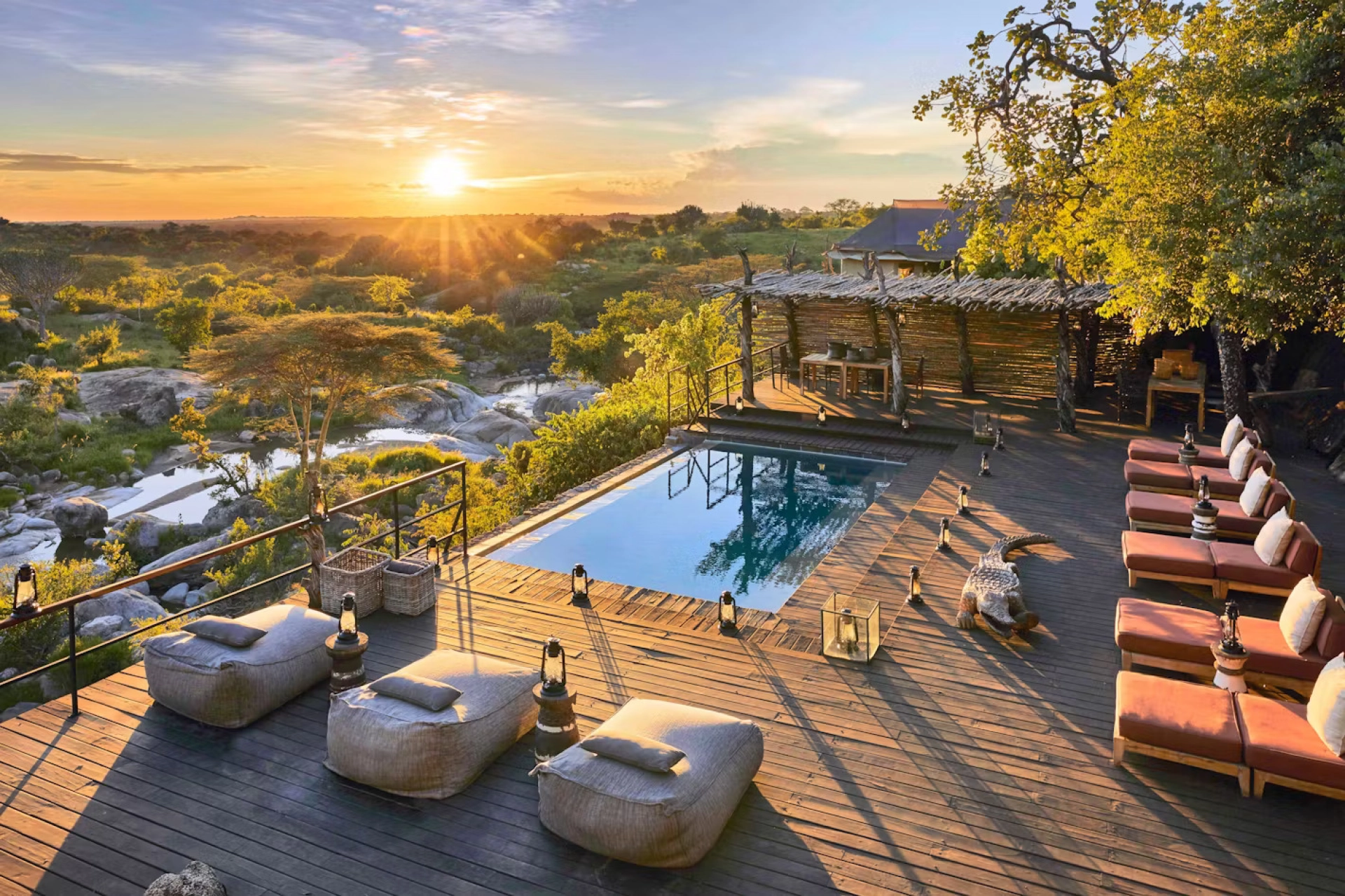
What should I look for when booking a luxury African safari?
When booking a luxury African safari, look beyond the room and compare the quality of guiding, wildlife location,…
Read article

Travel Guide
East Africa is usually introduced to travelers through its wildlife. The region is associated with the Great Migration, the open plains of the Serengeti and Masai Mara, mountain gorillas in Uganda and Rwanda, elephants beneath Mount…
East Africa is usually introduced to travelers through its wildlife. The region is associated with the Great Migration, the open plains of the Serengeti and Masai Mara, mountain gorillas in Uganda and Rwanda, elephants beneath Mount Kilimanjaro, chimpanzees in tropical forests and the enormous lakes and mountains that shape the interior. Yet follow East Africa eastward until the land reaches the Indian Ocean and an entirely different side of the region appears.
Here, the dominant colors change from savannah gold and forest green to brilliant turquoise, coral white and the deep blue of the Indian Ocean. Coconut palms replace acacia trees. Traditional dhows move across channels where safari vehicles once crossed dusty tracks. The smell of salt, spices and grilled seafood replaces the dry scent of the savannah. Historic towns reveal architectural influences accumulated through centuries of African, Arab, Persian, Indian and European contact.
The beaches of East Africa are therefore much more than convenient places to rest after safari.
They form part of the Swahili Coast, one of Africa’s most historically important cultural regions. From Kenya through Tanzania and the islands offshore, the coast developed through centuries of Indian Ocean commerce. African communities traded with merchants from Arabia, Persia, India and farther afield, creating distinctive coastal societies whose language, architecture, cuisine, religion and maritime traditions remain visible today.
For modern travelers, this makes East Africa particularly attractive because a single journey can contain radically different experiences. You can spend the morning watching lions hunt on the Serengeti plains and, after a flight, wake the following day beside the Indian Ocean. You can trek through Uganda’s Bwindi rainforest searching for mountain gorillas and finish the holiday barefoot on Zanzibar. You can photograph elephants in Kenya, explore the streets of historic Lamu and then snorkel over coral reefs.
This detailed East Africa beaches travel guide explores the best beach destinations in Kenya and Tanzania, the islands of Zanzibar, Pemba and Mafia, the history of the Swahili Coast, the best places for honeymoons, families, diving and culture, and how to combine the coast with an African safari without creating an itinerary dominated by transfers.
Few regions in the world combine world-class wildlife and tropical beaches as naturally as East Africa.
The advantage is geography. Kenya and Tanzania contain some of Africa’s most famous national parks while also having long Indian Ocean coastlines. Zanzibar is connected to mainland Tanzania by frequent air services and ferries. Kenya’s coast is linked with Nairobi and safari regions through domestic flights, road connections and rail services. Uganda and Rwanda have no Indian Ocean coastline, but regional flights make it practical to combine gorilla trekking with Zanzibar or Kenya’s beaches.
This creates enormous flexibility.
A honeymoon couple might begin with a private Uganda gorilla safari, fly to Tanzania and spend five nights on Zanzibar. A family might combine Amboseli and the Masai Mara with Diani Beach. Wildlife photographers might spend ten days in Tanzania’s national parks before using Zanzibar as a slower final chapter. Repeat visitors could avoid the best-known resorts entirely and explore Pemba, Mafia or the historic northern Kenyan coast.
The best combinations share one principle: the beach should feel like part of the journey rather than an exhausting addition squeezed into the final forty-eight hours.
The term Swahili Coast refers broadly to the Indian Ocean coastal region of East Africa where Swahili culture developed over centuries. It extends beyond the modern political boundaries of Kenya and Tanzania and reflects a maritime world historically connected through trade. The word “Swahili” itself derives from an Arabic term associated with the coast, but Swahili culture is fundamentally African and developed through centuries of interaction between local Bantu-speaking communities and Indian Ocean trading networks.
Coastal settlements traded commodities including ivory, gold, timber, spices and other goods. Merchants arrived from Arabia, Persia and India. Islam became deeply established in many coastal communities. Coral-stone architecture developed. Kiswahili evolved into one of Africa’s most important languages and today serves as a major regional language across East Africa. Travelers who spend their entire beach holiday inside an international resort can easily miss this history. A richer East Africa beach holiday includes time for coastal towns, markets, food, architecture and local maritime traditions alongside swimming and sunbathing.
For many international travelers, Zanzibar is synonymous with the East African coast. The Zanzibar archipelago lies offshore from mainland Tanzania and offers an unusually powerful combination of beaches, history, culture, food and marine experiences. Its international recognition also makes it one of the easiest beach destinations to combine with an East African safari. Zanzibar works particularly well because it offers several holidays within one island destination. Travelers wanting culture can stay in Stone Town. Those wanting classic beaches can continue north or east. Divers and snorkelers can explore marine environments. Couples can choose intimate boutique hotels. Families can select larger resorts with pools and easier beach access.
The island is therefore not a single beach experience. Where you stay matters enormously.
Some travelers arrive in Zanzibar, clear the airport and immediately transfer to a beach resort. That is understandable if relaxation is the only objective, but it misses one of the region’s most historically important urban environments. Stone Town is the historic heart of Zanzibar City. Its narrow streets, carved doors, mosques, old merchant buildings, markets and waterfront reflect the island’s long relationship with Indian Ocean trade. A guided walking tour adds valuable context. Without interpretation, the old town can appear to be a beautiful maze. With a knowledgeable guide, architectural details begin telling stories about merchants, religion, trade, colonialism, slavery, political change and the development of modern Zanzibar.
Stone Town also introduces travelers to Swahili cuisine, where spices, coconut, seafood, rice and centuries of cultural exchange meet on the plate. For most first-time visitors, one or two nights in Stone Town before continuing to the beach creates a more complete Zanzibar experience.
Nungwi, at the northern end of Zanzibar, is among the island’s best-known beach areas.
Its popularity comes partly from the beach itself and partly from tidal conditions. Many stretches of Zanzibar’s eastern coast experience dramatic tidal changes that can move the water far from shore at low tide. Around Nungwi and neighboring northern areas, swimming conditions can be less dramatically affected in some locations, making the region attractive to travelers who want easier access to the sea throughout more of the day.
Nungwi has substantial tourism infrastructure. Travelers can choose among luxury resorts, boutique hotels, midrange properties, restaurants and activity providers. This makes it suitable for first-time Zanzibar visitors who want convenience. The trade-off is atmosphere. Travelers looking for an isolated island retreat may find Nungwi too developed. Those wanting restaurants, nightlife and a social beach environment may find exactly what they want.
Near Nungwi, Kendwa is another highly regarded northern beach area. It is often chosen by travelers seeking beautiful sand and relatively easy swimming conditions while preferring a somewhat different atmosphere from central Nungwi. Kendwa works well for couples, honeymooners and travelers who want to spend several days doing very little after an intensive safari. That final point matters.
Safari holidays can be physically tiring. Game drives often begin before sunrise. Gorilla trekking can involve several hours of hiking. Road transfers can be long. By the time travelers reach the beach, many discover they do not actually want an activity scheduled every day. A good Zanzibar extension should leave room for doing nothing.
Paje on Zanzibar’s southeastern coast has developed a distinctive identity. The area is particularly associated with kite surfing, younger independent travelers, cafes, beach bars and a more active social scene. Its beach is dramatically influenced by tides. At low tide, the Indian Ocean can retreat far across the reef-flat environment, exposing broad areas of sand and shallow water. At high tide, the landscape changes again.
Some visitors initially see this as a disadvantage because they expect deep swimming water immediately outside their hotel all day. Others find the tidal rhythm one of the most interesting features of the coast. The correct response is not to ask whether Paje has “good” or “bad” tides. It is to decide whether its type of beach matches your expectations.
South of Paje, Jambiani offers a more relaxed coastal atmosphere. Traditional village life remains more visible alongside tourism development. Long stretches of beach and the changing tide create an environment suited to travelers who want slower days. Jambiani can be particularly appealing after a demanding safari because there is little pressure to do anything. Walk.
Read. Swim when conditions suit. Take a local excursion. Eat seafood.
Watch the light change over the ocean. For some travelers, this becomes more memorable than a heavily scheduled resort stay.
The northeastern coast offers another attractive option, including areas around Matemwe. This region can be convenient for marine excursions associated with the waters around Mnemba. The atmosphere varies significantly by property, from boutique hotels to larger resorts. As elsewhere on Zanzibar’s eastern side, tides influence beach use. Travelers should therefore ask not only whether a hotel is “beachfront,” but what the beach is like at different stages of the tide. That simple question can prevent disappointment.
The waters around Mnemba Island are well known for snorkeling and diving excursions. Travelers should choose responsible operators who respect marine wildlife and avoid crowding animals. Marine tourism has the same ethical principle as terrestrial safari tourism: the objective should be observation without unnecessary disturbance. A dolphin encounter is not improved by ten boats chasing the animals.
A reef experience is not improved by standing on coral. Responsible marine tourism protects the very environment visitors have traveled to experience.
Zanzibar’s reputation as the “Spice Island” reflects a history of spice cultivation and trade. Spice tours can introduce travelers to cloves, cinnamon, vanilla, nutmeg and tropical fruits. The quality of tours varies. A good experience explains agricultural history, uses of different plants and their place in Zanzibar’s economy and cuisine. A poor experience becomes little more than a rushed souvenir-shopping stop. Choose an operator that prioritizes interpretation.
Travelers who want something less developed should consider Pemba Island. Pemba forms part of the Zanzibar archipelago but receives far fewer international tourists than Unguja, the island most people mean when they say Zanzibar. Its appeal lies in relative isolation, diving, lush landscapes and a quieter atmosphere. Pemba is not simply “Zanzibar without tourists.” Logistics are different, accommodation choices are more limited and the tourism infrastructure is smaller.
That is precisely why some travelers love it. For experienced African travelers, honeymooners seeking privacy and divers prioritizing marine environments, Pemba can be extraordinary.
Mafia Island, south of Zanzibar, offers another alternative to the mainstream beach circuit. It is especially attractive to travelers interested in diving, snorkeling and marine ecosystems. Mafia has a quieter, less commercial tourism atmosphere than Zanzibar’s most developed beach areas. It can therefore work particularly well for travelers who want their beach extension to remain connected to wildlife.
Rather than finishing a safari with several days devoted purely to sunbathing, they continue exploring nature—only now beneath the water. Seasonal marine wildlife adds another dimension, although travelers should research the timing of specific species carefully before booking.
Across the border in Kenya, Diani Beach is one of East Africa’s best-known coastal destinations. Located south of Mombasa, Diani combines a long white-sand beach with substantial tourism infrastructure. Its major strength is convenience. There are accommodation options across several price categories, restaurants, water sports, excursions and transport connections. Diani works particularly well after a Kenya safari because travelers can move from the Masai Mara, Amboseli or other wildlife areas to the coast without leaving the country. For families, couples and first-time visitors, that simplicity can be extremely valuable.
A classic Kenya itinerary might begin in Nairobi, continue to Amboseli and the Masai Mara, then end at Diani. The exact route depends on trip length. Flying from the safari region to the coast can save substantial time compared with returning to Nairobi and traveling overland. The beach section should ideally contain at least three or four nights.
Two nights sounds reasonable on paper, but once transfers are included, it may provide only one complete beach day. For travelers who genuinely want to relax, four or five nights is far more satisfying.
North of Mombasa, Watamu offers a different Kenyan coastal experience. It is known for beaches, marine environments and a generally smaller-scale atmosphere than the largest resort zones. Watamu appeals particularly to travelers interested in combining beach time with snorkeling, diving, marine conservation and nearby cultural attractions. The coastline contains beautiful coral formations and changing tidal landscapes.
As throughout the Indian Ocean coast, understanding tides improves the experience. A beach can look completely different between morning and afternoon.
The Watamu region is closely associated with marine ecosystems. Travelers should treat these environments with the same respect expected inside national parks. Do not touch coral. Do not remove shells or marine organisms where prohibited. Avoid operators who chase wildlife aggressively.
Reduce disposable plastic use. Responsible coastal tourism is not separate from safari conservation. Rivers, oceans, mangroves, reefs and terrestrial parks are interconnected ecosystems.
Malindi has a long history as a Swahili coastal settlement and later tourism center. It offers beaches, cultural history and access to marine activities. Travelers interested in the coast as a historical region rather than simply a resort destination may find Malindi particularly worthwhile when combined with Watamu. The surrounding region demonstrates the layered character of coastal East Africa, where modern tourism sits beside centuries-old trading history.
For travelers who value history and atmosphere, Lamu is exceptional. Lamu Old Town preserves a distinctive Swahili urban environment shaped by centuries of Indian Ocean culture. Narrow streets, coral-stone buildings, carved wooden doors, mosques and dhow traditions create an experience unlike the safari landscapes inland. Motorized traffic is limited in the historic town, contributing to a slower rhythm.
A stay in Lamu should not be approached simply as another beach holiday. Its greatest attraction is the combination of culture, architecture and maritime history.
Near Lamu Old Town, Shela provides a more beach-oriented base. This allows travelers to combine cultural exploration with relaxation. Spend part of the day walking through Lamu’s historic streets and another part beside the ocean. Sail on a dhow toward sunset. Eat fresh seafood. Watch the coastline change with the tide. This is one of the most atmospheric Swahili Coast holidays available.
Yes, particularly for travelers who prefer character over large-resort convenience. A Masai Mara and Lamu combination can be extraordinary because the two environments are so different. The Mara provides open plains, predators and big-game viewing. Lamu provides history, architecture, dhows and Indian Ocean culture. Together they create a much broader understanding of Kenya.
Many travelers treat Mombasa merely as an airport or transfer point. That overlooks its historical importance. Mombasa has been shaped by centuries of trade, conflict and cultural exchange. Historic sites, markets and Old Town architecture reveal layers of Swahili, Arab, Portuguese, Indian and British influence. Travelers interested in history can spend a day exploring before continuing to nearby beaches. Those interested only in relaxation may transfer directly to Diani or another coastal resort. Neither approach is wrong, but they produce very different holidays.
Travelers wanting quieter environments can look beyond the most famous resort areas. Sections of the Kenyan coast offer smaller properties and less intensive development. The trade-off is fewer restaurants, shops and activities. This is a recurring principle when choosing among East Africa beaches. Development provides convenience. Isolation provides atmosphere. The best destination depends on which you value more.
Zanzibar receives most international attention, but mainland Tanzania also has an Indian Ocean coastline. Areas around Dar es Salaam and farther south can provide beach experiences, while the country’s coastal history remains deeply connected to Swahili culture. For most first-time international safari travelers, Zanzibar is easier to integrate into an itinerary because of its tourism infrastructure and recognition. Repeat visitors may find mainland coastal destinations rewarding precisely because they receive less attention.
Bagamoyo has substantial historical importance. Its location and heritage reflect East Africa’s Indian Ocean trade and later colonial history. Travelers interested in cultural tourism can combine Bagamoyo with Dar es Salaam or use it as part of a wider Tanzanian journey. It is not primarily a tropical-resort competitor to Zanzibar. Its appeal is historical context. This distinction matters when comparing destinations. The “best beach” is not always the destination with the whitest sand. For culturally curious travelers, history may be more important than swimming.
Pangani offers another relatively low-key coastal experience. Its historic connections and quieter atmosphere make it interesting for travelers seeking something beyond Zanzibar. Tourism infrastructure is more limited, which can be either a disadvantage or a major attraction depending on expectations.
For ease of planning, Zanzibar and Diani Beach are difficult to beat. Both have extensive accommodation options and established tourism services. Zanzibar has the additional advantage of Stone Town and strong cultural depth. Diani integrates extremely easily with Kenya safari itineraries.
Travelers should choose based on the rest of the journey. If your safari is primarily Tanzania, Zanzibar is the obvious extension. If your safari is primarily Kenya, Diani, Watamu or Lamu may reduce unnecessary international transfers.
A honeymoon does not require one specific destination. Different couples want different things. Those wanting high-end resorts and easy logistics may prefer Zanzibar or Diani. Couples prioritizing privacy might explore Pemba or Mafia. Those wanting romance through history and atmosphere may prefer Lamu and Shela. The most successful East Africa honeymoon combines the beach style with the couple’s personality rather than automatically choosing the most expensive hotel.
Families generally benefit from easy transfers, reliable accommodation, swimming pools, flexible dining and access to medical services. Diani and the more established parts of Zanzibar can work very well. The exact beach should be selected carefully because strong tidal changes may affect swimming. Families with young children may value a resort pool more than adults expect.
After several days of safari, children often enjoy unstructured time far more than another excursion.
Pemba, Mafia, Zanzibar and sections of the Kenyan coast all offer diving opportunities. The “best” destination depends on season, experience level and marine interests. Serious divers should plan the coastal part first rather than simply accepting whichever beach happens to be closest to their safari route. A dive-focused trip requires consideration of water conditions, visibility, certification level and marine seasons.
Snorkeling is more accessible than diving and can be included in many coastal holidays. However, reef quality varies dramatically by exact location. A hotel being beachfront does not guarantee excellent snorkeling directly offshore. Sometimes a boat excursion is required. Ask specifically about reef access.
Zanzibar’s southeast coast, particularly around Paje, is strongly associated with kite surfing. Wind and seasonal conditions influence suitability. Travelers planning primarily around kite surfing should choose dates based on the sport rather than general beach weather.
Lamu and Stone Town stand out. Both allow travelers to experience the coast as a living cultural region rather than merely a resort strip. Mombasa, Malindi, Bagamoyo and other historic towns also add significant depth. A traveler who combines one of these towns with a beach stay often returns with a much richer understanding of East Africa.
For most travelers, safari first and beach second works best. Safari schedules are active. Early mornings are common. Road journeys can be long. Gorilla trekking can be physically demanding. Ending beside the ocean creates a natural transition from adventure to relaxation. There are exceptions. Some travelers prefer two beach nights after a long international flight before beginning safari. This can reduce jet lag. But for a classic honeymoon or wildlife holiday, finishing at the coast usually feels more satisfying.
Three nights is the minimum we would generally consider worthwhile for a dedicated beach extension. Four to six nights is better. Remember that “three nights” provides only two full days between arrival and departure. If the beach is one of the major reasons for traveling, spend longer. A safari should not consume fourteen days while the supposedly relaxing beach holiday receives one afternoon.
One of the most distinctive East African combinations pairs Uganda gorilla trekking with Zanzibar. Uganda has no ocean coastline, but this is not a disadvantage when regional flights are planned efficiently. A journey can begin at Entebbe, continue through Uganda’s wildlife circuit and finish with gorilla trekking in Bwindi Impenetrable National Park. From there, travelers can return to Entebbe or use appropriate regional connections toward Tanzania and Zanzibar. This combination provides extraordinary contrast. In Uganda, you hike through cool mountain rainforest looking for gorillas. On Zanzibar, you walk barefoot beside the warm Indian Ocean. Few journeys demonstrate East Africa’s ecological diversity more effectively.
Kenya’s coast can also combine with Uganda. Travelers may fly from Entebbe to Nairobi and continue to the coast. This works particularly well when the itinerary also includes Kenya’s wildlife parks.
For example, a longer East African journey could combine Bwindi gorillas, the Masai Mara and Diani Beach. That single holiday includes rainforest primates, savannah predators and tropical coast.
Rwanda can similarly be combined with Zanzibar or Kenya. A traveler might track gorillas in Volcanoes National Park, spend time in Kigali and then fly onward to the Indian Ocean. This is particularly attractive to honeymooners who want a shorter primate-focused safari followed by several days of luxury beach accommodation.
This is arguably East Africa’s most natural safari-and-beach pairing. A Tanzania safari can cover Tarangire National Park, Ngorongoro and the Serengeti before finishing on Zanzibar. Domestic flight connections make the transition practical. Travelers interested in the Great Migration can plan the safari according to seasonal herd movements and then use Zanzibar as a fixed beach conclusion.
The coast therefore does not need to determine safari timing. The wildlife objective comes first.
Kenya provides equally strong combinations. Masai Mara plus Diani is the classic version. Samburu plus Lamu offers something more unusual. Amboseli plus the coast creates a strong family itinerary. Tsavo is particularly interesting because of its geographic relationship with the coast. Travelers can create road-based combinations where appropriate rather than relying entirely on flights.
There is no single weather calendar covering the entire coast perfectly. Broadly, warm tropical conditions occur throughout the year, but rainfall, wind and humidity vary by region and month. The long-rain period affects parts of the East African coast around April and May, although exact conditions vary. Another shorter rainfall period may occur later in the year.
Dry-season months often align conveniently with major safari seasons, making safari and beach holidays particularly easy to combine. However, travelers should avoid assuming that “rainy season” means constant rain all day. Tropical rainfall can be intense but intermittent. Likewise, “dry season” does not guarantee uninterrupted sunshine.
Many travelers research rainfall extensively but never investigate tides. That can be a mistake. Along reef-protected sections of Zanzibar and the Kenyan coast, the difference between high and low tide can be dramatic. At low tide, water may retreat hundreds of meters. This can create extraordinary landscapes and opportunities for walking, but it may disappoint someone expecting immediate deep-water swimming. Northern Zanzibar behaves differently from many eastern beaches. Hotel location matters. Before booking, look at photographs taken at different tidal stages and ask the property about swimming conditions.
Seaweed can accumulate seasonally on some East African beaches. The amount varies by location, weather, currents and time of year. It is a natural part of the marine ecosystem. Some resorts clear sections of beach; others do not. Travelers for whom pristine sand is extremely important should ask about current conditions rather than relying on old photographs.
Food is one of the great pleasures of coastal East Africa. Swahili cuisine reflects the region’s trading history. Coconut, spices, rice, seafood, tropical fruits and grilled meats feature prominently. Dishes and cooking styles vary between communities and countries. Zanzibar’s spice heritage adds another dimension. Travelers should make time for local restaurants rather than eating every meal inside an international hotel. Food is one of the easiest ways to experience cultural history.
Many Swahili coastal communities are predominantly Muslim. Beach resorts may have relaxed dress expectations, but towns and villages can be more conservative. When leaving the resort, dress respectfully. Covering shoulders and knees is often appropriate. Ask before photographing people. Respect religious spaces. During Ramadan, be sensitive to local customs. The coast is someone’s home before it is your holiday destination.
A responsible East Africa beach holiday should protect the ocean as carefully as a responsible safari protects wildlife. Avoid standing on coral. Do not purchase products made from protected marine species.
Choose ethical dolphin and whale-watching operators. Reduce disposable plastics. Do not feed marine wildlife. Respect turtle nesting areas. These may appear like small decisions, but millions of tourism decisions collectively shape coastal ecosystems.
The most expensive hotel is not automatically the best. Location matters more. Ask what you actually want. Do you want to walk to restaurants? Do you want complete isolation? Is swimming directly from the beach important? Do you want diving? Are you traveling with children? Do you want nightlife? Do you want cultural excursions? A spectacular isolated resort can be frustrating for a traveler who wants local restaurants. A lively Nungwi hotel can disappoint a honeymooner seeking silence. Define the experience before selecting the property.
East Africa’s coast is not limited to luxury resorts. Zanzibar, Diani and other established destinations contain guesthouses and midrange hotels. Independent travelers can eat at local restaurants and book activities separately. The greatest cost often comes from flights and transfers rather than the beach itself. Combining the coast efficiently with your safari therefore matters financially. A cheap hotel reached through several expensive flights may not produce a cheap holiday.
At the other end of the spectrum, East Africa offers private villas, boutique resorts and exclusive island properties. Luxury works particularly well for honeymooners or travelers finishing an intensive safari. But luxury should not mean isolation from place. The best properties connect guests to local food, culture and marine conservation rather than creating a generic tropical resort that could exist anywhere in the world.
The greatest mistake travelers can make with East Africa beaches is treating them merely as places to recover after the “real” African journey. The coast is part of the real journey. The same region that contains the Serengeti, Masai Mara and Bwindi also contains centuries-old Swahili towns, coral reefs, dhow traditions, spice farms, tropical islands and Indian Ocean communities whose histories connect Africa to the wider world. A carefully designed itinerary can reveal both sides. Spend a week watching wildlife. Then slow down. Walk through Stone Town.
Sail from Lamu. Dive around Pemba. Watch the tide retreat at Jambiani. Swim at Diani. Explore the marine environment around Watamu. Eat seafood seasoned by a culinary tradition shaped through centuries of Indian Ocean exchange. For travelers planning with Adventure in the Wild Safaris, the coast can be incorporated into wider journeys including Uganda gorilla trekking, Rwanda gorilla safaris, the Masai Mara, Serengeti National Park, Ngorongoro Crater, Amboseli and other major East African wildlife destinations.
The best East Africa safari and beach holiday is not the one with the most destinations. It is the one where the transitions make sense. Where safari receives enough time to feel immersive. Where the beach receives enough time to feel relaxing. And where the coast is experienced not merely as sand beside a hotel, but as one of East Africa’s richest natural and cultural landscapes.

Get quick answers to the most common questions. If you still have questions, our safari experts are here to help.
Kenya and Tanzania both have outstanding Indian Ocean beaches. Tanzania has Zanzibar, Pemba and Mafia, while Kenya offers Diani, Watamu, Lamu and other coastal destinations. The best choice depends on the safari route and desired beach atmosphere.
Neither is universally better. Zanzibar offers extraordinary cultural depth and numerous distinct beach regions. Diani is exceptionally convenient after a Kenya safari and provides extensive resort infrastructure.
Nungwi and Kendwa are popular for northern beach conditions, while Paje appeals to kite surfers and travelers wanting an active atmosphere. Jambiani and Matemwe provide different, generally quieter experiences.
Diani is the most famous all-round resort destination. Watamu is excellent for travelers interested in marine environments, while Lamu and Shela offer exceptional cultural atmosphere.
Yes. Uganda or Rwanda gorilla trekking can be combined with Zanzibar through regional flight connections, producing one of East Africa’s most varied safari-and-beach itineraries.
Four to six nights works extremely well for many travelers. Three nights is possible but provides relatively little full-day relaxation after transfers.
Excellent. Safari-and-beach honeymoons are among the region’s strongest travel combinations because they balance wildlife adventure with relaxation.
Stone Town and Lamu are outstanding choices for travelers interested in Swahili culture, architecture and Indian Ocean history.
Very. Some eastern and southeastern beaches experience dramatic tidal changes. Travelers wanting easy swimming throughout the day should investigate exact beach conditions before booking.
Yes. A longer itinerary can combine Uganda or Rwanda gorillas, Kenya or Tanzania savannah wildlife and an Indian Ocean beach extension.
Our safari experts are here to help you plan your safari. Get personalized advice, the latest information and a free, no-obligation quote.
We typically reply within a few hours.

Share This Article
When booking a luxury African safari, look beyond the room and compare the quality of guiding, wildlife location,…
Read article
The Great Migration in Africa happens all year because the herds continuously circulate through the Serengeti–Mara ecosystem in…
Read article
Definitive answer: A picnic lunch on safari is a packed or catered midday meal eaten at an approved…
Read article
Definitive answer: A bush dinner is an outdoor evening meal arranged in a safe safari setting away from…
Read articleLet us take you closer to the wildlife, people and places that make Africa extraordinary.
Plan Your Safari Today