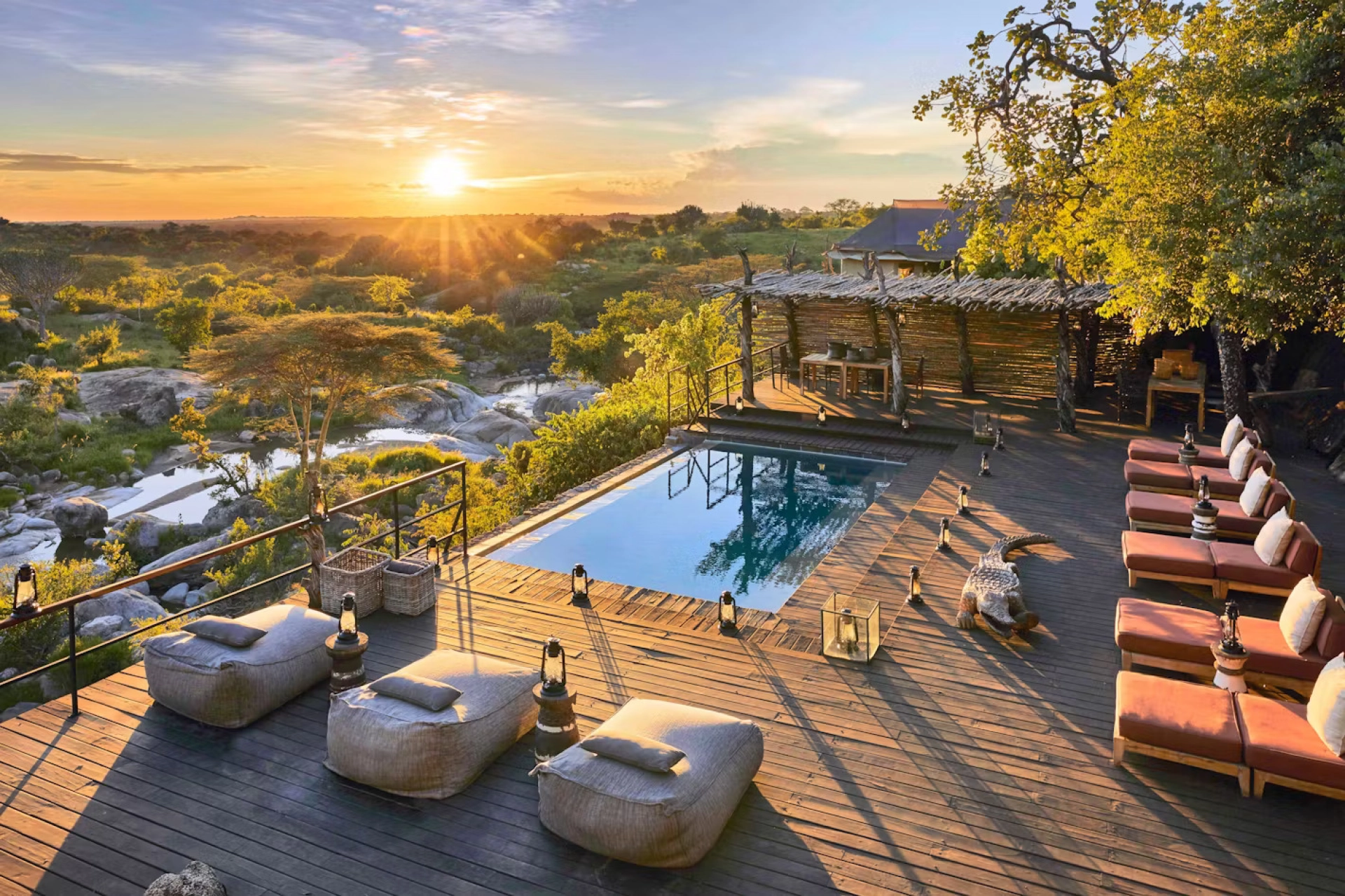
What should I look for when booking a luxury African safari?
When booking a luxury African safari, look beyond the room and compare the quality of guiding, wildlife location,…
Read article

Travel Guide
A family safari in East Africa can become one of the most meaningful journeys parents and children ever take together. Instead of experiencing wildlife through television screens, children see elephants feeding beside the road, giraffes moving…
A family safari in East Africa can become one of the most meaningful journeys parents and children ever take together. Instead of experiencing wildlife through television screens, children see elephants feeding beside the road, giraffes moving across open grassland, hippos surfacing beside a boat, monkeys calling from forest canopies and lions resting beneath acacia trees. Geography becomes real. Conservation becomes real. Food, languages, landscapes and cultures that previously existed only in books become part of everyday experience. But successful family safaris do not happen simply by taking a normal adult itinerary and adding children.
Families travel differently. Children may struggle with six-hour game drives. Teenagers may enjoy gorilla trekking but become bored by repeated lodge changes. Young children may need a swimming pool and predictable meals more than another afternoon searching for an elusive leopard. Parents need enough rest to enjoy the holiday themselves. Road distances matter. Vehicle privacy matters. Accommodation configuration matters. Activity age restrictions matter. A thoughtfully designed East Africa family safari therefore balances wildlife ambition with realistic family pacing. Kenya, Tanzania, Uganda and Rwanda all provide excellent family safari possibilities, but each suits different ages and interests.
East Africa offers extraordinary wildlife density and variety. Kenya and Tanzania provide the classic savannah safari. Uganda combines savannah wildlife with forests and primates. Rwanda provides compact travel distances and highly organized tourism experiences. The region can also combine naturally with Indian Ocean beaches. This means one family holiday can include game drives, boat safaris, nature walks, swimming, cultural experiences and beach relaxation. The key is not trying to do all of them. Children often remember individual moments more vividly than ambitious itineraries.
A herd of elephants crossing the road may become more important than visiting five national parks. A young traveler may remember making friends with lodge staff, watching a dung beetle, learning animal tracks or seeing a giraffe outside breakfast more clearly than an expensive scenic flight. Family safari design should leave room for those moments.
Yes, but the correct safari depends on the child’s age. There is a major difference between traveling with a four-year-old and traveling with a sixteen-year-old. Very young children generally need shorter game drives, flexible meals and accommodation where parents can supervise them easily. Older children can tolerate longer wildlife drives and may become fascinated by animal behavior.
Teenagers can participate in more adventurous activities where age regulations permit. Some lodges impose minimum ages for shared game drives. Walking safaris can have age restrictions. Gorilla and chimpanzee tracking have specific eligibility requirements that must be confirmed before booking. Never assume that because an activity appears in a brochure, every child in the family can participate.
For many families, a private safari vehicle provides more value than upgrading to a luxury lodge. This is especially true in Kenya, Tanzania and Uganda. A private vehicle gives the family control over the day. If a child needs a bathroom stop, you adjust. If everyone is tired, return to the lodge. If the children are fascinated by elephants, remain longer. If they are bored after twenty minutes watching sleeping lions, move on. Parents do not need to apologize to strangers for noise or changing plans.
The guide also learns the children’s interests. A good family guide can transform safari into an outdoor classroom without making it feel like school.
Guide quality matters on every safari. It matters even more with children. The best family guides do not simply recite animal facts. They create curiosity. They ask children to identify tracks. They explain why giraffes have dark tongues. They point out tiny creatures rather than searching only for lions. They listen for alarm calls. They explain animal families and social behavior. They know when children need a break. They also understand safety. A guide who connects with children can become one of the most remembered people on the entire holiday.
Kenya is one of Africa’s strongest family safari destinations because it combines wildlife variety, established tourism infrastructure and a large selection of family-friendly accommodation. Nairobi provides an international gateway. From there, families can travel to several parks. The Masai Mara provides classic wildlife. Amboseli National Park offers elephants and Kilimanjaro scenery. Lake Nakuru can provide rhino viewing opportunities. Samburu creates a more unusual northern experience. Kenya’s coast provides a natural beach extension.
This makes it possible to create a family holiday with safari first and relaxation afterward.
The Masai Mara can be extraordinary for children because wildlife is often visible across relatively open landscapes. Young travelers do not necessarily have the patience required to search dense bush for hours. The Mara can reward attention more quickly. Zebra, giraffes, antelope and elephants provide interest even before predators appear. Lions are a major highlight. Cheetahs can become family favorites. During migration periods, enormous wildebeest concentrations add spectacle. However, families should avoid making river crossings the sole objective.
Waiting for several hours beside a river may fascinate adult photographers and frustrate younger children. Build a broader wildlife experience.
Amboseli is especially attractive for families who love elephants. Large elephant family groups create fascinating opportunities to discuss animal behavior. Calves stay close to adults.
Matriarchs lead groups. Young elephants interact. The landscape can also provide views toward Mount Kilimanjaro when conditions are clear. This combination of recognizable wildlife and dramatic scenery makes Amboseli an excellent first family safari park.
After several early safari mornings, children often appreciate beach time even more than adults. Kenya’s coast allows families to slow down. A Kenya family safari and beach holiday might combine Masai Mara and Amboseli with several nights near the Indian Ocean. Do not make the beach extension too short. Two nights disappears quickly. Four or five nights creates genuine recovery time.
Tanzania is another exceptional destination for a safari with children. The northern circuit provides several major wildlife areas within one broad region. Tarangire, Ngorongoro and Serengeti can be combined without international border crossings. Families can then fly to Zanzibar for beach time. For children who have watched nature documentaries, the Serengeti can feel like entering the television screen.
The Serengeti provides enormous scale. Children can watch lions, giraffes, zebra, wildebeest, elephants, hippos and many other animals within one ecosystem. The main challenge is distance. Serengeti is large.
Families should avoid itineraries that require children to spend entire days moving between distant areas simply because adults want to see every migration region. Choose the correct part of the park for the season and stay longer. Three nights in one productive area is generally better for a family than one night each in three distant camps.
The Great Wildebeest Migration can be extraordinary for older children and teenagers. Calving season can be particularly educational because families observe birth, predator-prey relationships and herd behavior. River-crossing season provides spectacular drama but requires patience. Crossings are unpredictable. Families should therefore book a migration safari because they want the wider Serengeti experience, not because somebody has guaranteed a particular crossing.
Ngorongoro is excellent for families because a relatively compact game-drive area can provide varied wildlife. The crater landscape itself creates a strong visual impression. Children often enjoy the descent almost as much as the wildlife. Because the environment differs dramatically from Serengeti, it also prevents the safari from feeling repetitive.
Tarangire is sometimes underestimated in family itineraries. Its elephants are a major attraction. Baobab trees create a landscape children immediately recognize as unusual. The park can also provide a less overwhelming introduction before the vastness of Serengeti. For suitable itineraries, Tarangire deserves more than a rushed transit visit.
A Tanzania safari and Zanzibar family holiday is one of the best safari combinations for families. Safari provides adventure. Zanzibar provides recovery. Children can swim, enjoy the beach and experience a completely different environment. Parents can slow down. Older children may enjoy snorkeling, suitable water activities and exploring Stone Town. Families should research tide conditions when selecting beaches because Zanzibar’s coast varies considerably. Some areas provide easier all-day swimming than others.
Uganda is particularly good for adventurous families and families with older children. The country provides far more than gorilla trekking. A Uganda family safari can include Murchison Falls, Kibale, Queen Elizabeth, Bwindi and Lake Mburo. Game drives can be mixed with boat trips and other age-appropriate activities. This variety is valuable because children do not spend the entire holiday sitting inside a vehicle.
Murchison Falls combines wildlife with the Nile. This immediately adds variety. Families can experience game drives and boat activities within the same park region. Elephants, giraffes, buffalo, antelope, hippos, crocodiles and numerous birds can contribute to the safari. The waterfall itself provides another strong visual experience. Children often appreciate destinations where wildlife is combined with a physical landmark.
Queen Elizabeth National Park can provide game drives alongside the Kazinga Channel boat safari. Boat safaris are excellent for families because they change the physical rhythm of the trip. Instead of sitting in a vehicle searching for wildlife, everyone moves onto the water. Hippos are a major attraction. Elephants and buffalo may appear along the shoreline. Birdlife can be exceptional. For younger safari travelers, a boat journey can reset attention after several vehicle-based days.
Chimpanzee tracking is a more active experience than conventional safari. However, minimum age rules apply to standard tracking, and families must confirm current eligibility before building the itinerary. Where younger children cannot participate, alternative arrangements must be made. This should happen during itinerary design, not after arrival. For eligible teenagers, chimpanzee trekking in Uganda can become one of the trip’s greatest highlights. Chimpanzees are energetic. They vocalize. They move through forest.
The experience feels completely different from watching savannah wildlife.
This requires careful planning. Standard mountain gorilla trekking has minimum-age requirements. Families with children below the permitted age should never assume an exception will be available. For families with eligible teenagers, gorilla trekking in Uganda can become a life-changing shared experience. The physical difficulty varies. Some treks are relatively manageable. Others involve steep terrain and long periods of hiking. Parents should assess children’s fitness and motivation realistically. A teenager who loves wildlife may consider a difficult trek the greatest adventure of the holiday. A teenager who dislikes hiking may experience the same day very differently.
This question should be resolved before booking.
Depending on the itinerary and lodge arrangements, younger children may remain with an approved caregiver or participate in an alternative age-appropriate activity. The exact arrangement depends on location and available services. Do not simply leave the issue until the trekking morning. Parents need to be comfortable with the plan. The child needs to know what their day involves.
Lake Mburo can be an excellent beginning or ending to a Uganda family safari. It is smaller than Uganda’s major savannah parks and provides a different atmosphere. Depending on age and current activity regulations, families may have access to experiences beyond conventional vehicle safari. Its location can also work well within Entebbe-Bwindi routing.
Rwanda is attractive to families because travel distances between major tourism areas can be relatively manageable. Kigali provides a clean, organized gateway. Akagera offers conventional safari. Volcanoes National Park provides gorillas and golden monkeys for travelers meeting relevant age requirements. Nyungwe adds rainforest. This creates surprising diversity within a compact country.
Akagera National Park is Rwanda’s principal savannah safari destination. The park provides lakes, wetlands, woodland and open landscapes. Wildlife includes elephants, giraffes, buffalo, antelope, predators and other species. For families already visiting Rwanda for gorillas, Akagera allows them to add traditional game viewing without flying to another country. That logistical simplicity is valuable.
Golden monkey trekking can be an excellent complement to gorilla trekking for eligible travelers. The experience is usually more energetic. The monkeys move quickly through vegetation. Photography can be challenging and fun. Age requirements should again be confirmed before booking.
Both are excellent. Kenya provides strong park variety and easy beach extensions. Tanzania provides Serengeti, Ngorongoro and Zanzibar. For very young children, itinerary pacing matters more than the country. Choose fewer parks. Use a private vehicle. Select family rooms carefully. Avoid excessive road transfers.
Uganda provides broader safari variety and is particularly attractive for adventurous families with older children. Rwanda provides shorter distances between some major attractions and can suit families wanting a compact itinerary. For gorilla-focused travel, children’s ages become one of the most important deciding factors.
There is no universal answer. A two-year-old can travel to Africa with experienced parents, but that does not mean a ten-day schedule of long game drives is appropriate. Children under five often benefit from shorter wildlife sessions and lodge-based downtime. Children between roughly six and eleven may become highly engaged when guides make safari interactive.
Teenagers can often handle itineraries close to adult schedules and may participate in a wider range of activities. The child’s personality matters as much as age. Some seven-year-olds can watch elephants for an hour. Some thirteen-year-olds want Wi-Fi after ten minutes. Plan for the children you actually have.
Accommodation configuration is one of the most important practical details in family safari planning. A “family room” can mean many things. It might be one large room. Two bedrooms sharing a bathroom. Two interconnected rooms. A separate children’s annex. A private family cottage. Never assume. Ask for the exact configuration. Parents with young children may not be comfortable sleeping in a separate building. Older teenagers may appreciate privacy. Accommodation design should match family structure.
Well-managed safari camps can host families safely when parents and children follow instructions. Many camps are unfenced. Wildlife can move through. Children should never run around unsupervised. After dark, escorts may be required. Food should not be kept in tents or rooms where animals can access it. Balconies overlooking wildlife areas require supervision. Parents should explain rules before arrival. Children often follow safari safety extremely well when they understand why the rules exist.
A pool can be one of the smartest lodge features for a family. Adults sometimes view it as unimportant because they are traveling to see wildlife. Children may view it differently. After a five-hour game drive, two hours beside a pool can restore enthusiasm for the next morning. This is especially valuable during hot periods. Not every safari lodge needs a pool, but including one periodically can improve the entire family’s experience.
Families handle this differently. Some parents want a completely screen-free holiday. Others know that allowing children an hour of internet after a long game drive keeps everyone happy. There is no universal rule. Safari naturally provides enormous stimulation. Children may take photographs, identify animals through apps or message friends. Technology does not necessarily ruin the experience. Balance matters.
Most established safari lodges can accommodate children reasonably well when requirements are communicated in advance.
Do not assume every child will immediately enjoy unfamiliar dishes. Ask whether simple options can be prepared. Inform operators about allergies early. Dietary restrictions become harder to accommodate at the last minute in remote camps. Parents should also carry suitable snacks for long transfer days where appropriate.
Road travel is one of the biggest sources of poor family itinerary design. Adults may tolerate eight hours between parks because they understand the destination waiting at the end. Young children may not. Break long transfers. Use scenic stops. Consider domestic flights where they meaningfully reduce exhausting travel. Stay multiple nights in major destinations. Do not move accommodation every day. The objective is not to maximize the number of parks. It is to maximize the family’s enjoyment.
Bush flights can save enormous amounts of time. They can also be exciting for children. Small aircraft provide views of landscapes that cannot be appreciated from the ground. However, luggage restrictions can be stricter than international flights. Families should pack carefully. Confirm baggage allowances and aircraft arrangements before travel.
Children do not need elaborate safari wardrobes. Comfortable lightweight clothing is sufficient. Bring warm layers for early morning drives. Use sun protection. Comfortable closed shoes are useful. Binoculars can transform the experience for older children. Giving a child their own inexpensive binoculars can make them feel like an active safari participant. A wildlife notebook can also be surprisingly effective. Children can record species and sketch what they see.
A simple camera can give children a project. Instead of asking repeatedly when the drive ends, they begin looking for photographs. Encourage them to photograph more than lions. Trees. Tracks. Birds. Lodge details. Landscapes. Family members. Their photographs often become more emotionally valuable than technically perfect adult images.
Families should seek professional travel-health advice based on exact destinations and children’s medical histories. Malaria risk varies geographically. Vaccination recommendations depend on route and individual circumstances. Carry essential medication. Bring a basic first-aid kit. Use sun protection. Keep children hydrated. Travel insurance should cover the activities included in the itinerary. Remote safari areas can be far from advanced medical facilities, so parents should understand emergency procedures.
Families concerned about malaria often investigate South Africa because several reserves in selected regions are considered malaria-free. East Africa’s major safari routes may involve malaria-risk areas, so medical advice becomes important. Do not make medication decisions from internet comments. Consult an appropriate health professional.
Children must understand that safari animals are wild. Do not feed monkeys. Do not encourage children to approach antelope around lodges. Do not allow them to run outside at night. Do not let them lean dangerously from vehicles. Never leave young children unsupervised around lodge water features or unfenced areas. Guides and camp staff should always be respected.
Well-designed cultural experiences can be highly educational. Children can learn that East Africa is not simply a collection of national parks. People live, work, study and build businesses throughout these landscapes. Choose experiences that are respectful and genuinely interactive rather than treating communities as exhibits. Age-appropriate activities involving crafts, food, farming, music or storytelling can be particularly engaging.
Teenagers are often ideal safari travelers. They can tolerate longer drives. They understand complex conservation issues. Eligible teenagers may participate in primate trekking and other adventurous activities subject to current rules. They can become serious photographers. They may enjoy rafting, hiking or suitable water activities as extensions. The biggest mistake is planning the entire holiday as though they are small children. Give teenagers some ownership. Let them help choose activities.
Grandparents, parents and children traveling together create special planning requirements. A private vehicle becomes even more valuable. Accommodation should minimize difficult stairs where mobility is a concern. Long hikes may not suit every traveler. Some family members may trek gorillas while others enjoy alternative activities. The itinerary does not need to force everyone to do everything together. Shared meals and key wildlife drives can create family time while allowing different daytime activities.
Family travel can become expensive because several safari costs are calculated per person.
However, families also have advantages. Private vehicle costs are distributed across more travelers. Family rooms may cost less than separate rooms. Children’s accommodation or park-fee policies may provide reductions depending on age and destination. The strongest budget strategy is to spend on the things that improve the experience and simplify the rest. Use comfortable mid-range lodges. Avoid unnecessary flights. Stay longer in fewer parks. Travel outside the highest-demand periods when school schedules allow. Choose private road transport when cost-effective.
Luxury is valuable when it improves family convenience. A private villa can be worthwhile. A camp close to the park can reduce driving. A lodge with a pool can improve afternoons. A private vehicle can transform the experience. An enormous suite filled with expensive décor may contribute less. Families should define luxury as space, flexibility, location and service rather than simply price.
July and August are popular because of Northern Hemisphere school holidays and excellent safari conditions in many East African destinations. They can also be expensive. Christmas and New Year are another high-demand period. Families with flexible school calendars may find better value in shoulder seasons. Wildlife remains wild year-round. The “best” month depends on the exact country and desired experience.
February can be excellent in Tanzania for families interested in the southern Serengeti calving season. The green landscape is beautiful. Predator-prey behavior can be fascinating for older children. Uganda and Rwanda remain possible for primate travel.
June can be an excellent transition into drier safari conditions in several East African regions. Demand begins strengthening. Families traveling immediately after school terms may find strong wildlife opportunities before the busiest weeks.
These are major family safari months. Book early. Good family rooms are limited. Private vehicles become heavily requested. Gorilla permits can be in strong demand. Migration-focused Serengeti and Masai Mara accommodation can fill far ahead.
Christmas holidays create another major family travel window. East African safaris can be excellent. Tanzania’s migration cycle may increasingly focus toward southern regions. Uganda and Rwanda remain strong for primates. Beach extensions are popular. Book well in advance.
Seven days should remain focused. A Kenya family might combine two main wildlife regions. A Tanzania family can use Tarangire, Ngorongoro and part of Serengeti if road pacing is carefully managed. Uganda can create a compact wildlife-and-gorilla itinerary for families with eligible children. Rwanda can combine Akagera and Volcanoes. Do not add a second country simply because the map makes it look close.
Ten days provides a much better rhythm. Families can stay three nights in major destinations. Rest afternoons become possible. Uganda can combine chimpanzees, Queen Elizabeth and Bwindi. Kenya can combine several parks without constant packing. Tanzania can explore Serengeti properly. This is one of the strongest durations for a first family safari in East Africa.
Two weeks opens outstanding combinations. Kenya safari plus beach. Tanzania safari plus Zanzibar. Uganda and Rwanda. Kenya and Tanzania for older children interested in migration. Uganda gorillas plus Zanzibar for adventurous families wanting rainforest followed by Indian Ocean relaxation. The second week should add contrast rather than simply more game drives.
A strong Kenya family journey can begin in Nairobi before continuing toward a wildlife destination such as Amboseli. The family then moves to the Masai Mara for several nights. Instead of adding another distant park, they fly or travel toward the coast for beach time. The result is simple: elephants, big cats, classic savannah and ocean.
Children experience variety without constant lodge changes.
Begin around Arusha. Visit Tarangire. Continue through Ngorongoro. Spend several nights in the seasonally appropriate Serengeti region. Fly to Zanzibar. This creates one of the world’s strongest family safari and beach holidays.
Begin in Entebbe. Travel through one or more savannah and forest destinations according to available days. Combine game drives and boat safari. Eligible family members can track chimpanzees and gorillas. Finish with a slower destination before returning to Entebbe. Uganda works particularly well for older children because the activities change constantly.
Spend time in Kigali. Travel to Akagera for game drives and possibly water-based wildlife activities where available.
Continue toward Volcanoes National Park. Eligible travelers can trek gorillas or golden monkeys. This creates a relatively compact Rwanda family safari without excessive internal travel.
For families with older teenagers, one of the most extraordinary itineraries combines Uganda gorilla trekking and Zanzibar. The contrast is immense. Rainforest trekking comes first. Beach relaxation comes afterward. A longer version can add Serengeti or Masai Mara between the two. This becomes a serious once-in-a-lifetime family expedition.
Safari forces families to share attention. Everyone looks in the same direction. Phones become less important when a leopard appears. Children ask questions. Parents learn alongside them. There is time in the vehicle to talk. There are evenings around dinner tables without normal home routines. The environment itself provides the entertainment. This is one reason family safaris often remain important long after more conventional holidays have blurred together.
Children understand conservation differently after seeing wild ecosystems. An elephant is no longer an abstract species from a textbook. A gorilla is no longer a video. A lion’s habitat is no longer simply the background of a documentary. They begin to understand that wildlife needs space. They see guides, rangers, lodge employees and local communities connected to tourism. Parents can use the experience to discuss habitat loss, conservation funding and responsible travel without turning the holiday into a lecture.
Children learn from adults. If parents pressure guides to move too close to wildlife, children learn that photographs matter more than animal welfare. If parents throw litter, children notice. If adults treat local staff respectfully, children notice that too. A family safari provides an opportunity to model responsible travel. Follow park rules. Keep noise controlled near animals. Do not feed wildlife. Do not remove natural objects. Respect local communities. Use refillable bottles where practical.
The most common mistake is trying to cover too much distance. Another is booking shared vehicles for very young children when the family’s schedule is unpredictable. Parents sometimes choose highly luxurious camps that do not actually cater well to children. Others fail to check age restrictions. Some pack too much. Some plan every hour and leave no downtime. The best family itinerary has breathing room.
This is a family decision. However, safari itself can be extraordinarily educational. Wildlife biology, geography, conservation, photography, cultural learning and environmental science become tangible. If travel takes place during term time, parents should follow school policies and plan appropriately. The educational value is real, but it does not remove academic obligations.
Established safari circuits receive families regularly. Use reputable operators, follow wildlife rules, seek current health advice and check destination-specific travel information before departure.
Kenya and Tanzania are excellent for classic wildlife. Uganda is particularly strong for adventurous families with older children. Rwanda provides compact logistics.
Minimum age requirements apply. Confirm the current official rule before booking permits or flights.
Standard chimpanzee activities also have age requirements that vary by destination and activity. Confirm current rules during planning.
Yes. Its open landscapes and strong wildlife can make it highly engaging for families.
Yes, provided the itinerary avoids excessive transfers and game drives are adjusted to the children’s attention and comfort.
It is strongly recommended where the budget allows because it provides control over timing, stops and game-drive duration.
Seven to ten days works well for safari alone. Ten to fourteen days is excellent when adding beach time.
Yes. Zanzibar provides a strong change of pace after Tanzania and can also follow Uganda, Rwanda or Kenya.
Look for genuine family rooms or interconnected rooms, suitable meal options, safe common areas and ideally periodic access to a swimming pool.
They can be, but private vehicle costs are shared among family members and mid-range lodges can provide excellent value. Careful routing reduces unnecessary expense.
A successful family safari in East Africa should not feel like an adult safari that children are required to endure. It should feel like a shared adventure. That means watching elephants in Amboseli without worrying about finding another species immediately. It means giving children time beside the lodge pool. It means letting teenagers photograph lions. It means breaking long drives. It means alternating vehicles with boats, forests or beach time. It means choosing three excellent destinations instead of seven rushed ones.
Kenya provides classic savannah wildlife and excellent safari-and-beach combinations. Tanzania provides the Serengeti, Ngorongoro, Great Migration and Zanzibar. Uganda provides one of the continent’s most varied family journeys, combining gorilla trekking, chimpanzee trekking, game drives, boat safaris and rainforest for families whose children meet relevant activity requirements.
Rwanda provides compact travel and the possibility of combining Akagera wildlife with Volcanoes National Park. There is no need to force every family into the same itinerary. At Adventure in the Wild Safaris, a family with small children should be planned differently from a family traveling with teenagers. A multigenerational group requires another approach again.
We can structure private East Africa family safaris around the family’s ages, interests, accommodation preferences, school-holiday dates and budget, while combining destinations such as Uganda, Rwanda, Kenya, Tanzania and Zanzibar where appropriate. The most important family-safari investment is not always the most expensive lodge. It is good pacing. It is a good guide. It is a private vehicle when flexibility matters.
It is choosing the right activities for each child’s age. It is staying long enough in each destination for everyone to enjoy it. And it is remembering that children do not need to see every famous park in East Africa to have an extraordinary safari. Sometimes one elephant calf playing beside its mother is enough to create a memory that lasts for decades.

Share This Article
When booking a luxury African safari, look beyond the room and compare the quality of guiding, wildlife location,…
Read article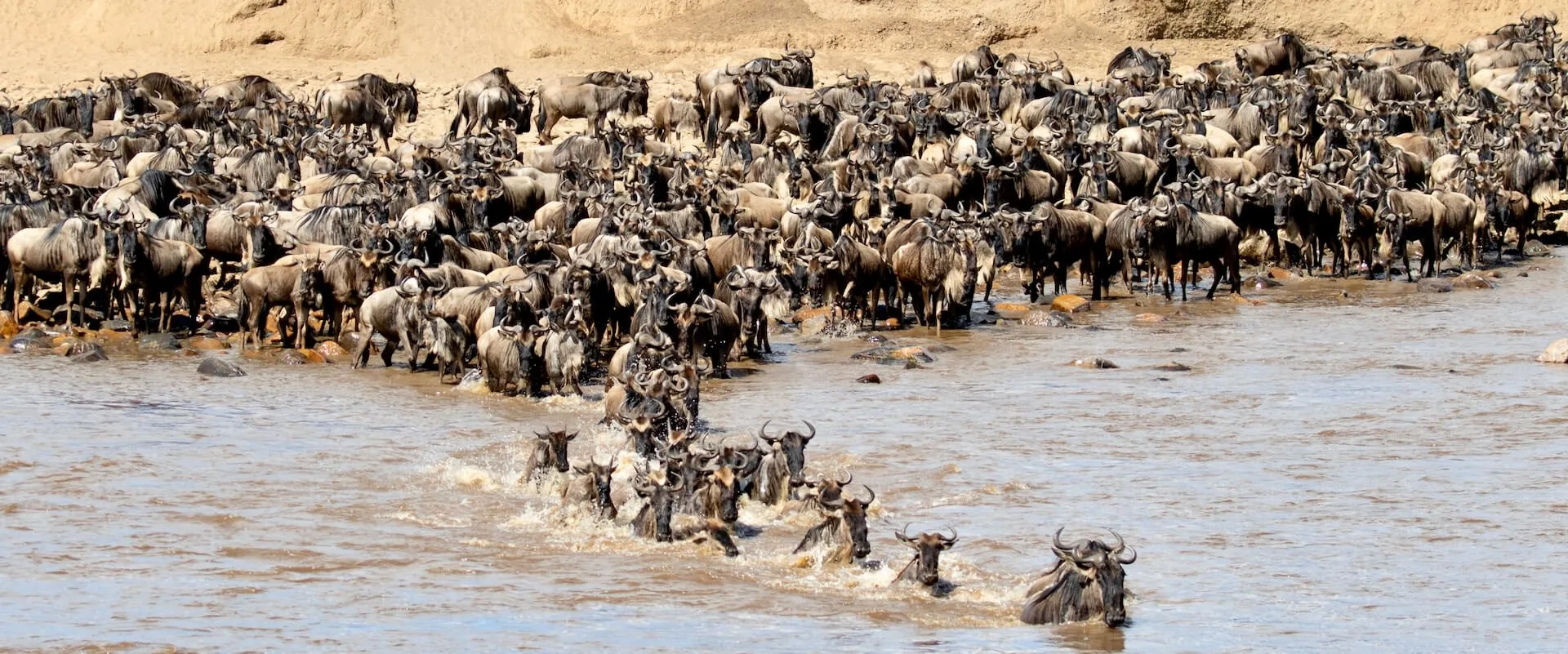
The Great Migration in Africa happens all year because the herds continuously circulate through the Serengeti–Mara ecosystem in…
Read article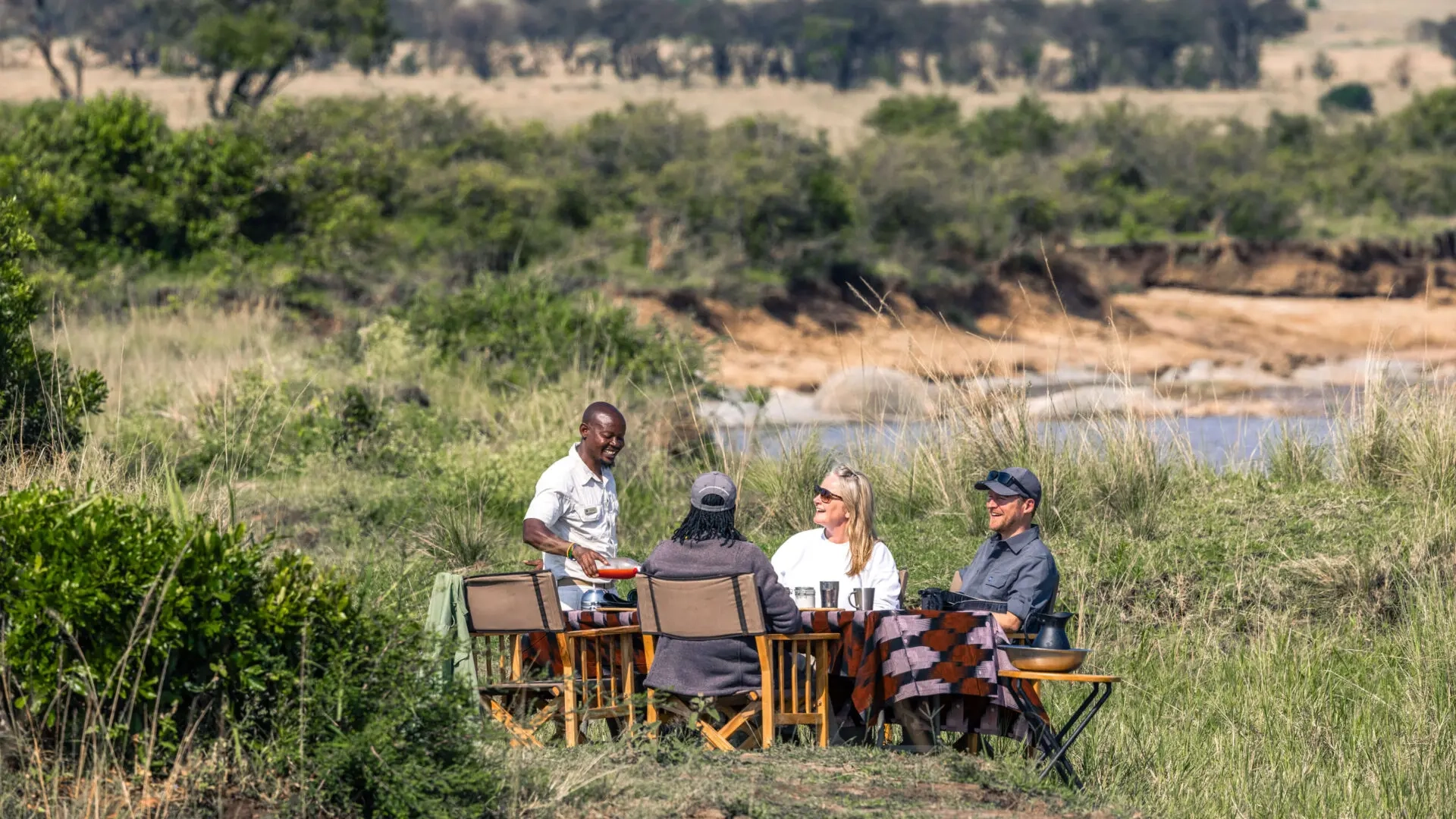
Definitive answer: A picnic lunch on safari is a packed or catered midday meal eaten at an approved…
Read article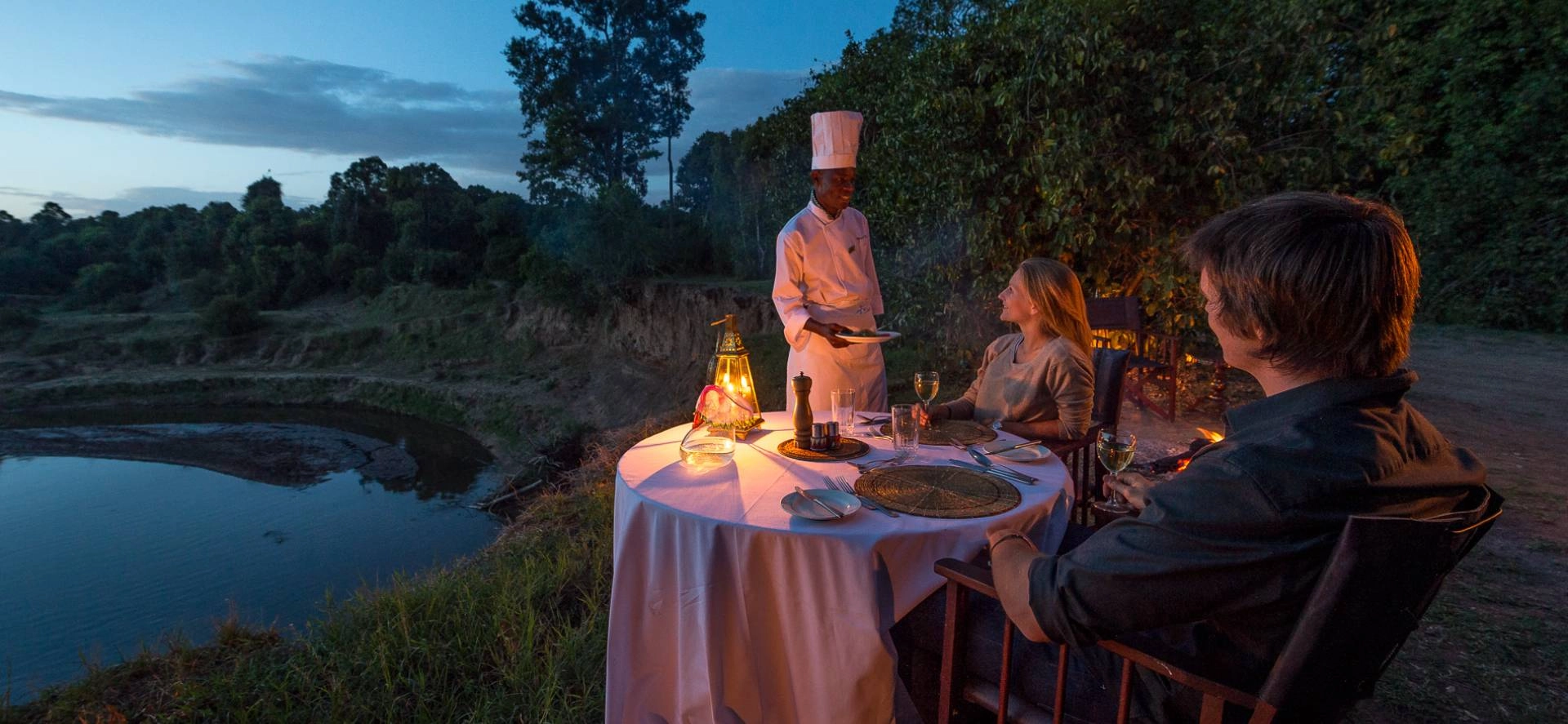
Definitive answer: A bush dinner is an outdoor evening meal arranged in a safe safari setting away from…
Read articleLet us take you closer to the wildlife, people and places that make Africa extraordinary.
Plan Your Safari Today