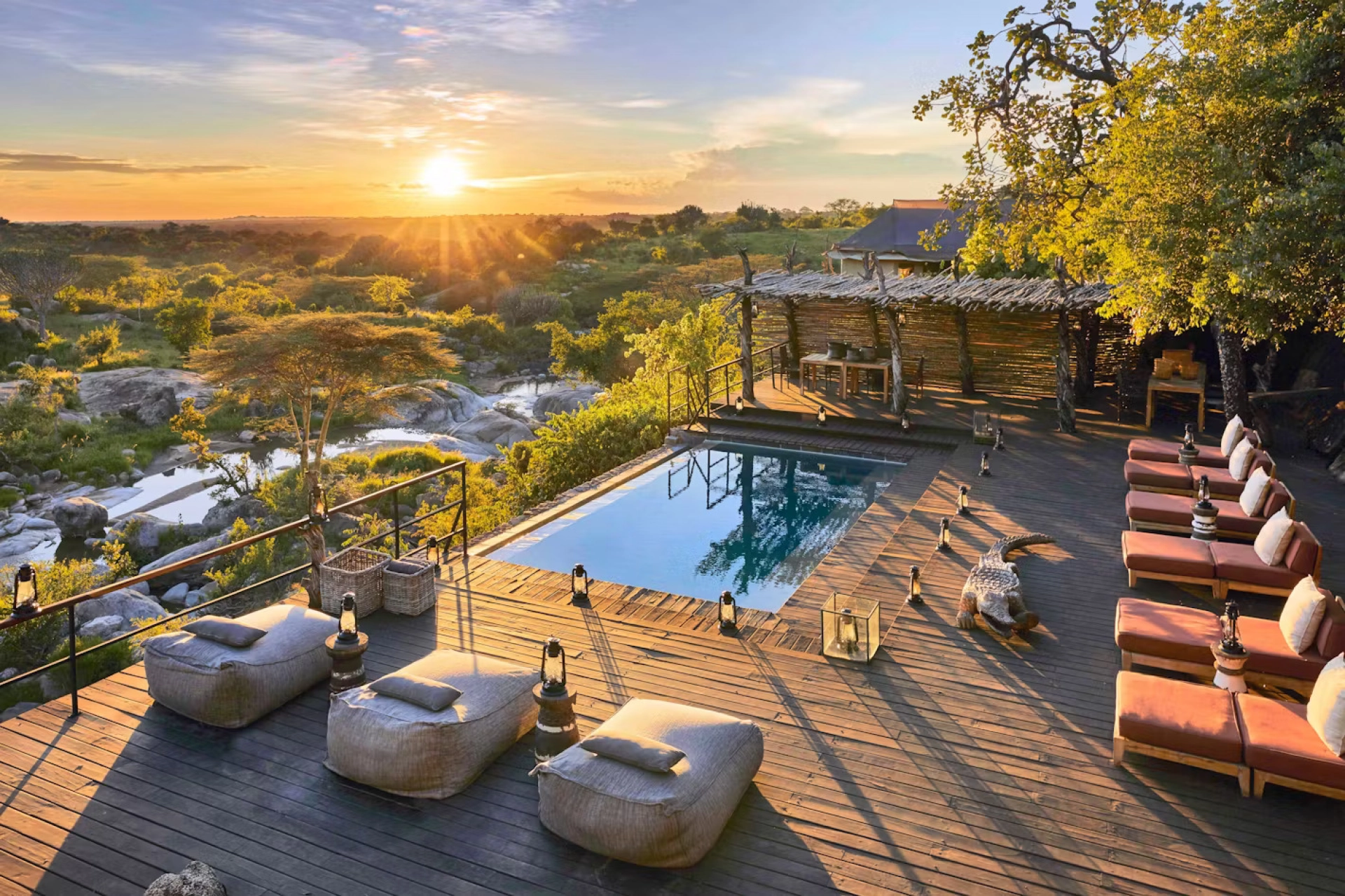
What should I look for when booking a luxury African safari?
When booking a luxury African safari, look beyond the room and compare the quality of guiding, wildlife location,…
Read article

Travel Guide
Sustainability has become one of the most frequently used words in African tourism. Safari lodges describe themselves as eco-friendly. Tour operators promote responsible travel. Hotels highlight solar panels. Brochures speak of conservation, community empowerment and carbon…
Sustainability has become one of the most frequently used words in African tourism. Safari lodges describe themselves as eco-friendly. Tour operators promote responsible travel. Hotels highlight solar panels. Brochures speak of conservation, community empowerment and carbon reduction. Websites show elephants, smiling schoolchildren and reusable water bottles beside phrases such as “travel with purpose.” Some of these programmes represent serious, long-term conservation and community commitments. Others are little more than marketing.
Understanding greenwashing in Africa has therefore become an important part of planning a genuinely responsible safari. Greenwashing occurs when a company presents itself as more environmentally or socially responsible than its actual operations justify. Sometimes this is deliberate. Sometimes it results from vague claims, poor measurement or a marketing department exaggerating relatively minor sustainability initiatives. The difficulty for travellers is that genuine sustainability and greenwashing can initially sound almost identical. Both may use words such as eco lodge, responsible safari, sustainable tourism, community conservation, carbon neutral, plastic free, wildlife protection and ethical travel. The difference is evidence. A serious sustainability claim should eventually lead to something concrete.
How much energy is generated renewably? Where does the lodge obtain its water? How is wastewater treated? What happens to solid waste? How many employees come from surrounding communities? What proportion of senior positions is locally held? Does a community actually own part of the tourism enterprise, or is it merely receiving occasional donations? How much money goes directly to conservation? Can the operator explain its wildlife-viewing rules? What happens when sustainability conflicts with profit? These are more meaningful questions than whether a lodge describes itself as green.
A safari has an environmental footprint. Travellers fly long distances. Safari vehicles consume fuel. Lodges require energy. Guests use water. Food has to be transported. Laundry creates wastewater. Remote camps produce rubbish that must be managed. Roads, airstrips and buildings alter landscapes. Simply calling tourism sustainable does not remove those impacts. The better question is whether tourism creates enough conservation, social and economic value to justify and reduce its costs.
In some African protected areas, tourism revenue contributes substantially to wildlife protection, employment and the economic case for keeping land under conservation rather than converting it to another use. Responsible tourism can therefore be extremely valuable. But it should never be treated as impact-free. A genuinely sustainable African safari recognises its footprint, works systematically to reduce unnecessary impacts and demonstrates how tourism revenue benefits wildlife landscapes and the people connected to them.
The easiest form of greenwashing to recognise is vague language. A lodge may announce that it is “100% eco-friendly” without explaining what that means. Another may advertise its use of paper straws while making no mention of water extraction, sewage treatment, staff conditions, fuel consumption or waste disposal. A safari company may use the phrase community tourism because guests make a brief village visit, even though the community has little influence over how the experience is designed or how much tourism revenue it receives.
A property may claim to be carbon neutral because it bought offsets without first demonstrating serious efforts to reduce avoidable emissions. The problem is not necessarily the straw, village visit or offset. Each could be part of a worthwhile programme. Greenwashing begins when a small positive action is used to create an exaggerated impression about the sustainability of the entire business.
When researching a responsible safari in Africa, distrust superlatives and look for details. “Sustainable” is an adjective. “Seventy percent of our electricity comes from on-site solar generation” is a measurable claim. “We support the community” is vague. “We employ 42 people from the neighbouring communities, purchase defined products from local suppliers and contribute a published amount per guest night to a locally governed conservation fund” is specific.
“We protect wildlife” is vague. “We finance ranger salaries, maintain a documented wildlife corridor and operate under a concession agreement with defined conservation obligations” is more useful. Specific information can still be misleading, but it gives travellers something to evaluate. The strongest sustainability programmes are generally willing to explain how they work.
Community benefit is one of the most important and most misused concepts in ethical African tourism. Many safari businesses genuinely create local employment and support surrounding communities. Others rely heavily on philanthropic imagery while retaining almost all meaningful economic power outside the destination. Travellers should therefore ask who benefits. Employment is one indicator. But even employment deserves deeper examination. Are local people employed only in entry-level roles? Are there opportunities for training and promotion?
Do local staff hold guiding, management and decision-making positions? Does the property buy food, furniture, crafts or services locally where practical? Are suppliers paid fairly and reliably? Does the surrounding community have any ownership, revenue-sharing arrangement or formal voice in tourism decisions? These questions reveal much more than a photograph of a donation ceremony.
Building a classroom can be worthwhile. Donating books can be useful. Supporting a health centre may create genuine benefit.
But charity and empowerment are not identical. A tourism company can make visible donations while still offering poor employment conditions or excluding surrounding communities from meaningful economic opportunity. Community-based tourism is strongest when local people participate in decisions and retain a meaningful share of tourism value. That may happen through local ownership, community enterprises, guiding, accommodation, craft production, agriculture, revenue-sharing or legally defined benefit arrangements.
The exact structure varies by destination. Travellers should therefore avoid assuming that every safari described as “community based” follows the same model.
Responsible cultural tourism should preserve human dignity. Visitors travel to Africa partly because they want to understand cultures, communities and ways of life different from their own. That curiosity can produce meaningful exchanges. It can also produce exploitative tourism when poverty itself becomes the attraction. Be cautious when a tour seems designed primarily around photographing vulnerable people, entering homes without clear consent or encouraging travellers to hand out money and sweets indiscriminately. The people being visited are not scenery. An ethical cultural safari should involve consent, appropriate compensation, respectful photography and a structure in which the host community benefits.
Wildlife photography operates under different expectations from photographing people. A lion does not understand image rights. A person does. Always ask before taking close photographs of local residents unless the context clearly establishes consent. Extra care is appropriate when children are involved. The existence of a smartphone camera does not create an entitlement to someone’s image. Responsible travel involves treating the people encountered on safari with the same dignity travellers expect at home.
Some safari businesses invest heavily in visible environmental measures while ignoring wildlife-viewing ethics. That is a serious contradiction. A lodge can eliminate plastic bottles and still operate vehicles irresponsibly around animals. An operator can install solar power and still encourage guides to crowd predators. A tourism business can promote conservation and simultaneously support inappropriate captive-wildlife encounters. For travellers, ethical safari wildlife viewing should therefore form part of sustainability assessment. Ask how guides behave around animals. Do vehicles respect sensible viewing distances?
Are animals blocked from moving? Are predators surrounded by excessive numbers of vehicles? Do drivers repeatedly reposition aggressively simply to give guests a better photograph? Does the operator discourage feeding wildlife? Are sightings managed differently when animals are hunting, mating or caring for young? Responsible safari guiding recognises that the animal’s welfare comes before the guest’s photograph.
Guests influence safari behaviour more than they may realise. A guide under pressure from clients can feel compelled to drive too close or keep repositioning around a sighting. Travellers therefore have responsibility too. Do not ask the guide to move closer when the animal is already showing signs of discomfort. Do not demand that a vehicle block a predator simply because the light is better from the other side. Do not encourage off-road driving where it is prohibited. Do not reward aggressive guiding with praise or tips. Good wildlife tourism depends on guests accepting that nature does not exist to produce perfect social-media content.
Close-contact wildlife experiences require particular scrutiny. An opportunity to hug, hold, walk beside or take a selfie with a wild animal may look extraordinary on social media. The welfare story behind the image may be considerably less attractive. Travellers should ask why a supposedly wild animal tolerates repeated handling by strangers. Was it bred in captivity? Was it separated from its mother? What happens when it becomes too large or dangerous for tourist interaction? Is the facility contributing demonstrably to legitimate conservation, or is conservation language being used to market entertainment?
The more intimate the wildlife encounter, the more carefully it should be investigated.
Mountain gorilla trekking provides a useful example of controlled wildlife tourism. Visitors do not simply enter Bwindi and walk wherever they want. Trekking is regulated. Visitor numbers are limited through permits. Treks take place with trained personnel. Rules govern behaviour around habituated gorilla families. Tourism therefore operates within a management framework intended to balance visitor access with conservation. This does not mean gorilla tourism has no environmental or social impacts.
It means the experience demonstrates a basic principle of responsible wildlife tourism: access to sensitive wildlife should be controlled rather than unlimited. For travellers choosing between a cheap unregulated wildlife encounter and a more expensive regulated one, the higher price may reflect genuine conservation requirements.
Responsible operations often incur costs. Solar systems require capital investment. Waste treatment costs money. Fair wages cost money. Training staff costs money. Maintaining vehicles properly costs money. Conservation contributions cost money. Low-impact lodge design can be expensive.
This does not mean that every expensive lodge is sustainable or every budget property is irresponsible. Far from it. Community-run camps and simple locally owned guesthouses can sometimes produce excellent social value with relatively low environmental impact. The important point is that travellers should not demand premium sustainability while insisting that operators continually reduce prices below realistic operating costs.
An impossibly cheap safari may hide costs elsewhere. Someone pays.
Sometimes it is the guide. Sometimes it is the community. Sometimes it is wildlife conservation. Sometimes it is vehicle safety or environmental management.
Solar power is genuinely valuable in many safari environments. Remote lodges often have excellent solar potential, and reducing reliance on diesel generators can significantly lower fuel use and noise. But a photograph of solar panels should not end the sustainability investigation. How much of the property’s electricity do they actually provide? Does a diesel generator still run for most of the day? Are batteries used to extend renewable power into the evening? Are rooms designed to reduce unnecessary cooling demand? Does the lodge use highly energy-intensive facilities despite claiming to be low impact?
The correct conclusion is not that solar claims are suspicious. It is that sustainability should be evaluated as a system.
In dry safari landscapes, water can be one of the most sensitive environmental issues. A luxury lodge with plunge pools, large bathtubs, irrigated lawns and frequent linen changes may consume substantial quantities of water. Travellers should therefore pay attention to sustainable water management. Where does water come from? Is extraction monitored? Is rainwater harvested? Are low-flow fittings used? How is wastewater treated? Can treated greywater be reused? Does landscaping rely on water-intensive exotic plants? Are guests encouraged to request linen changes only when necessary? Again, there is no universal solution.
Different ecosystems require different approaches. The key is evidence that water consumption has been considered seriously.
Remote safari camps face a logistical challenge that city hotels do not. Waste cannot simply disappear. Glass, metal, plastic, food waste, batteries and hazardous materials need to be managed. An operator claiming zero waste safari tourism should therefore be able to explain what that means. Is waste separated? Is organic material composted where appropriate? Are suppliers encouraged to reduce packaging? Are recyclable materials transported to functioning recycling systems? How are used batteries, oils and electronic waste handled? What happens to wastewater? Removing single-use water bottles is useful, but it is only one part of a much larger waste-management system.
The tourism industry has understandably focused on single-use plastic. Reducing avoidable plastic is worthwhile. But “plastic free” has sometimes become a sustainability shortcut. A property can remove plastic straws while wasting water, underpaying staff or generating electricity inefficiently. Conversely, some plastic may be necessary for hygiene, medical use or food preservation. Sustainability is not a contest to eliminate one material regardless of context. It is about reducing unnecessary consumption and understanding the entire life cycle of what the tourism operation uses.
Where practical, safari lodges can create meaningful local economic benefits by purchasing food from surrounding farms and suppliers. This reduces some transportation requirements and circulates tourism income through local economies. But “locally sourced” should also be examined carefully. How local? Which products? What proportion of food? Are farmers paid fairly? Is demand predictable enough for local producers to benefit? A serious farm-to-table safari lodge relationship is more meaningful than purchasing a few baskets of vegetables for marketing photographs. Travellers interested in responsible tourism can encourage these systems by asking where food comes from and showing appreciation for regional ingredients.
A lodge may claim sustainability because most staff are African. That claim alone is not particularly meaningful in Africa. A better question is the quality of employment. Are employees paid fairly? Are working conditions safe? Are contracts transparent? Do staff receive training? Are there promotion pathways? Are women represented across departments and management? Can local guides develop professional careers? Does the company invest in skills rather than importing expertise permanently? A truly sustainable safari business should consider human capital as seriously as solar panels.
Ownership is another valuable question. African tourism includes community-owned enterprises, locally owned companies, regional businesses, multinational hotel groups and various joint ventures. None of these categories is automatically good or bad. The important issue is how much value remains in the destination and how responsibly the operation behaves. Travellers who want tourism spending to support African economies can
However, “local” should never be treated as a substitute for due diligence. Local companies can greenwash too.
Responsible evaluation applies to everyone.
Many safari businesses claim to “support conservation.” Ask how. Do they pay concession or conservation fees? Finance anti-poaching work? Support habitat restoration? Protect wildlife corridors? Participate in monitoring? Fund researchers? Support human-wildlife conflict mitigation? Contribute a defined amount from every guest stay? Maintain land under conservation? A strong programme should be explainable. Travellers do not necessarily need a complete audited financial statement, but there should be more substance than a sentence saying, “A portion of your stay supports wildlife.” What portion? Supporting what? Managed by whom?
Measured how?
Sustainability certifications can provide useful frameworks. They may establish criteria, reporting processes and external evaluation. However, travellers should not assume that one badge settles every question. Certification systems differ. Standards vary. Auditing quality can vary. Some excellent small community operations may lack expensive international certification. Meanwhile, certification cannot guarantee that every aspect of a complex tourism business is perfect. Use recognised certification as one piece of evidence, not as the entire investigation. A thoughtful traveller combines certification information with questions about ownership, conservation, staff, community benefit, waste, water, energy and wildlife practices.
Long-haul safari travel creates substantial emissions, especially from aviation. A tourism company may respond through carbon-offsetting programmes. Offsets can form part of a climate strategy, but the phrase carbon neutral safari deserves scrutiny. How were emissions calculated? Which emissions are included? Only lodge electricity? Guest transfers? Flights? Supply chains? What offset project is used? Is it independently verified? More importantly, what has the company done to reduce emissions before offsetting the remainder?
Efficiency, renewable energy, intelligent routing, reduced generator use and longer stays can all play a role. Offsetting should not become permission to ignore avoidable emissions.
Safari aviation can be extremely useful. Some remote destinations are realistically accessed by air. Flying can also reduce a two-day road transfer to a short journey, preserving holiday time. Sustainable travel does not require refusing every flight. But itineraries can be designed intelligently. Travellers can stay longer in each region rather than flying to a new camp every night. A slow African safari often produces both environmental and experiential advantages. Fewer transfers mean less logistical intensity.
Longer stays allow deeper wildlife observation. The holiday feels less rushed.
Modern travel often rewards accumulation. Ten parks. Four countries. Seven flights. Sixteen activities. But the most sustainable itinerary may be the one that does less. Spend three nights in a wildlife area instead of one. Allow a free afternoon. Watch the same elephant herd on different days. Learn the landscape. Talk to guides. Eat regional food. Reduce repeated transfers. Slow safari travel does not automatically make a trip sustainable, but it can reduce unnecessary movement while improving the quality of experience.
Luxury tourism is sometimes criticised as inherently wasteful. That can be true when luxury depends on excessive water consumption, imported materials, huge energy use and unnecessary extravagance. But high-end tourism can also finance conservation at scales that low-cost tourism cannot. A small expensive camp operating at low guest density may generate substantial conservation revenue from relatively few visitors.
Therefore, price category alone tells you little. Ask what the money does. A luxury eco safari lodge should demonstrate why its model creates conservation and community value rather than relying on the assumption that high price equals high responsibility.
The reverse assumption is equally dangerous. A basic camp is not automatically sustainable merely because it lacks air-conditioning or swimming pools.
Waste may still be poorly managed. Staff may still be underpaid. Vehicles may still behave badly around wildlife. A cheap operator may still contribute little to conservation beyond compulsory park fees. Sustainability is not a room category. It is a management philosophy backed by practices and evidence.
A responsible safari starts before you reach the lodge. The African safari operator designing the itinerary determines which accommodations you use, how much driving is involved, whether park rules are respected and whether the route supports reputable tourism businesses. Ask whether the operator is established and properly registered. Examine how clearly it explains pricing. Ask how guides are selected and trained. Look at wildlife-viewing philosophy. Find out whether the company employs permanent guides or continually uses the cheapest available freelance labour. Ask what conservation and community partnerships exist. A professional operator should be able to discuss sustainability without immediately returning to slogans.
One sign of ethical tourism is the willingness to disappoint a customer when necessary. A guide should say no if a guest asks to drive where vehicles are prohibited. An operator should refuse an exploitative wildlife experience. A lodge should not feed wild animals simply because guests enjoy close photographs. A responsible company understands that some revenue is not worth earning. Sustainability becomes meaningful precisely at the moment when ethical standards cost money.
Uganda provides an instructive example because gorilla tourism links visitor expenditure with a highly regulated wildlife experience. The forest is not an open-access attraction. Visitor numbers are controlled. Permits have substantial value.
Guides, trackers, rangers, accommodation providers, porters, drivers and other tourism workers participate in the economic ecosystem surrounding gorilla conservation. Travellers can strengthen this positive impact further by hiring porters, purchasing local products responsibly, using reputable local operators and treating neighbouring communities with respect. The same principle applies throughout Uganda. A sustainable Uganda safari should connect conservation with local economic opportunity rather than treating parks as isolated islands surrounded by people who receive no meaningful benefit from tourism.
In destinations around Africa, community-owned or community-linked tourism enterprises can provide direct economic reasons for protecting wildlife and landscapes. Uganda has examples of community-connected lodging and tourism initiatives, and current directories of Ugandan eco-accommodation highlight models involving community enterprises, local employment and conservation partnerships. Travellers should still evaluate each project individually. The phrase “community lodge” should prompt the question: what is the governance and benefit structure?
If those answers are strong, community tourism can be one of the most direct ways for safari spending to remain near the protected area.
Purchasing local crafts can create direct economic benefit. But thoughtful buying matters. Ask whether an item was actually produced locally. Buy directly from artisans or reputable community enterprises where possible. Avoid bargaining so aggressively that the final price becomes exploitative. Negotiation is normal in many markets, but there is a difference between fair bargaining and treating a small producer’s livelihood as a game. Also consider legality. Wildlife products, protected species materials and restricted cultural artefacts should never be purchased casually.
Travellers often give with good
One of the most dangerous simplifications in wildlife tourism is imagining that conservation succeeds by protecting animals from people. Many African protected areas are surrounded by communities that have interacted with those landscapes for generations. Conservation policies affect access to land, grazing, forest products and other resources. Wildlife can also impose real costs. Elephants damage crops. Predators kill livestock. Protected animals do not recognise park boundaries. A sustainable conservation model therefore needs local legitimacy.
Tourism can contribute when it produces jobs, markets, revenue-sharing and other tangible benefits that make wildlife economically valuable to communities.
A lodge claiming to protect elephants should be able to discuss what happens when those elephants leave the protected area and enter farms. Does the tourism business support conflict mitigation? Does it cooperate with local conservation organisations? Does it contribute to community initiatives? Does it educate visitors about the difficult realities of living beside large wildlife? Responsible safari storytelling should not romanticise conservation. The communities living beside wildlife often carry costs that international visitors do not.
No safari company is perfectly sustainable. No lodge has zero impact. No traveller can erase every environmental consequence of international travel. Trying to identify a completely impact-free safari is therefore unrealistic. The goal is progress supported by transparency. A company that openly explains what it has achieved, where challenges remain and what it is trying to improve may be more credible than one claiming to have solved sustainability completely. This is one of the simplest ways to recognise greenwashing in Africa. Greenwashing tends to present perfection. Serious sustainability tends to recognise complexity.
You do not need to interrogate every lodge with fifty questions.
A few specific questions can reveal a great deal. Ask how tourism supports conservation. Ask how neighbouring communities benefit. Ask whether energy and water consumption are measured. Ask how waste is handled. Ask where staff come from and whether there are training opportunities. Ask what wildlife-viewing standards guides follow. Ask whether conservation or sustainability claims are independently verified. The quality of the answers matters more than the marketing language.
Be cautious when a business makes extraordinary environmental claims without numbers, examples or verification. Be cautious when every sustainability photograph involves children receiving donations. Be cautious when “eco” appears to mean only reusable bottles. Be cautious when wildlife interactions seem unnaturally intimate. Be cautious when a company promises that your holiday is completely impact free. Be cautious when a property claims to empower communities but cannot explain how tourism revenue reaches them. These signals do not automatically prove misconduct. They indicate that further questions are worthwhile.
Strong sustainability programmes usually have substance. They can explain their energy systems. They can describe waste handling. They have clear relationships with surrounding communities. They employ and train locally. They understand wildlife-viewing ethics. They can name specific conservation programmes. Their sustainability information goes beyond a paragraph written by the marketing department. They are also comfortable discussing trade-offs. Current responsible-safari guidance similarly recommends looking beyond broad eco-labels toward measurable conservation, community and operational practices.
It is easy to treat sustainability as the operator’s responsibility. Travellers have influence. Use refillable water systems when safe and available. Avoid unnecessary towel and linen changes. Keep showers reasonable in water-scarce environments. Do not litter. Respect park rules. Do not pressure guides to approach wildlife too closely. Do not purchase illegal wildlife products. Ask before photographing people. Support local enterprises. Tip fairly according to local norms and service. Learn something about the destination before arriving. These actions are individually small. Collectively they shape tourism culture.
At Adventure in the Wild Safaris, responsible travel begins with itinerary design. A safari should respect national park regulations, support legitimate wildlife tourism and create meaningful economic activity in the destinations visited. For Uganda safari itineraries, this can include regulated gorilla and chimpanzee experiences, professional local guides, community-linked tourism services and accommodation selected not only for comfort but also for appropriate location and responsible operating practices. For broader East African journeys, responsible planning also means avoiding unnecessary transfers, building sufficient time into each destination and recommending wildlife experiences that respect animals rather than exploiting them.
Travellers should feel comfortable asking us questions about the operators, lodges and activities included in their itinerary. Transparency is essential to genuinely sustainable travel in Africa.
Sustainability should not be reduced to guilt. Travelling to Africa can create substantial positive value. Tourism supports employment. Protected areas generate revenue. Guides build careers. Lodges buy supplies. Communities develop tourism enterprises. Wildlife acquires economic value within landscapes facing competing pressures. But positive impact is not automatic. Where the money goes matters. How wildlife is treated matters. How workers are treated matters. How communities participate matters. How resources are consumed matters. And whether sustainability claims can survive basic questioning matters. Avoiding greenwashing in Africa therefore does not require becoming an environmental auditor before booking a safari.
It requires curiosity. Look beyond labels. Ask specific questions. Prefer evidence over adjectives. Choose wildlife experiences that respect animals. Support businesses creating local economic value. Stay longer when possible. Reduce unnecessary movement.
Recognise that conservation and communities must succeed together. A safari can never be completely impact free. But it can be designed so that the wildlife, landscapes and people that make the journey possible receive meaningful value from your presence. That is the standard responsible travellers should expect — and the standard genuinely sustainable African tourism should be prepared to demonstrate.

Share This Article
When booking a luxury African safari, look beyond the room and compare the quality of guiding, wildlife location,…
Read article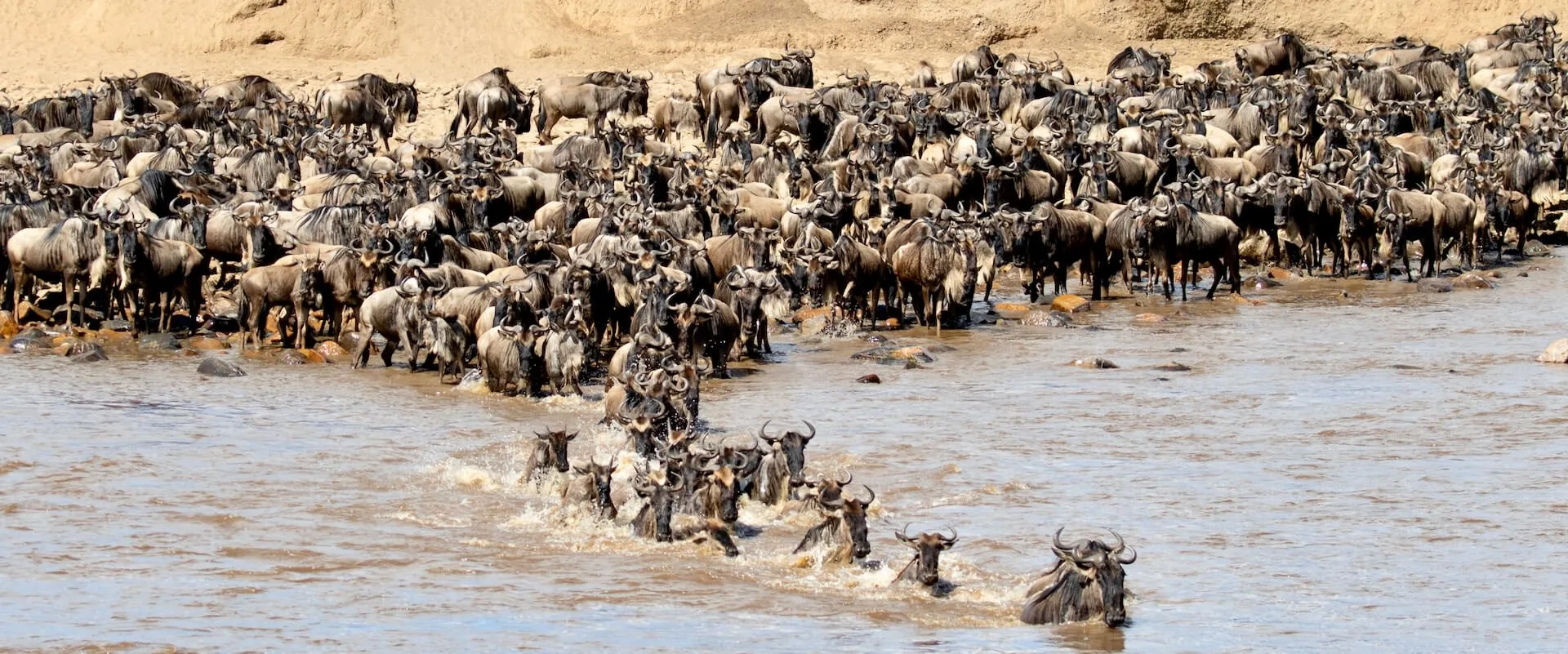
The Great Migration in Africa happens all year because the herds continuously circulate through the Serengeti–Mara ecosystem in…
Read article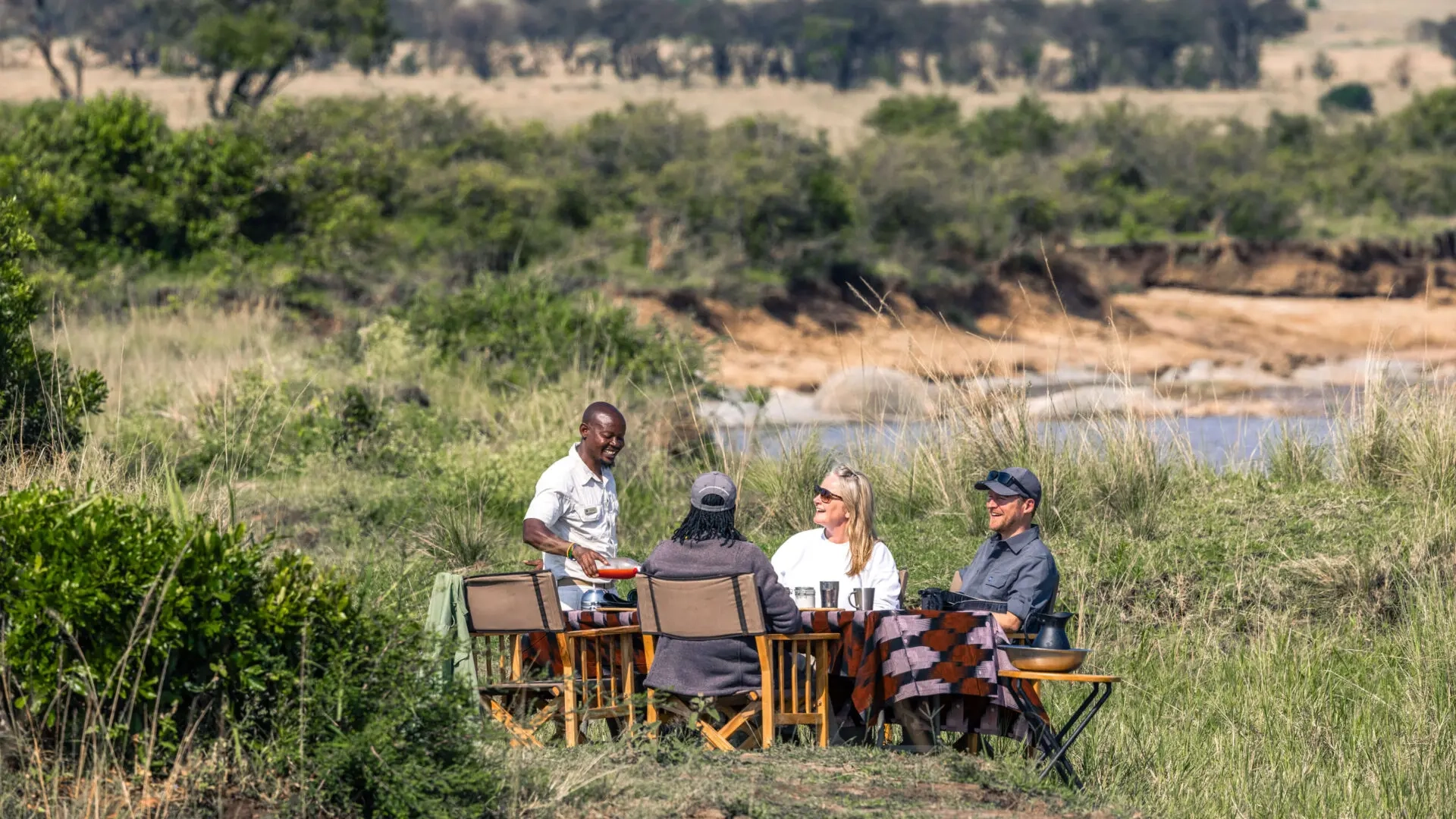
Definitive answer: A picnic lunch on safari is a packed or catered midday meal eaten at an approved…
Read article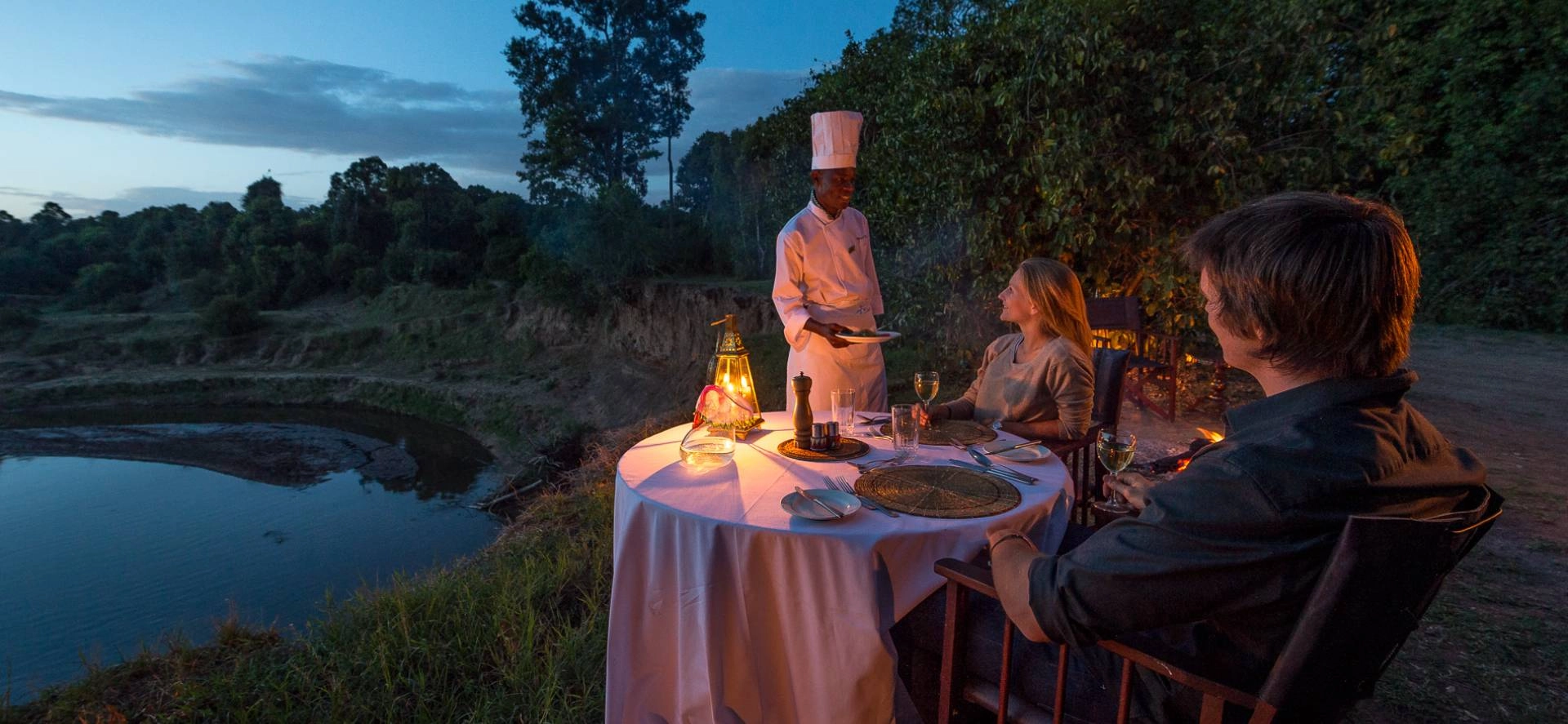
Definitive answer: A bush dinner is an outdoor evening meal arranged in a safe safari setting away from…
Read articleLet us take you closer to the wildlife, people and places that make Africa extraordinary.
Plan Your Safari Today