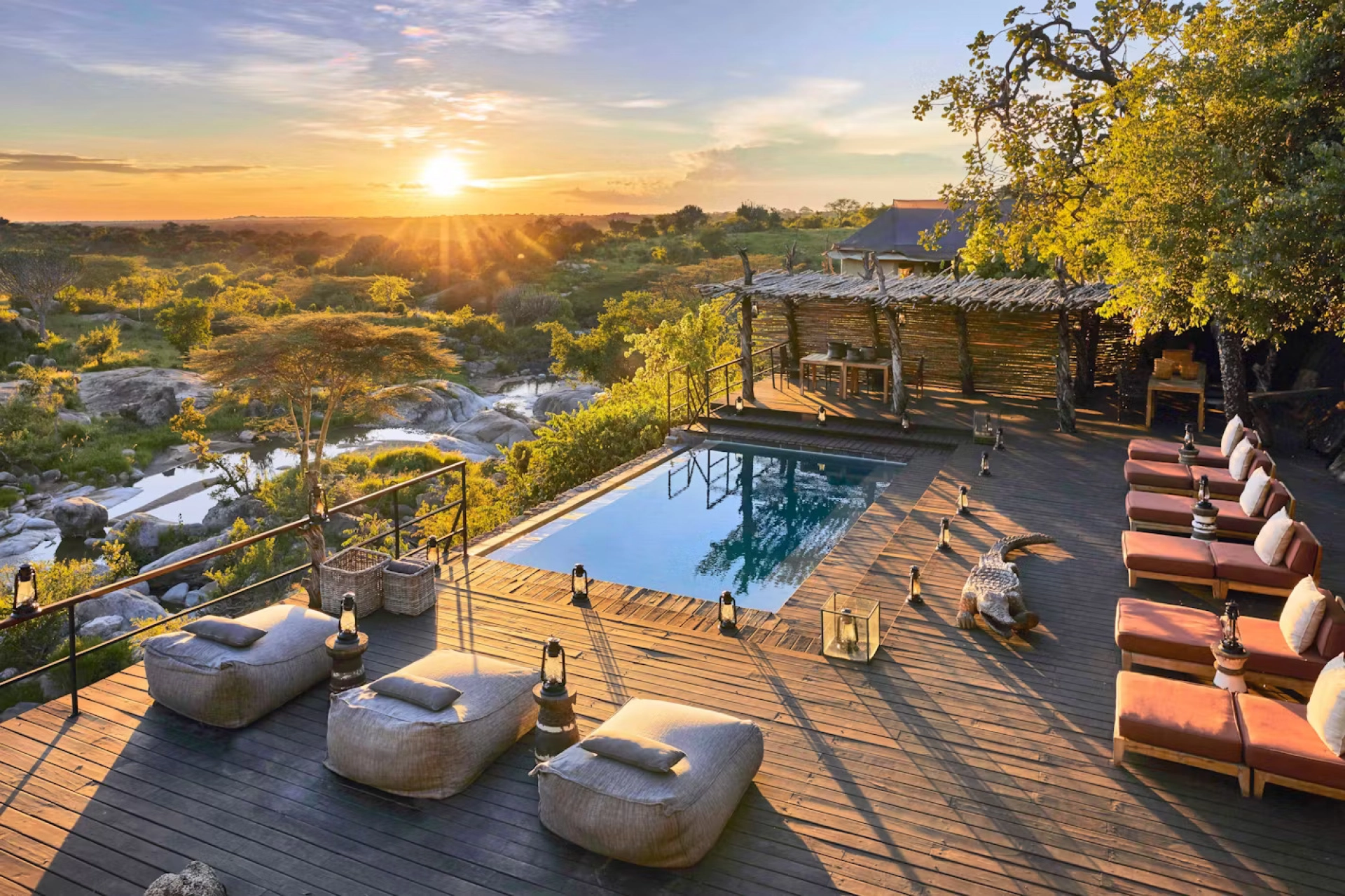
What should I look for when booking a luxury African safari?
When booking a luxury African safari, look beyond the room and compare the quality of guiding, wildlife location,…
Read article
FAQs
For most travelers, three to four major safari destinations is a comfortable target for a 10-day African safari, although the ideal number depends more on geography than on a fixed formula. Three well-connected parks can produce a deeper safari than five distant destinations requiring constant transfers. If gorilla or chimpanzee trekking, domestic flights or a beach extension are included, the number of conventional wildlife parks may need to be reduced.
For most travelers, three to four major safari destinations is a comfortable target for a 10-day African safari, although the ideal number depends more on geography than on a fixed formula. Three well-connected parks can produce a deeper safari than five distant destinations requiring constant transfers. If gorilla or chimpanzee trekking, domestic flights or a beach extension are included, the number of conventional wildlife parks may need to be reduced.

Absolutely.
Three well-selected destinations can produce an outstanding ten-day safari because each park can receive enough time for several activities rather than a brief visit.
Imagine spending three nights in one wildlife area, three nights in another and two nights in a third, with the remaining nights positioned around arrival, departure or transfers. You now have repeated opportunities for morning and afternoon game drives rather than constantly packing and changing lodges.
Wildlife viewing improves with time because animals do not appear according to a fixed schedule. A quiet first game drive can be followed by an extraordinary morning the next day. Staying longer gives nature more opportunities to surprise you.
Not necessarily.
Four destinations can fit comfortably into ten days when they form a logical geographical circuit and transfer times remain manageable. This is particularly true where different destinations provide contrasting experiences.
For example, one destination might provide chimpanzee trekking, another savannah wildlife, another gorilla trekking and another a different landscape or wildlife activity. In that situation, each stop adds something meaningful.
The problem begins when the fourth destination is included simply to increase the park count.
Every park should justify the time required to reach it.
You can, but the itinerary needs careful examination.
Five parks across ten days can easily produce a pattern of one- and two-night stays with frequent long transfers. On paper, this looks impressive because the itinerary contains many famous names. In practice, travelers may spend a large proportion of the holiday checking out of lodges, loading luggage and driving.
There are exceptions. Five closely connected destinations can sometimes work, especially when some are brief stops along a natural route.
But if each park requires several hours of travel, five is likely to create a faster safari than many travelers expect.
Because ten days in Uganda is completely different from ten days spread between Kenya, Tanzania and another country.
Even within a single destination, distances can vary enormously.
Two parks separated by ninety minutes of driving are easy to combine. Two parks requiring eight hours of travel effectively consume a full day.
This is why asking “How many parks can I visit?” isn’t quite the right question.
A better question is:
“How many destinations can I experience properly without spending too much of my safari in transit?”
For important wildlife areas, two or three nights is often a useful starting point.
Two nights usually provides an arrival day, one full day and a departure morning. Three nights provides considerably more flexibility and can allow multiple game drives or a combination of activities.
One-night stays are most useful when a destination is naturally positioned along the route or serves a specific purpose.
A safari containing one strategic one-night stop can be excellent.
A safari containing six consecutive one-night stops will feel very different.
Because one night rarely provides a full day.
Suppose you arrive at a lodge at 16:00 after a five-hour drive. You take a short evening game drive, sleep and depart at 09:00 the next morning.
Your itinerary technically includes that national park.
But your actual wildlife time may be only a few hours.
Stay two nights and you gain a complete day. That can mean a sunrise game drive, relaxed lunch and afternoon wildlife activity.
The destination begins to feel like somewhere you experienced rather than somewhere you passed through.
Often, yes.
Large or wildlife-rich ecosystems reward time.
Three nights allows you to explore different sectors, revisit productive areas and experience wildlife under different conditions.
This is particularly valuable for travelers interested in predators and photography.
A leopard may not appear during your first drive. Lions might remain hidden in tall grass. Elephants may arrive at a waterhole the following afternoon.
Wildlife probability improves when you give yourself repeated opportunities.
A first safari benefits from variety, but variety doesn’t require constant movement.
Three carefully selected ecosystems can introduce you to an enormous range of wildlife.
One might contain open plains and predators.
Another could provide wetlands, river wildlife or boat safaris.
A third might contain forest primates.
That combination can feel much richer than five savannah parks offering similar experiences.
Choose contrasting ecosystems, not merely additional park names.
Uganda lends itself particularly well to itineraries combining primates and conventional savannah wildlife.
A ten-day route might incorporate several of the country’s major western and southwestern wildlife regions, depending on the traveler’s priorities and chosen transportation.
For example, travelers interested in chimpanzees, savannah wildlife, boat experiences and mountain gorillas can construct a geographically logical route rather than trying to visit every national park.
The important point is that Uganda’s wildlife destinations are spread across substantial distances. Drive times therefore need to be treated as real components of the itinerary.
It can be an excellent inclusion, particularly for travelers wanting Nile scenery, savannah wildlife and a broader northern component.
However, combining Murchison Falls with Kibale, Queen Elizabeth and Bwindi creates a substantial road circuit.
This can work over ten days when carefully planned, but travelers should understand the transfer times.
Someone who dislikes long road journeys may prefer fewer destinations or strategic domestic flights.
The question isn’t whether Murchison Falls is worth visiting—it certainly can be—but whether it fits your specific ten-day route.
Gorilla trekking shouldn’t be treated like an ordinary two-hour attraction.
You need to reach the trekking region, stay in the correct area, attend the morning briefing and complete a trek whose duration cannot be predicted precisely.
For this reason, gorilla trekking can effectively occupy a substantial portion of the itinerary even though the actual permit is for one trekking day.
Avoid surrounding the trek with unnecessarily exhausting transfers.
The experience is significant enough to deserve proper pacing.
Chimpanzee trekking adds another specialized forest experience.
Combining gorillas and chimpanzees can create a remarkable primate-focused safari, but both activities require logistical planning.
If your ten-day itinerary includes these experiences plus several savannah parks, resist the temptation to add additional destinations merely because there appears to be a spare night.
That night may be more valuable as breathing room.
Yes, but destination selection becomes important.
A multi-country itinerary involves border or regional-flight logistics in addition to ordinary park transfers.
Rather than trying to visit every famous park in both countries, concentrate on a coherent route.
A well-planned ten-day Kenya–Tanzania safari can be excellent.
A badly planned one can become a race between airports, borders and lodges.
Yes.
Uganda–Rwanda combinations can work particularly well when routes are designed around geographically sensible entry and exit points.
For example, arriving through one country and departing through another can sometimes reduce unnecessary backtracking.
The itinerary should still account for border formalities and realistic road times.
Don’t add another country simply because ten days sounds long.
International boundaries create logistical consequences.
You can, but recognize the trade-off.
A three-night beach stay leaves approximately seven days for the safari, including travel between the two.
That may still produce an excellent holiday, but you should reduce the number of safari destinations accordingly.
Trying to fit four national parks and a beach into ten days will often create excessive movement.
If beach time is important, protect it rather than treating it as an afterthought.
Flights can make four destinations significantly easier.
A road transfer requiring eight hours might be replaced by a short flight plus airport transfers.
This can preserve a valuable safari afternoon.
However, flights don’t eliminate all logistics. You still need transfers, baggage management and schedule coordination.
Use flights when they create meaningful time savings, not simply because flying appears more luxurious.
Families often benefit from fewer.
Children can enjoy wildlife enormously, but repeated long drives and constant hotel changes can become tiring.
Two or three major safari destinations with pools, downtime and varied activities can provide a better family holiday than four or five hurried parks.
Private vehicles also allow families to shorten game drives when children become tired.
Comfort and mobility should influence pacing.
A road safari may involve bumpy tracks and several hours in a vehicle.
There is no reason older travelers cannot enjoy complex safari itineraries, but unnecessary hotel changes should be minimized.
Two- and three-night stays often provide a much more comfortable rhythm.
Usually fewer.
Photography rewards patience.
Instead of collecting ten photographs from ten destinations, photographers often benefit from repeatedly exploring one productive ecosystem.
Light changes.
Animals move.
Behavior develops.
Guides learn what you’re looking for.
A three-night or four-night stay can therefore produce better photographic results than constantly changing parks.
A ten-day trip doesn’t necessarily provide ten full safari days.
International arrival may consume Day 1.
Departure may occupy much of Day 10.
That leaves eight operational days.
If two or three of those are dominated by transfers, your actual wildlife time decreases quickly.
Always count usable safari days, not just the number printed on the itinerary title.
A balanced itinerary might include a mixture of two- and three-night stays with strategically placed transfer days.
For example, rather than trying to reach five parks, you might spend meaningful time in three or four areas and allow the route to breathe.
The exact structure depends on destination, but the principle remains consistent:
Travel less often and experience more when you arrive.
No.
Three parks can be too many if they’re extremely far apart.
Four can be perfectly comfortable if they’re geographically connected.
The ideal number depends on:
Travel distance.
Road conditions.
Flights.
Wildlife priorities.
Activities.
Age and fitness.
Accommodation location.
International arrival and departure times.
Private versus group travel.
The itinerary needs to be evaluated as a complete system.
When comparing itineraries, don’t count national parks and assume the longer list represents better value.
Instead, count how many sunrise game drives you’ll have.
Count how many full days are spent inside wildlife areas.
Count how many times you need to repack your luggage.
Count the long transfers.
Then compare.
For most travelers, three to four thoughtfully selected safari destinations will provide more than enough variety across ten days while preserving the time required to actually enjoy Africa.
Continue with:
A ten-day safari should feel substantial, not hurried. The goal is to return home remembering wildlife encounters rather than transfer days.

Share This Article
When booking a luxury African safari, look beyond the room and compare the quality of guiding, wildlife location,…
Read article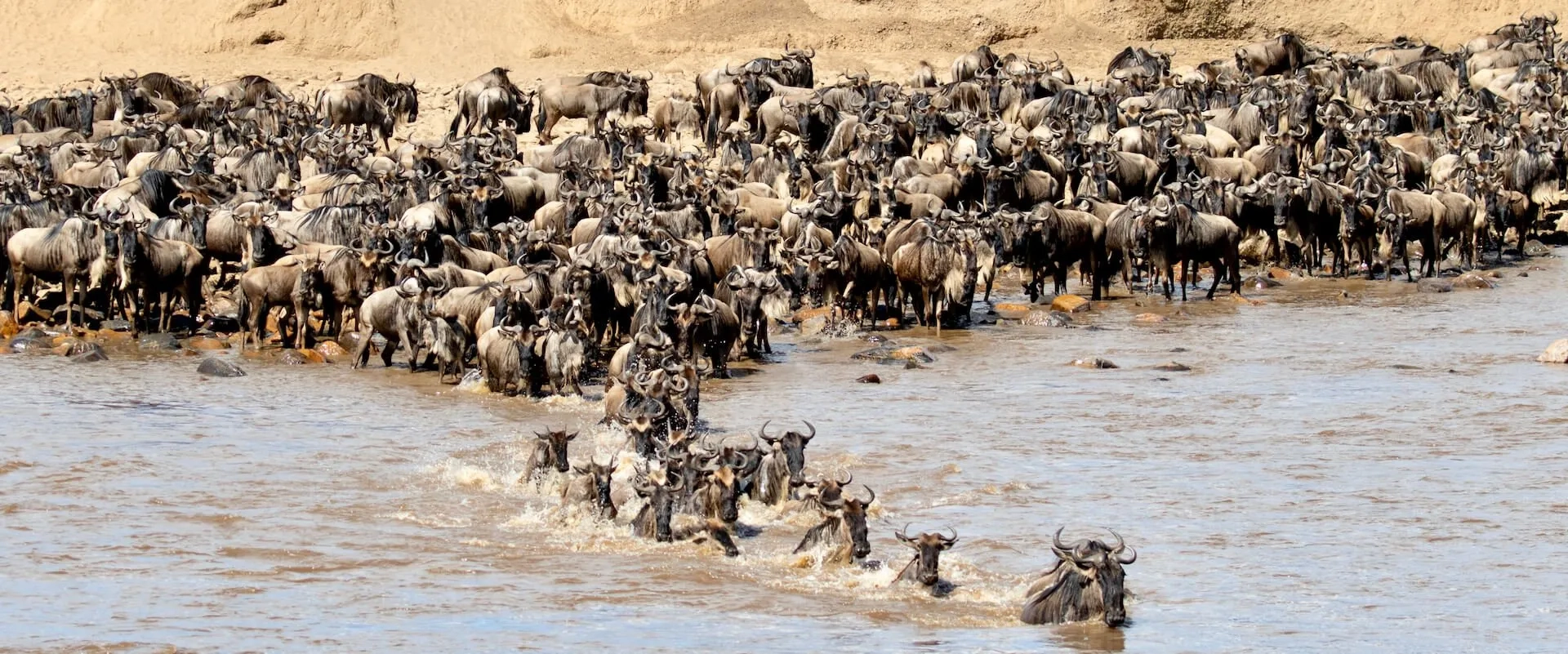
The Great Migration in Africa happens all year because the herds continuously circulate through the Serengeti–Mara ecosystem in…
Read article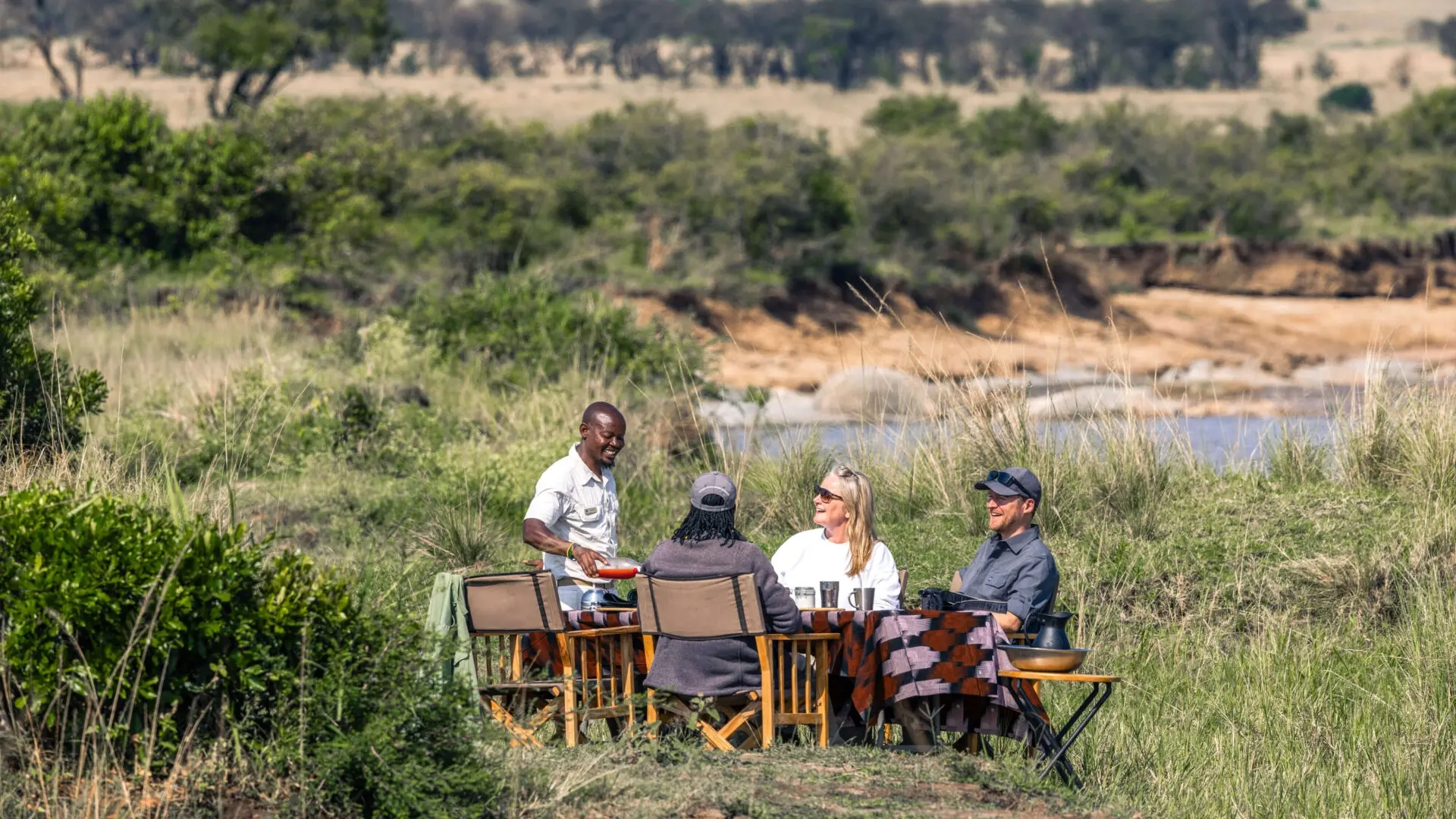
Definitive answer: A picnic lunch on safari is a packed or catered midday meal eaten at an approved…
Read article
Definitive answer: A bush dinner is an outdoor evening meal arranged in a safe safari setting away from…
Read articleLet us take you closer to the wildlife, people and places that make Africa extraordinary.
Plan Your Safari Today