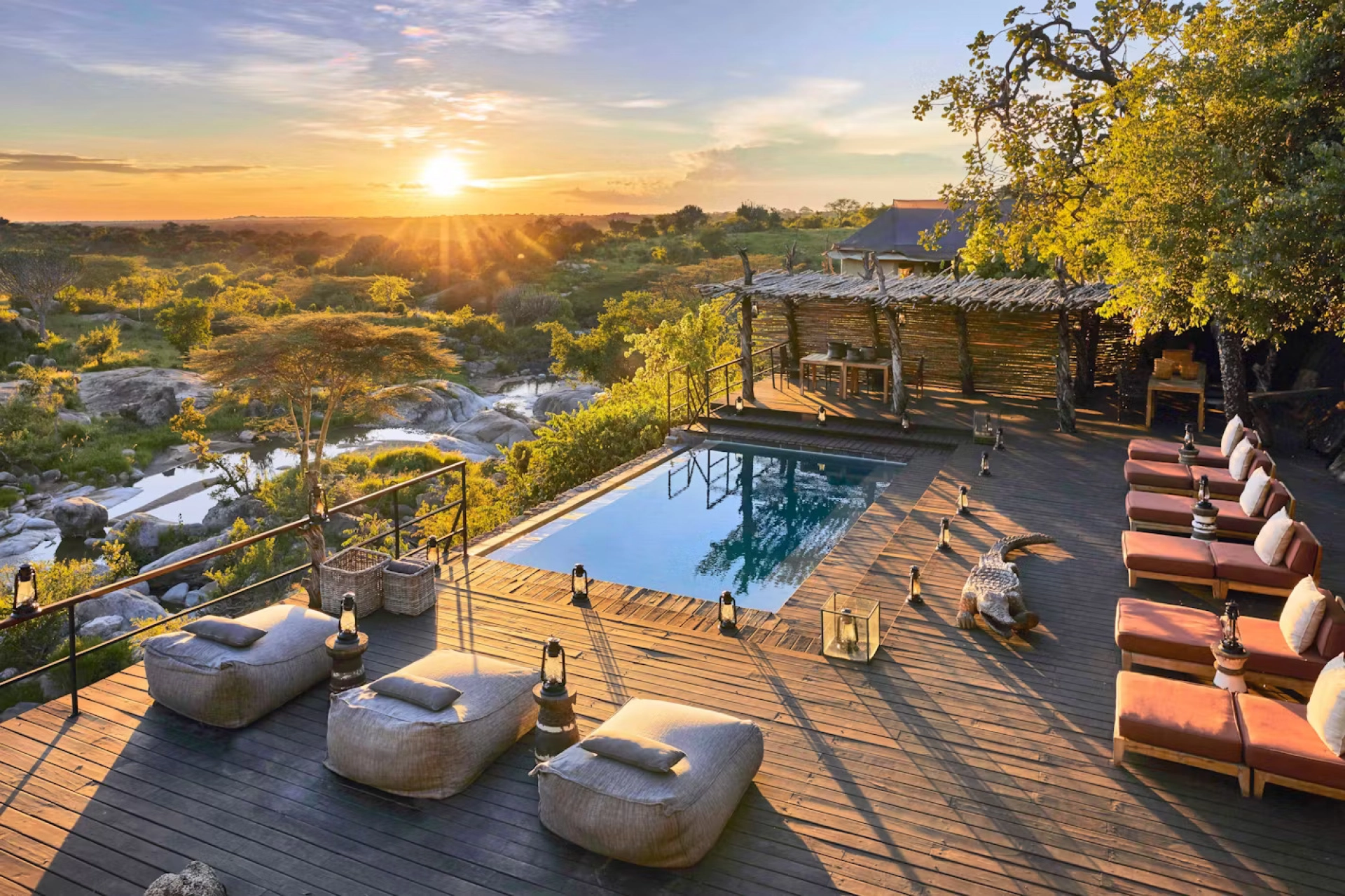
What should I look for when booking a luxury African safari?
When booking a luxury African safari, look beyond the room and compare the quality of guiding, wildlife location,…
Read article

FAQs
For most travelers, four to six major safari destinations can work well within a 14-day African safari, provided the route is geographically logical and important parks receive multiple nights. Four destinations creates a slower, more immersive safari, while five or six can provide greater ecological variety. Visiting substantially more may be possible, but frequent transfers can begin reducing the quality of the experience.
For most travelers, four to six major safari destinations can work well within a 14-day African safari, provided the route is geographically logical and important parks receive multiple nights. Four destinations creates a slower, more immersive safari, while five or six can provide greater ecological variety. Visiting substantially more may be possible, but frequent transfers can begin reducing the quality of the experience.
Not at all.
Four destinations over fourteen days can produce an exceptionally rich safari.
It allows approximately three nights in several major areas, depending on arrival and departure logistics.
That gives you time for repeated game drives, varied activities and occasional downtime.
For travelers who dislike rushing, four carefully chosen parks may be close to ideal.
For many travelers, yes.
Five destinations can provide significant variety while still allowing multiple nights in important areas.
The success depends on route design.
If the parks follow a natural circuit, transfers become part of a coherent journey.
If they’re scattered across enormous distances, even five can feel excessive.
Always examine geography before approving the itinerary.
Yes.
Fourteen days provides more flexibility than a shorter safari.
Six destinations can work when some are relatively close together or connected by efficient flights.
However, avoid turning every second day into a relocation.
If visiting six parks requires six hotel changes in ten days, reconsider whether each stop is genuinely necessary.
Technically, yes.
Whether you should is another question.
A fourteen-day itinerary visiting eight national parks averages less than two nights per destination before accounting for international flights and transfers.
You may spend much of the journey arriving and departing.
There are unusual routes where several protected areas lie close together, but generally, seven or eight major destinations begins moving toward a checklist-style safari.
Because Africa offers far more than game drives.
Two weeks gives you room to incorporate experiences such as:
Gorilla trekking.
Chimpanzee trekking.
Boat safaris.
Walking safaris.
Birding.
Cultural experiences.
Community tourism.
Coffee or agricultural experiences.
Scenic areas.
Rest periods.
Beach extensions.
Adding variety through activities can be more rewarding than simply adding another national park.
Three nights is often an excellent allocation for important wildlife areas.
It normally provides multiple mornings and afternoons for wildlife viewing.
Four nights can be worthwhile in particularly productive ecosystems, especially for photographers.
Two nights may be sufficient for smaller destinations or parks serving a specific role within the route.
One-night stops should be used selectively.
Because wildlife viewing benefits from repetition.
The first afternoon might produce elephants.
The following morning brings lions.
The next day your guide locates a leopard.
Weather and light change.
Different parts of the ecosystem become productive.
You also have time to slow down.
Instead of racing toward every reported sighting, the guide can explore more naturally.
Not necessarily a full day doing nothing, but some downtime is often beneficial.
Two weeks of 05:30 wake-ups, long game drives and road transfers can become exhausting.
A relaxed afternoon at a well-located lodge can be extremely valuable.
You might swim, sleep, watch wildlife from the terrace, review photographs or simply enjoy the landscape.
Rest isn’t wasted safari time.
It protects the quality of the days that follow.
Yes, and two weeks gives substantially more flexibility for this type of combination.
Mountain gorilla trekking can be paired with savannah wildlife either within the broader East African region or as part of a carefully planned multi-country journey.
The itinerary should account for flights, road transfers, border procedures and the physical demands of trekking.
Avoid treating gorilla trekking as something to squeeze between two exhausting transfer days.
Fourteen days is particularly suitable for combining multiple primate experiences with conventional safari.
A journey can include chimpanzee trekking, gorilla trekking, savannah game drives and water-based wildlife activities without requiring the same compromises as a much shorter trip.
This is one reason Uganda works especially well for travelers wanting ecological variety.
Forest and savannah experiences can form part of one coherent journey.
The answer depends on whether your focus is primates, savannah wildlife, birding or a broad first-time overview.
Two weeks provides enough time to combine several of Uganda’s major western and northern wildlife regions while maintaining a reasonable pace, provided the route is logically structured.
However, there is still no need to visit every national park.
A safari including major primate forests, savannah ecosystems and perhaps the Nile region already provides enormous diversity.
Yes.
Two weeks gives comfortable scope for a well-designed Uganda–Rwanda itinerary.
Travelers can combine primates, savannah wildlife, cultural experiences and scenic regions while avoiding some of the rushed pacing associated with shorter cross-border trips.
An open-jaw flight strategy—arriving in one country and departing from another—may also reduce unnecessary backtracking depending on the itinerary.
Yes.
Fourteen days can provide an excellent timeframe for a combined Kenya–Tanzania safari, particularly when destinations are selected according to season and wildlife priorities.
The mistake is assuming that two weeks means you should include every famous park in both countries.
Choose the strongest combination for your travel month rather than building the route entirely around famous names.
Potentially.
But every additional country creates another layer of logistics.
Regional flights or land borders consume time.
Visa or entry requirements must be considered.
Airline schedules may dictate overnight stops.
A three-country itinerary can be excellent when each destination adds something genuinely different.
It can also become unnecessarily complicated when countries are added simply for prestige.
Victoria Falls can complement a southern or eastern African safari, but adding it requires transportation time.
A two-week itinerary gives more room for such combinations than a ten-day trip.
Still, examine the flight connections carefully.
A destination that appears close on a map may require a substantial portion of a day to reach.
Yes.
Fourteen days is long enough to combine a meaningful safari with several nights at the coast.
For example, you might dedicate roughly nine or ten days to wildlife and the remainder to the beach, depending on flight logistics.
This can produce an excellent balance between active mornings and relaxation.
Don’t try to preserve the same number of parks after adding the beach.
Reduce the safari route accordingly.
Domestic flights can make distant destinations practical.
A flight may save most of a day compared with road travel.
This can allow an additional destination without increasing fatigue.
However, flying isn’t always necessary.
Some overland routes are naturally scenic and geographically logical.
The goal isn’t to minimize every drive.
It is to eliminate drives that consume time without adding much to the experience.
Families should resist filling all fourteen days with continuous activity.
A slower rhythm can work extremely well.
Children may enjoy three nights at a lodge with a pool and wildlife nearby far more than moving to another hotel every day.
Consider mixing game drives with boat trips, cultural experiences and relaxed afternoons.
Private vehicles are especially valuable because activity duration can be adjusted.
Honeymoon safaris often benefit from fewer destinations and better accommodation.
Instead of visiting six parks, couples may prefer four or five with longer stays at beautiful lodges.
This creates time for private dinners, spa treatments, pools and simply enjoying the setting.
A honeymoon doesn’t need to be a wildlife endurance challenge.
Even over fourteen days, photographers may prefer three or four primary wildlife areas.
Longer stays allow repeated exploration under different light.
A photographer may happily spend four nights in one ecosystem while a first-time traveler might prefer more variety.
Low vehicle occupancy and guide quality can be more important than increasing destination count.
Yes.
Repeated game drives aren’t necessarily repetitive.
Wildlife changes constantly.
A pride of lions sleeping on Monday may hunt on Tuesday.
A dry waterhole can be full of elephants the next afternoon.
Light, weather and animal movement transform the landscape.
The more carefully you observe one ecosystem, the more complex it becomes.
Seasonality should strongly influence destination selection.
If you’re traveling for a particular migration or wildlife event, spending more time in the correct region may be far more valuable than visiting additional parks.
The strongest 14-day itinerary in one month may differ substantially from the strongest route six months later.
Ask why each destination is being included for your exact travel period.
Fourteen days sounds long during planning.
Once international arrival, departure and transfer days are removed, the usable safari period becomes shorter.
Trying to “take advantage” of every day by adding destinations can ironically reduce the quality of the journey.
A better use of the additional time is often staying longer in the best places.
The journey should alternate intensity.
Perhaps you begin with several wildlife-focused days, follow with a slower afternoon, continue to a primate destination, then spend three nights in another ecosystem.
This creates rhythm.
A safari shouldn’t feel identical every day, but it also shouldn’t feel like a race.
Think of the choices this way:
Four destinations: slower, immersive and excellent for photography or relaxation.
Five destinations: strong balance of diversity and depth for many first-time travelers.
Six destinations: workable when geography and transport are efficient.
Seven or more: requires careful justification and may become rushed.
These aren’t rigid rules.
They are useful planning frameworks.
When the safari ends, do you want to remember changing hotels?
Or do you want to remember the morning you spent watching a leopard descend from a tree, the afternoon elephants surrounded a waterhole and the hour you sat quietly with mountain gorillas?
Time creates those memories.
A well-designed 14-day safari doesn’t need to prove its value by including the maximum number of parks.
For most travelers, four to six carefully selected destinations provides more than enough variety while allowing Africa’s landscapes and wildlife to be experienced properly.
Continue with:
Two weeks gives you the luxury of time. Use that time to go deeper rather than simply farther.

Share This Article
When booking a luxury African safari, look beyond the room and compare the quality of guiding, wildlife location,…
Read article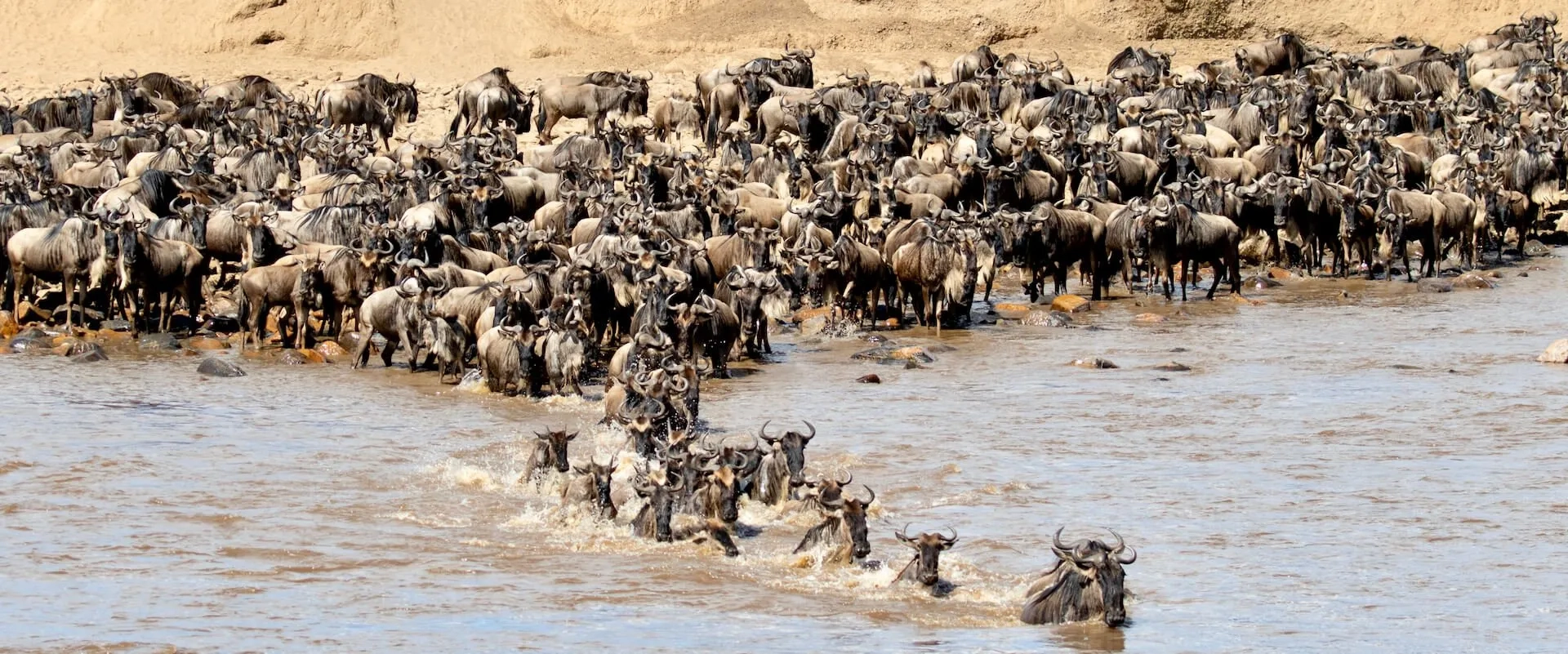
The Great Migration in Africa happens all year because the herds continuously circulate through the Serengeti–Mara ecosystem in…
Read article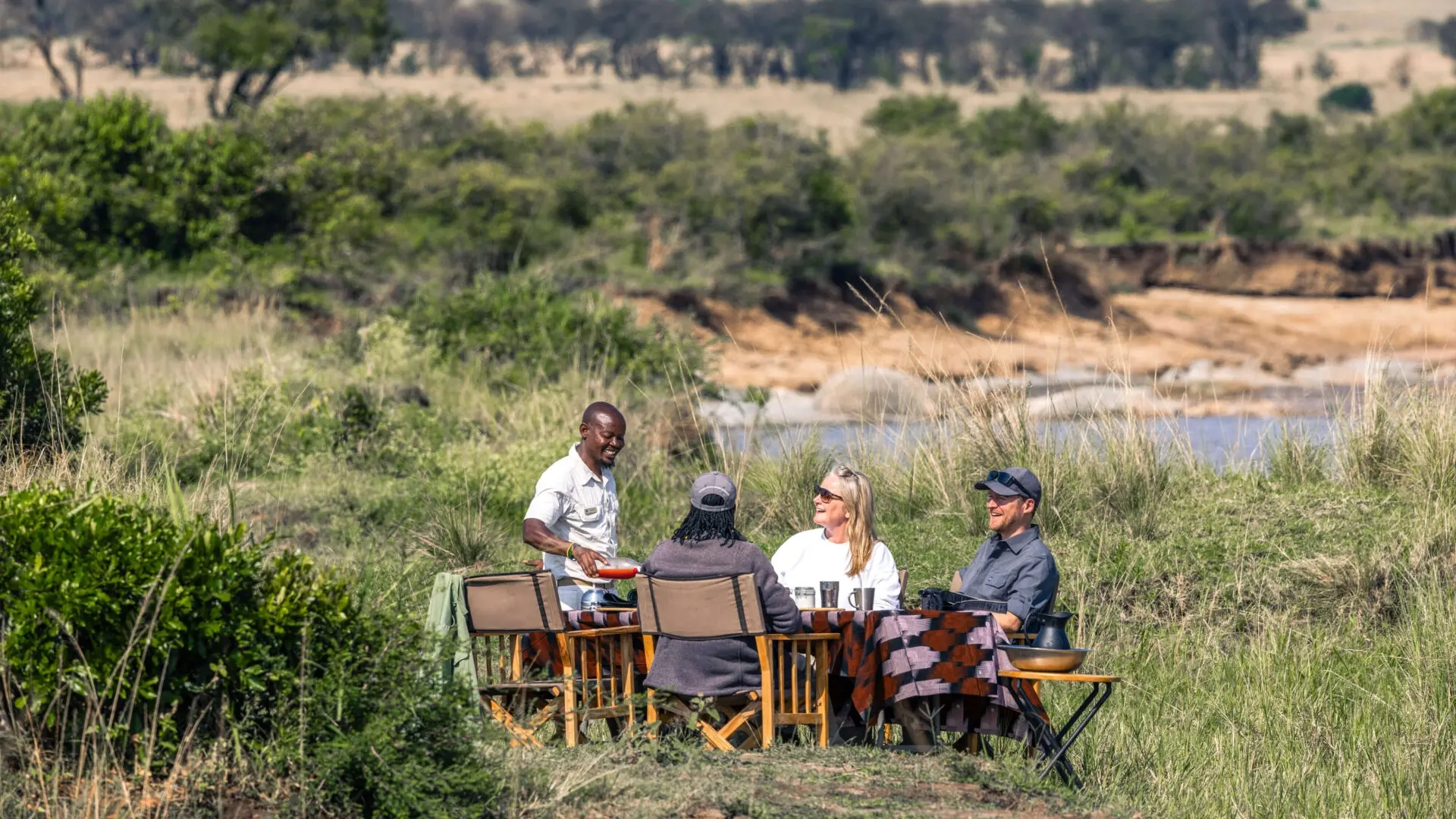
Definitive answer: A picnic lunch on safari is a packed or catered midday meal eaten at an approved…
Read article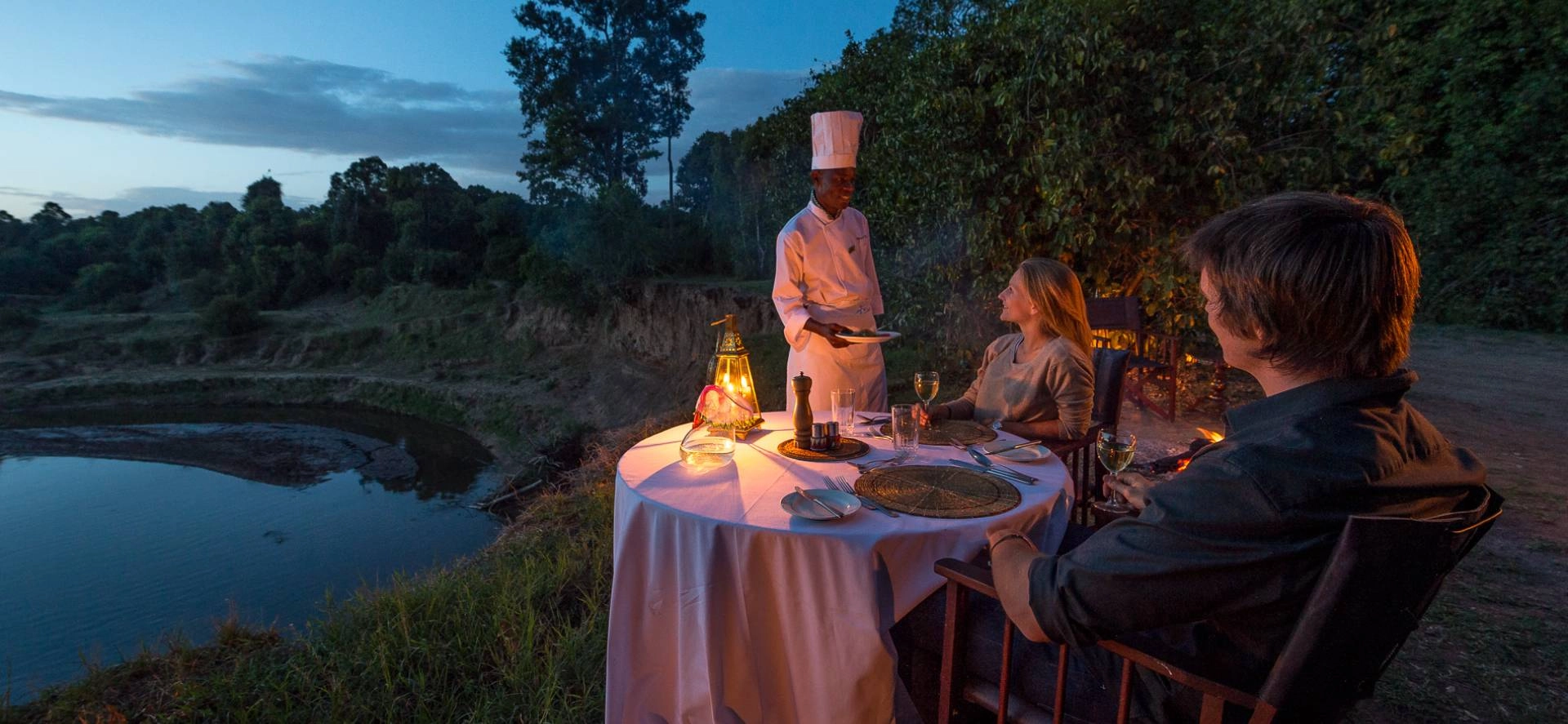
Definitive answer: A bush dinner is an outdoor evening meal arranged in a safe safari setting away from…
Read articleLet us take you closer to the wildlife, people and places that make Africa extraordinary.
Plan Your Safari Today