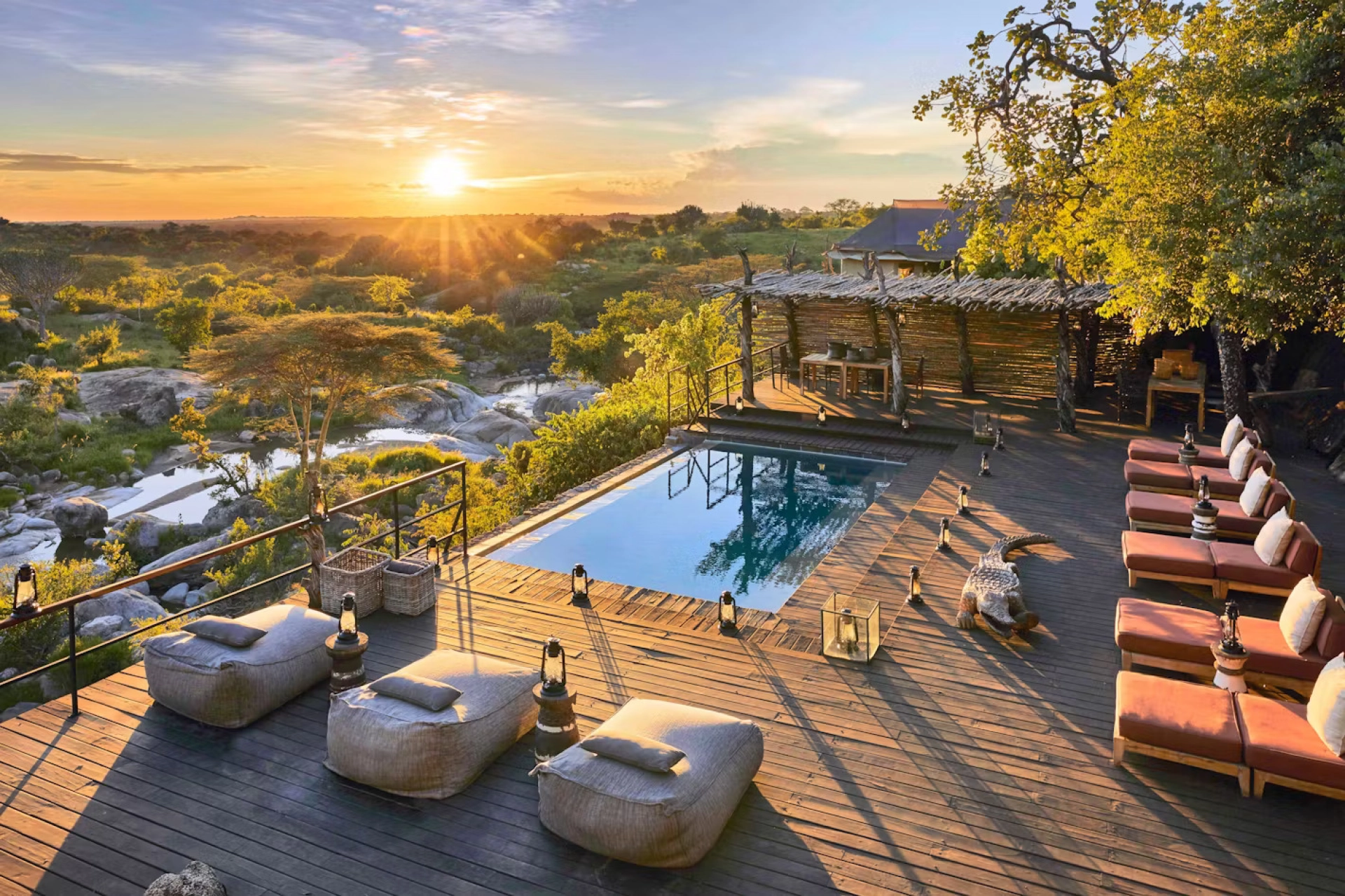
What should I look for when booking a luxury African safari?
When booking a luxury African safari, look beyond the room and compare the quality of guiding, wildlife location,…
Read article

Travel Guide
How much does a Serengeti safari cost? It sounds like a simple question, but there is no single Serengeti safari price. A traveller joining an affordable camping trip during a lower-demand period can experience the same…
How much does a Serengeti safari cost? It sounds like a simple question, but there is no single Serengeti safari price. A traveller joining an affordable camping trip during a lower-demand period can experience the same extraordinary ecosystem as a honeymoon couple staying in an exclusive tented suite and flying between camps. One safari may focus on simple accommodation and road transport, while another includes private vehicles, internal flights, luxury camps and exclusive services. Both are still Serengeti safaris. The difference lies in how the journey is organised.
Your Serengeti safari cost depends on accommodation level, number of travellers, season, number of safari days, park and conservation fees, vehicle arrangements, guide services, road versus air transport, the Serengeti region you visit and whether the itinerary includes other destinations such as Ngorongoro Crater, Tarangire National Park, Lake Manyara, Zanzibar or Kenya’s Masai Mara National Reserve.
This makes it important to compare complete Serengeti safari packages rather than simply comparing nightly lodge rates. A lodge may appear inexpensive but be badly positioned for your intended wildlife experience. Another may look more expensive but save hours of driving each day because it is located inside the right section of Serengeti. Likewise, an apparently cheap package may exclude important fees that another operator has already included. The most useful question is therefore not simply, “What is the cheapest Serengeti safari?” It is: What is the best Serengeti safari I can arrange for my available budget? That distinction can completely change the quality of your Tanzania safari.
The Serengeti National Park is a protected wilderness rather than an ordinary holiday destination.
Operating safaris in remote wildlife areas requires substantial infrastructure. Vehicles must travel long distances. Fuel has to be transported and purchased. Professional guides spend multiple days away from their home bases. Accommodation properties operate in environments where supplies, food, equipment and staff logistics can be considerably more complicated than in cities. Protected-area and conservation fees must also be paid. Many camps generate their own electricity, manage water carefully and operate extensive logistical systems to function inside or close to wilderness areas.
When you pay for a Tanzania Serengeti safari, you are therefore paying for far more than a hotel room. You are paying for access to one of the world’s greatest wildlife ecosystems.
Several major factors determine Serengeti safari prices.
Understanding them makes it much easier to reduce costs intelligently without damaging the experience.
Accommodation can create one of the largest differences between budget, midrange and luxury Serengeti safari prices.
Serengeti accommodation ranges from relatively simple camps to some of Africa’s most exclusive safari properties. A budget traveller may sleep in a basic tent or modest permanent camp. A midrange traveller might stay in a comfortable tented camp with an ensuite bathroom, proper bed, restaurant and excellent wildlife location. A luxury traveller may have an enormous safari suite, private deck, exceptional dining and highly personalised service. At the highest end, travellers may use private villas or exclusive camps.
Yet all of these travellers can potentially encounter the same lion pride the following morning. That is one of the most important realities of safari pricing. Wildlife sightings are not sold according to your accommodation category.
A budget Serengeti safari generally reduces the amount spent on accommodation while maintaining access to the national park and wildlife.
This can involve camping or relatively simple tented camps. The advantage is obvious: lower cost. The disadvantage is reduced comfort. Facilities may be simpler. Rooms or tents may be smaller. Menus may be less elaborate. But for adventurous travellers who spend most of the day on game drives, this can represent excellent value. A comfortable bed, hot meal and safe camp may be all you need after ten hours exploring Serengeti.
For many travellers, midrange Serengeti safari packages provide the strongest overall value.
Modern tented camps can be extremely comfortable without reaching luxury pricing. Many have ensuite bathrooms, hot showers, proper beds, electricity or charging facilities, restaurants and private verandas. Most importantly, good midrange camps can occupy excellent wildlife locations. This allows travellers to direct their budget toward what matters most: safari time. Instead of paying for a private plunge pool, you might pay for an extra night in Serengeti. For a wildlife-focused traveller, the additional night will often provide greater value.
A luxury Serengeti safari adds comfort, atmosphere, exclusivity and personalised service. Luxury camps may provide spacious suites, beautiful interiors, gourmet meals, private dining and exceptional locations. Some have swimming pools. Others offer spa treatments or private plunge pools. At the highest levels, guest numbers are deliberately limited. Luxury can be particularly worthwhile for honeymooners and travellers celebrating special occasions. However, the greatest luxury is often location. A beautifully positioned camp close to seasonal wildlife movement can substantially reduce daily driving. That means more time watching animals and less time travelling to reach them.
Season has a major influence on the cost of Serengeti safari tours. High-demand periods command higher rates. Popular camps can sell out months in advance. Lower-demand periods may bring significantly reduced accommodation prices. This is one of the most powerful tools available to travellers seeking an affordable Serengeti safari.
Dry-season months are extremely popular. July, August and September attract large numbers of safari travellers. Northern Serengeti also becomes highly sought after when migration herds may be in the region and Mara River crossings become possible. Christmas and New Year can create another demand peak. During these periods, accommodation rates rise and availability becomes limited. Travellers with fixed high-season dates should book early.
The Serengeti green season can provide exceptional value. Rain transforms the landscape. Grass becomes green. Cloud formations create dramatic photography. Birdlife can be excellent. Visitor numbers decrease. Some lodges reduce rates. This allows travellers to stay in properties that might otherwise exceed their budget. The wildlife does not disappear. In fact, the southern plains can become extraordinarily active during the early-year wildebeest calving season.
This factor is frequently overlooked. A private safari vehicle has substantial fixed costs. The guide and vehicle may cost almost the same whether one traveller or four travellers are inside. Therefore, Serengeti safari cost per person generally decreases as more travellers share the vehicle. This makes safari particularly good value for couples, families and groups.
Solo travellers generally pay more per person on a private safari. They cannot divide vehicle and guide expenses with another traveller. They may also face single-room supplements. Joining a scheduled group safari can reduce these costs. Alternatively, solo travellers can accept the premium in exchange for the extraordinary flexibility of a completely private safari.
Two travellers sharing one room and one private vehicle create a much more efficient cost structure. This is why many advertised Tanzania safari prices per person are based on two people sharing. Couples also gain the flexibility of a private safari without carrying the full cost alone.
Four or more travellers can divide vehicle expenses even further. Families should consider vehicle capacity carefully. Everyone should have a suitable wildlife-viewing position. The cheapest arrangement is not worthwhile if passengers cannot comfortably photograph or observe wildlife.
A private Serengeti safari means your party has its own vehicle and guide. You decide how long to remain at wildlife sightings. You can spend forty minutes photographing a leopard while another traveller might leave after five. You can focus on birds. You can search for cheetahs. You can stop for landscapes. You can adapt the schedule to children. This flexibility is one of the greatest advantages of private safari.
A group safari costs less because several unrelated travellers share the vehicle. The disadvantage is compromise. For budget-conscious solo travellers, group safari can be excellent. For photographers, families and couples who value flexibility, private safari is often worth the additional cost.
Transport dramatically affects Serengeti safari prices. Most classic northern Tanzania safaris begin around Arusha and travel by road through destinations such as Tarangire and Ngorongoro before entering Serengeti. This is relatively economical because one safari vehicle provides both transport and game drives. A fly-in Serengeti safari uses small aircraft to reach airstrips inside or close to the park. Flying saves time. It can also be spectacular. But it increases cost.
Flying is particularly useful when holiday time is limited. It is also useful when combining distant Serengeti regions or travelling directly between Serengeti and Zanzibar. For example, after completing a northern circuit by road, flying from Serengeti to Zanzibar can prevent a long return journey to Arusha. This hybrid approach can provide excellent value.
A longer safari obviously costs more overall. But the cost per day does not always rise proportionally. Some transport costs are incurred regardless of whether you spend two or four nights in Serengeti. This means adding an extra Serengeti night can sometimes provide surprisingly good value compared with adding an entirely new destination.
For most first-time travellers, three nights in Serengeti is an excellent starting point. Two nights can work on a compact itinerary. Four or five nights are even better for wildlife enthusiasts. Migration-focused safaris may require longer because different Serengeti regions can be separated by considerable distances.
Usually, no, unless you are already positioned very close to the park or flying in for a highly specific experience. Serengeti is enormous. Trying to treat it as a quick excursion defeats much of its purpose. Wildlife requires time. The longer you remain, the greater the opportunity for unusual behaviour and memorable sightings.
Protected-area charges form a significant part of the cost of visiting Serengeti National Park. These fees contribute to conservation and park management. Depending on the route and accommodation arrangements, a safari may also involve other government or conservation-related charges. Exact official charges can change. Therefore, travellers should obtain current quotations for their exact travel dates rather than relying on outdated online price tables. When comparing safari offers, ask whether all required park and conservation fees are included.
Many Serengeti safari itineraries also include Ngorongoro. This increases the overall safari price because Ngorongoro has its own access and crater-related charges. However, removing Ngorongoro simply to save money is often a poor decision for a first Tanzania safari. The crater provides a wildlife experience completely different from Serengeti. It is one of the best places in Tanzania to search for black rhinos and observe high wildlife densities in a spectacular volcanic setting. If your budget is tight, downgrade accommodation before automatically eliminating Ngorongoro Crater safari.
The vehicle is your mobile observation platform. On some days, you may spend eight or more hours inside it. A quality 4×4 Tanzania safari vehicle should provide good visibility, comfortable seating and reliable performance on rough roads. A mechanical breakdown can cost valuable safari time. Vehicle quality therefore matters more than many travellers realise. When comparing cheap Serengeti safari packages, do not look only at lodge names. Ask about the vehicle.
An excellent guide can transform Serengeti. Anyone can point toward a visible elephant. A skilled Tanzania safari guide interprets behaviour. They recognise tracks. They understand habitat. They listen to alarm calls. They know where leopards prefer to rest. They understand how predators use terrain. They position the vehicle for photography without disturbing animals. They know when to leave a crowded sighting and search for something better. Your guide is therefore one of the least sensible places to cut costs.
Rather than treating safari price as one fixed number, it is more useful to think in categories.
A budget safari in Serengeti prioritises wildlife over luxury. Expect simpler accommodation, road transfers and fewer expensive extras. Camping may be used. Scheduled group departures may reduce vehicle costs. Budget safari works particularly well for younger travellers, adventurous couples and anyone who would rather spend money on additional safari days than luxury rooms.
A midrange Serengeti safari provides comfortable accommodation while keeping the emphasis on wildlife. This is the category we recommend for many travellers. You receive a comfortable bed, private bathroom and attractive camp while retaining enough budget for a well-designed itinerary. A private 4×4 combined with good midrange camps can provide an outstanding safari.
A luxury safari in Serengeti adds exceptional camps, fine dining, personalised service and often strategic locations. Flights may replace long road transfers. Private game-drive arrangements can be added. Luxury safari is ideal for honeymooners, special occasions and travellers who value comfort as strongly as wildlife.
At the highest level, private villas and exclusive-use camps can provide complete privacy. Guests may have their own guide, vehicle, chef and staff. This is not necessary for exceptional wildlife viewing, but it provides a level of flexibility and seclusion unavailable on conventional safaris.
A 3-day Serengeti safari can vary enormously. The cost depends on whether you drive from Arusha, fly directly into Serengeti, camp or stay in a luxury lodge. A short fly-in luxury safari may cost more than a considerably longer road-based midrange safari. Therefore, asking for a three-day price without specifying travel style provides little useful information. The better approach is to define: your dates, number of travellers, accommodation preference, starting point, ending point, and whether the safari should be private. An operator can then calculate an accurate quotation.
Five days allows much better itinerary design. A 5-day Tanzania safari can potentially combine Ngorongoro and Serengeti or concentrate more deeply on Serengeti. For wildlife enthusiasts, adding Ngorongoro provides valuable contrast. Travellers interested specifically in migration may prefer spending most nights in Serengeti. Again, accommodation category and season will determine much of the price.
A 7-day Tanzania safari is one of the most popular formats. It can combine Tarangire National Park, Ngorongoro Crater and Serengeti National Park without extreme rushing. Budget travellers can use affordable camps. Midrange travellers have enormous accommodation choice. Luxury travellers can incorporate premium lodges and flights. Seven days is long enough to experience northern Tanzania properly while remaining manageable for travellers with limited annual leave.
A Great Migration safari can be more expensive than a general Serengeti safari because strategically located camps become highly desirable. This is especially true during popular northern migration periods. However, travellers should remember that the migration occurs throughout the year. January and February can provide extraordinary southern Serengeti experiences. Green-season pricing may sometimes be more attractive than peak river-crossing season. If the objective is simply to see enormous wildebeest herds rather than specifically a river crossing, there may be more cost-effective travel periods.
Northern Serengeti camps can become expensive when demand for Mara River crossing safaris increases. Travellers pay a premium for location. But river crossings remain unpredictable. No ethical safari operator should guarantee one. The animals decide when to cross. You improve your chances by spending several nights in the right region. Paying for one night in northern Serengeti and expecting a crossing on command is poor safari planning.
January and February can provide exceptional value for travellers interested in the southern Serengeti migration. Large herds gather across productive short-grass plains. February is particularly associated with wildebeest calving. Predator activity can be intense. These months can provide a completely different migration experience from northern river crossings. For wildlife photographers, the combination of green landscapes, newborn animals and predators can be outstanding.
July and August are peak-demand safari months. Accommodation can be expensive. Flights fill. Popular northern Serengeti camps may sell out. If these are your travel months, book early. Waiting too long may force you to stay far from your target wildlife area, which can make a supposedly cheaper safari much less efficient.
November can be excellent for travellers seeking better value. Short seasonal rains may begin transforming the landscape. Visitor numbers can decline. Accommodation rates may soften. Wildlife remains excellent. For flexible travellers, Serengeti safari in November deserves much more attention than it normally receives.
Arusha is the principal gateway to the northern Tanzania safari circuit. A Serengeti safari from Arusha can travel through Tarangire, Lake Manyara or Ngorongoro before reaching Serengeti. This route turns the transfer itself into part of the safari. Instead of paying only to reach Serengeti, travellers experience multiple ecosystems. This makes road-based northern circuit safaris particularly efficient.
A Serengeti safari from Zanzibar is popular with travellers already staying on the coast. Flying is generally the practical approach. Short fly-in safaris are possible. However, travellers with sufficient time should consider several nights rather than attempting an extremely rushed safari. Zanzibar and Serengeti are dramatically different environments, making the combination especially rewarding.
A Serengeti and Zanzibar holiday combines the two experiences most travellers associate with Tanzania: safari and Indian Ocean beach. The total cost depends heavily on Zanzibar hotel category. Budget beach hotels can keep costs manageable. Luxury beachfront resorts and private villas can dramatically increase the overall holiday price. One excellent strategy is to spend more on the safari and choose comfortable midrange accommodation at the beach, where independent dining and activity options are more widely available.
Combining Serengeti and Ngorongoro is one of Tanzania’s classic safari routes. Although Ngorongoro increases protected-area costs, the combination is exceptionally strong. Serengeti gives you scale. Ngorongoro gives you concentration. Serengeti provides enormous landscapes. Ngorongoro places wildlife inside one of Africa’s most spectacular geological formations. For a first-time Tanzania safari, the combination is usually worth the additional expense.
Adding Tarangire National Park creates an even more varied itinerary. Tarangire is particularly renowned for elephants and baobab landscapes. During the dry season, wildlife concentrates around water. A Tarangire, Ngorongoro and Serengeti safari is therefore one of the best ways to spend approximately a week in northern Tanzania.
Travellers often compare Serengeti vs Masai Mara. Both belong to the wider Serengeti-Mara ecosystem. Both offer exceptional big-cat viewing. Both participate in the Great Migration story. Kenya’s Masai Mara is geographically more compact. Serengeti is enormous and can require more travel between regions. Cost comparisons depend on accommodation, park fees, season and transport. Instead of choosing based only on price, consider combining both on a Kenya and Tanzania safari if your time and budget permit.
South Africa’s Kruger National Park can be less expensive for independent travellers because self-drive safari is practical and accommodation options are extensive. Serengeti is more commonly experienced through organised guided safaris. The ecosystems also feel very different. Kruger has extensive woodland and road infrastructure. Serengeti provides vast open landscapes and the Great Migration. A direct price comparison therefore does not tell the full story.
Reducing cost does not require damaging the safari. Travel with two or more people. Use midrange camps. Travel during shoulder periods. Drive rather than fly when practical. Spend longer in fewer destinations. Choose camps according to wildlife geography. Avoid unnecessary accommodation changes. Book early during peak periods. Most importantly, spend money on the parts of the safari that directly influence wildlife viewing.
A common budgeting mistake is reducing a seven-day safari to three days while maintaining expensive accommodation. This can create an attractive hotel experience but a weaker wildlife journey. Consider doing the opposite. Choose simpler accommodation and keep the extra safari days. More time creates more wildlife opportunities.
A cheap camp can become expensive if it is far from your intended wildlife area. You may spend several hours driving every day just to reach productive locations. Location is particularly important during migration-focused safaris. Always evaluate accommodation geographically.
Serengeti is about much more than ticking five species from a list. A cheetah hunting across open plains can be more memorable than a distant rhino. Hyenas interacting around a den can occupy an entire morning. A secretary bird hunting through grass can fascinate photographers. Thousands of wildebeest moving beneath storm clouds can become the defining image of the trip. The best Serengeti wildlife safari allows time for these moments.
Yes, for travellers who value wildlife. Serengeti is not famous because of marketing alone. Its scale, predator populations, grazing herds, landscapes and seasonal wildlife movements create one of Earth’s most remarkable terrestrial ecosystems. The experience is particularly powerful because no two game drives are identical. Wildlife remains unpredictable. That unpredictability is what makes safari real.
For travellers willing to invest in a larger East African journey, combining Serengeti safari with Uganda gorilla trekking creates extraordinary contrast. Tanzania provides open savannah. Uganda provides rainforest. One morning you may watch cheetahs on Serengeti plains. Several days later, you may be trekking through Bwindi Impenetrable National Park toward a mountain gorilla family. Add Kibale chimpanzee trekking, and the trip becomes one of Africa’s most diverse wildlife itineraries.
It costs more than visiting one country because flights and additional permits are required. But for travellers travelling long distances to Africa, combining major wildlife experiences can provide better overall value than returning on separate international trips. A Tanzania and Uganda safari is particularly suitable for travellers with 10 to 14 days or more.
There is no single price. Cost varies according to accommodation, season, number of travellers, safari length, transport, park fees and whether the trip is private or shared.
Serengeti can be expensive because of conservation fees, remote logistics and transport, but budget and midrange safari options are available.
Yes. Use simpler accommodation, road transport, group departures and lower-demand travel periods.
For couples, families and photographers, often yes. A private vehicle provides much greater flexibility.
It can be if you value exceptional accommodation, service, privacy and strategic camp locations. Luxury is not required for excellent wildlife sightings.
Lower-demand green and shoulder seasons can provide better accommodation rates, although weather and camp operations vary.
Three nights is a good starting point. Four or more is better for serious wildlife viewing or migration-focused trips.
Many complete safari packages include them, but always confirm exactly what is included in your quotation.
For most first-time visitors, yes. It provides a completely different landscape and wildlife experience.
Road-based safaris from Arusha can be more economical, while safaris from Zanzibar normally require flights.
Yes. Serengeti and Zanzibar safari holidays are among Tanzania’s most popular combinations.
Yes. Tanzania can be combined with gorilla trekking in Uganda or Rwanda to create a broader East African wildlife safari.
The answer to how much does a Serengeti safari cost ultimately depends on the safari you want to create. Do not begin with the hotel. Begin with the wildlife. Decide when you want to travel. Determine whether the Great Wildebeest Migration matters. Choose the correct Serengeti region. Decide how many days you genuinely need. Then select accommodation that fits the remaining budget. For many travellers, the best value is a private midrange Tanzania safari combining Tarangire National Park, Ngorongoro Crater and Serengeti National Park.
For budget travellers, simpler camps can dramatically reduce costs without sacrificing the fundamental wildlife experience. For luxury travellers, strategic camp locations, internal flights and private guiding can make the journey exceptionally comfortable. For honeymooners, combining a luxury Serengeti safari with Zanzibar creates an outstanding safari-and-beach holiday. And for travellers wanting the most diverse wildlife experience possible, combining the Serengeti National Park with Uganda gorilla trekking, Bwindi Impenetrable National Park and Kibale National Park creates an unforgettable East African journey.
Adventure in the Wild Safaris can customise Serengeti safari packages, budget Tanzania safaris, midrange Serengeti safaris, luxury Tanzania safaris, Great Migration tours, Serengeti and Zanzibar holidays, Kenya and Tanzania safaris, and Uganda gorilla trekking and Tanzania safari combinations around your dates, budget and preferred accommodation style. The objective should never be to find the cheapest Serengeti safari at any cost. The objective is to invest your money where it produces the greatest amount of time, comfort and unforgettable wildlife experience in one of Africa’s most extraordinary national parks.

Share This Article
When booking a luxury African safari, look beyond the room and compare the quality of guiding, wildlife location,…
Read article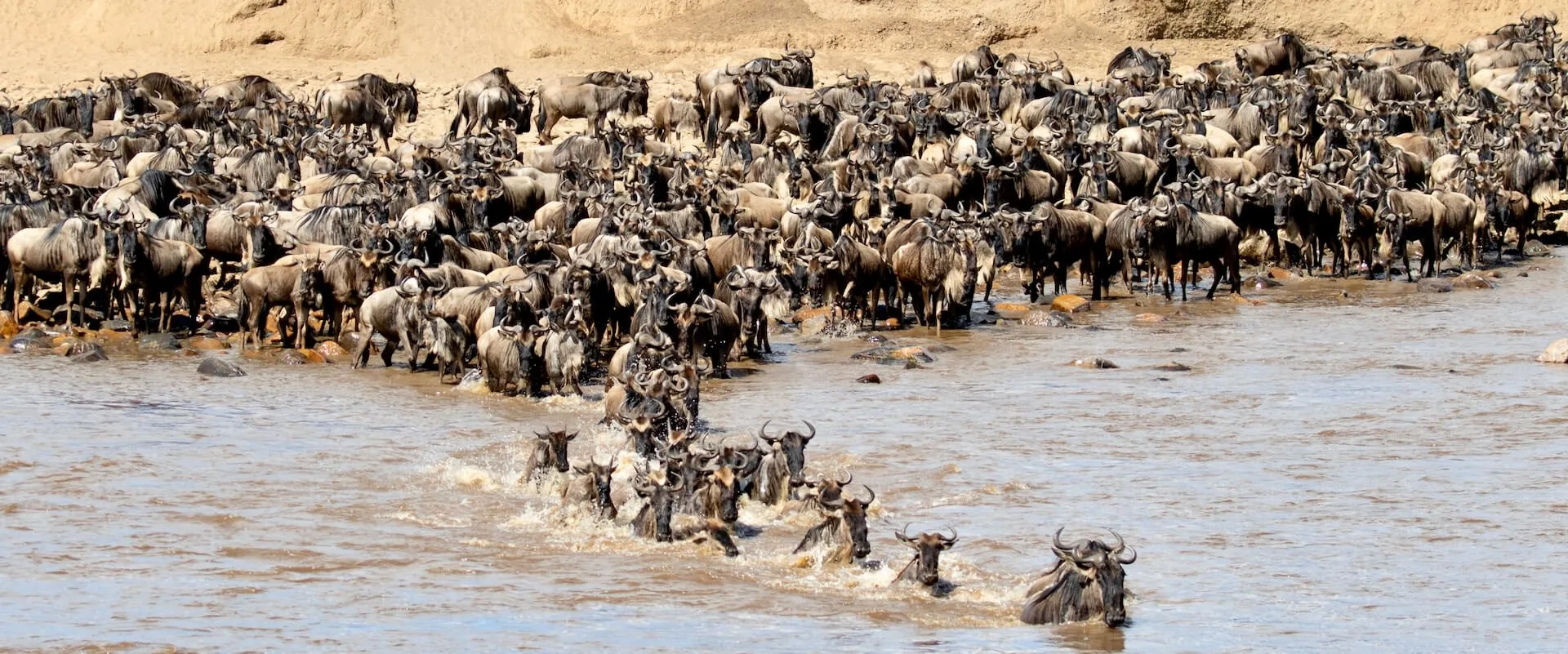
The Great Migration in Africa happens all year because the herds continuously circulate through the Serengeti–Mara ecosystem in…
Read article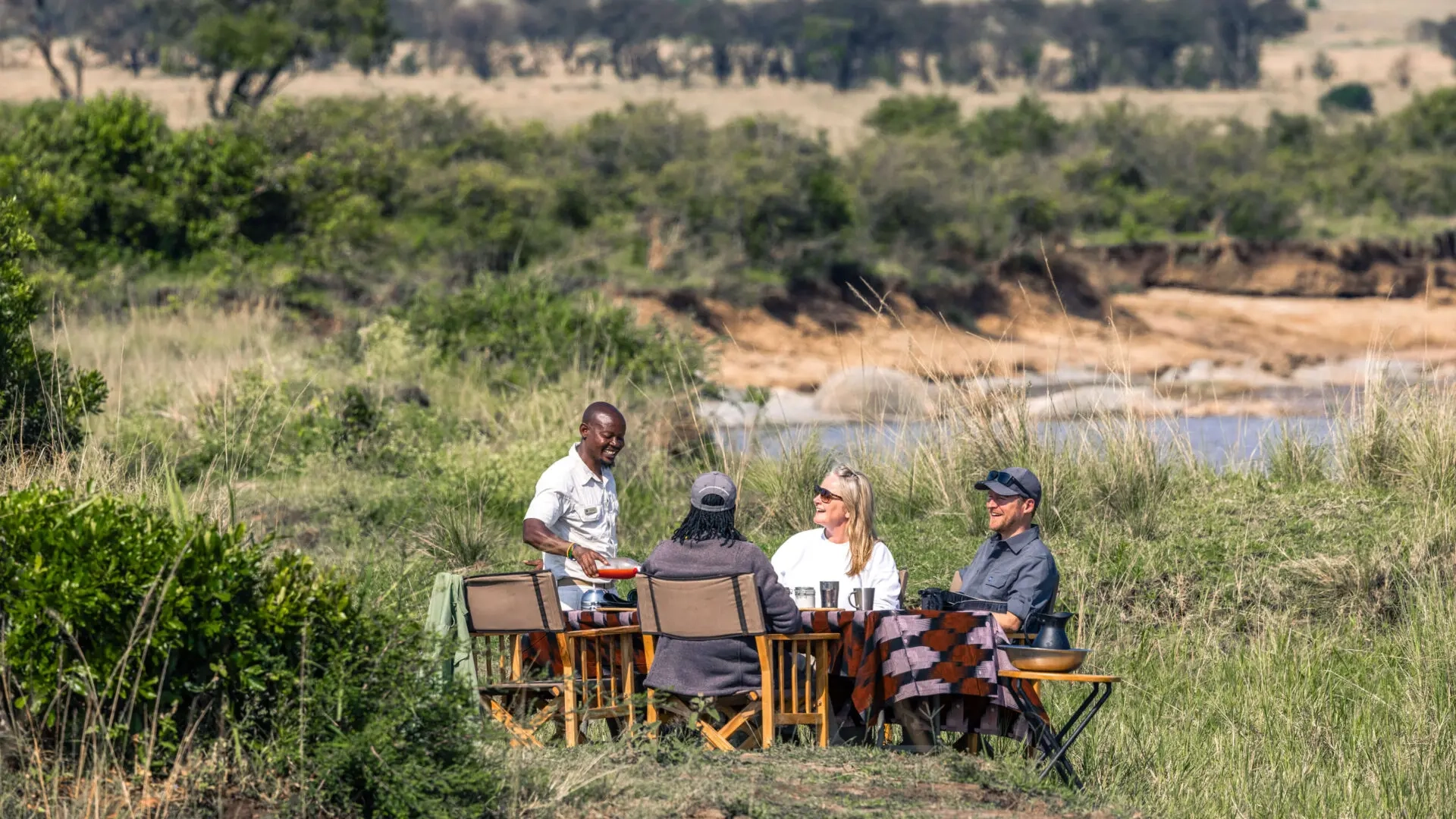
Definitive answer: A picnic lunch on safari is a packed or catered midday meal eaten at an approved…
Read article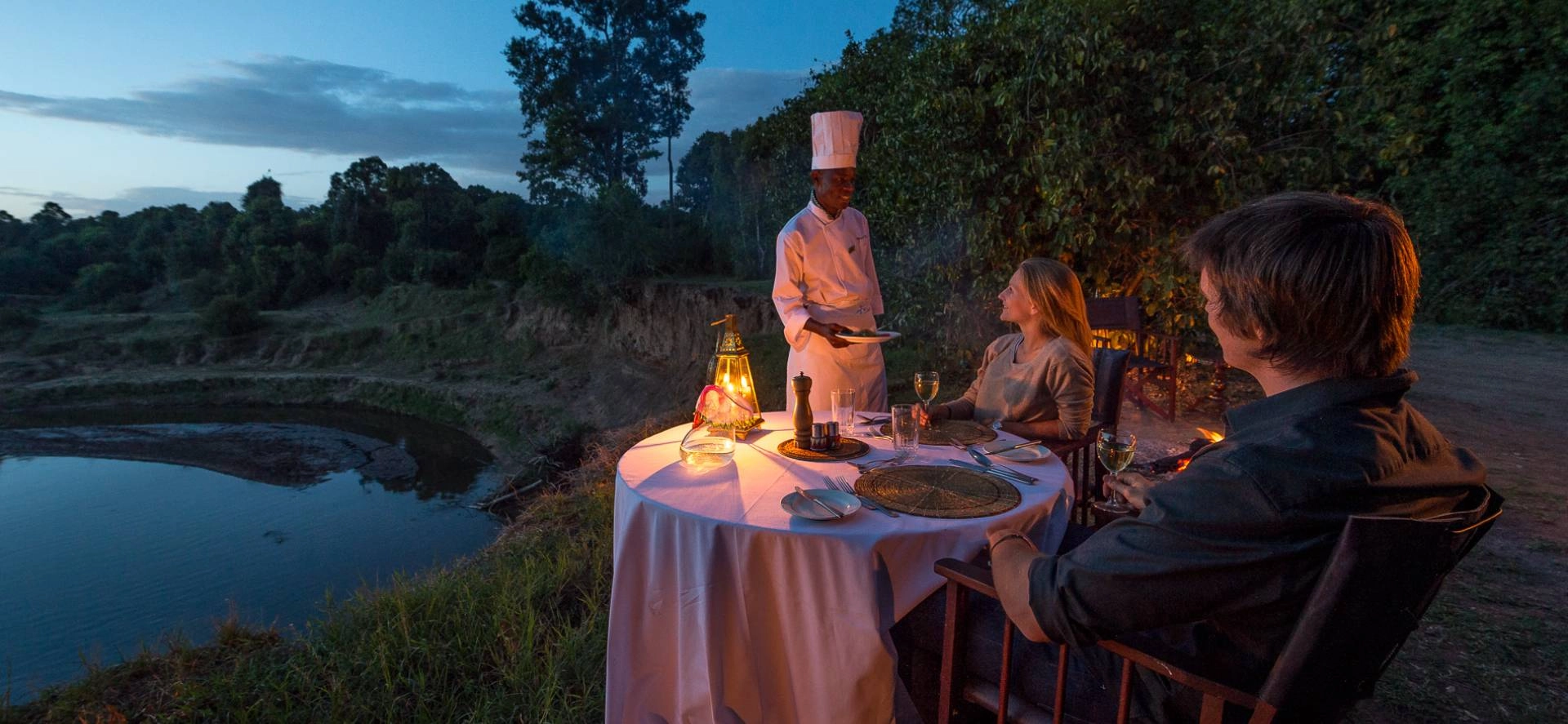
Definitive answer: A bush dinner is an outdoor evening meal arranged in a safe safari setting away from…
Read articleLet us take you closer to the wildlife, people and places that make Africa extraordinary.
Plan Your Safari Today