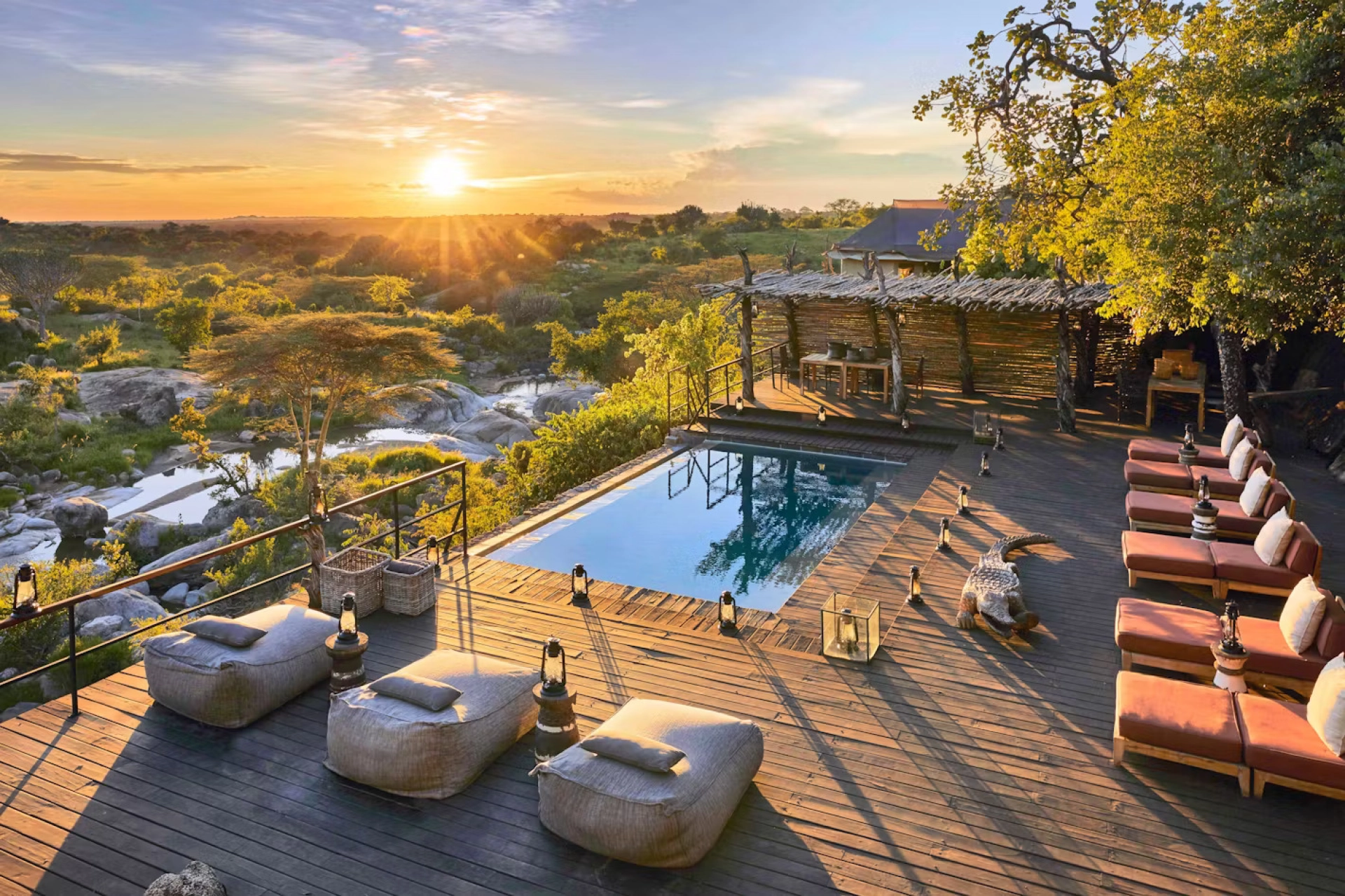
What should I look for when booking a luxury African safari?
When booking a luxury African safari, look beyond the room and compare the quality of guiding, wildlife location,…
Read article

Travel Guide
A Masai Mara safari is one of Africa's great wildlife experiences, but it also has a reputation for being expensive. Luxury tented camps, bush flights, private vehicles, conservation fees and peak-season accommodation can quickly push the…
A Masai Mara safari is one of Africa’s great wildlife experiences, but it also has a reputation for being expensive. Luxury tented camps, bush flights, private vehicles, conservation fees and peak-season accommodation can quickly push the price of a Kenya safari beyond what many travelers initially expected to spend. The good news is that you do not need to stay in an ultra-luxury camp or fly by light aircraft to experience the extraordinary wildlife of the Masai Mara National Reserve.
With intelligent planning, it is entirely possible to arrange a Masai Mara safari on a budget while still enjoying comfortable accommodation, professional guiding, reliable safari transportation and excellent wildlife viewing. The lions do not know whether you are sleeping in a $150 room or a $1,500 suite. The wildebeest do not cross the Mara River differently for guests arriving by road rather than aircraft. A leopard does not care whether your lodge has a private plunge pool.
What matters most is getting the fundamentals right: where you stay, when you travel, how you reach the Mara, how many people share the safari vehicle, how long you stay and which costs are genuinely worth paying. This detailed guide explains how to experience one of the world’s most famous wildlife destinations without turning your Kenya holiday into an unnecessarily expensive luxury trip.
Before trying to reduce the cost, it helps to understand where the money goes.
A properly operated Kenya safari package includes much more than a hotel room. The total price can incorporate safari vehicle costs, fuel, a professional driver-guide, accommodation, meals, park or conservancy fees, transfers and operational expenses. The Masai Mara is also one of Africa’s most internationally recognized safari destinations. During periods associated with the Great Wildebeest Migration, demand can become extremely high. Popular camps fill. Prices rise. Vehicles increase. Travelers who understand this seasonal demand can make much better decisions.
Yes—provided “cheap” does not mean badly organized.
There is an important difference between an affordable Masai Mara safari and a poorly operated safari. Cutting unnecessary luxury is sensible. Using an unsafe vehicle is not. Choosing a comfortable midrange camp is sensible. Hiring an inexperienced guide simply because he is cheaper is not. Traveling by road rather than bush plane can save money. Skipping necessary park fees cannot. The objective should therefore be value, not simply the lowest advertised price.
Timing is one of the biggest factors affecting the cost of a Masai Mara safari package.
The Mara receives enormous attention during the months when large migratory herds move into the ecosystem from Tanzania’s Serengeti. Travelers arrive hoping to witness the famous Mara River crossings. Demand rises accordingly.
This is the most important fact budget travelers need to understand.
The Masai Mara has outstanding resident wildlife throughout the year. Lions do not leave because the migration has moved south. Leopards remain. Elephants remain. Giraffes remain. Cheetahs remain. Hyenas remain. Buffaloes remain. Numerous antelopes remain. Therefore, travelers who are more interested in a general African wildlife safari than a specific river-crossing spectacle can save considerably by choosing another period.
Periods following seasonal rainfall can transform the Mara into a spectacular green landscape.
The grass becomes vibrant. Skies can be dramatic. Birdlife is excellent. Young animals may be present. Photography can be beautiful. The disadvantage is greater rainfall probability and, depending on conditions, more challenging roads. For flexible travelers, however, a green-season Kenya safari can provide excellent value.
Shoulder periods can offer one of the best compromises. Wildlife remains strong. Accommodation may be less expensive than at absolute peak. Vehicle numbers can be lower. For travelers asking how to make a Kenya safari affordable, changing the travel month may save more money than downgrading every hotel.
Accommodation is one of the easiest places to overspend. The Masai Mara contains some spectacular luxury safari camps. Private plunge pools. Large suites. Fine dining. Premium drinks. Spa treatments. Private decks. These experiences are excellent for travelers who want them and can afford them. But they are not required for wildlife viewing.
A well-selected midrange Masai Mara camp should provide a comfortable bed, private bathroom, hot water, good meals, secure surroundings and practical access to wildlife areas. That is enough for most travelers. Remember how safari days actually work. You wake early. You have breakfast or coffee. You leave for a game drive. You may spend much of the day outside. You return for dinner. Then you sleep. If you spend only a few waking hours in the room, paying an enormous premium for elaborate interior design may not provide proportional value.
A basic but strategically located camp can be better than an expensive property requiring long transfers to productive game-viewing areas. When comparing Masai Mara accommodation, ask where the property is located. How long does it take to reach game-viewing areas? Is it inside the reserve, within a conservancy or outside the protected area? What fees apply? What activities are included? A low room rate can become expensive if additional transfers and entrance fees are required every day.
This is one of the most powerful ways to reduce the per-person price. A safari vehicle has major fixed operating costs. Fuel costs money. The guide must be paid. Vehicle maintenance is expensive. These costs do not disappear because only one or two travelers are sitting inside. If four or six people share the same vehicle, the transportation cost is distributed across more travelers.
A couple booking a private safari receives excellent flexibility, but the per-person vehicle cost is relatively high. Traveling with another couple or small group can reduce the cost substantially.
A scheduled Kenya group safari can be particularly attractive for solo travelers and couples. Instead of paying for an entire vehicle, travelers purchase individual seats. The disadvantage is reduced flexibility. The group follows a shared schedule. But the savings can be substantial.
Choose private if you value: Flexible departure times, photography, personalized guiding and the ability to spend as long as you want at individual sightings. Choose a group departure if your priority is: Lower safari cost, meeting other travelers and having logistics organized efficiently. Neither approach is inherently better. They serve different budgets.
Flying from Nairobi to the Mara is convenient. It is also more expensive than traveling overland in many itineraries. A road safari from Nairobi to Masai Mara allows the safari vehicle and guide to remain with you throughout the journey. This can simplify logistics and reduce the need for separate air transfers plus camp-based game-drive vehicles.
Road travel shows you more of Kenya. You pass towns, farmland and changing landscapes. You gain a better sense of geography. For first-time visitors, the drive can itself become part of understanding the country.
The journey is considerably longer than flying. Road conditions can vary. Traffic leaving Nairobi can be frustrating. Some sections may be rough. Travelers with very limited time may decide that flying is worth the additional expense.
If you have only four or five days in Kenya, spending much of one day driving each way can reduce actual safari time. In that situation, a fly-in Masai Mara safari may provide better value despite costing more. Budget planning should therefore consider time as well as money.
A common mistake is trying to see too much. Travelers design itineraries such as: One night Amboseli. One night Lake Nakuru. One night Naivasha. Two nights Masai Mara. Every day involves packing and driving. The itinerary looks impressive because many destinations are listed. In reality, it can become exhausting and surprisingly expensive.
Every additional destination requires fuel. Long-distance driving increases vehicle operating costs. Domestic flights increase costs further. Changing lodges repeatedly also reduces actual game-viewing time.
For travelers primarily interested in the Masai Mara, spend three or four nights there. You will have more game-drive opportunities. You will understand the ecosystem better. You will spend less time transferring. A 3-day Masai Mara safari can work for travelers with limited time, but a 4-day Masai Mara safari usually provides a much better rhythm.
Wildlife sightings are unpredictable. A traveler staying only one night might miss leopards. Stay three nights and you gain several additional opportunities. Longer stays reduce the pressure to race between sightings.
One of the biggest mistakes when comparing Kenya safari quotations is looking only at the headline price. Ask what is included. Does the quotation include Masai Mara park fees? Are meals included? Is drinking water included? Are airport transfers included? Are game drives included? Is the safari vehicle private? Are taxes included?
An advertised package may appear dramatically cheaper because essential fees are excluded. Once park fees, transportation and meals are added, the final cost can be much higher. Compare like with like. A transparent Masai Mara safari quotation should explain exactly what you are paying for.
Protected-area fees are not simply an inconvenience. Tourism revenue contributes to managing wildlife areas, infrastructure and conservation. A genuinely sustainable safari cannot simply remove legitimate conservation costs. The objective is to reduce unnecessary expenses around them.
If you want a longer Kenya vacation, choose additional destinations carefully. Some places combine naturally with the Mara without requiring expensive domestic flights.
Lake Naivasha can be an excellent addition. A boat trip provides opportunities to see hippos and numerous birds. The environment is completely different from the Mara. Accommodation options span different budgets.
Travelers interested in active experiences can consider Hell’s Gate National Park. The landscape adds geological scenery and a different type of outdoor experience. Combining the Rift Valley with the Mara creates more variety without needing to fly across the country.
Lake Nakuru National Park can also fit into an overland Kenya circuit. The park is known for birdlife and rhino conservation, among other wildlife. It provides another ecosystem while remaining practical within many road itineraries.
Amboseli National Park is farther from the Mara but is one of Kenya’s most famous destinations. Its elephant herds and views toward Mount Kilimanjaro make it particularly attractive. Travelers with enough time can combine Amboseli and Masai Mara within a broader Kenya safari.
Booking directly with an experienced Kenya safari operator can help control costs because the itinerary can be designed around actual priorities rather than a standardized luxury package. A knowledgeable operator understands which camps offer genuine value. They know realistic driving times. They understand seasonal wildlife movement. They can explain where spending extra money makes a difference and where it does not.
Do not simply say, “I want something cheap.” Give a realistic budget range. Explain whether you want budget accommodation, midrange safari lodges or a mixture. Tell the operator whether you are comfortable sharing a vehicle. Explain whether flying matters. This allows the itinerary to be optimized intelligently.
You do not need to choose one accommodation category for the entire safari. Perhaps stay in a simple Nairobi hotel on arrival. Choose a comfortable midrange Mara camp. Then upgrade for one special night. This creates memorable luxury without paying premium rates throughout the journey.
A small private group is one of the best ways to obtain both flexibility and value. Four travelers can share a 4×4 safari Land Cruiser while still having comfortable viewing space. Six travelers can reduce the per-person transportation cost further. For groups of friends or families, this can transform the economics of a Kenya safari.
Safari packages sometimes include or promote numerous optional activities. Hot-air balloon safari. Village visit. Bush breakfast. Private sundowner. Spa. Premium drinks. These can all be enjoyable. But you do not need everything. Spend money on the experiences that matter to you. If wildlife is your priority, allocate the budget toward a good guide, enough game-drive time and a suitable vehicle.
A Masai Mara hot-air balloon safari can be extraordinary. Travelers float above the plains at sunrise and see the ecosystem from a completely different perspective. But it is a premium activity. If your total safari budget is tight, you may prefer to spend that money on another night in the Mara. One additional night provides several more game drives. There is no universal correct choice.
Properties outside the reserve or conservancy boundaries may offer lower rates. This can substantially reduce accommodation cost. However, location matters. If your camp is too far away, you may spend considerable time driving to and from the wildlife area. Entrance arrangements also matter. Always calculate the total daily cost rather than comparing room rates alone.
For adventurous travelers, budget camping safaris in Kenya can reduce accommodation costs. The quality of camping experiences varies dramatically. Some are simple tented camps with beds and private bathrooms. Others are much more basic. Ask exactly what “camping” means before booking.
For many travelers, midrange provides the best balance. Budget safaris minimize accommodation costs. Midrange safaris usually add more comfort and better locations. Luxury safaris add exclusivity, premium service and high-end facilities. The wildlife can be excellent at every level.
Prioritize: A reliable safari vehicle. An experienced guide. Adequate game-drive time. Good location. Safe accommodation. Then decide how much luxury you want around those fundamentals.
The absolute cheapest periods are not automatically the best. Heavy rainfall can make roads difficult. Some camps may close seasonally. The ideal budget period is often a shoulder season when accommodation prices have fallen but safari conditions remain attractive. Ask about Masai Mara low-season rates and Kenya safari special offers.
Can you see the Great Wildebeest Migration on a budget? Yes, but expect peak-period pricing. Book early. Choose midrange accommodation. Travel by road. Share the vehicle. Avoid unnecessary premium activities. Most importantly, understand that no operator can guarantee a river crossing on a particular day. The migration is a natural phenomenon. Animals move according to rainfall, grazing and instinct—not tourist schedules.
The dramatic Mara River crossings have become one of Africa’s most famous wildlife spectacles. Wildebeest gather near the river. They hesitate. Then groups may suddenly enter the water. Crocodiles wait. Confusion erupts. However, some travelers spend several days waiting without seeing a major crossing. Do not judge the entire safari solely on this event. The Mara ecosystem offers extraordinary wildlife even when the herds remain away from the river.
Photographers should think carefully before choosing the cheapest shared safari. A group vehicle may need to leave a sighting before you are ready. Other travelers may have different priorities. Serious photographers often gain more from a private vehicle. One way to control the cost is to travel with two or three other photographers and divide the vehicle expense. This creates an affordable Masai Mara photography safari with much greater flexibility.
Solo travelers face one major challenge: single supplements and private transportation. Joining a scheduled departure can solve much of this. A Kenya group safari for solo travelers allows you to share vehicle costs and often avoid paying for an entire safari operation alone.
Couples can choose between private and group travel. For honeymooners, privacy may justify additional cost. For couples focused primarily on wildlife, joining another couple can significantly reduce the price.
Families can achieve excellent value because several family members share one vehicle. Private safaris are particularly useful for children because game-drive schedules can be adjusted. Families should choose camps that accept children and understand any age restrictions.
A proper 4×4 safari Land Cruiser is one of the best vehicle choices for the Masai Mara, particularly when road conditions become challenging. Pop-up roofs or suitable open viewing configurations improve photography and wildlife observation. Every traveler should have reasonable access to a window. Vehicle quality is one area where choosing the absolute cheapest option can be a false economy.
A knowledgeable guide transforms safari. Anyone can drive along a road. A professional Kenya safari guide reads tracks, listens to alarm calls, understands animal behavior and knows how to position a vehicle without disturbing wildlife. They also understand when to stop. Sometimes the best wildlife encounter happens because the guide switches off the engine and waits. Do not sacrifice guiding quality merely to save a small amount.
The Mara supports extraordinary biodiversity. Travelers may encounter African lions, leopards, cheetahs, elephants, buffaloes, giraffes, zebras, wildebeest, hippos, crocodiles, hyenas and numerous antelope species. Birdlife is also outstanding. The ecosystem is much more than the Great Migration.
The Mara is internationally famous for lion safaris. Prides occupy territories across the ecosystem. Travelers may see lions resting, hunting, feeding or interacting socially. Early mornings and late afternoons can be particularly rewarding because lions are often more active during cooler conditions.
The open plains provide excellent habitat for cheetah sightings. Cheetahs often use elevated positions such as termite mounds to scan for prey. Watching a cheetah hunt is extraordinary, but sightings should always be observed responsibly without vehicles interfering.
Leopards can be more difficult to find. Experienced guides know territories and favored habitats. This is another reason guide quality matters. A good guide dramatically improves your chances of understanding where elusive predators might appear.
Travelers often compare Masai Mara vs Serengeti. Both form part of the same broader ecosystem but provide different safari logistics. The Mara is relatively compact and can be reached overland from Nairobi. Tanzania’s Serengeti is enormous and frequently forms part of a longer northern circuit involving Ngorongoro. For short trips, the Mara can sometimes be easier to structure. For longer journeys, combining Kenya and Tanzania safari packages can provide the best of both.
A popular Kenya itinerary combines the Mara with Amboseli National Park. Amboseli provides elephants and Mount Kilimanjaro landscapes. The Mara adds predators and extensive plains. This creates a strong first-time Kenya safari itinerary.
After safari, travelers can continue to the coast. A Masai Mara and Diani Beach holiday combines wildlife with the Indian Ocean. Budget-conscious travelers can use midrange beach hotels rather than luxury resorts. The beach portion also reduces the need for expensive daily activities. Once at the coast, you can simply relax.
Another possibility is combining Kenya with Zanzibar. Fly from Nairobi toward the island after safari. This creates an excellent Kenya safari and Zanzibar beach holiday. Travelers should compare regional flight prices because Diani or Watamu may be more economical depending on the itinerary.
For travelers interested in a more ambitious East African journey, combine the Mara with Uganda gorilla trekking. Begin with a Kenya Big Five safari. Then fly toward Uganda. Continue to Bwindi Impenetrable National Park for mountain gorillas. Add Kibale chimpanzee trekking or Queen Elizabeth National Park. This combination provides both classic savannah wildlife and primate trekking.
Three days is the practical minimum for many travelers. Four days is better. Five days provides a slower, deeper experience. If you are traveling overland from Nairobi, remember that the first and last days include substantial transportation. A 4-day Masai Mara safari therefore usually provides better value than trying to compress everything into two nights.
Day 1: Drive from Nairobi to Masai Mara, arriving for an afternoon game drive where timing permits. Day 2: Full-day Masai Mara game viewing. Day 3: Morning and afternoon game drives or another extended game-viewing day. Day 4: Morning departure toward Nairobi. This simple itinerary reduces hotel changes and maximizes time in one ecosystem.
Do not choose based solely on the lowest number. Compare: Vehicle type. Private versus shared transport. Accommodation standard. Accommodation location. Meals. Park fees. Number of game drives. Airport transfers. Guide. Water. Taxes. Optional activities. A $1,200 package excluding major fees can ultimately cost more than a transparent $1,500 package including them.
Ask whether everyone has a window seat. Ask what vehicle will be used. Ask whether the same guide stays with you throughout the safari. Ask which fees are included. Ask whether accommodation is inside or outside the reserve. Ask what happens if road conditions deteriorate. Ask about cancellation terms. Ask how much is required as a deposit. Clear answers indicate professional operation.
Self-driving is technically possible in some circumstances, but it is not the best solution for most first-time international travelers. Road conditions can be difficult. Navigation inside wildlife areas is not always straightforward. A guide understands animal behavior and knows productive locations. The apparent saving from self-driving can therefore come at the cost of a weaker safari experience.
This deserves emphasis. If you have spent money flying to Kenya, buying insurance and reaching the Mara, reducing the safari to one rushed night merely to save accommodation cost can undermine the entire journey. Stay long enough to enjoy it. Reduce luxury before reducing meaningful wildlife time.
Location and logistics can turn a cheap room into an expensive safari. Ask about distances and fees. Sometimes paying slightly more for a better-positioned camp saves both money and time.
This assumption pushes travelers toward the most expensive season. The Masai Mara wildlife experience is outstanding throughout the year. Travel outside peak migration and you may discover a quieter, more relaxed version of the reserve.
Yes. Travel outside peak season, choose budget or midrange accommodation, share a safari vehicle and travel by road from Nairobi.
Absolutely. Resident predators, elephants, giraffes, buffaloes and other wildlife remain throughout the year.
Three nights is an excellent starting point for most travelers. Longer stays are particularly useful for photographers and wildlife enthusiasts.
Driving is generally more economical, particularly when the safari vehicle is already part of your package.
Reputable budget and midrange camps can be perfectly comfortable and safe. Choose based on reviews, operator knowledge and location rather than price alone.
The Mara provides excellent opportunities for several Big Five animals, though wildlife sightings can never be guaranteed.
Yes. A Masai Mara and Uganda gorilla safari is one of East Africa’s strongest wildlife combinations.
Sharing transportation and avoiding peak-season accommodation can create some of the largest savings.
Learning how to experience Masai Mara safari on a budget next year money saving tips ultimately comes down to understanding what actually makes a safari good. It is not marble bathrooms. It is not private swimming pools. It is not expensive champagne. A great safari requires wildlife, time, a reliable vehicle and an excellent guide. Travel outside the most expensive peak if seeing a river crossing is not essential. Choose midrange Masai Mara accommodation.
Share your vehicle. Drive from Nairobi when time allows. Spend longer in fewer destinations. Understand what park fees and inclusions you are paying for. Avoid optional activities that do not matter to you. Book with a professional operator that can structure the itinerary around your actual budget. At Adventure in the Wild Safaris, we can design budget Kenya safaris, midrange Masai Mara safaris, private Kenya safaris, family safari packages, Kenya honeymoon safaris, Great Migration tours, Masai Mara and Amboseli safaris, and longer East African journeys combining Kenya with Uganda gorilla trekking, Rwanda or Tanzania.
The Masai Mara does not need to be cheap to be affordable. It needs to be planned intelligently. Spend your money where it improves the wildlife experience. Save it where it does not. That is how you turn one of Africa’s most famous safari destinations into an unforgettable Masai Mara safari on a realistic budget.

Share This Article
When booking a luxury African safari, look beyond the room and compare the quality of guiding, wildlife location,…
Read article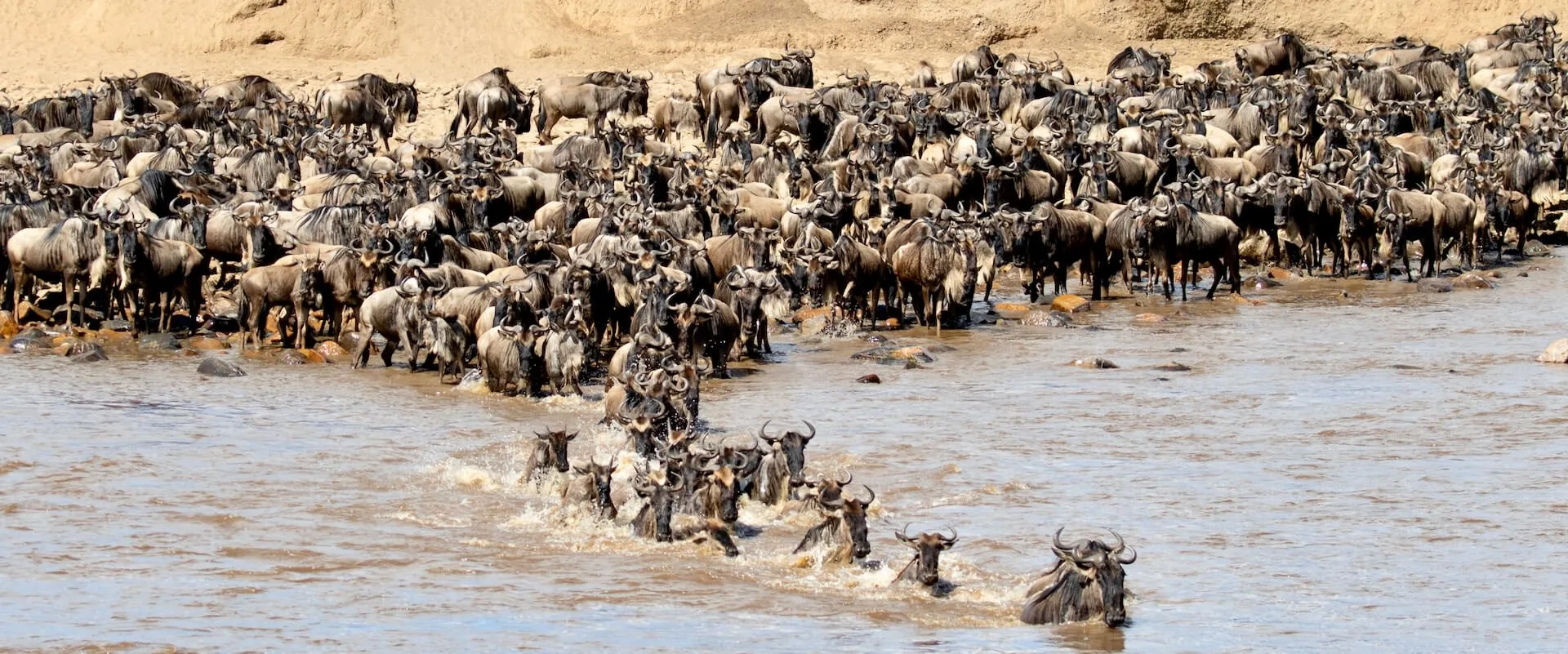
The Great Migration in Africa happens all year because the herds continuously circulate through the Serengeti–Mara ecosystem in…
Read article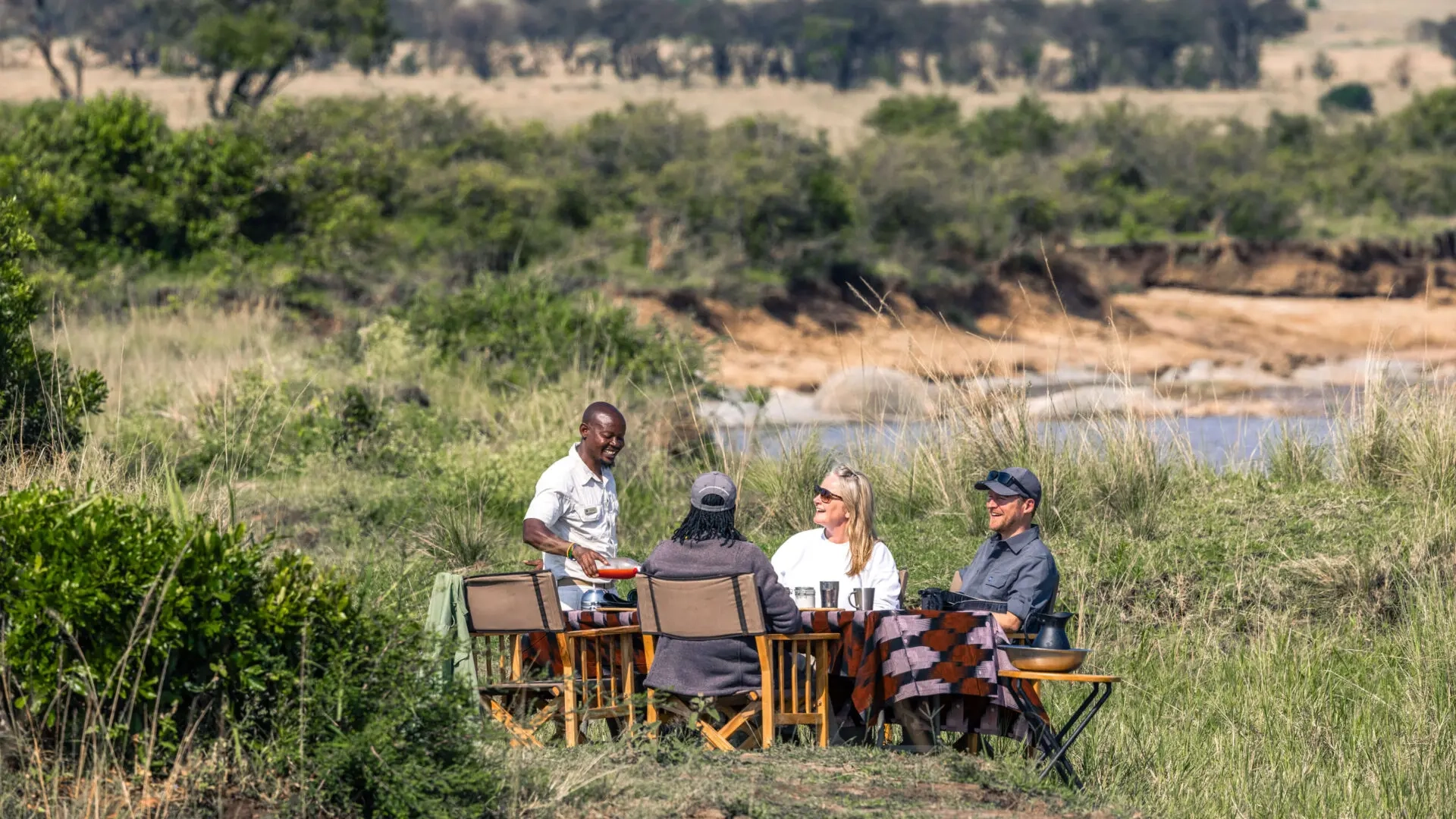
Definitive answer: A picnic lunch on safari is a packed or catered midday meal eaten at an approved…
Read article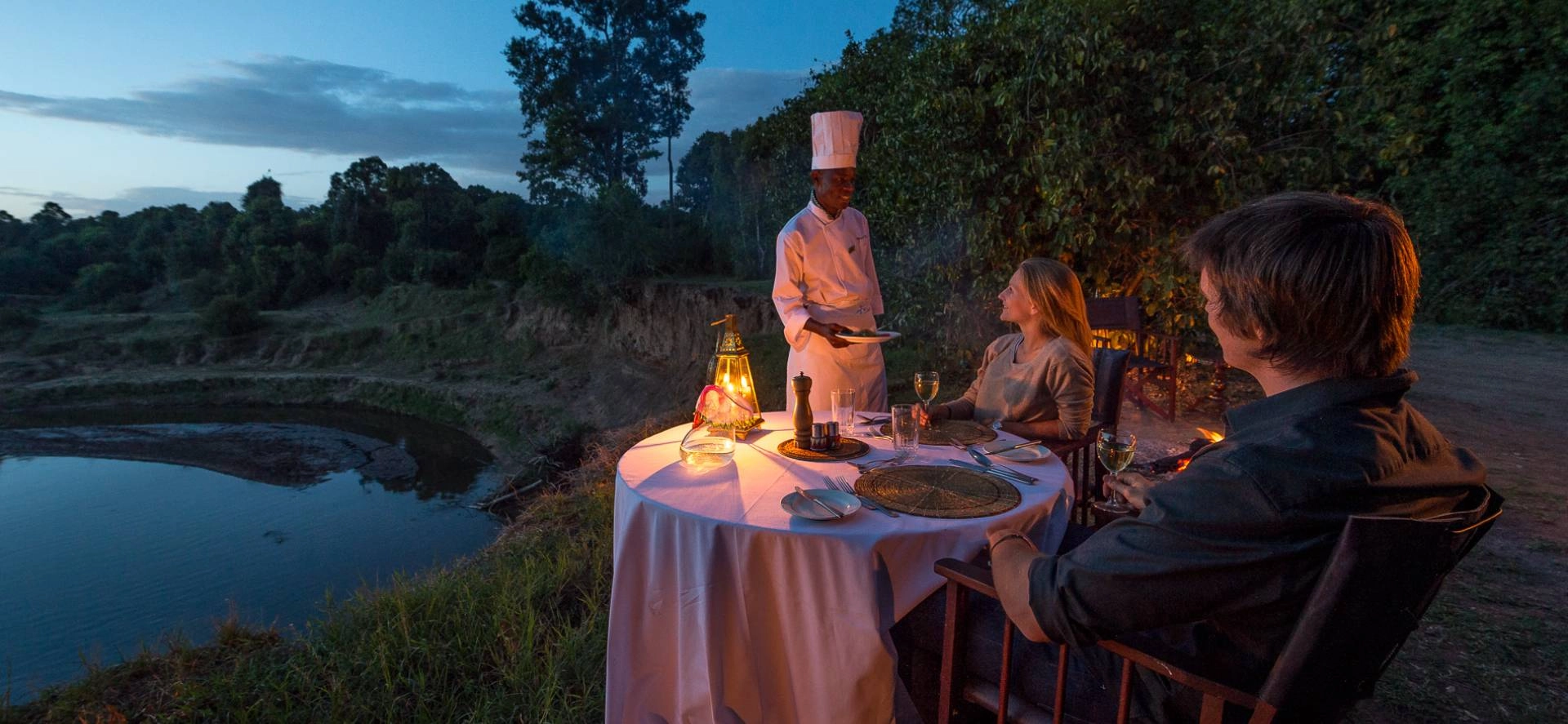
Definitive answer: A bush dinner is an outdoor evening meal arranged in a safe safari setting away from…
Read articleLet us take you closer to the wildlife, people and places that make Africa extraordinary.
Plan Your Safari Today