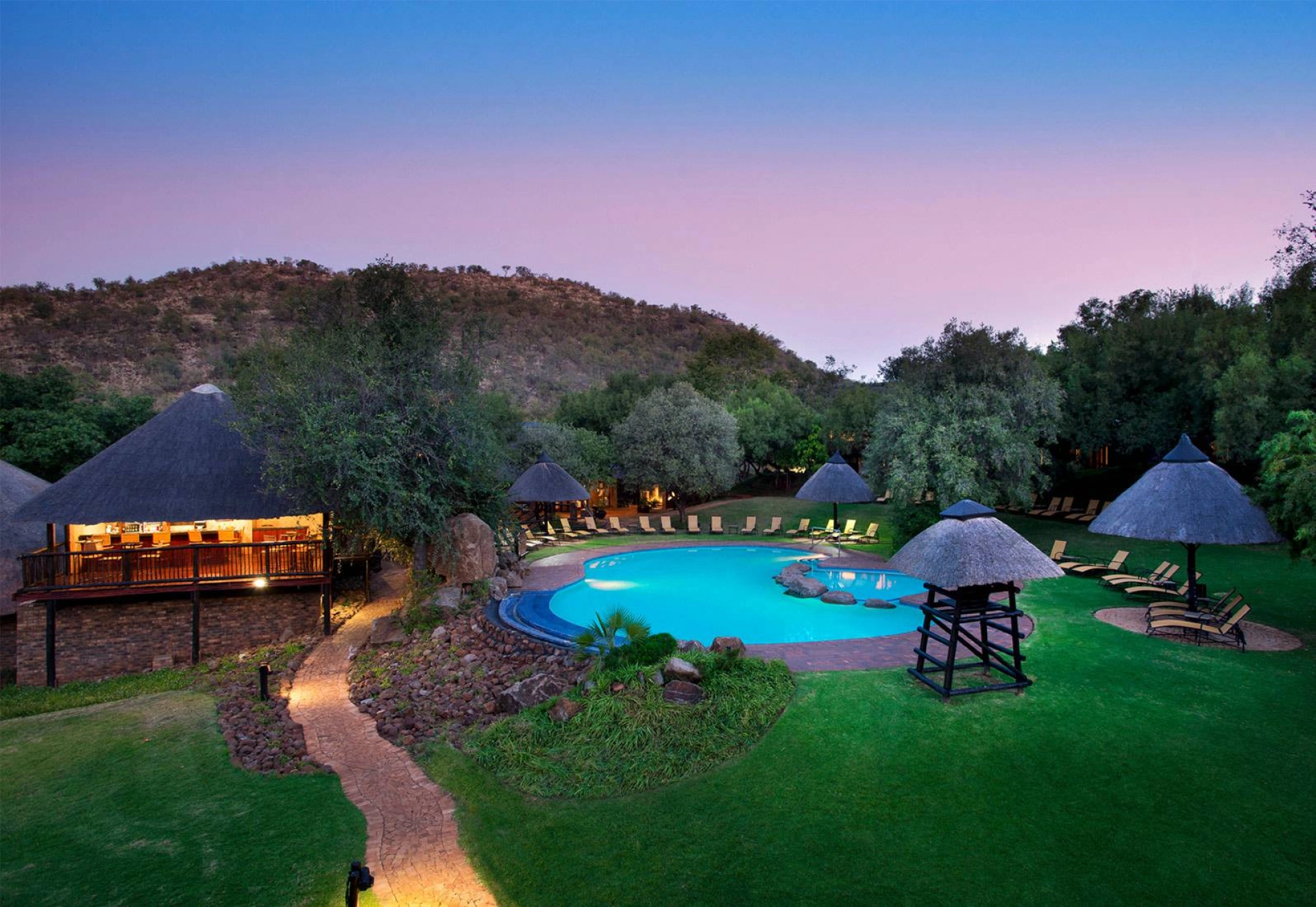
An Overnight Adventure at Bakubung Bush Lodge in Pilanesberg National Park
A safari does not always need to involve an internal flight, several…
Read article

Travel Guide
Choosing between Hwange National Park and Kruger National Park is a wonderful problem to have. Both rank among Southern Africa's outstanding wildlife destinations, both protect enormous areas of natural habitat, and both can deliver exceptional encounters…
Choosing between Hwange National Park and Kruger National Park is a wonderful problem to have. Both rank among Southern Africa’s outstanding wildlife destinations, both protect enormous areas of natural habitat, and both can deliver exceptional encounters with elephants, lions, buffaloes, leopards, antelopes, giraffes and many other species. Yet the experience of going on safari in these two parks can feel surprisingly different.
Kruger National Park in South Africa is one of the world’s most famous safari destinations. It is enormous, easily accessible by African safari standards and supported by a sophisticated network of roads, rest camps, private lodges and neighboring private reserves. It is particularly appealing to first-time visitors because the wildlife diversity is exceptional and travelers can choose anything from an affordable self-drive holiday to a highly exclusive luxury safari.
Hwange National Park in Zimbabwe, by contrast, has a reputation for expansive wilderness, extraordinary elephant concentrations, productive waterholes and a comparatively uncrowded safari atmosphere. It is also conveniently positioned for travelers who want to combine a wildlife safari with Victoria Falls, one of Africa’s most spectacular natural attractions. So, when comparing Hwange vs Kruger, which one should you choose? The answer depends on your priorities. If your dream is a highly accessible Big Five safari, extensive accommodation options and the flexibility to self-drive, Kruger may be the stronger choice.
If you want exceptional elephant encounters, fewer vehicles, a more remote wilderness atmosphere and an easy combination with Victoria Falls, Hwange may be exactly what you are looking for. For travelers planning a longer Southern Africa safari, the answer may even be to visit both. This detailed comparison examines wildlife, landscapes, safari activities, elephants, predators, accommodation, cost, accessibility, seasons, photography and overall atmosphere to help you decide which safari destination best suits your journey.
Hwange National Park lies in western Zimbabwe, not far from the country’s famous Victoria Falls tourism region. Its location makes it particularly convenient for travelers already planning to visit the Zambezi River and Victoria Falls. Kruger National Park stretches across northeastern South Africa along areas bordering Mozambique and Zimbabwe. It forms the core of a much larger interconnected conservation landscape often referred to as the Greater Kruger ecosystem. Both parks are vast.
This matters because large protected areas support more complete ecological processes than small wildlife reserves. Predators can establish territories, elephants can move across large distances and seasonal changes influence animal distribution in natural ways. The scale of the parks also means one short visit cannot reveal everything. A traveler spending three nights in one section of Kruger will experience only a fraction of the park. The same principle applies to Hwange.
When comparing the destinations, it is therefore important to compare realistic safari itineraries rather than assuming the entire park is explored during one stay.
The most significant difference between Hwange and Kruger is not necessarily the wildlife itself. It is the atmosphere. Kruger is highly established as an international safari destination. There are numerous camps, lodges, entrance gates, roads and tourism services. This infrastructure makes it extremely convenient, particularly for travelers who like flexibility. Hwange can feel more remote. Visitor numbers are generally lower and some safari areas create a powerful impression of being far from towns and major tourism centers.
Neither experience is inherently better. Some travelers love Kruger’s convenience and remarkable wildlife density. Others place enormous value on silence, low vehicle numbers and the feeling of being deep inside the African bush. Understanding your own travel personality is therefore important when deciding between Kruger National Park vs Hwange National Park.
Hwange is Zimbabwe’s largest national park and protects an extraordinary range of animals. The park is particularly renowned for African elephants. During dry periods, enormous numbers of elephants may gather near dependable water sources. Herds sometimes arrive one after another, creating some of Southern Africa’s most dramatic elephant-viewing opportunities. Hwange also protects lions, leopards, buffaloes, spotted hyenas, African wild dogs, giraffes, zebras, wildebeest and many antelope species. Sable antelope are among the particularly attractive animals travelers may encounter.
Large predators follow prey populations throughout the ecosystem. Lion sightings can be excellent, and the park is also regarded as an important area for African wild dogs, one of the continent’s most endangered predators. Birdlife is similarly impressive. The varied habitat attracts raptors, ground birds, woodland species and numerous birds associated with seasonal water sources. For wildlife enthusiasts who enjoy more than simply searching for the Big Five, Hwange has enormous appeal.
Kruger National Park is one of Africa’s biodiversity powerhouses. Its enormous size and habitat variety support an extraordinary range of mammals, birds, reptiles and plants. Visitors commonly search for the celebrated African Big Five: lion, leopard, elephant, buffalo and rhinoceros. But concentrating exclusively on those five species barely scratches the surface. Kruger also supports cheetahs, African wild dogs, spotted hyenas, giraffes, zebras, wildebeest, hippos, crocodiles, baboons, vervet monkeys and a remarkable variety of antelopes.
Impala are particularly widespread, but travelers may also encounter kudu, waterbuck, steenbok, nyala and other species depending on where they travel. One of Kruger’s greatest strengths is ecological variety. The northern and southern parts of the park differ substantially in vegetation and wildlife density. River systems create particularly productive areas because water and vegetation attract herbivores and predators. For travelers wanting the broadest possible South African wildlife safari, Kruger is difficult to beat.
When people talk about Hwange National Park wildlife, elephants almost inevitably dominate the discussion. This is justified. Hwange supports an extraordinary elephant population, and the dry season can concentrate elephants around pumped and natural waterholes. Watching one elephant is impressive. Watching an entire family arrive is better. Watching multiple family groups interact around a water source can become one of the most memorable experiences of any African safari. Elephant behavior becomes especially interesting when travelers spend time at a sighting rather than immediately driving away.
You may observe adults greeting each other, calves trying to control their trunks, young males sparring or mothers protecting very small babies. Waterholes can turn these encounters into prolonged natural dramas. Kruger also provides superb elephant viewing. Elephants occur widely and are regularly encountered beside roads, along rivers and around water sources. It is perfectly possible to have exceptional elephant encounters in Kruger. However, if your number-one safari priority is seeing large elephant herds in Africa, Hwange deserves a particularly high position on your shortlist.
Both destinations provide very good possibilities for lion encounters. Lions are widely distributed through suitable habitat in Kruger. Because large numbers of safari vehicles and guides operate across parts of the park and surrounding reserves, information about predator locations can sometimes spread quickly. Private reserves within Greater Kruger can offer especially rewarding lion viewing because guides are highly familiar with local prides and territories. Hwange also supports significant lion populations.
Sightings may occur near productive waterholes where prey animals gather, particularly during dry periods. Because vehicle densities can be lower, a lion encounter in Hwange may feel especially intimate. Imagine finding a pride resting under acacia shade with no other vehicle visible. For many travelers, that sense of solitude becomes as important as the sighting itself.
The leopard is one of Africa’s most beautiful and elusive predators. Both parks support leopard populations. However, Greater Kruger has developed a particularly strong reputation for leopard sightings, especially in certain private reserves where professional guides and trackers follow established individuals over long periods. Leopards are territorial animals, and guides who know an area’s resident cats can sometimes interpret tracks and movements remarkably effectively. Kruger itself also provides leopard sightings, especially around riverine vegetation.
Yet even in excellent leopard habitat, patience and luck are essential. Hwange leopards can be encountered as well, although sightings may be less predictable. This does not make the park less rewarding. Finding a leopard unexpectedly while exploring an uncrowded wilderness may become a far stronger memory than seeing one surrounded by many safari vehicles. Still, travelers whose single greatest wildlife dream is seeing leopards might reasonably give Kruger and Greater Kruger an advantage.
For travelers specifically hoping to complete a Big Five safari, rhinoceros distribution is an important part of the Hwange vs Kruger comparison. Kruger remains one of Africa’s important rhino landscapes, despite the immense conservation challenges created by poaching. Both white and black rhinoceroses occur within the broader South African safari ecosystem, although their locations are understandably managed carefully. Hwange should not be selected primarily as a rhino destination. Therefore, travelers determined to see lion, leopard, elephant, buffalo and rhino during one safari generally have a stronger opportunity in the Kruger ecosystem.
However, this illustrates one problem with Big Five-focused travel. A safari should never be judged exclusively by whether five particular animals were photographed. Seeing thirty elephants approaching a Hwange waterhole, watching wild dogs communicate before a hunt or encountering sable antelope in beautiful morning light can easily become more memorable than ticking another animal from a checklist.
African wild dogs are among the continent’s most fascinating predators. They are also among the most threatened. Both Hwange and the Greater Kruger ecosystem protect populations of African painted wolves, as wild dogs are sometimes called. Their enormous home ranges make them unpredictable safari subjects. A pack may disappear from an area for days before suddenly appearing on a road. When encountered, they are incredibly exciting. Wild dogs are extremely social.
Pack members greet enthusiastically, care for one another and cooperate during hunts. They may rest quietly for long periods before suddenly becoming energetic, communicating through body language and vocalizations. Because the animals can cover large distances quickly, travelers hoping specifically to see wild dogs should spend several days in strong habitat. Both Hwange and Kruger can reward this patience.
Kruger National Park contains considerable landscape diversity. Travelers may pass through woodland, open savannah, granite outcrops, mopane country and riverine environments depending on which regions they explore. This diversity is one reason Kruger supports so many wildlife species. The far north can feel dramatically different from more heavily visited southern areas. Hwange has a distinctive dry woodland and savannah character. Open grasslands, teak woodland and waterholes create classic Southern African scenes.
The importance of water is particularly visible during dry periods. Large sections of Hwange lack permanent natural surface water throughout the year, so pumped waterholes have historically played an important role in maintaining wildlife concentrations. This relationship between animals and water is central to the Hwange safari experience.
Safari travelers sometimes assume the best strategy is to drive constantly. Hwange often teaches the opposite lesson. Sitting beside a productive waterhole can be extraordinary. At first, the landscape may appear quiet. Then zebras arrive. An elephant herd emerges from woodland. Impala approach cautiously. Giraffes stand at the edge. Birds crowd nearby trees. Another elephant family appears. Later, buffaloes may gather. Predators may be watching from somewhere beyond the visible edge of the scene.
The composition changes constantly. By remaining still, travelers become observers rather than pursuers. This style of wildlife viewing encourages a deeper appreciation of ecological relationships. It is one of the reasons Hwange safaris can feel so immersive.
Kruger’s rivers provide a different but equally rewarding wildlife focus. Permanent and seasonal waterways support lush vegetation that attracts numerous animals. Elephants often feed along riverbanks. Hippos and crocodiles occupy deeper pools. Leopards frequently use riverine trees and dense vegetation. Antelopes come to drink. Predators understand this concentration of prey. Stopping at river viewpoints can therefore produce excellent wildlife sightings. Even when large mammals are absent, the landscape itself is beautiful and birdlife can be outstanding.
Visitor density is one of the clearest differences. Kruger is extremely popular. This popularity exists for good reason: wildlife viewing is excellent and the park is easy to explore. However, famous sightings in accessible areas can attract substantial numbers of vehicles. A leopard beside a road may quickly generate a traffic jam. Some travelers enjoy the excitement. Others find it distracting. Private reserves in the Greater Kruger ecosystem typically manage sightings differently.
Many restrict how many vehicles can approach a sensitive sighting simultaneously. Hwange is generally quieter. You may travel for extended periods without encountering another vehicle. For photographers and travelers who strongly value wilderness solitude, this can be a significant advantage.
Kruger is one of Africa’s best destinations for self-drive safaris. Visitors can rent a suitable vehicle and explore an extensive road network independently while following national park regulations. This creates enormous flexibility. You choose where to stop. You decide how long to watch elephants. You can spend twenty minutes photographing a hornbill without worrying that other passengers want to search for lions. Self-driving can also reduce safari costs considerably. Hwange is generally more suited to guided safari arrangements.
Although independent travel is possible under appropriate circumstances, international travelers commonly experience the park through professionally guided camps or operators. For anyone whose dream involves exploring Africa independently, Kruger therefore has a major advantage.
Zimbabwe has a respected professional guiding culture. A highly skilled safari guide can completely transform your understanding of the wilderness. Rather than merely identifying animals, excellent guides explain behavior. They interpret tracks. They point out bird calls. They explain why certain trees attract elephants. They read alarm calls indicating predators. They understand changes in wind direction and how animals respond. Zimbabwe is especially associated with sophisticated walking safari traditions, making Hwange appealing to travelers who want an educational and immersive experience.
Walking through African wilderness creates an entirely different relationship with the environment. In a vehicle, travelers naturally focus on large mammals. On foot, details become important. Tracks in dust reveal who passed during the night. Dung provides information about diet. Tiny insects become fascinating. Wind direction matters. Bird alarm calls suddenly carry meaning. A professional walking safari is not about chasing dangerous animals. It is about understanding the environment at ground level.
Zimbabwe’s strong guiding tradition makes walking a major attraction. Walking experiences are also offered in parts of Greater Kruger, particularly at specialized private lodges. Travelers specifically interested in walking should compare individual camps rather than parks alone.
Kruger’s range of accommodation is extraordinary. Affordable national park rest camps make wildlife experiences accessible to budget travelers. Private lodges outside park gates provide additional options. Within the Greater Kruger ecosystem, travelers can choose sophisticated luxury lodges offering private suites, fine dining and intensive guided game drives. This variety means Kruger works for almost every budget. A young couple planning an affordable safari can stay simply. A family can choose comfortable accommodation with appropriate facilities.
Honeymooners can book a secluded luxury suite overlooking a riverbed. Few African safari regions provide quite this level of accommodation diversity.
Hwange has fewer accommodation options overall, but many properties offer exceptionally atmospheric safari experiences. Some camps overlook productive waterholes. Guests can sit on a deck during the afternoon and watch elephants arrive without leaving camp. Smaller properties may create a more intimate experience because fewer people participate in game drives. Luxury camps can be highly sophisticated while still emphasizing wilderness. When choosing accommodation in Hwange, location is crucial. A beautifully decorated lodge means little if reaching productive game-viewing areas requires hours of daily travel.
A knowledgeable safari operator should therefore select camps according to season and wildlife movement rather than appearance alone.
Kruger generally offers greater potential for very affordable safaris. Self-driving, staying at rest camps and preparing some of your own meals can dramatically reduce costs. Budget travelers can therefore experience one of Africa’s premier wildlife parks without paying luxury safari prices. Hwange safaris more commonly package accommodation, meals and guided activities together. This can increase headline costs but also simplifies budgeting. When comparing safari prices, examine what is actually included.
Does the rate include park fees? Are game drives included? Are meals included? Are transfers included? An apparently cheap safari can become expensive once numerous additional charges are added.
Both destinations offer strong mid-range experiences. Mid-range Kruger safaris may combine comfortable lodges with scheduled or private game drives. Hwange mid-range safaris can provide excellent guiding and intimate camps without ultra-luxury prices. For many travelers, this category provides the ideal balance. The wildlife does not become better because your suite has a private plunge pool. Spending intelligently on guiding, location and enough nights often contributes more to safari quality than paying for elaborate accommodation.
Greater Kruger has one of Africa’s most developed luxury safari industries. Private reserves such as those bordering Kruger offer exceptionally high standards of accommodation, guiding, cuisine and service. Luxury travelers have enormous choice. Hwange also provides beautiful luxury camps, but the appeal is often subtly different. Luxury may mean having an extraordinary waterhole almost to yourself. It may mean spending hours with elephants while seeing no other safari vehicle. It may mean dining beneath the stars in a remote landscape.
For travelers who equate luxury with privacy rather than elaborate facilities, Hwange can be extremely compelling.
The dry season is particularly famous for wildlife viewing in Hwange. As water becomes increasingly scarce, animals concentrate around dependable waterholes. Elephant numbers around certain areas can become remarkable. Vegetation becomes thinner, often improving visibility. However, this is not the only worthwhile period. The greener season transforms Hwange. Vegetation becomes lush, dramatic clouds build and migratory birds increase birding diversity. The landscape can be beautiful for photography. Travelers should therefore choose seasons based on interests rather than believing there is only one acceptable safari period.
Kruger is also a year-round safari destination. Dryer months are popular because vegetation becomes less dense and wildlife increasingly concentrates near water. Early mornings can be surprisingly cold, especially in open safari vehicles. The warmer rainy period creates green landscapes and exceptional birding. Young animals may appear. Storm clouds produce dramatic photography. Predator sightings remain possible throughout the year. The best time to visit ultimately depends on whether your priorities are maximum visibility, photography, birding, lower rates or specific seasonal atmosphere.
Birders will enjoy both destinations. Kruger’s enormous habitat diversity creates outstanding birding. Summer migrations substantially increase species variety. Large raptors, hornbills, rollers, kingfishers, bee-eaters and numerous woodland species can keep bird enthusiasts busy throughout the day. Hwange is equally fascinating. Waterholes attract numerous species, while woodland supports a different bird community. Bird photography can become particularly rewarding when animals and birds congregate around water. Serious birders should tell their guide immediately.
Otherwise guides may spend the entire morning searching for lions while driving past birds you traveled halfway around the world to see.
Photographers can produce exceptional images in either destination. Kruger provides tremendous subject diversity. Greater Kruger private reserves can offer close predator encounters and excellent positioning when managed responsibly. Hwange excels around waterholes. Dust kicked up by elephants can create spectacular backlighting. Large herds produce layered compositions. Reflections can add interest around calm water. Lower traffic levels can also make photographic positioning easier. Serious photographers may prefer private vehicles because they provide greater control over time and positioning.
Kruger is usually the easier choice for families. The range of accommodation and transportation options makes itinerary design flexible. Self-driving also allows parents to stop when children become tired. Certain lodges provide children’s safari programs. Hwange can also provide an exceptional family journey, especially for children genuinely interested in wildlife. However, minimum ages may apply to walking safaris and particular camp activities. Families should always verify age policies before booking.
Both can provide wonderful African safari honeymoons. Greater Kruger is ideal for couples who want sophisticated luxury. Private suites, romantic dinners, swimming pools and excellent guiding are widely available. Hwange appeals to couples who value intimacy and wilderness. Watching a huge elephant herd approach a waterhole as sunset colors spread across the sky can be just as romantic as any luxury hotel feature. A honeymoon could even combine both styles with several safari nights followed by Victoria Falls or Cape Town.
This is one of Hwange’s greatest logistical advantages. Victoria Falls is relatively close compared with many major African attraction combinations. Travelers can experience wildlife in Hwange and then continue to one of the world’s great waterfalls. Victoria Falls adds scenery, adventure and river activities to the safari. Depending on interests, visitors may enjoy viewpoints around the falls, Zambezi experiences or other regional activities. This creates an exceptionally varied Zimbabwe holiday without requiring multiple long-distance flights.
Kruger has its own excellent complementary route. The Panorama Route introduces travelers to dramatic escarpments, waterfalls and Blyde River Canyon. Combining the Panorama Route with Kruger is especially convenient for road-based journeys beginning or ending in Johannesburg. The experience provides a welcome landscape contrast after several days of wildlife viewing.
Kruger can also be combined easily with Cape Town using domestic flights. This is one of South Africa’s most popular first-time itineraries. Travelers can spend several days on safari and then explore Table Mountain, the Cape Peninsula, Cape Winelands and Cape Town’s restaurants and cultural attractions. A Kruger and Cape Town safari holiday provides an extraordinary amount of variety within one country.
Kruger is probably the easiest recommendation for the average first-time safari traveler. Accessibility is excellent. Wildlife diversity is exceptional. Big Five possibilities are strong. Accommodation is available at numerous price levels. Travelers can experience both self-drive and guided safari styles. Yet some first-time visitors will prefer Hwange. If you dislike crowded destinations, dream about elephants and already plan to visit Victoria Falls, there is no reason Hwange cannot be your first safari.
Repeat African travelers often become less interested in simply ticking species from a list. Their priorities evolve. They may seek wild dogs instead of another lion. They may want to walk. They may spend an hour watching elephant social behavior. They may value solitude more than wildlife density. Hwange becomes particularly attractive for this kind of traveler. Its quieter wilderness atmosphere encourages deeper observation.
Travelers with additional time can create an extraordinary contrast by adding gorilla trekking in Uganda. A Hwange or Kruger safari involves searching for large mammals across open landscapes. Gorilla trekking in Bwindi Impenetrable National Park takes place on foot inside dense tropical rainforest. After hiking with trained guides and trackers, travelers spend regulated time observing a habituated mountain gorilla family. The experience is remarkably intimate. A silverback sitting quietly several meters away has a completely different emotional impact from watching lions from a safari vehicle.
Combining South Africa or Zimbabwe safaris with Uganda gorilla trekking produces one of Africa’s most complete wildlife journeys.
If you have only one week, choose one primary safari region. Do not spend the entire week racing between Hwange and Kruger. Choose Kruger if you want a highly developed safari ecosystem with exceptional wildlife variety and Big Five opportunities. Choose Hwange if you want a quieter safari, fantastic elephant viewing and a Victoria Falls combination. Both deserve enough time. Ideally, spend at least three to four nights inside the wildlife area.
Longer stays are even better.
Choose Kruger National Park if you prioritize: Excellent chances of diverse wildlife encounters, Big Five safari opportunities, strong leopard viewing, broad accommodation choice, self-drive flexibility and convenient South African logistics. Choose Hwange National Park if you prioritize: Exceptional elephant herds, fewer vehicles, atmospheric waterholes, walking safari possibilities, wilderness solitude and combining your safari with Victoria Falls. Choose both if you have the time. A longer Southern Africa safari can reveal how different ecosystems create different wildlife experiences.
The Hwange vs Kruger comparison is not really about identifying a winner. It is about understanding what each park does exceptionally well. Kruger National Park is one of Africa’s great all-round safari destinations. It combines enormous wildlife diversity, excellent infrastructure, multiple accommodation categories and some of the continent’s strongest Big Five opportunities. Hwange National Park offers something subtly different. Its elephants dominate waterholes. Its roads often feel quieter. Its landscapes create a powerful wilderness atmosphere, and its proximity to Victoria Falls makes it ideal for travelers seeking a broader Zimbabwe adventure.
If you are planning your first safari and want convenience, diversity and strong opportunities for iconic wildlife, Kruger is extremely difficult to beat. If you dream about watching enormous elephant herds gather beside a waterhole with few other vehicles nearby, Hwange may speak more strongly to you. Ultimately, the best safari destination is not the one that wins the most comparisons. It is the one that delivers the African wilderness experience you personally want to remember.
Get quick answers to the most common questions. If you still have questions, our safari experts are here to help.
Neither is universally better. Hwange excels for elephants, solitude and wilderness atmosphere, while Kruger excels for wildlife diversity, Big Five possibilities, infrastructure and accommodation variety.
Both support major elephant populations, but Hwange is especially famous for large dry-season elephant concentrations around waterholes.
Kruger is generally the stronger choice for travelers specifically hoping to encounter all members of the Big Five.
Hwange generally has fewer safari vehicles and can feel substantially more remote.
Greater Kruger has an especially strong reputation for leopard encounters, particularly in private reserves with experienced guides and trackers.
Yes. Hwange is an important habitat for African wild dogs, although they move over large areas and sightings are never guaranteed.
Hwange is one of the most convenient major safari parks to combine with Victoria Falls, making this a classic Zimbabwe itinerary.
Yes. Kruger is one of Africa’s best-known self-drive safari destinations.
Walking experiences are available through appropriate operators and camps, and Zimbabwe has a respected professional guiding tradition.
Kruger can be particularly affordable for self-drive travelers staying in national park rest camps. Hwange pricing often includes professionally guided activities and meals, so complete package inclusions should be compared.
Both are excellent. Greater Kruger offers enormous luxury-lodge choice, while Hwange can provide exceptional privacy and wilderness atmosphere.
Three nights is a useful minimum for many itineraries, while four to five nights provides a more relaxed experience.
Four to seven days allows travelers to experience several game drives and potentially combine different regions or private reserves.
Yes. A longer African itinerary can combine Southern Africa with Uganda gorilla trekking in Bwindi or gorilla trekking in Rwanda.
Our safari experts are here to help you plan your safari. Get personalized advice, the latest information and a free, no-obligation quote.
We typically reply within a few hours.

Share This Article
A safari does not always need to involve an internal flight, several…
Read article
Mention a Tanzania safari and most travelers immediately imagine the Serengeti. The…
Read article
An African safari is often described as a once-in-a-lifetime holiday, but that…
Read article
Mozambique stretches for thousands of kilometers along southeastern Africa’s Indian Ocean coastline,…
Read articleLet us take you closer to the wildlife, people and places that make Africa extraordinary.
Plan Your Safari Today