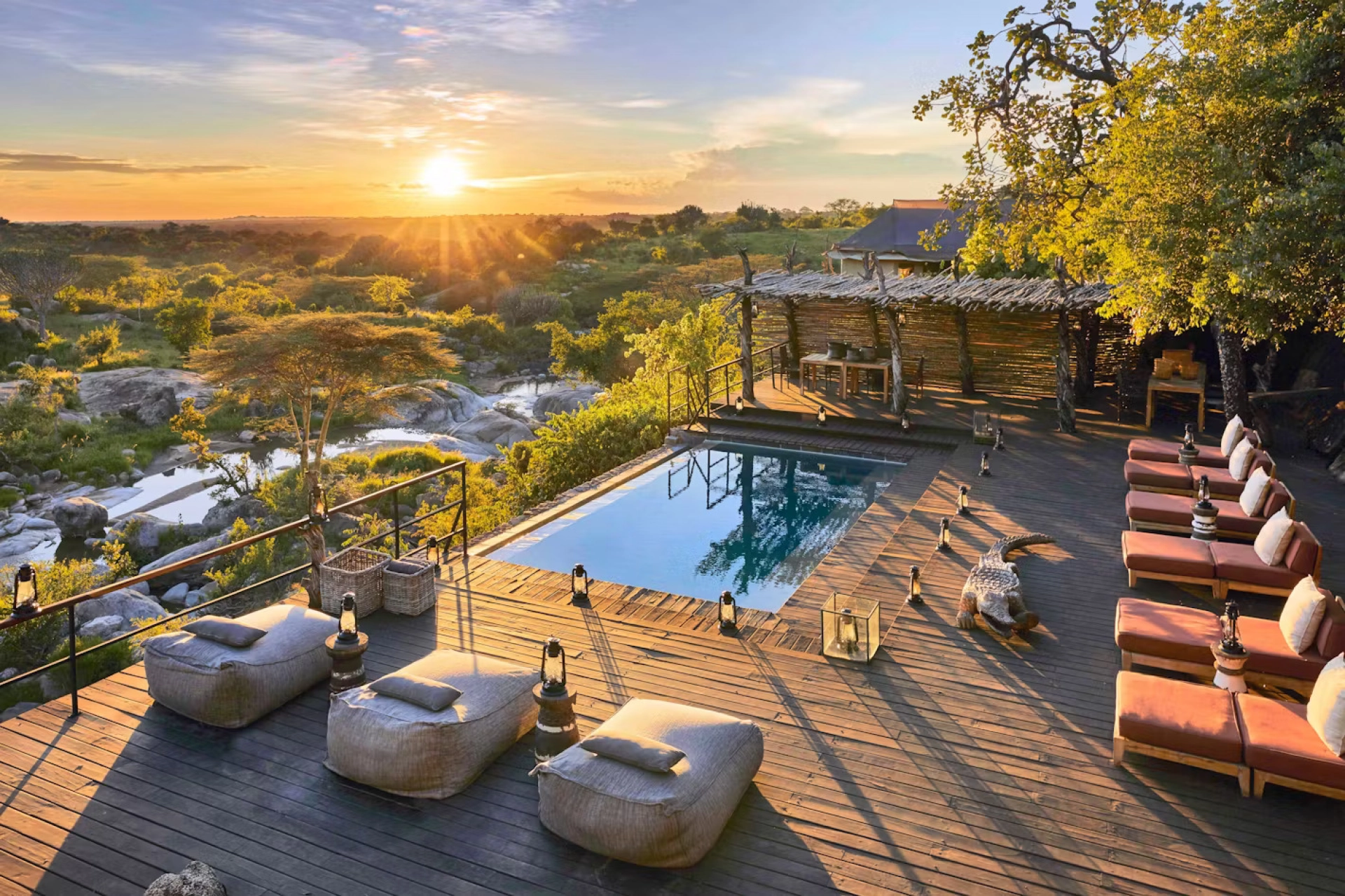
What should I look for when booking a luxury African safari?
When booking a luxury African safari, look beyond the room and compare the quality of guiding, wildlife location,…
Read article

Travel Guide
Travelling from Kampala to Kibale National Park is one of the most important overland journeys for visitors planning a chimpanzee trekking safari in Uganda. Kibale lies in western Uganda within a remarkably diverse landscape of tropical…
Travelling from Kampala to Kibale National Park is one of the most important overland journeys for visitors planning a chimpanzee trekking safari in Uganda. Kibale lies in western Uganda within a remarkably diverse landscape of tropical forest, crater lakes, tea-growing areas, wetlands, farmland and rolling hills. Although the park is best known internationally for its chimpanzees, reaching Kibale is itself an opportunity to see Uganda changing gradually from the busy urban environment around Kampala into the greener and more rural landscapes of western Uganda.
For most safari travellers, the journey is not simply a transfer between two points. It forms the beginning of a larger western Uganda safari circuit that may continue from Kibale to Queen Elizabeth National Park, Bwindi Impenetrable National Park, Lake Bunyonyi, Lake Mburo National Park or other destinations. When planned properly, Kibale therefore becomes both a major destination in its own right and a natural link between Uganda’s primate forests and its savannah wildlife areas.
The road distance and driving time from Kampala to Kibale vary according to the exact starting point in Kampala, the chosen route, traffic, road conditions and the location of your lodge around the Kibale area. Safari itineraries should therefore avoid presenting a single driving time as an absolute guarantee. A realistic plan should allow most of the day for the transfer, particularly when departing from central Kampala, making stops or travelling to accommodation beyond Fort Portal.
For travellers whose main reason for visiting is chimpanzee trekking in Kibale National Park, arriving with enough time to rest before the tracking experience is much better than rushing across Uganda and attempting to fit too many activities into the same day. This guide explains how to travel from Kampala to Kibale, what the journey is like, where to stay, how the route fits into a Uganda safari and how to organise the transfer efficiently.
Kibale National Park is located in western Uganda, close to Fort Portal and the wider crater-lake region. The park protects one of Uganda’s most important tropical forest ecosystems and is internationally recognised for its primates, particularly chimpanzees. The forest forms part of a much larger ecological landscape extending toward Queen Elizabeth National Park, creating an important forest corridor and transition between rainforest and savannah ecosystems.
For visitors, the principal tourism area associated with Kibale chimpanzee trekking is around Kanyanchu. This detail matters when calculating travel time. Simply reaching Fort Portal does not mean you have reached your final Kibale destination. Depending on your lodge, additional driving is normally required beyond the city. Some accommodation is positioned closer to the national park and Kanyanchu, while other properties are scattered through the crater-lake region or nearer Fort Portal.
A carefully planned itinerary therefore uses the actual lodge location rather than Fort Portal alone when estimating the travel day.
The Kampala to Kibale National Park drive is commonly treated as a full or substantial travel day. Exact distance depends on the chosen road, starting point and final accommodation. Traffic around Kampala can have a major influence on the first part of the journey, while stops for meals, photography or sightseeing add additional time. For this reason, travellers should be cautious when they encounter online itineraries promising extremely precise journey durations. Road travel in Uganda is affected by real-world conditions. Traffic can be slow leaving Kampala. Road works may change normal speeds.
Heavy rain can affect certain sections. A roadside stop may take longer than expected. Travellers may want lunch rather than a hurried snack. Safari vehicles also travel at appropriate speeds rather than attempting to meet unrealistic online estimates. The best approach is to treat Kampala to Kibale as part of the safari experience. Depart in the morning, allow comfortable breaks and aim to reach the Kibale region with enough daylight to settle into the lodge.
One of the commonly used approaches travels westward from Kampala toward Fort Portal before continuing toward Kibale National Park. The route passes through changing rural landscapes and trading centres before reaching the greener highlands of western Uganda. Fort Portal is the major urban gateway to Kibale and an important centre for tourism in this part of Uganda. Once beyond Fort Portal, the journey becomes particularly scenic.
Tea plantations, forest edges, farms and crater landscapes begin to dominate. Travellers who have spent their first days around Kampala immediately notice the change in environment. The air often feels cooler. The terrain becomes more undulating. Dense vegetation appears. The visual transition prepares travellers for the rainforest experience ahead.
Leaving Kampala relatively early is one of the simplest ways to improve the journey. Kampala traffic can become heavy, and delays at the beginning of a long safari day have a habit of affecting everything that follows. An early departure gives the driver more flexibility. There is time for a proper lunch. Travellers can stop when necessary. Unexpected traffic does not immediately create pressure. Most importantly, the group can arrive around Kibale without turning the final hours into a race against darkness. This is particularly valuable if chimpanzee trekking is scheduled for the following morning.
A comfortable evening, proper meal and full night’s sleep are much better preparation for a forest trek than arriving exhausted late at night.
The journey is an excellent introduction to Uganda beyond the capital. The urban environment gradually thins. Roadside trading centres appear.
Agricultural landscapes expand. Small towns, farms and rural communities provide a sense of everyday life that travellers flying directly between safari destinations rarely experience. Closer to Fort Portal, western Uganda becomes increasingly dramatic. Tea estates form vivid green patterns across hillsides. The Rwenzori region influences the wider landscape. Crater lakes occur throughout parts of the surrounding countryside. Forest fragments become increasingly prominent. By the time travellers approach Kibale, the journey has moved through several very different versions of Uganda.
This is one reason many visitors prefer a road safari in Uganda rather than relying entirely on domestic flights. The distances can be significant, but the road connects the destinations culturally and geographically.
Fort Portal is the key gateway city for most Kibale safaris. It is a useful point for meals, fuel and other logistical needs before continuing toward the forest. Travellers should not confuse Fort Portal tourism with Kibale itself, however. Fort Portal is a destination in its own right and a gateway to numerous crater lakes and attractions, but the main chimpanzee trekking area lies outside the city.
If the safari itinerary lists “Kampala to Kibale,” the lodge should ideally be selected according to the following day’s activities. A property near the trekking area reduces unnecessary morning driving. A crater-lake lodge may provide spectacular scenery but could require a different transfer arrangement. The best choice depends on the full itinerary.
The final section toward Kibale is often one of the most attractive parts of the journey. The landscape becomes greener and increasingly rural. Tea plantations are especially characteristic of the wider region. Visitors may also pass villages, farms and patches of forest.
Depending on the exact route and lodge, crater lakes can become part of the scenery. This final approach helps travellers understand that Kibale is not an isolated patch of forest surrounded by empty wilderness. It exists within a living landscape shared by wildlife, communities, agriculture and tourism. That relationship is important when considering Kibale conservation.
For most international safari travellers, travelling by a private safari vehicle is the most convenient option. The vehicle remains available for the wider itinerary rather than simply functioning as a taxi. Luggage stays with the group. Stops can be adjusted. The driver-guide manages navigation and timing. After Kibale, the same vehicle can continue toward Queen Elizabeth National Park or other destinations. This is particularly valuable on a private Uganda safari, where flexibility is one of the main advantages. If travellers become interested in a roadside landscape, the guide can often stop safely.
If lunch takes longer than expected, the itinerary can adjust. If rain affects the journey, there is no public-transport schedule to miss. The transfer becomes part of a continuous safari rather than a separate transport problem.
Budget travellers sometimes consider public transport to Fort Portal. This may reduce transport costs, but it creates additional logistical complications. Public transport generally takes travellers toward major towns rather than directly to a safari lodge or chimpanzee trekking starting point. Additional transport is therefore required from Fort Portal toward Kibale.
Departure times, luggage handling and overall comfort also differ substantially from private safari transport. For independent travellers, this can be workable with careful planning. For visitors with a confirmed chimpanzee permit and fixed reporting schedule, however, reliability becomes especially important. Saving money on transport is not useful if the arrangement creates a risk of missing a prepaid wildlife activity.
Travellers seeking a fly-in Uganda safari can sometimes reduce long road transfers by using scheduled or charter aviation services to western Uganda, depending on current flight operations and routing. However, a flight does not eliminate ground transport entirely.
Travellers still need a road transfer between the relevant airstrip and Kibale accommodation. Schedules can also vary by season and operator. This means flying is best viewed as a way of reducing road time rather than a door-to-door replacement for road transport. For luxury travellers, elderly guests, visitors with limited holiday time or travellers combining several distant national parks, domestic flights can significantly improve itinerary comfort.
Neither option is universally better. A road safari from Kampala to Kibale provides more exposure to Uganda’s countryside and can be more economical, especially for couples or small groups sharing a vehicle. A fly-in itinerary saves time and can reduce fatigue. Travellers with ten or more days may enjoy the overland journey because it creates a sense of progression.
Someone attempting to experience Uganda within five or six days may value every hour saved. The decision should therefore be based on the whole safari rather than this single transfer.
Most travellers do not need an additional overnight stop in Fort Portal purely to break the journey if they have a normal safari transfer and reasonable departure time. However, Fort Portal can be worth additional time for travellers interested in the crater-lake region, cultural activities, tea landscapes or a slower-paced itinerary. A longer stay also makes sense when the safari is designed around Fort Portal and Kibale as a combined destination rather than treating the city merely as a road junction.
For travellers with enough time, spending two or three nights in the wider region can transform the experience. Instead of arriving, trekking chimpanzees and immediately leaving, visitors gain time to explore the landscape surrounding the forest.
This is generally the most comfortable approach. Chimpanzee tracking involves a fixed operational structure, including reporting and briefing arrangements that should always be reconfirmed for the travel date. Travellers should therefore already be in the Kibale area. Trying to drive all the way from Kampala on the same morning as a scheduled chimpanzee activity would create unnecessary logistical risk.
Staying nearby allows guests to wake up, eat breakfast and reach the relevant briefing point without stress. It also gives the guide time to confirm arrangements.
The principal reason most travellers make the journey is chimpanzee trekking in Kibale. Kibale is famous for its primate diversity and has long been one of Africa’s most important destinations for observing chimpanzees in natural forest. A typical tracking experience begins with a briefing. Visitors enter the forest with trained guides or rangers and search for habituated chimpanzees.
The search itself is part of the experience. Chimpanzees are wild animals. They move. They feed. They climb. They rest. They vocalise. Their location cannot be predicted with absolute precision. Once located, visitors observe according to the rules applying to the activity. Current permit prices, minimum ages, group arrangements and operational regulations should always be reconfirmed before travel because wildlife authorities can revise them.
Travellers sometimes arrive expecting chimpanzees to behave like gorillas. The experiences are very different. Chimpanzees can be highly mobile. They may move rapidly through the forest. Their calls travel through the trees. A quiet forest can suddenly erupt with vocalisations. Individuals may appear high in the canopy before descending. Following them can require quick movement along forest trails. The experience can therefore feel energetic and unpredictable. This is precisely what makes Kibale chimpanzee tracking so exciting.
Kibale is also associated with longer chimpanzee habituation experiences, subject to current availability and regulations. The standard trekking experience and the chimpanzee habituation experience should not be confused. Standard tracking is designed around locating and observing habituated chimpanzees within the established visitor framework.
Habituation-related experiences involve longer periods in the forest and are suited to travellers particularly interested in primate behaviour and a more immersive field experience. Permit categories, schedules and rules differ and should be confirmed when booking.
Chimpanzees dominate tourism marketing, but Kibale’s importance extends far beyond one species. The forest supports an exceptional primate community. Depending on location and luck, visitors may encounter various monkey species during forest activities or while travelling through the region. This is one reason Kibale deserves more than a rushed chimpanzee visit. A forest containing multiple primate species provides opportunities to observe different feeding strategies, social systems and habitat preferences. For travellers interested in African primate safaris, Kibale is one of the continent’s essential destinations.
A Kibale itinerary can often be strengthened by adding a visit to the Bigodi Wetland Sanctuary and surrounding community area. This creates an excellent contrast with chimpanzee trekking. Instead of focusing primarily on great apes, visitors explore wetland and forest-edge habitats where monkeys, birds and other wildlife may be observed. Community-based tourism also demonstrates how conservation can generate benefits beyond park boundaries.
For many travellers, combining chimpanzee trekking with Bigodi produces a more complete understanding of the Kibale landscape.
Kibale is also a major destination for birding in Uganda. The combination of tropical forest, wetlands, farmland and forest edge creates diverse habitats. Serious birders can spend significantly longer in the region than general safari visitors. Birding also changes how the forest is experienced. Instead of walking only in search of chimpanzees, travellers begin paying attention to calls, canopy movement, forest openings and vegetation layers. Uganda’s exceptional national bird diversity makes Kibale an important component of longer specialist itineraries.
The wider Fort Portal and Kibale region contains numerous crater lakes formed by ancient volcanic activity. These landscapes provide a scenic complement to forest trekking. Some accommodation properties overlook crater lakes, creating spectacular settings. Guided walks can reveal farms, villages and elevated viewpoints. Adding a crater lake experience near Kibale is particularly worthwhile for travellers spending more than two nights in the region. It slows the itinerary and creates time to appreciate western Uganda beyond its headline wildlife species.
Tea is one of the defining visual features of the region. Bright green plantations contrast sharply with darker natural forest. For photographers, this produces some of western Uganda’s most distinctive landscapes. Tea-growing areas also reveal the relationship between agriculture and protected forest. The edge between cultivated land and natural habitat makes conservation challenges visible. Travellers interested in local agriculture and community livelihoods may therefore find this part of the journey particularly informative.
Accommodation should be chosen according to location, budget and the following day’s activities. Budget accommodation near Kibale generally prioritises affordability and practical access. Mid-range Kibale lodges often combine comfortable rooms with attractive forest or crater landscapes. Luxury lodges near Kibale National Park may provide more spacious accommodation, refined dining, highly personalised service and distinctive settings.
Price alone should not determine the choice. Location matters enormously. A beautiful lodge far from the morning activity can create an unnecessarily early departure. The best accommodation is the one that supports the itinerary.
A budget Kibale safari can still provide the same fundamental chimpanzee experience as a more expensive journey. The major differences usually concern accommodation, transport style, meals and additional services rather than access to a different forest. Budget travellers can reduce costs by choosing simpler lodges and travelling in a shared vehicle where available. However, essential costs such as wildlife permits should be considered separately from hotel category.
Cheap accommodation does not make the permit cheaper.
Mid-range travel is often the most popular category because it balances comfort and cost. Travellers can expect private rooms, proper bathrooms, good meals and convenient safari logistics without the premium associated with high-end properties. For couples spending several days on the road, this category can provide excellent value.
A mid-range Uganda chimpanzee safari can also combine naturally with similar accommodation in Queen Elizabeth and Bwindi.
Luxury travellers may choose high-end forest or crater-region properties and potentially incorporate domestic flights into the wider itinerary. Luxury in Kibale should not be understood merely as expensive furniture. The greatest luxury can be location, privacy, views, excellent food and enough time to enjoy the property. A badly paced itinerary wastes these advantages. If travellers are paying for an exceptional lodge, the schedule should allow them to experience it.
One of the most logical Uganda safari combinations is Kibale National Park and Queen Elizabeth National Park. The ecological transition is extraordinary. In Kibale, visitors walk beneath tropical forest canopy searching for chimpanzees. At Queen Elizabeth, the safari shifts toward open landscapes, game drives and the Kazinga Channel. Elephants, buffaloes, antelopes, hippos and numerous bird species replace the forest-focused experience. This combination is one of the strongest reasons to travel overland through western Uganda.
Add Bwindi Impenetrable National Park and the journey becomes one of Africa’s great primate-and-wildlife circuits. Chimpanzees come first in Kibale. Savannah wildlife follows at Queen Elizabeth. Mountain gorillas complete the journey in Bwindi. The ecological variety is remarkable. Few countries allow travellers to experience two great apes and a classic African wildlife safari within such a coherent overland route.
Longer Uganda safaris can also include Murchison Falls National Park. Because Murchison lies farther north, this creates a longer circuit and requires more travel time. It works best for visitors with enough days to avoid rushing. A comprehensive itinerary might begin with Murchison, continue south toward Kibale and Queen Elizabeth and then finish around Bwindi or Lake Mburo.
This provides an exceptional introduction to Uganda’s wildlife diversity.
Lake Mburo can be useful either toward the beginning or end of a broader western circuit depending on routing. Its open landscapes and activities contrast with Kibale’s rainforest. For travellers returning toward Kampala or Entebbe after Bwindi, Lake Mburo is often particularly convenient as a final safari stop. This creates a circular itinerary rather than retracing the entire route.
The journey itself requires little specialist equipment, but the forest experience does. Good walking shoes with reliable grip are important. Long trousers help protect legs from vegetation. A lightweight waterproof layer should always be available. A small daypack is useful for water and camera equipment. Binoculars dramatically improve bird and monkey viewing. Travellers should protect electronics from rain even during relatively dry months. Kibale is tropical forest. Rain is always possible.
Kibale can be visited throughout the year. Relatively drier periods may provide easier road and trail conditions. Wetter months make the forest particularly lush but can produce muddy trekking conditions. The “best” time should therefore be considered in relation to the whole Uganda safari. If the itinerary also includes gorillas, game drives and other destinations, the optimal dates need to balance all of those experiences.
Rain should not automatically discourage a Kibale safari. Forest ecosystems depend on moisture. Rain can create beautiful atmospheric conditions and intense green colour. The main practical issue is preparation. Trails may become slippery. Road journeys can take longer.
Waterproof clothing and patience become more important. Travellers who accept these realities can have excellent experiences.
Travelling with an experienced safari driver-guide is the most straightforward way for international visitors to manage the route. Professional operators plan appropriate departure times, use suitable vehicles and monitor road conditions. As with road travel anywhere, conditions can change. The emphasis should be on sensible driving rather than reaching the destination as quickly as possible.
Safari is not a race.
One of the most common itinerary-design mistakes is adding too many activities to a long transfer. A morning city tour, long drive, crater walk and evening activity may look efficient on paper. In reality, it can leave travellers exhausted. A better itinerary gives the Kampala to Kibale transfer room to breathe. Stops can happen naturally. Lunch can be enjoyable. Arrival can occur in daylight. The traveller begins the chimpanzee experience rested.
Two nights is a practical minimum for many standard safari itineraries because it allows arrival on one day and chimpanzee trekking the next. Three nights provide significantly more flexibility. With an additional night, visitors can add Bigodi, crater-lake exploration, birding or simply time to enjoy the lodge. Specialist primate photographers and birders may want even longer.
Kibale rewards time.
At Adventure in the Wild Safaris, we design the Kampala-to-Kibale journey as part of the wider safari rather than treating it as an isolated transfer. For a short safari, Kibale can be the main destination. For a longer journey, we can connect Kibale chimpanzee trekking with Queen Elizabeth National Park, Bwindi gorillas, Lake Mburo, Murchison Falls or Rwanda. Transport, accommodation and permits should all work together.
A safari becomes more comfortable when the lodge is positioned logically, travel days are realistic and important wildlife activities are protected from unnecessary scheduling risk.
The journey from Kampala to Kibale National Park is much more than the road you take to see chimpanzees. It is a transition. Kampala’s traffic and urban energy gradually give way to rural Uganda. Farms replace city streets. Hills become greener. Tea plantations appear. Fort Portal introduces the landscapes of western Uganda. Then the forest begins. By the following morning, travellers who were surrounded by Kampala traffic the previous day can be walking beneath tropical forest canopy listening for the distant calls of chimpanzees. That contrast is one of the defining experiences of a Uganda safari. Give the journey enough time. Arrive before the trek.
Choose accommodation according to location as well as price. And, if your schedule allows, continue south toward Queen Elizabeth National Park and Bwindi Impenetrable National Park. The road from Kampala to Kibale can then become the opening chapter of one of Africa’s finest primate and wildlife journeys.
Get quick answers to the most common questions. If you still have questions, our safari experts are here to help.
Driving time varies according to traffic, route, road conditions, stops and lodge location. It is best treated as a substantial travel day rather than planned around a rigid hour estimate.
It is much more practical to arrive in the Kibale region the day before a scheduled chimpanzee trek.
No. Fort Portal is the major gateway city for Kibale, but the national park and main tourism areas are outside the city.
Domestic aviation can reduce road travel depending on current schedules and routing, but ground transfers are still required between the airstrip and the Kibale area.
For most safari travellers, a private safari vehicle with a professional driver-guide provides the most convenient option, particularly when continuing to other national parks.
Yes. Kibale and Queen Elizabeth are one of Uganda’s most natural safari combinations.
Kibale is primarily famous for chimpanzees. Mountain gorilla trekking in Uganda takes place in Bwindi Impenetrable National Park and Mgahinga Gorilla National Park.
Two nights work for a straightforward chimpanzee itinerary, while three or more nights allow a more relaxed exploration of the forest, Bigodi and crater-lake region.
Our safari experts are here to help you plan your safari. Get personalized advice, the latest information and a free, no-obligation quote.
We typically reply within a few hours.

Share This Article
When booking a luxury African safari, look beyond the room and compare the quality of guiding, wildlife location,…
Read article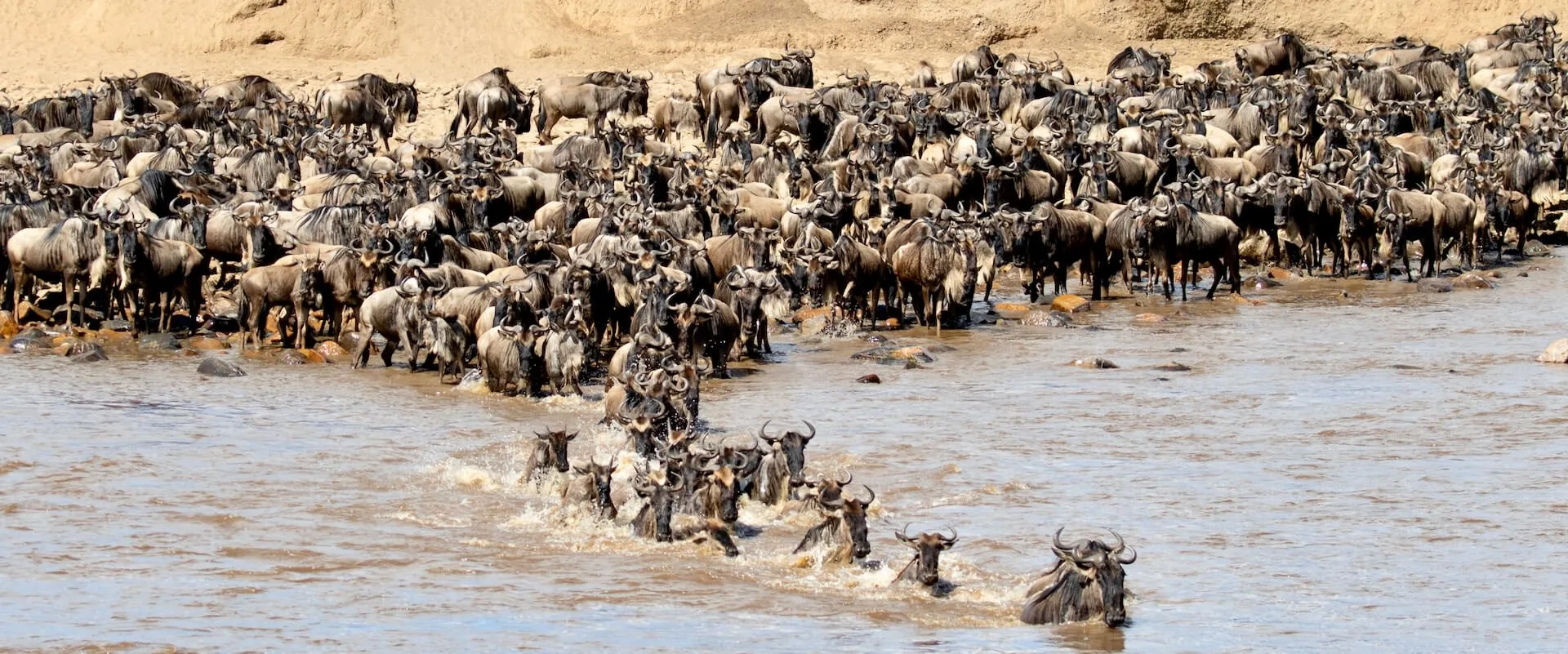
The Great Migration in Africa happens all year because the herds continuously circulate through the Serengeti–Mara ecosystem in…
Read article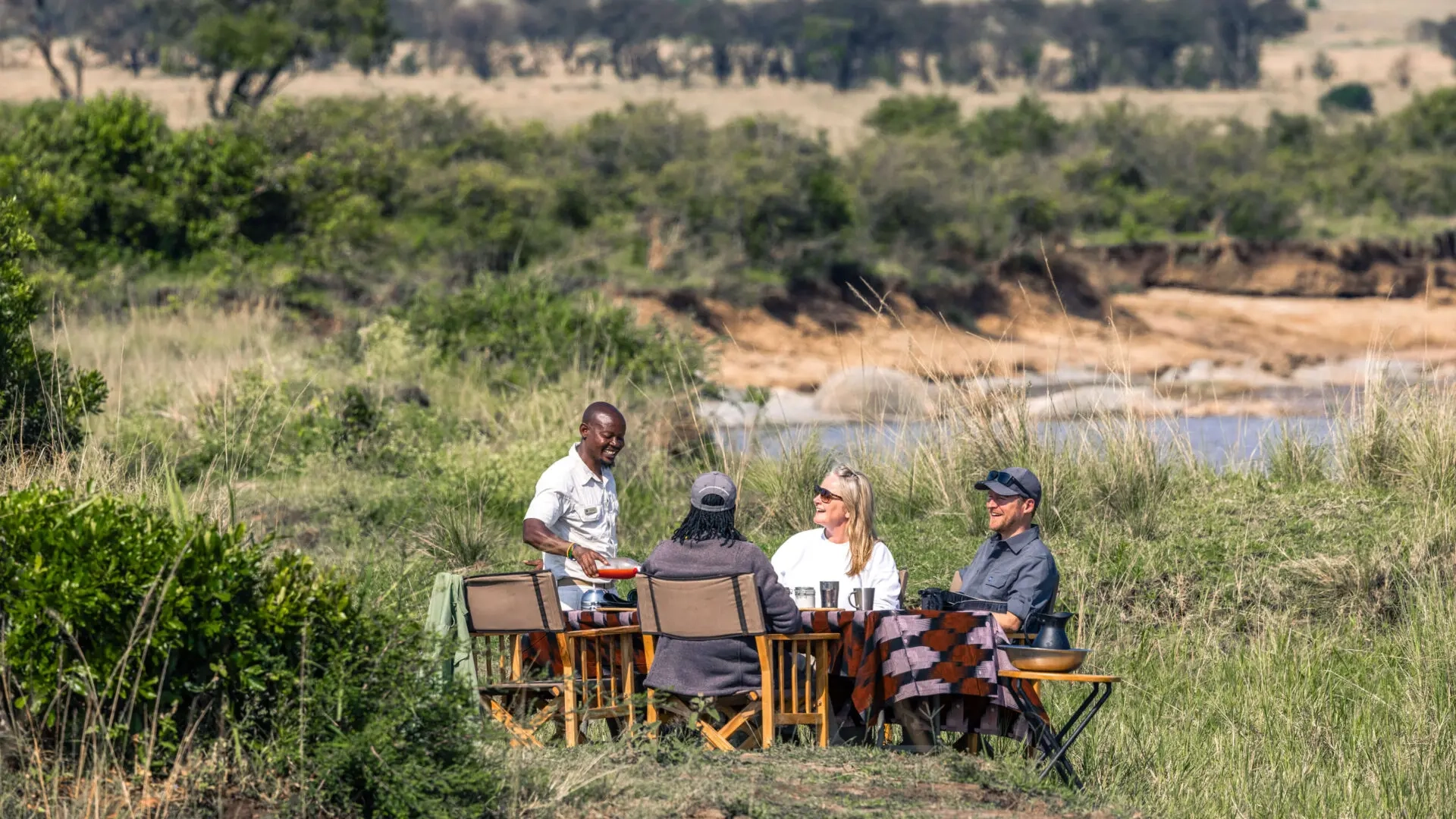
Definitive answer: A picnic lunch on safari is a packed or catered midday meal eaten at an approved…
Read article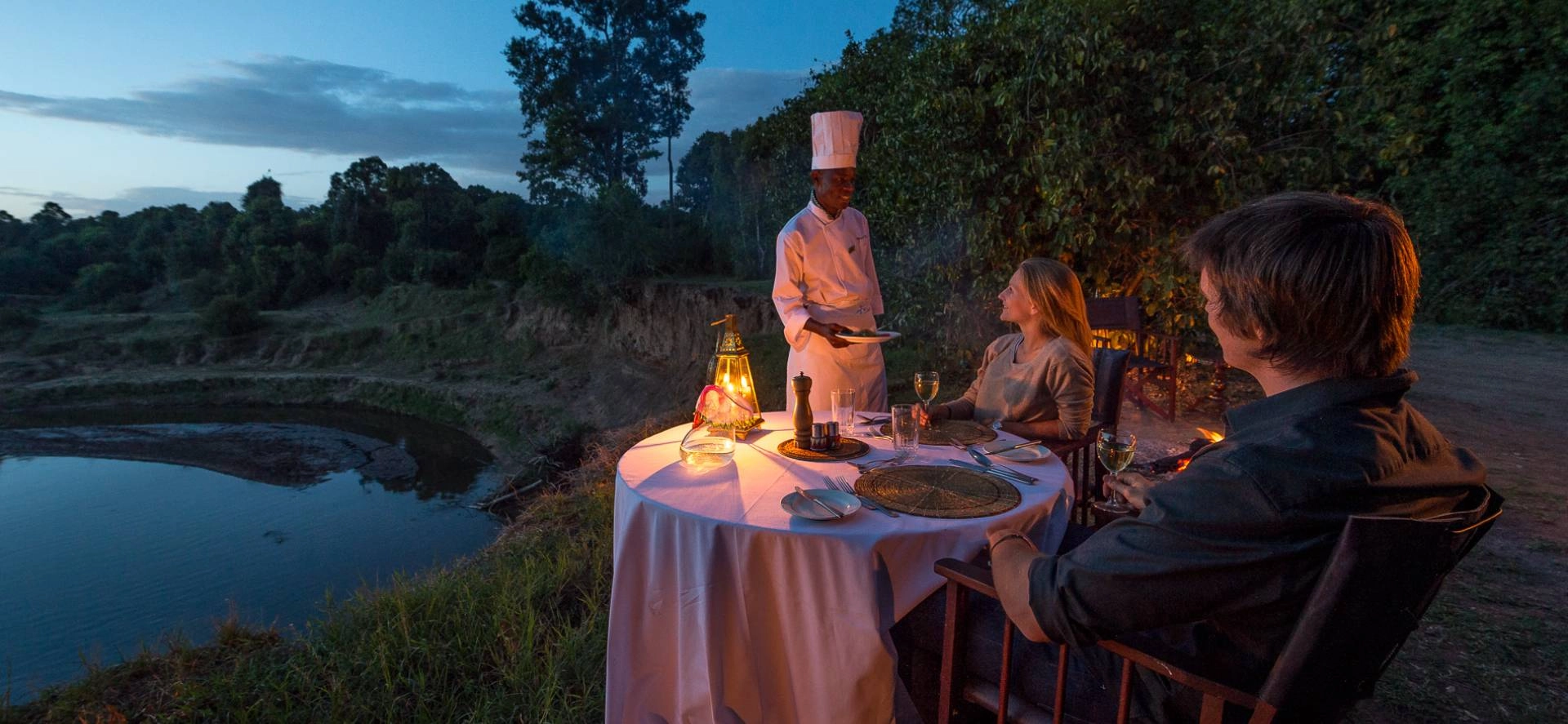
Definitive answer: A bush dinner is an outdoor evening meal arranged in a safe safari setting away from…
Read articleLet us take you closer to the wildlife, people and places that make Africa extraordinary.
Plan Your Safari Today