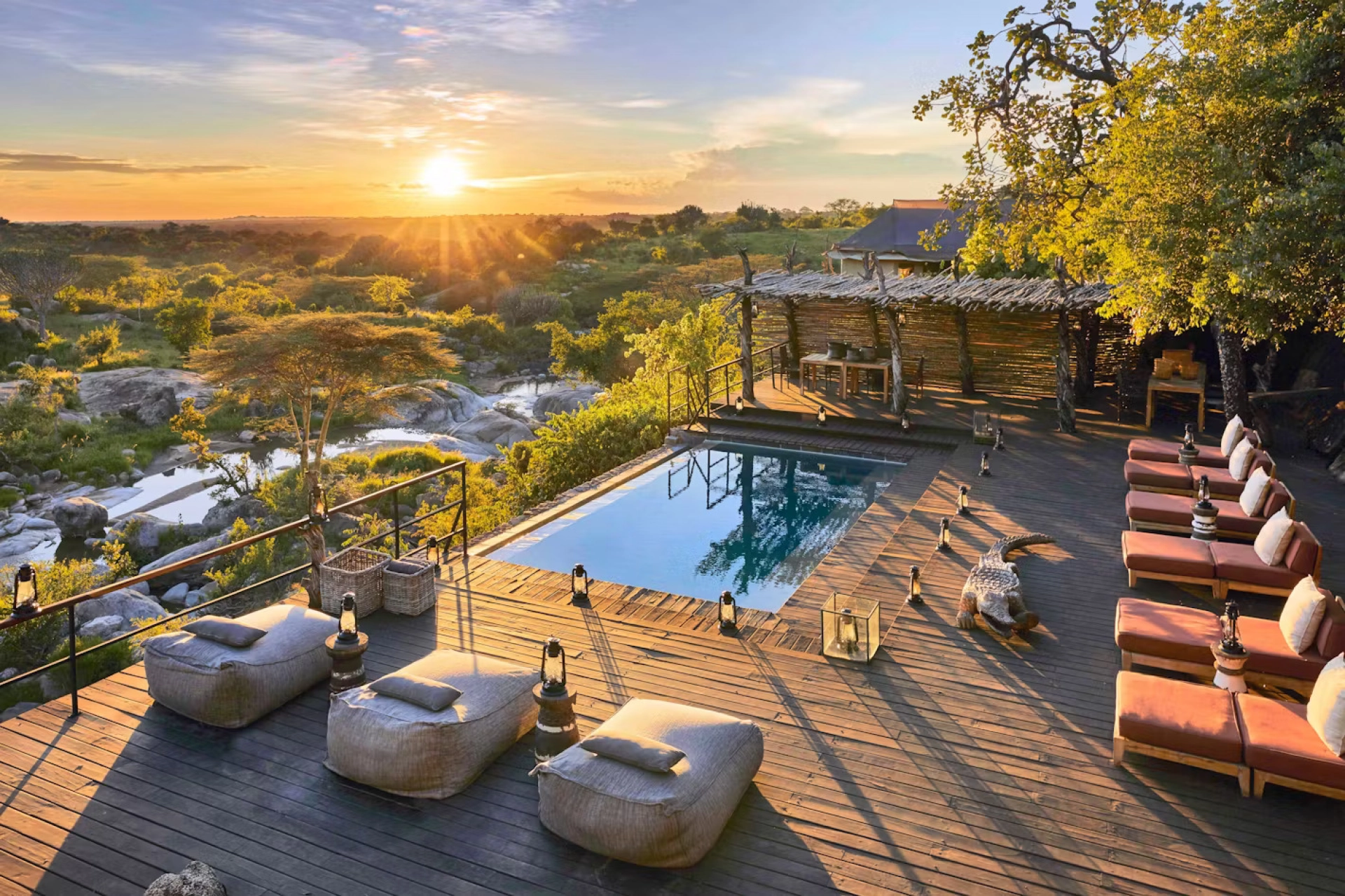
What should I look for when booking a luxury African safari?
When booking a luxury African safari, look beyond the room and compare the quality of guiding, wildlife location,…
Read article

Travel Guide
Kenya is one of those destinations almost everyone thinks they know before arriving. You have seen photographs of lions resting on golden grasslands. You have watched documentaries showing wildebeest racing toward the Mara River. You probably…
Kenya is one of those destinations almost everyone thinks they know before arriving. You have seen photographs of lions resting on golden grasslands. You have watched documentaries showing wildebeest racing toward the Mara River. You probably recognise the silhouette of an acacia tree against an orange sunset even if you have never been to Africa. Yet a real Kenya safari experience is much more complicated, surprising and rewarding than these familiar images suggest.
A safari is not a continuous sequence of lions, elephants and dramatic predator hunts. Some mornings begin quietly. You drive through cool grasslands as the sun rises and see almost nothing larger than a gazelle. Then your guide slows down. He has noticed tracks you did not see. A few minutes later, a leopard appears from the vegetation. Another day begins with elephants everywhere. On another, the most memorable encounter is not one of the Big Five at all but a cheetah scanning the plains, a lilac-breasted roller beside the road or a giraffe crossing the horizon.
This unpredictability is what turns a safari in Kenya into something far more interesting than a wildlife exhibition. Kenya Wildlife Service describes the country’s protected areas as ranging from vast savannah grasslands and arid scrub to forests and inland wetlands, supporting elephants, lions, rhinos, giraffes, buffalo and numerous other animals. The diversity is enormous.
The Maasai Mara offers open plains and predators. Amboseli provides elephants beneath the dramatic backdrop of Kilimanjaro. Samburu introduces the dry landscapes and unusual wildlife of northern Kenya. Tsavo delivers immense wilderness and red-dusted elephants. Lake Nakuru adds Rift Valley scenery and rhino viewing. Nairobi even has a genuine national park on the edge of the capital.
For first-time visitors, the challenge is not deciding whether Kenya is worth visiting. It is deciding how to experience it properly. These twenty questions explore what travellers should know before booking a Kenya safari holiday, based on the practical realities of being out in the bush rather than simply looking at attractive photographs.
The first surprise is how quickly safari develops its own rhythm. You begin waking before sunrise without resenting it. Coffee tastes better when consumed before a game drive. You stop judging distance in kilometres and start judging it by how long the road might take. Your attention changes. At home, you might drive past birds without noticing them. On safari, movement in a distant tree becomes interesting. You begin scanning termite mounds.
You notice vultures circling. You learn that impalas staring fixedly in one direction may have seen something you have not. A guided Kenya safari is therefore a process of learning how to look. The animals are obviously important, but the landscape itself slowly becomes part of the experience. The Mara’s grasslands feel different in the early morning from late afternoon. Amboseli changes according to whether Kilimanjaro is visible. Samburu’s dry river systems create a different atmosphere again.
Safari becomes less about rushing to the next animal and more about understanding the environment that allows these animals to survive.
Kenya is particularly good for a first African safari because it combines extraordinary wildlife with mature tourism infrastructure. Nairobi has major international air connections. Domestic flights link the city with important wildlife areas. Overland safari routes are well established. Accommodation ranges from economical camps to high-end luxury lodges. Most importantly, Kenya offers a remarkable diversity of wildlife within relatively accessible destinations. A traveller can potentially encounter elephants, lions, leopards, cheetahs, giraffes, zebras, buffalo, rhinos, hyenas, hippos and numerous antelope species during one journey.
Kenya Wildlife Service currently manages and protects parks covering environments as different as Amboseli, Tsavo, Lake Nakuru, Nairobi National Park, Mount Kenya and marine reserves along the coast. That diversity makes Kenya especially valuable for first-time safari travellers because no single park has to carry the entire holiday. You can combine ecosystems.
If someone asks for a single answer, the Maasai Mara is usually the obvious choice. It offers outstanding general wildlife viewing, strong predator populations and access to the broader Serengeti-Mara ecosystem. But “best” depends on what you want. For elephants and iconic mountain scenery, choose Amboseli National Park. For unusual northern wildlife such as reticulated giraffes and Grevy’s zebras, consider Samburu. For immense wilderness and red-dusted elephants, explore Tsavo. For rhinos and Rift Valley scenery, Lake Nakuru can be rewarding.
For wilderness associated with private conservancies and exclusive experiences, Laikipia deserves consideration. The strongest Kenya safari itinerary often includes two or three different ecosystems rather than spending the entire journey in one reserve.
The Maasai Mara has almost everything travellers expect from classic safari. Open grasslands allow excellent visibility. River systems attract wildlife. Predator populations are strong. The broader ecosystem connects with Tanzania’s Serengeti, enabling large-scale wildlife movement. During suitable periods, migratory wildebeest and zebras enter the wider Mara region. But the Mara’s reputation should not depend entirely on the Great Migration. Lions, elephants, giraffes, buffalo, hyenas and numerous antelope remain in the region throughout the year.
Cheetahs can be encountered in open areas. Leopards favour suitable riverine and woodland habitat. That resident wildlife means a Maasai Mara safari can be excellent even when enormous migration herds are in Tanzania. The Mara is famous because the underlying ecosystem is extraordinary, not simply because one seasonal event occurs there.
No. This is one of the most important misconceptions in Kenya safari planning. The Great Migration is spectacular, but travelling outside the most famous migration months can have advantages. There may be fewer vehicles. Accommodation prices may be more favourable. Vegetation can be greener. Birding can be exceptional. Storm clouds can create dramatic photographic conditions. Resident wildlife remains. If you have dreamed specifically about seeing massive wildebeest herds, then timing matters.
But if your goal is simply an exceptional African wildlife safari, Kenya offers far more than the migration.
The Great Migration is often presented as a neat circle moving according to a fixed calendar. Reality is more complicated. Wildebeest and zebras respond primarily to rainfall, grazing and water. They move through the greater Serengeti-Mara system throughout the year. Some periods bring major concentrations into particular regions. But exact timing changes annually. River crossings are even less predictable. Herds can gather for hours and then retreat. They may cross somewhere beyond sight.
They may cross more than once. A good guide can position you in a promising area, but nobody controls the animals. The correct mindset is to treat a river crossing as an extraordinary bonus rather than something guaranteed by paying for a safari.
Absolutely. The two destinations complement one another extremely well. The Mara is dominated by rolling grasslands and predator-rich plains. Amboseli National Park is associated particularly strongly with elephants, wetlands and views toward Mount Kilimanjaro. Kenya Wildlife Service describes Amboseli as one of Africa’s premier destinations for encounters with large elephant herds and notes its mixture of grass plains, acacia woodland, thorn bush, swamps and marshes. The park is also recognised for rich birdlife, with KWS noting more than 400 bird species.
Kilimanjaro provides the famous backdrop, although the mountain is frequently covered by cloud. This is why photographers often prioritise early-morning game drives. When the mountain finally appears and elephants move across the foreground, the scene can be extraordinary. But Amboseli remains worth visiting even when Kilimanjaro refuses to cooperate.
Definitely not.
The Big Five remain exciting. Seeing lion, leopard, elephant, buffalo and rhino within one holiday can be extremely satisfying. But some of Kenya’s most interesting species are not included. Cheetah. Giraffe. Zebra. African wild dog. Spotted hyena. Hippo. Gerenuk. Grevy’s zebra. Reticulated giraffe. None is a Big Five animal. Birdlife adds another dimension entirely. A safari becomes much richer once you stop measuring success according to five species. One of the signs of an excellent guide is the ability to make smaller wildlife interesting.
Tracks, insects, plants and birds reveal how the ecosystem functions.
Kenya has excellent lion populations in several safari areas, and your chances in places such as the Maasai Mara can be very good. But no wild animal should ever be guaranteed. A responsible operator can say an area offers excellent opportunities. That is different from promising a sighting. Lions can sleep for much of the day. They may rest inside thick vegetation. They can move away from commonly used roads.
Weather affects behaviour. Prey movements affect behaviour. The uncertainty makes an actual sighting meaningful. If a lion were standing in the same place every day waiting for visitors, it would no longer feel like safari.
Leopards are usually more difficult. Their camouflage is extraordinary. A leopard may be lying in a tree only metres from the road and remain almost invisible until someone notices the curve of a tail or a patch of spotted fur. They often use riverine woodland and dense vegetation where visibility becomes more challenging. This is where guide experience matters. A good safari guide understands territories and behaviour. They notice alarm calls.
They read tracks. They communicate with other professional guides. But even the best guide cannot guarantee a leopard. Finding one after a long search is therefore especially rewarding.
Kenya provides excellent opportunities for cheetahs, particularly in suitable open landscapes such as the Maasai Mara ecosystem. Cheetahs differ greatly from lions and leopards. Their bodies are built for speed. They often use elevated ground or termite mounds to scan open terrain. They hunt primarily by day more often than many other large cats. This can increase opportunities to observe active behaviour. However, cheetahs also need space. Crowding a cheetah with too many safari vehicles can interfere with hunting and movement.
Responsible guiding means protecting the quality of the animal’s environment rather than prioritising a photograph.
Extremely important. Accommodation can be beautiful. Vehicles can be modern. Parks can contain abundant wildlife. But your guide is the person who connects you with all of it. An excellent Kenya safari guide understands animal behaviour and ecology. They know when a lion is likely to move. They recognise bird calls. They read tracks. They explain plants and landscapes. They position the vehicle for good light without disturbing wildlife. They understand when to talk and when to remain silent.
A professional guide also manages safety and logistics. They know park rules. They understand road conditions. They communicate with lodges. They monitor timing. Most importantly, they turn sightings into stories. Seeing an elephant is exciting. Understanding what the elephant is doing and why makes the encounter memorable.
The classic Kenya game drive often begins around sunrise. Guests leave camp or lodge while the air is still cool. The guide scans roads for fresh tracks. Predators may still be active after the night. Herbivores begin feeding. Birdlife becomes noisy. The light is soft and golden. After several hours, the safari may return for breakfast or continue with a picnic depending on the itinerary. Midday wildlife activity often slows because temperatures increase.
The afternoon drive begins later, when the heat declines. This can produce another burst of activity. Elephants emerge from shade. Predators begin waking. The sun drops toward the horizon. The exact structure depends on park regulations, lodge location and your safari style. Private safaris provide the most flexibility.
Yes. Even travellers who normally dislike mornings often change their minds on safari. Sunrise provides some of the best light for photography. Temperatures are comfortable. Animals may be active. The roads are often quieter. There is also something remarkable about watching daylight spread across the African savannah. The whole landscape changes colour. Mist may hang over low areas. Birds begin calling. Giraffes appear as silhouettes. A safari sunrise is not simply an early departure time.
It is part of the experience.
Neither is always better. Full-day drives are excellent when you want to explore distant sections of a reserve. They prevent you from repeatedly returning to accommodation. Picnic lunches allow you to remain inside the wildlife area for longer. However, full days can be tiring. Dust, heat and several hours inside a vehicle eventually take their toll. Separate morning and afternoon drives provide a comfortable midday break. They work particularly well when your lodge or camp is located close to productive wildlife areas.
The best safari may combine both approaches depending on destination.
For road-based private safaris, a customised 4×4 safari Land Cruiser is an excellent choice.
Pop-up roofs allow passengers to stand during game drives and photograph wildlife from elevated positions. Large windows provide additional viewing. High ground clearance helps with rough roads. Four-wheel-drive ability becomes important when conditions deteriorate. The number of passengers matters. Having a window seat for every traveller greatly improves the experience. A vehicle packed to maximum capacity may be cheaper but can make photography and wildlife viewing frustrating. For couples, families and photographers, a private vehicle can be one of the most valuable safari upgrades.
Both approaches have advantages. Driving allows you to see Kenya between wildlife destinations. You pass towns, farmland, escarpments and rural landscapes. This provides a better understanding of the country than simply moving from airstrip to airstrip. Road safaris are also generally more affordable. The drawback is time. Traffic leaving Nairobi can be heavy. Some safari roads are rough. Distances that look short on maps may take many hours. Fly-in safaris save time.
Small aircraft can connect Nairobi with the Maasai Mara, Amboseli, Samburu and other destinations. For shorter luxury trips, flying can significantly increase the amount of time spent on actual game drives. Many of the best itineraries combine both methods.
Accommodation should be selected according to location first and luxury second. A beautiful lodge located far from productive wildlife areas can require long drives before every game drive properly begins. A simpler camp in an excellent location may provide a better safari. Options range from permanent lodges to intimate tented camps. Budget camps prioritise basic comfort. Midrange properties provide private rooms or tents with good facilities. Luxury camps add exceptional service, cuisine, design and exclusivity.
Mobile or seasonal camps can place travellers close to wildlife movements during particular periods. The right choice depends on budget and expectations. A luxury Kenya safari lodge is not automatically the best option for everyone.
Many first-time travellers are surprised by how well they eat. Established safari lodges and camps typically provide substantial meals. Breakfast may be served before or after the morning drive. Lunch can range from a buffet at the lodge to a picnic in the reserve. Dinner often includes several courses. Vegetarian and dietary requirements can usually be accommodated when communicated in advance. Bush breakfasts, picnic lunches and sundowner drinks can add atmosphere.
The best meals are often the simplest ones enjoyed outside. Coffee tastes different when elephants are moving in the distance.
Do not over-plan the wildlife. Plan the logistics carefully. Choose good parks. Choose a professional operator. Use a suitable vehicle. Give yourself enough time. Stay in well-positioned accommodation. Travel during a season appropriate to your priorities. Then allow nature to do what it does. The worst safari mindset is arriving with a checklist that must be completed on schedule. “I need a leopard today.” “I must see a river crossing tomorrow.”
“I want a lion hunt.” Wildlife cannot be ordered. Instead, approach each drive with curiosity. If lions appear, appreciate them. If elephants spend an hour beside the vehicle, do not rush away because leopard remains unchecked on your list. If a guide becomes excited about tracks or birds, listen. The best safari moments are often unexpected.
Kenya and Tanzania share several ecological characteristics and even one of the world’s greatest wildlife ecosystems. Yet the experiences are not identical. Kenya’s Maasai Mara tends to be geographically more compact than Tanzania’s vast Serengeti. Kenya also offers distinctive destinations such as Samburu, Laikipia and Amboseli. Tanzania’s northern circuit combines Serengeti, Ngorongoro and Tarangire particularly naturally. Both countries are outstanding. Choosing one should depend on dates, travel time, budget and the ecosystems you want to experience.
For travellers with sufficient time, combining them creates one of Africa’s definitive safari journeys.
South Africa provides exceptionally developed tourism infrastructure and large self-drive opportunities, especially in Kruger National Park. Kenya delivers a more classic East African safari landscape, with open savannah, conservancies and destinations closely associated with historic safari imagery. Families and independent travellers may appreciate South Africa’s self-drive options. Travellers wanting guided East African wildlife viewing and the Maasai Mara experience may prefer Kenya. Again, neither is universally better. They deliver different styles of safari.
Kenya is stronger for classic open-savannah game viewing. Uganda is exceptional for combining traditional safari with primates. A Kenya itinerary might focus on the Maasai Mara, Amboseli and Samburu. Uganda offers gorilla trekking in Bwindi, chimpanzee tracking in Kibale, Murchison Falls and Queen Elizabeth National Park. For travellers seeking the broadest wildlife variety, combining Kenya and Uganda is outstanding. You can experience big cats and Great Migration landscapes in Kenya, then continue to rainforest for mountain gorillas and chimpanzees.
Yes, and it is one of the best East African combinations.
After a Maasai Mara safari, travellers can connect through Nairobi toward Entebbe or Kigali. Uganda provides gorilla trekking in Bwindi and Mgahinga. Rwanda offers gorilla trekking in Volcanoes National Park. The contrast is extraordinary. One day you may be watching lions across open grassland. Several days later you are hiking through dense forest searching for mountain gorillas. Few journeys demonstrate East Africa’s ecological diversity more clearly.
Exceptionally. The Maasai Mara provides open terrain and predator encounters. Amboseli offers elephants and Kilimanjaro. Samburu provides unusual wildlife and dry northern landscapes. Tsavo offers dramatic red soil. Lake Nakuru can produce excellent rhino and bird photography. A private vehicle is especially valuable for serious photographers because it allows control over positioning and timing. The guide needs to understand light. Rather than immediately driving as close as possible, an experienced photographic guide considers background, sun direction and animal movement.
Often the best image is not the closest image.
Never ask your guide to crowd an animal. Do not pressure the vehicle into another animal’s movement path. Avoid shouting to make wildlife look toward the camera. Do not use flash where prohibited or inappropriate. Give mothers with young animals particular space. Be cautious about publishing precise locations of sensitive species such as rhinos. The purpose of wildlife photography should be to document nature, not disrupt it. Kenya Wildlife Service’s visitor guidance for Amboseli currently instructs visitors to remain on established roads, move quietly, avoid feeding wildlife and maintain a minimum viewing distance of 20 metres.
These are good principles to carry across safari environments even where exact rules differ.
Keep clothing practical. Lightweight neutral-coloured shirts and trousers work well. Bring a warm fleece or jacket for early mornings. Sun protection is essential. A hat and sunglasses help on open game drives. Binoculars can transform the experience, particularly for birds and distant wildlife. Carry camera batteries and sufficient memory cards. A small day bag is useful inside the vehicle. Bring any essential medication in your hand luggage. If flying in light aircraft, check baggage restrictions before departure because soft-sided bags and lower weight limits are common.
Yes. They are among the most underrated pieces of safari equipment. A camera is not a substitute. Binoculars allow you to watch animal behaviour rather than simply photograph it. You can inspect a leopard in a distant tree. Follow a hunting cheetah. Watch birds. Identify elephants approaching from across a plain. A good pair of binoculars improves every game drive, even for travellers who have little interest in photography.
The answer depends on your objective. Dry periods can make wildlife easier to locate because vegetation is less dense and water becomes increasingly important. Migration-focused travellers choose periods when large herds are expected in the Mara. Green seasons provide lush scenery, young animals and excellent birding. Shoulder periods can offer fewer visitors and more attractive rates. Amboseli, the coast and northern Kenya each have their own seasonal patterns. Rather than looking for one universal best month for Kenya safari, decide what matters most.
Migration? Photography? Family travel? Budget? Low crowds? Birding? Your priority should determine the dates.
Five days can provide a good introduction. Seven to ten days is stronger. Two weeks gives you the opportunity to combine several ecosystems or add a beach extension. A typical first-time itinerary might combine Amboseli and the Maasai Mara. A longer route might add Samburu, Laikipia, Lake Nakuru or Tsavo. Do not judge itinerary quality according to the number of parks listed. Three well-chosen destinations experienced slowly are usually better than six parks rushed in ten days.
Absolutely. This is one of Kenya’s greatest strengths. After safari, travellers can continue to the Indian Ocean coast. Diani is popular for resort-style relaxation. Watamu offers beaches and marine attractions. Lamu provides a stronger historical and Swahili cultural experience. Tsavo works particularly well for travellers driving toward the coast because it lies naturally between Nairobi and the Indian Ocean. A Kenya safari and beach holiday gives travellers two completely different experiences within one country.
Very.
Small tented camps, private game drives, bush breakfasts and sundowners create a naturally romantic environment. Adding several nights at the Indian Ocean makes the combination even stronger. A honeymoon itinerary should prioritise atmosphere and pacing. Avoid moving every night. Choose fewer camps and stay longer. This allows the journey to feel like a holiday rather than a logistical exercise.
Yes, especially when the itinerary is designed specifically for children. Wildlife can be extremely engaging. But very young children may struggle with long game drives. Private vehicles help because families can return to camp when needed. Swimming pools and larger family rooms can be useful. Some camps or activities have age restrictions. Parents should tell the safari operator the exact ages of children during planning. A good Kenya family safari should be slower than an adult photography safari.
Prices vary dramatically. Accommodation level matters. So does season. Private transport costs more than shared departures. Domestic flights increase the budget. Park fees can form a substantial component. Luxury tented camps during peak migration periods can be expensive. Budget and midrange safaris reduce costs through simpler accommodation and shared resources. The number of travellers also affects the per-person cost of a private safari because vehicle expenses are divided across the group.
Rather than comparing only headline prices, compare inclusions. Ask whether the quotation includes: Park fees. Accommodation. Meals. Safari vehicle. Professional guide. Airport transfers. Domestic flights where applicable. Drinking water. Taxes. A suspiciously cheap itinerary may simply be excluding important expenses.
A private safari changes the experience more than upgrading a hotel room often does. You control the vehicle. You decide how long to remain at sightings. Photographers can wait for light. Birders can stop frequently. Families can shorten drives. Couples can focus on their own interests. Nobody has to negotiate priorities with strangers. For travellers who have invested heavily in flights and accommodation, paying slightly more for a private vehicle can significantly improve the actual hours spent on safari.
Interestingly, most travellers do not return home talking only about the number of animals they saw. They remember particular moments. A lion roaring before sunrise. An elephant calf trying to keep up with the herd. The first clear view of Kilimanjaro. A cheetah staring toward the horizon. Coffee beside the safari vehicle. Dust hanging behind wildebeest. A guide suddenly stopping because he noticed tracks. Silence under an enormous African sky.
That is why a Kenya safari experience should never be reduced to statistics. How many lions? How many parks? How many photographs? Safari is about attention. The longer you spend in the bush, the more you begin noticing. And the more you notice, the less important the checklist becomes.
Yes. Kenya combines extraordinary wildlife, experienced guides, diverse protected areas and established safari infrastructure, making it one of Africa’s best destinations for first-time safari travellers.
The Maasai Mara is the best-known all-round destination, but Amboseli, Samburu, Tsavo, Laikipia and Lake Nakuru provide different experiences.
Around seven to ten days provides a good balance for most first-time travellers, although shorter and substantially longer itineraries can also work.
Yes. Kenya supports lion, leopard, elephant, buffalo and rhino, but seeing all five is never guaranteed.
The migration itself is a year-round ecosystem movement, but major wildebeest concentrations are only in the Maasai Mara region during part of the annual cycle.
Yes. Amboseli is particularly excellent for elephants and provides potential views toward Mount Kilimanjaro. KWS identifies large elephant herds, rich birdlife and Kilimanjaro scenery among the park’s principal attractions.
No, but private vehicles provide significantly more flexibility and can be especially valuable for photographers, families and couples.
Yes. A Kenya wildlife safari followed by gorilla trekking in Uganda is one of East Africa’s strongest multi-country combinations.
Yes. Kenya’s Indian Ocean coast makes it easy to add Diani, Watamu, Malindi, Mombasa or Lamu after safari.
No. Photography equipment helps, but binoculars and patience are more important to the actual safari experience than owning professional camera gear.
A Kenya safari experience remains special because Kenya gives travellers so many different versions of safari within one country. The Maasai Mara delivers the classic East African plains. Amboseli provides elephants and Kilimanjaro. Samburu reveals northern wildlife. Tsavo offers size and wildness. Lake Nakuru introduces Rift Valley scenery and rhinos. Nairobi demonstrates that wildlife can survive extraordinarily close to a modern capital. The coast then changes the journey completely. This diversity means a Kenya safari can be designed around almost any type of traveller.
First-time visitors. Families. Honeymooners. Photographers. Migration enthusiasts. Birders. Experienced African travellers. The biggest mistake is trying to see everything too quickly. Slow down. Spend three nights instead of one. Watch the elephant herd rather than immediately asking what is next. Wake before sunrise. Listen to your guide. Put the camera down occasionally. Allow a quiet game drive to remain quiet. Because the real magic of safari comes from knowing that nobody — not your guide, not your lodge and not even the most experienced wildlife expert — knows exactly what will happen around the next corner.
Adventure in the Wild Safaris can design private Kenya safaris, Maasai Mara safaris, Amboseli tours, Kenya family safaris, Great Migration journeys, Kenya honeymoon safaris, Kenya–Tanzania combinations and Kenya–Uganda gorilla trekking safaris according to your travel dates, accommodation preferences and budget. The animals provide the unpredictability. Our job is to put you in the right place, with the right guide, and give you enough time to experience it properly.

Share This Article
When booking a luxury African safari, look beyond the room and compare the quality of guiding, wildlife location,…
Read article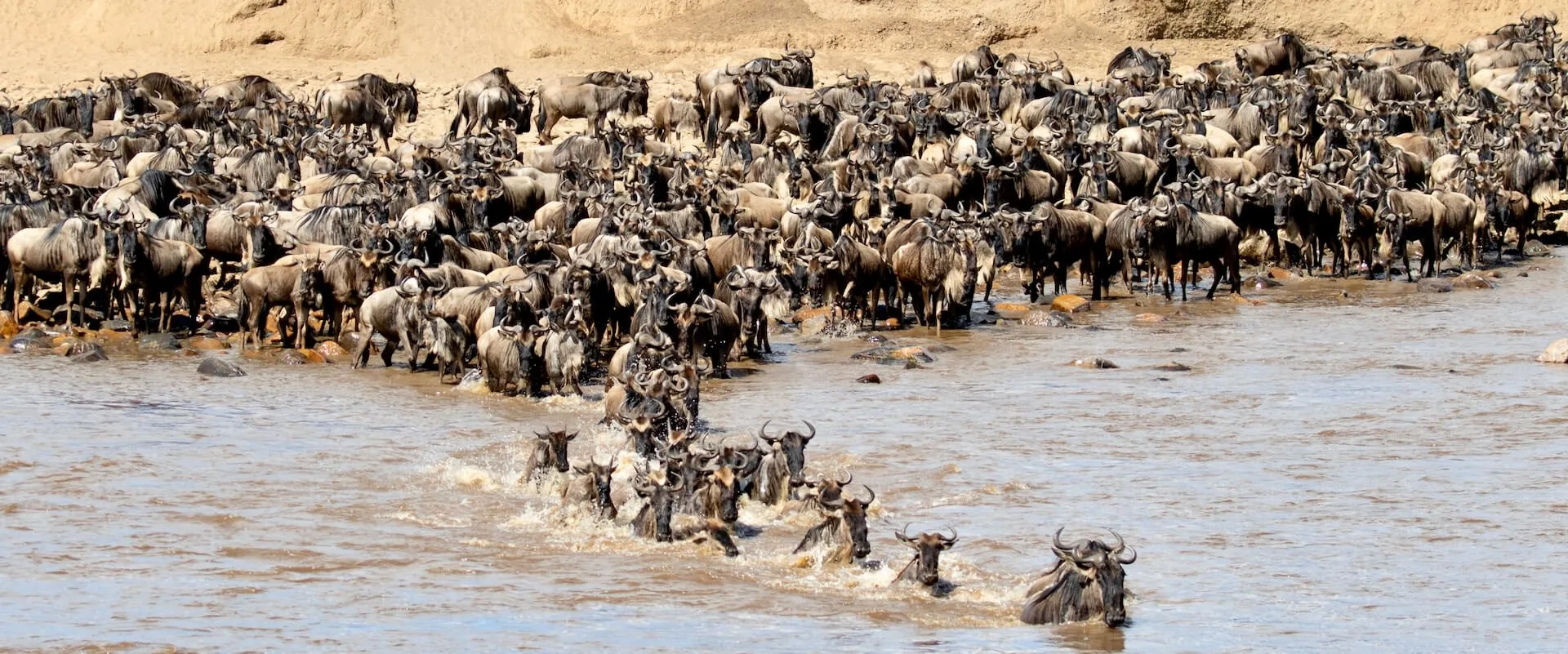
The Great Migration in Africa happens all year because the herds continuously circulate through the Serengeti–Mara ecosystem in…
Read article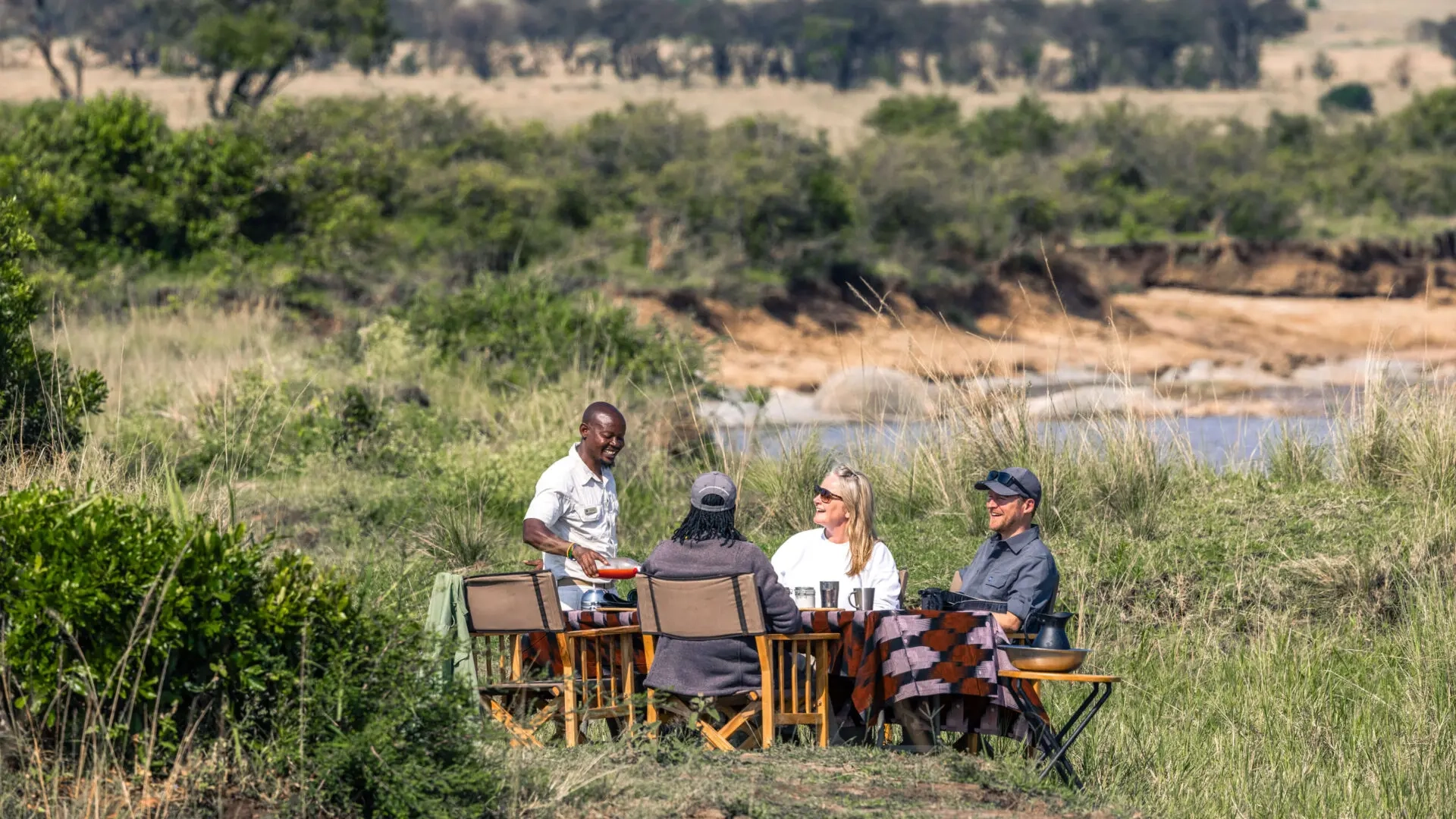
Definitive answer: A picnic lunch on safari is a packed or catered midday meal eaten at an approved…
Read article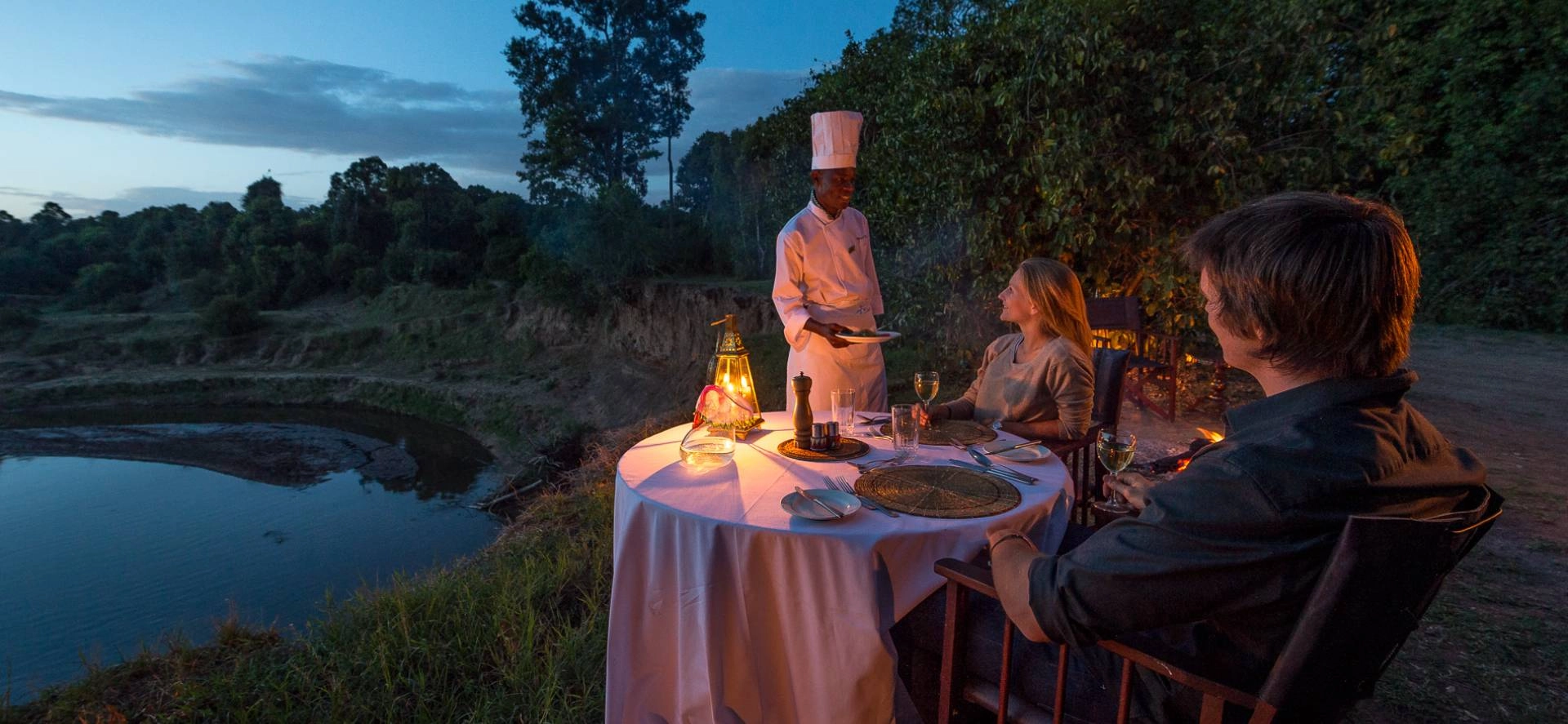
Definitive answer: A bush dinner is an outdoor evening meal arranged in a safe safari setting away from…
Read articleLet us take you closer to the wildlife, people and places that make Africa extraordinary.
Plan Your Safari Today