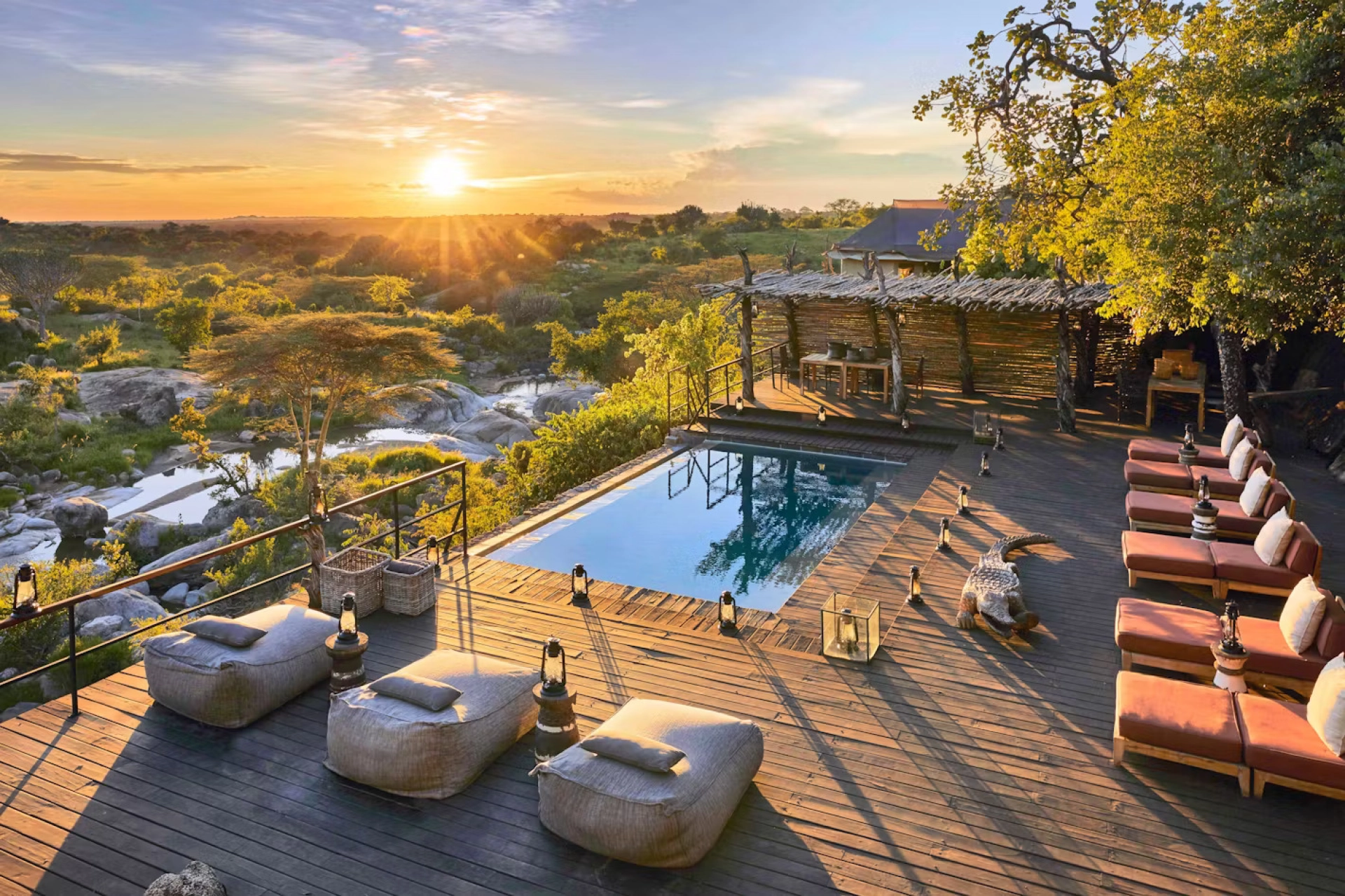
What should I look for when booking a luxury African safari?
When booking a luxury African safari, look beyond the room and compare the quality of guiding, wildlife location,…
Read article

Travel Guide
A combined Kenya and Tanzania safari is one of the most rewarding ways to experience East Africa. Rather than choosing between two of the continent's most celebrated wildlife destinations, travellers can combine Kenya's legendary Masai Mara…
A combined Kenya and Tanzania safari is one of the most rewarding ways to experience East Africa. Rather than choosing between two of the continent’s most celebrated wildlife destinations, travellers can combine Kenya’s legendary Masai Mara National Reserve with Tanzania’s vast Serengeti National Park, then add destinations such as Amboseli National Park, Lake Nakuru National Park, Ngorongoro Crater, Tarangire National Park or Lake Manyara National Park.
Yet the experience of actually travelling through Kenya and Tanzania can be quite different from the picture created by safari photographs. Distances matter. Border crossings require planning. The quality of your guide can influence the entire trip. Accommodation location can determine how much time you spend watching wildlife rather than driving between your lodge and the best game-viewing areas.
This detailed Kenya Tanzania safari review and traveller tips guide explains what travellers can realistically expect, what works particularly well, common planning mistakes and how to create a smoother safari itinerary.
For travellers planning their first East Africa safari, the most important lesson is simple: do not try to see everything in one trip. Kenya and Tanzania contain an extraordinary number of parks and reserves, but a well-paced safari visiting fewer destinations will normally provide a better wildlife experience than an itinerary built around constant transfers.
Kenya and Tanzania complement each other remarkably well.
Kenya offers excellent safari infrastructure, iconic landscapes and some of Africa’s most famous wildlife areas. The Masai Mara is internationally renowned for its big-cat populations and its role in the Great Wildebeest Migration. Amboseli provides classic views of elephants against the backdrop of Mount Kilimanjaro, while other destinations add rhinos, flamingos, lakes, forests and less crowded wilderness.
Tanzania offers a different sense of scale. The Serengeti ecosystem stretches across an immense landscape, while the Ngorongoro Conservation Area combines wildlife, dramatic scenery and human history. Tarangire is famous for elephants, baobabs and seasonal wildlife concentrations. Combining the two countries therefore gives travellers an opportunity to experience several contrasting ecosystems rather than simply repeating similar game drives. A typical Kenya Tanzania safari itinerary might include Nairobi, the Masai Mara, Serengeti, Ngorongoro and Tarangire before finishing in Arusha or Kilimanjaro. Longer trips can incorporate Amboseli, Lake Nakuru or additional Tanzanian parks.
The key is balancing variety with realistic travel times.
The strongest impression from a well-designed Kenya and Tanzania safari is often the sheer variety and frequency of wildlife encounters. Many first-time safari travellers arrive expecting that animals will be difficult to find. In major wildlife ecosystems such as the Mara and Serengeti, that is not necessarily the case.
On productive game drives, travellers may encounter African elephants, giraffes, zebras, wildebeest, buffaloes, gazelles, impalas, warthogs and numerous antelope species within a relatively short period. Predator sightings are more unpredictable, but both countries provide exceptional opportunities for observing African lions, cheetahs, leopards and spotted hyenas. The experience becomes especially interesting when you stop treating safari as a checklist.
Watching a lion pride resting beneath an acacia tree for twenty minutes can reveal more than photographing it quickly and driving away. You may see cubs playing, adults repositioning themselves as the shade moves or members of the pride greeting each other. Likewise, observing elephants at a waterhole provides an opportunity to notice their social relationships, communication and the protective behaviour of adults around calves. This is where an experienced professional safari guide becomes invaluable.
One of the most consistent pieces of advice in any serious Kenya Tanzania safari review is to pay attention to guiding quality. A safari vehicle, lodge and park entrance can be purchased. Exceptional guiding is much harder to replicate. A good safari guide does far more than drive from one animal sighting to another. Experienced guides read tracks, listen to alarm calls, understand animal behaviour and communicate with other guides to identify productive areas. They also know when to wait.
Sometimes the difference between an ordinary sighting and an extraordinary one is ten additional minutes. A guide may notice that a cheetah is scanning a group of gazelles and recommend waiting rather than moving immediately to the next animal. Another guide might recognise vultures circling in the distance as an indication of a carcass and possible predators.
Knowledge also transforms apparently quiet moments. A knowledgeable guide can explain termite mounds, medicinal plants, bird behaviour, animal tracks, migration patterns and ecological relationships. For photographers, guides can position vehicles according to available light and expected animal movement whenever park regulations and conditions allow. When comparing Kenya and Tanzania safari packages, therefore, do not evaluate only the hotels.
Ask about the guides.
Travellers sometimes assume that crossing from Kenya into Tanzania simply means continuing the same safari in another country. In reality, the landscapes and safari atmosphere can change considerably.
Kenya’s major safari circuit is relatively well developed, particularly around Nairobi, Amboseli, Lake Nakuru and the Masai Mara. The Masai Mara safari experience is often intense and wildlife-rich. During peak migration periods, visitors may encounter many safari vehicles around exceptional sightings. This can disappoint travellers expecting complete isolation. However, the density of predators and plains game can be extraordinary.
Private conservancies surrounding the Mara can provide an alternative experience, often with lower vehicle density and activities that may include guided walks or night drives depending on the conservancy.
Northern Tanzania often feels broader and more expansive. The Serengeti’s scale is difficult to appreciate until you are physically travelling across it. Grasslands seem to extend indefinitely, broken by rocky kopjes, woodland and river systems. The Ngorongoro Crater safari is completely different again. Descending into the caldera early in the morning is one of East Africa’s memorable safari experiences. Wildlife occurs within a dramatic geological setting, with the crater walls creating an almost enclosed natural amphitheatre.
Tarangire adds another contrast through its baobab-dotted landscapes and elephant populations. Rather than deciding whether Kenya or Tanzania is “better”, travellers should think about how the two destinations complement one another.
The Masai Mara and Serengeti form part of the same greater ecosystem, yet safari experiences in the two areas can feel quite different. The Mara covers a smaller area and can produce remarkably concentrated wildlife viewing. The Serengeti is enormous. This affects everything from driving distances to how wildlife is distributed. During certain stages of the Great Migration, enormous herds can concentrate in particular areas. At other times, animals may be dispersed across a much broader landscape. Travellers should therefore avoid planning their safari based solely on country names.
If witnessing the migration is a priority, the important question is not simply “Kenya or Tanzania?” but rather where the herds are likely to be during your travel dates. The migration is a continuous natural cycle influenced by rainfall and grazing conditions rather than a fixed event that occurs on precisely the same dates every year. Broad seasonal patterns are useful for planning, but wildlife never operates according to a guaranteed timetable.
Few safari experiences receive as much publicity as the Great Wildebeest Migration. Images of thousands of wildebeest plunging into rivers while crocodiles wait below create understandable expectations. However, travellers should understand what they are booking. The migration involves enormous numbers of wildebeest, zebras and other herbivores moving through the Serengeti-Mara ecosystem in response to seasonal grazing and rainfall.
River crossings are only one component. You might spend hours near a river while animals gather at the bank without crossing. They may move away entirely. Alternatively, a crossing may begin unexpectedly. No responsible safari company should guarantee a dramatic river crossing at a specific time. The better approach is to travel during a period when migration activity is broadly expected in your chosen region and allow enough time in that area. If the migration is your main priority, consider spending three or more nights in the relevant section of the ecosystem rather than rushing through it.
This is one of the most important practical Kenya Tanzania safari traveller tips. Distances that appear manageable on a map can take considerably longer on safari. Road conditions vary. Inside parks, vehicles travel slowly. Wildlife sightings can delay progress. Border formalities take time. And sometimes the journey itself is part of the safari.
A route that looks like a simple transfer may involve game viewing along the way. Travellers should therefore be cautious about itineraries containing a new lodge almost every night. Constant packing, checking out, driving and checking in can become tiring. For many travellers, two or three nights in major wildlife destinations provides a better rhythm.
It allows you to explore different parts of the park, take morning and afternoon game drives and respond to changing wildlife conditions.
A combined Kenya Tanzania safari requires careful logistical planning because crossing the international border is not always as simple as driving directly between neighbouring parks. The Masai Mara and Serengeti share an ecosystem, but regular tourist vehicles cannot simply drive freely across every point of the international boundary.
Safari routes often use established border crossings and may involve changing vehicles and guides depending on the operator’s arrangements. One commonly used route between the Mara and Serengeti involves crossing through the Isebania border. Other itineraries connecting Amboseli and northern Tanzania may use the Namanga border. Your tour operator should organise the logistics and explain how luggage, vehicles and immigration procedures will be handled.
Before travelling, ensure your passport meets entry requirements and verify current visa and health-entry rules applicable to your nationality. Entry regulations can change, so current official requirements should always be checked before departure.
Travellers often compare safari accommodation according to room photographs. That can be misleading. The location of your safari lodge or tented camp may have a greater effect on your overall experience than whether the bathroom contains a freestanding bathtub. A beautiful lodge located far outside the main game-viewing area can require long drives every morning and evening.
Meanwhile, a simpler camp positioned inside or close to a productive wildlife area can maximise safari time. When evaluating accommodation, consider: Location relative to wildlife areas. How long does it take to reach productive game-viewing zones? Inside versus outside the park. Staying inside can reduce commuting time, while accommodation outside may offer different pricing or activity options.
Camp size. Smaller camps can feel more intimate, while larger lodges may offer more facilities. Safari style. Some travellers love canvas tented camps where wildlife sounds are part of the experience. Others prefer solid-walled lodges. Meal arrangements. Most safari properties provide full-board meals because alternative restaurants are rarely available inside wildlife areas.
You do not need to book the most expensive lodge to enjoy excellent wildlife viewing. Wild animals do not know how much your room costs. A well-planned mid-range Kenya Tanzania safari can deliver essentially the same core wildlife areas as a luxury trip. The main differences generally involve accommodation standards, exclusivity, service levels, vehicle arrangements, location, food and additional amenities.
Budget safaris may use simpler lodges, permanent camps or camping. Mid-range safaris often provide comfortable en-suite rooms or tents, good meals and strategically located properties. Luxury safaris may offer larger suites, premium locations, exceptional service, smaller camps, fine dining, plunge pools and other comforts. The best choice depends on how you value comfort versus budget.
For many travellers, investing in a private safari vehicle and excellent guide while selecting comfortable mid-range accommodation produces a very strong overall experience.
Food is another area where first-time visitors sometimes have unnecessary concerns. Established safari lodges and camps generally provide substantial meals. Breakfast may include fruit, cereals, eggs, bread, coffee and tea. Lunch might be served at the lodge or packed as a picnic during a full-day game drive. Dinner usually includes several dishes. Dietary requirements can normally be accommodated when communicated in advance. Vegetarian, vegan, gluten-free and other dietary needs should be disclosed during booking rather than after arrival. One practical traveller tip is to carry a few preferred snacks for long drives, particularly if you have specific dietary preferences.
Kenya and Tanzania are not only wildlife destinations. Both countries contain rich cultural traditions and communities with long histories connected to the landscapes travellers visit. Cultural activities may include visits involving Maasai communities, local markets, community projects or guided cultural walks. Quality varies significantly.
A good cultural experience should be respectful and should not treat communities merely as photographic attractions. Ask your safari company how the activity is organised and whether local participants receive direct benefits. Travellers should also ask before photographing individuals. Responsible tourism is not about avoiding communities. It is about engaging in ways that respect dignity, privacy and local agency.
Packing for safari is easier when you focus on practical clothing rather than trying to look like a film version of an explorer. Lightweight, breathable clothing works well during the day. Neutral colours such as beige, brown, khaki, grey and muted green are practical. Bring layers because early mornings can be surprisingly cool, particularly in higher-altitude areas such as Ngorongoro.
Useful items include:
A Kenya Tanzania safari packing list should also account for luggage restrictions if your itinerary includes small regional aircraft. Soft-sided bags are often more practical than rigid suitcases.
Many travellers prioritise expensive cameras and forget binoculars. That is a mistake. Good binoculars dramatically improve wildlife viewing. Not every leopard will sit beside your safari vehicle. Birds may be high in trees. Lions can rest far across the plains. Binoculars allow you to observe behaviour that would otherwise be invisible. They are especially valuable for birdwatching safaris in East Africa, where Kenya and Tanzania offer extraordinary species diversity. Even travellers who arrive with little interest in birds often become fascinated after seeing colourful bee-eaters, kingfishers, rollers, eagles, hornbills and vultures.
Safari photography is challenging because subjects move and lighting changes rapidly. Bring enough memory cards and spare batteries. Dust can also be an issue, so avoid unnecessary lens changes in exposed environments. A telephoto lens is extremely useful for wildlife photography, but wider focal lengths are valuable for landscapes and environmental portraits of animals. Do not spend the entire safari looking through a camera. Some of the best moments cannot be meaningfully captured. Put the camera down occasionally and simply watch.
Safari schedules can involve early starts, sometimes before sunrise. They are usually worthwhile. Morning temperatures are cooler, predators may still be active and the light can be excellent for photography. Late afternoon is another productive period. Midday can be quieter as temperatures rise and many animals rest. However, there are no absolute rules. Wildlife is unpredictable, and exceptional sightings can happen at any time.
Travellers deciding between a private Kenya Tanzania safari and a scheduled group departure should consider more than price. Group safaris can reduce costs and create a social experience. Private safaris offer greater flexibility.
With a private vehicle, you can often decide how long to remain at sightings, when to leave the lodge and how to balance interests such as photography, birding or predators. Families and photographers often find private arrangements particularly valuable. Couples may also appreciate the privacy and flexibility.
A combined Kenya and Tanzania safari deserves time. A rushed five- or six-day itinerary covering both countries may involve too much driving. For a meaningful combination of the Mara, Serengeti and Ngorongoro, around eight to ten days is more comfortable. Adding Amboseli, Tarangire or other parks can justify ten to fourteen days. Travellers combining safari with Zanzibar, gorilla trekking in Uganda or Rwanda, or other African destinations may want two or three weeks overall. The correct duration depends on budget, travel style and priorities.
There is no single universally best month. Different seasons create different experiences. Dry periods generally make wildlife easier to locate around water sources and can provide comfortable game-viewing conditions. Migration-focused travellers need to consider where herds are expected during their dates.
Green-season travel can offer beautiful landscapes, fewer visitors in some areas and excellent photography. Birding can also be particularly rewarding during periods when migratory species are present. Rather than asking simply for the “best time”, tell your safari specialist what you want to experience. A traveller focused on river crossings may receive completely different advice from someone prioritising fewer crowds, photography or lower prices.
One mistake is choosing an itinerary purely because it includes the greatest number of destinations. Another is selecting accommodation exclusively by luxury level without considering location. Travellers also sometimes underestimate transfer times or book international flights too close to the end of their safari. Avoid extremely tight connections. Road conditions, weather and other logistical factors can create delays. Another mistake is assuming wildlife sightings are guaranteed. Safari takes place in natural ecosystems, not zoos. Experienced guides dramatically improve your chances, but no ethical operator can promise specific wild-animal behaviour.
Established safari routes in Kenya and Tanzania receive large numbers of international visitors. Tour operators and lodges implement procedures designed to manage the particular realities of wildlife areas. The most important rule is to listen to guides and camp staff. Never leave your vehicle in areas where doing so is prohibited. At unfenced camps, animals may move through the property. Guests may therefore be escorted between tents and communal areas after dark. Do not walk alone when staff tell you an escort is required. Safari safety is based on respecting wildlife rather than fearing it.
Booking with an experienced East African safari company can simplify a complex multi-country itinerary. A knowledgeable operator coordinates accommodation, park arrangements, guides, vehicles, border transfers and other logistics. When comparing quotations, look beyond the final price. Check what is actually included.
Does the safari include park entrance fees? Is the vehicle private? Are game drives unlimited or restricted? Are airport transfers included? Which meals are covered? Are there additional conservation or concession fees? What type of accommodation is provided? How are Kenya-Tanzania border transfers handled? Clear answers make quotations easier to compare.
Travellers flying all the way to East Africa sometimes want to combine the classic savannah safari with mountain gorilla trekking. This can create one of Africa’s most diverse wildlife itineraries. After exploring the Serengeti and Masai Mara, travellers can continue to Uganda or Rwanda for a completely different experience in the mountain forests. Uganda offers gorilla trekking in Bwindi Impenetrable National Park and Mgahinga Gorilla National Park, while Rwanda offers trekking in Volcanoes National Park.
A combined Kenya Tanzania Uganda safari can therefore include lions, elephants, wildebeest, cheetahs, giraffes, chimpanzees and mountain gorillas in a single journey. The logistics require careful planning, particularly flights and permit availability. Gorilla permits are limited and should normally be secured well in advance.
A combined safari is particularly suitable for travellers who want:
It also works extremely well for couples, families, honeymooners, photographers and small private groups.
A well-planned Kenya and Tanzania safari deserves its reputation as one of the world’s great wildlife journeys. The experience is not defined by a single lion sighting or a dramatic migration photograph. It is the accumulation of moments. It is waking before sunrise and watching the sky change colour over the savannah. It is seeing elephant families cross the road in silence. It is watching giraffes appear between acacia trees. It is hearing hyenas after dark from a tented camp. It is spending an hour with a patient guide who notices behaviour you would never have recognised on your own.
It is crossing landscapes that feel enormous even after you have studied them on maps. The strongest Kenya Tanzania safari traveller tip is therefore to give the journey enough time. Choose a realistic itinerary. Stay longer in important wildlife areas. Invest in good guiding. Select accommodation according to location as well as comfort. Understand that wildlife remains unpredictable. Most importantly, avoid turning your safari into a race to collect destinations.
The most memorable African safaris are often the ones where travellers have enough time to stop.
Adventure in the Wild Safaris creates tailor-made East African journeys combining Kenya and Tanzania with Uganda, Rwanda and other destinations according to your interests, travel dates, preferred accommodation and budget. Whether you want a Masai Mara and Serengeti safari, a Great Migration journey, a private family safari, a honeymoon, a photographic expedition or a multi-country adventure combining savannah wildlife with gorilla trekking in Uganda or Rwanda, the itinerary should be designed around what you genuinely want to experience.
A successful safari is not simply about adding more parks. It is about choosing the right parks, travelling at the right pace and spending enough time in the places that matter most. That is what transforms a Kenya and Tanzania holiday from a collection of game drives into a genuine East African safari experience.

Share This Article
When booking a luxury African safari, look beyond the room and compare the quality of guiding, wildlife location,…
Read article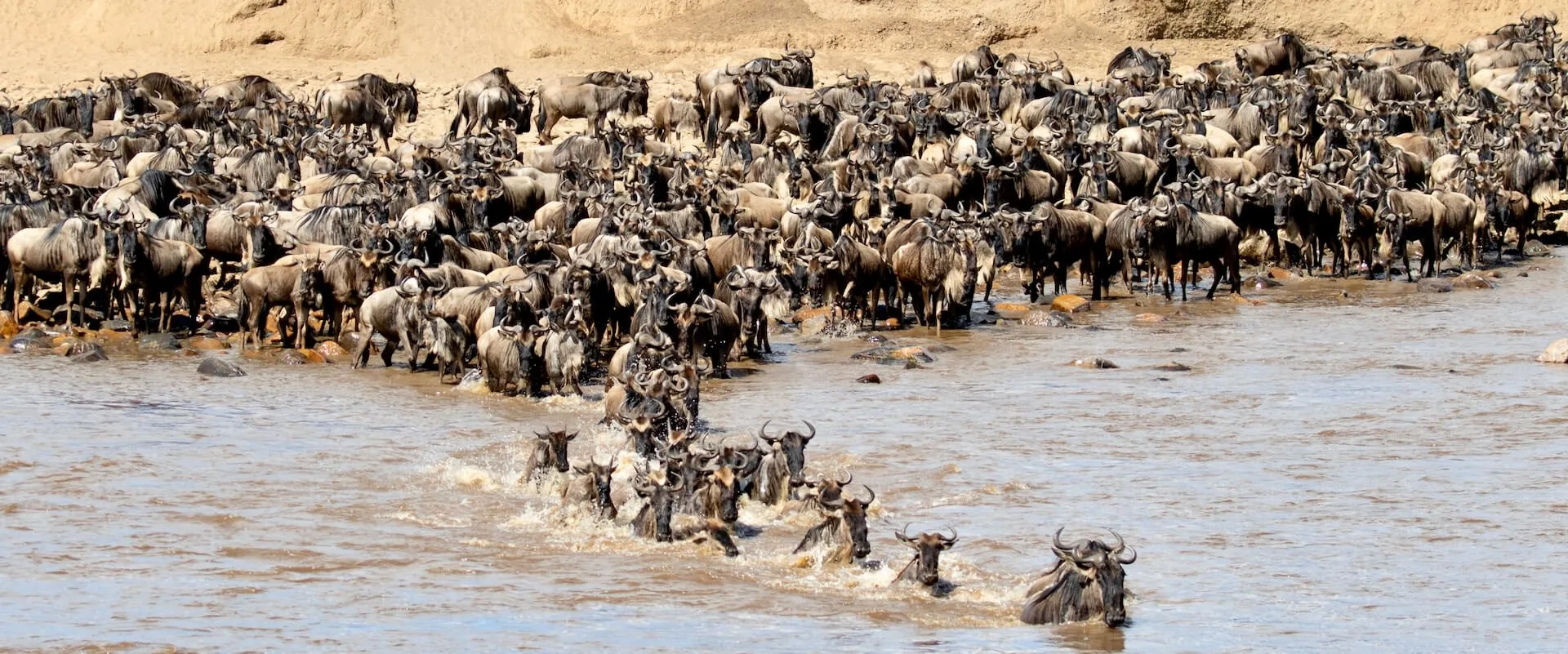
The Great Migration in Africa happens all year because the herds continuously circulate through the Serengeti–Mara ecosystem in…
Read article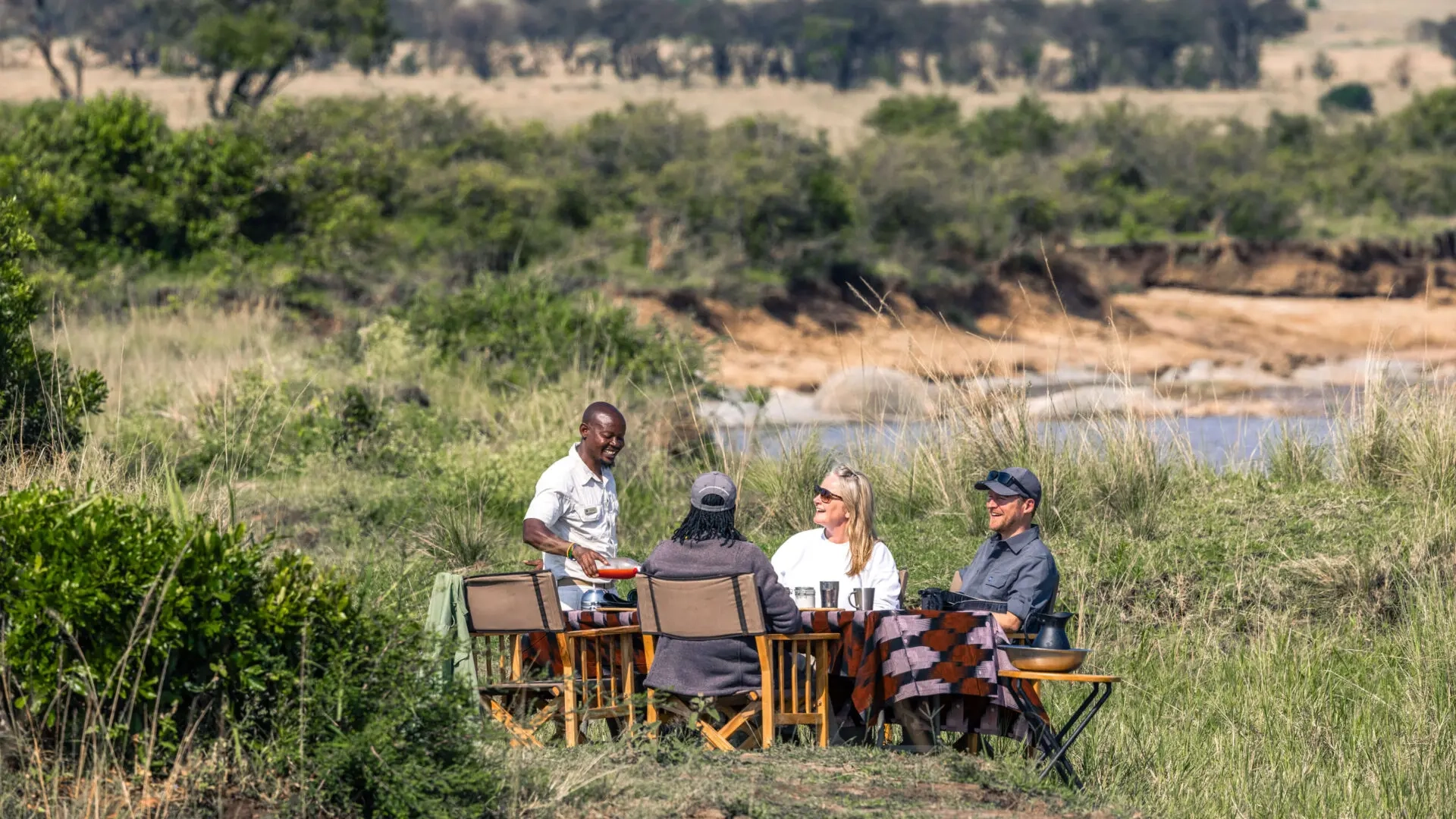
Definitive answer: A picnic lunch on safari is a packed or catered midday meal eaten at an approved…
Read article
Definitive answer: A bush dinner is an outdoor evening meal arranged in a safe safari setting away from…
Read articleLet us take you closer to the wildlife, people and places that make Africa extraordinary.
Plan Your Safari Today