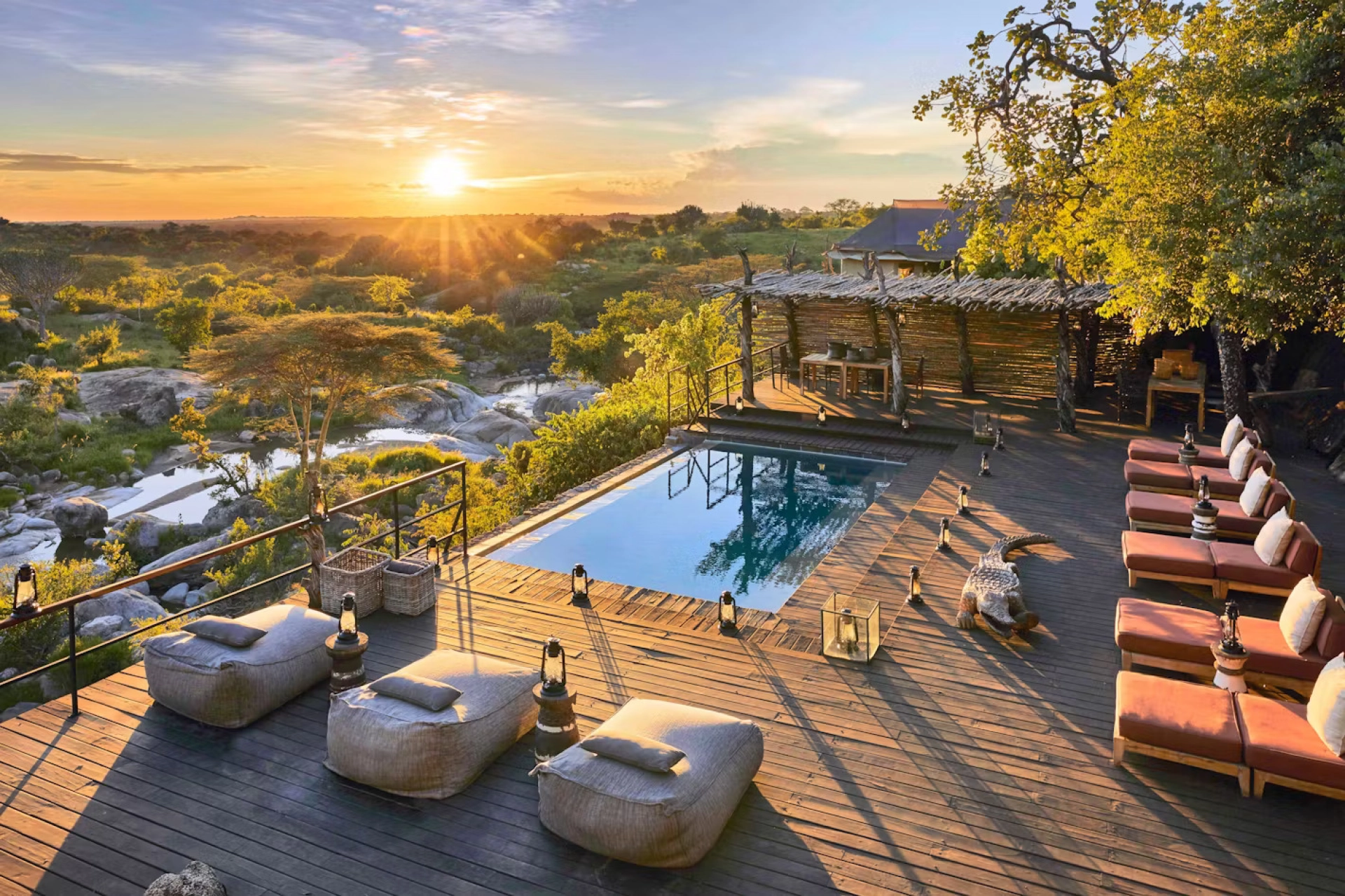
What should I look for when booking a luxury African safari?
When booking a luxury African safari, look beyond the room and compare the quality of guiding, wildlife location,…
Read article

Travel Guide
The Masai Mara Migration in Kenya is one of the most celebrated wildlife spectacles on Earth. Images of thousands of wildebeest gathering on riverbanks, clouds of dust rising from the plains and animals plunging into the…
The Masai Mara Migration in Kenya is one of the most celebrated wildlife spectacles on Earth. Images of thousands of wildebeest gathering on riverbanks, clouds of dust rising from the plains and animals plunging into the Mara River have become some of the defining images of an African safari. Yet one of the biggest misconceptions about the Masai Mara National Reserve is that it is only worth visiting during the migration.
It is not. The Masai Mara is an extraordinary wildlife destination throughout the year. The great herds may move between Tanzania’s Serengeti National Park and the wider Mara ecosystem, but the resident wildlife does not disappear when they leave. Lions remain. Leopards continue hunting. Cheetahs scan the grasslands. Elephants move between feeding areas. Giraffes browse acacia trees. Buffaloes, hippos, crocodiles, hyenas, jackals, zebras, topis, impalas and numerous antelope species continue to occupy the ecosystem.
This is what makes the Masai Mara safari so compelling. The migration adds extraordinary drama, but the underlying wildlife experience is strong enough to stand on its own. For first-time travelers planning a Kenya safari, understanding this distinction is important. If your only goal is witnessing huge migrating herds or potential river crossings, timing matters enormously. If your goal is exceptional predator viewing, photography and diverse African wildlife, you have much greater flexibility.
This detailed guide explores the Great Migration in the Masai Mara, how the migration cycle works, when wildebeest generally reach Kenya, what happens at the Mara River and the many other animals you can see throughout the year.
The Masai Mara National Reserve lies in southwestern Kenya along the border with Tanzania.
Across that international boundary lies the Serengeti ecosystem. Ecologically, the wildlife does not recognize the political border. Animals move across the wider landscape according to rain, grass and water. The Kenyan side is commonly known as the Masai Mara or Maasai Mara, while the larger Tanzanian protected landscape includes the Serengeti and adjoining conservation areas. Together they form one of Africa’s greatest wildlife ecosystems.
Travelers will see both spellings.
“Maasai” refers to the Maasai people and is widely used as the ethnographic spelling. “Masai Mara” remains extremely common in international tourism and search terminology. Both spellings generally refer to the same Kenyan safari destination. Travellers search using both Masai Mara safari and Maasai Mara safari, so both spellings are worth knowing.
The Great Wildebeest Migration is the continuous movement of enormous numbers of wildebeest accompanied by zebras and other grazing animals through the greater Serengeti-Mara ecosystem.
It is not one single event. It is not a one-week river crossing. It is a year-round ecological cycle. The animals move because they are following rainfall, fresh grazing and water. Exact timing changes each year because rainfall does not follow a perfectly fixed calendar. This is the first important rule of migration planning: Nature does not read safari brochures. Historical patterns help operators estimate where herds are likely to be, but no ethical safari company should guarantee that a river crossing will occur on one particular date.
Wildebeest depend heavily on suitable grass and water.
Rain transforms dry plains into productive grazing areas. As conditions change, herds move. The migration therefore represents an enormous response to seasonal ecology. It is not simply an instinctive circle performed because the calendar says July or September. Animals are continually responding to environmental conditions. This explains why migration timing shifts from year to year.
The wider migration includes enormous numbers of wildebeest as well as zebras and gazelles.
Travelers should think of the event not as one single compact herd but as vast streams and concentrations spread across the landscape. At certain moments animals can gather in astonishing densities. At others, groups stretch across enormous distances. This is another reason a safari guide’s local information is important. Knowing where the major concentrations are located can dramatically improve the experience.
The migration spends much of the year in Tanzania. During suitable periods, major herds move northward toward the western and northern Serengeti before some cross into Kenya’s Masai Mara. Later, the herds gradually move south again. Therefore, travelers who want the Great Migration should not assume Kenya is always the correct destination. The best country depends on the month.
During the early part of the year, large concentrations are typically associated with the southern Serengeti and Ndutu region rather than the Masai Mara. This is famous as the wildebeest calving season. Huge numbers of young animals may be born over a relatively concentrated period. Predators respond to this abundance. Lions, cheetahs, hyenas and other carnivores take advantage of vulnerable young prey. For travelers specifically interested in calving, Tanzania rather than Kenya is generally the stronger choice during this phase.
The herds remain influenced by grazing conditions in the southern and central Serengeti ecosystem. Rainfall patterns determine movement. Young calves become stronger. Large concentrations may begin spreading. The Masai Mara remains an excellent safari destination in its own right, but travelers visiting Kenya in March should not necessarily expect the main migrating herds.
The migration gradually moves through parts of the Serengeti. These months can coincide with heavier rainfall. Road conditions may become difficult in some areas. Tourist numbers are often lower. The landscapes can be beautifully green. For photographers, dramatic skies and lush scenery offer a completely different visual experience from dry-season migration imagery.
By June, the migration may be moving farther north and west within the Serengeti ecosystem depending on rainfall. River crossings can occur in Tanzania before the herds reach Kenya. This is an important reminder that “river crossing season” is not limited to the Mara River. Different rivers influence different phases of the migration.
July is when interest in the Masai Mara Migration begins increasing dramatically. Some herds may reach northern areas and potentially move into Kenya depending on conditions. This is also the beginning of one of East Africa’s busiest safari periods. Accommodation near prime wildlife zones becomes expensive and can fill far in advance. Travelers who want July should book early.
August is commonly associated with major migration activity in the wider Masai Mara ecosystem. Large herds may occupy Kenya’s grasslands. The Mara River becomes central to safari expectations. However, even in August, a specific river crossing cannot be guaranteed. Animals may gather for hours or days before crossing. They may approach the river and retreat. They may cross far from where your vehicle is positioned. The uncertainty is precisely what makes the event so dramatic.
September is another strong period for wildebeest migration safaris in Kenya. Large concentrations may remain within the Mara ecosystem. River crossings can still occur. Predator activity remains intense because lions, hyenas and other carnivores take advantage of abundant prey. Weather is generally favorable for safari. Demand remains high.
Some herds may remain in Kenya into October, depending on rainfall and grazing. Others begin moving southward. The exact timing varies. Travelers visiting during this transitional period should have realistic expectations. Even if the largest wildebeest concentrations begin leaving, the Masai Mara’s resident wildlife remains exceptional.
By later in the year, the main migration is generally associated more strongly with Tanzania again. The Mara becomes greener as rains influence the landscape. Visitor numbers may decrease. Resident wildlife remains. This can be an excellent period for travelers who prioritize predators, birdlife and landscape photography rather than migration crowds.
The Mara River crossing is the migration’s most famous spectacle. Wildebeest and zebras gather near steep riverbanks. Eventually, some animals may begin crossing. Once movement starts, large numbers can follow. The scene can become chaotic. Animals leap down banks. Crocodiles wait in the river. Currents can be strong. Predators may patrol surrounding areas. Dust, noise and movement create an intense experience. It is easy to understand why these crossings have become famous through wildlife documentaries.
The animals do not cross according to a timetable. A herd may approach the river and stop. One wildebeest may move forward, causing hundreds to follow. Another day, the entire group may turn away. This means a traveler who spends one afternoon near the river might see nothing, while another traveler several days later witnesses an enormous crossing. The strongest strategy is time. Spend several nights in a strategically located area. Do not book one short visit expecting a guaranteed crossing.
Large Nile crocodiles inhabit the Mara River. They are powerful predators capable of taking wildebeest and zebra during crossings. Crocodile predation is part of the ecosystem, but media coverage can exaggerate the idea that every crossing becomes a massacre. Many animals cross successfully. The river itself, steep banks and crowding can be equally challenging.
The migration does not necessarily move in one straight line. Animals respond to local rainfall and grazing. Herds can cross rivers in different directions. This is why it is misleading to imagine one northward crossing and one southward crossing. Movement can be complex.
This point deserves emphasis. If you visit outside peak migration months, you have not “missed the Masai Mara.” You have missed one seasonal layer of the ecosystem. The Mara is famous for resident predators and large mammals throughout the year. This makes it one of Africa’s best safari destinations even without migrating wildebeest.
Masai Mara lions are among the reserve’s greatest attractions. The open plains support prey species, making the ecosystem highly suitable for lions. Prides may be seen resting during the heat of the day, hunting around dawn or dusk, interacting with cubs or defending territory. Males patrol large areas. Females cooperate during hunts and cub rearing. Because lions are relatively social compared with many big cats, sightings can reveal complex behavior.
Open grassland improves visibility. A lion lying in short grass can be photographed more easily than one hidden within dense woodland. Early morning light creates excellent conditions. During migration periods, large prey concentrations can increase predator activity. But resident prey supports lions throughout the year.
Leopards are more elusive. They favor habitats with cover, including riverine vegetation and areas with suitable trees. Leopards are solitary. They can disappear remarkably quickly. Professional guides rely on local knowledge, tracks, alarm calls and reported sightings. A leopard draped across a tree branch remains one of Africa’s classic safari images, but sightings should never be treated as guaranteed.
The Mara is also famous for cheetahs. Open grasslands provide suitable terrain for high-speed hunting. Cheetahs rely heavily on eyesight. They may use termite mounds or elevated ground to scan for prey. Unlike lions, which can hunt through strength and cooperation, cheetahs rely heavily on speed and timing. Watching a cheetah accelerate across open ground is one of safari’s most extraordinary experiences.
Elephants move throughout parts of the wider Mara ecosystem. Family groups are led by experienced females. Calves remain closely protected. Bull elephants may travel separately. Elephants provide slower, more reflective sightings than predator hunts. Watching a family feed and communicate can be equally fascinating.
Buffalo occur throughout the ecosystem. Large herds can be impressive. Older bulls may form smaller groups. Buffaloes are powerful animals and one of the traditional Big Five species. They also play an important ecological role as grazers. Lions sometimes target buffalo, but doing so carries significant risk.
Rhino sightings are less common than some other major mammals and can be sensitive from a conservation perspective. Travelers should avoid publicly sharing precise real-time locations of endangered species. Where rhinos are encountered, guides may be cautious with location information. Conservation should always take priority over social media.
The Mara River and other water systems support hippos. During the day, hippos often remain in water to regulate body temperature. At night, they leave to graze. Hippo pools can provide fascinating viewing opportunities. Their loud vocalizations become one of the ecosystem’s characteristic sounds. Despite their rounded appearance, hippos can be extremely dangerous. Visitors should always remain within safe viewing areas.
The Mara supports giraffes adapted to East African savannah environments. Their height allows them to browse vegetation unavailable to many other herbivores. Giraffes often appear peaceful, but males can engage in powerful fights using their necks. Their movement across open plains provides one of Kenya’s most iconic safari scenes.
Zebras participate in the wider migration system alongside wildebeest. The two species benefit from grazing together because they feed somewhat differently. Zebras often consume taller grass, while wildebeest favor shorter growth. Outside the migration context, zebra remain common in the broader ecosystem.
Topi are among the characteristic antelopes of the Mara. Their reddish-brown coloration and dark markings make them distinctive. They often stand on raised ground or termite mounds to scan surrounding plains. Travelers focused only on the Big Five frequently overlook them. Yet learning the different antelope species adds enormous depth to safari.
Small, fast and elegant, Thomson’s gazelles are classic East African plains animals. They form important prey for cheetahs and other predators. Their black side stripe helps distinguish them from some other gazelles. Watching predator-prey relationships involving smaller antelope can be just as exciting as following wildebeest.
Impalas are adaptable antelopes found in suitable woodland and savannah habitats. Males develop impressive curved horns. During breeding periods, competition among males intensifies. They form an important prey species for several predators.
The eland is one of Africa’s largest antelope species. Despite its large size, an eland can move with surprising agility. Sightings provide an interesting contrast with smaller gazelles and impalas.
The spotted hyena is one of the Mara’s most important predators. Popular culture often portrays hyenas as cowardly scavengers. This is inaccurate. Hyenas are highly intelligent, social predators capable of hunting their own prey. Their clans have complicated social structures. During migration periods, increased prey availability creates excellent opportunities for them. Watching interactions between lions and hyenas can be particularly fascinating.
Jackals are smaller carnivores that often operate around the edges of larger predator activity. They hunt smaller animals and scavenge when opportunities arise. Their adaptability makes them interesting to observe. A safari that focuses only on big cats misses many of these ecological relationships.
Servals are slender cats with long legs and large ears. They hunt rodents, birds and other small prey. Because of their size and secretive behavior, they are less frequently seen than lions. A serval sighting can be a major highlight for experienced safari travelers.
Wild dogs can occur in the wider regional ecosystem, although they are far less predictable than lions or hyenas. They are highly mobile and live in cooperative packs. Any encounter should be considered special. Travelers whose primary goal is seeing wild dogs may consider other African destinations with particularly strong populations, but an unexpected Mara sighting can be unforgettable.
Warthogs are among the Mara’s most entertaining animals. They often kneel while feeding. When running, adults commonly hold their tails upright. They use burrows for shelter. Although travelers sometimes dismiss them after several sightings, their behavior is worth observing.
Primates also occur in suitable habitats. Baboons live in complex social troops. Monkeys occupy wooded and riverine areas. Their vocalizations can sometimes provide clues about predators. For visitors later traveling to Uganda or Rwanda for chimpanzee trekking or gorilla trekking, seeing savannah primates highlights Africa’s extraordinary primate diversity.
The Masai Mara birdlife deserves far more attention than it often receives. Raptors circle above the plains. Vultures gather around carcasses. Secretary birds walk through grass searching for prey. Ostriches move across open areas. Bustards, hornbills, rollers and numerous other species add color. Birding becomes especially rewarding in greener periods when migrants arrive.
Vultures perform essential ecological services by rapidly consuming carcasses. Their populations face serious conservation pressures in many parts of Africa. Travelers should appreciate them as critical components of healthy ecosystems rather than dismissing them as unattractive scavengers.
The secretary bird is one of Africa’s most distinctive birds. Its long legs and crest make it unmistakable. These birds walk through grasslands searching for snakes, insects and small vertebrates. A secretary bird striding across the Mara can be as memorable as many mammal sightings.
Ostriches are the world’s largest living birds. They are well adapted to open habitats. Males and females have different plumage patterns. Observing courtship or running behavior can provide fascinating photographic opportunities.
The wider Kenyan safari circuit is associated with all of the traditional Big Five: lion, leopard, elephant, buffalo and rhino. However, travelers should not measure safari success solely by whether they photograph all five. A cheetah hunt, hyena clan, giraffe birth or elephant family interaction may be far more memorable. The best Kenya safari is the one where you have time to observe behavior rather than constantly rushing toward another reported sighting.
There is no single best month for everyone. Travel during the main Masai Mara Migration season if huge wildebeest concentrations are your priority. Travel outside migration peaks if you want fewer vehicles, potentially lower prices and excellent resident wildlife. The Mara remains productive year-round.
Drier conditions generally improve road access and wildlife visibility. Animals may concentrate around water. The migration may overlap with parts of the dry season depending on year. This is a popular time for photography and first-time visitors.
Rains transform the plains. Grass becomes green. Birdlife increases. Photography backgrounds become beautiful. Young animals may be present. Visitor numbers may be lower. Predators remain. For travelers who do not need river crossings, the green season can offer excellent value.
The Mara is one of Africa’s great wildlife photography destinations. Open landscapes provide clean backgrounds. Predators are a major attraction. Sunrise and sunset light can be extraordinary. Migration periods add action but also increase vehicle numbers. Serious photographers should consider private vehicles where budget permits. This allows more control over positioning and time at sightings.
A hot air balloon safari over the Masai Mara provides an aerial perspective of the ecosystem. Flights typically operate around sunrise depending on weather and operator. From above, travelers can appreciate the scale of the plains and wildlife trails. Balloon safaris are expensive compared with standard game drives, so budget travelers should consider whether the experience is worth the additional cost.
The broader Mara ecosystem includes conservancy areas outside the main national reserve. Some offer lower vehicle densities and different activity regulations. Depending on location, travelers may experience night drives or walking activities that are restricted in other areas. Conservancy tourism can also involve partnerships with local landowners. When selecting accommodation, ask whether the property lies inside the reserve, within a conservancy or outside the main wildlife areas. The answer significantly affects the safari experience.
The national reserve provides access to famous migration areas and river systems. Conservancies can offer exclusivity and lower vehicle density. The best itinerary may combine both. During peak migration, staying strategically located near likely herd areas can reduce long transfers. Outside migration periods, conservancies can provide excellent predator viewing.
The Maasai people are closely associated with the region. Cultural visits are commonly included in safari itineraries. These experiences should be handled respectfully. Avoid treating communities as tourist exhibits. Choose experiences where residents have meaningful control and economic benefit. Ask questions. Listen. Understand that Maasai culture is living and evolving, not frozen in a historical image created for safari advertising.
Three nights is a good minimum. Four nights is better. During migration periods, longer stays significantly improve the chance of seeing dramatic herd movement or river crossings. A two-night safari can be enjoyable, but much depends on transfer times. Do not spend ten hours traveling for only one full wildlife day if you can avoid it.
Most travelers begin their Kenya safari from Nairobi. The Mara can be reached by road or air. Driving is more affordable and allows travelers to see part of rural Kenya. Flights save substantial time. Budget travelers generally favor road safaris. Travelers with limited time may prefer flying.
A road journey from Nairobi takes several hours and conditions can vary. The advantage is cost. A road safari also allows vehicle and guide continuity. Once in the reserve, the same vehicle can generally be used for game drives depending on the safari arrangement.
Light aircraft flights connect Nairobi with several Mara airstrips. This can dramatically reduce transfer time. Fly-in safaris are particularly useful for travelers combining multiple distant destinations. The downside is cost and baggage restrictions.
A classic Kenya route combines the Masai Mara and Lake Nakuru National Park. Lake Nakuru is known for rhinos, birdlife and varied scenery. The combination adds ecological diversity. Travelers should ensure the route is not unnecessarily rushed.
Amboseli National Park is famous for elephants and views toward Mount Kilimanjaro in suitable weather. Combining Amboseli and the Mara provides two very different landscapes. However, the distance between them is significant. Allow enough time or consider flights if budget permits.
Samburu in northern Kenya offers a contrasting dryland ecosystem with wildlife species not commonly associated with the Mara. A Kenya safari combining Samburu and Masai Mara provides excellent diversity. This works best with a longer itinerary.
A Kenya and Tanzania safari creates one of Africa’s strongest wildlife combinations. The Mara and Serengeti are ecologically connected. Travelers can also include Ngorongoro Crater, Tarangire or Lake Manyara. Border logistics and vehicle arrangements require careful planning. The two countries should not simply be stitched together without considering transfer time.
A particularly powerful East African combination is a Masai Mara safari and Uganda gorilla trekking tour. Kenya provides open savannah and big cats. Uganda provides rainforest and mountain gorillas. The contrast is extraordinary. Travelers can fly between Nairobi and Entebbe or, depending on itinerary, use regional connections. A longer trip may also include chimpanzee trekking in Kibale National Park.
Kenya can also be combined with Rwanda. After a Mara safari, travelers fly toward Kigali before continuing to Volcanoes National Park. Rwanda offers efficient logistics and high-quality tourism infrastructure. Budget and permit costs should be considered carefully.
For safari-and-beach travelers, Kenya can be combined with Zanzibar. The journey moves from wildlife-rich savannah to Indian Ocean beaches. This is particularly popular for honeymoons. Flight connections determine the most efficient route.
The Mara can be experienced at different price levels. Budget travelers can join group road safaris and stay in simple camps. Mid-range travelers can use permanent tented camps. Luxury travelers can choose premium lodges and conservancies. Park or conservation fees remain important fixed costs. Choose accommodation based on location, not simply room appearance. A beautiful cheap hotel far from wildlife areas may create long daily transfers.
The Mara can be excellent for families. Wildlife density keeps game drives interesting. Older children often become fascinated by predators. Families should consider private vehicles where possible because this allows flexible drive length. Choose family-friendly camps with suitable room arrangements.
Couples can combine intimate tented camps, private game drives and bush dining. The Mara works particularly well with beach extensions. A honeymoon may include several safari nights followed by Zanzibar, Kenya’s coast or another Indian Ocean destination.
Solo travelers can reduce costs through scheduled group safaris. Shared departures from Nairobi are widely available. When comparing tours, check vehicle capacity. A smaller group generally provides better window access and photography opportunities.
Bring neutral-colored lightweight clothing, a warm layer for early mornings, sunscreen, sunglasses and a hat. Binoculars are essential if you want to appreciate both mammals and birds. Photographers should bring extra batteries and storage. A light rain jacket may be useful depending on season. Soft-sided luggage can be helpful when using small aircraft.
The popularity of river crossings creates pressure on wildlife. Responsible safari guides should maintain appropriate distance and avoid blocking animals. Vehicles should not surround crossing points in ways that prevent natural movement. Travelers should never encourage guides to break rules merely for a better photograph. The migration is a natural event, not a performance staged for tourists.
A professional guide understands that animal welfare comes before the photograph. Good guides position vehicles carefully. They interpret behavior. They explain ecology. They avoid unnecessary disturbance. This improves both conservation and visitor experience.
A successful Masai Mara safari begins by defining what matters most. If you specifically want the Great Wildebeest Migration, choose dates and accommodation according to likely herd locations. If you mainly want predators and general wildlife, you have much greater flexibility. If you want fewer visitors and stronger value, consider periods outside the busiest migration months. At Adventure in the Wild Safaris, a Kenya safari can also be combined with Uganda gorilla trekking, Rwanda gorilla trekking, Tanzania’s Serengeti, Ngorongoro Crater, Zanzibar and other East African destinations. The strongest itineraries use geography intelligently. Do not spend half your holiday repeatedly moving through airports. Give the Mara enough time.
The Masai Mara Migration deserves its reputation. Few wildlife experiences compare with standing on the East African plains while thousands of wildebeest and zebras move across the horizon. A river crossing can be breathtaking. Predators following the herds add drama. Dust, sound and movement create scenes that remain in memory long after the safari ends. But the Masai Mara should never be reduced to the migration. When the great herds move south, lions remain.
Leopards remain. Cheetahs remain. Elephants continue crossing the plains. Hippos still fill the rivers. Hyenas call in the darkness. Giraffes browse beside acacia trees. Secretary birds walk through the grass. Vultures circle overhead. The ecosystem continues. That is the real reason the Masai Mara National Reserve remains one of the world’s great wildlife destinations. Come for the Great Migration if that is your dream. But pay attention to everything else. The smaller interactions, resident animals and changing landscapes are what transform a famous seasonal spectacle into a complete Kenya wildlife safari.
Get quick answers to the most common questions. If you still have questions, our safari experts are here to help.
Large migrating herds are often associated with the Mara during parts of roughly July through October, but exact timing varies according to rainfall and grazing.
No. August is historically a strong period, but wildlife movement cannot be guaranteed.
Crossings can occur during periods when migration herds gather near the Mara River. Timing is unpredictable and may vary each year.
Yes. The migration spends much of its annual cycle in Tanzania’s Serengeti ecosystem.
Absolutely. Resident lions, leopards, cheetahs, elephants, buffaloes, giraffes, hyenas and other wildlife make the Mara excellent throughout the year.
Lion, leopard, elephant, buffalo and rhino are known as the traditional Big Five.
Yes. Open grasslands make the Mara one of Africa’s well-known cheetah destinations.
Yes. Leopards occur in suitable wooded and riverine habitats.
Yes. Family herds and bulls can be encountered across parts of the ecosystem.
Yes. Rivers in the Mara support hippos and Nile crocodiles.
Three to four nights is recommended. Longer stays are particularly valuable during migration season.
Yes. Open landscapes, strong predator populations and dramatic seasonal wildlife make it one of Africa’s premier photography destinations.
Yes. Kenya can be combined with Uganda gorilla safaris or Rwanda gorilla trekking for an exceptional East African itinerary.
Our safari experts are here to help you plan your safari. Get personalized advice, the latest information and a free, no-obligation quote.
We typically reply within a few hours.

Share This Article
When booking a luxury African safari, look beyond the room and compare the quality of guiding, wildlife location,…
Read article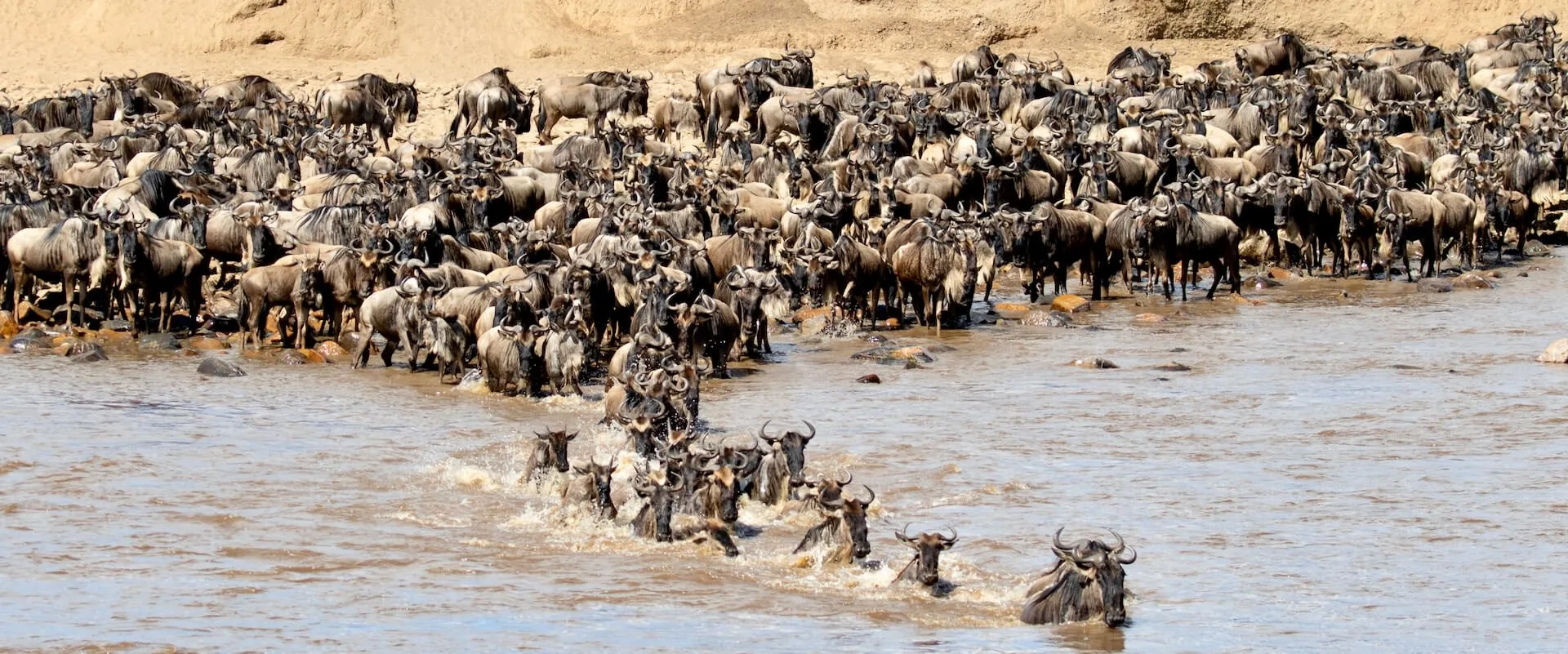
The Great Migration in Africa happens all year because the herds continuously circulate through the Serengeti–Mara ecosystem in…
Read article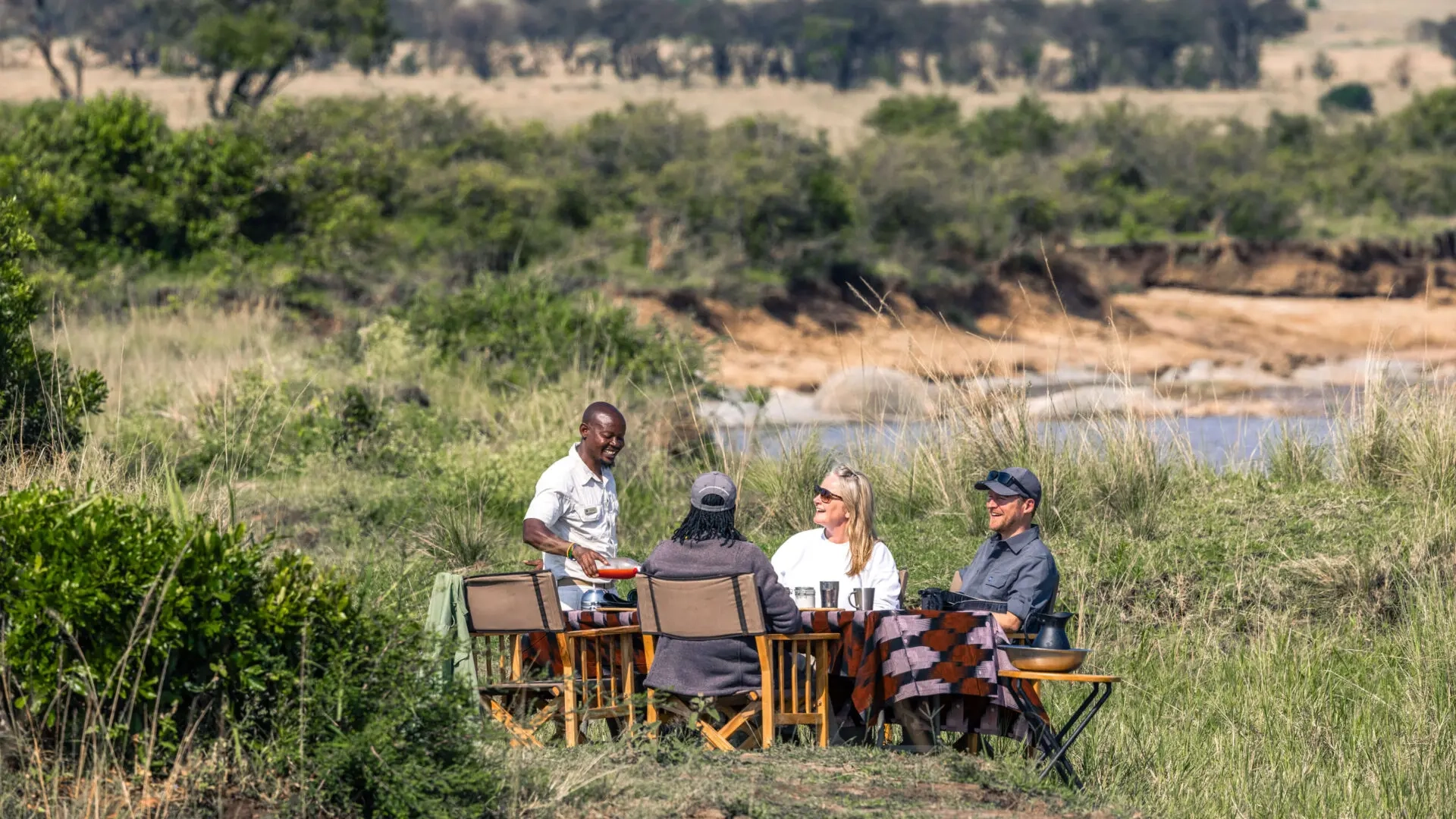
Definitive answer: A picnic lunch on safari is a packed or catered midday meal eaten at an approved…
Read article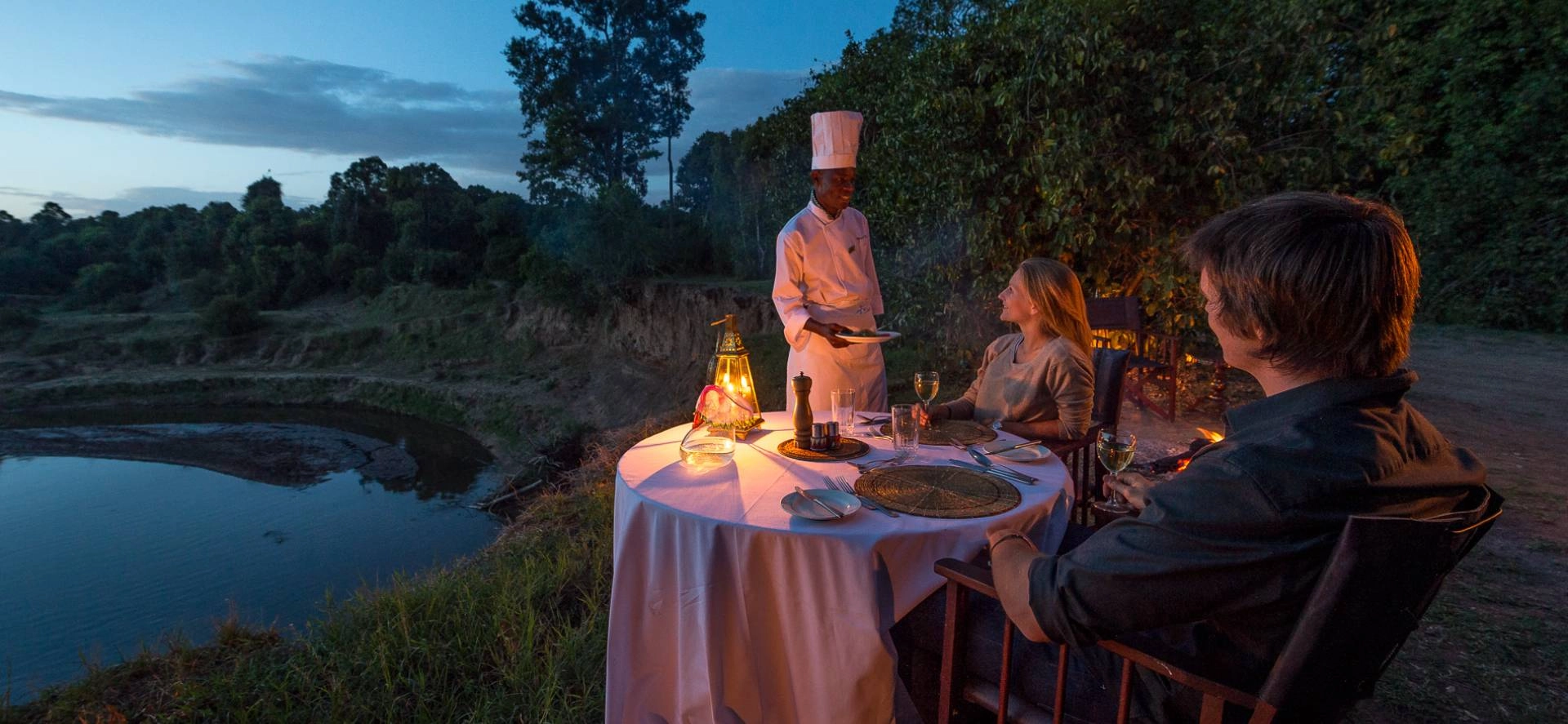
Definitive answer: A bush dinner is an outdoor evening meal arranged in a safe safari setting away from…
Read articleLet us take you closer to the wildlife, people and places that make Africa extraordinary.
Plan Your Safari Today