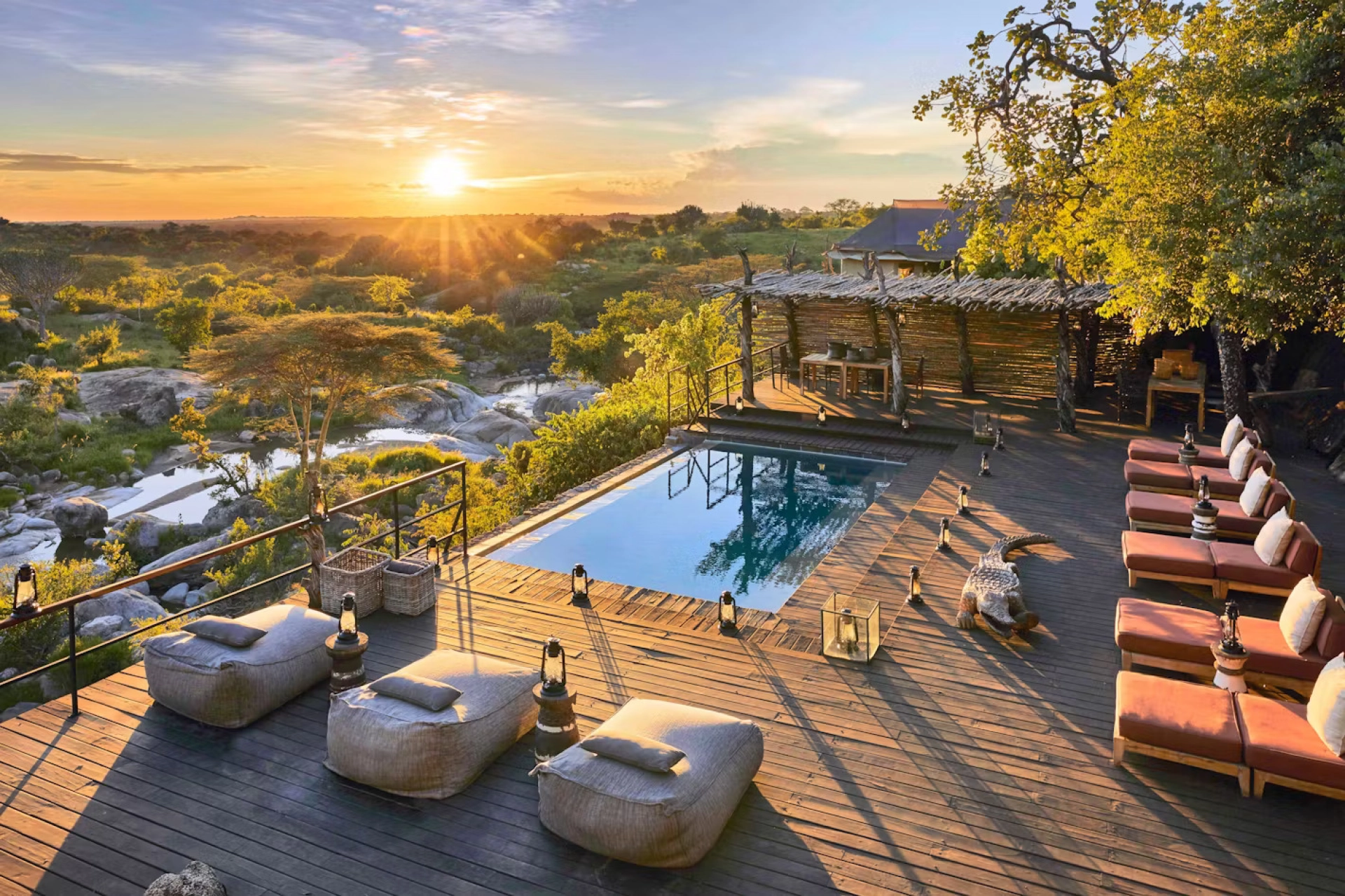
What should I look for when booking a luxury African safari?
When booking a luxury African safari, look beyond the room and compare the quality of guiding, wildlife location,…
Read article

Travel Guide
Few animals define an African safari as powerfully as the lion. The deep roar of a male lion travelling across the savannah before sunrise, a pride resting beneath an acacia tree after a night of hunting,…
Few animals define an African safari as powerfully as the lion. The deep roar of a male lion travelling across the savannah before sunrise, a pride resting beneath an acacia tree after a night of hunting, or cubs playing around tolerant females are among the wildlife encounters many travelers dream about long before arriving in Africa.
Although traditionally described as the king of the jungle, African lions are actually much more closely associated with savannahs, grasslands, open woodland and other habitats where sufficient prey and cover exist. The familiar phrase remains deeply embedded in popular culture, but travelers hoping to see lions on safari should generally look toward Africa’s great grassland and woodland ecosystems rather than tropical jungle.
Lions are also unusual among cats. Most wild cats live largely solitary lives. Lions, in contrast, are intensely social. Females commonly live together in prides, often alongside related females, while males may form coalitions that compete for access to territories and prides. The IUCN highlights this social structure as one of the characteristics distinguishing lions from other big cats. Understanding these relationships transforms an ordinary lion sighting. Instead of simply photographing a sleeping cat, travelers begin noticing which lionesses remain close together, which adults tolerate particular cubs, whether males belong to the same coalition and how a pride reacts when another predator or unfamiliar lion appears.
This detailed guide explores African lions, where to see them, how prides work, what lions eat, how they hunt, how territories function and what travelers should know before planning an African lion safari.
The African lion belongs to the species Panthera leo.
It is one of Africa’s largest terrestrial predators and one of the most internationally recognized wildlife species. The lion’s symbolic power stretches far beyond safari tourism. Lions appear in royal emblems, traditional stories, national symbols, sports teams, literature and art around the world. Within Africa itself, lions have cultural significance in numerous societies and remain central to the tourism economies of many wildlife destinations. Protecting lion habitat has benefits that extend well beyond one predator. IUCN has emphasized that conserving healthy lion landscapes also protects wider ecosystems, including water resources, carbon storage, biodiversity and numerous species sharing those landscapes.
This makes lion conservation an ecosystem issue rather than simply a campaign to save one charismatic animal.
The nickname king of the jungle is somewhat misleading.
Lions certainly can occur in woodland and some forest-edge environments, but the classic African lion is strongly associated with open habitats. Savannahs are particularly suitable because they combine prey availability with enough grass and vegetation for stalking. The phrase probably survives because “jungle” was historically used more loosely in popular language to describe wild places. In ecological terms, however, travelers searching for lions in Africa are more likely to find them in environments such as the Serengeti plains, Masai Mara grasslands, Kruger bushveld, Botswana’s savannahs and the open sectors of parks such as Queen Elizabeth in Uganda.
Historically, lions occupied a much larger range across Africa and beyond.
Today their distribution is far more fragmented. Strong populations remain in parts of eastern and southern Africa, particularly within protected areas and large conservation landscapes. Important lion destinations include: Tanzania, Kenya, Uganda, Botswana, South Africa, Zimbabwe, Zambia, Namibia and several other African countries. Habitat quality, prey availability, protection and connectivity between wildlife areas all influence whether lions can survive. Lions require far more space than the area immediately around a tourist lodge. A functioning lion population depends on landscapes large enough to sustain prey animals and allow dispersing lions to establish new territories.
A lion pride is one of the most fascinating social structures among large carnivores.
A pride often contains several related adult females, their cubs and young lions. One or more adult males may control access to the pride’s territory for a period. The exact size and composition vary greatly. Some prides are relatively small. Others become famous because they contain numerous females and cubs. A pride should not be imagined as a rigid family unit that behaves identically every day. Individuals may temporarily separate. Females may leave the main group while caring for very young cubs. Groups can split and reunite. Males may move independently. Understanding that flexibility makes prolonged observations particularly rewarding.
Social living can provide several advantages.
Cooperative hunting may make it possible to tackle larger prey. Groups can defend kills against competitors. Females can collectively defend territories and cubs. Several lionesses may care for young within the same pride. However, living together also creates competition. A large pride needs substantial food. When prey is scarce, feeding can become highly competitive. Dominant adults frequently feed before smaller or younger individuals. Safari guests observing a kill may therefore witness growling, paw swipes and intense competition between animals that appeared affectionate only hours earlier.
Lionesses generally form the stable core of a pride. Females born into an established pride may remain connected with female relatives for much of their lives. These relationships allow cooperation in hunting, cub defence and territorial protection. A lioness raising cubs faces enormous challenges. Young lions are vulnerable to starvation, predation and conflict with other lions. When unfamiliar males take control of a pride, cub survival may be threatened. This harsh aspect of lion behavior can be difficult for travelers to witness, but it is part of the natural dynamics governing lion populations.
Adult male lions are among the most visually impressive animals on safari. Their manes create an appearance associated with strength and dominance. But life as a male lion is extremely competitive. Young males eventually leave or are pushed away from their natal pride. They then face a dangerous period in which they must survive without the stable support structure of their original family group. Some males form lion coalitions. Coalition partners may be brothers or other males that have developed strong social bonds.
Working together can improve their ability to defend territory and compete against rival males. IUCN specifically notes that both related and unrelated male lions may form coalitions competing for tenure over prides. A successful coalition may control one or more prides for a period, but ownership is never permanent. Eventually stronger challengers may arrive.
The mane is one of the lion’s most distinctive features. Mane size and color vary greatly. Age, genetics, hormones, environmental conditions and health can all influence appearance. A dark, heavy mane can make a male appear substantially larger. The mane may play roles in sexual selection and signaling strength or maturity to other lions. However, not every healthy adult male has the same enormous dark mane seen in wildlife documentaries. Regional differences can be significant. The famous black-maned lions of the Kalahari, for example, are particularly striking.
Lions are opportunistic carnivores. Their diet varies according to what prey species are available. Across different African ecosystems, lions may hunt animals such as: Zebra, wildebeest, buffalo, impala, warthogs and other medium-to-large mammals. In some landscapes they may target giraffes or other large animals. They can also take smaller prey. Rather than imagining lions as specialists hunting one favorite species, it is more accurate to understand them as predators adapting to local opportunities. Prey selection changes according to pride size, habitat, season and vulnerability of particular animals.
No. Lions do not need to make a major kill every day. After feeding heavily, a pride may spend substantial periods resting. This explains one of the most common frustrations for first-time safari travelers. You finally find lions—and they are asleep. This is completely normal. Lions can spend a large proportion of the day resting. They often become more active when temperatures fall. Early morning, late afternoon and nighttime can therefore produce more interesting behavior.
Predators need to conserve energy. Hunting is physically demanding and frequently unsuccessful. Hot African afternoons also make activity energetically expensive. Resting through the heat allows lions to save energy for hunting, territorial patrols and social interactions when conditions become cooler. A sleeping lion is therefore not being lazy in any human sense. It is following an efficient predator strategy.
Lion hunting is more complex than the popular image of an entire pride charging simultaneously at a herd. Hunting strategy changes depending on prey, vegetation and the number of participating lions. Lions rely heavily on stalking. They attempt to reduce the distance between themselves and prey before accelerating. Open landscapes make this difficult. Long grass, drainage channels, bushes and darkness can provide essential cover. Several lionesses may approach from different directions. At other times, one lion hunts independently. Male lions can also hunt successfully and should not be considered dependent entirely on females.
No. This is one of the most persistent oversimplifications about lions. Lionesses are important hunters and cooperative female groups can be extremely effective. But male lions also hunt. Their greater body mass may make them particularly capable of tackling substantial prey or using dense cover for ambush. Safari observations frequently show males feeding on prey they have killed themselves. Wildlife behavior rarely follows simple rules.
Lions are often especially active during darkness and cooler periods. Night provides several advantages. Temperatures fall. Reduced visibility may help predators approach prey. Many prey animals also move between feeding and resting areas. Private safari reserves that conduct authorized night drives can therefore reveal very different lion behavior from daytime safaris. The sound of lions roaring somewhere in the darkness is one of Africa’s unforgettable safari experiences.
A lion’s roar is more than dramatic background noise. It is a form of communication. Lions can use powerful vocalizations to advertise presence, maintain contact and communicate territorial information. The roar can travel considerable distances under suitable conditions. Hearing lions before seeing them transforms a game drive. Guides may stop the vehicle, turn off the engine and listen carefully to determine the direction. The distant call of another lion may answer. Suddenly the landscape feels far larger and more alive.
Lion territory varies enormously depending on habitat and prey density. A productive ecosystem with abundant prey may support lions within smaller areas than a dry landscape where animals need to travel long distances. Territory also changes according to competition. Neighboring prides and male coalitions create boundaries that lions monitor through scent marking, vocalization and direct patrol. Territorial conflict can be violent. For travelers following a particular pride over several days, noticing movement patterns can become extremely interesting.
Lions need access to moisture but do not necessarily drink constantly if they obtain sufficient water from prey. In dry ecosystems, permanent waterholes can become particularly important. Water sources attract herbivores. Where prey concentrates, predators may follow. This is one reason the dry season can be so productive for lion safari sightings in destinations such as Kruger, Botswana and parts of East Africa.
Few safari sightings generate more excitement than lion cubs. Young cubs are playful, curious and often highly photogenic. They chase tails, climb over adults, wrestle siblings and investigate objects around them. Behind this charming behavior lies a difficult reality. Cub mortality can be high. Food shortages, disease, predators and conflict with unfamiliar adult lions all create risks. Females may hide very young cubs in dense vegetation before eventually introducing them to other members of the pride.
Young lions learn gradually. Play helps develop coordination, stalking and social skills. As they grow older, they begin following adults during movement and eventually participate in hunts. Success takes time. Hunting is not simply instinctive execution. Lions must learn to judge distance, prey behavior, wind, terrain and cooperation. Watching subadults make clumsy hunting attempts can be one of the most entertaining safari experiences.
Popular documentaries often present lions and spotted hyenas as mortal enemies. The relationship is indeed competitive. Both predators may hunt similar prey. Both can steal kills from each other. A group of hyenas may pressure lions away from food under particular circumstances, while lions can dominate hyenas in others. The outcome depends on numbers, sex and size of the lions involved and the wider context. These interactions demonstrate the complexity of predator competition.
Leopards generally avoid direct confrontation with lions. A lion can kill a leopard, and lions may steal leopard kills if they discover them. This helps explain why leopards frequently carry prey into trees. Tree storage can reduce the risk of losing food to some competitors, although lions are occasionally capable climbers. Both cats may use overlapping habitats, but they follow very different social strategies.
Although lions are usually associated with life on the ground, they can climb trees. Some destinations have become particularly famous for this behavior. In Uganda, the Ishasha sector of Queen Elizabeth National Park is internationally known for tree-climbing lions. Visitors may find lions resting across the broad branches of fig trees. Several explanations have been proposed for tree climbing, including avoiding insects, escaping ground heat, finding cooler breezes or simply learned behavior. No single explanation necessarily accounts for every lion.
Uganda is most famous internationally for mountain gorilla trekking, but it also supports lions. Queen Elizabeth National Park provides some of the country’s best-known lion viewing. The Ishasha sector is especially famous for tree-climbing lions. Northern sections of the park can also produce lion sightings. Murchison Falls National Park provides another important lion habitat. IUCN has previously highlighted the importance of Murchison Falls for Uganda’s lions and the conservation challenges posed by wire snares and human-wildlife conflict around protected areas.
A Uganda lion and gorilla safari can therefore combine classic predators with primates. Travelers may search for lions in Queen Elizabeth National Park before continuing south toward Bwindi Impenetrable National Park for mountain gorillas.
Tanzania is among the world’s premier lion safari destinations. The Serengeti ecosystem supports famous lion populations alongside enormous herds of wildebeest and zebra. The open plains provide outstanding opportunities to observe predator-prey interactions. Ngorongoro Crater is another productive lion destination because wildlife occurs within a relatively compact ecosystem. Tarangire and other protected areas can also produce excellent sightings. A Tanzania lion safari works particularly well for travelers interested in understanding predator behavior over several days.
Kenya’s Masai Mara is one of Africa’s best-known destinations for lion viewing. Its grasslands provide classic safari scenery. During periods when large migratory herds are present, predator activity can be particularly dramatic. However, resident prey supports lions throughout the year. Amboseli, Samburu and several private conservancies also offer lion viewing. Community conservancies around major ecosystems have become especially important because wildlife frequently moves beyond national reserve boundaries.
Botswana offers several outstanding lion environments. The Okavango Delta creates a mosaic of floodplains, woodland and islands. More arid areas provide completely different lion ecology. The Central Kalahari region is famous for impressive dark-maned males. Chobe and surrounding wildlife areas can also support lions. A Botswana lion safari is particularly appealing to travelers who want remote landscapes and lower visitor densities.
South Africa provides some of the easiest opportunities for first-time visitors to search for lions. Kruger National Park and the Greater Kruger private reserves are particularly strong. Professional trackers in private reserves can often follow recent spoor and other signs. South Africa also offers excellent tourism infrastructure, making it attractive for travelers combining safari with Cape Town or the Garden Route.
Zambia deserves greater attention from serious safari enthusiasts. South Luangwa is famous for walking safaris and predator sightings. Kafue National Park contains vast wilderness areas and diverse habitats. Lower visitor densities can make lion encounters feel especially wild.
Zimbabwe offers lion sightings in destinations such as Hwange National Park and other protected areas. Hwange’s waterholes can be particularly productive during the dry season. The country can also combine cultural heritage at Great Zimbabwe with wildlife and Victoria Falls.
There is no universal lion season. Lions remain within their territories throughout the year. However, the dry season can make them easier to find in many destinations. Vegetation thins. Prey concentrates around remaining water sources. Visibility improves. In East Africa, seasonal wildlife movements can also influence predator activity. The best month therefore depends on the country and ecosystem. Travelers should choose safari timing according to the entire wildlife experience rather than lions alone.
Early morning is excellent. Lions may still be active after a night of hunting. Tracks are fresh. Temperatures are cool. Late afternoon is another productive period. Animals gradually become active as daytime heat decreases. Night drives, where legally offered, can provide some of the most interesting behavior. Midday should not be dismissed entirely. A pride may rest beside a road, giving extraordinary photographic opportunities.
Patience matters more than simply owning a large lens. Do not take fifty identical photographs of a sleeping lion and immediately demand that the guide move. Watch. An ear may turn. One lion may raise its head. Cubs may emerge. A lioness might suddenly become alert because she sees prey that you have not noticed. Behavior often changes very quickly.
Lower viewing angles generally create stronger images. Safari vehicles already provide useful perspectives compared with photographing from an elevated bus.
Close portraits are attractive, but wider photographs showing lions within the African landscape often tell a better safari story. A lion walking beneath acacias at sunrise can be more evocative than another tightly framed face.
Never encourage your driver to approach too closely. Wildlife should control the interaction. Keep voices low. Do not throw objects or whistle to make lions look toward the camera. Avoid blocking their direction of travel. If multiple safari vehicles are present, good guides coordinate positioning so animals retain space. Responsible wildlife tourism prioritizes animal welfare over photographs.
Yes. Lions are powerful predators and should always be treated as wild animals. Inside a properly operated safari vehicle, travelers can often observe lions safely at relatively close distances because lions generally perceive the vehicle as a single object. That does not make them tame. Never stand up unexpectedly around lions unless your guide indicates it is safe. Never leave the vehicle in unauthorized areas. At unfenced safari camps, follow staff escort procedures after dark.
Yes, in unfenced wildlife areas lions may move through lodge surroundings. This is one of the reasons guests at many private safari camps are escorted after dark. The possibility should not cause fear. Professional lodges have procedures designed around living inside wildlife habitat. Guests simply need to follow instructions.
The future of lions depends heavily on what happens outside protected areas. Lions sometimes kill livestock. For families whose wealth depends on cattle or goats, losing animals can be economically devastating. Retaliatory killing can then occur. Habitat fragmentation, human expansion, prey decline and conflict all threaten lions in parts of their range. IUCN has emphasized that African carnivore conservation increasingly requires programs helping people and predators coexist rather than conservation approaches that focus only on animals.
Protecting lions requires protecting entire landscapes. Lions need prey. Prey needs grasslands, woodland and water. Wildlife corridors need to remain connected. Communities living beside protected areas need economic incentives and practical support for coexistence. Tourism can contribute when park fees, employment and local businesses provide tangible benefits. This is one reason responsible African lion safaris matter. A living lion in a functioning ecosystem can generate tourism value over many years.
Lions act as powerful flagship species. Protecting landscapes large enough to sustain viable lion populations can simultaneously conserve elephants, antelopes, birds, plants and numerous less-famous organisms. IUCN has argued that healthy lion landscapes also safeguard wider ecosystem services important to human communities, including water and climate-related benefits. Lion conservation is therefore not simply about preserving a famous predator for tourists. It is about maintaining functional landscapes.
Lion trophy hunting remains controversial. Supporters argue that tightly controlled hunting can generate conservation revenue in some landscapes. Critics question sustainability, ethics, governance and whether enough economic benefit reaches conservation and communities. Travelers do not need to resolve the entire debate before taking a safari. However, they should understand that lion conservation involves complicated economic and political realities. Choosing reputable photographic tourism operators is one direct way travelers can help demonstrate economic demand for living wildlife.
Travelers should approach lion petting, cub interaction and walking-with-lions attractions with extreme caution. Facilities offering physical contact with lion cubs may raise serious animal welfare and conservation questions. A genuine safari does not involve touching wild lions. For meaningful lion encounters, observe animals living naturally in large protected landscapes. Seeing a lion behave like a lion is far more rewarding than posing beside one.
Three nights should generally be considered a useful minimum in one wildlife area. Four or five nights are better. Wildlife is unpredictable. You may see lions on your first drive. Or you may spend two days seeing only tracks and hearing distant roars before finally finding the pride. Longer stays also allow guides to understand what is happening within territories. Instead of simply finding “some lions,” you may begin following a particular pride’s story.
Lions are often children’s favorite safari animal. A family safari can therefore be extremely exciting. Choose lodges carefully. Some properties have minimum ages for shared game drives. Private vehicles give families more flexibility. Young children may struggle with three-hour drives, so allowing breaks can improve the experience for everyone. Use the opportunity to teach children that safari is about ecosystems, not simply collecting Big Five sightings.
Few honeymoon experiences compare with watching lions at sunset before returning to an intimate bush lodge. Kenya, Tanzania, Uganda, Botswana and South Africa all provide excellent options. Couples can then add a beach extension. A Tanzania lion safari can continue to Zanzibar. A Kenya safari can finish on the coast. A South Africa safari can combine with Cape Town or Mozambique. Uganda offers the extraordinary possibility of combining lions and mountain gorillas.
For Adventure in the Wild Safaris travelers, one of the strongest combinations is: Queen Elizabeth National Park, Bwindi Impenetrable National Park and potentially Kibale Forest. Queen Elizabeth provides opportunities to search for lions, including the famous tree-climbing lions of Ishasha. Bwindi provides mountain gorilla trekking. Kibale adds chimpanzees. Within one safari, travelers can therefore encounter Africa’s most iconic big cat and two of its most fascinating primates.
For predator enthusiasts, the Great Migration in Tanzania and Kenya adds another dimension. Huge numbers of wildebeest and zebras move through the Serengeti-Mara ecosystem. Lions do not simply follow the migration endlessly across East Africa, as is sometimes suggested. Many prides maintain territories. However, changing prey abundance can strongly influence hunting opportunities. Safari guides who know pride territories are invaluable.
Knowledge. A skilled guide does far more than locate animals. They identify tracks. They understand pride territories. They recognize individual lions. They interpret body language. They anticipate where a pride may move. They know when to wait instead of driving away. This turns a lion sighting into a natural-history experience.
Bring binoculars even if your primary interest is large mammals. A camera with a telephoto lens is useful but not essential. Wear comfortable neutral clothing. Pack layers for early morning drives. Use sunscreen. Carry a hat. In malaria-risk areas, follow professional health advice and appropriate mosquito precautions. Most importantly, bring patience. Safari is not a zoo.
The phrase Big Five safari is useful for planning, but it can also narrow the experience. A guest obsessed with seeing a lion might ignore elephants interacting around a waterhole, wild dogs preparing to hunt or a martial eagle overhead. Lion sightings are extraordinary precisely because they are unpredictable. Enjoy the entire ecosystem. The moment the lions finally appear will feel even more rewarding.
The expression lions on safari king of the jungle captures the fascination people have felt toward these animals for generations, even if savannah rather than jungle is usually the more accurate description of their habitat. Lions command attention because they combine strength with surprisingly complex social lives. They hunt cooperatively but also compete fiercely. Females can remain connected to family groups for years. Males form coalitions. Adults care for cubs, defend territories, steal food and sometimes spend most of the day sleeping beneath a tree.
Every pride has its own unfolding story. A good African lion safari gives you enough time to begin seeing that story rather than simply ticking “lion” off a wildlife checklist. At Adventure in the Wild Safaris, lion encounters can form part of customized journeys through Uganda, Kenya, Tanzania, Botswana and southern Africa. In Uganda, travelers can combine tree-climbing lions in Queen Elizabeth National Park with mountain gorillas in Bwindi and chimpanzees in Kibale.
East Africa adds the Serengeti and Masai Mara. Southern Africa introduces Kruger, the Kalahari and Botswana’s wilderness landscapes. Whichever destination you choose, the most rewarding lion encounter is one in which the animals remain completely wild. Listen to the roar before sunrise. Watch a pride communicate. Observe cubs learning from adults. Follow tracks through the dust. And allow Africa’s most famous big cat to reveal why generations of safari travelers remain fascinated by the lion.

Share This Article
When booking a luxury African safari, look beyond the room and compare the quality of guiding, wildlife location,…
Read article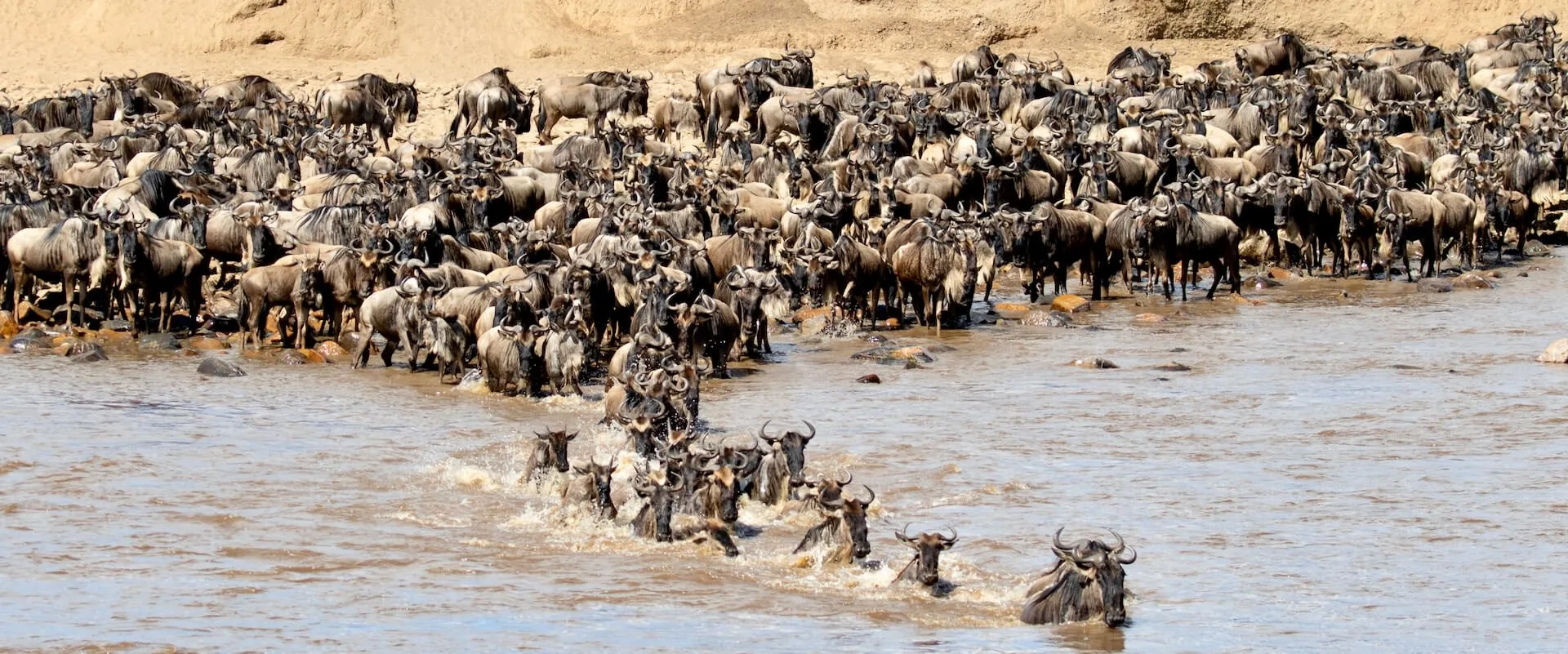
The Great Migration in Africa happens all year because the herds continuously circulate through the Serengeti–Mara ecosystem in…
Read article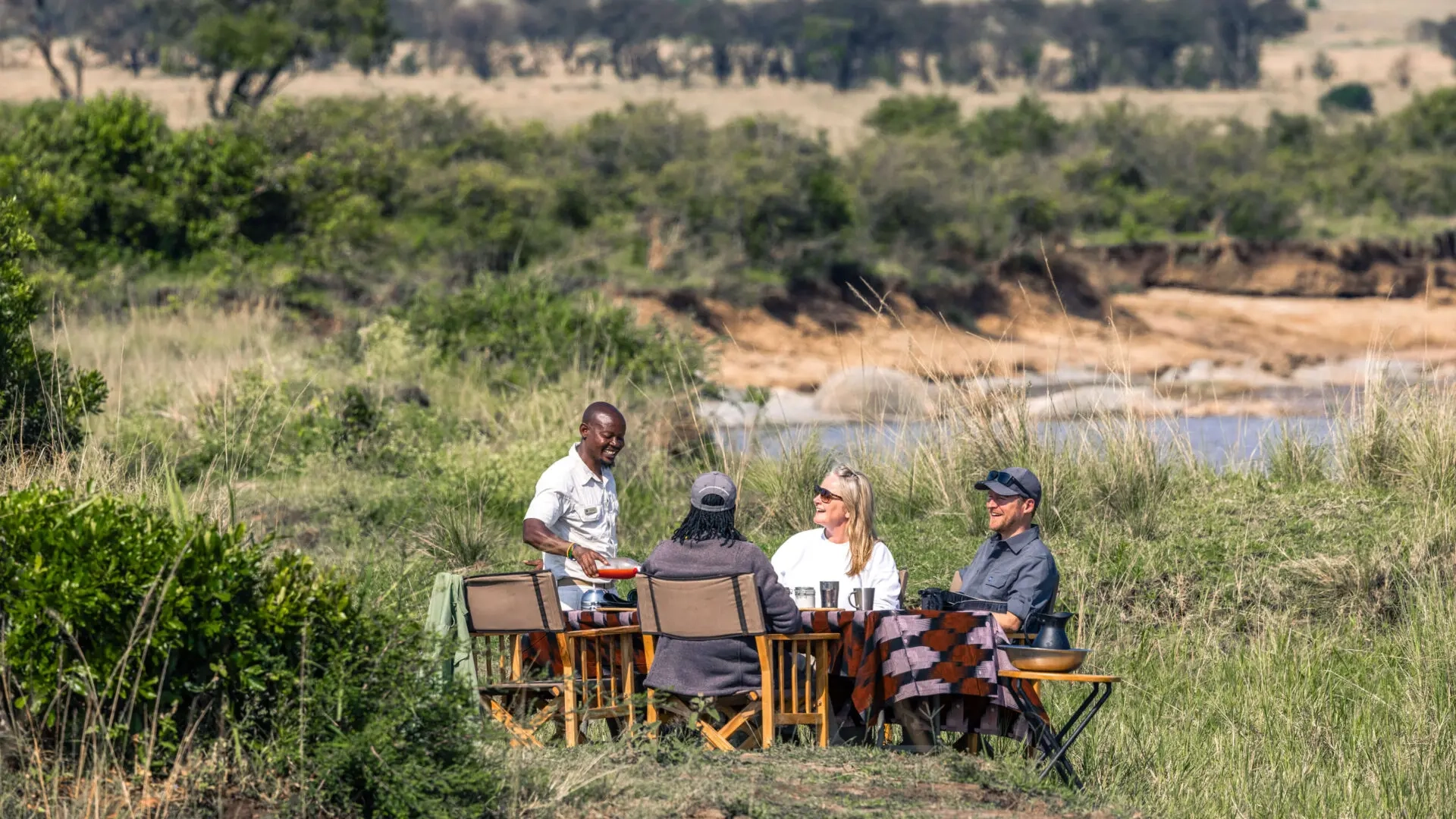
Definitive answer: A picnic lunch on safari is a packed or catered midday meal eaten at an approved…
Read article
Definitive answer: A bush dinner is an outdoor evening meal arranged in a safe safari setting away from…
Read articleLet us take you closer to the wildlife, people and places that make Africa extraordinary.
Plan Your Safari Today