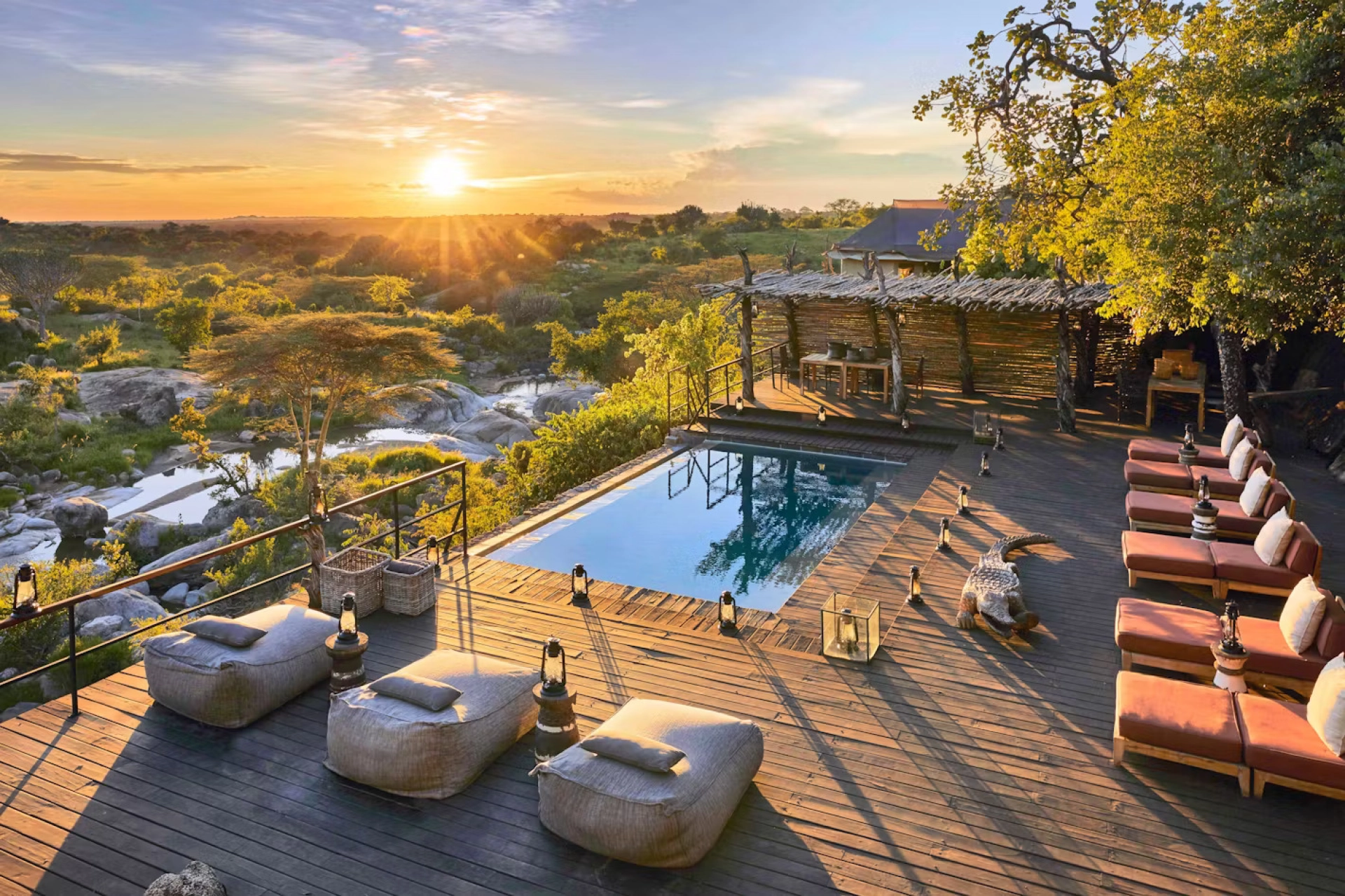
What should I look for when booking a luxury African safari?
When booking a luxury African safari, look beyond the room and compare the quality of guiding, wildlife location,…
Read article

Travel Guide
Namibia is often described as a desert country, but that simple description hides an extraordinary level of geographical complexity. There is no single “Namibia desert.” Instead, travelling across the country reveals a sequence of arid and…
Namibia is often described as a desert country, but that simple description hides an extraordinary level of geographical complexity. There is no single “Namibia desert.” Instead, travelling across the country reveals a sequence of arid and semi-arid environments with very different landscapes, ecological systems, geological histories and wildlife. Towering orange dunes dominate parts of the Namib Desert. Pale gravel plains extend toward distant mountains. The Atlantic coast is shaped by fog and cold ocean currents. Redder sand and grass-covered dunes appear toward the Kalahari, while southern Namibia gradually connects with the wider landscapes associated with the Karoo.
For travellers planning a Namibia desert safari, understanding these differences makes the journey far more rewarding. The famous photographs of Sossusvlei, Deadvlei and the huge dunes of the Namib tell only part of the story. Namibia’s deserts also contain unusual plants, desert-adapted wildlife, ancient rock formations, dry river systems, remote settlements and ecosystems that have developed remarkable strategies for surviving with very little rainfall.
A journey through Namibia is therefore not simply a safari through “the desert.” It is an exploration of several distinct dryland landscapes, each shaped by different combinations of altitude, rainfall, geology, wind, temperature and ocean influence. This guide explains the Namib Desert, Kalahari and Karoo landscapes of Namibia in detail, including where they occur, what makes each environment different, what wildlife lives there and where travellers can experience them on safari.
To understand Namibia’s deserts, it helps to begin with the country’s position on the southwestern edge of Africa.
Along the Atlantic coast flows the cold Benguela Current, which moves northward from the waters surrounding southern Africa and Antarctica. This cold current has an enormous influence on coastal Namibia. It cools the air above the ocean and contributes to the frequent fog that drifts inland, yet it does not necessarily create conventional rainfall. The result is one of the world’s most unusual desert environments. Parts of the Namib Desert may receive extremely little rain while still experiencing regular moisture from coastal fog.
Farther inland, rainfall gradually increases, although large sections of Namibia remain arid or semi-arid. Mountains, distance from the ocean and regional weather patterns create substantial variation across the country. That variation is why a Namibia road trip can move through landscapes that appear almost lifeless in the morning and reach grass-covered plains by evening.
The Namib Desert is the environment most international travellers immediately associate with Namibia.
It stretches along the Atlantic coast and includes some of the country’s most famous attractions, from Sossusvlei and Deadvlei to large sections of the Skeleton Coast. The word Namib is often translated from a local language as something resembling “vast place,” an appropriate description for a landscape where distance frequently overwhelms human scale. Standing in the Namib, travellers quickly understand why the desert has become so central to Namibia’s identity. Roads cross enormous plains with very little development. Mountains appear deceptively close because the atmosphere is clear. Dunes rise from seemingly endless sand seas. At night, the lack of major urban lighting can produce exceptional stars.
The Namib Desert safari experience is not primarily about racing between animal sightings. It is about landscape, adaptation, silence and scale.
The Namib is frequently described as one of the world’s oldest deserts.
Although individual dunes and local environmental conditions have changed continuously over geological time, the region has experienced arid conditions for an exceptionally long period. This long history of dryness has contributed to the development of specialised plants and animals able to survive extreme environments. Understanding this makes a Namib Desert tour much more interesting than simply photographing sand dunes. Every surviving organism represents adaptation. Every dry river channel records periods when water transformed the landscape. Every fog bank carries moisture into an ecosystem that may otherwise receive almost no useful rainfall for long periods.
For most first-time travellers, Sossusvlei Namibia is the essential desert destination.
Located within the wider Namib-Naukluft National Park, the Sossusvlei region contains immense dunes surrounding pale clay and salt pans. The colours are extraordinary. During early morning, low-angle sunlight illuminates one side of the dunes while leaving the opposite slope in deep shadow. The landscape becomes a sequence of sharply defined curves rather than a uniform field of orange sand. As the sun rises, the shadows shorten and the colours intensify. This is why photographers often enter the area as early as access allows.
The distinctive reddish-orange colour associated with many Namibia sand dunes comes partly from iron-containing minerals that have oxidised over long periods.
The precise colour changes according to light conditions. At dawn, dunes can appear deep red. Under brighter midday light, they may become pale orange. Near sunset, the colours deepen again. This constant interaction between mineral composition and sunlight makes the Namib one of Africa’s greatest landscape photography destinations.
Near Sossusvlei lies Deadvlei, perhaps the most recognisable landscape in Namibia. Dark, dead camel-thorn trees stand across a pale clay floor surrounded by towering dunes. The visual contrast is dramatic: black trees, white ground, red-orange sand and deep blue sky. Yet Deadvlei is more than a photograph. The trees are remnants of an earlier environmental period when water reached the area sufficiently often for vegetation to establish itself. Changes in dune formation and drainage altered the hydrology, leaving the trees isolated in an increasingly dry pan.
Rather than decomposing quickly, some trees remain standing because the environment is exceptionally dry. Walking across Deadvlei Namibia therefore becomes an encounter with environmental change. The landscape demonstrates that deserts are not static. Dunes move. Water channels shift. Vegetation expands and retreats. Rainfall patterns change. The desert is constantly evolving, even when change happens too slowly for a visitor to see during one trip.
Travellers sometimes use Sossusvlei and Deadvlei interchangeably, but they are separate locations within the same wider desert area. Sossusvlei itself is a clay and salt pan surrounded by dunes. Deadvlei is another pan nearby, particularly famous for its dead trees. Most visitors exploring the region attempt to experience both. Allow enough time rather than rushing through simply to collect photographs. The approach roads, dune landscapes and surrounding desert are part of the experience.
Dune 45 is another famous stop along the road toward Sossusvlei. Its name comes from its location near the 45-kilometre point along the route. The dune’s accessible shape makes it one of the most popular dunes for climbing. Walking up a dune looks deceptively simple. It is not. Every step sinks into loose sand, making the climb significantly more demanding than walking the same distance on firm ground. For this reason, early morning is ideal.
Temperatures are cooler, the light is better for photography and the sand is more comfortable. The view from higher on the ridge reveals why a Namibia desert safari is fundamentally about scale. Below, roads and vehicles become tiny. Beyond them stretch seemingly endless dune systems.
Travellers looking for a greater challenge may climb larger dunes in the Sossusvlei area, including the feature popularly known as Big Daddy. From high on the dune, Deadvlei can be visible far below. Descending directly down the steep sand face can be exhilarating, although visitors should always follow local guidance and assess their fitness carefully. The goal should not simply be to claim that you climbed the highest possible dune. The surrounding environment is fragile, temperatures can become intense, and desert travel rewards patience rather than competition.
The Sossusvlei region contains more than dunes. Sesriem Canyon provides an entirely different geological experience. The canyon was carved by water through layers of sediment over very long periods. Its narrow passages reveal the erosive power of seasonal water in a landscape travellers usually associate with dryness. This apparent contradiction is central to desert ecology. Rain may be rare, but when it arrives, water can transform dry channels very rapidly. Sesriem Canyon therefore helps travellers understand that deserts are shaped as much by occasional intense water events as by prolonged drought.
South and west of Sossusvlei lies the immense Namib Sand Sea, a vast system of dunes stretching toward the Atlantic. Seen from the air, the scale becomes almost impossible to appreciate. Dune ridges form repeating patterns across the landscape. Some areas are rarely visited by ordinary tourists. This is one reason scenic flights over the Namib Desert are so popular. From the ground, travellers experience individual dunes. From the air, they see the entire geological system. Flights operating from places such as Swakopmund or the Sossusvlei region can reveal the relationship between desert, mountains and coastline far more clearly than road travel alone.
One of Namibia’s most extraordinary geographical features is the direct meeting between desert and ocean. Along sections of the coast, enormous dunes approach the cold Atlantic. The contrast seems almost impossible. A dry landscape receiving extremely little rainfall sits beside an entire ocean. Yet the cold Benguela Current suppresses conventional rainfall while producing fog. This coastal fog becomes an essential water source for many organisms. The result is an ecosystem where some animals effectively survive by collecting moisture from fog.
The role of fog is one of the most fascinating aspects of the Namib Desert ecosystem. Visitors sometimes look at the desert and wonder how anything can live there. The answer is not always rainfall. Moisture-laden fog moves inland from the Atlantic and can condense on plants, rocks and animals. Certain desert insects have evolved behaviours that help them collect this moisture. Plants may also obtain water from condensation and underground sources. For travellers interested in ecology, a specialist Namib Desert nature tour can reveal an entire world that is invisible from a safari vehicle travelling quickly between destinations.
Around Swakopmund and Walvis Bay, specialised guided excursions explore what is often called the “living desert.” At first glance, the dunes may appear empty. An experienced guide sees something completely different. Tracks in the sand reveal insects and reptiles. Small depressions indicate animals hiding beneath the surface. Plants survive in places that appear incapable of supporting life. Geckos, lizards, snakes, insects and other desert specialists demonstrate extraordinary adaptations. This is one of the best examples of why guided experiences can dramatically improve a Namibia journey. Without interpretation, you see sand. With knowledge, you see an ecosystem.
The phrase Namibia desert animals may suggest only small reptiles and insects, but arid and semi-arid areas support a surprisingly broad range of wildlife. Oryx are among the most visually associated animals with Namibia. Their pale bodies, dark markings and long straight horns seem perfectly designed for photographs against desert landscapes. Springbok also survive well in dry environments. Ostriches cross open plains. Jackals patrol for food. Smaller mammals, reptiles and insects fill ecological niches that casual travellers often overlook. In some northwestern regions, larger animals such as elephants and rhinos survive in landscapes receiving remarkably little rainfall.
The desert-adapted elephants of Namibia are among the country’s most fascinating large mammals. They are not a separate species from other African savannah elephants. Instead, populations living in dry northwestern landscapes have developed behaviours that help them cope with extreme scarcity of water and vegetation. They may travel substantial distances through dry river systems while searching for food and water. Seeing elephants against rocky mountains and dry valleys creates an experience very different from watching elephants beside Botswana’s Chobe River.
The species is the same. The ecological context is completely different. That contrast is what makes a broader southern Africa safari so interesting.
Northwestern Namibia also supports important populations of free-ranging black rhinos living outside conventional fenced safari environments. Conservation organisations, local communities and tourism operators have played important roles in protecting these animals. Specialist rhino tracking experiences in Namibia can be extremely rewarding when conducted responsibly. Travellers should never publicly share precise real-time rhino locations. Wildlife photography must never compromise animal security. The opportunity to see a black rhino walking through an apparently empty arid landscape demonstrates how misleading the word “desert” can be. These environments are not lifeless. They simply operate under severe ecological constraints.
Although Damaraland is not a formal desert in the same sense as the Namib, its arid landscapes are central to the Namibia desert experience. Rugged mountains, open plains and ephemeral riverbeds create some of the country’s most impressive scenery. The region is associated with desert-adapted elephants, black rhinos, geological formations and ancient rock art. Damaraland works especially well between Swakopmund and Etosha National Park, allowing travellers to transition gradually from the Atlantic coast into northern wildlife country. This is a much more rewarding experience than simply flying between attractions. The road reveals how Namibia’s ecosystems fit together.
The arid landscapes of Namibia have supported human communities for thousands of years. Twyfelfontein, known for its rock engravings, provides important evidence of these relationships. Images carved into rock reflect animals, movement and human interaction with the environment. Including Namibia cultural heritage sites within a desert itinerary prevents the landscape from being interpreted as untouched wilderness. People have moved through and lived within these environments for very long periods. Desert landscapes contain cultural history as well as natural history.
The Skeleton Coast represents one of the Namib’s most atmospheric regions. Cold Atlantic water, frequent fog, powerful surf and arid land create a coastline historically feared by sailors. Shipwrecks became part of the region’s mythology and identity. To modern visitors, the landscape can feel almost otherworldly. The coast is not a conventional beach destination. Water temperatures are cold. Fog can dominate mornings. Wind can be strong. Human settlement is sparse. Yet these characteristics make the Skeleton Coast safari extraordinary. It provides a sense of remoteness that is increasingly difficult to find elsewhere.
One of the most famous wildlife concentrations along Namibia’s coast is the Cape Cross fur seal colony. Large numbers of Cape fur seals gather along the shoreline. The experience engages several senses, not all pleasantly. The noise is intense. So is the smell. But the ecological spectacle is impressive. Predators and scavengers may exploit the colony, while the seals themselves demonstrate the productivity of the cold Atlantic marine ecosystem beside one of the world’s driest deserts.
The Kalahari extends across a huge portion of southern Africa, including Botswana, Namibia and South Africa. It is commonly called the Kalahari Desert, but ecologically much of it differs from the hyper-arid landscapes of the central Namib. Many areas receive enough seasonal rainfall to support grasses, shrubs and substantial wildlife. For this reason, some scientists and geographers prefer descriptions such as semi-desert or dry savannah for large parts of the system.
To a traveller, the distinction becomes obvious on the ground. The Kalahari can be dry and sandy, but it is often vegetated. Red sand dunes may be covered with grass. Acacia-like trees and shrubs punctuate the landscape. Wildlife can be abundant. The Kalahari safari experience therefore feels very different from Sossusvlei.
Much of the Kalahari is famous for reddish sand. As in the Namib, iron compounds within sand contribute to colouration through oxidation. The colours can become particularly intense near sunrise and sunset. Unlike the massive bare dunes around Sossusvlei, many Kalahari dunes are stabilised by vegetation. They do not always form the towering mobile sand mountains travellers imagine when hearing the word desert. This distinction is one of the most important parts of having Namibia deserts explained properly.
The Kalahari region of Namibia is easiest to experience in eastern and southeastern areas. Properties around red-dune landscapes can provide walking, game drives and desert interpretation. Some travellers use the Kalahari as their first or final destination after Windhoek. This can be particularly effective in a southern Namibia itinerary involving Fish River Canyon and Sossusvlei. The Kalahari provides a gentler introduction to arid landscapes before the harsher visual drama of the Namib.
The Kalahari Desert safari is associated with a wide variety of animals adapted to dry savannah environments. Oryx and springbok are particularly characteristic. Predators may include jackals, cheetahs, leopards and, in some wider Kalahari regions, lions. Meerkats have become one of the most charismatic symbols of the wider Kalahari ecosystem. Birdlife can also be surprisingly diverse. Large sociable-weaver nests are especially distinctive, sometimes dominating trees and utility structures. These enormous communal nests demonstrate another way animals adapt to temperature extremes.
The easiest way to understand the difference is to imagine vegetation. The central Namib Desert contains extensive landscapes where visible plant cover can be extremely limited. The Kalahari often supports considerably more grasses, shrubs and trees. The Namib is strongly influenced by the Atlantic Ocean and fog. The Kalahari lies inland. The Namib contains enormous mobile dune systems and gravel plains. Many Kalahari dunes are older and stabilised by vegetation.
Both are dry. Both are visually impressive. But they are not interchangeable.
The Karoo is most strongly associated with South Africa, but ecological and geological influences associated with the wider Karoo extend toward southern Namibia. Travellers moving north from South Africa toward Fish River Canyon, Lüderitz and the Namib encounter landscapes connected to these broader dryland systems. Unlike the dune-dominated image of the Namib, Karoo landscapes are often characterised by rocky plains, low vegetation, scrub and mountains. Rainfall patterns, geology and plant communities differ from those of both the Namib and Kalahari.
For ordinary travellers, the important point is that southern Namibia desert landscapes cannot all be described accurately as the Namib. The country’s south contains transitions between multiple ecological zones.
The wider Karoo is often divided into different ecological systems, particularly the Nama Karoo and Succulent Karoo. The Nama Karoo covers large inland regions characterised by grasses, dwarf shrubs and summer rainfall patterns. The Succulent Karoo, meanwhile, is famous for extraordinary plant diversity and is associated with winter rainfall areas extending through western South Africa and parts of southwestern Namibia. During favourable seasons, some normally dry landscapes can produce remarkable floral displays.
This transformation reminds travellers again that deserts and semi-deserts are dynamic. A place that looks brown and almost empty for much of the year can respond rapidly when moisture arrives.
Travellers sometimes race through southern Namibia because they want to reach Sossusvlei quickly. That is a mistake for anyone interested in landscape travel. The south contains: Fish River Canyon, the Orange River region, Lüderitz, Kolmanskop, remote mountain landscapes, succulent vegetation, and vast open roads. The distances are enormous, but the sense of space is part of the experience.
Fish River Canyon is one of southern Namibia’s greatest geological attractions. The canyon cuts dramatically through an otherwise dry landscape. Standing at the rim reveals layers of rock descending toward the river far below. The scale can be difficult to capture photographically. Wide-angle photographs show geography but often fail to communicate depth. This is one of those places where the experience is more powerful in person. Sunrise and sunset are particularly rewarding because angled light emphasises rock formations.
The coastal town of Lüderitz sits in one of Namibia’s most unusual environments. Rocky desert meets the Atlantic. German colonial architecture contrasts sharply with barren surroundings. Strong winds and cold ocean conditions reinforce the impression that this is very different from a tropical African coastline. Nearby lies one of Namibia’s most famous historical attractions.
Kolmanskop ghost town developed during Namibia’s diamond-mining era. When economic activity shifted elsewhere, the settlement was gradually abandoned. Today, sand moves through broken windows and accumulates inside former homes and public buildings. Rooms fill with dunes. Doors open onto sand. Wallpaper remains on walls while desert reclaims the floor. Photographers love Kolmanskop because the images feel surreal, but the location deserves historical interpretation as well. The town forms part of Namibia’s colonial and mining history. Understanding that context makes the visit more meaningful than simply photographing abandoned rooms.
For most first-time travellers, the Namib Desert is the higher priority because it contains Sossusvlei, Deadvlei and some of Namibia’s signature landscapes. The Kalahari becomes particularly valuable for travellers with more time or those entering through southeastern Namibia. But choosing only one misses the ecological contrast. The Namib is visually extreme. The Kalahari often feels more biologically approachable because vegetation and wildlife are more obvious. The best Namibia itineraries can include both.
No. This is one of the biggest misconceptions about Namibia. The country contains: desert, semi-desert, savannah, woodland, wetland, river systems, mountains, and coastal ecosystems. Northern and northeastern Namibia can look radically different from Sossusvlei. The Zambezi Region, for example, contains major rivers, floodplains and substantially greener vegetation. Travellers exploring only southern Namibia may therefore leave with a distorted idea of the country.
Northeastern Namibia provides one of the greatest contrasts to the country’s deserts. The Zambezi Region, historically known by many travellers as the Caprivi Strip, connects toward Botswana, Zambia and Zimbabwe. Rivers create habitat for elephants, hippos, crocodiles, buffalo and extensive birdlife. After two weeks surrounded by dunes and gravel plains, arriving in the Zambezi region can feel like entering a different country. This ecological diversity is one of the reasons a longer Namibia safari itinerary is so rewarding.
Animals surviving in Namibia’s dry regions use different strategies. Some travel long distances. Others obtain moisture from food. Some are active during cooler hours. Certain insects exploit fog. Larger mammals depend on scattered permanent water sources, temporary pools or groundwater-fed systems. Dry riverbeds can be particularly important. Although they may contain no visible surface water, underground moisture supports vegetation. Elephants and other animals use these linear corridors for movement. This explains why a landscape that appears dry can still support substantial wildlife.
Plants provide some of Namibia’s most fascinating examples of adaptation. One of the most famous is Welwitschia mirabilis. The plant can survive for extraordinarily long periods in arid landscapes. Its unusual appearance—essentially two persistent leaves that split and weather over time—has made it an icon of the Namib. Other plants survive through deep roots, water storage, reduced leaf surfaces or rapid life cycles triggered by rainfall. A specialist botanical or desert tour can reveal forms of life most safari travellers would otherwise overlook.
The gemsbok or oryx is one of Namibia’s most iconic animals. Its ability to tolerate extreme heat and dry environments makes it perfectly associated with desert landscapes. The long horns and distinctive facial markings also make it exceptionally photogenic. Travellers commonly encounter oryx around Sossusvlei and other arid regions. Seeing one standing against a towering red dune is almost a visual definition of the Namibia desert safari.
Dry environments support predators too. Jackals are relatively adaptable. Brown hyenas occur in some arid regions. Cheetahs use open environments where speed can provide an advantage. Leopards occupy suitable rocky and mountainous habitats. Lions survive in some extreme northwestern landscapes. Predator density may be much lower than in more productive safari ecosystems, making sightings less predictable. This should not be interpreted as an inferior safari. Desert wildlife rewards different expectations.
Few destinations compete with Namibia for African landscape photography. The attraction comes partly from simplicity. One tree. One dune. One road. One oryx. One mountain. Because backgrounds are often uncluttered, composition becomes powerful. Photographers can work with shadows, lines, texture and negative space rather than relying exclusively on animal action. A Namibia photography trip should therefore include wide-angle and standard lenses as well as wildlife telephotos.
Desert photography depends heavily on light. Midday can be harsh. The sun removes shadows and flattens dune textures. Early morning and late afternoon produce dimensional landscapes. Dune ridges create natural lines. Long shadows exaggerate patterns. Warm light intensifies colour. Photographers should plan activities around these periods rather than assuming every hour produces equivalent conditions.
Namibia’s low population density makes many desert regions outstanding for night-sky photography. Remote lodges may experience extremely low light pollution. Under favourable conditions, the Milky Way can dominate the sky. Astrophotographers should consider moon phases and seasonal sky position when planning. A desert safari can therefore continue long after sunset.
Namibia can be visited year-round, but conditions vary. The cooler dry-season period is popular because daytime travel is comfortable and wildlife viewing in areas such as Etosha can be excellent. However, desert mornings may become very cold. Warmer months can produce intense daytime heat. Seasonal rain may transform vegetation and skies. There is no universally perfect month. Landscape photographers may enjoy dramatic summer clouds. Wildlife travellers may prioritise dry-season waterholes. Travellers focused on hiking and desert exploration may prefer cooler conditions.
A short trip of five or six days can reach Sossusvlei and perhaps Swakopmund from Windhoek, but it provides only an introduction. Around ten days allows a stronger combination of Sossusvlei, Swakopmund and Damaraland. Two weeks makes it possible to add Etosha National Park comfortably. Three weeks opens opportunities to include southern Namibia, the Kalahari or the Zambezi region. The biggest mistake is trying to see everything in too little time. Namibia’s distances are part of the journey.
A Namibia self-drive safari is one of the most popular ways to explore. Major tourism routes are well established, but much of the road network away from main highways is gravel. Drivers should allow substantially more time than they might expect from distance alone. Gravel roads reward patience. Speeding can increase the risk of tyre damage and loss of control. Official Namibia tourism guidance specifically recommends slower speeds on gravel and emphasises building additional time into self-drive itineraries. A road trip should feel like exploration, not a race between hotels.
Not every classic Namibia itinerary requires a 4×4. Many popular routes can be reached in suitable conventional vehicles, although higher clearance can improve comfort and confidence. Remote routes and specialised desert adventures may require genuine four-wheel drive. Choose the vehicle based on the itinerary rather than assuming every Namibia traveller needs the largest available 4×4.
One of the pleasures of travelling through Namibia is the variety of desert lodges and camps. Accommodation can range from campsites under immense night skies to architecturally striking luxury lodges designed to blend into the landscape. Midrange lodges often provide excellent value because the location itself becomes part of the experience. When comparing properties, pay attention not only to room design but to travel time. A lodge closer to an attraction may justify a higher rate if it allows earlier access and reduces daily driving.
Camping provides one of the most immersive ways to experience Namibia. After sunset, road traffic disappears. Temperatures drop. Stars emerge. The silence can be extraordinary. Camping also helps control the cost of a budget Namibia safari. However, travellers must prepare for temperature extremes, wind, dust and limited supplies in remote regions.
At the opposite end of the market, luxury Namibia desert lodges can provide exceptional experiences. Private guiding, scenic flights, elaborate architecture, fine dining and remote locations create a very different style of journey. Luxury in Namibia is often less about gold taps and more about access to space. A private veranda overlooking an apparently endless desert can feel more exclusive than a lavish city hotel.
Desert conservation can be easy to underestimate because the environment appears empty. But arid ecosystems are often extremely fragile. Vehicle tracks can remain visible for years. Plants may grow slowly. Wildlife may depend on limited water sources. Off-road driving outside permitted areas can cause long-lasting damage. Responsible travellers should follow established tracks, respect protected-area rules and avoid disturbing wildlife simply to improve photographs.
The classic first-time Namibia itinerary usually works because it combines extreme landscapes with more conventional wildlife viewing. Explore Sossusvlei and the Namib Desert, continue through Swakopmund and Damaraland, then finish in Etosha National Park. The contrast is powerful. After days photographing dunes and mountains, Etosha provides elephants, lions, rhinos, giraffes and antelope around waterholes. This creates a much more varied trip than spending the entire holiday in either desert or wildlife country.
Namibia and Botswana form one of southern Africa’s strongest travel combinations. Namibia provides deserts and road-trip landscapes. Botswana contributes the Okavango Delta, Moremi Game Reserve and Chobe National Park. Within one journey, travellers can move from some of Africa’s driest scenery into one of its greatest wetland systems. That ecological contrast is difficult to match.
Continue through northeastern Namibia and Botswana to Victoria Falls and the itinerary becomes even more diverse. A traveller can begin among dunes at Sossusvlei and finish beside one of the world’s most famous waterfalls. This is one of the best demonstrations of southern Africa’s geographical diversity.
For travellers wanting an even greater contrast, Namibia can be combined with Uganda gorilla trekking or Rwanda. Imagine spending one week among dunes and desert elephants and the next entering the dense mountain forests of Bwindi Impenetrable National Park. Few itineraries demonstrate African ecological diversity more dramatically. Namibia’s open landscapes and Uganda’s rainforest environments seem almost like different continents. Yet both belong to the same extraordinary African journey.
The Namib Desert is the essential first-time choice. The Kalahari offers red dunes, greater vegetation and classic dry-savannah wildlife. The Karoo-influenced landscapes of southern Namibia add rocky plains, canyons, unique vegetation and a sense of remote geological wilderness. The best answer, therefore, is not to choose based on which is “best.” Visit enough of Namibia to understand the differences. That is where the country becomes truly fascinating.
The greatest mistake travellers make when imagining Namibia is assuming the entire country looks like Sossusvlei. The giant dunes are spectacular, but they form only one piece of an enormous ecological puzzle. The Namib Desert reaches from dunes to foggy coastline. The Kalahari brings red sands, grasses and dry savannah. The Karoo landscapes of the south introduce rocky plains, succulents and vast geological formations. Damaraland adds mountains and dry rivers.
The Skeleton Coast adds ocean. The Zambezi region adds wetlands. Etosha adds wildlife-rich salt-pan country. Together these landscapes explain why Namibia is such a rewarding destination. You are not simply visiting a desert. You are travelling through an entire continent’s worth of dryland ecosystems compressed into one extraordinary country.
Adventure in the Wild Safaris can help combine Namibia with wider African journeys including Botswana, Victoria Falls, South Africa and East Africa. A well-designed Namibia desert safari should allow enough time for Sossusvlei, coastal environments, Damaraland and wildlife rather than treating the country as a rapid checklist.
Get quick answers to the most common questions. If you still have questions, our safari experts are here to help.
The most important dryland systems associated with Namibia are the Namib Desert, Kalahari and Karoo-related landscapes of the south.
Sossusvlei lies within the Namib Desert.
Yes. The wider Kalahari system extends across parts of Namibia, Botswana and South Africa.
The core Karoo regions are most strongly associated with South Africa, but Karoo ecological and geological influences extend into southern Namibia.
The Namib Desert is the country’s most famous desert.
It is known for huge dunes, Sossusvlei, Deadvlei, fog-dependent ecosystems and its relationship with the Atlantic coast.
No. Namibia also contains savannah, woodland, wetland, mountains, river systems and greener northeastern landscapes.
Oryx, springbok, jackals, ostriches, reptiles, insects and many specialised smaller species survive in arid landscapes.
Yes. Northwestern Namibia supports famous desert-adapted elephants.
Yes. Black rhinos occur in arid northwestern landscapes.
For most first-time travellers, Sossusvlei and Deadvlei are the highest priority.
At least two nights is ideal for most visitors.
No. They are separate pans within the same wider region.
Yes, selected dunes can be climbed where access is permitted.
The climb is moderately demanding because walking in loose sand requires significant effort.
Iron-containing minerals oxidise and contribute to their reddish colour.
Large parts receive enough rainfall to support substantial vegetation, so the Kalahari is often better described as a semi-arid sand basin or dry savannah in ecological terms.
It is Namibia’s remote Atlantic coastline, famous for desert, fog, shipwreck history and isolation.
Early morning and late afternoon usually provide the strongest light and dune shadows.
Yes. It is one of Africa’s most popular self-drive destinations.
Not for every itinerary, but a 4×4 may be necessary for remote routes.
Yes. Etosha National Park combines exceptionally well with desert destinations.
Yes. Namibia and Botswana create one of southern Africa’s best desert-and-wetland combinations.
Yes. Namibia can be combined with Uganda or Rwanda gorilla trekking for an extraordinary desert-and-rainforest itinerary.
Our safari experts are here to help you plan your safari. Get personalized advice, the latest information and a free, no-obligation quote.
We typically reply within a few hours.

Share This Article
When booking a luxury African safari, look beyond the room and compare the quality of guiding, wildlife location,…
Read article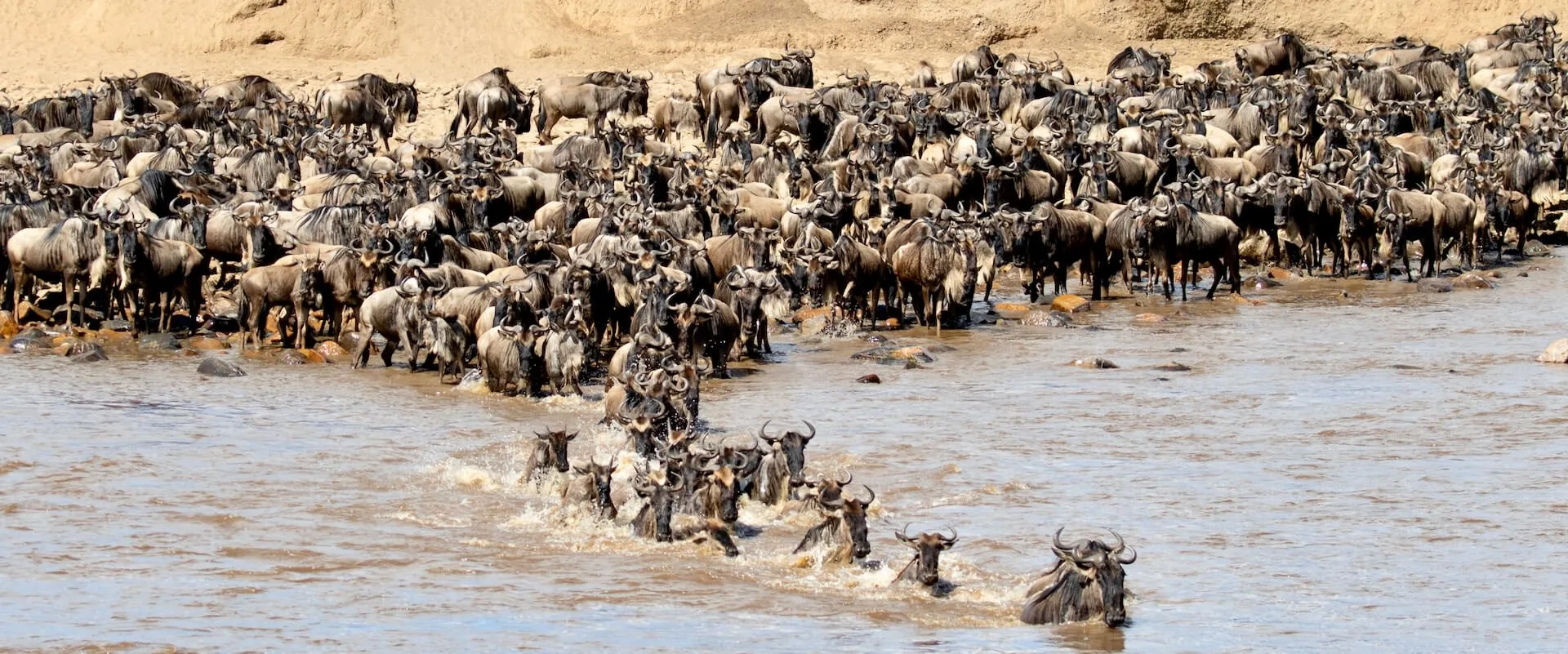
The Great Migration in Africa happens all year because the herds continuously circulate through the Serengeti–Mara ecosystem in…
Read article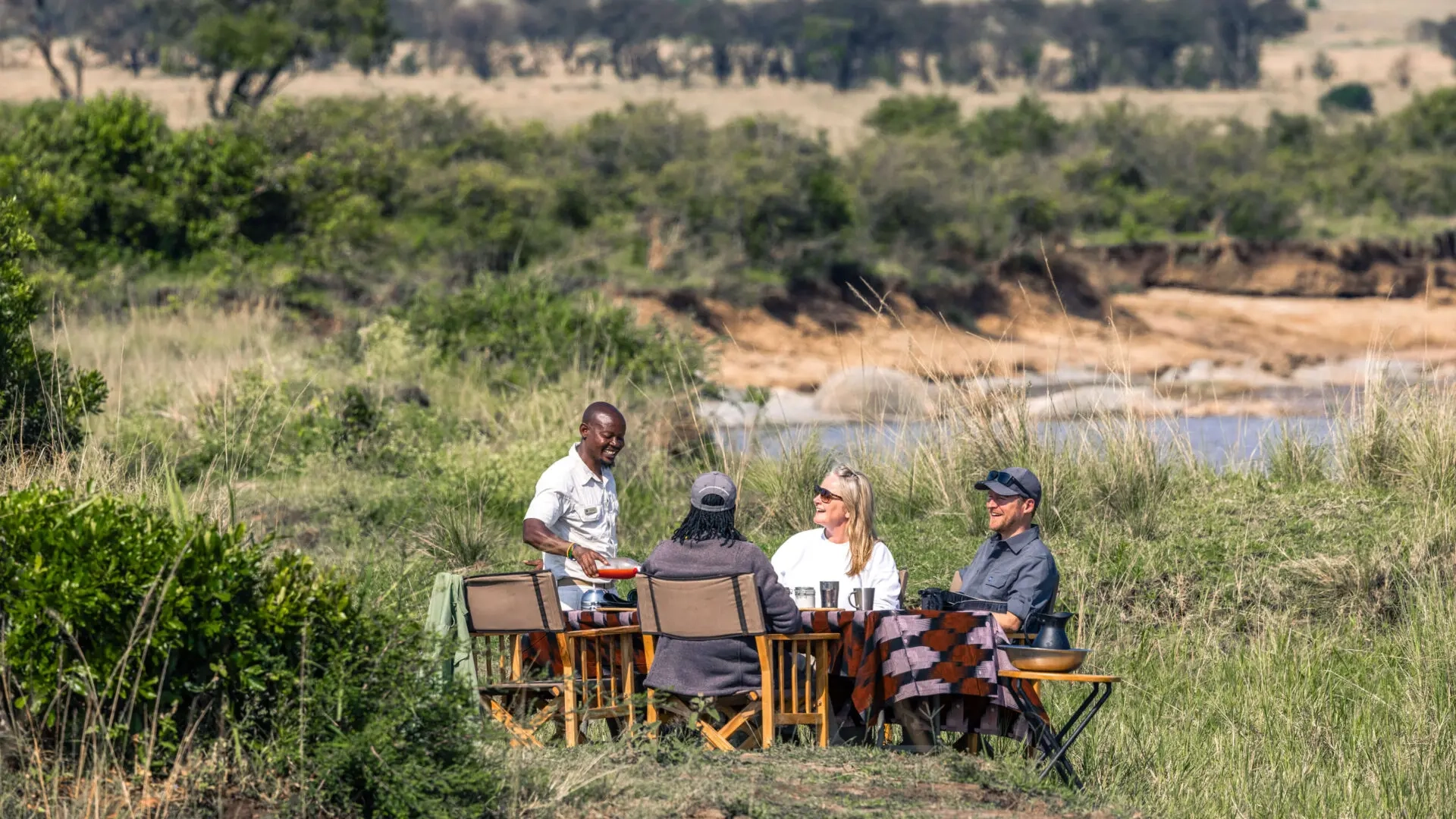
Definitive answer: A picnic lunch on safari is a packed or catered midday meal eaten at an approved…
Read article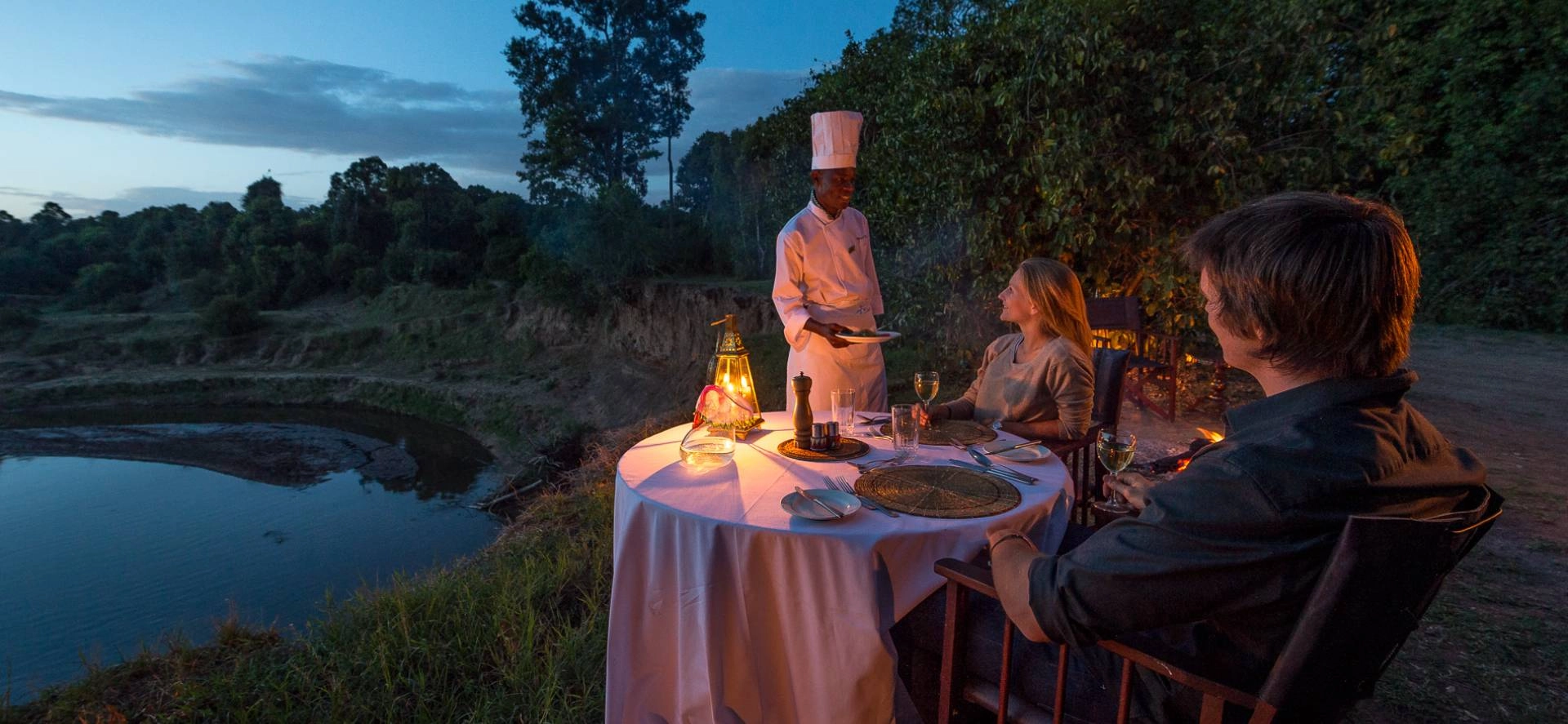
Definitive answer: A bush dinner is an outdoor evening meal arranged in a safe safari setting away from…
Read articleLet us take you closer to the wildlife, people and places that make Africa extraordinary.
Plan Your Safari Today