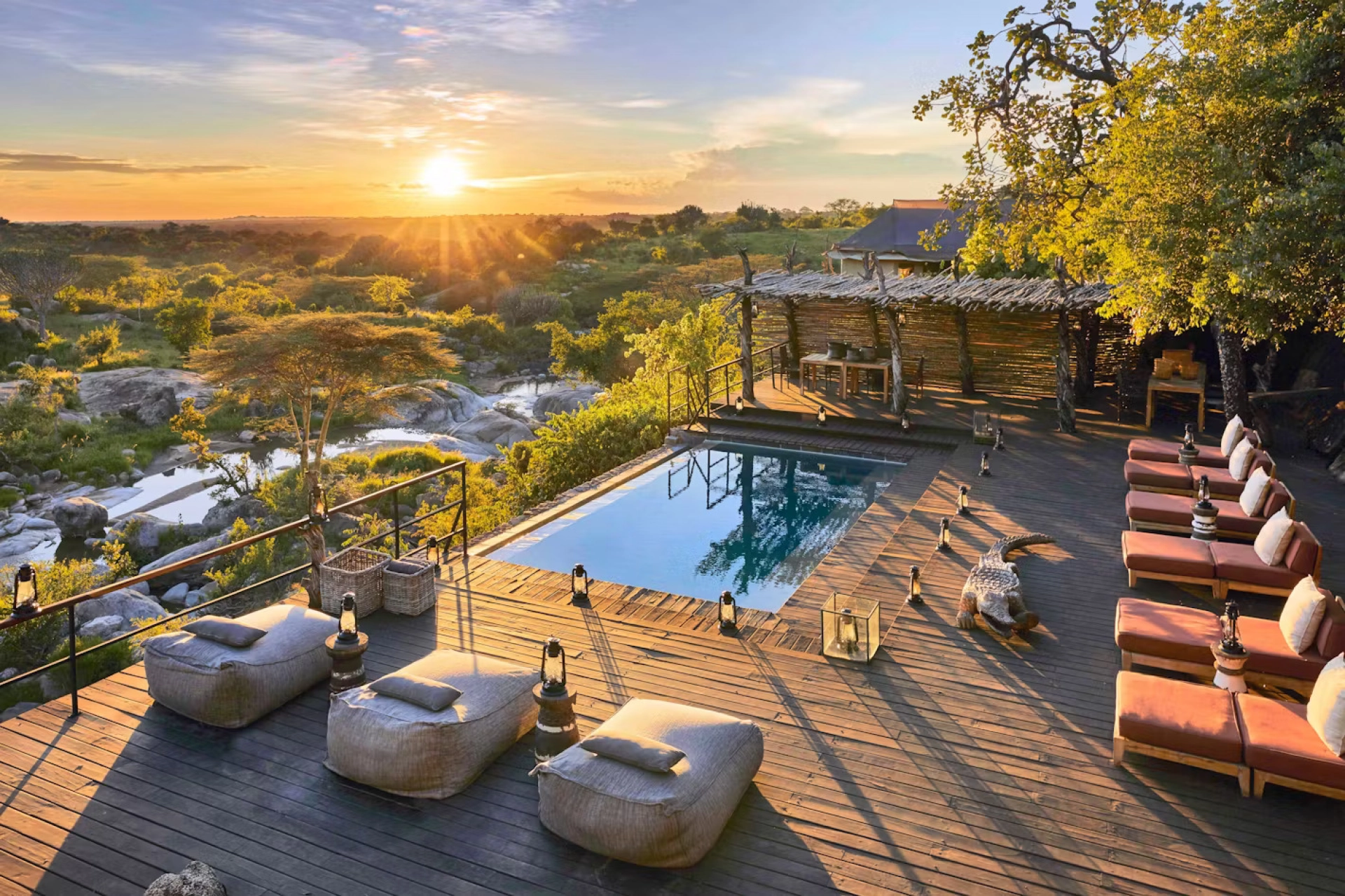
What should I look for when booking a luxury African safari?
When booking a luxury African safari, look beyond the room and compare the quality of guiding, wildlife location,…
Read article

Travel Guide
A Pilanesberg safari is one of the most practical ways to experience a genuine Big Five wildlife destination in South Africa without committing to a long internal flight or an extensive multi-day overland journey. The reserve's…
A Pilanesberg safari is one of the most practical ways to experience a genuine Big Five wildlife destination in South Africa without committing to a long internal flight or an extensive multi-day overland journey. The reserve’s proximity to Johannesburg and Pretoria, its location beside the famous Sun City resort area, its range of accommodation and its reputation as a malaria-free Big Five safari destination make it especially attractive to first-time safari travellers, families, short-stay visitors and people combining wildlife with a wider South African holiday.
Yet Pilanesberg is sometimes misunderstood precisely because it is so accessible. Travellers may wonder whether a park that can be reached relatively easily from Johannesburg provides a “real” safari, whether the wildlife is genuinely free-ranging within a protected reserve, how its experience compares with Kruger, whether self-driving is possible, how much a visit costs in 2026, whether malaria medication is necessary, how many nights are worthwhile and whether visitors can realistically see lions, elephants, rhinos, buffalo and leopards.
The short answer is that Pilanesberg National Park is a serious wildlife destination rather than an artificial safari attraction. The landscape sits within an ancient volcanic complex and supports a striking mixture of habitats influenced by its position between Kalahari and Lowveld ecological zones. The park’s published wildlife information lists more than 50 species of large mammals and identifies lion, elephant, rhinoceros, buffalo and leopard—the Big Five—among its wildlife, together with cheetah, African wild dog, brown hyena and numerous antelope species.
For visitors in 2026, Pilanesberg’s appeal is therefore not simply convenience. It is the combination of Big Five game viewing, distinctive geology, relatively compact safari geography, varied accommodation and accessibility from Gauteng. This detailed Pilanesberg safari FAQ answers the questions travellers should ask before booking and explains how to get considerably more from the park than a hurried checklist safari.
Pilanesberg is located in South Africa’s North West Province, northwest of Johannesburg and Pretoria and adjacent to the Sun City tourism area. Its accessibility is one of its defining advantages. The precise driving time depends on the starting point, traffic, gate used and road conditions, but the reserve is close enough to Gauteng that both overnight safaris and organised day trips from Johannesburg are practical.
This geography is especially useful for international visitors entering South Africa through Johannesburg. Instead of immediately taking another flight to a distant safari area, travellers can incorporate Pilanesberg from Johannesburg near the beginning or end of a larger South African itinerary. It is equally useful for business travellers who have only one or two free days, families reluctant to add another flight, and travellers combining Johannesburg, Pilanesberg and Sun City.
Accessibility should not, however, encourage unrealistic scheduling. A day trip is possible, but an overnight safari provides a fundamentally better experience because the strongest wildlife periods are generally around the cooler early morning and later afternoon hours.
Pilanesberg is widely referred to as Pilanesberg National Park and Pilanesberg Game Reserve in tourism material. Travellers should understand that the protected wildlife landscape is managed within South Africa’s North West conservation framework rather than assuming that every reserve carrying “national park” in common usage operates under exactly the same authority as parks managed by South African National Parks.
For safari planning, the more important point is that Pilanesberg is a large protected wildlife area with an established road network, gates, accommodation and populations of major African mammals. It is not a drive-through zoo. Animals move through natural bushveld habitats, predators hunt, herbivores respond to water and vegetation, and sightings depend on the unpredictable movements of wildlife.
Pilanesberg’s landscape is one of the elements that separates it visually from many other South African safari destinations. The reserve lies within an ancient alkaline volcanic ring complex. The park’s tourism information describes a landscape formed by volcanic activity more than a billion years ago, with concentric ridges creating the distinctive terrain visible today.
This geological structure affects the safari visually. Rather than endless flat savannah, travellers encounter ridges, valleys, open areas, rocky slopes and water bodies. These variations create attractive wildlife photography and different habitat conditions within a relatively concentrated area. For travellers who have already experienced the open plains of East Africa, Pilanesberg therefore feels distinctly southern African.
Yes. Pilanesberg is promoted as a malaria-free safari area, and current park travel information explicitly describes it as malaria-free. This is one of the park’s greatest advantages. Many travellers planning an African safari are concerned about malaria, particularly families travelling with children, pregnant travellers, older visitors and people with medical conditions that make travel-health planning more complicated. Pilanesberg’s location outside South Africa’s principal malaria-risk safari regions makes it particularly attractive for travellers prioritising a malaria-free South Africa safari.
However, “malaria-free” should not be interpreted as “mosquito-free.” Mosquitoes and other insects can still occur, particularly according to weather and season. Normal insect precautions such as repellents and suitable clothing can still improve comfort. Medical decisions should always be made with an appropriately qualified health professional rather than a safari blog. Travellers visiting other parts of southern Africa on the same holiday may enter malaria-risk areas even if Pilanesberg itself is malaria-free.
Travellers visiting only Pilanesberg should discuss their personal health circumstances with a qualified travel-health professional, but the reserve itself is classified and promoted as malaria-free. The important issue is the entire itinerary. Someone travelling Johannesburg–Pilanesberg–Cape Town has a very different exposure profile from someone combining Pilanesberg with safari areas in northeastern South Africa, Mozambique, Zambia, Zimbabwe or other destinations where malaria considerations may apply. Never make a medication decision based solely on the safari park where you spend the greatest number of nights. Provide your clinician with the complete itinerary.
Pilanesberg is one of South Africa’s strongest choices for a family safari because several practical concerns become easier simultaneously. There is no malaria issue associated with the park itself, the journey from Johannesburg is manageable, accommodation spans different comfort levels, Sun City can be combined with the safari, and the park provides the possibility of seeing many iconic animals without requiring a complicated expedition. This can be particularly useful for a family’s first safari.
Young children may enjoy wildlife but struggle with repeated dawn starts, very long road transfers and five consecutive days of game drives. Pilanesberg allows parents to build a shorter wildlife experience into a broader holiday. A family might spend two or three nights on safari, then continue elsewhere in South Africa. This often works better than assuming children will enjoy a ten-day wildlife itinerary simply because their parents do.
Children can participate in some game drives, but age policies vary by lodge, activity and vehicle. Current Pilanesberg visitor information notes that children are permitted on some game drives at ranger discretion and under guardian supervision, while individual lodges can impose their own age restrictions.
For example, a lodge may allow children on a family-oriented drive but restrict very young children from standard shared game drives. Parents should therefore ask the exact lodge rather than relying on a general park rule. This is particularly important before booking an expensive safari package advertised as “family-friendly.” A property can welcome children while still restricting them from certain wildlife activities.
Yes. Lion, leopard, elephant, rhinoceros and buffalo occur in Pilanesberg, making it a genuine Big Five reserve. The park’s wildlife information also highlights cheetah, African wild dog, brown hyena, caracal, serval and numerous antelope species.
But travellers should be careful with the phrase “Big Five safari.” It means all five species occur in the ecosystem. It does not mean you will see all five during one drive, one day or even one visit. Elephants may be relatively conspicuous at certain times. Rhinos may be encountered. Lions can sometimes provide excellent sightings. Leopards are naturally secretive and can be much more difficult.
Safari quality should never be judged solely by whether five boxes were ticked.
Yes. Lions are established predators within the Pilanesberg ecosystem and are among the animals visitors hope to encounter. Finding them depends on timing, location, guide knowledge and luck. Early morning can be productive because temperatures are cooler and predators may still be active after the night. Late afternoon can also be rewarding as the heat begins to decrease. During hotter periods, lions may spend substantial portions of the day resting. This is normal. Wildlife documentaries can create unrealistic expectations that predators constantly hunt. In reality, lions conserve energy for much of their lives. A sleeping lion is therefore an authentic wildlife sighting, not a failed one.
Yes, but leopards are considerably more elusive. Their camouflage, solitary behaviour and preference for cover can make them difficult to locate. A traveller spending several nights and participating in repeated game drives has a better statistical opportunity than someone visiting for several hours. This illustrates one of the central principles of African safari planning: time is one of the most valuable things you can buy.
A luxury room cannot guarantee a leopard. An additional morning in the reserve creates another opportunity.
Cheetahs occur in the park and are among its notable predators. Pilanesberg’s habitat mixture includes areas where cheetahs may be encountered, although, as with all free-ranging wildlife, sightings cannot be guaranteed. Cheetah sightings can be particularly rewarding because they provide behavioural contrast with lions and leopards. They rely on speed rather than the brute strength of lions or the stealth-and-cover strategy associated with leopards. For serious wildlife travellers, recognising these ecological differences makes safari considerably more interesting than simply collecting species photographs.
Yes. African wild dogs are listed among the notable mammals of Pilanesberg. For experienced safari travellers, a wild dog sighting can be more exciting than another lion sighting. Wild dogs are highly social, mobile predators whose movements can be unpredictable.
When active, they can cover considerable ground. Their conservation status also makes every good sighting significant. If your guide hears that wild dogs have been seen somewhere within a reasonable distance, the atmosphere in the vehicle may change immediately.
Yes. Pilanesberg is an important rhino-viewing destination and forms part of South Africa’s broader rhino conservation landscape. Travellers should understand that responsible guides and lodges may be cautious about discussing exact rhino locations because of continuing poaching threats. This is good conservation practice. Do not post precise rhino locations publicly in real time. A photograph is enough. Wildlife security matters more than geotagging a social-media post.
The attraction of Pilanesberg extends far beyond the Big Five. Giraffes, zebras, wildebeest, impalas, kudus, waterbuck and numerous other herbivores contribute to everyday game viewing. The reserve’s mammal information notes more than 50 species of large mammals, together with smaller species and a broad predator community. This diversity is important because most of a good safari is not spent watching the Big Five. It is spent watching ecosystems. An impala herd suddenly staring in one direction may reveal a hidden predator. Giraffes can indicate what is happening above the vegetation.
Vultures circling may suggest activity on the ground. The more you understand these relationships, the richer a Pilanesberg wildlife safari becomes.
Yes. Pilanesberg’s mixture of habitats creates rewarding birding, and current park information describes more than 360 bird species. Mankwe Dam and the park’s photographic hides are particularly useful places for observing water-associated birds and wildlife. Birding changes the pace of safari. A traveller interested only in lions can experience long periods as “empty.” A traveller interested in birds discovers constant activity. Kingfishers, raptors, waterbirds and numerous bushveld species keep the landscape alive between mammal sightings.
Pilanesberg can therefore work well for mixed-interest couples where one person is a serious birder and the other primarily wants large mammals.
Mankwe Dam is one of the park’s important wildlife-viewing areas and its largest body of water. Water naturally attracts animals, particularly as conditions become drier. Elephants, antelope and other mammals may use the surrounding area, while the dam supports birdlife and aquatic species. The park also has a photographic hide close to the water, allowing visitors to wait quietly rather than constantly driving in search of animals.
This style of wildlife viewing can be exceptionally rewarding. Safari does not always improve by moving faster. Sometimes the best strategy is to stop.
Yes. Pilanesberg provides photographic hides that allow visitors to observe wildlife and birds from concealed positions. Hides can be particularly useful around water because animals may approach naturally. For photographers, this can produce lower-angle perspectives than those available from a safari vehicle. It also creates a different rhythm. Instead of pursuing wildlife, you allow wildlife to come toward you. That patience is one of the most satisfying aspects of African wildlife photography.
Pilanesberg is popular with self-drive visitors, making it attractive to South African residents and international travellers comfortable driving locally. Self-driving provides flexibility. You can spend as long as you want at a sighting. You can stop for birds.
You can choose your own route. However, first-time safari visitors should not underestimate the value of a professional guide. Guides read tracks, alarm calls and animal behaviour. They often know where particular species have recently been active and communicate with other professionals according to local practice. For many international visitors, a combination works well: take at least one guided drive, then self-drive if comfortable.
A specialist expedition vehicle is not normally the defining requirement for a standard Pilanesberg self-drive visit, although road conditions can vary and travellers should always follow current local guidance. A higher vehicle can improve visibility. However, a professional open safari vehicle provides another major advantage: the guide. Do not assume renting the largest 4×4 automatically produces the best safari. Knowledge matters more than tyre size.
Current Pilanesberg visitor information states that motorcycles may access the Manyane and Bakgatla camping areas but cannot be used to access the park itself. Travellers planning a South African motorcycle journey should therefore arrange an appropriate vehicle or guided safari for wildlife viewing.
Current published tariffs effective from 1 December 2025 distinguish between South African citizens, SADC visitors and foreign nationals, and they also apply a vehicle charge. The published 2026-era tariff page lists daily admission of R168 for South African adults, R84 for South African children aged 5–12, R385 for SADC adults, R275 for SADC children, and R748 for foreign-national adults and children, plus R168 for a sedan, LDV or SUV. These are stated as daily charges.
Because fees can change, travellers should always reconfirm the current tariff immediately before travel rather than treating an older blog screenshot as permanent. This is especially important when comparing a self-drive trip with a guided tour. Some guided safari prices already include the park levy, while others may quote it separately. Always compare the total Pilanesberg safari cost.
Differential conservation pricing is used in many African wildlife destinations. Domestic residents, regional travellers and international visitors may pay different entrance fees. The exact structure varies by park. International travellers sometimes focus heavily on the difference without considering the wider role of conservation fees. Protected wildlife landscapes require roads, staff, security, ecological management and visitor infrastructure. Park fees are therefore not simply admission tickets in the same sense as entering a conventional attraction. They contribute to the economics of maintaining a wildlife destination.
Published 2026 rates for scheduled three-hour game drives list R1,050 per South African adult and R580 per South African child under 12, while international rates are listed at R1,550 per adult and R1,000 per child under 12. The same source lists different pricing for private and group game drives, with park levies handled according to the specific product.
These rates demonstrate why travellers need to distinguish between park entrance fees, game-drive prices, accommodation and transfers. A lodge package may already include two safari activities each day. A self-catering visitor may purchase game drives separately. A Johannesburg day-tour price may bundle transport, entry and wildlife activities. Headline prices cannot be compared until inclusions are understood.
One currently published 2026 day-tour product lists an international rate of R3,400 per person for a full-day shared tour with Johannesburg collection and drop-off, including the park levy. A full-day shared tour beginning at Bakubung Gate is listed at R2,050 per international visitor. These are examples of currently published commercial tour rates, not universal park prices. Different operators, pickup locations, private arrangements and inclusions will produce different totals. For trip planning, the useful principle is that Pilanesberg day safari prices should always be evaluated according to whether Johannesburg transfers, park fees, meals and open-vehicle game drives are included.
Yes, if one day is genuinely all you have. A Pilanesberg day trip can provide a real wildlife experience and is vastly preferable to abandoning the safari idea simply because your South African schedule is short. But it is not equivalent to staying inside or beside the reserve for several nights. A day visitor loses the flexibility of multiple dawn and dusk wildlife sessions.
They are also more vulnerable to chance. If lions are hidden during your six hours in the park, your opportunity ends. A three-night visitor has several additional drives. For serious wildlife interest, two or three nights in Pilanesberg is much better.
Two nights is a good minimum for many first-time visitors. This normally creates opportunities for several game drives depending on arrival and departure times. Three nights is better for travellers who genuinely care about wildlife. Four nights can suit photographers, birders, families who want a slower pace and travellers using a lodge as part of a relaxing holiday.
Beyond that, the decision depends on the broader itinerary. A first-time visitor with two weeks in South Africa may prefer three nights in Pilanesberg and then explore Cape Town, the Winelands or another region rather than spending the entire holiday in one reserve.
One night is better than none, but timing becomes critical. Arrive early enough for an afternoon drive. Take an early-morning drive the following day. Depart later if possible. If you arrive after dark and leave immediately after breakfast, you have booked accommodation near wildlife rather than a meaningful safari. Always count actual game-viewing sessions, not hotel nights alone.
Published gate times vary seasonally. Current information lists 06:00–18:30 in March and April, 06:30–18:00 from May to September, 06:00–18:30 for September and October as published on the tariff page, and 05:30–19:00 from November to February. The park is described as open year-round. Because seasonal date boundaries and operational times can be updated, confirm the exact gate schedule for your travel date. Self-drivers in particular should plan conservatively. Do not construct a route that depends on reaching the gate at the final possible minute.
Early morning and late afternoon are generally productive because temperatures are cooler and many animals are more active. Light is also better for photography. Midday can still produce excellent sightings, particularly around water. Do not assume the park becomes empty at noon. Elephants still drink. Rhinos still move. Birds remain active. Predators may rest in visible places. Safari is probabilistic rather than scheduled.
Pilanesberg can be visited throughout the year, but the experience changes seasonally. Drier periods often create thinner vegetation and concentrate animals more strongly around reliable water, which can improve visibility. Cool mornings may require warm clothing. The greener summer period transforms the landscape and can be excellent for birding, scenery and photography. Rain may occur, but dramatic clouds and green vegetation can create beautiful images. The best month therefore depends on what you value. A first-time visitor prioritising straightforward large-mammal viewing may favour drier conditions. A birder or photographer may love the green season.
South African winter can provide excellent safari conditions. Vegetation is often drier and visibility can improve. Morning and evening temperatures, however, may feel surprisingly cold in an open vehicle. Travellers often pack for “Africa” as though the entire continent is permanently hot. That is a mistake. Bring layers. An open safari vehicle moving before sunrise can feel much colder than the afternoon temperature suggests.
Summer generally brings warmer temperatures and greener landscapes. Rain can change road and wildlife conditions. Migratory and seasonal bird activity can make the park particularly attractive to birders. The vegetation may make some animals harder to see, but the scenery becomes lush and photographic. There is no universally bad safari season. There are simply different trade-offs.
This is one of the most common questions in any Pilanesberg safari FAQ, but “better” depends on the traveller. Kruger is vastly larger and forms part of an enormous wildlife region. It offers extraordinary ecological diversity and can support a much longer safari. Pilanesberg is more compact and considerably easier to integrate into a short Johannesburg-based itinerary. Pilanesberg is also malaria-free, while malaria considerations can apply to the Kruger region depending on season and current health guidance.
For a traveller with seven dedicated safari days, Kruger may provide greater geographic depth. For someone with two or three nights near Johannesburg, Pilanesberg can be the smarter choice.
Both are well known as malaria-free safari options in South Africa’s North West region, but their tourism models differ. Madikwe is commonly associated with lodge-based safari packages and a more exclusive private-safari atmosphere. Pilanesberg provides greater flexibility, including self-driving and a broad accommodation spectrum.
Travellers seeking a high-end lodge experience with organised game drives may compare the two carefully. Families and visitors wanting affordable malaria-free safari options may find Pilanesberg particularly practical.
Addo in the Eastern Cape and Pilanesberg serve different itineraries. Addo fits naturally into an Eastern Cape or Garden Route journey and is famous for elephants. Pilanesberg fits naturally around Johannesburg, Pretoria and Sun City. Both can work for families and travellers looking beyond northeastern South Africa. The correct choice is often geographic rather than competitive. Choose the park that improves the overall route.
Private reserves can provide advantages such as limited vehicle numbers, specialised off-road policies in certain contexts, luxury lodges and highly personalised guiding. Pilanesberg provides greater independence and potentially lower costs. A first-time visitor should ask what experience they actually want. If you dream of a fully hosted lodge where meals and two guided drives each day are included, a private-style lodge product may suit you.
If you enjoy driving independently and controlling the budget, Pilanesberg’s public-access model can be ideal.
Pilanesberg offers a broad range of accommodation, from self-catering and more affordable options through mid-range lodges to luxury properties, including lodges associated with the Black Rhino Reserve. Current accommodation information specifically highlights safari tents, chalets, self-catering options, bush lodges and luxury accommodation. This diversity is one reason Pilanesberg suits such a wide market. A couple can plan a luxury honeymoon. A family can choose a larger room or self-catering arrangement. A South African weekend traveller can control costs.
An international guest can book a full-board safari lodge package. The wildlife destination remains the same even though the accommodation experience differs substantially.
Rates vary by lodge, season, room category and residency. As one current example, Ivory Tree’s published 2026 standard-room rate is R5,110 per person sharing in its listed low season and R5,925 in the listed high season, with meals and two daily safari activities included. Luxury suites and family units cost more. Other lodges publish different rates, and SADC or South African resident specials may be available during selected periods. This is why travellers should not compare a R5,000-plus lodge night with a simple hotel room. If meals and two game drives are included, a substantial part of the safari cost is already packaged.
It can be. “Budget” is relative because protected-area access, transport and wildlife activities still have genuine costs. However, self-driving, self-catering and simpler accommodation can make Pilanesberg much more affordable than a luxury fly-in safari. South African residents may benefit particularly from domestic pricing structures. International visitors can also control costs by staying outside premium all-inclusive lodges and purchasing selected guided activities. A well-planned budget Pilanesberg safari should reduce luxury, not wildlife time.
Yes. Luxury properties provide high-quality accommodation, meals, organised game drives, spas and other facilities. Some are positioned in more exclusive areas associated with the greater Pilanesberg landscape. Luxury travellers can therefore experience the convenience of Pilanesberg without sacrificing comfort. The important distinction is that the room should complement the safari. If wildlife is the reason you travelled, do not spend every morning sleeping through the game drive because the suite is beautiful.
Absolutely, and this is one of the region’s most popular combinations. Sun City provides resort entertainment, pools, golf and other leisure experiences, while Pilanesberg provides wildlife. The two destinations are geographically close enough to combine easily. This can work especially well for families and multi-generational groups where not everyone wants continuous game drives. One traveller may want dawn-to-dusk wildlife. Another may want spa time and resort facilities. A Pilanesberg and Sun City holiday can satisfy both.
Yes, and commercial day tours operate from Johannesburg. But the long day should be considered realistically. An early departure is required. Road transfer time reduces the number of hours available for wildlife. You may return to Johannesburg in the evening. For a business traveller with one free day, this is excellent. For a leisure traveller with flexible time, staying overnight is better.
Very good. The reserve provides many of the experiences first-time visitors imagine: elephants, predators, rhinos, giraffes, zebras, open safari vehicles and African bush landscapes. At the same time, logistics are comparatively manageable. The malaria-free setting reduces one common concern. Johannesburg access reduces travel complexity. Accommodation choices make different budgets possible. A first-time South Africa safari does not need to be complicated to be meaningful.
Yes, but approach it as a different ecosystem. Travellers who have experienced the Serengeti or Masai Mara should not expect Pilanesberg to reproduce enormous East African plains or migration herds. Its strengths are different. The volcanic terrain, bushveld, rhino opportunities, predator community and South African safari culture create a distinct experience. Comparing every African park according to which has “more animals” misses the point. Safari becomes more rewarding when you notice ecological differences.
Yes. The varied terrain, waterholes, hides and Big Five wildlife provide strong photographic potential. Serious photographers should consider a private game drive or private vehicle where budget allows. Shared vehicles create compromises. Another guest may want to leave a leopard after five minutes.
You may want to wait forty minutes for better light. A private arrangement allows the safari to follow photographic priorities.
Yes. Hot-air ballooning is offered over the Pilanesberg landscape, weather and operational conditions permitting. Current published 2026 information lists approximately one hour in the air within an overall activity of roughly five hours, including associated transfers and breakfast. Published international pricing for the period to 30 November 2026 is R6,592 per person plus the R748 international park fee. Ballooning is expensive, but it offers something a game drive cannot: an aerial understanding of the volcanic ring landscape. The experience is therefore as much about geology and scale as wildlife.
You can. But you should not expect to. This distinction is fundamental. A lucky visitor might see all five. Another might see four. Another may spend twenty extraordinary minutes watching elephants interact and never encounter a leopard. The second visitor did not have a worse safari. Wildlife is not a checklist controlled by the operator.
Spend more time in the reserve. Start early. Stay out through productive afternoon periods where schedules permit. Use an experienced guide for at least part of the visit. Be patient at water. Listen to alarm calls. Do not race from one reported sighting to another. Sometimes the animal you are searching for appears where you already are. The greatest safari skill is patience.
For first-time safari visitors, yes, at least for one or two drives. A professional guide adds interpretation. They explain tracks, birds, vegetation and animal behaviour. They also understand the road network and current wildlife patterns. After learning from a guide, self-driving becomes more rewarding because you begin noticing clues yourself.
Comfortable, practical clothing is sufficient. Neutral colours are useful but you do not need to purchase a completely new safari wardrobe. Layers are important because mornings can be cool and afternoons warm. A hat, sunscreen and comfortable footwear are useful. During open-vehicle drives, wind can make temperatures feel considerably cooler. Winter visitors should bring genuinely warm layers.
Binoculars significantly improve safari. They help with birds, distant predators and animals across open terrain. A camera lens can perform some of this function, but constantly viewing wildlife through a camera changes the experience. Binoculars allow you to observe behaviour naturally. For families, giving older children their own binoculars can transform the drive into a wildlife-searching adventure.
Wildlife photographers often prefer telephoto reach, but there is no single correct lens. Pilanesberg also rewards wider environmental photography because of its geological scenery. A long lens may capture a leopard portrait. A wider lens may better communicate an elephant herd moving beneath the volcanic ridges. Do not spend the entire safari trying to produce tight animal portraits. Show habitat.
Safari safety depends heavily on behaviour. Remain inside vehicles except where explicitly permitted. Never approach wildlife. Follow guide and lodge instructions. Elephants, rhinos, buffalo, hippos and predators are wild animals. The fact that they appear calm does not make them domesticated. Self-drivers should be particularly disciplined. Do not block animals. Do not leave the vehicle for photographs. Do not pressure wildlife.
No responsible safari should involve feeding wild animals. Feeding changes behaviour, encourages animals to associate vehicles or humans with food and can create serious safety problems. The best wildlife encounter is one in which the animal behaves naturally.
Only in designated areas or when instructed by an authorised guide. Never step out simply because the animal appears far away. Bush vegetation can hide wildlife. A guide’s safety rules are based on more than what you can currently see.
Give them space. Watch body language. Never use your vehicle to block their movement. Allow family groups to remain together. If self-driving, do not imitate aggressive or careless behaviour from another vehicle simply because that driver appears confident.
Experienced guides understand when elephants are relaxed and when additional distance is appropriate.
Responsible safari tourism can support conservation by creating economic value around protected wildlife landscapes. However, ethical travel also depends on visitor behaviour and operator practices. Choose guides who respect wildlife. Avoid pressure for dangerously close sightings. Do not geotag sensitive rhino locations. Do not litter. Support legitimate conservation structures. A park’s existence alone does not make every tourism behaviour responsible.
Yes. Johannesburg–Pilanesberg–Cape Town is an excellent first-time South Africa combination. The safari provides wildlife. Cape Town adds coast, mountains, food, history and urban culture. This creates far greater diversity than spending the entire holiday moving between similar safari lodges. Domestic flights connect the major regions, making the combination practical.
Yes. A broader southern African itinerary can combine Pilanesberg with Victoria Falls. This is attractive to travellers who want a Big Five safari and one of Africa’s great natural landmarks. Flight schedules and routing should be checked carefully because connections change. Allow enough time at each destination rather than adding countries simply to increase the passport count.
Pilanesberg can work very well for honeymoon travel, particularly when staying at an intimate lodge. The destination is easy to combine with Cape Town, the Winelands, Mauritius or another beach destination depending on budget and flight routing. For couples who want safari without extensive malaria concerns, the park is particularly appealing. A South Africa safari honeymoon does not need to involve an extremely remote reserve to feel special.
Accessibility makes Pilanesberg attractive for older travellers. Long internal flights can be avoided. Game viewing is largely vehicle-based. Lodge comfort levels can be chosen carefully. Medical facilities in larger Gauteng centres are more accessible than from some extremely remote safari regions. Individual mobility and health still matter, but chronological age alone should never determine whether someone can enjoy safari.
Trying to do too much in too little time. A rushed visitor arrives from Johannesburg, drives rapidly through the reserve searching for the Big Five, becomes frustrated when a leopard fails to appear and leaves without ever watching one animal for more than three minutes. A better visitor slows down. Watch the elephants. Stop at the hide. Learn three birds. Wait beside water. Ask the guide about the volcanic landscape. Safari is not a treasure hunt.
Yes, particularly for travellers who value malaria-free Big Five safari, easy Johannesburg access, family-friendly logistics and flexible accommodation. The reserve is not a substitute for every other African safari ecosystem. It does not need to be. Pilanesberg succeeds because it offers a distinctive and practical wildlife experience. For a first safari, it can be an excellent introduction. For a South African resident, it can be a superb short escape. For families, it solves several logistical concerns. For international visitors, it can turn a Johannesburg stop into genuine wildlife time.
And for experienced safari travellers, its geology, hides, rhinos, predators and accessibility can make it a rewarding addition to a larger southern African journey.
A successful Pilanesberg safari begins by deciding what kind of experience you actually want. If you have one free day in Johannesburg, a guided day safari can work. If this is your first African wildlife experience, stay two or three nights. If you are travelling with children, select accommodation and game-drive policies carefully. If photography is the priority, consider more vehicle space and additional drives. If you want luxury, choose a lodge where safari activities are central to the stay rather than treating the reserve as scenery behind a resort.
At Adventure in the Wild Safaris, Pilanesberg can be incorporated into a broader South Africa safari, a malaria-free family safari, a Johannesburg stopover, a Sun City holiday or a larger southern African journey. The important point is not simply to visit the park. Give it enough time to behave like wilderness. A lion may appear. A leopard may not. Wild dogs could become the sighting you never expected. An elephant herd may spend forty minutes beside the road. A rhino could emerge from the bush in beautiful evening light. Or you may sit quietly at Mankwe Dam watching birds while nothing dramatic happens at all.
That uncertainty is precisely what separates a real safari from an attraction. Pilanesberg is accessible. It is comparatively easy to reach. It is malaria-free. But its wildlife is still wild—and that is the most important answer in this entire Pilanesberg safari FAQ.

Share This Article
When booking a luxury African safari, look beyond the room and compare the quality of guiding, wildlife location,…
Read article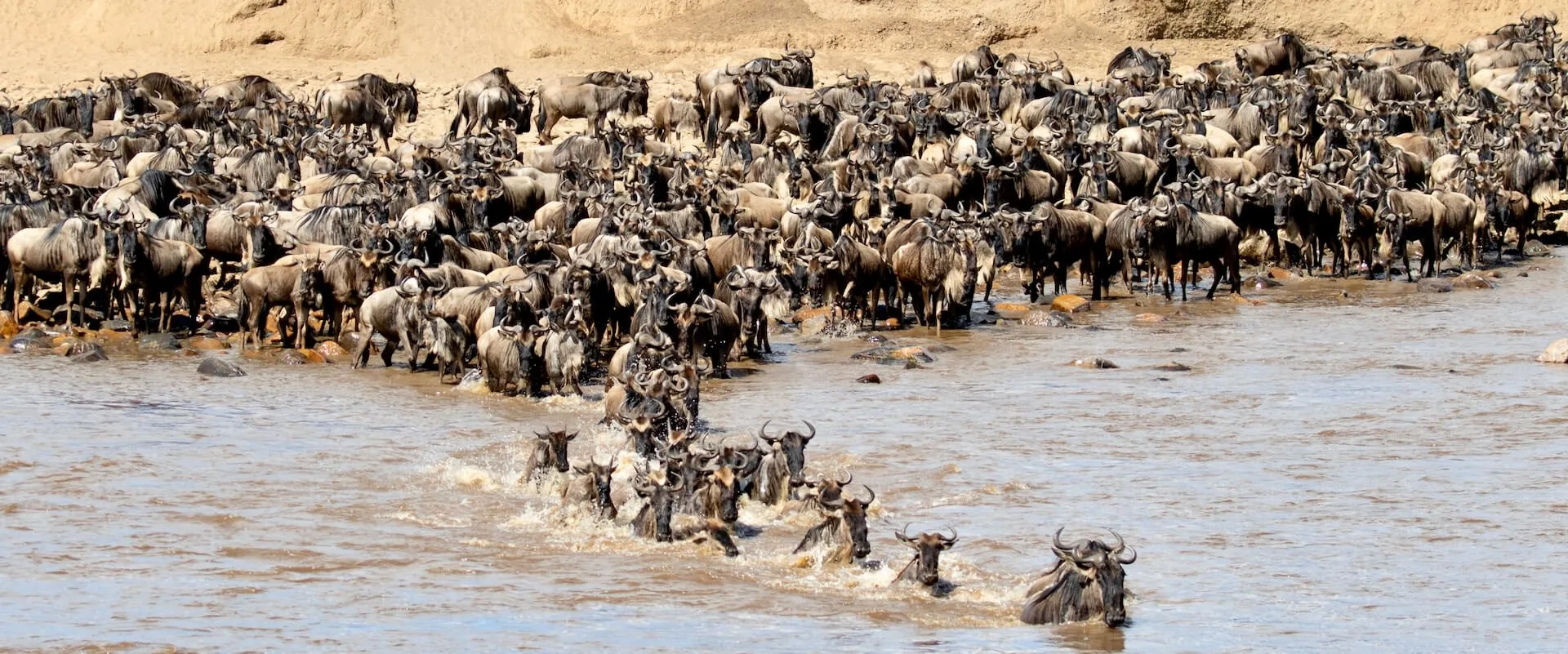
The Great Migration in Africa happens all year because the herds continuously circulate through the Serengeti–Mara ecosystem in…
Read article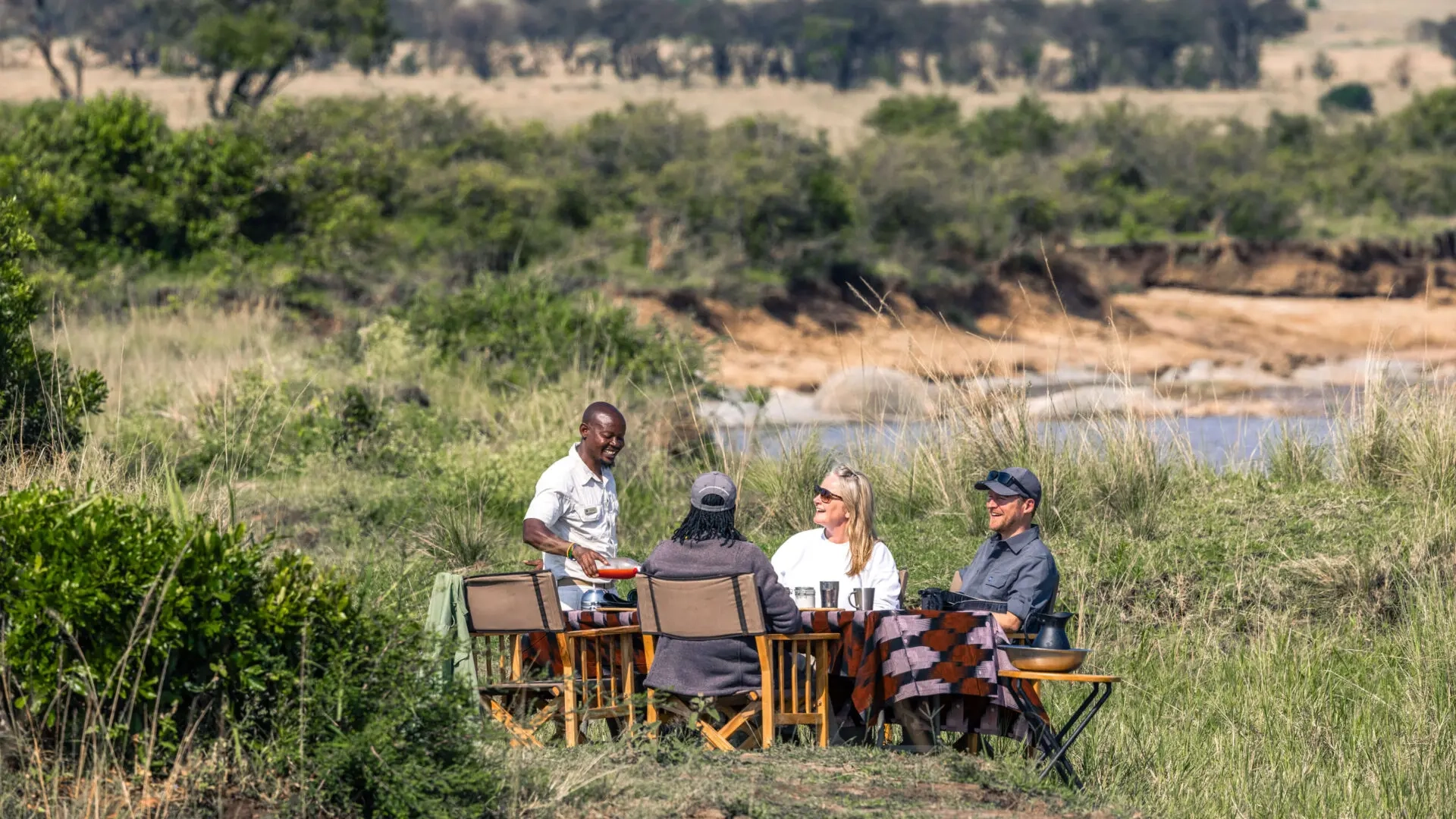
Definitive answer: A picnic lunch on safari is a packed or catered midday meal eaten at an approved…
Read article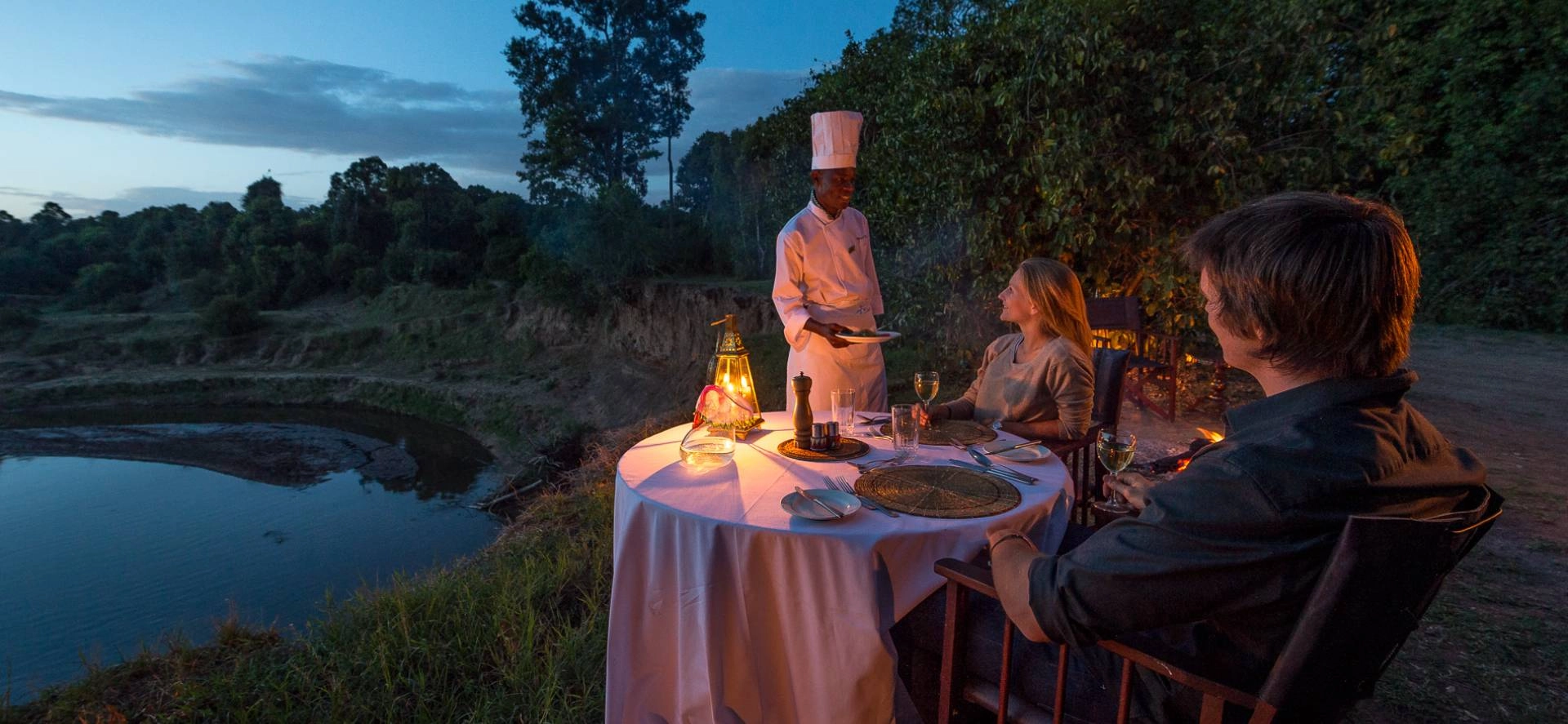
Definitive answer: A bush dinner is an outdoor evening meal arranged in a safe safari setting away from…
Read articleLet us take you closer to the wildlife, people and places that make Africa extraordinary.
Plan Your Safari Today