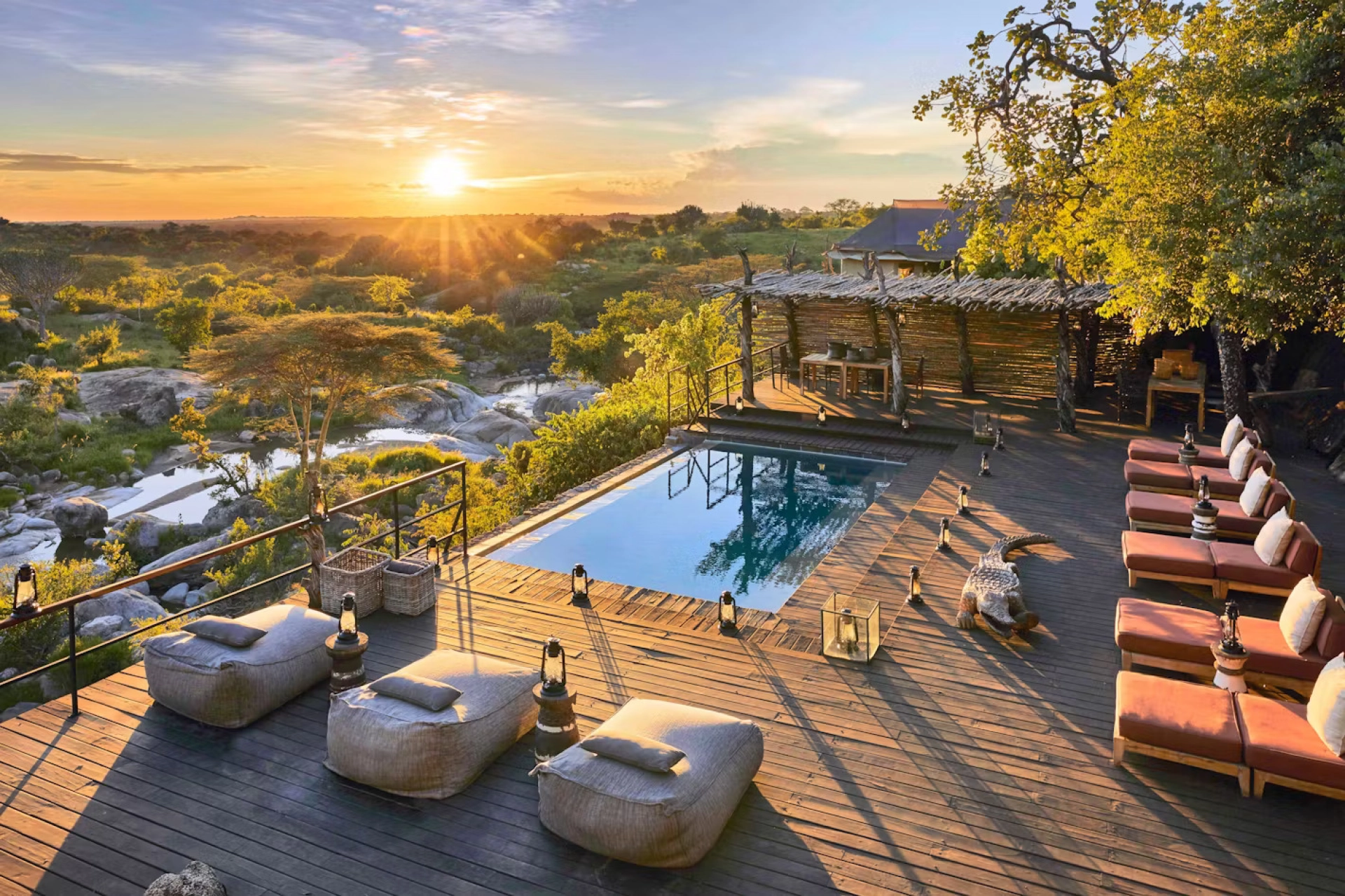
What should I look for when booking a luxury African safari?
When booking a luxury African safari, look beyond the room and compare the quality of guiding, wildlife location,…
Read article

Travel Guide
One of the most important decisions when planning an African safari has nothing to do with which national park you visit. It is deciding who shares your safari vehicle. Should you book a completely private East…
One of the most important decisions when planning an African safari has nothing to do with which national park you visit. It is deciding who shares your safari vehicle. Should you book a completely private East Africa safari, where the vehicle and professional driver-guide are dedicated exclusively to you and your travel companions? Or should you join a group safari, sharing transportation, guiding and a fixed itinerary with other travelers?
Both approaches can produce exceptional safaris. Both can also produce disappointing experiences when matched with the wrong traveler. A private safari provides flexibility, privacy and control. A group safari spreads major operational expenses between more people and can therefore produce a lower East Africa safari cost per person.
But the cheapest option on paper is not always the best value. A wildlife photographer may find a crowded group vehicle frustrating enough that paying more for a private vehicle is completely justified. A solo traveler who enjoys meeting people may find a small scheduled group dramatically better value than paying the entire cost of a private vehicle. A honeymoon couple may consider privacy essential.
A group of six friends can often obtain many of the benefits of a private safari while sharing the vehicle cost among themselves. Therefore, the question should not simply be: “Is a private safari better than a group safari?” The better question is: “Which safari style fits the way I want to travel?”
A private safari means the safari vehicle and professional guide are reserved for your booking rather than being shared with unrelated travelers. “Private” does not necessarily mean solo. A couple can book privately. A family of five can book privately. Six friends can have a private safari. The defining feature is that everyone in the vehicle belongs to the same booking party. This provides considerable control over the journey.
A group safari generally brings unrelated travelers together on a scheduled itinerary. The departure dates are predetermined. The route is normally fixed. Accommodation has already been selected. Participants share a safari vehicle and professional guide. This spreads transportation and guiding costs across the group. For solo travelers and couples, that can create significant savings.
There is an important third category. Suppose eight friends contact Adventure in the Wild Safaris and request one safari together. That is a group in the everyday sense, but operationally it can still be a private safari because no unrelated travelers are added. This can produce excellent economics. The friends divide transportation costs while maintaining control of the vehicle. Therefore, when comparing private vs group safaris in East Africa, always establish whether “group” means your own private group or a scheduled shared departure.
Safari vehicles are expensive to operate. Fuel costs matter. Maintenance matters. Long distances matter. Professional guides must be paid. When two travelers reserve a private vehicle, those operating costs are effectively divided between two people. When six travelers share the same operational framework, the per-person transport cost becomes much lower. This is the principal reason private safaris tend to cost more.
Not every expense changes. If you are trekking mountain gorillas in Uganda, every traveler requires the appropriate individual permit. A private vehicle does not reduce that. A group vehicle does not reduce that. The same principle applies to many chimpanzee permits, park activities and accommodation costs. Therefore, the difference between private and group pricing is driven primarily by shared operational costs rather than every element of the safari.
Solo travelers experience the greatest private-safari premium. One person occupies the vehicle. One person receives the guide’s attention. One person effectively covers the transport operation. Accommodation may also attract a single-room supplement. This can make a private solo safari in East Africa expensive. However, some travelers willingly pay because the freedom is extremely valuable.
Scheduled groups are particularly useful for solo travelers. Instead of paying for an entire vehicle, the traveler shares it. The cost saving can be substantial. The safari also provides a built-in social environment. For someone who enjoys meeting other travelers, this can be an advantage rather than a compromise.
Couples divide vehicle costs between two people. This is more efficient than solo travel but still more expensive per person than sharing among four or six. For honeymoons, anniversaries and once-in-a-lifetime journeys, couples frequently decide the extra cost is worthwhile.
Four travelers can reach an attractive pricing balance. Transport is divided between four people while the group still retains a private vehicle.
For two couples or a family, this can provide some of the best value in East African safari travel.
With six travelers, the per-person transportation economics can become extremely competitive. At this point, a private safari may approach the price of certain scheduled tours while preserving far more flexibility. Vehicle comfort must still be considered. The goal is not to fill every possible seat simply because it lowers the mathematical cost.
A safari vehicle is not a city bus. Travelers need space to look through windows. Photographers need room for equipment. Everyone needs to move when an animal appears on one side. Long journeys become tiring if the vehicle is overcrowded. A good safari operator therefore balances cost efficiency with actual viewing comfort.
Flexibility is the greatest advantage of a private safari. Imagine entering the Masai Mara early in the morning. Your guide finds a leopard resting in a tree. The animal begins scanning the grass below. You suspect it may hunt. On a private safari, you can decide to wait. There is no unrelated traveler insisting that the group leave immediately to search for elephants. This freedom is incredibly valuable to serious wildlife enthusiasts.
Group safaris need structure. Everyone has paid for the advertised itinerary. The guide must balance different interests. One traveler loves birds. Another wants lions. Another wants to return to the lodge for lunch. Another wants to photograph every elephant. Compromise is inevitable. A well-run small group manages this successfully. But it cannot provide the same control as a private vehicle.
For photographers, private safaris offer major advantages. You can ask the guide to position the vehicle according to light. You can wait for behavior. You can spend longer at sightings. You can use more vehicle space for equipment. You can prioritize sunrise and sunset. You can sometimes skip activities that are less important to photography. For serious photographers, these advantages can justify the additional cost.
Group safaris can still be excellent for photography, especially when groups are small. However, problems arise when too many photographers compete for the same viewing angle. Imagine a leopard appearing on the left side of the vehicle. Everyone moves left. Camera lenses overlap. Someone’s head enters another person’s frame. The leopard changes position before everyone gets the photograph. Vehicle occupancy matters enormously.
Birdwatchers often benefit from private travel because birding requires a different pace. A conventional safari vehicle may drive past a small woodland because the group is searching for lions. A birder may want to stop for thirty minutes. Private travel allows that. A specialized private Uganda birding safari, for example, can spend time searching for Albertine Rift endemics without worrying about unrelated guests losing patience.
Specialist birding groups solve this problem because everyone shares the same interest. In that situation, group travel can be excellent. The important factor is not simply whether the safari is private or shared. It is whether the travelers have compatible objectives.
A private Uganda gorilla safari gives you control over transportation and the wider itinerary. The actual gorilla trekking activity remains regulated by the park. Booking a private safari vehicle does not mean you receive a private gorilla family. At the trekking briefing point, visitors are organized according to official gorilla trekking arrangements. This distinction is important. Your road safari can be private while the gorilla trek itself follows regulated group structures.
A scheduled group gorilla safari in Uganda can significantly reduce transportation costs. This is particularly attractive for solo travelers. Everyone still requires the appropriate individual gorilla permit. The group shares the road journey and accommodation structure. For travelers primarily interested in seeing mountain gorillas affordably, this can provide excellent value.
Uganda’s safari geography makes this comparison particularly interesting. National parks are spread across substantial distances. A complete itinerary might connect Murchison Falls National Park, Kibale, Queen Elizabeth, Bwindi and Lake Mburo. Vehicle expenses therefore form a meaningful portion of the safari cost.
Sharing those expenses can save money. Private travel, however, allows much greater flexibility during long multi-park journeys.
Private travel is excellent for families, couples, photographers, birders and travelers with specialized interests. The vehicle can stop when you want. Transfer days can be adjusted. The guide can concentrate on your priorities. If you want to photograph the Equator for longer, you can. If you want to spend an extra morning searching for lions in Queen Elizabeth, the itinerary can potentially accommodate that.
Scheduled groups reduce per-person transport costs and provide social interaction. They are particularly attractive for solo travelers and budget-conscious visitors. The disadvantage is reduced flexibility. If the departure is scheduled to leave Queen Elizabeth for Bwindi at 8:00 a.m., the group cannot normally delay for several hours because one person wants another game drive.
Kenya has a strong range of both private and scheduled safari products. A private Masai Mara safari gives travelers more control over wildlife viewing and photography. Scheduled groups can dramatically reduce the cost of visiting popular destinations. Kenya’s relatively developed safari infrastructure makes it particularly suitable for both models.
The Mara rewards patience. A cheetah may spend an hour scanning before beginning to hunt. A pride of lions may remain inactive before suddenly moving. A leopard may descend from a tree. Private travelers can decide to wait. This is one of the strongest arguments for a private wildlife vehicle.
A small group can still have an extraordinary Mara experience. The main issue is vehicle occupancy and shared priorities. Ask how many travelers the operator normally places in each vehicle. A lower headline price is not automatically better if every seat is occupied and photography becomes difficult.
Tanzania’s northern safari circuit is ideal for both styles. The Serengeti, Ngorongoro Crater, Tarangire and Lake Manyara can be connected by road or combined with flights. Private travel gives travelers complete control over the pace. Group travel distributes significant vehicle and guide costs.
The Serengeti is enormous. A private guide can respond to seasonal wildlife movements and your particular interests. If you are following migration herds, this flexibility can be especially useful. However, remember that the Great Migration is a natural phenomenon. Private travel cannot guarantee a river crossing or control where animals move.
Group tours make Tanzania more accessible to budget-conscious travelers. A well-designed small-group itinerary can provide excellent wildlife viewing. Again, vehicle occupancy and guide quality matter more than simply seeing the word “group.”
Rwanda itineraries are often shorter and more concentrated. A private vehicle is particularly convenient for travelers combining Kigali, Volcanoes National Park, Akagera and Lake Kivu. Scheduled options may provide savings, but many travelers value the flexibility of private transportation.
As in Uganda, private road transportation does not automatically make the actual gorilla trek private. Gorilla tourism operates according to park regulations. The private advantage concerns transfers, accommodation choices and the broader itinerary.
One of the understated advantages of private safari travel is controlling mornings. If you want to leave before sunrise, you can plan accordingly. If your children need an easier morning, you can sometimes leave later. If photography conditions are excellent, you can stay out longer where park regulations permit. Group travel must consider everyone.
Private travelers can often discuss picnic breakfasts, packed lunches or alternative schedules with the operator and lodge. Group tours generally follow the established meal structure. This matters for photographers who want to remain in the field during the best light.
A tailor-made private safari allows you to choose your preferred lodge category. You can mix styles. Perhaps you use midrange lodges through most of the trip but upgrade to a luxury property in Bwindi. Perhaps you prioritize a premium migration camp but use simpler accommodation elsewhere. Scheduled groups normally use predetermined properties.
Not everyone wants to customize every detail. Some travelers find endless choices exhausting. A scheduled safari solves this. The itinerary has been designed. Hotels are selected. Transport is organized. You arrive and participate. For travelers who value simplicity, reduced decision-making is an advantage.
Tailor-made travel gives you options, but options require decisions. Which park? Which lodge? How many nights?
Road or flight? One gorilla trek or two? Luxury or midrange? A strong safari consultant simplifies these choices, but some travelers still prefer the certainty of a fixed itinerary.
Group travel can create friendships. Safari vehicles generate conversation. Everyone experiences the same lion sighting. Dinner becomes an opportunity to compare photographs. Solo travelers may particularly appreciate this social element. For outgoing travelers, a good group can enhance the journey.
The opposite is also possible. You do not choose your fellow travelers. One person may talk constantly. Another may be chronically late. Another may want every sighting to last five minutes. Another may insist on returning to the lodge early. Most groups work perfectly well, but compatibility is never guaranteed.
For honeymooners, a private East Africa safari usually makes more sense. The safari itself becomes part of the couple’s private journey. Long drives are shared only with the guide. Game drives can reflect the couple’s pace. Luxury accommodation can be selected according to romantic priorities. The additional cost often feels justified.
Families also benefit greatly from private vehicles. Children have different energy levels. Bathroom stops may be more frequent. Parents may want shorter game drives. The itinerary can be adjusted without affecting unrelated travelers. For many families, private travel is worth the premium.
Teenagers may enjoy scheduled groups more than younger children because they can interact with other travelers and handle fixed schedules more easily. However, a private family vehicle still provides greater control.
Private safaris can be advantageous for older travelers who prefer a slower pace, more comfort stops or particular accommodation requirements. Group tours can also work extremely well if mobility is good and the itinerary matches the traveler’s pace. The important factor is realistic self-assessment.
Private safaris can use limited vacation time efficiently. You are not waiting for unrelated travelers. The route can be designed around your flights. Domestic air transfers can be incorporated. For a traveler with only six days in East Africa, flexibility can be more valuable than saving several hundred dollars.
The longer the safari, the more important group compatibility becomes. Sharing a vehicle with strangers for three days is different from sharing it for two weeks. Before booking a long scheduled safari, understand the group size, vehicle layout and general travel style.
One of the greatest benefits of a private safari is the relationship with your guide. Over several days, the guide learns your interests. Perhaps you love birds. Perhaps you want to understand ecology. Perhaps you are fascinated by elephants. Perhaps you care more about photography than checking animals off a list. The guide can gradually tailor the experience.
A good group guide balances different personalities and interests. This requires considerable skill. The guide must interpret wildlife while managing time and expectations. Quality guiding is therefore just as important on group safaris as private ones.
No. A private safari can be budget. It can be midrange. It can be luxury. “Private” describes who shares the vehicle and itinerary, not the lodge category. This is important because travelers sometimes assume private safaris are automatically extremely expensive. A private road safari using budget lodges can remain relatively affordable, especially for four or more travelers.
No. Luxury small-group safaris exist. They combine premium accommodation with shared specialist guiding and transportation. Group travel is a structure, not a quality category.
A budget private safari in East Africa can be an excellent choice for couples or friends. Use affordable lodges. Travel by road. Avoid unnecessary flights. Keep the vehicle private.
This preserves flexibility while controlling costs.
Conversely, travelers can join premium small groups using luxury camps. The group shares high-quality guiding and logistics while enjoying excellent accommodation. This can be particularly attractive for specialist photography or conservation journeys.
The relationship between group size and cost is not perfectly linear. Going from one traveler to two can create substantial savings. Going from two to four creates more. Eventually, the vehicle reaches comfortable capacity. Adding more travelers then requires a second vehicle, changing the economics. This is why operators calculate quotations according to exact group size.
If you are organizing a trip for friends, ask for pricing based on realistic participation numbers. For example, request the cost for four travelers and the cost for six. This helps everyone understand how cancellations or additions affect the budget.
Because the gorilla permit remains individual, the savings from group travel come mainly from transportation and accommodation structures. For a very short gorilla safari, this can still be significant. For a longer Uganda circuit, shared vehicle costs can produce even greater savings.
The same principle applies to Kibale chimpanzee trekking. Each participant needs the appropriate activity arrangements. Transport can be shared. Private travelers gain flexibility in the wider route, while scheduled groups reduce operating costs.
Migration safaris reward flexibility because wildlife movement is dynamic. A private guide can spend more time where current conditions are strongest. However, experienced group operators also design routes around seasonal patterns. No operator can guarantee a particular dramatic crossing because wildlife remains wild.
Activities such as balloon safaris generally operate according to their own shared structure. Even if your overall safari is private, you may join other travelers for the balloon experience. Private safari does not mean every third-party activity becomes exclusive.
Similarly, public boat activities may include other travelers unless a private charter has been specifically arranged. Always distinguish between a private road safari and private access to every activity.
Joining a group does not mean sharing bedrooms with strangers unless that arrangement has been explicitly chosen. Travelers normally have their own single, twin or double room according to the booking. The shared component is principally transportation, guiding and scheduled activities.
Both professionally organized private and group safaris can be safe. The quality of the operator, guide, vehicle and itinerary matters more than whether unrelated travelers share the vehicle. Follow current official travel advice and guide instructions.
Private travelers should not assume paying more allows them to pressure guides into breaking park rules. Do not ask drivers to leave authorized tracks where prohibited. Do not demand dangerously close wildlife approaches. Do not pressure gorilla rangers for additional time beyond regulations. A good private safari provides flexibility within responsible tourism boundaries.
Group travel can reduce the number of vehicles required to transport the same number of travelers, potentially improving logistical efficiency. However, responsible tourism depends on much more than vehicle occupancy. Accommodation practices, conservation contributions, local employment and traveler behavior all matter.
Private safaris are strongest when flexibility, privacy, specialist interests and personalized pacing matter. They are particularly suitable for honeymooners, families, photographers, birders, older travelers, groups of friends and anyone creating a tailor-made multi-country itinerary.
Group safaris are strongest when cost sharing, social interaction and simplicity matter. They are particularly suitable for solo travelers, budget-conscious couples and travelers comfortable with fixed dates and itineraries.
Price. Especially for solo travelers and couples, carrying the full vehicle cost increases the per-person safari price.
Compromise. You share time, vehicle space and itinerary decisions with other travelers.
Value is not the same as price. Suppose a private safari costs 20% more but allows a photographer to obtain dramatically better images and spend every day following personal wildlife interests. That may represent better value. Suppose another traveler simply wants to see the major highlights and enjoys meeting people. The group tour may deliver almost everything desired at a substantially lower price. That is better value for that traveler.
First-time visitors sometimes appreciate private travel because the guide can explain everything at their pace. There is more freedom to ask questions and adapt. However, first-time travelers can also thrive in groups because the fixed structure removes planning stress. Personality matters more than experience level.
A well-designed small group can be an excellent introduction to Africa. Everything is organized. You meet other travelers. Costs are controlled. The itinerary usually includes established highlights. Choose a reputable operator and understand the group size before booking.
Repeat visitors often benefit from private travel because they want to go beyond standard highlights. Perhaps you have already seen the central Serengeti and now want Ndutu.
Perhaps you have already trekked gorillas and want habituation. Perhaps you want specialist birding in Ruhija. Tailor-made travel handles these interests more easily.
You do not necessarily have to choose one structure for the entire journey. A traveler might join a group safari in Tanzania and then book a private Uganda gorilla extension. Another might take a private Kenya safari but join a scheduled Kilimanjaro climb. Mixing structures can optimize both cost and experience.
Uganda and Rwanda are particularly suitable for tailor-made private journeys. A route can connect Kibale chimpanzees, Queen Elizabeth, Bwindi, Mgahinga, Volcanoes National Park, Kigali and Akagera according to interests. Private transport makes cross-border logistics and unusual combinations easier.
Travelers can combine Bwindi gorilla trekking with the Masai Mara. Regional flights connect the wider itinerary. Private ground services in each country provide flexibility. This is a premium but exceptionally rewarding combination.
Gorillas followed by the Serengeti and Ngorongoro create one of Africa’s most diverse wildlife journeys. A tailor-made structure can optimize dates around permit availability and seasonal safari conditions.
Scheduled multi-country groups can provide substantial savings but require more rigid dates. Because border crossings, flights and accommodation all depend on the group schedule, flexibility is limited. Travelers should read the itinerary carefully before committing.
For travelers who value flexibility, privacy, photography or specialized interests, often yes.
They can be, especially for solo travelers, because vehicle and guide costs are shared.
Your road vehicle and guide can be private, but regulated activities such as gorilla trekking, balloon flights or public boat cruises may still involve other travelers.
Yes. Families are among the travelers who benefit most from private vehicles.
No. Private safaris can use budget, midrange or luxury accommodation.
No. Group tours attract travelers across many age ranges. The itinerary pace matters more than age alone.
This depends on the operator, vehicle and safari product. Ask specifically before booking.
Private vehicles generally provide greater control and space, although specialist photography groups can also be excellent.
Both can work. The actual gorilla activity follows park regulations regardless of whether your road safari is private.
Most honeymooners prefer private travel because of the added privacy and flexibility.
Group safaris usually provide better financial value, while private safaris provide maximum control.
Absolutely. This can provide excellent per-person value because transport expenses are shared within your own party.
Not inherently. Operator quality, professional guiding, vehicle standards and responsible travel practices matter more.
Choose according to budget, personality and desired flexibility rather than simply whether it is your first visit.
Neither safari style wins universally. A private East Africa safari is about control. You control the pace. You control the vehicle. You influence how long you remain at wildlife sightings. You can design the route around your interests. You travel only with the people in your booking. A group East Africa safari is about efficiency. Vehicle costs are shared. Guide costs are shared. The itinerary is already designed. Solo travelers gain travel companions.
The overall per-person cost can fall considerably. For a honeymoon couple, private travel may be the obvious answer. For a solo traveler with a strict budget, a small group may be far more sensible. For four friends, private travel may offer the best of both worlds because they share costs while keeping the vehicle exclusively for themselves.
For a wildlife photographer, vehicle space may matter more than accommodation luxury. For a family, flexibility may matter more than saving the final few hundred dollars. The best decision therefore comes from understanding yourself as a traveler. Do you enjoy structure or flexibility? Do you want to meet strangers or travel privately? Do you photograph seriously? Do you need to control your daily pace? How important is budget? Answer those questions and the private-versus-group decision becomes much easier.
Adventure in the Wild Safaris designs both private tailor-made East Africa safaris and selected small-group safari experiences. We can compare both approaches for your travel dates so you can see the real cost difference rather than relying on generic assumptions. Your journey can include Uganda gorilla trekking, Kibale chimpanzee trekking, Queen Elizabeth National Park, Murchison Falls, Rwanda gorilla trekking, Akagera, Kenya’s Masai Mara, Amboseli, Tanzania’s Serengeti, Ngorongoro Crater, Tarangire and other major East African destinations.
Couples can travel privately. Families can have their own vehicle. Groups of friends can divide private safari costs. Solo travelers can consider suitable scheduled departures.
Photographers and birders can request specialist arrangements with appropriate vehicle space and guiding. The goal is not to sell every traveler the same safari format. It is to choose the travel structure that gives you the strongest experience for the money you want to spend. In East Africa, private versus group safari is ultimately not a choice between good and bad.
It is a choice between two different ways of experiencing some of the world’s greatest wildlife destinations.

Share This Article
When booking a luxury African safari, look beyond the room and compare the quality of guiding, wildlife location,…
Read article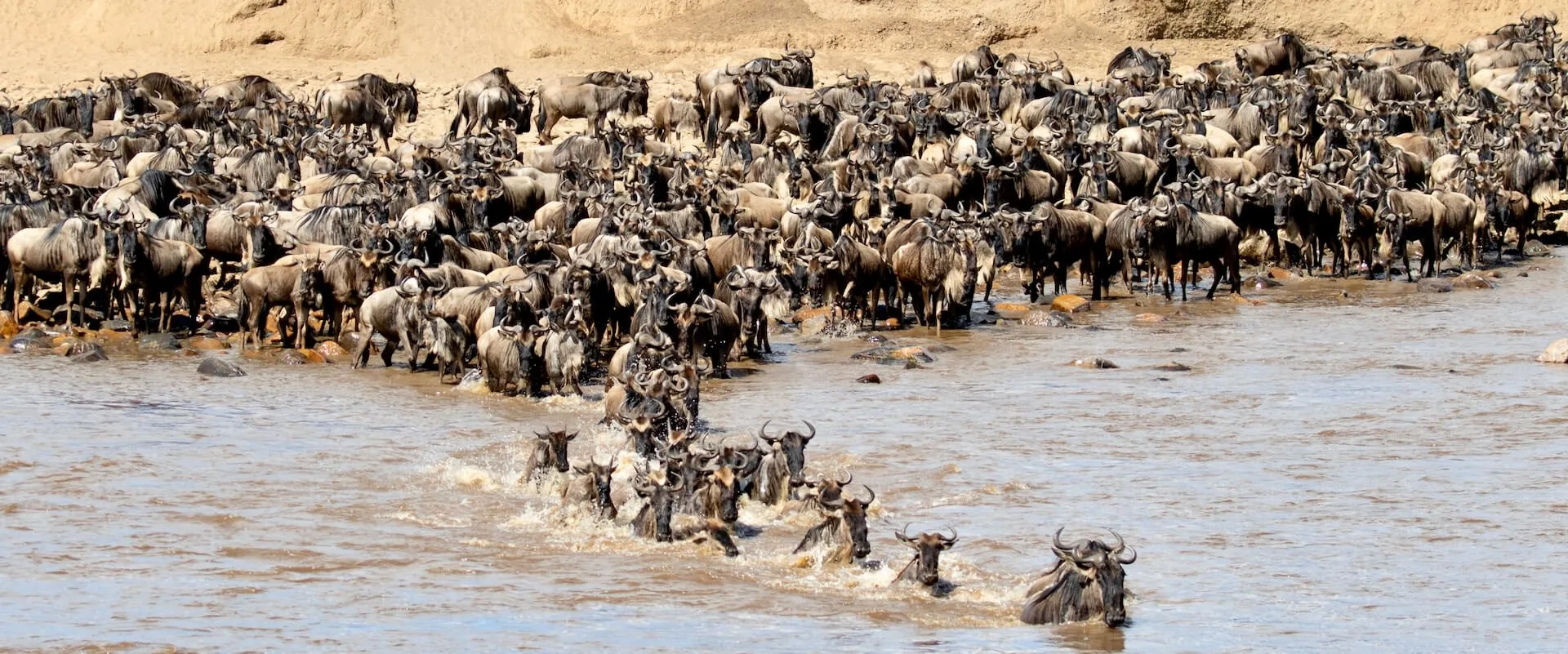
The Great Migration in Africa happens all year because the herds continuously circulate through the Serengeti–Mara ecosystem in…
Read article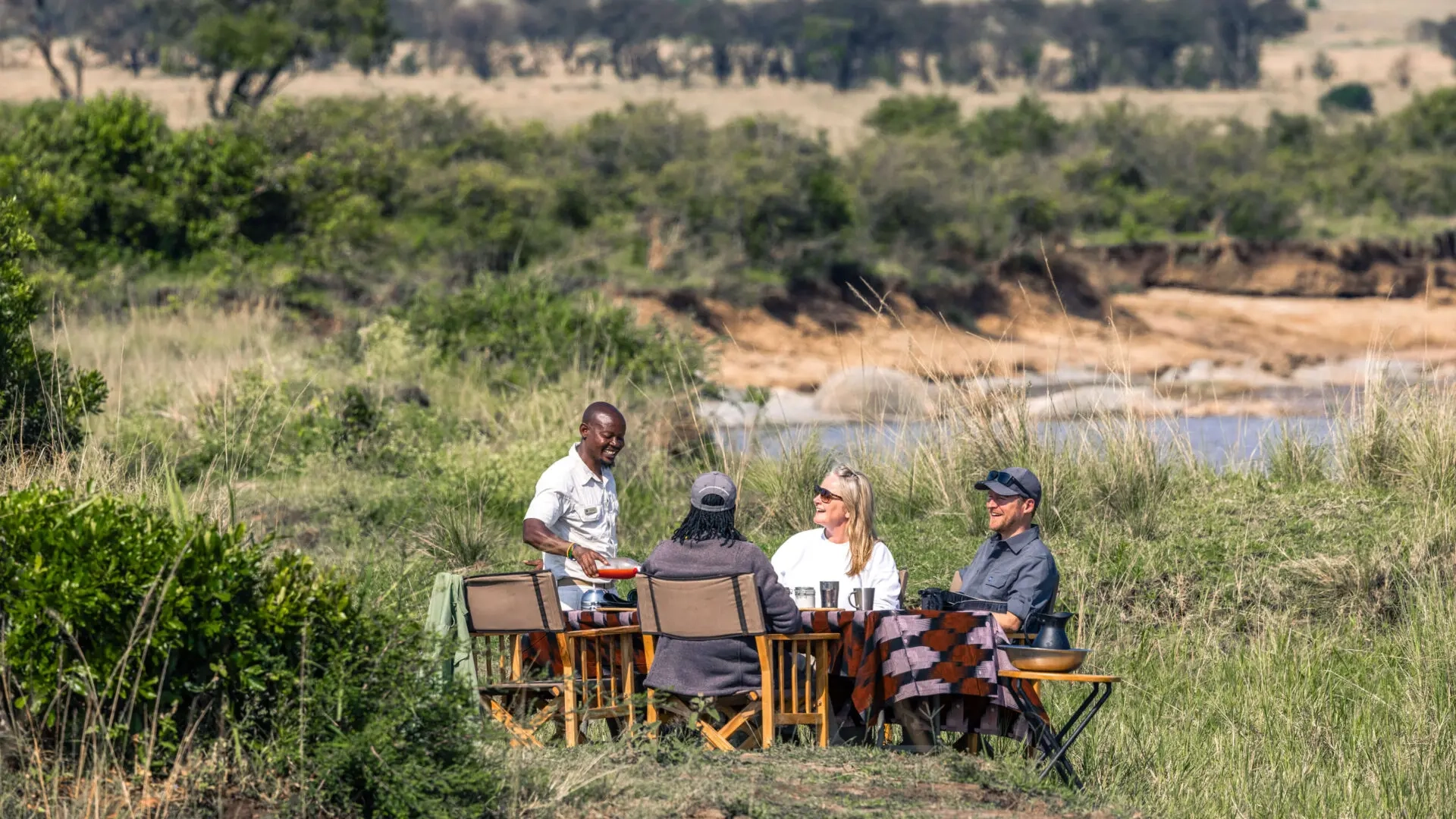
Definitive answer: A picnic lunch on safari is a packed or catered midday meal eaten at an approved…
Read article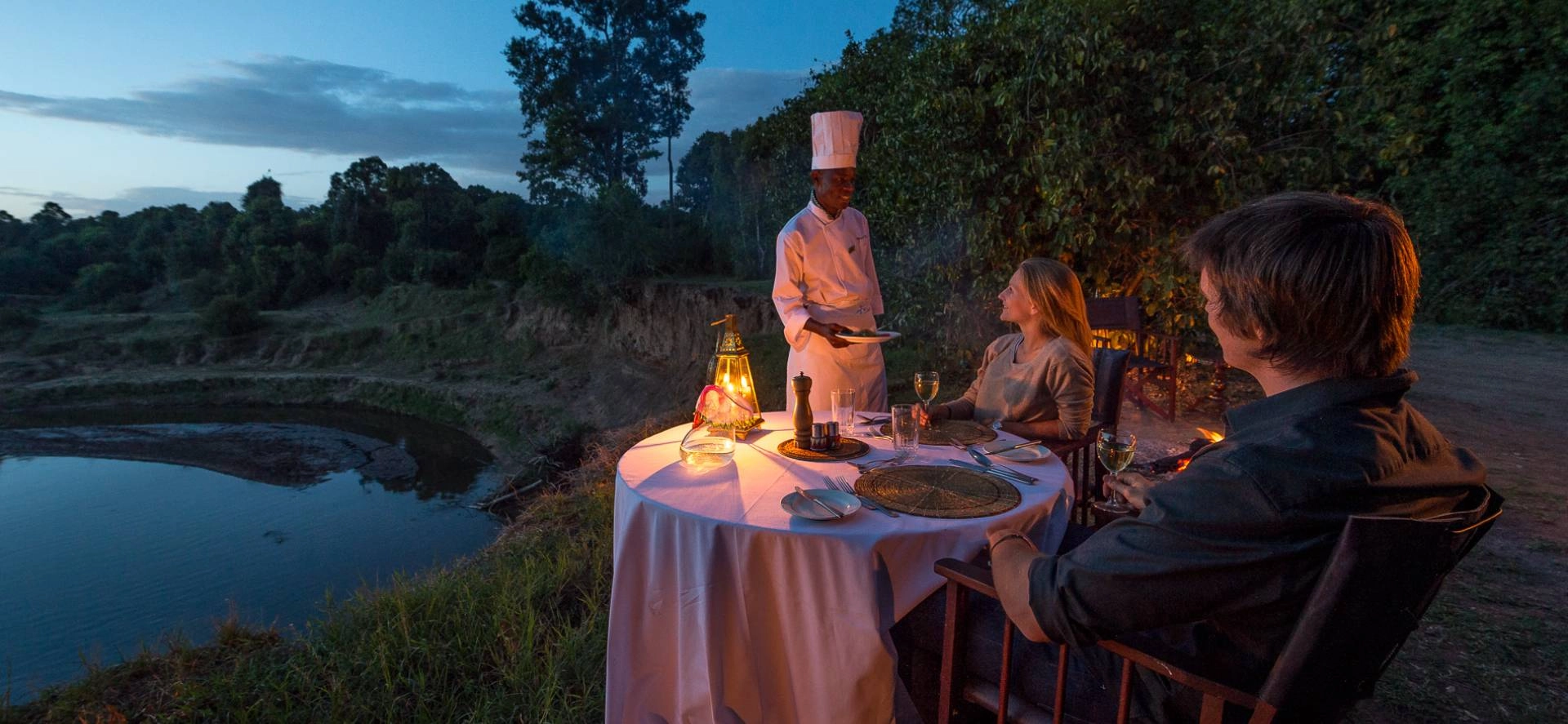
Definitive answer: A bush dinner is an outdoor evening meal arranged in a safe safari setting away from…
Read articleLet us take you closer to the wildlife, people and places that make Africa extraordinary.
Plan Your Safari Today