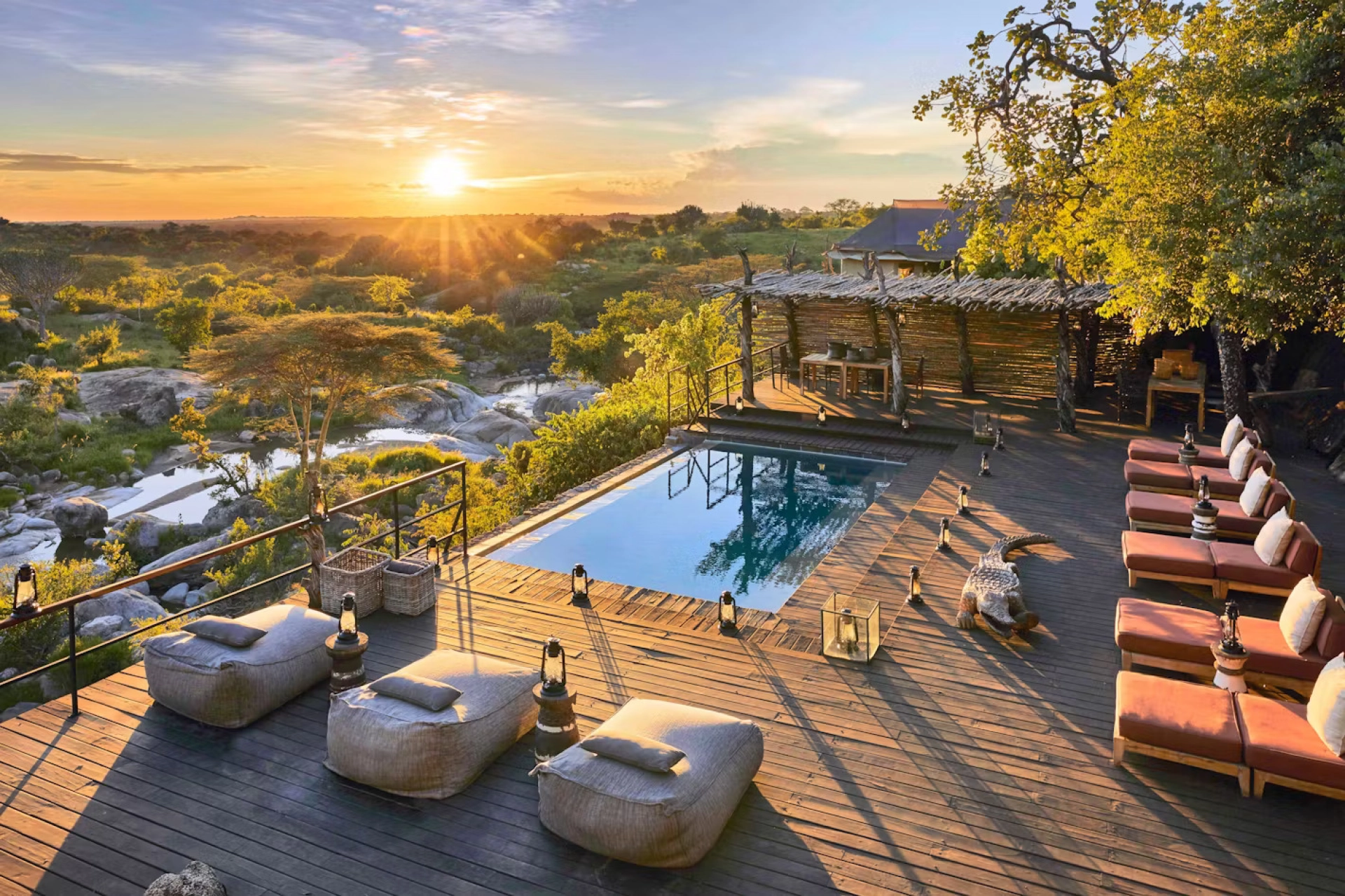
What should I look for when booking a luxury African safari?
When booking a luxury African safari, look beyond the room and compare the quality of guiding, wildlife location,…
Read article

Travel Guide
Africa is famous for lions, elephants, giraffes, zebras and the Big Five, yet some of the continent's most rewarding wildlife encounters involve animals that are far less common. Across Africa's forests, deserts, mountains, wetlands and savannas…
Africa is famous for lions, elephants, giraffes, zebras and the Big Five, yet some of the continent’s most rewarding wildlife encounters involve animals that are far less common. Across Africa’s forests, deserts, mountains, wetlands and savannas live species whose survival depends on protected habitats, anti-poaching programmes, conservation science, community participation and carefully managed wildlife tourism.
For safari travellers, understanding these protected animals in Africa changes the way you experience the continent. A black rhino appearing from thorn scrub is no longer simply another impressive mammal. A pack of African wild dogs racing across the savanna becomes far more significant once you understand how fragmented their surviving populations are. Spending an hour with mountain gorillas in Uganda or Rwanda feels even more extraordinary when you understand the decades of conservation work that have helped protect their remaining forest habitat.
The term “protected animal” can mean different things depending on national legislation, international agreements and conservation status. It does not necessarily mean that every protected species is critically endangered. Some animals receive legal protection because hunting, capture or trade is restricted, while others are regarded as threatened because their populations are declining or geographically restricted.
The IUCN Red List of Threatened Species is one of the most widely used global systems for evaluating extinction risk. It categorises species from Least Concern and Near Threatened through Vulnerable, Endangered and Critically Endangered. The three categories Vulnerable, Endangered and Critically Endangered are collectively considered threatened categories. Africa contains remarkable examples across these categories. The good news for travellers is that responsible tourism can make an important contribution to their conservation. Park entrance fees, gorilla permits, conservation levies, lodge employment and wildlife tourism revenue help create economic reasons to preserve wilderness.
This guide explores some of the most fascinating rare African animals, why they are threatened and the best places to see them responsibly on safari.
African wildlife faces a combination of pressures that vary significantly between countries and ecosystems. One of the largest is habitat loss. As human populations grow and agriculture, roads, settlements and infrastructure expand, wildlife habitat becomes smaller and increasingly fragmented. Animals that once moved freely across enormous landscapes may become confined to protected areas separated by farms, towns and highways. Large mammals are particularly affected because many require extensive territories. Elephants may migrate between seasonal water and feeding areas. African wild dogs can travel enormous distances. Cheetahs need space to hunt while avoiding stronger predators such as lions. Mountain gorillas depend on relatively limited areas of high-altitude forest.
Poaching is another major threat. Rhinos have suffered devastating pressure because of demand for their horns. Elephants have historically been targeted for ivory. Pangolins are heavily trafficked for their scales and meat. Other pressures include conflict with livestock farmers, disease transmitted between domestic animals and wildlife, climate change, uncontrolled resource extraction and illegal capture for the wildlife trade. Conservation therefore requires considerably more than simply declaring an area a national park.
Successful wildlife protection may involve anti-poaching patrols, veterinary programmes, ranger training, community revenue sharing, habitat restoration, wildlife corridors, transboundary conservation areas, scientific monitoring and responsible tourism.
There is no single destination where you can see every rare species. Different animals require different ecosystems. For mountain gorillas, travel to Uganda or Rwanda. For black and white rhinos, southern and East African reserves provide some of the strongest possibilities. For African wild dogs, destinations such as Botswana, Zimbabwe, Zambia and parts of South Africa are particularly important. For Ethiopian wolves, you need to travel into Ethiopia’s Afro-alpine highlands.
For Grevy’s zebra, northern Kenya is one of the key destinations. For lemurs, Madagascar is unlike anywhere else on Earth. This geographical diversity is one reason wildlife enthusiasts frequently return to Africa many times. A first safari may focus on lions and elephants. A second may revolve around gorillas. Later journeys often become increasingly specialised.
Few wildlife encounters compare with standing quietly inside an African rainforest while a family of mountain gorillas feeds only a short distance away. Mountain gorillas are one of Africa’s great conservation success stories, although they remain highly protected and vulnerable to threats including habitat pressure and disease. They occur naturally in only two geographical populations. One lives in Uganda’s Bwindi Impenetrable National Park, while the other occupies the Virunga volcanic region shared between Uganda, Rwanda and the Democratic Republic of Congo.
For most international travellers, Uganda and Rwanda provide the most established gorilla trekking tourism infrastructure.
Uganda is one of the world’s premier gorilla trekking destinations. Most treks take place in Bwindi Impenetrable National Park, an extraordinary UNESCO-listed forest in southwestern Uganda. Bwindi is divided into several trekking sectors, including Buhoma, Ruhija, Rushaga and Nkuringo. Each provides access to habituated gorilla families and a somewhat different geographical experience. Uganda also offers mountain gorilla trekking in Mgahinga Gorilla National Park, which forms part of the larger Virunga landscape.
A gorilla trek begins with a ranger briefing. Visitors are then divided into groups and assigned to a habituated gorilla family. The trek can take anywhere from a relatively short walk to several hours depending on where the gorillas are feeding that day. Once the group is located, visitors generally spend a regulated period observing the gorillas. This controlled system protects the animals from excessive tourist pressure while generating crucial conservation revenue.
A Uganda gorilla safari can easily be combined with chimpanzee trekking in Kibale National Park, game viewing in Queen Elizabeth National Park or wildlife experiences in Murchison Falls National Park.
Rwanda’s Volcanoes National Park is another internationally renowned gorilla trekking destination. The park protects part of the forested Virunga volcanic landscape and is easily reached from Kigali compared with many other major primate areas. This accessibility makes Rwanda attractive to travellers with limited time. A visitor can arrive in Kigali, travel to the Musanze area and begin a gorilla trek the following morning. Uganda and Rwanda therefore complement rather than simply compete with one another.
Uganda frequently appeals to travellers wanting a longer and more varied safari, while Rwanda is particularly convenient for shorter premium gorilla trips.
Gorilla trekking is deliberately expensive compared with many ordinary wildlife activities. The logic is simple: gorillas cannot sustain mass tourism. A limited number of visitors paying significant permit fees can create far more conservation value than thousands of poorly controlled tourists entering their habitat. Revenue supports park management and conservation while also generating employment and economic activity around gorilla destinations. For travellers, this means the gorilla permit is not merely an entrance ticket. It is part of a highly managed conservation model.
Seeing a black rhino in the wild is one of Africa’s most meaningful safari experiences.
Despite their name, black rhinos are not actually black. Their colour usually reflects the soil and mud in which they wallow. The easiest field distinction between African black and white rhinos is the shape of the mouth. Black rhinos have a pointed, prehensile upper lip adapted for browsing leaves and shrubs. White rhinos have a broad, square mouth more suited to grazing. Black rhinos have suffered enormous losses because of poaching and historical hunting. Today they remain one of Africa’s most intensely protected large mammals.
Good black rhino destinations can include selected protected areas in Namibia, Kenya, Tanzania, South Africa and Zimbabwe. Namibia is especially fascinating because some black rhinos survive in extremely arid environments. Kenya has several heavily protected rhino conservation areas. Tanzania’s Ngorongoro Crater occasionally provides opportunities to see black rhinos against one of Africa’s most spectacular landscapes. South Africa remains an important rhino conservation country despite severe poaching pressure. The actual location of rhinos is often deliberately handled with discretion.
Visitors should avoid posting real-time rhino locations on social media.
The white rhino is generally larger than the black rhino and is more strongly associated with open grassland habitats. At first sight, white rhinos can appear surprisingly peaceful. They may spend long periods grazing with their heads close to the ground. Yet their size is extraordinary. An adult white rhino is one of the heaviest land mammals on Earth.
South Africa has historically provided some of the best white rhino viewing, particularly in protected reserves in KwaZulu-Natal and the broader Kruger region. Other possibilities exist in Kenya, Uganda and several southern African conservation areas where rhinos have been reintroduced. In Uganda, Ziwa Rhino Sanctuary has played an important role in rhino conservation and reintroduction efforts. Travellers frequently combine Ziwa with a Murchison Falls National Park safari, creating an opportunity to experience rhinos while travelling between Kampala or Entebbe and northwestern Uganda.
Africa does not have only one elephant species. The African forest elephant is distinct from the African savanna elephant and occupies rainforest ecosystems in Central and West Africa. Forest elephants tend to be smaller, with straighter tusks and adaptations suited to life beneath dense forest canopy. They are also among Africa’s most threatened large mammals. The IUCN has assessed the African forest elephant as Critically Endangered, while the African savanna elephant is listed as Endangered. The assessments highlight long-term declines associated particularly with ivory poaching and habitat loss.
Forest elephants can be extremely difficult to observe. One of Africa’s most extraordinary wildlife destinations for them is Dzanga-Sangha in the Central African Republic, where forest clearings known as bais can attract elephants. Gabon and the Republic of Congo also protect major forest elephant habitats. These are specialist wildlife destinations and generally require more complex logistics than mainstream safari areas. For experienced African travellers, however, watching forest elephants emerge from equatorial rainforest can be one of the continent’s most exceptional encounters.
The African savanna elephant is one of the most recognisable animals on Earth. It is also one of the species most closely associated with the idea of an African safari. Savanna elephants occur across numerous eastern and southern African countries, but populations are unevenly distributed and face very different pressures from one region to another. The IUCN currently treats the African savanna elephant as Endangered.
There are outstanding elephant destinations across Africa. Chobe National Park in Botswana is famous for exceptionally large elephant concentrations, particularly around the Chobe River. Hwange National Park in Zimbabwe is another excellent destination. In East Africa, Amboseli National Park in Kenya is renowned for elephant herds with Mount Kilimanjaro forming a dramatic background. Tanzania’s Tarangire National Park is famous for elephant herds among ancient baobab trees. Uganda’s Murchison Falls, Queen Elizabeth and Kidepo Valley national parks also protect elephant populations.
Elephants are often relatively easy to see in major safari destinations, but familiarity should never reduce their significance. Every elephant herd represents a complex social system shaped by memory, learning and relationships extending across generations.
Few animals generate as much excitement among experienced safari guides as the African wild dog, also called the painted wolf or painted dog. Their mottled coats are individually distinctive, and their social lives are remarkably complex. Wild dogs live in packs and cooperate intensively. They hunt together, raise pups cooperatively and communicate through body language and vocalisation. The challenge is that packs require enormous areas. This makes them particularly vulnerable to habitat fragmentation.
They also face disease transmission from domestic dogs, road collisions and conflict with livestock owners.
Some of the strongest wild dog destinations include: Northern Botswana, particularly the Okavango Delta and surrounding wildlife areas; South Luangwa and Lower Zambezi in Zambia; Mana Pools and Hwange in Zimbabwe; Greater Kruger in South Africa; and selected ecosystems in Tanzania and Mozambique. Wild dogs are highly mobile. You may spend days without seeing them and suddenly encounter an entire pack moving rapidly across the landscape. That unpredictability is part of the excitement.
A pangolin sighting is often more exciting to experienced safari travellers than seeing a lion.
These remarkable mammals are covered in protective keratin scales and feed primarily on ants and termites. When threatened, they can curl into a tight ball. Unfortunately, that defence is useless against human traffickers. Pangolins are heavily targeted in the illegal wildlife trade. Several species occur in Africa, including ground-dwelling and tree-dwelling forms.
Pangolins are extremely difficult to see reliably. Certain private reserves in South Africa, Botswana and Namibia have developed reputations for occasional sightings. Specialised conservation projects may sometimes provide carefully controlled research or monitoring experiences. However, travellers should be suspicious of any operation promising casual handling or guaranteed close contact with wild pangolins. Responsible pangolin tourism should prioritise conservation above photographs.
The cheetah is the fastest land mammal and one of Africa’s most elegant predators. Unlike lions and leopards, cheetahs depend heavily on speed. They are therefore best adapted to relatively open habitats where they can accelerate rapidly after prey. Cheetahs face multiple conservation challenges. Habitat fragmentation is particularly serious because they require large territories. They are also frequently pushed away from kills by stronger predators. Outside protected areas, conflict with livestock farmers can become another problem.
The open plains of Serengeti National Park in Tanzania and Kenya’s Masai Mara offer excellent opportunities. Namibia supports important cheetah populations, including animals living outside conventional national parks. Botswana’s Central Kalahari and selected private reserves can also be productive. In South Africa, cheetahs occur in several reserves, although distribution varies. For photography, the open grasslands of East Africa provide some of the most dramatic cheetah settings.
The Ethiopian wolf is one of Africa’s rarest carnivores and among the continent’s most geographically restricted mammals. These slender, reddish wolves live in Ethiopia’s high-altitude Afro-alpine ecosystems. Their habitat is completely different from the savannas most travellers associate with African wildlife. You may find yourself above 3,000 metres, surrounded by rolling mountain grasslands rather than acacia trees.
The Bale Mountains National Park is the most famous destination. The Sanetti Plateau provides one of Africa’s most unusual wildlife landscapes. Ethiopian wolves specialise in hunting rodents, and patient visitors may watch them listening carefully before pouncing into vegetation. A Bale Mountains journey can also include endemic birds, mountain nyala and spectacular escarpment scenery. This is one of the best destinations for travellers who have already experienced conventional safari and want something different.
Most visitors to East Africa see plains zebras. The Grevy’s zebra is different. It is larger, with narrow closely spaced stripes, large rounded ears and a white belly. Grevy’s zebra populations are concentrated mainly in northern Kenya with smaller numbers in Ethiopia.
The Samburu ecosystem in northern Kenya provides some of the best opportunities. Samburu National Reserve, Buffalo Springs and neighbouring conservancies protect landscapes where Grevy’s zebras occur alongside several other northern Kenyan specialities. These include reticulated giraffes, gerenuk, Beisa oryx and Somali ostriches. This makes Samburu particularly rewarding after a Masai Mara safari. Rather than simply seeing more of the same wildlife, you encounter an almost entirely different ecological community.
For decades many travellers simply spoke about “giraffes” as though they formed one uniform population.
Conservation science increasingly recognises important distinctions between giraffe populations. Some are considerably more threatened than others. In Uganda, Murchison Falls National Park is particularly famous for giraffes, including the population historically referred to as Rothschild’s giraffe. A drive through the park’s northern savanna frequently provides superb giraffe sightings. Uganda has also undertaken giraffe translocation programmes to strengthen populations in other protected areas. For travellers combining gorilla trekking with a classic savanna safari, Uganda therefore offers excellent contrasts.
The okapi looks almost mythical. It has a dark body, striped hindquarters reminiscent of a zebra and the overall appearance of an animal assembled from several unrelated species. Yet its closest living relative is the giraffe. Okapis occur naturally only in the forests of the Democratic Republic of Congo. They are secretive rainforest mammals, making wild sightings extremely difficult. The Okapi Wildlife Reserve was established partly to protect this extraordinary species and its forest habitat.
For most travellers, the okapi remains one of Africa’s most challenging mammals to see in the wild. Its rarity reinforces an important point about conservation tourism: not every protected animal should become a mass-tourism attraction. Sometimes protecting habitat is more important than creating easy access.
No discussion of rare African wildlife is complete without Madagascar. Madagascar separated from other landmasses over immense geological timescales, allowing wildlife to evolve in isolation. The result is an extraordinary concentration of endemic species. Lemurs are the most famous. They range from tiny nocturnal mouse lemurs to the charismatic ring-tailed lemur and the large indri. Different species occur in dramatically different ecosystems. Rainforests, dry deciduous forests, spiny forests and northern mountain forests each contain their own communities.
For travellers, this means there is no single “best place to see lemurs.” The ideal destination depends on the species you want to encounter. Northern Madagascar alone offers wildlife opportunities in Lokobe, Ankarana, Amber Mountain, Marojejy and other protected areas.
Chimpanzees once occupied much larger areas of tropical Africa. Today their surviving populations are fragmented across forest habitats. Uganda is one of the continent’s most accessible chimpanzee trekking destinations.
Kibale Forest National Park is Uganda’s best-known chimpanzee trekking destination. The forest supports a remarkable diversity of primates and is commonly combined with Bigodi Wetland Sanctuary. Travellers can join a standard chimpanzee tracking excursion or, where available and appropriate, longer habituation experiences.
Budongo Forest, near Murchison Falls National Park, provides another important chimpanzee destination. This makes it possible to combine chimp tracking with savanna game drives, a Nile boat cruise and Murchison Falls within one northern Uganda itinerary.
Tanzania’s Mahale Mountains National Park provides one of Africa’s most remarkable chimpanzee experiences. The forested mountains rise beside Lake Tanganyika, creating a combination of primates, beaches and dramatic wilderness found almost nowhere else.
Not all protected African animals are mammals. The shoebill is one of the continent’s most sought-after birds. Its enormous shoe-shaped bill, prehistoric appearance and habit of standing perfectly still make it unforgettable. Uganda is one of the best countries for shoebill viewing. Mabamba Swamp, close to Entebbe and Kampala, provides relatively accessible excursions by traditional canoe. Shoebills can also occur in wetlands around Murchison Falls and other parts of the country.
For birdwatchers, adding Mabamba to a Uganda safari can produce an extraordinary wildlife encounter without requiring a major itinerary detour.
Tourists naturally become emotionally attached to individual animals.
A gorilla silverback, famous leopard or elephant matriarch may become the symbol of an entire destination. Yet conservation cannot focus exclusively on individual animals. The habitat must survive. Protecting an elephant without protecting migration routes eventually becomes impossible. Protecting wild dogs without maintaining enormous connected landscapes will fail. Protecting gorillas requires preserving forests. Protecting shoebills requires functioning wetlands. This is why wildlife corridors and large conservation landscapes are increasingly important.
Animals need ecological connectivity rather than isolated pockets of land.
Animals do not recognise international borders. Elephants may move between Botswana, Namibia, Zambia and Zimbabwe. Mountain gorillas live across Uganda, Rwanda and the Democratic Republic of Congo. Wildlife in the Greater Kruger ecosystem can move through interconnected conservation areas. This has encouraged the development of transboundary conservation initiatives. The goal is to manage ecological systems according to wildlife needs rather than political boundaries alone. For safari travellers, these landscapes often create some of Africa’s most authentic wilderness experiences.
Responsible safari tourism generates economic value from keeping wildlife alive and habitats intact. A gorilla can generate tourism revenue year after year. A functioning elephant population supports lodges, guides, park staff, drivers and surrounding businesses. This does not mean all wildlife tourism is automatically responsible. The quality of management matters enormously. However, carefully regulated tourism can create direct incentives for conservation. Travellers contribute through: park entrance fees, gorilla permits, conservation levies, accommodation, guiding services, community tourism and donations to credible conservation organisations.
The strongest tourism models also ensure nearby communities receive tangible benefits. If local people carry all the costs of living near elephants or predators while tourists and distant businesses receive all the financial benefits, conservation becomes difficult to sustain.
Some of Africa’s most promising conservation models involve local communities directly. In community conservancies, residents may earn income through tourism leases, employment or wildlife-related enterprises. This can transform wildlife from a liability into an economic asset. Northern Kenya provides several well-known examples. Namibia has also developed community-based natural resource management programmes in rural areas. Uganda and Rwanda use revenue-sharing approaches around some national parks. Successful models vary by country, but the principle is consistent:
wildlife conservation works best when nearby communities have meaningful reasons to support it.
Photography should never come before animal welfare.
Do not ask guides to crowd animals. Do not encourage drivers to block predators for a photograph. Avoid making loud noises to force an animal to look toward the camera. Flash photography may be restricted around some species. During gorilla trekking, follow ranger instructions carefully. Never publish the precise real-time location of sensitive species such as rhinos. Wildlife photography should document nature, not manipulate it.
Not every experience marketed as conservation deserves support. Be cautious of attractions offering unrestricted touching of wild animals, posing with sedated predators or close interaction that appears designed primarily for social-media photographs. Ask questions. Where did the animals come from? Can they ever be released? Why is direct contact necessary? Does the project publish credible conservation objectives? Wildlife tourism should leave animals behaving as naturally as possible.
Travellers who want maximum diversity can combine several destinations.
Excellent for mountain gorillas, chimpanzees, shoebills, giraffes, elephants and rhino conservation experiences.
Outstanding for mountain gorillas, golden monkeys and a convenient combination of primates with Akagera National Park.
Excellent for Grevy’s zebra, black rhino, reticulated giraffe, African wild dog and the wider diversity of classic East African safari wildlife.
Exceptional for cheetahs, elephants, black rhinos, chimpanzees and enormous savanna ecosystems.
Outstanding for elephants, wild dogs, big cats and large connected wilderness landscapes.
Important for desert-adapted wildlife, black rhinos and conservation landscapes.
Offers an enormous variety of conservation programmes and some of Africa’s most developed private wildlife reserves.
Excellent for elephants, wild dogs, black rhinos and remote wilderness experiences.
Essential for specialist wildlife travellers interested in Ethiopian wolves, geladas and endemic species.
Completely unique for lemurs, chameleons, reptiles and other endemic wildlife found nowhere else.
For a first trip centred on rare animals, one of the most rewarding itineraries is Uganda and Kenya. Uganda provides mountain gorillas, chimpanzees and shoebills. Kenya adds Grevy’s zebras, rhinos, cheetahs and the great savanna wildlife areas. Another exceptional combination is Uganda and Rwanda, especially for primate enthusiasts. Southern Africa travellers can combine Greater Kruger, Botswana and Zimbabwe, creating outstanding opportunities for wild dogs, elephants and rhinos. Specialist travellers may eventually combine mainland Africa with Madagascar for a dramatically different evolutionary story.
Seeing a rare animal in the wild is one of travel’s greatest privileges. The encounter may last only seconds. A black rhino may disappear behind thorn bushes. A pack of wild dogs may cross the road and vanish. A shoebill may rise from a Ugandan wetland. A mountain gorilla may sit quietly within Bwindi’s dense vegetation and glance briefly toward you. Those moments are powerful precisely because these animals are not guaranteed.
The best wildlife travel therefore begins with respect. Travel slowly. Choose responsible operators. Follow ranger instructions. Support protected areas. Learn about species beyond the Big Five. And remember that the goal of conservation tourism is not simply to provide tourists with photographs. It is to ensure that Africa’s forests, savannas, deserts, mountains and wetlands remain healthy enough for wildlife to survive long after today’s visitors have returned home.
For travellers who want to build an itinerary around rare African animals, mountain gorilla trekking, chimpanzee tracking, rhino conservation and classic African wildlife safaris, Adventure in the Wild Safaris can create tailor-made journeys through Uganda, Rwanda, Kenya and other African destinations, combining exceptional wildlife experiences with carefully selected accommodation and responsible local guiding.
Get quick answers to the most common questions. If you still have questions, our safari experts are here to help.
Africa contains numerous threatened animals, including forest elephants, black rhinos, several gorilla populations, African wild dogs, pangolins, Ethiopian wolves and many species of lemurs. Conservation status should always be checked against current IUCN assessments because categories may change when new scientific information becomes available.
The IUCN Red List of Threatened Species is a global system used to assess species according to extinction risk. Its categories range from Least Concern through Vulnerable, Endangered and Critically Endangered to Extinct in the Wild and Extinct.
Mountain gorilla trekking is available in Uganda and Rwanda, with Uganda’s Bwindi Impenetrable National Park and Rwanda’s Volcanoes National Park among the principal destinations.
Rhinos can be seen in protected areas in South Africa, Kenya, Namibia, Zimbabwe, Tanzania, Uganda and several other African countries.
Botswana, Zimbabwe, Zambia and selected Greater Kruger reserves in South Africa are among the strongest destinations.
Tanzania’s Serengeti and Kenya’s Masai Mara are excellent choices because their open landscapes provide good cheetah habitat and visibility.
Yes. Responsible tourism generates park revenue, conservation levies and employment. Choosing ethical lodges and reputable safari companies helps direct tourism income toward landscapes where wildlife conservation has economic value.
Well-regulated gorilla trekking can be an important conservation tool because visitor numbers are controlled, permits generate substantial conservation revenue and ranger rules limit disturbance. Travellers must follow all health and behavioural regulations.
Real-time location information can create security risks in areas affected by poaching. Avoid posting identifiable rhino locations until well after leaving the area.
Our safari experts are here to help you plan your safari. Get personalized advice, the latest information and a free, no-obligation quote.
We typically reply within a few hours.

Share This Article
When booking a luxury African safari, look beyond the room and compare the quality of guiding, wildlife location,…
Read article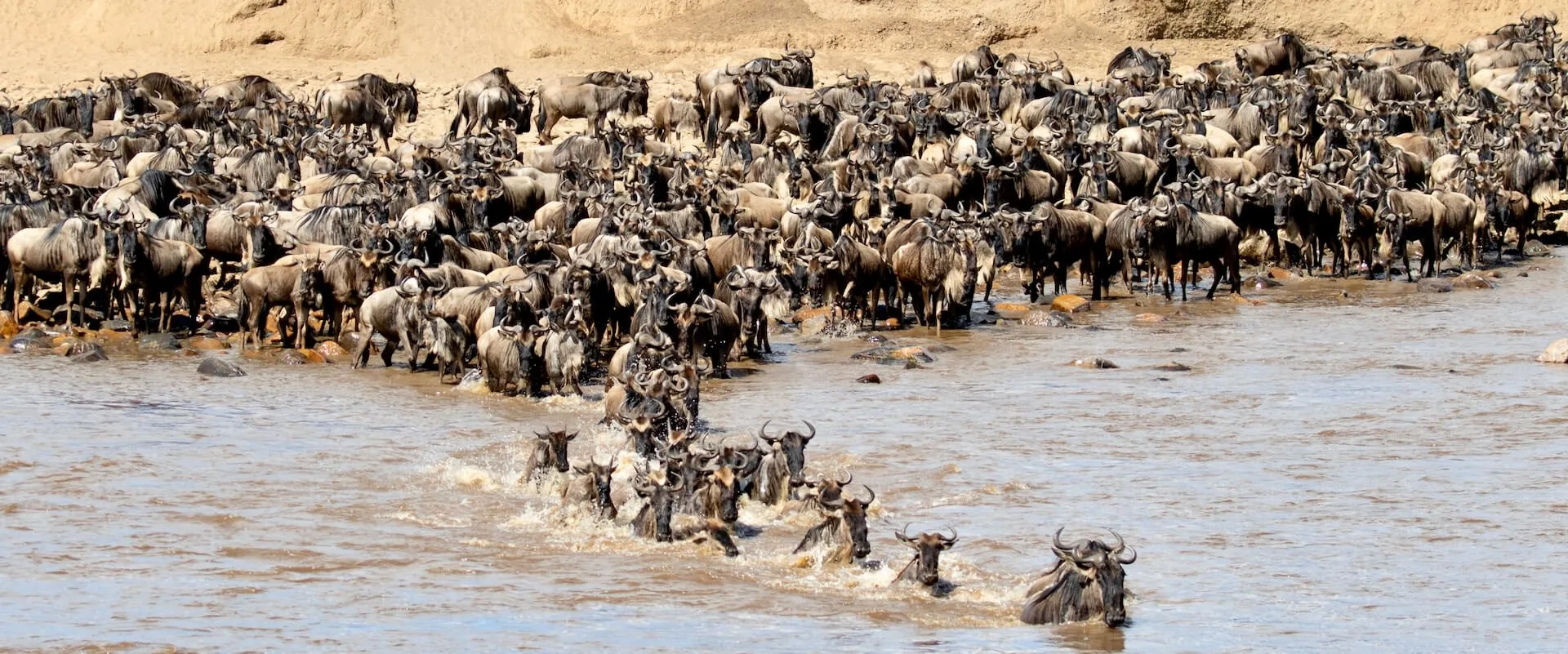
The Great Migration in Africa happens all year because the herds continuously circulate through the Serengeti–Mara ecosystem in…
Read article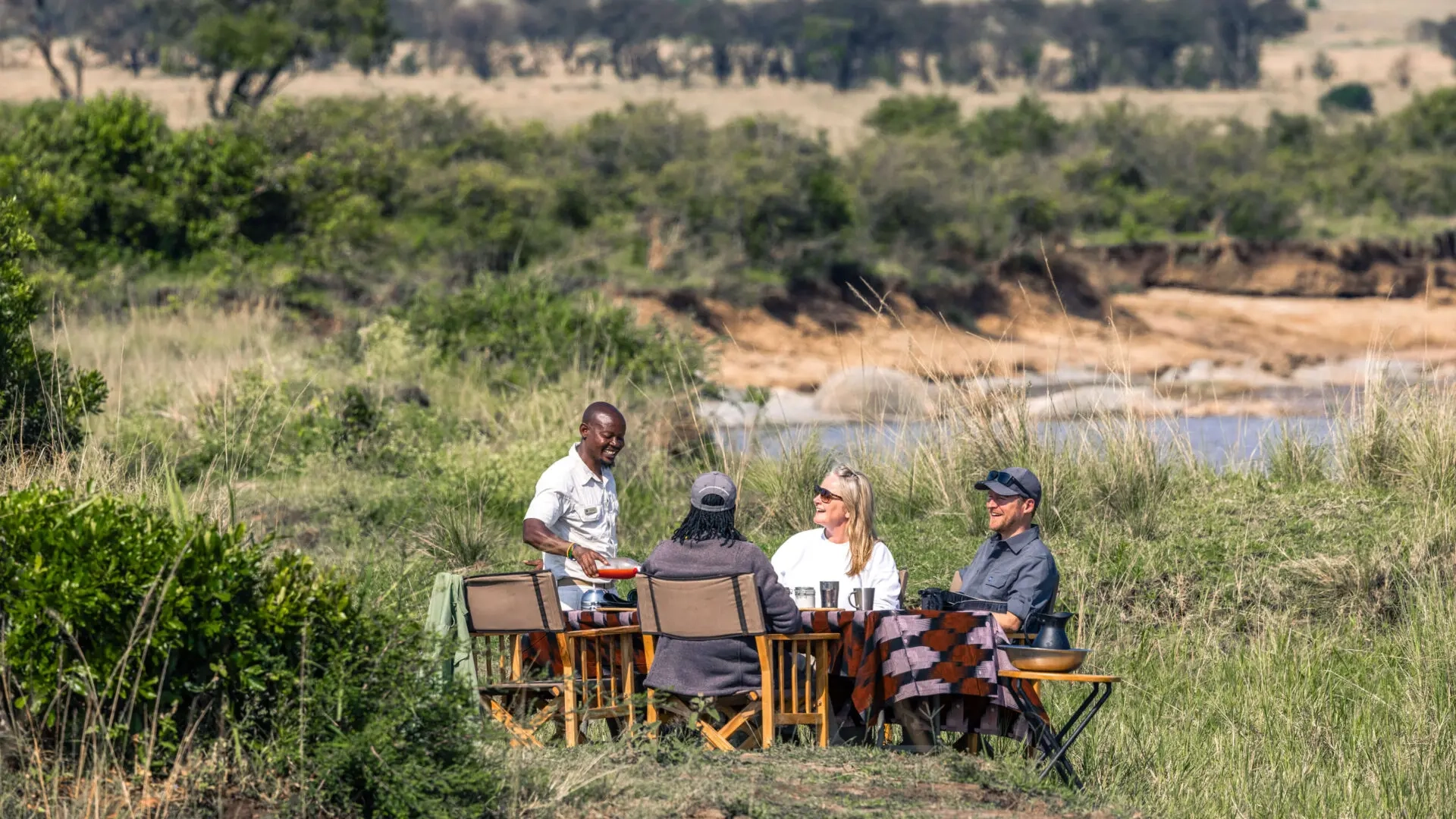
Definitive answer: A picnic lunch on safari is a packed or catered midday meal eaten at an approved…
Read article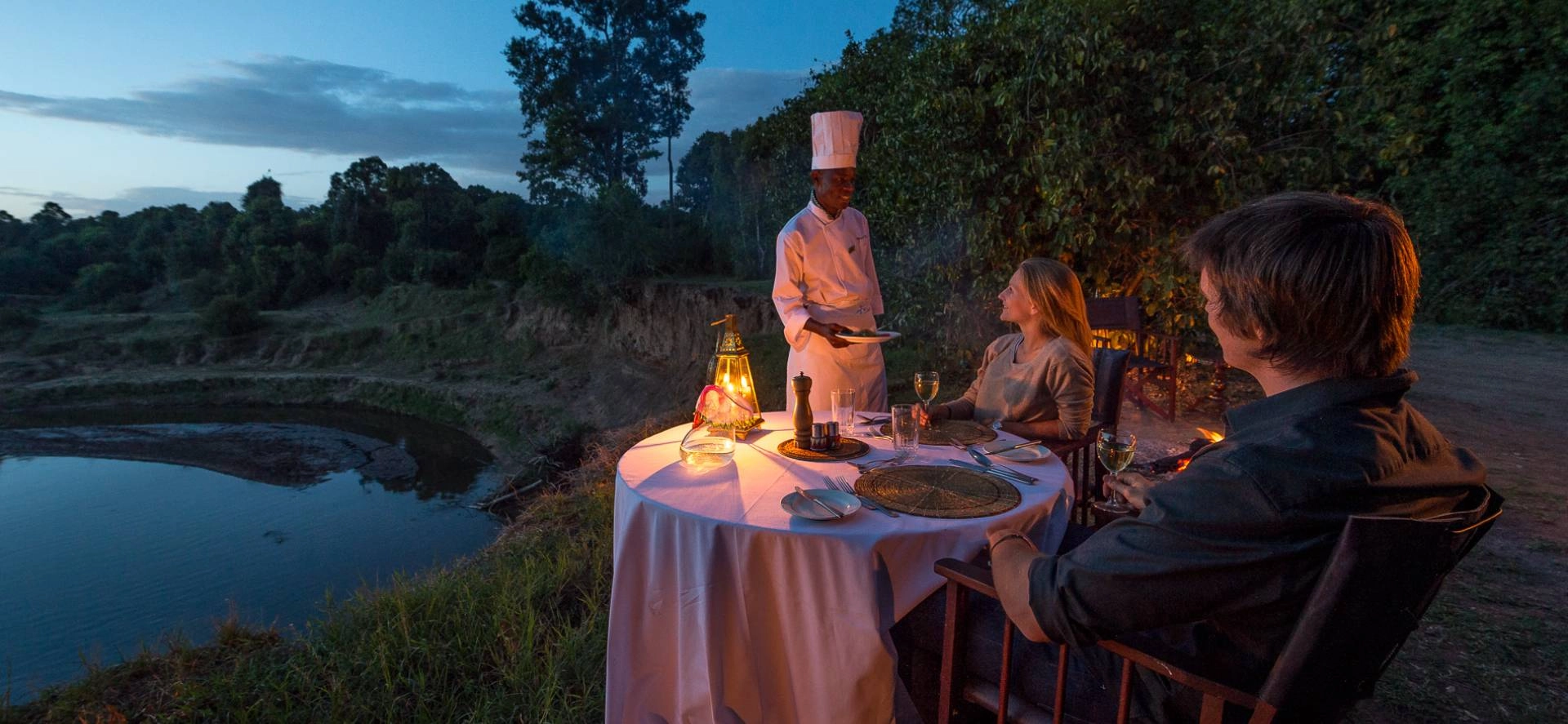
Definitive answer: A bush dinner is an outdoor evening meal arranged in a safe safari setting away from…
Read articleLet us take you closer to the wildlife, people and places that make Africa extraordinary.
Plan Your Safari Today