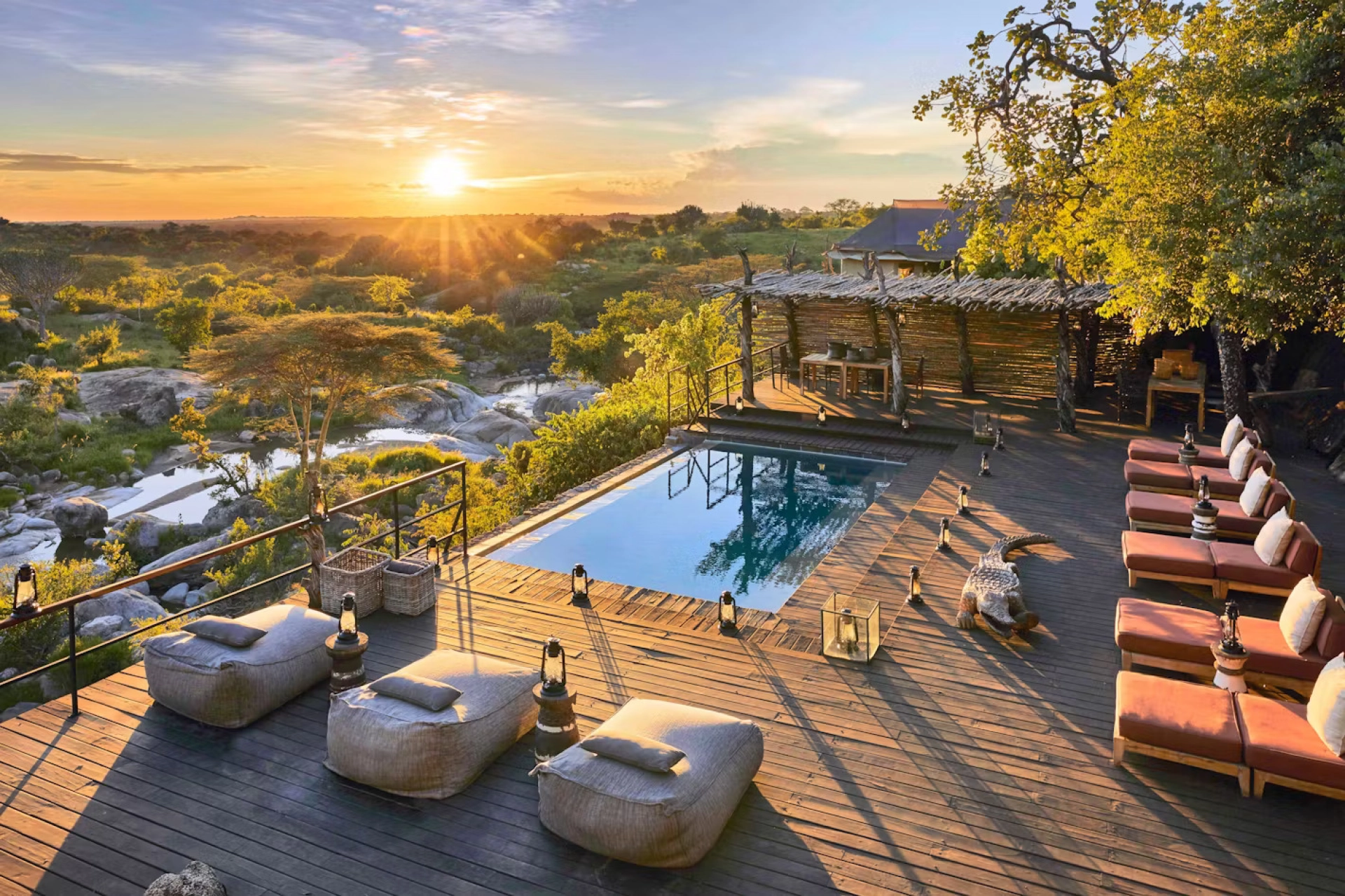
What should I look for when booking a luxury African safari?
When booking a luxury African safari, look beyond the room and compare the quality of guiding, wildlife location,…
Read article

Travel Guide
It is still dark when the wake-up call comes. Outside, winter air has settled over the Little Karoo. Mountains that seemed enormous the previous afternoon are only silhouettes against a pale horizon. Somewhere beyond the lodge,…
It is still dark when the wake-up call comes. Outside, winter air has settled over the Little Karoo. Mountains that seemed enormous the previous afternoon are only silhouettes against a pale horizon. Somewhere beyond the lodge, animals are already moving through a landscape that stretches farther than the eye can see. Coffee helps. So does a warm jacket. A few minutes later you climb into an open safari vehicle and pull a blanket across your knees.
The engine starts. Headlights illuminate the track. Then, gradually, the eastern horizon brightens. This is when a Sanbona safari begins to make sense. The reserve is not spectacular merely because it contains lions, elephants, buffalo, rhinos and other famous African animals. What makes Sanbona Wildlife Reserve special is the combination of wildlife, enormous space, unusual Little Karoo ecology, rugged mountains, conservation history and the feeling that you have travelled far deeper into the wilderness than the relatively short distance from Cape Town would suggest.
Sanbona protects approximately 62,000 hectares of Western Cape wilderness and lies roughly 270 kilometres from Cape Town. The reserve describes itself as a conservation-focused, malaria-free Big Five destination situated within the Little Karoo and surrounded by dramatic Cape Fold landscapes. That makes it one of the most intriguing safari choices for travellers who want to combine Cape Town and an African wildlife safari without flying across South Africa. But convenience is only the beginning.
This distinction matters. When travellers hear “safari near Cape Town,” they sometimes imagine a compact wildlife reserve designed primarily for day visitors. Sanbona is very different. The reserve is enormous. Travelling from the main gate to the lodges can itself take more than an hour. Sanbona advises guests that internal drive times are approximately 1 hour 10 minutes to Tilney Manor, 1 hour 20 minutes to Gondwana Family Lodge and 1 hour 30 minutes to Dwyka Tented Lodge.
Those times immediately reveal something important. This is not a place where all animals are gathered around a short tourist loop. The landscape is genuinely large. Wildlife can be anywhere. That changes the rhythm of safari.
The drive from Cape Town gradually leaves the city’s coastal atmosphere behind. The route passes through mountains and agricultural landscapes before reaching Worcester, Robertson, Ashton and Montagu. Eventually, the road enters the drier Little Karoo. Mountains become more dramatic. Vegetation changes. Distances seem larger. Then a Sanbona sign appears. Even after reaching the main entrance, you are not immediately at the lodge. The reserve continues inward. Sanbona’s Welcome Lounge is about 15 kilometres from the main gate, and the lodge journey continues from there.
This long arrival is not an inconvenience. It is part of the transition. Cape Town gradually disappears. The wilderness takes over.
Physical distance is only one part of remoteness. Sanbona’s scale creates visual distance. Mountains appear on multiple horizons. Roads disappear through valleys. There may be little visible evidence of towns or human settlement. At night, artificial light is minimal. During game drives, you can spend considerable periods without seeing another safari vehicle. That sense of solitude is increasingly rare. In many famous safari destinations, exceptional wildlife sightings can attract numerous vehicles.
At Sanbona, the lower-density private-reserve experience often feels quieter and more deliberate.
Most safari visitors arrive thinking about animals. Then Sanbona’s landscape interrupts those expectations. The reserve sits within the Little Karoo, an environment very different from Kruger’s bushveld or the grassy plains of Serengeti. Open semi-arid valleys meet rugged mountains. Dry riverbeds cut through the landscape. Rock formations catch changing light. Vegetation can look sparse until a guide begins explaining it. Sanbona protects habitats across two biomes, including areas associated with the Succulent Karoo and distinctive quartz fields.
This environmental diversity is one of the reserve’s greatest strengths.
Winter can be particularly atmospheric. Mornings are cold. Sometimes extremely cold. That comes as a surprise to travellers who associate Africa exclusively with heat. Before sunrise, an open vehicle moving through winter air can feel bitterly chilly. Layers matter. A warm hat helps. Gloves can be useful. Then the sun rises. Light hits the mountains. The temperature changes. Animals emerge into open areas. The same cold morning that seemed uncomfortable at 6 a.m. can become beautifully crisp a few hours later.
Winter is therefore not a compromise season. It provides its own distinct safari atmosphere.
Summer creates a different experience. Days can become significantly warmer. Early mornings and late afternoons become particularly valuable for wildlife activity and photography. Plant conditions change according to rainfall. The colours of the landscape shift. Some visitors prefer summer because of longer daylight and warmer evenings. Others love winter because of the clearer, cooler atmosphere. There is no universally perfect month. Sanbona changes with the seasons.
Your first Sanbona game drive usually recalibrates expectations. A ranger explains that this is a large reserve. Nothing is guaranteed. You may encounter wildlife quickly. You may drive for some time before a major sighting develops. This is important. The strongest safari experiences are not theme-park experiences where animals appear according to a schedule. Tracking creates anticipation. Fresh footprints on a road become interesting. An alarm call matters. A group of antelope suddenly staring in one direction can transform an apparently quiet scene.
The guide begins reading the landscape. You begin learning how to do the same.
Modern travellers are used to instant results. Safari resists that. You cannot order a leopard. You cannot schedule a lion for 8:15 a.m. A black rhino does not care whether your international flight leaves tomorrow. Wildlife decides. Sanbona’s scale preserves that uncertainty. The search becomes part of the experience. Eventually, a ranger may slow the vehicle. Tracks cross the road. The vehicle turns. Everyone becomes quiet. And suddenly an animal appears.
Because it was not guaranteed, the moment feels earned.
Sanbona offers the Big Five: lion, leopard, elephant, rhino and buffalo. For Cape Town visitors, this creates an extraordinary logistical opportunity. You can spend one day looking over the Atlantic from Table Mountain and, after a scenic overland transfer, spend the following morning searching for elephants and lions in a vast semi-arid wilderness. No cross-country flight is necessary. No Johannesburg connection is required. That convenience is one reason Sanbona safari packages work so well within a Western Cape itinerary.
A Big Five checklist can become the fastest way to miss what makes Sanbona different.
Yes, seeing a lion is exciting. Yes, rhinos are extraordinary. Yes, elephants command attention. But Sanbona is also about: Cape mountain zebras standing against mountain slopes, oryx moving through dry terrain, small antelope, jackals, birds, reptiles, Karoo plants, geology, rock art, and silence. The more safari experience you gain, the less important checklists become. Behaviour and landscape begin to matter more.
An elephant encounter in the Little Karoo looks different from an elephant encounter in Amboseli, Chobe or Kruger. The animal is familiar. The context is not. Mountains may rise behind it. Vegetation is drier. The enormous open landscape creates a sense of scale. Watching an elephant feed also reveals how much influence these animals exert over habitat. Branches break. Trees are reshaped. Paths appear. Water holes change. Elephants do not merely inhabit ecosystems.
They modify them.
Sanbona’s conservation history includes the introduction of desert-adapted black rhinos in 2020. Seeing one is therefore more than another Big Five tick. Black rhinos have faced severe historical declines across Africa. Their survival depends on expensive security and habitat protection. When a rhino appears at Sanbona, you are seeing an animal whose presence represents conservation planning, translocation, monitoring and long-term commitment. That knowledge changes the sighting.
Lions possess an ability to make a landscape feel immediately wild. A valley that seemed empty suddenly becomes charged with tension once a ranger identifies fresh lion tracks. You scan every bush. Every rock resembles a resting lion. Then the real animal appears. Perhaps it lies motionless. Perhaps it walks along the track. Perhaps it disappears before everyone obtains the perfect photograph. That imperfection is authentic safari.
Leopards can occur within the reserve, but seeing one should never be taken for granted. Their camouflage is extraordinary. Rocky and vegetated landscapes provide endless hiding places. A leopard may be relatively close and still completely invisible. This makes an actual sighting particularly memorable. Experienced safari travellers often value elusive animals more than predictable ones.
Buffalo may seem less glamorous than lions or elephants until you encounter them at close range. They are massive. Dark. Powerful. Older bulls can have heavy horn bosses and an almost prehistoric appearance. In changing light, buffalo can be surprisingly difficult to spot against vegetation. Their presence adds another layer to the Big Five experience.
One of Sanbona’s most interesting animals is the Cape mountain zebra. The reserve records a significant reintroduction project in 2016, bringing animals from De Hoop and Bushmans Kloof. This species belongs specifically to the conservation story of South Africa’s Cape landscapes. For travellers who have already seen thousands of plains zebras in Kenya or Tanzania, Cape mountain zebras provide something more specialised. Look carefully and the differences become apparent. Safari becomes more interesting when you stop thinking of “zebra” as one generic animal.
Oryx look perfectly designed for Karoo scenery. Long straight horns. Bold facial markings. A body built for arid conditions. Seeing them against dry mountains creates a classic semi-desert wildlife image. They also remind travellers that Sanbona’s identity does not depend exclusively on imported expectations of what safari “should” look like. The reserve is strongest when the Little Karoo itself becomes the subject.
Giraffes create one of safari’s most beautiful visual contradictions. They are enormous animals, yet they can disappear remarkably easily among trees. At Sanbona, open landscapes sometimes provide excellent opportunities to see their full height against mountains and sky. For photography, resist the temptation to zoom tightly every time. Allow landscape into the frame. That is what differentiates a Sanbona giraffe photograph from one taken anywhere else.
Sanbona reports more than 200 bird species. Even travellers who claim they are “not bird people” often change their minds on safari. Large raptors are difficult to ignore. So are brightly coloured smaller species. Birds also help guides understand what is happening in the landscape. Alarm calls can reveal predators. Vultures may indicate a carcass. Waterbirds reveal habitat conditions. Safari becomes richer once birds stop being background decoration.
A good Sanbona guide will eventually make you care about something tiny.
A track. A spider. A succulent. A dung beetle. A seed. This is where exceptional guiding separates itself from basic animal spotting. Anyone can become excited about a lion. A talented ranger can make a ten-minute discussion about a plant interesting. That is when travellers begin understanding an ecosystem rather than simply photographing mammals.
The reserve has been undergoing ecological restoration since 2002. Former agricultural lands have been consolidated and restored, with the objective of rebuilding a resilient Little Karoo ecosystem and returning wildlife that historically disappeared from the landscape. This history is visible if you know what to look for. The wilderness appears natural today precisely because years of active management have helped natural processes return.
Once you understand the conservation background, animals become evidence of recovery. A Cape mountain zebra is not simply a zebra. It represents species restoration. A black rhino represents reintroduction and protection. Healthy vegetation reflects land rehabilitation. The silence represents land that has been protected from further development. Safari becomes an encounter with an ecosystem under repair.
Sanbona is now owned by a South African non-profit company, and the reserve explicitly places conservation at the centre of its tourism model. For guests, this means lodge revenue is linked to maintaining the protected landscape. High-end safari accommodation therefore becomes part of the mechanism financing conservation. That connection does not mean guests should stop asking difficult questions about sustainability. But it does give the safari experience a larger purpose.
Long before wildlife tourism, humans inhabited these landscapes. San rock art remains within the reserve and provides a glimpse into an older relationship between people and the environment. Sanbona lists rock-art interpretation among its wilderness experiences. This makes the landscape feel historically layered. The mountains are not merely dramatic scenery. They contain human memory.
Leaving the vehicle changes everything. Your eye level drops. Distance becomes more meaningful. Footprints become easier to understand. Plants become subjects rather than background. Sanbona offers guided nature walks as part of its broader activity programme. Walking is not primarily about getting closer to dangerous animals. It is about understanding ecology at human scale.
At night, Sanbona becomes another destination entirely. Without Cape Town’s urban light, stars dominate the sky. The Milky Way can become dramatically visible under favourable conditions. Sanbona includes stargazing among its safari experiences. This may not sound as exciting as tracking lions. Then you stand under a genuinely dark African sky and realise how rarely modern travellers experience real darkness.
Morning drives begin around the coolest part of the day. Predators may still be active. Light improves rapidly after sunrise. Afternoon drives begin in warmer conditions before moving into golden-hour light and eventually darkness. Each has advantages. Photographers should participate in both rather than assuming one is superior. One of the benefits of staying multiple nights is experiencing different light and animal activity across several drives.
Safari days develop a natural rhythm. Wake early. Coffee. Morning drive. Breakfast. Rest. Lunch. Perhaps a walk, reading or simply watching the landscape. Afternoon tea. Evening drive. Dinner. Then sleep. At first this seems highly structured. After a few days, it becomes surprisingly relaxing. You stop controlling the schedule. The landscape sets the pace.
Dwyka Tented Lodge is perhaps Sanbona’s most romantic accommodation. It sits within a horseshoe-shaped ravine surrounded by dramatic rock formations. The property is designed particularly well for couples and honeymooners. “Tinted lodge” can create the wrong mental picture. This is not basic camping. The experience is firmly within the luxury safari category. Sanbona describes Dwyka as an eco-friendly tented lodge set in a secluded Karoo ravine.
Gondwana Family Lodge is the obvious choice for families. It accommodates children and provides family-oriented facilities and educational programming. Sanbona’s Eco-Explorers activities help younger guests learn about tracks, plants and conservation. Families should still check age restrictions for shared game drives because very young children may not join standard wildlife drives.
Tilney Manor offers a more traditional atmosphere.
Its Cape Georgian-inspired design gives it a different personality from Dwyka or Gondwana. Travellers looking for a quieter, more classic safari lodge experience may find it particularly appealing. Accommodation should therefore be chosen based on travel style: romantic, family, or intimate classic lodge.
One night is too short for most travellers. You spend too much of the visit arriving and departing. Two nights gives you several drives and a meaningful introduction. Three nights is ideal for many first-time visitors. It reduces pressure. If lions are not found on the first drive, nobody panics. If weather changes, there are additional opportunities. Three nights also allows you to appreciate the lodge rather than treating accommodation merely as somewhere to sleep.
Sanbona is better understood as an overnight safari destination. Its distance from Cape Town and enormous internal reserve travel times make a quick out-and-back approach impractical compared with reserves specifically designed around day visitation. If you have only one day available for a Cape Town safari, another reserve may fit better. If you can devote two or three nights, Sanbona becomes far more rewarding.
This is a common comparison. Aquila Private Game Reserve is closer and offers highly accessible day-safari products. Sanbona is farther away and lends itself to a multi-night wilderness experience. Aquila may suit travellers with limited time. Sanbona suits travellers who want to disappear into the landscape. The difference is not simply which reserve has certain animals. It is the overall style of travel.
Kruger is much larger and has an entirely different ecosystem. It also offers a huge public self-drive network and a much wider range of accommodation. Sanbona is private, more intimate and vastly easier to combine overland with Cape Town. If you have two weeks in South Africa and wildlife is your highest priority, Kruger is extremely difficult to beat. If you have six or seven days centred on Cape Town and want to add an authentic wildlife experience, Sanbona can make far more logistical sense.
This is a closer comparison because both involve guided private-lodge safaris. Greater Kruger generally offers classic Lowveld wildlife habitat and some of Africa’s best predator viewing. Sanbona offers completely different scenery, a malaria-free Western Cape location and a compelling rewilding story. Couples combining safari with Cape Town may value Sanbona’s convenience. Wildlife specialists may choose Greater Kruger for broader safari intensity. Some travellers should simply do both.
Sanbona is a luxury private safari reserve, so it is significantly more expensive than self-driving a public national park. Rates vary by lodge, season, occupancy and package. For example, Sanbona’s published 2026 rates for Dwyka Tented Lodge vary substantially between low, high and peak periods. Instead of focusing only on the nightly room figure, check what is included. Private safari lodge rates commonly combine accommodation, meals and scheduled wildlife activities. That makes direct comparisons with a standard city-hotel nightly price misleading.
For the right traveller, yes. What you are purchasing includes: access to a 62,000-hectare private wilderness, professional guiding, game drives, conservation management, high-quality accommodation, meals, and the experience of being inside a large protected landscape. For budget travellers primarily interested in seeing wildlife at the lowest possible cost, self-drive Kruger National Park is likely better value. Sanbona is about convenience, conservation, exclusivity and wilderness near Cape Town.
The reserve is approximately 270 kilometres from Cape Town. The most common driving route passes through: Paarl, Worcester, Robertson, Ashton, Montagu, and then Route 62 toward Sanbona. The road journey can itself become part of a Western Cape itinerary. Stop for coffee. Visit a farm stall. Spend a night in the Winelands or Route 62 before continuing. Do not always think of transfer days as wasted days.
Guests using the reserve transfer system should pay close attention to arrival times. Sanbona currently lists scheduled departures from its Welcome Lounge at 12:30 and 16:00 and notes that guests taking the later transfer will miss the afternoon nature drive. This is an important planning detail. Arriving late can effectively cost you one safari activity.
Guests with suitable vehicles may drive directly toward the lodges, although the reserve specifically warns that roads are unsuitable for very low vehicles and some small cars.
For travellers renting a vehicle, confirm its suitability rather than assuming every compact city car is appropriate.
Do not overcomplicate safari clothing. Comfort matters more than looking like a documentary presenter. Bring: neutral comfortable clothing, good walking shoes, sun protection, a hat, and warm layers. In winter, bring significantly warmer clothing than you think you will need. Open safari vehicles amplify cold. Gloves and a beanie can make an early-morning drive much more comfortable.
Sanbona is particularly rewarding for environmental wildlife photography. Do not photograph only animals. Photograph mountains. Tracks. Roads. Light. Vegetation. Rangers. Rock formations. Storm clouds. Stars. The reserve’s distinctive identity lies in the relationship between wildlife and landscape. A 600 mm close-up of a lion could have been taken almost anywhere. A lion framed against the Little Karoo tells a Sanbona story.
A flexible telephoto zoom works extremely well. Something in the 100–400 mm or similar range gives enough reach while retaining flexibility. A second wider lens is valuable for landscapes and animals close to the vehicle. Phones are increasingly capable for lodge and landscape photographs, but distant wildlife still benefits from dedicated telephoto equipment.
Bring binoculars even if you carry a long camera lens. Binoculars allow you to scan ridges and open plains quickly. They are also invaluable for birds. Couples often regret bringing only one pair.
Sanbona can be an excellent family safari because it is malaria-free and has a lodge specifically designed around families. Children can learn about tracks and ecology through dedicated activities. However, families must confirm age rules for shared drives. The official family information notes that children under four cannot participate in regular game drives. For parents with very young children, lodge planning therefore matters considerably.
Sanbona also works extremely well for honeymooners. A strong itinerary might combine: Cape Town Franschhoek and Dwyka Tented Lodge at Sanbona. That gives couples: city, coast, wine country, mountains, luxury, and safari within one relatively compact trip.
A balanced eight-night holiday could look like: four nights Cape Town, two nights Cape Winelands, three nights Sanbona. This creates variety without domestic flights. Another option is Cape Town followed directly by Sanbona and then Route 62 or the Garden Route.
Cape Town is busy. Restaurants. Traffic. Attractions. Beaches. Museums. Tours. Sanbona provides the opposite. The schedule becomes simpler. Wake up. Look for wildlife. Eat. Rest. Look for wildlife again. That contrast is extremely satisfying.
The reverse sequence works too. Beginning with safari creates immediate excitement after arrival in South Africa. Cape Town then provides more flexibility at the end of the holiday. This can be especially convenient before a long international flight because you finish closer to a major airport.
The Cape Winelands pair naturally with Sanbona because of the driving route east from Cape Town.
A journey through Stellenbosch, Franschhoek or Robertson can break up the transition between urban Cape Town and wilderness. For food and wine travellers, this creates one of South Africa’s most sophisticated safari combinations.
A longer trip can continue east from Sanbona toward the Garden Route. This creates a diverse itinerary combining: Cape Town, Winelands, Little Karoo safari, coastal landscapes, forests, and beaches. It is particularly attractive for travellers with 10–14 days.
Sanbona promotes itself as a malaria-free safari destination, an important advantage for some travellers. This can influence decisions for: families, pregnant travellers, older visitors, or anyone advised to avoid malaria-risk regions. Individual health advice should still come from an appropriate medical professional.
Yes. The reserve’s private management and restoration history do not make wildlife encounters somehow less legitimate. Most famous African safari landscapes are actively managed in some form. National parks have boundaries. Water points are managed. Rhinos receive protection. Road networks are maintained. Fires are monitored. The meaningful question is whether animals live in a substantial natural ecosystem and behave as wild animals. At Sanbona, the landscape is large enough for wildlife searching to remain genuinely unpredictable.
This point deserves emphasis. A large reserve does not exist to guarantee your checklist. Clouds may obscure a sunset. Lions may remain in a distant valley. A leopard may never appear. A rhino may disappear behind vegetation. That does not mean the safari failed. Successful safari travel means becoming interested in whatever the ecosystem offers that day.
A ranger can transform what appears to be an empty landscape. They know where animals were recently seen. They recognise footprints. They understand territorial behaviour. They hear alarm calls. They know which vegetation attracts particular herbivores. They also interpret geology, plants and conservation history. This accumulated knowledge is one of the most valuable parts of a private safari.
Sanbona has spent decades restoring former farmland and reintroducing wildlife. In 2020 ownership was transferred into a South African non-profit structure designed to secure the landscape’s long-term conservation future. This story gives the safari depth. You are not simply using the wilderness. Your stay helps finance it.
Dinner ends. The day feels finished. Then you walk outside. The air is colder. The lodge lights fade behind you. Stars fill the sky. Perhaps a jackal calls. Maybe another sound comes from farther away. This is when the scale of the reserve becomes clearest. The wilderness exists even when tourists are sleeping.
Luxury safari advertising usually focuses on rooms, pools and food. Those things matter. But Sanbona offers another form of luxury: space. And another: silence. No city traffic. No aircraft every few minutes. No crowded beach. No queue. Simply landscape. For travellers living in large cities, this can become more valuable than elaborate accommodation.
After several days, the answer becomes clearer. It is not one thing. It is the scale. The wildlife. The mountains. The unusual Karoo vegetation. The cold dawns. The empty roads. The black rhino conservation story. The Cape mountain zebras. The San rock art. The stars. The silence. The knowledge that much of this land was once divided into farms and is now being pieced back together ecologically. And perhaps most importantly, Sanbona feels distinct.
It does not attempt to recreate Kruger. It does not attempt to imitate Serengeti. It belongs to the Western Cape.
Yes — particularly when you understand what the reserve actually offers. Do not choose Sanbona simply because you want the closest possible place to photograph a lion after visiting Cape Town. Choose it because you want to spend time in a large conservation landscape. Choose it because you want the Little Karoo to become part of the safari rather than merely the backdrop. Choose it because you value quiet game drives, conservation interpretation, unusual vegetation and the idea of recovering wilderness.
Choose it because a three-hour journey from one of Africa’s greatest cities can deliver you into 62,000 hectares of protected land where wildlife once lost from the landscape has been returned. And give yourself enough time. Stay at least two nights. Three is better. Join every game drive you reasonably can. Take a nature walk. Look at plants. Watch birds. Listen to your ranger. Ask about conservation. Put the camera down occasionally.
Watch sunrise without trying to photograph it. Stand outside after dinner and look upward. Because the real secret of a Sanbona safari at Sanbona Wildlife Reserve is that the Big Five are only part of the reason to go. The larger reward is experiencing a piece of the Little Karoo that has been given back to wilderness.
For travellers planning a wider African journey, Adventure in the Wild Safaris can combine Sanbona and Cape Town with Kruger National Park, Greater Kruger, the Cape Winelands, Victoria Falls, Uganda gorilla trekking, Rwanda gorilla safaris, Kenya wildlife safaris and other African destinations, creating a tailor-made itinerary around your preferred level of accommodation, safari style and available travel time.
Get quick answers to the most common questions. If you still have questions, our safari experts are here to help.
Sanbona lies in the Little Karoo in South Africa’s Western Cape, approximately 270 kilometres from Cape Town.
Allow roughly three to three-and-a-half hours, plus additional time inside the reserve depending on the lodge and transfer system.
Yes. Sanbona offers a Big Five safari.
Yes, Sanbona markets itself as a malaria-free wilderness safari.
Approximately 62,000 hectares.
Two nights minimum; three nights is preferable for a more relaxed experience.
Yes, particularly Gondwana Family Lodge, which offers child-oriented facilities and conservation activities.
Yes. Dwyka Tented Lodge is particularly suited to couples seeking privacy and romance.
Potential sightings include lion, elephant, buffalo, rhino, leopard, giraffe, Cape mountain zebra, antelope, jackals and numerous bird species. Wildlife sightings remain unpredictable.
Sanbona reports more than 200 bird species.
They serve somewhat different purposes. Aquila is particularly practical for short or day-based safari experiences. Sanbona is better suited to travellers seeking several nights in a very large private wilderness.
Neither is objectively better. Kruger is vastly larger and offers extraordinary wildlife diversity and self-drive freedom. Sanbona provides a private, conservation-oriented Western Cape experience that is much easier to combine overland with Cape Town.
Bring genuinely warm clothing, including layers, jacket, hat and potentially gloves. Early-morning open-vehicle drives can be very cold.
Not necessarily for the Cape Town road journey, but Sanbona warns that very low or very small vehicles are unsuitable for driving independently to the lodges inside the reserve.
Our safari experts are here to help you plan your safari. Get personalized advice, the latest information and a free, no-obligation quote.
We typically reply within a few hours.

Share This Article
When booking a luxury African safari, look beyond the room and compare the quality of guiding, wildlife location,…
Read article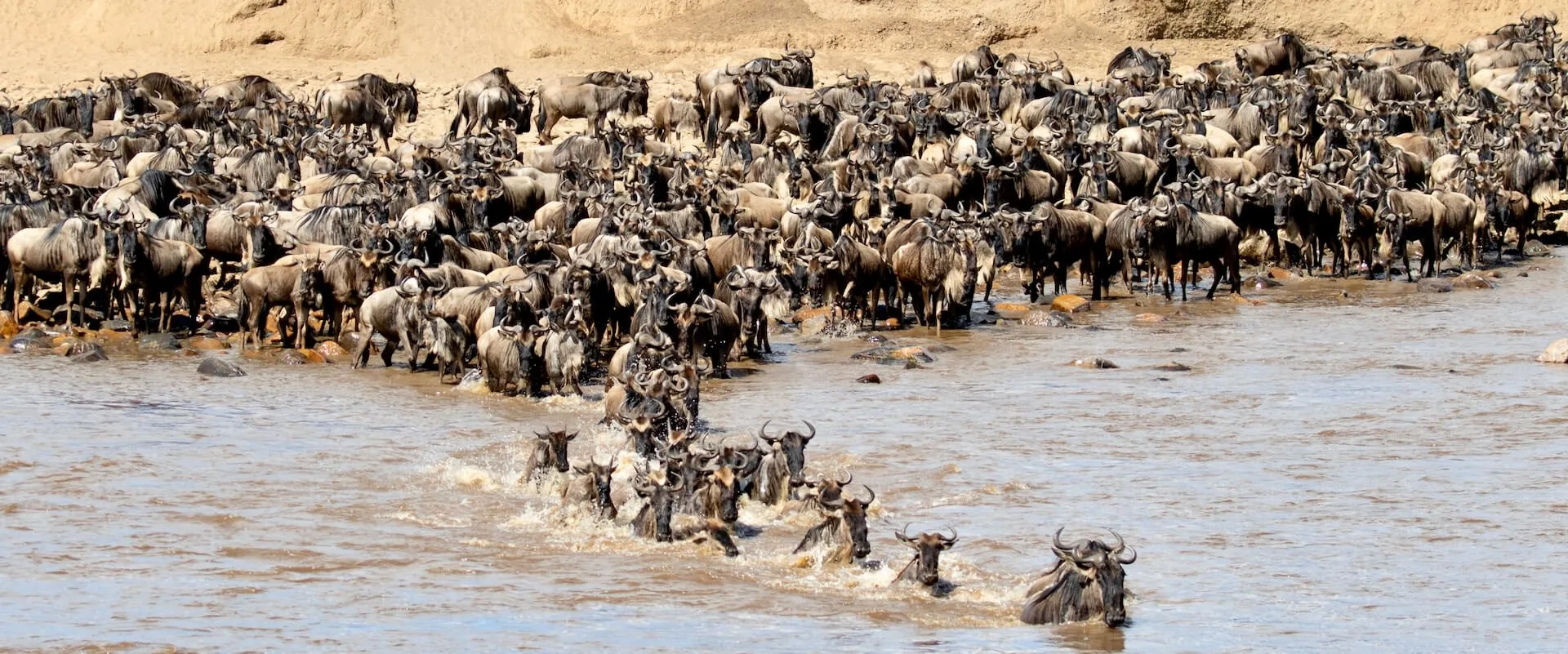
The Great Migration in Africa happens all year because the herds continuously circulate through the Serengeti–Mara ecosystem in…
Read article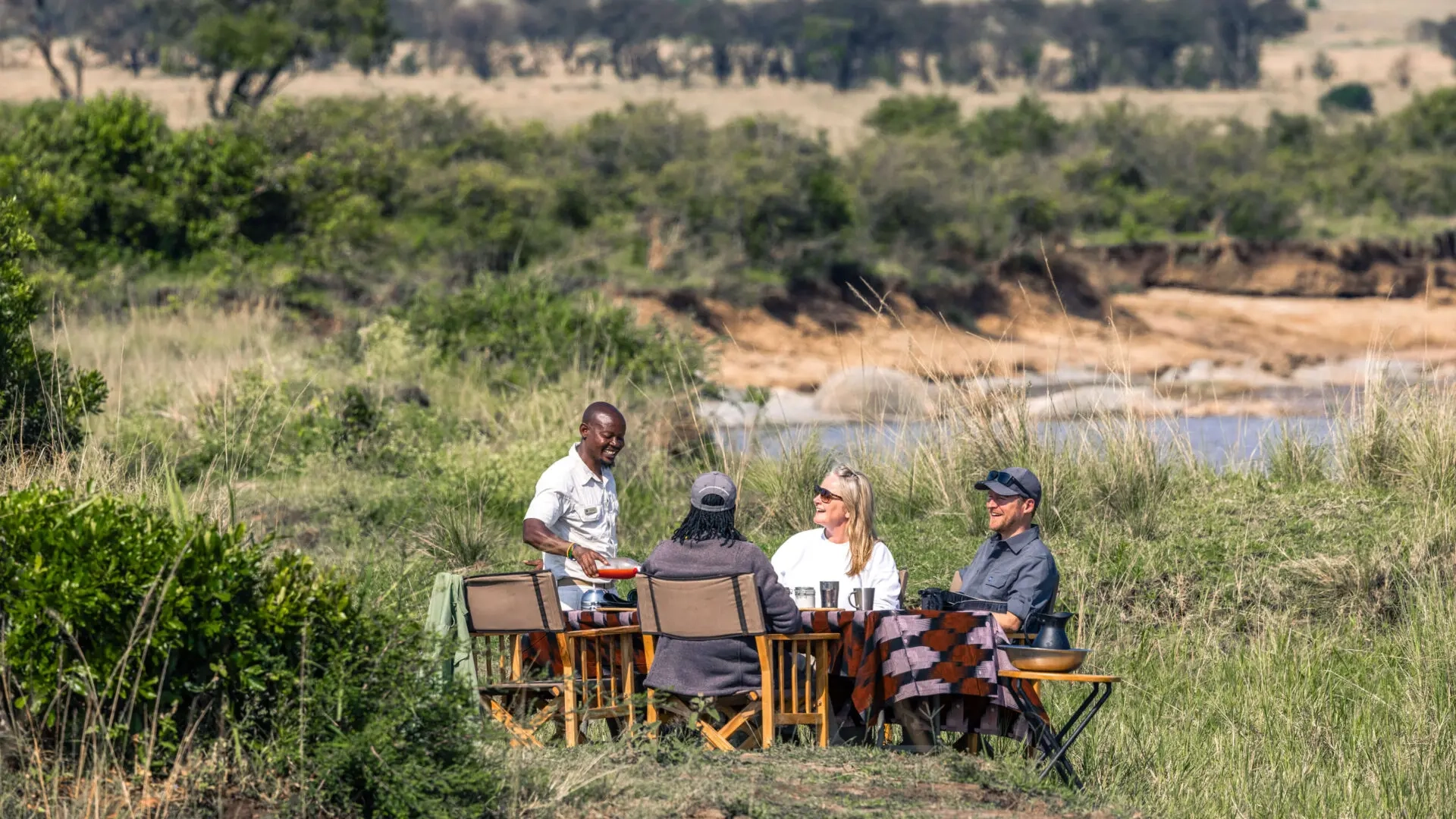
Definitive answer: A picnic lunch on safari is a packed or catered midday meal eaten at an approved…
Read article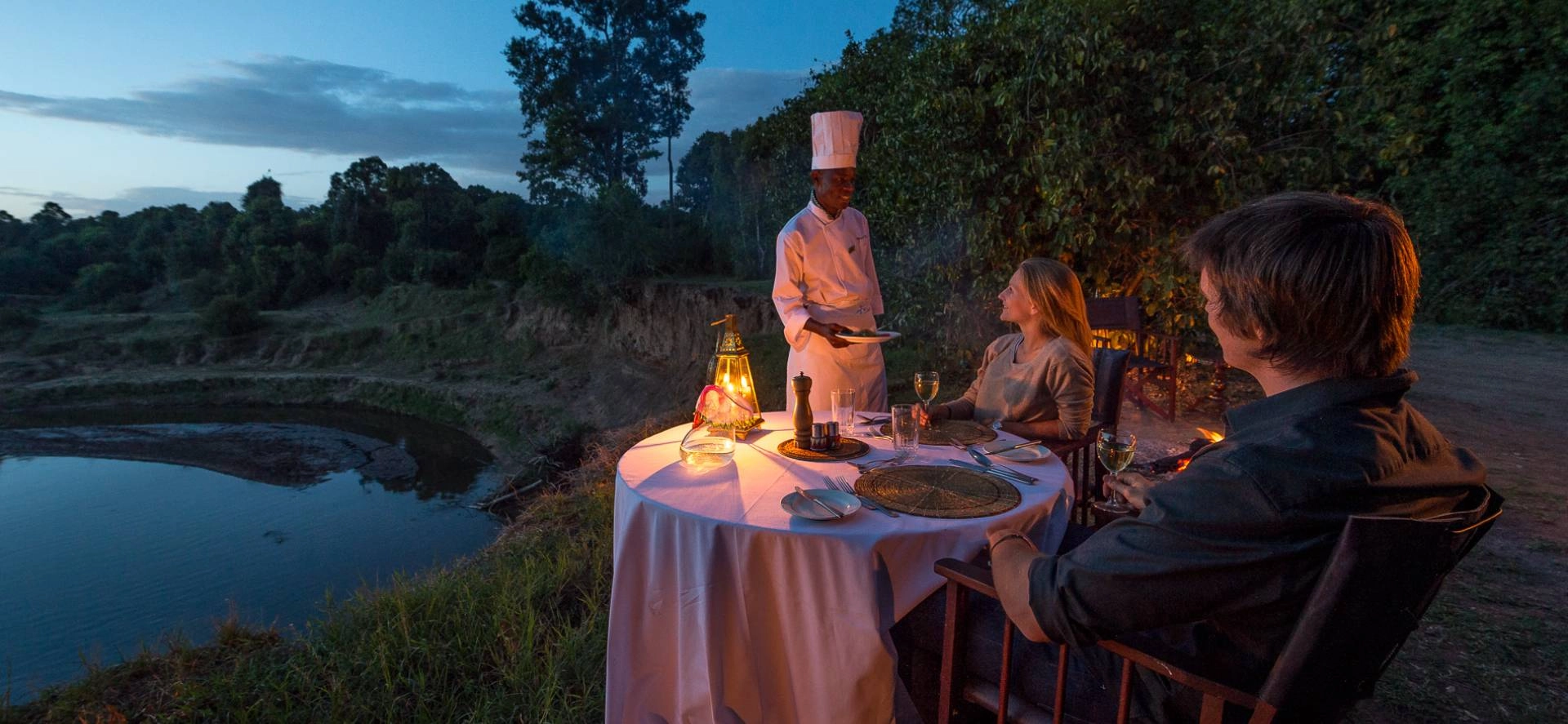
Definitive answer: A bush dinner is an outdoor evening meal arranged in a safe safari setting away from…
Read articleLet us take you closer to the wildlife, people and places that make Africa extraordinary.
Plan Your Safari Today