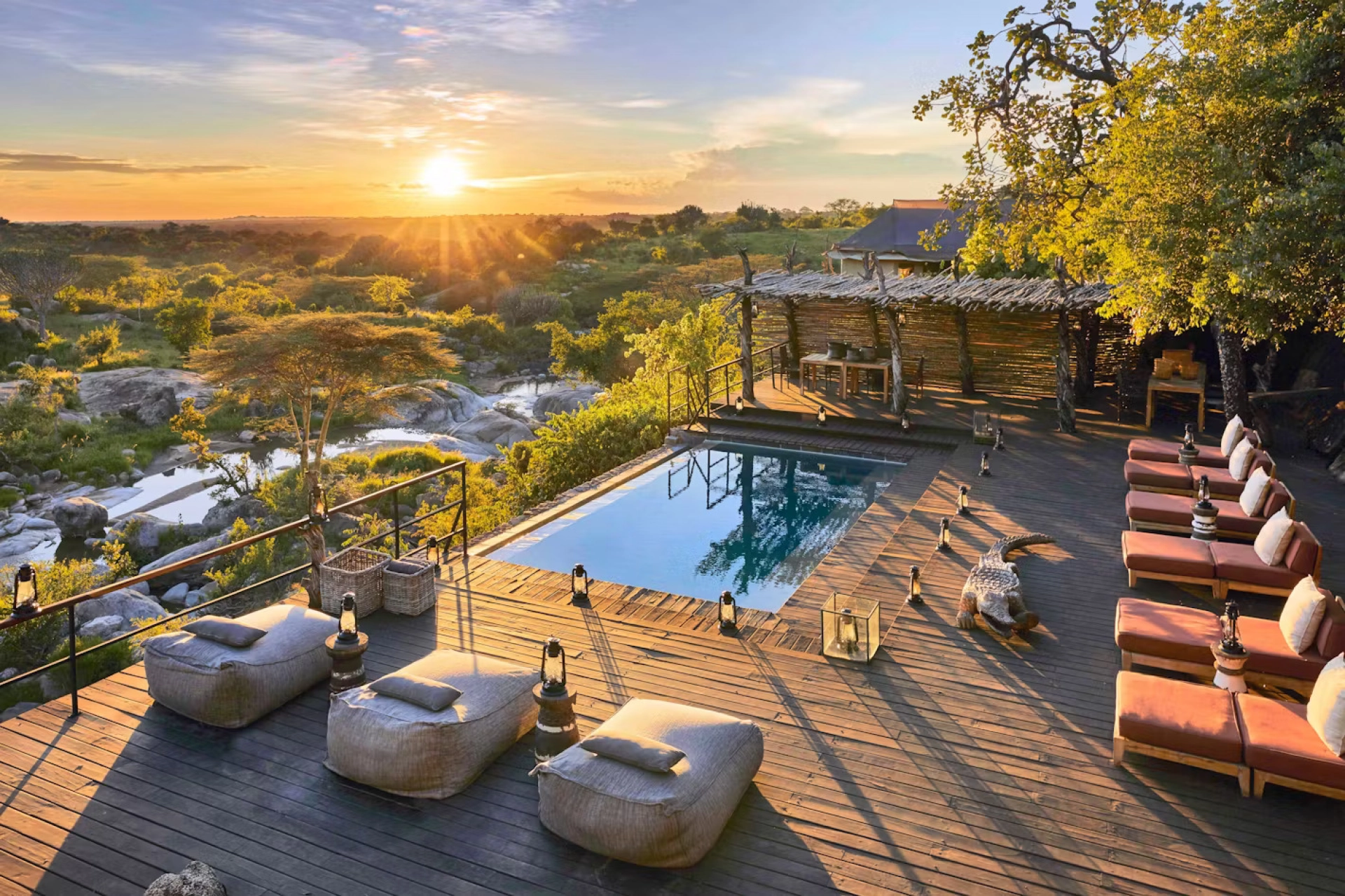
What should I look for when booking a luxury African safari?
When booking a luxury African safari, look beyond the room and compare the quality of guiding, wildlife location,…
Read article

Travel Guide
Content update: The original spreadsheet metadata referred to a social-media/referral promotion valid only until December 2025. That promotion has expired and should not be advertised as a current offer in 2026. This page has therefore been…
Content update: The original spreadsheet metadata referred to a social-media/referral promotion valid only until December 2025. That promotion has expired and should not be advertised as a current offer in 2026. This page has therefore been rebuilt as an evergreen, fact-based guide to reducing safari costs. Any future Adventure in the Wild Safaris promotion should be added only with its current terms and validity dates.
An African safari can be one of the most rewarding journeys a traveller ever makes, but it can also be one of the easiest holidays to overspend on. The reason is not simply that safari lodges are expensive.
A safari combines many separate costs that ordinary holidays do not. A specialised vehicle may travel hundreds or thousands of kilometres. A professional driver-guide remains with guests for several days. Conservation fees are paid to enter wildlife areas. Accommodation is frequently located in remote environments where food, fuel, staff and equipment must be transported long distances. Some destinations require light-aircraft transfers. Gorilla and chimpanzee safaris add specialist permits. Private conservancies can have additional access fees. International flights sit on top of the land arrangement.
Once all of these costs are combined, a seemingly small planning decision can move the total price by hundreds or even thousands of dollars. The encouraging part is that many safari costs can be reduced without reducing the quality of the wildlife experience. The smartest way to save on African safaris is not to search blindly for the cheapest operator. It is to understand what actually drives the price and then reduce the expenses that matter least to you.
A traveller who cares primarily about wildlife might happily stay in a comfortable mid-range lodge instead of a luxury suite. A honeymoon couple might retain two spectacular luxury nights but use mid-range accommodation elsewhere. A solo traveller can join a small group and dramatically reduce vehicle costs. A family can travel privately but choose a more efficient route. A flexible couple can move the trip from peak season into a shoulder period. Someone planning a Kenya and Tanzania safari may discover that adding another border crossing creates more cost than value.
These decisions are far more powerful than chasing a temporary discount code. Current Kenya Wildlife Service guidance itself illustrates the wide variation in safari costs: KWS notes that safari pricing changes according to itinerary length and travel style, with conservation fees, accommodation, meals and game drives among the important components. The central principle of this guide is therefore straightforward: Do not make the safari cheaper by removing the experience you travelled to Africa for. Make it cheaper by removing inefficiency.
Before trying to reduce the price, understand what you are buying. A conventional city holiday may involve an airport transfer, hotel room and occasional excursion. Public transport, restaurants and attractions operate for thousands of visitors every day. Safari infrastructure works differently.
A lodge in a remote part of Botswana or Tanzania may need to generate electricity, pump or transport water, manage waste, maintain staff accommodation and bring supplies over difficult roads or by aircraft. A safari vehicle operates in harsh conditions involving dust, mud, corrugations and rough tracks. Fuel costs rise with distance. Park and conservation fees contribute to protected-area management. Guides require specialised training and local knowledge.
This means that a genuine African safari package has a relatively high operating floor. When a quotation falls dramatically below comparable offers, ask what has been removed. Perhaps park fees are excluded. Perhaps accommodation is far outside the wildlife area. Perhaps the vehicle is heavily shared. Perhaps activities have been omitted. Perhaps the itinerary uses very long transfer days. Cheap and good value are not the same thing.
Travellers often begin cost cutting by asking for cheaper lodges. Sometimes that works. But itinerary design can have an even greater impact. Consider a safari containing five parks in seven nights. Every move consumes fuel. Every destination may require another set of park fees. The vehicle covers more kilometres. Travellers lose time checking in and out.
If one of those parks adds little that the others do not already provide, removing it may reduce cost while improving the safari. This is one of the rare travel situations where buying less can genuinely deliver more. A three-night stay in one excellent wildlife area can outperform one night each in three different parks.
The modern urge to “see everything” makes safaris expensive. A Kenya itinerary that attempts Nairobi, Amboseli, Lake Naivasha, Lake Nakuru, Samburu and the Masai Mara in eight days will involve substantial movement. A more focused itinerary might choose three destinations that offer strong ecological contrast. The traveller spends less time on transfer roads. Fuel consumption decreases. There may be fewer one-night accommodation stops. Most importantly, actual wildlife-viewing time increases. This concept applies across Africa.
In Uganda, it may be better to concentrate on Kibale, Queen Elizabeth and Bwindi than to add Murchison Falls to a very short itinerary simply because it is famous. In Tanzania, a focused northern circuit can avoid unnecessary extensions. In Botswana, staying longer in two productive ecosystems can be more sensible than adding expensive flights simply to collect another camp.
Date flexibility is one of the most powerful safari-saving tools. Safari pricing frequently changes according to season. Peak periods correspond with high demand, favourable weather, famous wildlife events or international holiday calendars. Shoulder seasons sit between the highest and lowest demand periods. They can provide excellent wildlife with substantially better accommodation value. The precise months differ by destination, so there is no universal “cheap African safari month.” The principle, however, is consistent. If you are flexible, ask your operator:
“Which three- or four-week period gives me the best balance between wildlife conditions and lower rates?” That question is far more useful than simply asking for the cheapest month.
The Great Wildebeest Migration is one of Africa’s most famous wildlife spectacles. Peak migration periods in the Serengeti and Masai Mara can generate enormous demand. If witnessing this phenomenon is your lifelong dream, the premium may be justified. But many travellers say they want “a safari with lions, elephants, giraffes and beautiful landscapes” and then accidentally book the most expensive migration period because they have heard it is the “best time.”
Those goals are different. Resident wildlife remains in the ecosystem outside peak crossing periods. Lions do not disappear. Leopards remain. Elephants remain. Giraffes remain. For a traveller whose priority is general wildlife rather than a specific migration stage, moving the trip can produce significant savings.
The phrase green season safari deserves more attention. After rain, many African landscapes become dramatically beautiful. Dust disappears. Vegetation becomes vivid. Cloud formations create strong photography. Bird activity can increase.
Young animals may be present. Visitor numbers can decrease. Accommodation rates may soften. The disadvantages are real: some roads can become difficult, vegetation can hide animals, and rainfall introduces uncertainty. But “rainy season” does not automatically mean “bad safari.” For travellers who understand the trade-offs, greener periods can provide some of the best-value African wildlife experiences.
Festive-season travel can command high premiums. Families around the world have the same holiday window. Lodges know demand is strong. Flights also become expensive. If your schedule allows, moving the safari even a short distance away from major holiday dates can improve availability and price. The same principle can apply around Easter and other high-demand periods.
Safari vehicle economics strongly reward sharing. Imagine a vehicle, guide and fuel cost spread across one traveller. Now divide similar operating costs among four travellers. The per-person difference can be substantial. This is why group African safaris often offer excellent value. Families and groups of friends have a natural advantage. Couples already share many private-safari costs between two people. Solo travellers face the greatest challenge because single-room supplements may be added on top of private vehicle costs.
For solo travellers, joining a scheduled departure can be one of the largest available savings.
Suppose a temporary promotion reduces a safari by 5%. That sounds attractive. But moving from a private solo departure to a well-designed shared safari might reduce the land cost by much more because vehicle expenses are distributed. Likewise, two couples travelling together can often obtain better per-person economics than the same couples booking separately. This is why travellers should think structurally rather than promotionally. The biggest savings often come from how the safari operates, not a coupon code.
Some travellers reject group travel because they imagine sharing every part of the journey. That is not normally necessary. Guests can have private rooms while sharing the safari vehicle and guide. This provides a useful compromise. You retain personal space at night while reducing one of the safari’s largest operating costs during the day. For solo travellers, this can be particularly attractive.
Group safari does not necessarily mean joining strangers. A family or group of friends can create its own private group. Once several people share the vehicle, the per-person cost of private travel can become surprisingly competitive. You then retain control over departure times, photography stops and the general pace. For four or more travellers, always request a private quotation before assuming a scheduled group tour will be cheaper.
Accommodation is one of the easiest places to overspend. Africa contains extraordinary luxury lodges with private plunge pools, elaborate cuisine, huge suites and exceptional service. For travellers who value these things, they can be worth every dollar. But if your primary goal is wildlife, mid-range safari accommodation can deliver most of what actually matters: a comfortable bed, private bathroom, hot shower, good meals and practical access to wildlife. The lion outside the lodge does not know which room category you booked. The elephant at the waterhole is not more impressive because your bathroom has a freestanding bathtub. Spend deliberately.
Cost cutting should not be uniform. Some destinations reward location more than others. If a lodge far outside the park requires a lengthy morning transfer, choosing it may reduce the room rate but also reduce wildlife time. In another destination, a property immediately outside the gate may be perfectly practical. A skilled safari planner can identify where accommodation upgrades matter and where they do not. This leads to one of the best budget safari strategies: use mixed accommodation categories. Stay budget where location differences are small. Use mid-range where comfort is valuable.
Upgrade only the nights where the property itself contributes meaningfully to the experience.
Safari accommodation does not need to remain in one category for the entire journey. A honeymoon couple might choose a simple but clean lodge on an arrival night, comfortable mid-range accommodation for most of the circuit, and a spectacular luxury camp for the final two nights. The emotional high point remains luxurious. The overall trip costs considerably less than staying high-end every night. This approach works especially well on longer safaris.
Staying outside a park can save money, but location needs to be evaluated precisely. “Outside the park” might mean five minutes from the gate. Or it might mean an hour. Those are completely different safari experiences. If the saving is $40 per person but the lodge adds two hours of driving each day, the lower price may be poor value. Ask for actual approximate transfer time to the gate or principal game-viewing area.
Camping can reduce accommodation costs significantly on some African safari routes. Botswana, Namibia, Kenya and Tanzania all offer camping possibilities, while overland safaris across southern Africa frequently use campsites. Camping also creates an immersive wilderness atmosphere. But do not assume it will reduce the total trip price by the same percentage as the room cost.
Park fees, vehicles, fuel, guides and activities remain. In destinations where fixed costs dominate, the overall reduction may be smaller than expected.
Transport is another major cost centre.
Light-aircraft safaris are fast and convenient but expensive. Road safaris usually cost less, especially when several travellers share a vehicle. The correct strategy is not “always drive.” It is drive when the journey makes sense. A scenic or reasonably timed road transfer can add value. A ten-hour transfer that duplicates scenery and leaves everyone exhausted may not. Sometimes paying for one strategic flight allows you to eliminate an extra hotel night or preserve a full safari day. That can make the apparently expensive option better value.
Backtracking wastes fuel and time. A well-designed itinerary should flow geographically whenever possible. For example, a Kenyan safari ending near the coast should not necessarily return to Nairobi before heading back toward Mombasa. A Uganda-Rwanda itinerary may enter through one airport and depart from another when flights and border arrangements make sense. A route that starts in Entebbe and ends in Kigali can sometimes eliminate an entire day of return driving after gorilla trekking in Bwindi. This is an excellent example of saving both time and operating cost through intelligent geography.
An “open-jaw” ticket means arriving through one airport and departing from another. For multi-country East African safaris, this can be extremely useful. A traveller might arrive in Entebbe for Uganda and depart from Kigali after Rwanda. Another might arrive in Nairobi and depart from a coastal airport or regional hub, depending on flight availability. Airfare must always be compared carefully because open-jaw tickets are not automatically cheaper. But even when the ticket costs slightly more, eliminating a long return transfer can make the overall holiday better value.
The opposite mistake also occurs. Some luxury itineraries automatically add flights between every destination. This is convenient but can dramatically increase the total. If two destinations are reasonably connected by road and the journey contributes to the experience, driving may be perfectly sensible. Again, there is no universal rule. Safari planning is about placing money where it buys the most useful improvement.
Counterintuitively, an extra night can occasionally improve value. Imagine two camps connected by an expensive flight. Adding a third destination requiring another flight may increase cost substantially. Instead, spend the additional night in an existing area. You receive another full game drive, avoid another transfer and reduce the average logistical cost per safari day. This is another reason slow travel often wins.
Protected-area fees are an essential part of safari economics. They contribute to conservation management and cannot simply be negotiated away by a tour operator. Current Kenya Wildlife Service information shows formal conservation-fee structures across its protected areas, with rates varying according to park and visitor category. Kenya’s revised conservation-fee regulations took effect on October 1, 2025. For travellers on package tours, KWS states that park entry fees are normally included in the operator’s package price. This is important when comparing quotations. An operator who excludes park fees may appear dramatically cheaper until those charges are added later.
A $3,000 safari and a $3,600 safari may not be comparable products. The first might exclude park fees, airport transfers and activities. The second might include everything except personal expenses. One may use shared transport. The other may be private. One may use accommodation far from the reserve. The other may be inside. One may include domestic flights. The other may not. Create an inclusion comparison before making a decision. The lowest number is meaningless until you know what it buys.
Comparisons become particularly misleading when one company quotes budget accommodation and another quotes mid-range. If you are comparing operators, ask them to quote broadly equivalent accommodation standards and the same itinerary. Then compare vehicle, inclusions, guide arrangements, cancellation terms and overall responsiveness. This creates a much more useful benchmark.
Safari quotations can use different pricing structures. Some activities are charged per person. Vehicle services may effectively operate per vehicle. Accommodation is often per person sharing or per room. Single supplements complicate the calculation. Make sure you understand the basis of the quotation. This is particularly important for families and groups.
Many parks, lodges and activities distinguish between adults and children, though definitions and age bands vary. Families should provide children’s exact ages when requesting a quote. Do not simply say “two adults and two children.” A 15-year-old and a 5-year-old may be priced very differently depending on the supplier. Room configuration also matters. Two separate rooms may cost substantially more than a family unit. Planning early gives operators more chance to secure the limited family rooms available.
Families are often tied to school calendars, but those with flexibility can benefit substantially from travelling outside the busiest holiday weeks. Accommodation availability improves. Flights may cost less. Family rooms are easier to secure. Safari vehicles and guides may have more availability.
Even shifting dates by a week can occasionally help.
Solo safari pricing can be painful because both accommodation and transport work against the individual traveller. A single supplement may apply to the room. Then the private vehicle is not shared with anyone. Joining a small-group safari solves much of the vehicle problem. If the operator can match the traveller with an existing departure, the saving can be substantial. This is often far more powerful than reducing accommodation quality.
Some group operators may offer room or tent sharing arrangements for solo travellers. This can reduce supplements. However, nobody should feel pressured to sacrifice privacy simply to save money. Ask for both prices. Sometimes the single supplement is modest enough that a private room remains worthwhile.
Gorilla trekking has a substantial fixed permit component. If seeing mountain gorillas is the reason you are travelling, trying to make the trip cheap by removing the permit defeats the purpose. Instead, reduce costs around it. Use budget or mid-range accommodation. Join a shared departure. Choose efficient routing. Avoid unnecessary internal flights. Combine the gorilla trek with nearby destinations rather than repeatedly crossing the country. In Uganda, Bwindi Impenetrable National Park can combine naturally with Queen Elizabeth National Park, Lake Bunyonyi or Mgahinga depending on the itinerary.
For travellers interested in primates and conventional wildlife, Uganda can offer an unusually broad range of experiences within one trip. A single itinerary can include mountain gorilla trekking, chimpanzee trekking, savannah game drives, boat safaris, birding and cultural experiences. This means travellers do not necessarily need multiple countries to create variety. Reducing border crossings and regional flights can lower overall costs.
A well-designed Uganda circuit can therefore provide excellent value for travellers whose priorities extend beyond the Big Five.
Rwanda can be relatively expensive in some safari categories, particularly around premium gorilla experiences. However, the country’s compact geography reduces transfer times. That matters. A shorter itinerary can still contain substantial experiences. Travellers combining Rwanda with Uganda can also design one-way routes that avoid backtracking. The best value may therefore come not from looking at the nightly rate alone but from examining how many travel days the geography saves.
Kenya offers so many safari areas that travellers frequently overspend through over-selection. You do not need every famous park. For a first safari, the Masai Mara may provide the predator-rich experience you want. Add Lake Nakuru if rhinos and Rift Valley scenery matter. Add Amboseli if elephants and the Kilimanjaro landscape are priorities. Choose Samburu if northern species and a more unusual ecosystem appeal. Choose Tsavo if combining safari with the Kenya Coast. Every addition should have a reason.
Northern Tanzania contains several exceptional parks within a broadly logical safari circuit. The temptation is to add every possible destination. But each park requires time. If the trip is short, focus on the ecosystems most relevant to your season and interests. A carefully paced Serengeti safari often delivers better value than repeatedly moving camps simply to say you visited more places.
Botswana is often perceived as an exclusively luxury destination. Its low-volume tourism model and remote camps can indeed produce high prices. But alternatives exist. Mobile camping safaris in Botswana can provide extraordinary wildlife access at a lower accommodation cost than top-end permanent camps. Khwai and other areas may offer different pricing structures from premium private concessions. Season also matters substantially. Travellers willing to experience greener conditions can sometimes obtain better value than those travelling during the most expensive dry-season months.
South Africa provides one of the broadest ranges of safari price points. Kruger and surrounding areas offer everything from self-drive and rest-camp options to extremely luxurious private reserves. This makes South Africa particularly useful for travellers who want to control spending. A trip can combine self-drive sections with a shorter stay in a private reserve, preserving a high-quality guided wildlife component without paying private-lodge rates for the entire journey.
Namibia’s road network and tourism infrastructure make it particularly attractive for confident independent travellers. Self-driving can reduce the cost of a private guided journey. However, distances are enormous. Fuel, vehicle insurance and suitable vehicle choice must be included in the calculation. Saving money is only worthwhile if the traveller is comfortable driving long distances in unfamiliar conditions.
Victoria Falls often acts as the gateway to Zimbabwe and Zambia, but both countries contain substantial safari areas beyond the falls. Travellers should compare packages carefully because activities, park fees, transfers and accommodation can create different cost structures. Longer stays in one wildlife area can again outperform rapid multi-park circuits.
Waiting for a last-minute deal can work for flexible city hotels. Safari inventory behaves differently. Small camps may have only six or ten rooms. Family rooms are even more limited. Gorilla permits are finite. Peak-season flights can fill. When dates are fixed, early booking may protect value by securing the right property before only expensive alternatives remain. This is especially important for the Great Migration, Christmas, New Year and popular gorilla trekking periods.
A low price loses its value if the cancellation conditions are unsuitable. Read deposit requirements. Check the balance date. Understand cancellation penalties. Ask whether permits are refundable or transferable. Review insurance requirements. Know how supplier changes are handled. Safari operators often make substantial non-refundable payments to lodges, wildlife authorities and other suppliers, so cancellation terms can be stricter than ordinary hotel bookings.
African safari quotations are commonly denominated in major international currencies, often US dollars, though practices vary. Your bank’s exchange rate and card charges can add unexpected costs. International transfer fees also matter. Before paying, compare the total cost of available legitimate payment methods. Do not focus only on the operator’s invoice amount.
Hot-air ballooning, scenic flights, specialist walks, cultural experiences, private dinners and other activities can be excellent. But optional does not mean mandatory. Safari marketing can create pressure to add every “once-in-a-lifetime” activity. Ask yourself whether the activity is genuinely important. A $500 optional experience that you are only mildly interested in is an obvious place to save. Use that money for another safari night if wildlife is your priority.
The reverse is equally important. If chimpanzee trekking is one of your three major goals, do not remove it simply to reduce the quotation. If a Kazinga Channel boat safari is one of the strongest wildlife experiences in the park, cutting it may be false economy. Prioritise first. Then reduce everything outside those priorities.
Safari lodges in remote areas often operate on full-board arrangements because there are no practical restaurants nearby. A cheap room-only rate is not useful if you must then purchase every meal at an expensive lodge restaurant. When comparing accommodation, compare the meal plan as well. For remote safari properties, full board often makes operational sense.
In cities such as Nairobi, bed-and-breakfast arrangements may provide more flexibility.
Binoculars, suitable clothing, sun protection, reusable water bottles, camera batteries and memory cards are easier to organise before departure. Remote safari lodges are not shopping centres. Buying forgotten specialist items during the journey can be expensive or impossible. Good preparation reduces small but irritating expenses.
Insurance adds cost, but safari travel involves substantial prepaid arrangements and remote destinations. A medical evacuation or last-minute cancellation can cost far more than the policy. Compare insurance carefully, but do not treat going uninsured as a clever safari discount. Coverage should match the itinerary and traveller’s circumstances.
Wildlife tourism attracts legitimate competition, but unrealistically low prices deserve scrutiny. Check whether the operator is established. Read independent reviews thoughtfully. Confirm what is included. Ask for clear payment documentation. Check cancellation terms. Be cautious about unusual payment requests. A genuine operator should be able to explain the itinerary and pricing professionally. Saving 20% is irrelevant if the trip does not exist.
Any genuine safari promotion should explain: the booking period, travel period, eligible itineraries, amount or percentage of discount, exclusions, deposit requirements and whether the offer can be combined with other promotions. A vague statement such as “save up to 20%” without explaining which departures qualify is not enough information to make a decision. This is particularly important for old web pages.
Promotions expire. Search engines may continue displaying them long afterward. Always verify a discount before calculating your travel budget around it.
The original metadata associated with this article referred to a “tag and refer” promotion and stated that it was valid until December 2025. That date has passed. Publishing the offer as if it were still available would mislead travellers. For customer trust, expired promotional content should be updated rather than silently presented as current.
The permanent value of this page is therefore the search intent behind it: helping travellers save money on African safaris. Future promotions can be added as clearly dated sections without allowing the entire article to become obsolete when the campaign ends.
There is no responsible way to guarantee that every safari can be reduced by exactly 10%. Some itineraries contain large fixed costs. Others have much more flexibility. But a traveller can often identify meaningful savings by combining several changes. Move the dates into a better-value period. Reduce unnecessary destinations. Share the vehicle. Replace two luxury nights with mid-range accommodation. Remove an optional activity that is not a priority. Use a road transfer where it is efficient. Avoid backtracking. Compare equivalent quotations.
Individually, each adjustment may appear small.
Together, they can materially change the total.
Instead of saying, “I want the cheapest safari possible,” define three numbers. First, the ideal budget. Second, the comfortable maximum. Third, the absolute ceiling that should not be exceeded. Then identify your non-negotiable experiences. For example: Mountain gorillas are essential. Chimpanzees are essential. A private vehicle is preferred but negotiable. Luxury accommodation is not important. A balloon safari is optional. This information allows the operator to design intelligently. Without it, the planner is guessing.
One of the easiest ways to understand safari value is to request two accommodation versions of the same itinerary. Keep the parks, vehicle and activities constant. Change only the accommodation category. You can then see exactly what additional comfort costs. Sometimes the difference is surprisingly small and mid-range is clearly worthwhile. Sometimes it is enormous and budget accommodation makes more sense. This is far more informative than comparing two completely different itineraries.
This may be the single best question for a price-sensitive traveller. A good safari consultant should be able to identify reductions that preserve the core experience. Perhaps the arrival hotel can be cheaper. Perhaps one flight can become a road transfer. Perhaps a premium lodge can be replaced with an excellent mid-range camp nearby. Perhaps an unnecessary destination can be removed. The goal is to protect wildlife time, guiding quality and essential activities.
Adventure in the Wild Safaris can design budget, mid-range, luxury, private and small-group African safari itineraries around a clear target budget. The process works best when travellers explain their priorities. If gorilla trekking is essential, protect it. If the Masai Mara is essential, keep it.
If private travel matters, retain the private vehicle and reduce accommodation cost instead. If comfort matters more than exclusivity, choose excellent mid-range lodges. If the total remains above budget, reduce geographic complexity before reducing the experiences that motivated the trip. For East Africa, efficient combinations can include Uganda gorilla and chimpanzee safaris, Kenya wildlife safaris, Tanzania northern-circuit safaris, and Uganda-Rwanda or Kenya-Uganda multi-country itineraries.
The objective should never be to construct the cheapest possible trip. It should be to achieve the strongest experience for the available budget.
The best safari savings rarely come from one dramatic discount. They come from dozens of intelligent decisions. Travel three weeks outside peak season. Stay three nights instead of racing through two parks. Share a vehicle. Choose an excellent mid-range lodge. Drive one logical section. Fly one illogical section. Avoid backtracking. Compare quotations properly. Book early when dates are fixed. Stay flexible when dates are not.
Pay for the wildlife experiences you genuinely care about and stop paying for things you added simply because someone told you every African safari “must” include them. Most importantly, remember why you are travelling. A safari is not successful because the room was the cheapest. It is not successful because the operator advertised the biggest percentage discount.
It is successful because you had enough time in the wilderness to watch an elephant family interact, hear lions calling before sunrise, follow chimpanzees through a forest, sit quietly with mountain gorillas or watch thousands of animals moving across an East African plain. Those experiences are worth protecting. Cut inefficiency. Cut unnecessary luxury. Cut unnecessary transfers. Cut activities you do not care about. But do not cut the heart out of the journey simply to make the invoice smaller. That is the difference between a cheap African safari and a genuinely good-value African safari.
Get quick answers to the most common questions. If you still have questions, our safari experts are here to help.
Sometimes, but not through one universal discount. Savings depend on season, group size, accommodation, routing and fixed costs. Combining several smart planning changes can often reduce the overall budget materially.
Small-group camping or budget lodge safaris often provide some of the lowest per-person costs because transport and guiding expenses are shared.
It can be, particularly when working with a reputable destination-based operator, but travellers should compare the complete package rather than assuming any sales channel is automatically cheapest.
For solo travellers it can be. For couples the difference may be moderate, and for four or more travellers a private safari can provide excellent per-person value because vehicle costs are shared.
There is no universal answer. Uganda can provide excellent value for travellers wanting both primates and savannah wildlife. South Africa offers a huge range of accommodation and self-drive possibilities. Kenya and Tanzania have strong group-tour markets. Namibia is attractive for self-drive travellers. Value depends on the experience required.
Often, but not always by as much as expected because park fees, vehicles, guides and fuel remain.
Only if your dates and accommodation preferences are highly flexible. Important safari periods and small camps can sell out, making late booking more expensive rather than cheaper.
Official conservation fees are generally fixed according to the relevant authority or reserve. A legitimate operator cannot simply negotiate them away.
The permit is a major fixed component. Savings are more realistically achieved through accommodation, transport, group sharing and efficient routing.
No. Conditions vary by destination. Green-season travel can provide beautiful scenery, birding and lower prices, although road conditions and wildlife visibility can sometimes be more challenging.
Our safari experts are here to help you plan your safari. Get personalized advice, the latest information and a free, no-obligation quote.
We typically reply within a few hours.

Share This Article
When booking a luxury African safari, look beyond the room and compare the quality of guiding, wildlife location,…
Read article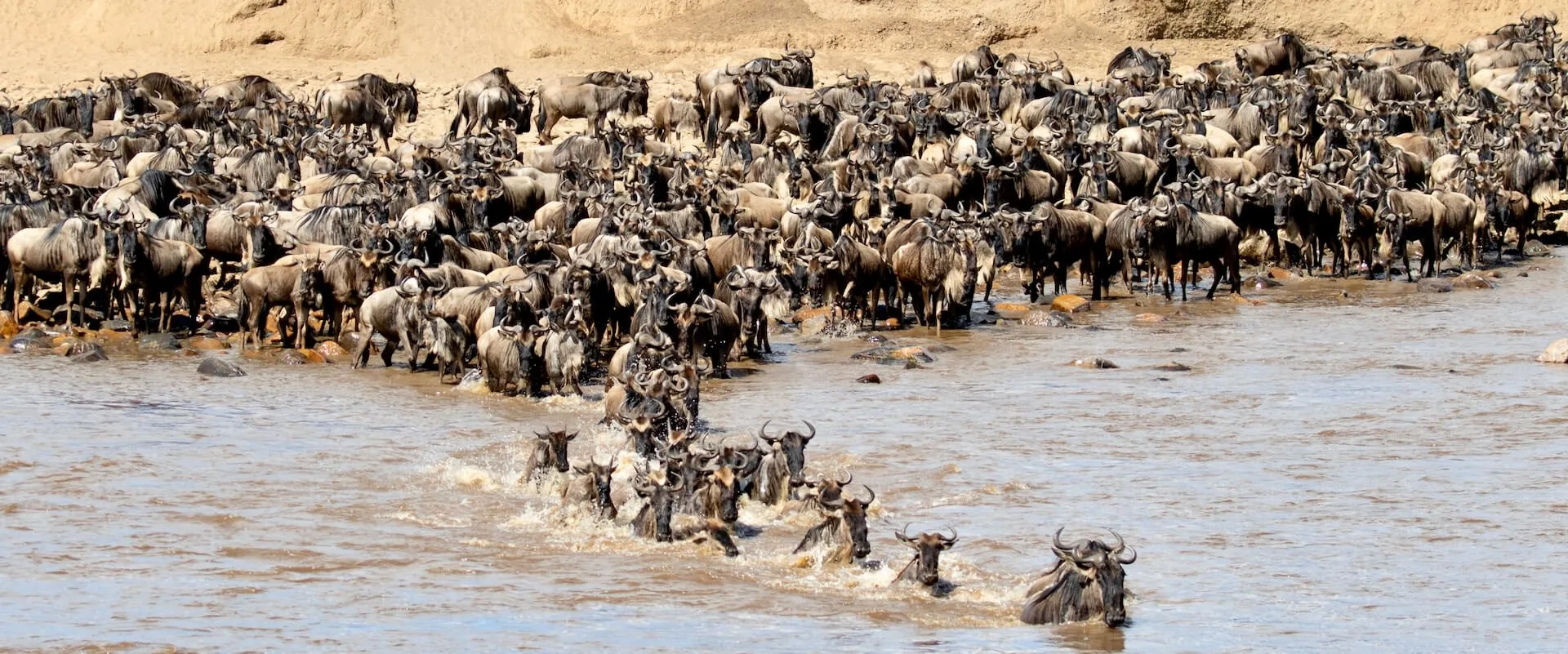
The Great Migration in Africa happens all year because the herds continuously circulate through the Serengeti–Mara ecosystem in…
Read article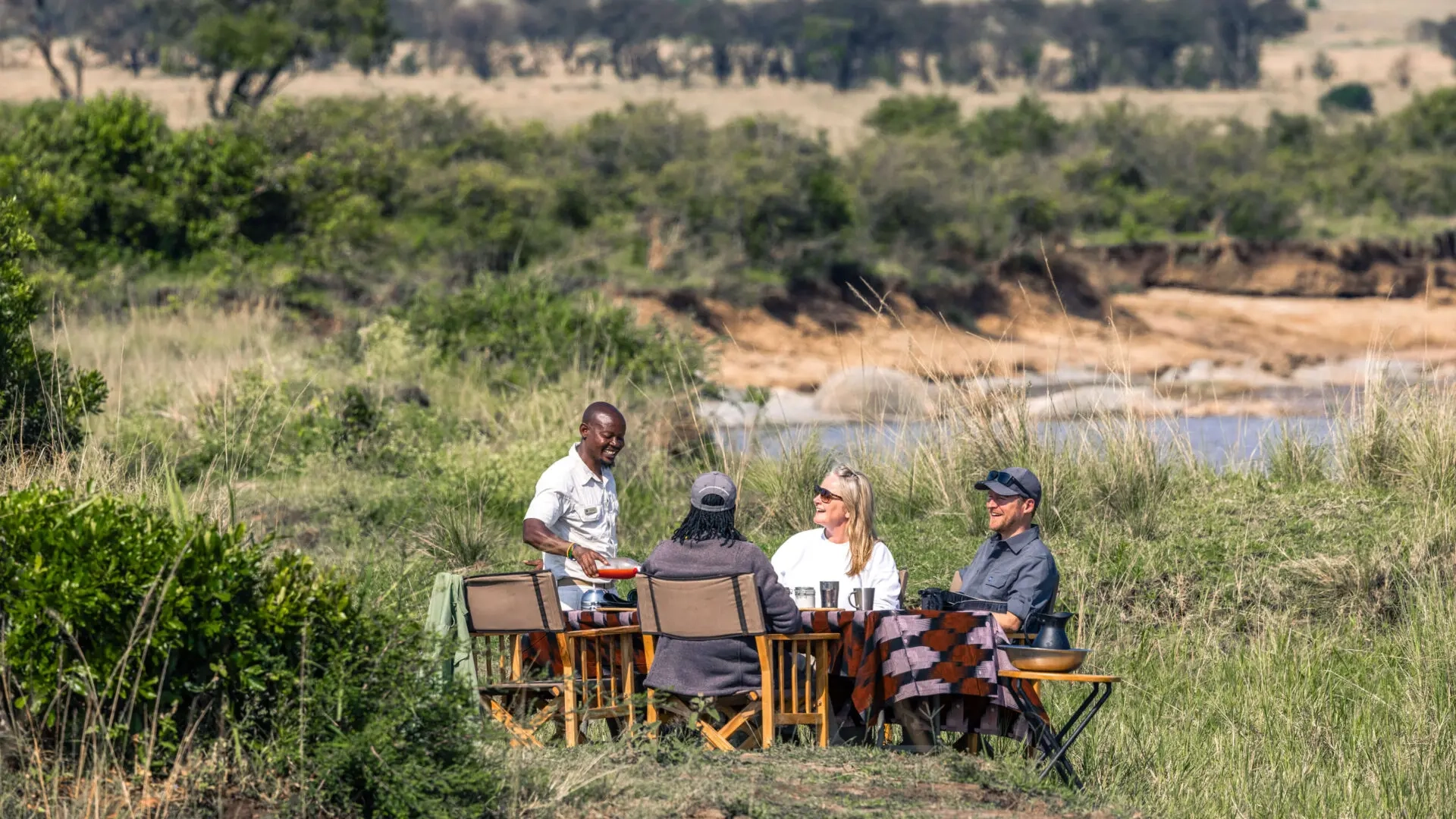
Definitive answer: A picnic lunch on safari is a packed or catered midday meal eaten at an approved…
Read article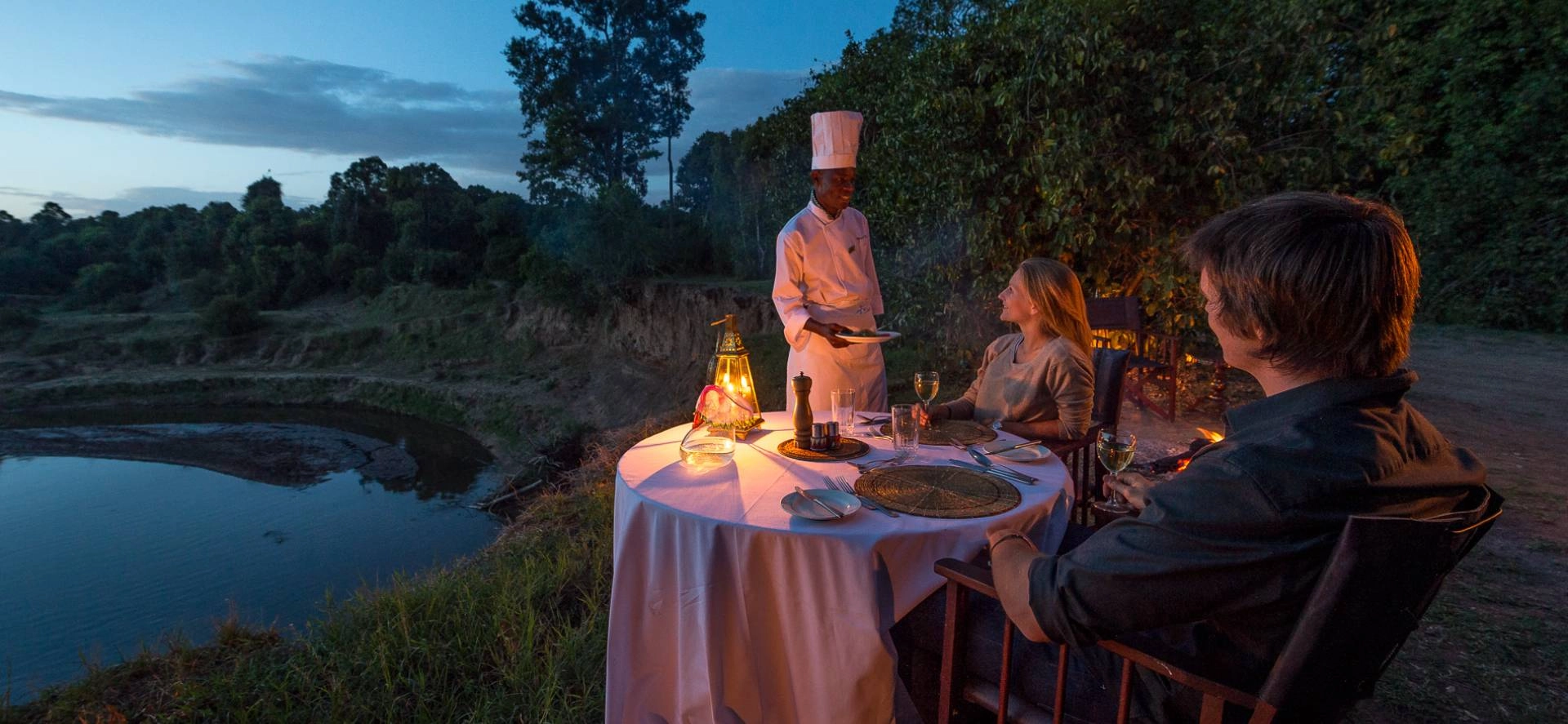
Definitive answer: A bush dinner is an outdoor evening meal arranged in a safe safari setting away from…
Read articleLet us take you closer to the wildlife, people and places that make Africa extraordinary.
Plan Your Safari Today