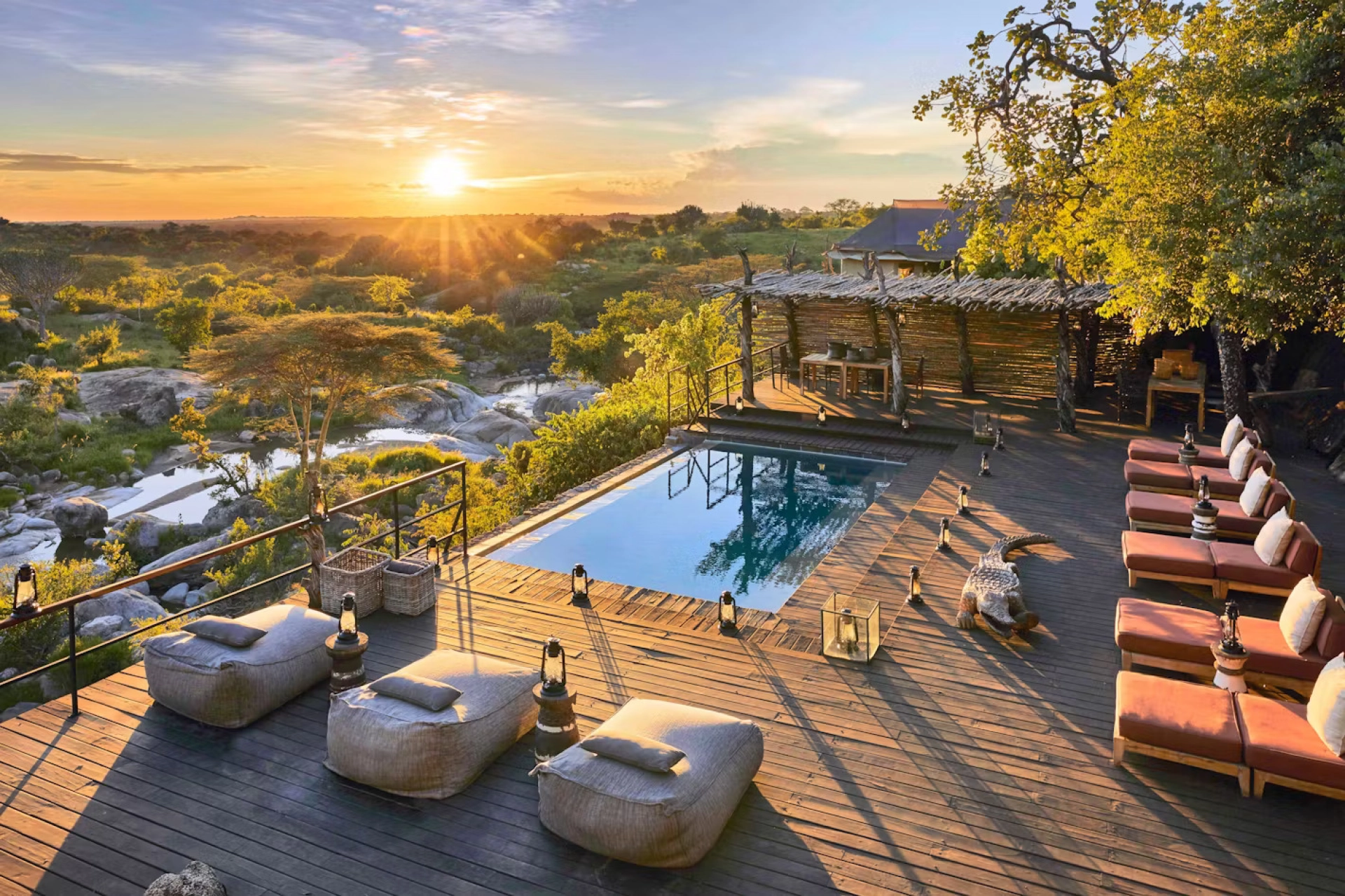
What should I look for when booking a luxury African safari?
When booking a luxury African safari, look beyond the room and compare the quality of guiding, wildlife location,…
Read article

Travel Guide
Few wildlife destinations reward a photographer as consistently as the Serengeti ecosystem of northern Tanzania. Its fame is usually connected with the Great Migration, but the real photographic strength of the Serengeti is much broader. This…
Few wildlife destinations reward a photographer as consistently as the Serengeti ecosystem of northern Tanzania. Its fame is usually connected with the Great Migration, but the real photographic strength of the Serengeti is much broader. This is a landscape in which lions may rest on granite kopjes while storm clouds build across the plains, cheetahs scan short grass for gazelles, elephants cross woodland tracks, giraffes appear against enormous horizons, hyenas investigate a recent kill and thousands of wildebeest transform the landscape into a moving pattern of animals, dust and light.
The most important lesson in any Serengeti photography guide is that there is no single photographic season. There are instead twelve different versions of the Serengeti.
January may offer green plains and increasingly concentrated migration herds in the south. February can produce extraordinary opportunities around the broader wildebeest calving period. April may bring dramatic skies and lush landscapes that many dry-season visitors never see. June can place migration activity farther west and north depending on rainfall. July through October can make northern areas strategically important for photographers interested in the movement toward and across the Mara River. November may bring the first significant rains and another transformation of the plains.
Wildlife movements are not controlled by a calendar. Rainfall, fresh grazing and water availability influence where animals move. For that reason, photographers should think of the month-by-month descriptions in this guide as seasonal planning frameworks rather than guaranteed wildlife appointments.
A river crossing cannot be scheduled for 10:00 a.m. A cheetah cannot be asked to hunt in golden light. A lion does not care whether your camera settings are correct. The photographer’s advantage comes from being in the right habitat for enough time, understanding the seasonal possibilities and being prepared when a wild moment finally develops.
The Serengeti is often imagined as one enormous grassland. In reality, its photographic environments are much more varied. There are open plains where wildlife can be photographed against uncluttered backgrounds. There are river systems lined with vegetation. There are rocky Serengeti kopjes used by lions and other wildlife. There are woodland areas, seasonal wetlands and vast horizons where the landscape itself becomes the subject.
This diversity creates opportunities for both intimate wildlife portraits and environmental images. A lion’s face filling the frame can be powerful. So can a tiny line of giraffes beneath a huge storm cloud. The best Serengeti wildlife photography therefore combines different visual approaches rather than trying to make every image a close-up portrait.
The Great Wildebeest Migration is one of Africa’s greatest wildlife phenomena, but photographers should not allow it to overshadow the Serengeti’s resident wildlife. Lions remain a major photographic subject throughout the year. Cheetahs are strongly associated with open plains. Leopards can be encountered in suitable habitat. Spotted hyenas provide fascinating behavioral opportunities. Elephants, giraffes, buffaloes, zebras, gazelles, hippos and numerous other mammals contribute to the ecosystem. Birdlife is equally important. A photographer spending every minute searching for a river crossing can overlook superb raptor, stork, bustard or ground-level wildlife photographs happening nearby.
The strongest photography safari remains open to whatever the ecosystem offers.
The Great Migration is not an event that begins and ends on fixed dates. It is a continuous ecological movement involving enormous numbers of wildebeest as well as zebras and other herbivores within the Serengeti–Mara ecosystem. Rainfall encourages fresh grass. The herds respond. Their movements consequently change from year to year. Broadly, the southern plains become important during the calving period. As conditions change, herds move through central and western or northwestern portions of the ecosystem before substantial numbers reach the northern Serengeti and potentially the Masai Mara region. Later, the movement trends south again.
This means a photographer’s first planning decision should not simply be “Serengeti or no Serengeti.” It should be: which part of the Serengeti is strategically appropriate for my travel dates?
January can be one of the most visually attractive periods in the southern Serengeti ecosystem. Seasonal rainfall turns the plains green. Migration herds may increasingly occupy southern areas as they follow productive grazing. For photographers, this creates an entirely different Serengeti from the dusty landscapes associated with peak dry season. The grass can be fresh and vibrant. Cloud formations become part of the visual story. Wildebeest and zebra may appear against rich green backgrounds rather than pale grass. Predators follow the prey concentrations.
This makes January attractive for lion photography, cheetah photography, hyena behavior and large-herd compositions. The photographic challenge is weather. Rain may interrupt a game drive. Road conditions can vary. But rain itself can produce excellent images. A lion shaking water from its mane, a herd beneath dark clouds or sunlight breaking through a storm can create far more atmospheric photographs than cloudless midday conditions.
Do not hide your camera simply because clouds gather. Protect equipment from moisture, but treat changing weather as an opportunity. Use wider compositions when the sky becomes dramatic. Watch the edges of wildebeest herds for predators. Look for newborn animals as the ecosystem moves toward the main calving period.
For wildlife behavior, February is one of the most compelling periods for a Tanzania photography safari. The southern Serengeti and neighboring plains are associated with the broader wildebeest calving season. The scale can be extraordinary. Large concentrations of animals occupy the short-grass ecosystem, and many wildebeest calves are born during the broader seasonal period. This abundance creates opportunities for much more than newborn photographs. Predators respond to prey availability. Lions patrol. Hyenas investigate.
Cheetahs exploit open terrain. Jackals and vultures participate in the ecological cycle. A photographer can therefore document birth, vulnerability, predation, survival and social behavior within the same ecosystem. This is one reason February deserves to be considered alongside the famous river-crossing months as one of the best times for Serengeti photography.
Avoid thinking only about tight portraits. Photograph the relationship between calf and mother. Use wider frames showing young animals surrounded by enormous herds. Look for behavior—nursing, running, resting, social interaction and defensive responses. A behavioral sequence often tells a stronger story than one technically perfect portrait.
March can continue to provide excellent photography across the southern ecosystem, although seasonal conditions evolve as the month progresses. The landscape remains comparatively green. Migration concentrations may still be substantial depending on rainfall and grazing. The visual advantage is color.
Dry-season visitors sometimes return home with thousands of images dominated by yellow, beige and brown. March can produce green grass, dramatic clouds and softer backgrounds. This can be particularly effective for photographing cheetahs and lions. A tawny predator against green grass immediately creates separation and color contrast. March can also begin moving toward a less heavily demanded tourism period, depending on dates and specific areas.
For photographers who value fewer safari vehicles, this can be attractive.
April is frequently dismissed because it falls within a wetter period. That dismissal is a mistake for photographers willing to accept uncertainty. Rain can be substantial. Some roads may become difficult. Game-drive planning may need greater flexibility. But the landscape can be magnificent. The Serengeti becomes intensely green. Clouds create texture in the sky. Puddles and wet surfaces create reflections. Dust decreases. Wildlife coats may appear cleaner. Tourism pressure can be lower than in peak season.
For a serious photographer, these conditions can be creatively exciting. Instead of producing the same dry-season Serengeti images seen repeatedly online, April offers a chance to photograph the ecosystem in a less familiar state.
A camera rain cover is valuable. Keep absorbent cloths accessible. Avoid changing lenses unnecessarily in wet or dusty conditions. Do not assume rain means poor light. Dark skies can produce rich color and dramatic contrast when sunlight breaks through. Rain itself can become visible when photographed against a dark background.
May remains transitional and can provide excellent landscape photography. Migration movement is influenced by changing grazing and water conditions, with herds progressively shifting through the wider ecosystem. Photographers should work with an operator who understands where significant concentrations have recently been occurring rather than relying entirely on fixed month-by-month assumptions. The main advantage remains lower tourism pressure and visually rich landscapes.
For a budget Serengeti photography safari, shoulder and green-season periods may also provide better value than the highest-demand months. That can allow a photographer to stay an extra night. And for photography, an extra night is often more valuable than upgrading to a more expensive room.
June marks a significant transition toward the drier safari season. Depending on rainfall and migration progression, western and central parts of the ecosystem can become increasingly important. Herd movement itself creates excellent photographic possibilities. Long lines of wildebeest can be more visually interesting than a dense mass of animals. Dust begins becoming more important. Backlighting can illuminate that dust, producing glowing atmospheric images. Instead of photographing every herd with the sun behind you, experiment with side light and backlight when conditions allow. June also provides opportunities to combine migration photography with resident predator photography.
July is one of the most popular months for a Serengeti photo safari. The dry season is established in many areas. Migration activity may increasingly favor northern portions of the ecosystem, although exact movement depends on environmental conditions. Photographers interested in the famous northern migration cycle begin focusing heavily on the northern Serengeti. The main challenge is popularity. Famous wildlife sightings can attract vehicles. A private vehicle becomes particularly valuable because photographers can make positioning decisions without negotiating with unrelated travelers. Spending several nights in one strategically located area is also important.
Do not attempt to photograph the northern migration with a rushed overnight stop.
August is one of the months most strongly associated with Mara River crossing photography. This creates enormous expectations. Those expectations need to be managed. River crossings are natural events. Herds may approach a crossing point and retreat. They may wait. They may cross somewhere else.
They may cross while your vehicle is far away. No responsible guide should promise a crossing. The correct photography strategy is patience. Stay enough nights. Position yourself in the broader northern ecosystem. Accept that waiting is part of wildlife photography. When a crossing occurs, the scene can become chaotic. Animals move rapidly. Dust, water and bodies overlap. This is not the time to learn your camera’s autofocus system. Practice before the event.
Use a sufficiently fast shutter speed when freezing action is the objective. Consider a wider focal length for scale. Do not spend the entire event at maximum telephoto range. A close image of one wildebeest entering water can be powerful, but a wide image showing hundreds of animals, riverbanks and landscape may tell the story more effectively.
September can continue to provide excellent northern Serengeti opportunities. Dry conditions often create strong wildlife concentrations around reliable water. Predators remain active throughout the ecosystem. The light can be beautiful, particularly early and late in the day. Dust can become a photographic element. A herd crossing a dry track in backlight may create a golden haze. Elephants walking through dust can become silhouettes. Lions at sunset can be framed against warm backgrounds.
Photographers should protect equipment carefully because dust enters vehicles constantly.
October can still provide excellent northern and central Serengeti photography while seasonal transitions gradually develop. Temperatures may become warmer. The ecosystem can appear very dry before significant rains return. This creates a stark visual aesthetic. Animals and landscape tell a story of scarcity. Water becomes increasingly important. Photographers interested in environmental storytelling can use these conditions rather than trying to hide them. A thin lion beside a shrinking water source, elephants moving through dry grass or zebras raising dust all communicate seasonality.
November can transform the Serengeti. Shorter seasonal rains may begin refreshing areas of the ecosystem. The smell of wet earth, new grass and dramatic skies changes the character of the landscape. Migration movements respond to these conditions. Photographers can benefit from reduced peak-season pressure and the visual contrast between dry areas and newly green vegetation. Bird photography also becomes increasingly rewarding as seasonal movements contribute to avian diversity. November is a strong month for photographers who value atmosphere and unpredictability.
December can be excellent as migration herds trend toward southern and southeastern portions of the wider ecosystem, depending on rainfall. The landscape becomes greener. The photographic cycle begins returning toward the conditions that make January and February so attractive. Festive-season demand can nevertheless be high. Photographers traveling around Christmas and New Year should book early. Do not assume green season automatically means low prices during holiday weeks.
The central Serengeti, including the broader Seronera region, is one of the most reliable areas for year-round wildlife photography. Its strength lies in resident wildlife rather than dependence on one migration phase. The varied habitats support predators and prey throughout the year. For photographers making a first Serengeti visit, central Serengeti provides an excellent foundation.
You can photograph lions, elephants, giraffes, antelopes and potentially leopards while still encountering migration activity when seasonal movement overlaps the region. The disadvantage is popularity. Central Serengeti can become busy. A skilled guide helps by exploring beyond the most obvious vehicle concentrations.
The southern Serengeti ecosystem and neighboring Ndutu region become particularly important around the green-season migration and calving cycle. Open plains are ideal for cheetah photography. Large wildebeest herds create scale. Predator behavior can be excellent. For February-focused photographers, this region deserves serious consideration. Accommodation location matters. A cheaper lodge positioned far from your primary photography area can cost valuable hours every day. Photography itineraries should therefore optimize time in habitat, not simply room price.
Western areas become relevant during parts of the migration’s movement toward the north. Woodlands and riverine habitats provide visual variety. The broader western migration cycle can also involve challenging river systems. The photographic aesthetic differs from the open southern plains.
This is precisely why repeat Serengeti visitors benefit from exploring different regions.
Northern Serengeti is particularly famous for the migration’s Mara River phase. But the region should not be reduced to river crossings. The landscapes are beautiful. Resident predators remain important. Elephants, giraffes and plains game create numerous opportunities. Photographers who spend all day waiting beside one crossing point may miss excellent wildlife elsewhere. Balance patience with exploration.
Early morning is one of the most valuable periods of the safari day. Temperatures are cooler. Predators may still be active. Light arrives at a low angle. Long shadows create depth. Warm sunlight can transform ordinary subjects. Be ready before the sun appears. Camera settings should already be prepared. A lion walking through grass for thirty seconds may provide the best image of the trip.
Midday is often criticized because light becomes harsh. But wildlife does not stop existing because photographers dislike overhead sun. Use midday differently. Look for animals in shade. Photograph behavior. Experiment with high-key images. Use waterholes. Work on details and textures. If wildlife rests, return to the lodge and preserve energy for the afternoon.
Late-afternoon light creates warm color and long shadows. This is excellent for giraffes, elephants and animals moving through dust. Backlighting becomes particularly effective. Expose carefully to preserve highlights. Do not spend so long photographing the sunset itself that you overlook animals interacting with the light.
Serengeti mornings can begin before strong sunlight reaches the landscape. Modern cameras handle higher ISO settings extremely well. A slightly noisy sharp photograph is generally preferable to a clean but motion-blurred image. Understand your camera’s acceptable ISO range before traveling. Use shutter speed according to subject movement. A resting lion permits slower settings than a running cheetah.
You do not need the world’s most expensive camera to create meaningful wildlife photographs. Autofocus performance, comfortable handling, battery life and familiarity matter enormously. A photographer who understands a modest camera will usually respond faster than somebody using a complicated professional system for the first time. Mirrorless and DSLR systems can both work. Bridge cameras can provide enormous zoom ranges with less weight. Modern smartphones are excellent for landscapes, videos and close wildlife encounters, although they cannot replace long telephoto lenses for many distant subjects.
A flexible telephoto zoom is extremely useful. Wildlife distance changes constantly. A lion may begin 100 meters away and then walk directly beside the vehicle. A fixed long lens can produce outstanding image quality but may become restrictive when an animal approaches. A second camera body with a shorter lens is valuable for serious photographers because it reduces lens changing in dusty conditions. Wide-angle lenses are useful for landscapes, camps, vehicles, skies and environmental wildlife compositions. Do not travel with only a long telephoto lens. The Serengeti is too large a landscape for that.
Lions reward patience. Sleeping lions may appear uninteresting, but behavior can change quickly. Watch ears, eye direction and body posture. A pride beginning to rise may soon interact. Cubs create social opportunities. Do not ask the guide to leave immediately simply because the lions are resting. Experienced wildlife photography often involves waiting.
Leopards are more difficult. They may rest in trees or disappear into vegetation. Branches can interfere with autofocus. Use a single focus point or appropriate subject detection when necessary. Look for clean openings. Environmental images of a leopard within a tree can sometimes be stronger than a tight portrait.
Cheetahs suit the Serengeti’s open landscapes beautifully.
Their hunting behavior can change rapidly. If a cheetah begins scanning prey, prepare for action. Use fast shutter speeds. Ensure sufficient card capacity. Do not wait until the sprint begins to change settings.
Elephants offer opportunities at every focal length. A telephoto lens isolates eyes, trunks and skin texture. A wider lens shows family groups within the landscape. Backlit dust around elephants can create exceptional images. Observe relationships between adults and calves. Behavior gives photographs emotional depth.
Do not ignore the Serengeti’s birds. Raptors, vultures, storks, bustards, rollers and many other species provide excellent subjects. Bird photography can be particularly productive when large mammals are inactive. A long telephoto lens becomes useful. Remember that the best bird photograph may be a bird interacting with the landscape rather than simply filling the frame.
Vehicle positioning is one of the biggest differences between an ordinary safari and a dedicated photographic safari in Tanzania. Photography depends on light angle, background and subject direction. A professional guide who understands photography will consider where an animal might move rather than simply driving as close as possible. Closer is not always better. A vehicle 20 meters farther away may have a cleaner background. Explain your photographic priorities to your guide.
A private safari vehicle provides freedom. You decide how long to remain with a subject. You can request positioning for light. You can spend forty minutes photographing a bird without frustrating other guests who want lions. You can leave a crowded sighting. For serious photographers, the vehicle may matter more than upgrading the lodge.
Safari vehicles in Tanzania commonly provide viewing through side windows and from an elevated pop-up roof. Each position has advantages. Lower window-level photography can create more intimate eye-level perspectives. The roof provides excellent visibility over grass and surrounding vehicles. Use both. Avoid making every photograph from exactly the same standing height.
A bean bag can provide excellent support on a window frame or appropriate vehicle surface. It reduces fatigue with heavy lenses and improves stability. Tripods are usually impractical inside safari vehicles. Monopods can work in some situations but require space. Always coordinate equipment use with your guide and vehicle layout.
Serengeti dust is persistent. Carry a blower and appropriate cleaning materials. Keep unused equipment inside closed bags. Avoid unnecessary lens changes. Never perform aggressive sensor cleaning in an open safari vehicle. Dust is part of the safari environment; equipment preparation should account for it.
Carry spare batteries. Cold mornings, continuous autofocus, image review and video consume power. Many safari vehicles or lodges provide charging opportunities, but never rely on only one battery. Bring the correct plug adapters and chargers. A small power bank is useful for phones and compatible accessories.
Do not place an entire safari on one memory card. Use multiple reliable cards. If your camera supports dual-card recording, consider redundancy. Back up images when practical. A laptop or portable storage device can be useful for serious photographers. Losing equipment is unfortunate. Losing the only copy of ten days of wildlife images can be worse.
RAW files provide substantially greater flexibility for recovering highlights, shadows and color during editing. JPEG files require less storage and are immediately usable. Many photographers record both. Choose according to your workflow. If you have never edited RAW files before, learn before traveling rather than turning the safari into a software lesson.
No photograph is worth stressing an animal. Do not encourage guides to chase wildlife, block movement or violate park rules. Never ask for dangerous proximity merely because you want a wide-angle image.
Respect vehicle restrictions. Avoid disturbing nesting birds. Do not demand that predators be pressured into action. Ethical wildlife photography accepts that the animal controls the encounter.
A dedicated photography safari does not necessarily require ultra-luxury accommodation. The most important investments are often location, time and vehicle flexibility. A comfortable mid-range camp near the correct wildlife area can be more productive than a luxurious property requiring a long commute. Travel during suitable shoulder periods. Stay longer in fewer places. Consider sharing a photographic vehicle with compatible photographers. Prioritize wildlife time over unnecessary luxury upgrades.
Three days is an introduction. Five or six days provides substantially greater flexibility. Seven or more days allows photographers to slow down and potentially explore more than one region. Weather, wildlife and light are unpredictable. Every additional day creates another sunrise and sunset. For serious photographers, that matters.
Combining the Serengeti with Ngorongoro Crater creates useful ecological variety. Ngorongoro’s enclosed landscape can support high wildlife concentrations. The crater walls provide distinctive backgrounds. However, vehicle traffic can be significant. The Serengeti provides greater spatial freedom and a wider variety of landscapes. Together they form one of Tanzania’s strongest photography circuits.
Tarangire National Park adds another visual identity. Elephants and baobab landscapes are major attractions. During appropriate seasons, wildlife concentrations around the Tarangire River can be impressive. Photographers can therefore create a Tanzania portfolio that looks more diverse than spending the entire trip in one ecosystem.
Both are exceptional. The Serengeti offers enormous scale and multiple seasonal regions. The Masai Mara offers excellent resident wildlife and can become important during northern migration periods. Neither is universally better. The right choice depends on month, photography priorities, accommodation and desired itinerary. A cross-border combination can be superb when logistics and time permit.
There is no single best month. February is excellent for the broader calving season, July through October can be attractive for northern migration activity, while green-season months offer dramatic landscapes and fewer visitors.
The migration exists throughout the year, but different regions become important at different times.
Northern migration activity and potential Mara River crossings are generally associated with the dry-season migration period, but crossings cannot be predicted to a specific day.
Yes. February can provide outstanding opportunities for large herds, newborn wildebeest and predator behavior in the southern ecosystem.
No. Rain creates green landscapes, dramatic skies and atmospheric light. It also creates logistical challenges, so preparation matters.
No. Familiarity with your equipment matters more than price.
A telephoto zoom is extremely useful, but carry a wider option for landscapes and environmental compositions.
For serious photography, a private vehicle provides substantial advantages in positioning, waiting time and flexibility.
Absolutely. The Serengeti is an excellent place to develop wildlife photography skills.
For dedicated photography, five to seven nights or more is preferable if budget and time allow.
A successful Serengeti photography safari begins before the camera leaves the bag. Choose the correct region for the season. Stay long enough. Select accommodation according to wildlife location rather than luxury alone. Use an appropriate safari vehicle. Tell the guide that photography is a priority. Practice camera settings before departure. Carry backup batteries and memory cards. Prepare for dust and rain. And above all, arrive without demanding one predetermined photograph. The Serengeti rarely follows a script. You may travel hoping for a wildebeest river crossing and return with your favorite photograph being a cheetah beneath a storm cloud.
You may spend hours waiting for lions to move, then photograph elephants crossing the road during the drive back to camp. You may expect the long lens to dominate and discover that your most memorable image was made wide, showing one giraffe beneath an enormous African sky. That uncertainty is precisely what makes wildlife photography in the Serengeti so compelling. The landscape changes.
The migration moves. The weather shifts. Predators hunt when they choose. Light appears and disappears. Your job is not to control any of it. Your job is to understand the ecosystem well enough to be ready when the Serengeti gives you a photograph.

Share This Article
When booking a luxury African safari, look beyond the room and compare the quality of guiding, wildlife location,…
Read article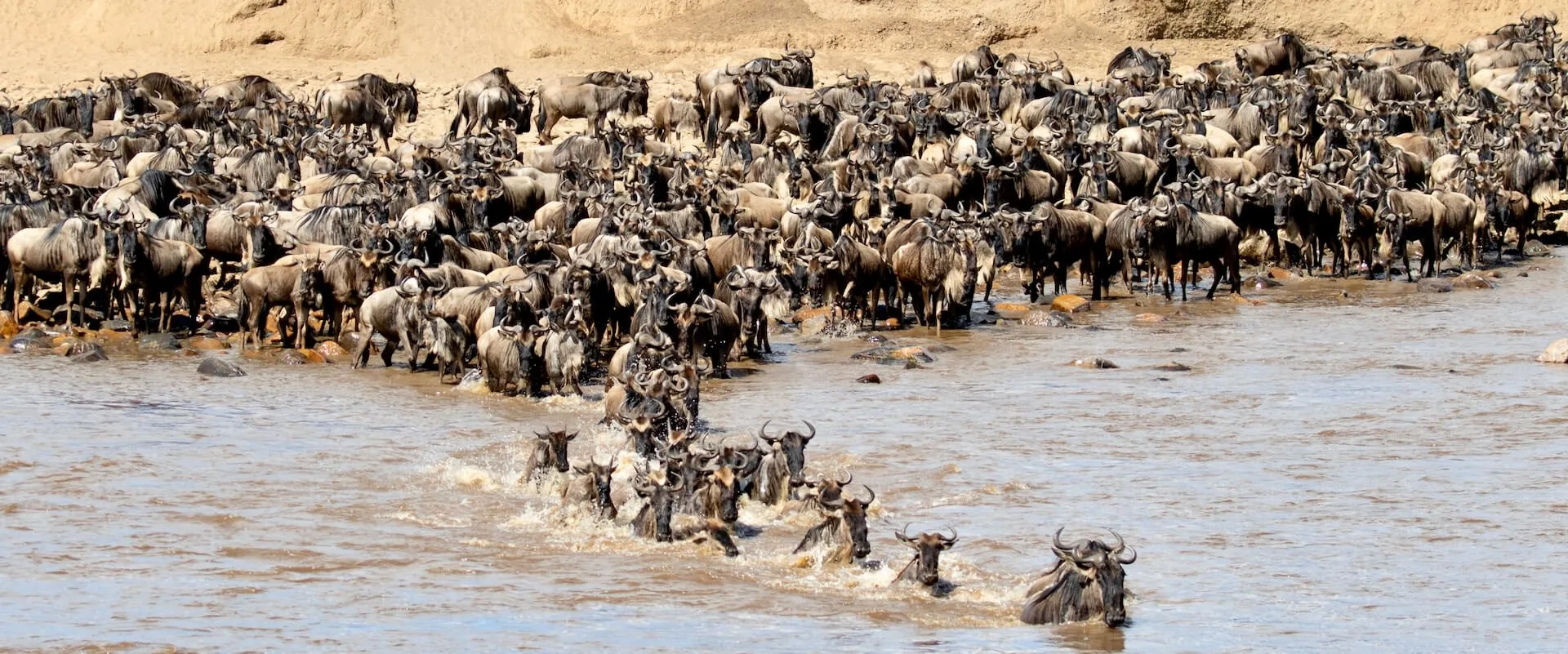
The Great Migration in Africa happens all year because the herds continuously circulate through the Serengeti–Mara ecosystem in…
Read article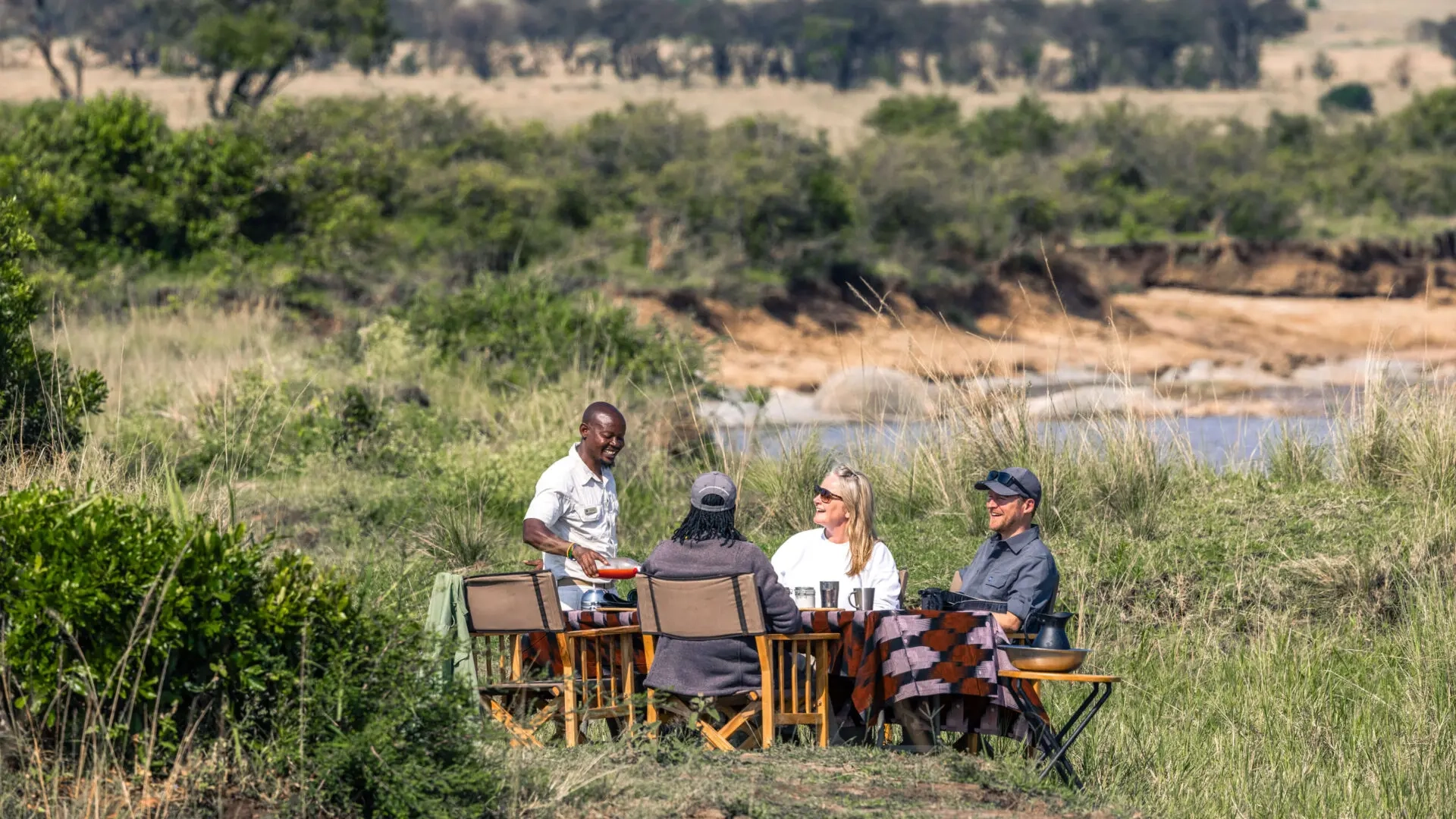
Definitive answer: A picnic lunch on safari is a packed or catered midday meal eaten at an approved…
Read article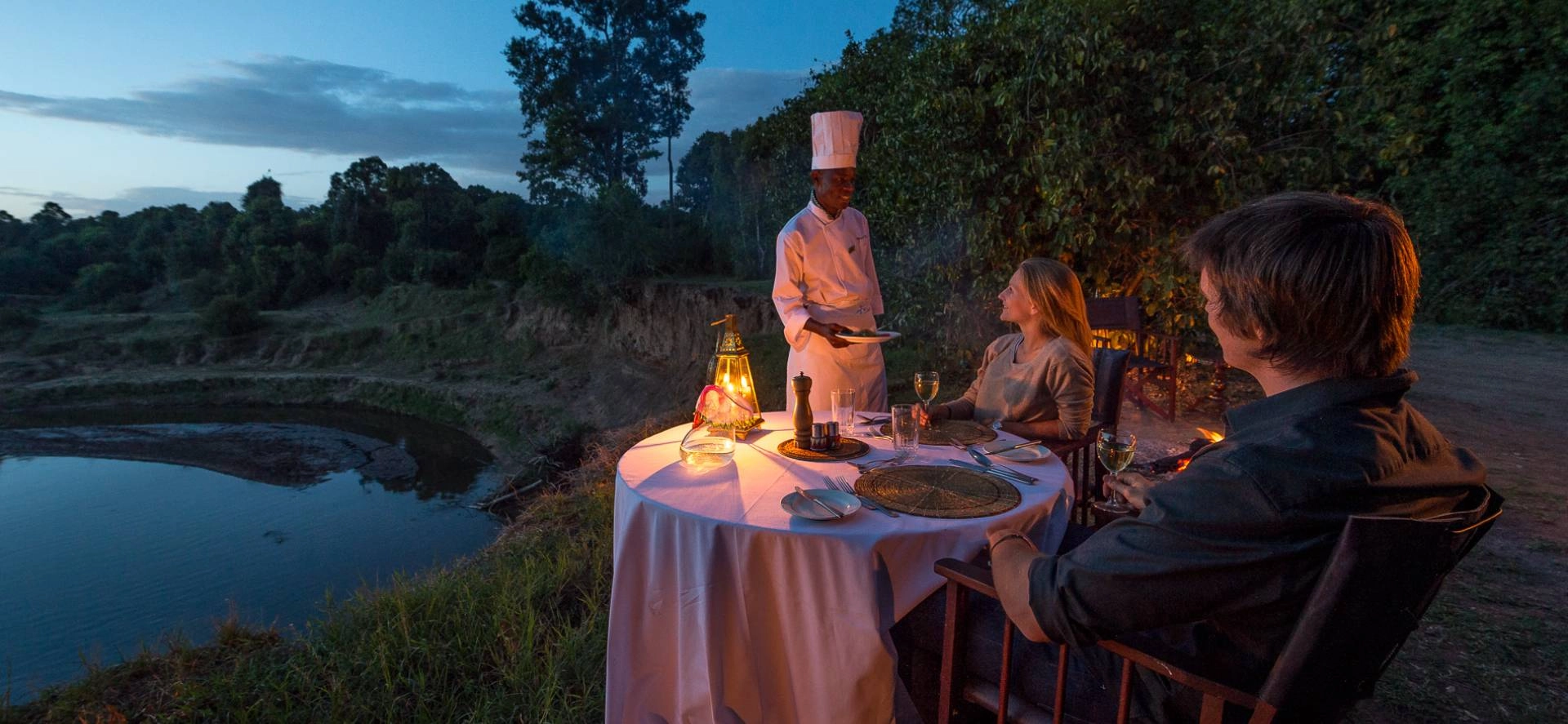
Definitive answer: A bush dinner is an outdoor evening meal arranged in a safe safari setting away from…
Read articleLet us take you closer to the wildlife, people and places that make Africa extraordinary.
Plan Your Safari Today