
What should I look for when booking a luxury African safari?
When booking a luxury African safari, look beyond the room and compare the quality of guiding, wildlife location,…
Read article

FAQs
In most cases, you should check international flight options first but avoid purchasing restrictive, non-refundable tickets until your safari operator has confirmed the essential components of your trip. This is particularly important when your safari depends on limited-availability items such as gorilla permits, chimpanzee permits, specialist camps, peak-season lodges or scheduled domestic flights.
In most cases, you should check international flight options first but avoid purchasing restrictive, non-refundable tickets until your safari operator has confirmed the essential components of your trip. This is particularly important when your safari depends on limited-availability items such as gorilla permits, chimpanzee permits, specialist camps, peak-season lodges or scheduled domestic flights.

The ideal approach is to plan them together.
International flights determine when you can arrive in Africa, while safari availability determines whether your preferred itinerary can operate on those dates.
Treating either component in isolation can create unnecessary problems.
Start by identifying possible international flights.
Then send the proposed arrival and departure dates and times to your safari operator.
The operator can check whether the itinerary works and whether important services are available.
Once the safari’s critical components are confirmed, you can proceed with greater confidence.
The cheapest airfare isn’t necessarily the cheapest trip.
Imagine finding an excellent international fare to Uganda and purchasing it immediately.
You then discover that the gorilla permits required for your preferred trekking date are unavailable.
Your safari may need to be rearranged, shortened or extended.
A small saving on airfare could therefore create substantial changes elsewhere.
Safari planning involves interconnected reservations.
The best overall itinerary matters more than optimizing one component independently.
Gorilla trekking operates under controlled permit systems designed to limit the number of visitors accessing habituated gorilla groups.
Availability can therefore influence itinerary design.
This is particularly important for travelers visiting Bwindi Impenetrable National Park, Mgahinga Gorilla National Park or Volcanoes National Park.
During popular travel periods, preferred trekking dates may become limited.
Your operator may need to check permit availability before finalizing the sequence of the safari.
International flights should therefore work around confirmed or realistically available trekking dates rather than forcing an impossible itinerary.
The same principle applies.
Popular chimpanzee trekking destinations operate scheduled activities with limited places.
If chimpanzee trekking is a priority, availability should be considered while building the itinerary.
A safari combining gorillas and chimpanzees has more fixed components than a simple wildlife game-drive itinerary.
The more permit-based activities included, the more important careful sequencing becomes.
Yes.
Popular safari lodges can fill months in advance, especially during peak travel periods.
This is particularly relevant for small camps with relatively few rooms.
Unlike a large city hotel containing hundreds of rooms, an intimate safari lodge may have fewer than twenty accommodation units.
A few confirmed groups can therefore consume a substantial percentage of available capacity.
If a particular property is essential to your trip, availability should be checked before locking yourself into inflexible flights.
This depends on destination, season and trip complexity.
Peak-season trips, gorilla trekking safaris, family travel requiring specific room configurations and itineraries involving premium lodges generally benefit from early planning.
Travelers planning around Christmas, New Year, major migration periods or other popular dates should be particularly cautious about leaving arrangements until the last minute.
Early booking provides more choice rather than simply guaranteeing lower prices.
If your airline or booking platform provides a legitimate temporary hold, it can be useful.
However, conditions vary.
Don’t assume an airfare can be held without understanding the rules.
Alternatively, your safari operator may be able to check essential availability quickly enough for you to make a decision.
The key is communication.
Send:
This allows the operator to plan airport transfers and determine whether safari activities are realistic on the first and last days.
Very much.
An itinerary stating “Day 1: Arrive and transfer to Bwindi” might look reasonable until the traveler books a flight landing late in the evening.
Long road transfers cannot always be completed safely or practically after a late arrival.
The itinerary may need an additional night near the airport.
Similarly, arriving early in the morning can sometimes create an opportunity to begin the safari immediately.
Your actual flight time matters just as much as the date.
Departure times affect the final safari day.
A flight departing at 11:00 requires a completely different schedule from one departing at 23:00.
Long road transfers should include sufficient contingency for traffic, road conditions and other delays.
International airports also require passengers to arrive well before departure.
A responsible safari itinerary should never depend on unrealistically tight timing.
It depends on the itinerary.
Uganda gorilla safaris commonly begin from Entebbe, while some itineraries access southwestern Uganda from Kigali.
Rwanda safaris generally use Kigali.
Multi-country itineraries may arrive through one airport and depart through another.
Before purchasing flights, ask your operator which routing makes the most logistical sense.
An open-jaw itinerary—flying into one city and home from another—can sometimes eliminate unnecessary backtracking.
Yes, and this can be extremely useful for multi-country safaris.
For example, an East African journey might begin in one country and finish in another.
Booking the international flights accordingly can save a full day of road travel or an unnecessary regional flight.
However, one-way regional routing can affect vehicle logistics and costs.
Discuss the complete route with your operator first.
International tickets aren’t the only flights that matter.
Some itineraries rely on scheduled domestic or regional flights.
Small safari aircraft can have limited capacity and different baggage restrictions from international airlines.
If the domestic flight is essential to making the itinerary work, it should be checked alongside lodge and permit availability.
Where affordable, flexibility can be valuable.
Airline schedules change.
Safari plans can occasionally need adjustment.
A ticket allowing date changes may reduce financial exposure compared with a completely restrictive fare.
However, flexibility usually costs more, so travelers should compare fare conditions rather than assuming the most expensive ticket is automatically necessary.
Don’t panic.
Send the complete flight details to your safari operator immediately.
The itinerary can usually be designed around them.
If something critical isn’t available on the preferred date, the operator can investigate alternatives.
Problems are easier to solve when identified early.
Travel insurance should be considered as part of the overall booking process.
Coverage differs dramatically between policies.
Travelers should review cancellation, medical, evacuation, baggage and trip interruption provisions carefully.
Don’t assume a policy covers something simply because it is described as “comprehensive.”
Read the actual terms.
Airline schedule changes happen.
Whenever an airline changes your arrival or departure time, inform your safari operator.
A difference of twenty minutes may not matter.
A change of several hours might.
A late arrival could require moving a transfer, changing accommodation or modifying an activity.
A practical process is:
Research suitable international flights.
Identify your preferred safari dates.
Send the proposed flight schedule to the safari operator.
Check essential safari availability, particularly permits, key lodges and internal flights.
Confirm that the arrival and departure times work with the itinerary.
Then finalize the safari and international flights according to the applicable booking and payment conditions.
This avoids unnecessary risk while keeping the planning process efficient.
Your international flight isn’t separate from your safari.
It determines when the ground arrangements begin and end.
The strongest itineraries are designed around real arrival and departure schedules rather than generic travel dates.
If you’re planning a gorilla trekking safari, multi-country safari or complex private journey, communicate with your operator before purchasing restrictive international tickets.
A few emails at the beginning of the planning process can prevent expensive changes later.
Continue with:
Coordinating flights, permits, accommodation and ground transport together creates a much smoother safari itinerary.

Share This Article
When booking a luxury African safari, look beyond the room and compare the quality of guiding, wildlife location,…
Read article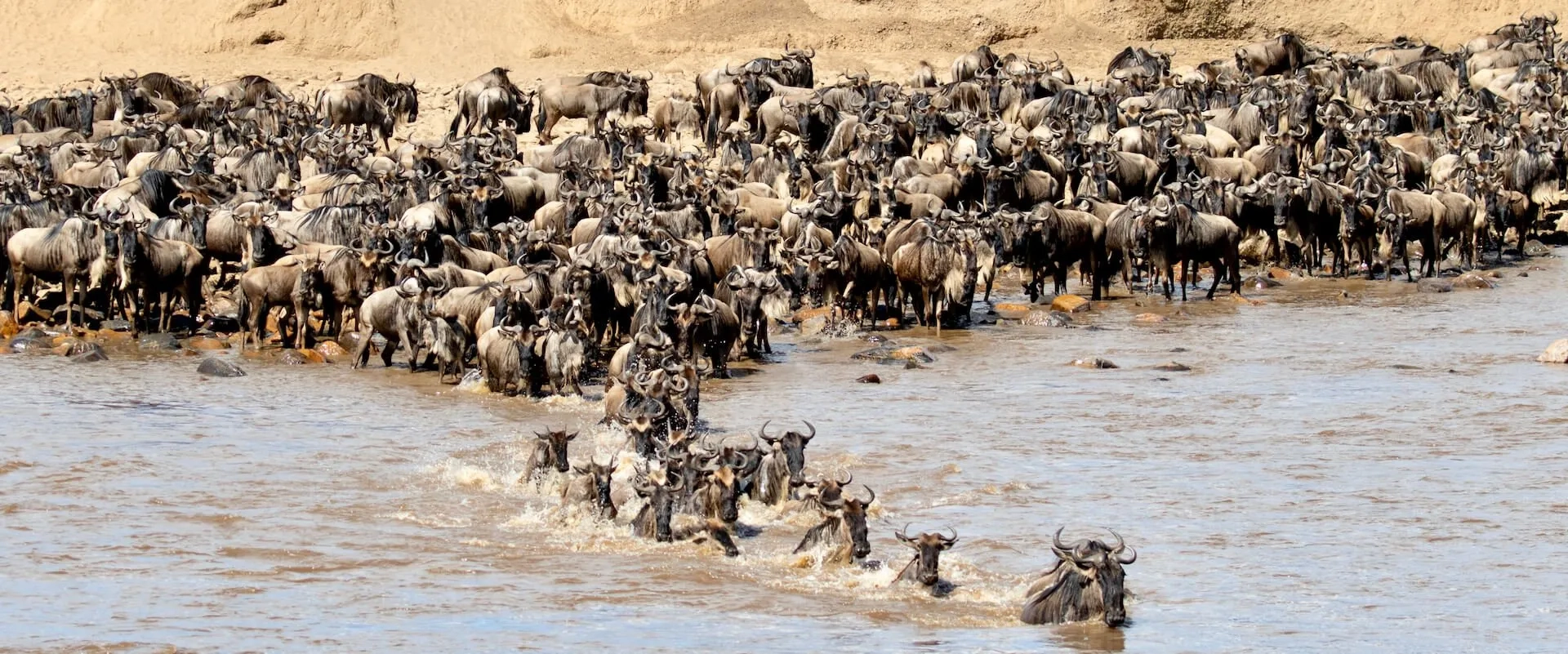
The Great Migration in Africa happens all year because the herds continuously circulate through the Serengeti–Mara ecosystem in…
Read article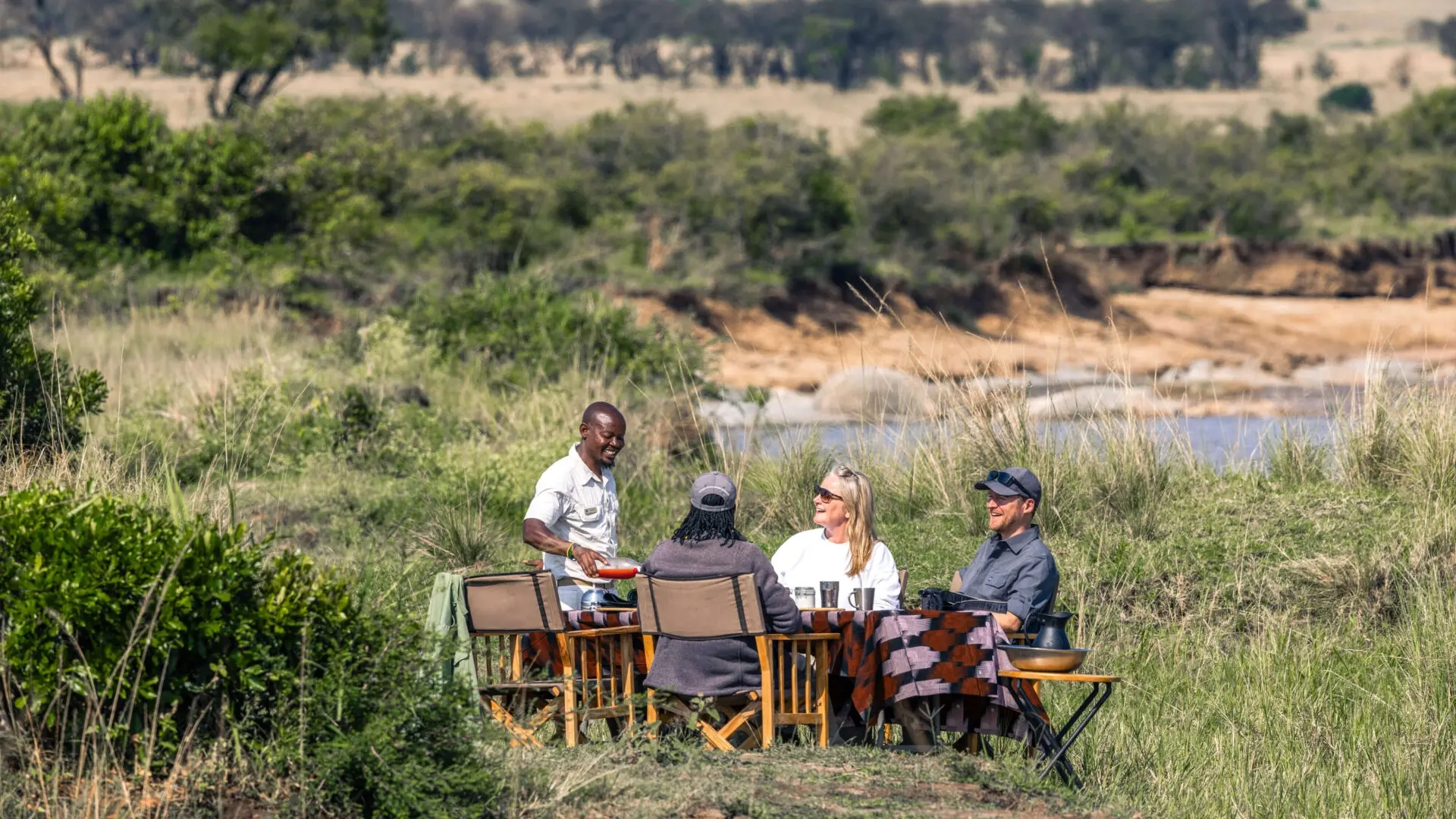
Definitive answer: A picnic lunch on safari is a packed or catered midday meal eaten at an approved…
Read article
Definitive answer: A bush dinner is an outdoor evening meal arranged in a safe safari setting away from…
Read articleLet us take you closer to the wildlife, people and places that make Africa extraordinary.
Plan Your Safari Today