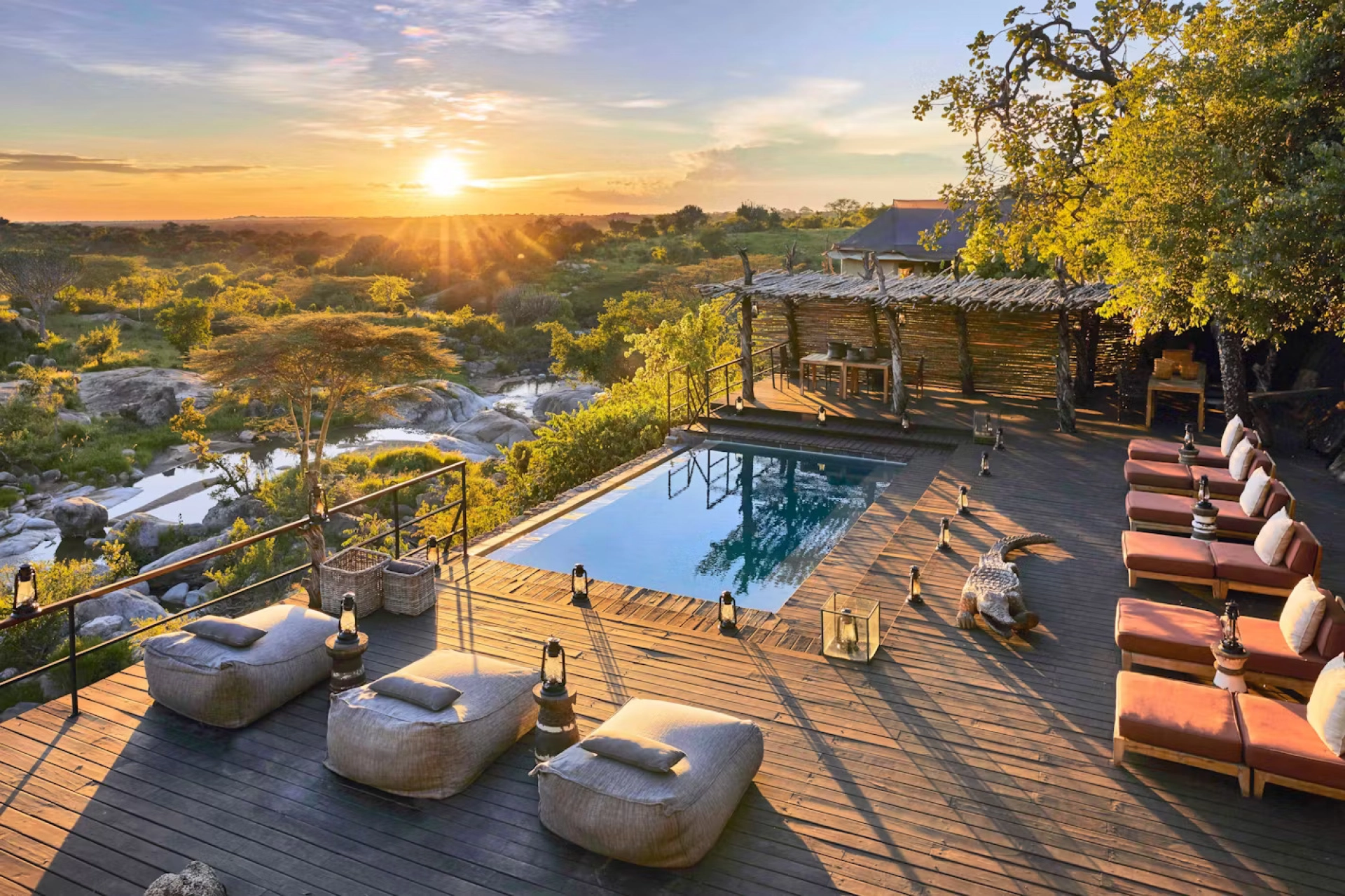
What should I look for when booking a luxury African safari?
When booking a luxury African safari, look beyond the room and compare the quality of guiding, wildlife location,…
Read article

FAQs
Whether you should stay inside or outside a national park depends on the exact lodge location, park access arrangements, wildlife areas, budget and onward itinerary. Staying inside can reduce daily travel and create a more immersive wilderness experience, while accommodation outside the boundary can offer better value and sometimes equally convenient access. The best decision should be based on actual driving time rather than the words "inside" or "outside."
Whether you should stay inside or outside a national park depends on the exact lodge location, park access arrangements, wildlife areas, budget and onward itinerary. Staying inside can reduce daily travel and create a more immersive wilderness experience, while accommodation outside the boundary can offer better value and sometimes equally convenient access. The best decision should be based on actual driving time rather than the words “inside” or “outside.”

It generally means the accommodation lies within the official protected-area boundary.
That sounds straightforward, but national parks can be enormous.
A lodge can be located inside a park while still requiring substantial driving to reach the area where you want to spend the day.
This is why the phrase “inside the park” should never be treated as sufficient information.
You need to know where inside the park.
Outside accommodation lies beyond the formal national park boundary.
It might be several hours away—or it could be five minutes from an entrance.
Those are obviously very different situations.
Some external properties overlook the same ecosystems and wildlife corridors as lodges inside the park.
Others are positioned near towns and require substantial daily transfers.
The actual geography matters more than the administrative label.
Convenience is a major reason.
If your lodge is already located near productive wildlife areas, you can begin exploring quickly.
There may be less commuting between your room and the game-drive area.
Depending on destination regulations, you may also reduce the inconvenience of repeated gate procedures.
The wilderness atmosphere can be another attraction.
It can be.
Some inside-park properties are surrounded by natural landscapes with little nearby development.
At night, you may hear wildlife.
During the day, animals may move through the broader area.
Views can extend across plains, forests or rivers rather than towns and agricultural land.
For many travelers, this sense of immersion is an important part of safari.
At some properties, yes.
Unfenced camps can exist within landscapes used by wild animals.
Elephants, antelope and other wildlife may occasionally move through camp.
Predators may also occur in the wider ecosystem.
This is why guests at certain lodges must be escorted after dark.
Never leave your room at night against lodge instructions simply because you don’t see anything nearby.
Not necessarily.
A lodge outside a formal park boundary may still sit within a wildlife corridor, private reserve, conservancy or natural landscape.
Animals don’t understand administrative boundaries.
The ecological context matters more.
This is especially important when comparing national parks with adjoining conservancies or private wildlife areas.
They can be.
Outside protected areas, there may be a wider range of accommodation, from budget guesthouses to high-end lodges.
This can make safari more accessible.
However, location alone doesn’t determine price.
An exclusive private-conservancy lodge outside a national park can cost substantially more than accommodation inside the park.
Always compare actual rates and inclusions.
The answer depends on the park.
A lodge ten minutes from the relevant gate may be extremely convenient.
A property forty-five minutes away creates more daily travel.
But gate distance is only part of the calculation.
If it takes another hour after entering the park to reach the wildlife area, your morning commute may be significant.
Ask for realistic lodge-to-game-viewing travel time.
Protected areas may have regulated access hours.
If you’re staying outside, you may need to wait until entry is permitted.
Guests staying inside may already be within the protected area.
This can influence early-morning wildlife viewing in some destinations.
Rules vary widely, so destination-specific information is essential.
No.
Wildlife moves.
A lodge can be deep inside a national park but located in a less productive area during your travel season.
An outside lodge near an excellent gate could provide easier access to wildlife.
The quality of the guide, time spent searching and seasonal distribution of animals remain crucial.
Often, but not always.
A well-positioned outside lodge can require very little additional driving.
Meanwhile, an inside lodge on the wrong side of a large park might create substantial transfers.
Look at the road network rather than drawing conclusions from the park boundary.
The better-located property.
Photographers benefit from reaching wildlife when light is attractive.
If an inside lodge provides earlier or more efficient access, it can be valuable.
If an outside lodge sits directly beside the best entrance, the practical difference may be negligible.
Photographers should also consider private vehicle arrangements and the direction of morning and afternoon drives.
Both can work.
Inside accommodation may reduce daily travel, which children appreciate.
Outside properties may offer larger family rooms, pools or more flexible facilities.
The right decision depends on the children’s ages and the actual properties.
For families, reducing unnecessary time in the vehicle is often more important than staying on one particular side of the boundary.
Inside-park camps can provide exceptional atmosphere and seclusion.
But a beautiful lodge outside the park can be equally romantic.
Honeymooners should evaluate privacy, views, room quality, service, location and how much time they’ll actually spend at the lodge.
Don’t pay a large premium for a boundary location if it provides little practical advantage.
Outside accommodation can sometimes provide major savings.
If the property remains conveniently located, this can be an excellent strategy.
Money saved on accommodation might fund another safari day, a private vehicle or an important activity.
A longer midrange safari often produces richer wildlife experiences than a shorter trip using expensive accommodation throughout.
Luxury travelers should still examine location carefully.
High price doesn’t automatically mean excellent safari access.
A spectacular suite far from the best wildlife areas may not suit someone whose main priority is game viewing.
True safari luxury includes time, space, guiding and access—not merely room design.
Gorilla destinations require a different interpretation of location.
In Bwindi, for example, accommodation should be selected in relation to the relevant trekking sector and briefing arrangements.
Simply booking a lodge described as “near Bwindi Impenetrable National Park” is insufficient.
The park covers a large mountainous landscape.
A property convenient for one trekking area may be poorly positioned for another.
This is why gorilla permit arrangements and accommodation should be planned together.
Again, practical access to the briefing and trekking location matters.
An early morning activity becomes considerably easier when the lodge is appropriately positioned.
Saving an hour before breakfast and trekking can have more value than upgrading the room.
Location should support the activity.
A large safari landscape can contain several distinct areas and activities.
Travelers may be interested in game drives, the Kazinga Channel, different sectors of the park or onward travel toward another destination.
The most convenient accommodation therefore depends on the actual itinerary.
A lodge shouldn’t be selected simply because its marketing page says it is “in Queen Elizabeth.”
The same principle applies.
The park and surrounding safari area are substantial, and itinerary design should account for game-drive zones, boat activities, river crossings where relevant, the Top of the Falls and onward road direction.
Accommodation should support the sequence of activities.
A beautiful property in an inconvenient location can add avoidable travel.
Safari geography becomes even more nuanced because national reserves, national parks, private conservancies and adjoining wildlife areas can all form part of the tourism landscape.
Staying outside a famous reserve doesn’t necessarily mean staying away from wildlife.
In some areas, private conservancies can offer excellent wildlife viewing and different activity possibilities.
Evaluate the actual ecosystem and operating model rather than the label alone.
Private reserves frequently border or form part of larger wildlife ecosystems.
In some regions, animals can move across extensive landscapes with limited internal barriers.
A lodge outside a national park may therefore provide exceptional wildlife viewing within a private reserve.
Again, “inside the national park” isn’t a universal definition of safari quality.
Sometimes staying outside is strategically superior.
Imagine that your next destination lies east of the park.
A lodge positioned near the eastern exit could save considerable time the following morning.
An inside lodge on the western side might create unnecessary backtracking.
Good safari planning looks beyond today’s activities.
Every lodge is also the starting point for tomorrow.
Usually there is little reason to change accommodation merely to experience both unless the properties provide genuinely different activities or geographical advantages.
Changing lodges consumes time.
If one property serves the itinerary well, staying there for multiple nights is often preferable.
Split stays make more sense when you’re moving between distinct sectors of a large ecosystem.
Sometimes.
If the location saves substantial daily driving, improves wildlife access and provides a special wilderness atmosphere, the premium can be justified.
If an excellent outside lodge sits a few minutes from the entrance, paying substantially more merely for an inside address may provide little benefit.
Calculate what you’re actually buying.
When comparing lodges, ask your safari planner:
How long from the lodge to the main wildlife area?
How long to the activity starting point?
How long to tomorrow’s destination?
Do we need to pass through a park gate every morning?
What time can we realistically begin game viewing?
These questions reveal far more than the words “inside” and “outside.”
The best safari lodge is not necessarily the one deepest inside the protected area.
Nor is the best-value lodge automatically outside.
Accommodation works when its location, price, comfort and access align with the route.
A good safari planner considers all four.
Choose the property that minimizes unnecessary movement and maximizes the experiences that matter to you.
Continue with:
The park boundary matters, but your actual distance from wildlife and activities matters more. Always evaluate the specific lodge rather than assuming inside is automatically superior to outside.

Share This Article
When booking a luxury African safari, look beyond the room and compare the quality of guiding, wildlife location,…
Read article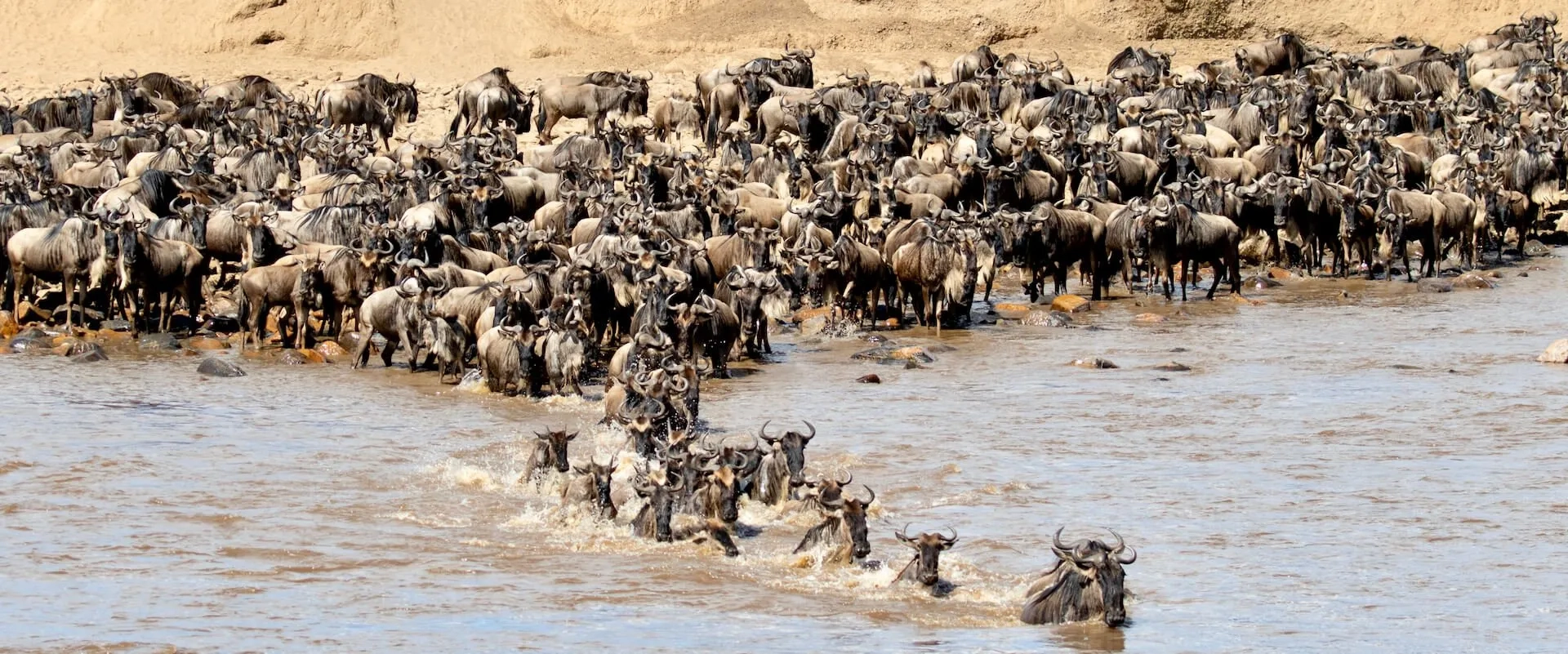
The Great Migration in Africa happens all year because the herds continuously circulate through the Serengeti–Mara ecosystem in…
Read article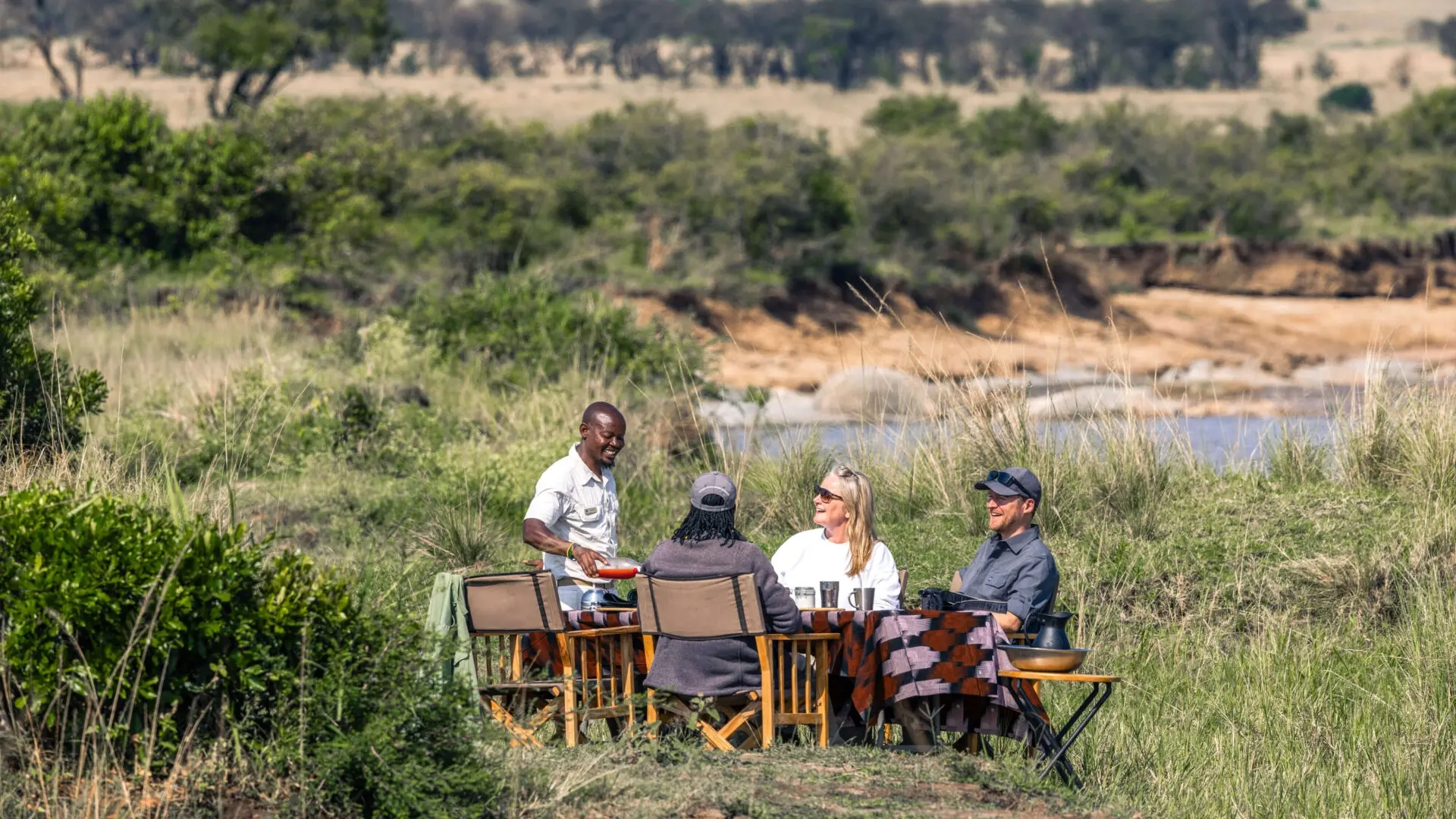
Definitive answer: A picnic lunch on safari is a packed or catered midday meal eaten at an approved…
Read article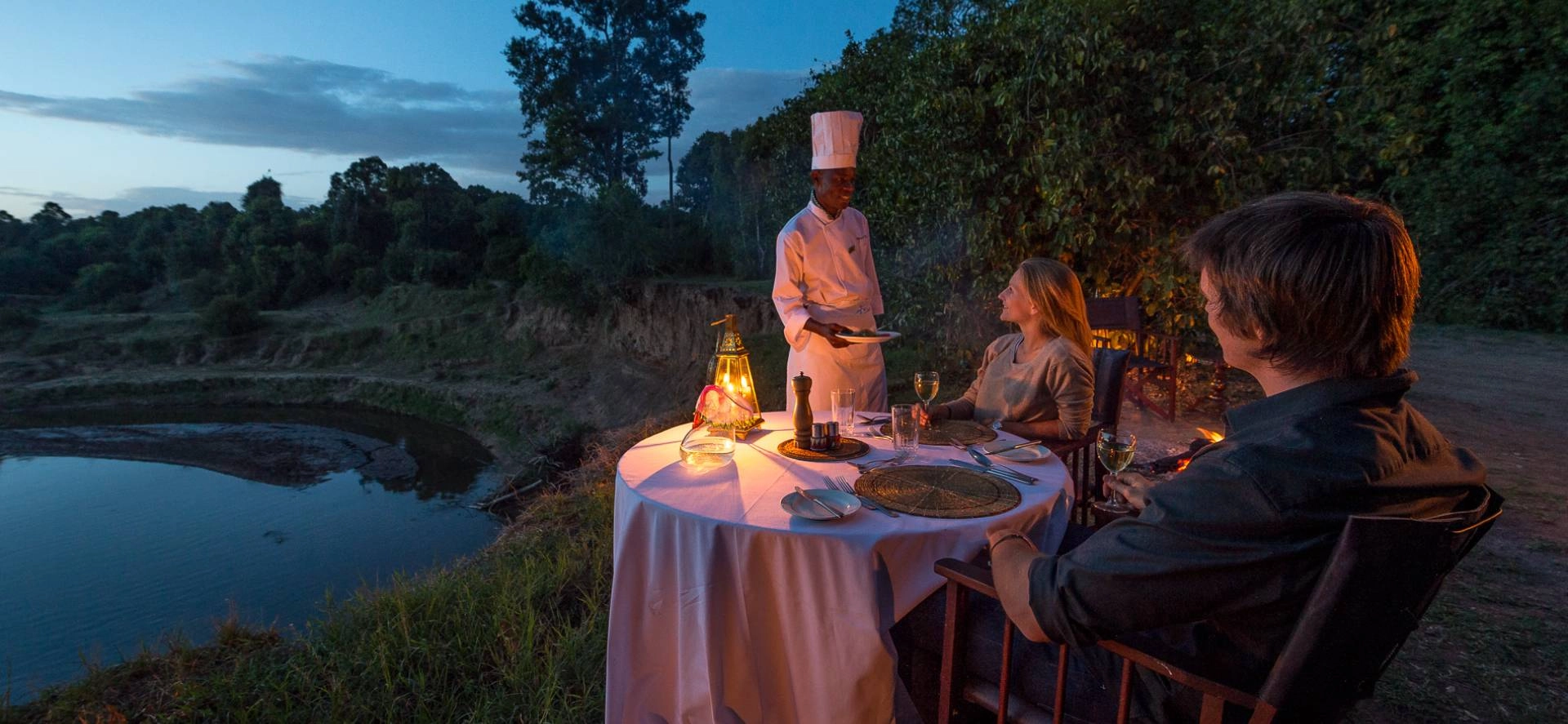
Definitive answer: A bush dinner is an outdoor evening meal arranged in a safe safari setting away from…
Read articleLet us take you closer to the wildlife, people and places that make Africa extraordinary.
Plan Your Safari Today