
What should I look for when booking a luxury African safari?
When booking a luxury African safari, look beyond the room and compare the quality of guiding, wildlife location,…
Read article

Travel Guide
Ask most first-time safari travelers which animals they most want to see in Africa and the answer is usually predictable. Lion. Leopard. Elephant. Rhino. Buffalo. Together they form the famous African Big Five, the wildlife group…
Ask most first-time safari travelers which animals they most want to see in Africa and the answer is usually predictable. Lion. Leopard. Elephant. Rhino. Buffalo. Together they form the famous African Big Five, the wildlife group that dominates safari marketing, lodge brochures, travel photography and bucket lists around the world. There is nothing wrong with wanting to see them. Watching a lion pride at sunrise, finding a leopard hidden in an acacia tree, standing quietly as elephants cross a dusty road or encountering a rhino in the wild can be deeply moving.
But focusing exclusively on the Big Five safari animals can cause travelers to miss some of Africa’s most interesting wildlife. A safari becomes far richer once you stop asking only, “Where are the lions?” and begin asking: What dug that hole? Which animal made those tracks? Why is that bird following a herd of buffalo? What is moving in the grass? Which animal is calling after dark? What is that strange creature beside the road?
This is where Africa’s unofficial wildlife groups become entertaining and surprisingly educational. Beyond the Big Five, safari guides and wildlife enthusiasts often talk about the Little Five, Ugly Five and Shy Five. These categories are not formal scientific classifications. They are playful safari traditions designed to encourage visitors to look beyond Africa’s most famous mammals. And they work. Once travelers become interested in elephant shrews, antlions, leopard tortoises, buffalo weavers, rhino beetles, aardvarks, porcupines, aardwolves, warthogs, vultures and other overlooked animals, game drives become much more interesting.
The bush suddenly feels fuller. Every movement matters. Every footprint tells a story. This detailed guide introduces the Small Five of Africa, Ugly Five animals, Shy Five wildlife and many other lesser-known species that can transform an ordinary game drive into a deeper African wildlife safari.
Before exploring Africa’s smaller and stranger wildlife, it helps to understand the origin of the Big Five animals.
The phrase did not originally refer to the biggest animals in Africa. If it did, giraffes and hippos would surely qualify. Instead, the term originated during the era of big-game hunting and referred to animals considered especially dangerous or difficult to hunt on foot. The traditional Big Five are: African lion African leopard African elephant African buffalo African rhino Modern safari tourism has transformed the meaning of the phrase. Today, most travelers want to photograph these animals rather than hunt them. The Big Five has become shorthand for a classic African safari holiday.
Wildlife ecosystems are not built around five species.
Thousands of other animals create the relationships that allow savannahs, forests, deserts and wetlands to function. Dung beetles recycle nutrients. Vultures clean carcasses. Termites build structures that alter soil. Antelope shape grasslands. Small predators control rodents and insects. Birds spread seeds. Insects pollinate plants. A lion may provide the dramatic photograph, but the ecosystem around that lion is supported by countless less famous species. This is why experienced safari travelers gradually stop chasing checklists. They begin observing behavior.
The Little Five, also commonly called the Small Five, were named as a playful reference to the Big Five.
Each Little Five animal shares part of its name with one of the famous Big Five. The traditional list is: Elephant shrew Antlion Leopard tortoise Buffalo weaver Rhino beetle They are completely unrelated to the corresponding Big Five species beyond the names. Yet finding all five can be much harder than expected.
The elephant shrew is one of the most charming members of the Little Five Africa list.
Its long, mobile nose resembles a tiny elephant trunk, which explains the common name. Despite being called a shrew, elephant shrews belong to their own distinctive group of African mammals and are more complex evolutionarily than the name suggests. They are small, fast and often difficult to observe. Most species feed primarily on insects and other small invertebrates. They move rapidly through leaf litter, scrub or rocky habitat.
Different species occur across parts of eastern and southern Africa.
Your chances depend heavily on habitat. Travelers visiting South Africa, Kenya, Tanzania and other safari countries may encounter them, but sightings are usually opportunistic. They are rarely an animal guides can guarantee. This makes an unexpected sighting especially rewarding.
The elephant shrew demonstrates why safari should include small animals. Their movement is rapid. Their senses are highly developed. Some species maintain networks of pathways through vegetation. A traveler focused only on lions may drive straight past them. A guide who understands the bush may stop and explain the tiny animal disappearing beneath a shrub.
The antlion may be the most surprising member of the Little Five because it is an insect. The larval stages of some antlion species create small funnel-shaped pits in dry sand. These pits function as traps. Ants and other small insects slide down the loose sides. The antlion larva waits beneath the sand. When prey falls into the pit, it captures it using powerful jaws.
Look for small conical depressions in loose sand. Guides may point them out around safari camps, sandy tracks or dry soil. Once you know what they look like, the pits become easier to notice. This is a perfect example of how African safari wildlife exists at every scale. You do not need a roaring lion for a predator-prey interaction. An entire hunting drama may be happening inside a hole smaller than your hand.
The leopard tortoise gets its name from the attractive patterned markings on its shell. It is one of Africa’s largest tortoise species. The shell often features dark markings against a lighter background, creating a pattern reminiscent of leopard spots. Leopard tortoises occupy savannah and grassland habitats across large parts of eastern and southern Africa.
Travelers may encounter leopard tortoises slowly crossing roads. Drivers should give them space. During hot or dry periods they may be less visible. After rains, tortoise activity can increase. Their slow pace provides a humorous contrast to the speed of cheetahs and gazelles.
Tortoises may appear hardy, but road traffic and illegal collection can threaten them. Safari visitors should never handle wild tortoises unless a trained conservation professional specifically instructs otherwise. Observing from a respectful distance is best.
The buffalo weaver represents the bird world in the Little Five. Different buffalo weaver species occur in parts of eastern and southern Africa. Their common name comes from historical associations rather than resemblance to a buffalo. Some build large communal stick nests. These structures can become highly visible in trees.
Many travelers arrive in Africa claiming they are “not birders.” That often changes within days. Birds provide constant activity even when large mammals are resting. Learning species such as buffalo weavers, hornbills, rollers, bee-eaters, fish eagles and secretary birds can dramatically enrich a birding safari in Africa.
The rhinoceros beetle, or rhino beetle, completes the Little Five. Male rhino beetles in some species have impressive horn-like projections. Their strength relative to body size has made them famous. Despite their dramatic appearance, these insects are generally harmless to humans.
Beetles perform essential ecological functions. Some contribute to decomposition and nutrient recycling. They form part of food webs that support birds, reptiles and other animals. A safari ecosystem would quickly become unhealthy without the small organisms tourists rarely photograph.
Ironically, the Little Five can be much harder to find. A guide may know exactly which areas support elephants or buffaloes. Finding a rhino beetle on command is another matter. This makes collecting all five Little Five sightings a fun challenge for repeat safari travelers.
The Ugly Five is another playful safari category. The usual list includes: Warthog Wildebeest Spotted hyena Marabou stork Vulture Calling them ugly is obviously subjective. In fact, each is remarkably well adapted to its environment. Once travelers understand their behavior and ecological role, many become favorites.
The warthog is one of Africa’s most instantly recognizable animals. Its large head, facial bumps, curved tusks and sparse hair give it an unconventional appearance. The “warts” are actually protective facial pads. They help protect the face during fights between males.
Warthogs often kneel on their front legs while grazing. This allows them to crop grass close to the ground. When alarmed, they can run surprisingly quickly. Their tails often rise upright while running, giving family members a visual signal through tall grass.
Warthogs frequently use abandoned aardvark burrows. They often enter backward so their tusks face toward the entrance. This provides protection from predators. The relationship also demonstrates how one animal can create habitat used by another.
The wildebeest may be considered awkward-looking, but it is one of Africa’s most successful grazing mammals. A heavy head, sloping back, beard and curved horns create an appearance that early observers apparently found unusual. Yet wildebeest are superbly adapted to long-distance movement.
The species is central to the Great Wildebeest Migration of Tanzania and Kenya. Huge herds move through the Serengeti-Mara ecosystem following rainfall and fresh grass. Their annual journey supports predators, scavengers and entire ecological communities. Calling such an animal “ugly” suddenly feels unfair.
The spotted hyena has suffered from centuries of bad public relations. Its sloping back, powerful jaws and association with carcasses contributed to the idea that it is an ugly scavenger. In reality, hyenas are among Africa’s most fascinating predators.
Spotted hyenas frequently kill their own prey. They are capable of hunting wildebeest, zebra and antelope. Their endurance allows them to chase animals over long distances. They also possess strong jaws capable of processing bones.
Hyenas live in complex clans. Females dominate social hierarchies. Individuals recognize one another. Relationships influence feeding access and breeding. Their intelligence rivals that of many better-loved predators. Watching a hyena clan on safari can be every bit as interesting as watching lions.
The marabou stork is one of Africa’s most distinctive birds. Its large bare head, throat pouch and hunched posture have earned it a place among the Ugly Five. But its appearance is functional. A bare head is useful for a bird that may feed around carcasses. Feathers around the head would become dirty and difficult to maintain.
Marabou storks eat carrion as well as fish, insects and other food. Their scavenging helps remove biological waste. In towns, they may gather around landfill sites, where their presence illustrates both adaptability and human waste problems.
Perhaps no group of African animals has been judged as unfairly as vultures. Their featherless heads and association with death make some travelers uncomfortable. Ecologically, however, vultures are essential.
Vultures rapidly consume carcasses. Their digestive systems can handle pathogens that might be dangerous to many other animals. By removing dead material quickly, vultures help limit disease risks. This makes vulture conservation in Africa critically important.
Many African vulture species have suffered serious declines. Threats can include poisoning, habitat change, collisions and illegal wildlife trade. A healthy vulture population is a sign of a functioning ecosystem. Safari travelers should celebrate vulture sightings rather than dismiss them.
Every so-called Ugly Five animal illustrates an important conservation principle: beauty is irrelevant to ecological value. The ecosystem does not care whether tourists think a species is attractive. A vulture cleaning a carcass is performing an essential service. A hyena crushing bone returns nutrients to the landscape. A warthog grazing and digging modifies habitat. A wildebeest migration sustains predators. A marabou stork removes organic waste. Their value lies in what they do.
The Shy Five are animals renowned for being elusive, nocturnal or simply difficult to observe. Lists can vary somewhat, but a commonly cited Shy Five includes: aardvark aardwolf bat-eared fox meerkat porcupine Unlike the Big Five, these animals are not necessarily dangerous or huge. Their challenge is visibility. Many are most active after dark. Others live in burrows or occur in low densities. Finding them requires patience and often specialized safari conditions.
The aardvark is one of Africa’s strangest mammals. Its long snout, powerful digging claws, large ears and thick tail create an appearance unlike almost anything else. Aardvarks feed primarily on ants and termites. They are usually nocturnal. This makes them extremely difficult to see on normal daytime safaris.
Aardvarks are important ecosystem engineers. They dig extensive burrows. Once abandoned, these burrows may provide shelter for other animals including warthogs, reptiles and smaller mammals. By opening termite colonies, aardvarks also influence soil.
Aardvarks occur across broad parts of sub-Saharan Africa, but sightings are uncommon. Specialized night safaris and selected dryland destinations may improve chances. Even experienced guides can go years without seeing them regularly. An aardvark is therefore a genuine safari trophy for photographers—without harming the animal.
The aardwolf resembles a small hyena but has a completely different diet. Instead of hunting large mammals, it feeds primarily on termites. Its slender body, striped coat and mane give it an elegant appearance. The animal is mainly nocturnal.
Aardwolves can consume enormous numbers of termites. Rather than destroying entire colonies, they lick insects from the surface. This allows termite colonies to continue functioning. Their feeding strategy is highly specialized.
They occur in parts of eastern and southern Africa. Open grassland and dry regions with suitable termite populations provide good habitat. Seeing one during daylight is uncommon, though winter conditions in some areas can occasionally change activity patterns.
The bat-eared fox is named for its enormous ears. Those ears are not merely decorative. They help detect insects moving beneath or within grass and soil. Termites make up an important part of the diet.
Bat-eared foxes can live in pairs or family groups. Their social behavior is fascinating. Males may play an important role in caring for young. At dawn or dusk, family groups may forage across open ground.
Travelers may encounter them in Botswana, Namibia, South Africa, Kenya, Tanzania and other suitable dryland habitats. They are particularly rewarding sightings on quieter game drives where guides have time to investigate small movements.
Of all the Shy Five, the meerkat is probably the most famous. Television documentaries have made these small mongooses internationally recognized. They live in highly social groups. One animal may stand upright as a sentinel while others forage.
Meerkat groups cooperate in raising young and watching for predators. Sentinel behavior is one of their most recognizable adaptations. The standing animal scans for eagles, jackals and other threats. Different alarm calls can communicate different types of danger.
Specialized meerkat experiences are particularly associated with regions of Botswana, South Africa and the Kalahari. Responsible tourism requires keeping appropriate distance and avoiding disruptive interaction.
The African crested porcupine is Africa’s largest rodent. Its body is protected by long quills. When threatened, the animal can raise its quills and present its protected rear toward a predator. Contrary to popular myth, porcupines do not shoot quills through the air.
Porcupines are mainly nocturnal. During daytime they often remain inside burrows or sheltered places. Night drives provide better opportunities. Fresh tracks or shed quills may reveal their presence even when the animal itself remains unseen.
Many Shy Five animals become active after sunset. This means night game drives can completely change the wildlife experience. Depending on park regulations and concession rules, travelers may encounter: genets, civets, bush babies, porcupines, aardwolves, bat-eared foxes, owls, and occasionally aardvarks. Private reserves and conservancies often provide more opportunities for night drives than national parks where driving after official closing hours may be restricted.
Once travelers stop focusing exclusively on the Big Five, many other animals deserve attention.
The African pangolin is one of the world’s most unusual mammals. Its body is covered in protective keratin scales. Pangolins feed largely on ants and termites. They are highly threatened by illegal wildlife trafficking. A wild pangolin sighting is exceptionally rare and should be treated with enormous respect.
The honey badger has gained an almost legendary reputation for fearlessness. It is a powerful, intelligent omnivore capable of exploiting many food sources. Despite internet mythology, honey badgers are not invincible. They are simply very well adapted.
The caracal is a beautiful medium-sized cat distinguished by long black ear tufts. It can leap impressively while hunting birds. Caracals occur in multiple African habitats but can be difficult to see.
The serval is another elegant African cat. Its long legs and large ears help it hunt rodents in grasslands and wetlands. Servals can leap vertically to capture prey.
The African civet is primarily nocturnal. Its patterned coat, elongated body and mask-like face make it distinctive. Night drives offer the best opportunities.
Genets are small nocturnal carnivores with spotted coats and long ringed tails. They may occasionally appear around safari lodges after dark.
Bush babies, also called galagos, are small nocturnal primates. Their enormous eyes are adapted to nighttime activity. Their calls can sound surprisingly loud in the darkness. In East African safari lodges, travelers sometimes hear them long before seeing them.
Africa supports numerous mongoose species. Some are solitary. Others live in highly social groups. Banded mongooses, for example, can often be seen moving together while searching for insects and small prey.
The rock hyrax looks superficially like an oversized guinea pig, yet its evolutionary relationships are surprisingly interesting. Hyraxes live around rocky outcrops. They can be observed in several East and southern African destinations.
The tiny dik-dik is one of Africa’s smallest antelopes. Pairs may maintain territories. Their small size makes them vulnerable to numerous predators. Travelers visiting Kenya or Tanzania may encounter them in suitable dry woodland.
The oribi is another small antelope found in suitable grassland habitats. Uganda travelers may encounter oribi in some savannah parks. Learning these smaller antelope species adds depth to a Uganda wildlife safari.
Uganda deserves special mention for one of Africa’s strangest and most sought-after birds: the shoebill. With its enormous shoe-shaped bill and prehistoric appearance, the shoebill could easily qualify for an unofficial unusual-wildlife list. Wetlands such as Mabamba Swamp are famous for shoebill excursions. This makes Uganda birding safaris particularly rewarding.
Travelers visiting Murchison Falls National Park, Queen Elizabeth National Park, Lake Mburo National Park and other Ugandan destinations can encounter much more than lions and elephants. Mongooses, warthogs, hyenas, jackals, civets, servals and numerous small antelopes contribute to the safari. In the forests, the wildlife changes again.
Uganda and Rwanda are famous for mountain gorilla trekking, but forests contain many other primates. Depending on destination, travelers may see: black-and-white colobus monkeys, red-tailed monkeys, blue monkeys, L’Hoest’s monkeys, olive baboons, and chimpanzees. A detailed safari should never treat these species as background.
A Kenya safari offers extraordinary opportunities beyond the Big Five. The Masai Mara supports mongooses, jackals, servals, bat-eared foxes and numerous birds. Samburu adds species adapted to drier northern habitats. The Laikipia region can provide additional specialized wildlife opportunities.
The Serengeti, Ngorongoro, Tarangire and other Tanzanian parks contain an enormous range of lesser-known animals. Travelers focused on the Great Migration should still watch for: bat-eared foxes, jackals, mongooses, hyenas, servals, and distinctive birds.
Botswana is superb for travelers who enjoy unusual species. The Okavango Delta supports small carnivores, wetland specialists and extraordinary birdlife. The Kalahari adds meerkats, bat-eared foxes, brown hyenas and other dryland wildlife. This contrast makes Botswana safaris especially rewarding for repeat visitors.
Namibia’s desert and semi-desert ecosystems support fascinating adaptations. Travelers may encounter brown hyenas, bat-eared foxes, jackals, unusual reptiles and desert-adapted mammals. The country is an excellent destination for wildlife enthusiasts who want something different from classic East African grasslands.
South Africa offers some of the continent’s best opportunities for night drives and specialized wildlife viewing. Private reserves around Greater Kruger may provide chances to see civets, genets, porcupines and other nocturnal animals. The Kalahari regions provide another excellent environment for specialized species.
A great guide is not simply someone who knows where lions usually sleep. They can interpret tracks. Identify birds by call. Recognize dung. Explain insects. Understand plants. Notice a small movement in grass that reveals a mongoose. This knowledge transforms safari from sightseeing into ecological interpretation.
Animal tracks tell stories. A leopard print on a road may show which direction the cat moved overnight. Porcupine tracks can reveal nocturnal activity. Hyena footprints may show that a clan passed camp. Dung can reveal diet. Scratches on trees may show animal behavior. Understanding African wildlife tracking helps travelers appreciate animals even when they are not visible.
Families sometimes worry that children will become bored during safari. In reality, children often become fascinated by smaller animals. Finding dung beetles, identifying tracks or searching for Little Five species creates a natural wildlife treasure hunt. A family safari becomes interactive rather than simply sitting inside a vehicle waiting for lions.
Smaller animals create exceptional photographic opportunities. A meerkat standing upright against a desert sunrise can be more memorable than another sleeping lion. A warthog family running through grass tells a story. A vulture landing at a carcass creates action. A leopard tortoise crossing a dusty road provides composition and texture. Photography improves when travelers stop ranking subjects according to fame.
Insects, flowers, reptiles and textures can reward travelers carrying appropriate lenses. However, never handle animals merely to create a photograph. Do not move tortoises, insects or reptiles into better light. Wildlife photography should document natural behavior.
The rush to “complete” the Big Five causes vehicles to move constantly. Slow safaris are different. Spend fifteen minutes with warthogs. Watch oxpeckers on buffalo. Look for dung beetles after elephants pass. Stop for birds. Search tree trunks. Observe termite mounds. The landscape becomes alive.
Walking safaris are particularly good for discovering the smaller side of Africa. From a vehicle, a termite mound may flash past in seconds. On foot, guides can explain how termites build ventilation systems. Tracks become visible. Plants become part of the story. Insects matter. A walking safari dramatically changes scale.
Where regulations permit, night drives are among the best ways to search for Africa’s shy and nocturnal animals. Spotlights can reveal eyes reflecting in darkness. Guides may find: genets, civets, bush babies, porcupines, springhares, owls, and smaller predators. Night drives should always follow wildlife-friendly lighting and reserve rules.
Conservation funding often favors charismatic animals. Lions, elephants, rhinos and gorillas attract donations because people feel emotionally connected to them. But protecting only popular animals cannot protect ecosystems. Vultures need conservation. Pangolins need conservation. Insects need healthy habitat. Reptiles need protected landscapes. Small carnivores need prey. Habitat conservation therefore remains essential.
Protecting large landscapes for elephants or lions can indirectly protect thousands of other species. A national park created for famous mammals also safeguards insects, reptiles, birds and plants. This is one of the strongest arguments for large-scale African habitat conservation.
Never demand that guides drive off-road where it is prohibited merely to find unusual animals. Do not encourage guides to disturb burrows. Do not touch reptiles or insects. Avoid using powerful lights irresponsibly at night. Keep noise low. Respect every animal, whether it is a lion or a beetle.
At Adventure in the Wild Safaris, some of the best wildlife experiences occur when travelers stop chasing famous names and begin understanding the ecosystem around them. A Uganda safari may include elephants in Murchison Falls National Park, lions in Queen Elizabeth National Park, gorilla trekking in Bwindi, chimpanzees in Kibale and a shoebill excursion near Entebbe. A Kenya safari may combine Masai Mara lions with jackals, servals and extraordinary birdlife.
A Tanzania safari can combine the Serengeti Migration with smaller predators, vultures and antelope species. A Botswana safari can move from elephants in the Okavango Delta to meerkats and desert wildlife in the Kalahari. The result is a safari that feels complete rather than checklist-driven.
The Big Five of Africa deserve their fame. Seeing a lion, leopard, elephant, rhino or buffalo in the wild can be unforgettable. But they represent only a tiny fraction of Africa’s biodiversity. Look down and you might find an antlion waiting beneath the sand. Look beside the road and a leopard tortoise may be crossing slowly. Watch after sunset and a porcupine may emerge. Study the grass and a bat-eared fox might be listening for termites.
A strange shape near a burrow could be an aardwolf. A silhouette in a tree may reveal a marabou stork. A noisy argument around a carcass can introduce the complex social world of spotted hyenas. And high above everything, African vultures perform one of the ecosystem’s most valuable cleanup services. That is when safari becomes more than a race to find famous animals. It becomes an exploration of the entire living landscape.
So yes, search for the Big Five. But leave room for the Little Five, Ugly Five, Shy Five, birds, insects, reptiles, nocturnal mammals and all the other creatures that rarely appear on safari advertisements. Very often, those unexpected animals become the stories you remember longest.

Get quick answers to the most common questions. If you still have questions, our safari experts are here to help.
The Little Five are the elephant shrew, antlion, leopard tortoise, buffalo weaver and rhino beetle.
Their names reference animals in the traditional Big Five.
The common list includes warthog, wildebeest, spotted hyena, marabou stork and vulture.
That is entirely subjective. Ecologically, all five are highly adapted and important.
A commonly used list includes aardvark, aardwolf, bat-eared fox, meerkat and porcupine.
The Shy Five can be considerably harder because many are nocturnal, secretive or occur at low densities.
Aardvarks occur across broad areas of sub-Saharan Africa, but sightings are rare. Specialized nocturnal safaris in suitable habitats provide the best chances.
Meerkat experiences are particularly associated with parts of Botswana, South Africa and the wider Kalahari ecosystem.
Possibly, but finding all five can be difficult. Their distribution and detectability vary greatly.
Uganda offers shoebills, mongooses, hyenas, servals, small antelopes and numerous primates alongside famous gorillas, chimpanzees and savannah wildlife.
No. Spotted hyenas are skilled hunters and can kill a substantial proportion of their own food.
No. Porcupines cannot shoot their quills.
Vultures rapidly remove carcasses and help reduce the persistence of potential pathogens in ecosystems.
No. Rules vary by park and reserve. Some national parks restrict night driving, while private reserves and conservancies may allow guided night drives.
Our safari experts are here to help you plan your safari. Get personalized advice, the latest information and a free, no-obligation quote.
We typically reply within a few hours.

Share This Article
When booking a luxury African safari, look beyond the room and compare the quality of guiding, wildlife location,…
Read article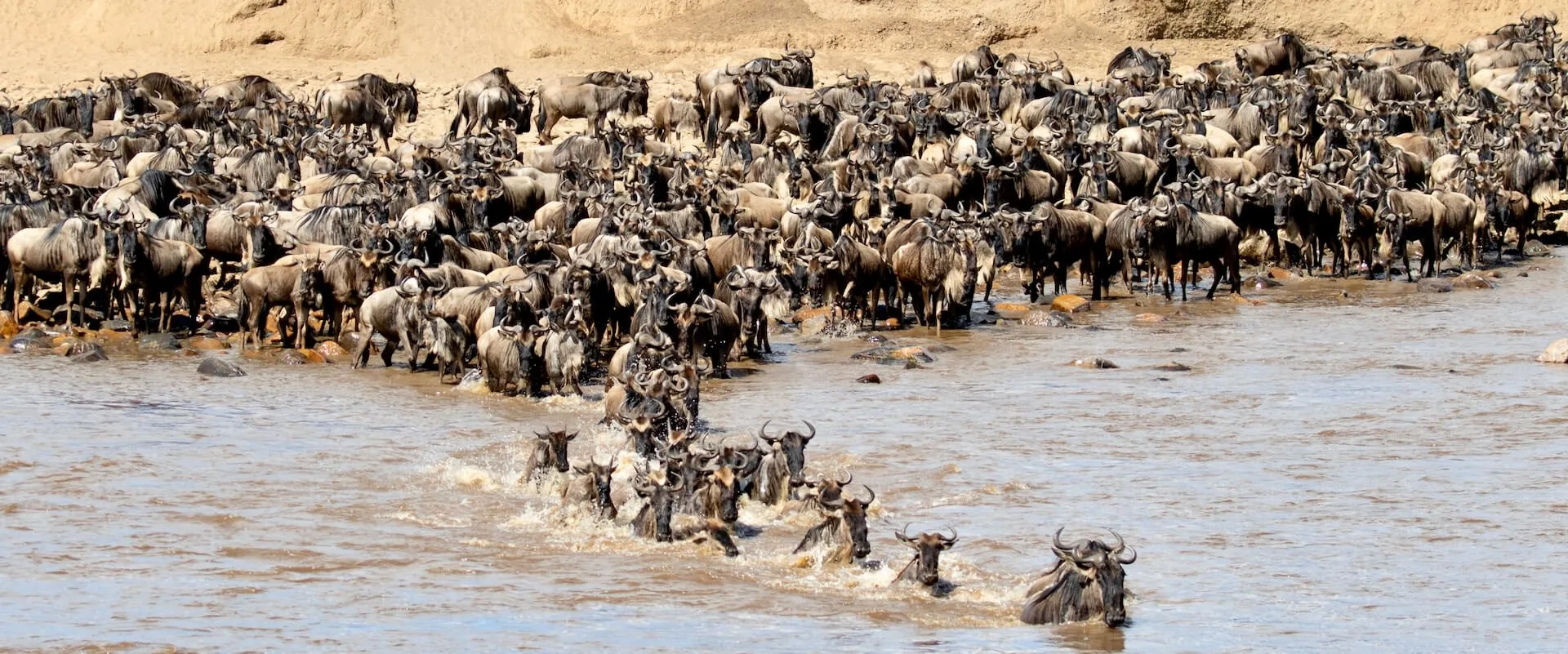
The Great Migration in Africa happens all year because the herds continuously circulate through the Serengeti–Mara ecosystem in…
Read article
Definitive answer: A picnic lunch on safari is a packed or catered midday meal eaten at an approved…
Read article
Definitive answer: A bush dinner is an outdoor evening meal arranged in a safe safari setting away from…
Read articleLet us take you closer to the wildlife, people and places that make Africa extraordinary.
Plan Your Safari Today